Kuala Belait
Kuala Belait, Brunei
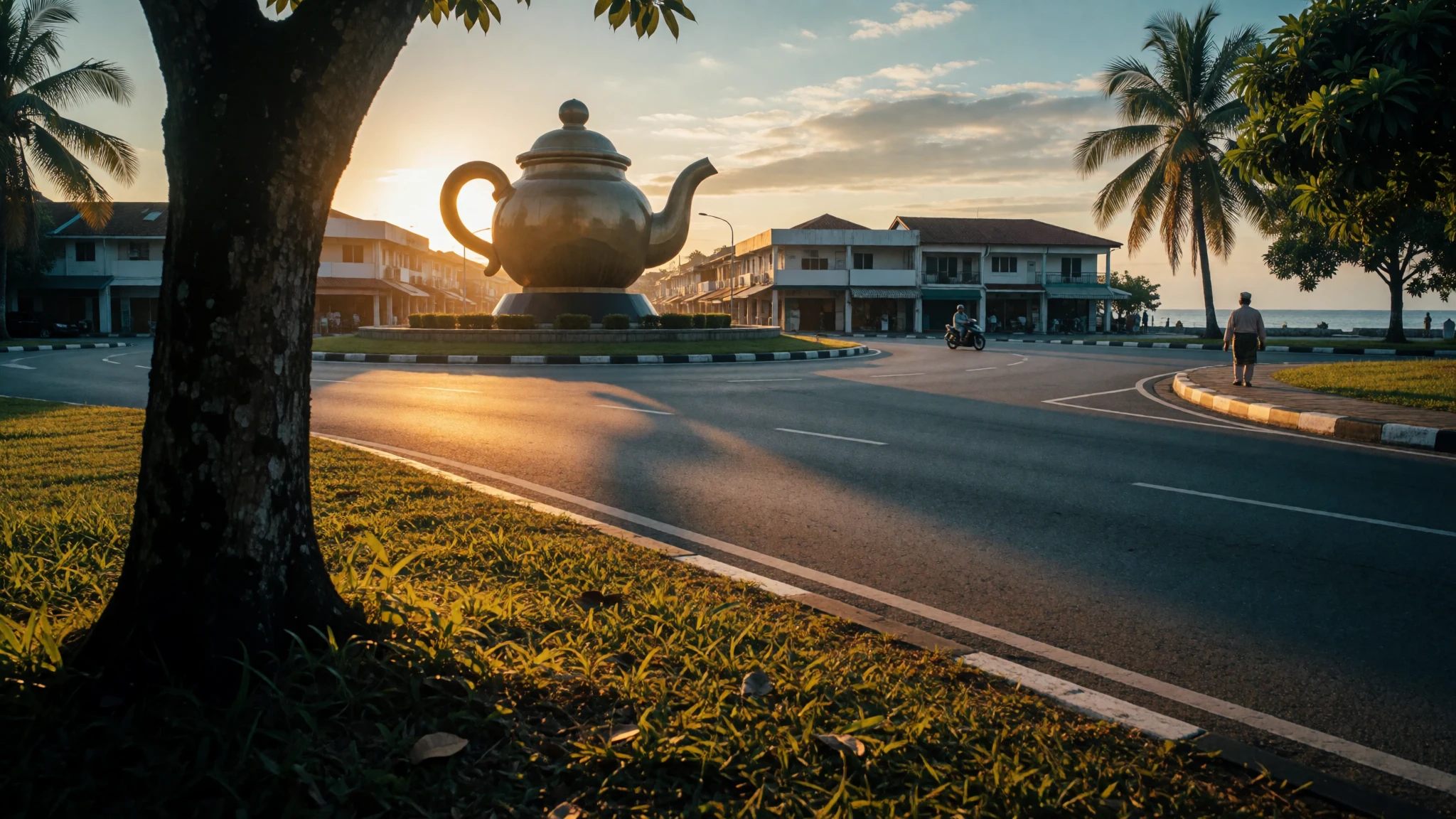
Kuala Belait is a quiet oil-era town on Brunei's western edge, with a long beach, a giant teapot roundabout and an unhurried pace.
The place
Kuala Belait sits at the far western end of Brunei, close to where the Belait River meets the South China Sea. It is the administrative town of Belait District, home to about 4,300 people, and it feels more like a working coastal settlement than a resort. The town lies roughly 85 km west of the capital, Bandar Seri Begawan, and about 20 km west of Seria, the district's other town. A coastal freeway links them, and the road is how almost everyone arrives. Oil and gas shape daily life. The wharf used by crews heading to offshore platforms, the supply bases and the company facilities cluster around the river mouth, and the town's rhythm follows shift work as much as the tides. Between the industrial edges are low streets, a few parks, a mosque with notable Islamic architecture and a long beach facing the sea. The town proper is known locally as Pekan Kuala Belait. The climate is tropical: warm, humid and rainy all year, so any visit means damp heat and the odd sudden shower. Kuala Belait is not a place for a packed itinerary. It suits a slow day or two, with a walk on the sand in the cooler hours, a look at the district museum, a photograph of the teapot monument and meals at local eateries. It also works as a stop for travellers heading on towards Miri across the Malaysian border, though that leg needs its own transport plan.
Its story
Kuala Belait began as a small fishing village with little to its name, and oil turned it into a town. Prospectors working in the district in the 1910s found enough to believe that more lay along the Belait River, and a road soon tied the village to Brunei Town. By the late 1920s the settlement had become a port for the machinery that exploration needed, run chiefly by the British Malayan Petroleum Company. The government made it the headquarters of Belait District, and the company moved its own headquarters there in the same period. When large reserves turned up at Seria in 1929, the town's role as a service hub for the industry was fixed. That year it formally became a town, governed through a Sanitary Board under the Assistant Resident, a British official posted to look after oil interests. The 1930s were a boom decade. Brunei's first English school opened in Kuala Belait in 1931, and the population grew from a little over a thousand to about 3,000 in the first half of the decade. The company also strung telephone lines along the coast to link Seria and Rasau with its Kuala Belait office, although a separate line to Tutong was taken down after it failed to deliver. World War II brought heavy bombing and widespread destruction, and the town had to be rebuilt afterwards. Today's low, orderly streets sit on that layered history of oil, colonial administration and reconstruction.
What to see
- Belait Beach — Seafront, Kuala Belait
Belait Beach is the town's open stretch of sand on the South China Sea. It is a place for an early or late walk rather than a swim-and-sunbed day, since the heat is strong at midday. Expect few crowds and little commercial development. Check local advice on sea conditions before paddling.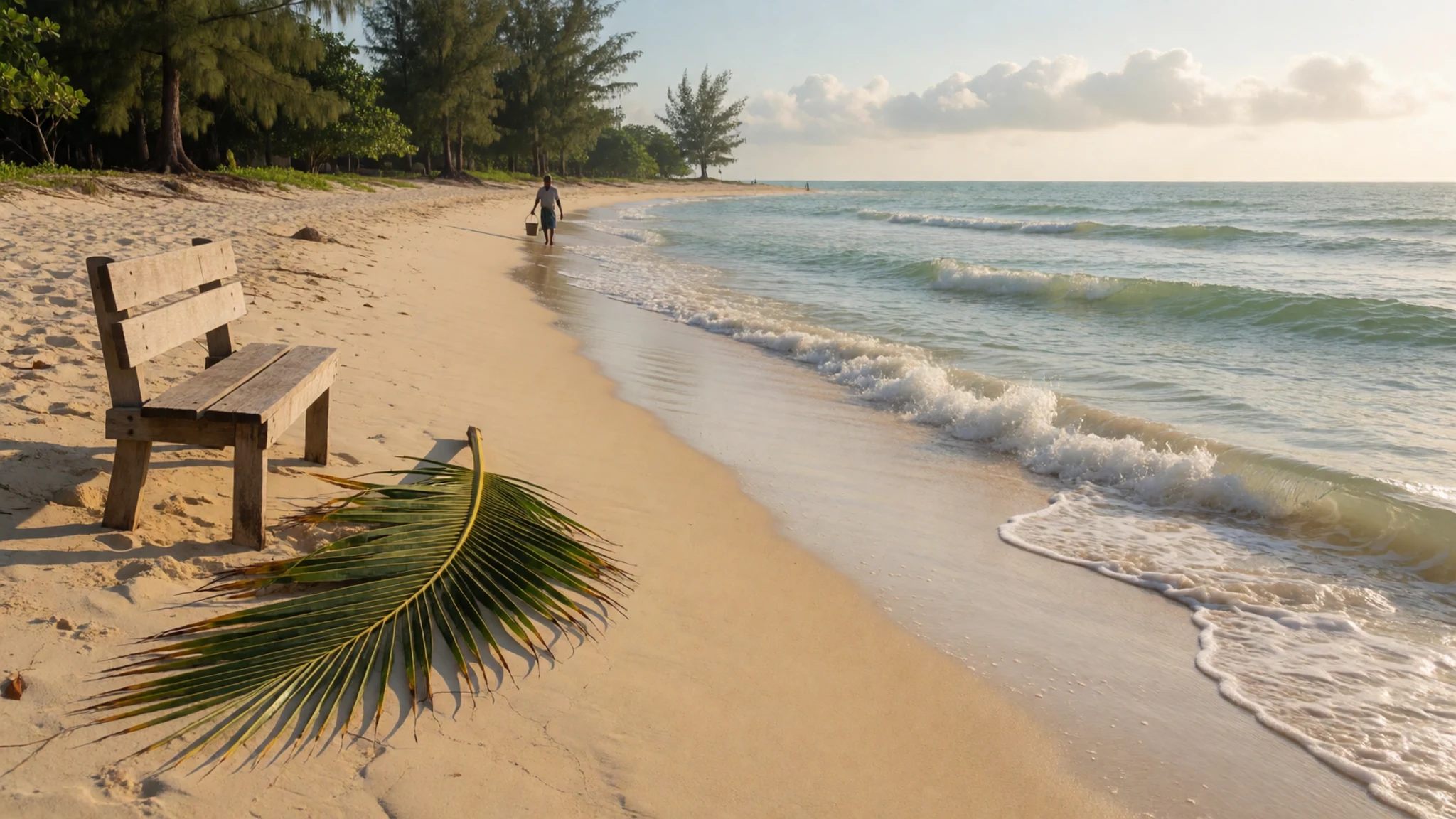
- Belait District Museum — Town centre
The Belait District Museum is the place to put the town's oil-era story into context, after reading about the fishing village that became a company town. It is small and local in scale. Opening days and hours change, so ask in town or check official Brunei tourism channels before making a special trip.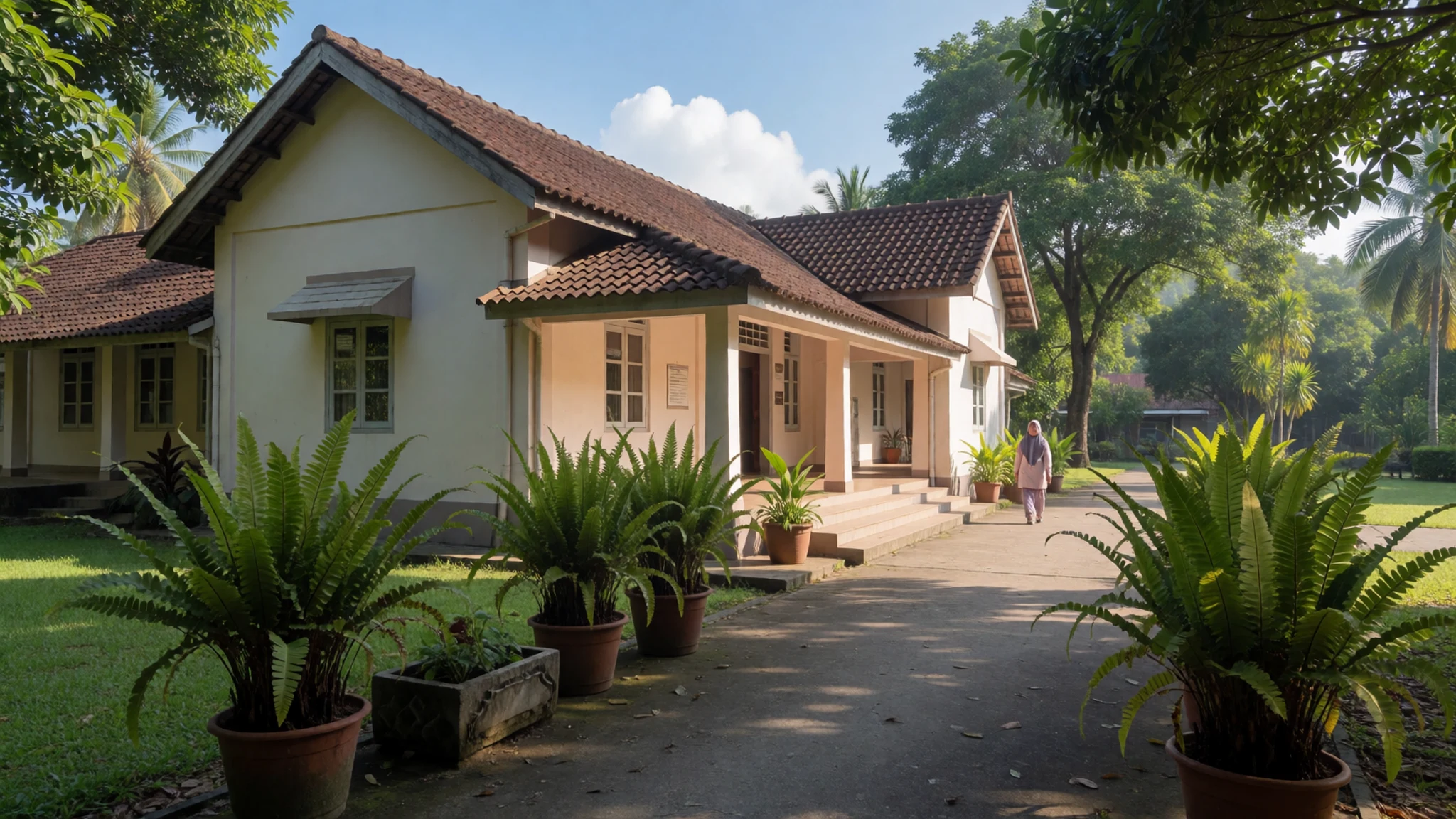
- Silver Jubilee Park — Town centre
Silver Jubilee Park is a green pocket near the centre, useful for a shaded rest between walks in the humid air. It suits families and joggers in the early morning or after the day's heat fades. It is a simple public space rather than a major attraction, so treat it as a pause.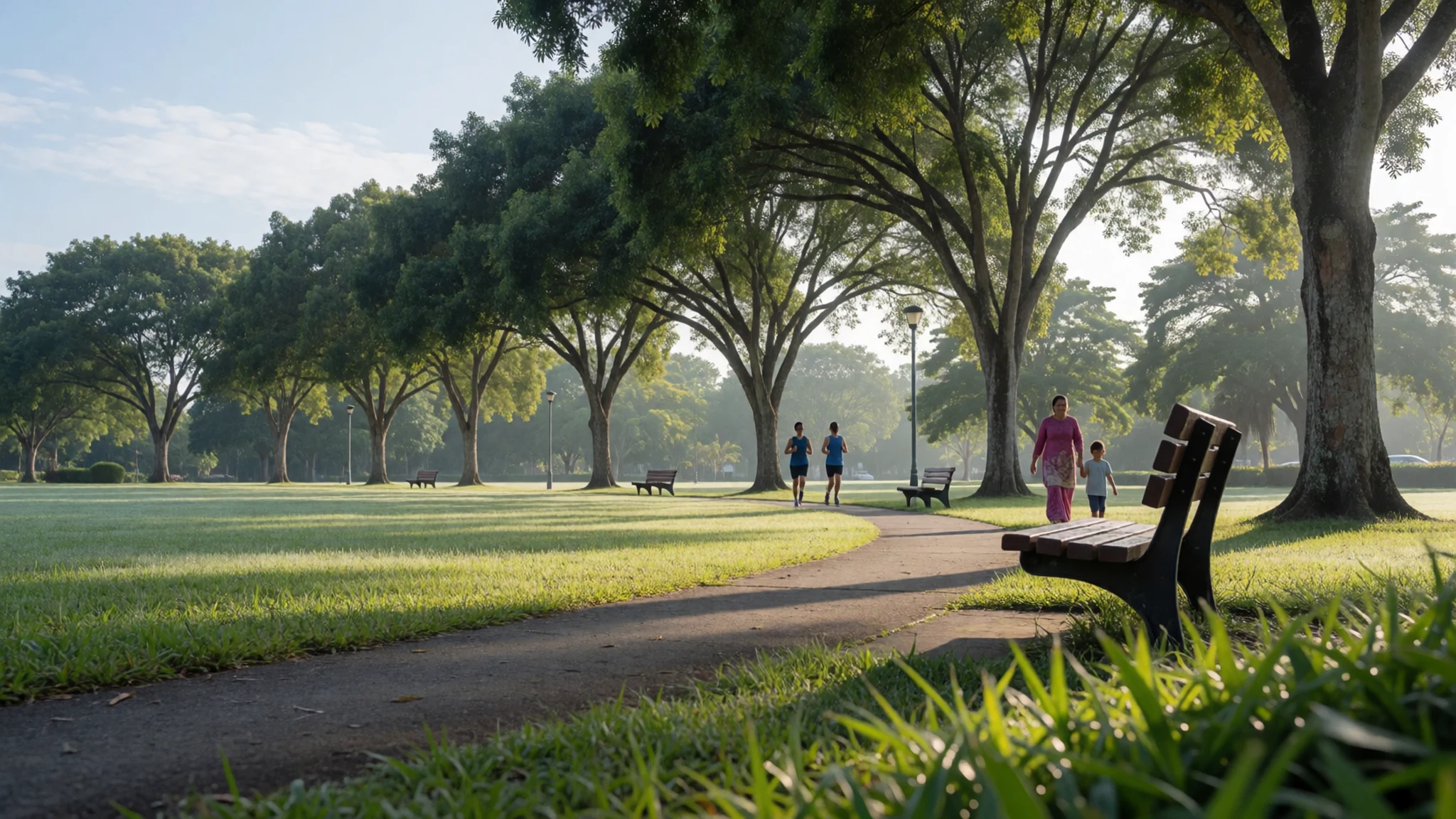
- Teapot roundabout — Jalan Pandan Lima junction
A large teapot monument stands in the middle of a roundabout where several of the town's roads meet. It is a quirky, quick photo stop on the eastern side of Kuala Belait, best seen on foot or by a slow drive past. Take care with traffic when stopping to take pictures.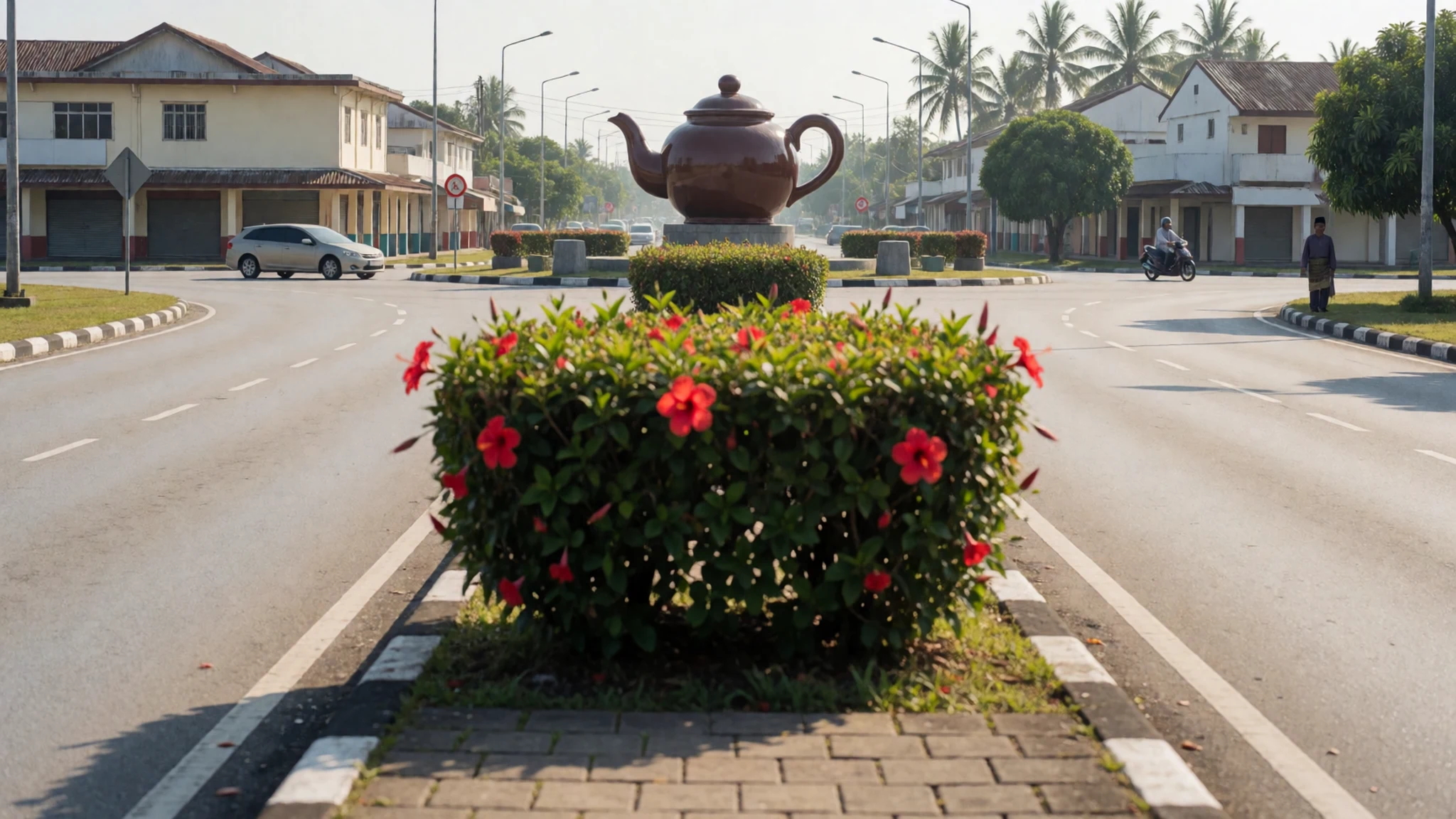
- Kampong Pandan Mosque — Kampong Pandan
Kampong Pandan Mosque is a local mosque with notable Islamic architecture, worth seeing from outside for its form and setting. Non-Muslim visitors should not walk in unannounced. If you wish to see the interior, ask politely about visiting times and what dress is expected.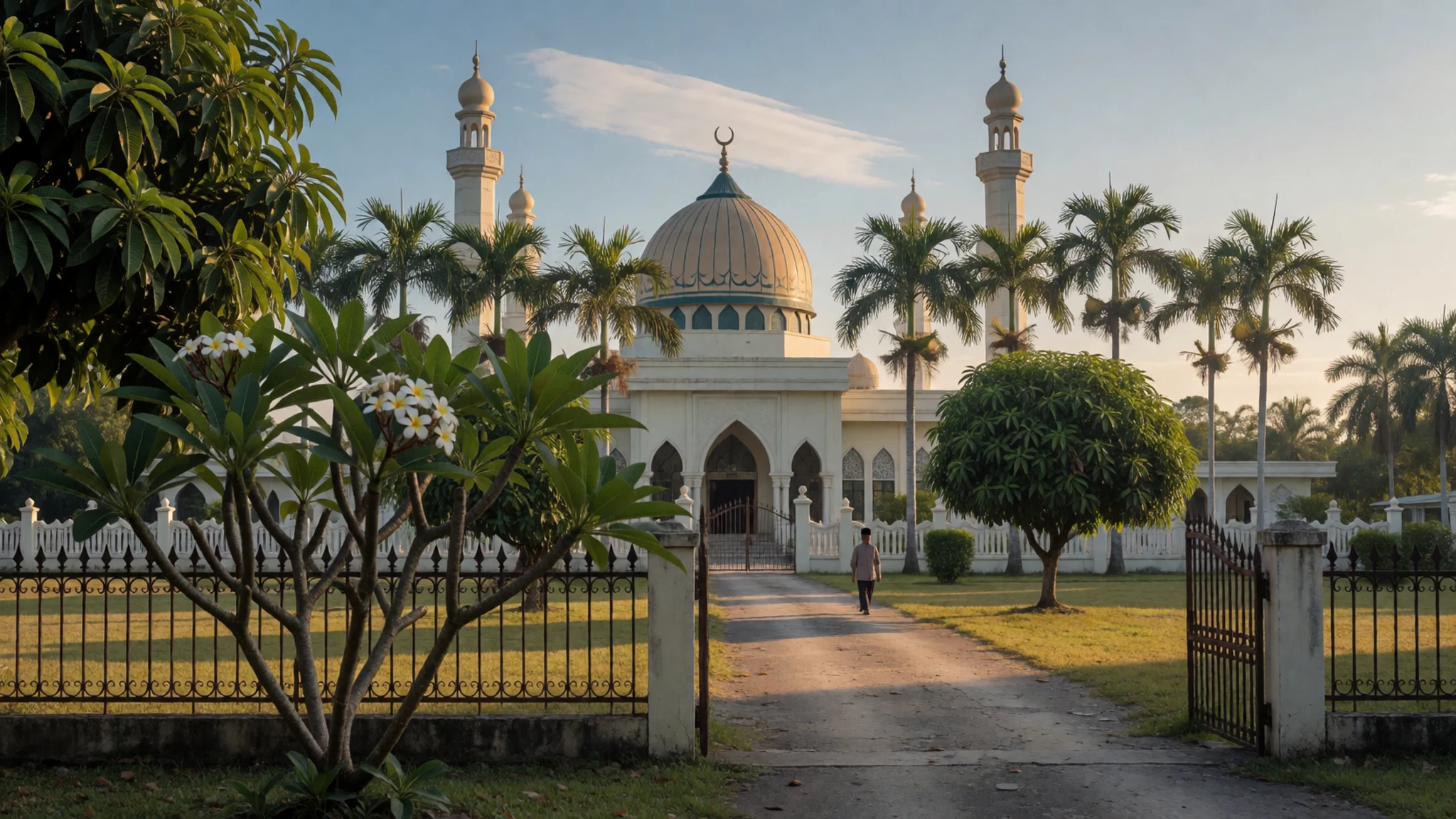
- Menara Cendera Kenangan — Southern Kuala Belait
Menara Cendera Kenangan is a landmark tower on the southern side of town. It works as a waymarker as much as a sight, and a short detour on a drive or cycle through the quieter streets. Ask locally what access is available, since it is not a major visitor attraction.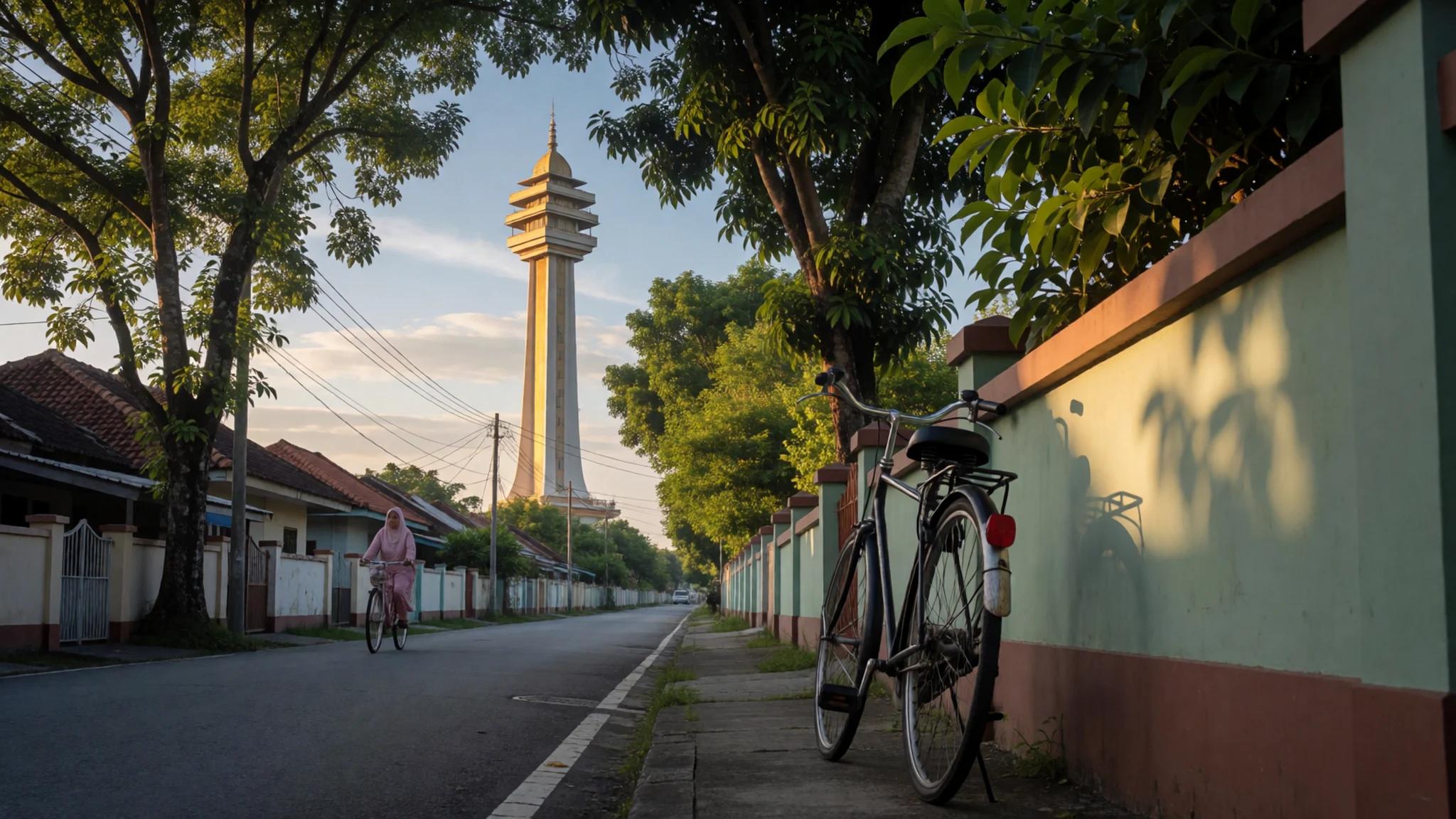
Culture
Kuala Belait is a Malay-majority Muslim town in a country where Islam shapes the weekly rhythm. Friday midday is the main prayer time, and many shops and offices pause around it. Brunei Malay manners are soft-spoken and courteous, and a small gesture of greeting goes a long way. The town also carries an unusual mixed character from its oil history, with long-serving company families, workers from other countries and a layer of British-era institutions such as the school and hospital that arrived in the 1930s. Family and religious occasions matter, and the main festivals bring open-house visiting, special food and neat traditional dress. Alcohol is not sold in shops and restaurants, and public displays of affection draw frowns. Evenings are quiet, with people gathering at food courts, roadside stalls and the beach rather than in bars. Daily life is slower than in most travellers' home cities, and conversation about family, football, food or the weather is a good way in. Local people are generally welcoming to curious visitors, but a respectful tone matters more than perfect language. English is widely understood, and a few words of Malay such as terima kasih (thank you) are appreciated. Cover your shoulders and knees, remove your shoes before entering any mosque or private home, and ask before photographing people, especially women.
What to wear
In Kuala Belait, as across Brunei, traditional Malay dress is worn for weddings, religious festivals and official occasions. Women wear the baju kurung, a long tunic over a skirt, often with a headscarf, and men wear the baju melayu, a loose shirt and trousers with a sarong-style wrap worn at the waist, topped with a songkok cap. The most prized fabric is songket, silk or cotton shot through with gold or silver thread, woven in patterned panels and kept for ceremonies. Day to day, people dress for heat and modesty: light cotton shirts, long trousers or skirts, and loose tunics, with many women wearing a tudung headscarf. Shift workers from the oil and gas industry wear company coveralls and boots around the wharf and facilities. Visitors should pack light, breathable clothes in cotton or linen that cover shoulders and knees, as this is the norm in town and is required at mosques. A thin scarf or shawl is handy for women if a religious site is on the plan. Bring a compact umbrella or light rain jacket, since showers come at any time of year. Sandals or trainers that dry quickly suit the beach and wet pavements. Swimwear is for the sea only, with a cover-up for the walk back.
What to eat
- Nasi katok — Roadside eateries and stalls in the town centre
A plate of rice with fried chicken and a spoonful of fiery sambal, sold as a cheap, filling meal that locals eat at any time of day. Look for it at small roadside eateries and food stalls around the town centre, especially in the evenings.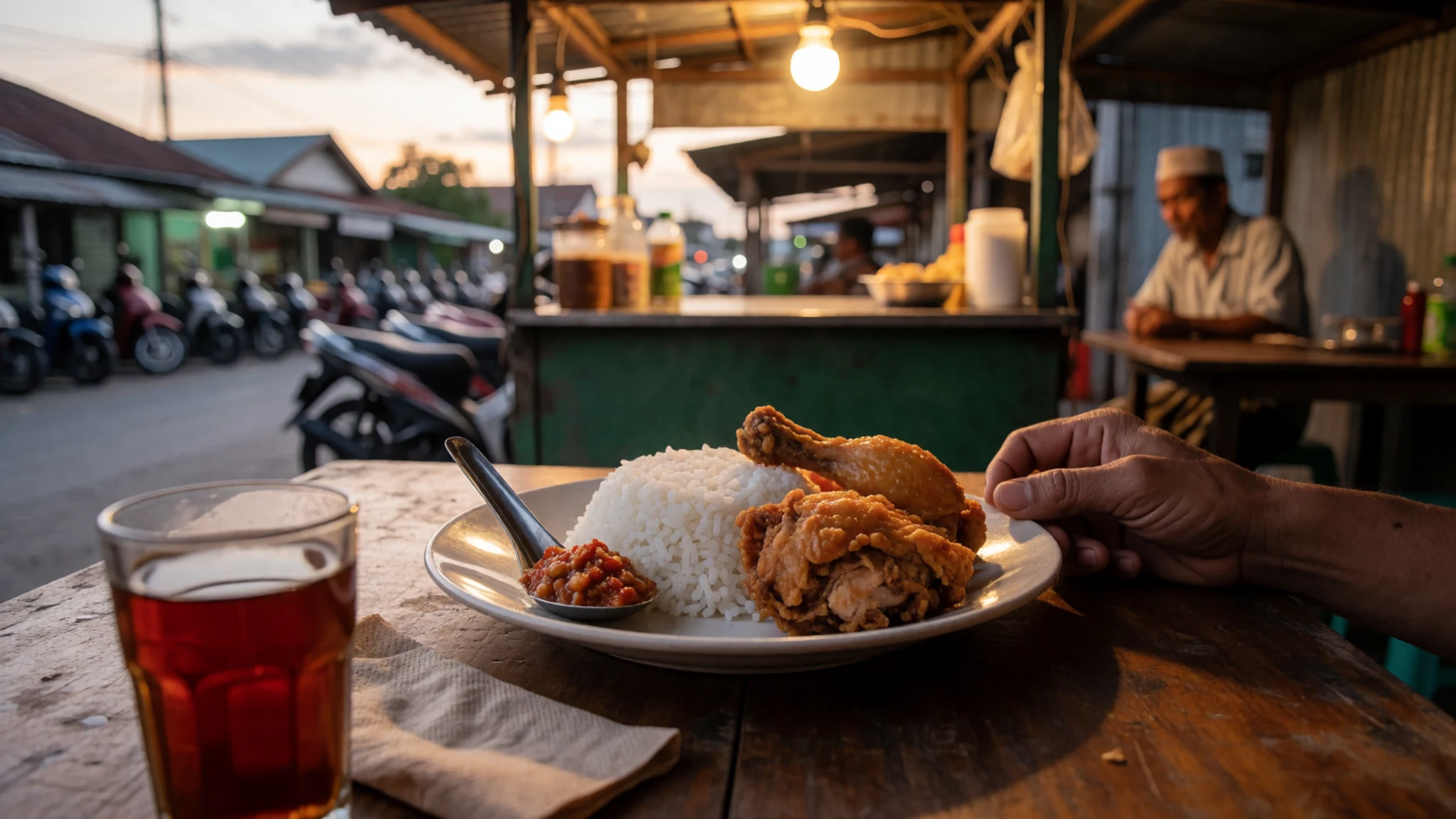
- Ambuyat — Malay restaurants and local food courts
A sticky, pale paste made from sago starch, twirled onto a bamboo fork and dipped into a sour, spicy sauce with side dishes. The flavour comes almost entirely from the dips. It is a Bruneian staple, found in Malay restaurants and at family gatherings.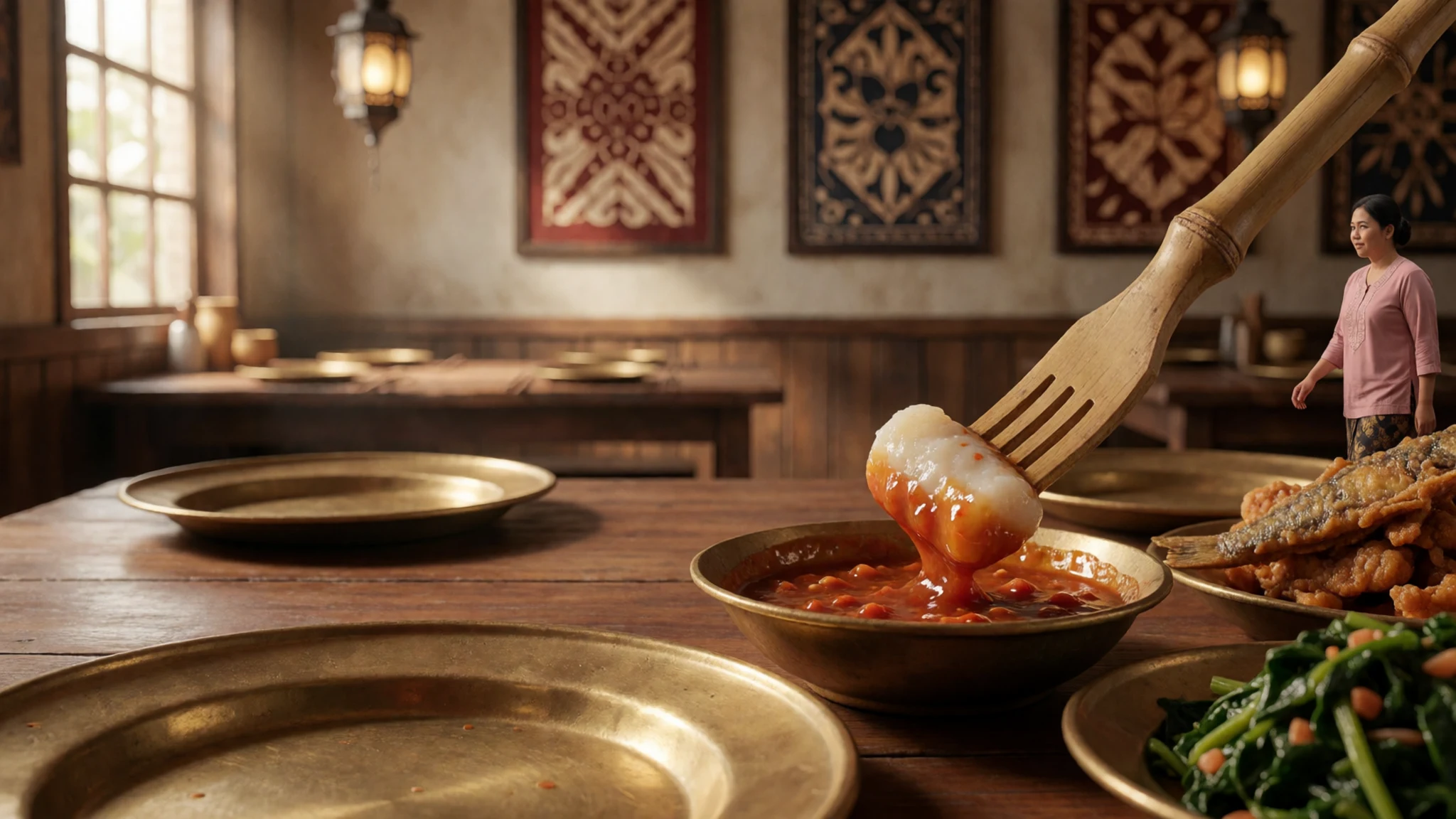
- Soto — Morning coffee shops and food courts
A fragrant, lightly spiced broth with shredded chicken or beef, noodles or rice cakes and fresh herbs. It makes a warming breakfast or light lunch, even in the heat. Ask for it at local coffee shops and food courts in the morning. - Mee goreng — Casual eateries and evening stalls
Stir-fried noodles with egg, greens and chilli, cooked quickly over a hot wok and often served with a fried egg on top. It is easy to find and a reliable choice for a first meal. Try it at casual eateries and evening street stalls. - Kuih — Morning stalls and neighbourhood bakeries
Small sweet snacks made from rice flour, coconut, palm sugar and pandan, often steamed or fried, in colourful pieces. They are eaten with tea at any time of day and are especially popular during festive periods. Buy them from morning stalls and local bakeries.
Plan it
Best time. Kuala Belait is warm, humid and rainy all year, so no month is dry. February and March tend to be the lightest on rain in this part of Borneo, which suits beach walks; check forecasts before travel, and carry rain gear whenever you go.
How long. 1–2
Getting there. Fly into Brunei International Airport near Bandar Seri Begawan, then travel west along the coastal freeway, about 85 km. There is no direct bus from the capital: take the Seria bus and change there for Kuala Belait (the last leg takes about half an hour). Driving is the easiest option, with free parking easy to find. Buses to Miri do not run directly, so crossing the border needs a taxi or onward ride on the Malaysian side.
Budget. mid
Tips
- Hire a car or arrange a taxi, as public transport is limited and slow outside the Seria route
- Walk the beach and town in the early morning or late afternoon to avoid the midday heat
- Carry an umbrella or light rain jacket, since showers can arrive at any time of year
- Keep some cash for small eateries and stalls, and ask in advance about card acceptance
- Check opening times locally for the museum and other sights before making a special trip
Etiquette
- Dress modestly, with shoulders and knees covered, and remove shoes before entering mosques or homes
- Ask permission before photographing people, especially women and children
- Avoid public displays of affection and do not expect to buy alcohol
Nearby
Sources
- Wikidata Q588045 (CC0)
- Wikipedia: Kuala Belait (rev 1376562029) (CC BY-SA 4.0)
- Wikivoyage: Kuala Belait (rev 4897457) (CC BY-SA 4.0)
- Photo: Kuala Belait, Brunei Darussalam (IQRemix) (CC BY-SA 2.0)
- Photo: Belait Beach on 4 May 2022 (Pangalau) (CC0 1.0)
- Photo: Kuala Belait on 11 December 2022 (Pangalau) (CC BY-SA 4.0)
- Photo: Kuala Belait on 30 May 2023 (Pangalau) (CC BY-SA 4.0)
- Photo: Aerial view of Belait Town (Government of Brunei) (Public domain)
- Photo: Kuala Belait on 9 July 2022 (Pangalau) (CC BY-SA 4.0)
- Photo: Kuala Belait Highway on 15 July 2023 (Pangalau) (CC BY-SA 4.0)
- Photo: Kuala Belait on 11 December 2022 (Pangalau) (CC BY-SA 4.0)


