Suez
Suez, Egypt
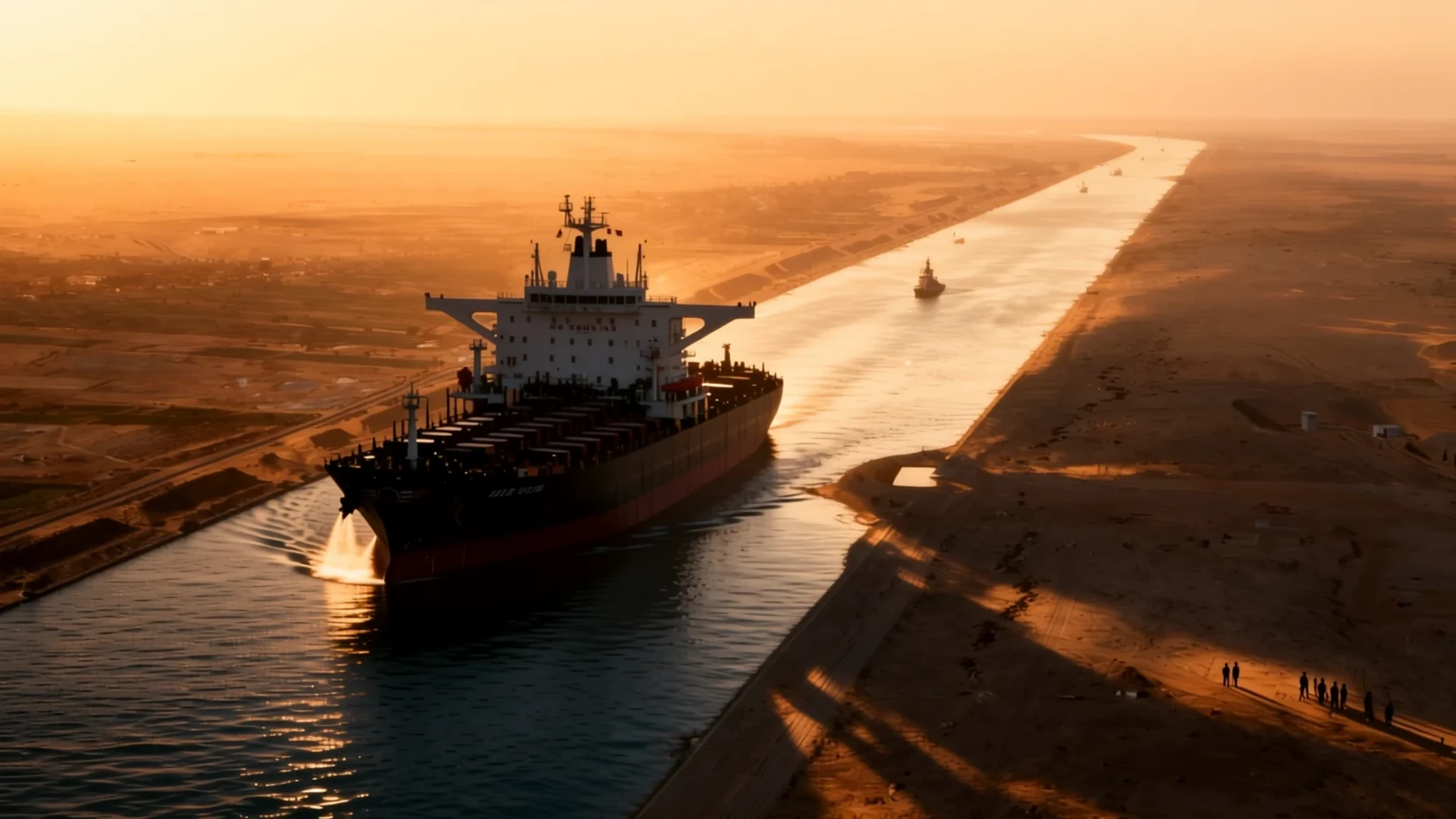
Suez is a working port where the Suez Canal meets the Red Sea, with colonial Port Tawfiq, a small museum and fresh fish.
The place
Suez sits on the northern shore of the Gulf of Suez, an arm of the Red Sea, at the southern end of the Suez Canal. It is the capital of Suez Governorate, home to about 716,000 people, and stands only 11 m above sea level. Few cities feel as much like a hinge: the isthmus here is treated as the boundary between Africa and Asia, and the wider metropolitan area lies mostly on the African side with a small part in Asia.
This is an industrial and shipping town rather than a resort. Three ports make up its harbour system: Suez Port, also called Port Tawfiq, then al-Adabiya and al-Zaytiya. There is a petrochemical plant, and refineries send finished fuel by pipeline to Cairo. The governorate's flag says as much, with a blue field for the sea, a gear for industry and a flame for the oil firms.
Roads and railways link the city to Cairo, Ismailia and Port Said, so it is easy to reach and easy to leave. Expect a lived-in Egyptian city: traffic, small shops, tea drinkers on the pavements and tankers waiting on the water. The Corniche follows the shoreline and is where families gather in the evening.
The climate is hot desert. The recorded extremes run from 1 °C in February 2004 to 49 °C in June 1965, and the city gets about 3,338 hours of sunshine a year. Summer afternoons are punishing; the cooler months are far kinder for walking.
Its story
Suez grew from older ports on the same stretch of coast. The modern city is the successor of Clysma, an ancient Egyptian-era Red Sea harbour that was also a centre of monasticism. The wish to link the Nile, the Red Sea and the Mediterranean by water is far older than the modern canal.
In the Achaemenid period, when Egypt was a satrapy of the Persian empire, Darius the Great had a canal dug between the Nile and the Bitter Lakes. He recorded it on monuments set up in Wadi Tumilat, in Old Persian, Elamite, Babylonian and Egyptian. The text has him declaring himself a Persian who conquered Egypt and ordered a canal cut from the Nile to the sea that begins in Persia. The aim was a shipping connection between Egypt and the rest of the empire.
The present city dates its founding to 1859, the year associated with the start of work on the modern Suez Canal, and it grew as the canal's southern gateway. A nineteenth-century French map of the isthmus, with profiles of the planned canal between the two seas, shows how much engineering thought went into this narrow strip of land.
Since then Suez has lived by what passes through it: ships, cargo, fuel and, for some visitors, cruise passengers who stop briefly and are driven off to the antiquities. The city itself keeps a quieter, more local character than that traffic suggests.
What to see
- Suez National Museum — Suez city
The museum covers about 7,000 years of local history across three floors. Highlights include a colossus of King Sesostris III and a head of Queen Hatshepsut, and further halls deal with mining in the region and the story of the canal. It is a sensible first stop to place the city in time. Check opening arrangements before going.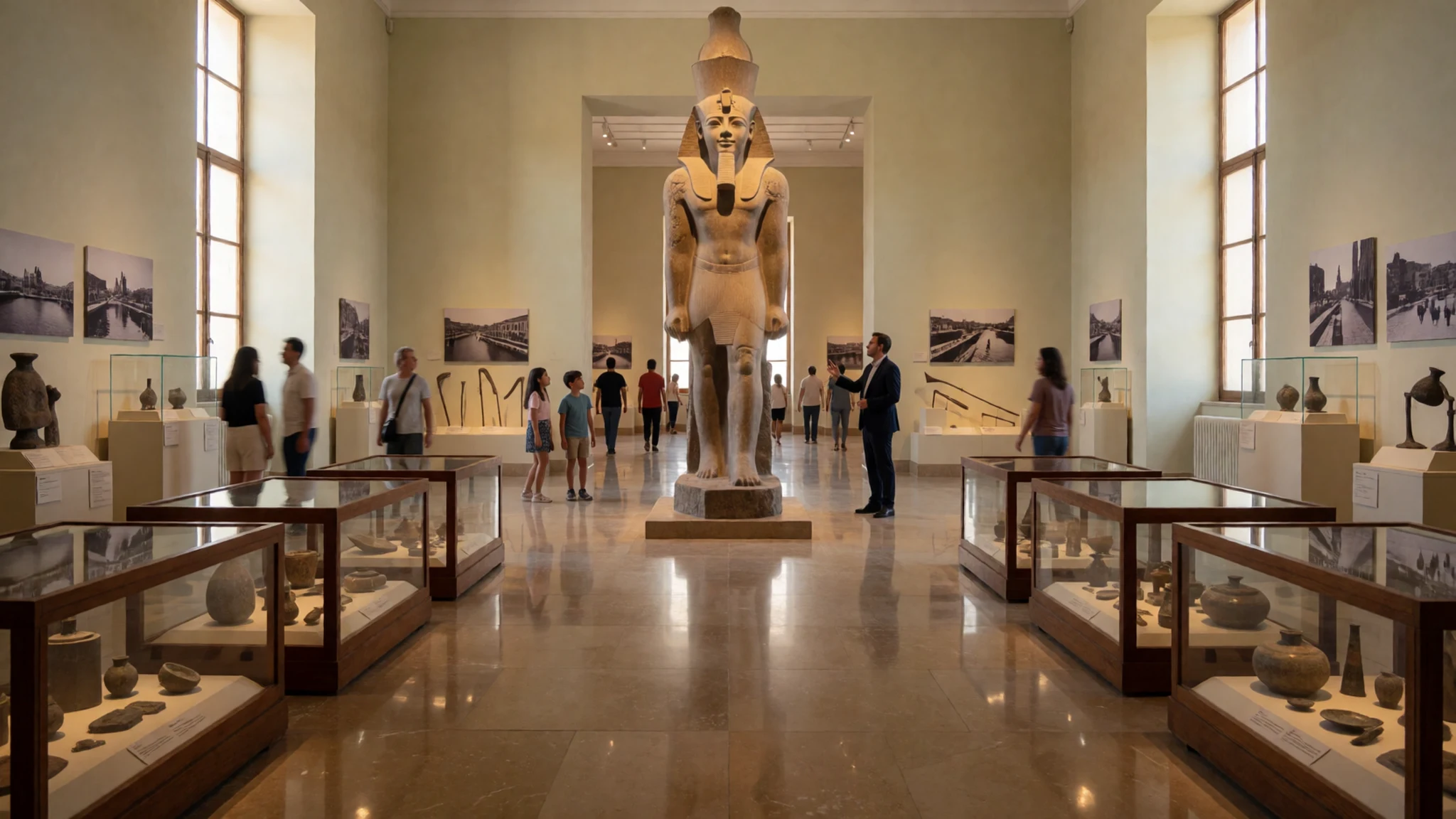
- Port Tawfiq colonial streets — Port Tawfiq
Port Tawfiq is the old harbour district at the canal mouth, where colonial-era buildings still line some streets. It is best on foot, slowly, with an eye on the ships moving in and out. The architecture is faded rather than polished, which suits the working port around it.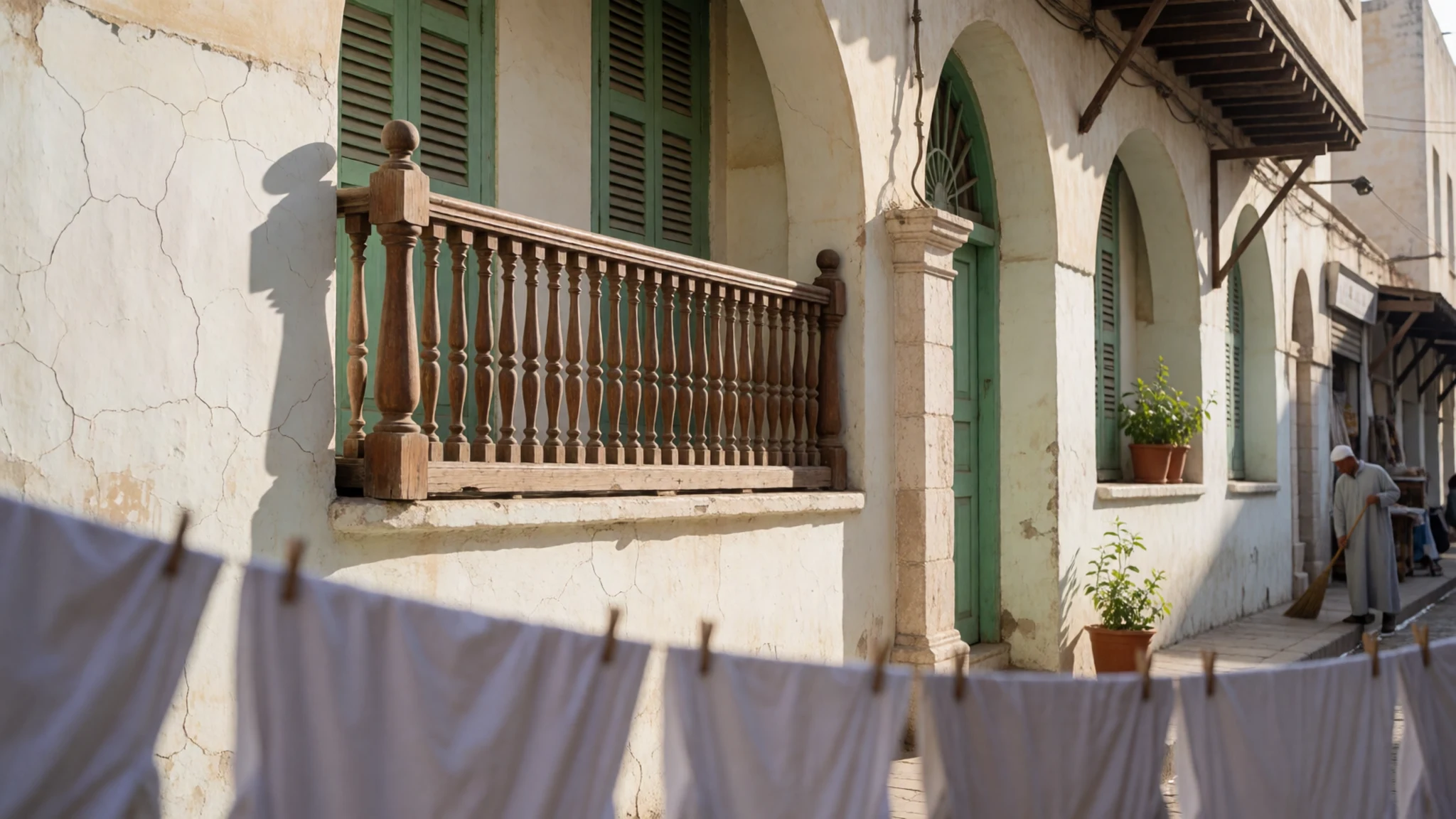
- Port Said Street theatres — Port Said Street, central Suez
The Renaissance Cinema and the Ismail Yassin Theatre stand side by side on Port Said Street. They are worth a look from outside for their old city-centre character, and for a sense of how the town entertained itself. Ask locally whether anything is showing during your visit.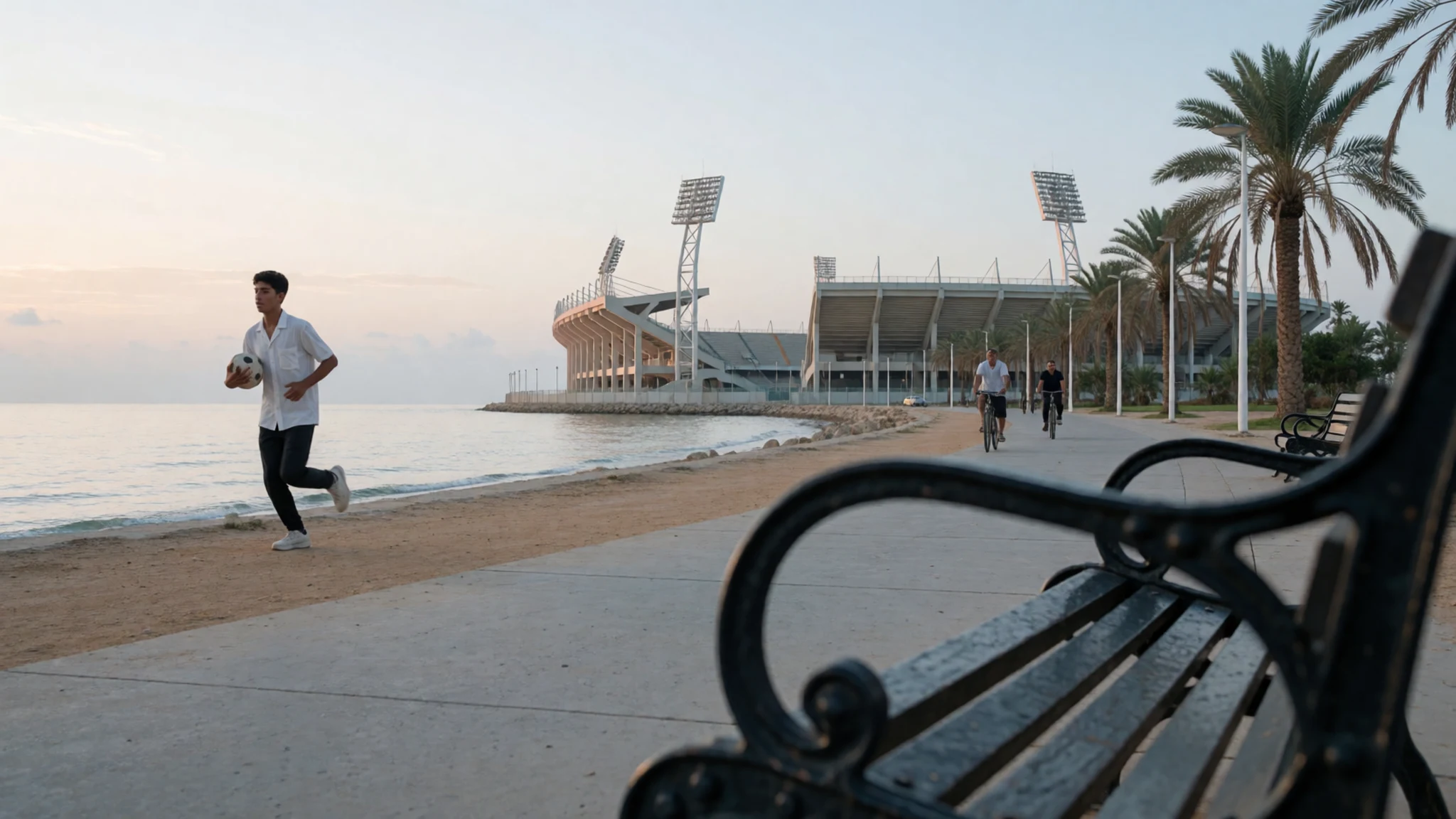
- The Corniche and the Gulf — El Corniche waterfront
The Corniche runs along the shore and is the easiest place to watch the Gulf of Suez, with tankers and cargo ships at anchor. Come in the late afternoon or evening, when the heat eases and local families stroll, buy snacks and sit over tea.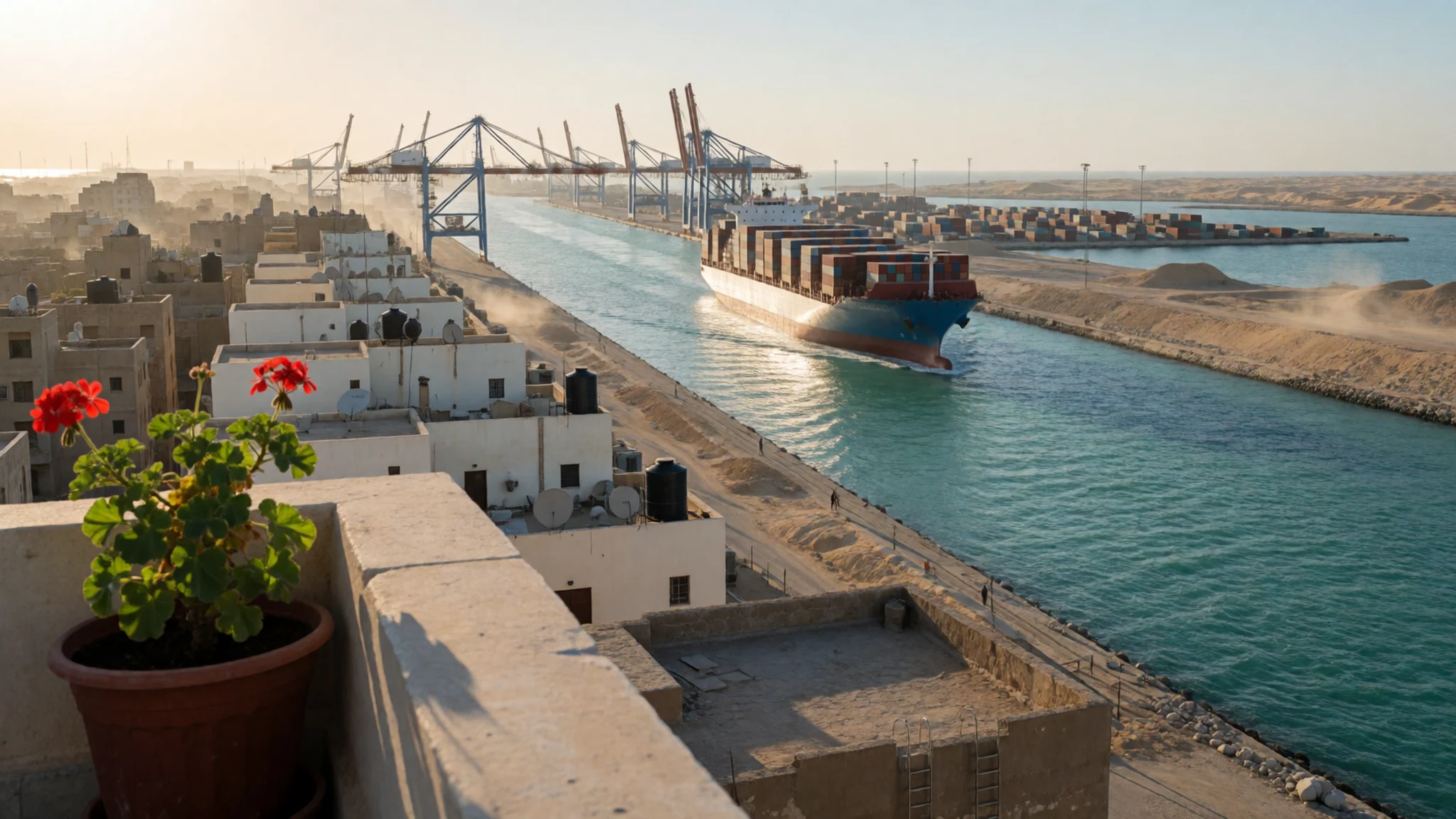
- A football match at Suez Stadium — West end of the Corniche
Two local clubs, Asmant el-Suez, whose name means cement, and Petrojet, share Suez Stadium at the west end of the Corniche. Both have played in Egypt's second division. A home match is a good way to meet the city's fans. Check fixtures before you go.
Culture
Suez is a conservative, devout and industrial Egyptian city, and daily life runs around work, family and prayer. Mosques stand prominently in views across the city, and the call to prayer sets the rhythm of the day. Friday is the main day of congregational prayer, and mornings are quiet while shops open later.
Port culture shapes the place. Many families have worked for generations in shipping, oil, cement and canal services, and the city has a strong local identity that is separate from Cairo's. Football matters here, and the two clubs draw loyal crowds. Evenings belong to the Corniche and to cafés, where men play backgammon and drink tea, and families come out once the heat drops.
Hospitality is genuine and easy. Strangers will often start a conversation, ask where you are from and offer tea. Accept if you can, as a short chat is part of the experience. Bargaining is normal in markets but should stay good-humoured. During Ramadan, eating and drinking openly in the daytime is considered discourteous, and many eateries open only after sunset, when the whole city seems to wake up.
Because Suez is a working port with oil and canal facilities, some areas are sensitive. Officials may ask what you are doing if you linger near installations. Polite answers usually settle things.
Ask before photographing people, and do not point your camera at ports, bridges, ships or security staff.
What to wear
Traditional dress in Egypt centres on the galabeya, a loose ankle-length robe, usually of cotton, worn by men and women in everyday and rural settings. Men often add a skullcap or turban, and women wear a headscarf. Cotton suits the heat and has long been the main fabric. In a port city like Suez, workers' clothes are practical, and the galabeya sits alongside work overalls.
Today most people wear a mix. Men commonly wear trousers and shirts, with galabeyas at home or on Fridays. Many women wear long skirts or trousers with long tunics and a headscarf, in colours that range from plain to bright. Younger people follow wider Egyptian fashion, with jeans and trainers, though shoulders and knees are usually covered.
Visitors should dress for heat and for modesty. Light, loose cotton or linen with sleeves that cover the shoulders and trousers or long skirts to the ankle will be comfortable and respectful. Women do not have to cover their hair, but a light scarf is handy for entering a mosque. Wear a hat and sunglasses and use sun cream, because the sun is intense for much of the year. Comfortable closed shoes or sandals that slip off easily work best on dusty pavements and at prayer-space doors. In winter evenings by the water, add a light jacket.
What to eat
- Grilled and fried fish — Fish eateries along the Corniche and in Port Tawfiq
As a port on the Red Sea, Suez is known for fresh fish, usually grilled or fried and served with rice, salad and bread. Choose from the display, ask for it by weight and confirm how it will be cooked before ordering.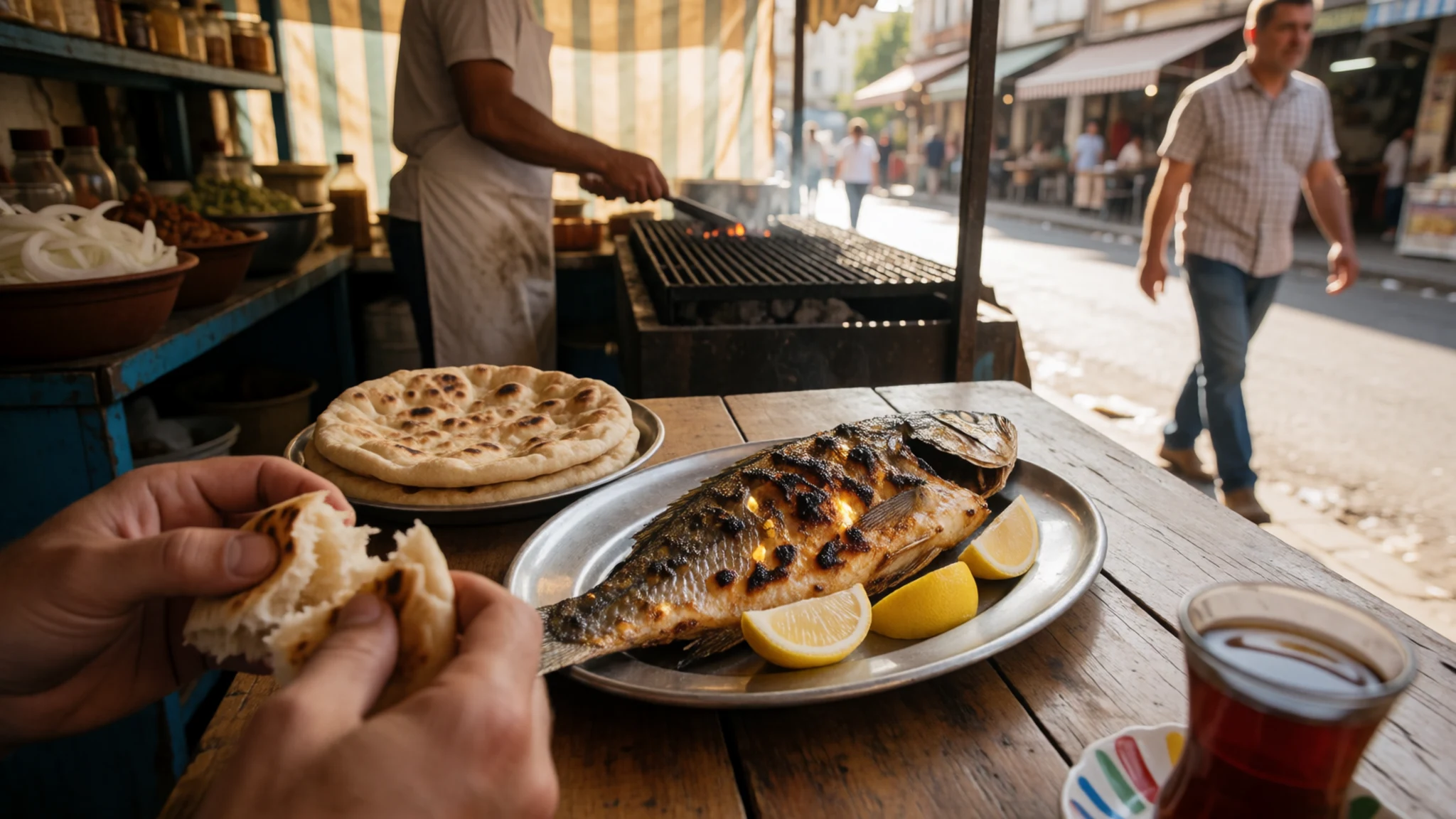
- Koshary — Dedicated koshary shops in the city centre
Egypt's everyday comfort food layers rice, lentils and pasta with a spiced tomato sauce, chickpeas and crisp fried onions. It is filling, cheap and quick, and it suits a hungry traveller between sights.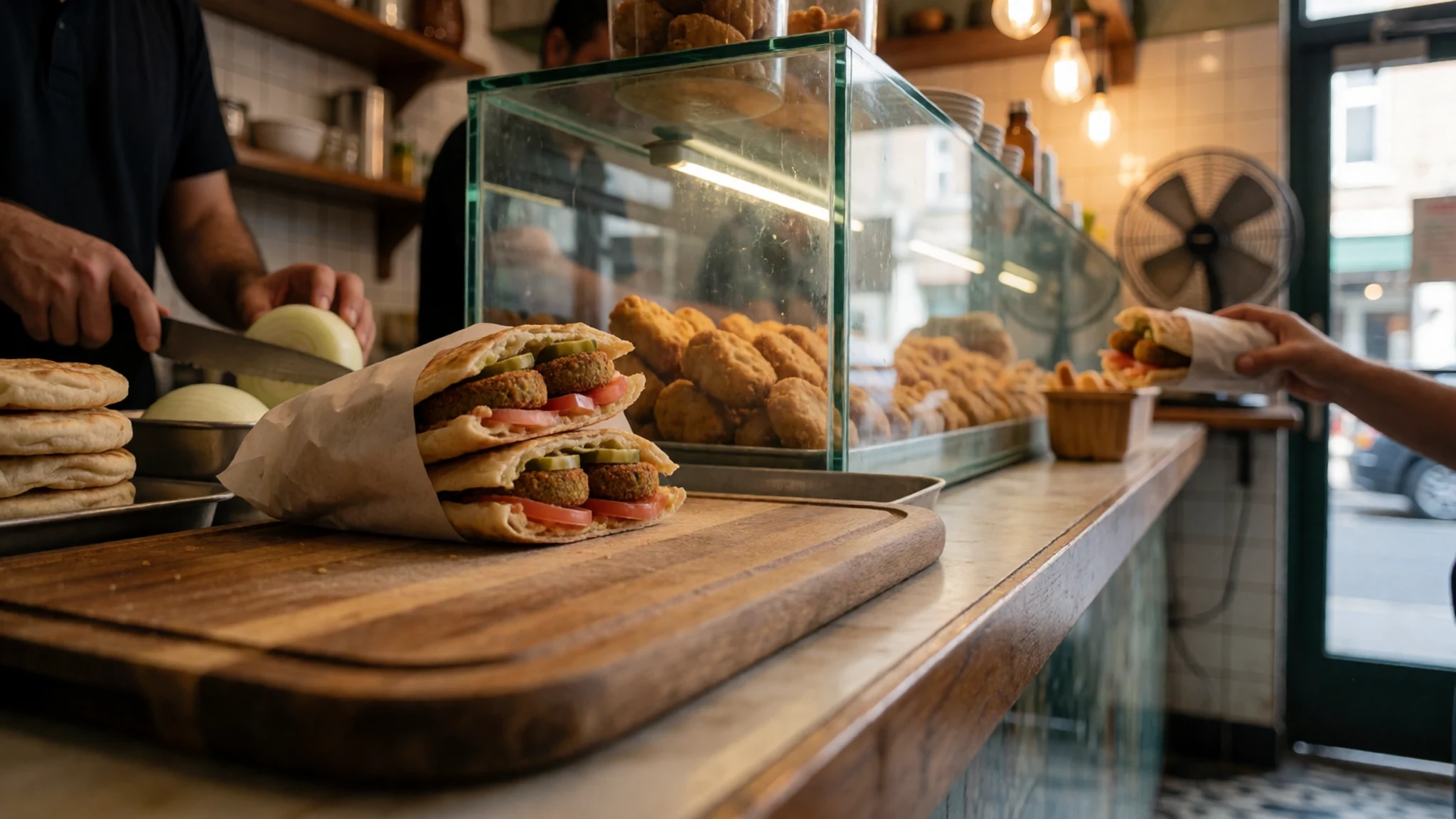
- Ful medames — Morning street stalls and small breakfast shops
Slow-cooked fava beans mashed with oil, lemon and spices are a standard Egyptian breakfast, eaten with flatbread. Many places add falafel, boiled egg or salad. It is a sensible, hearty start to a hot day. - Ta'ameya — Snack counters on 23 July Street
Egyptian falafel is made from fava beans rather than chickpeas, giving it a green centre and a crisp crust. It comes in a sandwich of flatbread with salad and tahini, and makes a good quick lunch. - Mint tea — Pavement cafés and the Corniche
Tea with fresh mint is the usual offer of welcome and a good drink for a hot afternoon. It is normally served sweet, so ask for less sugar if you prefer. Sit and take your time.
Plan it
Best time. October–November and March–April, when days are warm rather than fierce. Summer is a hot desert climate with a recorded high of 49 °C, so June to August is best avoided for walking.
How long. 1–2
Getting there. Cairo is the main gateway. East Delta buses run hourly from Cairo Turgoman and take about 2 hours, and ordinary trains from Cairo Ain Shams station take about 2½ hours. Buses also come from Port Said, Ismailia and along the Red Sea coast. Check current timetables locally.
Budget. low
Tips
- Start walks early and rest in the middle of the day, as shade is scarce
- Carry cash for cafés, buses and small eateries
- Carry drinking water and sun protection at all times
- Trains are basic and unbooked, so buses are usually easier from Cairo
- Allow a day trip from Cairo if time is short, but stay overnight for the evening Corniche
Etiquette
- Ask before photographing people and avoid photographing ports, bridges and security staff
- Dress modestly, with shoulders and knees covered
- Do not eat or drink openly in daytime during Ramadan
Nearby
Sources
- Wikidata Q134514 (CC0)
- Wikipedia: Suez (rev 1382951376) (CC BY-SA 4.0)
- Wikivoyage: Port Suez (rev 5416865) (CC BY-SA 4.0)