St. Martin's Island
St. Martin's Island, Bangladesh
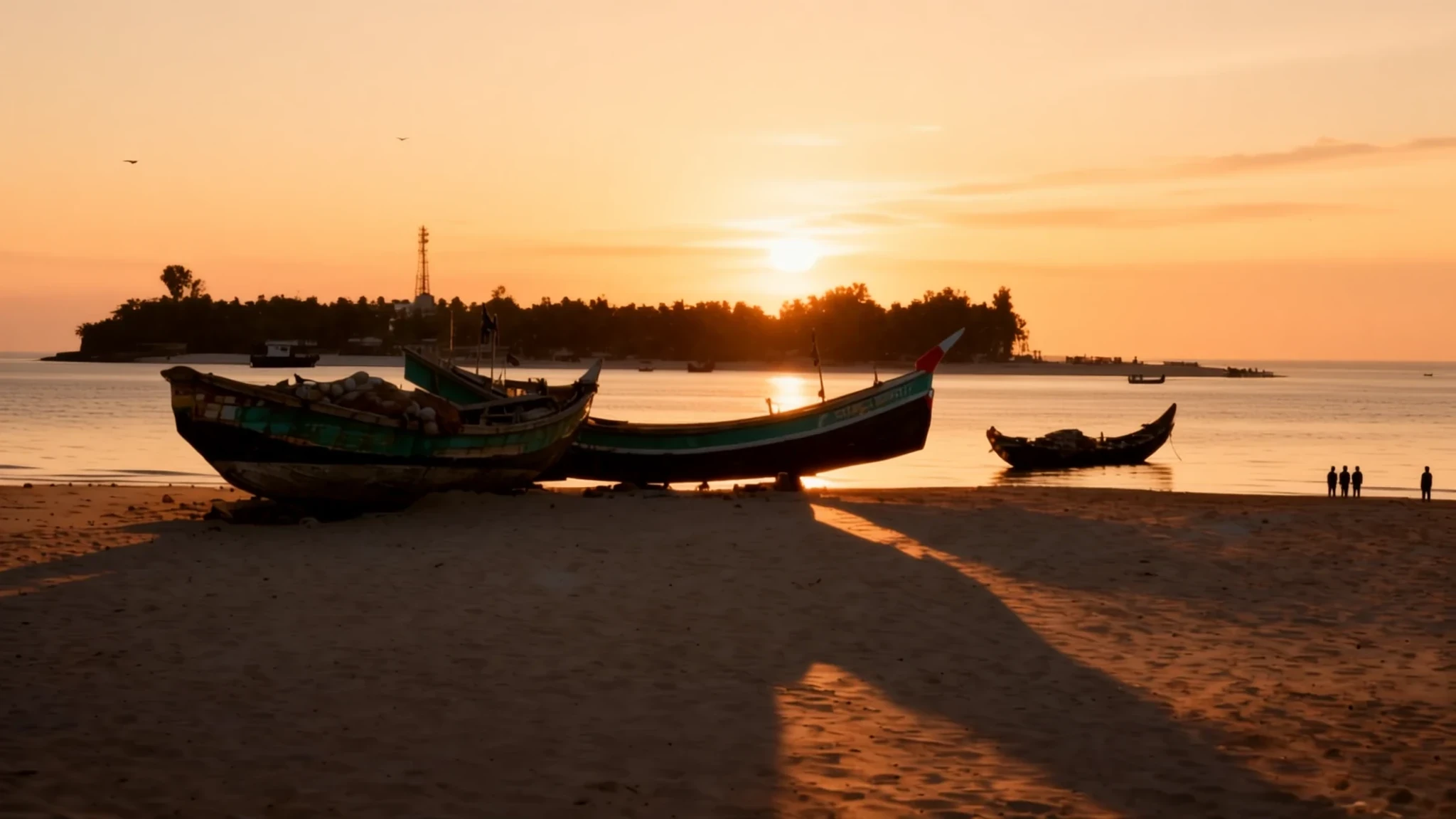
St. Martin's Island is an island of rock and palms, fishing boats and clear shallows, reached by boat from Cox's Bazar.
The place
St. Martin's Island sits in the Bay of Bengal off the southern tip of Bangladesh, a low island of sedimentary rock fringed with coconut palms and a fishing village that still sets the pace of the day. Locally it is called Narikel Jinjira, the coconut island, and that name fits: palms lean over pale sand, and the green of the groves is the first thing a boat sees as the land lifts out of the blue. The island can be walked from the landing to the far shore in a morning, along lanes, a jetty of wooden boats, and a shoreline that shifts from packed sand to rock, with living coral only in sparse colonies. Water on the sheltered side runs clear over shallows where coral heads show at low water, while the open side takes the full weather of the bay. Fishers land their catch beside the village; drying fish and nets belong to the street, rather than to a scene arranged for visitors. Gardens and coconut stands between the houses break the glare. At the southern end a narrow spit, Chhera Dwip, joins the main island when the tide is out and becomes a separate scrap of sand and coral when the tide is in. There is no high street and no city skyline. Electricity is limited, fresh water is precious, hotels run generators until about eleven, and solar keeps a light after they fall quiet. People come for a walkable island of rock and palms, with the long mainland beach lying somewhere to the north and nothing but sea on the horizon.
Its story
St. Martin's Island entered English maps under a saint's name, while the people who fish its waters have long called it Narikel Jinjira. The island lies off the coast of Cox's Bazar and is reached by boat from Cox's Bazar, the Teknaf crossing shut while the Myanmar border is tense, so its working life has always faced the bay rather than the roads inland. Families fish, dry the catch, tend coconut groves and sit out the rough season in low houses built to take the wind. The ground under the village is sedimentary rock, easy to mistake for a reef: living coral is sparse, mainly on the north-east and the far south, Chhera Dwip included, and storms, feet and anchors can still damage it past a season's repair. Holiday traffic is a late arrival. Wooden boats from Teknaf turned a fishing settlement into an overnight escape from the mainland, and guesthouses, tea stalls and day-trippers followed. Fresh water was already scarce, and the rock of a small island had little margin to spare. Chhera Dwip, the spit at the southern end, became the walk people time for low tide, and the western sky became the hour when the sand fills with cameras. Under that newer bustle the older day continues. Nets are mended in the shade, the catch is sorted on the beach, and the boat simply does not leave when the sea is wrong. St. Martin's Island is a fishing place of rock and palms learning, in public, how many guests a small shore can carry.
What to see
- Western shore — Western shore, Teknaf
St. Martin's Island's western shore is the sunset strand, while the boats land on the north-eastern shore, and Sunset Point, a rocky north-west peninsula, exists only at low tide. Wooden craft sit in the shallows, coconut trunks frame the sand, and the village begins a few steps inland. At low water the bottom shows sand and rock; at high water the same strip narrows under the palms. The early morning still belongs to the fishers, before day-trippers crowd the sand.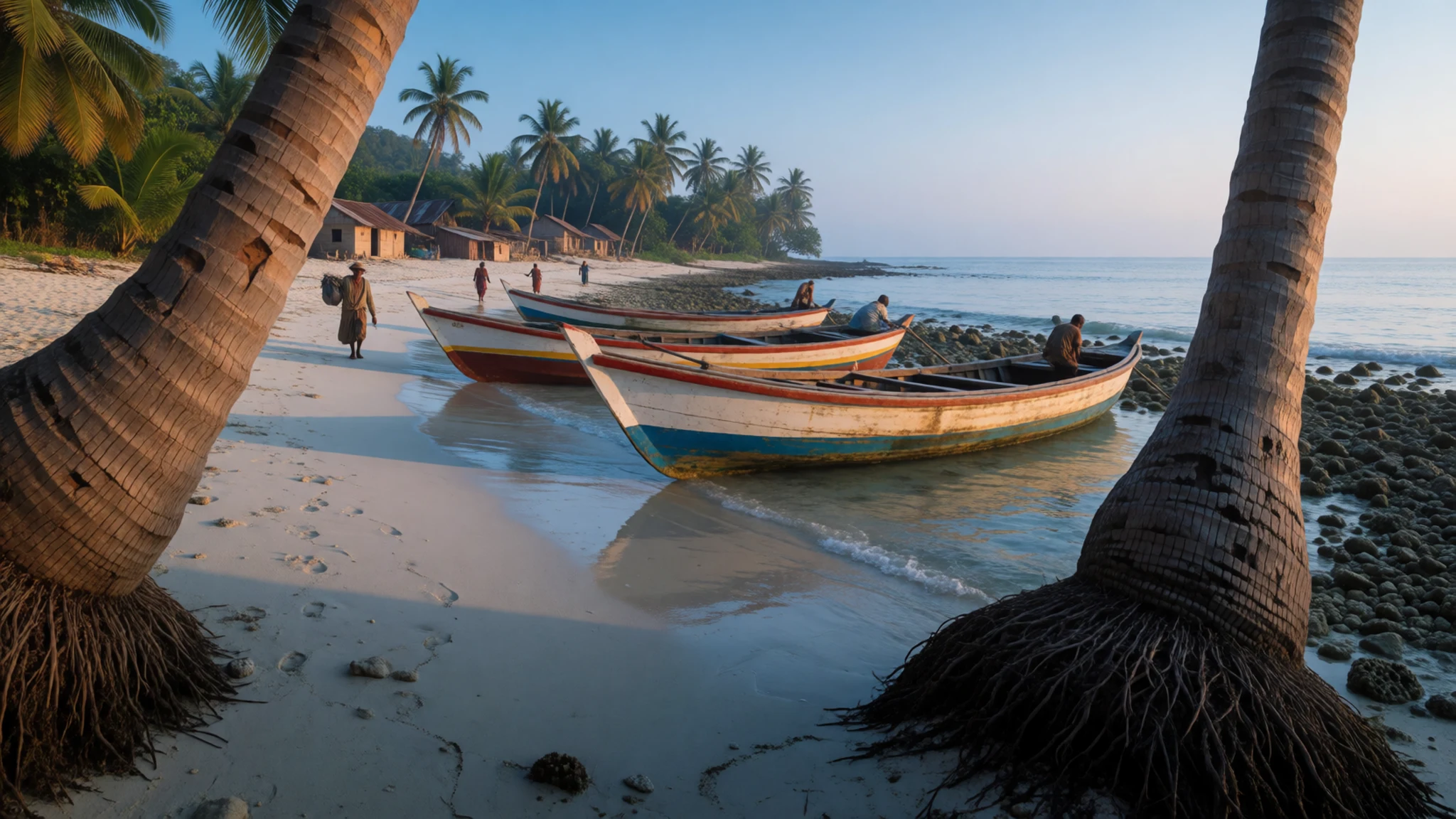
- Chhera Dwip — Southern spit
St. Martin's Island ends in the south at Chhera Dwip, a spit of sand and coral that low tide joins to the main island and high tide cuts free. The crossing is timed to the water: people walk while the bar is dry and come back before the gap fills. Underfoot it is reef as much as beach, with pools, coral rubble and plants holding the sand.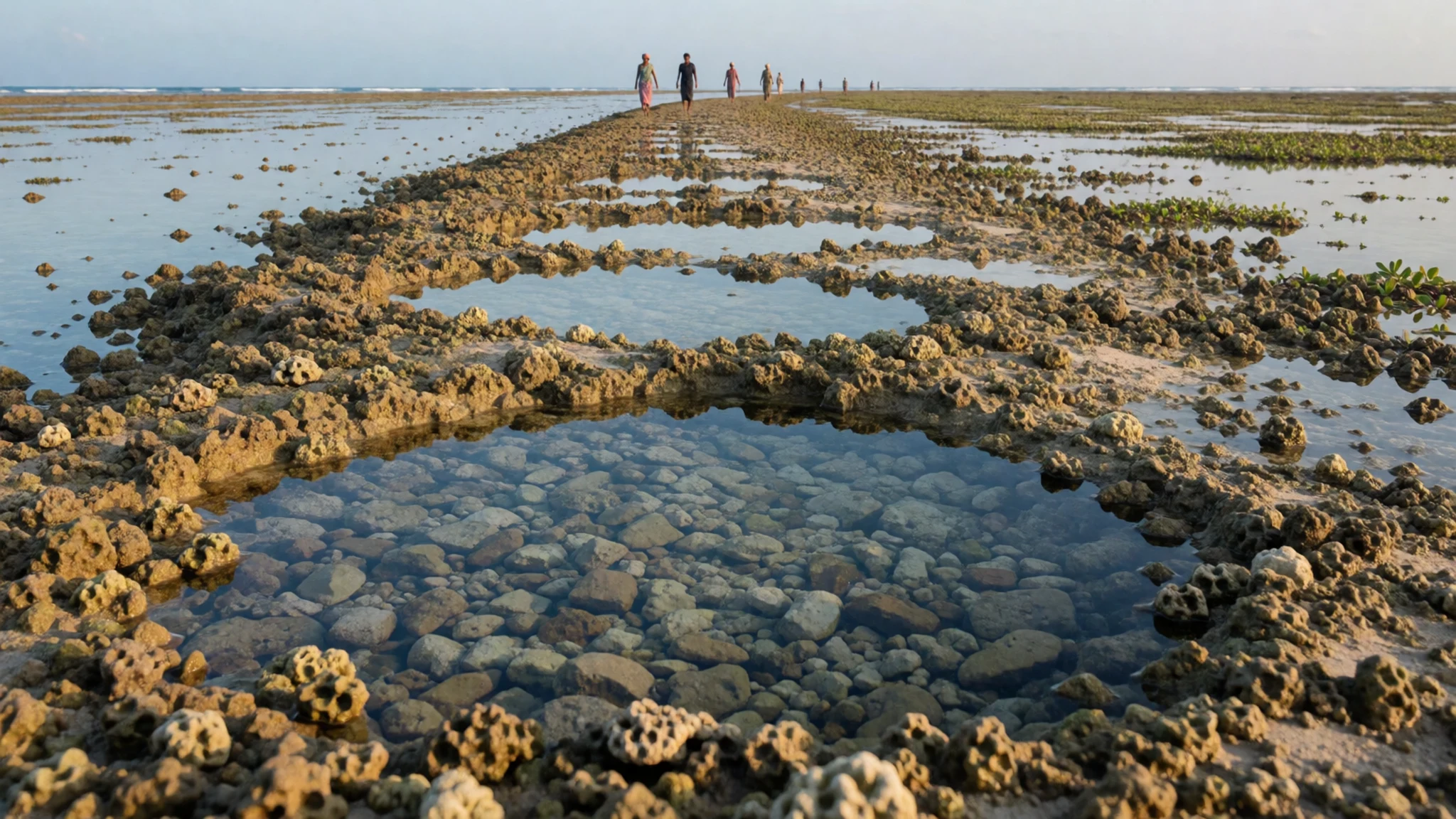
- Sunset on the western sand — Western shore
St. Martin's Island faces west into open water, so the end of the day is a public event along the sand. The sun drops into the bay, and clear evenings turn the sky a deep red. Boats become silhouettes and the palms turn black against the colour. The beach by the guesthouses fills at that hour; farther along the sand the sky is the same and the noise drops.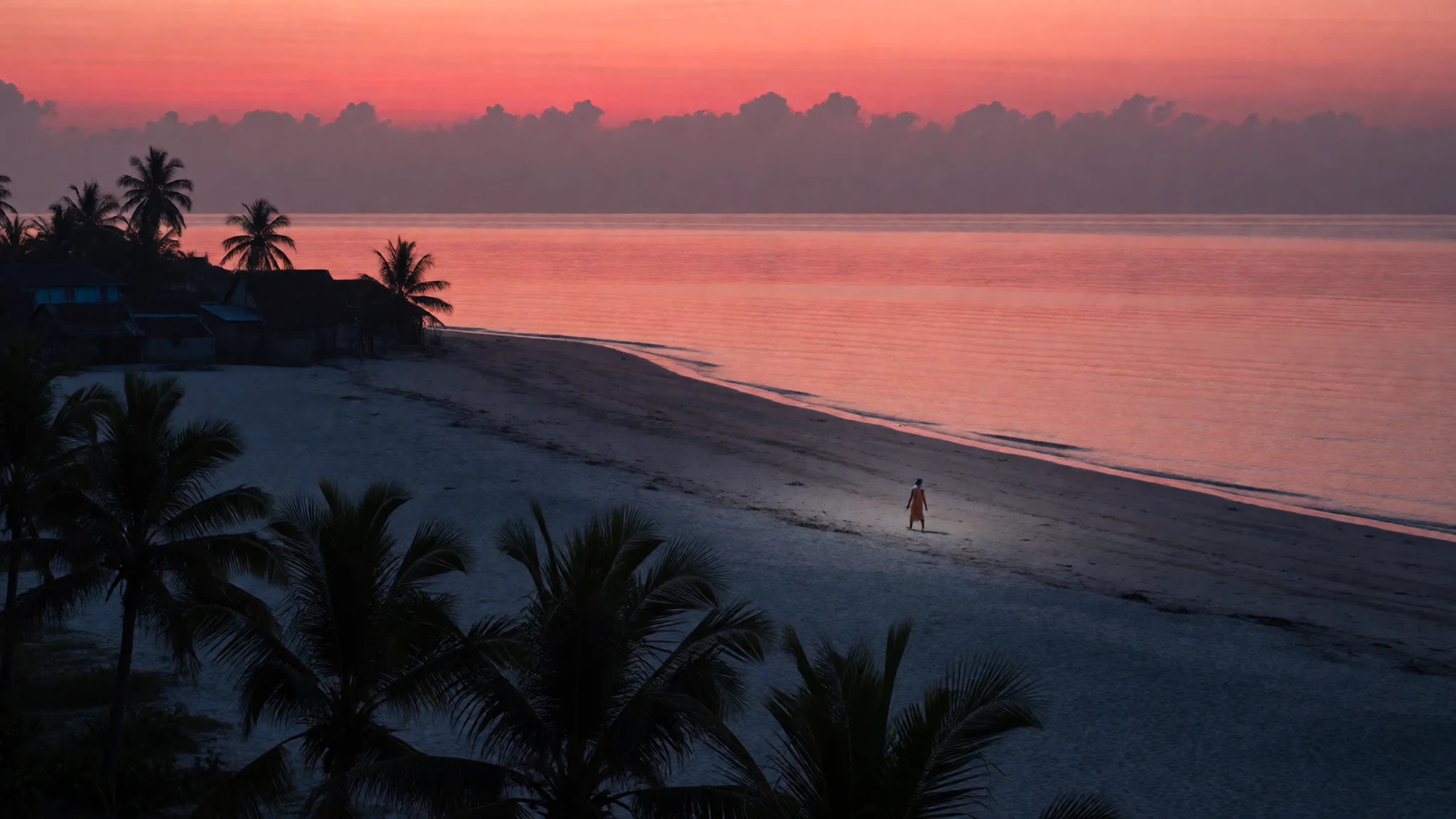
- Village lanes and the Union Parishad — Village centre
St. Martin's Island behind the beach is a fishing village under coconuts, not a strip of resorts. Lanes run between houses, yards where fish is drying, and small shops that cover the day's needs. The Union Parishad office marks the civic centre of a settlement with little formal streetscape. A walk here shows the working island the shoreline leaves out: nets, poultry, children and the real shade of the palms.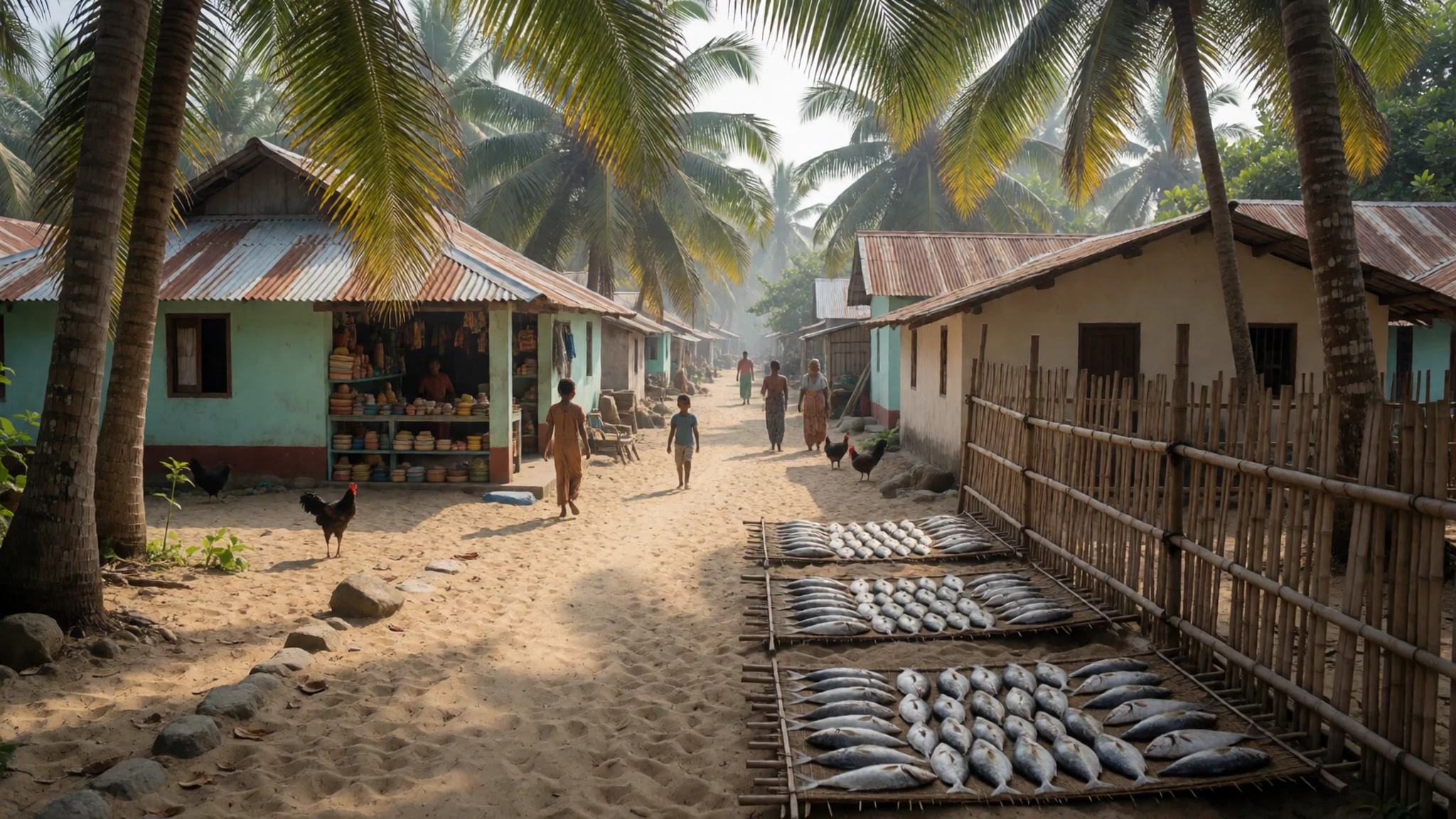
- Coral shallows — Inshore reef
St. Martin's Island's shallows keep people in the water long after a quick dip would have ended. On a calm day the sea is clear enough to show rock, weed and sand a short way from shore. The rock sits close in and is often taken for a reef; living coral is sparse, and feet and anchors break what colonies remain. Glass-bottom boats work that edge when the surface is flat.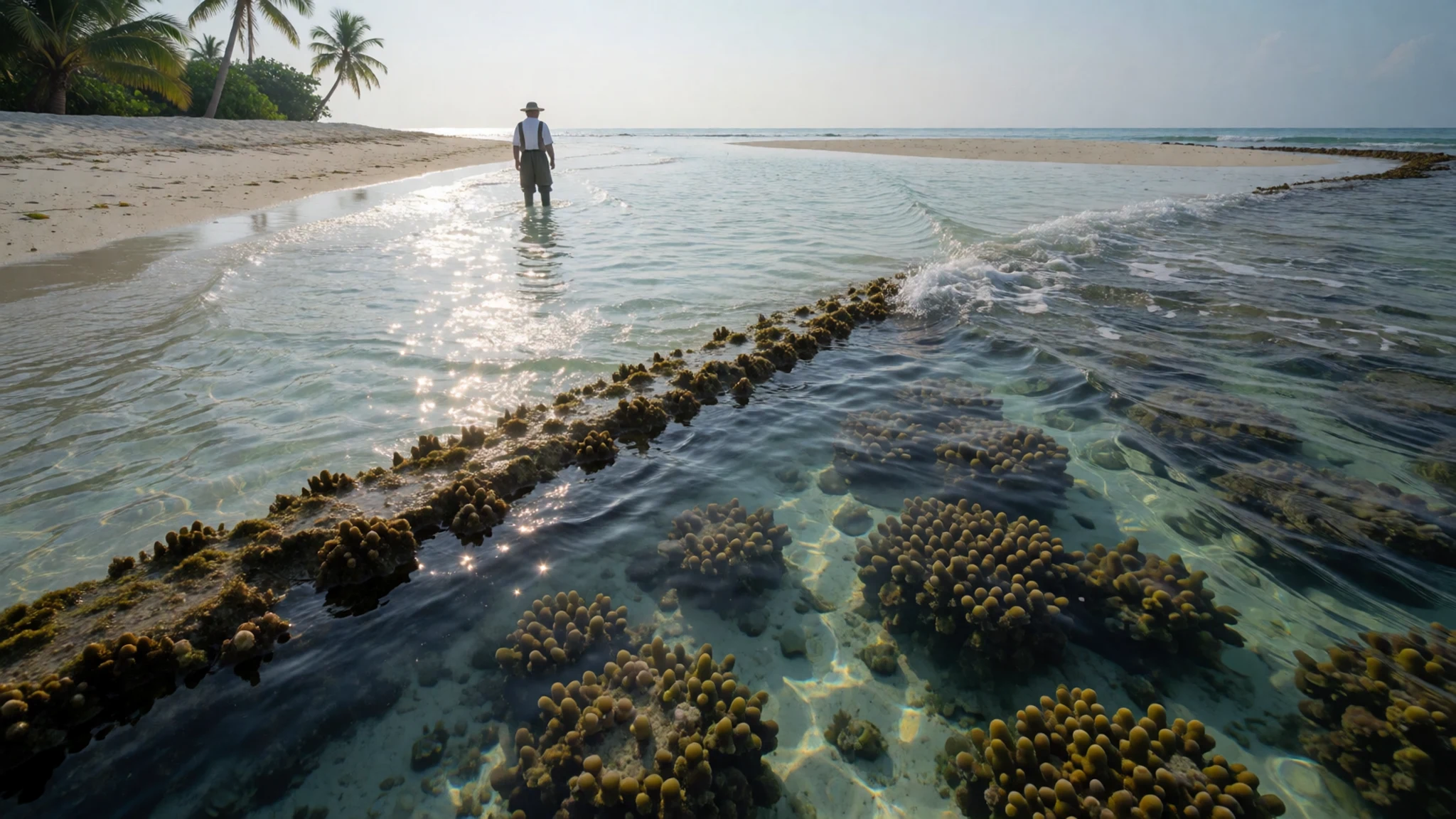
Culture
St. Martin's Island lives by the fishing calendar and by the call to prayer, a Bengali Muslim village whose hospitality assumes that guests will behave like guests. The working day starts with boats and ends with fish sorted, dried and cooked, while coconut palms supply shade, food and a kind of savings. Bengali is the language of the lanes, and everyday manners follow rural coastal Bangladesh. People are used to visitors, yet houses, yards and drying racks remain private. Dress in the village stays modest even when the beach is full of swimwear, and alcohol is not part of ordinary social life. Religious festivals follow the Muslim calendar, and an Eid or a wedding can fill the lanes on a day when the beach looks ordinary. Fresh water, fuel and most supplies come across the same sea that visitors cross, so rubbish and noise stay on the island after the boats leave. Children grow up between the jetty and the groves, and a visitor who treats the place as a public stage will feel the difference quickly. On St. Martin's Island, ask before photographing people, keep swimwear to the beach, and do not stand on living coral.
What to wear
St. Martin's Island dresses as a coastal Bangladeshi village, with cotton and lungi cloth made for heat, salt and work in the boats. Men wear the lungi, often checked, hitched up for wading or fishing, with a short-sleeved shirt or a vest when the sun is high; for prayer and for Eid the same men change into a panjabi. Women wear the sari or the salwar kameez, with a scarf that covers the hair in the village and comes off, or stays, according to the person and the hour. The textiles are everyday cotton rather than ceremonial silk: light, washable, and able to dry in the wind off the bay. Young people and shopkeepers now mix in jeans, football shirts and sandals, especially around the jetty when the tourist boats are in, but the lungi and the sari remain what the island actually works in. A visitor should copy the climate and the custom. Loose cotton, a hat and sandals that can get wet suit the sand and the coral; swimwear belongs on the beach, with a shirt or a scarf over it as soon as the path enters the lanes. Heels and heavy soles are a poor match for sand, rock and reef, and shoes come off at the door of a home or a mosque.
What to eat
- Shutki bhorta — village eateries near the jetty
On St. Martin's Island, shutki bhorta is dried fish mashed with onion, chilli and mustard oil, eaten with hot rice. The yards dry the local catch, and a village eatery will serve the mash beside a mound of rice when the boats have been in.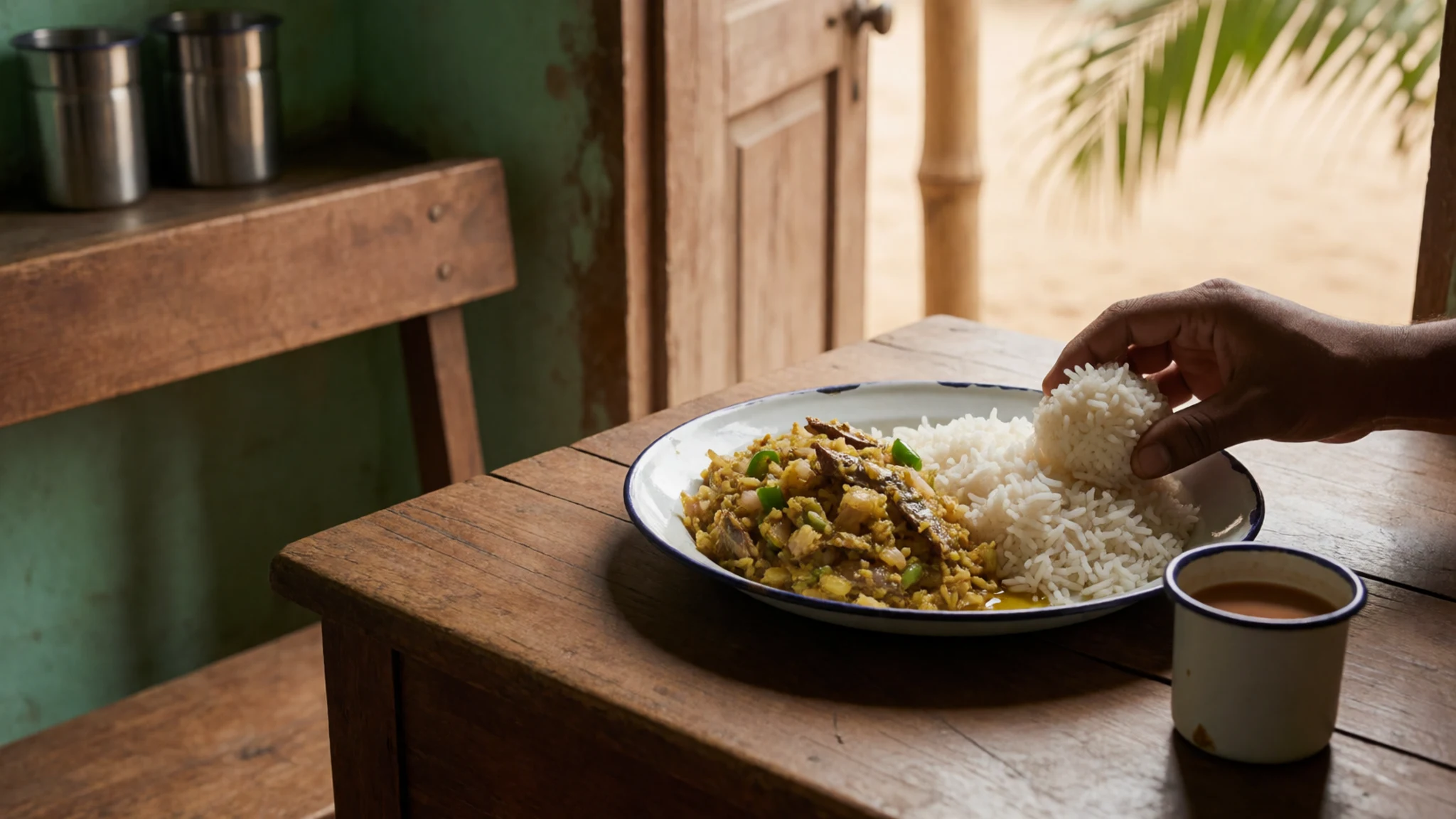
- Macher jhol with rice — lane-side eateries in the village
Macher jhol on St. Martin's Island is a light fish curry, more broth than gravy, poured over plain rice at lunch. The fish is the morning's landing, simmered with turmeric, onion and green chilli, and served in lane-side eateries beside dal and lime.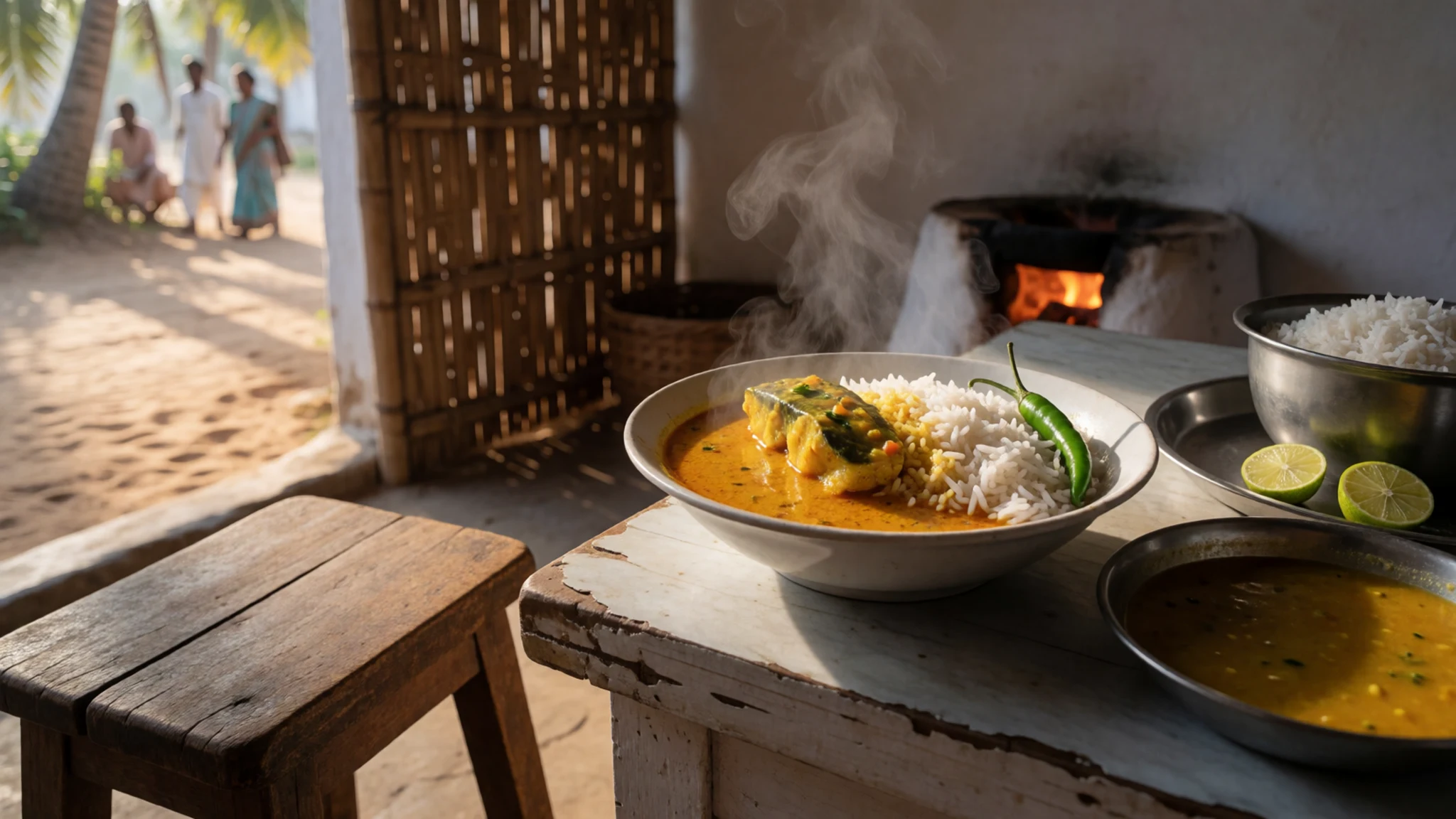
- Crab curry — beachside eateries
Crab on St. Martin's Island is cooked when the boats bring it in, usually as a dry spice fry or a thin curry eaten with rice. It follows the catch rather than a fixed menu. Beachside eateries cook it to order later in the day, heavy on chilli. - Green coconut — stalls near the jetty and the beach path
Coconut on St. Martin's Island is food, drink and shade at once. A green coconut is the cold drink of a hot walk, sold from stalls near the jetty and along the beach path, and the mature nut goes into village curries and sweets. - Dal and rice — the simplest village eateries
Dal and rice on St. Martin's Island is the meal that is there when the sea has been too rough for a good catch. Yellow lentils, a tarka of onion and dried chilli, and a pile of rice fill the plate at the simplest eateries. - Grilled sea fish — beachside cooks near the jetty
Fresh fish grilled on St. Martin's Island is the catch split, rubbed with turmeric and salt, and cooked over a fire until the skin blisters. Beachside cooks serve it through the afternoon with onion, chilli and rice, close to the jetty where the boats unload.
Plan it
Best time. November to February is the most comfortable time, with calmer seas and cooler, drier air; May is the hottest month and July the wettest, March to July is the cyclone off-season, and a nine-month visitor closure from 1 February 2025 shuts the island for far longer than a rough-weather pause.
How long. 2–3
Getting there. Reach Cox's Bazar by air or by road and take a boat from there for the last leg; the Teknaf crossing is closed while the Myanmar border is tense. St. Martin's Island has no road from the mainland, so the crossing is the whole arrival, and it runs only when the weather allows.
Budget. mid
Tips
- Reserve the Cox's Bazar boat a day before you travel in the busy winter weeks, when a calm forecast fills the seats.
- Carry cash, because card payment is rare once you leave Cox's Bazar.
- Bring sealed drinking water or buy it on arrival; fresh water on the island is limited.
- Time the walk to Chhera Dwip for a falling tide and start back before the bar floods.
- Walk at first light if you want the beach with fishers rather than with day-trip crowds.
- Confirm the island is open before you travel; the long visitor closure and bad weather both stop the boats.
Etiquette
- Ask before you photograph people, a catch being landed, or the inside of a yard.
- Keep swimwear to the beach and cover shoulders and legs in the village and at the mosque.
- Do not stand or drag a boat across living coral.
- Carry rubbish off the island; there is little collection once you are there.
Nearby
Sources
- Wikidata (CC0)
- Wikipedia: St. Martin's Island (CC BY-SA 4.0)
- Wikivoyage: St. Martin's Island (CC BY-SA 4.0)