Dhaka
Dhaka, Bangladesh
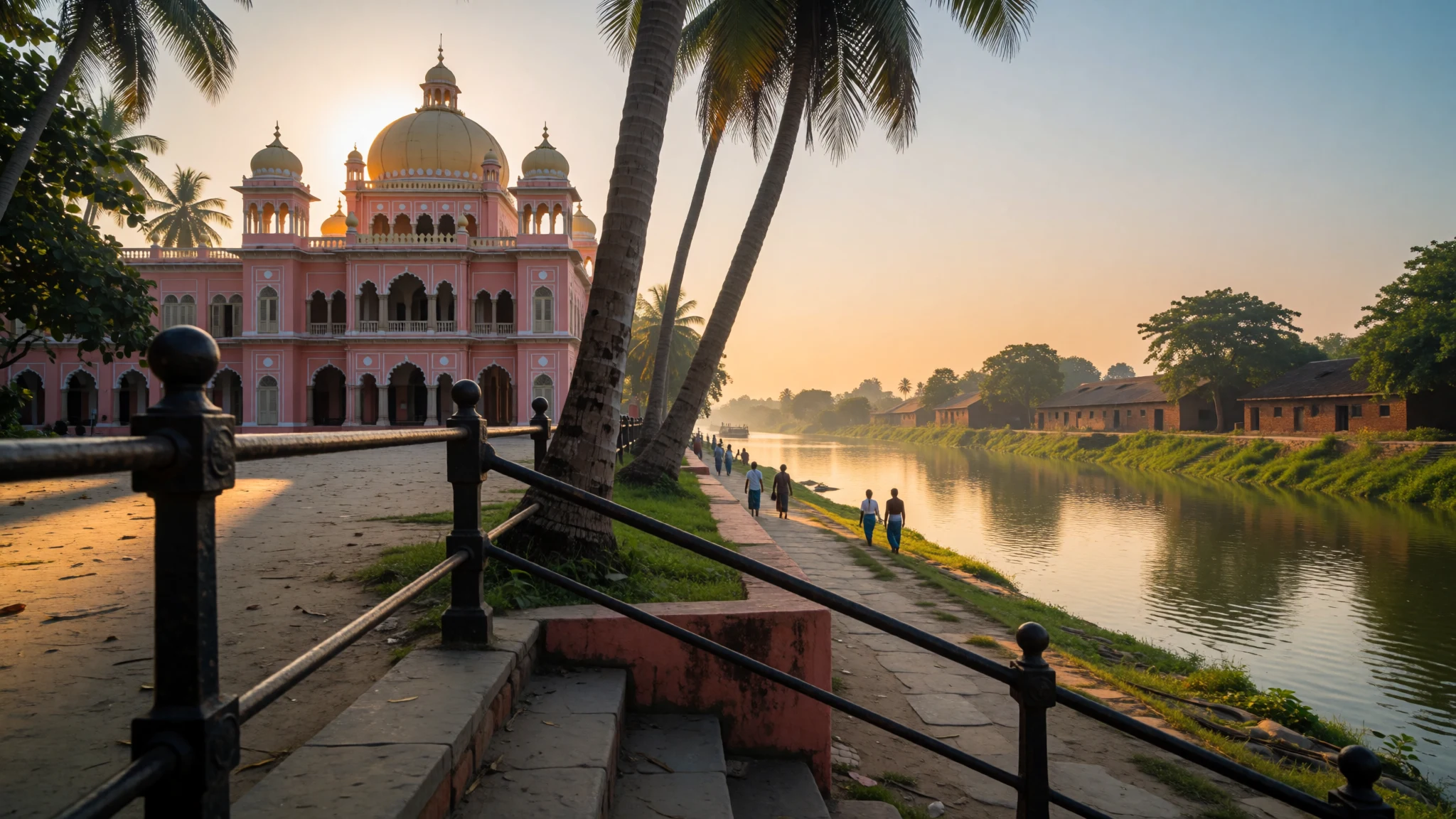
Dhaka is a loud, river-ringed capital where old Mughal lanes, rickshaw art and lively street food sit a short ride apart.
The place
Dhaka, the capital of Bangladesh, sits on the low delta plain at an elevation of about 4 m, hemmed in by the Buriganga, Turag, Dhaleshwari and Shitalakshya rivers. About 16.8 million people live in the city, and the density shows in everything: traffic that moves in surges, pavements that double as workshops, rooftops that double as gardens. Water shapes the layout. The Buriganga to the south carries the launches and ferries of the old river port, while lakes and canals in the middle of town give the newer districts rare open space. The city has two faces, and most visitors meet them in this order. Old Dhaka, south of the centre, is a tangle of lanes, trading houses and mosques where crafts are still grouped street by street. Further north, Dhanmondi, Gulshan and Banani are wider, greener and more polished, with cafés, galleries and glassy towers. In between lie the university quarter and the parliamentary precinct, where colonial arches and modern concrete stand close together. Bengali is the language of daily life, and a few words of it earn real warmth, though English is common in offices and upmarket restaurants. Dhaka is not a gentle first stop. Heat, humidity, noise and slow road journeys wear people down, and distances that look short on a map can take an hour. Those who give it a few unhurried days, start early and rest at midday tend to leave fond of it.
Its story
Dhaka's story as a city starts well before it became a capital. Settlements existed on this part of the delta in the first millennium, within the old district of Bikrampur under the Sena dynasty. Later the area fell under Sonargaon, a regional seat for the sultanates of Delhi and Bengal, and a long trunk road tied it to northern India, Central Asia and the port of Chittagong. Power in Bengal had moved between several capitals, Gour among them, which faded once the Ganges shifted away from it. In the late sixteenth century the Mughals found their push into eastern Bengal blocked by a confederation of twelve chieftains, led from Sonargaon by Isa Khan and then his son Musa Khan. The empire wanted to secure that frontier and look onward to Assam and Arakan, and Dhaka suited the purpose. It became a provincial capital and was renamed Jahangirnagar after the reigning emperor, Jahangir. For two stretches of the seventeenth century it served as the seat of Mughal Bengal, and merchants from across Eurasia grew rich on muslin, the fine cotton cloth for which the region was famous. Princes and imperial relatives lived here, and their mosques, forts and mansions still anchor Old Dhaka. Later layers followed: Company rule, the British Raj, the Dominion of Pakistan, and finally independence, with Dhaka as the capital of Bangladesh. The university and its Language Movement monument sit at the heart of that modern memory.
What to see
- Ahsan Manzil — Old Dhaka, Buriganga riverfront
A pink, domed palace on the Buriganga bank, built as the grand residence of a local family of nawabs and now run as a museum. Period-furnished rooms and upstairs terraces look over the river. Go in the morning for softer light and thinner crowds, and check the official site for opening days.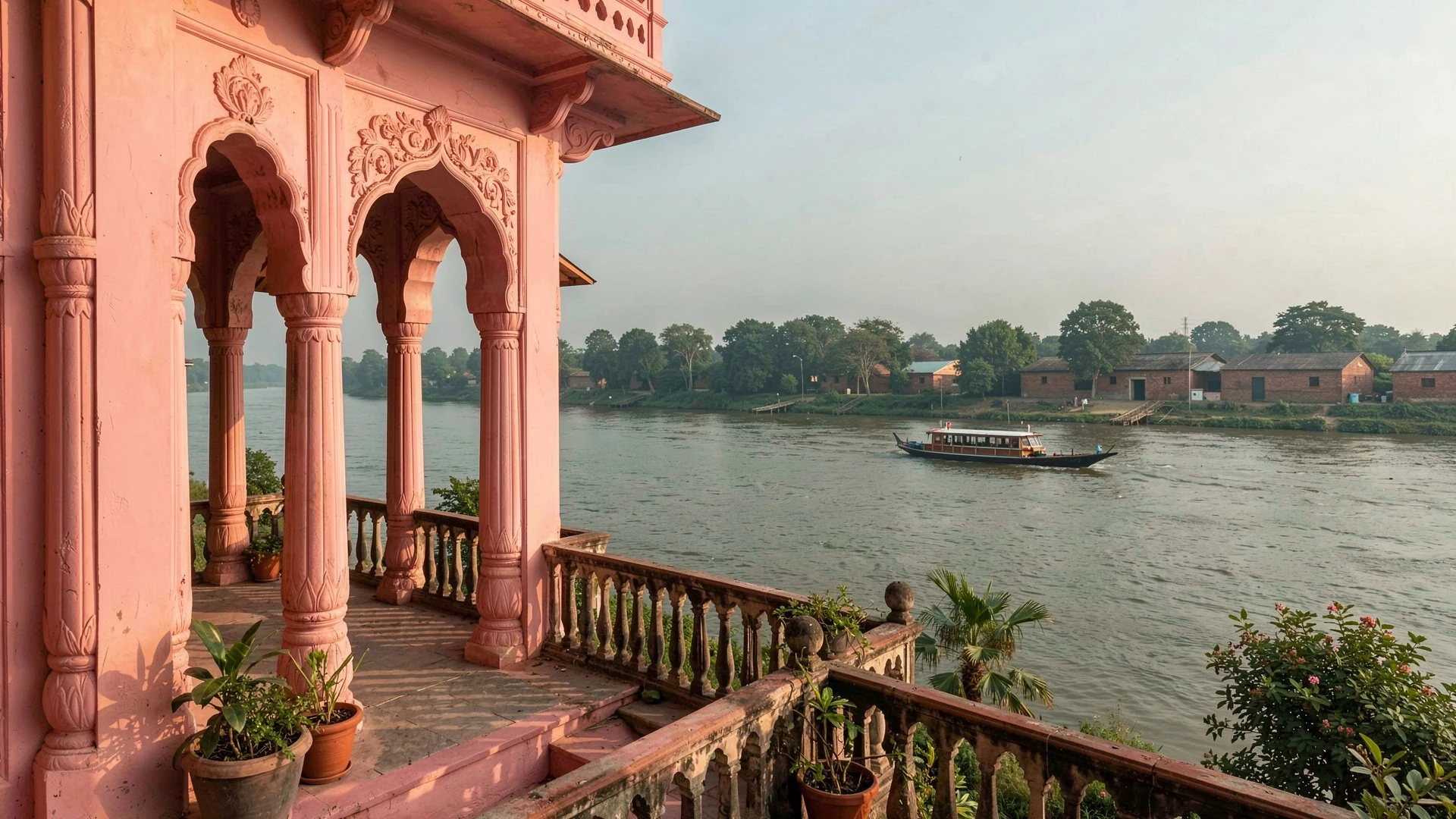
- Curzon Hall and the University of Dhaka — Central Dhaka, university campus
Curzon Hall is a colonial-era building that blends European and Mughal ideas, with arches and shaded verandahs, and now houses the science faculty. The surrounding campus holds the Central Shaheed Minar, the national monument to the Bengali Language Movement, and the tomb of the poet Kazi Nazrul Islam.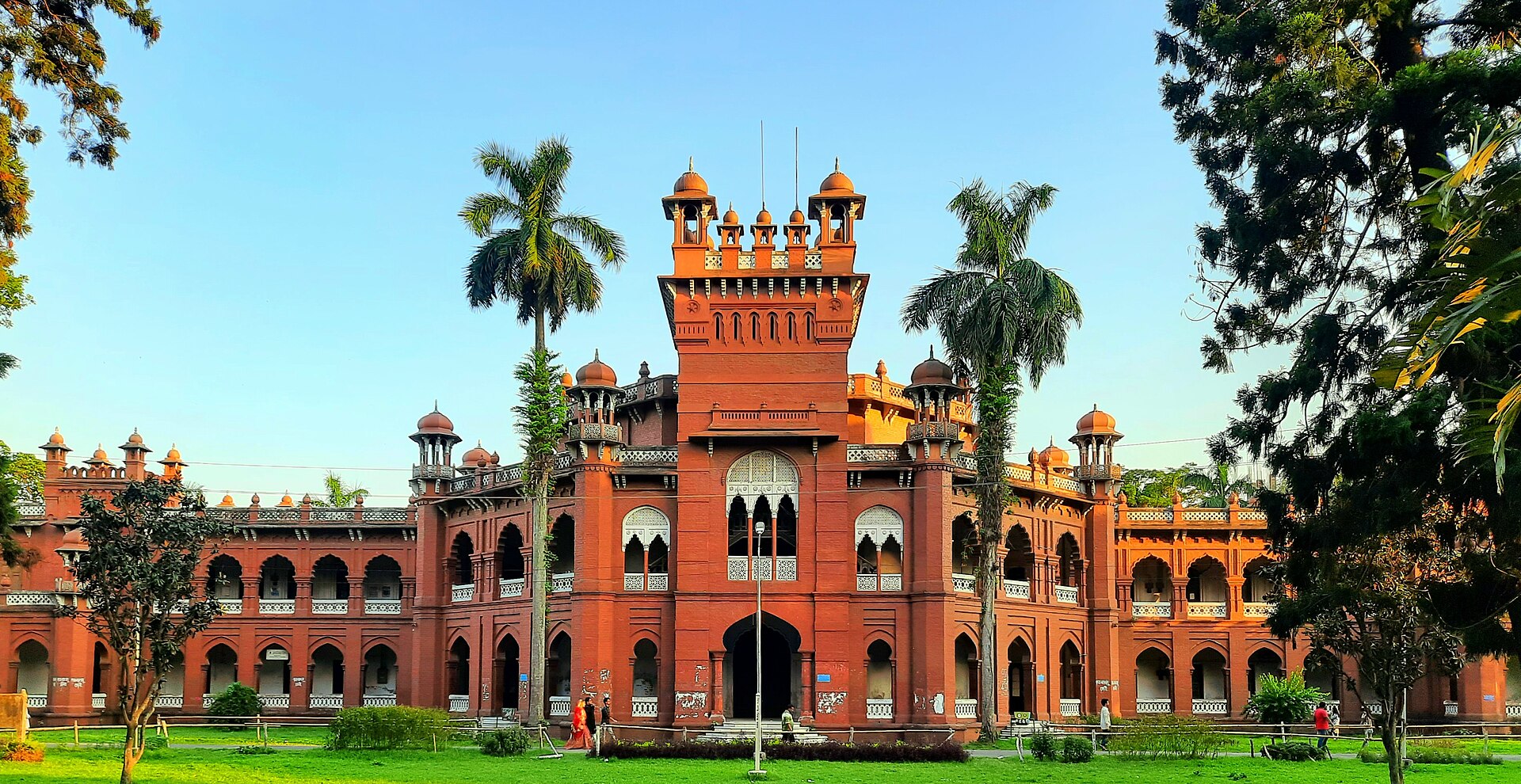
- National Parliament complex — Sher-e-Bangla Nagar, central-north Dhaka
The parliament building is a monumental composition of concrete, with huge geometric openings, set in broad grounds with water around it. It reads best from the outside at golden hour. Entry depends on sitting days and security rules, so check official arrangements. The planetarium named after Sheikh Mujibur Rahman is close by.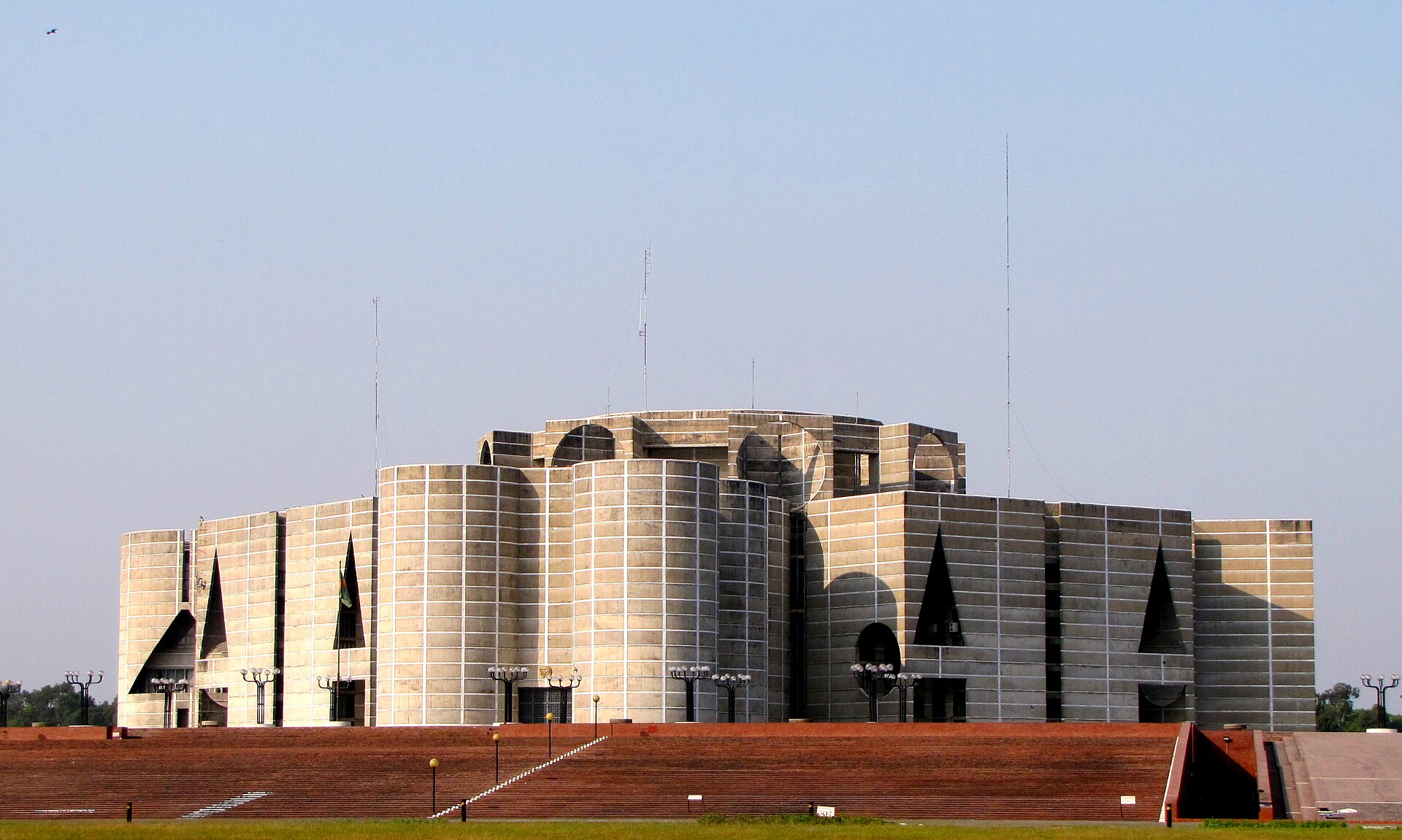
- Hatirjheel — Central Dhaka, Tejgaon to Rampura side
A lakeside project in the middle of the city, threaded with bridges, flyovers and walkways over a large natural lake. Families and couples stroll the waterfront at sunset, when the towers light up and the traffic seems to slow. It is a useful breather between the denser sights of Old Dhaka.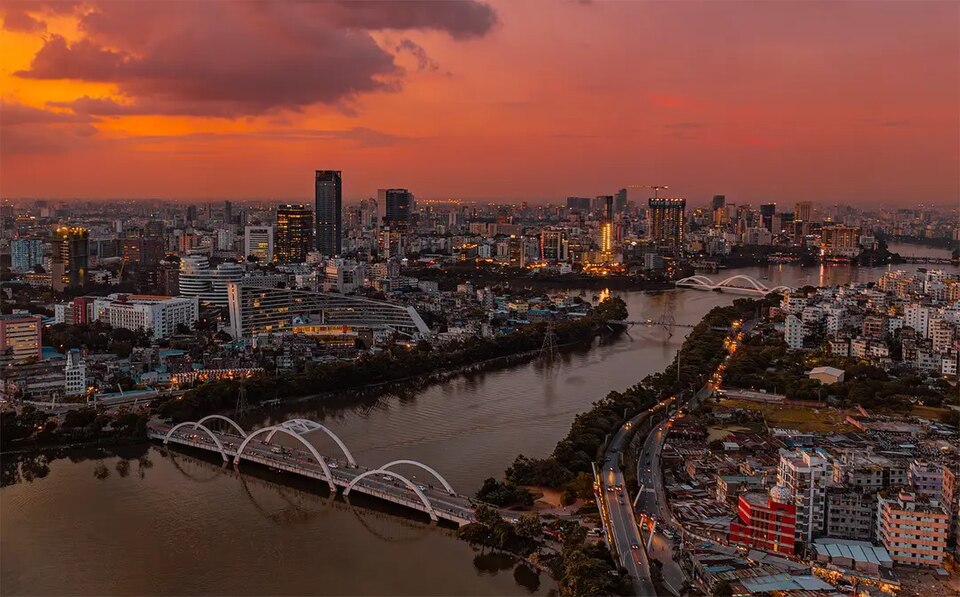
- Baitul Mukarram National Mosque — Paltan, central Dhaka
The national mosque is a large, modern landmark in the commercial heart of the city, busiest around Friday prayers. Access for non-worshippers varies, so ask politely at the gate and follow staff guidance. Modest dress is expected, and the surrounding market streets are good for people-watching afterwards.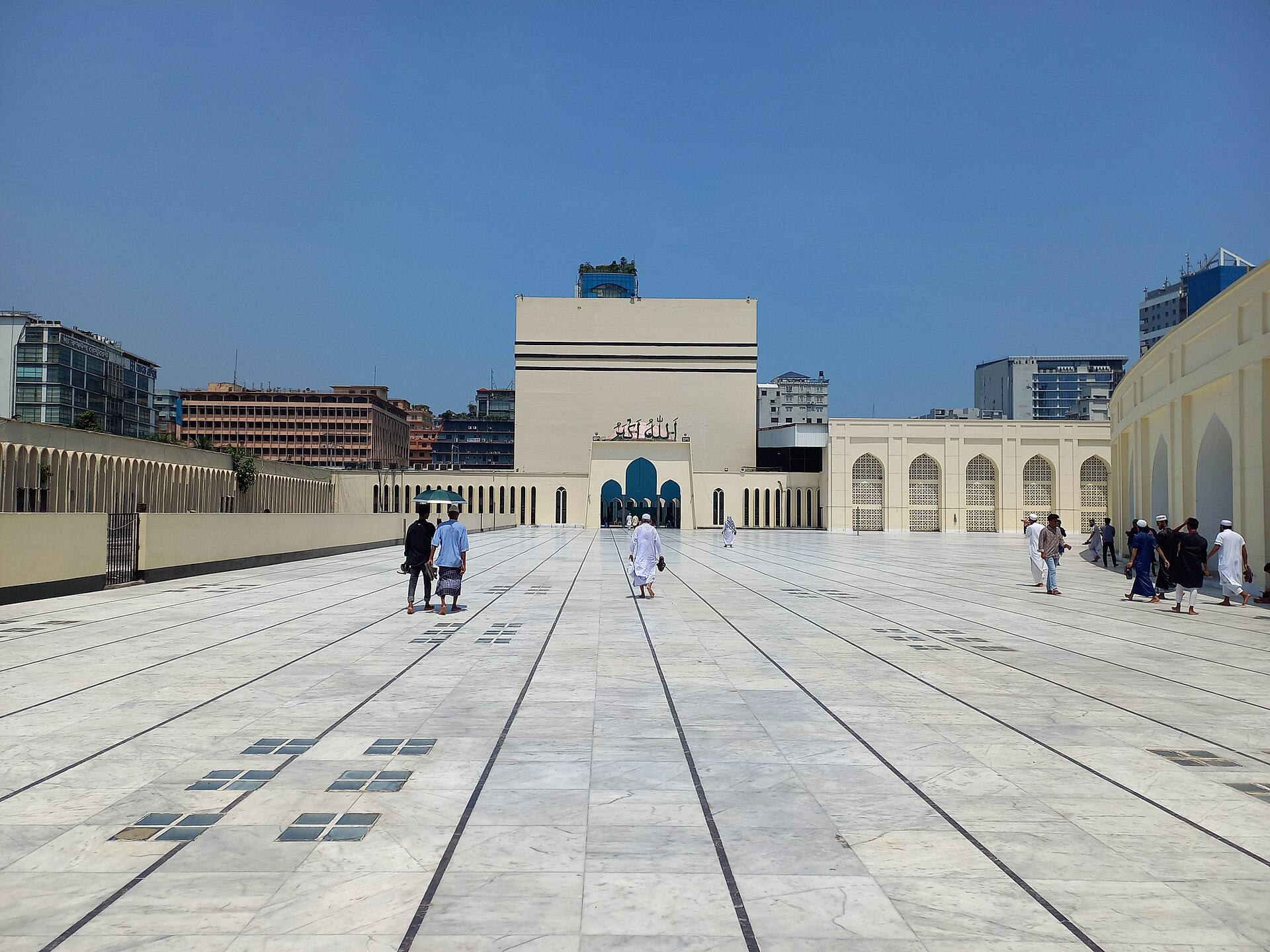
Culture
Dhaka is a major centre for Bengali literature, and the city's bookshops, poetry readings and tea-stall debates keep that tradition alive. Its heritage also draws on older Urdu and Persian writing. Novels such as Tahmima Anam's A Golden Age and Akhteruzzaman Elias's The Soldier in the Attic set the city's streets and wartime years on the page, and make good reading before a visit. The Bengali Language Movement is the emotional core of modern Dhaka. The Shaheed Minar on the university campus is where people lay flowers in remembrance, and the language's place in the national story is hard to overstate. The region around Dhaka has produced fine cotton textiles for centuries, and muslin weavers once supplied the courts of Bengal and Delhi. Today craft shows up in other ways: painted cycle-rickshaws in loud floral and film-poster colours, brass and bangle workshops in the old lanes, and the habit of adda, long unhurried conversation over tea. Hospitality is real, and visitors will often be asked where they come from, whether they like the city and whether they have eaten. Religion shapes the rhythm of the day, with the call to prayer carrying across neighbourhoods five times daily and Fridays quieter in the morning. Visitors should dress modestly, remove shoes before entering any mosque or prayer space, and ask before photographing people, especially women and worshippers.
What to wear
Traditional dress in and around Dhaka centres on cloth. The city's name is tied to muslin, a gauze-fine cotton, and to jamdani, a patterned weave in which motifs are worked into the fabric on the loom. Jamdani saris are worn at weddings and festivals. Women also wear cotton and silk saris for everyday occasions, while men wear the lungi at home and the panjabi, a long collarless shirt, for prayers and celebrations. At Pohela Boishakh, the Bengali new year, red-and-white saris and panjabis fill the streets. Day to day, Dhaka dresses practically for heat. Many women wear salwar kameez with a light scarf, or saris for work, and younger people often mix jeans and kurtas. Men wear trousers and shirts in offices and panjabis on Fridays. Visitors should pack light, loose cotton or linen that covers shoulders and knees, which also protects against sun and mosquitoes. Women will feel more comfortable with a scarf to hand for mosques and shrines, and men should avoid shorts away from tourist hotels. Footwear matters: sandals or slip-ons are easy to remove at prayer spaces, but closed shoes protect feet on broken pavements and in the monsoon, when streets flood quickly. A small umbrella is useful from late spring through the rains.
What to eat
- Kacchi biryani — Old Dhaka eateries, Chawkbazar area
Mutton and rice cooked together with yoghurt and spices, usually served with a sweet-sour drink such as borhani. It is an Old Dhaka classic, and the old-quarter eateries around Chawkbazar and Nazira Bazar make it a lunchtime ritual. - Bakarkhani — Old Dhaka bakeries, lanes near Chawkbazar
A thick, crisp, layered flatbread, often eaten with tea in the morning or alongside curries. Traditional bakeries in the old lanes bake it in large clay ovens, and a warm piece from the oven is the point. - Fuchka and chotpoti — Street stalls near the university and in Dhanmondi
Hollow, crisp shells filled with spiced chickpeas, potato and tamarind water, eaten standing at the stall in a few quick bites. Chotpoti is a similar spiced chickpea plate. Choose busy stalls with fast turnover. - Hilsa with mustard — Home-style Bengali eateries across the city
Hilsa, the delta's silvery river fish, is steamed or cooked in mustard paste and eaten with rice, with a lot of fine bones to work through. It is seasonal, and home-style eateries do it best in the rainy months. - Mishti sweets — Neighbourhood sweet shops, especially in Old Dhaka
Bengali sweets such as rasgulla and pantua, soft milk-based balls soaked in syrup and sold in white and dark varieties. Locals buy them by the box for guests, and a small tasting plate is an easy introduction.
Plan it
Best time. November to February, when days are drier, cooler and less humid and walking between sights is bearable. March to May turns hot and sticky, and the monsoon from June to September brings heavy downpours and flooded streets.
How long. 2–3
Getting there. Fly into Hazrat Shahjalal International Airport on the northern edge of the city, then take a ride-hailing car or taxi into town; allow generous time for traffic. Trains connect most major Bangladeshi cities with Dhaka, and the Maitree Express runs from Kolkata three times a week. Long-distance buses leave from several terminals around the city.
Budget. low
Tips
- Start early: mornings are cooler and the traffic is lighter, especially for Old Dhaka
- Carry small notes in cash for rickshaws and street food, and use ride-hailing apps for fixed fares
- Drink filtered or bottled water and eat at busy stalls with fast turnover
- Book intercity trains in advance at the station or through a travel agent, as foreign cards often fail online
- Check current travel advice and avoid demonstrations and large crowds
Etiquette
- Remove shoes before entering mosques and prayer spaces, and dress modestly
- Ask before photographing people, especially women and worshippers
- Use the right hand for eating and for passing things
Nearby
Sources
- Wikidata Q1354 (CC0)
- Wikipedia: Dhaka (rev 1385058638) (CC BY-SA 4.0)
- Wikivoyage: Dhaka (rev 5423887) (CC BY-SA 4.0)
- Photo: Downtown Hatirjheel, Meer Sadi (CC BY 4.0)
- Photo: Parliament of Bangladesh, Balathasan Sayanthan (CC BY 2.5)
- Photo: Ahsan Manzil, Francisco Anzola (CC BY 2.5)
- Photo: monument in Bangladesh, Farha Fawzia Atashi (CC BY-SA 4.0)
- Photo: Curzon Hall, S.M.M.Musabbir Uddin (CC BY-SA 4.0)
- Photo: National Stadium, FahimHP (CC BY-SA 4.0)
- Photo: Baitul Mukarram National Mosque, CAPTAIN RAJU (CC BY-SA 4.0)
- Photo: monument in Bangladesh, Nishaan Ahmed (CC BY-SA 4.0)


