Bichnakandi
Bichnakandi, Bangladesh
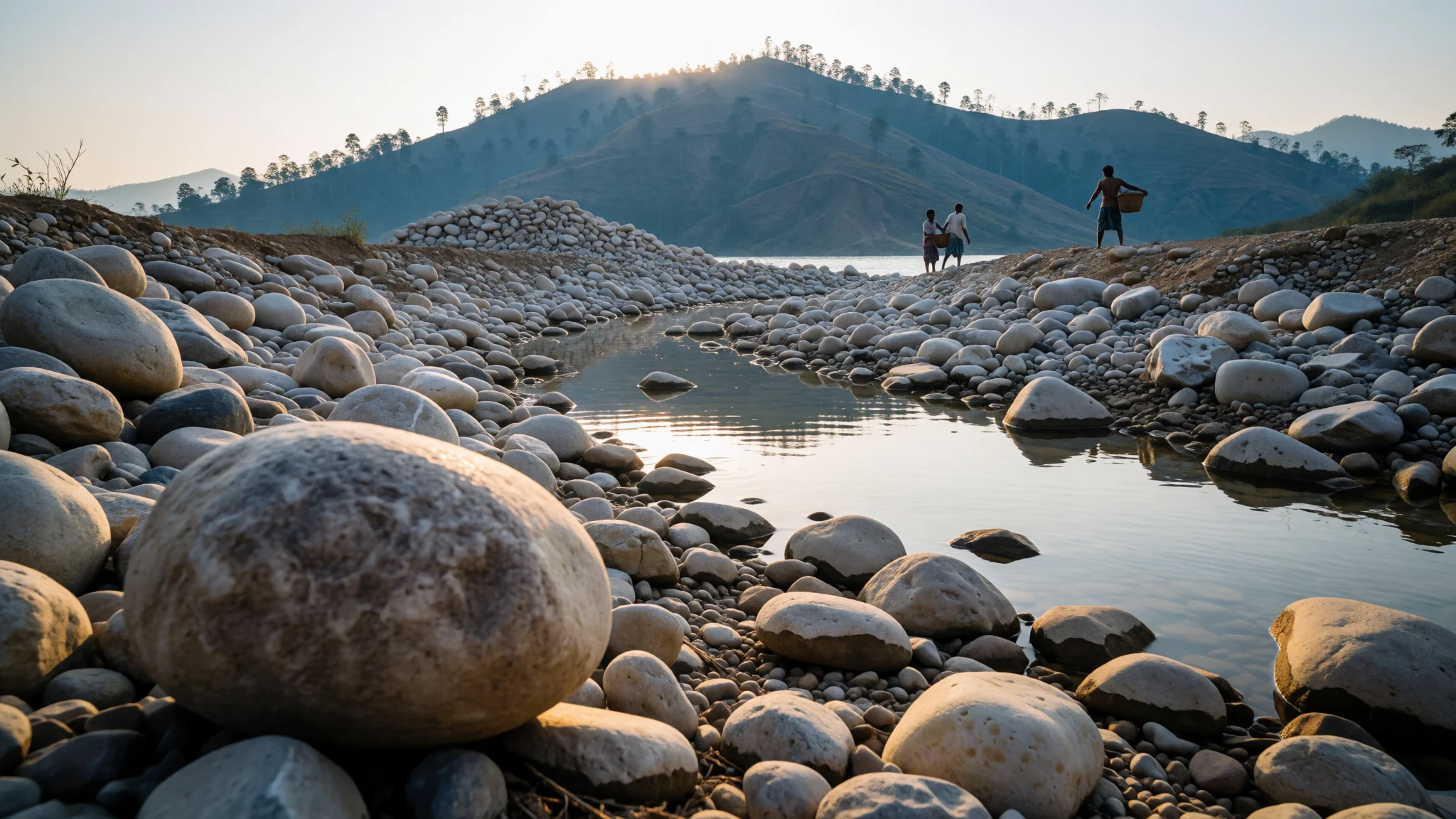
Bichnakandi is a stony riverside in north-east Bangladesh where hill water, working quarry banks and the Khasi range meet in one wide view.
The place
Bichnakandi is a village in Rustompur Union, Gowainghat Upazila, in Sylhet District, in the far north-east of Bangladesh. The name is written several ways: Bichhanakandi, Bisnakandi, and in Bengali বিছানাকান্দি. Wikidata describes it as a quarry spot where rocks are gathered from a riverbed, and that practical description is the best way to picture it. This is a working stretch of river, not a landscaped park.
The setting is a broad, shallow channel running over pale stones and sand, with the Khasi Hills rising on the far side along the Bangladesh–India border. Water from the hills feeds a lake-like expanse that joins the Piyain River. Stones and boulders reach the plain with the streams that tumble down from the mountains, which is why the bank looks like a freshly spread bed of rubble. In the wet season the river is wide, high and milky green; in the cooler dry months more of the stone shows and the water thins to pale channels.
The surrounding land is flat farmland and village, so the hills appear as a blue wall across the water. Cloud often sits low on the ridge, and the light changes quickly. There is not much built infrastructure: expect boats, tea stalls and shifting gravel rather than ticketed gardens. The place has drawn growing numbers of visitors from Sylhet and further afield, but it remains a rural riverbank first, and the work of moving stone still shapes how it looks and sounds.
Its story
Bichnakandi's story is less about monuments than about stone and water. For a long time the riverbed here was valued for what could be lifted from it: rock carried down from the Khasi Hills by hill streams and deposited on the plain. Labourers gather it by hand and by boat, and it is sold on for building work. That economy came first, and it still sits behind the postcard views.
The geology explains the supply. This is a border landscape where the folded layers of the Khasi range meet the low delta country, and the whole region is tectonically active. Geologists link places along this edge, including Jaflong, Lalakhal and parts of Manipur, with a heightened earthquake risk. It is a reminder that the scenic stones are the product of a restless landscape rather than a settled one.
Visitors arrived later, and in noticeable numbers only in recent years. Much of the attention seems to have grown through photographs of the turquoise water and the blue hills beyond, passed around among Bangladeshis who wanted a day out from Sylhet. The result is a village where farming families, stone workers, boatmen and tea sellers now share the same riverbank with day-trippers. The balance is not settled. Quarrying, tourism and the river's own flooding pull in different directions, and the shape of the bank changes from one season to the next.
What to see
- The quarry bank — Rustompur Union, Gowainghat
The main stretch of Bichnakandi is a bank of loose stone and gravel where workers still collect rock from the riverbed. Walking it gives a clear sense of the scale of the work. Watch where you step, because the ground shifts and the wet stones are slippery.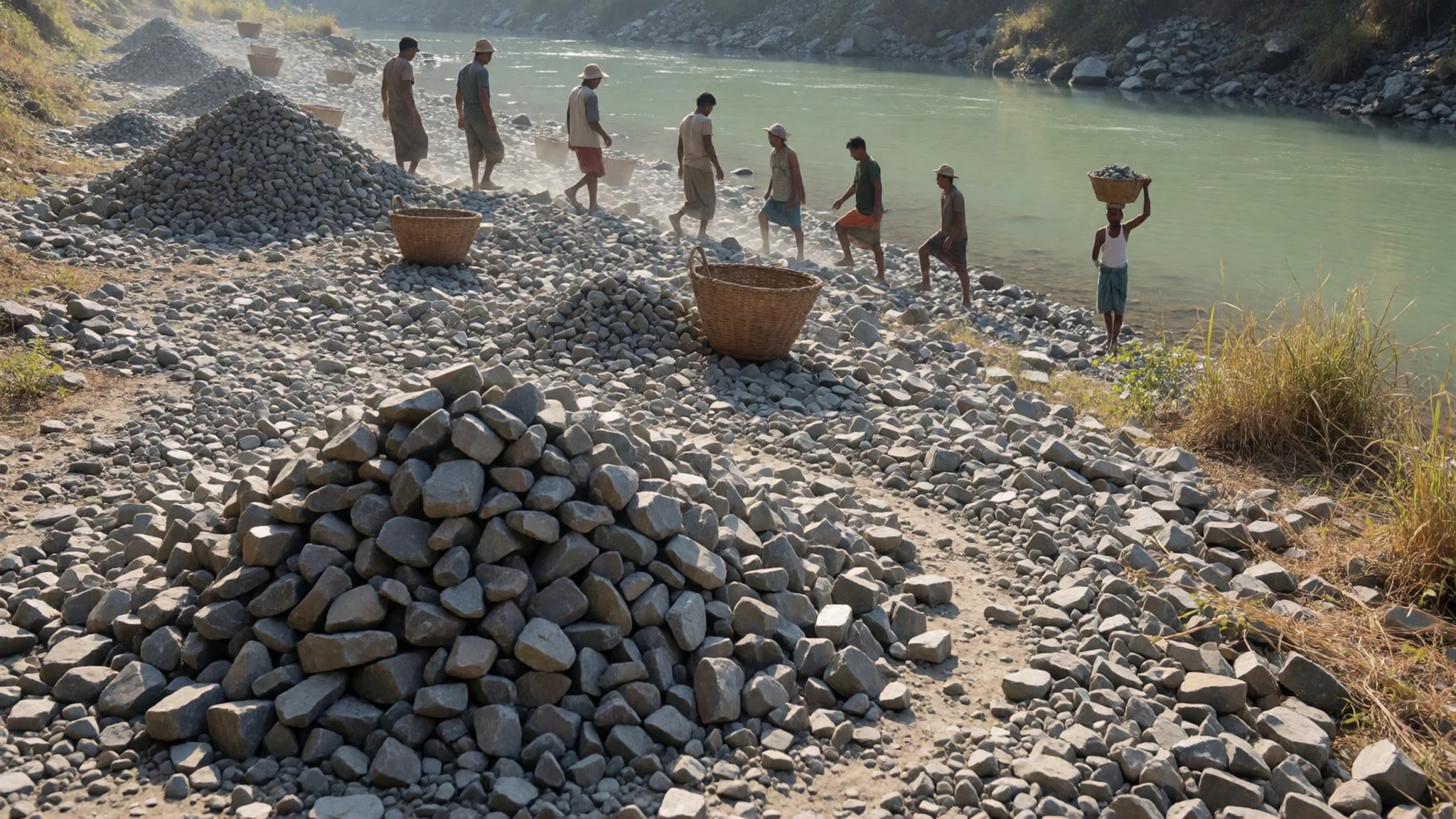
- The Khasi Hills view — Along the riverbank, facing north
Across the water, the Khasi Hills form a long blue ridge on the Indian side of the border. On clear mornings the line is sharp; in the rains cloud sits low on the slopes and the hills seem to float. The view is best from the middle of the bank, away from the stalls.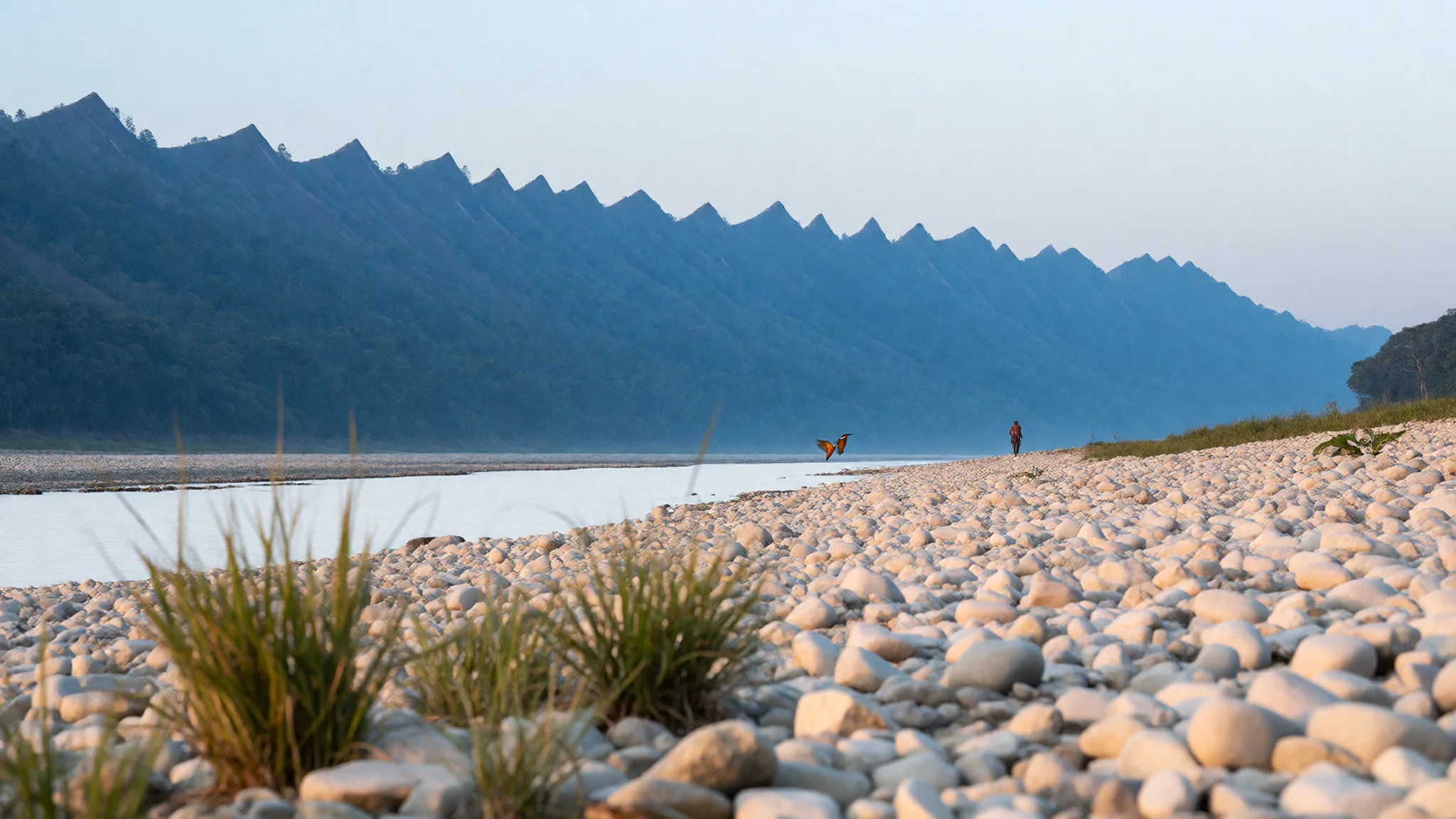
- Boat rides on the Piyain channel — Piyain River channel
Small wooden boats take visitors out on the lake-like stretch where hill water joins the Piyain River. The ride shows the shape of the channel and the stone banks from the water. Agree the route with the boatman before setting off, and wear a lifejacket if one is offered.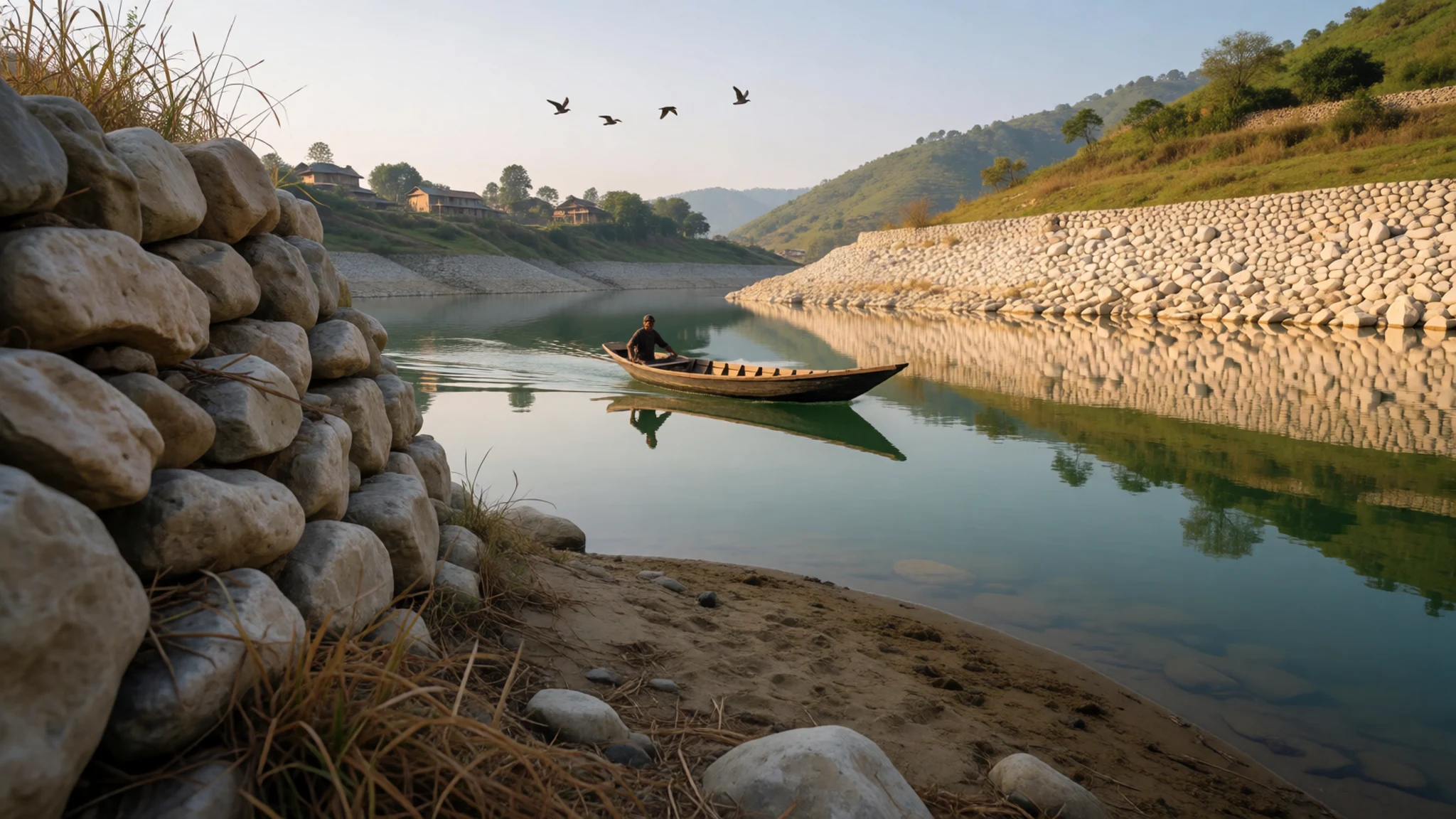
- Dawn on the river — Main riverbank
Early light turns the water pale green and the stones almost white, and the hills show clearly before haze builds. It is also the quietest time, before day visitors arrive from Sylhet. Mornings in the cool months are the most comfortable for a long walk along the edge.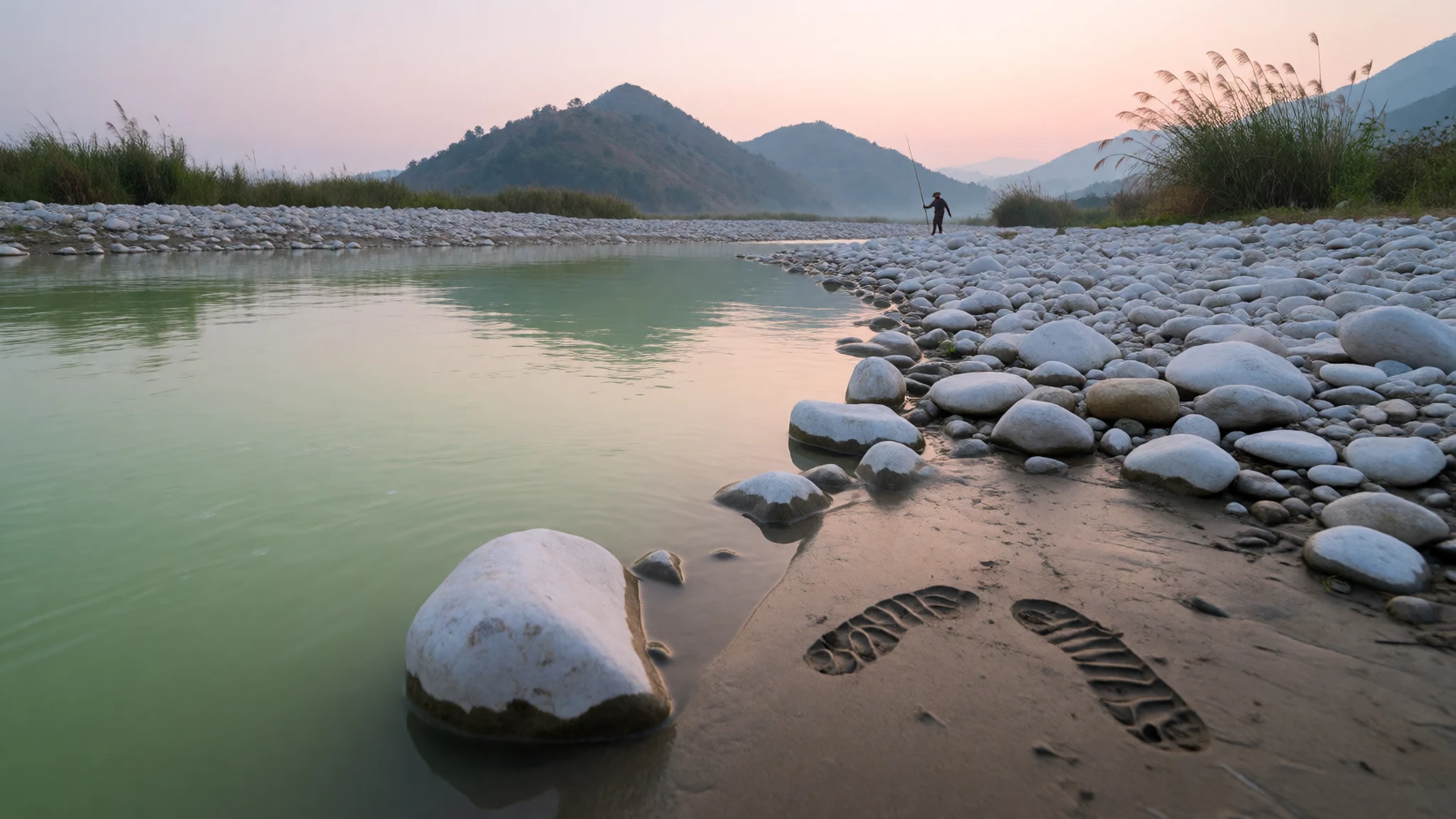
- Shallows for wading — Shallow channels near the bank
In the dry months the river thins into shallow channels where families paddle and bathe. The bed is stony and uneven, and currents can strengthen quickly after rain in the hills. Stay close to the bank, keep children within arm's reach, and ask local boatmen about the day's water.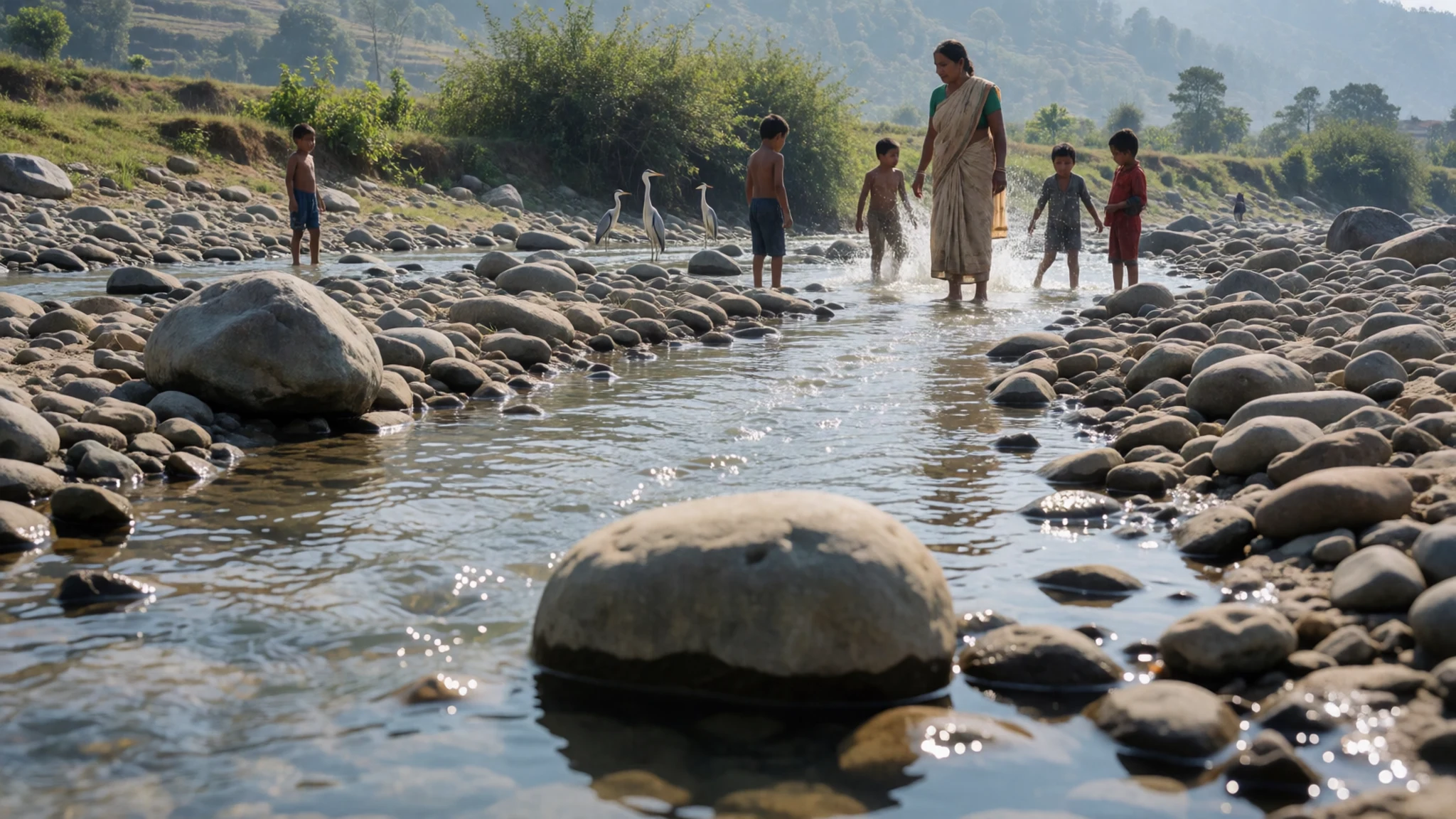
Culture
Bichnakandi is a Bengali village in the Sylhet region, with Khasi communities living in the hills just across the border. Daily life follows the farming year and the river. Many local people earn a living from stone gathering, boat work, small shops or tea stalls, and tourism has become one more income among these rather than the centre of village life.
Sylhet has a reputation for hospitality, and a visit often involves tea, a short chat in Bengali or Sylheti, and questions about where you have come from. Religious life is mostly Muslim in the Bengali villages, so the call to prayer and the rhythm of Friday are part of the day, while Khasi culture on the hills has its own traditions of clan descent through the mother's line and of church and older community observance.
The border is a real presence here. The hills on the far bank are in India, and the area is watched by border forces. Visitors should treat it as a working frontier region, not a theme park: follow local advice about where to walk, carry identification, and do not wander towards border markers. Respect for the stone workers matters too, because the bank is their workplace, and large day-trip crowds can leave rubbish and noise behind.
Ask before photographing people at work or women and children from the village, and never walk onto the working stone piles or climb on boats without the owner's permission.
What to wear
Bichnakandi sits among Bengali villages, with Khasi communities in the hills beyond, and dress reflects both. Bengali women traditionally wear the sari, in cotton for daily work and in silk or fine jamdani muslin for weddings and festivals. Men wear the lungi at home and the panjabi, a long collared shirt, for prayers and celebrations. Khasi women on the hills wear the jainsem, a wrapped and layered garment, with a cloth over the shoulders on festive days.
Day to day, village life looks plain. Women wear saris or shalwar kameez, men wear shirts with lungis or trousers, and rubber sandals handle the wet ground. Boatmen and stone workers favour old shirts and a cloth wrapped around the head against the sun. Young visitors from Sylhet and Dhaka tend to arrive in jeans and T-shirts.
A visitor should dress modestly, since this is a rural area: loose cotton with covered shoulders and knees suits the heat and humidity. Bring a light rain jacket, a hat, and sandals or trainers with real grip, because the stones are slick and the river edge shifts. Quick-dry fabric beats denim. Swimmers are best in shorts and a T-shirt rather than swimwear.
What to eat
- Shatkora beef curry — Sylhet city restaurants and eateries
A Sylhet speciality: beef cooked with shatkora, a fragrant, sour citrus peel that gives the gravy a sharp, slightly bitter edge. It is eaten with plain rice. Look for it in Sylhet city eateries on the way, rather than on the riverbank itself.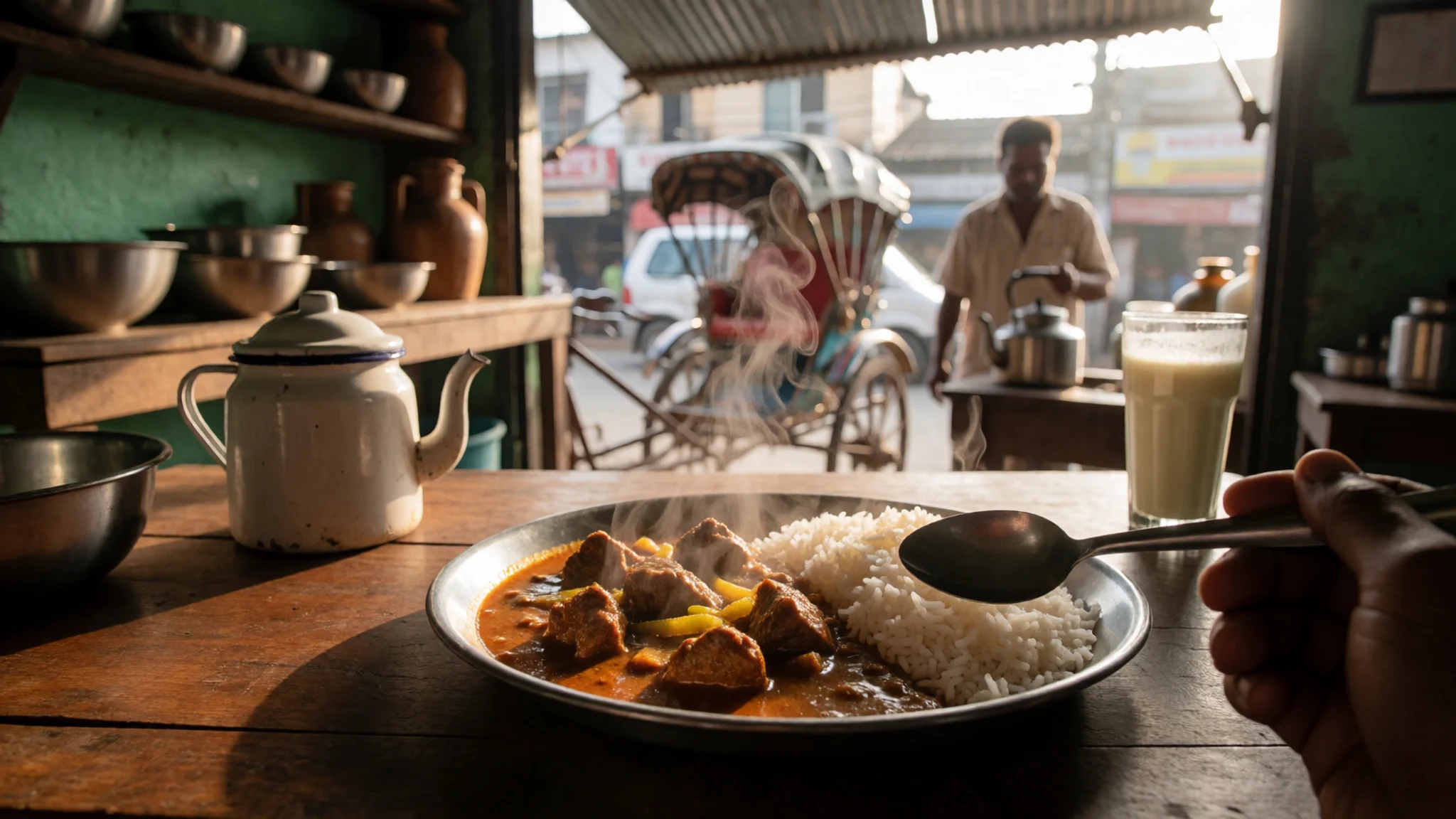
- River fish curry — Village eateries and market stalls near the landing
Freshwater fish from local rivers and ponds, cooked in a mustard-oil gravy with green chilli and turmeric. The fish varies by season and catch. Ask what came in that morning, and expect bones, which are part of the meal.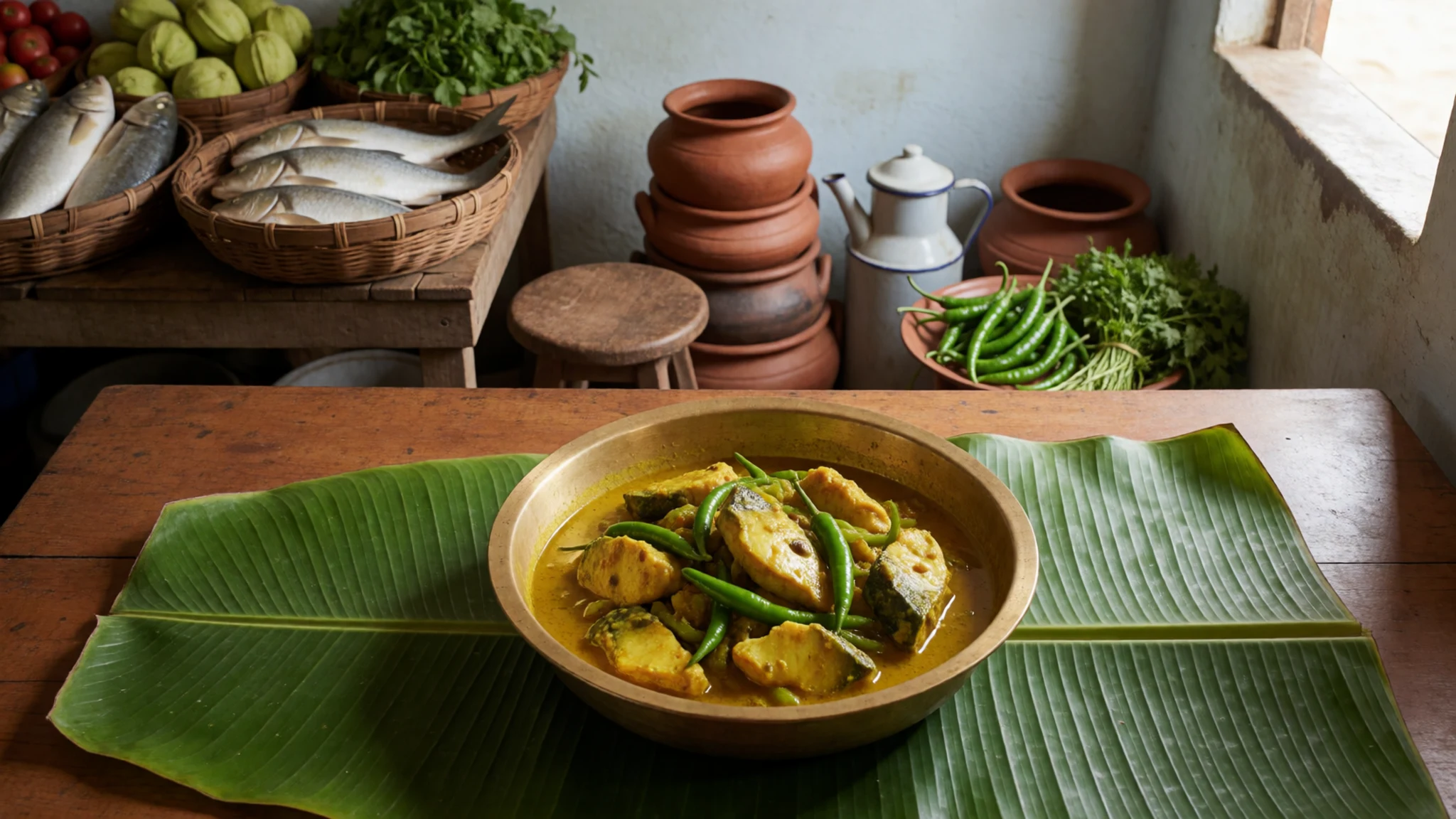
- Khichuri — Small roadside eateries on the route from Sylhet
Rice and lentils cooked together into a soft, warming one-pot dish, often served with fried egg, fish or vegetables. It is a favourite on rainy days and a sensible choice if the stomach needs something plain. - Pitha — Village homes and winter stalls; Sylhet bazaars
Rice-flour cakes and pancakes, steamed or fried, sometimes filled with coconut and date-palm jaggery. They are most common in the cooler months, when they appear at family gatherings and village stalls. - Milk tea and biscuits — Tea stalls along the riverbank
Strong, sweet milk tea is the standard stop on the bank, served in small cups by stalls set up for visitors. It is cheap, quick and a good excuse to sit and watch the boats. Pair it with a packet of biscuits.
Plan it
Best time. November to February is the more comfortable period: drier, cooler and clearer, with more stone exposed along the river. The monsoon, roughly June to September, brings fuller water and green hills, but also heavy rain, fast currents and muddy roads. Summer before the rains is hot and humid.
How long. 1–2
Getting there. Fly to Osmani International Airport (ZYL) in Sylhet, or take a train or bus from Dhaka. From Sylhet city, go by road towards Gowainghat and Rustompur; the last leg is usually a short local transfer, and sometimes a boat. Ask locally for current routes.
Budget. low
Tips
- Start early to see the river before day visitors arrive and before the haze builds
- Carry cash in small notes, as stalls and boatmen rarely take cards
- Bring drinking water and sun protection, and eat a proper meal in Sylhet before heading out
- Check river and weather conditions after heavy rain, when currents and road access can change quickly
- Carry identification, because this is a border area
Etiquette
- Ask before photographing people, especially women, children and workers
- Take your rubbish away and keep noise low on the working bank
- Follow local advice on where not to walk near the border
Nearby
Sources
- Wikidata Q28225474 (CC0)
- Wikipedia: Bichnakandi (rev 1377420530) (CC BY-SA 4.0)
- Wikivoyage: Sylhet Division (rev 5270840) (CC BY-SA 4.0)
- Photo: Bichnakandi, Sylhet — Syed Sajidul Islam (CC BY-SA 4.0)
- Photo: বিছানাকান্দি — Arghya Banik (CC BY 2.5)
- Photo: Beautiful Bangladesh Syleht — Anindya Roy (CC BY-SA 4.0)
- Photo: Beauty of Bichnakandi — Mdnazmulym (CC BY-SA 4.0)
- Photo: Beautiful Nature of Bichnakandi — Musanna Habib (CC BY-SA 4.0)
- Photo: Bath in Bisanakandi — Shamir Chandra Debnath (CC BY-SA 4.0)
- Photo: Bichanakandi at Dawn — Ahnaf Tahmid Manan (CC BY-SA 4.0)
- Photo: Bichanakandi Meghaloy — Taufik0 (CC BY-SA 4.0)


