Kantajew Temple
Kantajew Temple, Bangladesh
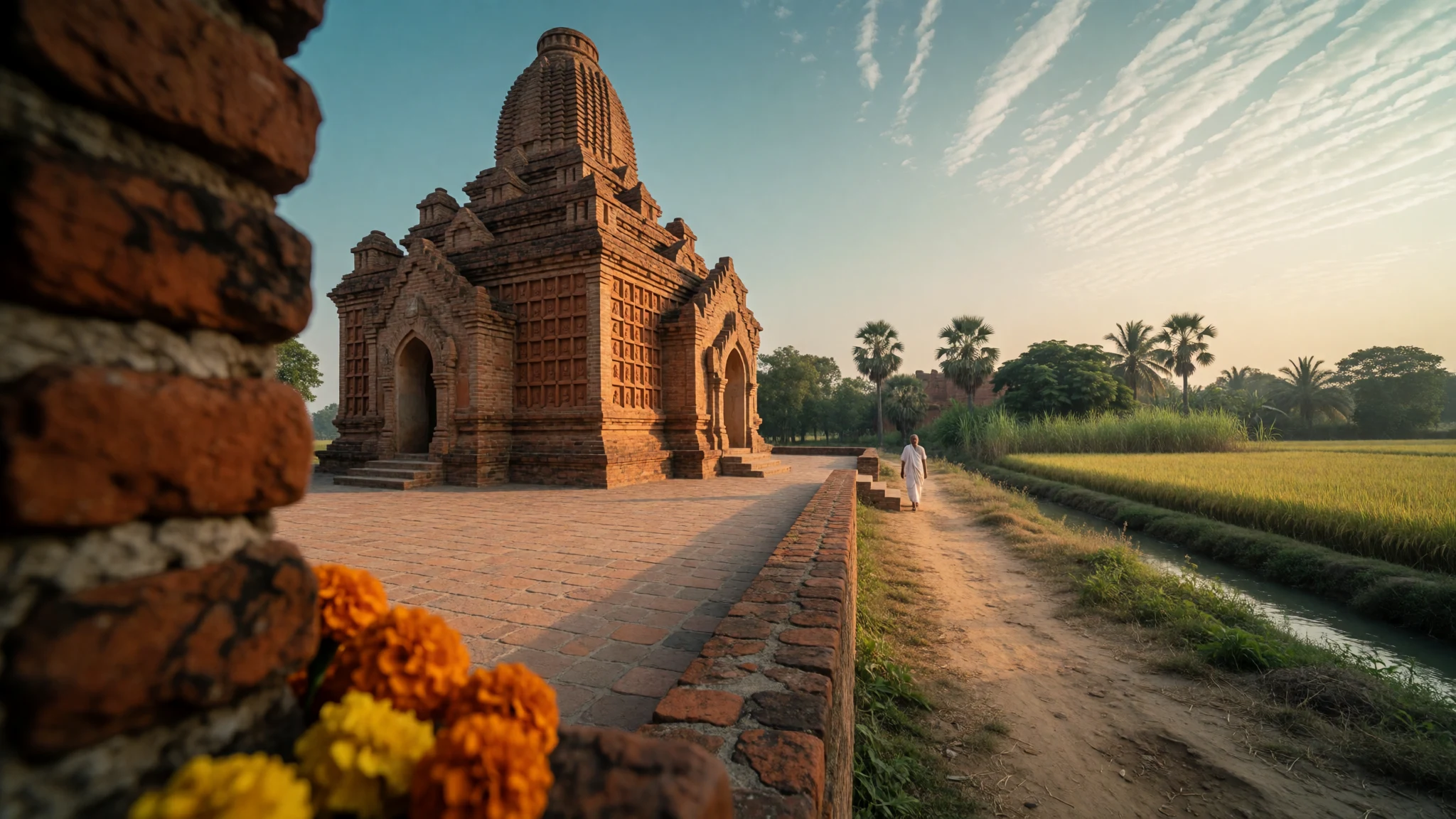
Kantajew Temple in north-western Bangladesh is an 18th-century brick Krishna temple whose walls are covered in terracotta panels telling stories.
The place
Kantajew Temple stands at Kantanagar, north of Dinajpur town in the north-west of Bangladesh, among fields of rice, potato and sugarcane. The name is spelt several ways: Kantaji, Kantanagar Temple, and in Bengali কান্তজিউ মন্দির. The building is brick, square in plan and rising in tiers, and almost every outer surface is covered in baked clay plaques. That terracotta skin is the reason people travel here, and it makes the temple a good place to see how Bengali craftsmen worked in clay. The deity is Krishna, called Kanta by his devotees, together with his wife Rukmini. Worship of the pair has long been popular across Bengal, and here it is still practised as a living tradition rather than a museum display. The temple belongs to the 18th century and was built over several decades by a ruling family of the Dinajpur area. Its present outline is lower and plainer than the original, because it was designed with nine spires and lost every one in an earthquake in 1897. Standing in the forecourt, a visitor sees a heavy, weathered block with arched entrances and a covered walkway wrapped around the core, with carving crowding each panel. The setting is rural and quiet compared with Bangladesh's big cities, and the temple suits a half-day outing from Dinajpur rather than a full expedition. Expect a modest compound, a few vendors near the gate, and local families alongside the occasional foreign traveller.
Its story
Kantajew Temple was a family project that stretched across two generations. Maharaja Pran Nath, who ruled the Dinajpur estate, began construction in 1704. He did not see it finished: his son Raja Ramnath completed the work in 1752, nearly half a century later. The patrons were devoted to Krishna, and the temple was meant as a statement of that faith as much as a home for the deity. The Bengal delta has little stone, so brick was the local material, and the builders turned that limit into a strength by moulding and firing clay plaques to clothe the walls. Craftsmen shaped scenes from the Ramayana and Mahabharata, episodes from Krishna's life, and moments from ordinary life such as hunts, musicians and soldiers. Originally the roof carried nine spires, a crowded crown that gave the temple a very different silhouette. In 1897 an earthquake brought them down. A photograph from the 1870s, taken by John Henry Ravenshaw, shows the temple before that loss, and it remains the clearest record of the original profile. Later the site came under state care as a protected archaeological monument, and conservation work has steadied the walls and the plaques that survive. Weather and age have worn many panels smooth, so the carving is richest in some places and faint in others. The story of the building is therefore one of patient construction, sudden damage and slow repair.
What to see
- The terracotta panels — Kantanagar, north of Dinajpur
Kantajew Temple's main attraction is its clay cladding, and it rewards slow walking. Look for the scenes taken from the epics, then for the smaller panels of dancers, riders, hunters and village life. Light matters: early morning and late afternoon throw shadows that make the shallow relief easier to read.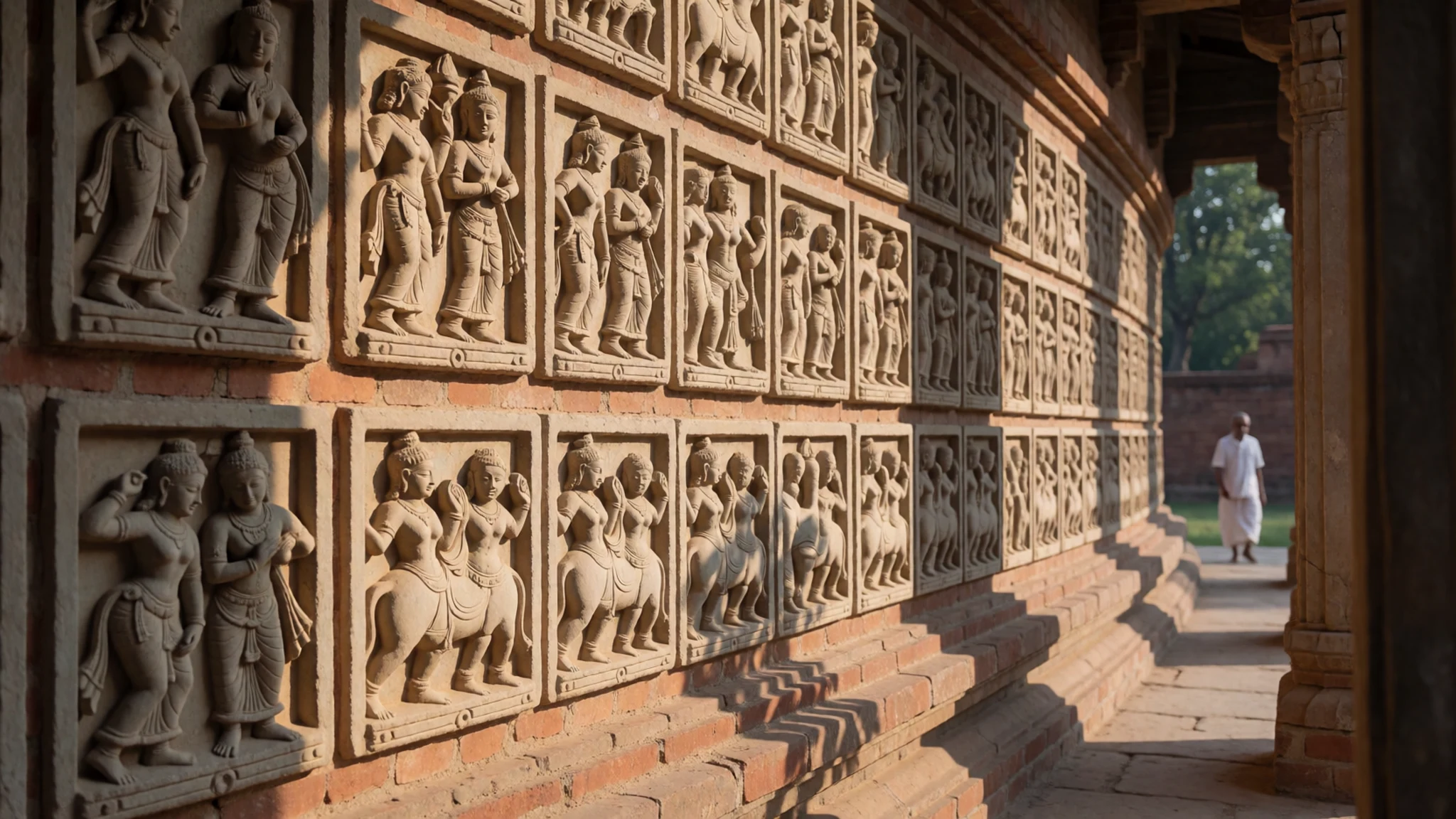
- The front and its arched entrances — Kantanagar, north of Dinajpur
The front of Kantajew Temple shows the building's structure most clearly: a tiered brick body, arched openings and a wide base. Stand back in the forecourt first to take in the proportions, then go close to see how the arches frame panels of different sizes.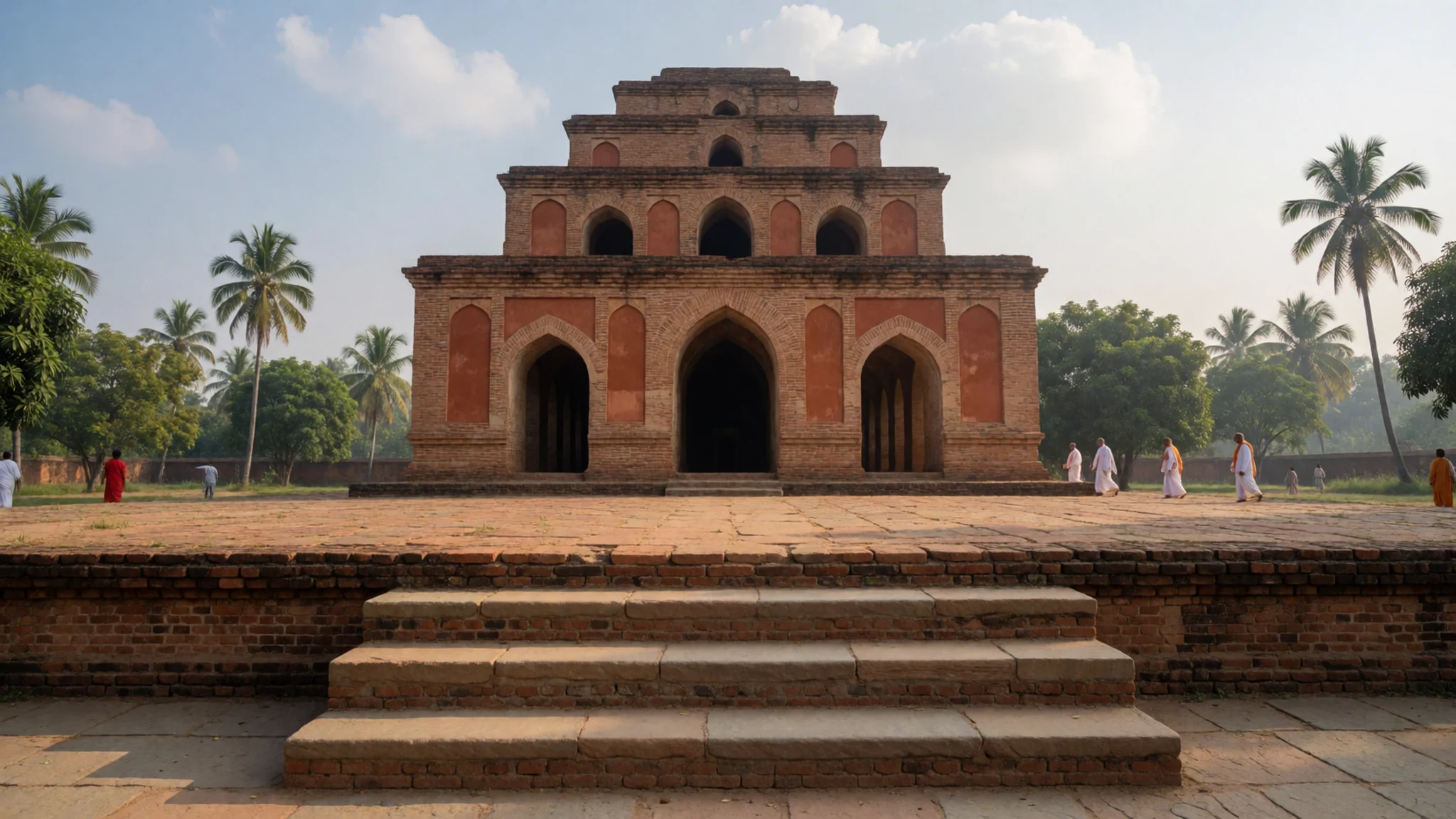
- The lost spires, in old photographs — Kantanagar, north of Dinajpur
Kantajew Temple once carried nine spires, and the best way to picture them is through the old photographs. A picture from the 1870s shows the full crown. A side-by-side comparison with a later photograph makes the difference obvious, and it helps explain the flat, blunt top seen today.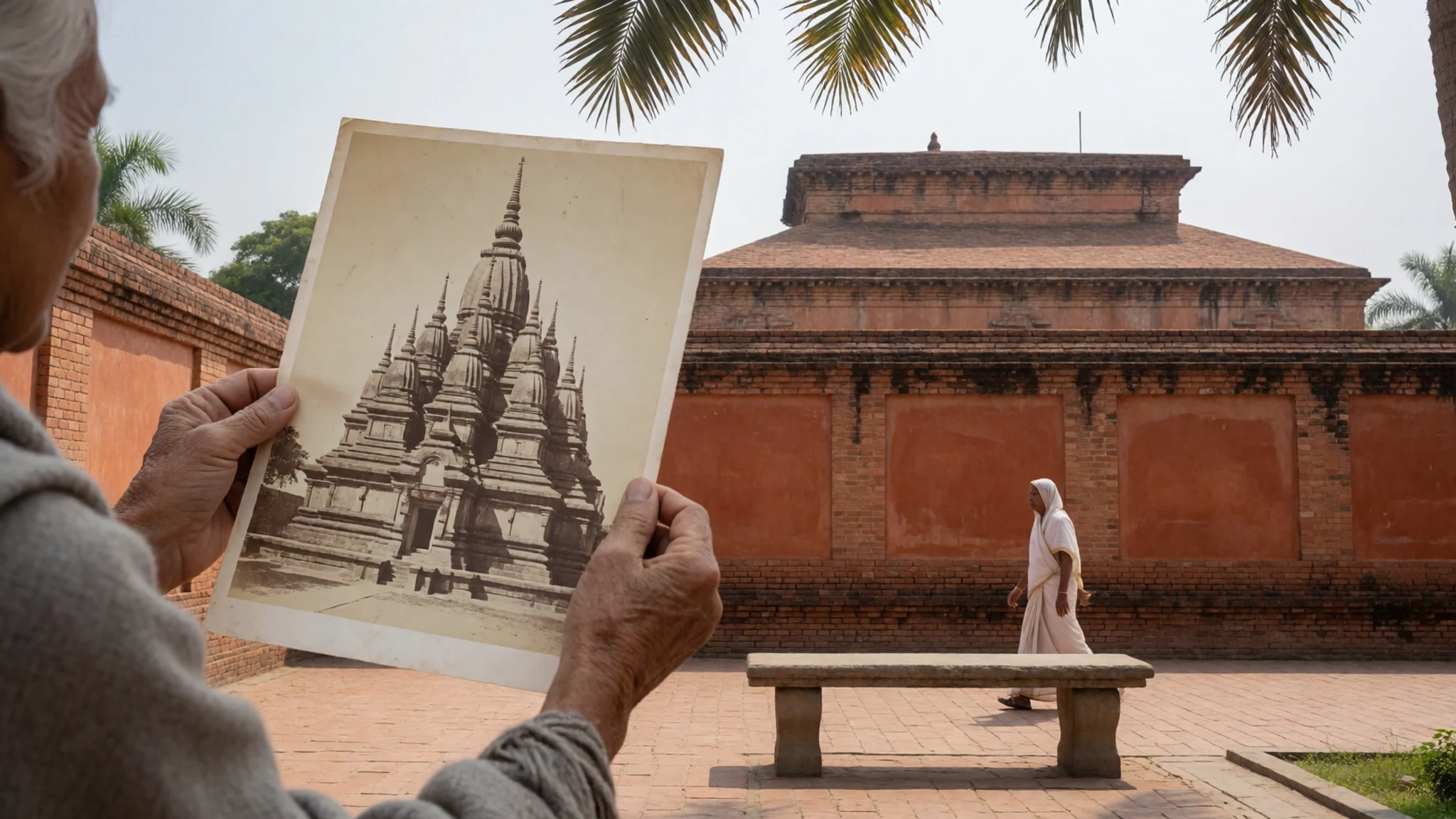
- The walkway and forecourt — Kantanagar, north of Dinajpur
The covered walkway around Kantajew Temple gives a view of the plaques from close range and some shade at midday. The forecourt is the place to watch devotees arrive, notice the rhythm of worship, and view the whole building from a distance before going in.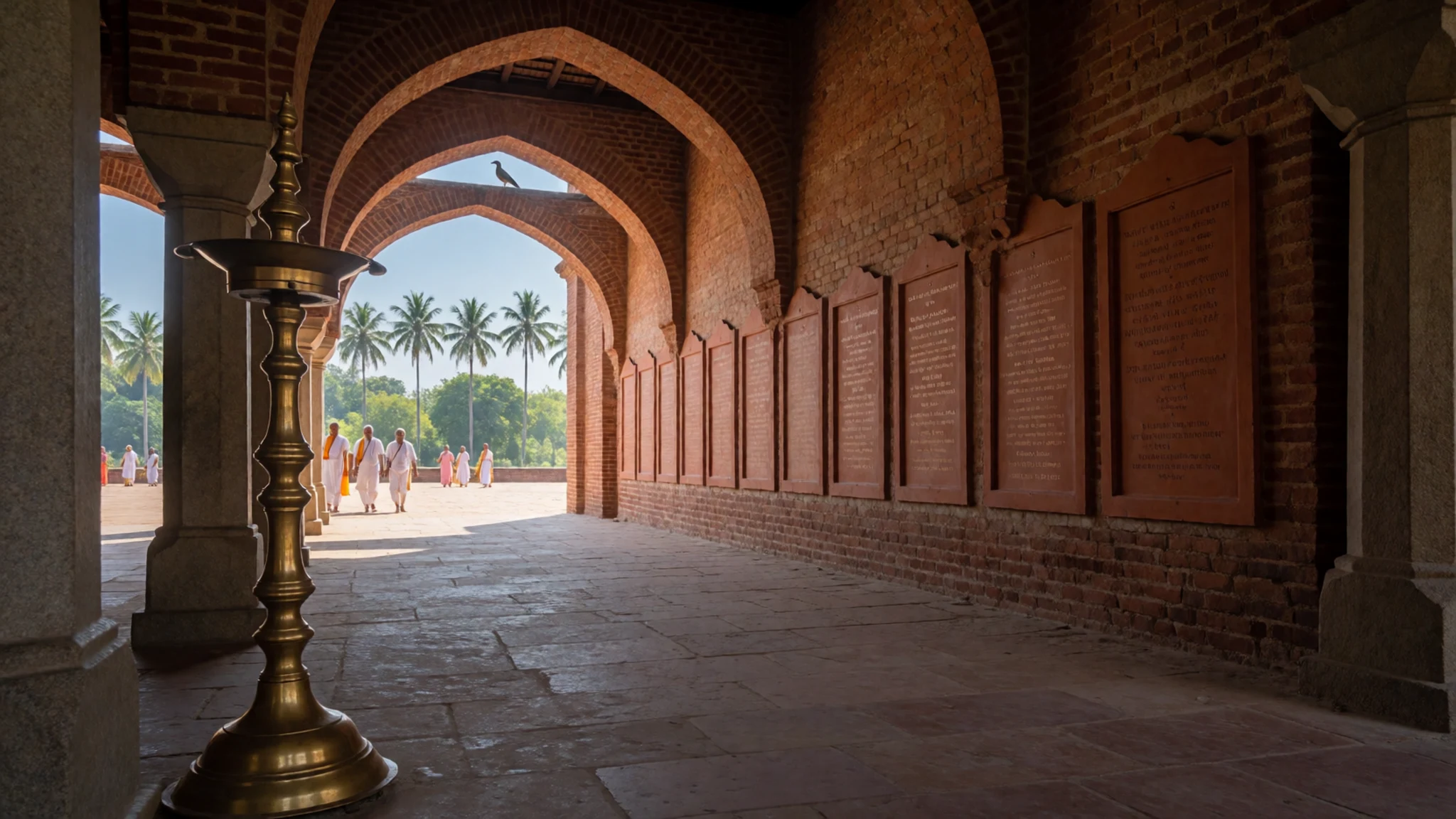
- Dinajpur town — Dinajpur
Dinajpur town, the base for most visits, has palaces and British-era buildings that tell the later history of the region. A short wander through its streets, with tea stops and bazaar lanes, makes a useful contrast with the quiet fields around the temple.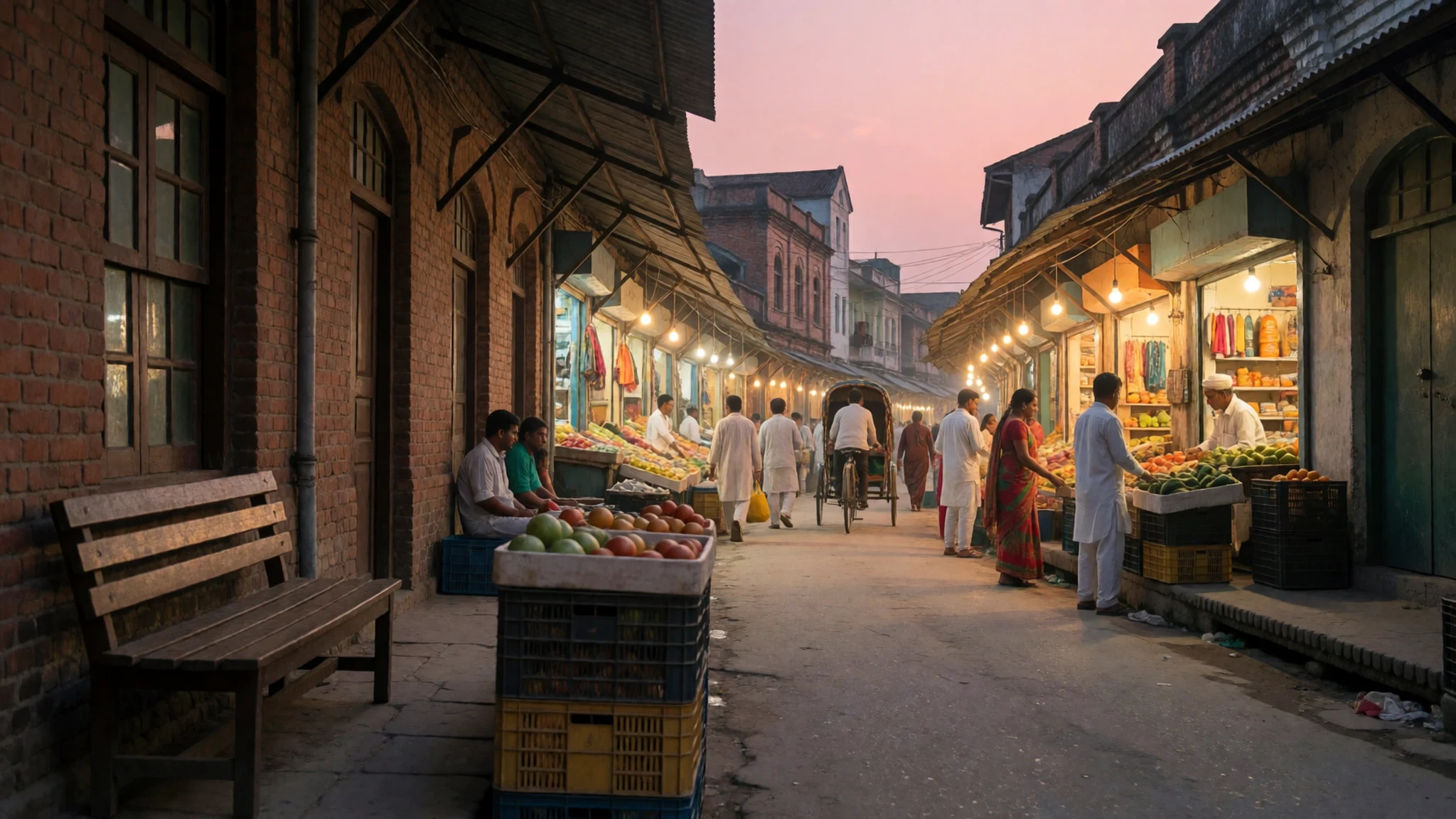
- Village lanes and paddy fields — Around Kantanagar
The countryside around Kantanagar is a pleasure to cross slowly. Brooks and canals thread between villages, and fields of paddy, potato and sugarcane change with the season. Locals are friendly and often curious, so a short walk from the temple gate turns into a conversation.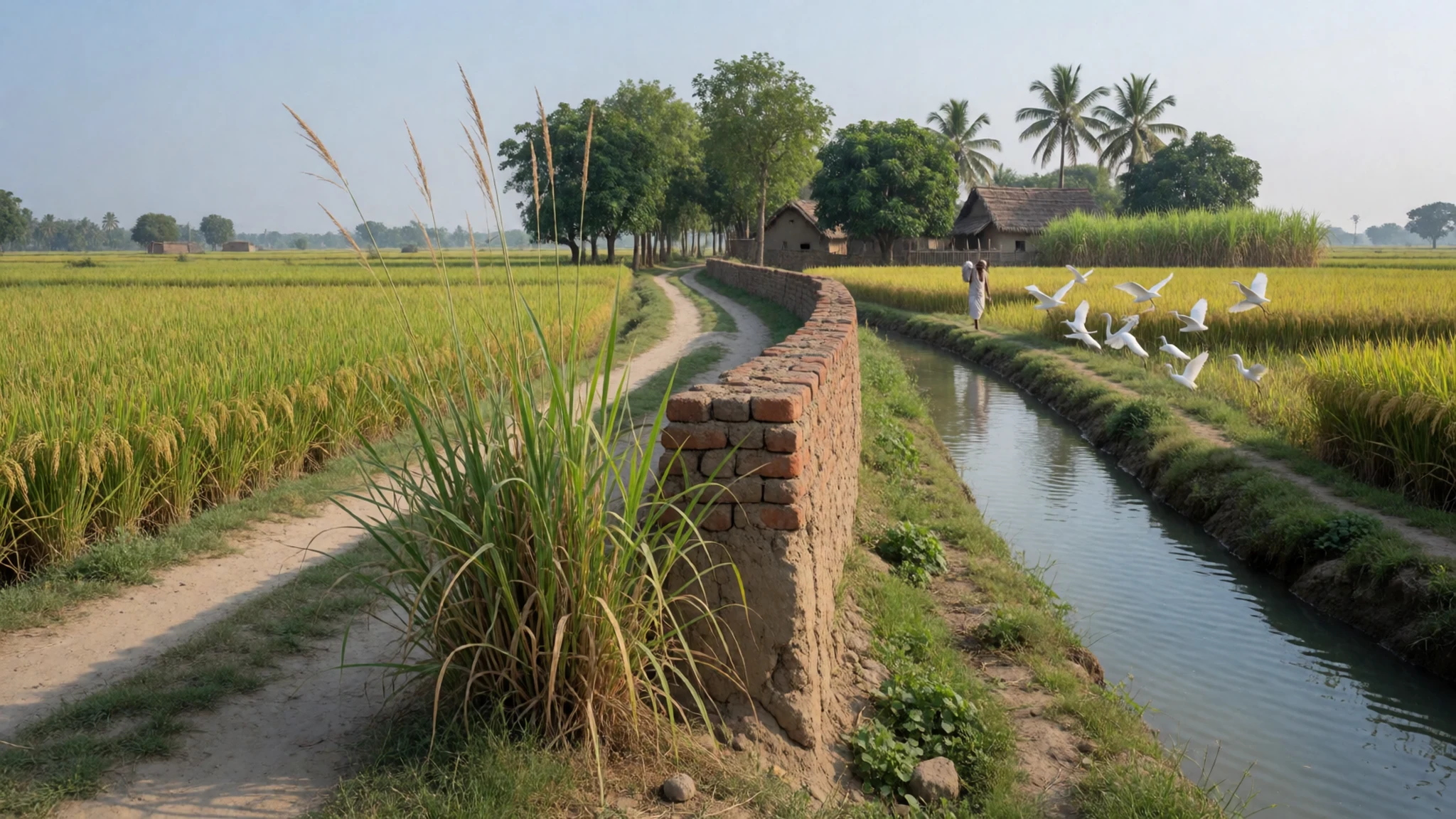
Culture
Kantajew Temple is a working Hindu temple, so culture here means devotion before sightseeing. Krishna and Rukmini are the focus, and the worship of the divine pair has deep roots in Bengal, where Vaishnava belief shaped poetry, song and temple building. Worshippers bring flowers and offerings, and ritual follows set times of day; the pace is the priests' and the congregation's, not the visitor's. Festivals for Krishna bring larger gatherings, with devotional singing, but dates follow the lunar calendar, so ask locally before planning around one. Bangladesh is a Muslim-majority country, and the temple is a reminder of its older Hindu heritage; visitors who show quiet respect are generally welcomed warmly. The terracotta itself is a cultural record. Its plaques show epic stories, village scenes and the clothes and tools of the period, and local students and artists come to study them as much as to pray. Bengali hospitality applies on the ground too: people may ask where a visitor is from, offer tea or invite a short chat, and accepting a little conversation is part of the experience. The temple is also a protected monument, so the carvings are fragile and should be looked at, not touched. Take your shoes off before stepping onto the temple platform, keep shoulders and knees covered, and ask before photographing worshippers or the inner shrine.
What to wear
Kantajew Temple sits in a part of Bengal where traditional dress follows the climate and the faith of the wearer. Hindu women traditionally wear the sari, in cotton such as tant for daily use and in silk or fine jamdani muslin for festivals, often white with a red border for worship. Married women may wear shakha-pola bangles, made of white conch shell and red coral, and sindoor in the hair parting. Men wear the dhoti with a long panjabi shirt for ceremonies and festivals. Everyday dress today is more mixed: saris and salwar kameez for women, shirts and trousers for men, and the lungi, a wrapped cotton cloth, around villages and at home. For worship at the temple, people choose clean, simple clothes, with bright colours on festival days. A visitor should dress for heat and for a religious site together. Light cotton or linen that covers shoulders and knees works well, and a scarf helps in the temple. Wear sandals or shoes that slip off easily, since footwear comes off at the platform, and carry a hat and sunscreen for the open forecourt. Winter mornings can be cool in the north, so a light layer is useful, and in the monsoon a rain jacket and shoes that cope with mud are more practical than anything smart.
What to eat
- Kataribhog rice with dal — Local eateries and home-style restaurants in Dinajpur town
Dinajpur is known for its fragrant kataribhog rice, a small-grained variety usually served simply, with lentils, a vegetable fry and a squeeze of lime. It is a good first meal in the area and tastes best fresh and plain.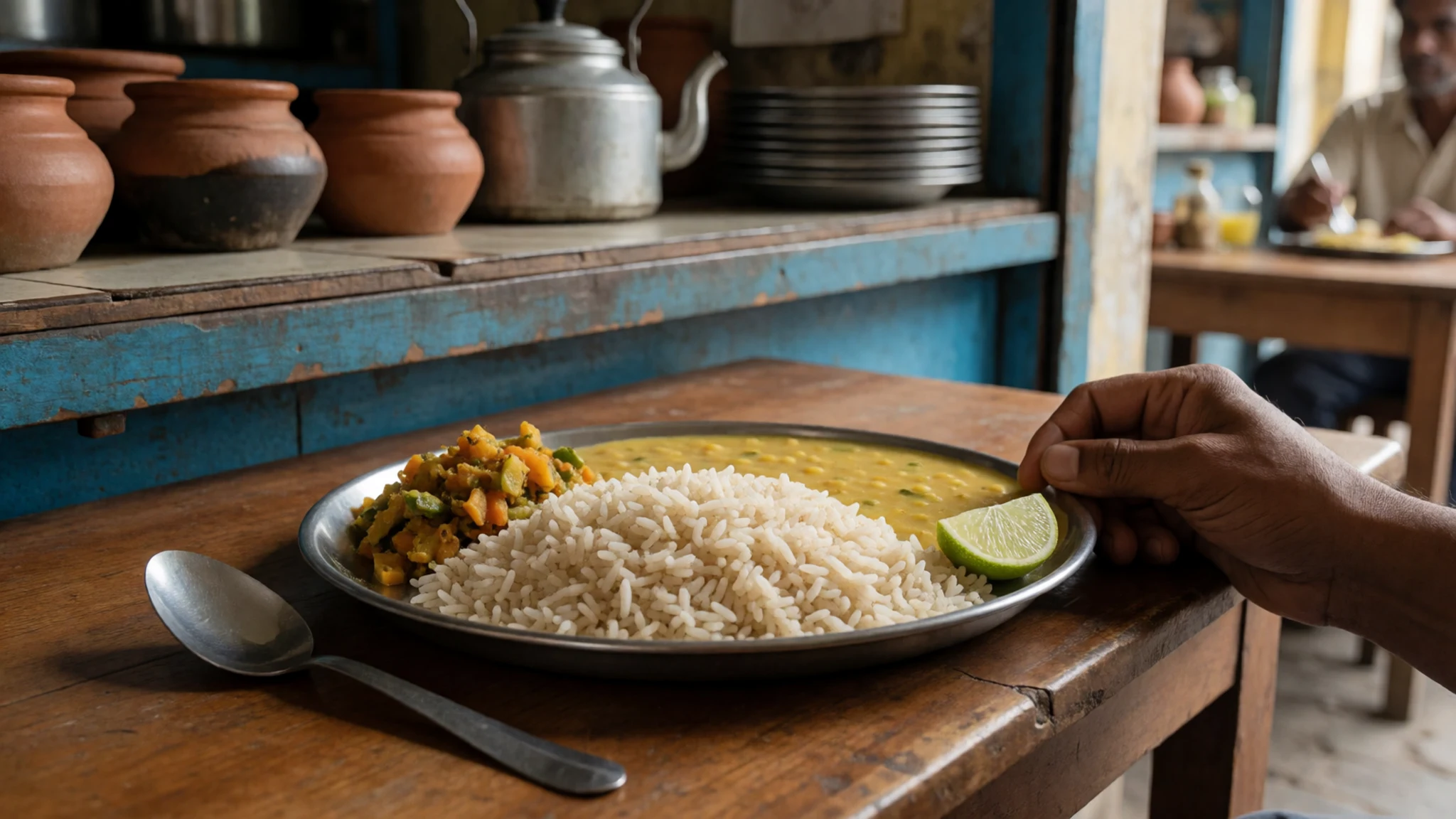
- Khichuri — Small restaurants and tea-and-meal places around the town bazaar
Khichuri is rice and lentils cooked together into a soft, savoury porridge, often served with fried aubergine or an egg. It is the comfort meal of Bengal, especially on rainy days and cooler winter evenings.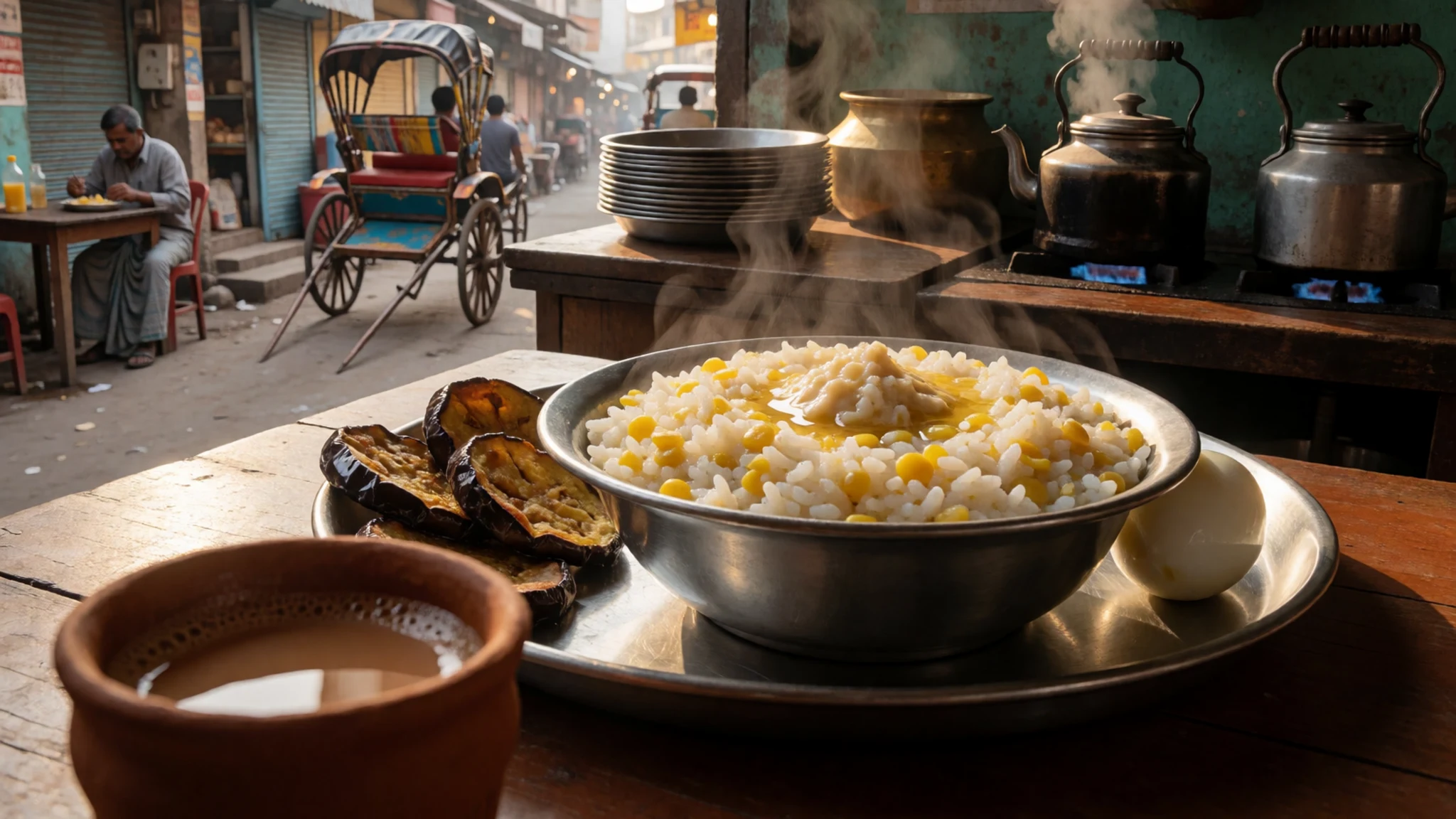
- Pitha — Winter stalls and market corners in Dinajpur and nearby villages
Pitha are Bengali rice-flour cakes, steamed, fried or folded around coconut and jaggery. They are mainly a winter treat, so the best season for the temple is also the best season for sampling them. - Fuchka and chotpoti — Street vendors near the town centre and bus stand
Fuchka are crisp shells filled with spiced potato and tamarind water, while chotpoti is a tangy chickpea and potato snack. Both are sold on the street, usually in the afternoon, and make a quick snack after a morning at the temple. - Mishti and roshogolla — Sweet shops in Dinajpur town
Bengali sweets, from milk-based sandesh to syrupy roshogolla, are a fixture of every town. A box is the usual gift to carry home, and a single piece with tea is a pleasant end to a long day.
Plan it
Best time. November to February, when the north of Bangladesh is cooler and mostly dry, which suits walking around an open courtyard. March to May is hot, and the monsoon months bring heavy rain and muddy lanes.
How long. 1
Getting there. The nearest airport with domestic flights is Saidpur; Dhaka is the main international gateway. Dinajpur town is reached by train or by long-distance bus from Dhaka, so check current schedules. From Dinajpur, the last leg north to Kantanagar is by rickshaw, auto-rickshaw or hired car.
Budget. low
Tips
- Go early in the morning for softer light and fewer people
- Carry cash in small notes, since cards are rarely accepted in the town or at the temple
- Bring water and a hat, as the forecourt has little shade at midday
- Check the local administration or the archaeology department for opening times and any entry fee, as they can change
- Combine the temple with an afternoon in Dinajpur town to make the most of the trip
Etiquette
- Remove shoes before stepping onto the temple platform
- Cover shoulders and knees, and keep voices low near worshippers
- Ask before photographing people or the inner shrine, and do not touch the terracotta
Nearby
Sources
- Wikidata Q3347158 (CC0)
- Wikipedia: Kantajew Temple (rev 1367419551) (CC BY-SA 4.0)
- Wikivoyage: Rangpur Division (rev 5270882) (CC BY-SA 4.0)
- Photo 01: Kantanji's Temple front view in Dinajpur, Wiki naogaon (CC BY 3.0)
- Photo 02: Kantaji (Kantanagar) Temple, Shahnoor Habib Munmun (CC BY 3.0)
- Photo 03: Kantaji Temple in the 1870s, John Henry Ravenshaw (Public domain)
- Photo 04: Architecture of the Kantajew Temple, Ahammed Saad (CC BY-SA 4.0)
- Photo 05: Kantajew Temple comparison, Clturner2323 (CC BY-SA 4.0)
- Photo 06: Kantanagar Temple, Pinu Rahman (CC BY-SA 4.0)
- Photo 07: Top view of Kantanagar Temple, Pinu Rahman (CC BY-SA 4.0)
- Photo 08: Kantajew Temple front, Shuvajit BD (CC BY-SA 4.0)


