Jaflong
Jaflong, Bangladesh
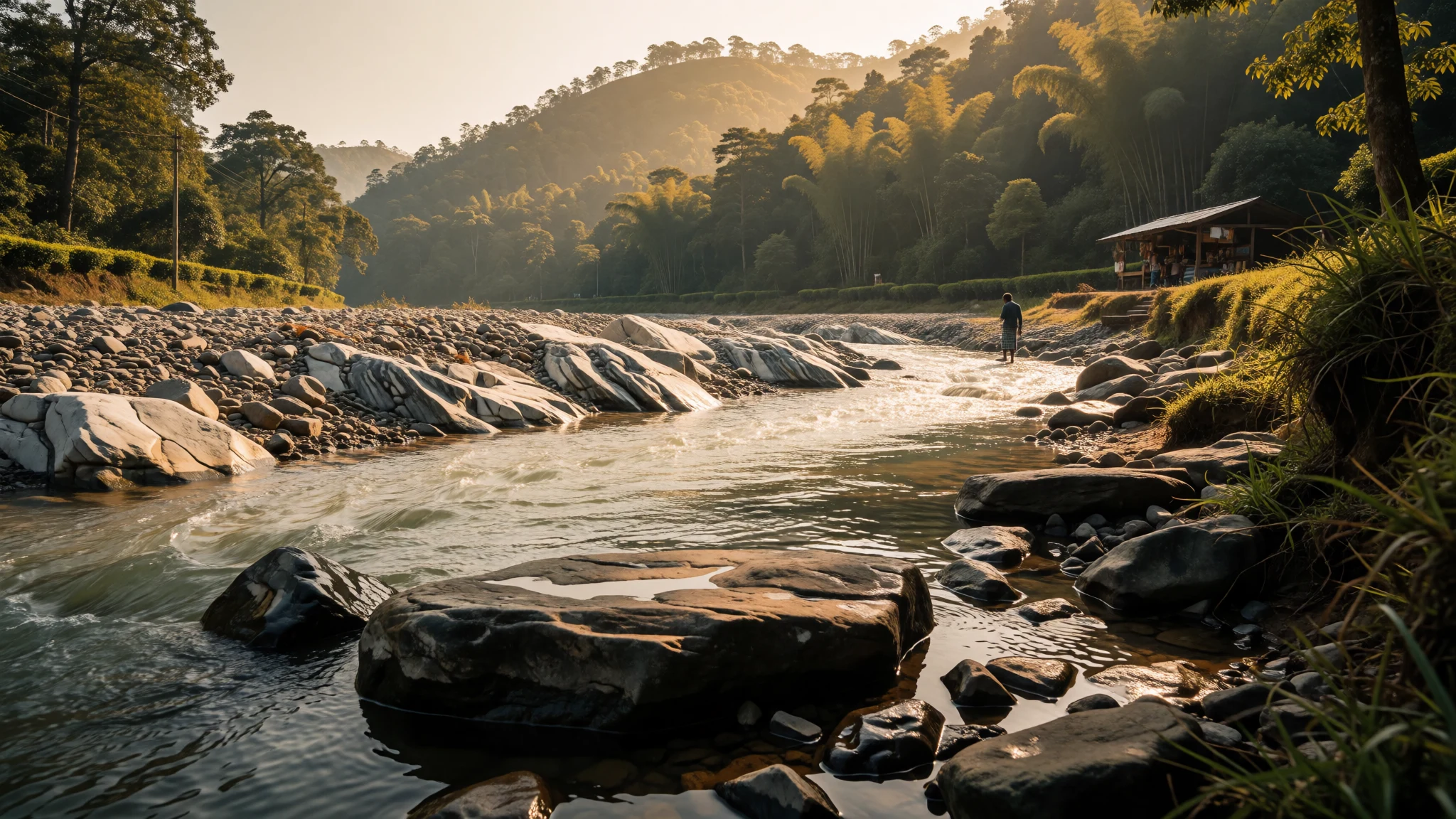
Jaflong is where Bangladesh's flat delta runs into the green Khasi hills, a stony river-edge outing with tea stalls, boats and Khasi villages.
The place
Jaflong sits in Gowainghat Upazila, in Sylhet District of north-eastern Bangladesh, right where the country meets the Indian state of Meghalaya. The land here is the last flat floor before the Khasi hills rise on the Indian side, clothed in subtropical forest that often sits in cloud. A broad, shallow river runs along the base of the slope, braided around gravel bars and boulders carried down from the hills, and the whole place is arranged around it: tea stalls on the bank, boats waiting at the edge, workers bent over stones in the shallows. Wikidata classes Jaflong as a hill station, which is a generous label for somewhere so low-lying on the Bangladesh side. The appeal is less altitude than the sudden sight of green ridges after the flat delta. The place is known for its stones and for the Khasi people who live in the surrounding villages. Weekends and holidays bring crowds from Sylhet city and from Dhaka, and the riverbank can feel more like a fairground than a retreat; weekdays and early mornings are calmer. In the monsoon the river runs full and brown, streams spill down the hill face and cloud hangs low. In the dry winter the water thins to clear channels over pale stone and the ridges stand out sharply. Either way, the border is the defining fact: the wall of hills in front is in India, while the Bangladesh side is gentle, busy and thoroughly lived in. Jaflong works best as a day trip, often combined with other riverside spots in the same district and the tea country nearby.
Its story
Jaflong's story is mostly the story of a river and what it carries. Rain falling on the Meghalaya hills gathers into streams that rush down the steep slope and reach the Bangladesh plain at Jaflong, dropping gravel, cobbles and boulders as the current slackens. For generations local people have gathered that stone from the riverbed, and quarrying became a livelihood for many families, who break, sort and carry it for building work across the region. Photographs of the site show lines of workers wading and hauling in the shallows, and the scene is as much a part of Jaflong as any viewpoint. The industry has not been uncontroversial. Heavy extraction changes the bed and banks of a river, and digging on a large scale has drawn criticism over erosion and damage to the very landscape visitors come to see. Alongside the river sits the older human story of the Khasi, a community with its own language, matrilineal customs and a long tradition of growing betel leaf and areca nut on the hill slopes. Their villages lie close to a border that arrived with the partition of British India, when Sylhet district went with East Pakistan and later became part of Bangladesh, while many Khasi kin remained in Meghalaya. Tourism followed the roads. As Sylhet became easier to reach, Jaflong turned into a standard weekend outing, and tea stalls, boat owners and small shops now live off visitors as well as off stone.
What to see
- The Piyain riverbank — Jaflong riverside
The main gathering place is the broad, shallow river itself, with pale stones underfoot and forested hills filling the far side. Tea stalls line the bank and small boats wait for passengers. Go early on a weekday for quiet; weekends turn it into a busy social scene.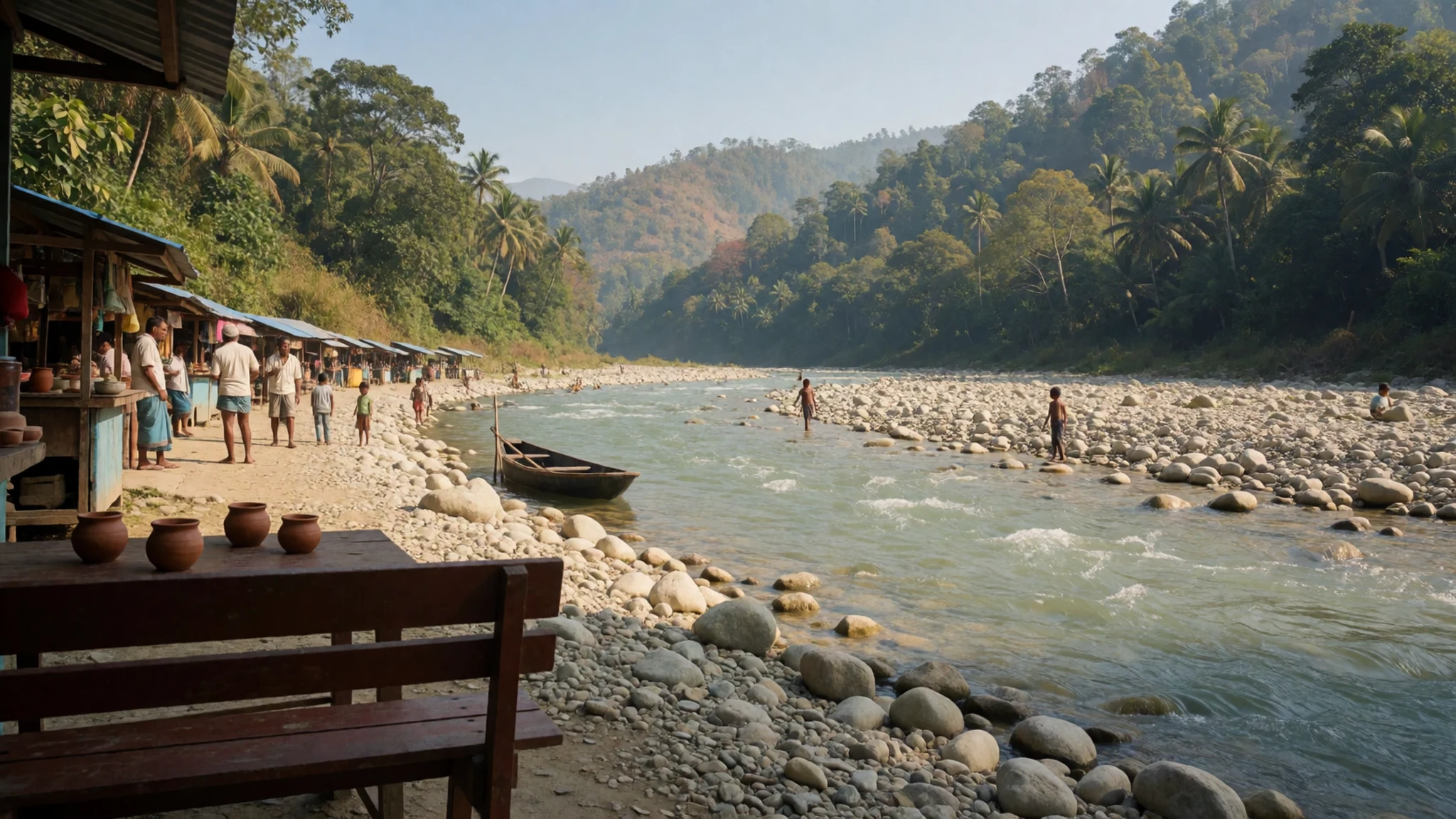
- The stone quarry — River bed near Jaflong
Out on the river bed, workers dig, break and carry stone by hand and basket, the labour that gives Jaflong its reputation. It is worth watching from a respectful distance to understand the place. Ask before photographing individuals, and expect dust, heat and uneven footing.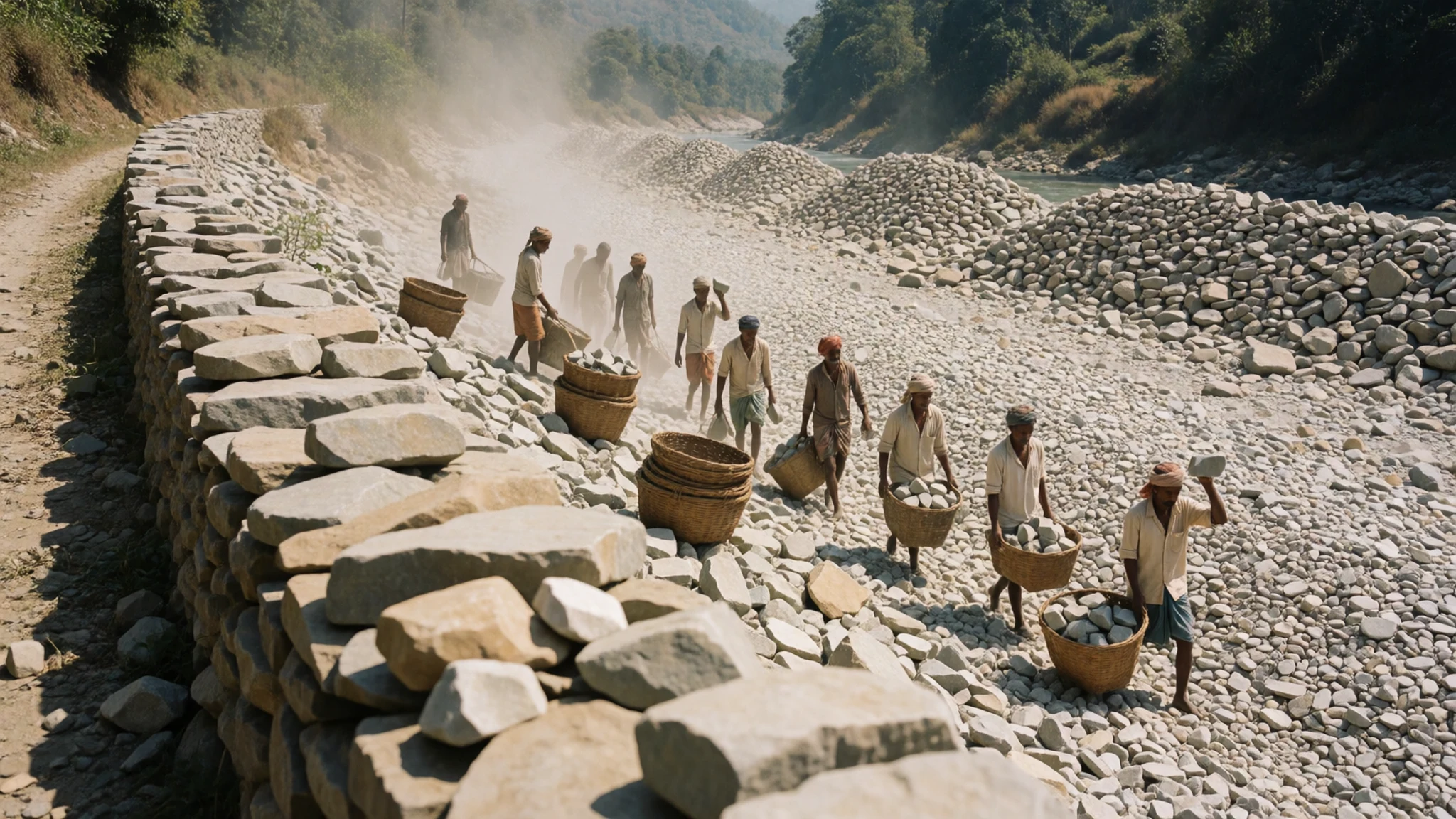
- Khasi villages and betel groves — Hills above Jaflong
Khasi settlements sit on the slopes behind the riverside bustle, among betel vines trained up areca palms. Walking here shows a quieter side of Jaflong: tidy houses, steep paths and families at work. Go with a local guide if possible, and treat the villages as homes, not exhibits.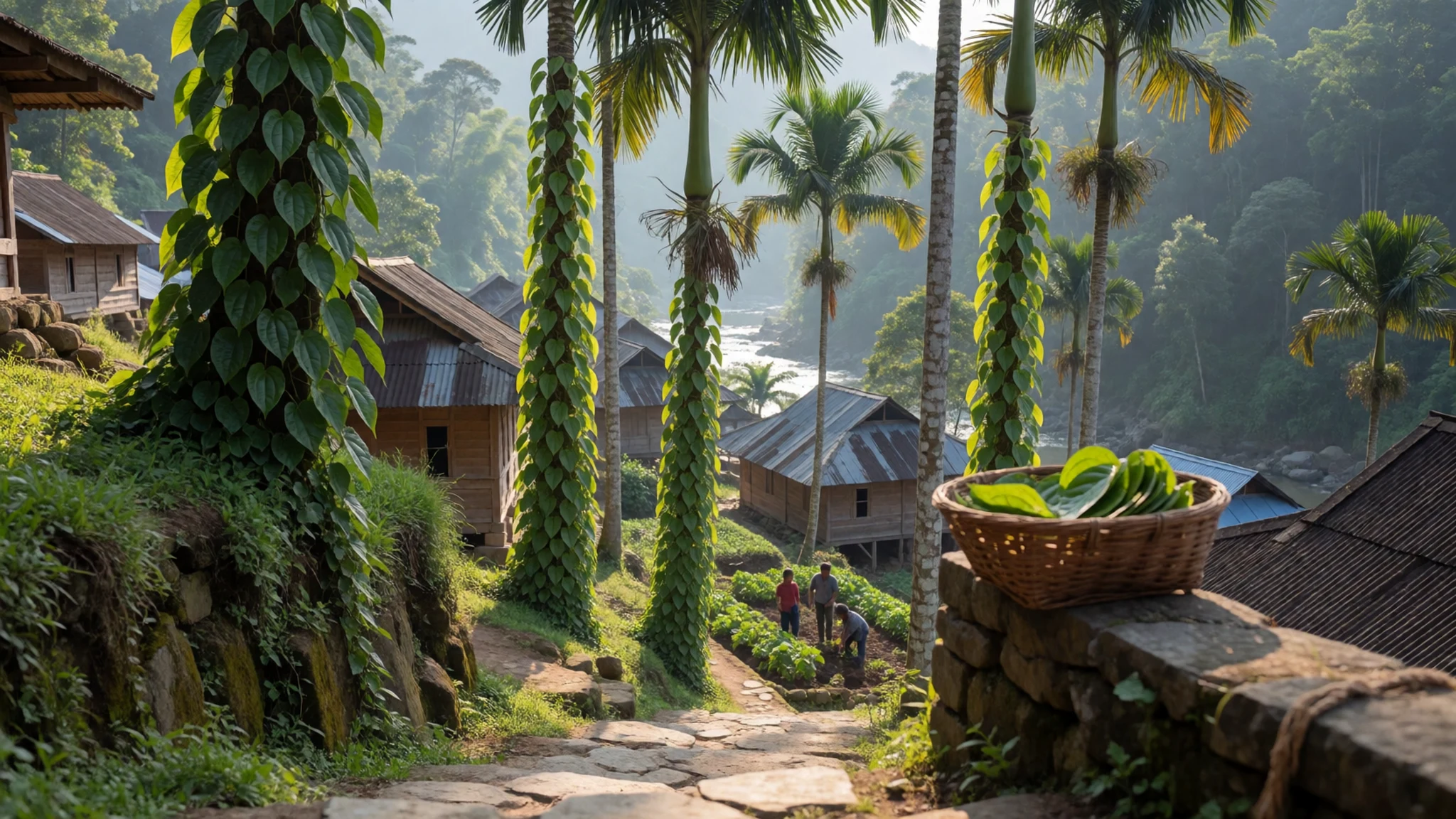
- Bichanakandi — Gowainghat, near Jaflong
Bichanakandi is a stretch of stony river bank beneath the hills, with clear water running over a bed of coloured stones in the cool season. It is a short drive from Jaflong and draws its own weekend crowds. Check road and river conditions locally, since rain can change access quickly.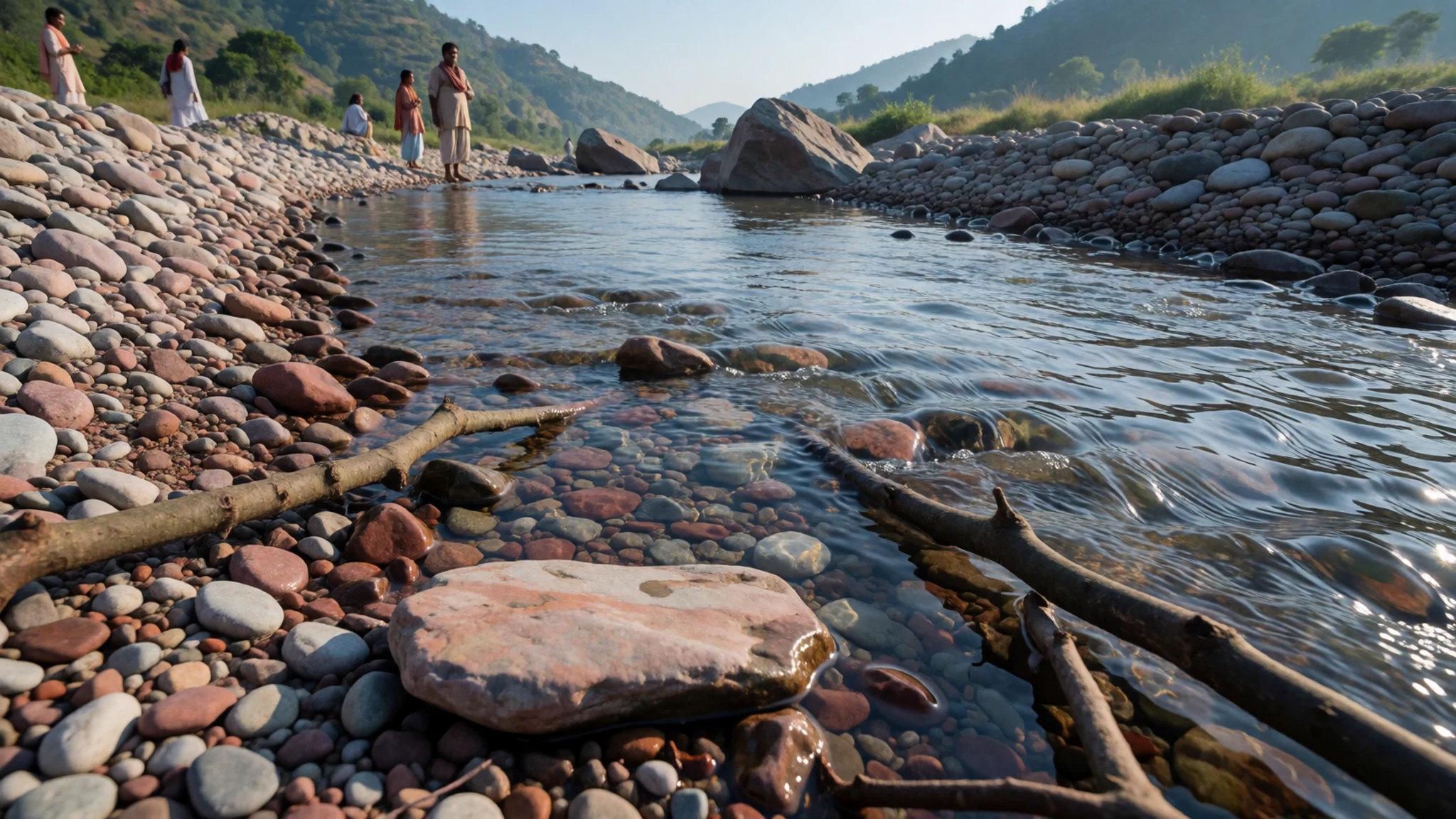
- Viewpoints toward the border hills — Edge of Jaflong
From higher spots at the edge of Jaflong, the ridge across the water is in India, often wrapped in mist after rain. Border security posts are nearby, so stay on the Bangladesh side, follow any signs or instructions, and do not photograph security personnel or installations.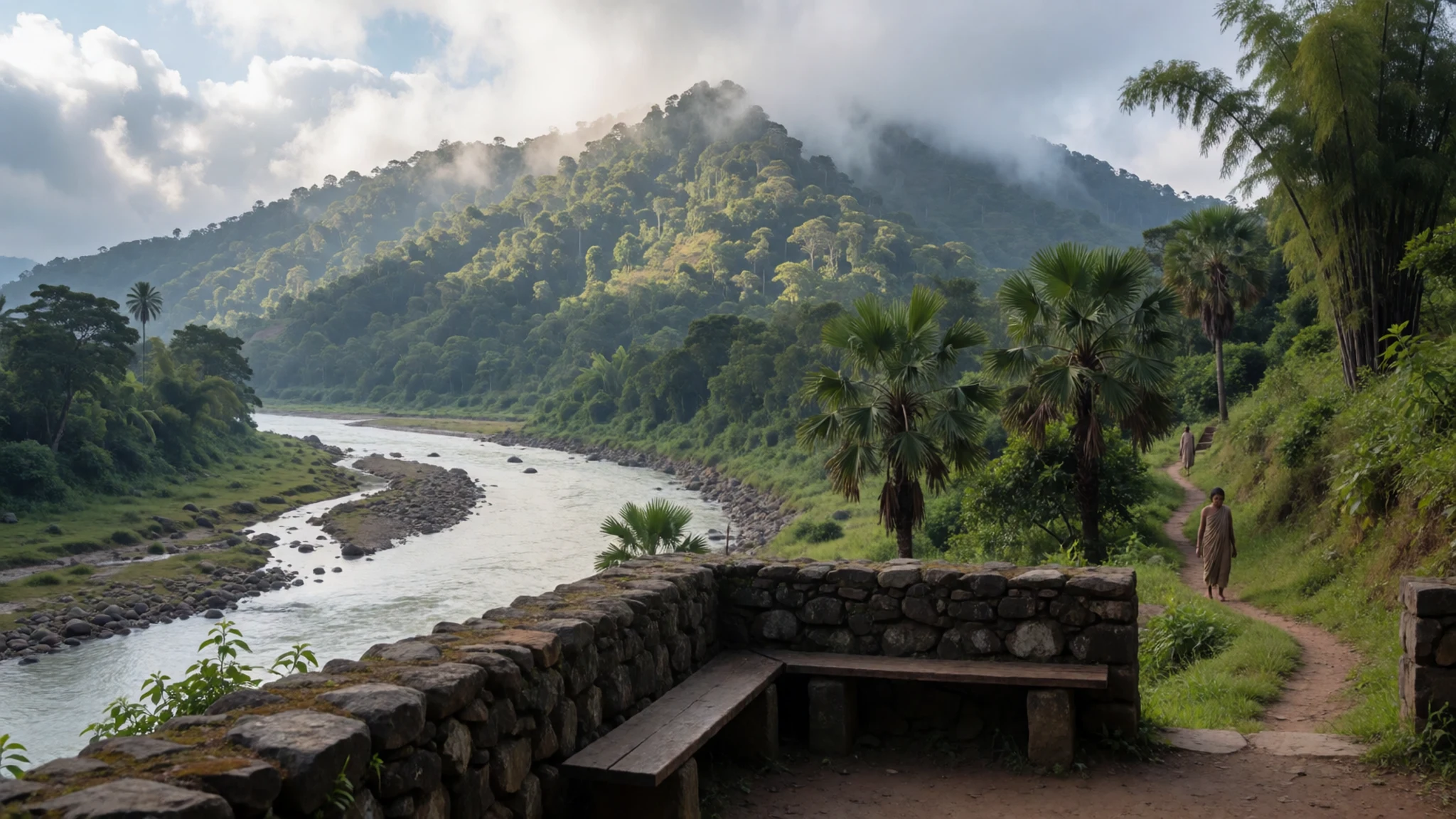
Culture
Jaflong sits where two cultures share a landscape. The wider Sylhet region is predominantly Bengali-speaking, with its own Sylheti dialect, a strong tradition of tea growing and a reputation for generous hospitality, especially around food. The Khasi community, who live in the hills and villages around Jaflong, have a distinct identity, with their own language and a matrilineal family system in which property and family names pass through the mother's line. Many Khasi families are Christian, while others follow traditional beliefs, so the rhythm of Sundays and festivals can differ from that of the surrounding Bengali villages. Betel leaf and areca nut are central to the local economy and to social life, offered to guests and sold in small bundles at roadside stalls. Daily life in Jaflong also revolves around the river: women wash clothes and children play at the water's edge, while workers haul stone through the day. Visitors are a regular sight, and most people are welcoming, though a camera pointed without asking can cause offence. The border is a living feature rather than a curiosity, since families and trade link both sides, and it is policed accordingly. Courtesy, patience and modest dress go a long way, and a smile and a few words of Bengali are appreciated. Always ask before photographing a person, a family or a home, and never photograph border posts or security staff.
What to wear
Jaflong shows two clothing traditions side by side. Among Bengali residents, women commonly wear saris and salwar kameez in cotton and lighter synthetic fabrics, and men wear lungis, kurtas or panjabis, shirts and trousers, with Sylhet's humidity making cotton the practical choice. Khasi tradition includes the wrapped two-piece women's dress known as the jainsem or dhara, and men's sleeveless woven coats; these are made from cotton and silk, including the eri silk woven in Khasi communities. Traditional outfits are mostly seen at festivals, weddings and church occasions rather than every day. In daily life people wear what is practical: sarongs and saris for women, shirts and trousers or lungis for men, plastic sandals for wading and quarry work, and simple shawls or caps against the morning chill in winter. Young people in Sylhet city and the tourist crowd favour jeans, T-shirts and sports shoes. Visitors should dress for heat, damp and modesty. Light, loose cotton clothing that covers shoulders and knees suits the climate and local norms, and women may feel more comfortable with a scarf or shawl. Footwear needs grip: sturdy sandals or trainers that can get wet are best on slippery stones and muddy paths. In the monsoon, add a light rain jacket, and in the dry season, a hat and sunscreen for the open riverbed.
What to eat
- Shatkora beef curry — Sylheti restaurants and eateries in Sylhet city
Shatkora is a tart, fragrant citrus fruit grown in the Sylhet region, and its rind is cooked with beef into a rich, sour-edged curry. It is the dish most closely tied to the area, usually eaten with plain rice or flatbread.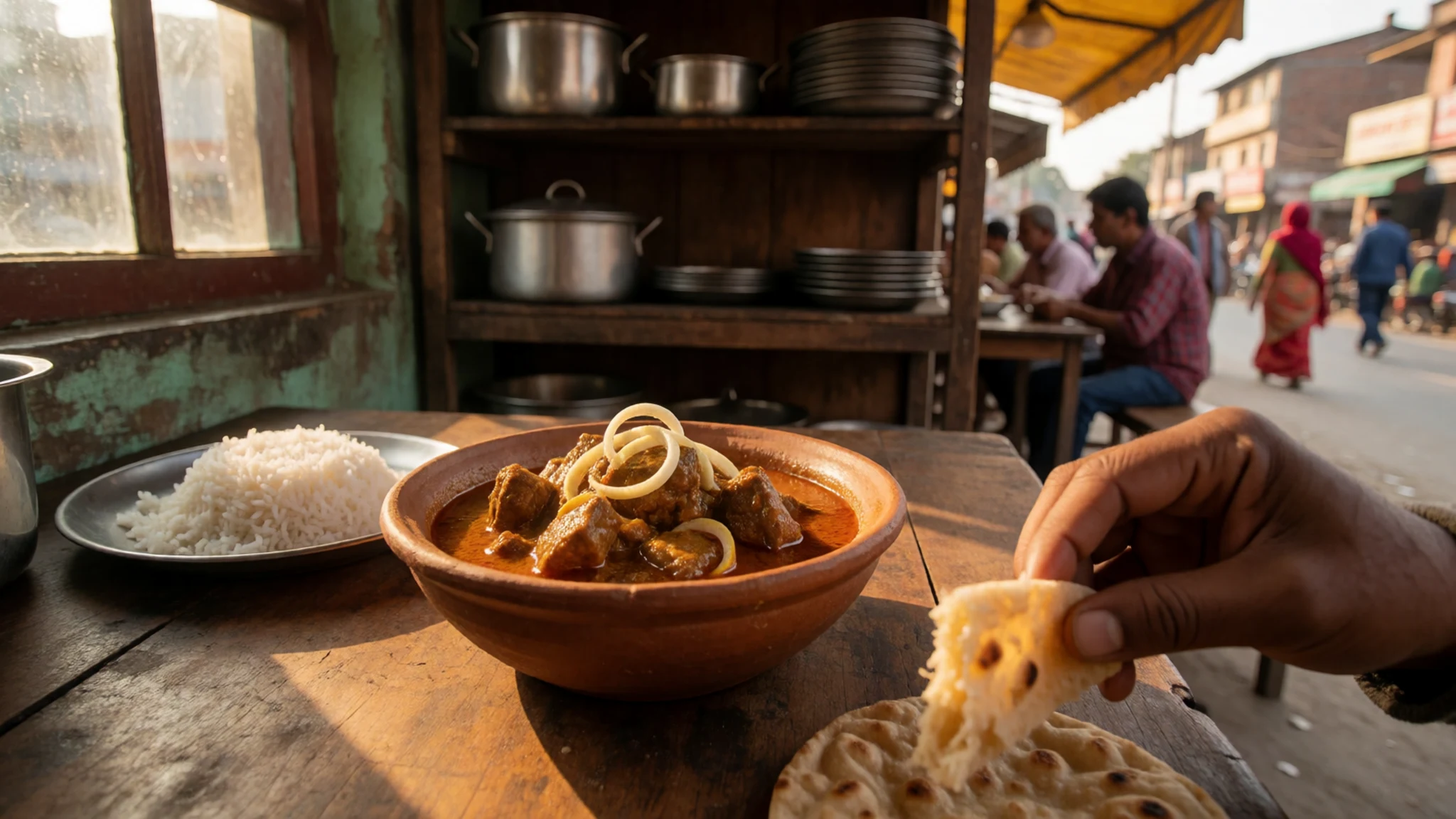
- Akhni polao — Family-run eateries and wedding-season kitchens around Sylhet
A one-pot rice dish, akhni is cooked with meat and whole spices until the grains are fragrant and moist. It is served at celebrations and in many Sylhet eateries, and tends to be milder than a biryani.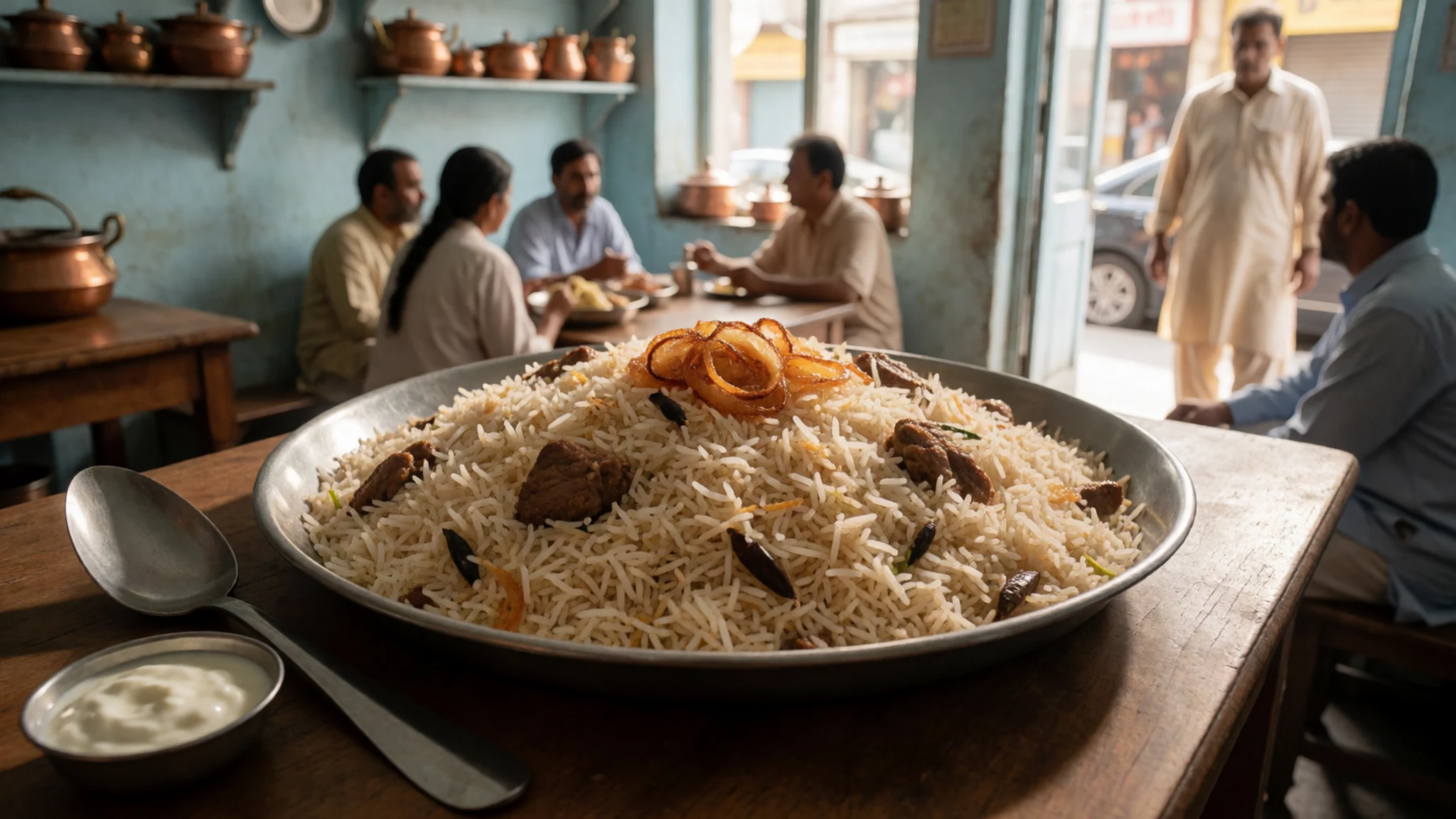
- Fried river fish — Riverside stalls and snack shacks at Jaflong
Small fish are often fried crisp and sold with rice or flatbread at simple stalls near the water. The choice depends on the day's catch. It is best eaten hot, and worth asking what is fresh before ordering. - Milk tea — Tea stalls along the Jaflong riverbank
Sylhet is tea country, and almost every stall serves strong, sweet milk tea in small cups. A pause with tea on the riverbank, watching boats and workers, is the simplest way to settle into Jaflong's rhythm. - Pitha — Village stalls and markets in the cool months
Pitha are rice-flour cakes, steamed, fried or stuffed with coconut and jaggery, made in winter across Bangladesh. In the Jaflong area, look for them at small market stalls and in home kitchens during the cooler season.
Plan it
Best time. November to March is the best window: cooler, drier and clearer, with the river low and the hills sharply visible. June to September is monsoon, when the hills are lush and streams run strongly, but rain is heavy, paths are muddy and river conditions can change quickly. April and May are hot and humid.
How long. 1–2
Getting there. Fly to Osmani International Airport in Sylhet, or take a train or bus from Dhaka to Sylhet city. For the last leg, hire a car or take a local bus or shared auto-rickshaw towards Gowainghat and Jaflong; check current services locally.
Budget. low
Tips
- Go on a weekday and arrive early, since weekends and holidays get very crowded
- Carry cash, as stalls and small shops rarely take cards
- Bring drinking water and sun protection for the open riverbed
- Check current rules for foreign visitors near the border and the latest travel advice before setting out
- Combine Jaflong with nearby riverside spots and tea gardens rather than staying long
Etiquette
- Ask before photographing people, especially Khasi families and quarry workers
- Do not photograph or approach border posts or security staff
- Dress modestly in light cotton and keep voices low in villages
Nearby
Sources
- Wikidata Q3350390 (CC0)
- Wikipedia: Jaflong (rev 1385996076) (CC BY-SA 4.0)
- Wikivoyage: Jaflong (CC BY-SA 4.0)
- Photo 01: বিছানাকান্দি — Arghya Banik (CC BY 2.5)
- Photo 02: Boat in river, Bangladesh — Ziaul Hoque (CC BY 2.5)
- Photo 03: Jaflong Sylhet — Abdul Momin (CC BY-SA 4.0)
- Photo 04: Jaflong1 — Salim Khandoker (CC BY-SA 4.0)
- Photo 05: Joflong Stone Quarry — David Stanley (CC BY 2.5)
- Photo 06: 2025 Travelling in Sylhet Area Bangladesh — Momen5252 (CC BY-SA 4.0)
- Photo 07: A Partial View of Jaflong-1 — Farhana Islam Nova (CC BY 3.0)
- Photo 08: A Partial View of Jaflong-2 — Farhana Islam Nova (CC BY 3.0)


