Hakaluki Haor
Hakaluki Haor, Bangladesh
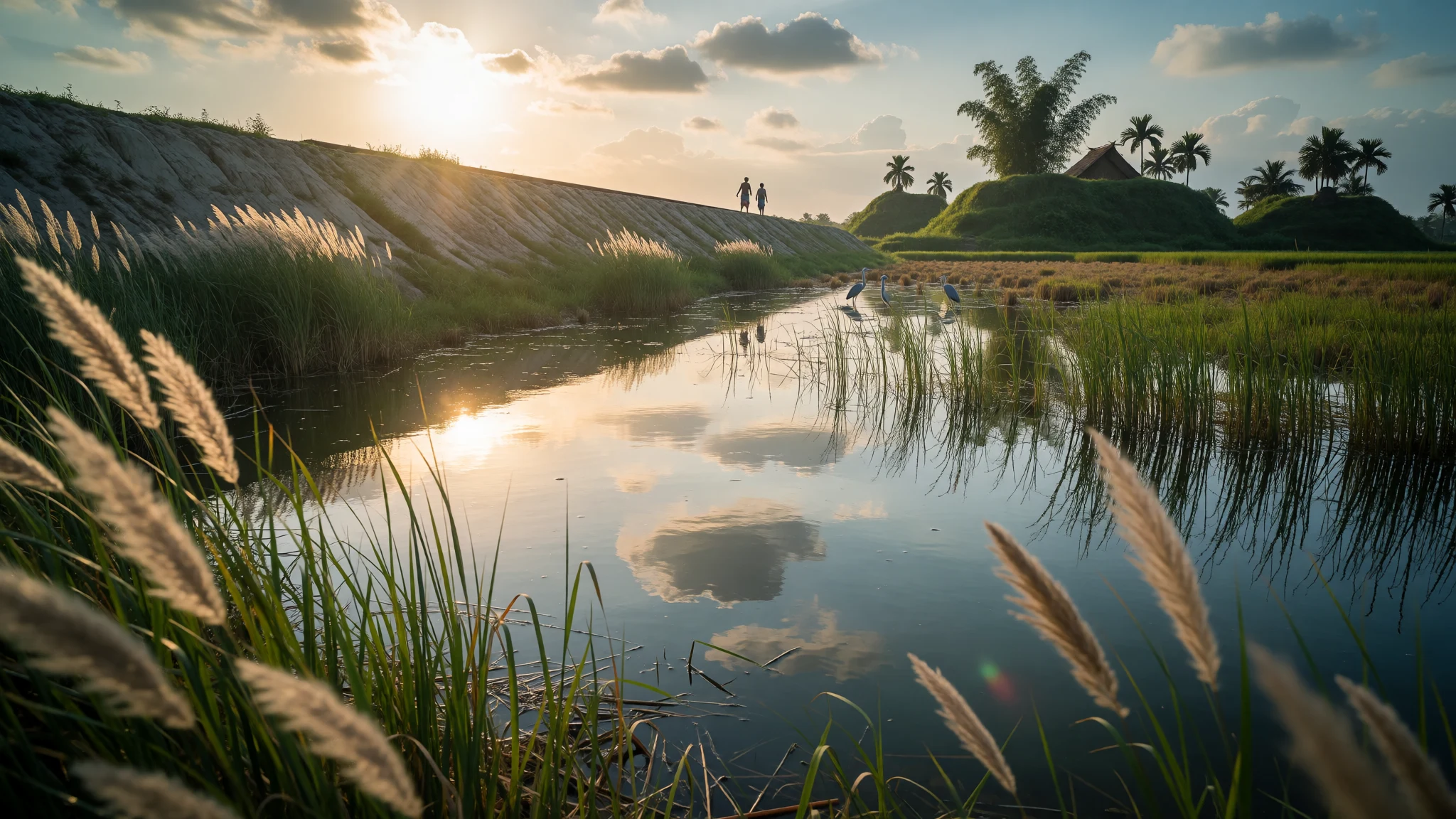
Hakaluki Haor is a large freshwater marsh in north-eastern Bangladesh, where boats, birds and villages share water that shrinks and swells with the seasons.
The place
Hakaluki Haor sits in north-eastern Bangladesh, in the Sylhet region, spread across Moulvibazar and Sylhet districts. A haor is a bowl-shaped wetland that fills with river water in the rains, and Hakaluki is a freshwater marsh of this kind, described as one of Asia's larger marsh wetlands. Its surface area is about 181 square kilometres, shared between several upazilas (sub-districts): Barlekha, Kulaura and Juri in Moulvibazar, and Golapganj and Fenchuganj in Sylhet. Barlekha alone covers about 40 per cent of the whole.
The edges are easy to place on a map. The Kushiara river bounds part of the haor to the north, the Fenchuganj–Kulaura railway runs along its western side, and the Kulaura–Beanibazar road passes to the east. Between those lines the landscape changes with the calendar: open water and drowned fields in the wet months, then mud, grass and shrinking pools once the water draws down.
About 190,000 people live around the marsh, and their fishing, farming and cattle-grazing are tied to that rhythm. The wildlife count is just as striking: 558 species of animals and birds have been recorded, including several classed as threatened or endangered. The area is officially an Ecologically Critical Area, a protective label that sits alongside everyday use rather than replacing it. Hakaluki Haor is therefore less a park to tour than a working landscape to look at slowly, usually from a hired boat or a village path.
Its story
The story of Hakaluki Haor is mostly a story of water and the people who read it. Each year the rivers feeding the marsh rise, spill across low ground and turn fields, grazing land and village edges into one shallow lake. When the water retreats it leaves fertile mud and trapped fish, and the families around the haor have long organised their year around both phases: fishing when the water is high, planting rice when it falls, and moving cattle to wherever grass has appeared.
That bargain has never been simple. A haor can flood fast, and an early flood can ruin a rice crop before it is cut. Fishing grounds are shared and sometimes contested, and the weight of some 190,000 neighbours on a marsh of about 181 square kilometres is the kind of load that tends to strain a wetland's fish, plants and birds.
The official response was to declare Hakaluki Haor an Ecologically Critical Area. The label recognises the marsh as a habitat worth protecting for its 558 recorded animal and bird species, including some listed as threatened, vulnerable, endangered or critically endangered. What it means on the ground depends on local enforcement and on whether fishing and farming communities see a benefit in protection. Visitors arrive into that unfinished conversation, and the way they travel, what they eat and which boatmen they hire all feed into it.
What to see
- The open water by boat — Central haor, Moulvibazar and Sylhet districts
In the wet months the middle of Hakaluki Haor becomes a wide sheet of shallow water, with village mounds rising like islands. A hired country boat is the usual way to see it, drifting slowly past reed beds and flooded fields. Go with a local boatman who knows the channels, and expect little shade and strong glare.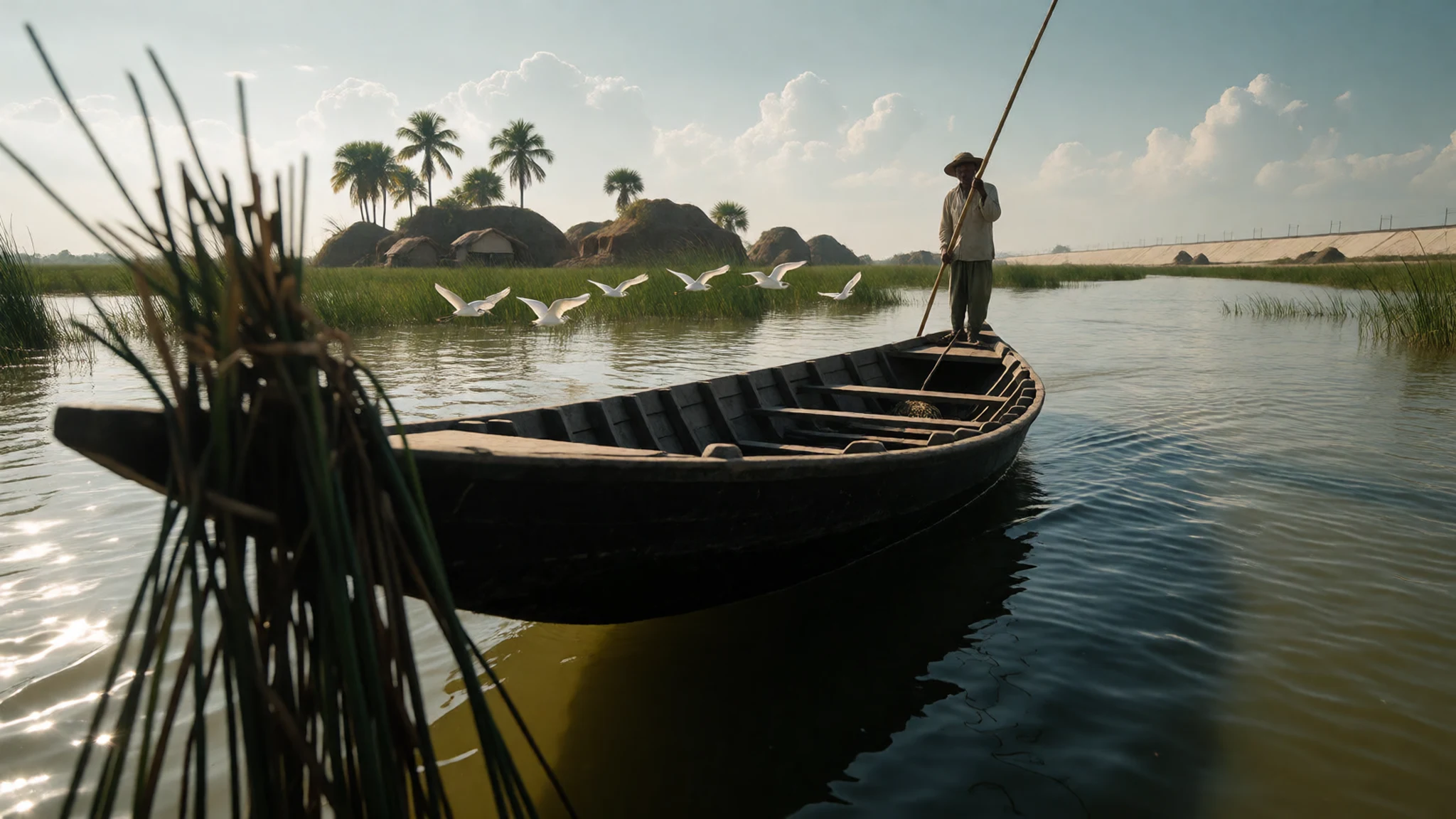
- The dry-season marsh — Barlekha and Juri upazilas
After the water draws down, Hakaluki Haor turns into a patchwork of green grass, cracked mud and leftover pools. This is the season for walking embankments and village tracks, watching cattle graze where boats ran a few months earlier. The light is clear and the ground firmer, though the walking is exposed and dusty.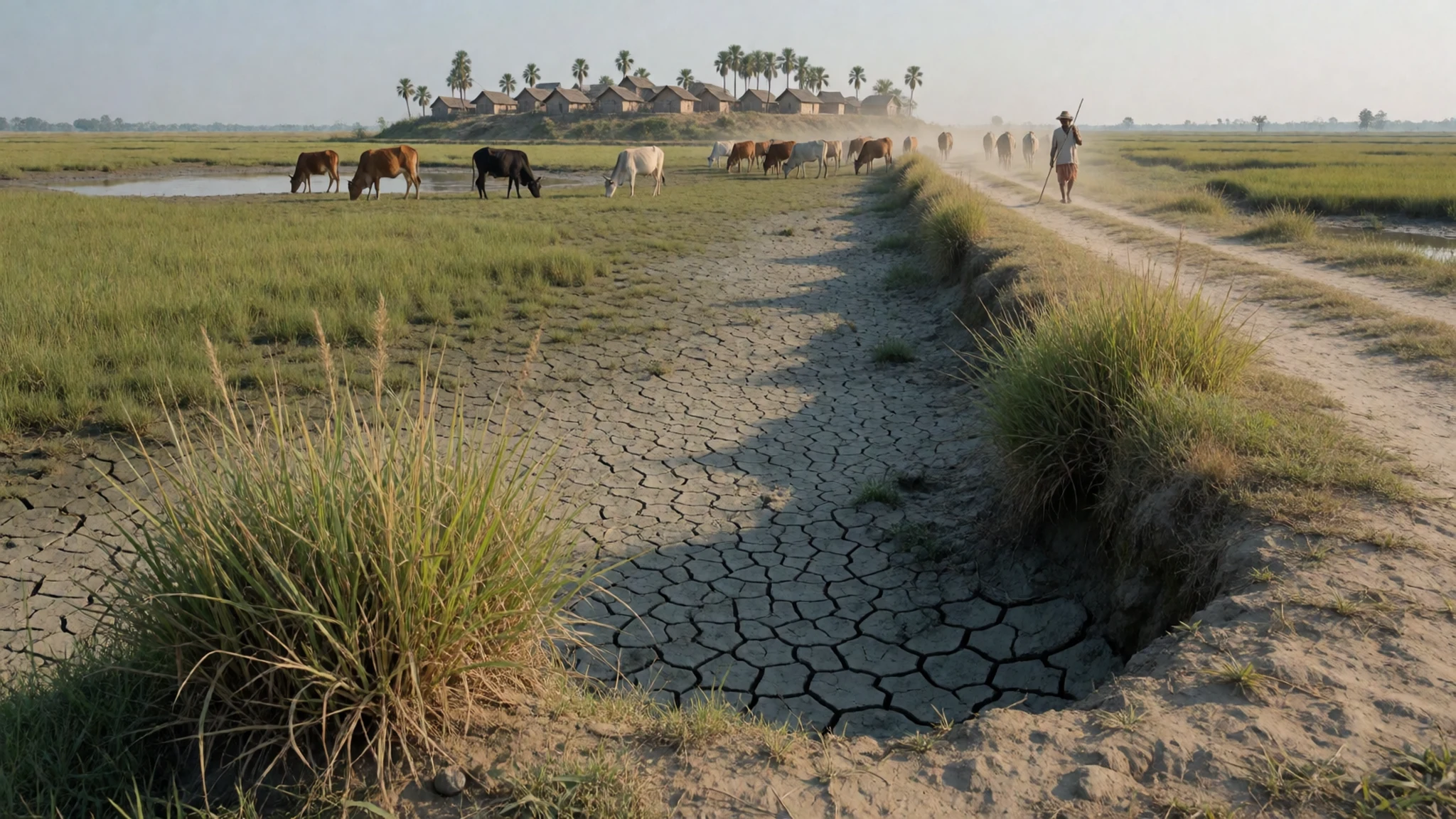
- Winter birds on the beels — Pools and shallows across the haor
Cool-season mornings bring ducks, swans and other waterbirds to the pools and shallows of Hakaluki Haor, a marsh with 558 recorded animal and bird species. Bring binoculars, arrive at first light and keep voices low. A boatman will usually know which beel (permanent pool) is busiest that week.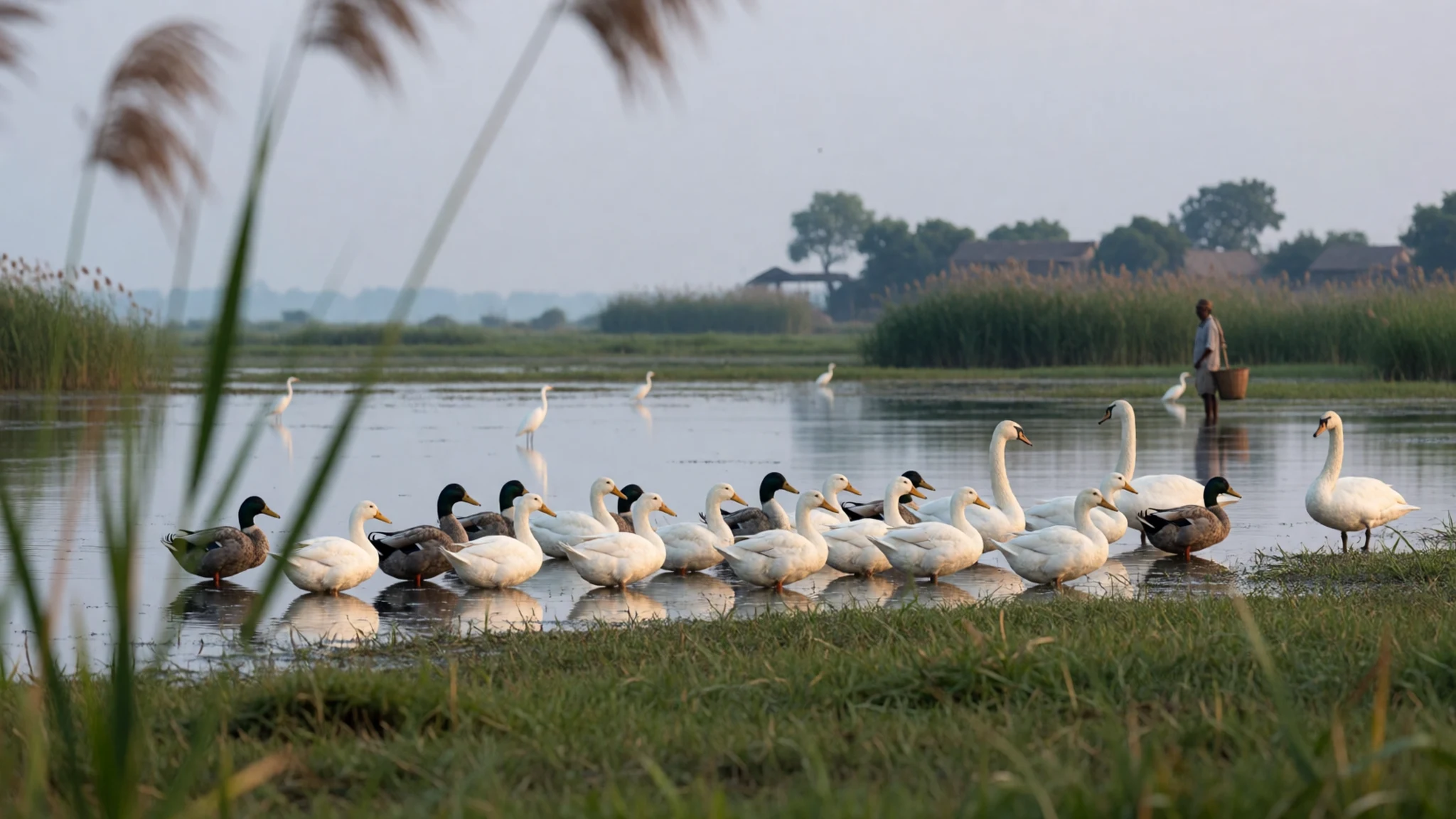
- The Kushiara river edge — Northern edge, Golapganj and Fenchuganj area
The Kushiara river bounds part of the northern side of Hakaluki Haor, and its banks offer a different view: working boats, bathing steps and farmland rather than open marsh. It is a good place to see how the river feeds the haor and how closely villages sit to the waterline.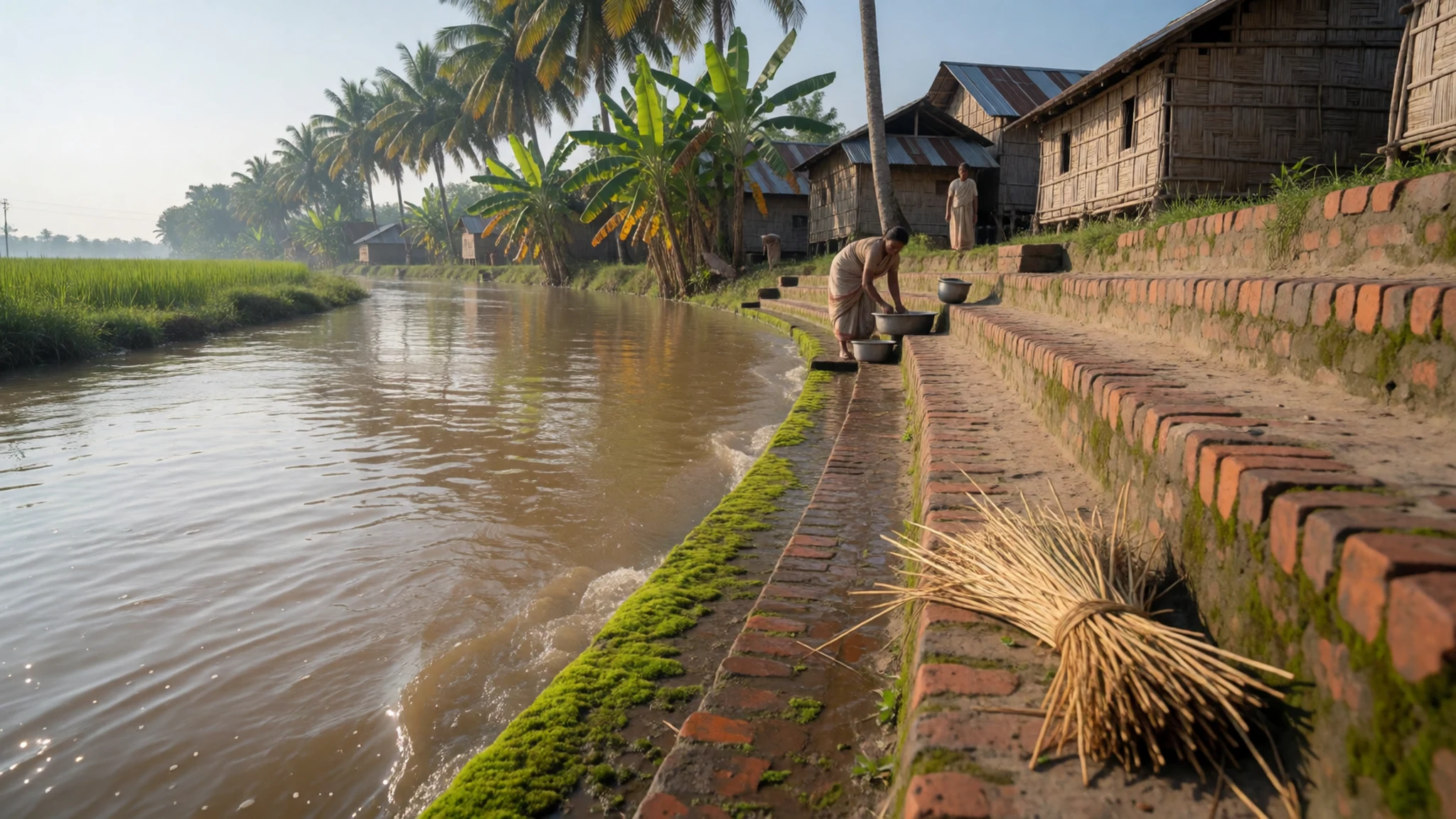
- Kulaura and the southern fringe — Kulaura, Moulvibazar district
Kulaura lies on the southern side of the haor, where the railway and road that frame the marsh make access easier than in many wetlands. The town is a practical base for arranging boats and meals, and the nearby fringes show village life, fish landings and paddy land close to the water.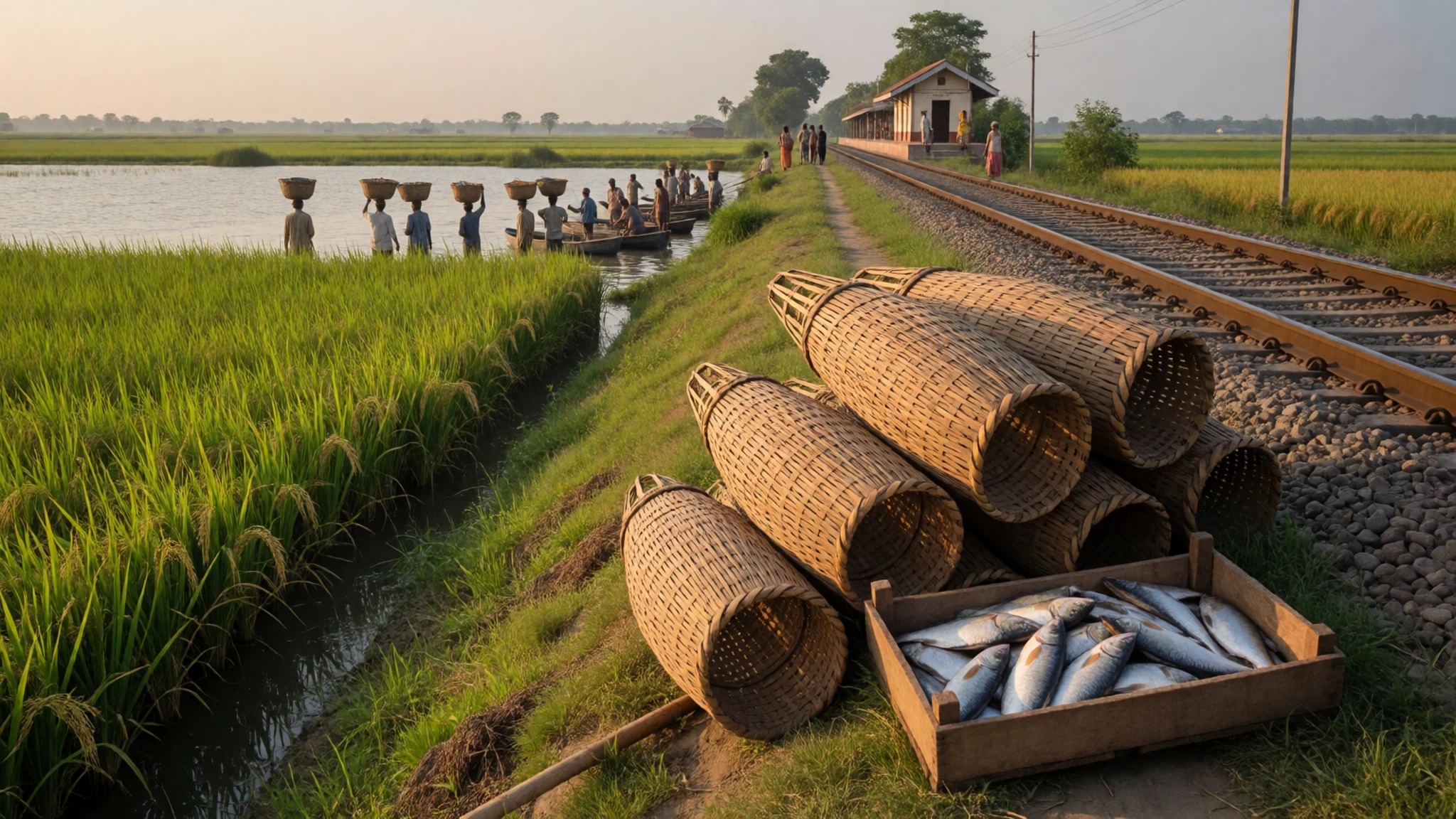
Culture
Hakaluki Haor lies in the Sylhet region, a part of Bangladesh known for Bengali-speaking riverside villages, tea estates and a strong habit of hospitality towards guests. Life around the marsh follows the water. Fishing households, rice farmers, cattle keepers and boat builders share the same landscape, and the calendar of floods and drawdowns shapes when people work, travel, marry and celebrate. Most villagers are Bengali Muslims, with Hindu and other communities living in the wider district, so the day follows the call to prayer and Fridays are quieter.
Visiting is as much about meeting people as watching birds. Village tea stalls are the social centre, and a visitor who sits down, accepts a cup and chats, with a guide's help if needed, will learn more than from any signboard. Bengali is the main language. A few words of greeting go a long way, and English is limited outside the larger towns.
Many families depend on the haor's fish and grazing for a living, so conservation here is a live question rather than an abstract one. Hiring local boatmen, buying food in village markets and keeping rubbish out of the water are small ways of putting money and care in the right place.
Dress modestly, ask before photographing anyone, particularly women, and never throw litter into the water.
What to wear
Traditional dress around Hakaluki Haor follows wider Bengali custom. Women wear the sari, usually cotton for daily life and silk or finely woven cloth for weddings and festivals, with a blouse and petticoat. Men wear the lungi, a checked or plain wrapped cloth, for work and home, and the panjabi, a long collarless cotton shirt, for prayers, Fridays and celebrations. A gamchha, a thin cotton towel-cloth, is knotted round heads, slung over shoulders and used to wipe off sweat. Kantha quilts, stitched from layers of old cloth, are a household textile rather than dress. Manipuri communities in the wider Moulvibazar district are known for their own hand-woven fabrics.
Day to day, people on the haor wear practical clothes. Boatmen and farmers favour lungis or rolled trousers with cotton shirts, many women wear salwar kameez or saris with a shawl, and young people in the towns wear jeans, T-shirts and cricket shirts. Sandals or bare feet are common in mud.
Visitors should dress for heat, sun and modesty. Choose light, loose cotton with long sleeves and long trousers or a long skirt, plus a wide hat and sunglasses for the glare off the water. Women may want a scarf for villages and mosques. Wear sandals that grip and dry fast, or old trainers for muddy embankments, and carry a light rain jacket in the wet months and a fleece for cool winter dawns on the boat.
What to eat
- Fresh haor fish curry — Village eateries and fish landings around Kulaura and Barlekha
Freshwater fish cooked in a thin gravy of mustard oil, turmeric and green chillies is the everyday meal here, eaten with rice. The catch changes with the season, so ask what came out of the water that morning.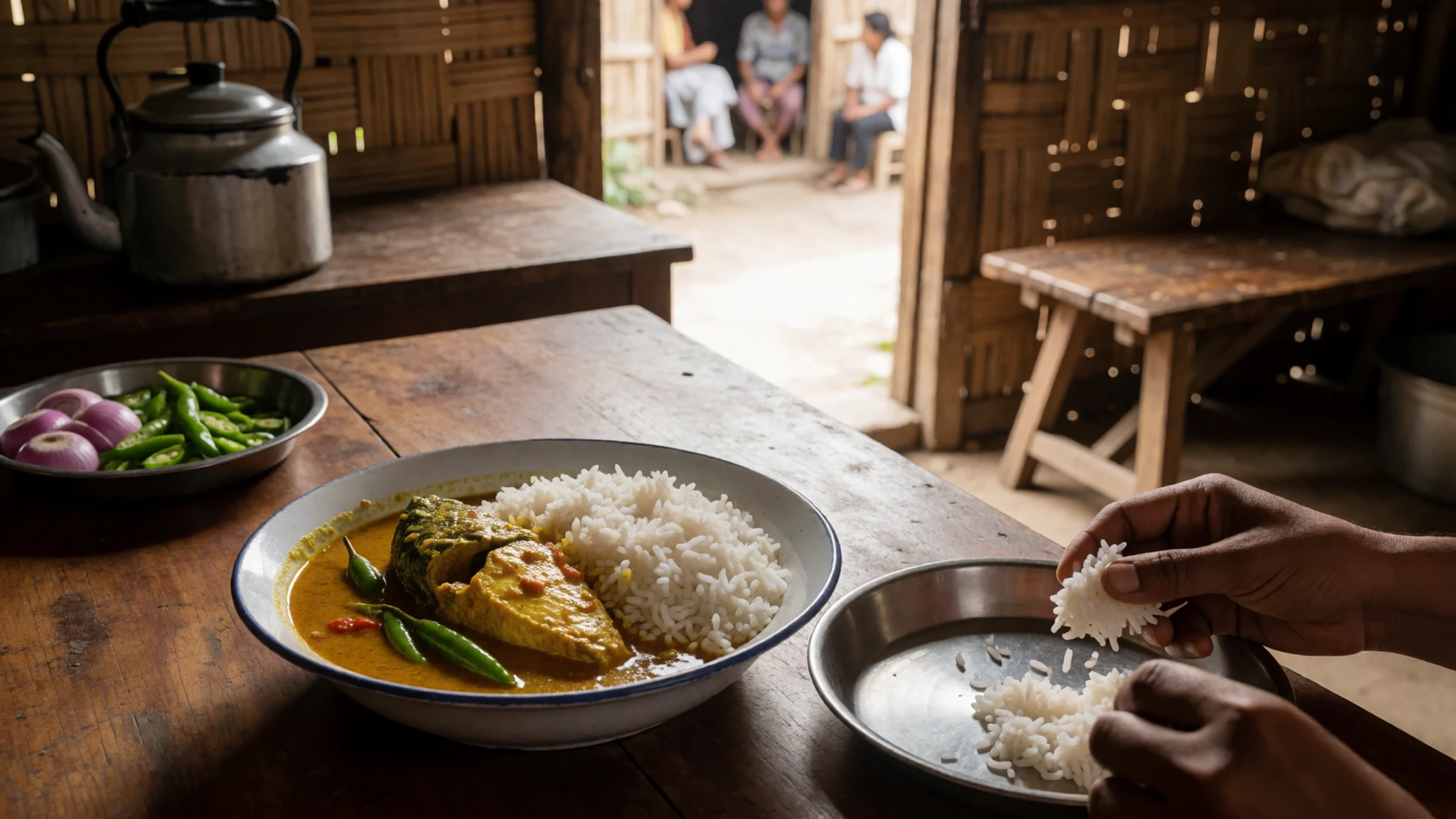
- Shutki bhuna — Home kitchens and bazaar stalls that sell dried fish
Dried fish, a staple of Bengali kitchens, is fried with onion, garlic and chilli into a pungent, dark, dry curry. It is strong-smelling and not for everyone, but it is an honest taste of how fish is kept through lean months.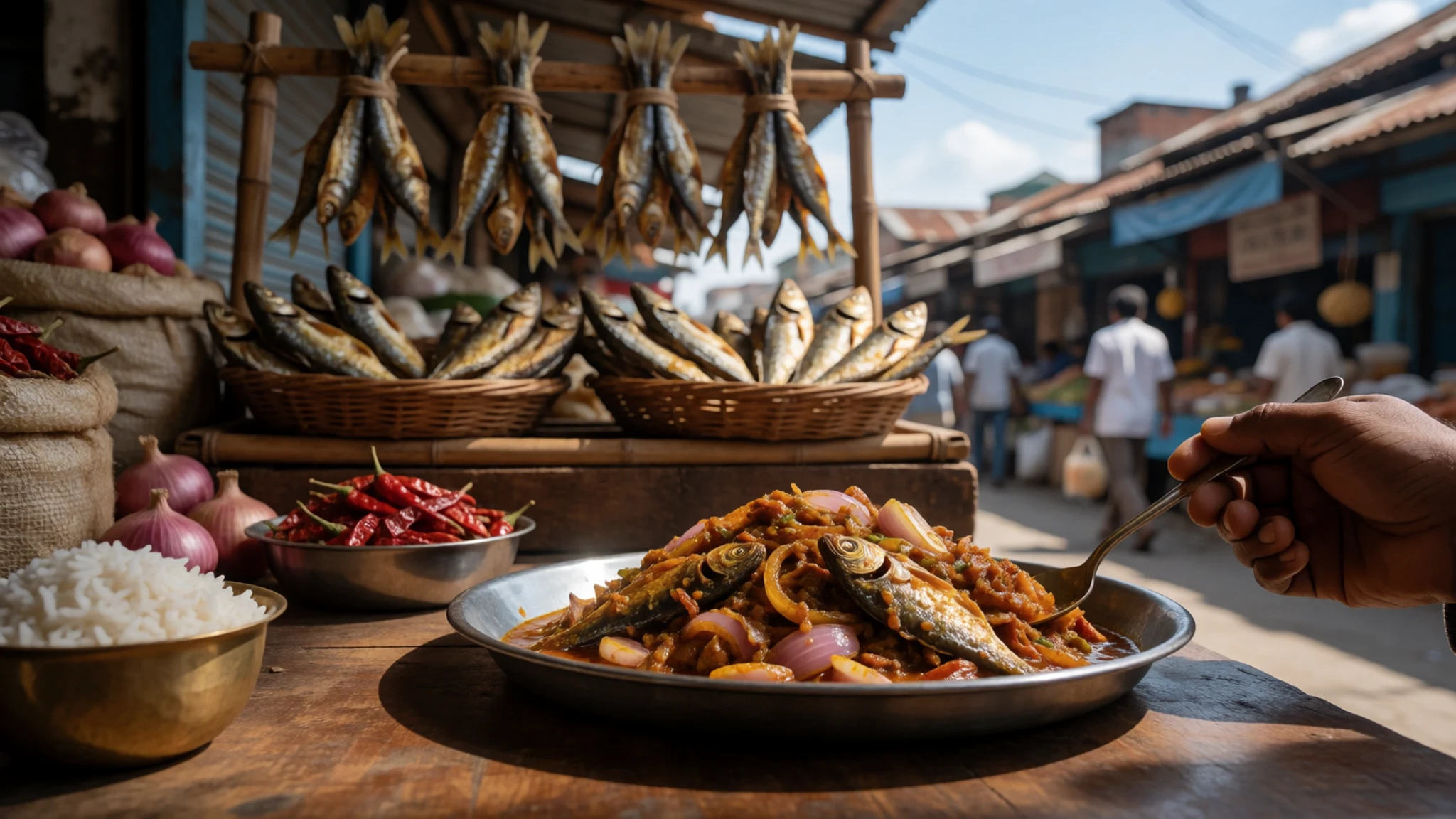
- Shatkora beef curry — Sylheti eateries in Kulaura and Sylhet city, and family meals
Shatkora is a knobbly, sharp-sour citrus from the Sylhet hills, cooked with beef or chicken to give a tangy, slightly bitter edge. It is a mark of Sylheti cooking and worth ordering whenever it appears. - Akhni — Eateries near bus stops and railway stations, and family feasts
Akhni is a one-pot dish of rice cooked with meat or fish, spices and fried onion, closer to a pilaf than a plain curry. It is served at gatherings and weekends, and makes hearty food for a long day on the boat. - Pitha — Roadside stalls and village markets in winter
In the cooler months, rice-flour cakes called pitha appear at roadside stalls and in village kitchens: some steamed with coconut and jaggery, some fried, some thin and folded. They are a winter treat and easy to sample a few at a time. - Milk tea — Tea stalls at any bazaar, station or river landing
Strong, sweet milk tea is the social drink of the district, served in small cups at village tea stalls. Moulvibazar is tea country, so it is worth sitting down for a cup while the boat is being arranged.
Plan it
Best time. November to February is the most comfortable: cooler and drier, with migratory waterbirds on the pools and firmer ground for walking. The wet months, roughly June to September, bring high water and boats across the whole marsh, but also heat, humidity, heavy rain and sometimes flood disruption.
How long. 1–2
Getting there. Fly to Osmani International Airport at Sylhet, or take a train from Dhaka towards Sylhet and get off at Fenchuganj or Kulaura, on the line that runs along the haor's western side. For the last leg, hire a local vehicle to a boat landing, then a country boat. Check current train schedules with Bangladesh Railway.
Budget. low
Tips
- Arrange a local boatman and guide through your accommodation in Kulaura or Sylhet before heading out, rather than hoping to find one at the water's edge
- Start at first light for birds and cooler air, and finish before the afternoon glare
- Carry cash in small notes, as cards are rarely taken in villages, plus drinking water and sun protection
- In the wet season, ask locally about flooding and weather before going, and whether boats are running
- Phone signal can be patchy on the water, so download maps beforehand
Etiquette
- Ask before photographing people, especially women and children
- Dress modestly in villages and near mosques
- Take all rubbish with you and keep a respectful distance from nesting and feeding birds
Nearby
Sources
- Wikidata Q3350278 (CC0)
- Wikipedia: Hakaluki Haor (rev 1384285783) (CC BY-SA 4.0)
- Wikivoyage: Hakaluki Haor (CC BY-SA 4.0)
- Photo: Beauty of Nature of Hakaluki Haor (Frank Dinar) (CC BY-SA 4.0)
- Photo: Hakaluki Hawor in Dry Season (Shahnoor Habib Munmun) (CC BY 3.0)
- Photo: Hakaluki Hawor Sylhet Bangladesh 46 (Shahnoor Habib Munmun) (CC BY 3.0)
- Photo: Baikka Bil, Sylhet (Grenadiersk) (CC BY-SA 4.0)
- Photo: Beauty Hakaluki Haor (Frank Dinar) (CC BY-SA 4.0)
- Photo: Beauty of Nature of Hakaluki Haor in Kulaura (Frank Dinar) (CC BY-SA 4.0)
- Photo: Hakaluki Haor by Fardous Kabir 01 (Grisly09) (CC BY-SA 4.0)
- Photo: Hakaluki Haor by Fardous Kabir 02 (Grisly09) (CC BY-SA 4.0)


Wildlife
- Whooper swan (animal)
Picture a very large white swan that has flown in from the northern world: that is the whooper swan, the Eurasian relative of the trumpeter swan. In Hakaluki Haor, swans join the other waterbirds in the pools and shallows on cooler-season mornings, so rise early. Watch from a respectful distance, keep your voice low, and go with a guide who knows the marsh. Never offer food, however close they seem.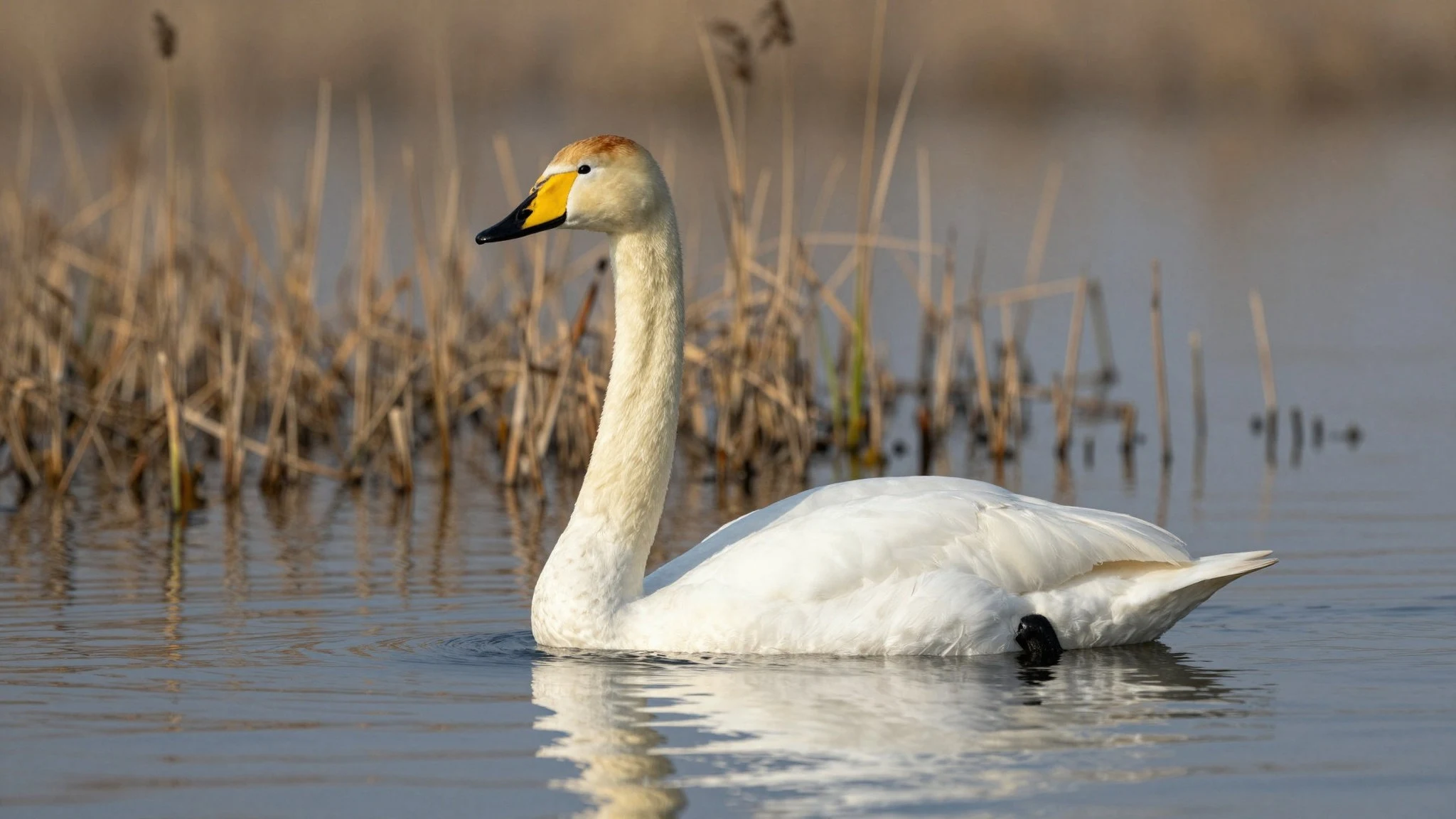
- Lesser whistling duck (animal)
The lesser whistling duck is a brown, long-necked duck that calls with a loud, wheezy, two-note whistle. It feeds at night, so by day look for resting flocks around lakes and damp rice paddies; it may even perch in a tree. In Hakaluki Haor, early mornings in the cooler months bring ducks to the pools and shallows. Watch from a distance, speak softly, and let a guide help you. Never feed them.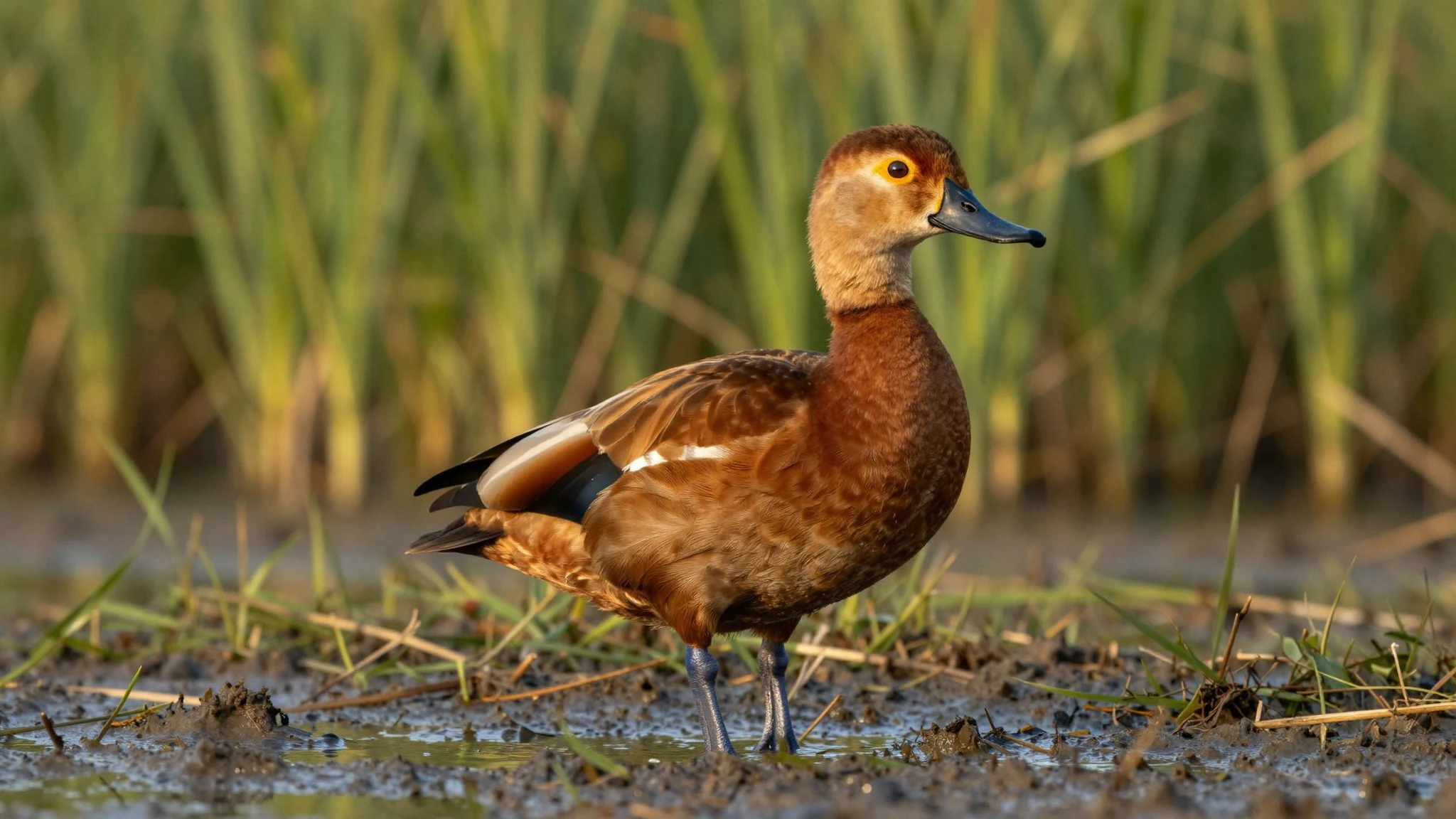
- Whooper swan (bird)
Picture a very large white swan that has flown in from the northern world: that is the whooper swan, the Eurasian relative of the trumpeter swan. In Hakaluki Haor, swans join the other waterbirds in the pools and shallows on cooler-season mornings, so rise early. Watch from a respectful distance, keep your voice low, and go with a guide who knows the marsh. Never offer food, however close they seem.