Boga Lake
Boga Lake, Bangladesh
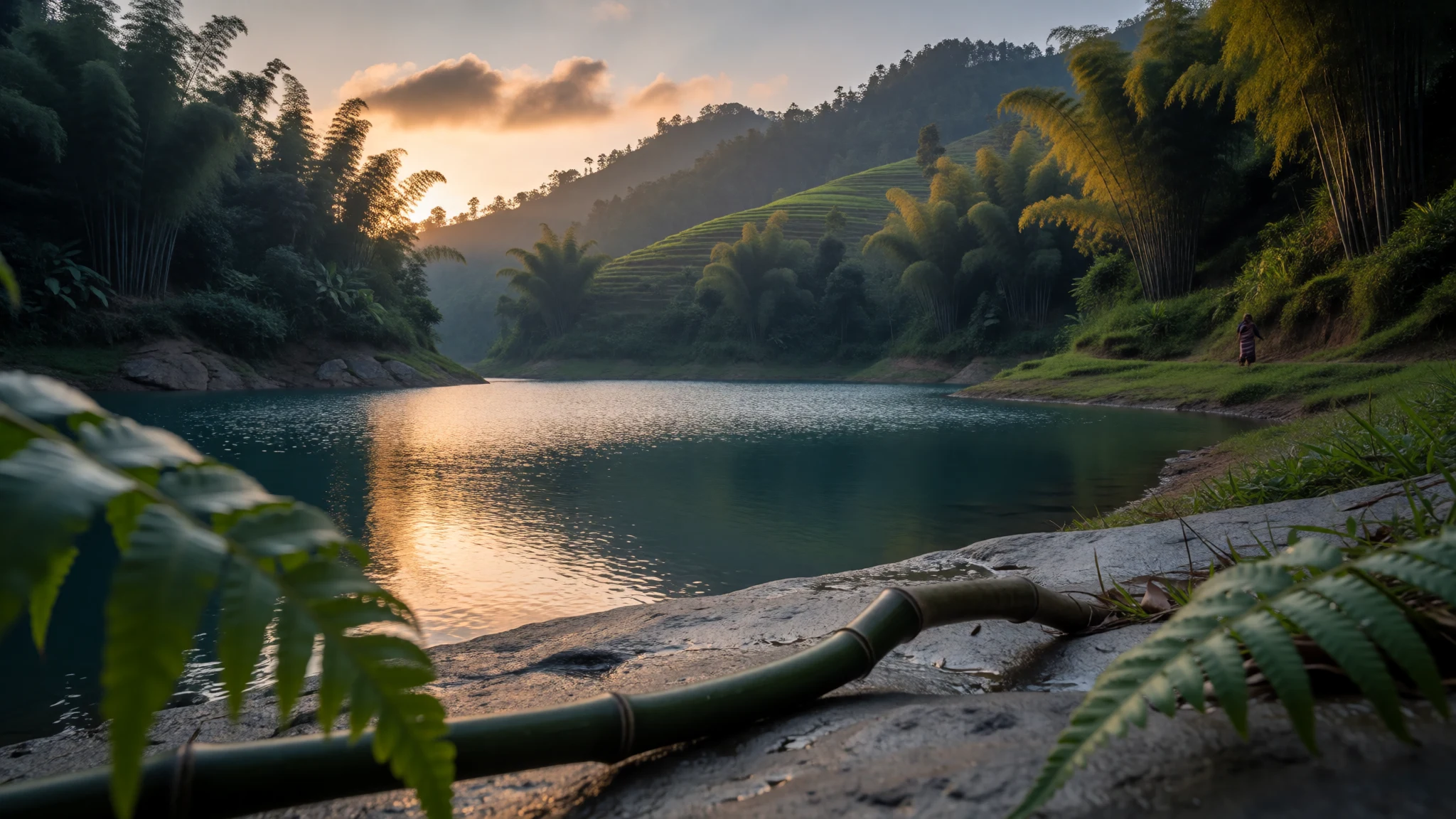
Boga Lake is a quiet hill lake in Bandarban, reached on foot through forest and Bawm villages, far from the delta's crowds.
The place
Boga Lake sits in the hills of Bandarban, in the far south-east of Bangladesh, where the flat delta gives way to forested ridges. Its official name is Bogakine Lake Wildlife Sanctuary, and it is listed as a nature reserve. The water fills a hollow among the hills rather than spreading across a plain, so the shore is steep in places and lined with trees that lean over the surface. Nothing here resembles the Bangladesh of rice fields and wide rivers. The land folds into green slopes, bamboo groves and small clearings where hill families grow their crops. The lake is small enough to walk around. Its colour shifts between dark green and slate blue with the cloud, and mist often hangs on the water at dawn. Very little is built nearby beyond simple huts used by locals and overnight visitors. Reaching it takes effort: a long road journey to Bandarban town, a further drive towards Ruma, then a rough track and a walk. That remoteness is the appeal and also the limit. Facilities are basic, mobile signal comes and goes, and the weather can rearrange a plan. The surrounding hills are home to the Bawm and other communities with their own languages and customs, distinct from the Bengali majority of the plains. Most visitors are Bangladeshis on short breaks in the cooler months. Weekends and public holidays bring crowds to the shore, so quiet needs a weekday or an early start.
Its story
Boga Lake was known to the hill communities around it long before it appeared in guidebooks or on social media. Local stories about its origin differ from teller to teller. Some give the lake a guardian spirit, and others say the water has no bottom. Such tales have traditionally encouraged respect for the place, and they are worth hearing rather than testing. For most of the country the lake only came into view as roads improved towards Ruma and Thanchi and as domestic tourism grew. That coincided with the end of a long period of conflict in the Chittagong Hill Tracts, a region whose recent history is still sensitive. Access rules in Bandarban have changed more than once, with permissions, checkpoints and guide requirements shifting with local security and administration. Anyone planning a trip should check the current position with the district authorities or a reputable local operator before setting out. The lake's status as a wildlife sanctuary adds another layer. It means the forest and shoreline are meant to be protected, yet litter and noise from busy weekends are a real concern. The communities who live nearby depend on the same land for farming, bamboo and small-scale trade. Tourism brings them income through guiding, transport and simple lodging, but also pressure on water, paths and waste. The lake's story is therefore still being written, mostly by the balance between visitors and the people who live around it.
What to see
- The lake shore — Bandarban district
Boga Lake is a short, easy circuit on foot, with the water close beside the path. The light changes quickly, and early morning is calmest, with mist on the surface and few voices. Take a slow lap, sit on a bank, and watch how the colour shifts with the clouds.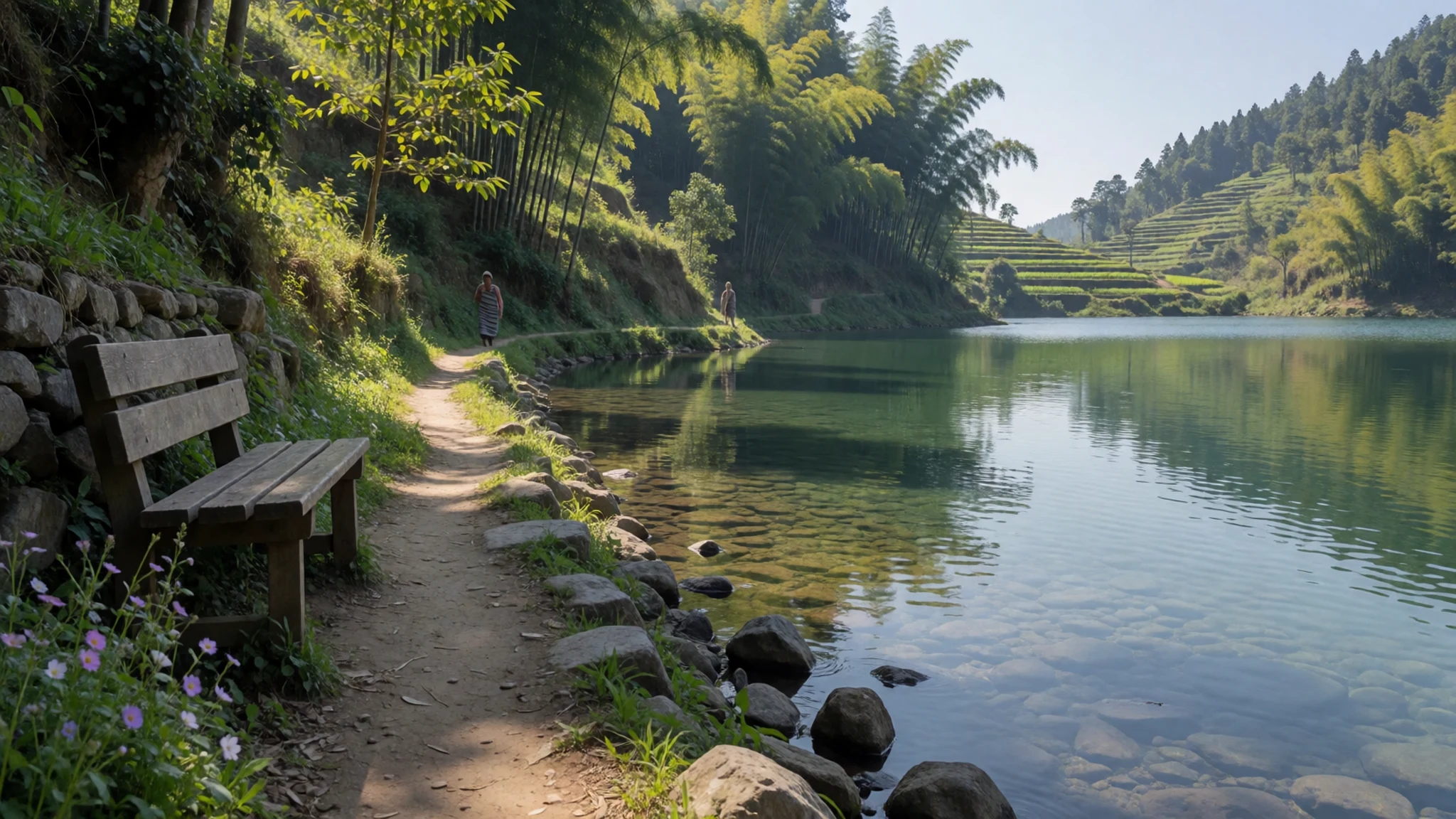
- The approach trek — Between Ruma and the lake, Bandarban
The walk in is half the experience. Paths climb through bamboo, secondary forest and cleared slopes, with views across ridge after ridge. It is steep and slippery in places, and heat builds by late morning. A local guide helps with the route, the stream crossings and the changing conditions.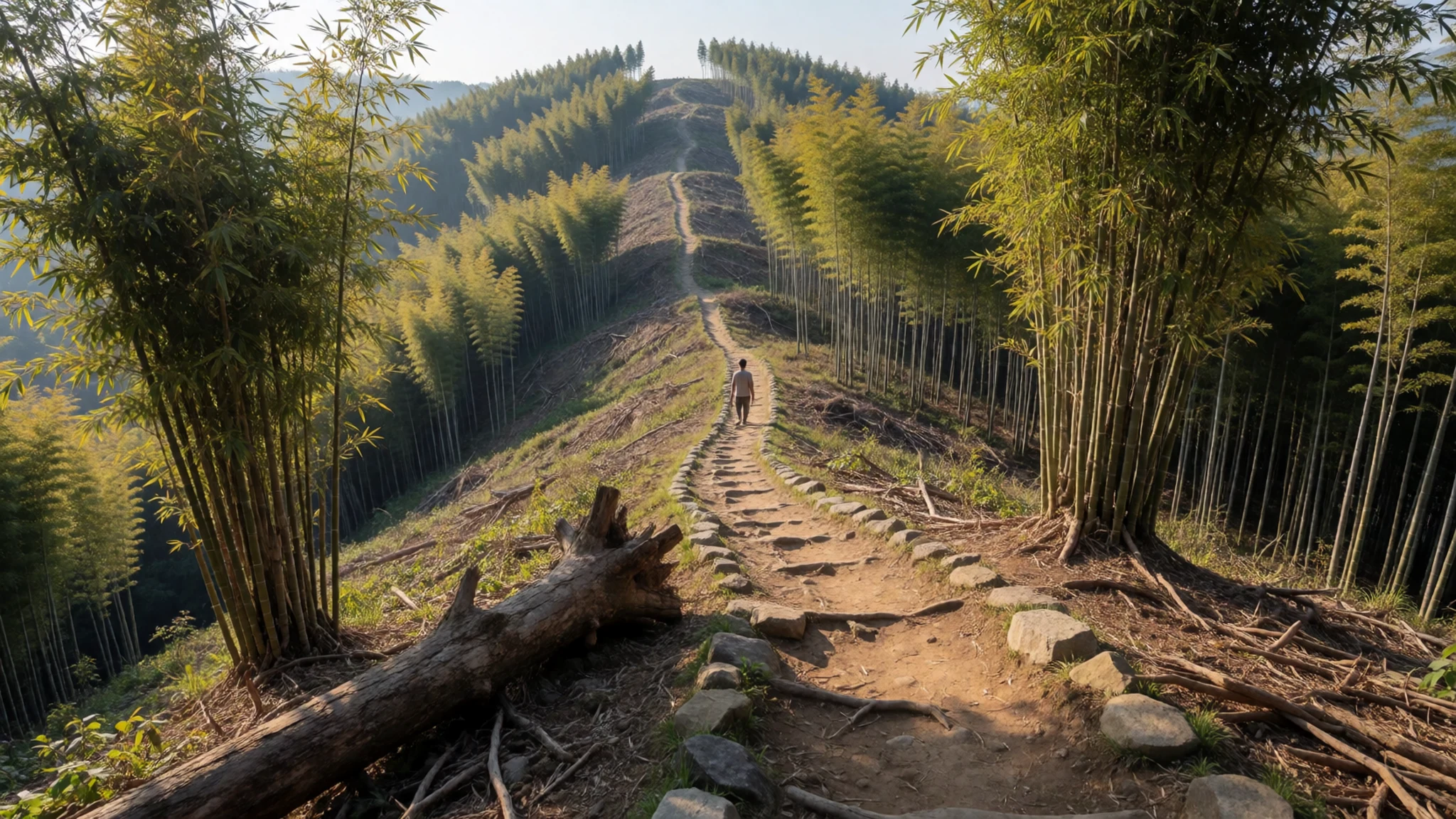
- Bawm villages on the route — Hills around Boga Lake
The trail passes small settlements of the Bawm and neighbouring communities, with houses raised on stilts and plots of crops on the slopes. A greeting and a smile go a long way. Buy tea or snacks from local stalls where available, so the walk supports the people who live along it.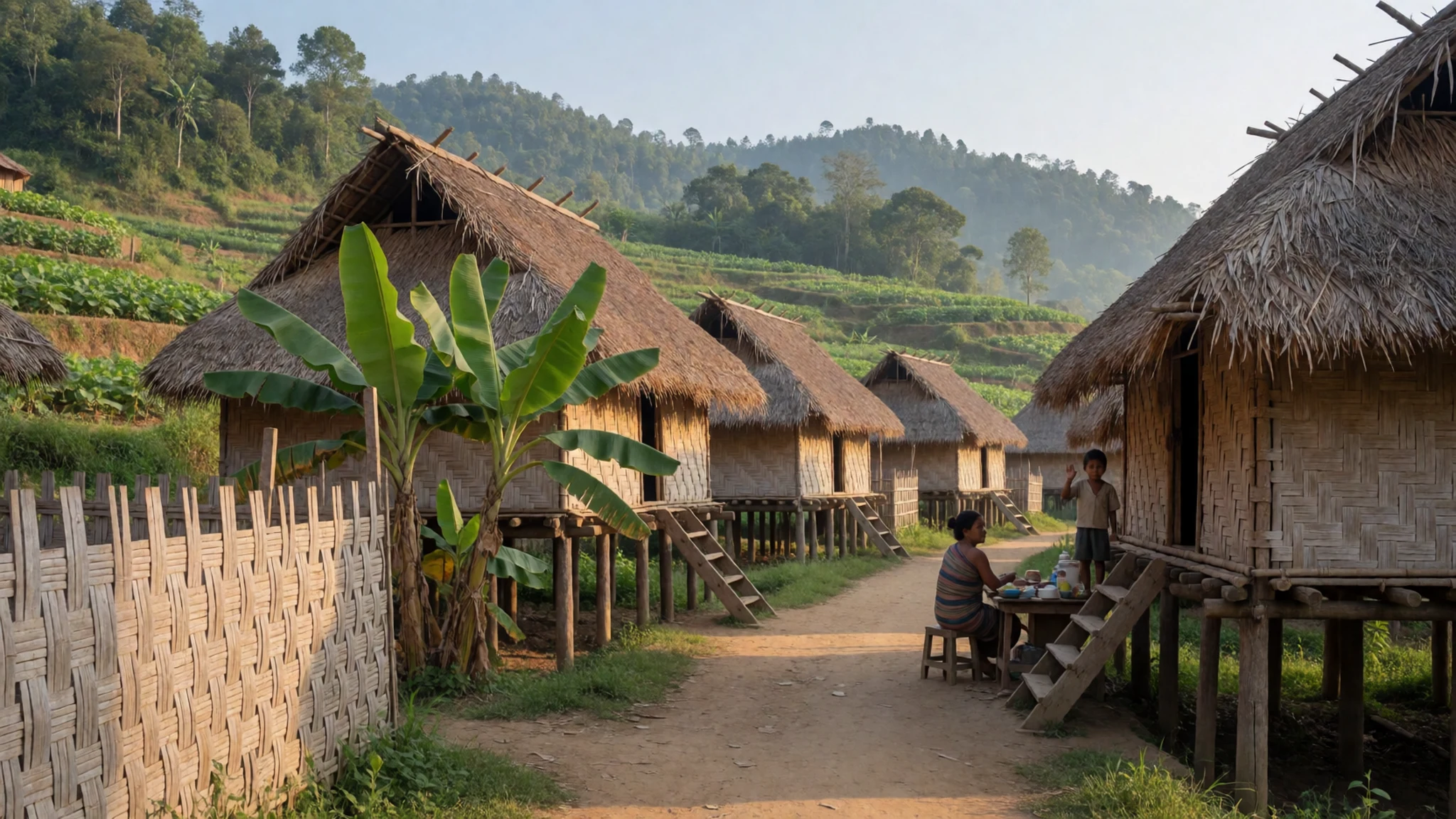
- Dawn on the water — Boga Lake shore
Those who stay overnight in the simple huts get the lake at its best: pale light, drifting mist and a quiet that daytime crowds destroy. Nights can be cool in winter, and the huts are basic, so bring a warm layer and a torch.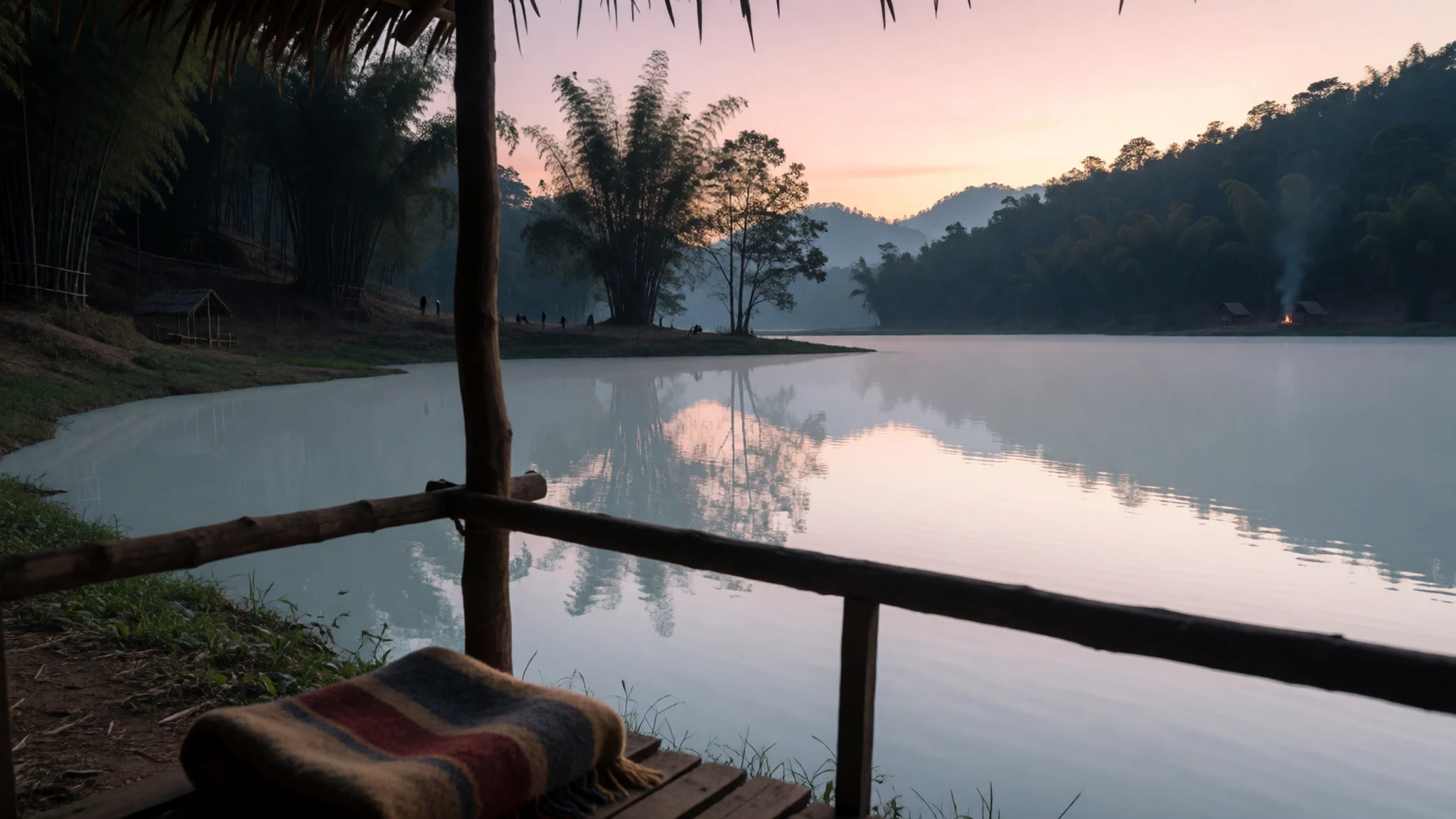
- Forest around the sanctuary — Bogakine Lake Wildlife Sanctuary
The woods around the lake form part of the protected sanctuary. Even a casual walk brings birdsong, insects, butterflies and glimpses of hill vegetation unlike the plains. Stay on the paths, carry rubbish out, and keep voices low, which also improves the chance of seeing wildlife.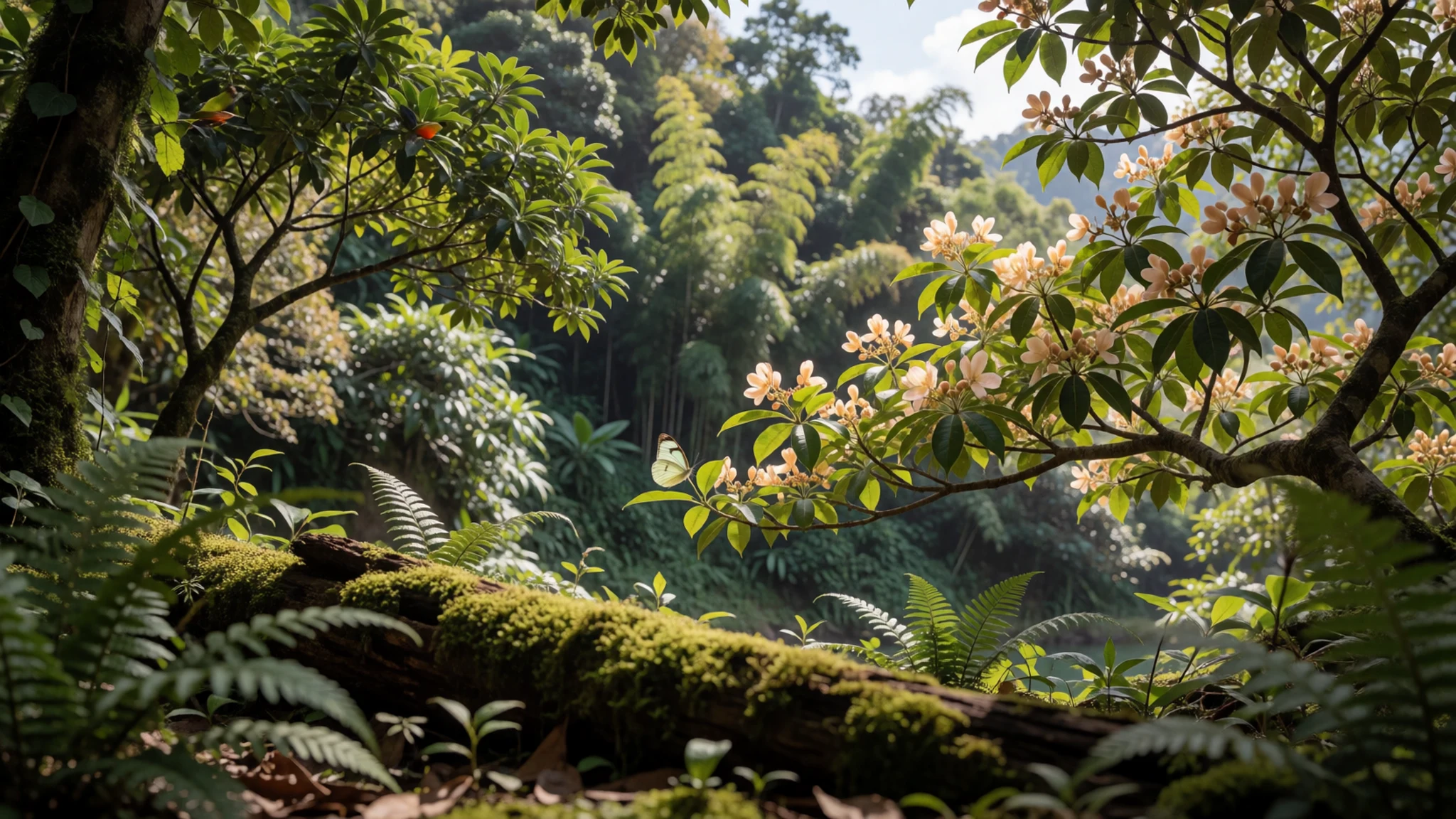
Culture
Boga Lake lies in country shaped by the Bawm and other hill peoples, among them the Marma, Chakma and Tripura communities found across Bandarban. Their languages, festivals, food and dress differ from those of the Bengali plains, and many families keep traditions such as weaving on small looms, farming on hill slopes and sharing food at community gatherings. Faiths vary too. Many Marma follow Buddhism, while many Bawm are Christian, and some communities keep older animist practices alongside. Local stories about the lake's spirit show how closely the landscape and belief are tied together. The hills have also been politically sensitive, so visitors do best to listen more than they ask about conflict or land disputes. Hospitality is real but unforced, and tourism is a recent addition to village life rather than an established industry. Tea and a short chat are common courtesies, and guides are often from the communities themselves. Seasonal festivals, including the spring new-year celebrations observed by several hill peoples, bring music, water play and special food, and travellers who happen to be nearby are usually welcome as respectful onlookers. Photography is the most frequent point of friction, since many villagers did not choose to become part of a travel experience. Ask before photographing people, their homes or their children, and respect a refusal without argument.
What to wear
Around Boga Lake, traditional dress belongs mostly to hill women. It centres on wrapped skirts woven on backstrap looms from cotton or cotton blends, in bold stripes and bands of colour, worn with a fitted blouse and sometimes a headcloth or shawl. Names for the garments vary between communities, and thami is one term widely heard in Bandarban. These textiles appear most at weddings, festivals and church or temple occasions, and the patterns often signal the community a family belongs to. In daily life people dress practically for the slopes. Men commonly wear shirts and trousers or lungis, and women may wear shalwar kameez, saris or simple skirts, often with rubber sandals or plastic shoes that cope with mud. Younger people in Bandarban town favour jeans, T-shirts and football shirts, much as in the rest of the country. For a visit, the terrain matters more than style. Wear quick-drying trousers and a light long-sleeved shirt for sun, insects and scrub, and choose shoes with real grip, since trails turn slippery and stream crossings are common. In the dry season, evenings can feel cool, so a fleece helps. In villages, modest clothing is appreciated: cover shoulders and knees, and avoid swimwear off the shore. A hat, a rain jacket in any season and a spare pair of socks are worth carrying.
What to eat
- Bamboo chicken — Village homes and simple eateries around Ruma and Bandarban, usually ordered ahead
Chicken seasoned with chillies, herbs and sometimes ginger, then cooked inside a green bamboo tube over a fire. The bamboo adds a faint sweetness, and the meat stays moist. It is a signature of the hill communities and tastes best eaten fresh from the fire.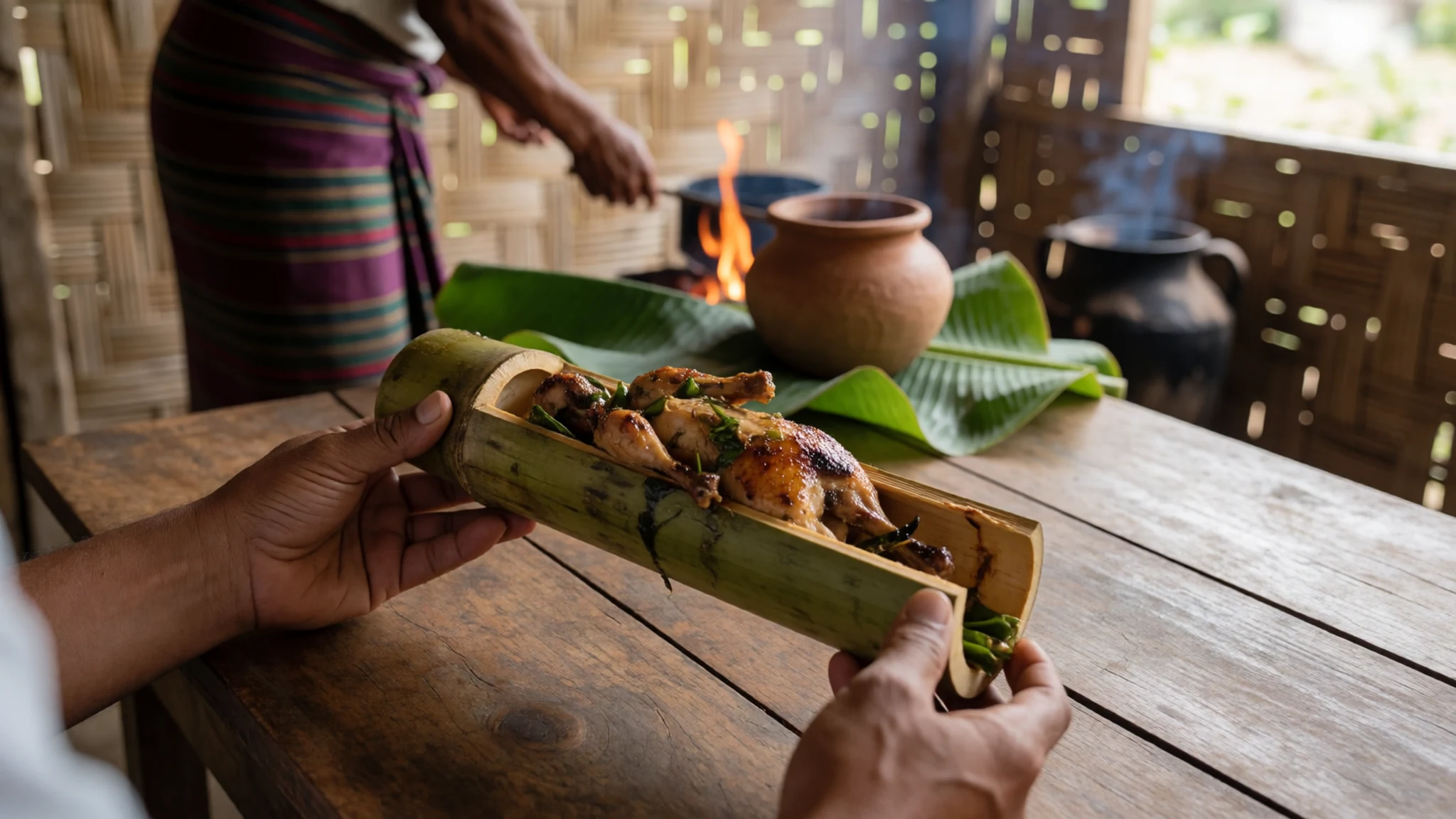
- Bamboo shoot curry — Home-style meals in hill villages and Bandarban town eateries
Young bamboo shoots are boiled or fermented and cooked with chilli and onion, giving a sharp, slightly sour dish. It is eaten with rice, and the flavour can be strong to those new to it. Ask how hot it is before ordering.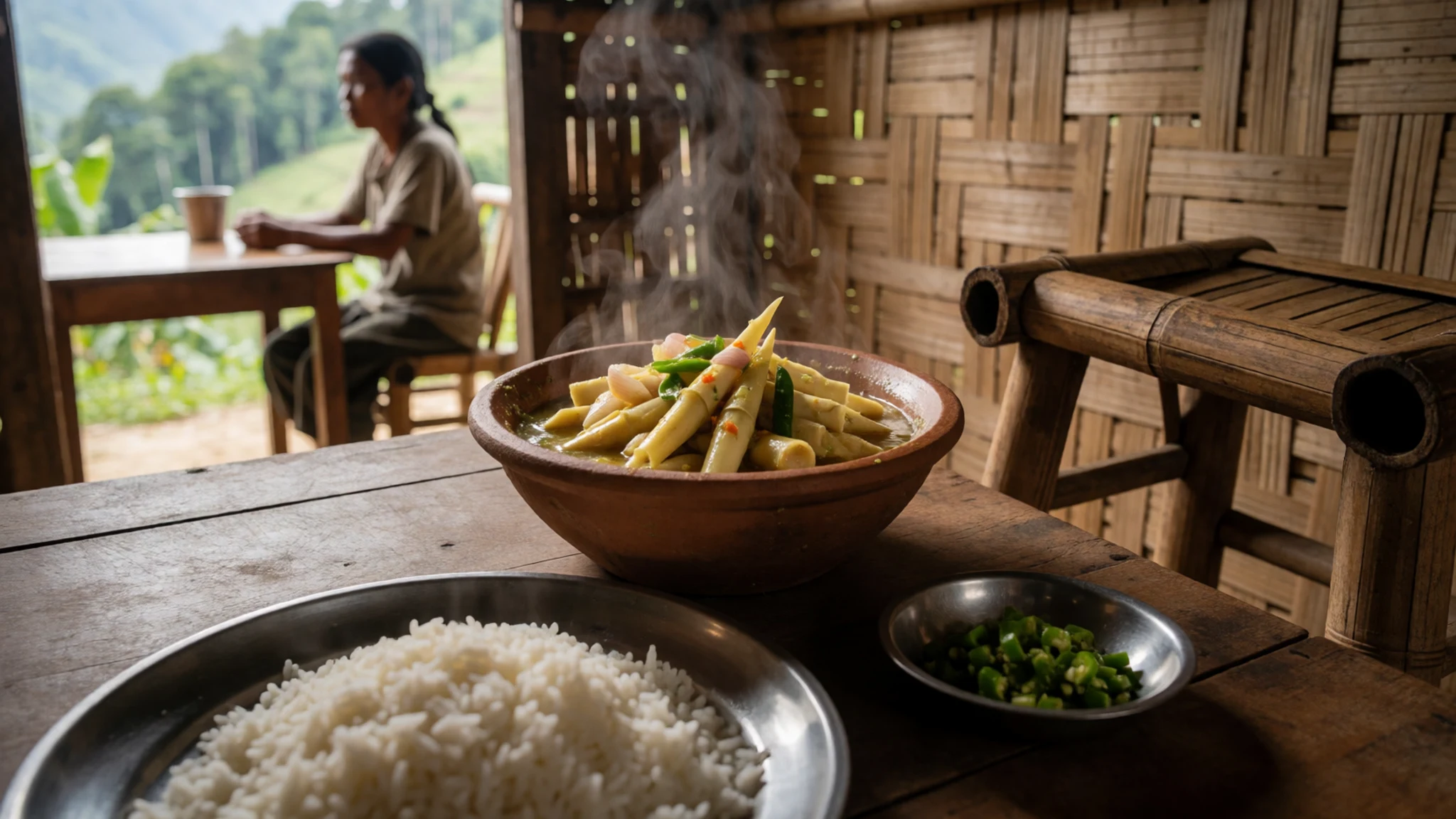
- Rice and bamboo-cooked sticky rice — Hill villages, simple guesthouses and local market stalls
Plain rice is the base of every meal, and in the hills sticky rice is sometimes steamed in bamboo, which gives a smoky, grassy aroma. It is filling food for a trek and often served with vegetables or a small fish or meat side. - Milk tea and fried snacks — Roadside tea stalls in Bandarban town and on the road to Ruma
Strong, sweet milk tea with samosas, singara or fried savoury pieces is the standard stop before and after a walk. It is cheap, quick and a good way to chat with drivers and local shop owners. - Hill fruit and seasonal vegetables — Bandarban town bazaar and roadside stalls
Markets in the hills sell pineapples, jackfruit, bananas and other fruit in season, along with leafy greens and gourds grown on the slopes. Fruit is an easy, light trail snack, especially in warmer months, and buying it supports hill farmers directly.
Plan it
Best time. November to February, when the hills are drier and cooler and the trails are firmer. March and April turn hot and humid. The monsoon from roughly June to September brings heavy rain, leeches, slippery paths and swollen streams, and is best avoided.
How long. 2–3
Getting there. Fly or take a train or bus from Dhaka to Chattogram, then continue by road to Bandarban town. From there a further road journey leads towards Ruma, and the last leg is on a rough track, often by hired local jeep, then on foot. Confirm current permissions and routes locally before travelling.
Budget. low
Tips
- Check current access rules with the Bandarban district administration or a trusted local operator before setting out
- Hire a local guide: they know the paths and conditions and the money stays in the community
- Start early to beat the heat and the weekend crowds, and avoid public holidays if you want quiet
- Carry cash, since cards and cash machines are unreliable beyond Bandarban town, and bring your own drinking water and snacks
- Pack insect repellent, a torch, a warm layer for winter nights and a rain jacket
Etiquette
- Ask before photographing people, homes or children, and accept a refusal
- Carry out all rubbish and keep noise down, since the lake is a protected sanctuary
- Dress modestly in villages and follow local advice about swimming in the lake
Nearby
Sources
- Wikidata Q40478317 (CC0)
- Wikipedia: Boga Lake (CC BY-SA 4.0)
- Wikivoyage: Boga Lake (CC BY-SA 4.0)