Song-Kul
Song-Kul, Kyrgyzstan
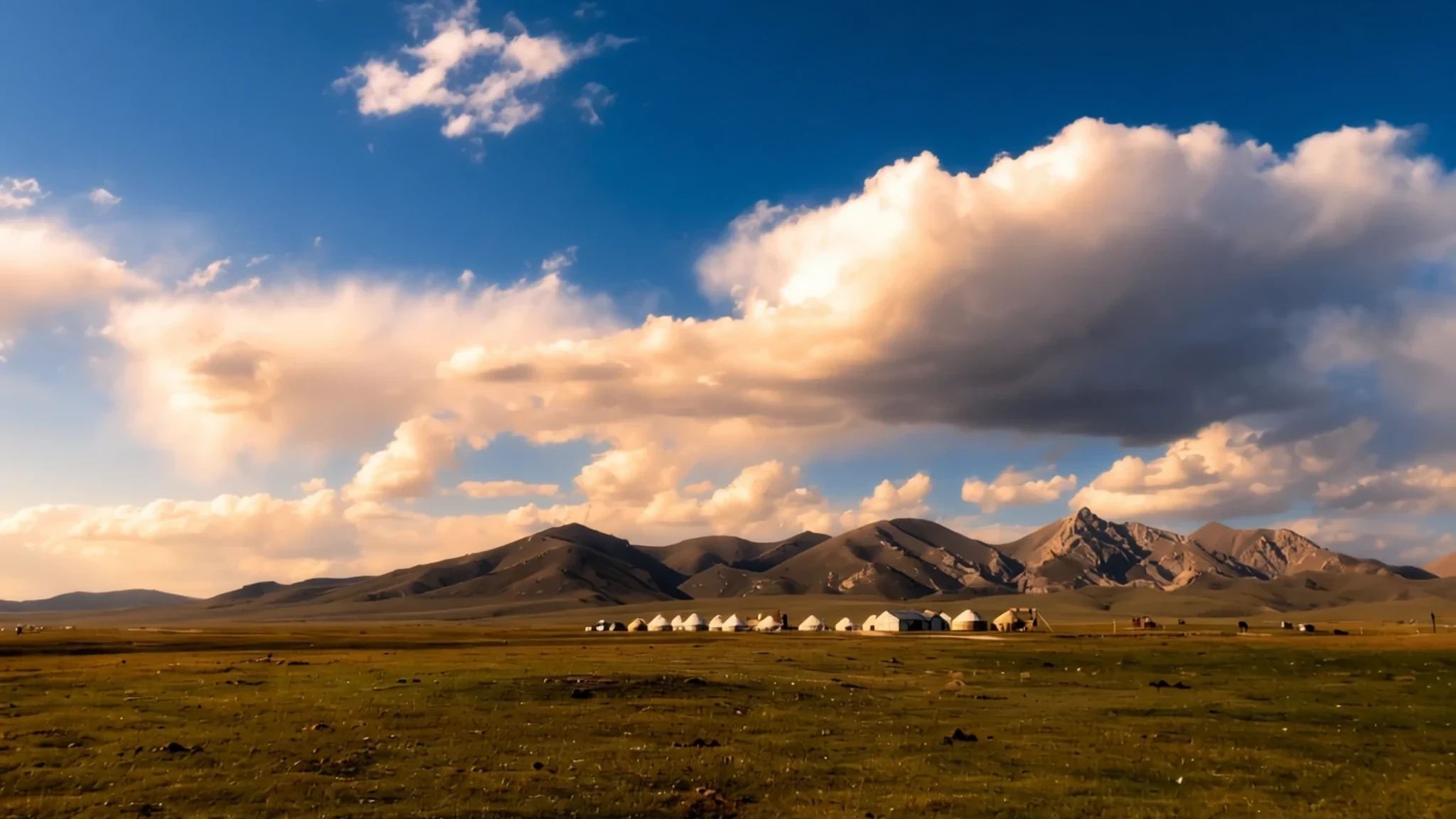
Song-Kul is a high summer lake in Kyrgyzstan, where herders camp on open pasture and the track exists only until the snow returns.
The place
Song-Kul sits in the central mountains of Kyrgyzstan, a wide lake in open pasture rather than a wooded valley. The spelling Song-Köl is the same water as the label Song-Kul. No town stands on the shore. In the warm months the jailoo, the high summer grazing, fills with family camps: white felt yurts, horses on long lines, and smoke pulled sideways by the wind. When the season ends the pasture empties and the tracks become a matter of snow. The water is why the journey exists. From the near grass the far shore is a low dark band, with treeless ridges behind it. Wind belongs to Song-Kul. By afternoon it breaks the surface and pushes cold air through the camps under a strong sun. Arrivals who expected a resort find a working pasture that contains a lake: foals, dogs, dung, and wood being split behind a yurt. The last stretch is unpaved, over passes from Kochkor or from Naryn, and the shore that can be reached depends on which track is open. Camps sit where the ground is firm. A short walk from the yurts thins the human trace to a horse path and a line of stones. After dark the sky stays black, and the lake is only a paler gap in the grass. Song-Kul is inhabited, then left. Families come up with their animals when the grass is ready and go down before the passes lock. The quiet is a season, not an empty shore.
Its story
Song-Kul belongs to a pastoral calendar older than any lodge on its shore. Kyrgyz herding families move livestock between winter villages and summer jailoo, following grass rather than a fixed address. The lake is a meeting ground on that circuit, where animals from several valleys fatten and where cheese, felt and foals are made before the descent. The yurt makes that summer possible. A boz üy, the grey house, is a wood lattice under felt, raised and taken down when the grass is finished. Felt is beaten in the home valley, poles are kept and reused, and the inside follows a known order: door, hearth, the seat of honour opposite the entrance, and a side for guests. On Song-Kul the house sits on the turf, and the lake is the landmark that does not move. State farms later bent the pattern without ending it. Collective herds replaced some family choices; when that system broke, household animals and private yurts returned to the same shores. A camp now can show a solar panel against the felt and a jeep track at the door, and still be organised around horses, dairy and the day the snow closes the road. The Manas epic, a long cycle about a hero and his companions, is still treated by Kyrgyz hosts as their own narrative. Song-Kul needs no separate founding tale. Its story is arrival and leaving: animals, felt, children learning to ride, then a shore returned to weather until the grass comes back.
What to see
- The open water — the lake itself
Song-Kul's open water is the sight the shore is organised around. From the grass the far side sits low and dark, smooth at dawn and chopped by the afternoon wind. There is no promenade. People stand among horses and stones, and the size of the lake becomes plain only after a walk that never quite turns a corner.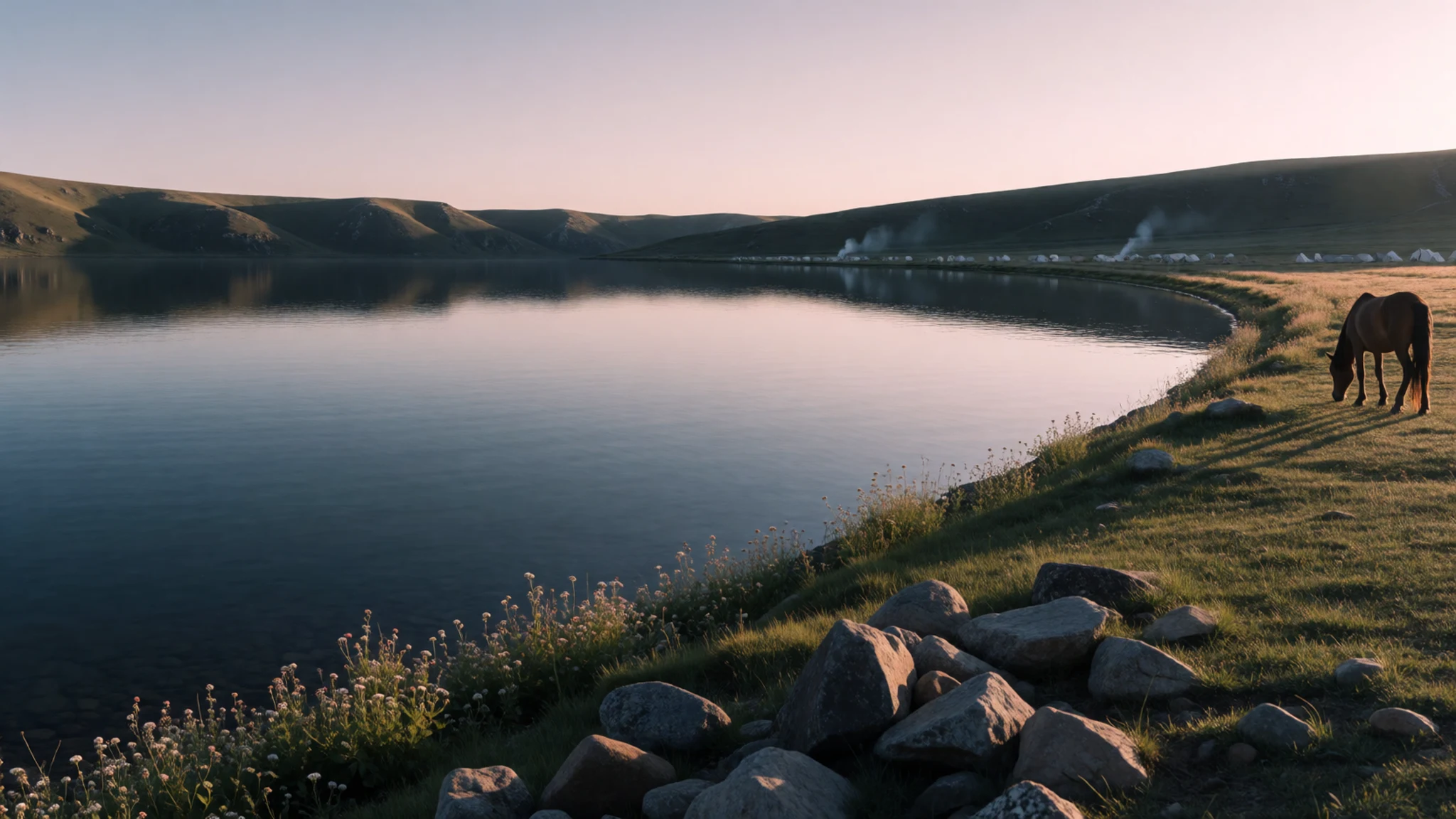
- Shore camps — northern and southern shores
The yurt camps are how Song-Kul is lived in, since almost nobody sleeps in a fixed building. A camp is a few white felt tents, a cooking yurt, tethered horses and a toilet set back from the water. Walking between camps is part of looking: the lake changes frame, and the ground between is pasture, not a signed path.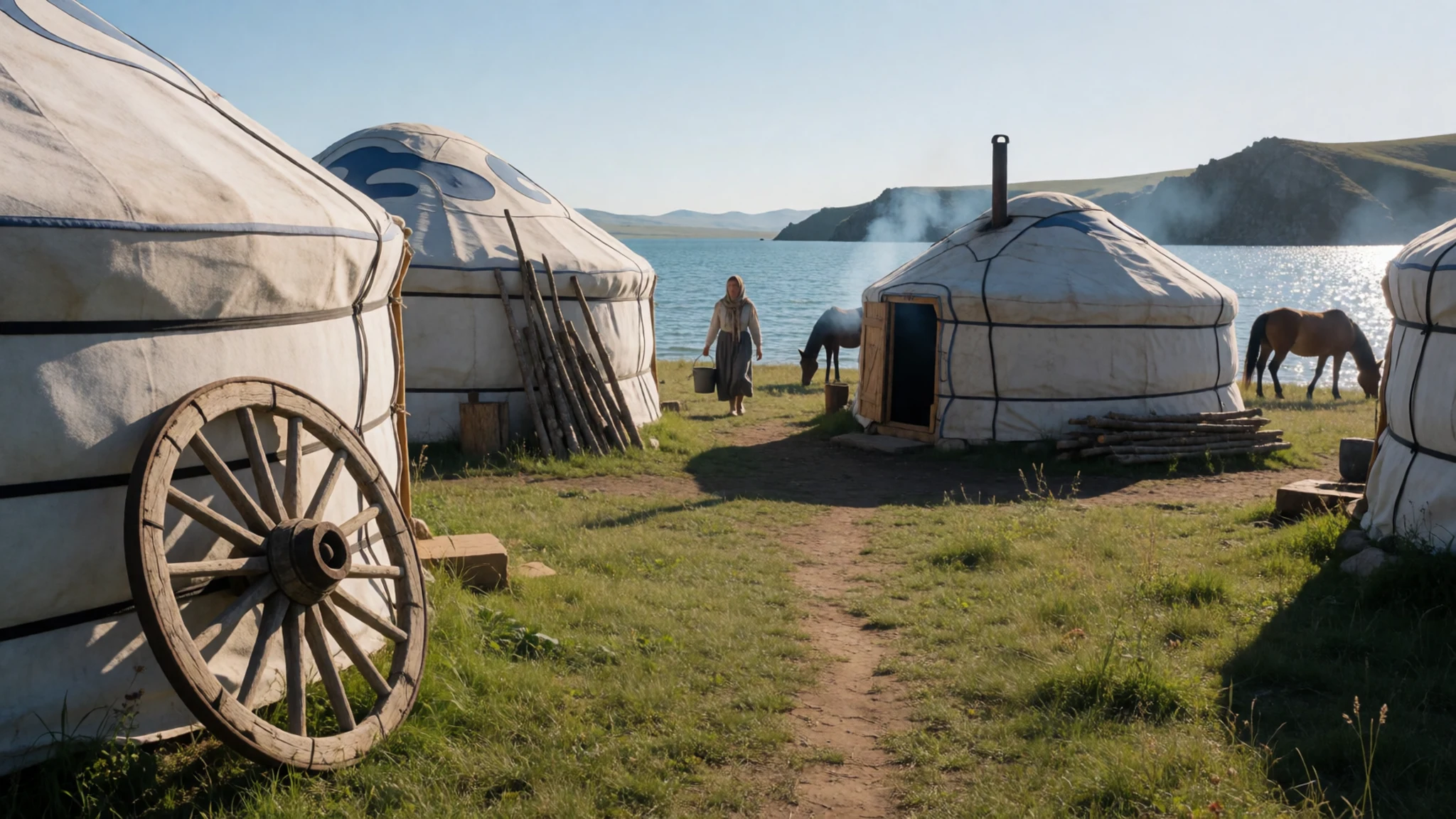
- Horse pasture — jailoo around the lake
Horses are how the pasture around Song-Kul is crossed, and camps hire them for a short turn or a longer loop. The ground is open, so a ride runs across grass towards a ridge or another bay. Inexperience should be mentioned before mounting. These are working saddles, and the wind above the yurts is cold.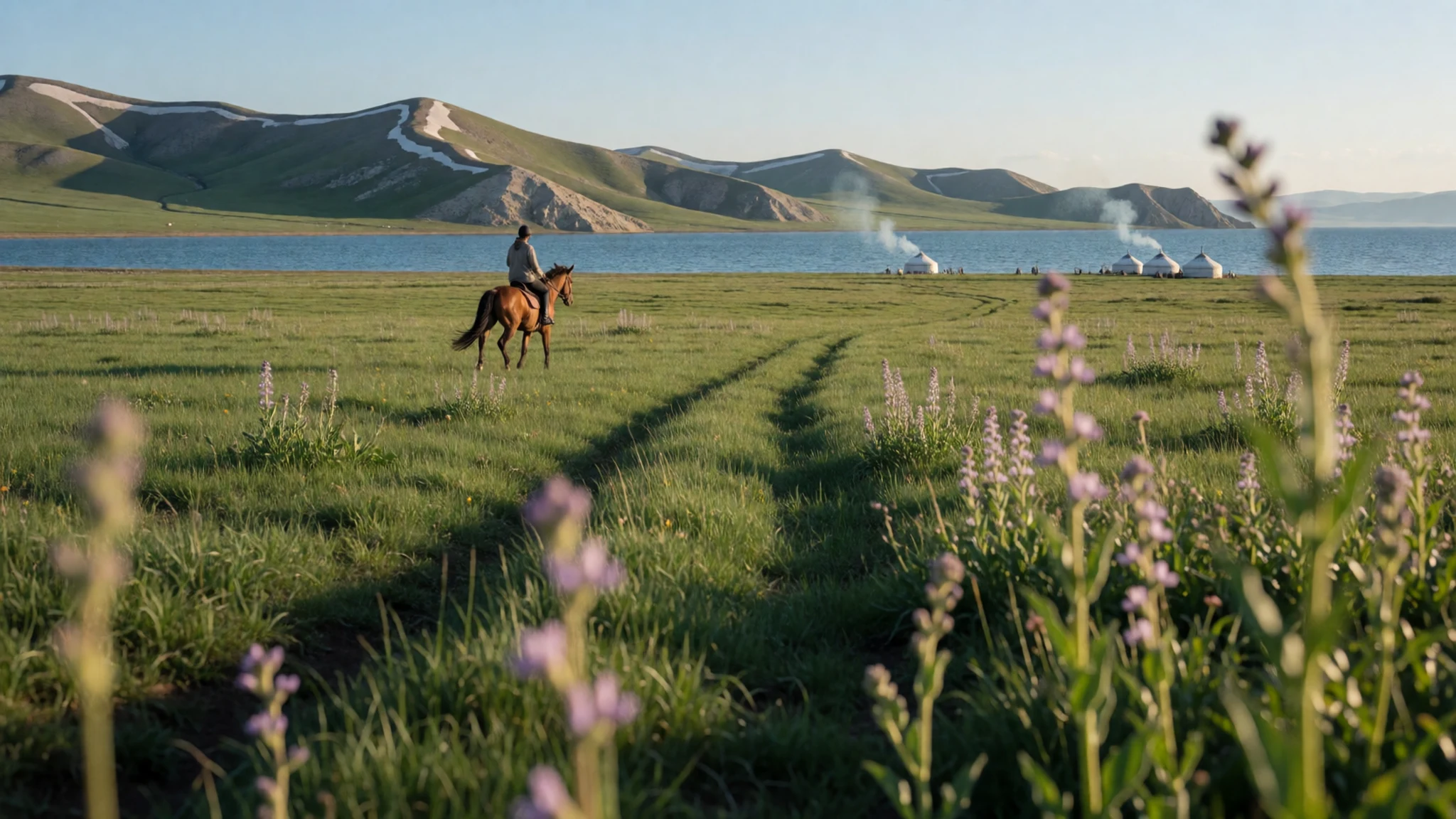
- The approach passes — tracks from Kochkor and Naryn
The passes are part of seeing Song-Kul, because the water stays hidden until the last climb. Tracks from Kochkor and from Naryn both end on the pasture; they are rough, slow and shut by weather. Clear air gives a sudden sheet of lake beyond bare slope. Cloud gives wind and a grey line where grass meets water.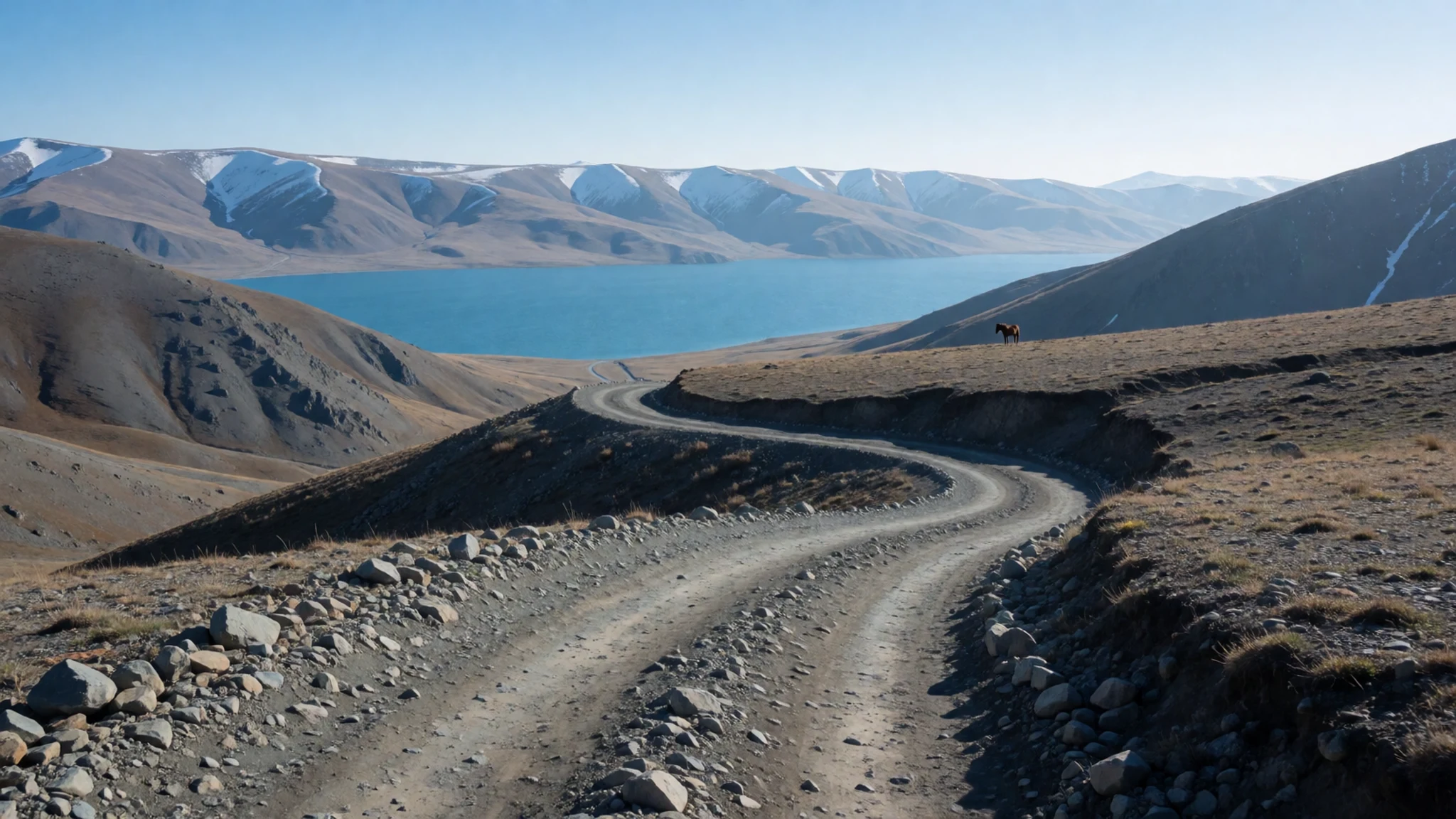
- The wetland edge — shallow margins of the lake
The shallow margins of Song-Kul are wetland rather than beach, and summer draws waterbirds to that edge. There is no hide and no boardwalk. A quiet walk away from the main yurts is how to watch without pushing birds off the water. Morning is calmer than afternoon, when wind and horses use the same ground.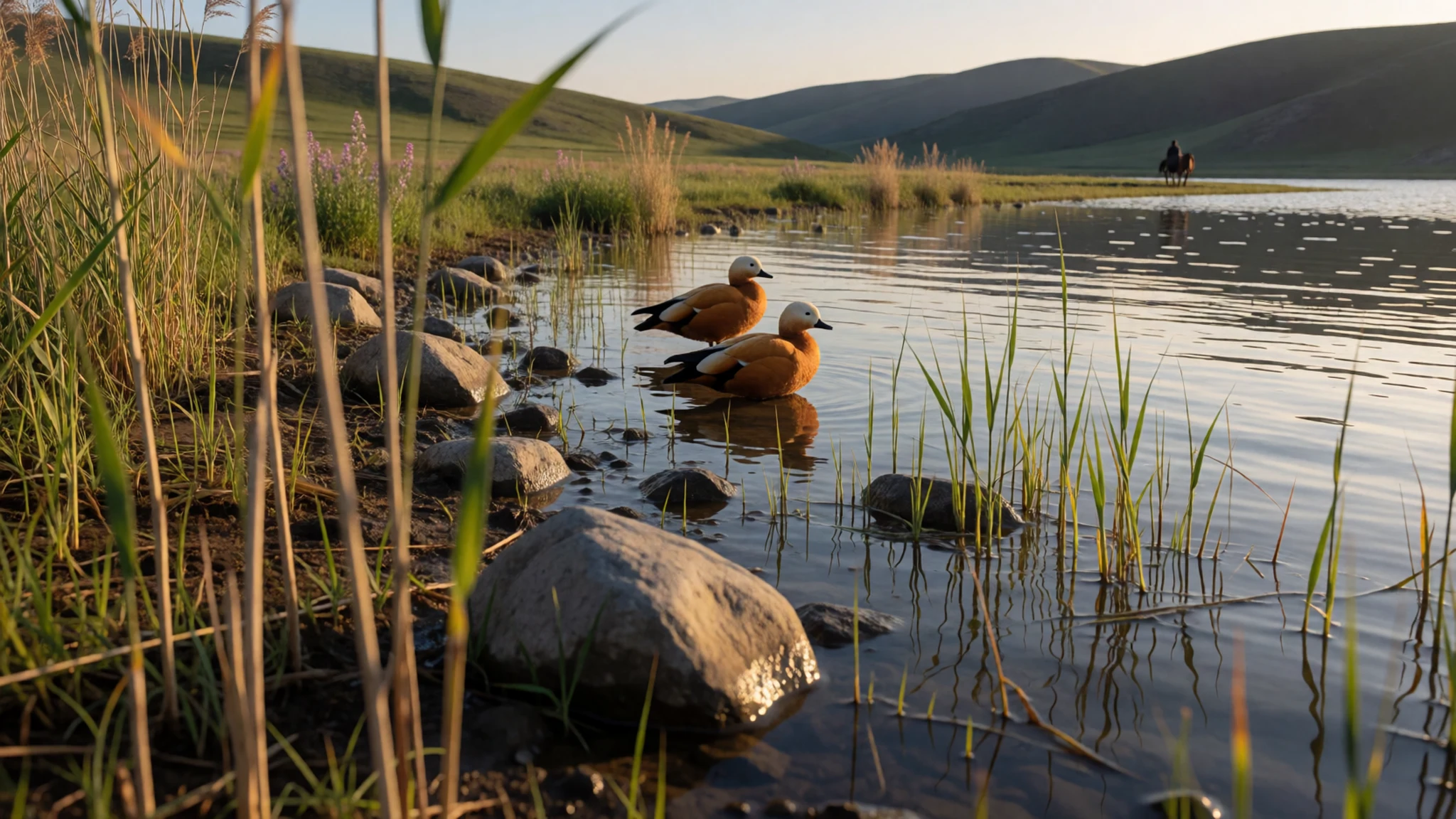
Culture
Song-Kul's summer culture is jailoo hospitality: a movable house, and the horse as transport, wealth and sport. Guests are fed. Declining tea or kymyz, fermented mare's milk, reads as strange, though the bowl need not be finished. Bread is not laid on the ground or stepped over. Shoes come off in the yurt, the host shows the seat, and feet are not pointed at the hearth or the food. A horse on this grass is a livelihood. Visitors do not mount a horse or shift a tether unless the owner has agreed. Crossing tethered animals without a word from the owner causes real annoyance. Children ride young here, and horse games appear when families gather, but a visitor camp is a working day unless a celebration has been named. Joining in waits on an invitation. Prayer may happen in camp with no mosque, and a grave or a spring calls for quiet. At Song-Kul, wait for a seat, accept a small share of what is offered, and ask before photographing a person or walking through tethered horses.
What to wear
Song-Kul dresses for wind, sun and horses. Men are often seen in the kalpak, a white felt hat with a tall crown, worn with a dark jacket or a padded chapan. Women's festive dress can include embroidered velvet and a headscarf; the heavy elechek of married women is now uncommon at milking time and turns up more at celebrations. The textile of the place is felt: shyrdak rugs with paired coloured patterns, and plainer ala-kiyiz, both made to lie on a yurt floor. On an ordinary day herders mix the kalpak with tracksuits, rubber boots, quilted coats and sun-faded jackets. Felt is still made and still given as a serious gift, but it is no longer the only layer against the weather. Visitors should dress for the climate. Sun and a sudden cold wind share the same afternoon, so a windproof shell, a warm hat and gloves in a pocket matter more than a thin shirt. Boots must cope with wet grass and dung. Covered shoulders and legs make entering a yurt easy, and a scarf helps with dust on the track. A kalpak bought in a valley town is a souvenir, not a duty.
What to eat
- Beshbarmak — cooking yurt in a shore camp
Song-Kul camps serve beshbarmak for a proper meal: broad noodles under boiled mutton, with onion liquor in a separate bowl. It comes to a shared plate in the cooking yurt, not as a snack between rides.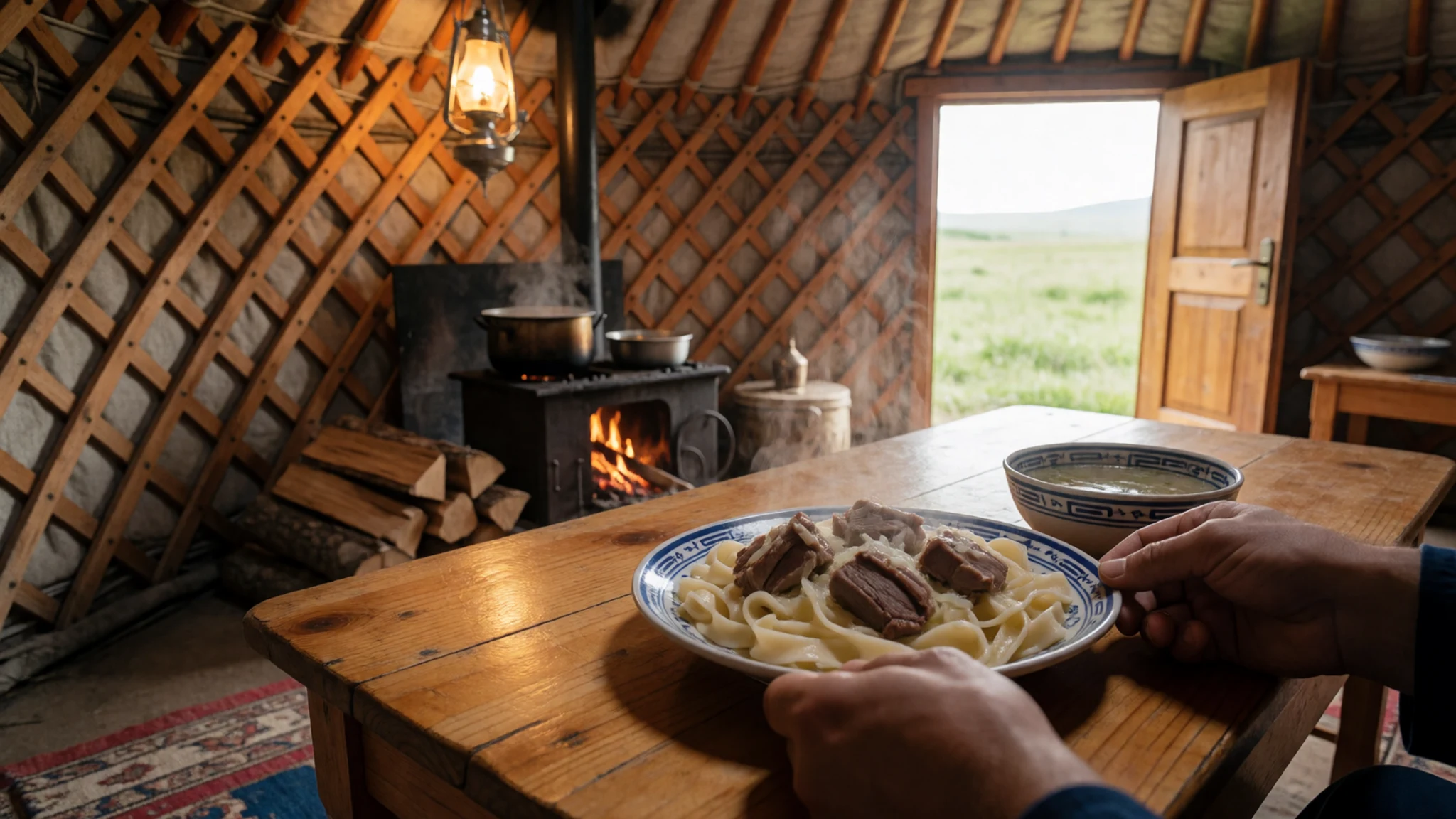
- Kymyz — herder camps on the jailoo
Kymyz, fermented mare's milk, is what a Song-Kul camp offers almost before tea. It is sour, a little fizzy and mildly alcoholic, served in a small bowl. A short taste is the polite reply; the bowl does not have to be emptied.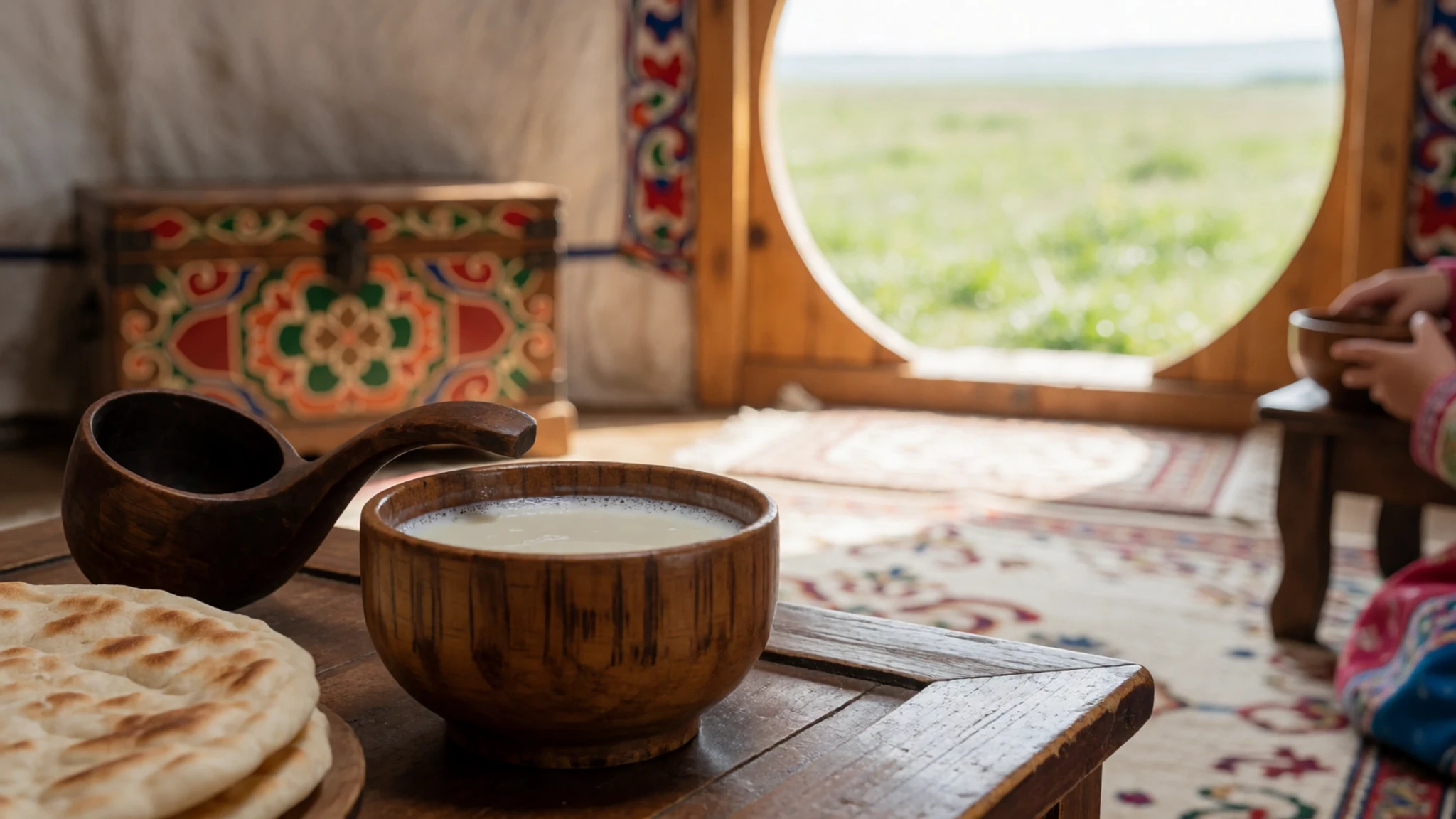
- Boorsok — tea inside a yurt
Boorsok are small pieces of fried dough brought with tea inside a Song-Kul yurt, eaten plain or with kaymak or jam. They are what a host can set out quickly for someone who has just arrived. Take them with the right hand. - Kuurdak — camp kitchens on the shore
Kuurdak is mutton fried with onion in its own fat, the dish Song-Kul kitchens use when beshbarmak is more than the day needs. It comes hot, usually with bread, and it is rich enough that a modest plate and the tea afterwards are plenty. - Lagman — plain eateries in Kochkor
Lagman, noodles in broth or fried with lamb, belongs to the towns under Song-Kul more than to the yurt. Plain eateries in Kochkor, the usual stop before the track, serve it as the useful meal on the way up or down.
Plan it
Best time. June to September, when herding families are on the jailoo and the tracks to Song-Kul are usually open. Outside those months the passes hold snow and the camps thin or close. Winter travel in the ordinary sense does not happen.
How long. 2-3
Getting there. Reach Bishkek by air at Manas, then go by road to Kochkor or on towards Naryn. The last leg to Song-Kul is an unpaved track to the north shore or the south shore, done with a hired driver or a camp transfer. Confirm which track is open before setting out. There is no regular public boat across the lake.
Budget. mid
Tips
- Arrange the camp and the vehicle before leaving Bishkek in the busier summer weeks.
- Carry cash, because camps do not take cards.
- Pack a warm layer and a sun hat; the afternoon wind is colder than the light suggests.
- Leave early so the pass is crossed before weather builds.
- Ask the camp which water is for drinking.
Etiquette
- Take shoes off before stepping onto the yurt rug.
- Taste the tea or kymyz that is offered, using the right hand.
- Ask before photographing people or crossing a line of horses.
- Do not stand on the threshold or point feet at food.
Nearby
Sources
- Wikidata (CC0)
- Wikipedia (CC BY-SA 4.0)
- Wikivoyage (CC BY-SA 4.0)