Besh-Aral
Besh-Aral, Kyrgyzstan
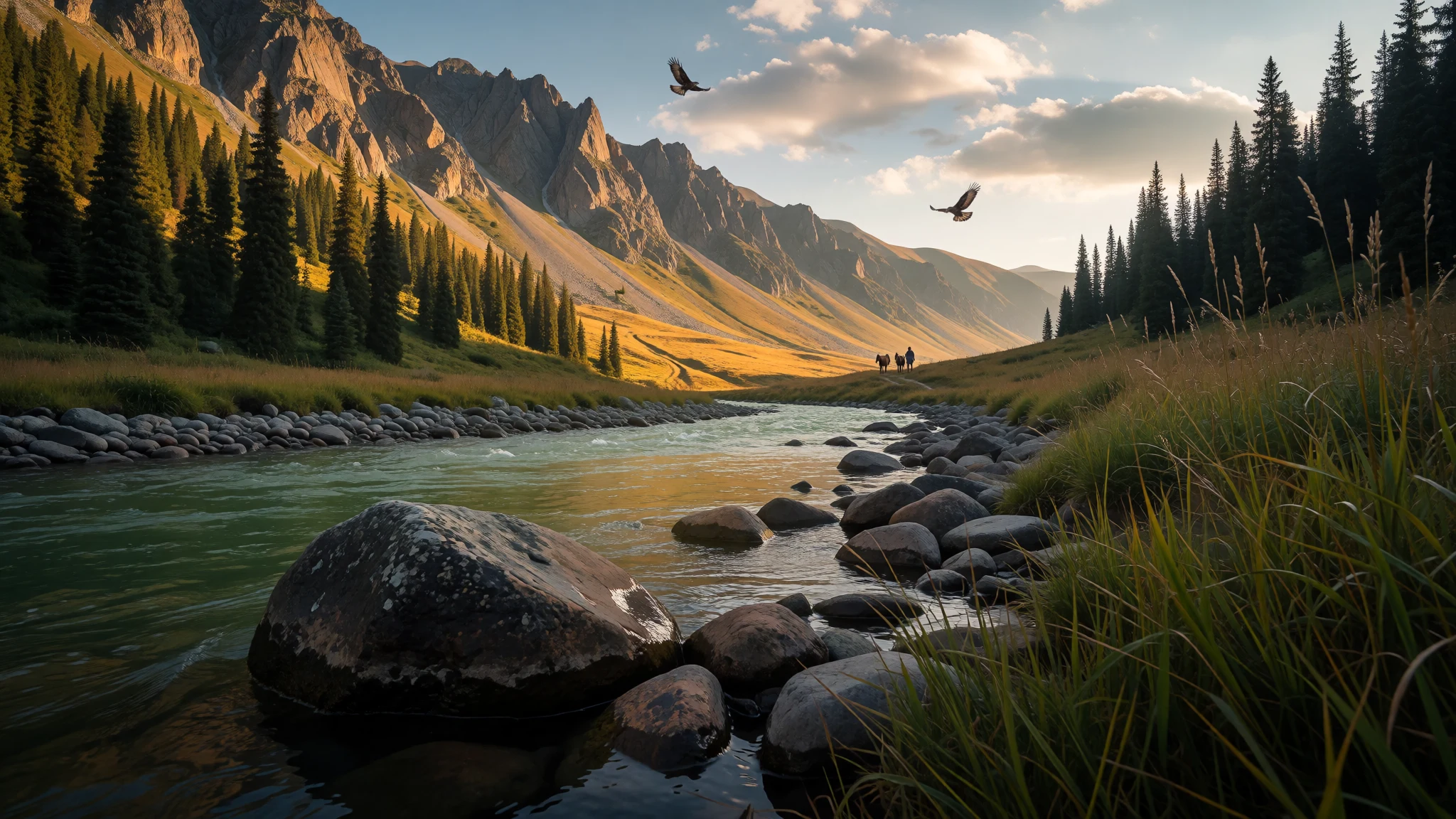
Besh-Aral is a protected corner of western Kyrgyzstan's Tien Shan, where rare marmots, spring tulips, wild rivers and empty meadows survive far from crowds.
The place
Besh-Aral State Nature Reserve lies in Chatkal District, Jalal-Abad Region, in the far west of Kyrgyzstan, on the northwestern flank of the Chatkal Range. Its streams drain into the Ters basin, and the land climbs from forested valleys to open alpine slopes, so one long day on foot can cross several kinds of country. The character is Western Tien Shan: cold, fast, noisy rivers, broad meadows that go from green to gold as the season turns, and steep ground that very few people ever walk. It is a strict reserve rather than a resort. It was set up in 1979 to protect wildlife and plant communities, not to host tourists, and that shapes every trip. Little tourist infrastructure should be assumed, there is no neat circuit of waymarked day walks, and access normally goes through the reserve administration or a local operator, with rules on where visitors may go that can change from year to year. Roads in the hills are slow, sometimes rough, and at the mercy of weather and snowmelt. Besh-Aral suits people who like quiet mountains, real wildlife and a bit of planning. It is a poor match for anyone who wants comfort, quick logistics or a guaranteed sighting of rare animals; the better-served lakes and valleys nearer Bishkek and Osh are easier for that.
Its story
Besh-Aral was created in 1979, in the late Soviet period, to safeguard the forests of the Chatkal valley and the animals and plants that depend on them. Two living things gave the reserve its purpose. One is Menzbier's marmot, a mountain rodent of the Western Tien Shan that appears on the IUCN Red List of Threatened Species. The other is a pair of wild tulips, Greig's and Kaufmann's, whose spring flowering lights up the slopes. Protecting them meant protecting whole habitats: grassland for the marmot's burrows, undisturbed ground for the bulbs, and the forest and rivers that hold the system together. The boundary has not stayed still. When a forestry enterprise was set up for the Chatkal area, a large share of the protected land was handed over to it and the reserve shrank. Some years later the marmot's habitat and other areas were returned, and a few years after that the neighbouring Chandalash game reserve was added, so the area grew again. Those changes show a familiar tension in mountain Kyrgyzstan between timber, grazing and conservation. Behind it lies a longer human story: the Kyrgyz arrived in these ranges centuries ago and built a herding culture on the high pastures, the region was absorbed into the Russian Empire in the nineteenth century, and Kyrgyzstan became an independent state when the Soviet Union ended. The reserve is now managed by that state, and its map is still being adjusted.
What to see
- The Ters river valley — Chatkal District, Jalal-Abad Region
The rivers of Besh-Aral feed the Ters basin, and the valley floors are where the reserve feels most alive: cold, fast water, steep wooded sides and the sound of it everywhere. Walking here with a guide gives a sense of the whole landscape, from forest edge to open slope, without needing technical skills.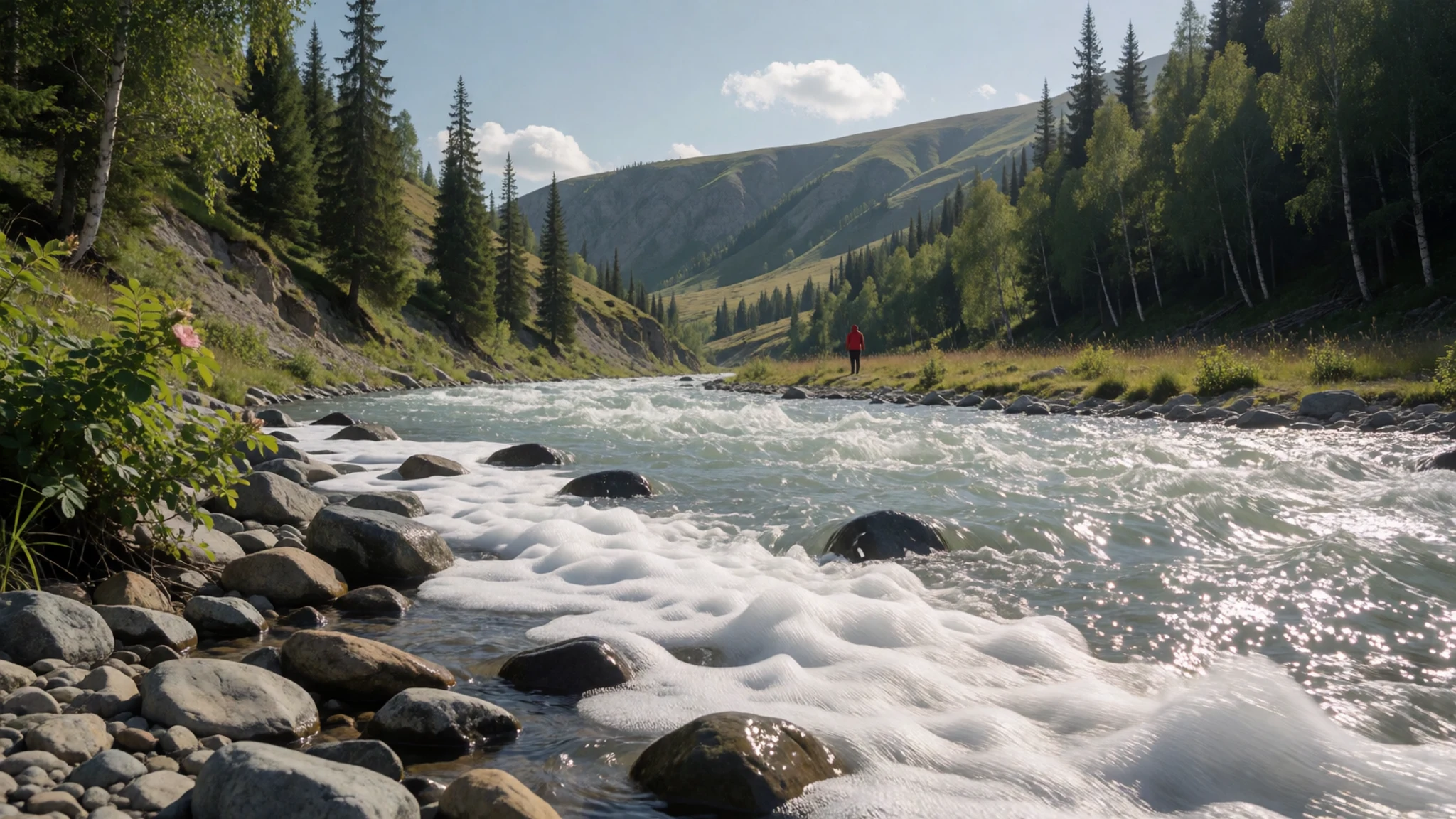
- Marmot slopes — Upper slopes of the Chatkal Range
Menzbier's marmot is the animal the reserve was largely created for, and it lives on the higher, open ground. Sightings are never promised. Patience, binoculars, an early start and a guide who knows the colonies give the best chance, and keeping a respectful distance matters more than the photograph.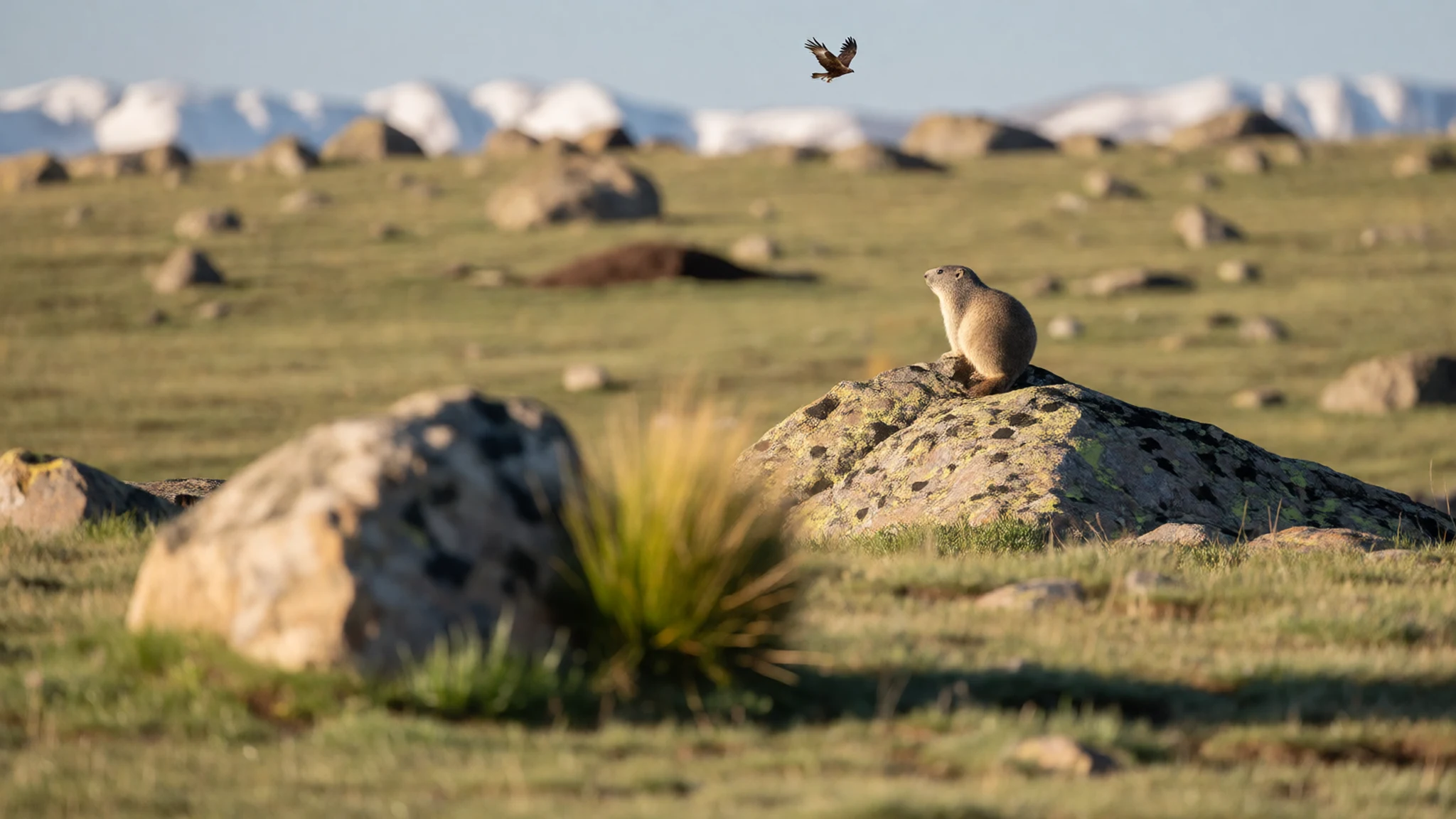
- Spring tulip slopes — Lower and middle slopes of the reserve
Greig's and Kaufmann's tulips are two of the plants the reserve protects, and they flower on the hillsides in spring. Timing shifts with altitude and with how late the snow lingers, so local advice beats any fixed date. Look, photograph, and leave every flower where it grows.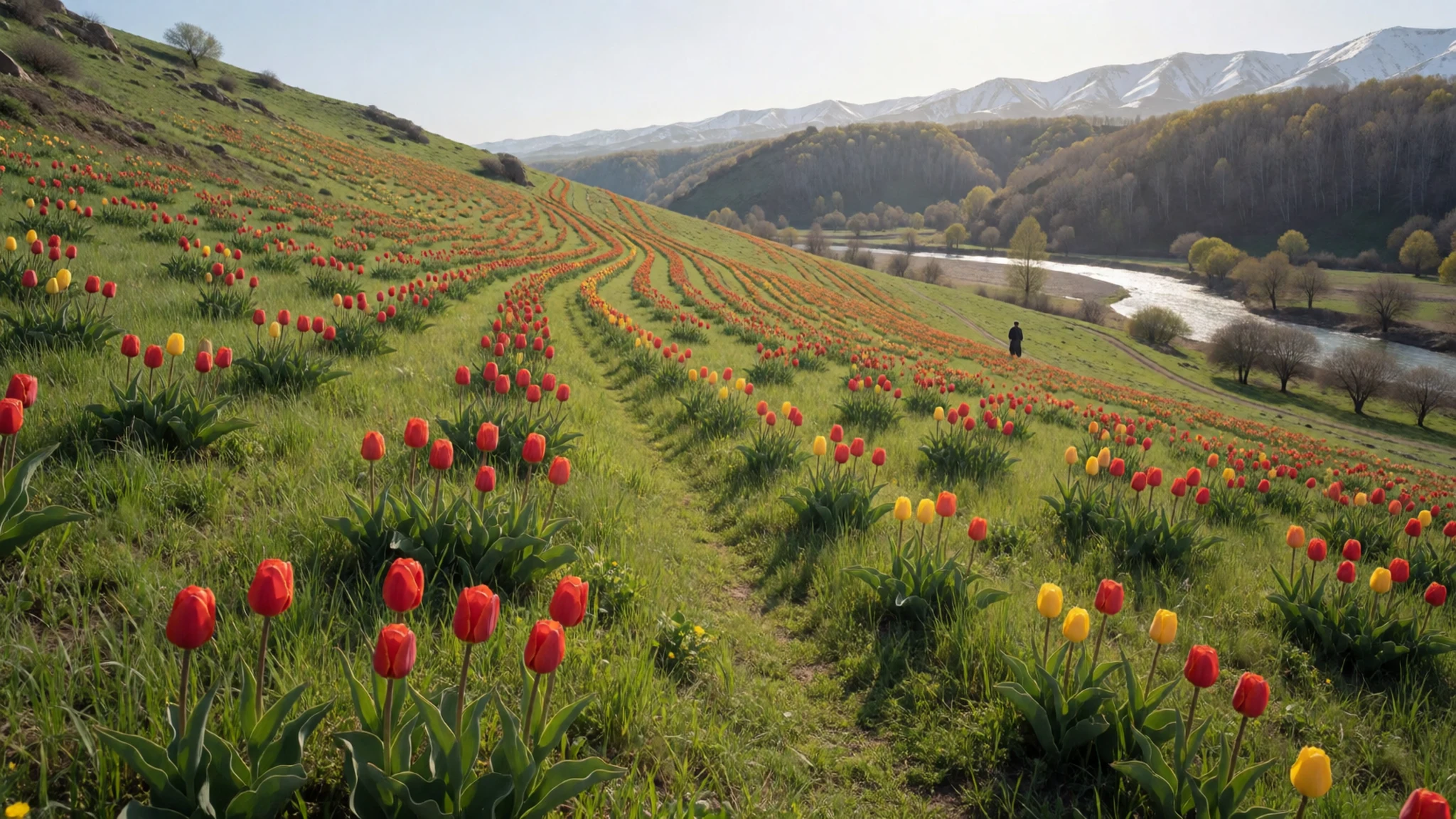
- Arslanbob walnut forest — Arslanbob, Jalal-Abad Region
Arslanbob, elsewhere in Jalal-Abad Region, is far better set up for visitors than Besh-Aral and works as a gentler introduction to the mountains of the south-west. Its walnut forest and valley walks are popular with Kyrgyz and Uzbek families, and homestays make it an easy base.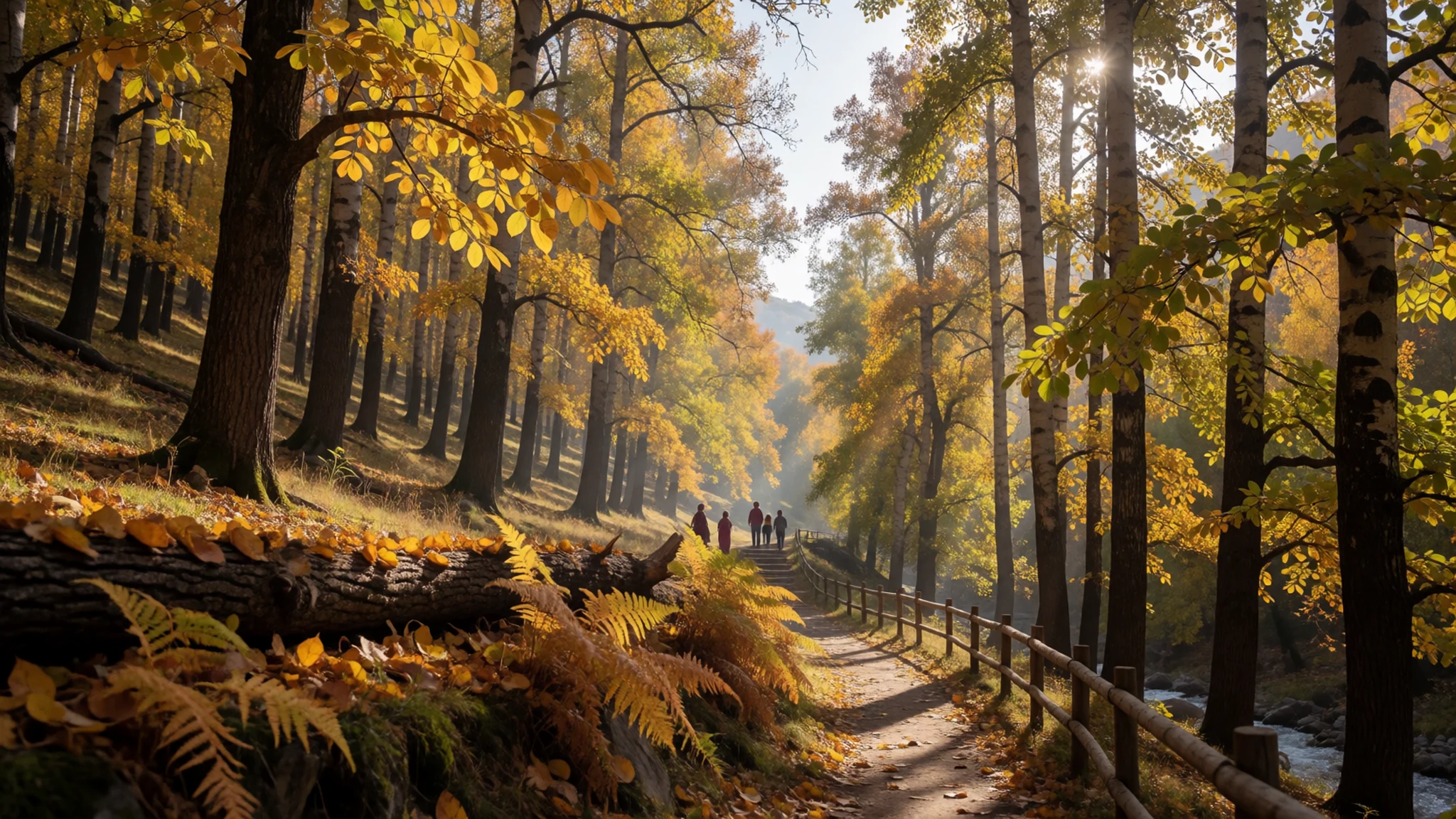
- Osh and Sulaiman-Too — Osh
Osh, the main city of southern Kyrgyzstan, is a useful gateway and worth a day. The bazaar is the draw, with mosques and Soviet-era buildings nearby, and the rocky hill of Sulaiman-Too rises directly from the town, giving a good view over the rooftops and the surrounding valley.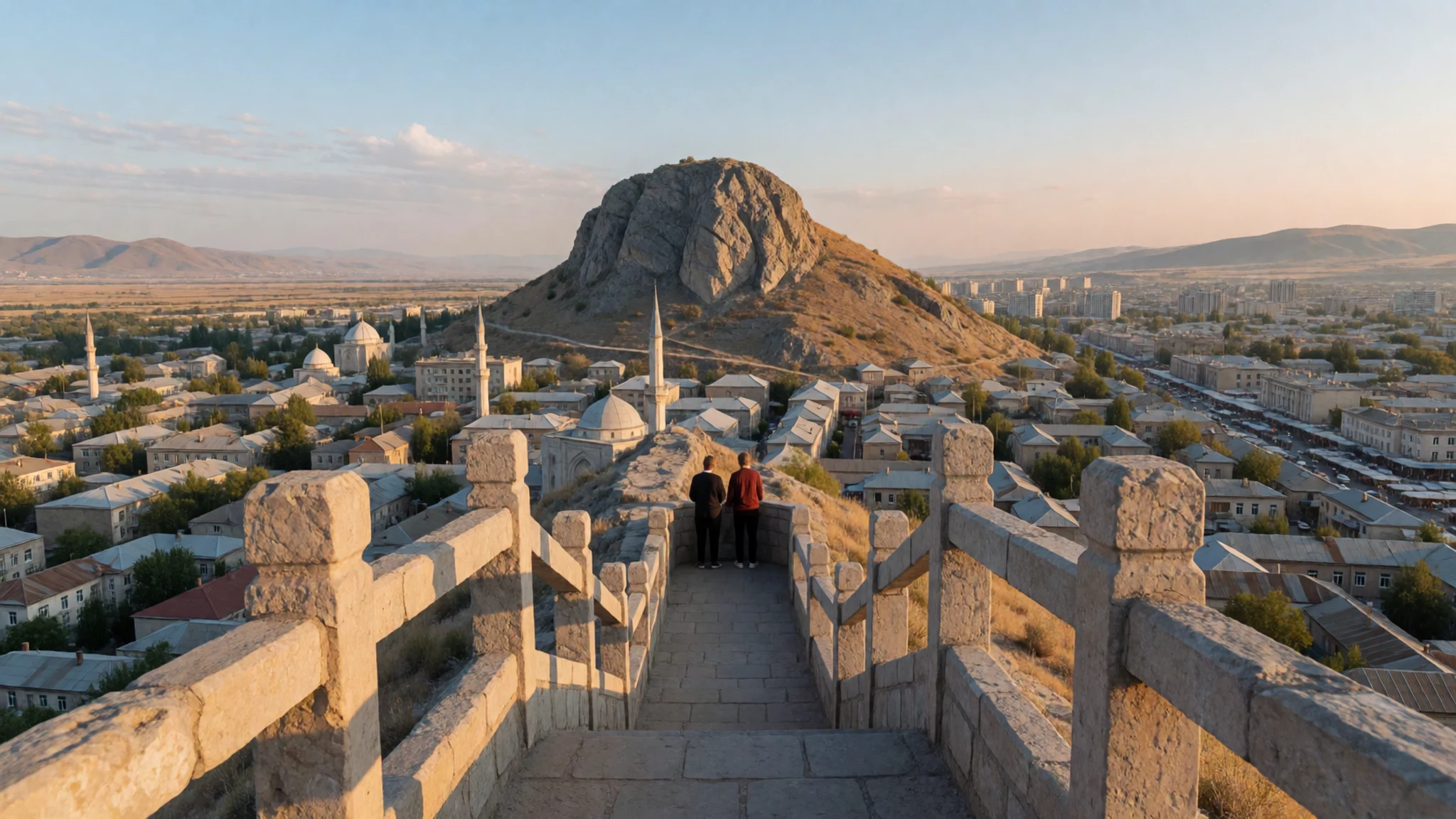
Culture
Besh-Aral sits in the south-west of Kyrgyzstan, where mountain life still leans on herding and hospitality. Kyrgyz culture grew out of pastoral nomadism: felt yurts, horses, summer pastures and a calendar set by the movement of animals. Most people are nominally Muslim, but daily life is relaxed and shaped as much by Soviet-era habits as by religion, so faith is present without being heavy-handed. What visitors tend to remember is the welcome. A guest who is asked to sit and drink tea, kymys or something stronger has been received properly, and the visit is expected to run on for a while. Hosts often pour tea only partway up the cup, which is intended as courtesy: it lets them top it up again and again. Asking for 'jengil chai' gets light tea, and 'kyzyl chai' gets it strong and red. Meals are social and often shared from one big dish. Norms in the south, including Jalal-Abad Region, are more conservative than in Bishkek, and evenings with heavy drinking are not unusual, so a little caution and a sober guide help. Rural guesthouses are generally friendly, but sensible travellers keep cash and valuables close. If invited into a home or yurt, take your shoes off at the door and accept at least a sip of whatever is offered.
What to wear
Besh-Aral's traditional dress comes from a felt-and-wool herding culture. The best-known piece is the kalpak, a tall white felt hat with dark trim, worn by men at festivals and by some older men every day. A chapan, a quilted coat, keeps off the cold on horseback. Women's festive dress uses velvet and embroidered cloth, and married women historically wore a white wrapped headdress called an elechek. Felt also appears in the home, as patterned shyrdak rugs and wall hangings. Today, people in the villages around the reserve mostly wear practical Western-style clothes: jackets, tracksuit trousers, rubber boots, caps and headscarves, with traditional dress kept for weddings, holidays and horse games. In Bishkek, fashion is largely Western; in the south, women usually dress more conservatively. Visitors should pack for the mountains first: sturdy waterproof boots, long trousers for brush and ticks, a warm layer and a rain shell even in summer, plus a sun hat and sunscreen for the open slopes. In villages and guesthouses in the south, covered shoulders and knees are respectful and avoid unwanted attention. Quick-dry layers beat cotton, and shoes that come off easily are handy for indoor visits.
What to eat
- Besh barmak — Family tables and village feasts; eateries in towns such as Jalal-Abad
Kyrgyzstan's national dish, named 'five fingers' for the way it is traditionally eaten. Boiled mutton or horse meat is served over wide noodles with onion and a broth alongside. It is the centrepiece of celebrations and guest meals, so look for it at family tables.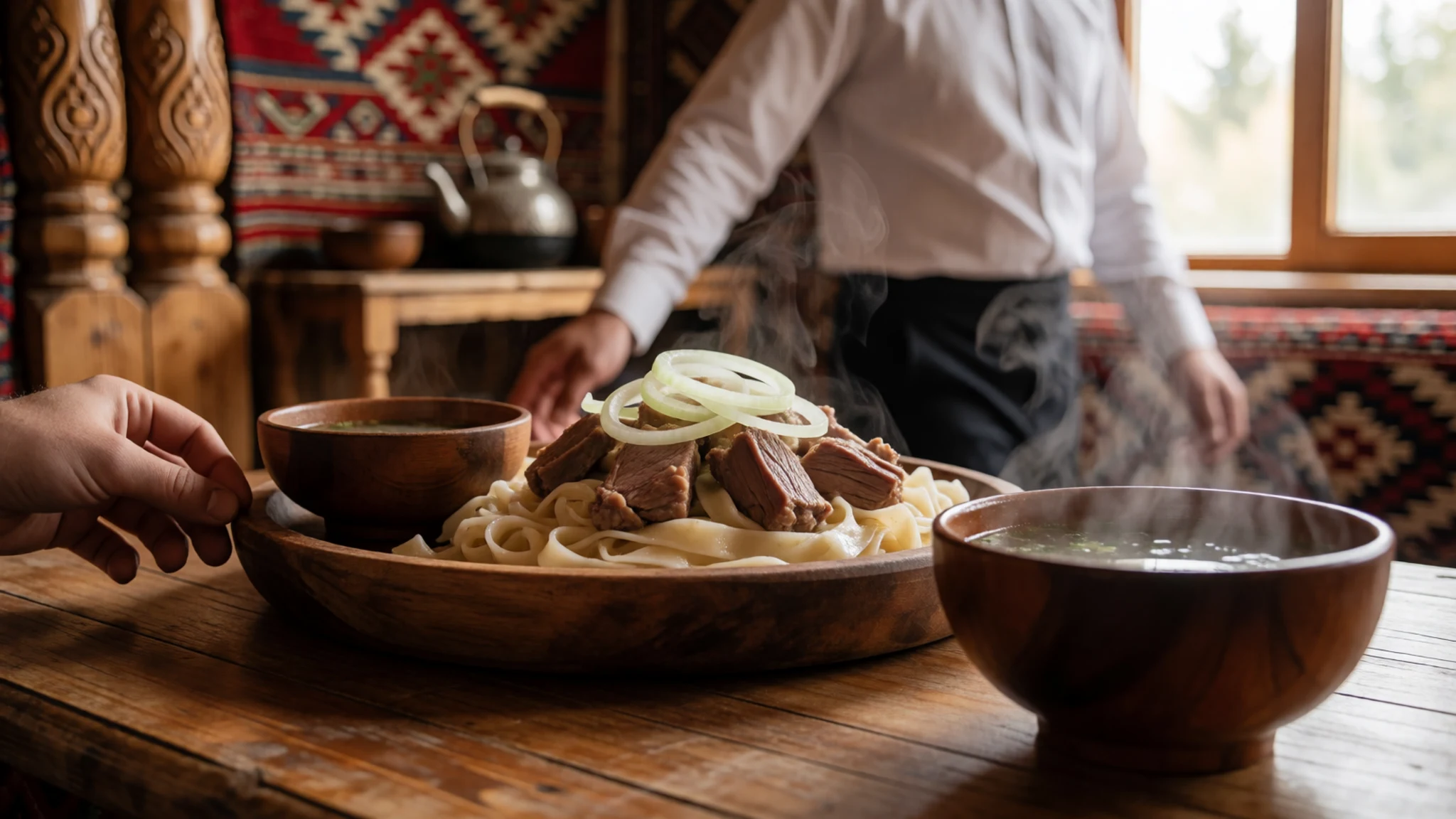
- Kymys — Summer pasture camps, yurt stays and roadside stalls
Fermented mare's milk, lightly sour and a little fizzy, and an acquired taste for many visitors. It is most common in summer, when mares are milked at the high pastures, and it is offered as a mark of hospitality. A small cup is polite.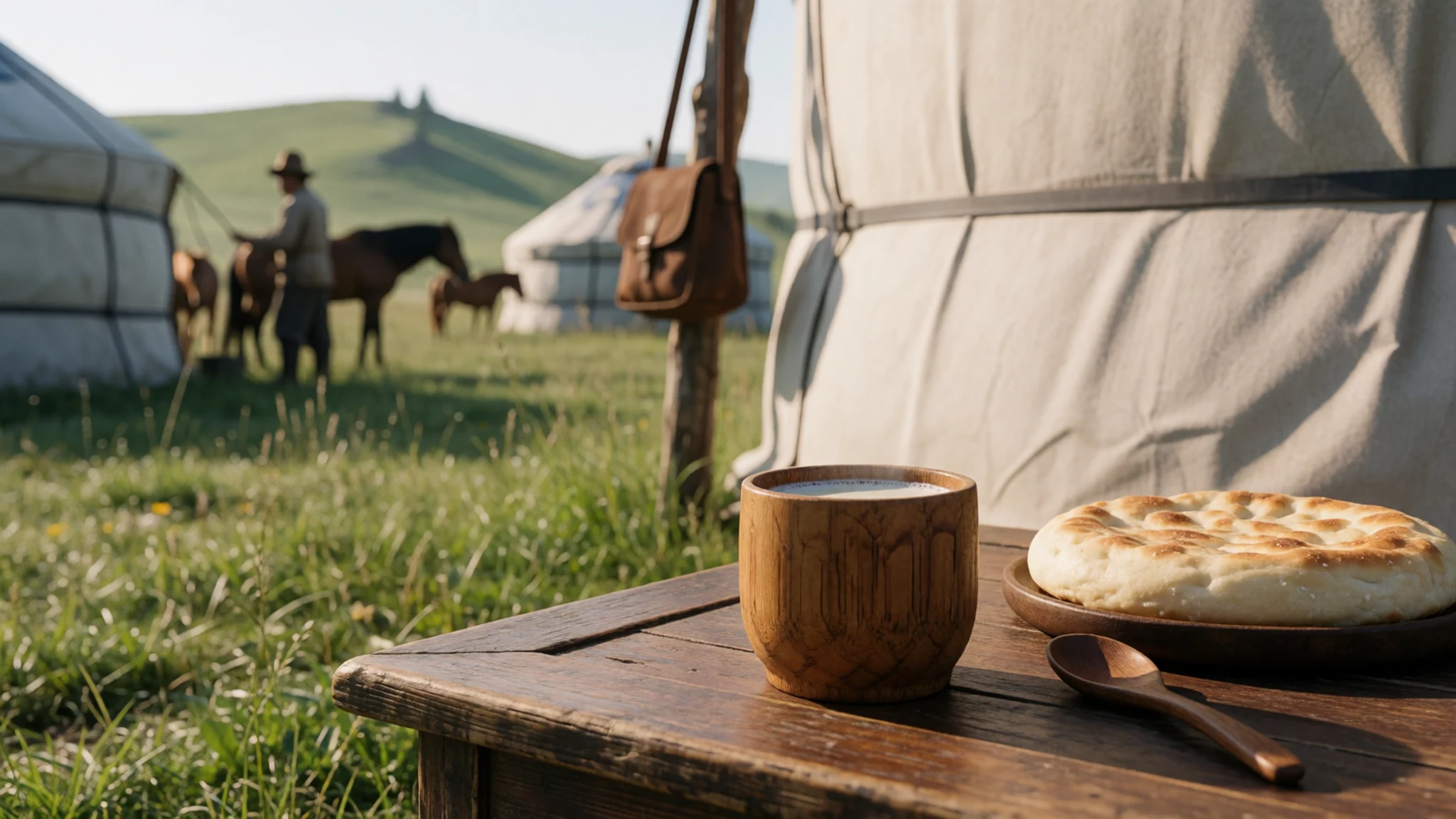
- Chai with fresh bread — Any guesthouse, yurt or roadside tea-house
Tea is the constant of any visit, served hot in small bowls and refilled often, with round flatbread, jam, sweets and dried fruit. Ask for light or strong. It is the easiest way to sit down with local people and begin a conversation. - Boorsok — Home kitchens, bazaar bakery stalls and tea-houses
Small pieces of dough fried in oil until golden, eaten warm with tea, honey or jam. They are a festive and welcome-table staple, and also a handy snack for a day in the hills, though they go stale quickly once cold. - Samsa — Bazaar stalls and roadside bakers in Jalal-Abad and Osh
A baked pastry of meat and onion, often with fat in the filling, and eaten hot and flaky from the oven. It is cheap and portable, which suits long drives. Vegetarian versions with pumpkin or potato are sometimes available.
Plan it
Best time. Late spring to early autumn. Spring brings the tulips and fresh green slopes, summer gives the easiest walking and open meadows, and early autumn is calmer and cooler. Winter snow shuts many tracks, and flowering dates and road conditions shift from year to year, so ask locally before fixing dates.
How long. 3–4
Getting there. Fly to Manas International Airport in Bishkek or to Osh International Airport; eVisa holders must enter through one of these or the Ak-jol border checkpoint, so check the rules for your passport. From either city the last leg is a long road journey by car or 4x4 into Chatkal District, slower than the distance suggests, so allow most of a day and arrange a driver in advance.
Budget. mid
Tips
- Arrange permission to enter and a local guide before you travel, through the reserve administration or a community tourism operator.
- Carry enough cash for guesthouses and drivers, as cards are unlikely to work outside the towns.
- Bring layers and rain gear in any season, as mountain weather changes fast, and download offline maps because phone signal is patchy.
- Keep money and valuables on you or locked away at rural guesthouses, where occasional thefts are reported.
- Stock up on snacks and water treatment in Jalal-Abad or Osh before heading into the hills.
Etiquette
- Take your shoes off at the door of a home or yurt.
- Ask before photographing people, herders or their animals.
- Stay on agreed paths, never pick the tulips, and take all litter out with you.
Nearby
Sources
- Wikidata Q4086076 (CC0)
- Wikipedia: Besh-Aral Nature Reserve (CC BY-SA 4.0)
- Wikivoyage: Kyrgyzstan (CC BY-SA 4.0)
- Relief map of Kyrgyzstan (NordNordWest, derivative work Виктор_В), via Wikimedia Commons (CC BY 3.0)

Wildlife
- Menzbier's marmot (animal)
Menzbier's marmot is a mountain-dwelling rodent, a distant cousin of the squirrel, that lives in the western Tien Shan and is named after a Russian zoologist, Mikhail Menzbier. It is listed as threatened, so every sighting is precious. Where around Besh-Aral and in which season to look are best asked of a local guide. Watch from a good distance, stay quiet and still, let the animal go about its day, and never offer it food.