Altyn Arashan
Altyn Arashan, Kyrgyzstan
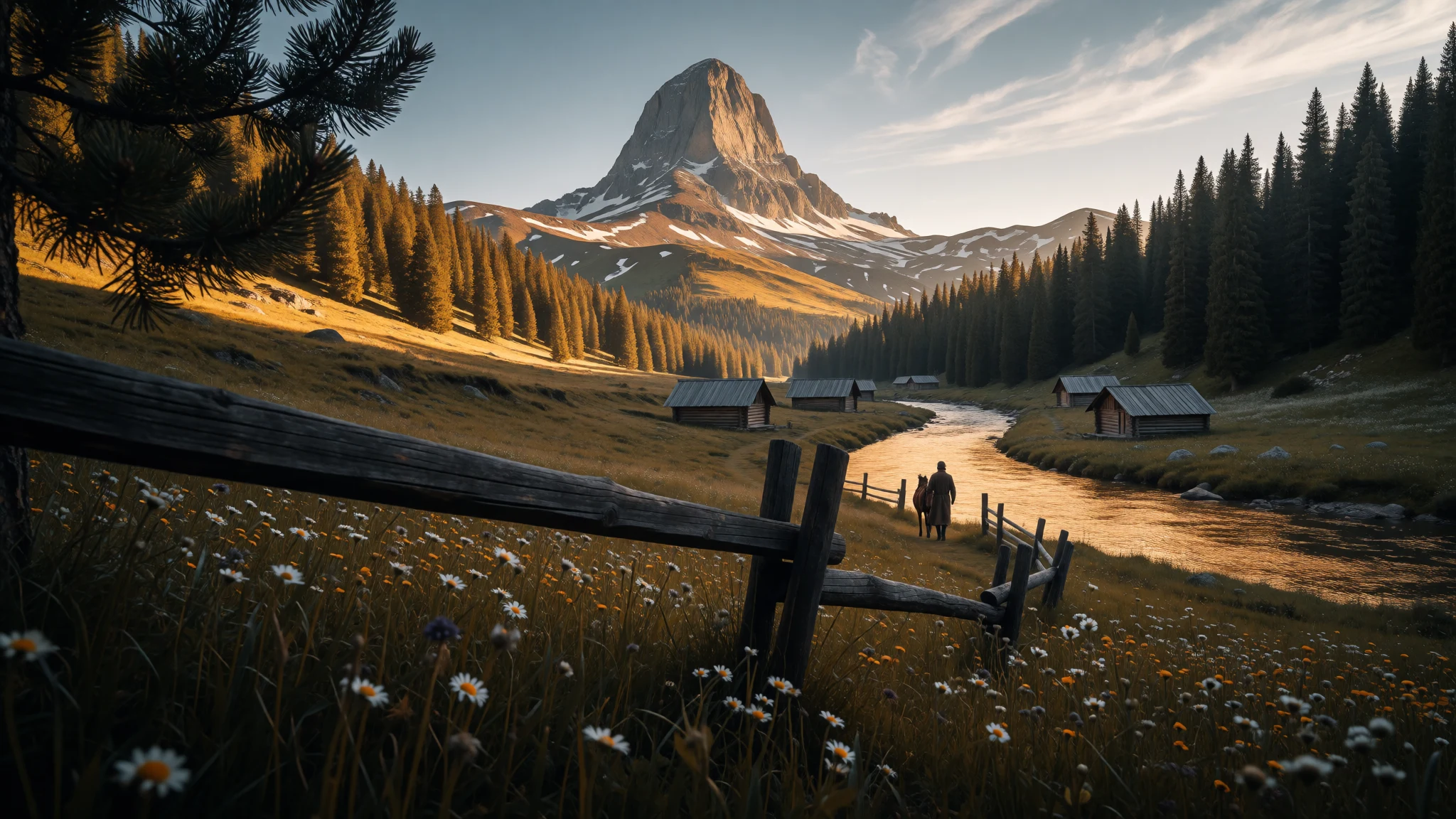
Altyn Arashan is a quiet alpine valley in Kyrgyzstan where wooden bathhouses hold hot sulphur springs, and the trail leads up toward a 5020 m peak.
The place
Altyn Arashan, whose name means Golden Spa, is a mountain valley in northeastern Kyrgyzstan, reached from the town of Karakol near Lake Issyk-Kul. It is a small resort rather than a village: a scatter of wooden guesthouses and bathhouses beside the Arashan River, with pine forest on the lower slopes and bare rock above. The setting is properly alpine, and snow can linger on the heights well into summer. At the southern end of the valley stands Pik Palatka, 5020 m, whose Russian name refers to a tent. The reason people come is the hot water. Springs rich in sulphur rise on the right bank of the river, about 20 km southeast of Karakol, and the wooden sheds hold pools where visitors soak, traditionally to ease aches and other ailments. The valley lies inside the Arashan State Nature Reserve, a botanical research area said to shelter snow leopards and bears, though a visitor is far more likely to meet horses and cattle. There is no easy road in. The track from Teploklyuchenka, also called Ak-Suu, is rough, and most people arrive in a rugged four-wheel-drive truck, on horseback or on foot. That keeps the place calm outside the warm months, and it also means supplies are limited, evenings are cold and phone signal is unreliable. It works best as a one- or two-night stop within a longer stay around Karakol.
Its story
The story of Altyn Arashan is one of water and of routes. The springs rose from the mountainside long before any buildings stood here, and herders moving livestock to high summer pastures knew them as a place to warm up and recover. Arashan is generally understood as a word for a spring or spa, and altyn means golden, so the name simply advertises what the valley offers. Across the former Soviet world, mineral springs were commonly developed as health resorts, and the wooden bathing sheds here belong to that tradition of taking the waters, even if the setting is far more basic than a sanatorium. In recent years the valley's identity has shifted again. Trekkers use it as a base, since the trail from Teploklyuchenka (Ak-Suu) climbs to it and routes continue higher into the range. Guesthouses open for the warm season and shut when snow closes the track. Protection of the surrounding land as the Arashan State Nature Reserve adds another layer, because the valley is now valued as an ecological site as well as a spa. The tension is visible on the ground. Horses carry people and supplies, the pools are heated by the earth but the huts are heated by wood, and every extra bed puts pressure on a fragile slope. A stay here is a small share in a long, practical relationship between people and hot water.
What to see
- Hot spring bathhouses — Central valley, right bank of the river
The wooden bathing sheds are the reason the valley has any buildings. Each holds a pool fed by sulphurous water that arrives warm from the ground, and the smell announces them before they come into view. Soaking after a day on the trail is the standard routine. Bring your own towel and expect simple changing space rather than spa comforts.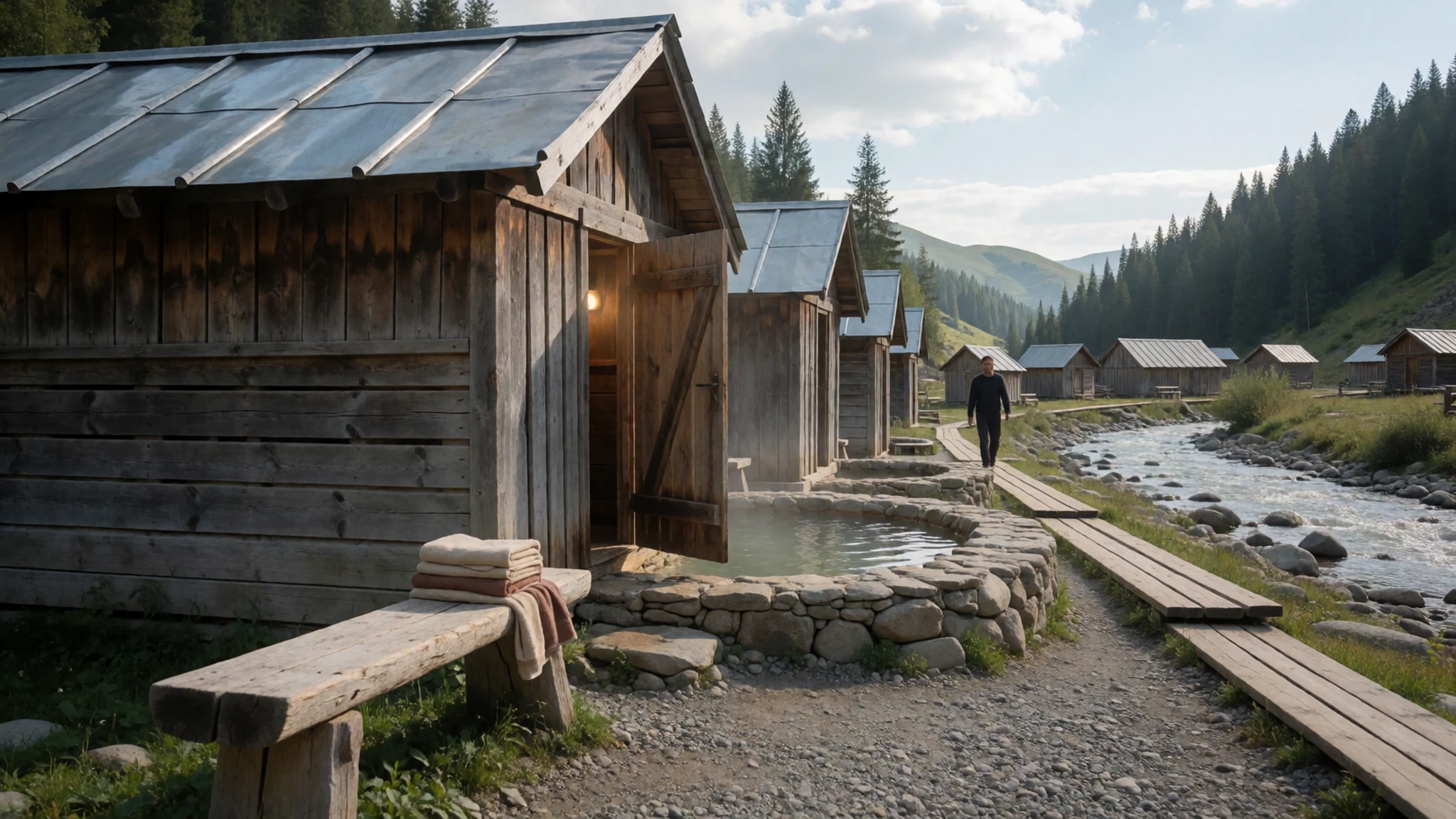
- Arashan River — Along the valley floor
The Arashan River runs the length of the valley, cold and fast even in midsummer. A path follows it between the guesthouses and the pine slopes, and plank bridges let walkers cross. It makes an easy morning stroll, and the sound of the water covers everything except the occasional horse bell.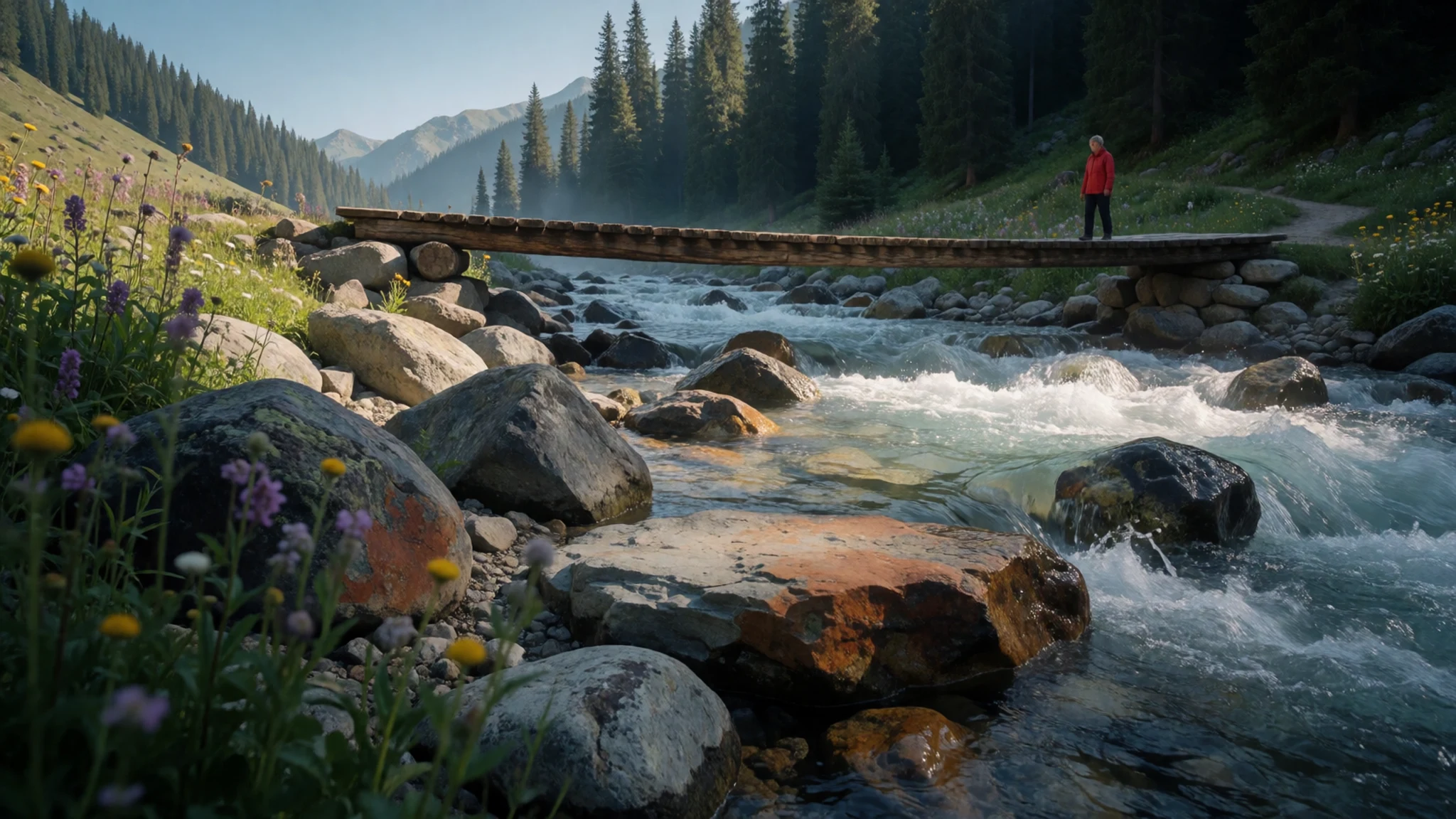
- Pik Palatka viewpoints — Southern end of the valley
Pik Palatka, at 5020 m, closes the southern end of the valley. Its tent-like summit shows best on clear mornings, with cloud often building by midday, so early walks are rewarded. The peak itself is mountaineering territory, but the approach trails give fine views to anyone with sturdy boots and a full day.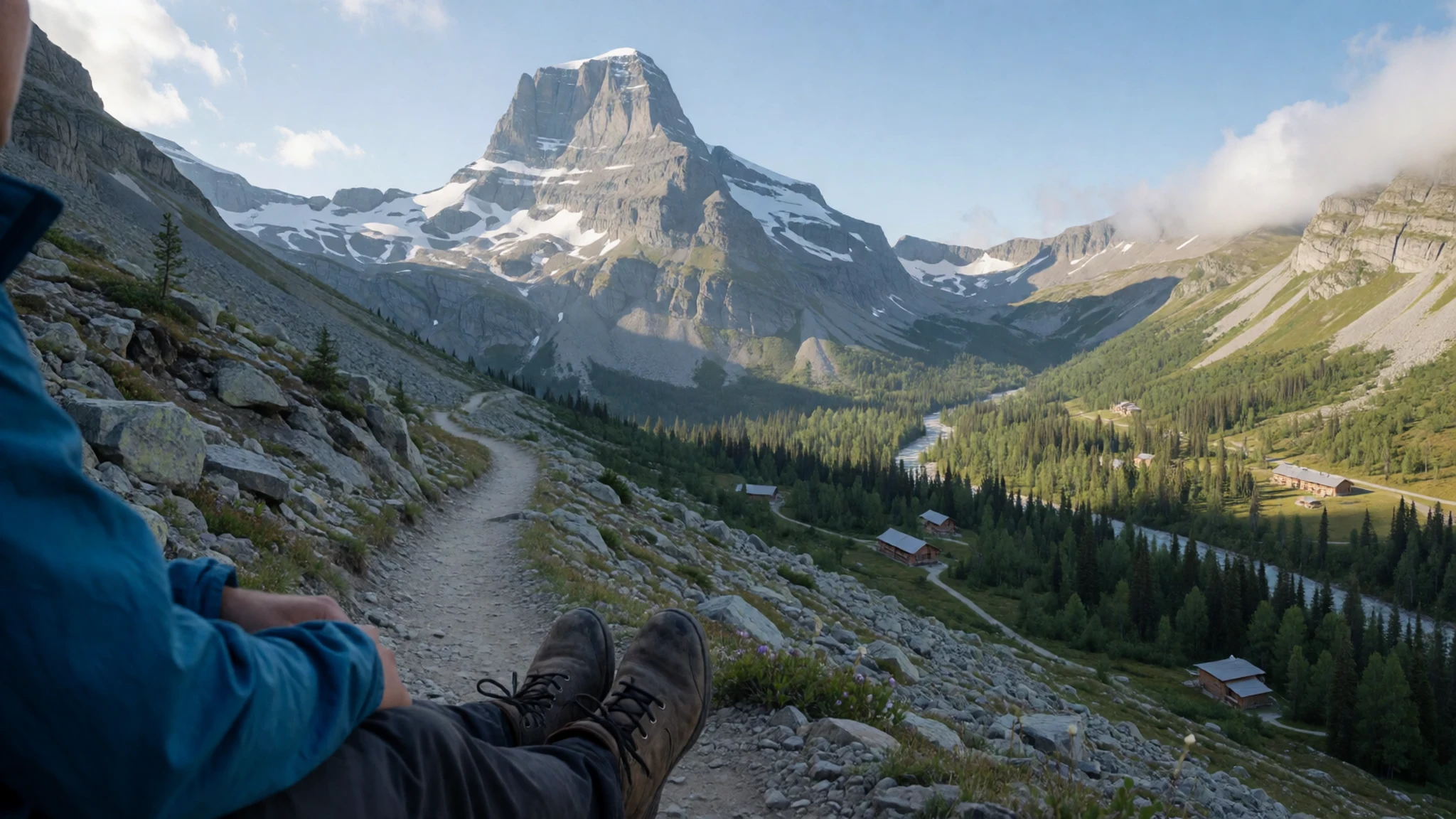
- Meadows and horse rides — Upper valley meadows
Above the guesthouses, open meadows run up to the tree line, and horses graze there through the summer. Local guides lead rides along the valley and to higher viewpoints, and the gentler routes suit people with little experience. Agree the route and length with the guide before setting off.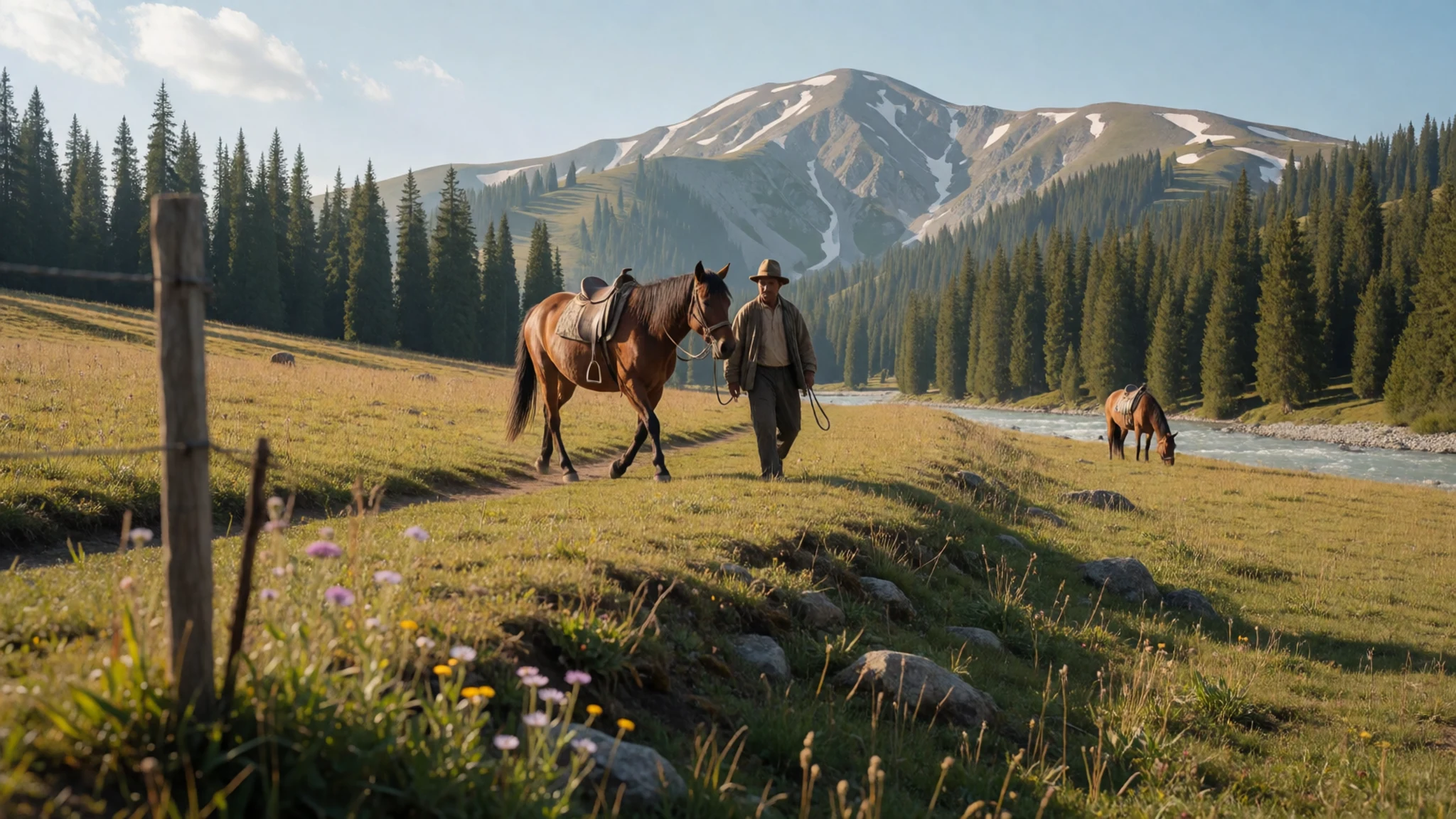
- The Teploklyuchenka track — Approach from Ak-Suu
The track from Teploklyuchenka (Ak-Suu) is part of the experience. It climbs steadily through forest and alongside the river, and most visitors cover it in a rugged truck or on foot. Walking it is a long day with steady uphill, and weather can turn fast, so start early and carry warm layers.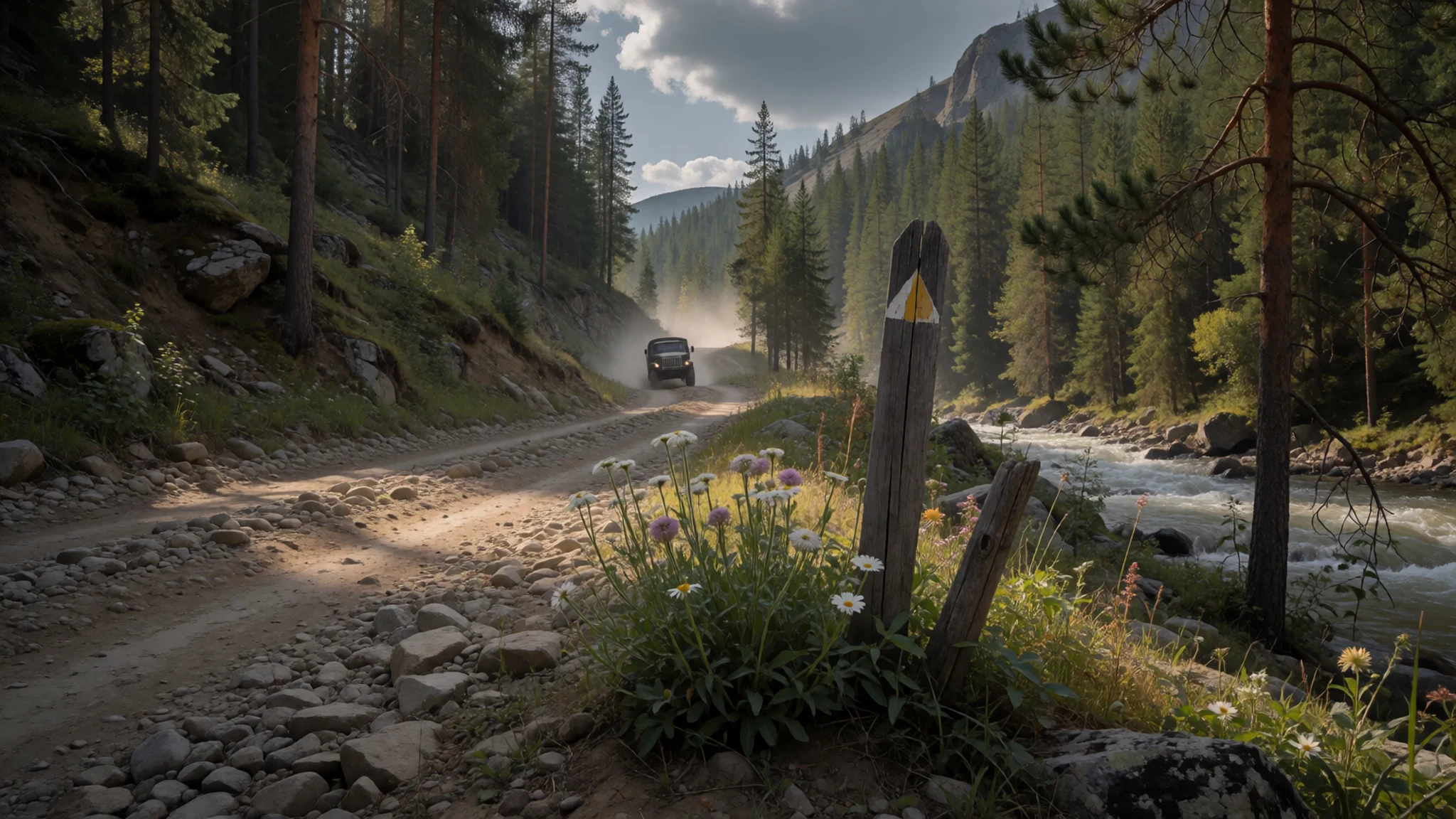
Culture
Altyn Arashan sits in a part of Kyrgyzstan where life still follows the rhythm of livestock. Families have long moved their herds to high pastures in summer, living in felt yurts, and the horses, saddles and hospitality that visitors meet in the valley grow out of that tradition. Most Kyrgyz people are Muslim, though practice is relaxed and mixed with older customs, and a guesthouse host will usually put out tea, bread and jam before asking anything of a guest. Sharing food is a basic courtesy, and flatly refusing a first offer can feel cold, so accepting a little is polite. Bathing here is as much a health habit as a tourist one: people come to sit in hot, sulphurous water, rest and talk. Karakol, the town below, has a mixed history of Kyrgyz, Russian and Dungan communities, and that shows in the food, the architecture and the languages heard in the bazaar. Russian remains widely spoken, so a few words of Russian or Kyrgyz, such as spasibo or rahmat for thank you, go a long way. Evenings in the valley are quiet, and most people are asleep soon after dark. Take your shoes off at the door of any guesthouse or bathing shed, and ask before photographing people or their horses.
What to wear
Altyn Arashan is a mountain valley, so what people wear there is shaped by weather before tradition, but Kyrgyz dress still gives the setting its character. The best-known piece is the ak kalpak, a tall white felt hat with black trim, worn by men at festivals and ceremonies. Felt made from sheep's wool is the signature textile, seen in shyrdak carpets, where coloured felt is inlaid in bold patterns, and in the coats and boots herders wear in cold weather. Women's festive dress may include velvet waistcoats, embroidered fabric and a headscarf or tall headdress, though these now appear mainly at weddings and national days. Day to day, local people wear practical modern clothes: fleece, padded jackets, rubber boots and a warm hat for riding. In Karakol the look is casual, with women in jeans or dresses and some in headscarves. A visitor should dress for the mountains: layers, a waterproof shell, hat and gloves, since nights are cold even in July. Wear sturdy, broken-in boots for the stony track, and pack sandals and a swimsuit for the pools. Covered shoulders and knees are respectful in villages and in town, though no strict dress code applies in the valley itself.
What to eat
- Beshbarmak — Guesthouse dining rooms in the valley, or family-run eateries in Karakol
Boiled meat, usually mutton or horse, served over wide flat noodles with onion and broth. The name means five fingers, from the old habit of eating it by hand. It is a dish for guests and celebrations, and valley guesthouses may prepare it if asked ahead.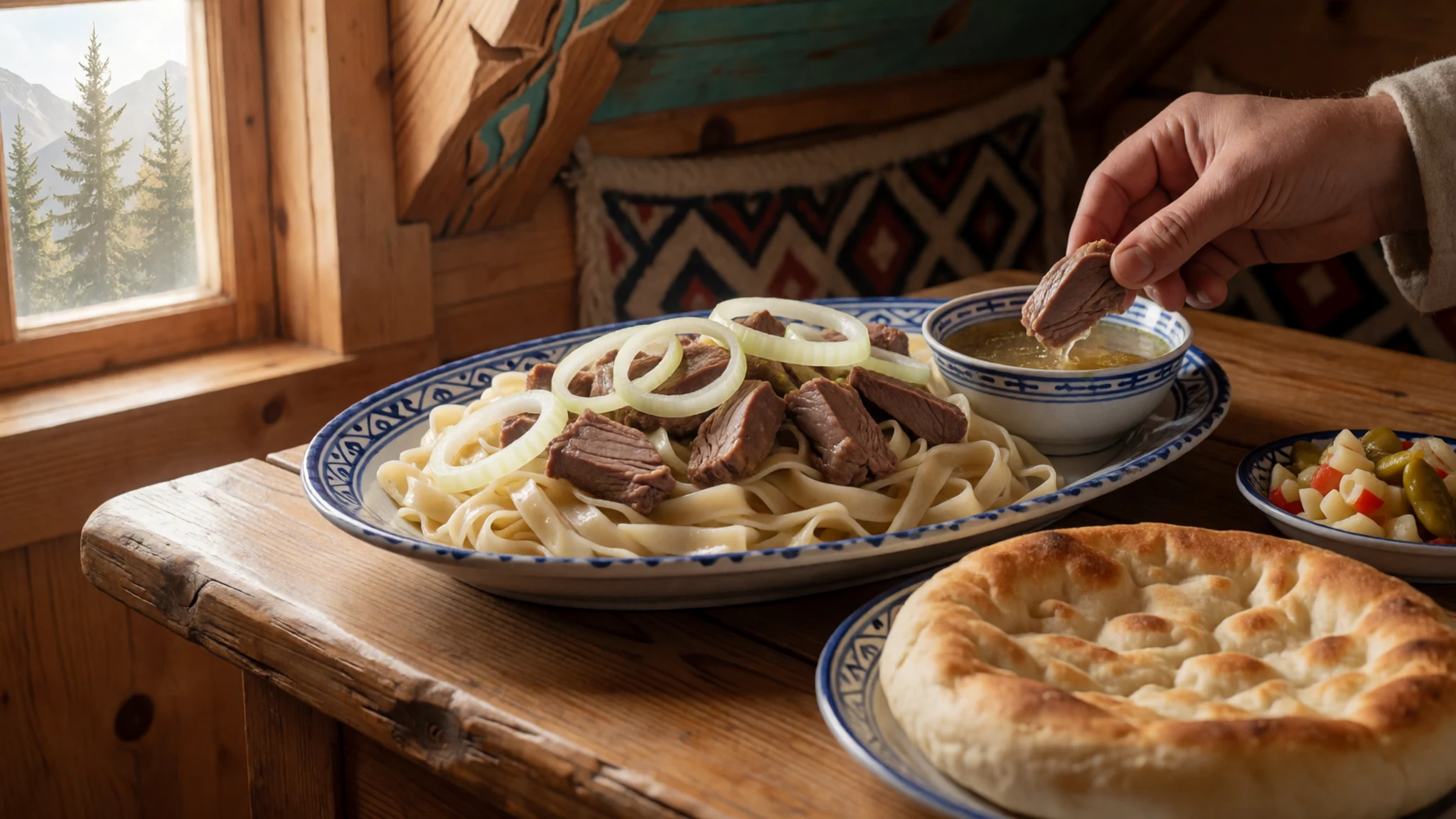
- Ashlyan-fu — Karakol bazaar and street stalls
A cold, spicy, sour noodle dish with a jellied starch, associated with the Dungan community in Karakol. It is a popular summer street snack and a good break from heavy meat dishes, particularly after a hot walk down from the mountains.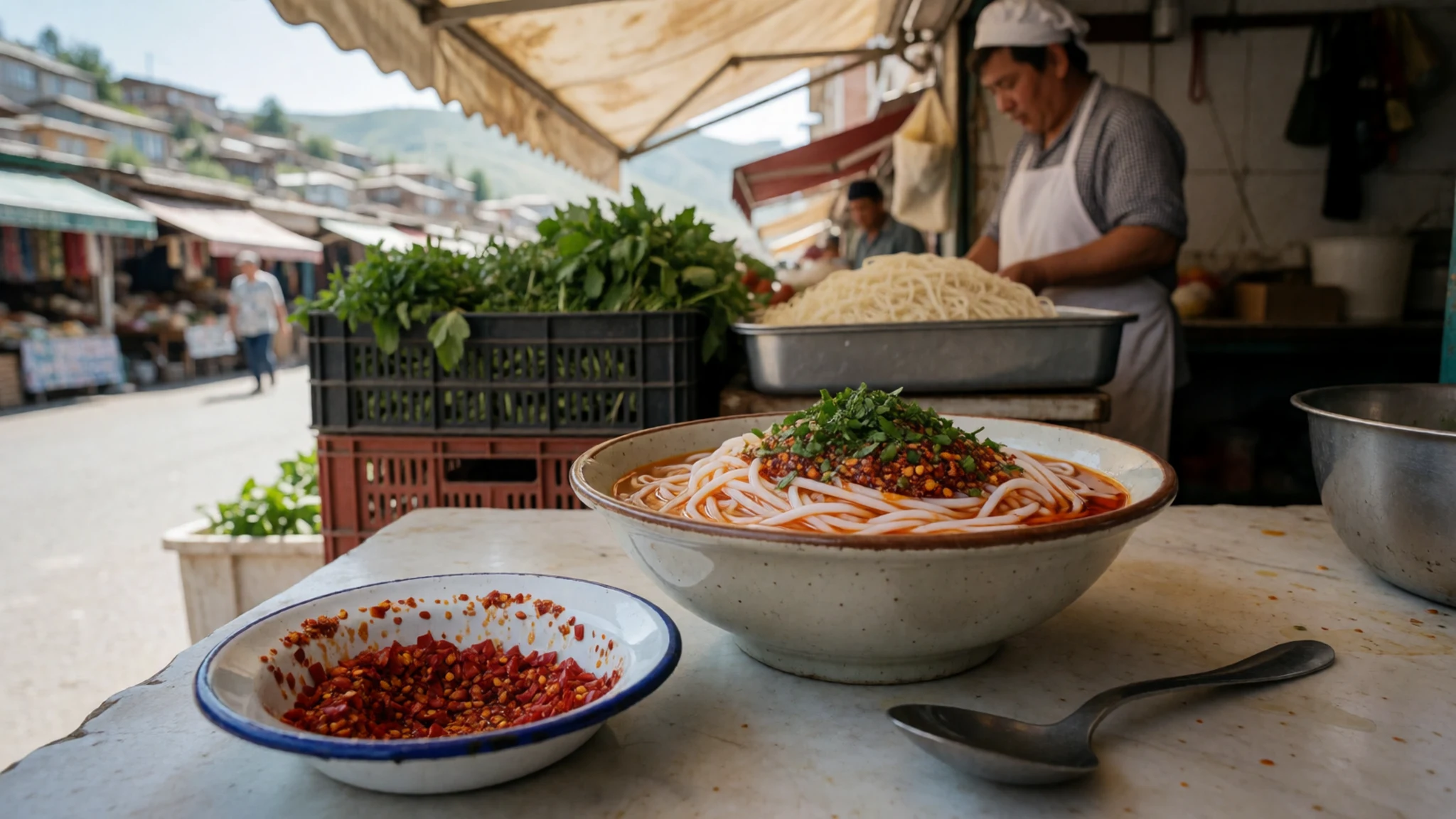
- Lagman — Guesthouse kitchens and everyday eateries in Karakol
Hand-pulled noodles in a meat and vegetable sauce, either as a soup or a stir-fry. It is filling, easy to find and one of the most dependable meals after a day on the trail, especially when the evening turns cold. - Boorsok — Guesthouse tea tables and the bread section of Karakol's market
Small pieces of fried dough, golden and slightly chewy, served with tea, jam or honey. They are a staple of Kyrgyz hospitality and often appear on the table the moment a guest arrives, making a handy snack for the track. - Kymyz — Herders' yurts and roadside stalls in summer pasture areas
Fermented mare's milk, lightly fizzy and sour, drunk in summer when herders have fresh supplies. The taste is an acquired one, but a small cup is a common welcome. Treat it as a cultural experience and take it slowly.
Plan it
Best time. June to September, when the track is usually open and daytime walking is comfortable; July and August are warmest, but nights stay cold at this altitude. Outside these months snow can close the route and guesthouses may be shut.
How long. 2–3
Getting there. Fly to Bishkek (Manas) and continue by road to Karakol, or check for seasonal flights to the Issyk-Kul area. From Karakol, take a shared minibus or taxi to Teploklyuchenka (Ak-Suu), then go up the rough track by four-wheel-drive truck, on horseback or on foot.
Budget. low
Tips
- Book guesthouse beds ahead in July and August, and confirm they are open outside the main season
- Start the walk or truck transfer early, as afternoon weather can turn
- Carry cash in local currency, since there are no cash machines in the valley
- Pack warm layers even in summer, because nights are cold
- Bring water treatment or ask the host about safe drinking water
Etiquette
- Take off your shoes before entering guesthouses and bathing sheds
- Ask before photographing local people or their horses
- Take all rubbish back down with you, as the valley is inside a nature reserve
Nearby
Sources
- Wikidata Q4737057 (CC0)
- Wikipedia: Altyn Arashan (CC BY-SA 4.0)
- Wikivoyage: Altyn Arashan (CC BY-SA 4.0)
- Photo: Altyn Arashan resort, Kyrgyzstan 2 (Adam Harangozó) (CC BY-SA 4.0)
- Photo: Altyn Arashan resort, Kyrgyzstan 3 (Adam Harangozó) (CC BY-SA 4.0)
- Photo: Altyn Arashan resort, Kyrgyzstan (Adam Harangozó) (CC BY-SA 4.0)
- Photo: Hiking areas close to Karakol town (Aidar Em) (CC BY-SA 4.0)
- Photo: Arashan River in Altyn Arashan, Kyrgyzstan (Adam Harangozó) (CC BY-SA 4.0)
- Photo: Arashan River, Kyrgyzstan 2 (Adam Harangozó) (CC BY-SA 4.0)
- Photo: Arashan River, Kyrgyzstan (Adam Harangozó) (CC BY-SA 4.0)
- Photo: Horses at Altyn Arashan, Kyrgyzstan (Adam Harangozó) (CC BY-SA 4.0)


Wildlife
- Snow leopard (animal)
The snow leopard is a big, pale, spotty cat with small round ears and a fluffy tail, made for life in cold mountains. Altyn Arashan lies within the Arashan State Nature Reserve, which is said to shelter these cats, but you are far likelier to meet horses and cattle, so treat any sighting as a rare gift. Ask your guide what is sensible for timing. Keep well back, speak softly, and never offer food.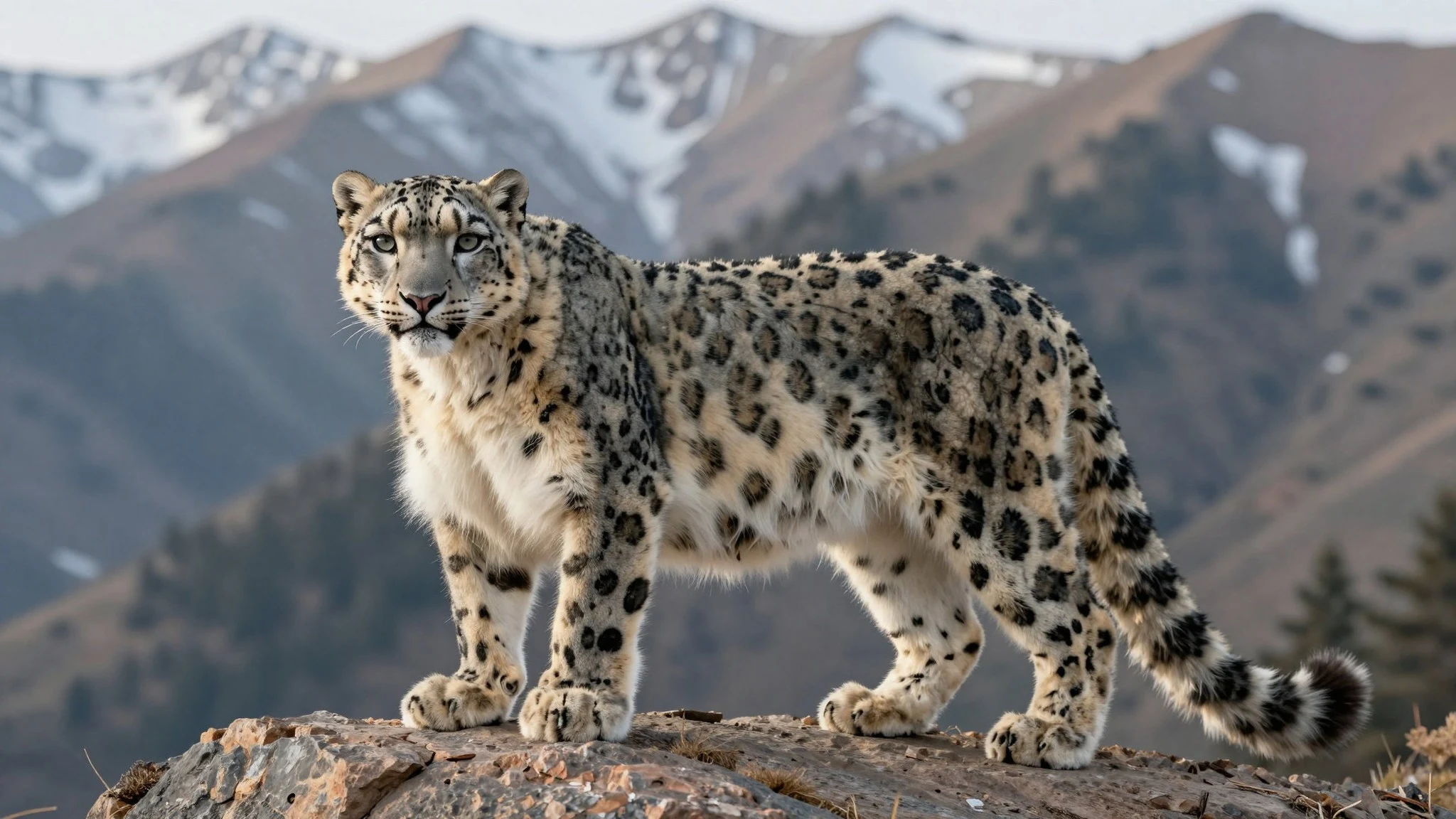
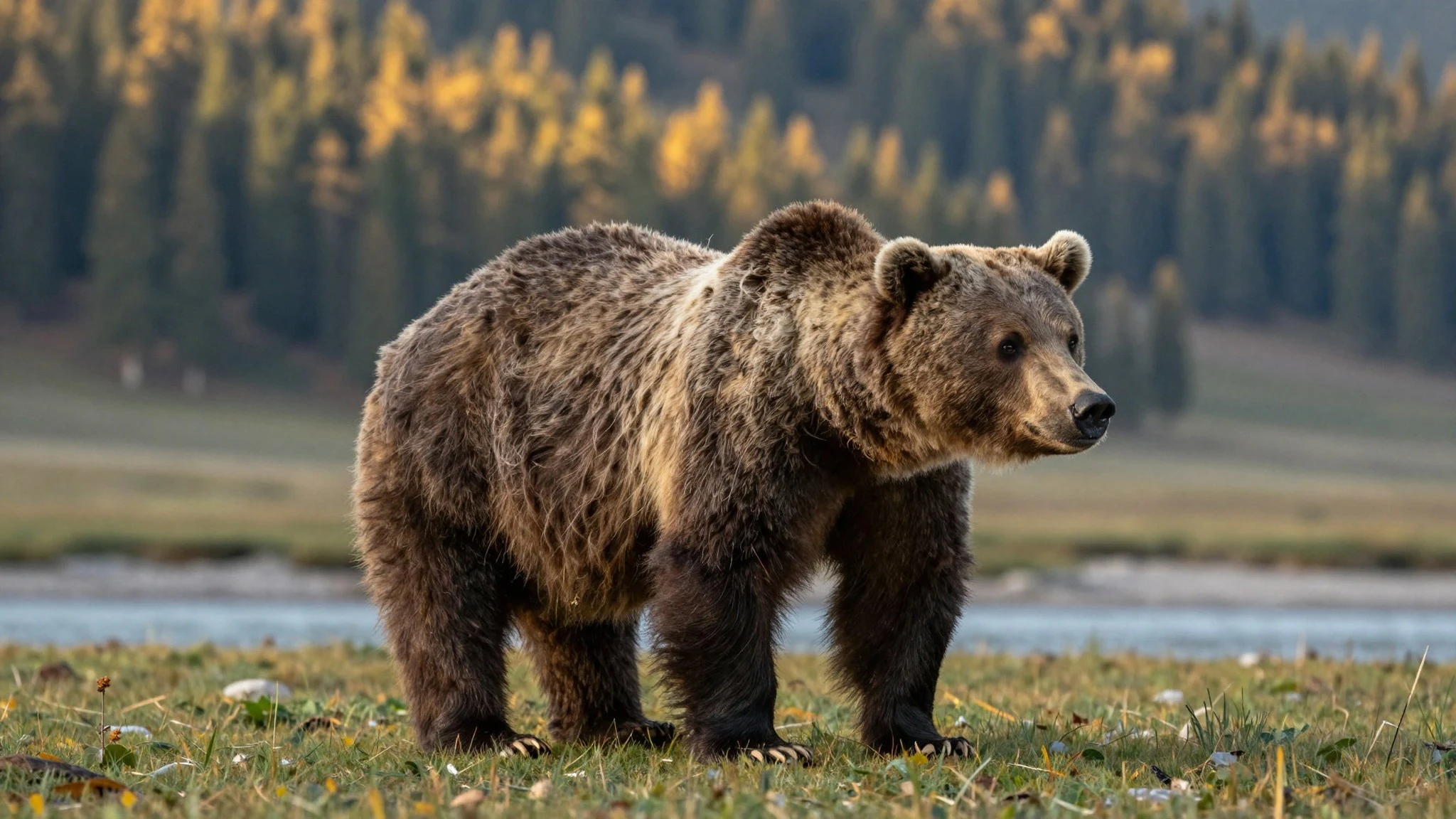
- Brown bear (animal)
The brown bear is a huge, furry bear with a muscly hump on its shoulders and broad paws for digging. Its coat may be creamy, reddish or dark brown. Altyn Arashan lies inside the Arashan State Nature Reserve, said to shelter bears, though horses and cattle are the animals you will most probably see. Go with a guide, stay quiet, keep a generous distance, and never feed a bear, however calm it seems.