Barskoon
Barskoon, Kyrgyzstan
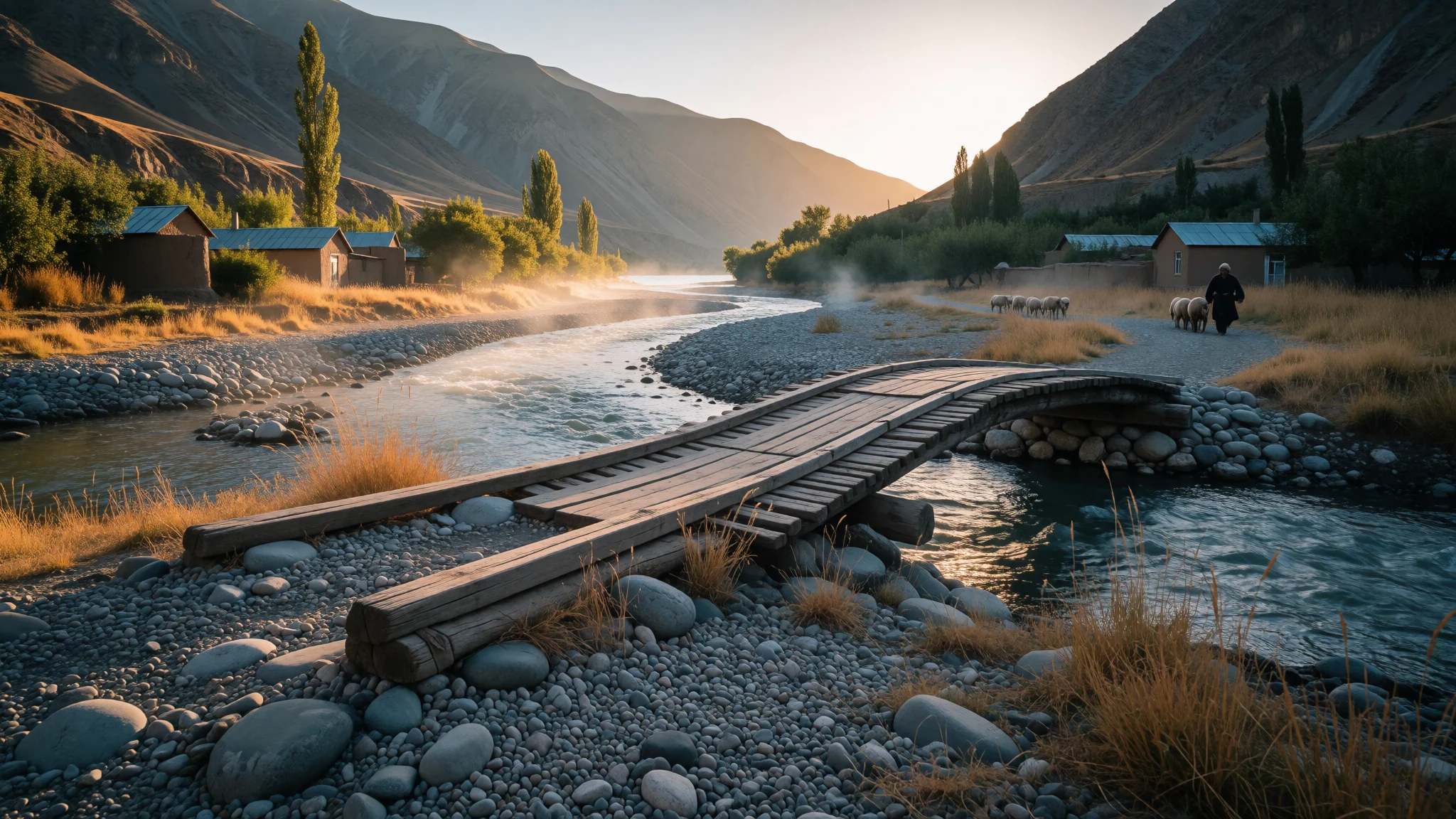
Barskoon is a quiet lakeside village where a Silk Road valley climbs from Issyk Kul into the Tian Shan, with river walks and yurt camps.
The place
Barskoon sits on the southern shore of Lake Issyk Kul in Kyrgyzstan, at an elevation of 1753 m, where the Barskoon River leaves its valley and runs on towards the lake. It is a village rather than a resort, strung along the main lakeside highway between Bökönbaev to the west and Kyzyl-Suu to the east. The name is written Барскоон in Kyrgyz and Барскаун in Russian, and older sources spell it in several other ways. Its importance lies in the valley behind it. That valley is a natural gap in the Tian Shan, linking the lake shore with the high Ala-Bel plateau, the upper Naryn river and, beyond them, the routes towards Xinjiang in north-western China. Travellers have used it for centuries, and the road up it still carries lorries, shepherds and local traffic. The setting is simple and strong: a wide blue lake to the north, a wall of mountains to the south, and a green strip of orchards and pasture where the river meets the flat land. The Tian Shan here is one arm of a long range that runs north from the Pamirs and forms much of the frontier between China and the Central Asian states. Barskoon suits slow days: a walk beside the river, a swim from the shore in summer, a drive up the valley. Facilities are modest. Yurt camps and free camp sites along the side roads matter more than big developments, so the pace stays quiet outside high summer.
Its story
Barskoon owes its history to geography. In the Middle Ages it was a trading post on a branch of the Silk Road that climbed from the lake shore over the Bedel Pass into China. The ruins of a caravanserai in the village show where caravans rested before routes fanned out towards China in the east and India in the south. When the Mongol empire ended and the Silk Road slowly faded, Barskoon lost its standing. The modern settlement began as a Russian military post after the tsarist conquest of Central Asia. During the Urkun, the Kyrgyz revolt against colonial rule in the early twentieth century, many people fled up the valley towards China, and many died in the high passes. Seok Pass, whose name means Bone Pass, remembers them. Under Soviet rule the old trade road mattered for guarding the frontier with China. The Bedel crossing was shut, and a new road was built over Seok Pass towards Kara-Say, then on to Ak-Shyyrak and Engilchek. In the late twentieth century the valley road became the main access route to the Kumtor gold mine. Soon afterwards, a lorry carrying cyanide for the gold refining left the road and fell into a stream. The resulting pollution scared holidaymakers away from Lake Issyk Kul for a time, and the episode showed how closely the lake's tourism depends on the health of the valleys that feed it.
What to see
- Barskoon River and valley mouth — Barskoon village
The Barskoon River leaves its valley just above the village and runs on towards Lake Issyk Kul. Walking the bank near the road gives a feel for the corridor that has led travellers into the Tian Shan for centuries. Early morning is best, when the light is soft on the slopes and the road is quiet.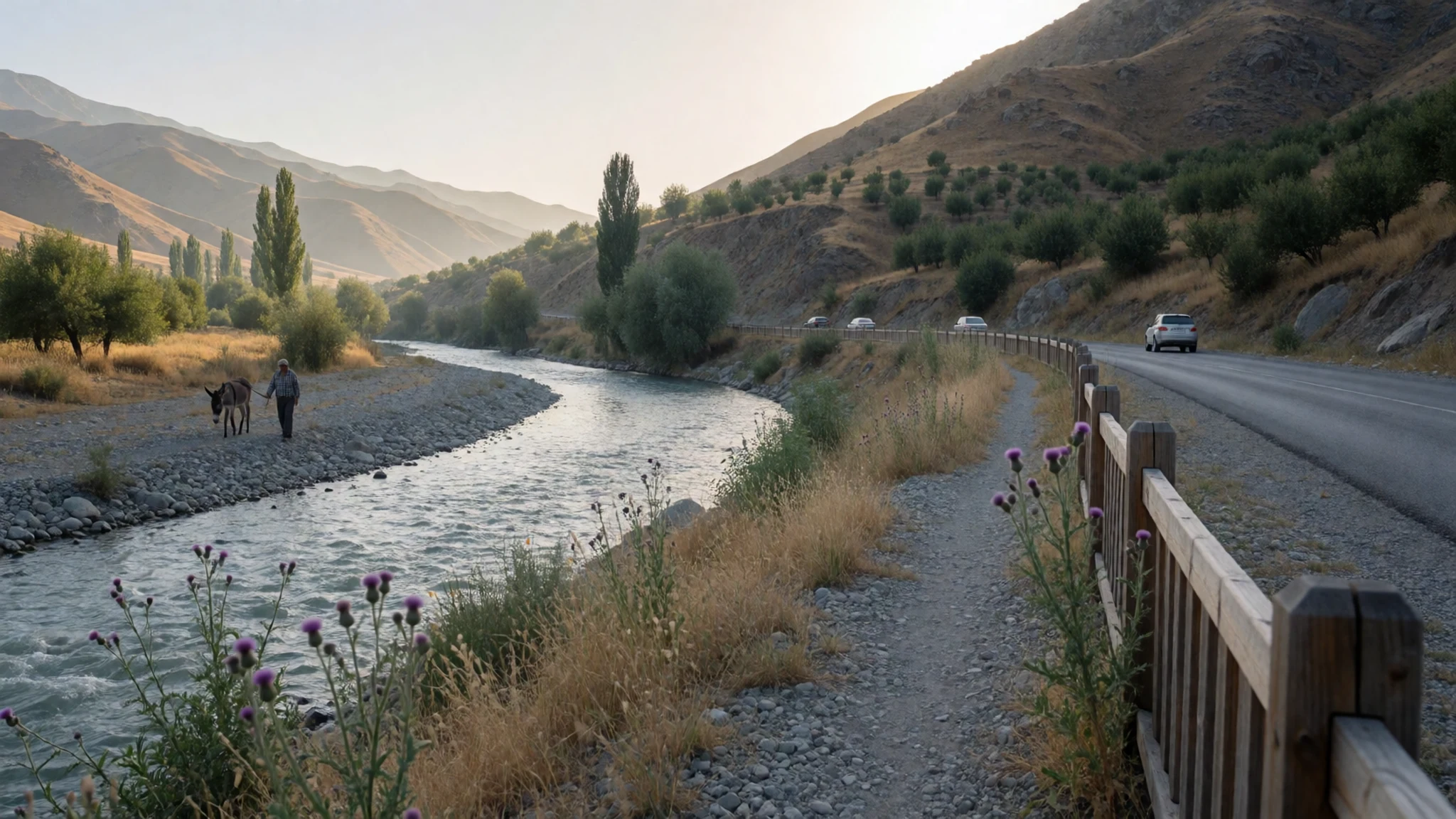
- Caravanserai ruins — Barskoon village
Barskoon still has the ruins of a caravanserai, a walled stopover where merchants and animals rested on the old routes. Little remains to read like a museum, so go for the sense of place and a short stop rather than a long visit. Ask in the village for the exact spot.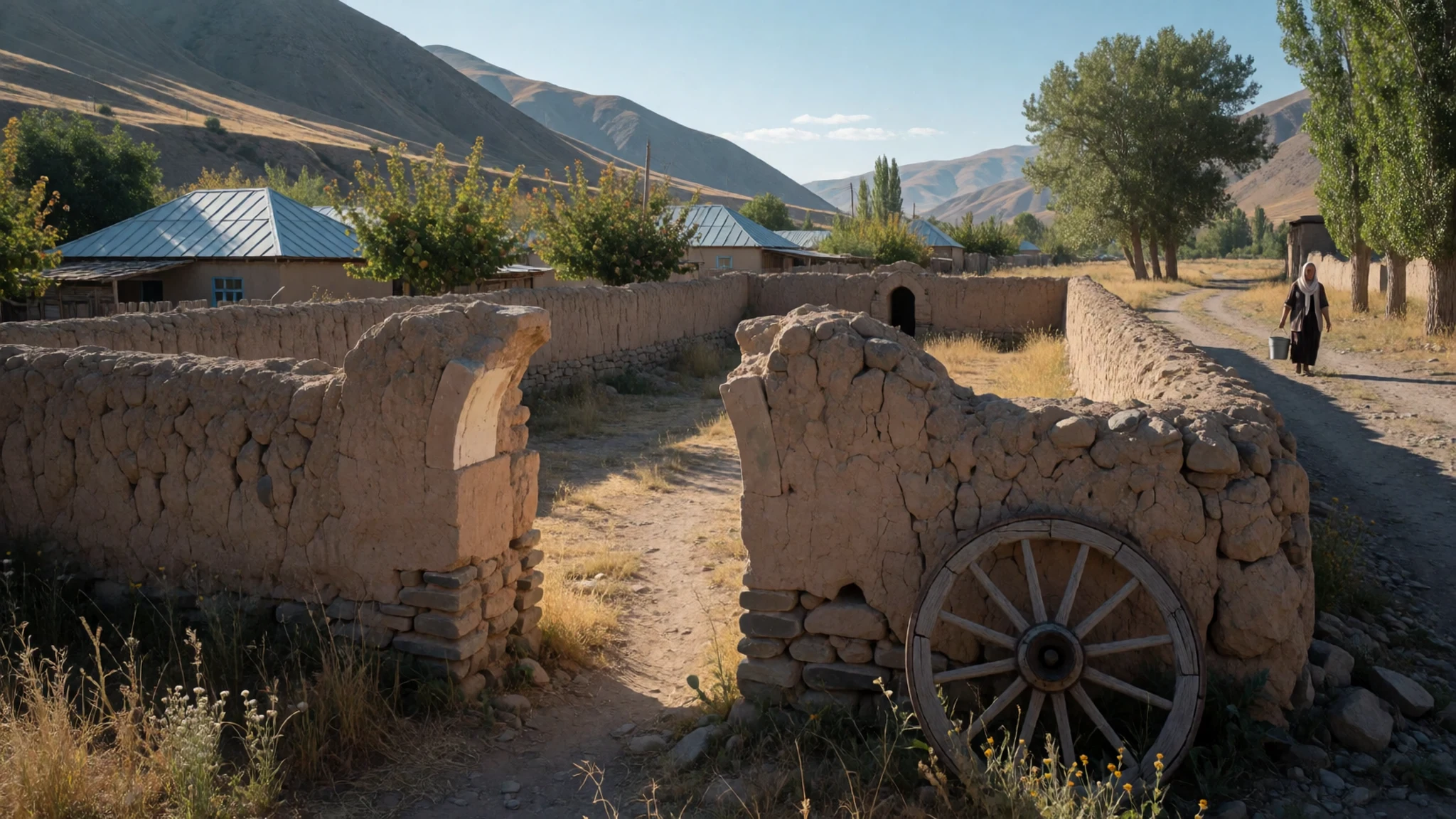
- The valley road towards Seok Pass — Barskoon valley
The road up the Barskoon valley climbs towards Seok Pass, whose name means Bone Pass, and on towards Kara-Say. It is also the route used by traffic for the Kumtor mine, so expect lorries. Check road and weather conditions locally before driving far, and take the pass name as a reminder of a hard history.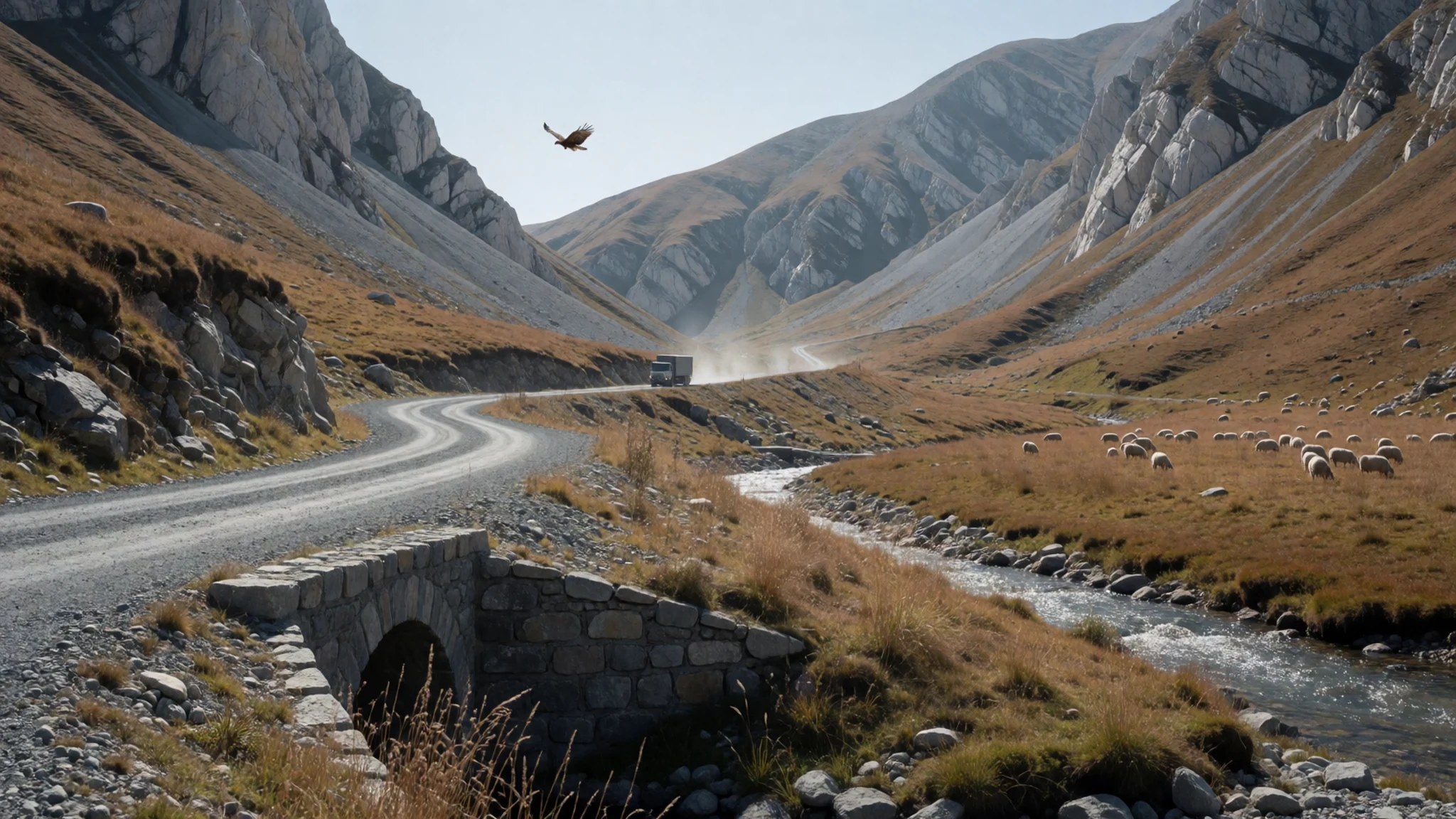
- Kadji Sai hot springs — Kadji Sai and Tong District
Kadji Sai, along the southern shore, is known for its hot springs, and a few more lie in Tong District. They suit an evening after a day of walking or driving. Facilities differ from place to place, so ask a local driver or host which spring is open and which is worth the stop.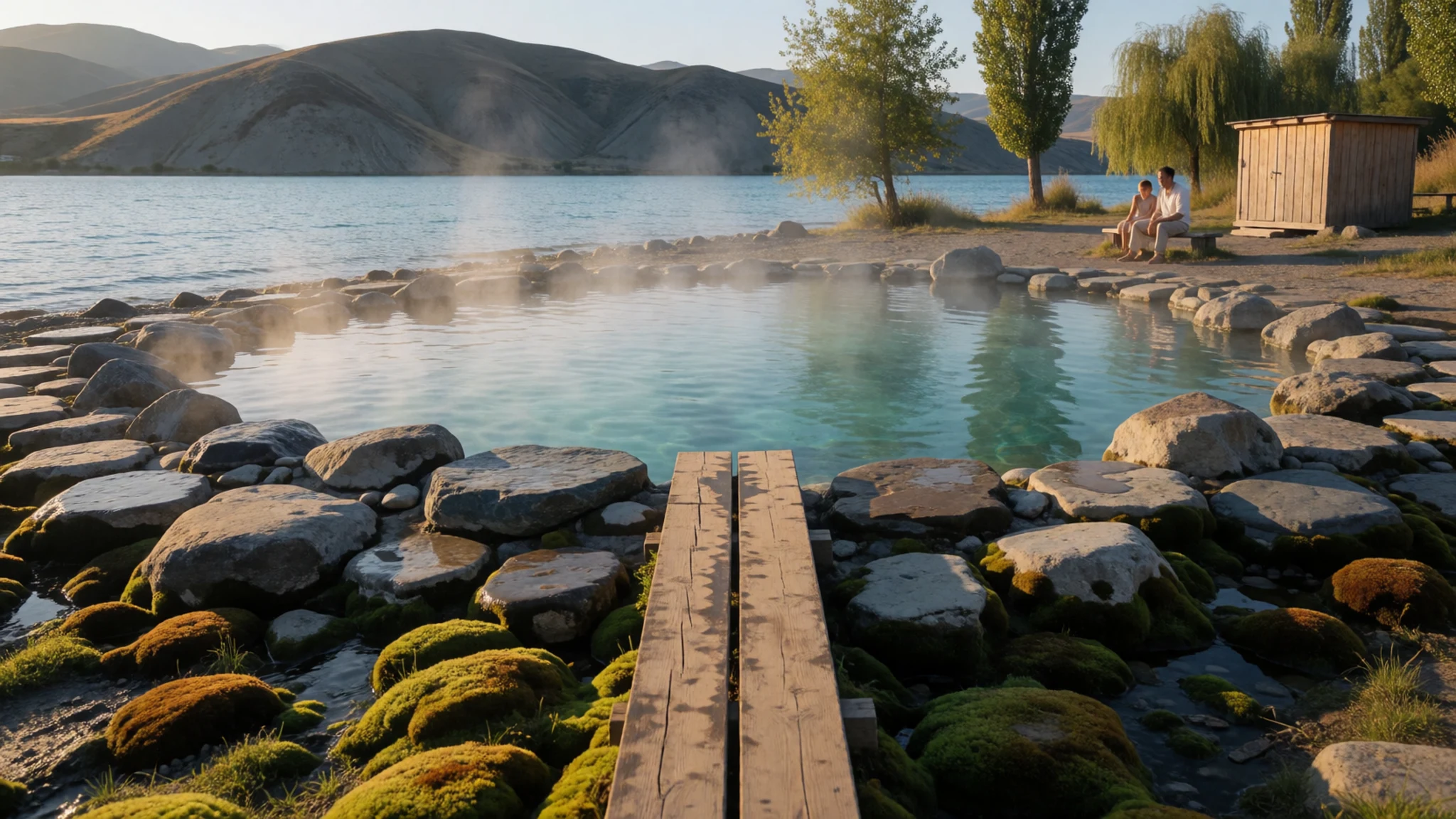
- Salt lakes near Tamga and Tong — Tamga village and Tong District
A simple detour along the lake road leads to salt lakes located near Tamga village and within Tong District. The water sits in pale, dry-looking country that contrasts with the green valleys nearby. Bring sun protection, because there is little shade, and check locally on access and swimming before getting in.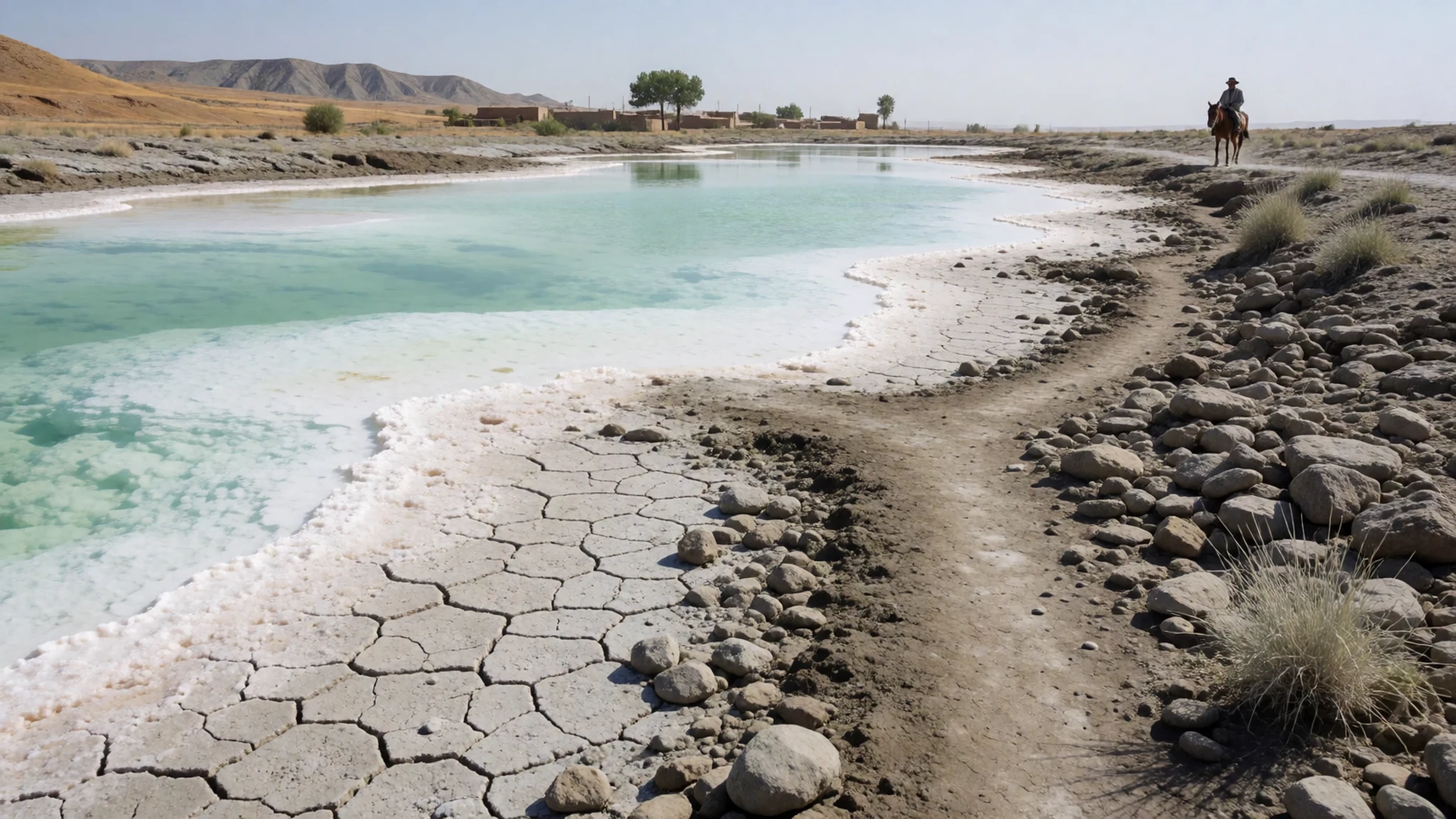
- Grigorievskoe Trail — North of Lake Issyk Kul
Grigorievskoe Trail runs through a valley on the northern side of the lake, a long day's walk out and back. Entry to the gorge may involve a small fee that is not always collected. Reaching it from the southern shore means a long drive round the lake, so plan it as a separate day.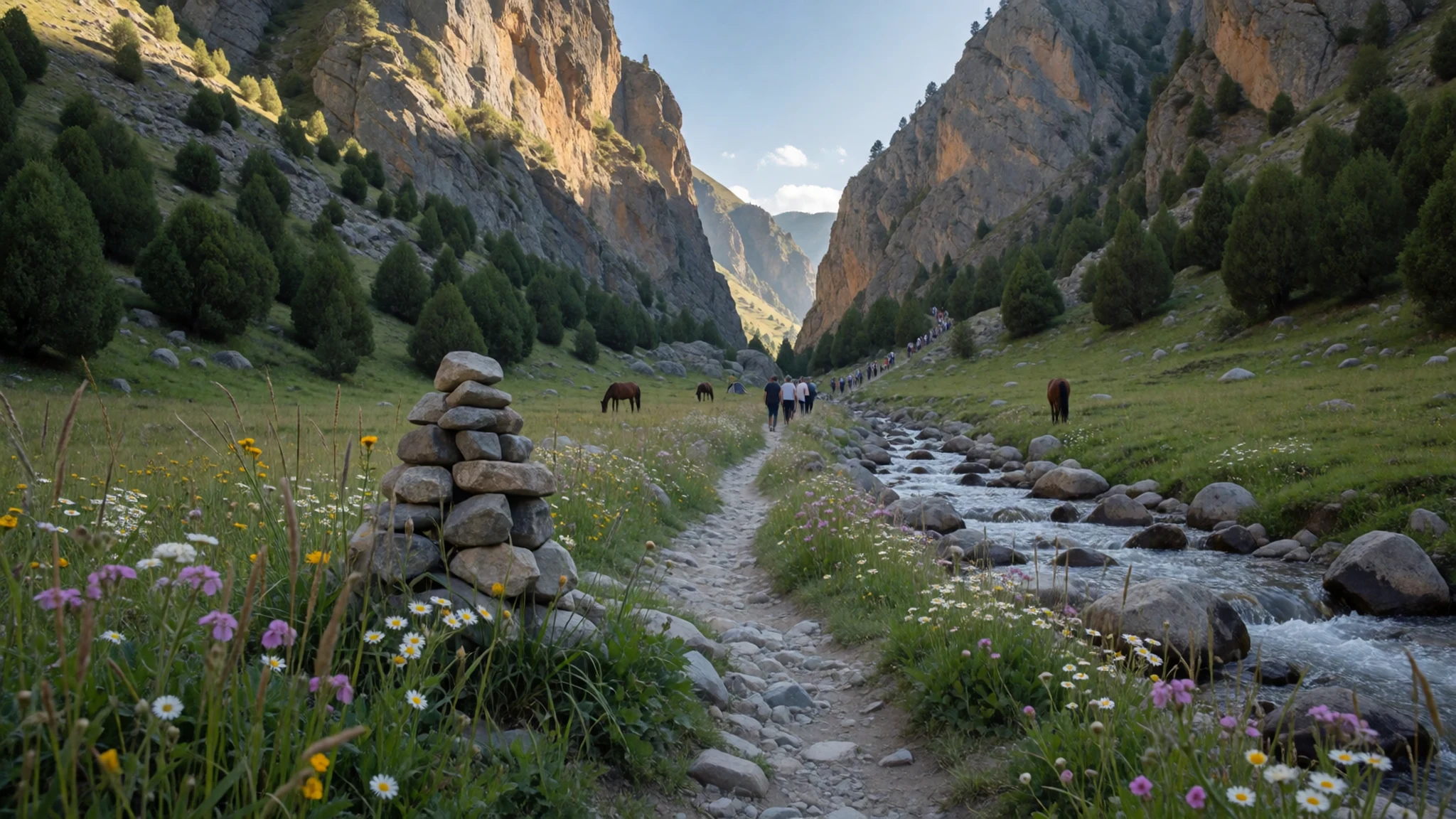
Culture
Barskoon's culture is rooted in Kyrgyz pastoral life. Families keep livestock, move herds to high summer pastures, and judge hospitality by how well a guest is fed. The yurt, a felt-covered round tent, remains a national symbol and appears at tourist camps along the lake and in the hills, although most families in the village live in ordinary houses. Tea, bread and sweets arrive almost as soon as a guest sits down, and refusing everything can feel abrupt to a host. The valley's long history of trade and migration has left a mixed heritage, and Russian is still widely used alongside Kyrgyz. Most people are Muslim, and respect for elders shapes everyday manners. The stories of the Silk Road and of the Urkun are part of local memory, so questions about them are best asked with care and patience. Music is often built around the komuz, a three-stringed lute, and it accompanies weddings and celebrations. Summer is the season for gatherings and horse games around Issyk Kul, though dates change from year to year, so ask locally rather than planning around a fixed event. Take your shoes off at the door of a yurt or a home, and accept the tea or bread you are offered, even if you only taste it.
What to wear
In Barskoon, as across Kyrgyzstan, traditional dress is built on felt, wool, silk and velvet, materials suited to herding life in the mountains. The best-known piece is the ak-kalpak, a tall white felt hat with dark trim, worn by men. Men also wear the chapan, a long padded coat, with a leather belt, while women wear embroidered velvet waistcoats and, once married, the elechek, a large white headdress. These clothes appear mainly at weddings, national holidays, festivals and horse games rather than every day. Daily wear in the village is now practical and modern: jeans, jackets, tracksuits, rubber boots in wet weather, and for many women headscarves or modest long skirts. Younger people in towns follow familiar global styles. Visitors should dress for altitude and changeable weather. Even in summer, evenings by the river can turn cool and mountain weather shifts fast, so carry a fleece and a waterproof layer, a sun hat and sunglasses, and sturdy shoes or light boots for gravel tracks and river crossings. Swimwear is fine at the lakeshore, but cover up when walking through the village, and keep shoulders and knees covered in homes and any place of worship. Slip-on shoes are handy, because they come off at many doors.
What to eat
- Beshbarmak — family tables and yurt camps
Boiled meat, usually mutton or horse, laid over broad flat noodles with onion and a bowl of broth on the side. The name means five fingers, a nod to eating by hand. Hosts serve it for special guests and celebrations.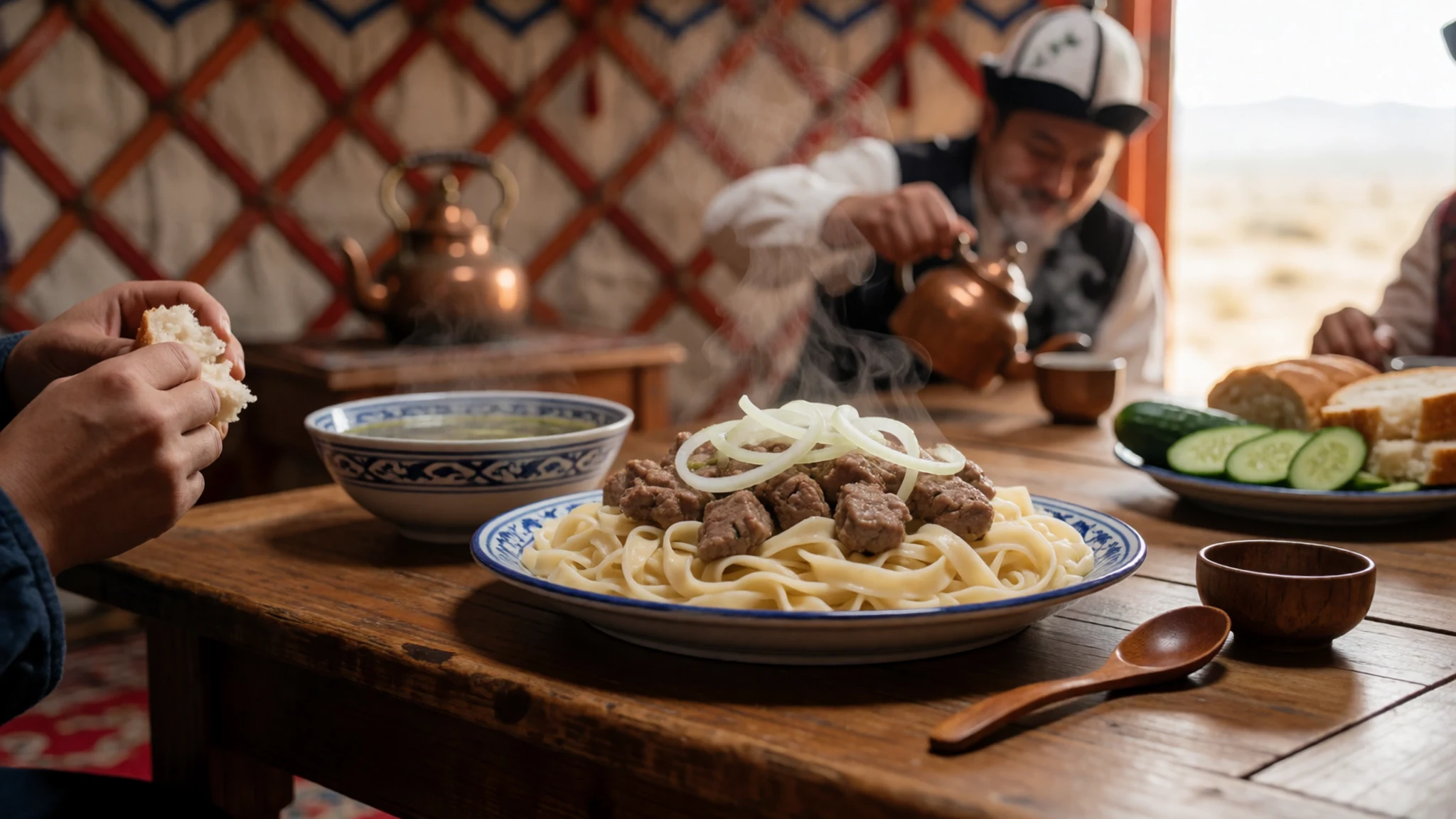
- Lagman — roadside canteens and small eateries along the lake highway
Noodles pulled or cut by hand in a savoury stew of meat and vegetables, served either soupy or as a stir-fried plate. It is a dependable meal after a day outdoors, with roots in the Uyghur and Dungan kitchens of the wider region.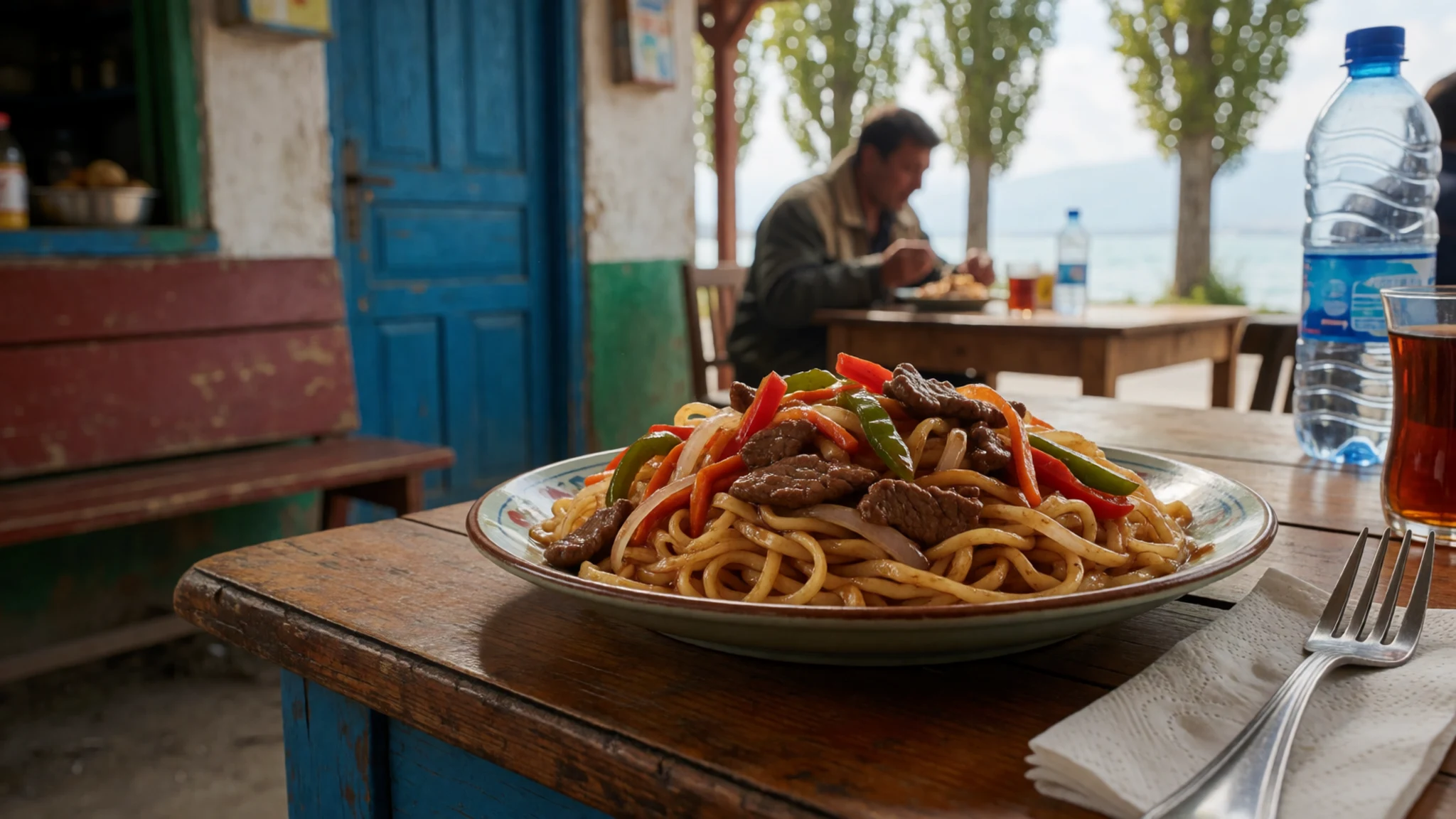
- Boorsok — village bazaar stalls and family tables
Little squares or pillows of fried dough, eaten with tea, jam, honey or cream. They are crisp when fresh and appear on every celebration table. A bag from a market stall makes a good picnic snack for the lakeshore. - Kymyz — roadside stalls and yurt camps in summer
Lightly fizzy, sour fermented mare's milk, a summer drink of herding families. The taste takes getting used to, so try a small cup first. Roadside sellers offer it in the warm months, and yurt camps often serve it to guests. - Samsa — bakeries and market stalls
A baked pastry parcel of minced meat and onion, sometimes pumpkin, crisp outside and steaming within. It makes an easy lunch for the road and is usually bought hot and eaten on the spot, with tea if there is a bench nearby.
Plan it
Best time. Summer, roughly June to September, when the lake is pleasant, yurt camps are running and the mountain roads are open. Outside those months, high passes can be snowy and many camps close, so check conditions locally.
How long. 2–3
Getting there. Fly into Bishkek (Manas airport), then take a marshrutka, shared taxi or hired car round the lake to the southern shore. Barskoon lies on the highway between Bökönbaev and Kyzyl-Suu. Karakol and Cholpon-Ata are the larger bases nearby. Check current routes and timings locally.
Budget. low
Tips
- Carry cash in small notes, as cards are unreliable in villages
- Book yurt camps or homestays ahead for July and August; free camp sites suit those with tents
- Pack layers, since evenings by the river and in the valley turn cool quickly
- Ask about road and weather conditions before driving up the valley towards the passes
- Drink bottled or treated water and carry a full bottle on walks
Etiquette
- Remove shoes at the door of a yurt or home
- Accept tea or bread when offered, even if only a taste
- Ask before photographing people, their children or their animals
Nearby
Sources
- Wikidata Q2631511 (CC0)
- Wikipedia: Barskoon (rev 1384589194) (CC BY-SA 4.0)
- Wikivoyage: Issyk Kul and the Tian Shan (rev 5240492) (CC BY-SA 4.0)
- Barskoon river pointer — Kmaksat, via Wikimedia Commons (CC BY-SA 4.0)
