Ak-Suu
Ak-Suu, Kyrgyzstan
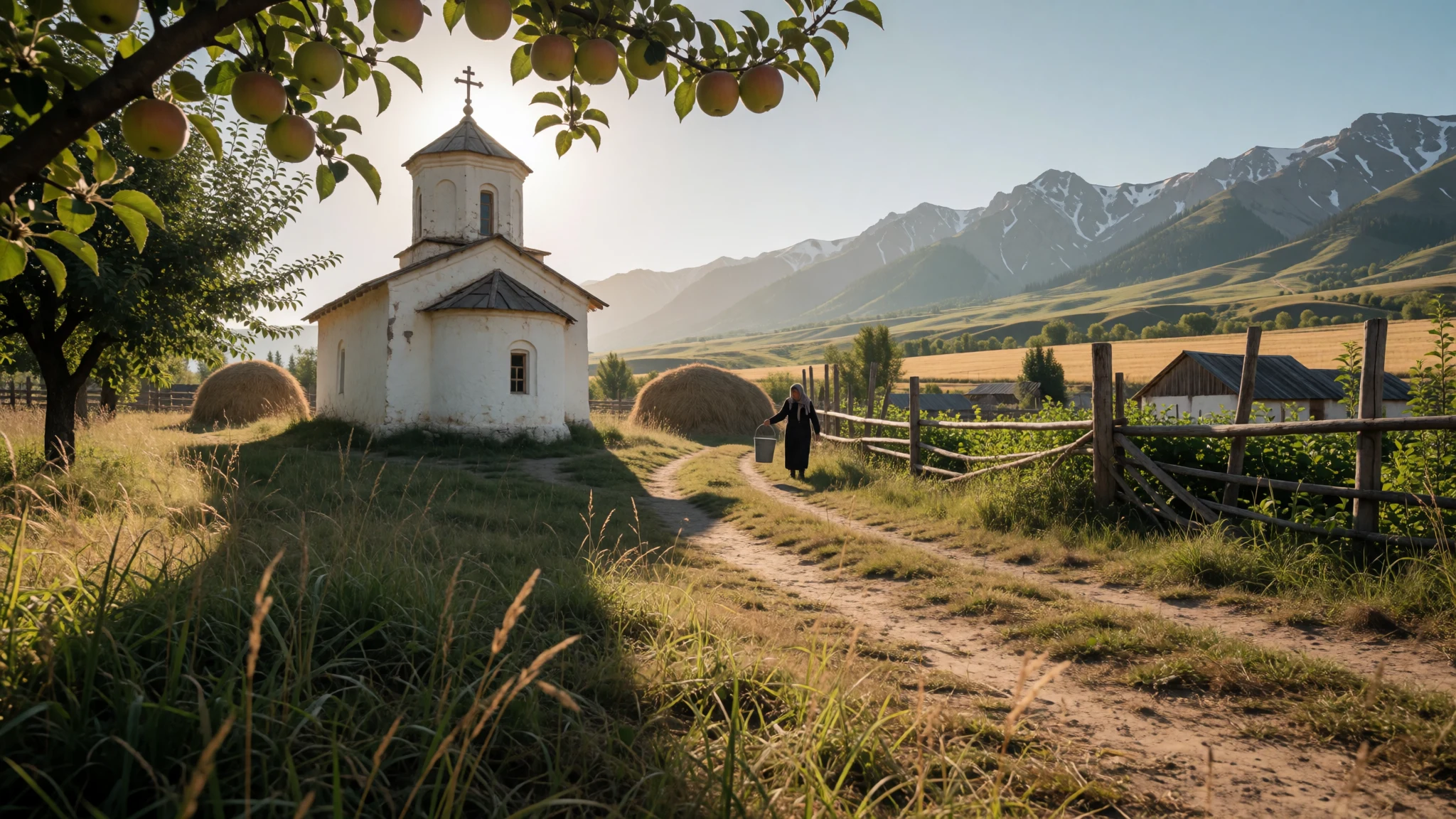
Ak-Suu is a working mountain village in eastern Kyrgyzstan, a quiet stop before the great glaciers and peaks of the Tian Shan.
The place
Ak-Suu is the Kyrgyz name for a large village on the eastern side of Kyrgyzstan's Issyk-Kul Region, better known by its Russian name, Teploklyuchenka, which means roughly "warm springs". It sits at 1,810 m, in the foothills where the lake basin begins to climb into the Tian Shan. About 14,000 people lived here in 2021, which makes it a proper working settlement rather than a hamlet. It is the administrative centre of the Ak-Suu District, and among the low houses and orchards there are schools, shops, a house of culture and an Orthodox church. The district around it is overwhelmingly mountain, with only narrow strips of valley floor, and its far southern end reaches Jengish Chokusu and Khan Tengri on the border ranges. That geography shapes the village's role. Few people come for the settlement itself. Most pass through on the way to Karakol, where trekking can be arranged, or on the way to the glaciers further south, and use Ak-Suu for supplies or a night in a guesthouse. Summers are bright and fairly dry at this altitude, with cool nights, and winters are cold with snow on the higher ground. It is a place for seeing everyday rural life in Kyrgyzstan, with white ridges standing over the roofs on clear mornings.
Its story
The story of Ak-Suu as a village begins in 1868, when 14 families of peasant migrants from the Russian Empire settled here, close to a fort called Aksuu. They were part of a wider movement of settlers into the Issyk-Kul basin, and the Russian name they gave the place, Teploklyuchenka, points to the springs that made the spot attractive for farming and for travellers. The Kyrgyz name, meaning "white water", is the older way of speaking about the same ground, named for the pale glacial streams that come down from the mountains. For the following century and a half the village grew as a farming centre, and its population today carries traces of both histories: Russian and Kyrgyz family names, an Orthodox church standing in a mostly Muslim country, and a house of culture that recalls the institutions of the Soviet period. The wider district tells a similar story of change. Further up the valleys, the settlement of Engilchek was once a tin-mining community of several thousand people, and it shrank to a small remnant after the mine closed. Ak-Suu has had a steadier path, because it serves the surrounding farms and the administration of the district rather than a single industry, and that is why it is still lively today.
What to see
- Ak-Suu village centre — Ak-Suu village
The village centre rewards a slow walk rather than a long visit. The house of culture and the small Orthodox church, dedicated to Saint Demetrius of Thessalonica, show the Soviet and Russian layers of the place. Beyond the last houses, orchards and fields run up towards snowy ridges that fill the skyline on clear days.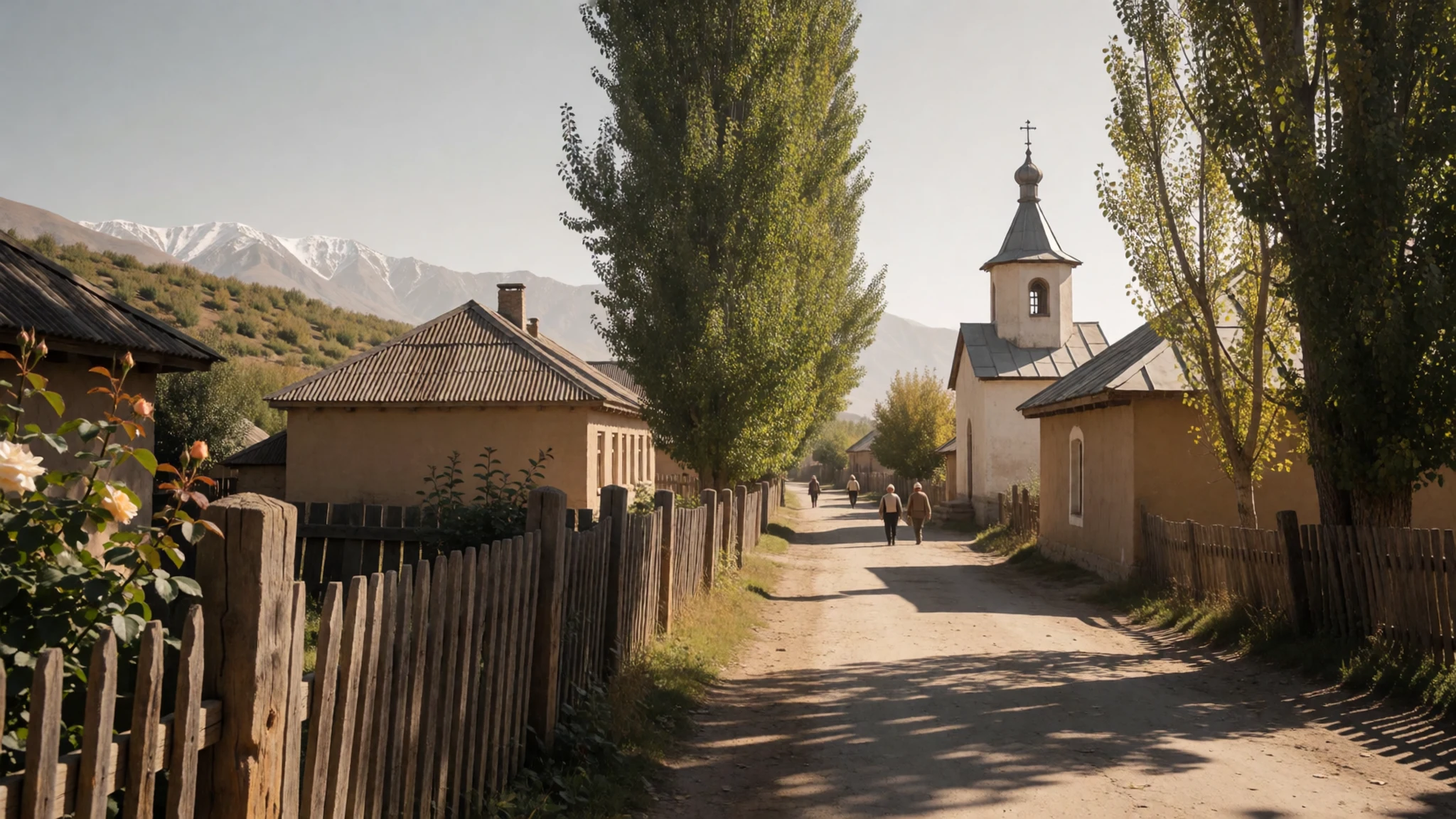
- Orthodox church of Saint Demetrius — Ak-Suu village
A village Orthodox church is an unexpected sight in Kyrgyzstan, and this one records the Russian settlers who founded Teploklyuchenka. It is small and plain in scale, so it suits a short stop among the houses. Visit outside service times, and treat it as a working place of worship.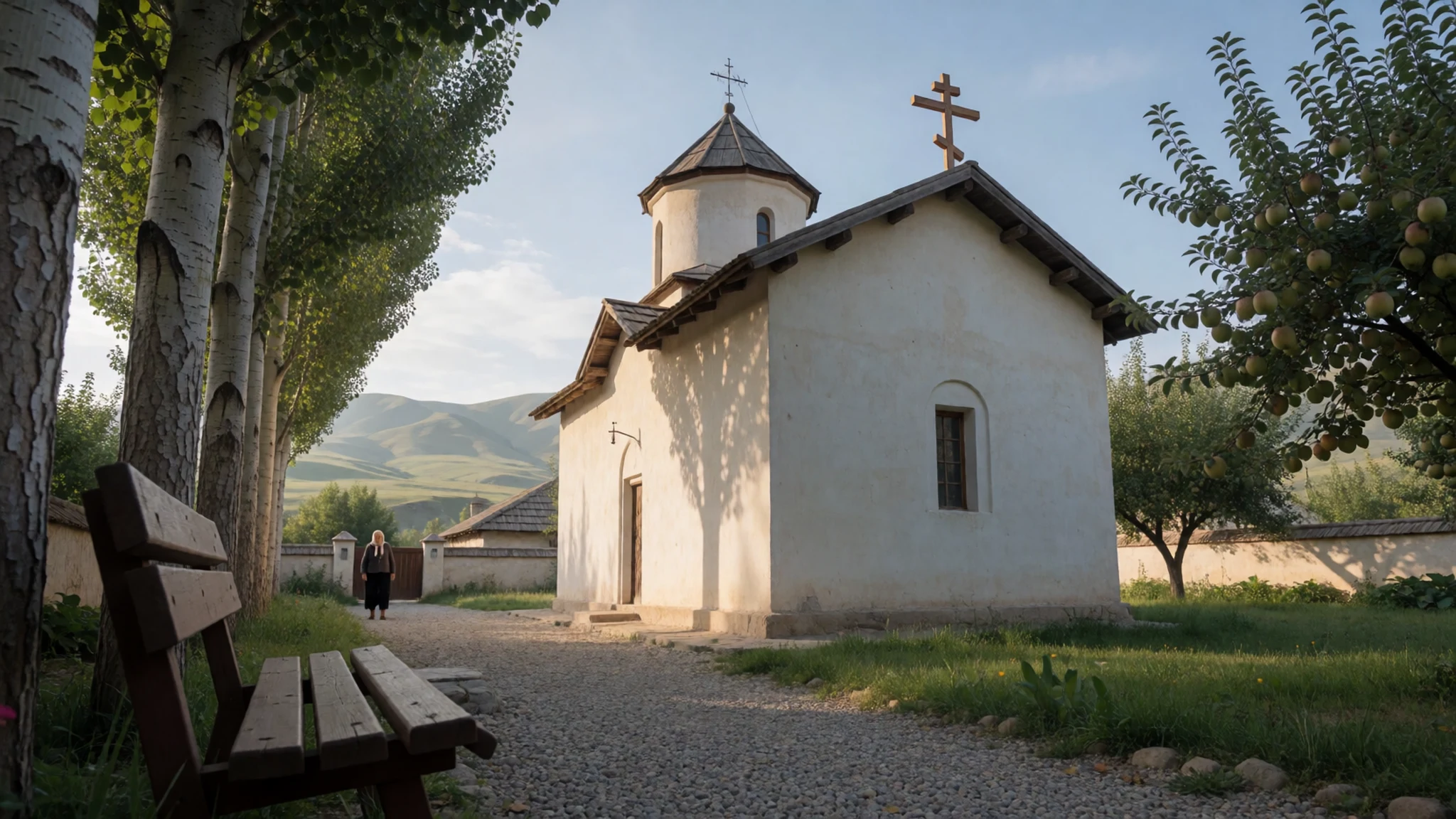
- Engilchek village — Upper Engilchek valley
Engilchek is a remote settlement far up the valley, once home to thousands of people who worked a tin mine. After the mine closed, most left, and the village is now mostly a staging point for expeditions. Locals also point out a spot called the devil's grave, linked to a story about a crashed UFO.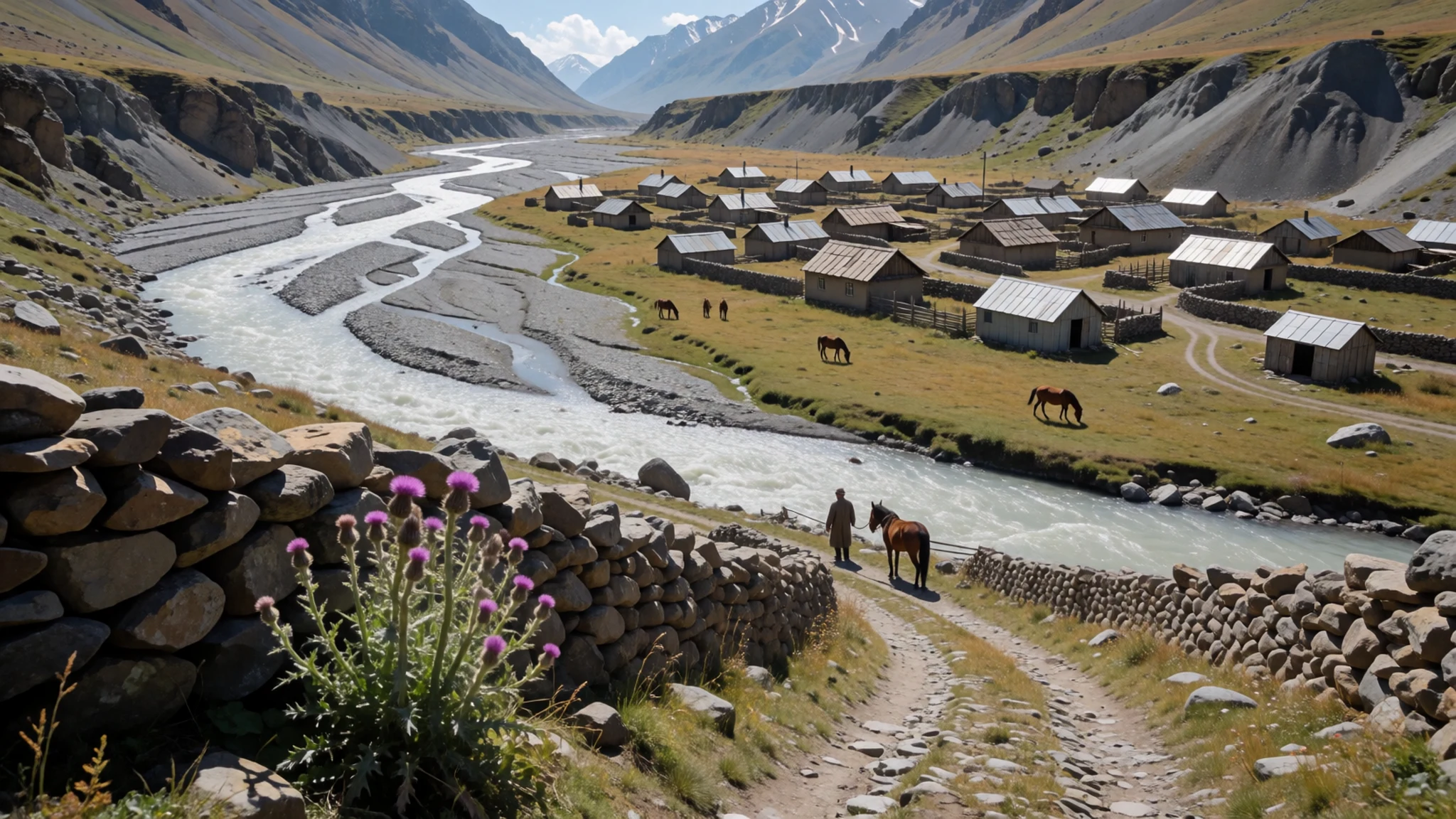
- Engilchek Glacier — Central Tian Shan
This long glacier lies deep in the Central Tian Shan and is one of the main reasons to come to the district. Even without climbing Khan Tengri, the ice and moraine are impressive from the surrounding trails. Reaching it takes organised transport and local guidance, so plan it with an agency.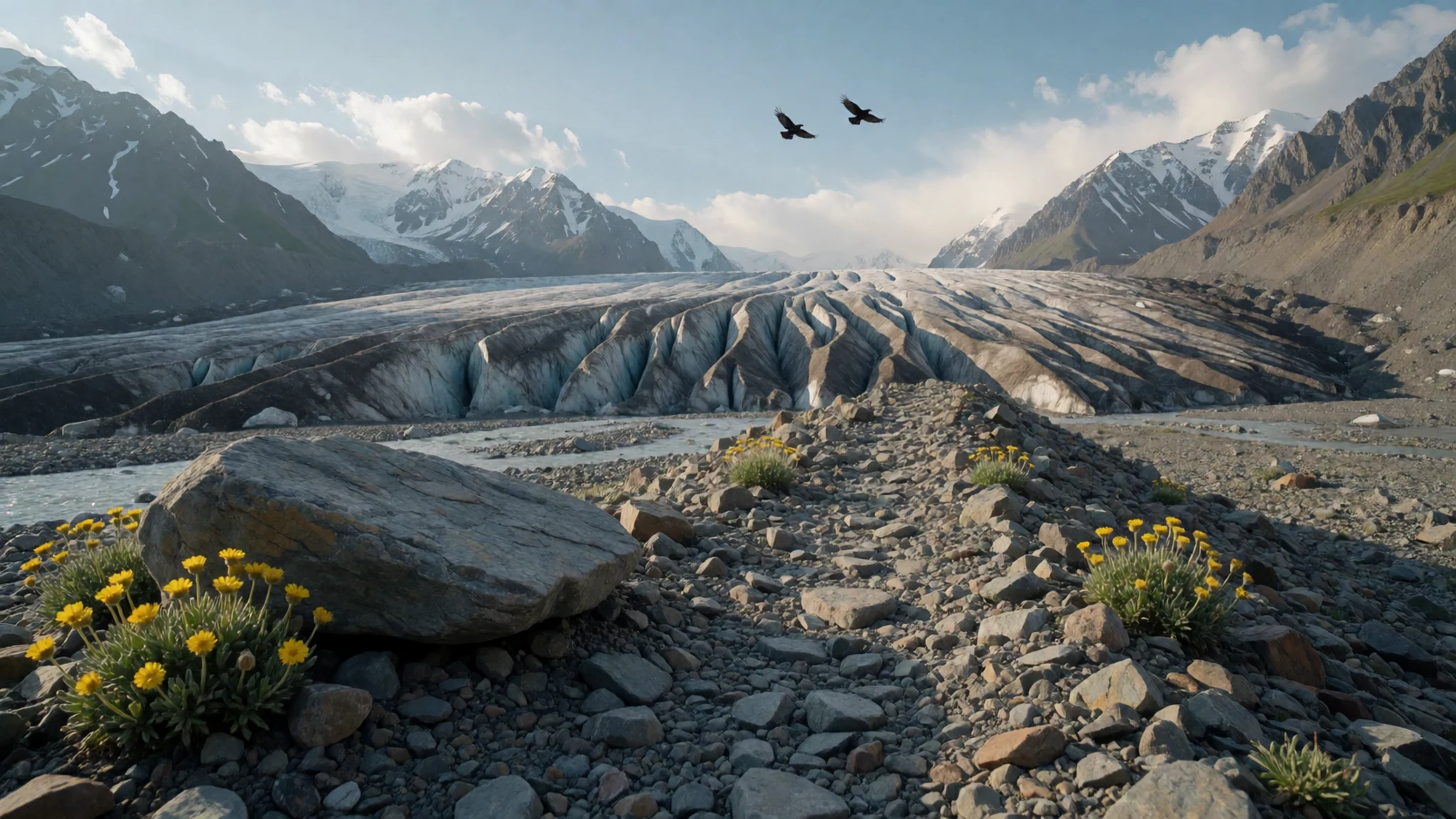
- Merzbacher Lake and At-Jailoo — At-Jailoo, Engilchek area
The trek to Merzbacher Lake starts from the At-Jailoo pastures and is graded medium to difficult. It is a multi-day walk through high summer grazing land and moraine, usually done with a guide and a support team. Expect cold nights, changeable weather and some demanding days above 3,000 m.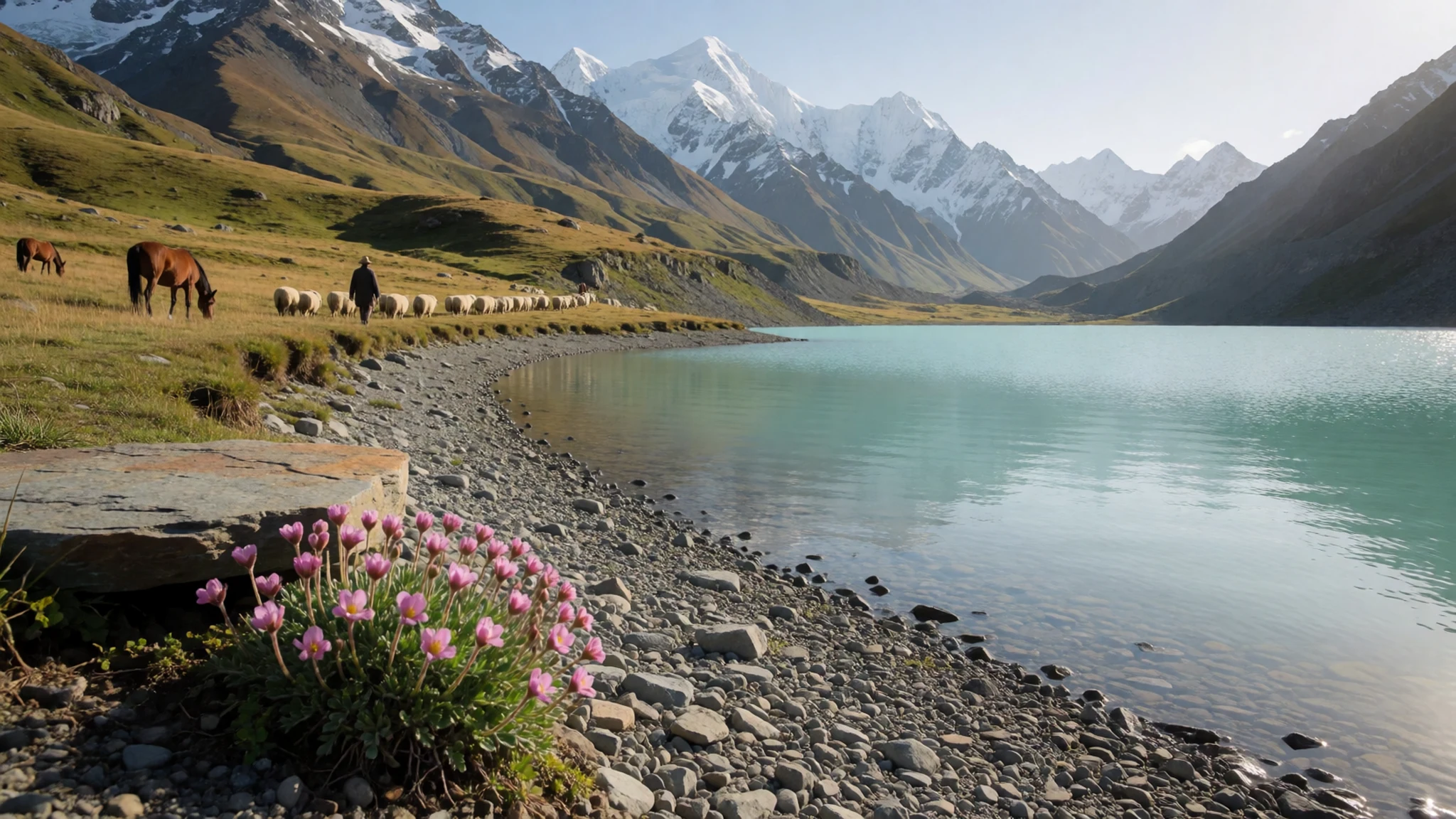
- Enilchek South Base Camp and Khan Tengri — South of Engilchek Glacier
The South Enilchek base camp sits at about 4,000 m, south of the glacier, and serves climbers heading for Khan Tengri, a peak of 7,010 m. Walkers can treat it as a high destination in its own right. Treks can be organised through agencies in Karakol.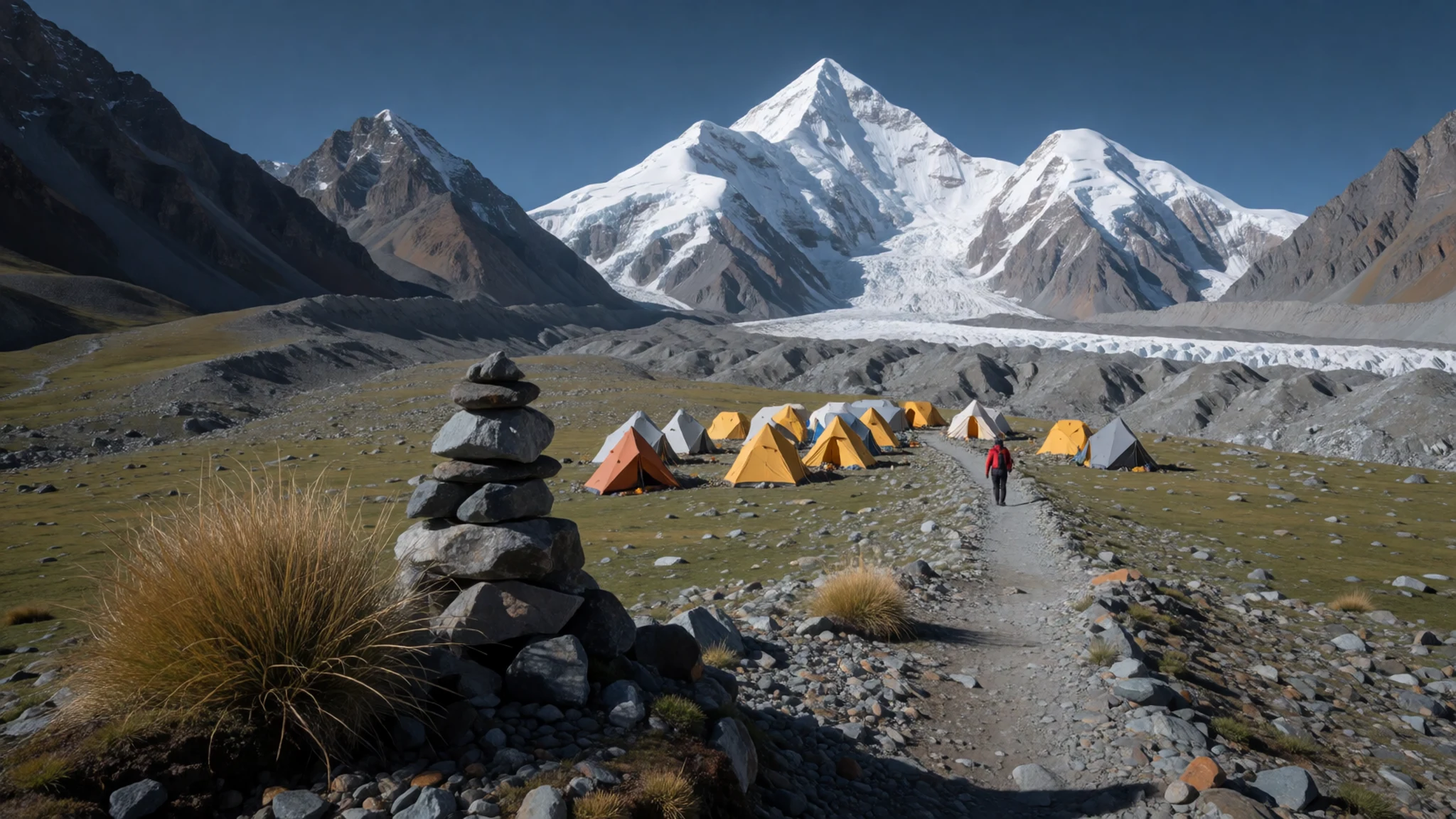
Culture
Ak-Suu has a mixed cultural character, shaped by Kyrgyz life in the mountains and by the Russian settlers who founded the village in the nineteenth century. Kyrgyz traditions here are those of a herding people: summer pastures called jailoo, felt-making, horse culture and a strong habit of hospitality towards guests. Families often keep animals and send them to the high grazing in summer, and many people have relatives who move between village and mountain through the year. The Russian side of the heritage shows in the Orthodox church, in the Russian name Teploklyuchenka that most people still use, and in a language mix where Kyrgyz and Russian are both heard in shops and homes. Tea is central to social life. A visitor invited into a home is likely to be offered bread, jam, sweets and plenty of tea, and refusing everything outright can seem cold. Public life is relaxed but conservative, particularly in the countryside, and older people are treated with real deference. The house of culture is a reminder of how music, dance and local festivals have long been organised in village life. If you are invited into a home, take off your shoes at the door and accept at least a little tea and bread before you leave.
What to wear
Traditional Kyrgyz dress in the Ak-Suu area draws on herding life. The best-known piece is the white felt hat, the kalpak, made from sheep's wool and shaped with a tall, split crown. Felt is also used for shyrdak, the patterned rugs and wall hangings stitched from coloured wool, and for warm coats and boots in winter. Women's festive dress includes long velvet or silk gowns, embroidered waistcoats and elaborate headdresses, and men's includes embroidered coats and leather belts. These are worn mainly at weddings, national holidays and local festivals rather than every day. What people actually wear now is practical and fairly modern: jeans, shirts, jackets and sturdy shoes, with headscarves common among older women and fleeces or padded coats in the cooler months. Rural life means mud, dust and animals, so clothes tend to be hard-wearing. A visitor should dress for the mountains first. Bring layers, because days can be warm and nights cold at this altitude, a waterproof jacket, a hat and sun protection. Wear broken-in walking boots for trails and moraine. In the village and at the church, modest clothing, with covered shoulders and knees, is polite, and a scarf is useful for women entering the church.
What to eat
- Besbarmak — Family homes and village feast tables
Boiled meat, usually horse or mutton, served over wide noodles with onion broth. It is the dish of celebration and hospitality, and you will find it at family tables and at village feasts. Eateries along the main road sometimes offer it on request.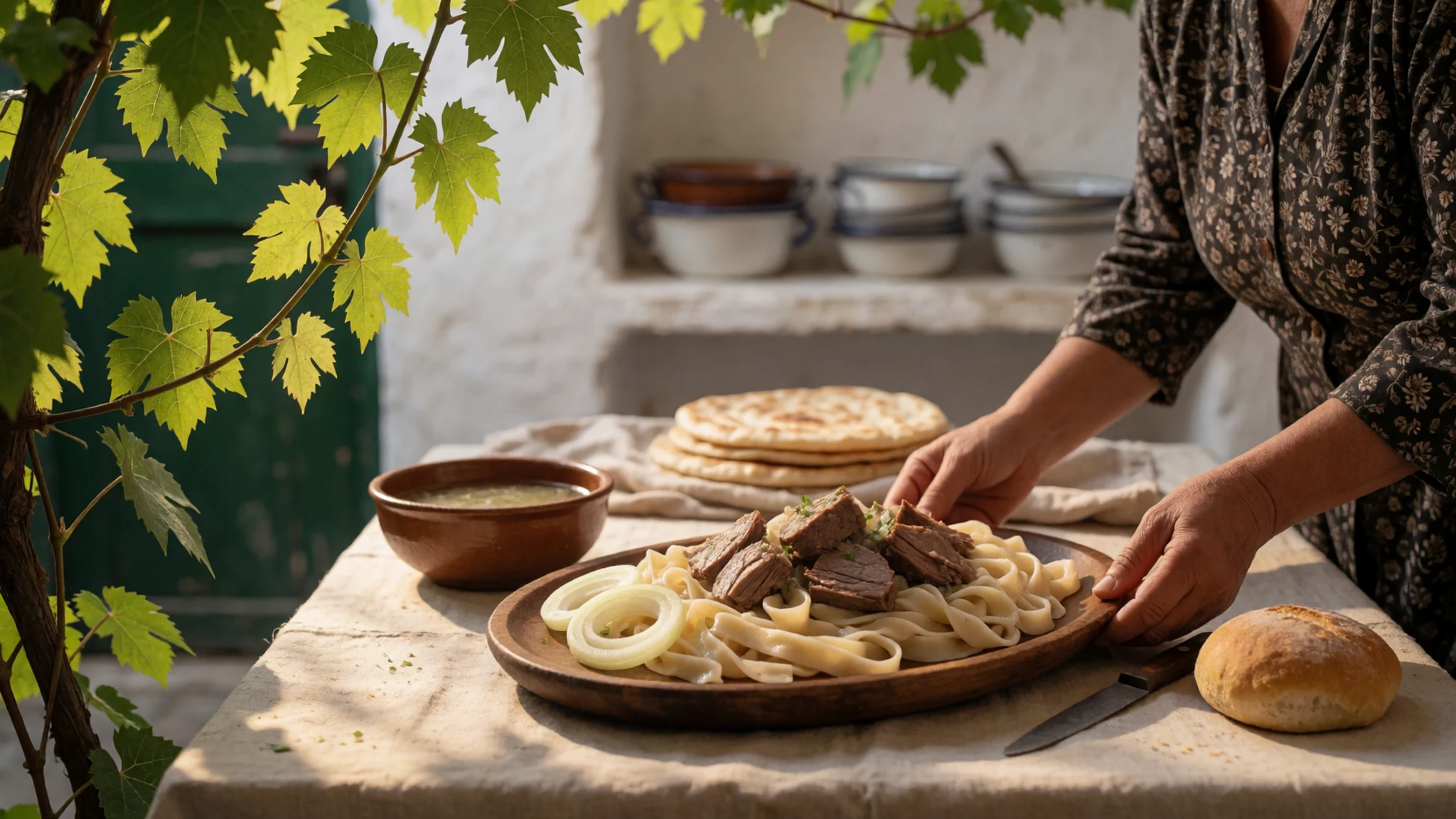
- Laghman — Roadside eateries and Karakol bazaar
Hand-pulled noodles in a savoury sauce of vegetables and meat, either as a soup or a stir-fry. It is an everyday meal for travellers and locals alike, filling and easy to find. Order it at the simple eateries on the road between Ak-Suu and Karakol.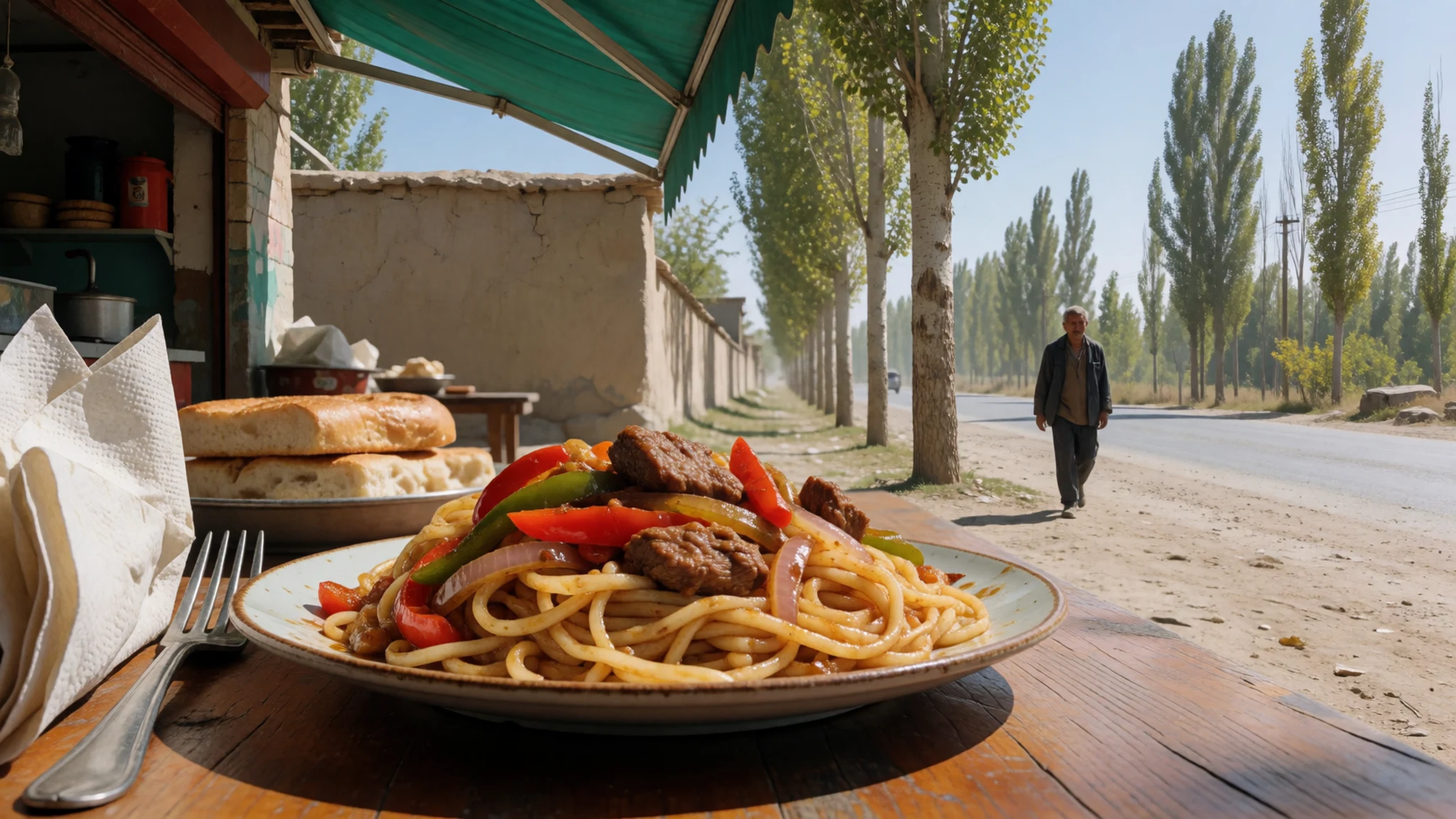
- Samsa — Village bazaar and roadside stalls
Baked pastry parcels of minced meat and onion, sometimes with pumpkin, cooked in a clay oven until the crust is crisp. They are a good cheap snack before a walk. Look for sellers near the bazaar and bus stops, preferably when freshly baked. - Boorsok — Home tables and village shops
Small pieces of fried dough, golden and slightly chewy, served with tea, jam or honey. They appear at every celebration and at most home tables. They also travel well, which makes them useful trail food for a day in the hills. - Kymyz — Summer pasture yurts and village homes
Fermented mare's milk, lightly sour and a little fizzy, drunk mainly in summer. It is an acquired taste and tied closely to herding life. Try a small cup where a family offers it, and remember that it is not for everyone.
Plan it
Best time. June to September, when the roads and trails are open, days are warm and the high pastures are green; winters are cold and snowy, and the high glacier treks are not practical outside summer.
How long. 1–2 for the village, 7 or more with a trek
Getting there. Fly to Bishkek (Manas International Airport), then travel by road around Lake Issyk-Kul to Karakol; Ak-Suu lies close to Karakol, and the last leg is a short drive or shared taxi. For glacier treks, arrange transport and permits through an agency in Karakol.
Budget. low
Tips
- Book trekking, transport and border-area permits through a Karakol agency well before your dates
- Bring cash in local currency, as cards are unreliable in villages and on the road
- Carry layers, sun protection and enough water for a day, since weather turns quickly in the mountains
- Take medication and warm kit for altitude on any trek above the village
Etiquette
- Remove your shoes when entering a home
- Ask before photographing people, especially older residents
- Dress modestly in the village and in the church
Nearby
Sources
- Wikidata Q7701363 (CC0)
- Wikipedia: Teploklyuchenka (rev 1376957763) (CC BY-SA 4.0)
- Wikivoyage: Ak-Suu (rev 5241011) (CC BY-SA 4.0)
- Photo: Дом культуры в с. Ак-Суу, Степанова Е. (CC0 1.0)
- Photo: Ak Suu Gorge, Alpine meadow near the peak, Vilya Shoni (CC BY-SA 4.0)
- Photo: Храм во имя святого великомученика Димитрия Солунского, Степанова Е. (CC0 1.0)


