Burana Tower
Burana Tower, Kyrgyzstan
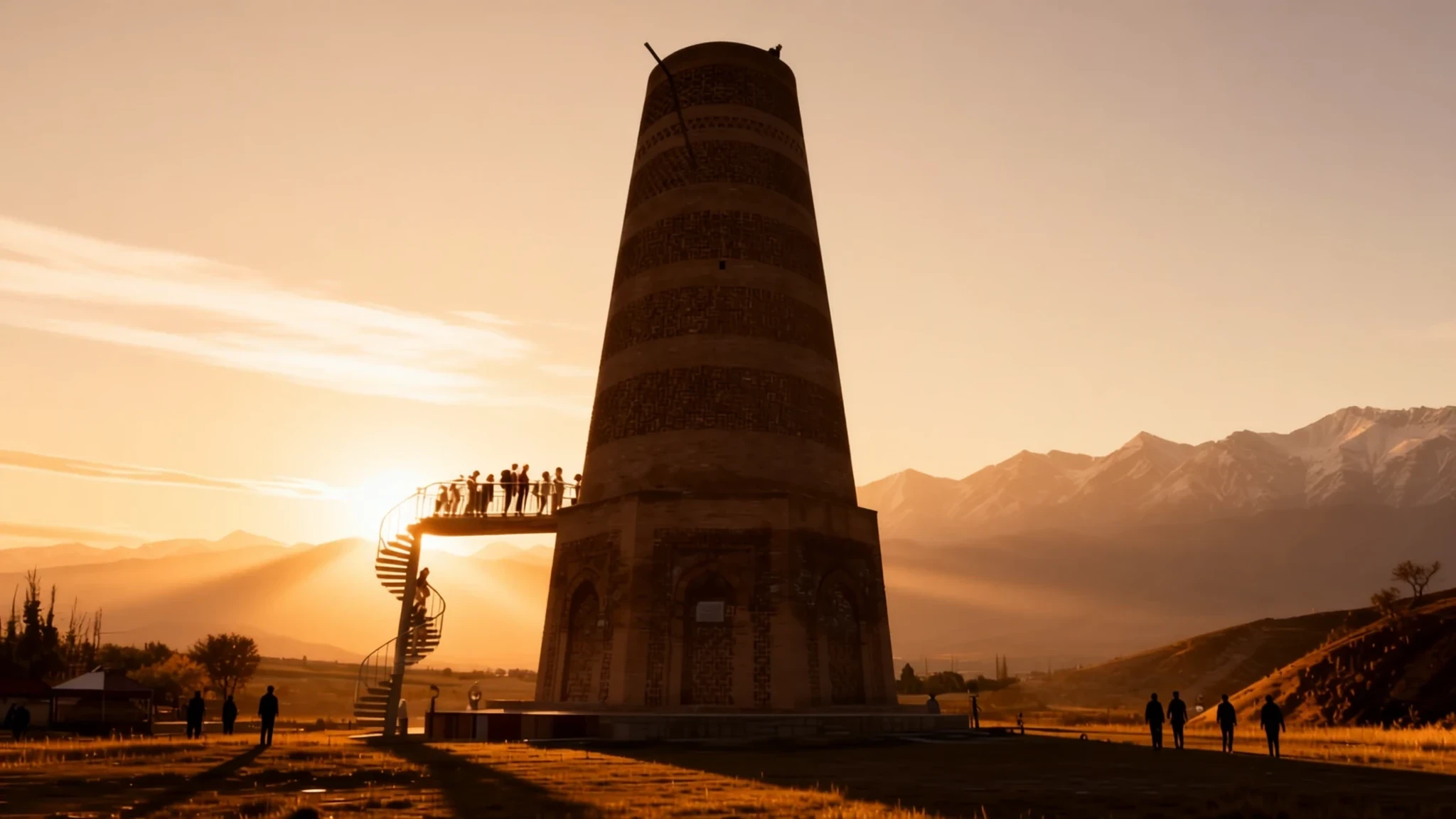
Burana Tower is a lone brick minaret on the Chüy Valley plain, the surviving landmark of Balasagun, a Silk Road capital.
The place
Burana Tower stands in open grassland in the Chüy Valley of northern Kyrgyzstan, between Bishkek and Lake Issyk-Kul. It is the most visible survivor of Balasagun, a Silk Road city whose ruins were added to the UNESCO World Heritage List in 2014 as part of the Chang'an-Tianshan Corridor. The tower is a minaret from the 11th century, and today it is 24 metres tall, a stump of what was once a much taller structure. The site sits at the edge of the town of Tokmok, and the modern village of Balasagun lies a few kilometres off. The Burana zone was the western end of the old city, so what visitors walk through is a quarter, not the whole. Beyond the tower there are low earthen mounds that mark vanished buildings, a field of carved standing stones, and a small museum with finds from the excavations. The setting is the real draw. The ground is flat and wide, the Kyrgyz Ala-Too mountains stand along the southern horizon, and the brick tower is visible from far off across the grass. It is a modest site, easily seen in a morning, and it works best as a stop on a longer trip rather than a destination on its own. Summer days can be hot and exposed, with little shade between the monuments, so the light and temperature at either end of the day make a real difference.
Its story
Burana Tower belongs to the story of Balasagun, a city founded by the Kara-Khanid Khanate in the ninth century. It soon took over from Suyab as the political and economic centre of the Chüy Valley, and from the 10th century it served as the khanate's capital. Its position on the Silk Road brought traders, craftsmen and ideas, and the population was mixed: there was a sizeable Nestorian Christian community, and one of its graveyards was still in use in the 14th century. The poet Yūsuf Balasaguni, author of the Kutadgu Bilig, is believed to have been born here in the 11th century. The city's independence ended in 1134, when the Qara Khitai took it. The Mongols captured it in 1218 and called it Gobalik, meaning Pretty City. Its prosperity faded after the conquest, and by the 14th century it had shrunk to a village among ruins. The minaret outlasted the city, though not unscathed. When first built it stood at 46 metres, and the figure of 24 metres today reflects later damage, including earthquakes, that brought down the upper part. Restoration has stabilised what remains, and the tower now serves as a viewpoint over the old city site.
What to see
- Burana Tower — Burana zone, near Tokmok
The brick minaret is the centrepiece, and its height has dropped from 46 metres to 24 metres. A narrow internal stair can usually be climbed, with a tight, dark passage, and the top gives a view over the mounds, walls and surrounding plain. Go early for softer light and fewer tour groups.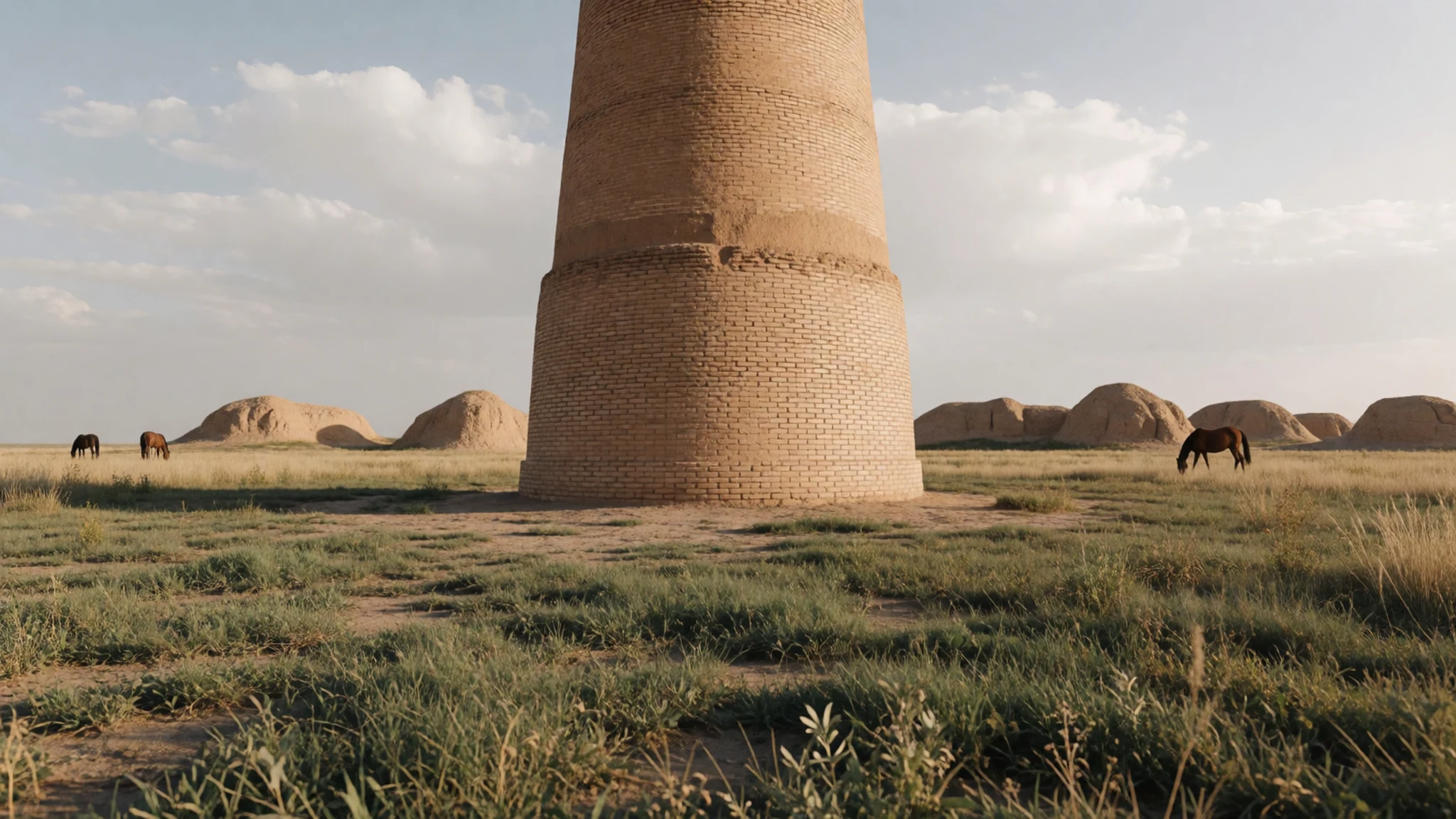
- Balasagun ruins and city walls — Around the tower
From the tower the central mound and the lines of the old walls can be made out in the grass. Little is built up, so the site rewards a slow walk with some imagination. The scale of the former city becomes clearer from above than from ground level.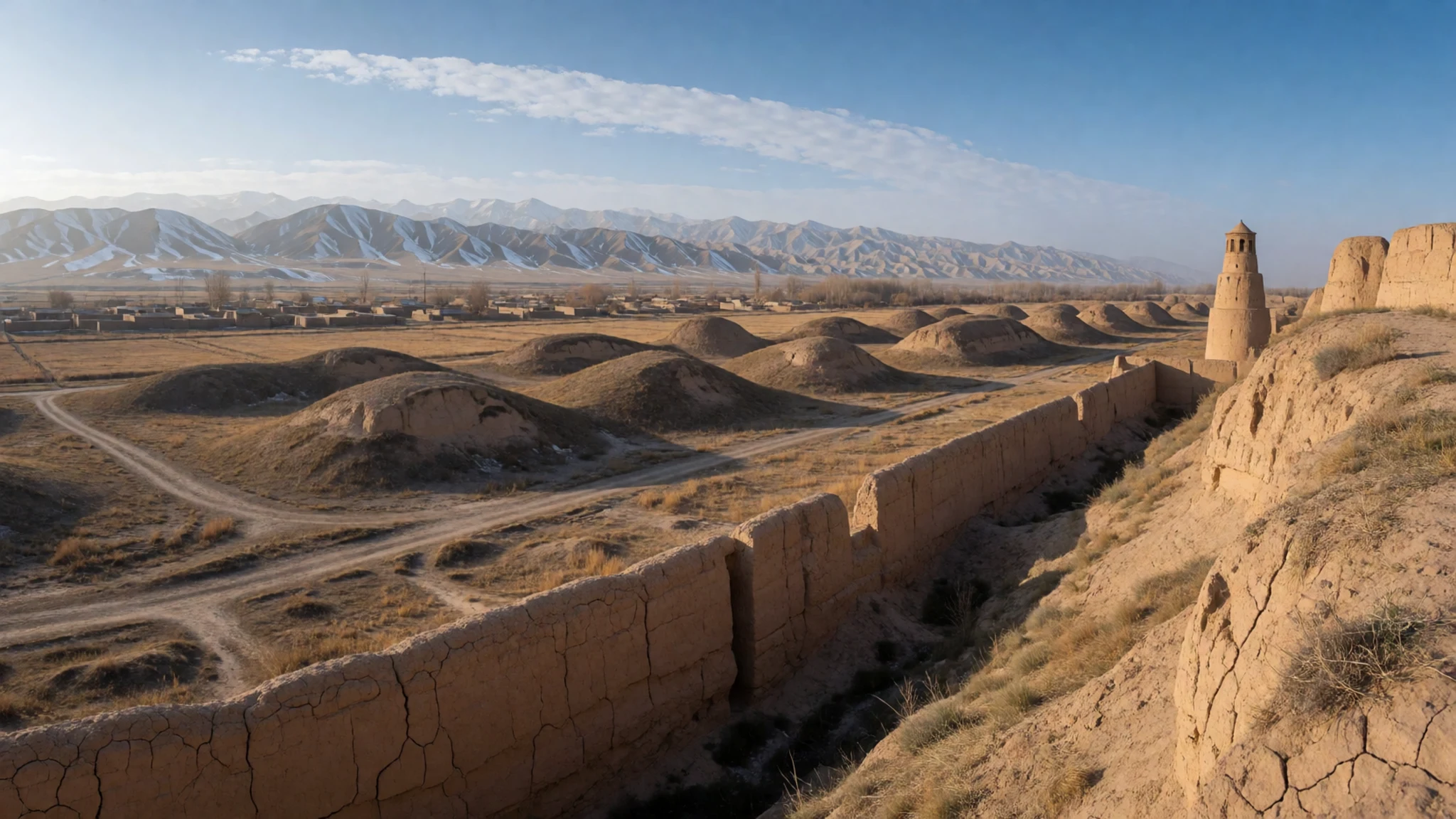
- Balbals, the carved stone figures — Beside the tower
A field of upright stones stands near the tower, many carved with rough human faces. The word balbal is probably Turkic for ancestor or grandfather. They were brought here from steppe burial sites across the region, and they make a good subject for photographs in low sun.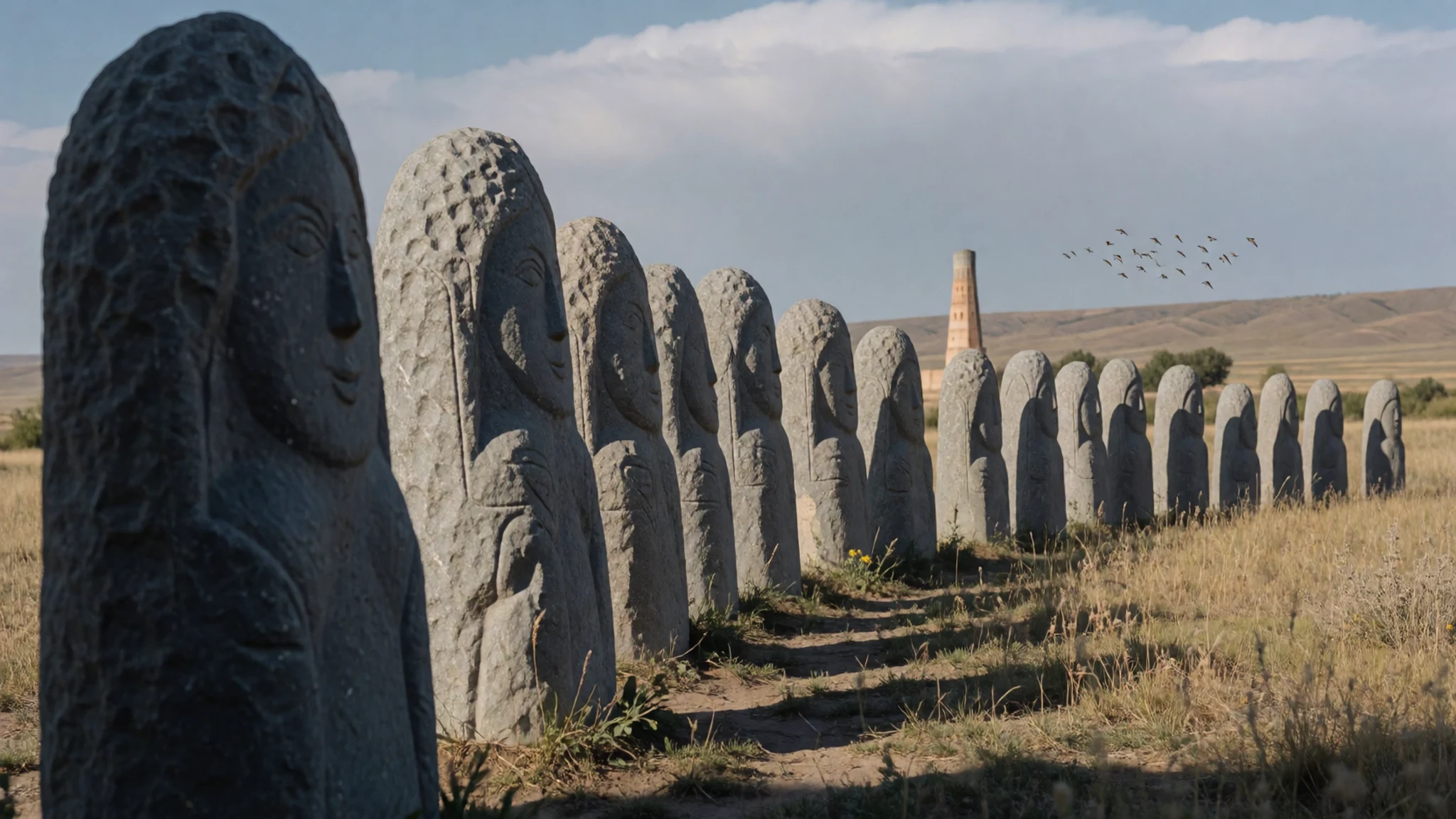
- Petroglyph stones — Open-air stone collection
Among the other stones are boulders carved with animal figures by earlier peoples of the valley, long before the minaret was built. They are easy to miss, so look at the larger boulders near the path. Treat them gently and do not touch the carved surfaces.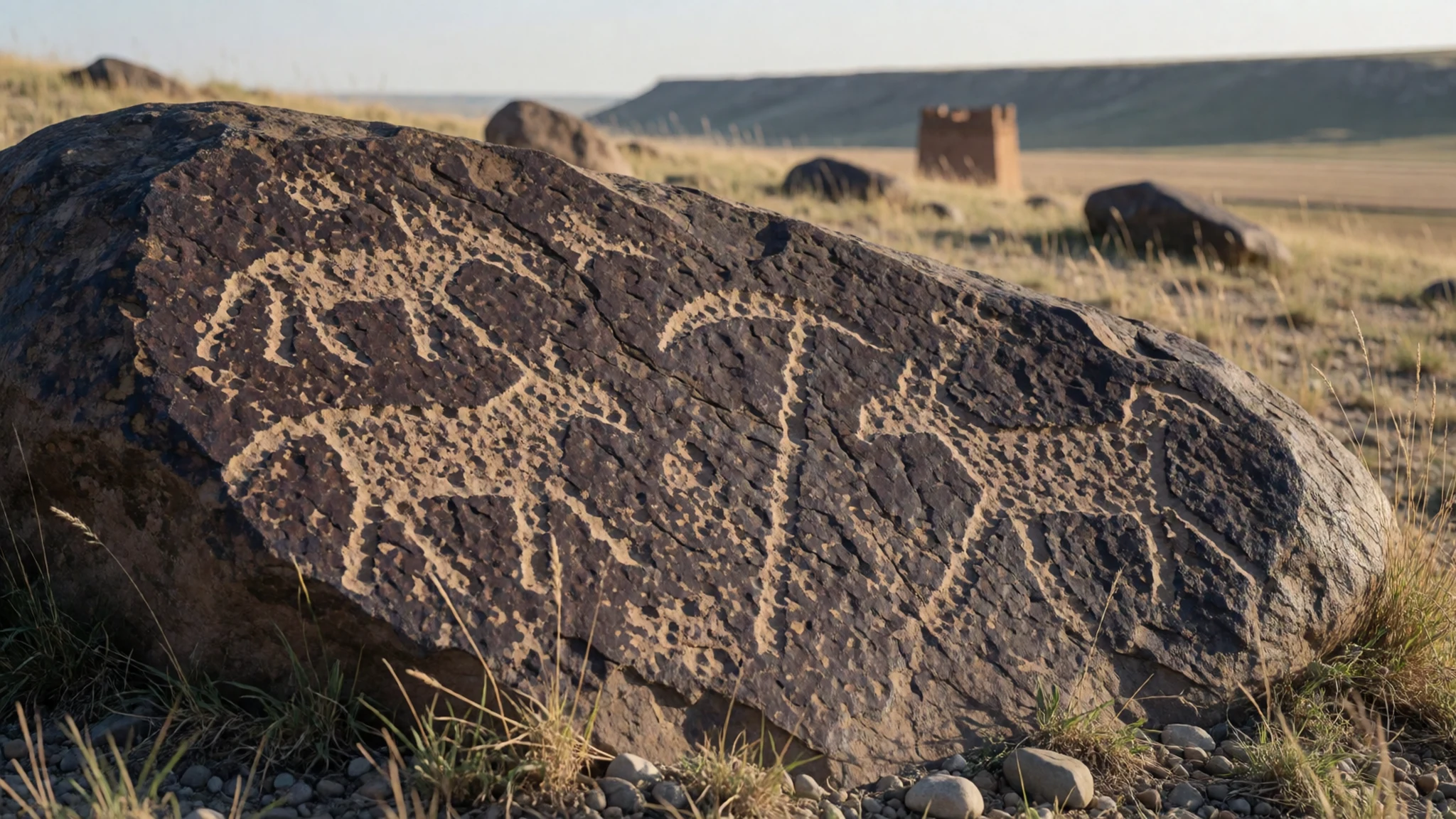
- Site museum and mausoleum remains — Burana archaeological site
A small museum on the grounds displays finds from the excavations, with information about the city's history and its mix of faiths. Nearby are the remains of mausoleums and a citadel mound. Labels may be in limited languages, so reading about Balasagun beforehand helps.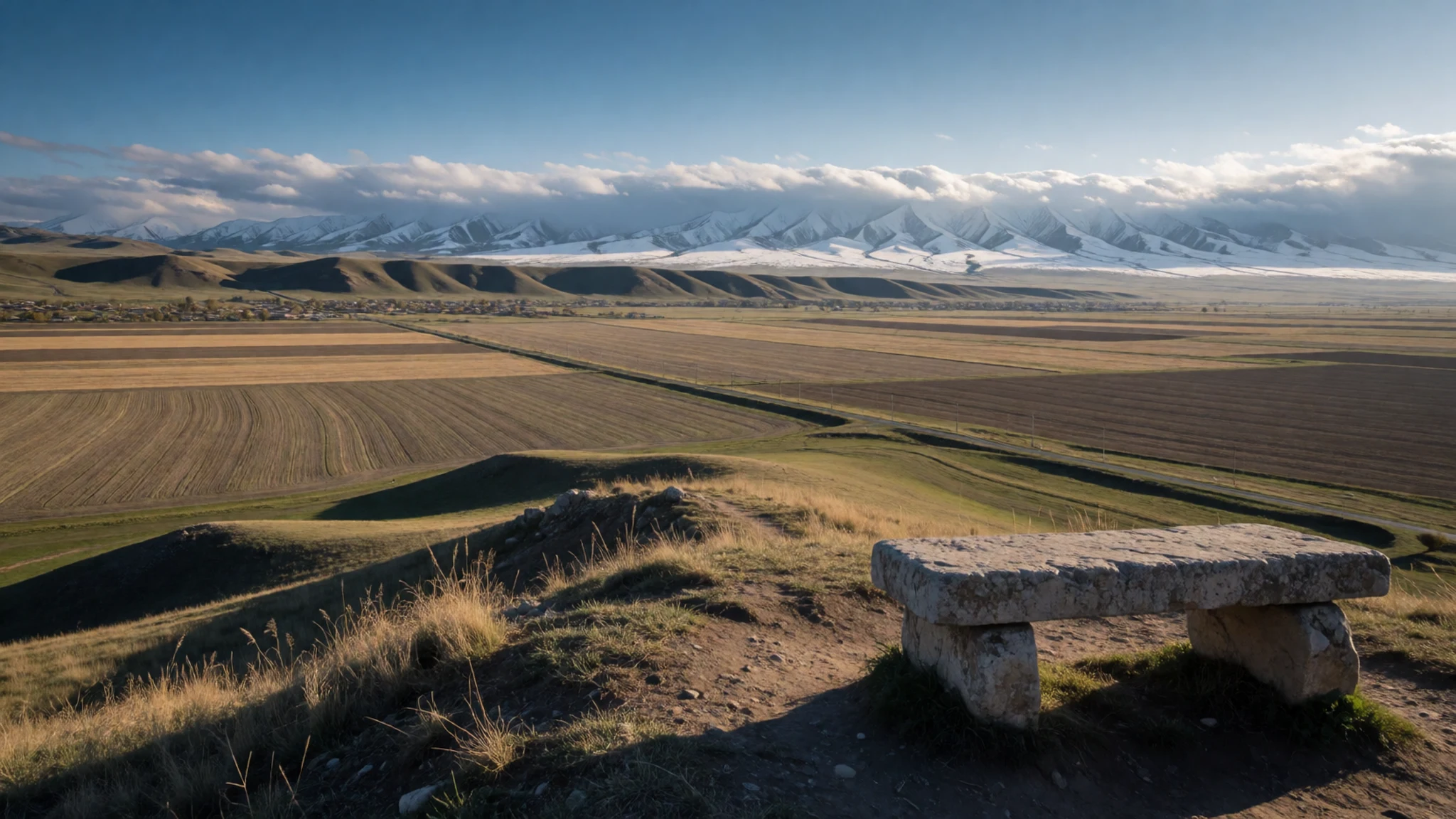
Culture
Burana Tower sits in a country shaped by nomadic herding, Islam and decades of Soviet rule, and the mix shows in daily life. Kyrgyz people are widely described as relaxed about religion and dress, though the south is more conservative than the capital. Hospitality is central. A visitor invited to a table can expect tea, bread and plenty of conversation, and refusing everything outright can seem cold. Tea is poured in small amounts so the host can keep topping it up, which is a sign of care rather than stinginess. Drinking together, whether tea, fermented mare's milk called kymys, or vodka, is a main social ritual, and it is polite to settle in and stay a while. At the site itself, the older layers are visible in the carved stones. The balbals recall the steppe tradition of honouring ancestors, and the minaret recalls the arrival of Islam in the Karakhanid era, while the Nestorian graves point to a Christian past. Many Kyrgyz families visit the site as a piece of national heritage, so it often has a relaxed, local feel at weekends. When a host offers tea, accept it with both hands or a nod, and do not climb on, lean against or touch the carved stones.
What to wear
Traditional Kyrgyz dress grew out of herding life on high pastures. Felt is the defining textile, made from sheep's wool and used for coats, boots and rugs. The best-known item is the ak kalpak, a tall white felt hat with a black trim, worn by men on formal and festive occasions and by many at national events. Women's traditional dress includes long embroidered velvet or silk robes and headdresses, and festival costumes use bright colours and detailed stitching. These are seen mostly at weddings, holidays and cultural performances rather than on ordinary days. What people wear now is largely modern and practical. In Bishkek and towns around the Chüy Valley, jeans, jackets and western-style clothing are common, and no formal dress code applies. In rural areas and in the south, clothing tends to be more modest, with covered shoulders and longer skirts for women. For Burana, dress for the weather. Summers are hot and the site has little shade, so a hat, sunglasses, sunscreen and light long sleeves work well. Spring and autumn can be cool and windy, so bring a warm layer. Wear sturdy flat shoes with grip, because the tower's internal steps are steep and uneven and the grounds are grassy and dusty. A scarf is useful if visiting any mosque or shrine in the region.
What to eat
- Besh barmak — Family-run eateries in Tokmok and Bishkek
The national dish, whose name means five fingers because it was eaten by hand. Boiled meat is served over noodles with a rich broth and onions. It is traditionally a dish for gatherings, and portions are shared out according to the guests' standing.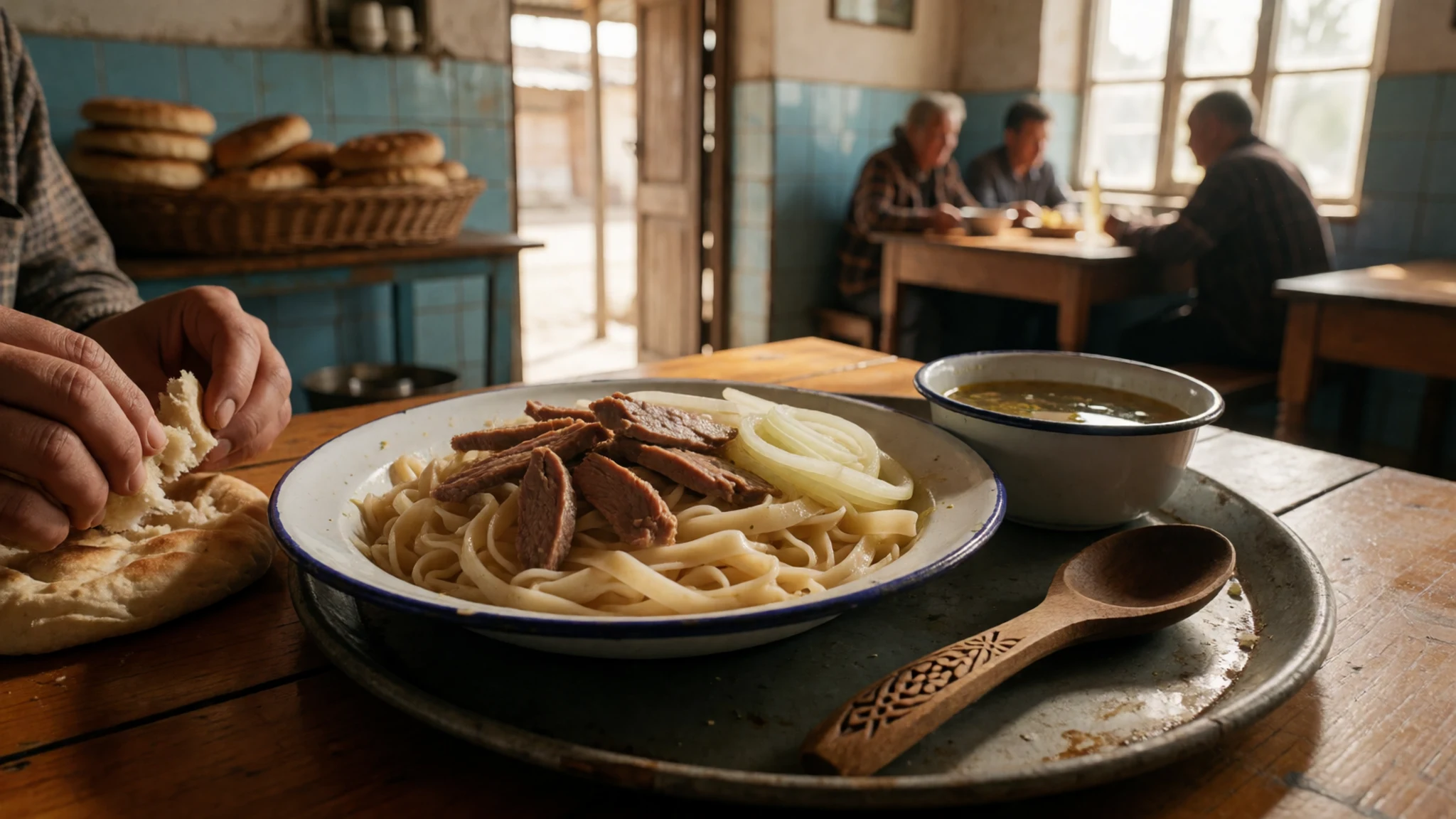
- Kymys — Roadside stalls and yurt camps in summer
Fermented mare's milk, lightly fizzy, sour and an acquired taste. It is a traditional summer drink on the pastures and a symbol of hospitality. Try a small cup first, as the flavour is strong.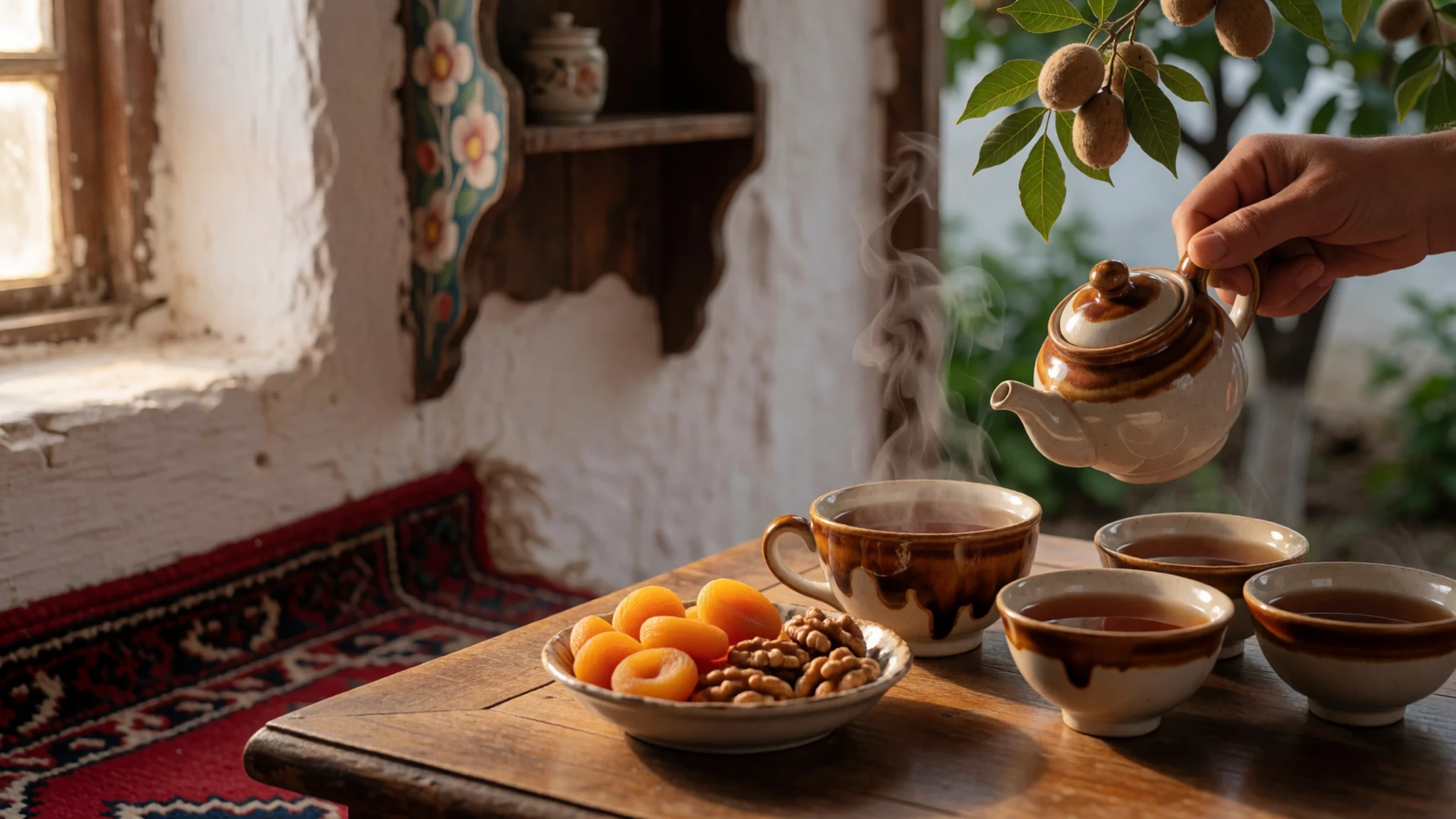
- Chai with fresh bread — Any home, tea house or roadside café
Tea comes strong or light on request, using the phrases jengil chai for light and kyzyl chai for strong. Cups are filled partly so the host can refill them. It is usually served with bread, jam, nuts and sweets. - Lagman — Cafés and bazaar food stalls
Hand-pulled noodles in a savoury sauce of meat and vegetables, either soupy or stir-fried. It is a filling, widely available meal that shows the Central Asian and Chinese influences along the old Silk Road. - Fresh bread, fruit and nuts — Local bazaars in Tokmok and Bishkek
Bazaars sell warm flatbread, small flavourful vegetables, dried fruit, almonds and walnuts. This is the easiest food for vegetarians. Wash fresh produce before eating it.
Plan it
Best time. Late May to June and September to October, when days are warm and the plain is green or golden. July and August can be hot and exposed, and winters are cold with little reason to linger outdoors.
How long. 1 (a half day at the site; 2–3 with Bishkek and Issyk-Kul)
Getting there. Fly to Manas International Airport in Bishkek, then travel east to Tokmok by taxi, minibus or a pre-booked driver, and finish on a short local drive to the tower. Many visitors combine it with a trip to Lake Issyk-Kul.
Budget. low
Tips
- Go early or late in the day to avoid heat and tour groups
- Bring water, a hat and sun protection, as shade is scarce
- Carry some cash for entry, the museum and snacks, and check the current details before you go
- Arrange a driver in Bishkek if you want to combine Burana with other stops
- Check the e-visa rules for your nationality before travelling
Etiquette
- Do not climb on or lean against the carved stones
- Accept offered tea or food politely, even if only a small amount
- Avoid walking alone at night in Bishkek, as petty crime is reported
Nearby
Sources
- Wikidata Q1764282 (CC0)
- Wikipedia: Balasagun (rev 1377987474) (CC BY-SA 4.0)
- Wikivoyage: Kyrgyzstan (rev 5420229) (CC BY-SA 4.0)
- Sgnpkd, Balasagun ruins (CC BY-SA 4.0)
- Bala Biott, Burana Tower (CC BY 3.0)
- Ninara, Kurgan stelae (29724205397) (CC BY 2.5)
- Ninara, Kurgan stelae (29724205977) (CC BY 2.5)
- Ninara, Kurgan stelae (44662000081) (CC BY 2.5)
- Paul Munhoven, Scythian petroglyph (CC BY 3.0)


