Arslanbob
Arslanbob, Kyrgyzstan
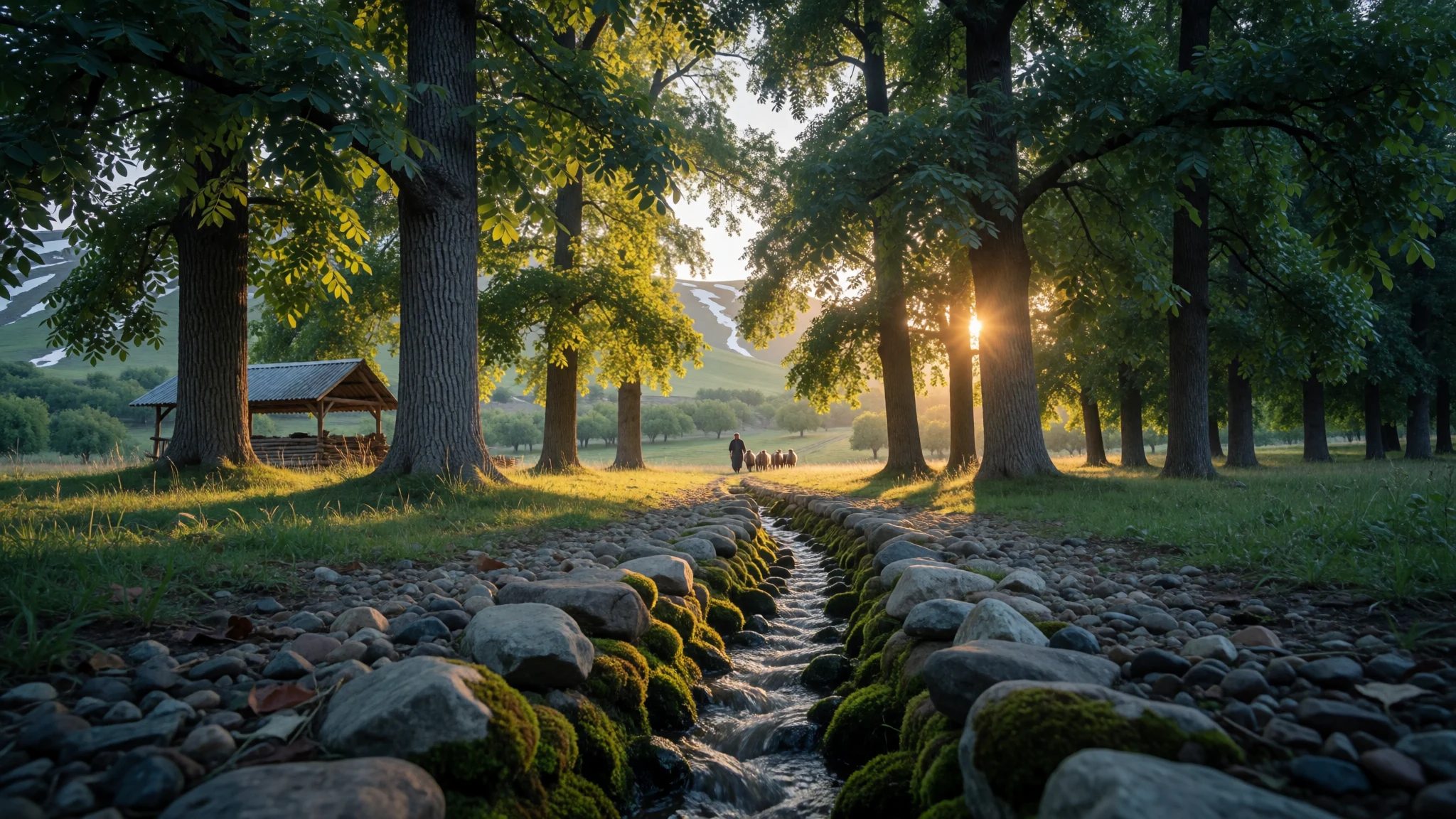
Arslanbob is a walnut-forest village in southern Kyrgyzstan, with waterfalls, high pastures and a slow mountain pace.
The place
Arslanbob stands in the wooded mountains of southern Kyrgyzstan, a village also called Arslanbap and Arstanbap on signs and in older spellings. Houses of timber, mud brick and corrugated roofing step up from a valley floor where a market, a mosque and a few shops make the centre. Around them the ground is given over to gardens, walnut trees and the channels that bring snowmelt down to the lanes. The walnut woodland is not a distant park: it begins where the last fences stop, a high canopy of walnut with clearings, paths and the odd herder's shelter. The settlement belongs to Bazar-Korgon district in the Jalal-Abad region, on the mountain side of the Fergana basin. Kyrgyz and Uzbek families share the valley, so Kyrgyz, Uzbek and often Russian all surface in trade and on the bus. Work follows the trees and the pastures. Blossom, hay, a walnut harvest in September and a hard winter are the real calendar. Horses are still ordinary transport on the steeper tracks, and homestays sit inside family compounds rather than in a separate tourist strip. Arslanbob is a small place reached by a long road, and the pleasure is in walking, eating and watching a working forest rather than in monuments. The warm months bring hikers and families from the regional towns, so the better-known falls and the easy forest paths are busy on sunny weekends. Dust, mud after rain, and cold nights even in summer are normal.
Its story
Arslanbob explains itself through a planting story rather than through kings and dates. In the telling still heard in the valley, a pious man was sent to look for a corner of the earth that felt like paradise, and on these slopes he set walnuts in the ground. The trees flourished, and the forest that grew from them became the village's reason for being. The mazar of Arslanbob-Ata, tied to that story, stands near the village centre, a sixteenth-century shrine later enclosed in white brick. Arystanbop, an eleventh-century figure who died around 1120, is the planter of the tale, and the walnut forest is probably about a thousand years old, so it sits as belief and local history. For as long as families can remember, the same slopes have been grazed, gardened and harvested. Kyrgyz and Uzbek lineages have shared Bazar-Korgon's mountain country, trading nuts, livestock and grain with the towns of the Jalal-Abad region. In the Soviet period the woodland was managed as a state resource and the harvest was organised from above, which left paths, forestry knowledge and a habit of treating the trees as collective wealth. After Kyrgyzstan became independent, that wealth was harder to live on, and Arslanbob turned to community tourism: a spare room, a guide who knew the tracks, a horse for the higher pastures. The visitor economy is now part of the story, but it has not replaced the older one. Autumn is still measured in sacks of walnuts. Children learn the work. Questions about who may graze where, who gathers dead wood, and how many new paths the forest can take are argued locally. Arslanbob's history is that long negotiation between a legend, a crop and a mountain community, and it is still going on.
What to see
- Walnut forest — Slopes above the village, Bazar-Korgon District
Arslanbob's walnut forest begins where the houses thin out and climbs the slopes as a tall, uneven canopy. Paths pass old trunks, clearings and pasture. In blossom the trees look pale; in the harvest weeks families are out drying nuts. Walkers share the tracks with herders. Shade is deep and the ground turns muddy after rain, so the pleasure is a working woodland rather than a groomed park.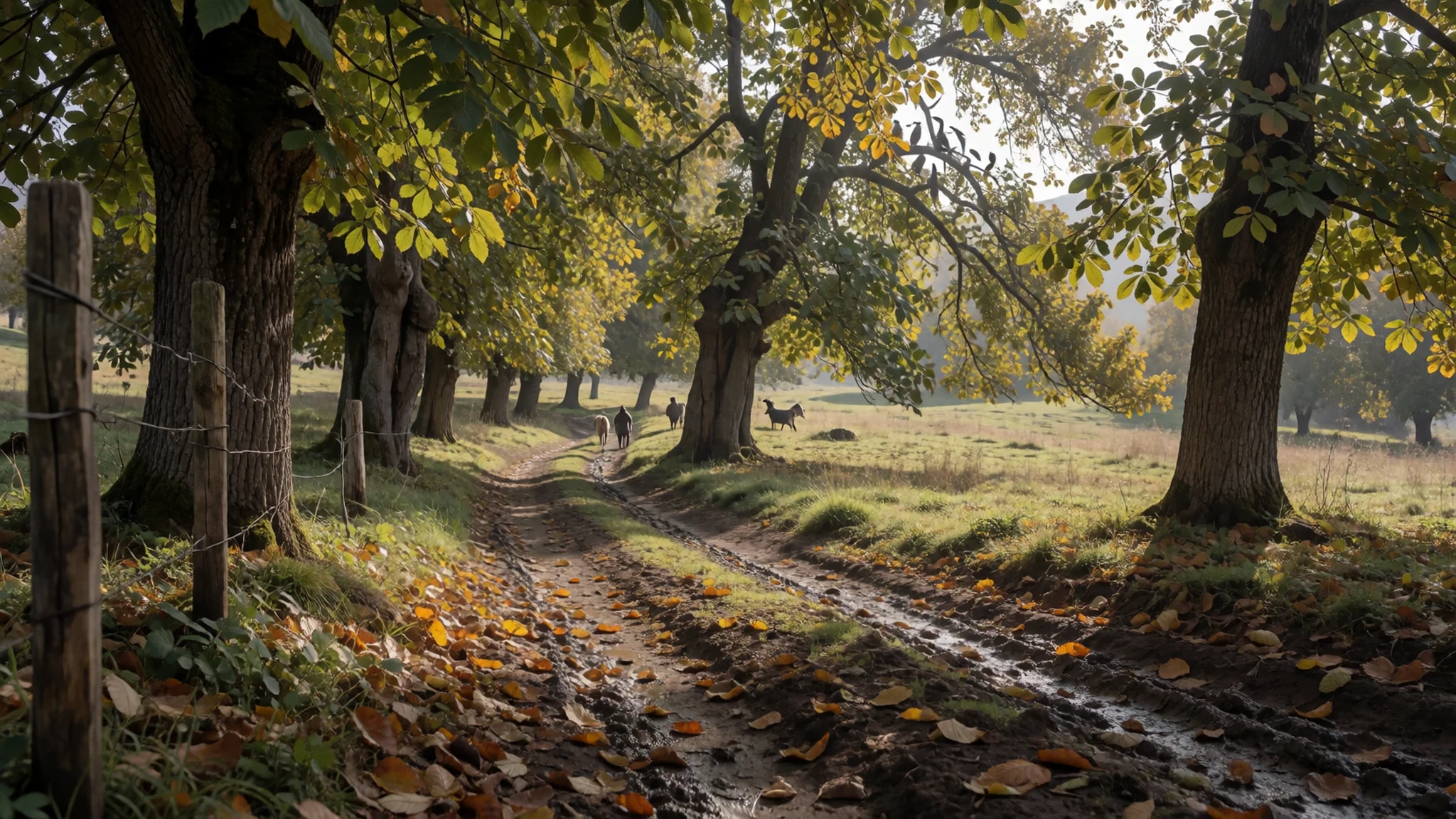
- Small waterfall — Hillsides above the village
Arslanbob's smaller waterfall is a drop of about twenty-three metres east of the village. A stony path leads through walnut shade until the water is audible and the fall appears. After rain the spray thickens and the rocks turn slick. The way leads east from the village. On sunny weekends visitors from nearby towns crowd the approach, where two prayer caves, including the Cave of the Forty Angels, mark a holy place.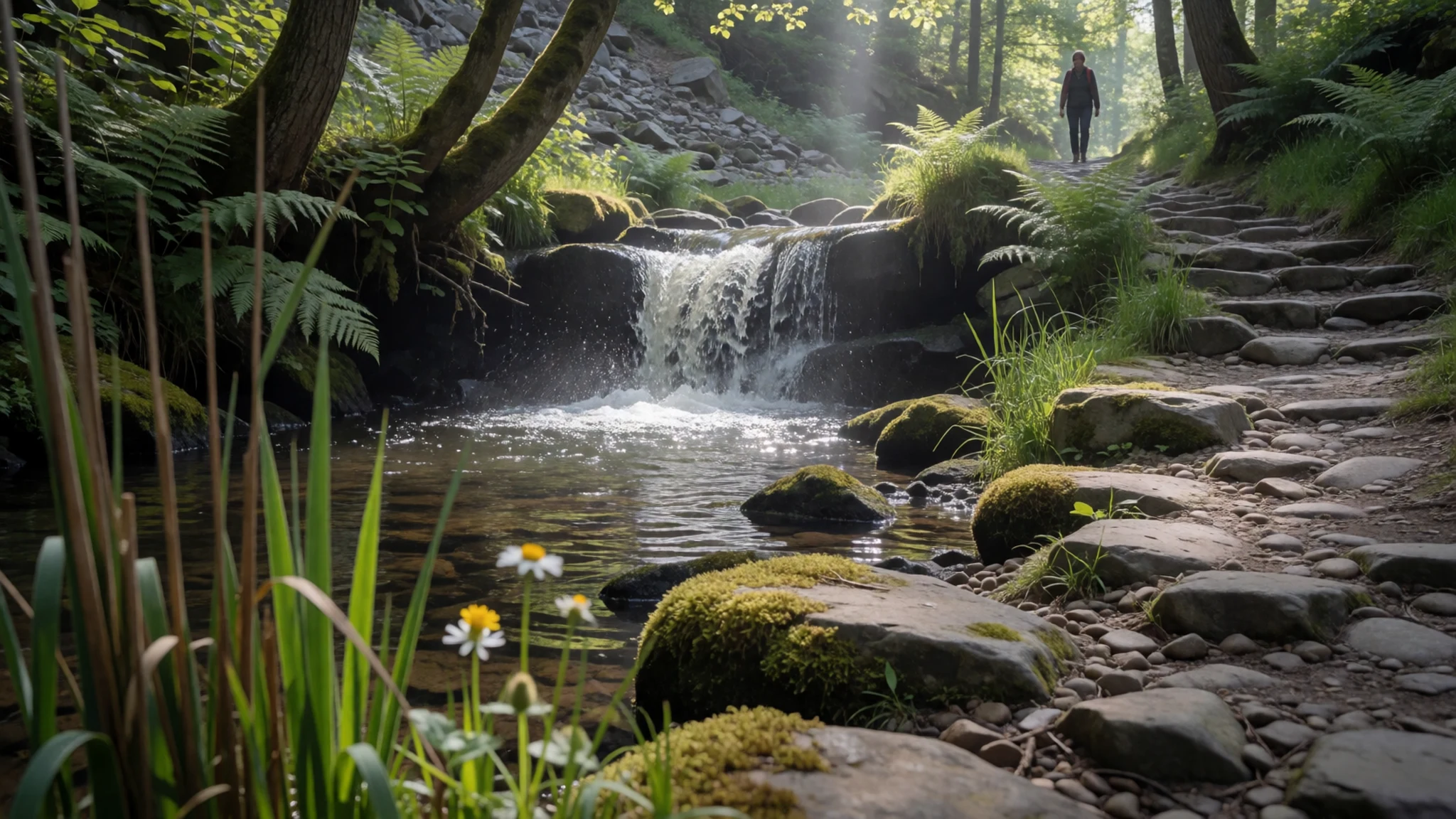
- Main market — Village centre
Arslanbob's main market is the centre of the village, a cluster of stalls and small shops on the valley floor. People come for bread, vegetables, walnuts and the ordinary news of the day. From the west the roofs sit against orchards and the forest slope. Mornings are the lively hours. On a quiet weekday it feels like a neighbourhood market, which is the best reason to linger before a walk.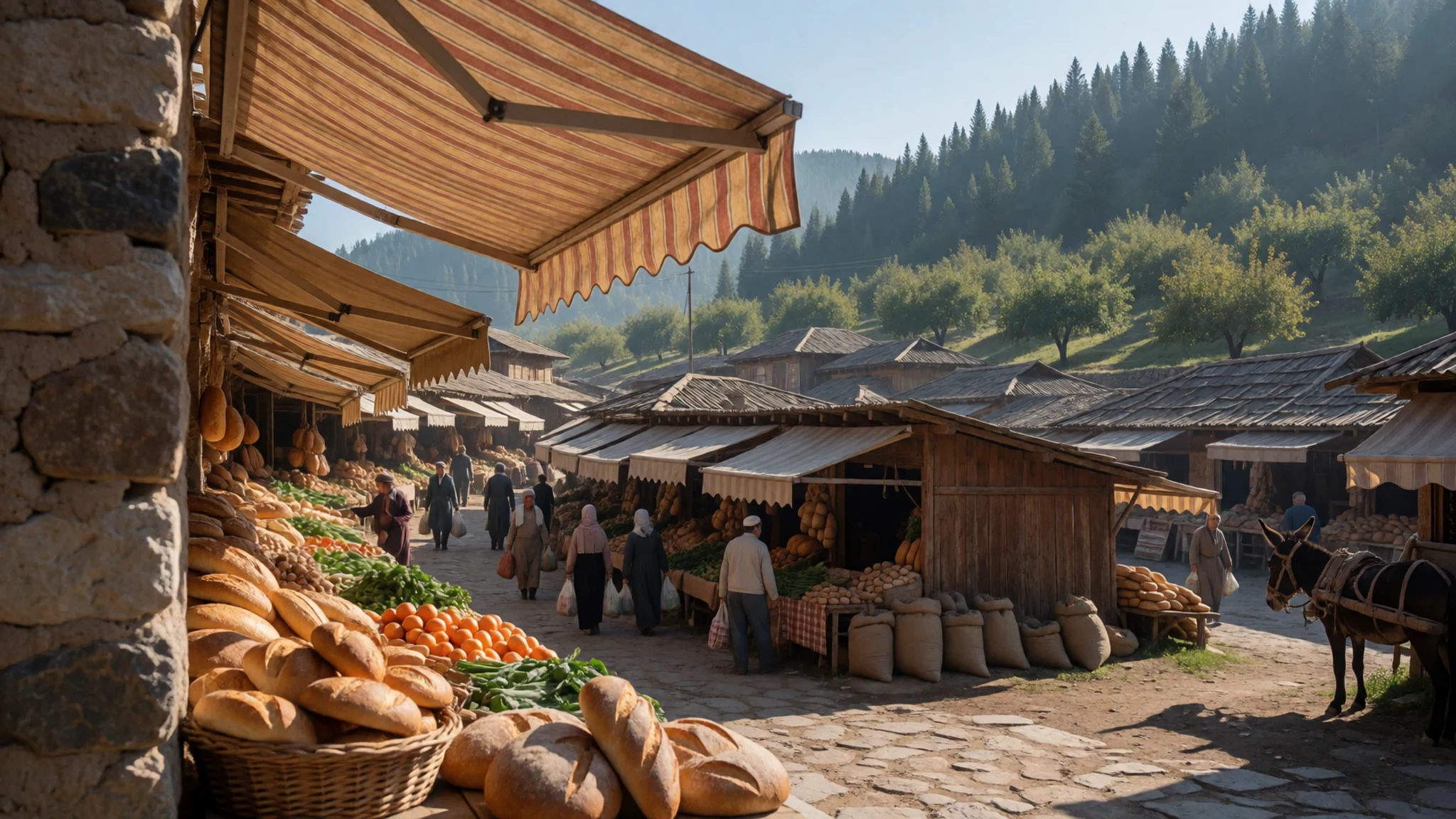
- Valley panorama — Ridges above the village
Arslanbob's wide view opens from the ridges above the roofs: walnut crowns in the middle distance, pastures, and the higher crests behind. The panorama makes sense of a place that, down in the lanes, feels enclosed. Morning light is clearer than the hazy afternoon, and cloud can sit on the peaks even when the village is warm. The same outlook shows how quickly the land rises.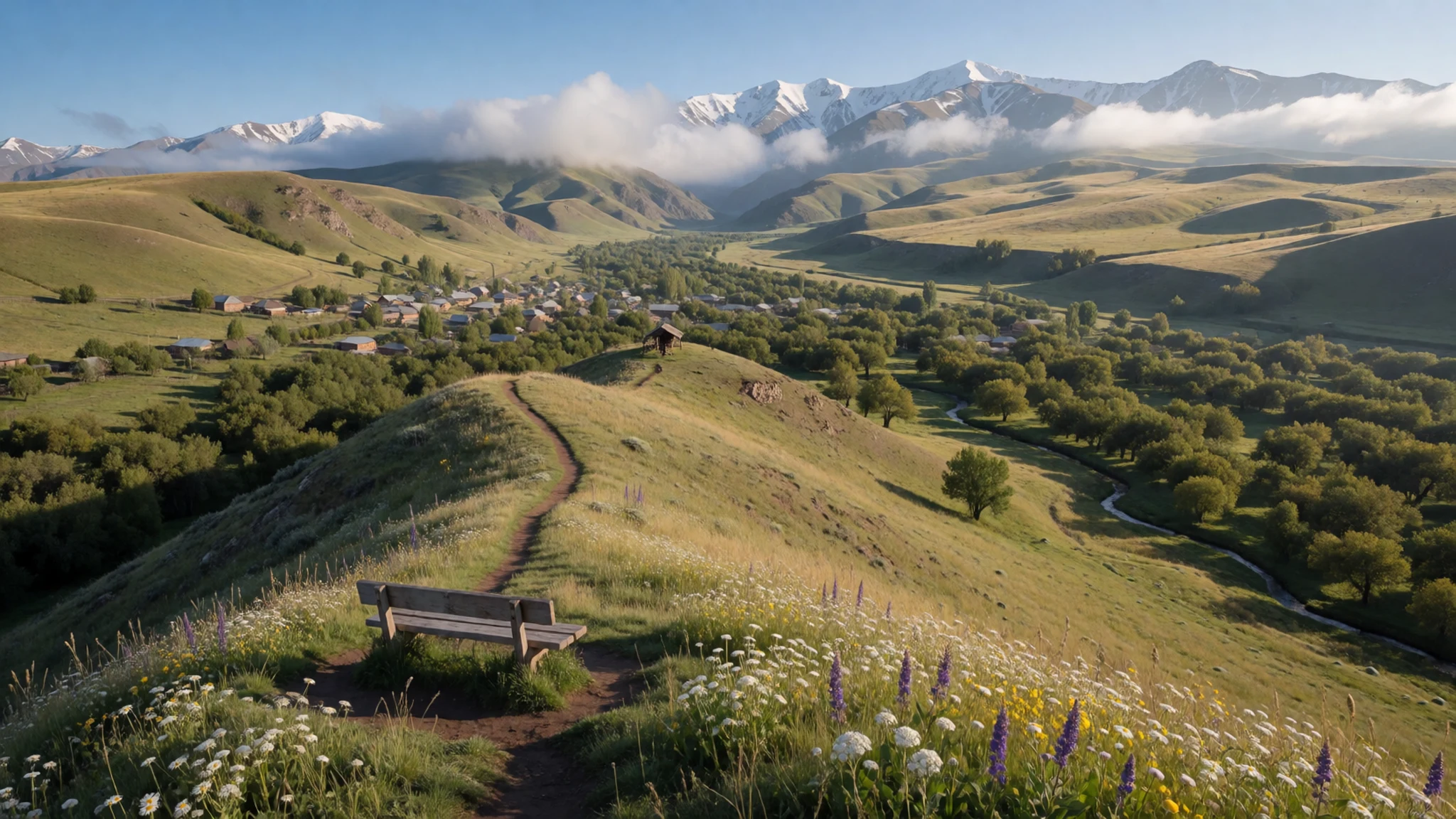
- Village cascade — Edge of the settlement
Arslanbob's large waterfall is a natural drop of about eighty metres on a cliff north of the village, and it still feels like part of the mountain water system. A slippery scree slope climbs the cliff, and on warm afternoons families gather near the spray. The setting is orchards and rising forest rather than a fenced park. Flow changes with the season and with recent rain, so a dry spell leaves a thinner stream.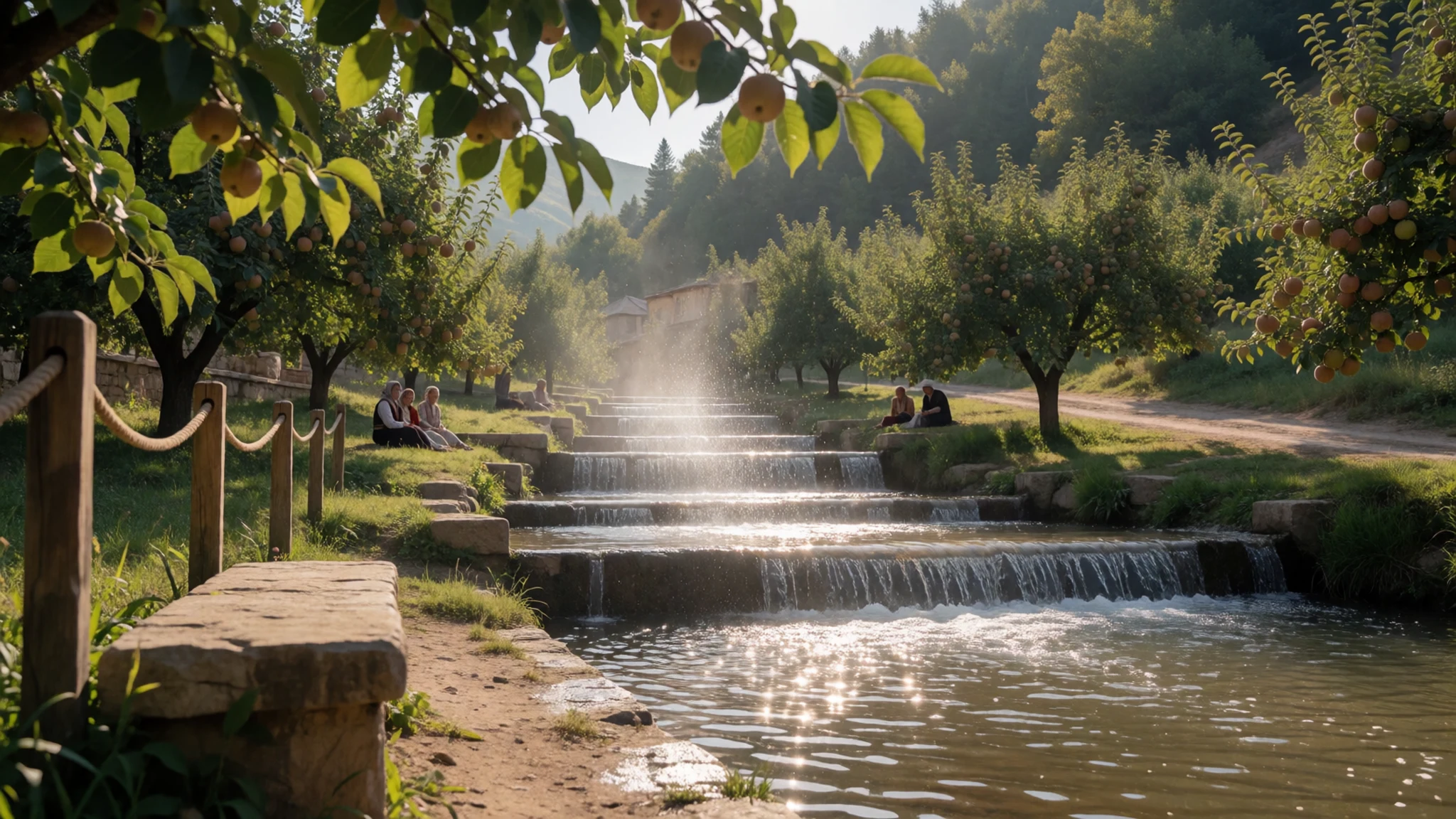
Culture
Arslanbob is a Muslim mountain village where Kyrgyz and Uzbek customs sit in the same lanes. Hospitality is practical: a guest is offered tea, bread and a seat, and refusing the first cup is clumsy. Friday prayers and family gatherings matter more than any staged performance, and weddings still bring out embroidered clothes, music and a long table. The walnut harvest is a social season as much as farm work; relatives return, and the forest fills with people who have rights and memories there, not only with visitors. Russian, Kyrgyz and Uzbek all carry daily life, and an effort with a greeting goes further than fluency. Islam here is everyday rather than monumental: a mosque in the centre, modest dress, and tea as the usual welcome. Horses, shared taxis and neighbourly borrowing remain normal, and community tourism grew out of that habit of putting a stranger in a family room. Ask before you photograph people, and take your shoes off when you step into a home or a mosque.
What to wear
Arslanbob dresses for mountains, farm work and a Muslim street, not for a runway. Older Kyrgyz men still wear the white felt kalpak on holidays and at family events, sometimes with a quilted chapan over a shirt. Uzbek neighbours bring the doppa, a firm embroidered cap, and women may wear a bright scarf, a long dress, or a velvet jacket heavy with stitching for weddings. Those clothes are textiles with a job: felt for cold, cotton for summer, embroidery to mark a celebration. Most days in the lanes look different. Young people wear jeans, track jackets, football shirts and trainers; older women combine a headscarf with a practical coat; herders add rubber boots and a worn jacket. A visitor fits in by dressing modestly and for weather that changes on one path. Shoulders and knees covered will be comfortable at the mosque and in homes. Bring broken-in shoes with grip for mud and wet rock, a light rain layer, sun protection for open ridges, and a warmer fleece for the evening even when the afternoon felt hot.
What to eat
- Paloo — Homestay kitchens and family tables near the market
Paloo in Arslanbob is rice with meat, carrot and oil, cooked so the grains stay separate. Homestay kitchens and family tables near the market serve it when people gather, more feast than snack. Lamb or beef is usual, and the dish is shared.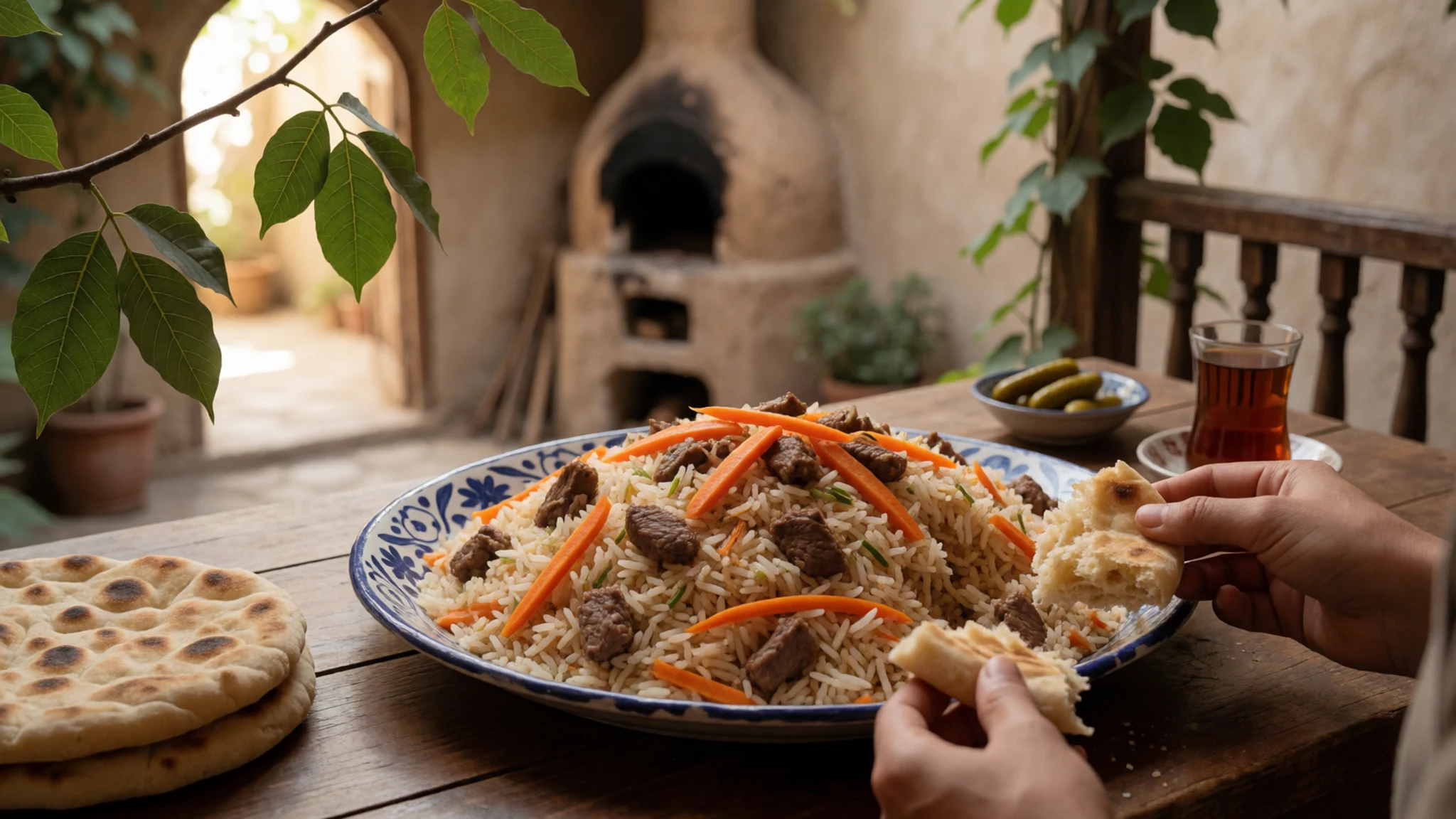
- Lagman — Market eateries and homestay kitchens
Lagman in Arslanbob is hand-pulled noodles in a peppery sauce of meat and vegetables, a Fergana staple that shows the valley's Uzbek kitchen. Small eateries around the market and homestay cooks both make it, especially at midday. The noodles should be chewy, the broth oily and spiced rather than thin.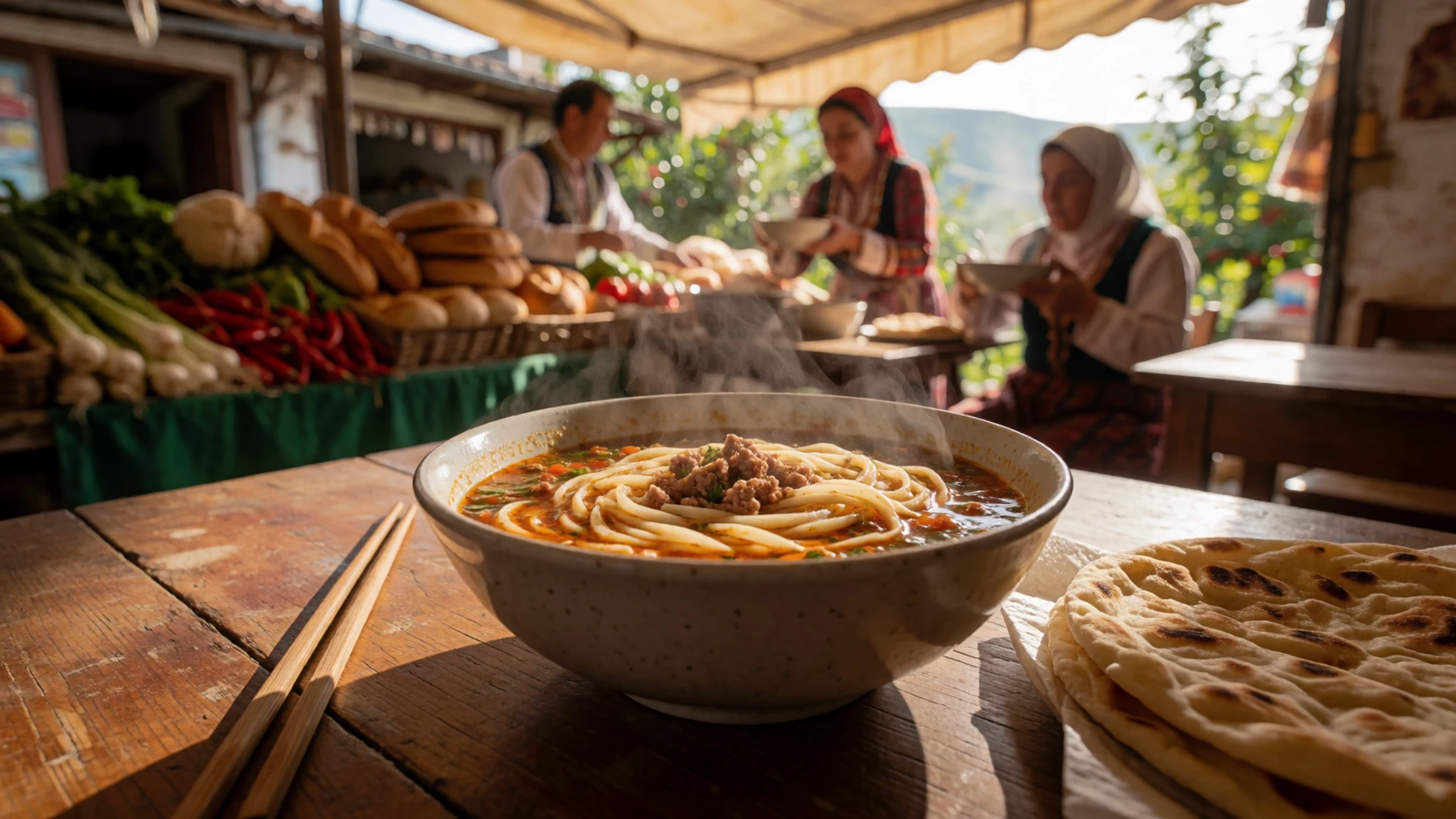
- Shorpo — Homestays and market eateries
Shorpo in Arslanbob is a boiled meat soup with potato, onion and herbs, simple and salty in the way mountain cooking often is. Homestays ladle it out in the evening, and it also turns up in market eateries on cool days. Bread is the usual partner. - Non — Stalls in the main market
Non in Arslanbob is round leavened bread, stamped in the centre and baked so the rim stays chewy. Stalls in the main market sell it all morning, and every homestay table puts a few discs beside the meal. It is torn, not sliced. - Samsa — Bakers around the market
Samsa in Arslanbob are baked parcels of meat and onion in a flaky crust, eaten with the fingers while they are still hot. Bakers around the market bring them out through the morning. The filling is usually lamb, sometimes pumpkin when meat is short. - Walnut sweets — The main market and homestay tables
Walnut sweets in Arslanbob use the nuts from the slopes above the houses, stirred into jam or a thick paste eaten with bread and tea. The market has them in the harvest season, and homestay tables keep them the rest of the year. They are dense and very sweet.
Plan it
Best time. In Arslanbob the time to walk is late spring to early autumn, once snow has left the forest tracks and the village is fully open. High summer is bright and can be hot in the valley, with cool evenings. Early autumn coincides with the walnut harvest, when the woodland is busy with the crop. Winter is cold and snowy on the higher ground, and suits only a short stay based in the village itself.
How long. 2–3
Getting there. Arslanbob is reached by flying to Osh in southern Kyrgyzstan, or by coming overland to Jalal-Abad; shared taxis and minibuses then run towards Bazar-Korgon and up the valley road. The last leg is a mountain road that can be slow after rain. There is no rail station in the village. Check departures locally the evening before, because the vehicles leave when they are full rather than to a fixed public timetable.
Budget. low
Tips
- Book a homestay before you travel in the harvest weeks and on summer weekends, when the better houses fill.
- Start forest walks early; afternoon cloud and weekend visitors both arrive later.
- Carry cash in som. Small shops and shared taxis are not a place to rely on cards.
- Bring water for the ridges. Streams are plentiful but not automatically drinking water.
- Ask a local about the day's tracks after rain, when mud and slick rock change a short walk.
Etiquette
- Remove your shoes when you enter a home or a mosque.
- Ask before photographing people, especially at prayers or during the harvest.
- Dress so shoulders and knees are covered in the village and at the mosque.
- Accept tea if it is offered, and do not wander into fenced gardens or private walnut plots.
Nearby
Sources
- Wikidata (CC0)
- Wikipedia (CC BY-SA 4.0)
- Wikivoyage (CC BY-SA 4.0)