Sitges
Sitges, Spain
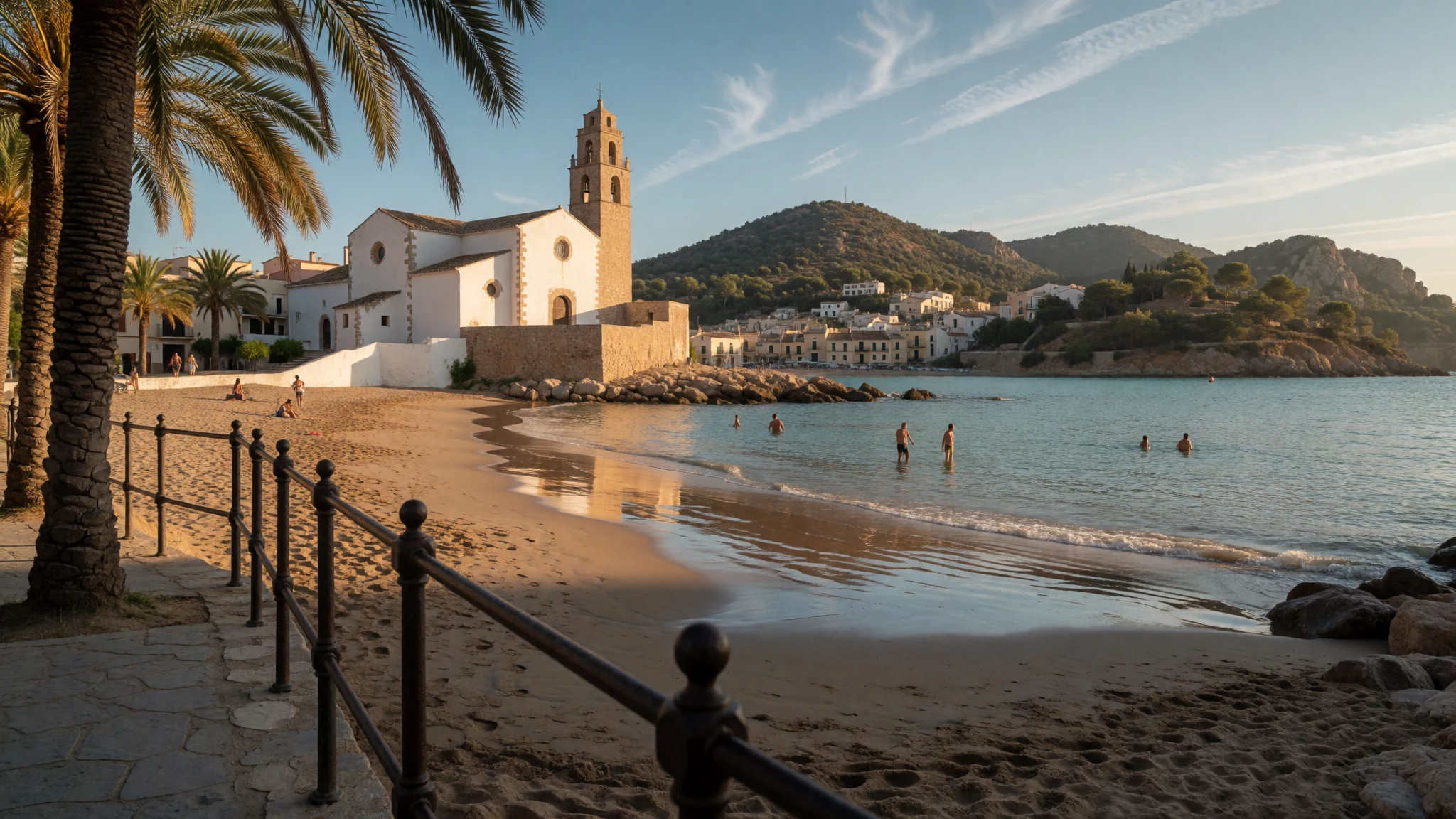
Sitges is a Catalan beach town with art museums, sea-view lunches and a lively festival calendar, reached from Barcelona by a short train ride.
The place
Sitges is a seaside town in Catalonia, set between the rocky Garraf hills and the Mediterranean, a short train ride down the coast from Barcelona. The old centre sits only about 10 metres above sea level, and its lanes slope down to a promenade, a string of sandy beaches and a headland topped by the parish church. About 32,600 people live here, though the number of people in town swells in summer and on festival weekends, and a noticeable share of long-term residents come from abroad, many from northern Europe. Tourism and culture carry the local economy: art museums, a film festival, beach clubs, and a nightlife that has long drawn a gay and lesbian crowd. The beaches are a run of town strands and small coves rather than one long sweep, and each has its own mood. Some are calm and family-minded, others are lined with bars and loungers. Behind them the old town mixes whitewashed lanes with grand houses built on money earned overseas. Summer is the obvious season for swimming, but Sitges also works outside it, as a place for walking the seafront, visiting galleries and lingering over lunch. Weekends bring day-trippers from Barcelona, so mornings and weekdays feel calmer. Sitges is a well-off resort, and cafés and rooms cost more than in the working towns along the same coast.
Its story
Sitges has been inhabited for a very long time. Neanderthal bones and stone tools recovered from the Cova del Gegant, a cave near the shore, show that people sheltered on this stretch of coast tens of thousands of years ago. In the Middle Ages a castle watched over the settlement, held first by the bishops of Barcelona and then passed to a local count. A family bearing the town's name ruled it for generations, until Agnes of Sitges sold it on. It later came under a charitable foundation, the Pia Almoina, which kept it until the early nineteenth century. The town's modern wealth owes a great deal to the sea and to Cuba. From the late eighteenth century well into the twentieth, many young men from Sitges sailed to eastern Cuba, usually to work in shops and trading houses run by relatives. Some rose to found firms of their own. Facundo Bacardí started the rum house that carries his name, and Jaime Brugal later set up another in the Dominican Republic. Fortunes that came home helped pay for the fine townhouses along the old streets. In the late nineteenth century the painter Santiago Rusiñol made the town his summer base, and other artists followed. Under Franco's dictatorship, Sitges became a refuge for people who wanted a looser, more cosmopolitan life than most of Spain allowed, and that reputation never quite faded.
What to see
- Cau Ferrat — Old town, by the seafront
Cau Ferrat was the house and studio of the painter Santiago Rusiñol, who turned it into a gathering place for artists and a showcase for his collections. Today it is a museum of paintings, sculpture and ironwork. Its rooms feel lived in, and the sea view from the upper floors explains why he settled here. - Maricel Museum — Seafront, next to Cau Ferrat
Maricel is a seaside complex that links older Gothic-style rooms with later additions, now used as an art museum. It sits beside the Contemporary Art Gallery, so the two make a natural pair for a gallery morning. Check the official town site for opening days before heading out. - Parish church of Sant Bartomeu i Santa Tecla — Headland above Platja de Sant Sebastià
The parish church stands on the headland above the main town beach and is the image most people associate with Sitges. Its terrace is a good place to watch the light change over the water. The square around it fills with people during local festivals, so early mornings are quieter.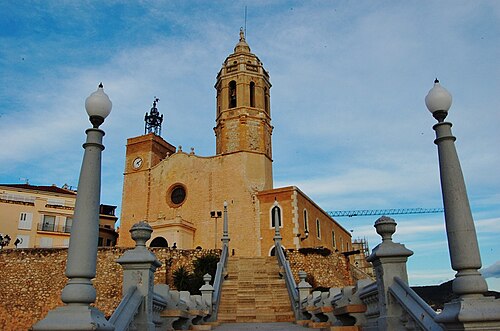
- Passeig de la Ribera and its monuments — Seafront promenade
The seafront promenade is lined with cafés and a few public monuments, including a sculpture honouring Facundo Bacardí, the Sitges-born rum founder, and one remembering G. K. Chesterton. It is an easy walk at any hour and a good place to see how the town meets the sea.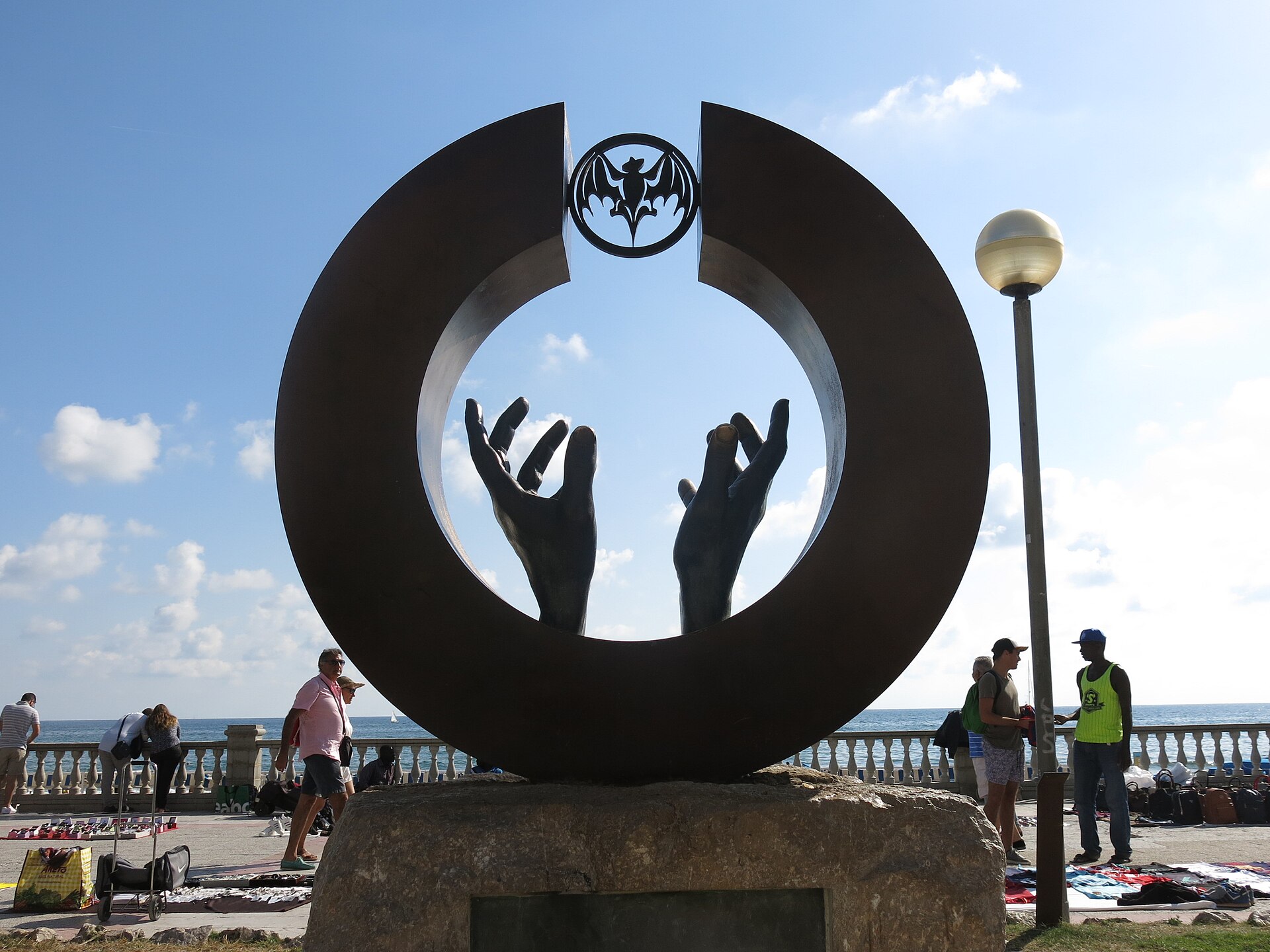
- The beaches — Along the town coast
Sitges has a long list of sandy beaches, with Sant Sebastià, La Fragata and La Ribera closest to the centre. Some are protected by breakwaters and suit families; others are quieter further along the coast. Summer weekends are crowded, so claim a spot early.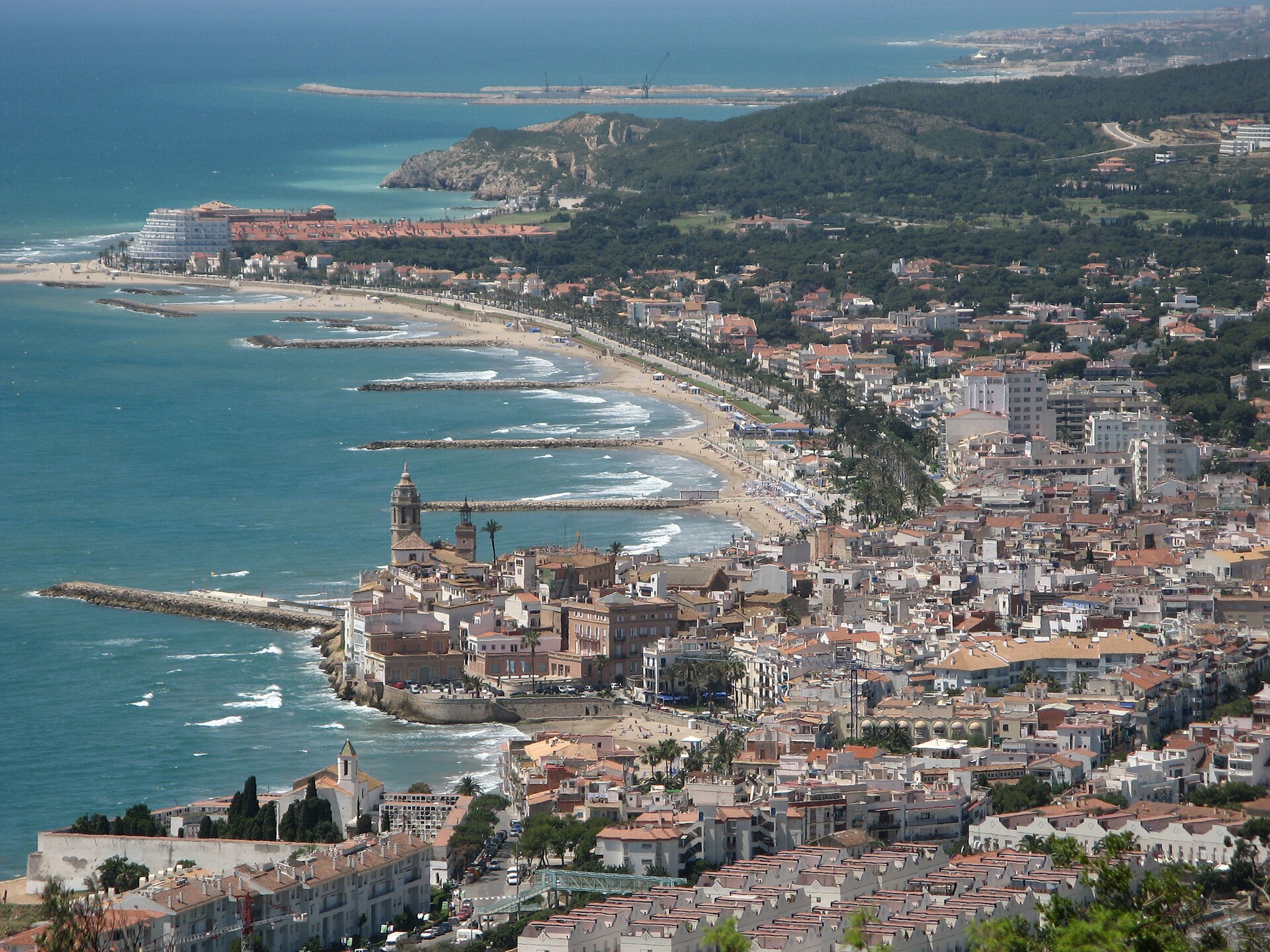
Culture
Sitges has a proud local culture layered over a cosmopolitan, open-minded outlook. Catalan is the everyday language, and the town takes its festivals seriously. Carnival is a major event, and in June the town hosts a Pride celebration with concerts, parades and street parties. Around the same month, Corpus Christi is marked by flower carpets laid along streets in the centre before a procession passes over them. In August the Festa Major honours the patron saints with traditional dances, decorated streets, fireworks and castells, the human towers that Catalans build. September brings the Santa Tecla festival, and October the Sitges Film Festival, devoted to fantasy and horror films and running annually. Summer also has an outdoor concert series. The town's relationship with Cuba still shows in its architecture and in the stories of families who went overseas and came back. Art is part of daily life: museums, galleries and studios are woven into the old town rather than set apart from it. Locals tend to be relaxed about visitors, but festivals are community occasions first and tourist spectacles second. When flower carpets are laid for Corpus Christi, walk round them rather than over them, and give the castells teams plenty of room.
What to wear
Traditional Catalan dress is mostly seen today at festivals, folk dances and the castells. Men wear the barretina, a soft red woollen cap, with a broad sash called a faixa around the waist, and espadrilles, locally espardenyes, tied at the ankle. Dress for women varies by dance and village, but cotton, linen, wool and lace feature, often with shawls and aprons. In Sitges these outfits appear at the Festa Major and similar parades. Everyday style is relaxed and Mediterranean: linen shirts, light dresses, shorts, sandals and canvas shoes by day, a little more polish for dinner. The resort leans fashionable, so many people dress with care on the promenade, and beachwear is generally kept to the sand and the seafront. Some beaches are clothing-optional, but this is clearly signposted. For visitors, light, breathable fabrics work best through the warm months, with a sunhat, sunglasses and sun cream. Bring a thin layer for breezy evenings and for cooler months, when the sea wind can bite. Comfortable shoes matter more than fashion, because the old town has cobbled lanes and steps. Cover shoulders and knees when stepping into the parish church, and carry a scarf or light shirt for that purpose. Swimwear should stay on the beach rather than in cafés and shops.
What to eat
- Xató — Traditional restaurants in the old town
Xató is the town's signature dish: a salad of endive with cod, tuna, anchovies, aubergine and black olives. The sauce is the heart of it, built from chillies, toasted almonds, garlic, olive oil and vinegar. - Pa amb tomàquet — Any café or tapas bar in the centre
Bread rubbed with ripe tomato, olive oil and salt is the Catalan everyday starter. It arrives with cured meats, cheese or grilled vegetables and is simple, filling and hard to get wrong. - Arròs de peix — Seafront restaurants along the promenade
A seafood rice cooked in fish stock, it is usually served in a wide pan to share. The texture is closer to paella than risotto, with a crisp edge on the rice if cooked well. - Fideuà — Restaurants near the beaches and harbour
Fideuà swaps rice for short noodles, cooked in a seafood stock and often served with aioli on the side. It suits a long lunch and is a common alternative to paella on this coast. - Crema catalana — Most restaurants in the old town
This is a chilled custard flavoured with citrus and cinnamon, topped with a thin crust of burnt sugar. Cracking the top with a spoon is half the pleasure, and it is the usual way to end a meal.
Plan it
Best time. Late May–June and September–October for warm days, swimmable sea and fewer crowds than high summer. July and August are busiest and hottest, and October suits film fans.
How long. 2–3
Getting there. Fly to Barcelona–El Prat airport, then take a regional train to Sitges via Barcelona Sants, which takes around 35 minutes. From the station, the old town and beaches are a short walk. Check the RENFE site for current timetables and fares.
Budget. mid
Tips
- Book rooms early for Carnival, Pride, the Festa Major and film-festival weekends
- Go to the beach in the morning on summer weekends, when day-trippers arrive
- Wear comfortable shoes for cobbled lanes and steps
- Carry some cash for small bars and market stalls, though cards are widely accepted
- Check the official town site at sitges.cat for events, museum opening days and beach information
Etiquette
- Greet shopkeepers with bon dia or buenos días
- Keep beachwear for the beach and promenade
- Walk round flower carpets and give castells teams space
Nearby
Sources
- Wikidata Q15551 (CC0)
- Wikipedia: Sitges (rev 1383438165) (CC BY-SA 4.0)
- Wikivoyage: Sitges (rev 5383520) (CC BY-SA 4.0)
- Photo: Ansicht von Sitges, Werner Lang (Wela49) (CC BY 3.0)
- Photo: Casa de la Vila, Pere López (CC BY 3.0)
- Photo: Monument a G.K. Chesterton, Enric (CC BY-SA 4.0)
- Photo: Església parroquial de Sant Bartomeu i Santa Tecla, MARIA ROSA FERRE (CC BY-SA 2.0)
- Photo: Casa Manuel Planas, Enric (CC BY-SA 4.0)
- Photo: Santuari de la Mare de Déu del Vinyet, MARIA ROSA FERRE (CC BY-SA 2.0)
- Photo: Can Bartomeu Carbonell, Enfo (CC BY 3.0)
- Photo: Monument a Facundo Bacardí, Enric (CC BY-SA 4.0)


