Similan Islands
Similan Islands, Thailand
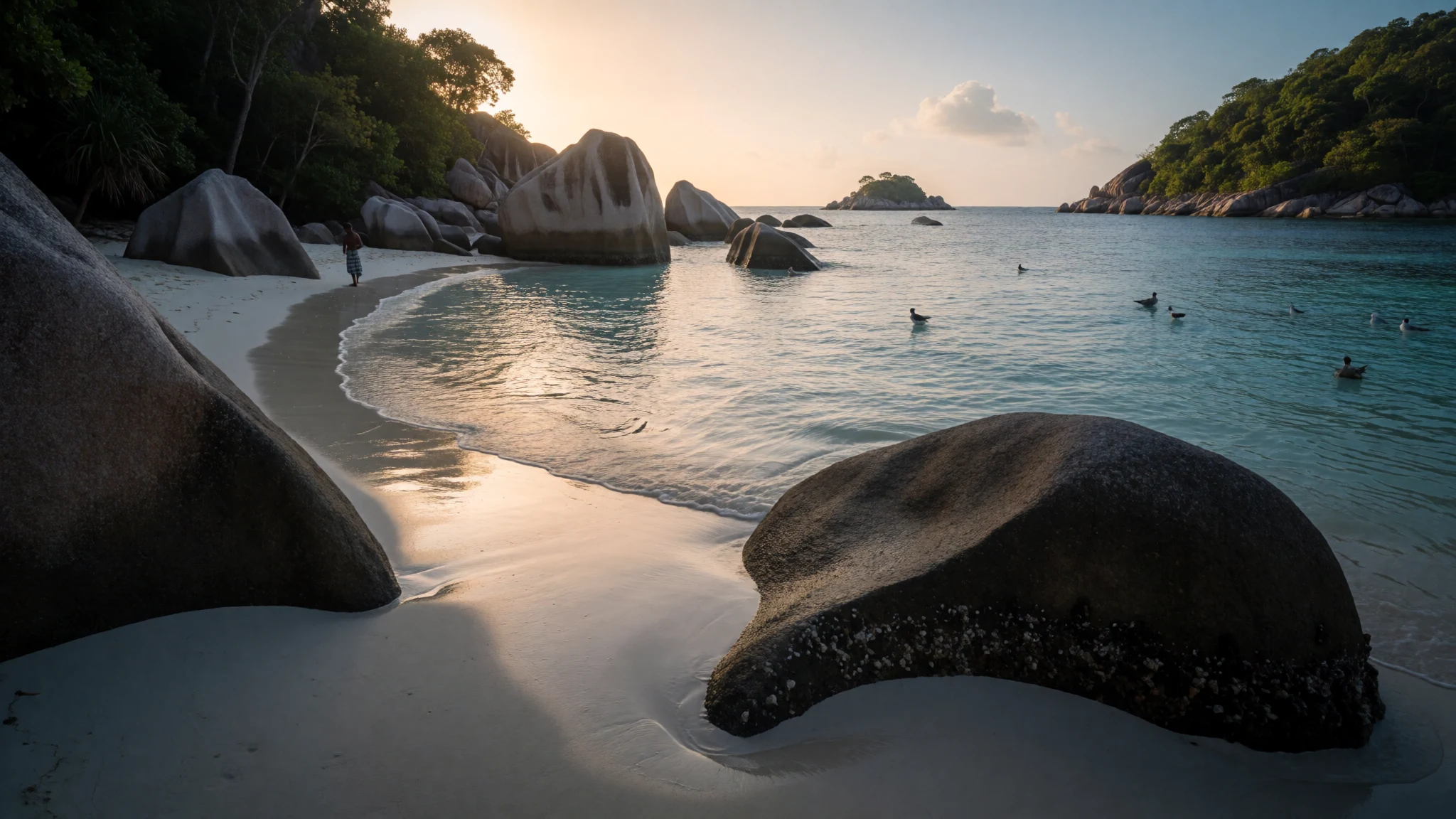
The Similan Islands are a granite Andaman archipelago of pale bays and clear water, reached by boat for swimming and diving.
The place
The Similan Islands lie in the Andaman Sea off Thailand's Phang Nga coast, a marine park of granite islands and rocky islets well out from the mainland beaches. Pale, rounded boulders tumble into coves of fine white sand. Between the islands the water shifts from turquoise over the sand to deep blue over rock, and on calm days the seabed shows a long way from shore. Low tropical forest still grips the higher slopes, with crabs and shore birds using the fringe above the tide.
Most people arrive by boat and meet the islands from the water. Boats anchor off the larger beaches and swimmers step into a sea that stays warm through the dry months. Ashore there are ranger posts, simple shelters and footpaths. Day boats leave the mainland in the morning and head back before evening, so the beaches fill and empty with that traffic. Liveaboard boats remain in the channels overnight and shift between dive sites once the day boats have gone.
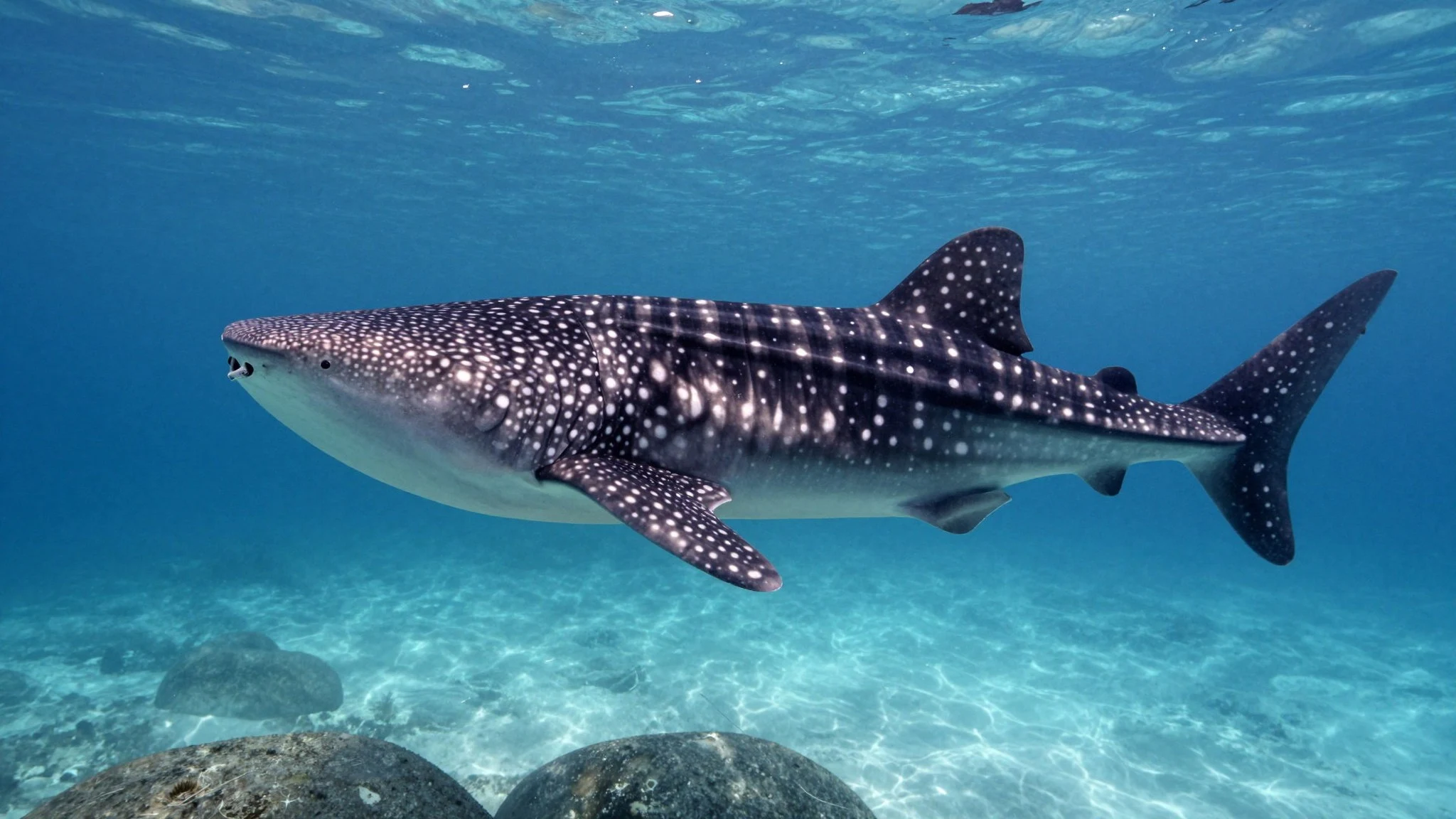
Under the surface the same granite continues as boulders, walls and ridges. Bleaching in 2010 largely killed the coral over the rock, and it has not grown back, though current on the outer sites still carries larger fish through open water. Sea turtles are a familiar sight on the reefs. In the open season, whale sharks sometimes pass the outer rocks. On land, short paths climb above the bays for a view across neighbouring islets, and the sand is the place to wait out the gap between swims.
Through the dry months the sea is often calm enough for anchoring and snorkelling. Through the wet months the south-west monsoon brings swell and rain, May the hottest and September the wettest, and boats stay in harbour while the park is closed. The Similan Islands are busy from mid-October to mid-May, and quiet while the park is closed.
Its story
The Similan Islands take their name from a Malay word used along this coast for the whole group, a sailors' name older than the national park. The islands sit on an old sea route up the Andaman, close enough for fishers from Phang Nga, yet too dry and remote for a lasting village. There are no old towns here, no temples in the forest, and no fresh water to support a settlement through the dry months.
When dive travel reached Phuket and the beach towns of this coast, the islands' clear water and granite reefs drew boats north, and Thailand set the group aside as a marine national park. Rangers took over the larger beaches, and fishing inside the park boundary was banned, though boats, nets and traps are still common, especially around Ko Bon and Ko Tachai. That ban did not keep the coral, which bleaching largely killed in 2010 and which has not recovered, though turtles and whale sharks still visit, and boats use set moorings and stay away in the closed season.
The modern story of the Similan Islands is a contest between that protection and their fame. On a calm morning in the open season the anchorages fill with day boats from the mainland and with liveaboards that have run north along the Andaman. Snorkellers spread over the shallows, divers drop onto the boulders, and the quiet-looking beaches fill with towels and lunch boxes. After the boats leave, the forest noise returns. The park's answer has been rules rather than resorts: no staying ashore, the overnight camps taken away, no taking of shells or coral, and a closed season when the boats do not sail.
What to see
- Ao Kuerk — Ko Similan
Ao Kuerk is the wide bay on Ko Similan, the island that gives the Similan Islands their familiar silhouette of boulders and sand. From the viewpoint the bay curves between granite headlands, with another islet on the horizon. The way down is a short hot walk on rock and roots. By late morning day boats take the beach.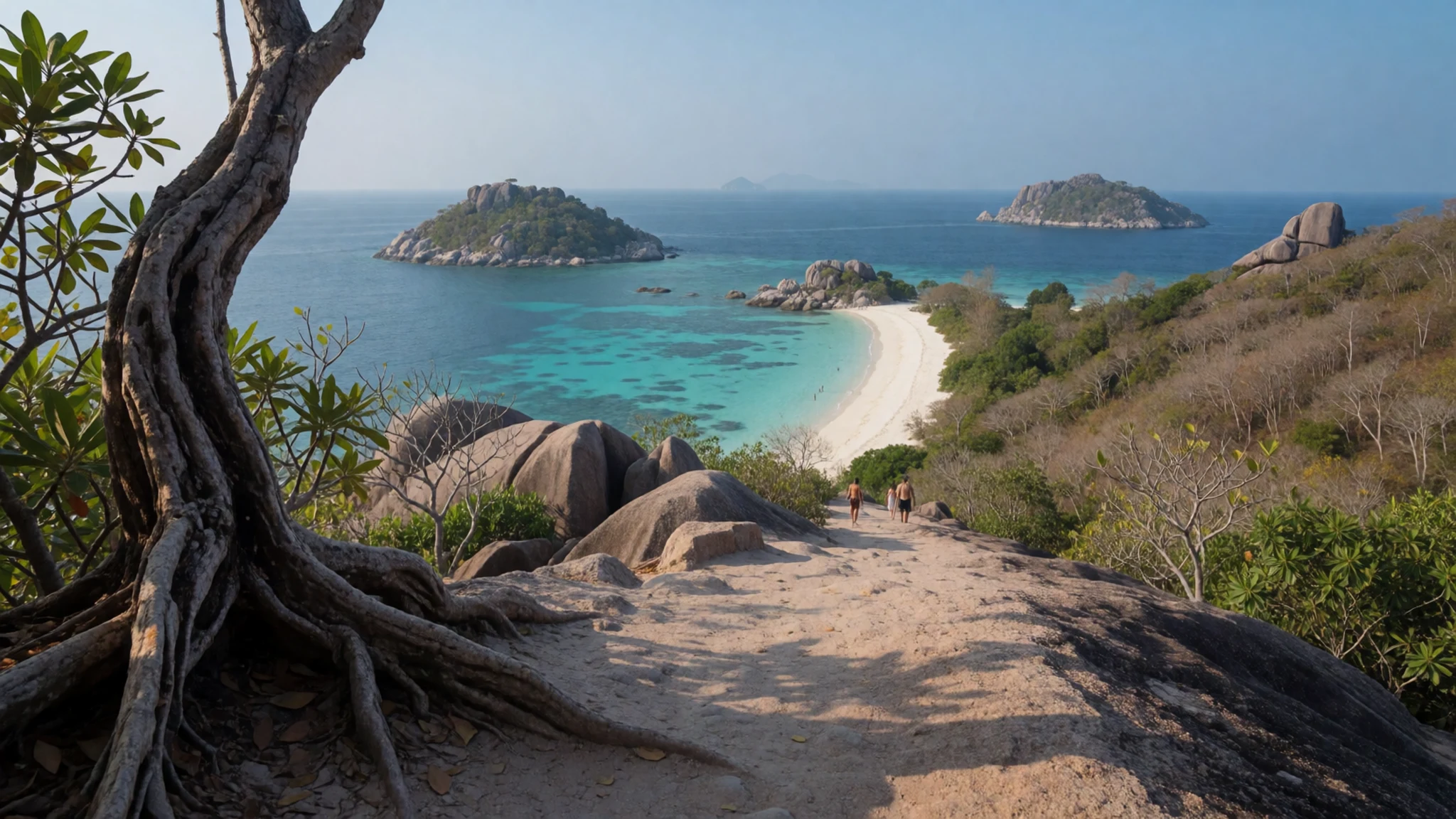
- Ko Similan beaches — Ko Similan
The beaches of Ko Similan are the Similan Islands' easy swimming shore: fine pale sand, granite at each end, and water clear enough that the sand shows underfoot. Day-tour groups use them as the picnic stop, so the point is the swim rather than any facility. Reef shoes help on the hot rocks, and coral in the shallows should be left alone.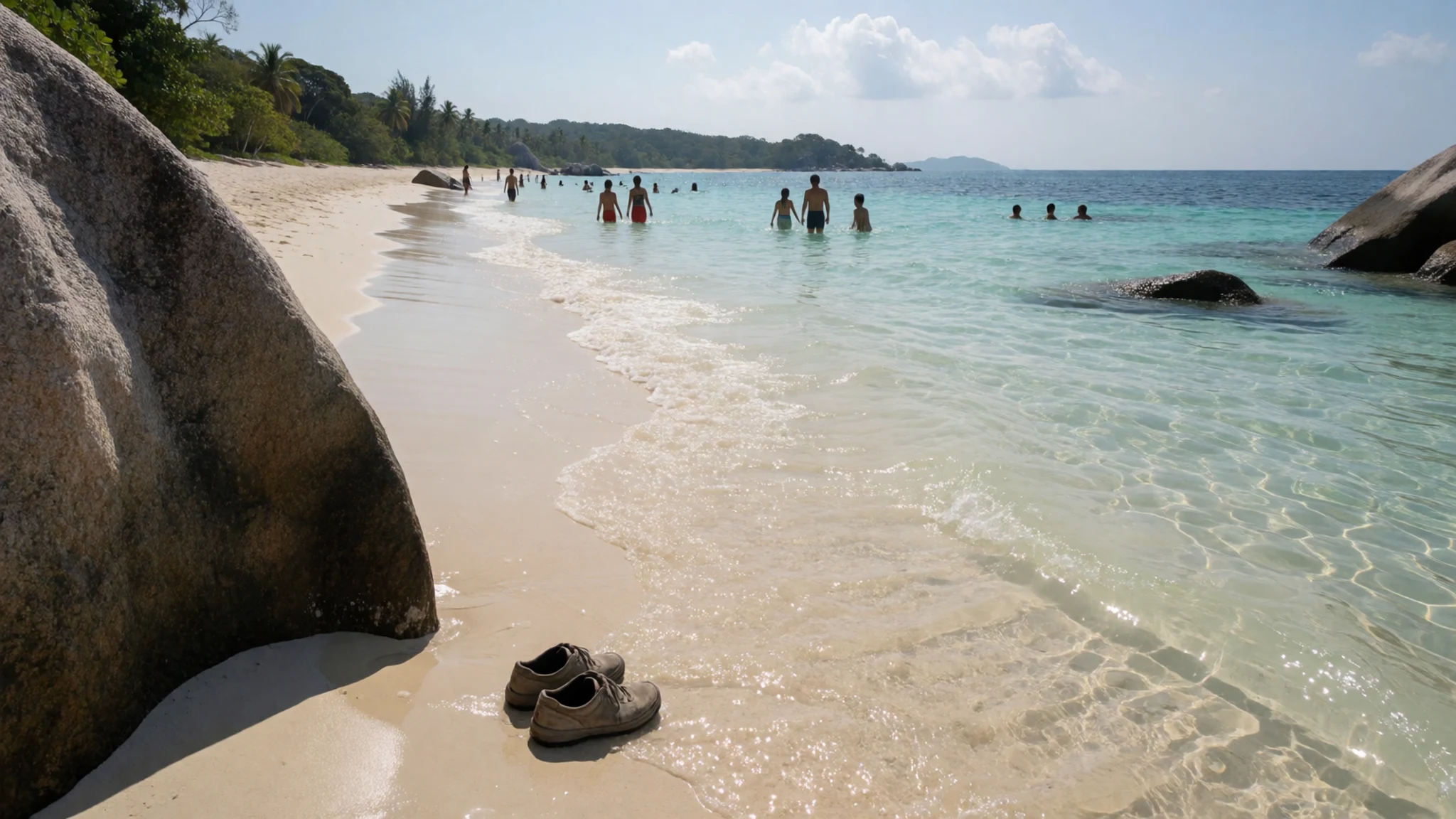
- Ko Miang — Ko Miang
Ko Miang is the Similan Islands' working island, the one with the ranger station and the main camp rather than a string of resort beaches. Trails run from the shore up through scrubby forest to lookouts over the channel. Large land crabs cross the paths, especially toward evening, and should be left alone. The water off the beach is the usual day-boat snorkel: sand, then rock, the coral still thin since the bleaching.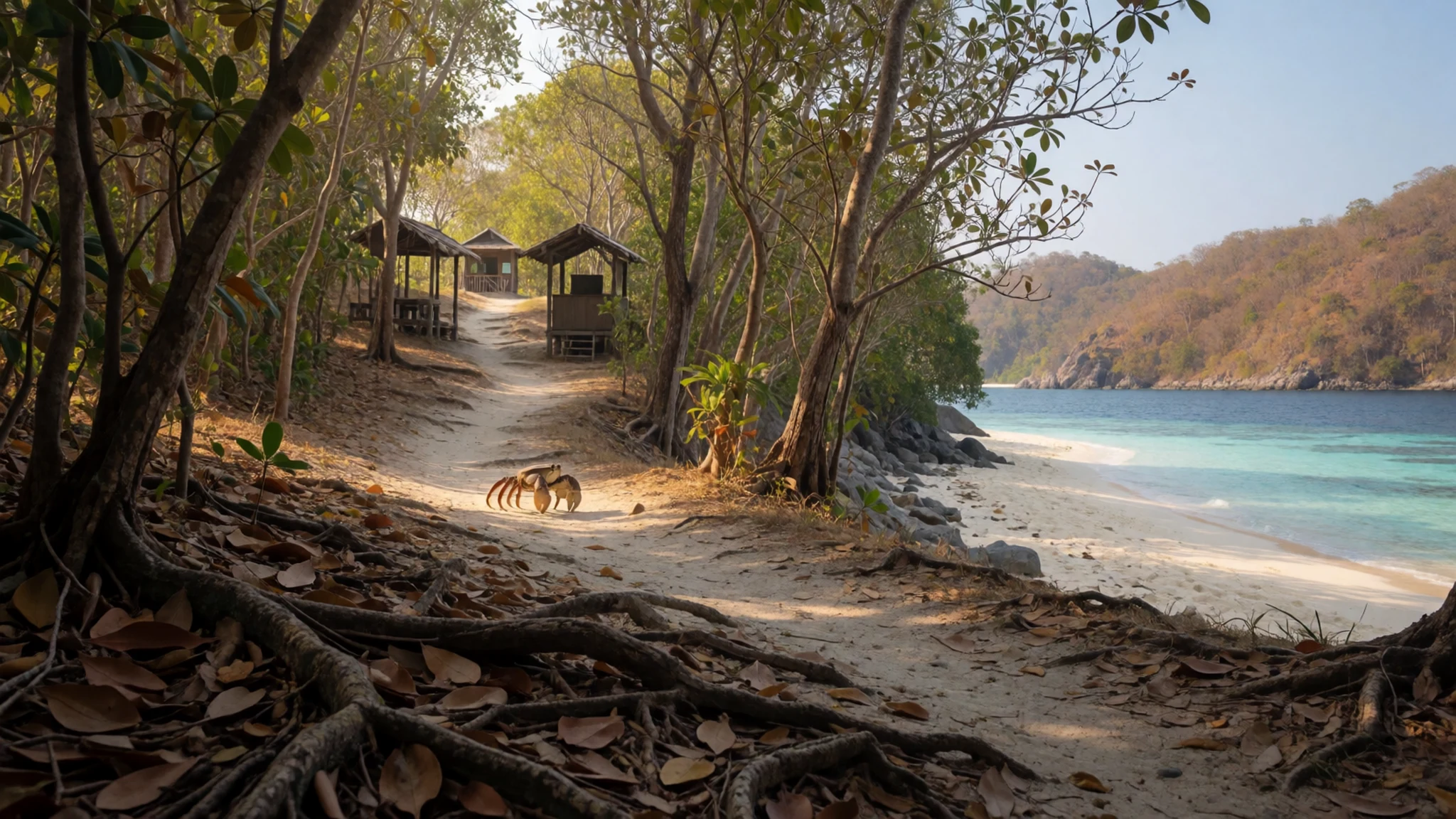
- Boulder reefs — Andaman Sea around the Similan Islands
The boulder reefs are why divers cross to the Similan Islands: granite blocks piled from the sand up toward the surface, the coral on the tops largely gone since 2010, with gaps between the rocks. Current on the outer sites can be strong, so many people dive here with a guide rather than alone. Snorkellers use the shallower piles near the beaches, within easy reach of a boat.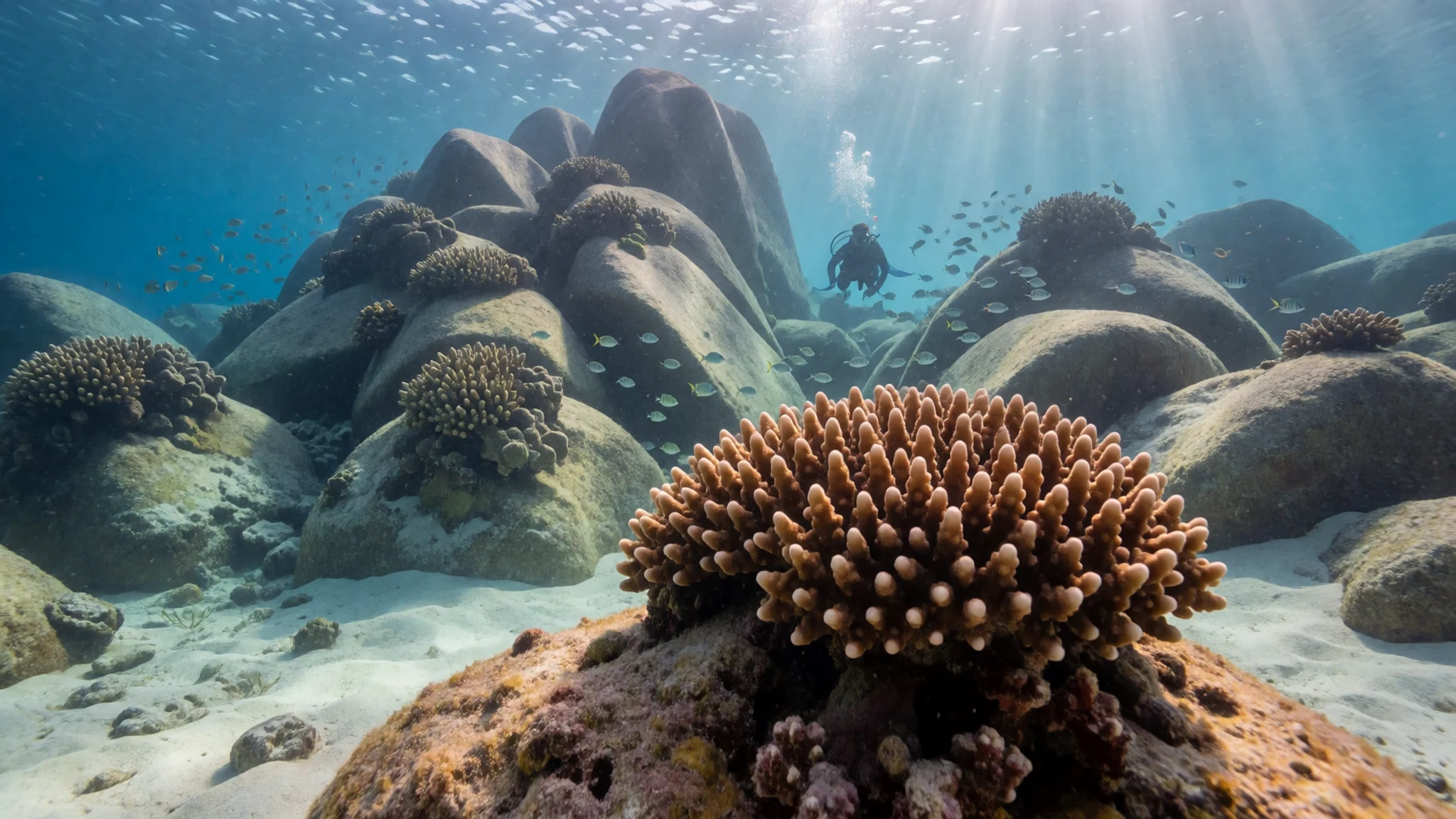
- Turtles and whale sharks — Reefs and outer rocks, Similan Islands
Sea turtles feed over the Similan Islands' reefs through the open season and are often the animal people remember from a snorkel. Hawksbill turtles work along the coral; swimmers should watch and keep a distance rather than chase. Whale sharks appear less reliably, usually in the blue water off the outer rocks, and a sighting depends on luck and on the boat being in the right place.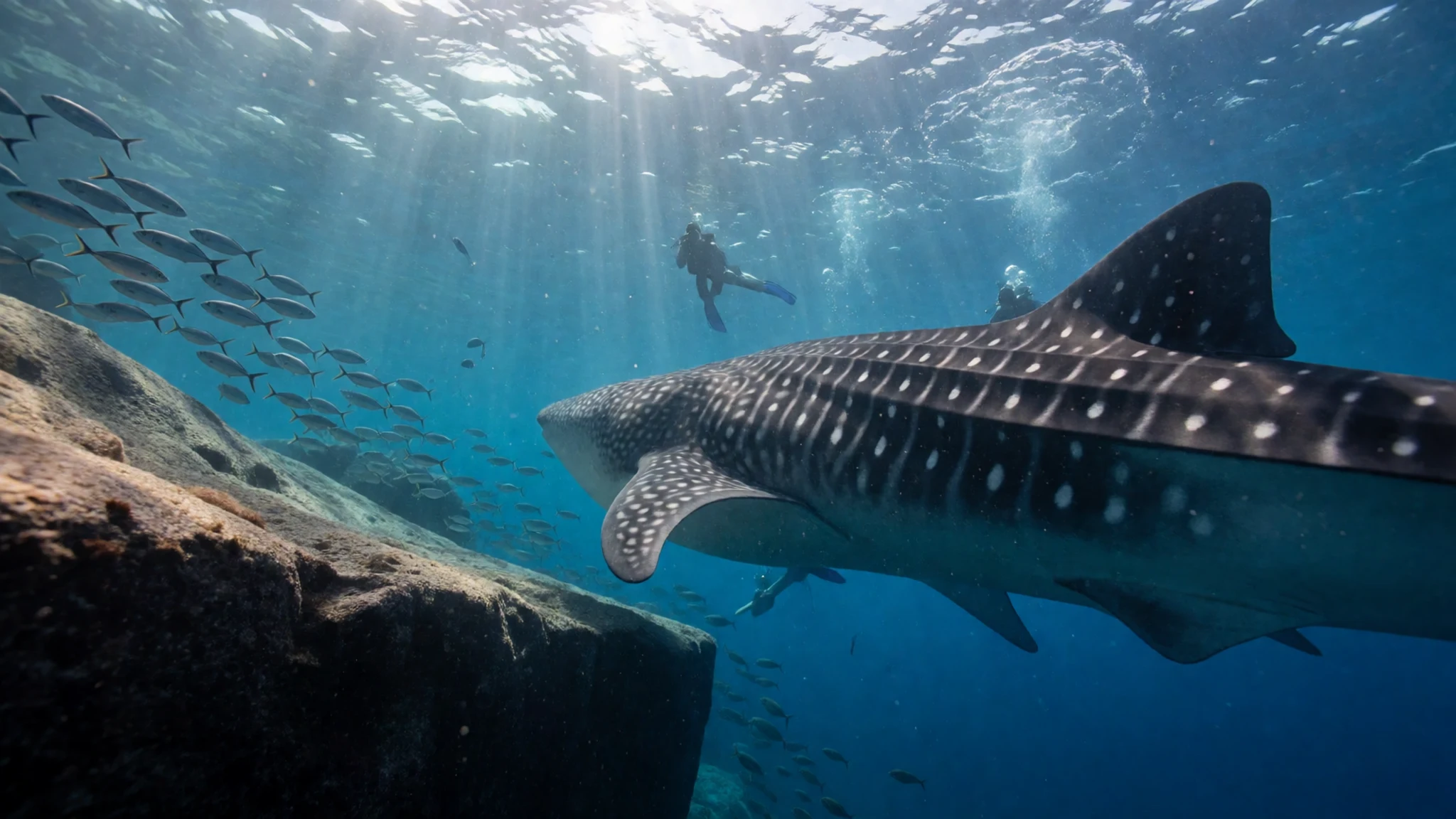
Culture
The Similan Islands sit in a Thai national park, and the culture a visitor actually meets is a mix of park routine and southern Thai boat life rather than a village festival. Crews from Phang Nga and Phuket run the day boats. They are often Thai Muslims from the Andaman coast, or Buddhist Thais from the beach towns, and the mood on board is practical: life jackets, a safety talk, a set lunch, and a firm idea of when the boat must leave. On the islands the rangers are the authority. They set where boats may moor, where people may walk, and how long a boat may stay. There is no village and no temple, though a small shrine at a ranger camp still deserves quiet respect.
The islands were protected so the reef and forest could stay ahead of tourism, and the rules are the local custom that matters. Litter goes back on the boat. Coral, shells and sand stay where they are. Animals, including the land crabs on the paths, are not props. The midday crowds do not cancel those habits. Visitors to the Similan Islands should keep hands and fins off the coral, take nothing from the beach, and follow the ranger's mooring and trail instructions without argument.
What to wear
The Similan Islands have no town of their own, so the clothing story starts on the Andaman coast that sends the boats. In Phang Nga and the wider south, older Muslim communities still wear batik and checked sarongs, with a long-sleeved shirt or a loose tunic on the way to market and mosque. Buddhist Thai neighbours share the sarong as house and beach wear.
On the boats and the beaches now, the working wardrobe is modern and practical. Crews wear football shirts, long shorts and deck shoes; divers add a rash vest or a short wetsuit against sun and scrapes. Day visitors swim in swimwear with a T-shirt as a cover. The traditional sarong still appears as a wrap over a wet swimsuit, because it dries fast and keeps the sun off.
For a visitor, the Similan Islands ask for sun sense more than ceremony. Swimwear is expected on the beach and in the water. A shirt or sarong over it is the polite layer when eating with the crew or stepping onto a ranger post. The granite is sharp and hot, so water shoes or sandals with a strap are kinder than flimsy flip-flops on the trails. There is no dress code at a shrine beyond covering up when passing one in camp, and no need for formal clothes anywhere in the park.
What to eat
- Khao pad — Day-boat lunch service from Thap Lamu and Khao Lak
Khao pad, Thai fried rice, is the Similan Islands meal most people actually eat, because the day boats serve it in a set lunch between swims. Egg, vegetables and a little chicken or seafood are fried with rice and fish sauce, and handed over in a box on deck.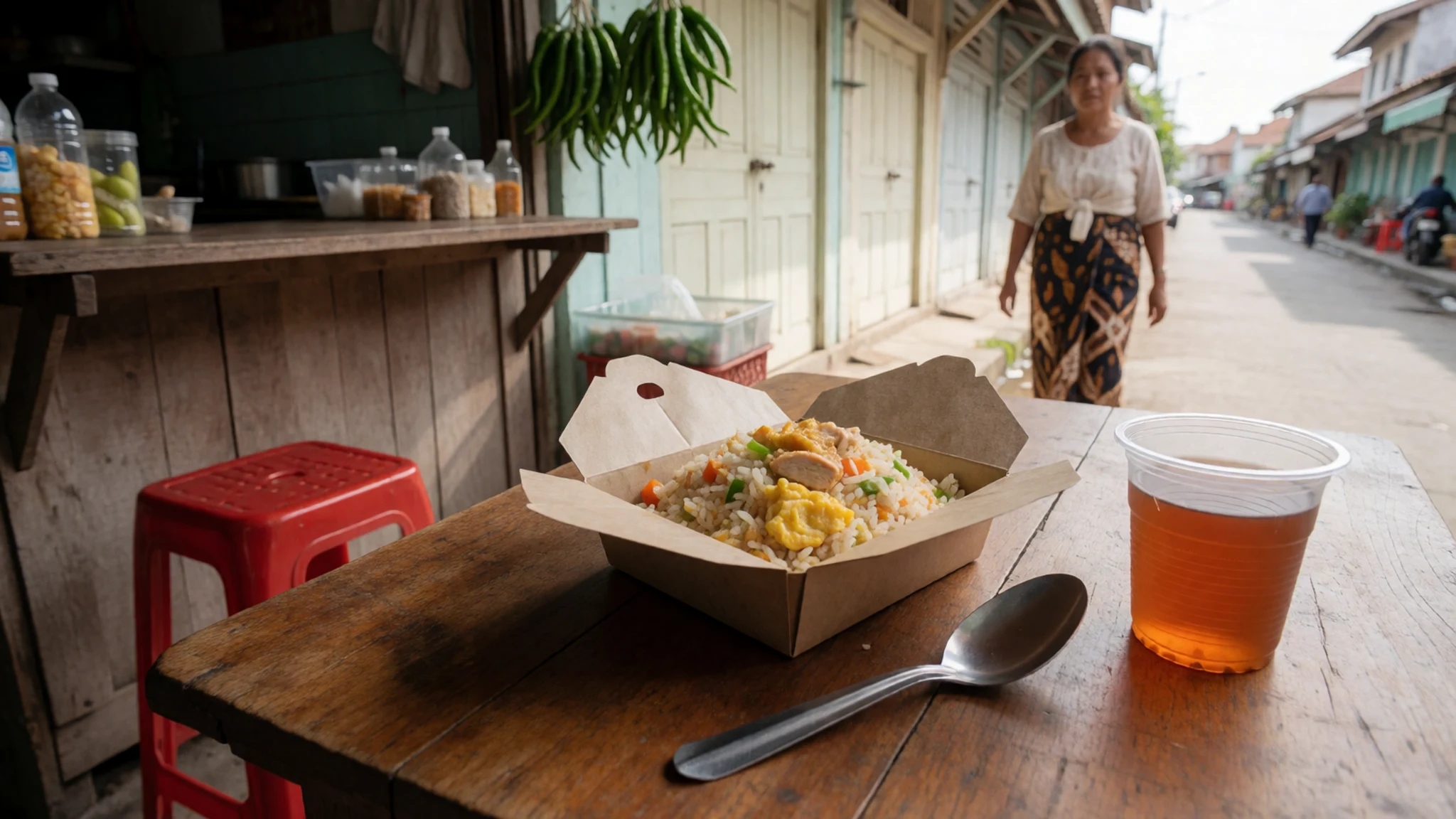
- Tom yum goong — Pier kitchens at Thap Lamu and beach-town eateries in Khao Lak
Tom yum goong is the hot-and-sour prawn soup of the Similan Islands' departure towns, a bowl eaten before the boat or after the crossing rather than on the beach. Lemongrass, lime leaves, chilli and lime lift a clear broth, with a few prawns and mushrooms.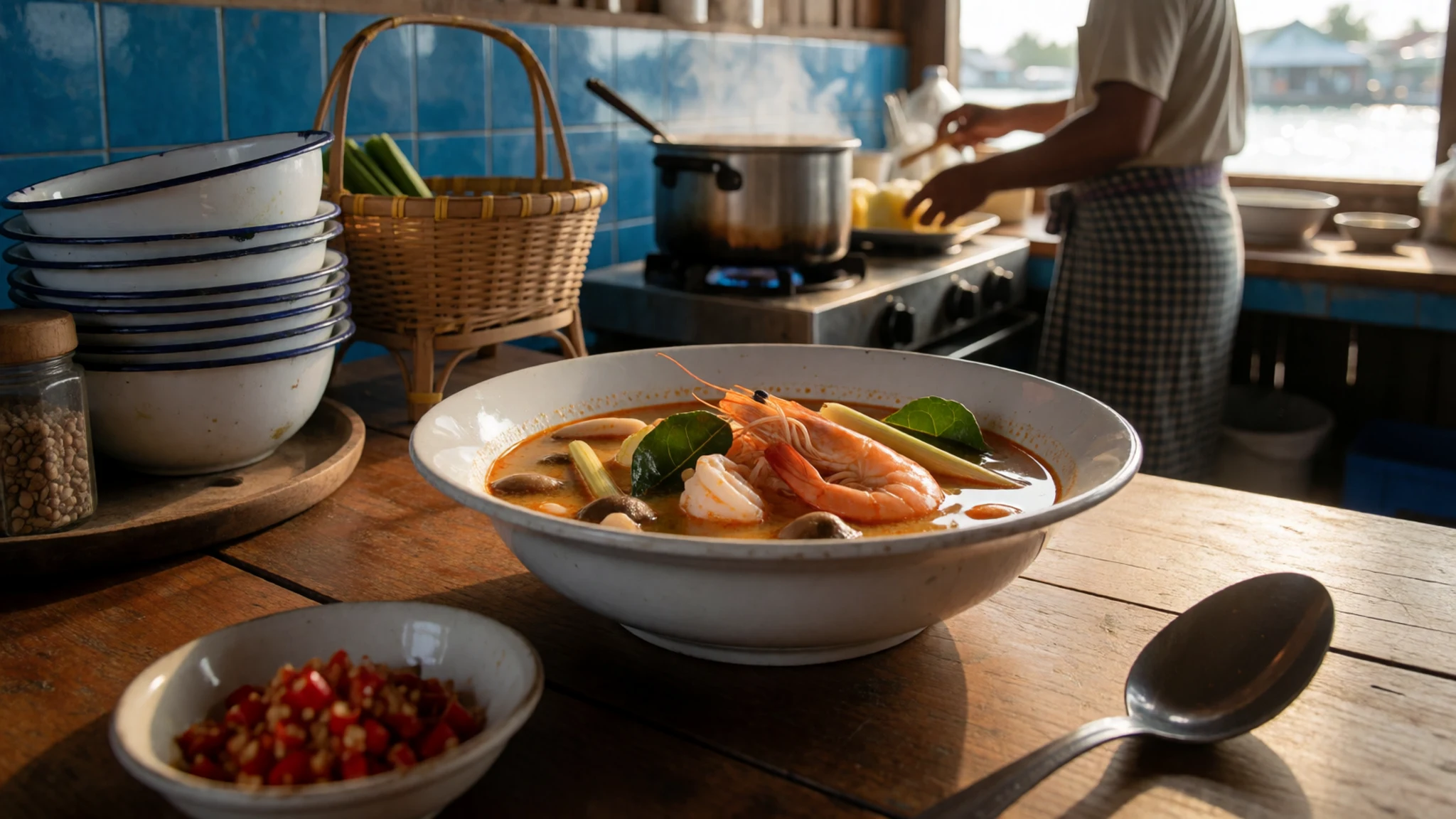
- Gaeng khiao wan gai — Set meals on liveaboard boats and Khao Lak eateries
Gaeng khiao wan gai, green curry with chicken, turns up in Similan Islands liveaboard dinners and in the eateries that feed divers the night before a crossing. Coconut milk, green chilli paste and Thai basil make it rich and fragrant, usually with rice and a tray of plain vegetables. - Pla pao — Harbour stalls near the Similan boat piers
Pla pao, fish stuffed with lemongrass and grilled over charcoal, is the Similan Islands coast's own flavour, eaten at harbour stalls rather than on the islands themselves. The skin goes crisp, the flesh stays moist, and it arrives with seafood sauce and sticky rice or plain rice. - Som tam — Market stalls in Khao Lak and Takua Pa
Som tam, green-papaya salad, is the sharp counterpoint to Similan Islands boat food, pounded to order at market stalls in the mainland towns. Chilli, lime, fish sauce, tomato and long beans go into the mortar; dried shrimp or salted egg is the usual extra.
Plan it
Best time. Boats run from mid-October to mid-May, and January and February are the most comfortable months, February driest and January coolest at night, with the water usually clear. May to October is the south-west monsoon, May the hottest month and September the wettest, and the park is closed by law from 16 May to 15 October. Those closed dates are fixed each year, and going in the closed season is illegal.
How long. 2–3
Getting there. Fly into Phuket, the usual airport for the Similan Islands, or Surat Thani. Continue by road to Khao Lak and the piers at Thap Lamu, then by speedboat or day boat for the last leg. Liveaboards often leave from Phuket. The islands have no air or rail link.
Budget. high
Tips
- Book the calm months well ahead; weekends fill.
- Take the earliest boat so the beaches are quieter.
- Carry cash; card machines at the piers are unreliable.
- Bring water, a rash vest and shoes for hot rock.
- Confirm the park is open before travelling.
Etiquette
- Do not touch or take coral, shells or sand.
- Give turtles, whale sharks and land crabs room, and do not feed them.
- Follow ranger instructions, and take litter back to the boat.
Nearby
Sources
- Wikidata (CC0)
- Wikipedia (CC BY-SA 4.0)
- Wikivoyage (CC BY-SA 4.0)
Wildlife
- Hawksbill turtle (animal)
The hawksbill is a sea turtle that seems to spend its days quietly tending the reef. It is critically endangered, so meeting one around the Similan Islands is a real privilege. Look for it working its way along the coral. Slip into the water gently, keep a respectful distance, and let it carry on at its own pace. Never chase it; simply float, watch and enjoy the moment.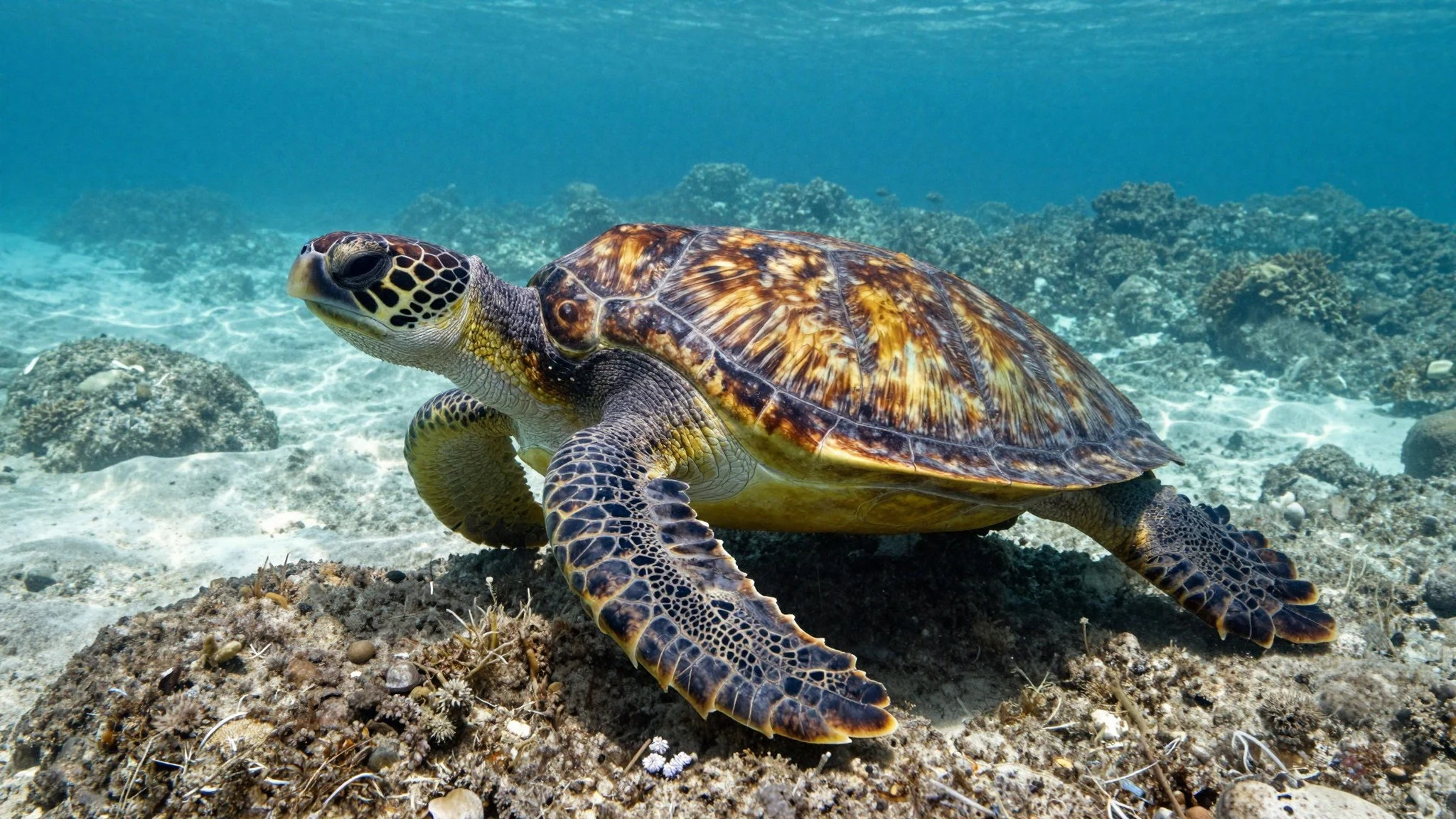
- Whale shark (animal)
The whale shark is the biggest fish in the sea, a slow, gentle giant that feeds by filtering food from the water. In the Similan Islands it sometimes glides past the outer rocks during the open season, so a sighting is a lucky treat rather than a promise. Stay calm, keep your distance, and let it pass on its own terms.