Chiang Khan
Chiang Khan, Thailand
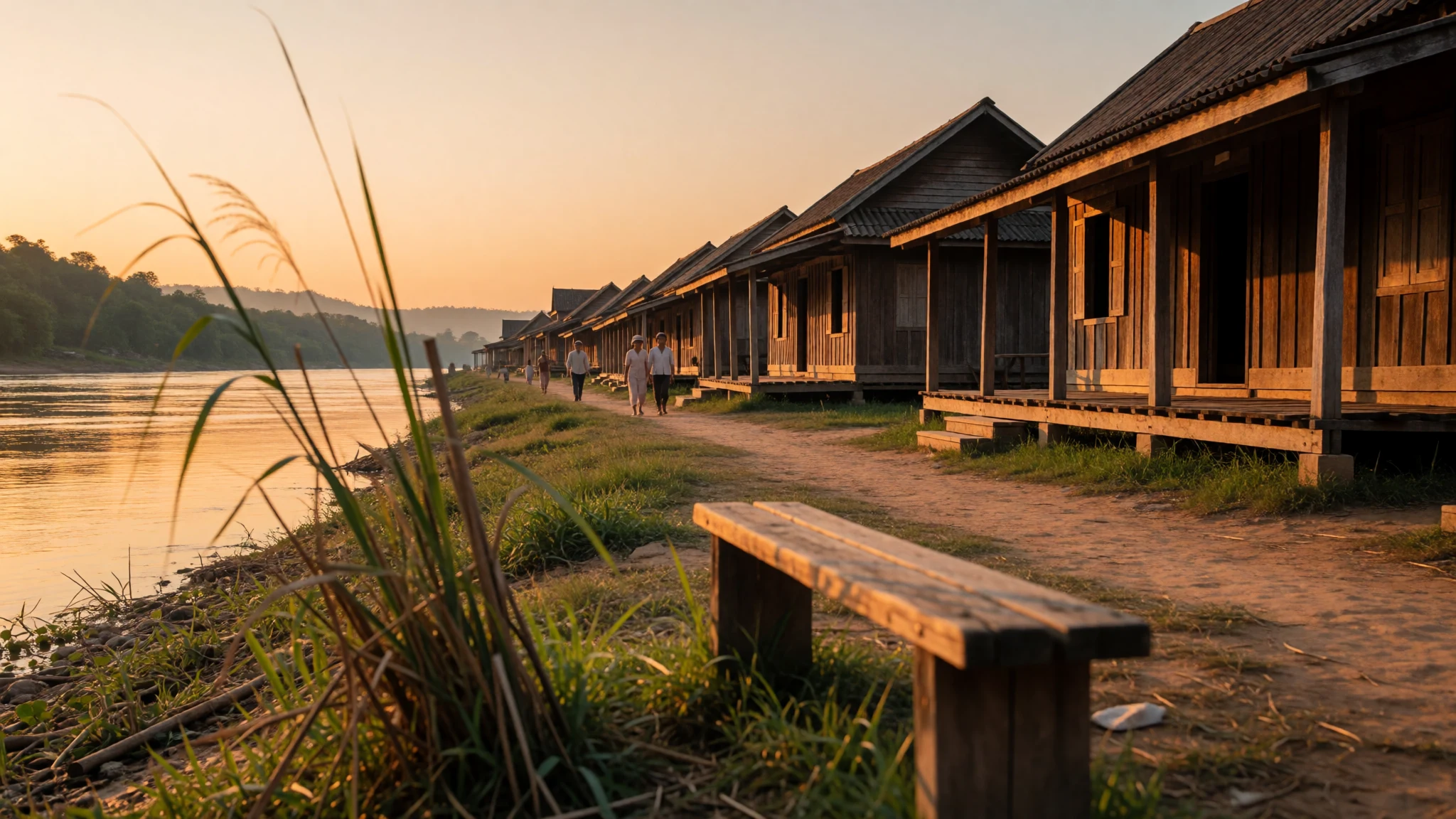
Chiang Khan is a slow Mekong riverside town of old timber houses, sunset benches and Lao-tinged cooking, made for idling rather than sightseeing.
The place
Chiang Khan (เชียงคาน) is a district in the north of Loei province, in north-eastern Thailand, and the town of the same name sits right on the Mekong, with Laos on the far bank. The district has a population of about 61,000, and the town stands at an elevation of 262 m. Neighbouring districts are Pak Chom, Mueang Loei and Tha Li, while across the water lie the Lao provinces of Xaignabouli and Vientiane. Three rivers shape the area: the Mekong itself, and the smaller Hueang and Loei. Visitors come mostly for slowness. The old riverside town is a line of weathered timber houses, many now turned into guest houses, cafés and small shops, strung along Chai Kong Road, which runs beside the water. Life moves at the pace of a walk or a bicycle. Mornings are for wandering the lanes and watching the town wake, afternoons for sitting by the river, and evenings for the sun going down over Laos. Beyond the town the district opens into farmland, quiet roads and the rapids at Kaeng Khut Khu. Food and speech carry a strong Lao flavour, because Isaan, the north-east, has long been tied to the culture across the river. Chiang Khan is not a place for ticking off monuments. Weekends and holidays bring crowds of Thai visitors to the main street, so a midweek stay feels very different. The heat can be fierce before the rains, and the nearest airport and railway are a fair distance away, which keeps the town from feeling like a resort.
Its story
Chiang Khan's story is a river story. The town grew when Lao villagers crossed the Mekong to the Thai side after France colonised Laos, settling on the bank and building the timber houses that still define the waterfront. Later waves of migrants arrived from Vietnam and China, and the mix is still felt in the town's shops and cooking. Its position made it a natural trading post. People and goods moved back and forth across the water, and customs and language travelled with them; the Thai and Lao spoken on either bank are close cousins. Fishing the Mekong was for a long time the town's main earner. That easy traffic ended in 1975, when the Pathet Lao took power in Laos and cut economic ties with Thailand. The crossing that had shaped daily life became a frontier, trade dried up, and Chiang Khan slipped into a long quiet spell, largely overlooked by the rest of the country. The town was rediscovered only in recent years, when Thai travellers began looking for somewhere unhurried and found rows of old wooden houses that had survived partly because nobody had the money or the reason to replace them. Tourism has since become a major part of the local economy, bringing welcome income and the usual strains of weekend crowds and fresh building along the riverfront.
What to see
- Wat Si Khun Mueang — Chiang Khan town
Wat Si Khun Mueang is the temple most visitors are pointed towards, and it suits the town: calm, unshowy and easy to fit into a slow morning. Romanisation varies, so look for both Si and Sri spellings on maps. Cover shoulders and knees before going in.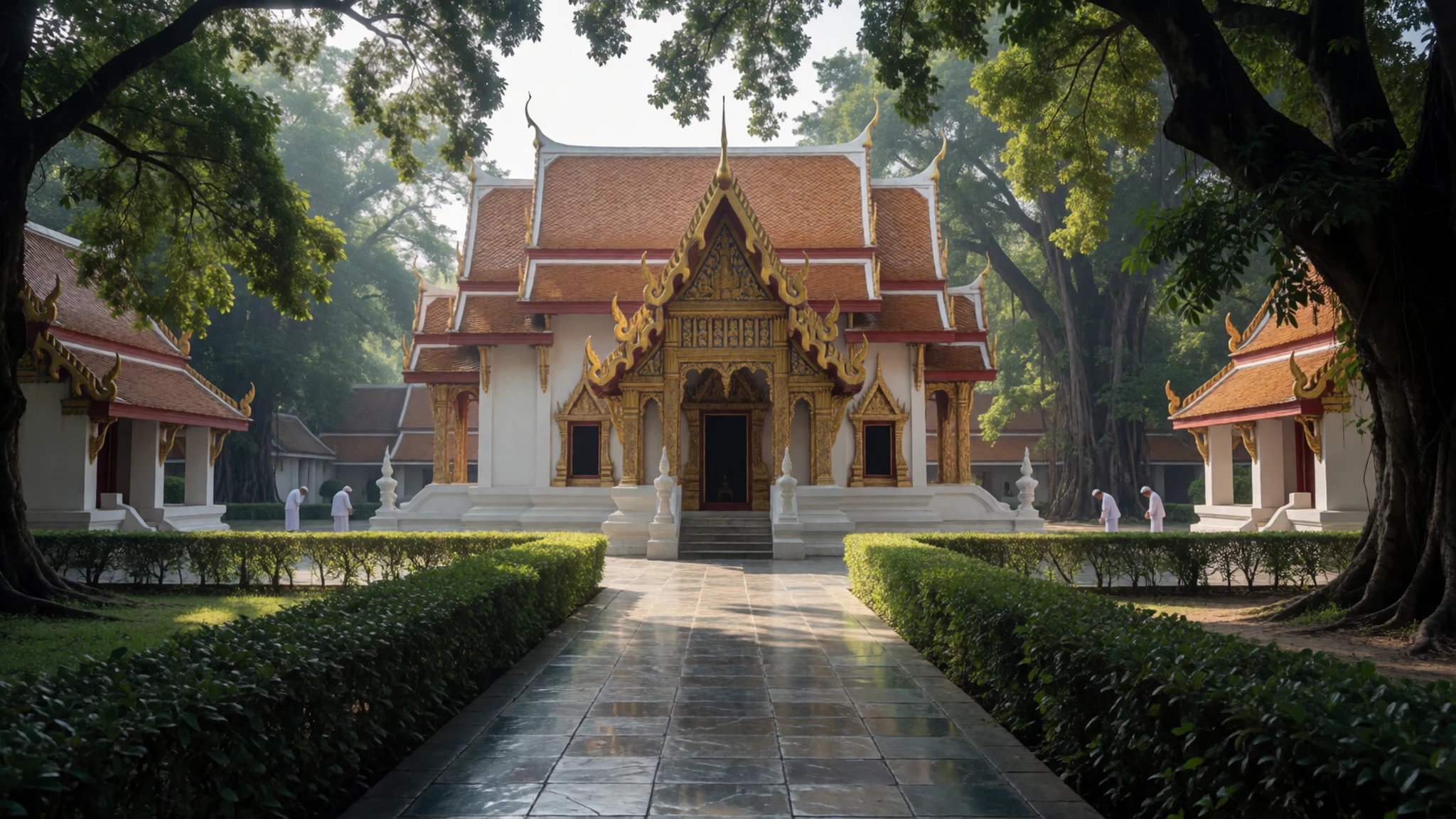
- Chai Kong Road — Chiang Khan riverfront
Chai Kong Road is the old waterfront street, lined with timber houses now used as guest houses, cafés and craft shops. It is best on foot or by bicycle, early in the day before day-trippers arrive. Evenings and weekends turn it into a busy, lively walking street.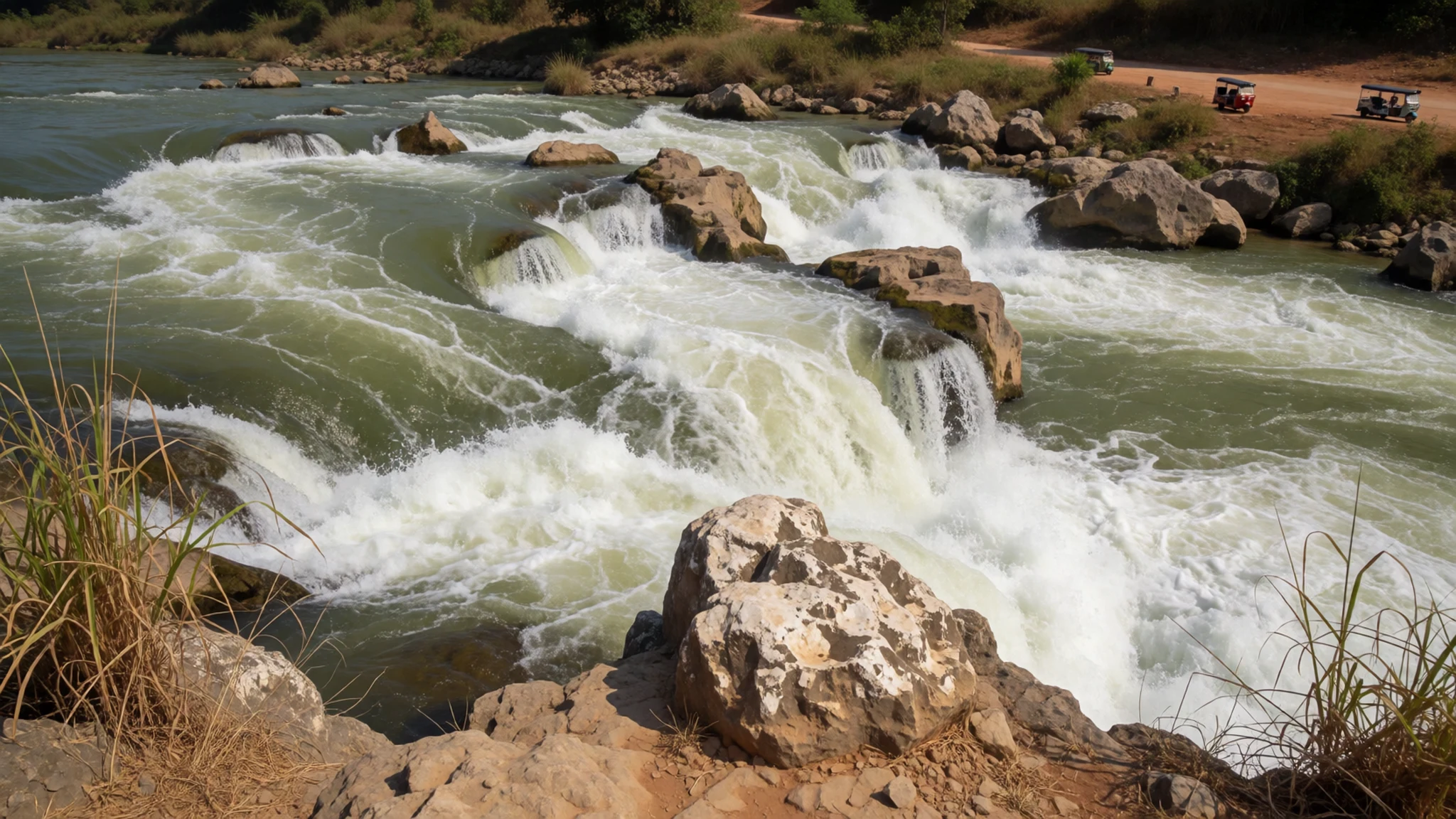
- Kaeng Khut Khu — Along the Mekong, outside the town
Kaeng Khut Khu is a stretch of rapids and rocky shallows in the Mekong. People reach it by bicycle, tuk-tuk or boat trip from town. The scenery changes with the river level, so ask locally what to expect, and take care near wet rocks.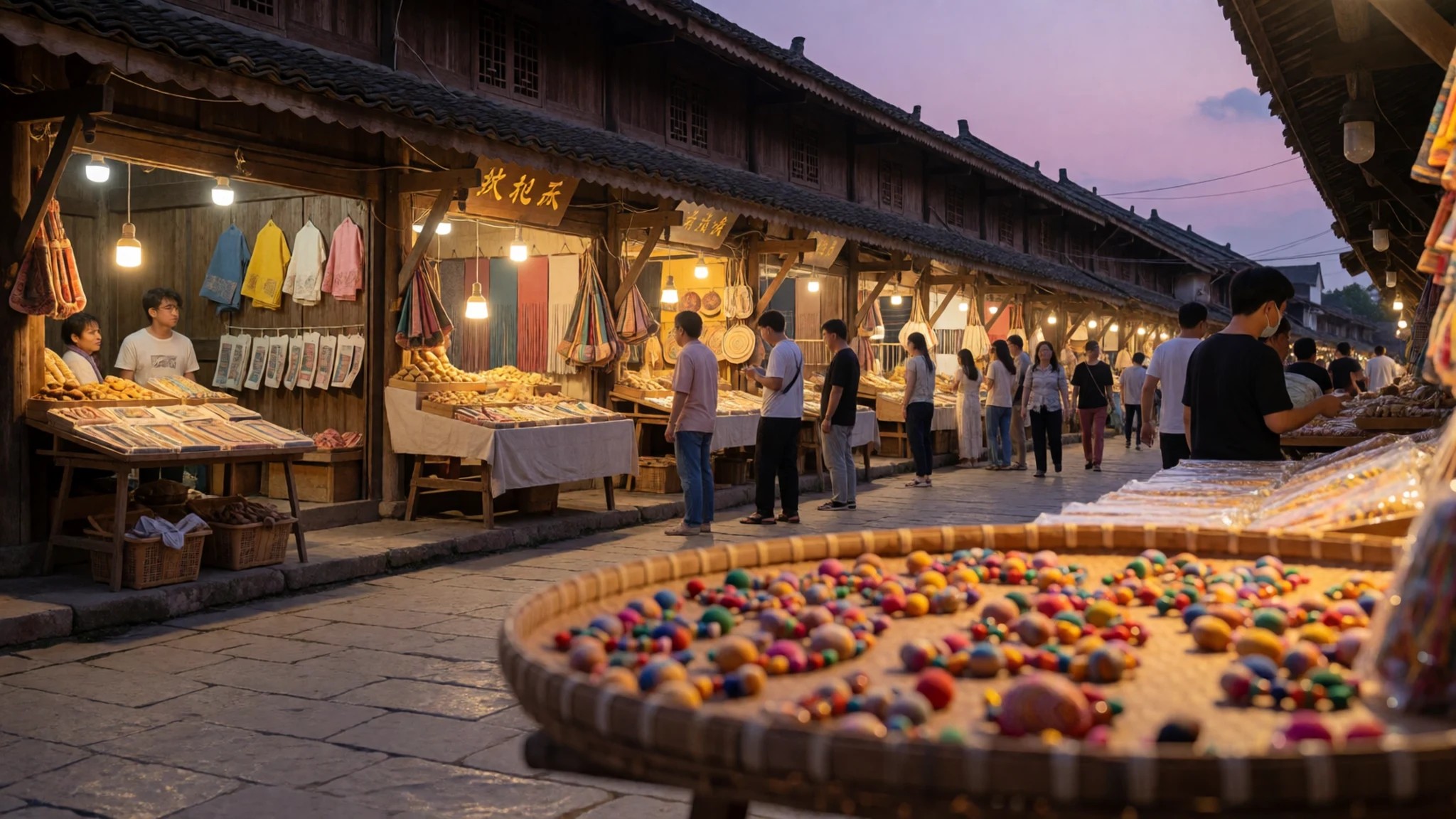
- Mekong sunset on the riverbank — Chiang Khan riverfront
Watching the sun set over the Mekong is the town's daily ritual. The light turns the wide brown river amber, and the Lao hills sit dark on the far side. Locals and visitors gather along the bank, so arrive a little early for a good seat.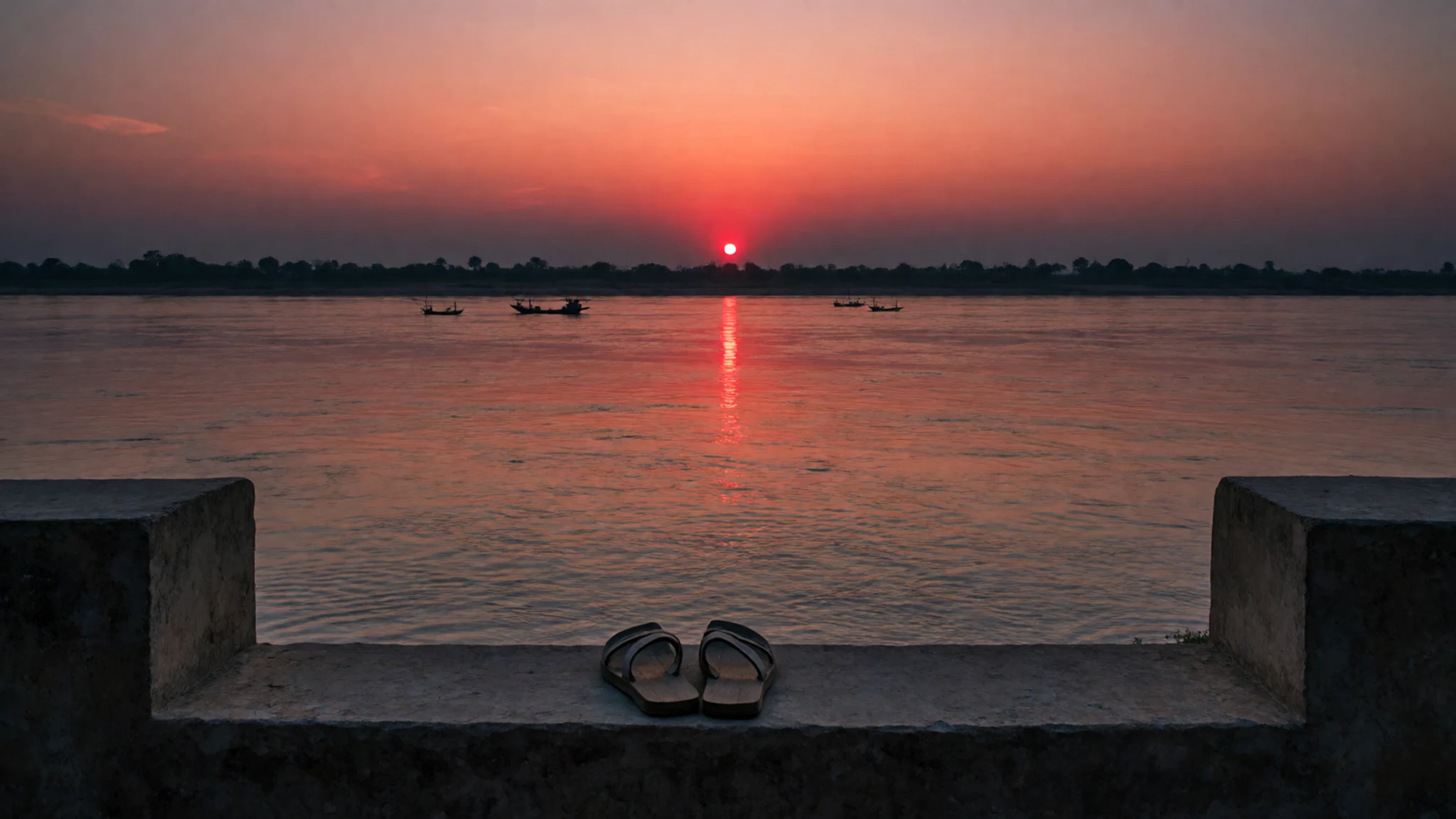
- Mekong backwaters in the dry season — Riverbanks near Chiang Khan
When the river drops in the dry months, quiet backwaters and sandy margins appear near Chiang Khan. They make good places for a walk, a bicycle ride or simply watching fishing boats. Paths can be soft or muddy, so wear sturdy sandals or shoes.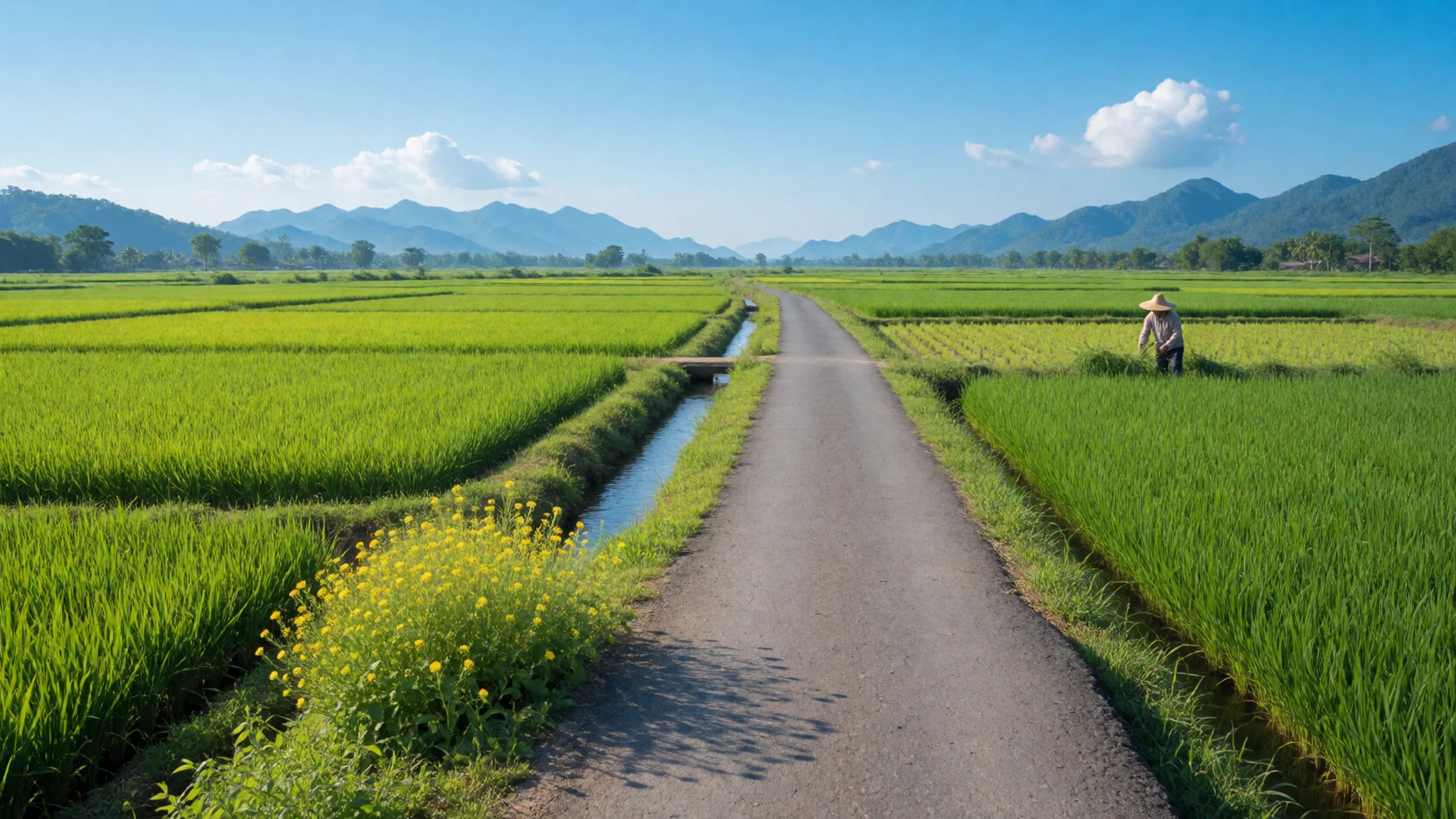
- Countryside roads and fields — Chiang Khan district
Roads out of town run through open farmland, with fields, villages and low hills in view. Cycling or hiring a motorbike gives the best sense of the district's ordinary life. Go early or late, as midday heat is strong and shade is scarce.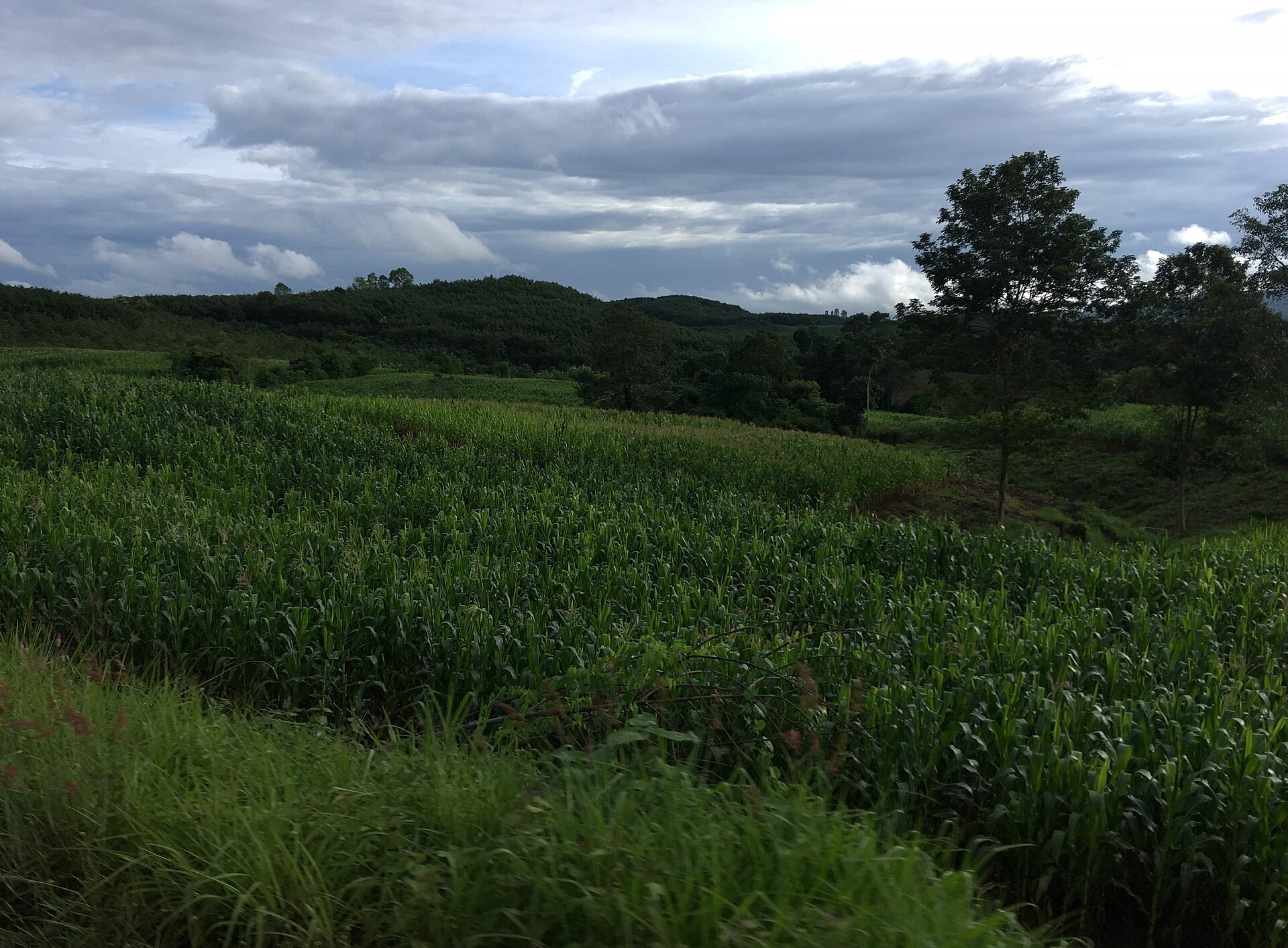
Culture
Chiang Khan is a Thai town with a Lao heart, and its culture shows it. The Isaan region of the north-east shares language, music, food and Buddhist practice with the other side of the Mekong, and generations of crossing the river have blurred the line between the two. Daily life here is shaped by temple routines, family businesses and a relaxed attitude to time. Local people tend to be easygoing with visitors, though a town this small feels the weight of weekend crowds, and residents are used to tourists treating their front rooms and shopfronts as scenery. Theravada Buddhism sets the rhythm. Monks walk through the streets in the early morning to receive food offerings, and temples remain real places of worship, not just sights. Festivals follow the Buddhist and agricultural calendars, and riverside life still revolves around the Mekong, whether for fishing, small trade or simply evening gatherings on the bank. The old timber houses are homes and shops as well as photo subjects. Many families have lived in them for generations, and some have been converted with care, others less so. Spending money at local eateries, craft stalls and family-run guest houses is the simplest way to support the people who kept the town going through its quiet years. When photographing monks, residents or people in their homes, ask first, keep a respectful distance during morning alms rounds, and never step in front of monks or block their path.
What to wear
Traditional dress in Chiang Khan belongs to the wider Isaan and Lao textile world. Women wear the pha sin, a tubular hand-woven skirt in cotton or silk, often patterned with mudmee, a tie-dyed ikat technique in which the thread is dyed before weaving. Men traditionally wear the pha khao ma, a checked cotton cloth, and dark indigo-dyed cotton shirts. These garments appear at temple festivals, weddings, ceremonies and local celebrations, and many families still weave or prize cloth made by relatives. In daily life, people dress simply and for the heat. T-shirts, light trousers, shorts, cotton shirts and sandals are normal, with a hat or umbrella against the sun. On the riverfront, visiting Thai families often dress up for photos in retro or traditional-style clothes, and rental shops for such outfits have appeared. Visitors should wear light, breathable cotton or linen, with a hat, sunglasses and sunscreen for the hot months. Pack a thin rain layer for the wet season and a light jumper for cool evenings in the winter months. For temples, cover shoulders and knees and choose shoes that slip off easily. Comfortable sandals or trainers are best for cycling, rocky riverbanks and uneven pavements.
What to eat
- Som tam — Street stalls and small eateries along the riverfront and in the town's markets
Som tam is shredded green papaya pounded with chilli, lime, fish sauce and peanuts. The Isaan version leans salty, sour and fiercely spicy, with Lao-style fermented fish sauce in some stalls. Ask for it mild if chilli is a worry, and eat it with sticky rice.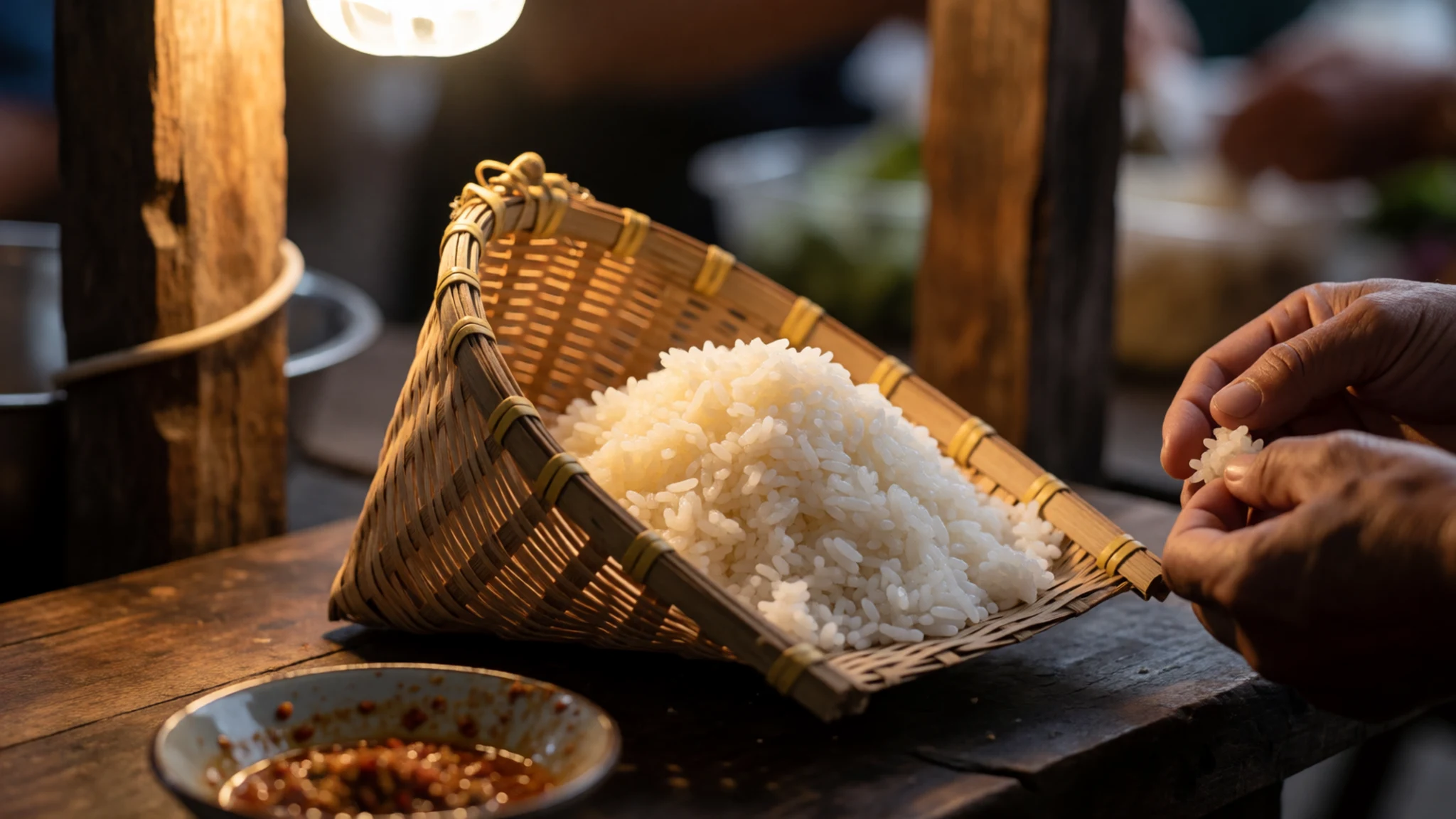
- Larb — Isaan-style restaurants and evening street food stalls
Larb is a minced meat salad, usually pork, chicken or duck, dressed with lime, fish sauce, chilli, herbs and toasted ground rice. It shows the Lao influence on local cooking clearly. Eaten warm or at room temperature, it pairs naturally with sticky rice and raw vegetables.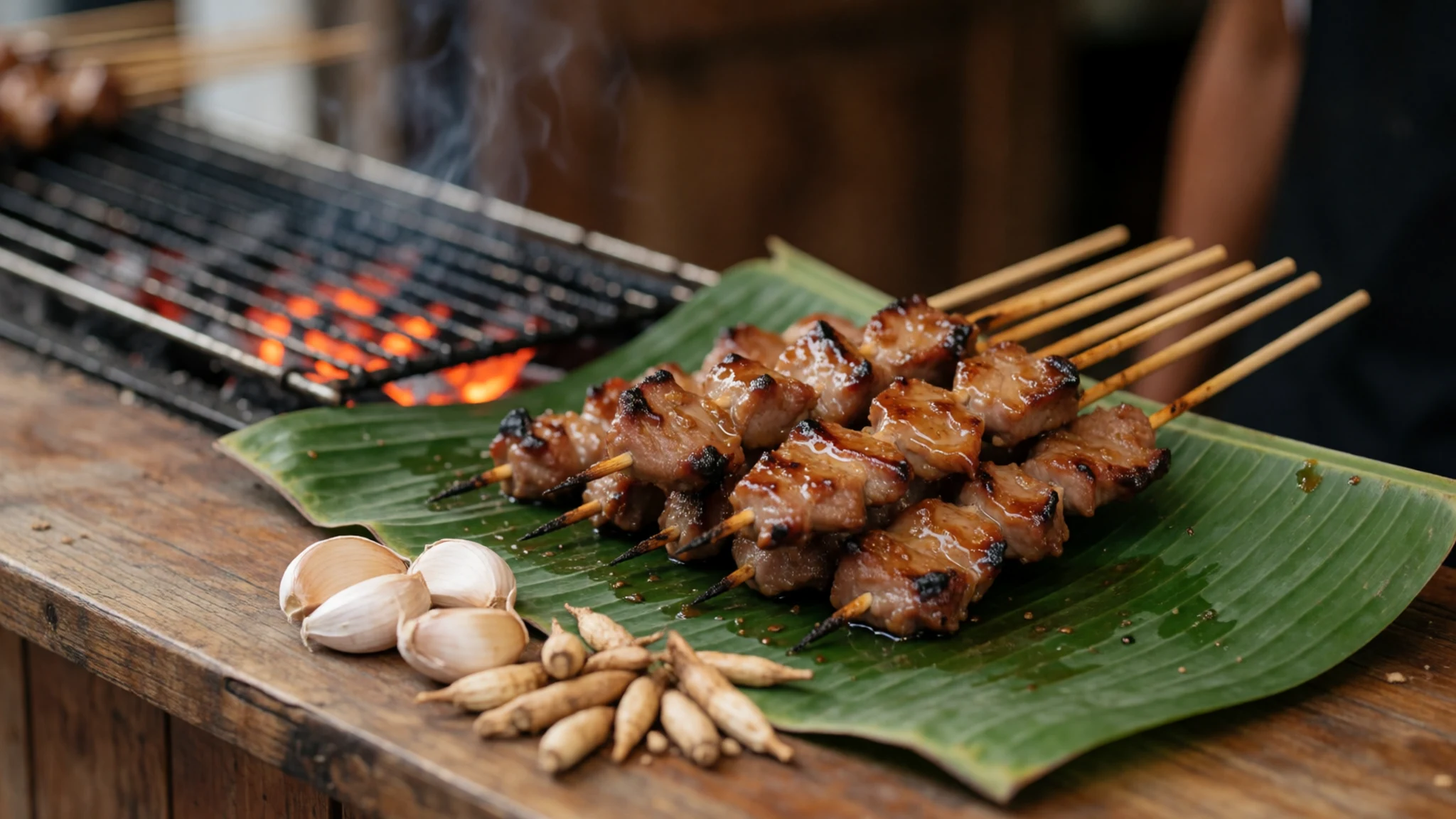
- Kai yang with sticky rice — Roadside grill stalls and the morning market
Kai yang is chicken marinated in garlic, pepper and coriander root, then grilled slowly over charcoal. It is served with sticky rice, which is rolled into small balls by hand, and a sweet-sour chilli dip. Simple, filling and well suited to a riverside picnic. - Grilled Mekong fish — Riverside eateries and night-time food stalls
Fish from the Mekong, often grilled whole in salt and herbs, reflects the river's long role in local life. It arrives with dipping sauces and sticky rice. Ask the cook what is fresh that day, and be careful with bones. - Sai krok Isan — Walking street stalls and market grills
Sai krok Isan is a sour, fermented pork and rice sausage, grilled until lightly charred and eaten with fresh ginger, chilli and cabbage. Its tang is distinctive and quite different from Western sausages. It makes a good snack while strolling the evening street.
Plan it
Best time. November to February, when the air is cooler and drier and evenings by the river are pleasant. March to May is very hot, June to October is the rainy season with higher river levels and humid days, and the dry season brings sandy backwaters.
How long. 2–3
Getting there. Loei Airport (LOE), about 50 km away, is the closest airport, with shuttle buses, taxis and car hire for the last leg. Day and night buses run direct from Bangkok. By rail, the nearest station is Nong Khai on the Lao border, with onward buses to Chiang Khan.
Budget. low
Tips
- Book guest houses ahead for weekends and public holidays, when the riverfront is busy
- Walk or cycle Chai Kong Road early in the morning, before the crowds
- Carry some cash for markets, stalls and small eateries
- Take water, a hat and sun protection, especially from March to May
- Ask locally about river levels before planning boat trips to the rapids
Etiquette
- Cover shoulders and knees and remove shoes when entering temple buildings
- Ask before photographing monks or residents, and keep your distance during morning alms rounds
- Keep noise down in the evening in the old timber streets, where people live above the shops
Nearby
Sources
- Wikidata Q475387 (CC0)
- Wikipedia: Chiang Khan district (rev 1375475659) (CC BY-SA 4.0)
- Wikivoyage: Chiang Khan (rev 5269309) (CC BY-SA 4.0)
- Photo: Kaeng Khut Khu (Thaweesak Churasri) (CC BY 3.0)
- Photo: Fields in Chiang Khan District (Christophe95) (CC BY-SA 4.0)
- Photo: Mekong River (Thaweesak Churasri) (CC BY 3.0)
- Photo: Mekong backwater near Chiang Khan (Martin Püschel) (CC BY 3.0)
- Photo: Road 201 in That, Chiang Khan District (Christophe95) (CC BY-SA 4.0)
- Photo: Mekong bei Chiang Khan 01 (Ziegler175) (CC BY 3.0)
- Photo: Mekong bei Chiang Khan 02 (Ziegler175) (CC BY 3.0)
- Photo: Mekong bei Chiang Khan 03 (Ziegler175) (CC BY 3.0)


