Chiang Rai
Chiang Rai, Thailand
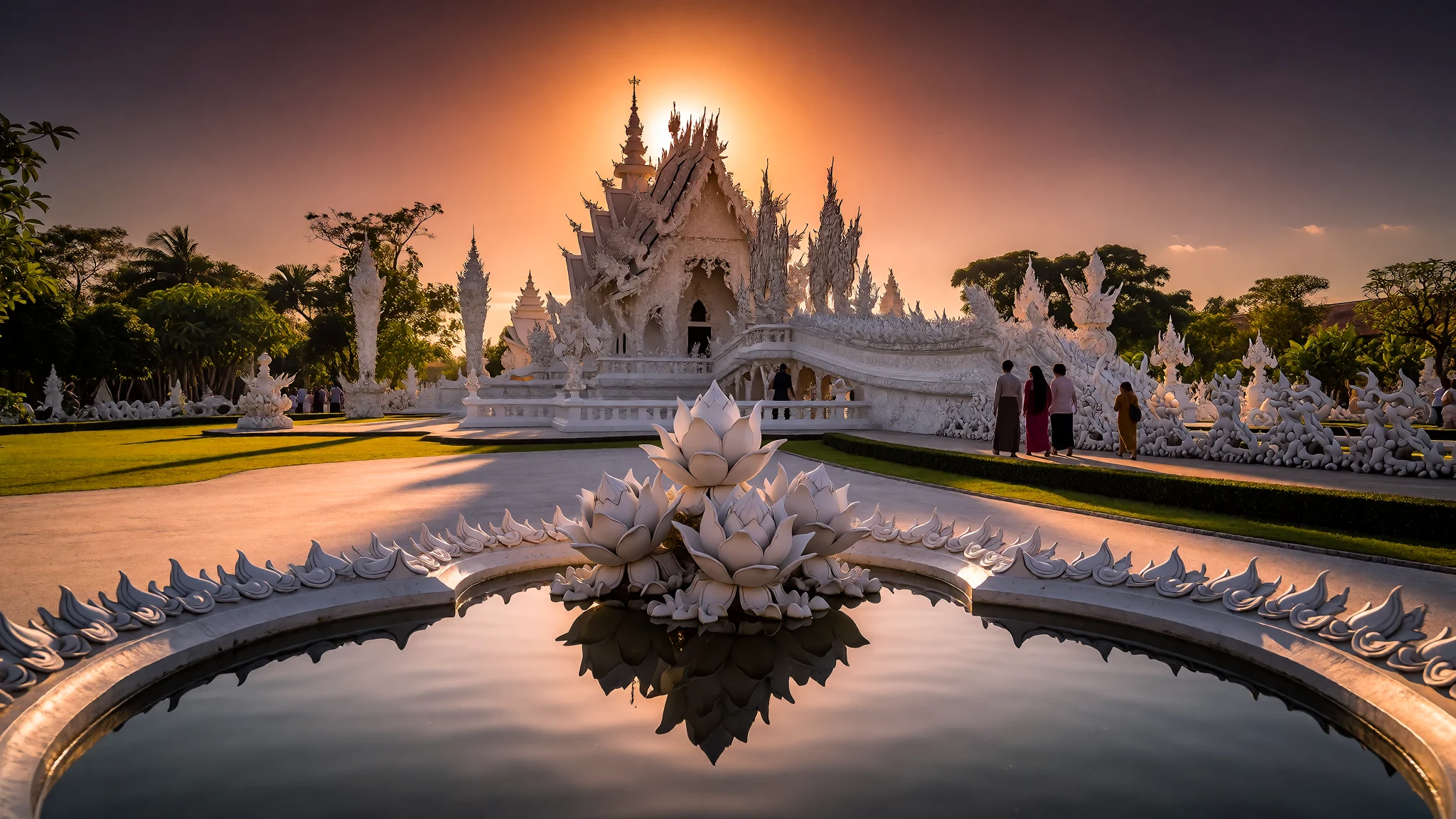
Chiang Rai is Thailand's cool, hilly far north, where temples, tea hills and a three-country river border sit within a day's drive.
The place
Chiang Rai is Thailand's northernmost province, a hilly corner of the country where about 1.3 million people live between the Mekong and the ranges that run towards Myanmar. Laos lies to the east across the river and Myanmar to the north, while the Thai provinces of Phayao, Lampang and Chiang Mai close the circle to the south and west. A bridge over the Mekong joins the province to Houayxay in Laos.
The average elevation is 580 metres, so the air is cooler than on the central plains, and winter mornings in the hills can feel properly chilly. The east is mostly flat river plain. The north and west climb into the Daen Lao, Phi Pan Nam and Khun Tan ranges. Doi Tung, at 1,389 metres, is the landmark peak, with a temple on its summit and a royal villa on its slopes. The Kok River runs through Chiang Rai town itself, and the Lao River, one of its tributaries, lies to the south.
In the far north is the Golden Triangle, where Thailand, Laos and Myanmar meet at the river. The area was long associated with drug smuggling across the borders. Today the farmland around it grows coffee, tea, pineapple, coconut and bananas, and tourism has taken over much of the story. The town is small and easy to cover on foot or by short taxi rides. It works best as a base for day trips into the hills and along the border, rather than as a city of grand monuments.
Its story
Chiang Rai was founded in 1262, though people had been settled in the area since the 7th century. In the 13th century it became the centre of the Lanna Kingdom, the northern Thai realm whose later capital was Chiang Mai. The region was rich in natural resources, and Burmese forces held it until 1786.
After Lanna was folded into Siam, the northern lands kept a good deal of autonomy, and for a time Chiang Rai was run from Chiang Mai. It became a province in its own right in 1910. Hill communities such as the Akha, Lahu, Hmong, Karen and Mien, who live across the highlands, add to the area's long mix of cultures.
The twentieth-century image of the north was shaped by opium. The Golden Triangle on the border was a hub of production and trafficking for years. Government campaigns, crop substitution and projects such as the royal development work on Doi Tung gradually moved farmers towards coffee, tea and orchards, and the border area was reinvented as a place to visit.
The frontier still matters. Refugees from Myanmar, including Rohingya, have at times been moved through the province on routes that start far to the south. Floods have also struck several districts in recent years, a reminder that the same rivers that feed the plains can rise fast in the rains. Chiang Rai is a living border province, not a museum piece.
What to see
- Wat Rong Khun (the White Temple) — South of Chiang Rai town
Wat Rong Khun is a modern temple covered in white plaster and mirror glass, built as a contemporary artwork rather than an ancient monument. Expect tour groups and a lot of photography. Go early, before coaches arrive, and look closely at the sculpted details and the painted interior.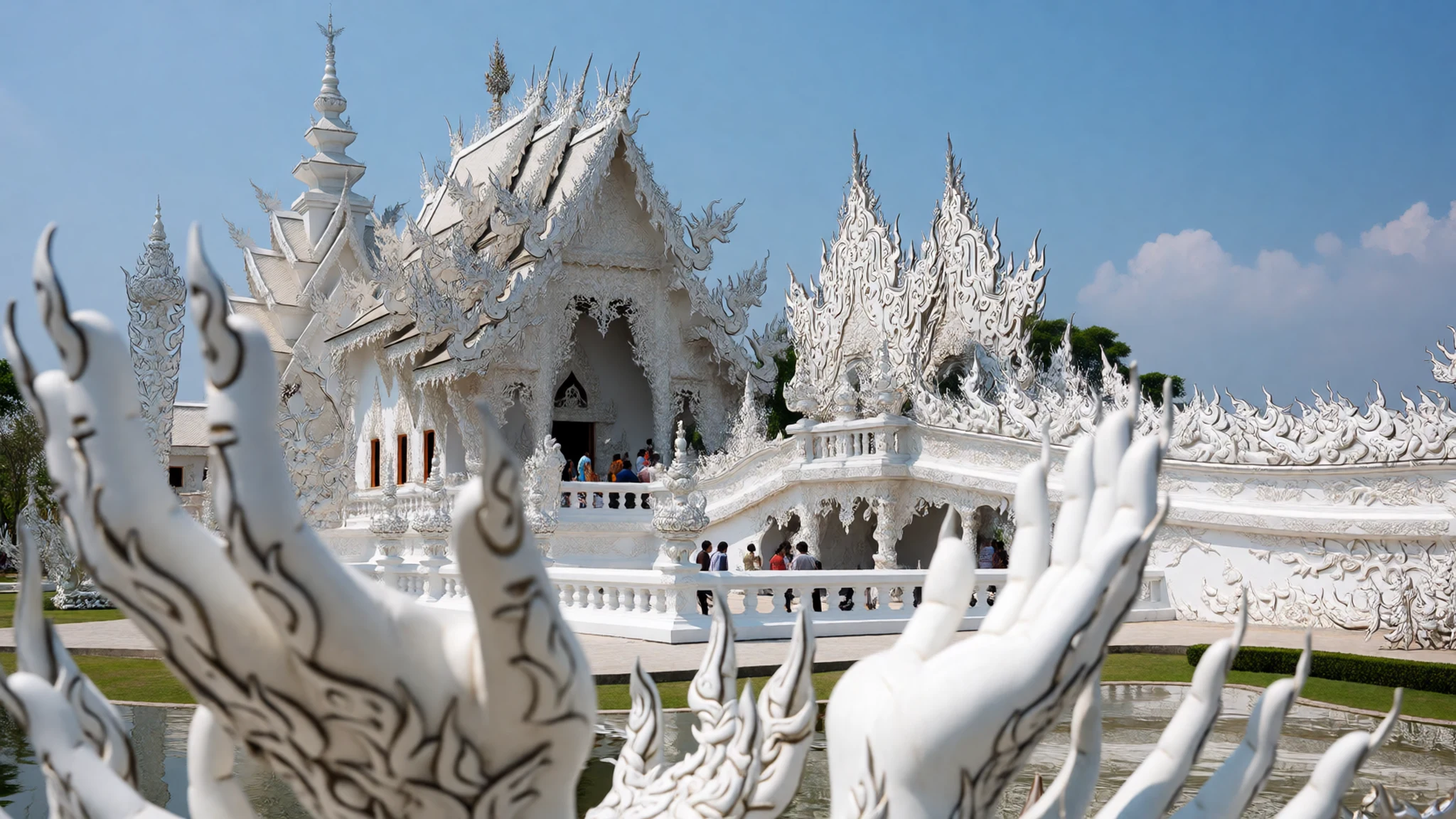
- Wat Rong Suea Ten (the Blue Temple) — North of the Kok River, Chiang Rai town
Wat Rong Suea Ten is a newer temple finished in deep blue and gold, with a white Buddha image inside. It is smaller and calmer than the White Temple and easy to pair with it on a half-day. Light inside is low, so give your eyes a minute to adjust.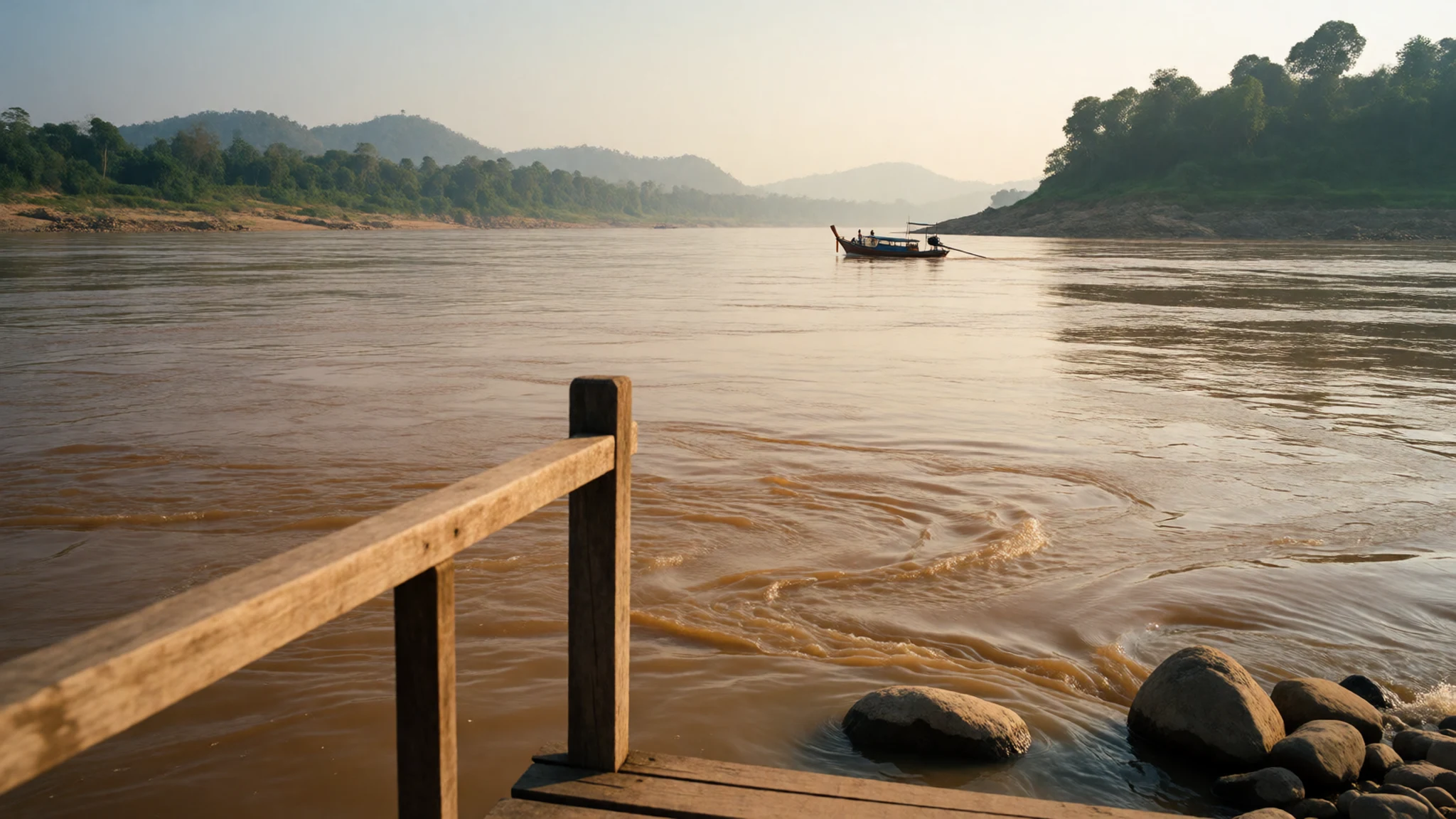
- Doi Tung and the Royal Villa — Doi Tung, north-west of the town
Doi Tung is the 1,389-metre mountain whose summit temple, Wat Phra That Doi Chom Thong, is said in the chronicles to date from 911. Lower down is the former residence of the late princess mother, now a visitor site. Roads are winding, so allow a full day and check the official site for opening details.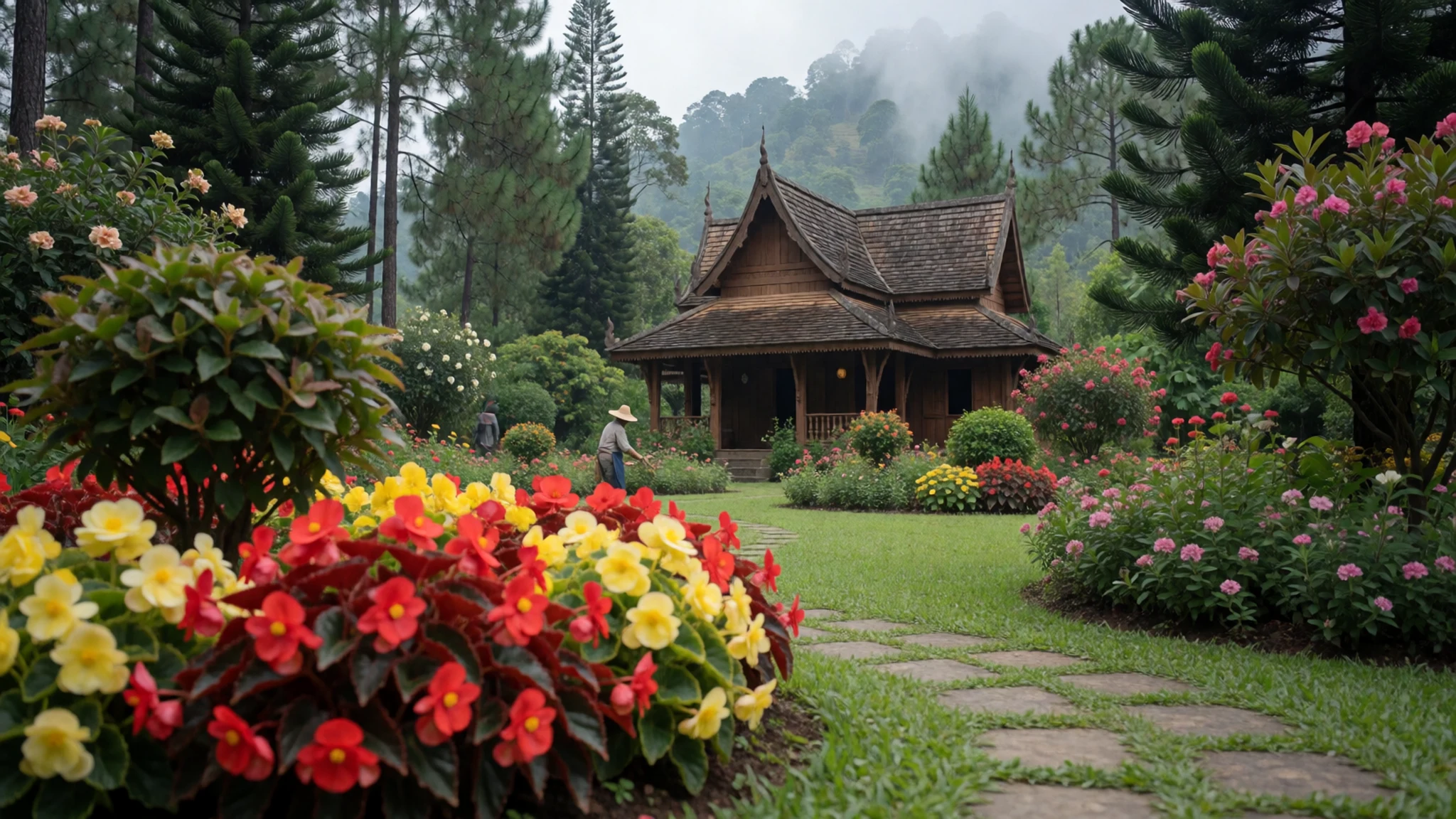
- The Golden Triangle — Far north, at the Mekong and Ruak rivers
The Golden Triangle is the point where Thailand, Laos and Myanmar meet along the river. The drugs era is now history, and the draw is the wide river view, riverside temples and boat trips. It is a busy stop on tour routes, so late afternoon tends to feel quieter.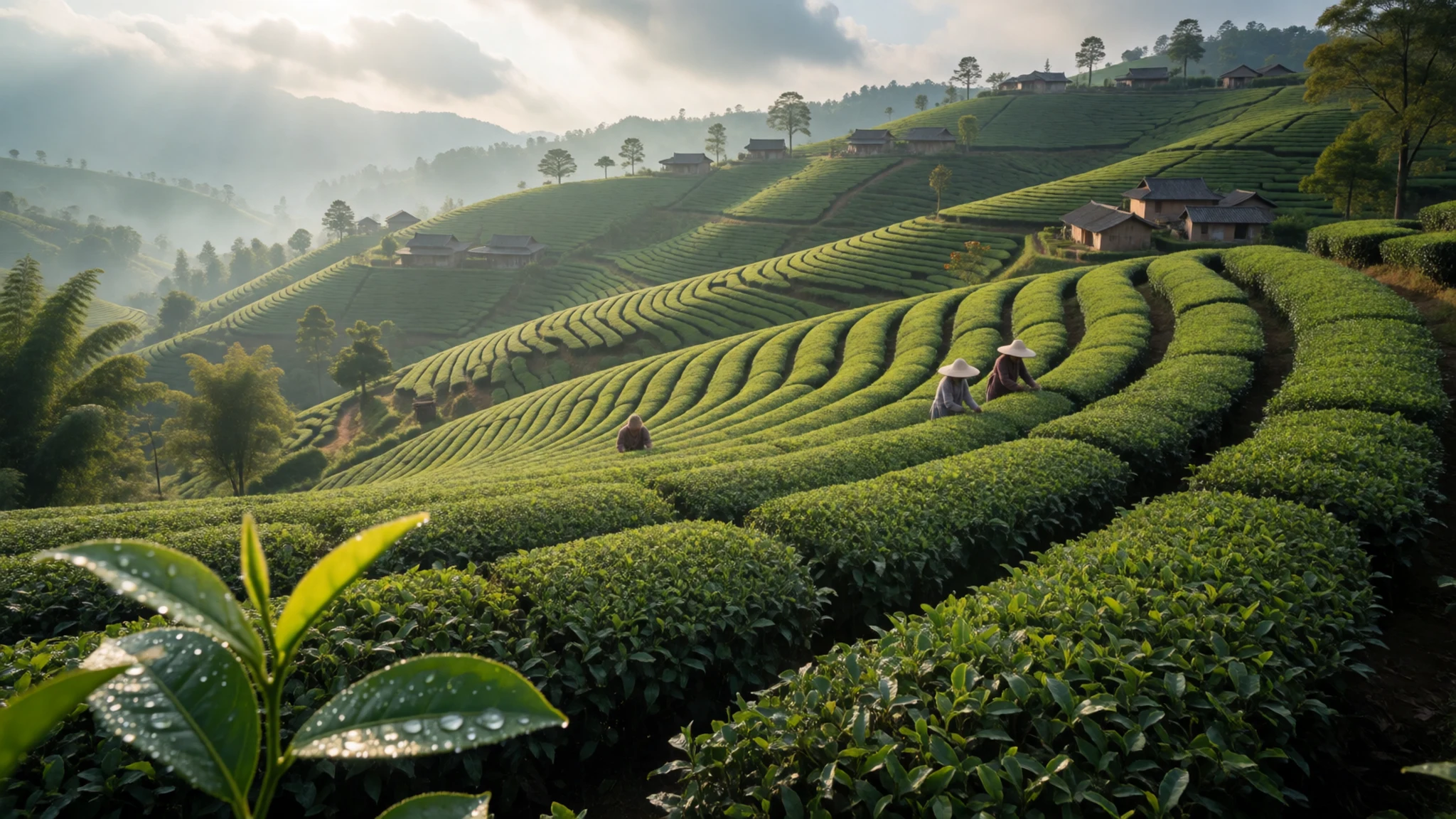
- Chiang Rai Clock Tower — Central Chiang Rai town
The golden Chiang Rai Clock Tower stands at a roundabout in the middle of town. It is a reference point for walking around and a pleasant place to be after dark, when the tower is lit up and performs a short light show. The evening street food nearby is a good reason to linger.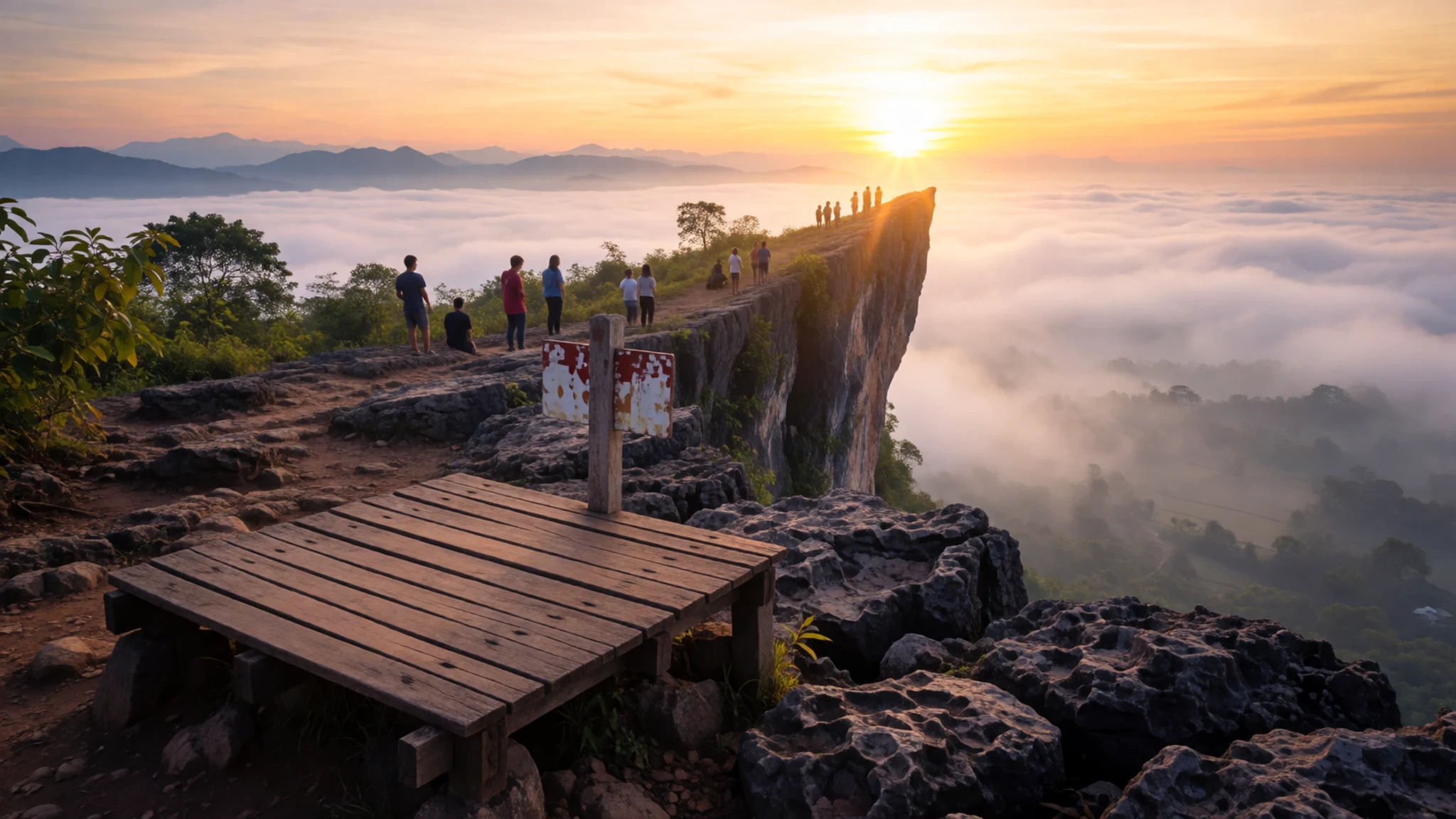
- Doi Wawi tea hills — North-west of Chiang Rai town
Doi Wawi is a Chinese community in the northern highlands and one of Thailand's tea-growing areas. Visitors can walk through the village, taste tea, buy leaf to take home and sometimes visit the plantations. Cool air and terraced slopes make it a restful change from the temple circuit.
Culture
Chiang Rai sits at the meeting point of Thai Buddhist, Lanna, Chinese and highland cultures. Most people in town follow Theravada Buddhism, and temples are working places for merit-making, festivals and daily alms rounds, not only sights. Lanna heritage shows in northern dialect, in the local style of temple roofs and carving, and in a slower, softer way of speaking than in Bangkok.
The highlands bring other traditions. Communities such as the Akha, Lahu, Hmong, Karen and Mien each have their own languages, festivals, music and embroidery. Visits to villages can be rewarding when arranged through a reputable guide or with permission from the village headman, and a small donation is welcomed. Be wary of staged villages that charge entry to look at people. Some of them are run by outside owners, and the villagers working there receive little of the money.
The Chinese community in the hills, around places like Doi Wawi, has a long tea-growing tradition. Markets, shrines and food all reflect the mix of cultures that moved along these borders.
The king and royal family are deeply respected across Thailand, and Doi Tung has strong royal associations, so criticism or jokes about them are unwelcome. At temples and royal sites, dress modestly, take off your shoes before entering any hall that has a step up or shoes lined outside, and never point your feet at a Buddha image or touch a monk if you are a woman.
What to wear
Traditional dress in Chiang Rai draws on Lanna and highland styles. Lanna textiles include hand-woven cotton and silk, often with a woven or embroidered band at the hem of a tube skirt called a phasin. Men may wear a loose indigo-dyed cotton shirt called a mo hom, which is common in northern Thailand. These are worn at festivals, weddings, temple ceremonies and for photographs.
The highland peoples have their own clothing. Akha women wear headdresses decorated with silver and beads, Hmong clothing uses batik and fine embroidery, and Karen weaving is known for bold red and striped patterns. These outfits are mostly worn on festival days or sold as crafts, while many families wear ordinary clothes day to day.
Day to day in town, people wear light, practical clothing: cotton shirts, trousers or knee-length skirts, and sandals or trainers. Cool season mornings bring out jackets, scarves and fleece, which can surprise visitors who expect tropical heat. Students and office staff in uniforms are a regular sight.
For visitors, pack light, breathable fabrics for the day and a layer for cool evenings and the hills. At temples, wear tops that cover the shoulders and skirts or trousers that cover the knees, and carry a scarf to wrap if needed. Slip-on shoes make life easier because they come off at every temple door. Good walking shoes or sandals with grip are useful on hill trails and uneven village paths, and a rain jacket helps in the wet months.
What to eat
- Khao soi — Noodle shops and night markets around Chiang Rai town
Khao soi is the signature northern noodle dish: egg noodles in a mild, curried coconut broth, usually with chicken or beef and topped with crisp fried noodles. Pickled mustard greens, shallots and lime come on the side. Add them to taste.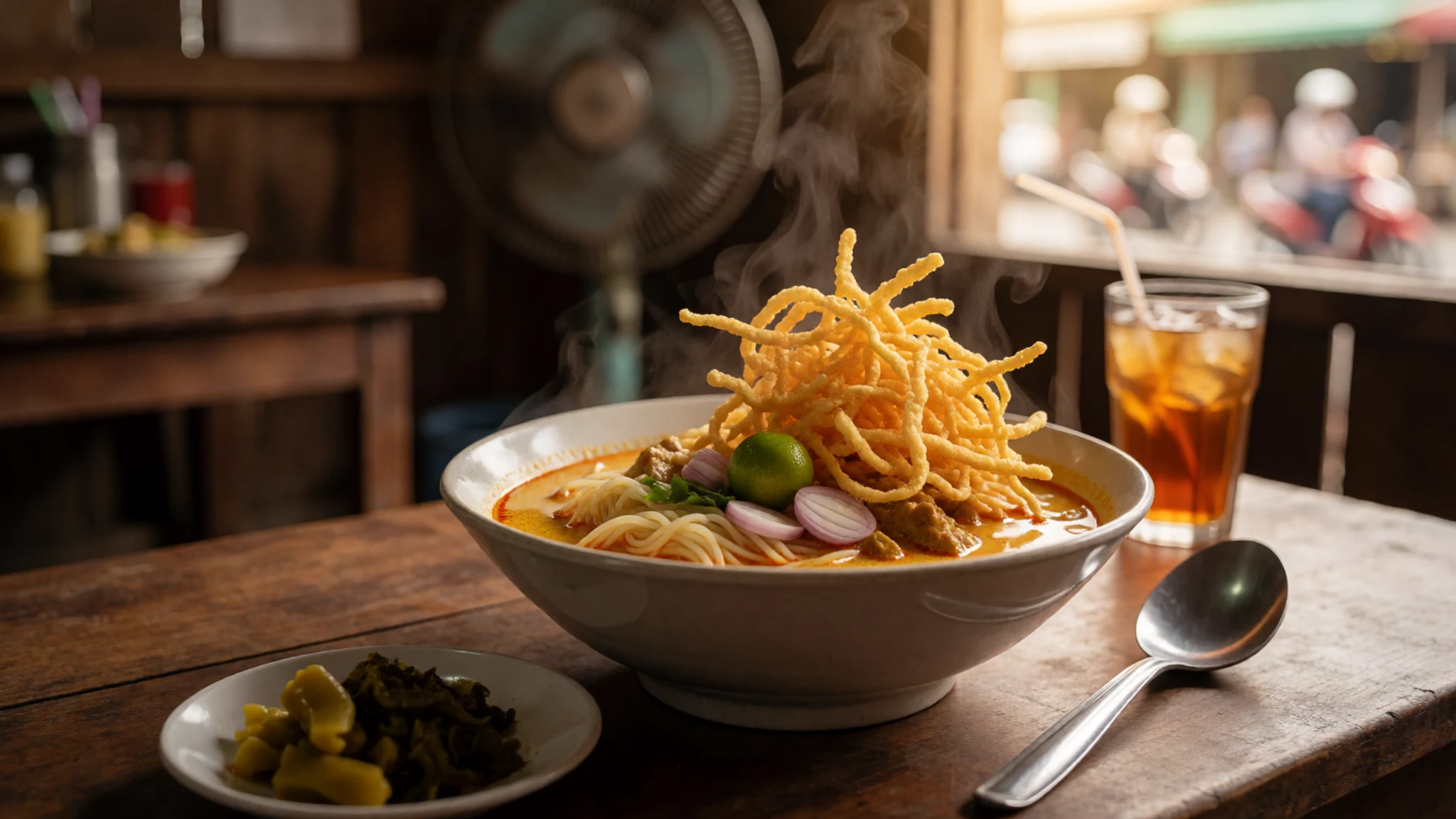
- Sai ua — Morning markets and roadside grill stalls
Sai ua is a northern pork sausage packed with lemongrass, galangal, kaffir lime leaf and red curry paste. It is grilled over charcoal and sliced, and the smell leads you to the stall. It goes well with sticky rice and fresh herbs.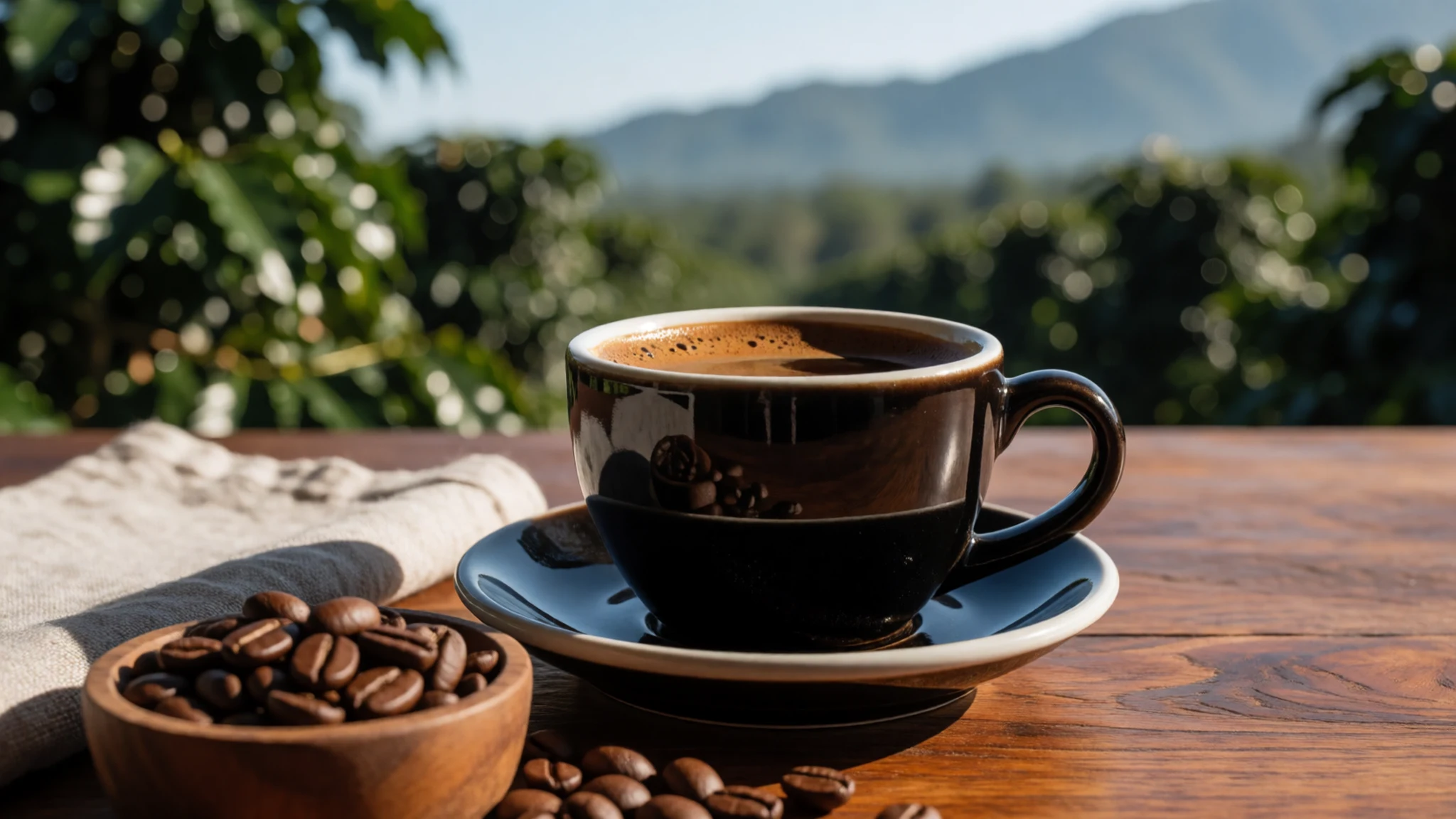
- Khanom jeen nam ngiao — Local morning markets and small eateries
Khanom jeen nam ngiao is a tomato and pork-rib broth poured over fresh rice noodles, with herbs and crunchy vegetables on the side. It is tangy, gently spiced and common as a breakfast or lunch in the north. - Nam prik noom with sticky rice — Market stalls and family-run village eateries
Nam prik noom is a smoky dip made from grilled green chillies, shallots and garlic, eaten with sticky rice, fried pork rinds and fresh or steamed vegetables. It is a northern staple that tastes best in a simple, relaxed setting. - Local coffee and tea — Cafés in town and plantations in the hills
The hills around Chiang Rai grow coffee and tea. Doi Chaang is a well-known coffee brand grown and roasted in the mountains, and Doi Wawi is a tea area. A tasting at a café or plantation is a good way to taste the landscape.
Plan it
Best time. November to February is the most comfortable stretch, with cooler, drier weather and clear hill views, though early mornings in the highlands can be cold. March to May is hot, and smoke from seasonal burning can haze the north. The rains come mid-year, which keeps the hills green but makes some roads slippery.
How long. 2–4
Getting there. Chiang Rai International Airport (CEI) has flights to Bangkok (both airports), Hat Yai and Phuket. The nearest railway station is in Chiang Mai. Air-conditioned coaches run from Bangkok's Northern Bus Terminal (Mo Chit) and take about 12 hours. Local buses and taxis cover the last leg to the sights, and hiring a car with a driver is common for day trips.
Budget. low
Tips
- Visit the White Temple and the Blue Temple early in the morning to beat the tour groups
- Hire a driver or join a small group for Doi Tung and the Golden Triangle, as the sights are spread out and the hill roads are winding
- Carry some cash for markets, small cafés and village stalls, and check opening details for sights on official sites before travelling
- Pack a warm layer for the cool season, and sun protection and rain gear for the rest of the year
- If visiting a hill village, go with a reputable guide or ask the headman, and avoid places that charge to look at people
Etiquette
- Dress modestly at temples and remove your shoes before entering halls
- Treat images of the Buddha and the royal family with respect, and do not point your feet at them
- Ask before photographing villagers and monks, and offer a small donation when you stay in a village
Nearby
Sources
- Wikidata Q236419 (CC0)
- Wikipedia: Chiang Rai province (rev 1379965286) (CC BY-SA 4.0)
- Wikivoyage: Chiang Rai Province (rev 5394823) (CC BY-SA 4.0)
- Photo: Chiang Rai, Christopher Michel (CC BY 2.5)
- Photo: Wat Phra Keaw, Ddalbiez (CC BY-SA 2.5)
- Photo: Chiang Rai Clock Tower, Chainwit. (CC BY-SA 4.0)
- Photo: Wat Rong Khun, Nina R (CC BY 2.5)
- Photo: Doi Tung Royal Villa, Supanut Arunoprayote (CC BY 4.0)
- Photo: Wat Rong Suea Ten, Nina R (CC BY 2.5)
- Photo: Pu Chi Fah, Pulperm Phungprachit (CC BY-SA 4.0)
- Photo: monument in Thailand, ร้อยตรี โชคดี (CC BY-SA 4.0)


