Doi Ang Khang
Doi Ang Khang, Thailand
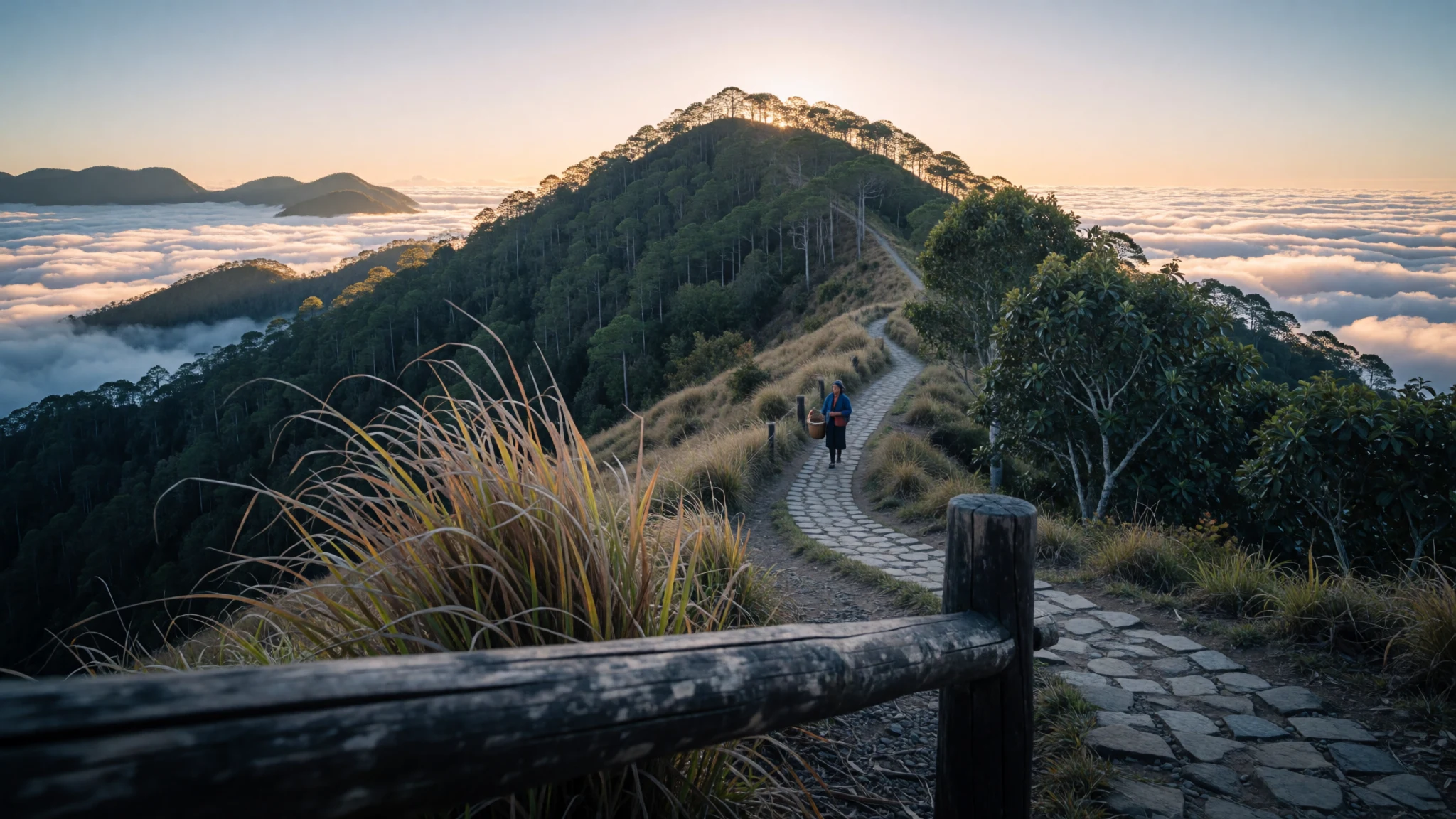
Doi Ang Khang is a cool, frosty ridge in northern Thailand where royal farms, hill villages and sea-of-cloud sunrises sit an hour above Fang.
The place
Doi Ang Khang sits in Fang District, Chiang Mai Province, close to the Myanmar frontier in Thailand's far north. The summit reaches 1928 metres, and the mountain belongs to the Daen Lao Range, whose ridges run on both sides of the border. Most visitors never head for the summit itself. They come for the royal agricultural station on the slopes, a research site set up under King Bhumibol Adulyadej and the first of its kind he started. Fields of temperate fruit, flowers and vegetables climb the hillsides, an odd sight in a country better known for rice paddies and beaches. The climate explains it. Nights stay cool all year, and December and January bring frost on the higher ground, so the landscape feels closer to a hill station than to the tropical lowlands. Rain is plentiful across the year, and April is the hottest month, though mornings stay fresh even then. Around the station are small villages of Yunnanese Chinese, Thai Yai, Burmese and Musoe families, each with its own language and habits, linked by a steep ribbon of switchbacks. From the town of Fang the drive takes about an hour, which makes Doi Ang Khang a sensible overnight stop from Chiang Mai rather than a rushed day-trip. It is quiet by Thai standards, but cool-season weekends bring Thai families in numbers, and the viewpoints fill at sunrise.
Its story
Doi Ang Khang's modern story begins with a farming experiment. King Bhumibol Adulyadej chose these slopes for the first research station of his royal project, a place to test whether temperate crops could grow in Thailand's northern hills. The wider aim of such projects in the region was to give mountain communities a legal, steadier living than the poppy fields that once covered many ridges, and the station still works as a demonstration site for flowers, fruit trees and vegetables. The people on the mountain arrived from several directions. Chinese families from Yunnan settled at Ban Luang during the Second World War and still farm there. Burmese migrants founded No Lae, where the community keeps its own language and observes Buddhist holidays at home with the precepts. Musoe families at Khop Dong have held to older ways of life and spirit beliefs, with the royal project helping them develop crops and handicrafts. Ban Khum is a mixed settlement of Burmese, Hwa and Thai Yai families who run souvenir stalls and eateries. The result is a mountain whose history is less about monuments than about displacement, farming and slow adaptation. The orchards, the bonsai garden and the cool-weather vegetables are a product of that effort, and the border, just beyond the ridges, is never far from the conversation.
What to see
- Ang Khang Royal Agricultural Station — Doi Ang Khang, Fang District
The station is the mountain's centrepiece: a working demonstration site where flowering plants, temperate fruit trees and vegetables are grown and studied. Paths wind between flowerbeds and orchards, and it is a gentle place for slow wandering. Go early, when the air is cold and the light is soft.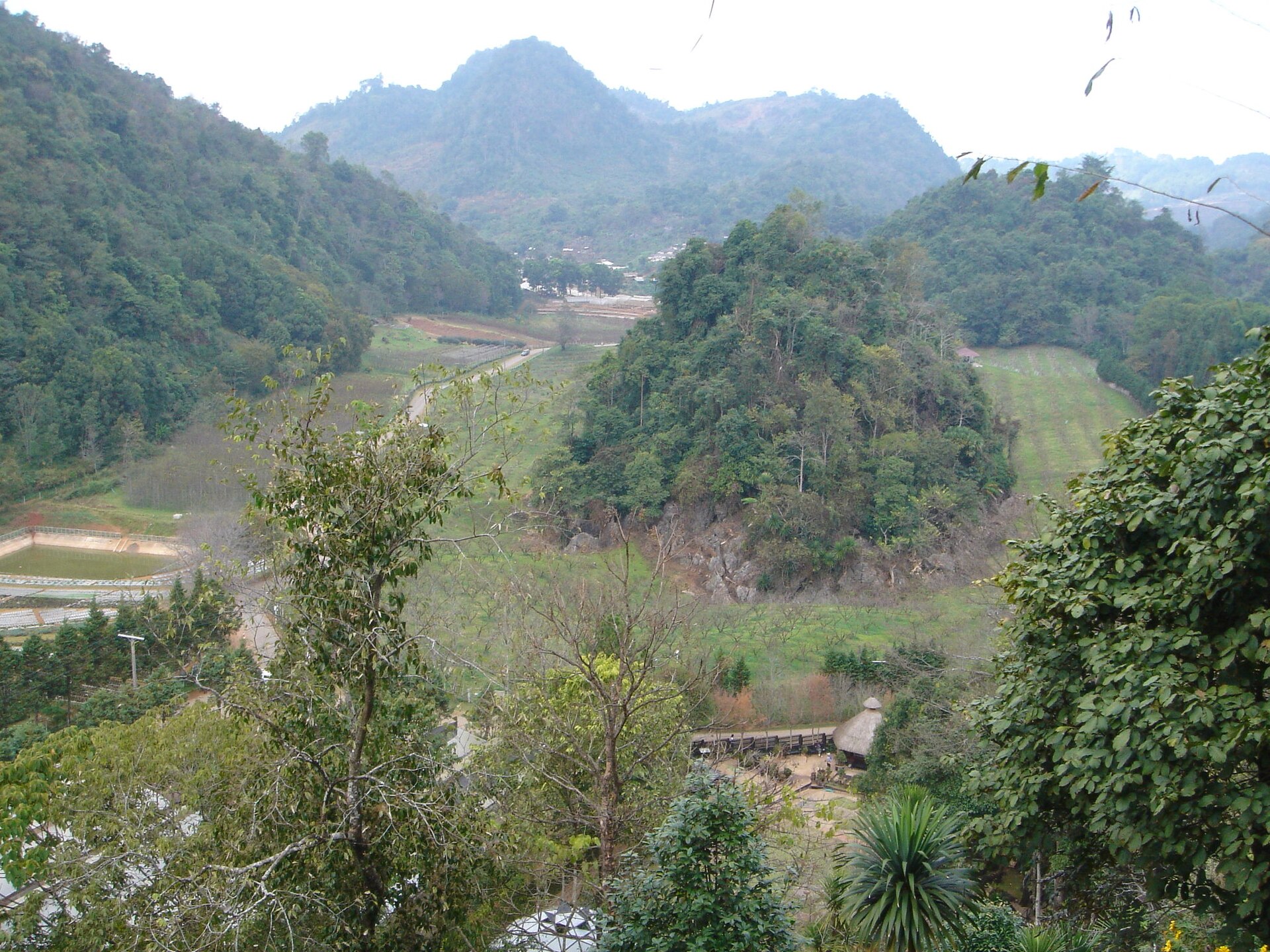
- Bonsai Garden — Royal Agricultural Station
Within the station grounds, this garden shows temperate and winter plants from Thailand and abroad, all shaped, pruned and potted in the bonsai manner. Herb beds sit alongside. It is compact and restful, a good stop when the wind on the ridge turns sharp and you want shelter and detail. - Kiu Lom Viewpoint — Ridge above the station
A lookout used for sunrise, sunset and, on lucky mornings, a sea of cloud pooling in the valleys. On clear days the station can be picked out below. Expect company at dawn, wrap up warmly, and be ready to wait; the cloud sometimes simply does not come.
- Ban Luang — Doi Ang Khang
This village was settled by Yunnanese Chinese who came during the Second World War, and farming remains the main livelihood. Walking its lanes gives a feel for how the mountain's communities differ from one another. Buy tea or fruit from stalls and ask before photographing homes or people. - Birdwatching around the resort and Mae Phoe forest station — Mae Phoe forest station and Ang Khang Nature Resort
Birdlife is a real draw here. Mrs Gould's Sunbird and the Dark-backed Sibia have both been photographed on the mountain, and the forest station and the grounds around the nature resort are the usual places to look. Dawn is best, binoculars essential, and patience matters more than a guide book.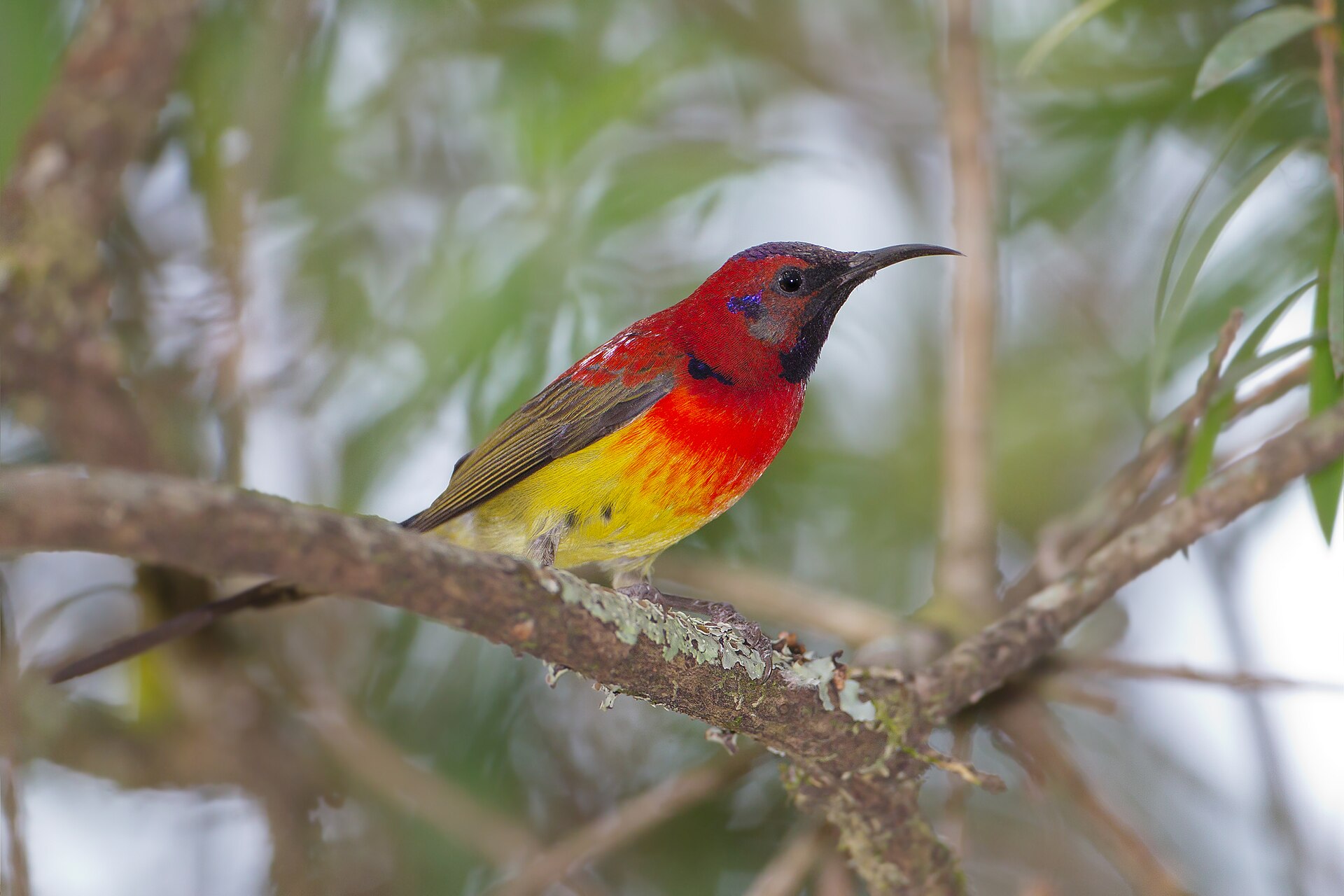
- Nature study trail — Ang Khang Nature Resort area
A short walking trail near the resort passes small waterfalls and rhododendrons, and flowering is the time to aim for. The path is modest rather than demanding, suitable for most walkers in sensible shoes. Mountain biking and mule rides, booked through the resort in advance, are other ways to cover the ground.
Culture
Doi Ang Khang is a meeting point of several peoples rather than the home of one culture. Thai Yai, Yunnanese Chinese, Burmese, Hwa and Musoe households live within a short drive of each other, and each village keeps its own language, food and festivals. Many families are Buddhist; at No Lae, residents stay home on Buddhist holidays to keep the precepts, so those days can feel especially quiet. The Musoe villagers have long held beliefs in spirits and ghosts, and that outlook shapes daily habits more than any signboard will tell a passing visitor. Royal projects have supported farming and handicrafts across these communities, which is why many villages sell woven goods, tea and fruit directly to visitors. Respect for the monarchy runs deep in Thailand, and the station carries that association; behave there as you would at any royal site, calmly and without joking about the royal family. Thai families who come up for the cool air treat the mountain as a holiday spot, so weekends have a cheerful, picnic mood. Evenings are quiet, and many places close early. Ask before you photograph anyone in a village, especially women, children and elders, and never walk into a home compound or a spirit shrine uninvited.
What to wear
The mountain's traditional dress varies by community. Hill peoples across northern Thailand are known for hand-woven or embroidered cotton, often dyed deep indigo, with jackets, wrapped or baggy trousers, headcloths and silver jewellery. Thai Yai and Yunnanese families tend to favour their own styles for weddings, New Year gatherings and Buddhist holidays, while Musoe women may wear embroidered outfits at festivals. Such clothing is mostly kept for occasions, and you are more likely to see it on ceremony days than on an ordinary Tuesday. Everyday dress now is practical: fleeces, wool hats, jeans, boots and scarves, since the air is cold on winter mornings and Thai visitors arrive in puffer jackets and bobble hats that look amusing against the tropical stereotype. Farmers wear rubber boots and layers for the fields. A visitor should pack for a cool hill climate, not a beach holiday. Bring a warm fleece or down jacket, a windproof layer, long trousers and a hat for dawn viewpoints, with a light rain shell for showers. Shoes with grip matter on steep paths and steps, particularly near the bungalows. Cover shoulders and knees when entering village temples, and keep clothing modest in settlements. Sunscreen is still useful at this altitude, even when the air feels cold.
What to eat
- Khao soi — Muslim-run eateries near the station and village centre
The northern Thai curry noodle, with a coconut-rich broth, egg noodles and crisp noodles on top, is a staple on the mountain. A Muslim-run eatery here has drawn praise in the press for its version. Look for it among the small restaurants near the station. - Yunnan-style braised pork with steamed buns — Family restaurants in Ban Luang
Ban Luang's Chinese heritage shows in slow-braised pork, soft steamed buns and pickled greens, served at simple family tables. Portions are generous, flavours savoury and gently sweet, and it suits the cold weather. Ask what the cook recommends that day. - Fresh strawberries and temperate fruit — Roadside stalls and the station's shops
The station's cool conditions allow fruit rarely seen in lowland Thailand. Strawberries are the usual find in the cool season, sold fresh or as jam from roadside stalls. Ask what is ripe, since availability follows the weather. - Hill tea — Tea shops and stalls in Ban Luang and Ban Khum
Tea grows on the surrounding slopes, and village shops serve it in small pots with local snacks. Some Yunnanese households brew it strong and drink it all afternoon. Buy loose leaf as a souvenir, and sniff before buying. - Sai ua with sticky rice — Market stalls and restaurants around Ban Khum
The herb-packed northern Thai sausage is grilled until smoky, fragrant with lemongrass and chilli, and eaten with sticky rice and fresh vegetables. It warms you on a cold evening. Order it alongside chilli dips and greens for a proper northern meal.
Plan it
Best time. November to February for cool, clear mornings and the best chance of a sea of cloud; December and January can bring frost, so pack warm layers. April is the hottest month, and the rainy season runs through the middle of the year, leaving paths muddy and views hazy.
How long. 2
Getting there. Fly to Chiang Mai, the nearest major airport, then drive north towards Fang on the main Chiang Mai–Fang highway. Turn off near the Mae Kha market and follow the steep, zigzagging road up the mountain; vehicles should be sound and drivers experienced. Songthaews from Mae Kha run irregularly, so expect to charter one.
Budget. low
Tips
- Book bungalows and the resort's mule rides ahead, especially on cool-season weekends
- Be at the viewpoints before sunrise, with a warm jacket, gloves and a hat
- Carry cash for village stalls and small eateries, as card machines are rare
- Travel light if staying in the bungalows, since many sit up flights of steps
- Fill up with fuel and check brakes before the mountain road
Etiquette
- Ask before photographing villagers, homes or spirit shrines
- Stay on marked paths in the station and farms, and do not pick flowers or fruit
- Keep noise low at dawn viewpoints and in the evenings, when villages are quiet
Nearby
Sources
- Wikidata Q13014798 (CC0)
- Wikipedia: Doi Ang Khang (rev 1368967327) (CC BY-SA 4.0)
- Wikivoyage: Doi Ang Khang (rev 5401192) (CC BY-SA 4.0)
- Photo: Mrs Gould's Sunbird, JJ Harrison (CC BY 3.0)
- Photo: Dark-backed Sibia, JJ Harrison (CC BY 3.0)
- Photo: Daen Lao range view, Fang district, Takeaway (CC BY 3.0)
- Photo: Ang Khang Royal Agricultural Station, Teeradondon (CC BY 3.0)
- Photo: Camping tent at Doi Angkhang, Ditsakul (CC BY 3.0)
- Photo: Mountains in Doi Angkhang (pagebanner), NorthThailander (CC BY-SA 4.0)
- Photo: Mountains in Doi Angkhang, NorthThailander (CC BY-SA 4.0)
- Photo: Misty morning at Doi Angkhang, Ditsakul (CC BY 3.0)


Wildlife
- Mrs gould's sunbird (animal)
Mrs Gould's sunbird is a bird of the sunbird family, named for a lady, that lives in woods and scrubby country from the Himalayan foothills across to Southeast Asia. On Doi Ang Khang it has been photographed, and the best places to try are near the forest station and in the resort gardens. Ask a local guide about the best season and time of day. Keep your distance, stay quiet, let the bird come and go as it pleases, and never offer it food.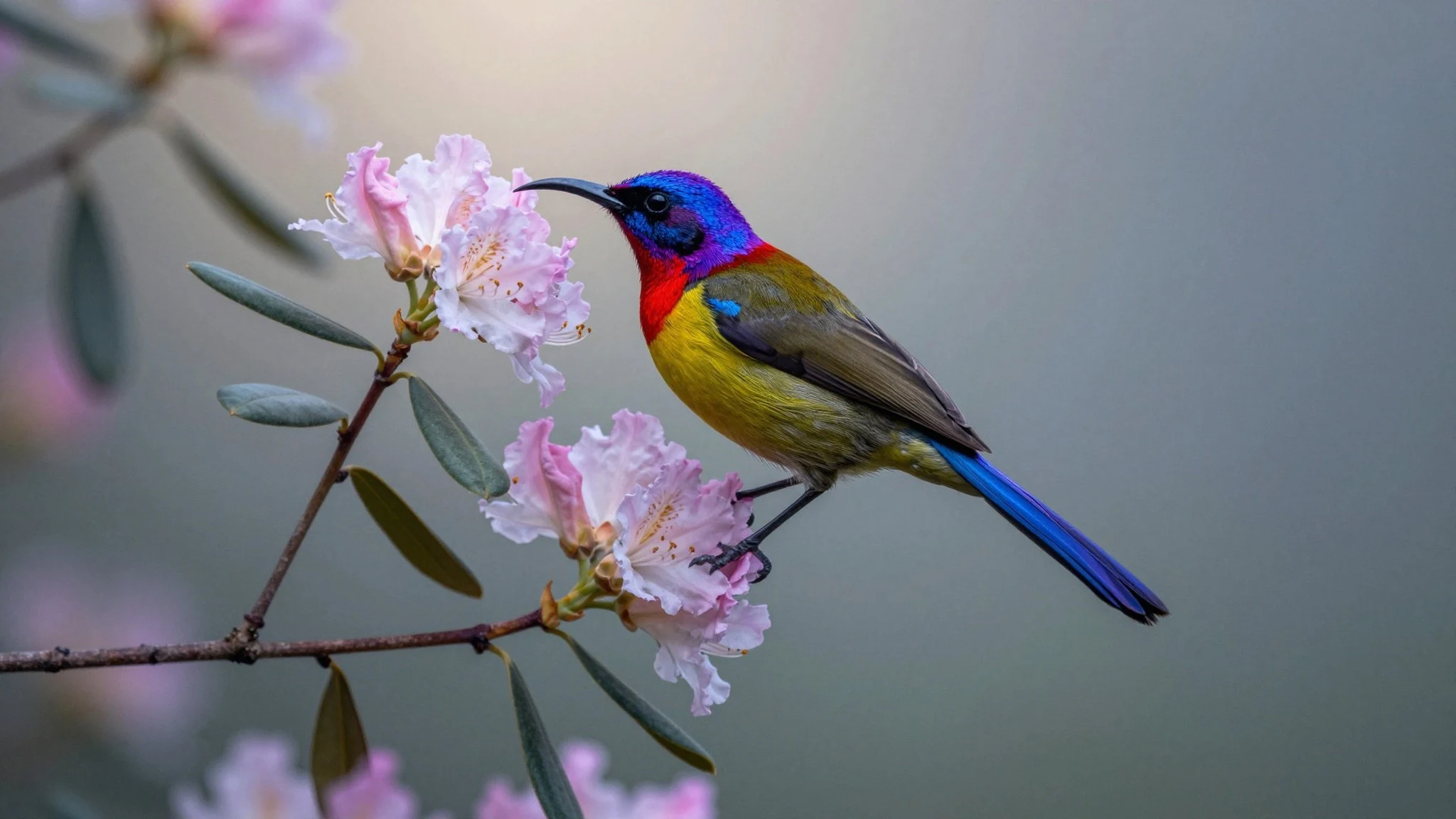
- Dark-backed sibia (animal)
The dark-backed sibia is a bird with, as its name says, a dark back, and it belongs to a family of birds called Leiothrichidae. It lives in damp, warm mountain woodland across China, Myanmar and Thailand. On Doi Ang Khang it has been photographed, and your best chances are near the forest station and in the resort gardens. Ask a guide about the season and time of day. Watch from a respectful distance, keep your voice low, and never feed it.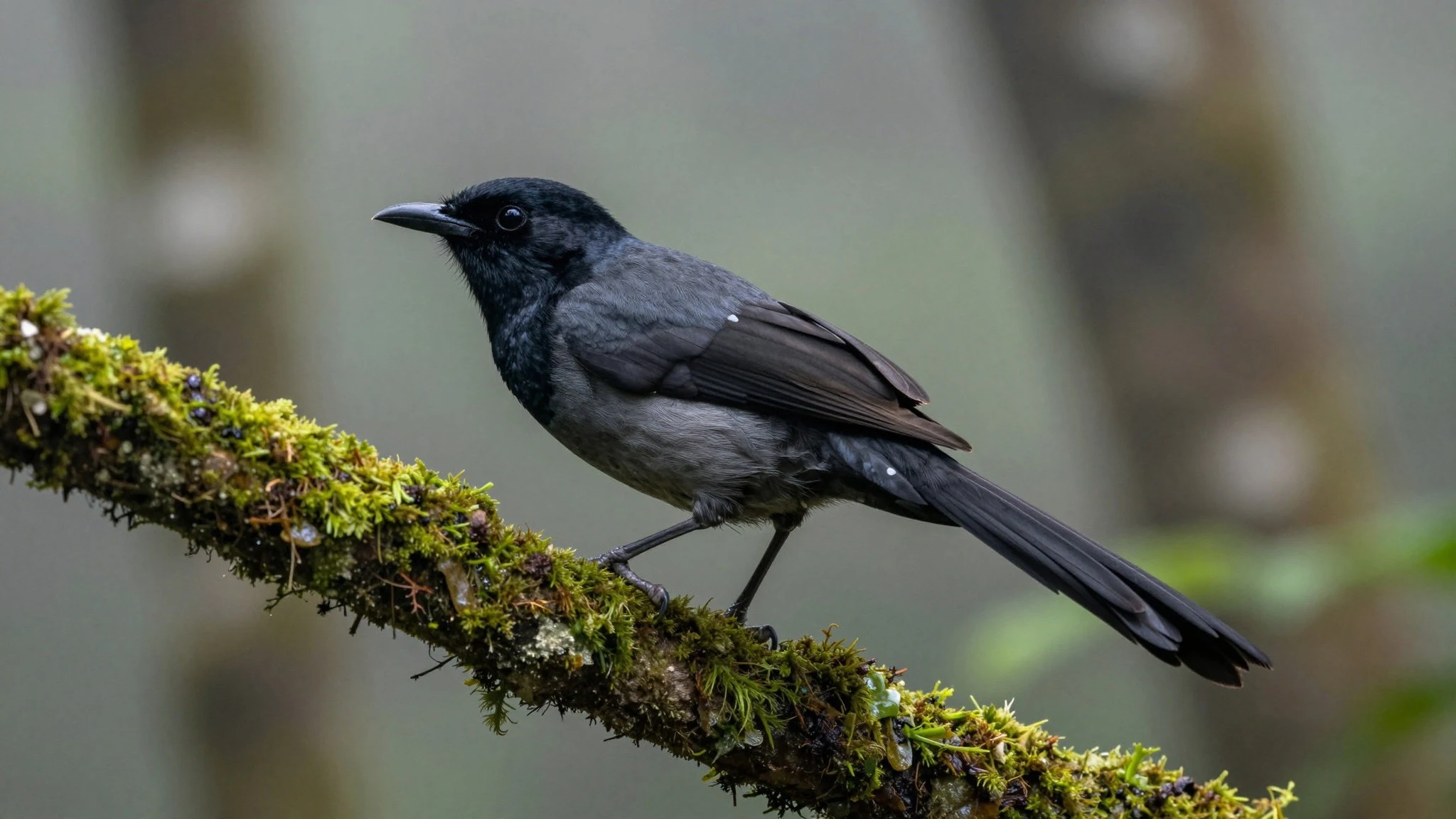
- Mrs gould's sunbird (bird)
Mrs Gould's sunbird is a bird of the sunbird family, named for a lady, that lives in woods and scrubby country from the Himalayan foothills across to Southeast Asia. On Doi Ang Khang it has been photographed, and the best places to try are near the forest station and in the resort gardens. Ask a local guide about the best season and time of day. Keep your distance, stay quiet, let the bird come and go as it pleases, and never offer it food. - Dark-backed sibia (bird)
The dark-backed sibia is a bird with, as its name says, a dark back, and it belongs to a family of birds called Leiothrichidae. It lives in damp, warm mountain woodland across China, Myanmar and Thailand. On Doi Ang Khang it has been photographed, and your best chances are near the forest station and in the resort gardens. Ask a guide about the season and time of day. Watch from a respectful distance, keep your voice low, and never feed it.