Damnoen Saduak Floating Market
Damnoen Saduak Floating Market, Thailand
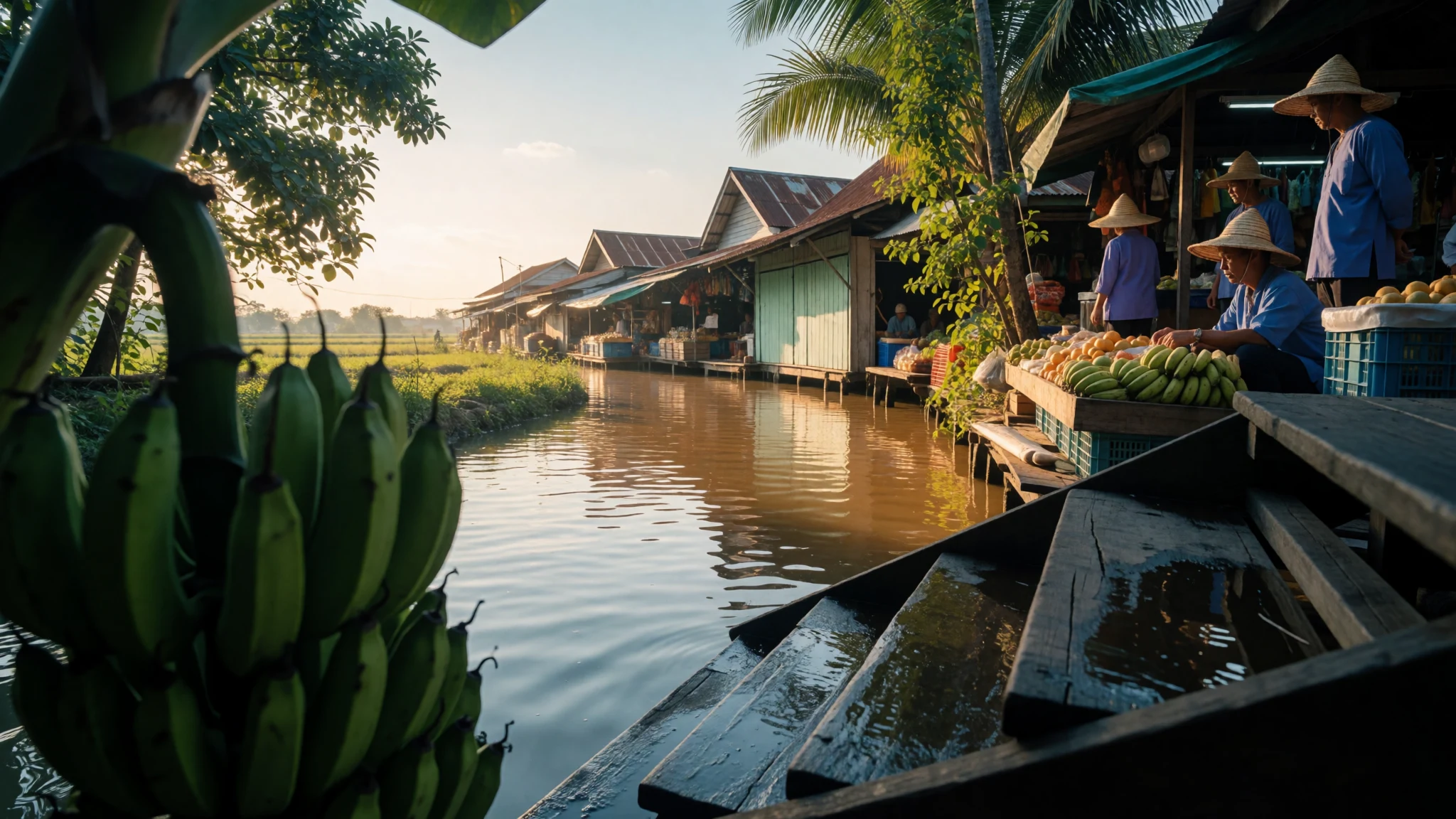
Damnoen Saduak Floating Market is a canal-side morning of boat vendors, fresh fruit and hot noodles, best enjoyed early and with realistic expectations.
The place
Damnoen Saduak Floating Market sits in Ratchaburi province, in flat, watery country southwest of Bangkok, roughly 100 km from the capital. It is a web of narrow canals, called khlongs in Thai, lined with wooden shopfronts and crossed by small rowing boats loaded with fruit, vegetables, snacks and souvenirs. Many of the women paddling them wear a blue cotton shirt and a broad straw hat, and photographs of that scene have done a great deal of work for Thai tourism.
The market is really three clusters. Ton Khem is the biggest and lies along the main canal. Hia Kui runs parallel to it and leans towards tour groups, with souvenir stalls along the banks. Khun Phitak, a couple of kilometres further south, is smaller and quieter, and is the one to try for a calmer look.
A straight account matters here. Damnoen Saduak today is mainly a place for visitors, Thai and foreign, and local families no longer do their weekly shopping from boats the way they once did. Prices run high, boat rides are pitched at groups, and some travellers find the whole thing staged. Still, the colour is real, the cooking on the water is good, and early on a weekday morning the canals can be a pleasure. Trade is busiest from about 07:00 to 09:00 and winds down around noon, though a roof over part of the market now lets it operate all day.
Its story
Damnoen Saduak Floating Market grew out of a canal dug in the 1860s. King Rama IV ordered a waterway about 32 km long, built between 1866 and 1868, to link two rivers, the Mae Klong and the Tha Chin. Villagers then dug around 200 smaller channels off it, and markets formed wherever boats met. The main one, Lad Plee (Lat Phli), stood beside a Buddhist temple and kept trading until 1967.
Roads ended that. As lorries and buses took over the job of moving goods, Lad Plee faded, just as floating markets elsewhere in the country did through the middle of the twentieth century. Water had been the motorway; now it was a detour.
The revival was deliberate. In 1971 the Tourism Authority of Thailand began promoting Lad Plee to foreign visitors, with boat vendors on the water and shops on the banks. A decade later, in 1981, a new road reached Ton Canal, and private entrepreneurs built the market that people visit today along that waterway. So the present market is a modern creation on an older canal system, not a surviving slice of nineteenth-century trade. That helps explain both its polish and the criticism that it lacks authenticity. Beneath the staging, the canals themselves and the habit of living by water are the real inheritance of the 1860s project. It is a working landscape that tourism rescued and reshaped.
What to see
- Ton Khem market — Khlong Damnoen Saduak, central market area
The largest of the three markets and the one most people mean when they say Damnoen Saduak. Boats and canal-side stalls crowd along the main khlong, with fruit, vegetables, snacks and souvenirs changing hands within arm's reach. It is loudest and busiest in the early morning, so arrive before the tour coaches if possible.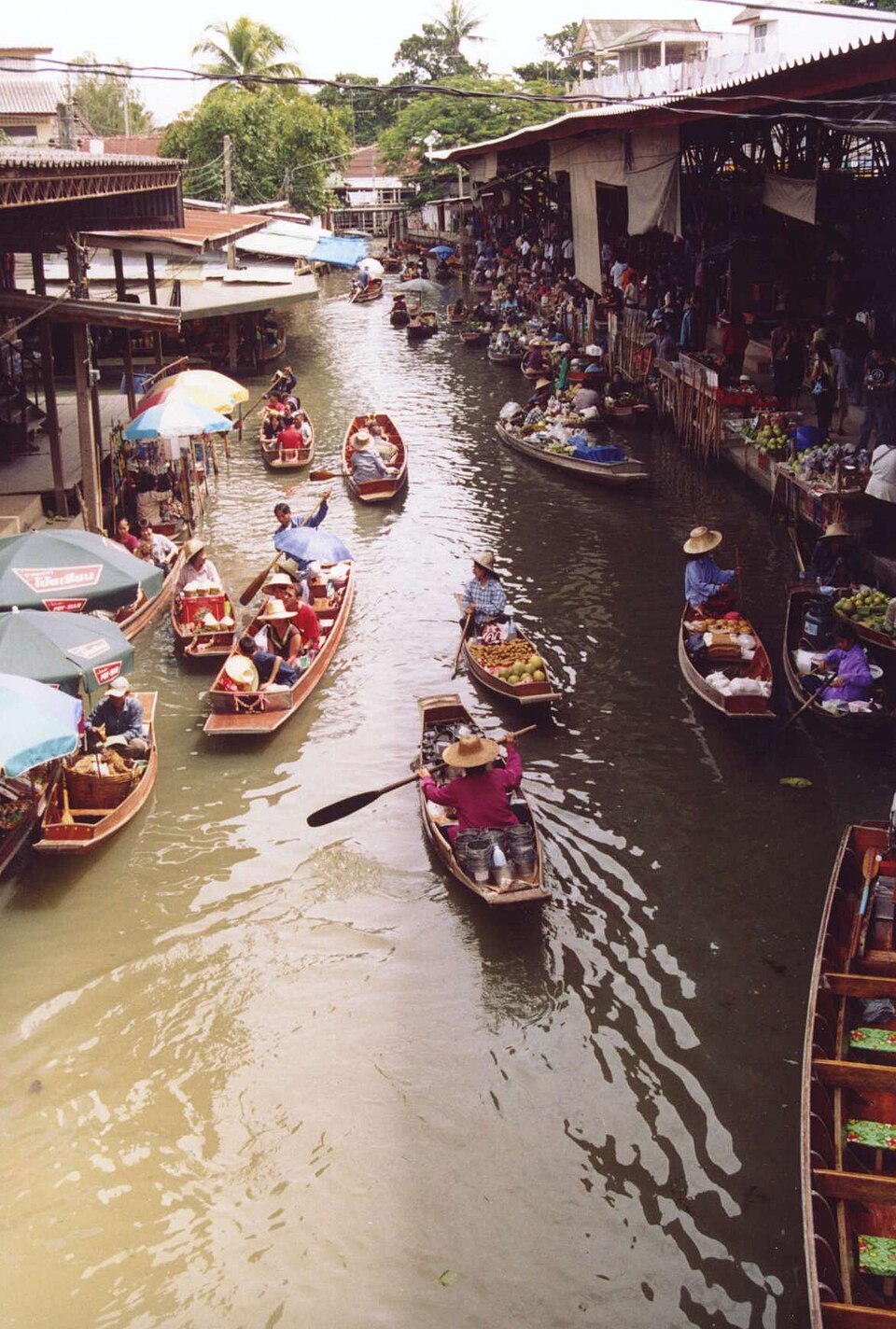
- Hia Kui market — Canal parallel to the main khlong
Hia Kui runs parallel to the main canal, and its banks are lined with souvenir shops aimed at larger tour groups. Expect carved wood, textiles, trinkets and a brisk sales pitch. It is the most commercial of the three, but useful for gifts, and a shaded shop is a cooler place to pause than a sunny boat.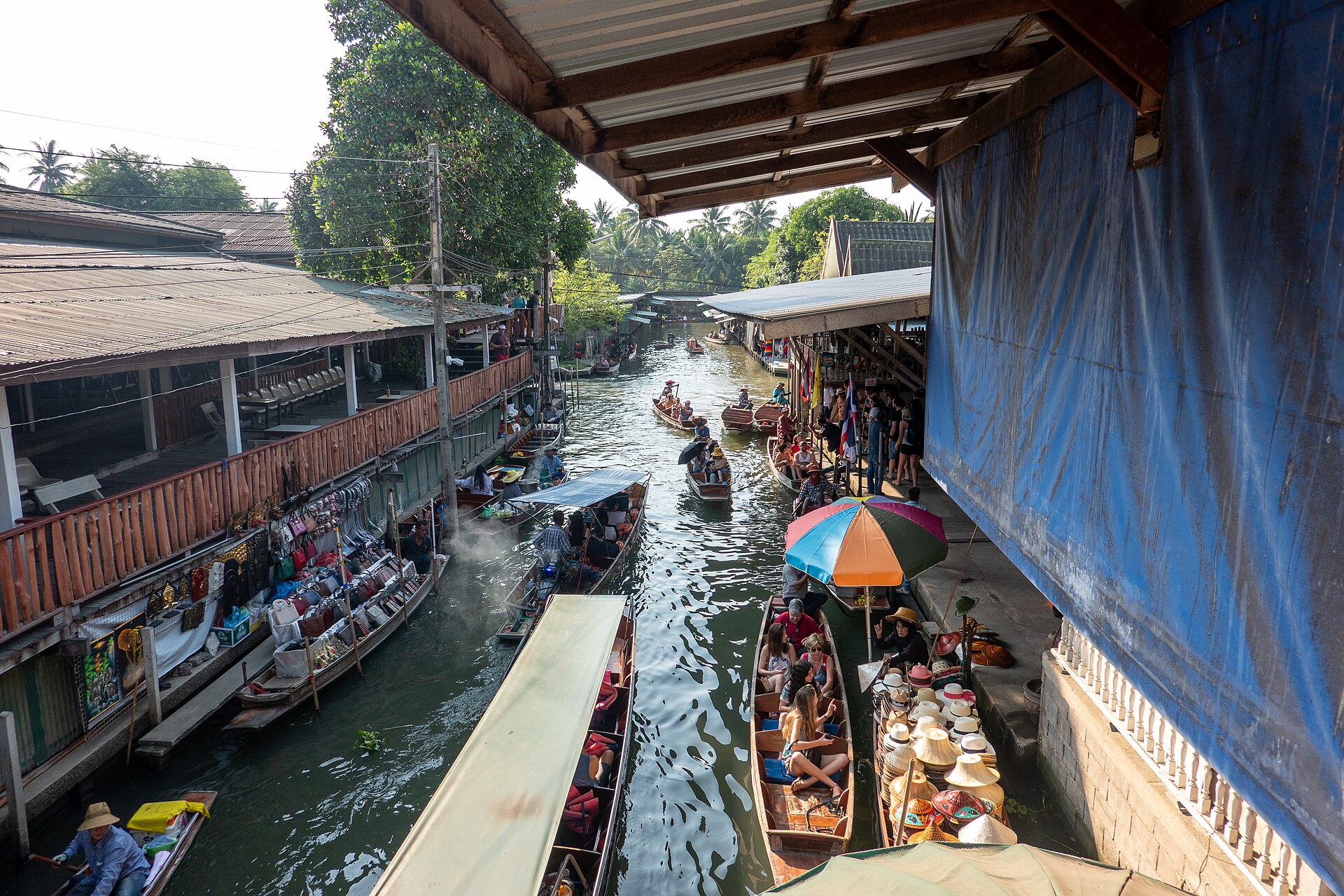
- Khun Phitak market — South of Hia Kui, along the canal
Khun Phitak lies about 2 km south of Hia Kui and is the smallest of the three markets, as well as the least crowded. Travellers who want fewer tour groups and a slower look at canal trading should head here. There is less choice, but also less jostling and more room to chat with vendors.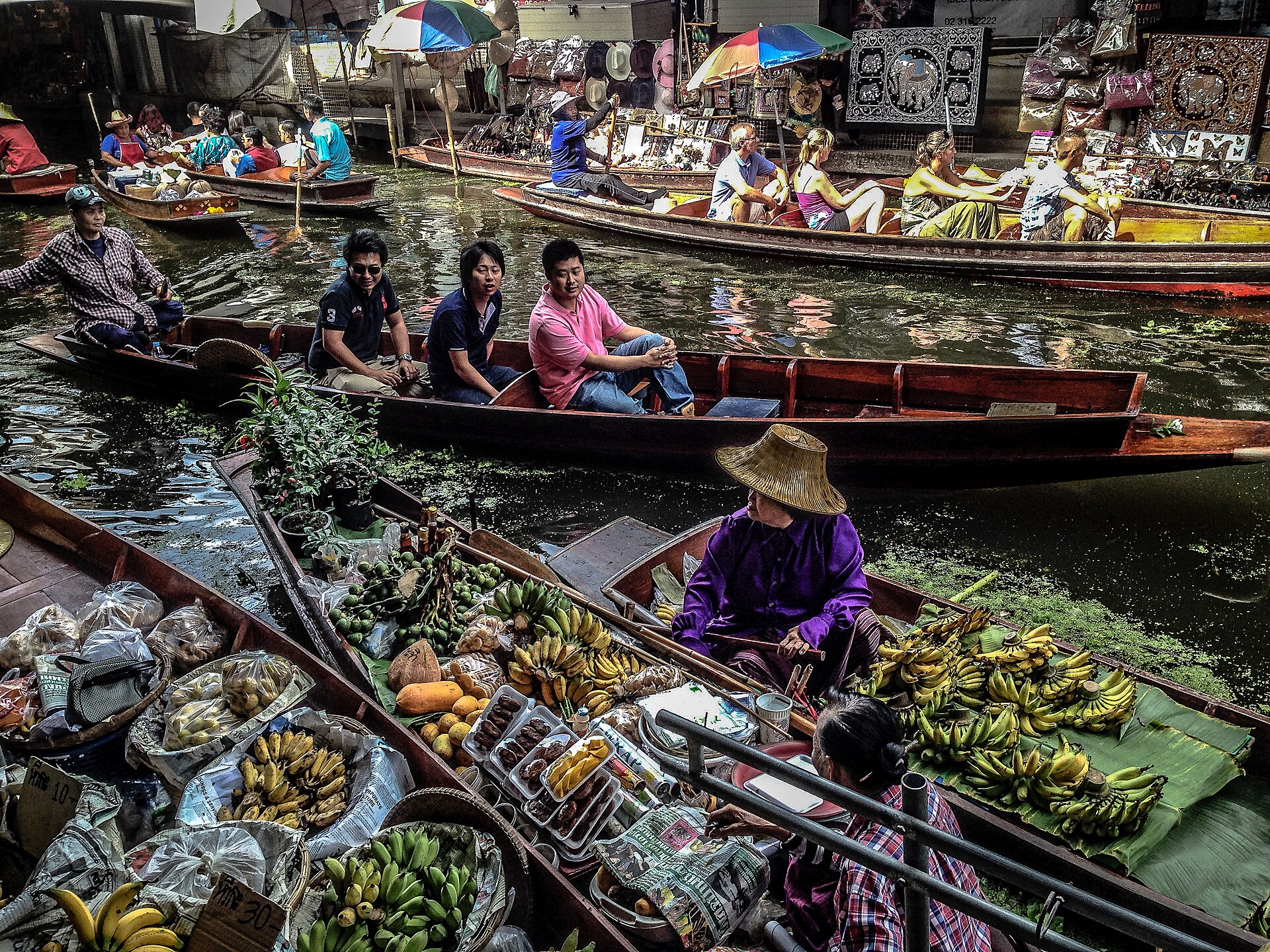
- A boat ride through the khlongs — Canals around Ton Khem
A paddled or motorised trip through the narrow canals shows the market from water level, past stilt houses, garden plots and traders in sampans. Boatmen can quote high prices, so agree the route, the time and the total before stepping aboard, and share the cost in a small group. Early departures are cooler and calmer.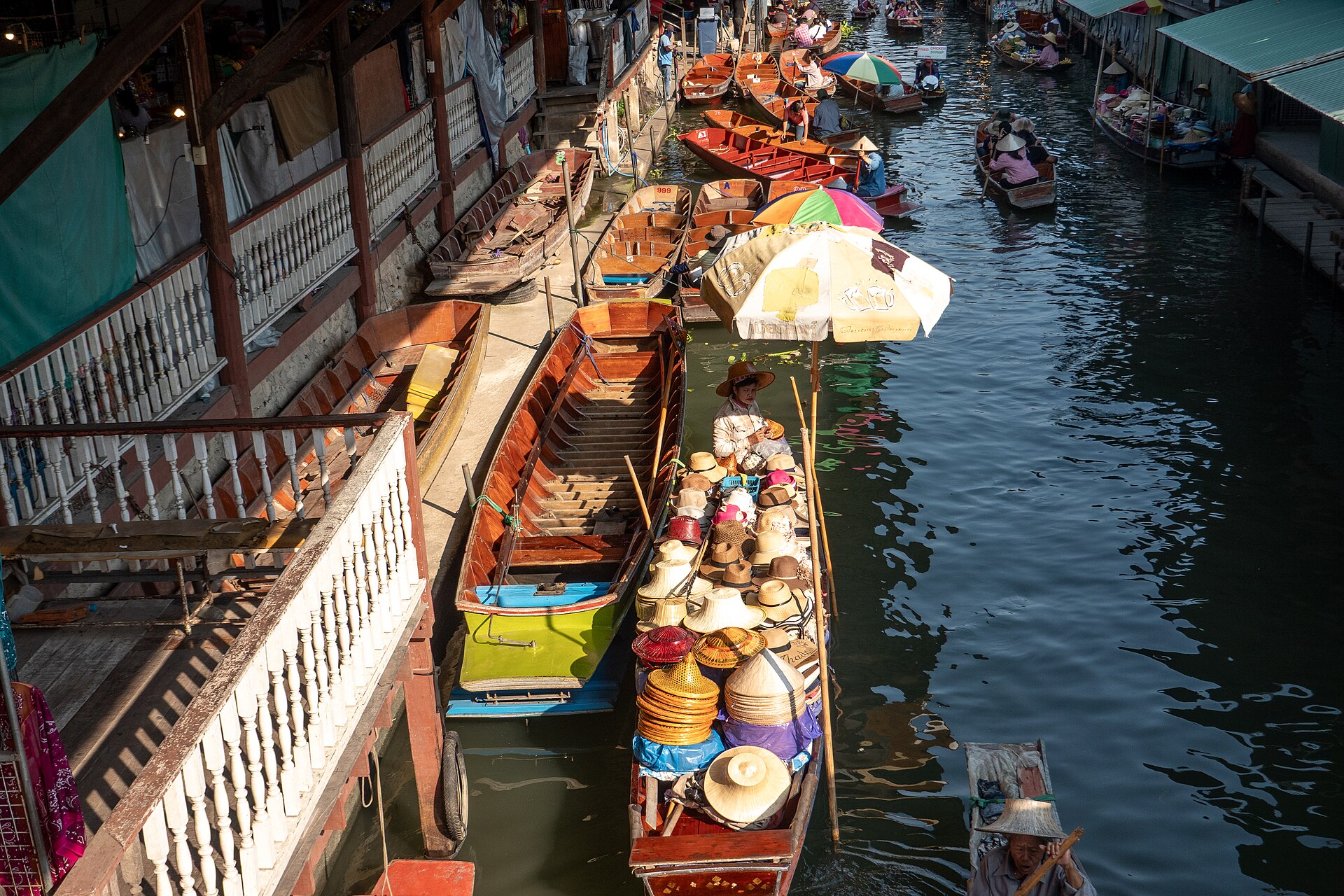
- Floating noodle cooks — Along the main khlong, among the moored boats
Cooks working from small boats ladle out bowls of noodle soup beside the moored vendors, with steam rising off the water. Watching a cook balance a charcoal stove, a pot and a customer's order in a few square metres of hull is as much a sight as the eating, and the smell carries along the canal.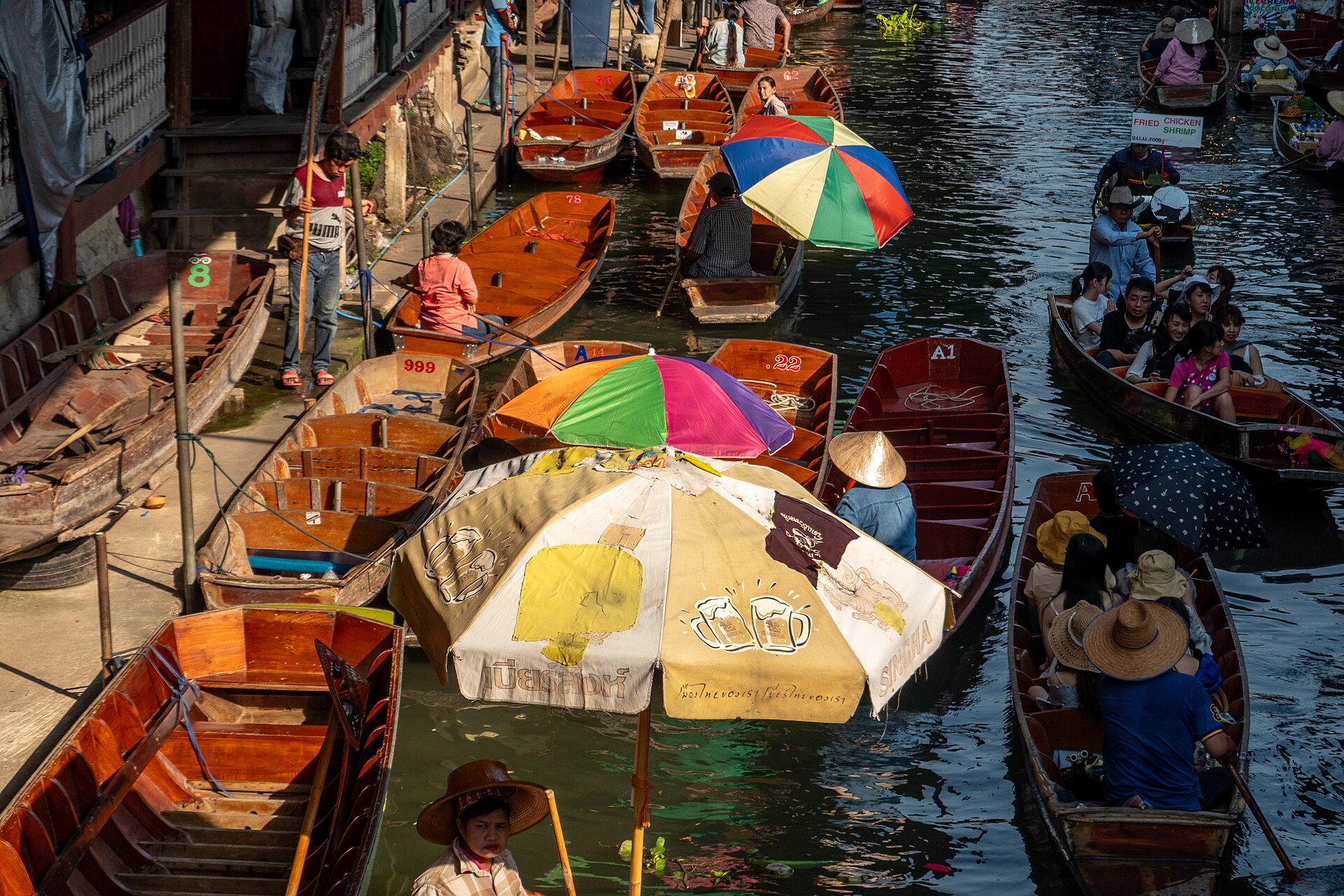
Culture
Damnoen Saduak Floating Market shows how Thai commerce once moved along water, and how it has been repackaged for visitors. In the nineteenth century, canals were the roads of the central plains, and growers rowed their produce to markets that often stood beside temples. The blue shirt and straw hat now seen on traders come from that farming world, though today they are partly working clothes and partly a uniform that visitors expect.
Bargaining is part of the atmosphere, but it works within limits. Food and souvenir prices usually sit close to a settled level, so haggling is more a friendly exchange than a contest, and a smile does more than a hard line. Many vendors are women, and the trade is often run by families, passed between generations of canal-side households.
Thai social habits shape the day. A slight bow with palms pressed together, the wai, is a polite greeting and a way of saying thanks. Feet are regarded as the lowest part of the body, so avoid pointing them at people or at images of the Buddha, and keep them tucked in the boat. Respect for the monarchy runs deep, and jokes about it are unwelcome. Most of the market is secular, but the canal system grew up around temples, so any monastery nearby deserves quiet and modest dress.
Ask before photographing a vendor's face up close, and buy something small if you linger for a good shot.
What to wear
Damnoen Saduak Floating Market is where the traditional dress of Thailand's central farming country is still on show. The classic outfit is the mo hom, a loose collarless shirt of cotton dyed deep indigo blue, worn over a wrapped cloth or baggy trousers and topped with a ngob, a wide-brimmed hat woven from straw or palm leaf. It was made for work in sun and wet fields: breathable, hard-wearing and easy to wash. Farmers once wore it daily; now it appears at festivals, in performances and on market traders.
Most people at the market today dress in ordinary modern clothes: T-shirts, shorts or light trousers, flip-flops, and a cap against the glare. Some vendors keep the blue shirt and hat as working costume because visitors photograph it, and it also shades well.
Visitors should wear light cotton or linen, a hat and sunglasses, and carry sunscreen, since the canals offer little shade and mornings warm quickly. Choose shoes with grip, such as strapped sandals or trainers, because boat landings and wooden walkways get wet. Carry a scarf or shawl and cover shoulders and knees if a temple visit is on the plan. Avoid pale colours that will show splashes, and keep valuables in a closed bag when stepping in and out of boats.
What to eat
- Boat noodles — Cook boats and stalls along the main khlong
Noodle soup cooked and served from small boats, with a rich dark broth, rice noodles, herbs and meat or fish balls. Bowls are small, so ordering two is normal. It is the signature meal of the canals, best eaten hot, on the spot, while watching the traffic. - Mango with sticky rice — Dessert stalls and boats on the canal banks
Slices of ripe mango served with glutinous rice softened in sweetened coconut milk. It is a dessert that depends on the season, with the best fruit in the hot months. Vendors usually sell it in a box or on a banana leaf, ready to carry along the canal. - Coconut ice cream — Small stalls beside the canal walkways
Scoops of coconut ice cream, often served in half a coconut shell with toppings such as peanuts, sweet corn and sticky rice. It is a cooling stop in the heat of late morning and cheap compared with sit-down snacks in the tourist areas. - Grilled skewers — Charcoal grills at stalls on the canal banks
Pork, chicken or sausage threaded onto sticks and grilled over charcoal, usually brushed with a sweet marinade and handed over in a bag with a dipping sauce. They are quick, easy to eat while walking, and a good option for a first bite. - Fresh tropical fruit — Produce boats and fruit stalls along the main khlong
Local growers sell mounds of seasonal fruit from boats, from pomelo and rose apple to bananas and papaya, often peeled and bagged on request. Ask what is in season, since the choice changes through the year. It is the clearest link to the farmland behind the canals.
Plan it
Best time. November to February is the most comfortable stretch, drier and cooler by Thai standards. March to May is hot, and the rainy season, roughly May to October, brings downpours and muddy walkways. Whatever the month, go early in the day, before the heat and the coaches build.
How long. 1
Getting there. Fly into one of Bangkok's airports, then take a bus from Bangkok's South Bus Terminal to Damnoen Saduak, about 2 hours by road, with services starting early in the morning; taxis and organised day trips are alternatives. The last leg is on foot or by short ride to the canals, as buses and taxis may drop you about 1 km from the central area.
Budget. mid
Tips
- Aim to be at the canals in the early morning, ahead of the tour coaches and the midday heat
- Carry cash in small notes for food, souvenirs and boat rides
- Agree the boat price, route and duration before getting in, and compare quotes if possible
- Bring water, sunscreen and a hat, as there is little shade on the water
- Weekdays tend to be calmer than weekends and public holidays
Etiquette
- Bargain politely and accept a fixed price for food and small items
- Ask before photographing vendors up close
- Keep feet tucked in and sit still when boarding or leaving a boat
Nearby
Sources
- Wikidata Q13014948 (CC0)
- Wikipedia: Damnoen Saduak Floating Market (rev 1315257190) (CC BY-SA 4.0)
- Wikivoyage: Damnoen Saduak (rev 4239630) (CC BY-SA 4.0)
- Photo: Floating market of Damoen Saduk, Ahoerstemeier (CC BY 3.0)
- Photo: Damnoen Saduak Floating Market in Thailand, Roberto Faccenda (CC BY-SA 2.0)
- Photo: Damnoen Saduak Floating Market, No(0)GoodNamesLeft (07546) (CC BY-SA 4.0)
- Photo: Damnoen Saduak Floating Market, No(0)GoodNamesLeft (07547) (CC BY-SA 4.0)
- Photo: Damnoen Saduak Floating Market, No(0)GoodNamesLeft (07548) (CC BY-SA 4.0)
- Photo: Damnoen Saduak Floating Market, No(0)GoodNamesLeft (07549) (CC BY-SA 4.0)
- Photo: Damnoen Saduak Floating Market, No(0)GoodNamesLeft (07552) (CC BY-SA 4.0)
- Photo: Damnoen Saduak Floating Market, No(0)GoodNamesLeft (07554) (CC BY-SA 4.0)


