Sibebe Rock
Sibebe Rock, Eswatini
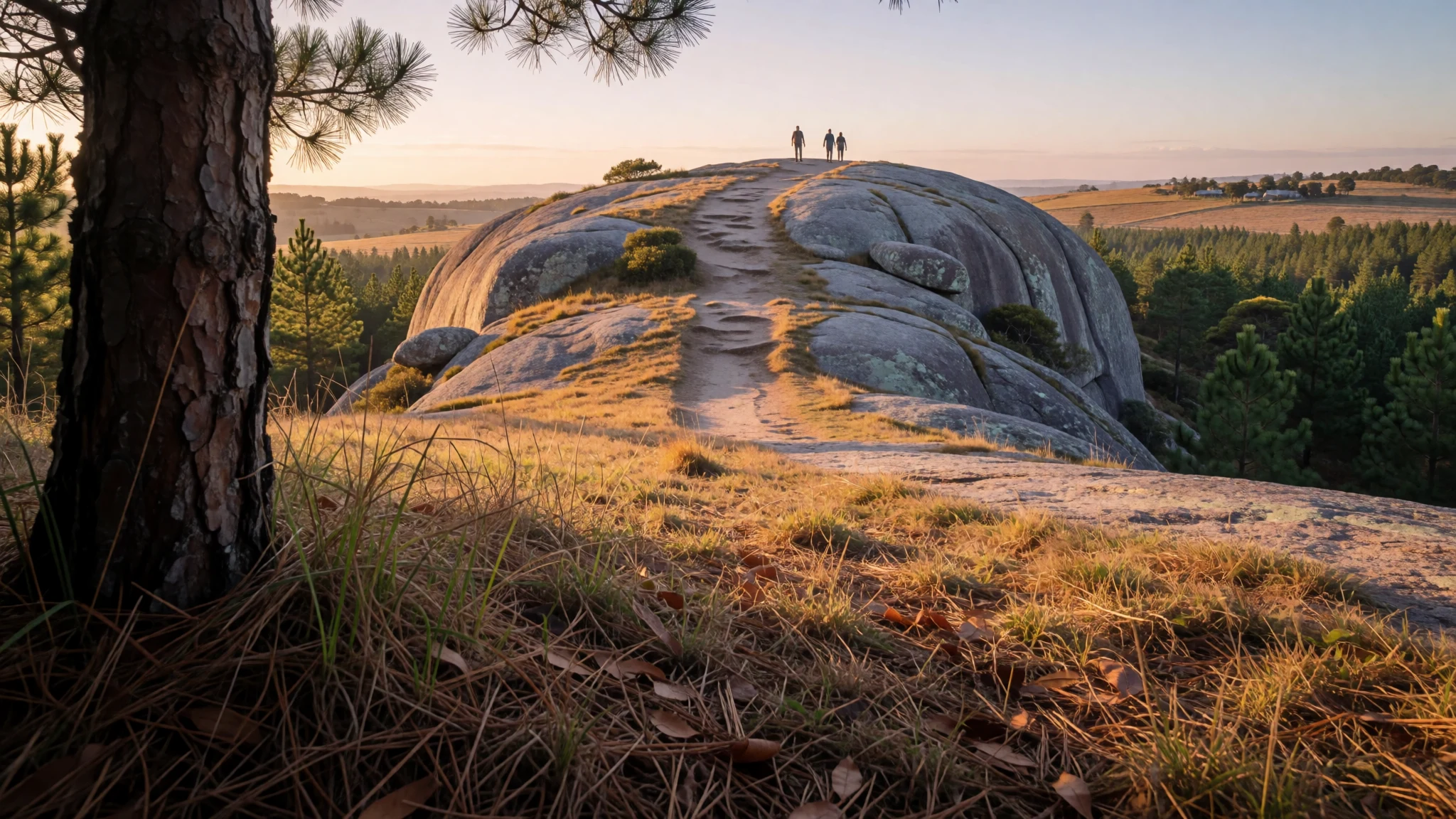
Sibebe Rock is a broad granite dome above Mbabane, walked for open highveld views and a stiff, honest climb.
The place
Sibebe Rock stands on the highveld just north of Mbabane, a pale granite dome rising out of grassland and pine above Eswatini's capital. The stone is smooth, jointed and light grey, a pluton that weathering has stripped of soil until the rock itself is the landform. From the lower slopes the mass looks gentle; closer in, the angle steepens into long slabs, cracks and rounded shoulders where walkers move in single file.
The usual outing is a walk rather than a technical climb. People leave the trees, step onto bare granite and follow the worn line toward the top. Shade disappears once the woodland drops away, and the surface throws back sun and wind. After rain that same polish turns slick, so residents stay off the rock on wet days. On a dry morning the route fills with Mbabane residents, running clubs and visitors who have come out from the city.
The summit offers a wide reading of the country. The capital sits below among hills, roads run toward the Ezulwini valley, and the highveld spreads out in grass, plantation and scattered homesteads. Cloud can build quickly in the warmer months and sit on the top while the lower slopes stay clear. Sibebe Rock feels close to town — a short drive from the centre — and fully open to the weather.
The gradient works the legs, the granite scuffs shoes, and the way down is often harder on the knees than the way up. Weekends bring larger crowds. A weekday morning is quieter, with space to stop on a ledge and watch the light shift across the stone. Sound and litter carry on an open face, and regulars treat the dome as shared ground.
Its story
Sibebe Rock is an exposed granite pluton on the Eswatini highveld. Magma cooled underground; erosion later stripped the cover and left the dome standing above Mbabane. The joints and smooth sheets of stone are that history, visible underfoot. People have used the slopes as grazing, as a source of gathered plants and as a landmark seen from across the capital's basin, for as long as Swazi communities have lived among these hills.
The country around the rock has renamed itself: the kingdom long called Swaziland abroad is Eswatini, siSwati is the language of home, and the monarchy remains the centre of public life. Sibebe Rock stayed the capital's weekend mountain. Office workers and students walk it, running clubs use the face for hill training, and an organised race sometimes sends a crowd up the same slabs that families climb more slowly. Guides from homesteads near the foot know which line stays manageable and where rain makes the granite awkward.
Ceremony belongs to the wider kingdom rather than to a shrine on the summit. Kingship, age regiments and seasonal gatherings are national life; Lobamba and the Ezulwini valley are where visitors meet that calendar. Sibebe Rock is the everyday landmark those traditions look out on. What has changed is the pressure of a growing capital: more cars at the start of the walk, more feet polishing the same line, and pine plantations laid over older grassland. There is no village on the summit and no paved path. The story of Sibebe Rock is still a walk out of Mbabane, from soil onto stone, and home the same day.
What to see
- The granite face — The dome north of Mbabane
Sibebe Rock's main face is a long sheet of pale granite, walked on foot rather than climbed with ropes. Weekend traffic from Mbabane — runners, families and visitors — follows a worn line up the slabs. Grip matters more than technique. Dry stone is manageable; after rain the polish turns slick and regulars stay off. There is little shade, so the face feels hotter than the pine at its foot.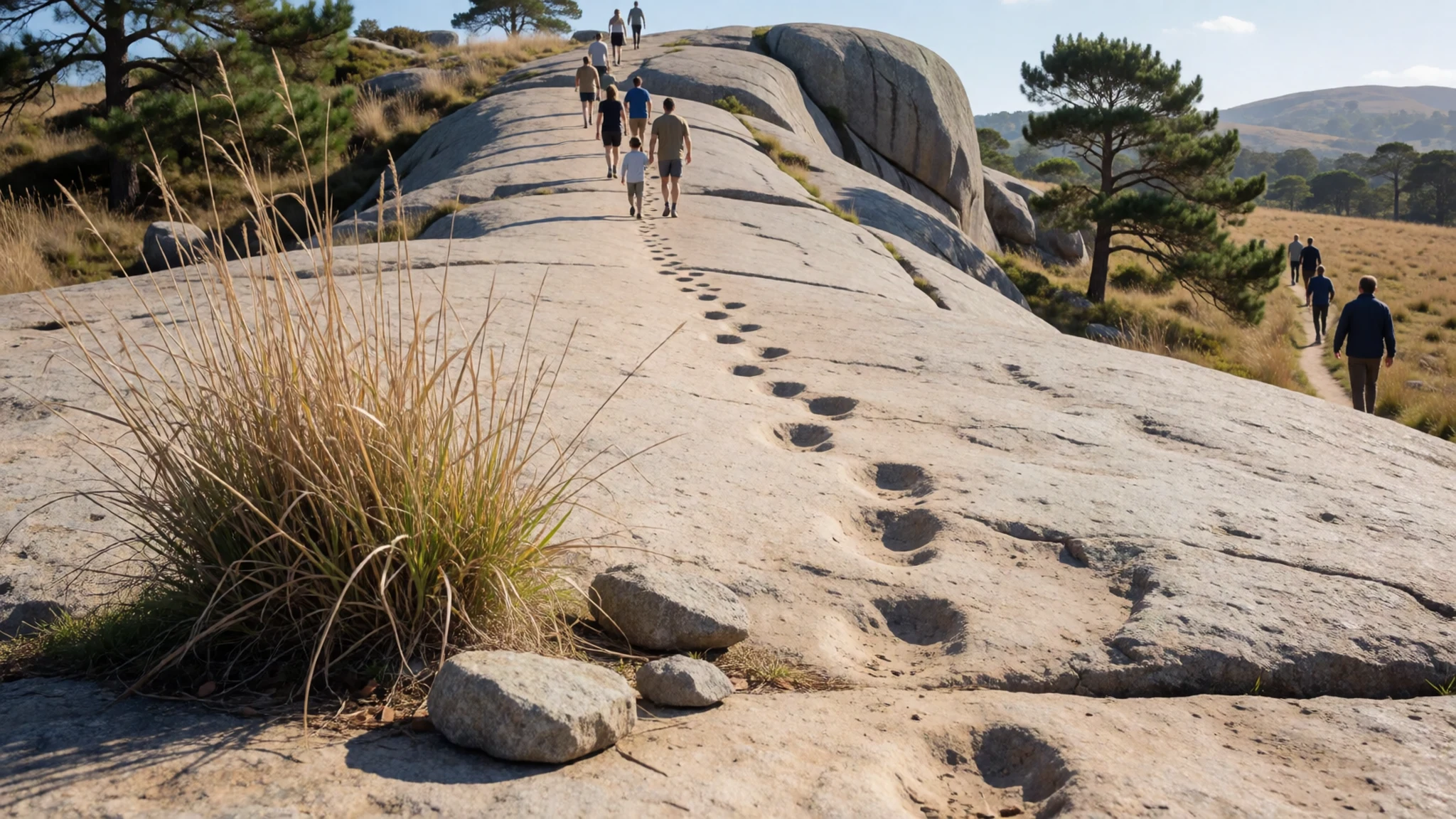
- The summit — Top of Sibebe Rock
The top of Sibebe Rock is bare granite with a full circle of highveld. Mbabane lies in its hollow of hills, the Ezulwini valley runs off to the south-east, and plantations break the grassland. Wind is common and cloud can cap the summit while the city below stays bright. People linger, eat a packed lunch and start down before the afternoon heat builds on the open stone.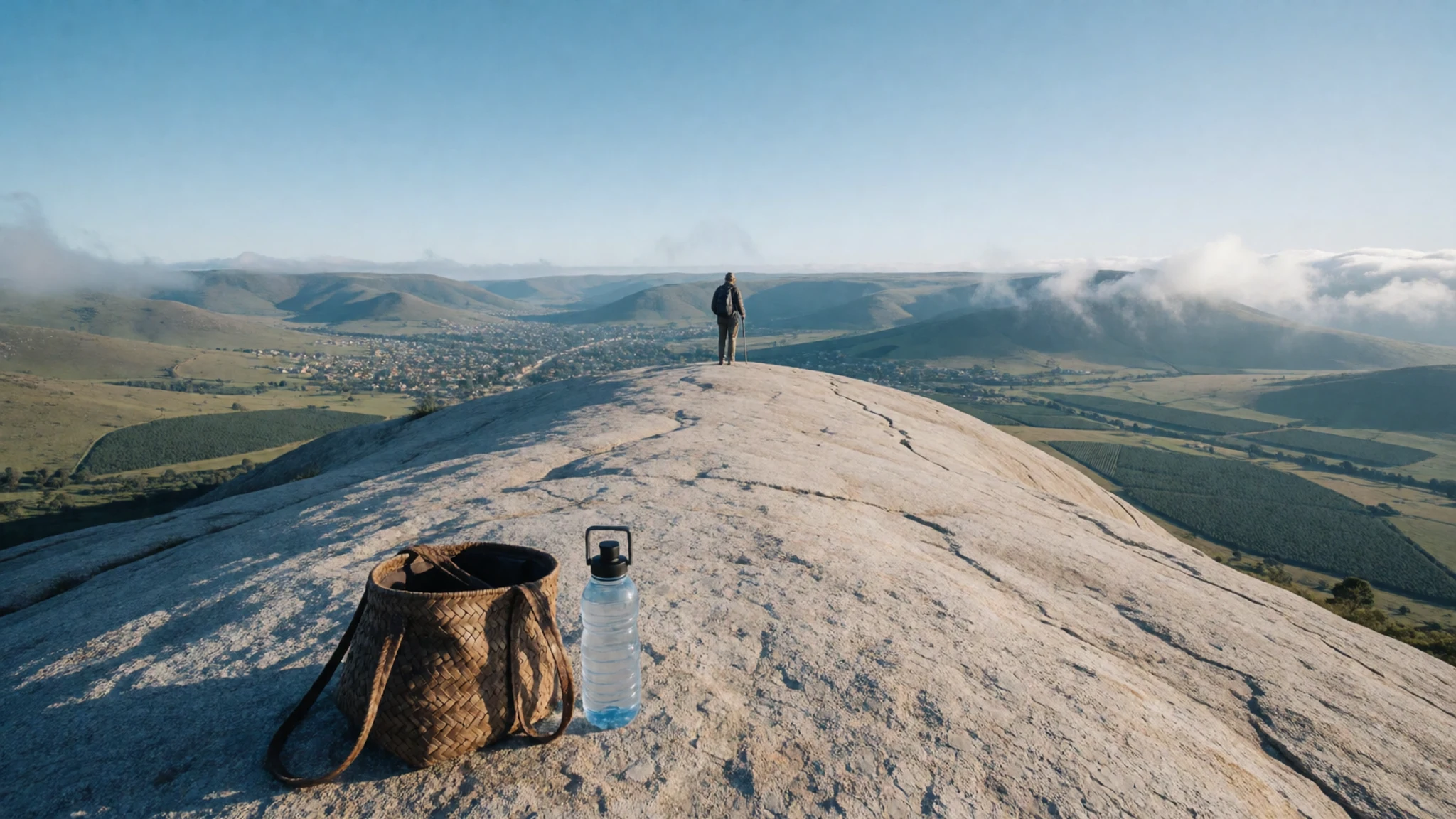
- The lower slopes — Foot of the rock, north of Mbabane
The foot of Sibebe Rock is a mix of grassland, pine plantation and homesteads on the edge of Mbabane. The path begins in trees and soil before it commits to stone, which is a good place to judge the weather. If the upper dome is in cloud or shining wet, this is where to turn around. Birdsong and the smell of pine give way quickly once the canopy opens.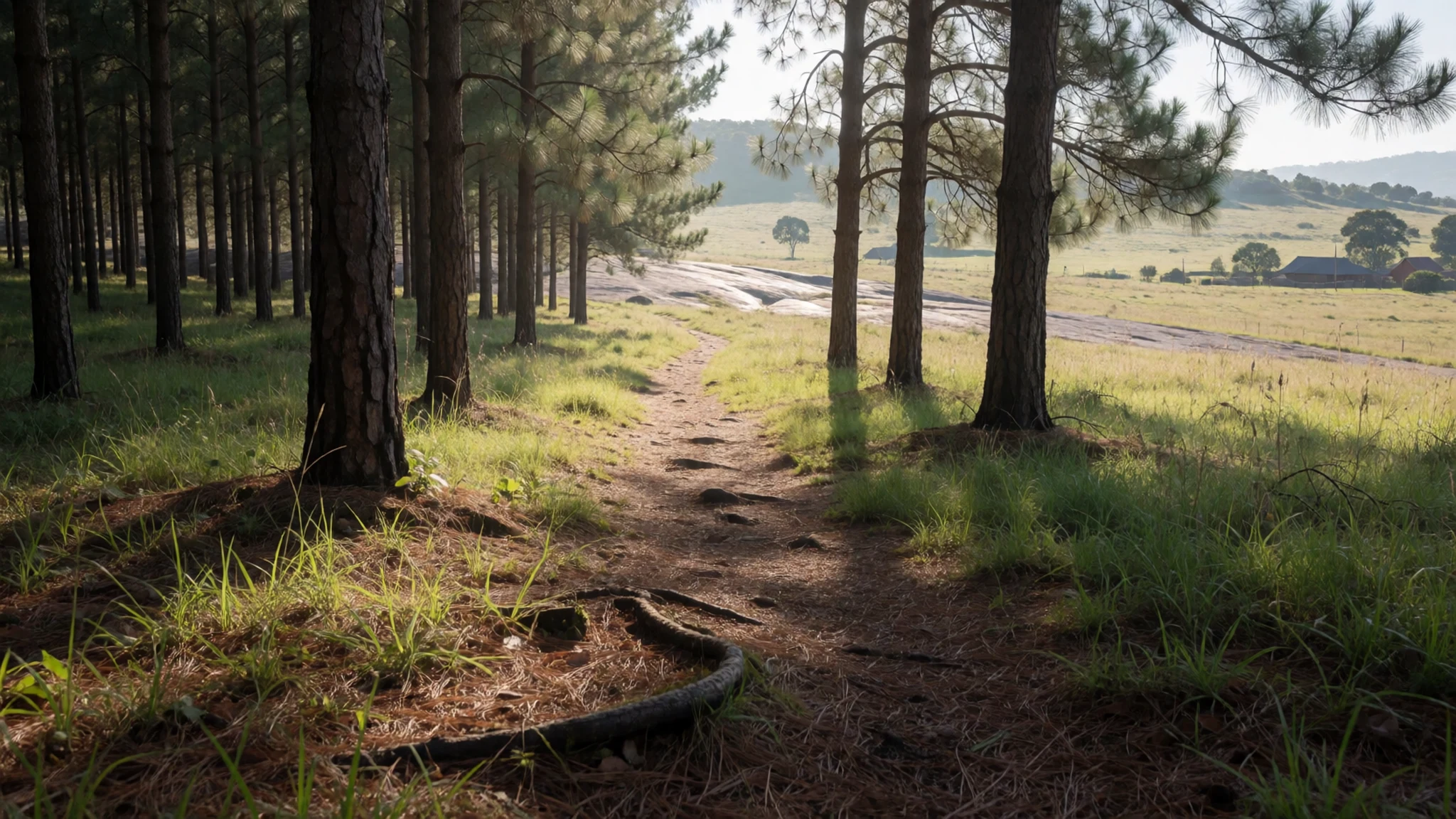
- Mbabane — Mbabane
Mbabane is the base for Sibebe Rock, a compact highveld capital a short drive from the dome. Shops, eateries and minibuses cluster in the centre, where visitors pick up water, check their shoes and arrange a lift toward the trailhead. Mornings can be cool and misty; by midday the town is bright and busy with office traffic.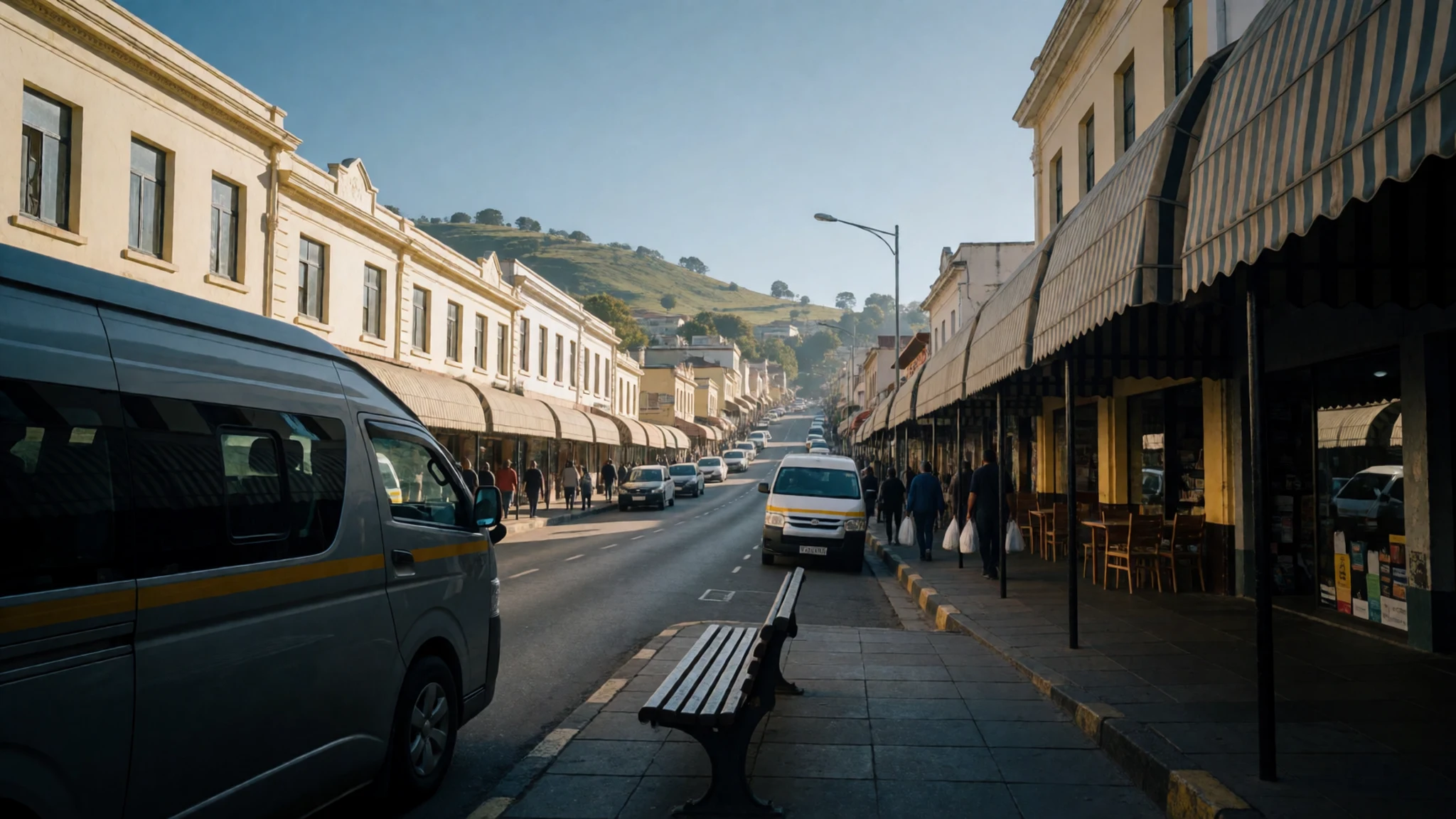
- Ezulwini Valley — Ezulwini Valley
The Ezulwini valley lies a short drive from Sibebe Rock and holds much of the kingdom's public ceremonial life, including the royal precinct around Lobamba. After a morning on the granite, many visitors drop into the valley for craft markets and a look at the softer, warmer landscape. The valley is busier and more formal than the rock.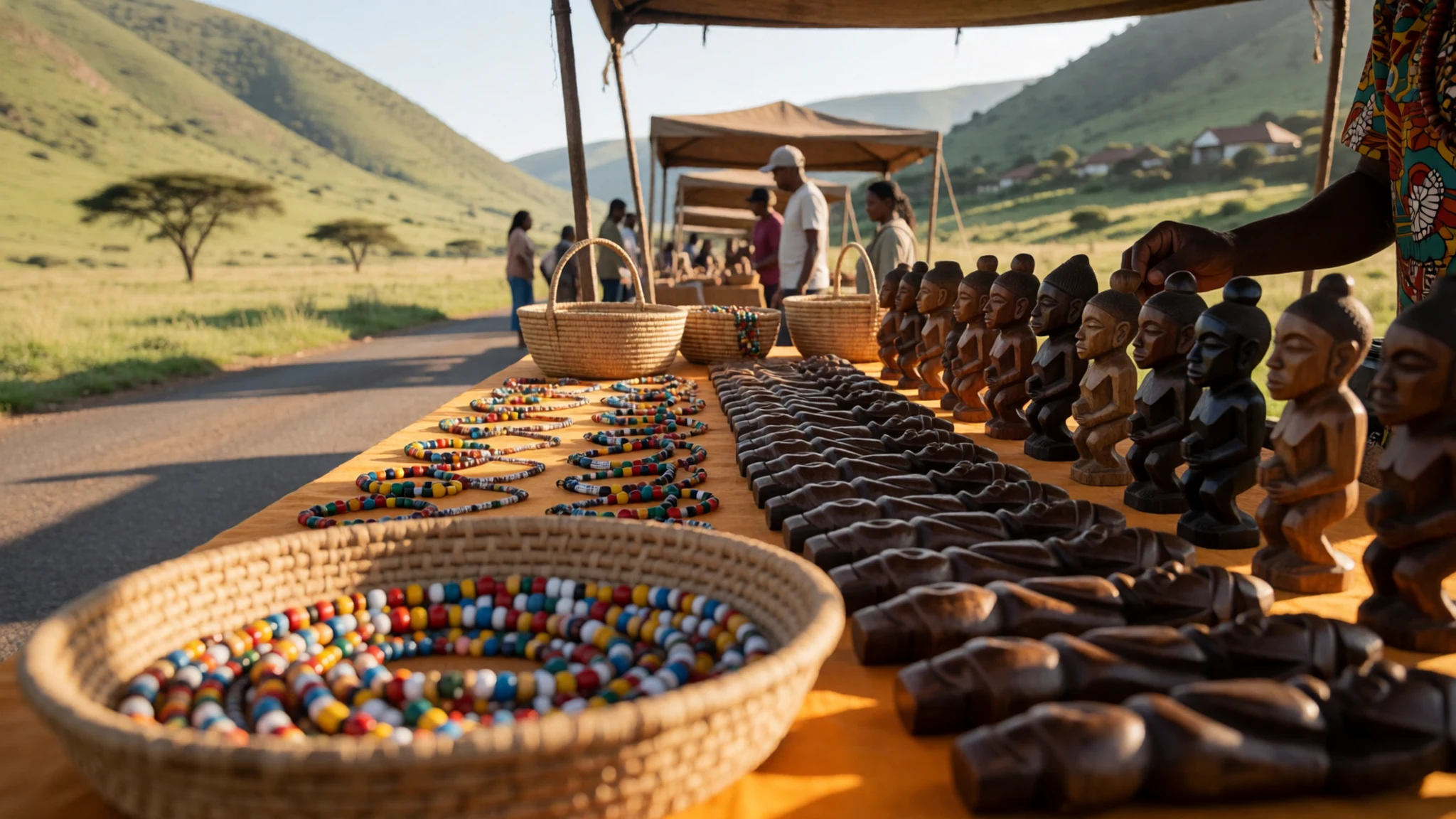
Culture
Sibebe Rock sits in the cultural landscape of the Swazi nation, even though the summit itself is a public walk rather than a shrine. Around Mbabane, respect runs through greeting, through the place of elders, and through the monarchy, which remains the organising fact of Eswatini. Age regiments, the Incwala first-fruits gathering and the Umhlanga reed dance belong to the kingdom's calendar; they are centred on the royal valley, and the rock is the high landmark people see on the way. Homesteads near the foot of the dome are family ground. A path that crosses a yard is not an invitation to wander in.
Craft and cloth carry identity more visibly than monuments do. The lihiya, a printed cotton wrap, is worn as a skirt or a shoulder cloth, and for ceremony women add a leather sidvwaba while men may add skins that mark regiment and rank. Visitors will see that dress in town on festival days and at craft stalls in the Ezulwini valley, and ordinary T-shirts the rest of the week. siSwati greetings are welcomed even when a conversation continues in English.
Ask before you photograph people at Sibebe Rock, especially anyone in ceremonial dress or anyone standing at a homestead door.
What to wear
Sibebe Rock is walked in practical clothes, while the dress tradition of Eswatini is centred in Mbabane's ceremonies and in the Ezulwini valley. Women wear the lihiya, a printed cotton wrap used as a skirt or a shawl, and for rites the sidvwaba, a leather skirt, often with beadwork at the neck, wrists and ankles. Men wear the same cloth over one shoulder and, on formal occasions, add animal skins that signal regiment and standing. These garments are worn for Incwala, for the Umhlanga reed dance and for family ceremonies; they are living dress, taken out when the occasion demands.
Weekday Mbabane looks contemporary. Jeans, collared shirts, office jackets, school uniforms and trainers fill the bus ranks, with a lihiya sometimes layered over modern clothes. Market cottons sit beside South African retail labels. Church mornings bring vivid printed cloth. Skins and full ceremonial dress stay for the calendar, not for the commute.
Visitors on Sibebe Rock need grip and sun sense more than formality. Smooth-soled shoes slip on the granite, particularly after a shower. Long trousers protect knees on the descent, a hat covers a face with no shade, and a light layer is useful at dawn when the highveld is cool. The climb itself generates heat, so a heavy coat becomes a burden to carry. Shoulders and knees should be covered for a homestead visit or a royal site.
What to eat
- Sishwala — Eateries and homesteads around Mbabane
Sishwala is the stiff maize-meal porridge that anchors a Swazi plate, served in eateries around Mbabane and in homesteads near Sibebe Rock. It is eaten with a relish of greens, beans or meat rather than on its own. The texture is firm enough to be broken by hand.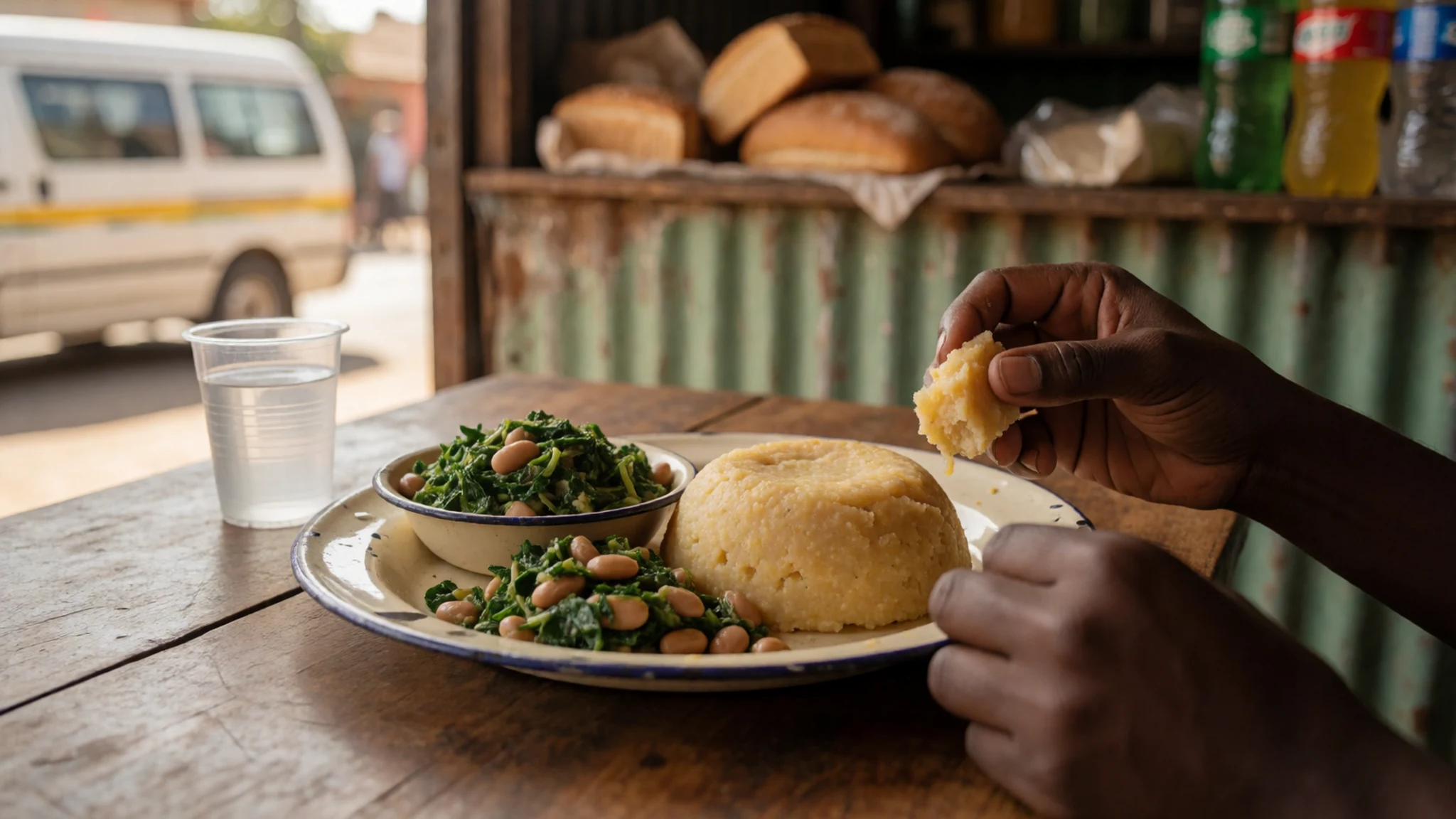
- Emasi — Local eateries and roadside stalls in Mbabane
Emasi is sour fermented milk, a cooling partner to maize porridge and a staple of Eswatini home cooking. Around Sibebe Rock it turns up in local eateries in Mbabane and at roadside stalls that serve breakfast to workers heading out of town.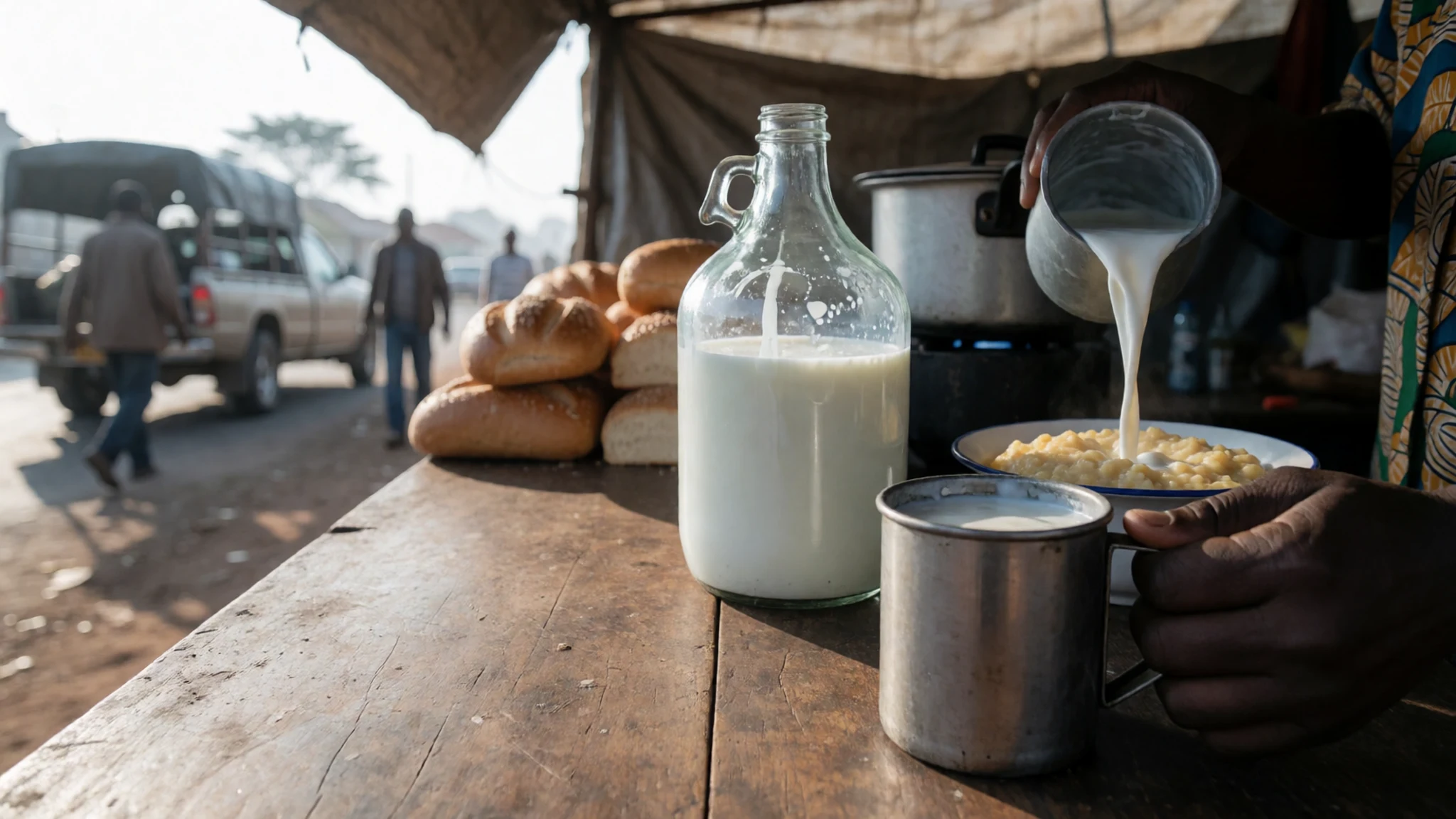
- Sidvudvu — Family eateries and market stalls in Mbabane
Sidvudvu is a soft porridge of pumpkin and maize meal, sweeter and looser than sishwala, and a comfort dish in homes around Sibebe Rock. In Mbabane it shows up at family eateries and market stalls more often than on tourist menus. - Braai — Roadside grills and homesteads on the roads out of Mbabane
A braai — beef, boerewors or chicken grilled over coals — is the weekend meal of Mbabane and the natural supper after Sibebe Rock. Butcher stalls and simple eateries set up grills on the main roads out of town, and families cook the same way at homesteads. - Inkukhu — Small dining rooms in Mbabane
Inkukhu, stewed chicken with a maize-meal side, is everyday cooking around Mbabane, and the dish most local eateries can produce without a printed menu. Near Sibebe Rock, small dining rooms serve it at midday with greens or beans.
Plan it
Best time. On Sibebe Rock, May to September brings the dry season, cooler days and firmer granite underfoot. October through April brings most of the rain, and a wet dome is slick enough that regulars stay away.
How long. 1–2
Getting there. King Mswati III International Airport connects to Mbabane by road, with a short onward drive north to Sibebe Rock. Many visitors arrive overland from South Africa through the Ngwenya–Oshoek crossing and reach the capital the same day. From Mbabane, a hired car, a minibus or a local driver covers the last stretch to the foot of the dome.
Budget. low
Tips
- Start early, while the granite is cooler and before afternoon cloud builds over the highveld.
- Turn back if the rock is wet or thunder is building; the dome has no shelter.
- Carry plenty of water; the face has no shade and no tap to rely on.
- Choose shoes with a deep tread, because smooth soles slip on polished granite.
- Keep cash for minibuses, a local guide and market food; do not rely on card machines at the trailhead.
Etiquette
- Greet people on the path and at homesteads before you start a conversation.
- Ask before photographing anyone, especially in ceremonial dress.
- Carry every piece of litter off Sibebe Rock; the open face hides nothing.
Nearby
Sources
- Wikidata (CC0)
- Wikipedia (CC BY-SA 4.0)
- Wikivoyage (CC BY-SA 4.0)