Phophonyane Falls
Phophonyane Falls, Eswatini
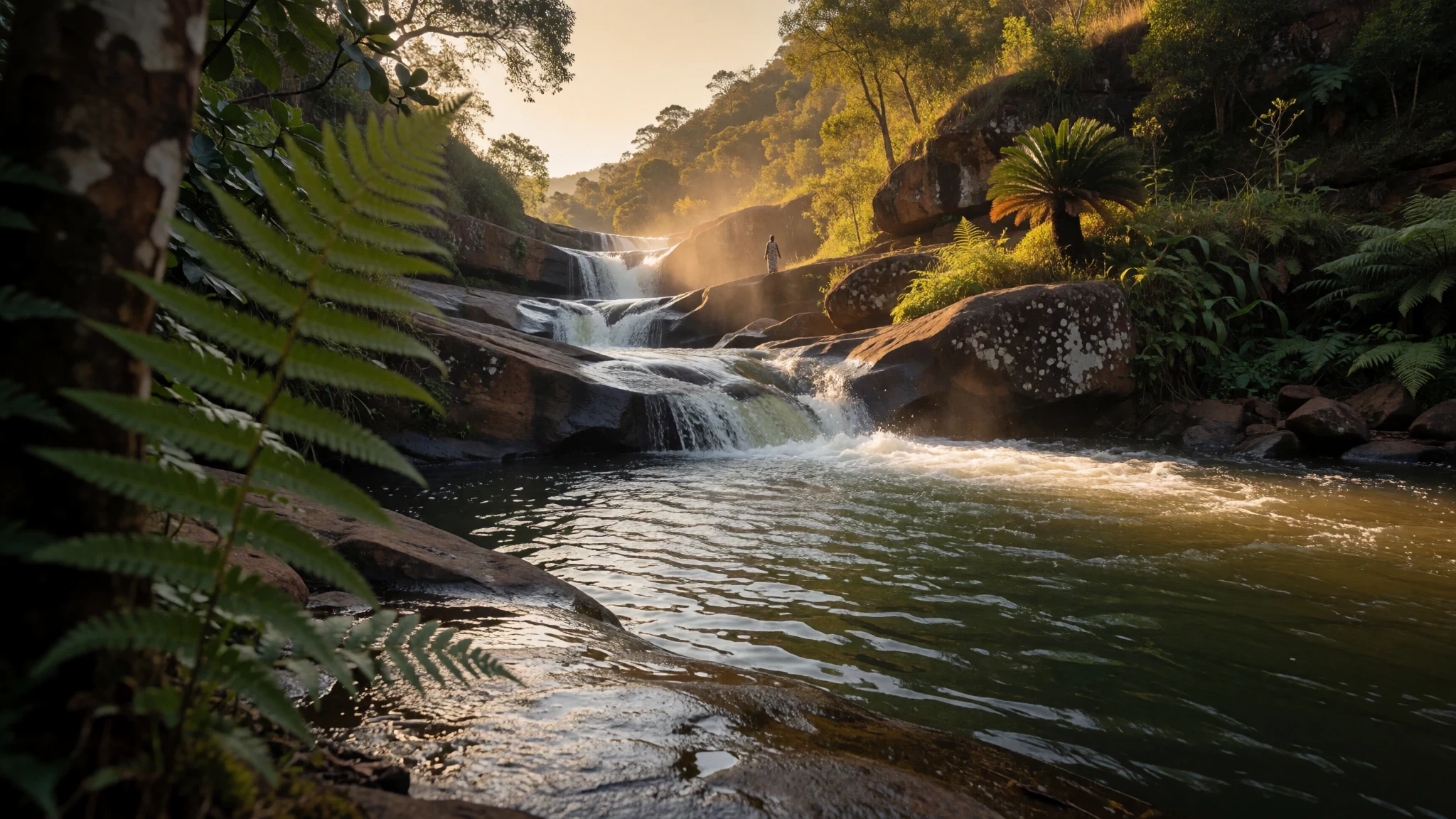
Phophonyane Falls is a forest river broken into cascades and green pools in the highlands of Eswatini.
The place
Phophonyane Falls lies in the cool, folded highlands of north-western Eswatini, where the Phophonyane River leaves the open slopes and enters a narrow, forested gorge. The water does not drop in a single clean sheet. It breaks, gathers, and breaks again, sliding over dark rock into pools the colour of tea, then spilling onward under a roof of trees. Mist hangs in the gorge after rain, and the sound is close and constant rather than a distant roar.
The forest around the falls is the point of the visit as much as the white water. Figs, ferns and cycads crowd the banks, and the path moves between roots, wet stone and viewpoints that open suddenly onto a cascade. Bird calls carry farther than voices. In the dry winter the flow thins to a clear ribbon and the pools turn still enough for a careful swim; in the summer rains the same channel fills, the rocks darken, and the trails turn slick. Either season, the main fall stands about eighty metres, and the river drops some two hundred and forty metres over two kilometres. This is not a viewpoint built for coaches. It is a short walk into a working river.
Piggs Peak, the highland town that serves the reserve, sits nearby among pine plantations and steep roads. Mbabane, the capital, is a longer drive to the south, and the lowveld heat feels far away once the road has climbed. Visitors who stay overnight hear the river after dark and wake to it.
Its story
Phophonyane Falls takes its name from siSwati, from the busy noise water makes when it hits stone and flies apart. The sound reaches a walker before any clear view, and after summer rain it fills the gorge until conversation drops without anyone deciding to be quiet. Naming, here, was an act of listening.
The river is also a path through the Hhohho highlands. Rain gathers on the escarpment and looks for a way down towards the warmer low country, and this shaded channel is among the ways it goes. People around Piggs Peak have used the pools for swimming and the forest for shade, plants and wood for longer than any reserve boundary has existed. The nature reserve is a recent frame around an old river: a privately kept stand of indigenous bush, held against the pine plantations that now cover much of the surrounding slope.
On maps and in conversation the country carries an older name beside today's. Outsiders long said Swaziland, and that word still appears on older signs, books and travellers' memories. The kingdom now asks to be called Eswatini. Phophonyane Falls did not move when the name did. What changed is the introduction: a Swazi river in a Swazi kingdom, rather than a scenic stop filed under an older label.
With time the rush separates into pitches. A slide over smooth rock has a different voice from a short drop, and a pool turning on itself has another. Phophonyane Falls keeps that layered sound inside the forest, which is why the siSwati name still belongs to the place.
What to see
- Phophonyane Falls — Phophonyane River gorge, near Piggs Peak
Phophonyane Falls is a chain of drops rather than a single curtain. Water slides over dark rock, pauses in pools, and falls again under the trees. After rain the spray thickens and the path turns slippery; in the dry months the same rocks show their shape and the pools clear. The upper and lower cascades deserve separate looks, because the character changes with each step down the gorge.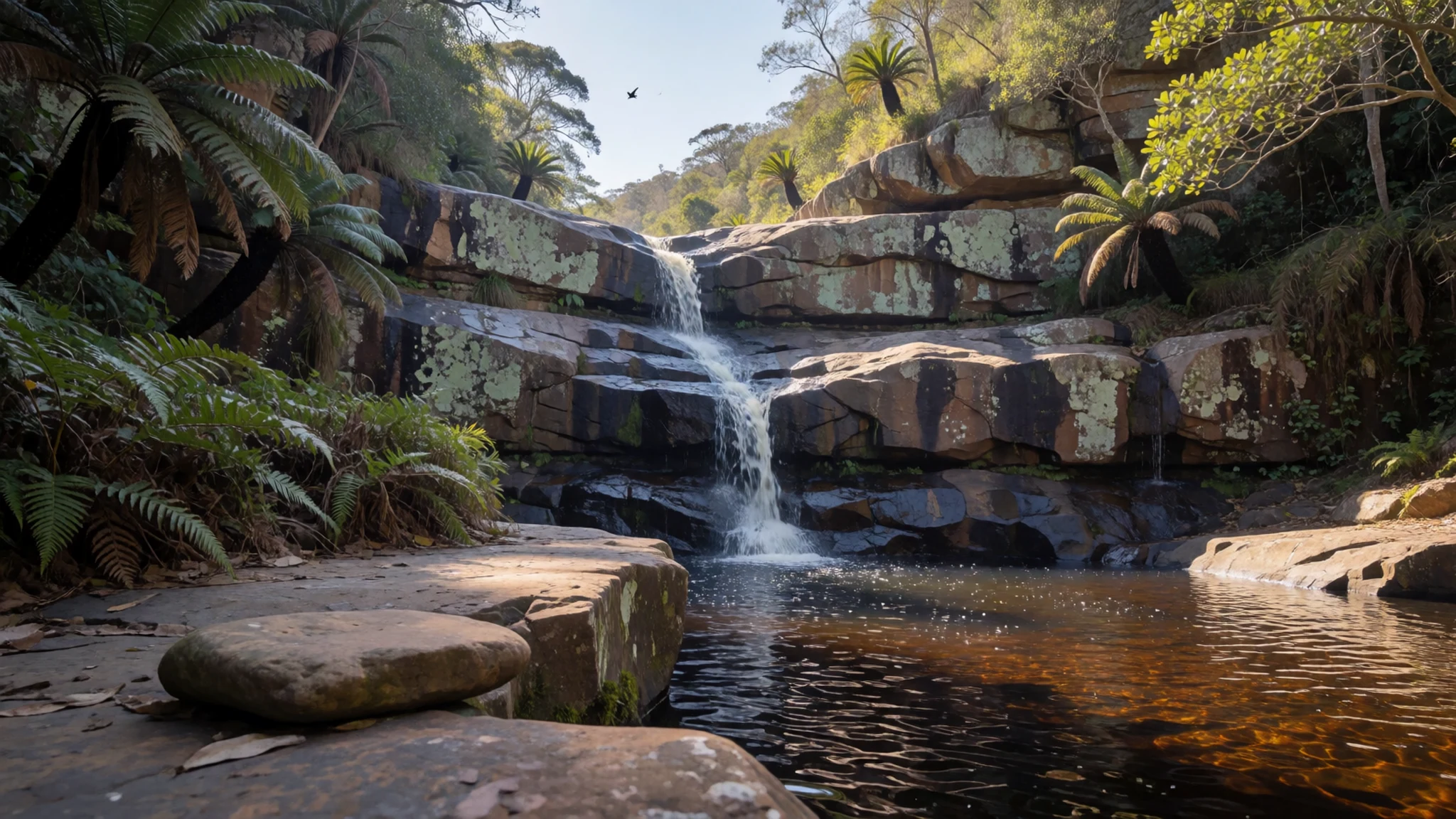
- The forest trail — Phophonyane Falls Nature Reserve
The trail at Phophonyane Falls Nature Reserve winds through indigenous forest beside the river. Figs and ferns close over the path, cycads stand in the understorey, and roots make uneven steps where the ground stays damp. Viewpoints appear without warning, then the trees close again. Shoes need to cope with mud and wet rock, and the walk rewards anyone who lets it stay slow.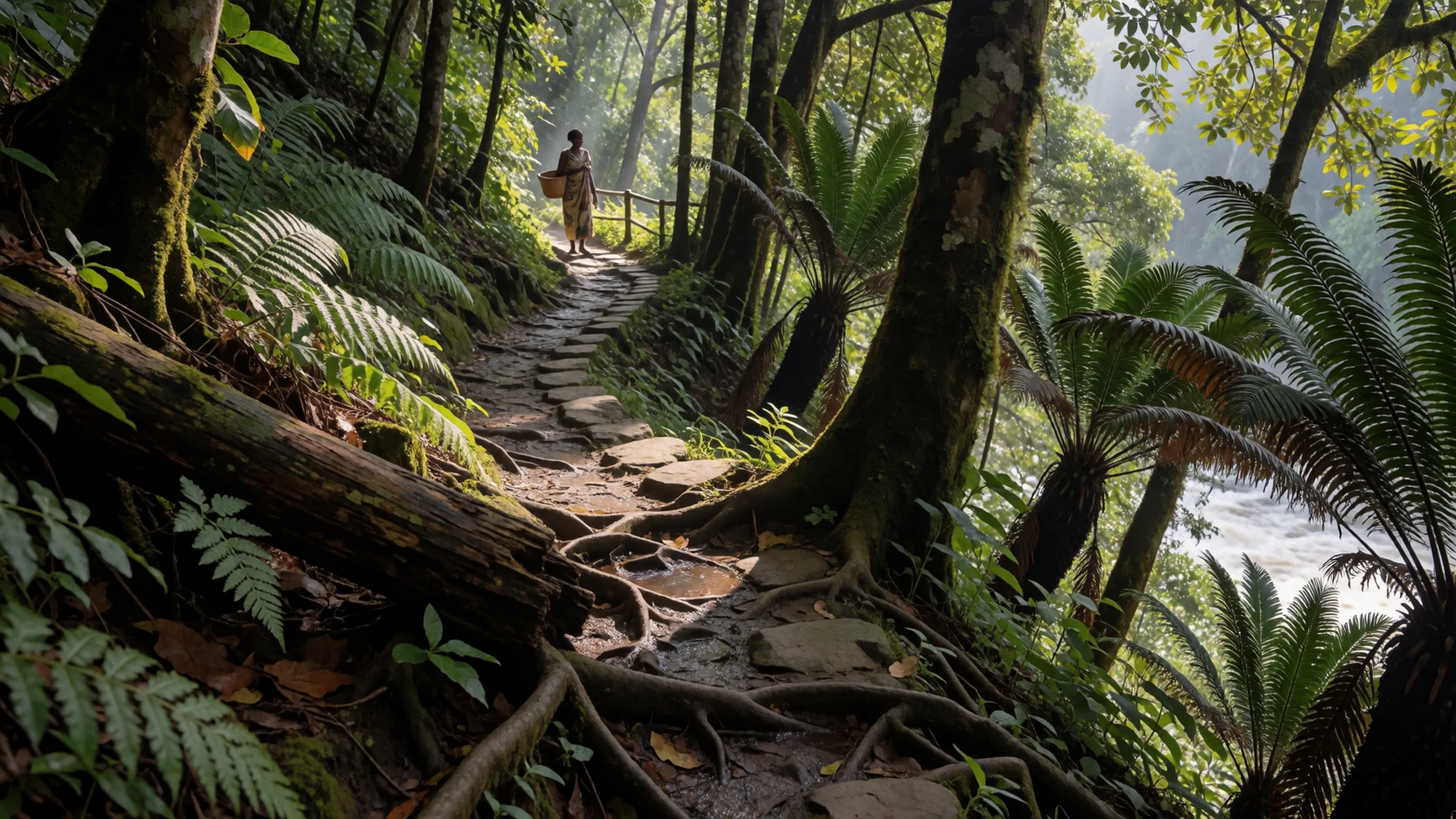
- The rock pools — along the Phophonyane River
The rock pools at Phophonyane Falls sit between the cascades, tea-coloured after rain and clearer when the river drops. They are the swimming places of the gorge, sheltered by trees and cold enough to shorten a dip even on a warm afternoon. Smooth rock makes some entries easy and others awkward, so the current deserves a look before anyone climbs in.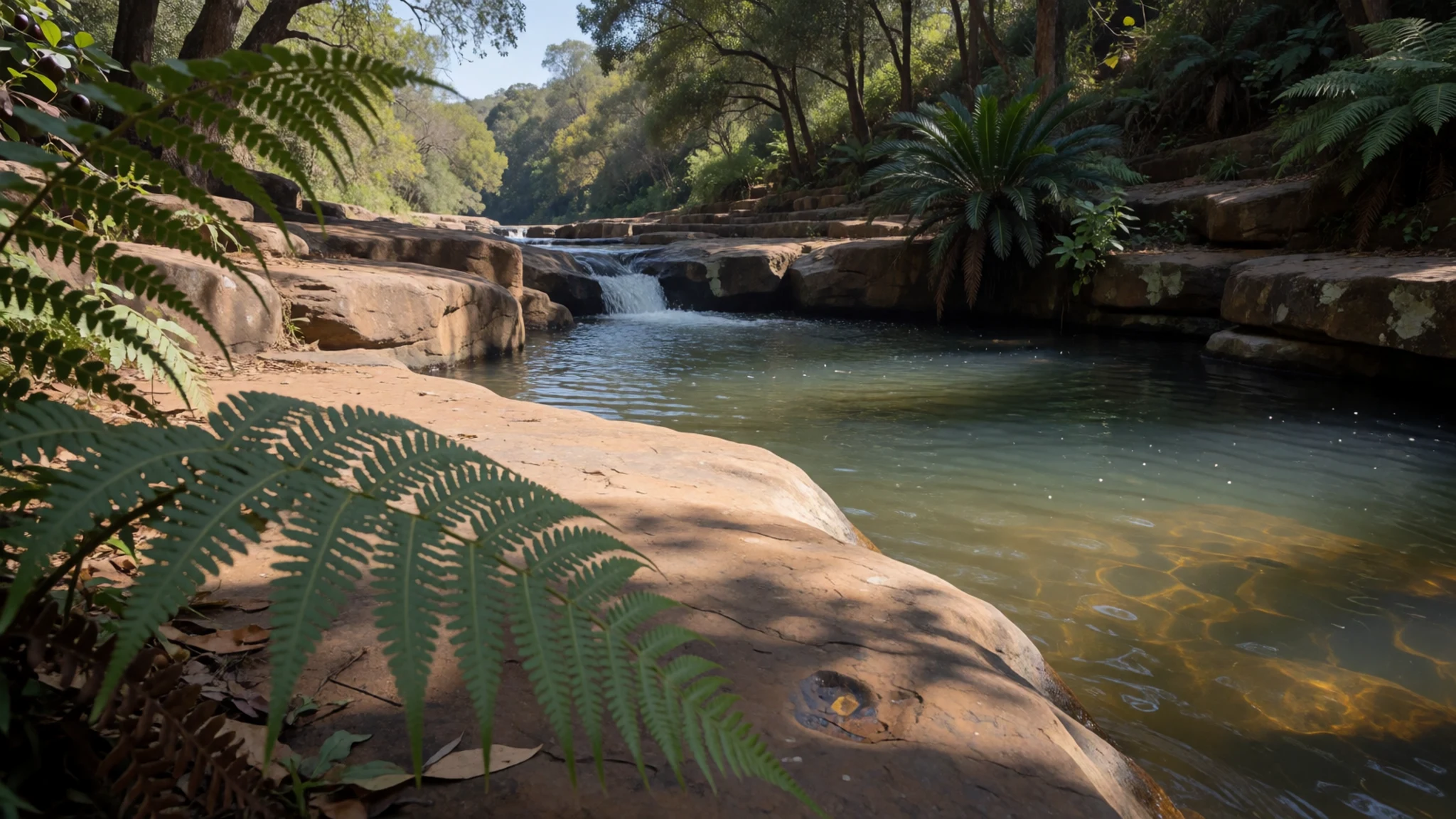
- Birds of the gorge — forest along the Phophonyane River
Birding at Phophonyane Falls is a forest activity, done by ear as much as by sight. The purple-crested turaco calls and flashes red in the canopy, and smaller species work the mid-storey along the river. Early morning is the generous hour, before voices on the trail pick up. A still pause at a bend lets the gorge settle, and movement in the leaves usually comes back.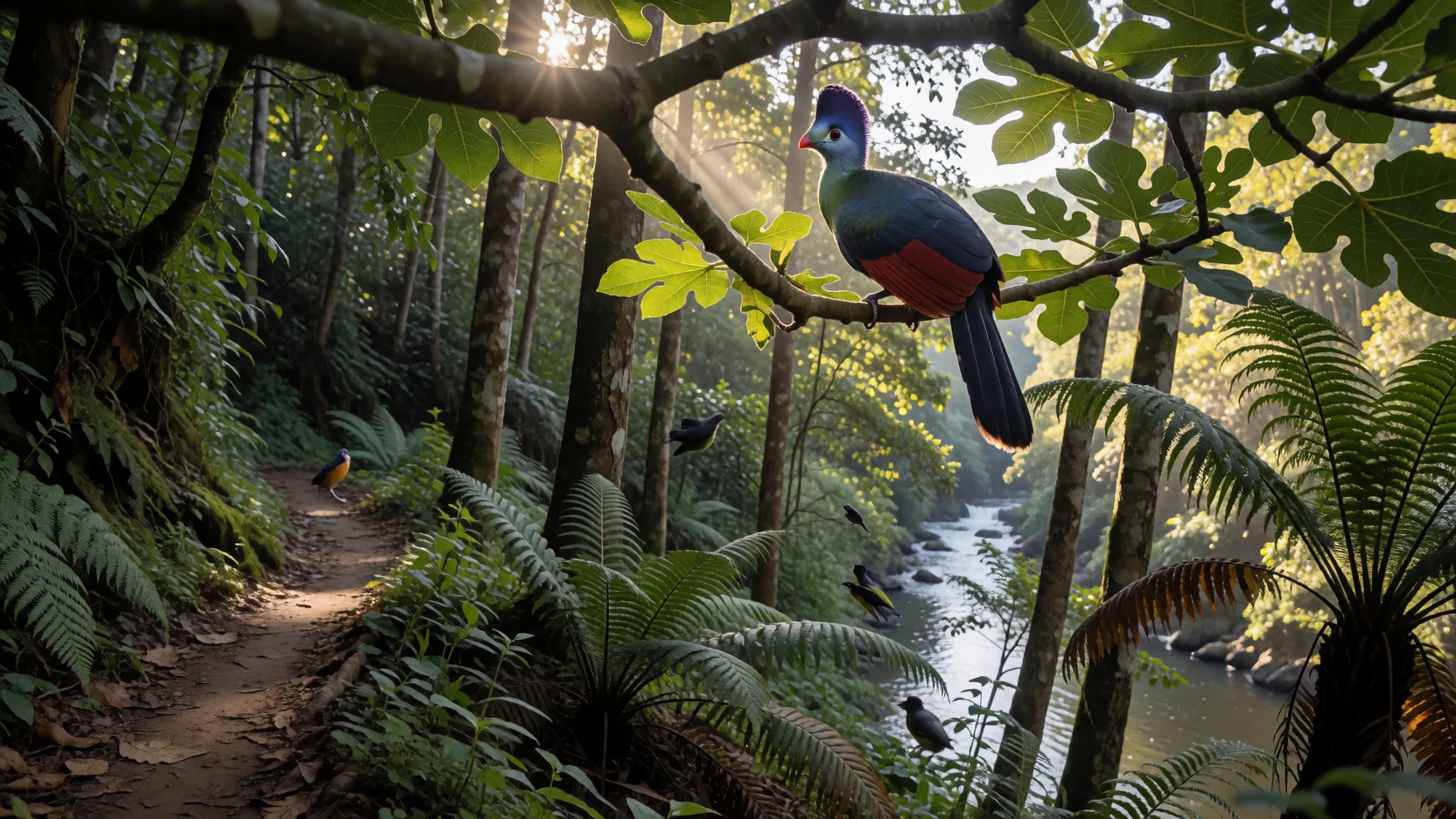
- Piggs Peak — Hhohho highlands, north-western Eswatini
Piggs Peak is the highland town that anchors a visit to Phophonyane Falls. Timber plantations, steep roads and a small centre sit above the gorge, with shops and fuel for anyone coming in by car. The drive itself is part of the outing: the air cools as the road climbs out of the lowveld, and the forest reserve feels like a turn off that highland road.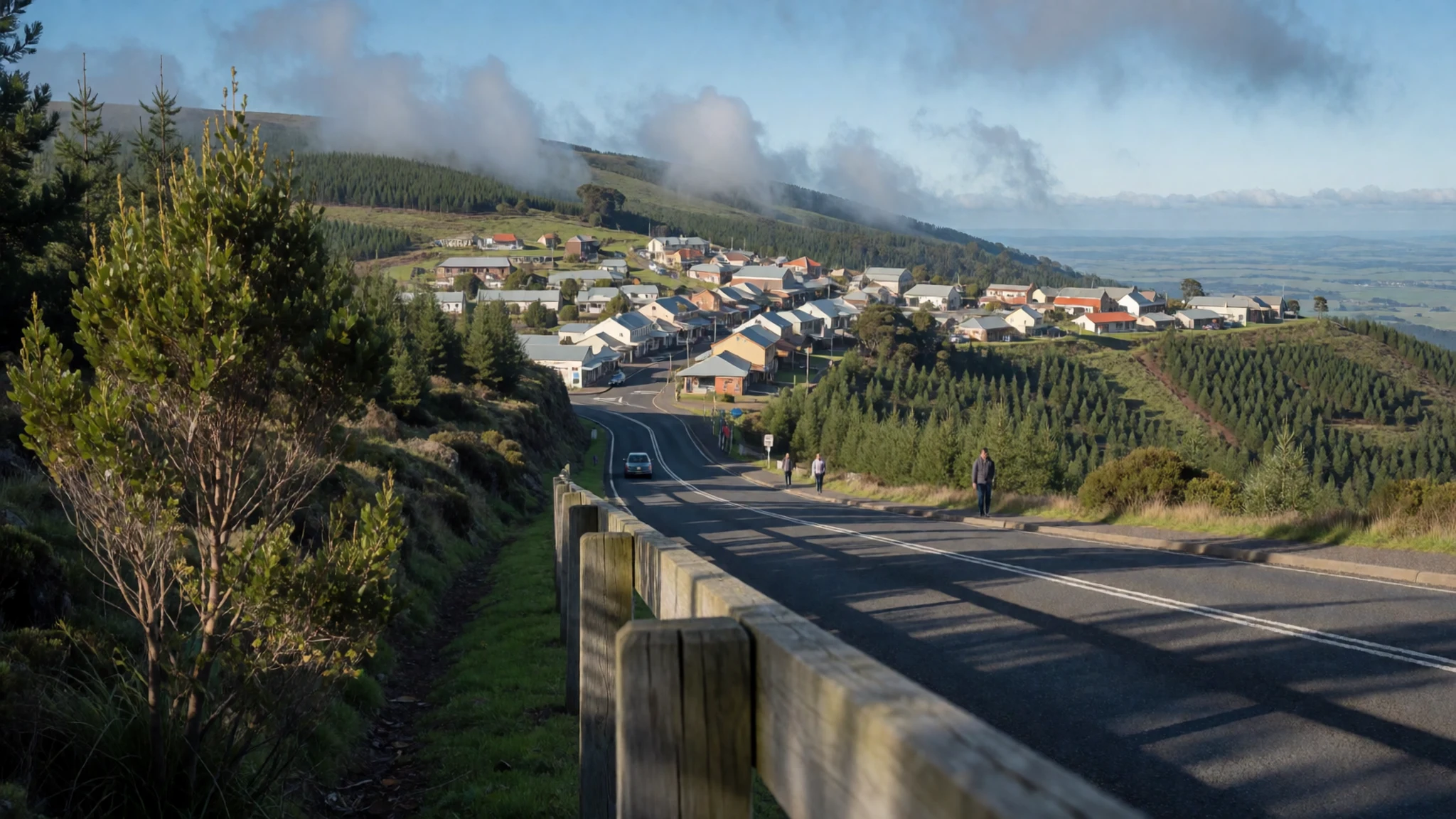
Culture
Phophonyane Falls sits in Eswatini, a kingdom where custom is ordinary life rather than a display put on for visitors. siSwati is the language of home, and English is widely used with travellers, especially around lodges and in Piggs Peak. Respect for the king and for elders runs through public life. The great ceremonies, Incwala and Umhlanga, belong to the nation: Incwala is a ritual of kingship, and Umhlanga is the reed dance that brings young women to the royal residence. They are not staged at the waterfall, yet they explain the dress, the songs and the formality a traveller may meet on the road in season.
At the falls the tone is quieter. The nature reserve is Swazi ground looked after as forest and river, and the people who work there know the paths, the pools and the afternoon storms. Neighbours still move along the highland roads between homesteads, timber and town. A greeting at the gate or on a narrow path is part of how the place works. The gorge itself asks for a light presence: the birds leave when voices rise, and the pools are for swimming, not for soap or scraps.
Visitors to Phophonyane Falls should greet people before raising a camera, and should leave the pools free of soap and food.
What to wear
Phophonyane Falls is not a place where ceremonial dress is worn into the gorge, but the textiles of Eswatini are part of understanding who lives around it. For formal and rural occasions women wear the emahiya, printed cotton cloths wrapped as a skirt and sometimes a shawl, and married women may add the sidvwaba, a skirt of softened animal skin. Men's ceremonial dress centres on the emajobo, a skin apron tied at the waist, with beads and feathers for ceremonies. Those clothes come out for Incwala, Umhlanga and family ceremonies, not for an ordinary day in Piggs Peak.
Day to day, people in town wear the same global clothes seen across southern Africa: jeans, shirts, caps and practical dresses. Wraps remain common in homesteads and at markets, chosen for work and for heat as much as for tradition. Printed cotton from regional mills is worn hard and replaced when it fades.
A visitor to Phophonyane Falls should dress for wet forest and cool highland air. Closed shoes or sturdy sandals with grip matter more than style, because the paths are rooty and the rock is slick. Light layers beat a single thin shirt: mornings in the hills can feel fresh, while the climb back to the car warms up. Swimwear is reasonable at the pools if a shirt and shorts are put back on for the trail and the drive. Away from the pools, a shirt over swimwear keeps the look respectful at a homestead or a roadside stall.
What to eat
- Sishwala — roadside eateries and homestead kitchens on the Piggs Peak road
Sishwala is the stiff maize porridge that anchors a Swazi plate, eaten with the hand or a spoon alongside stewed meat, beans or greens. Around Phophonyane Falls it turns up at roadside eateries and homestead kitchens on the Piggs Peak road, often in a mound beside a relish.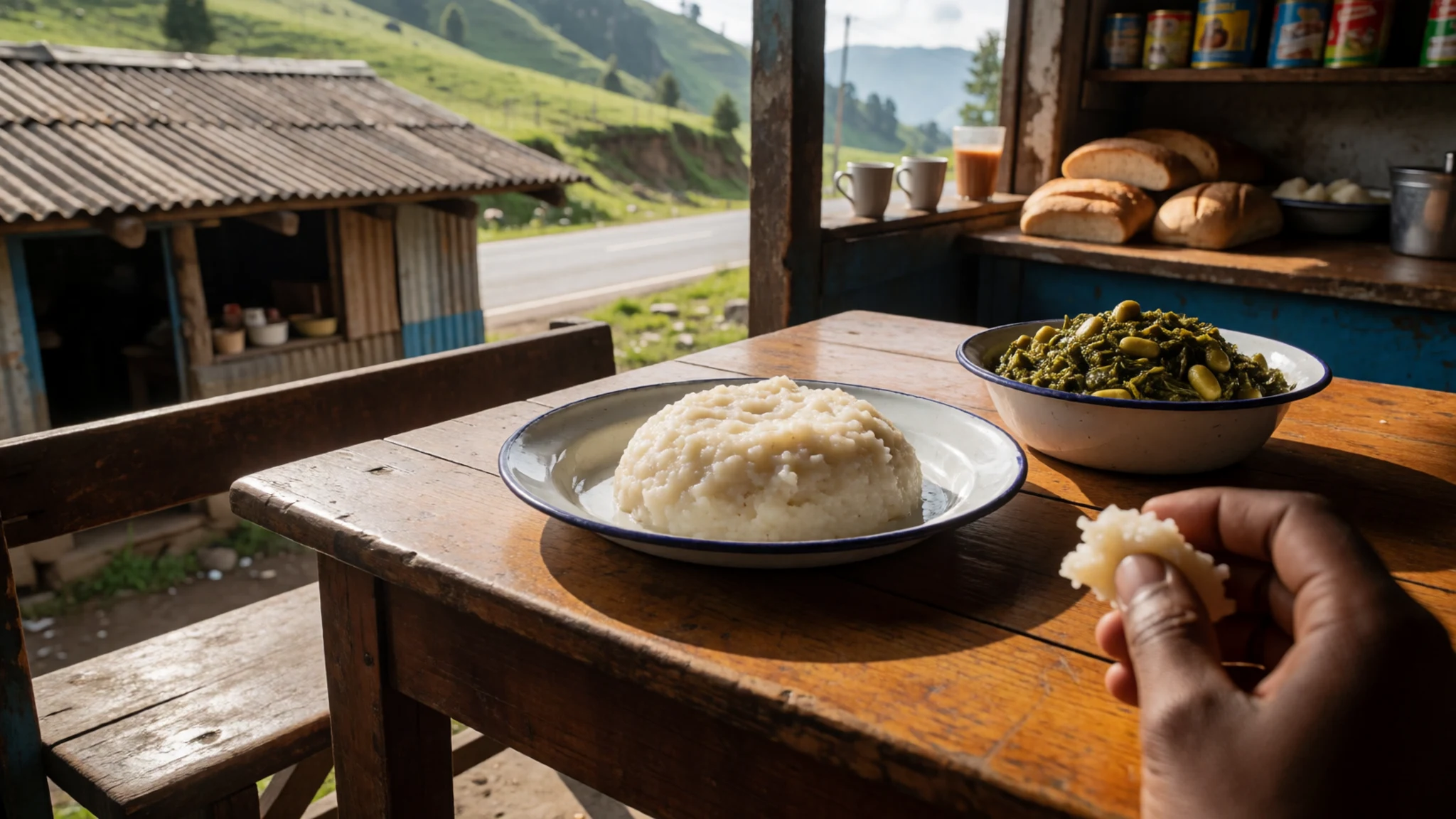
- Emasi — homestead kitchens and small shops on the highland roads
Emasi is fermented milk, thick and sour, served cool in a cup or poured over porridge. Near Phophonyane Falls it is homestead food, offered along the highland roads and at small shops that keep local staples. The taste is tangy, closer to drinking yoghurt than to fresh milk.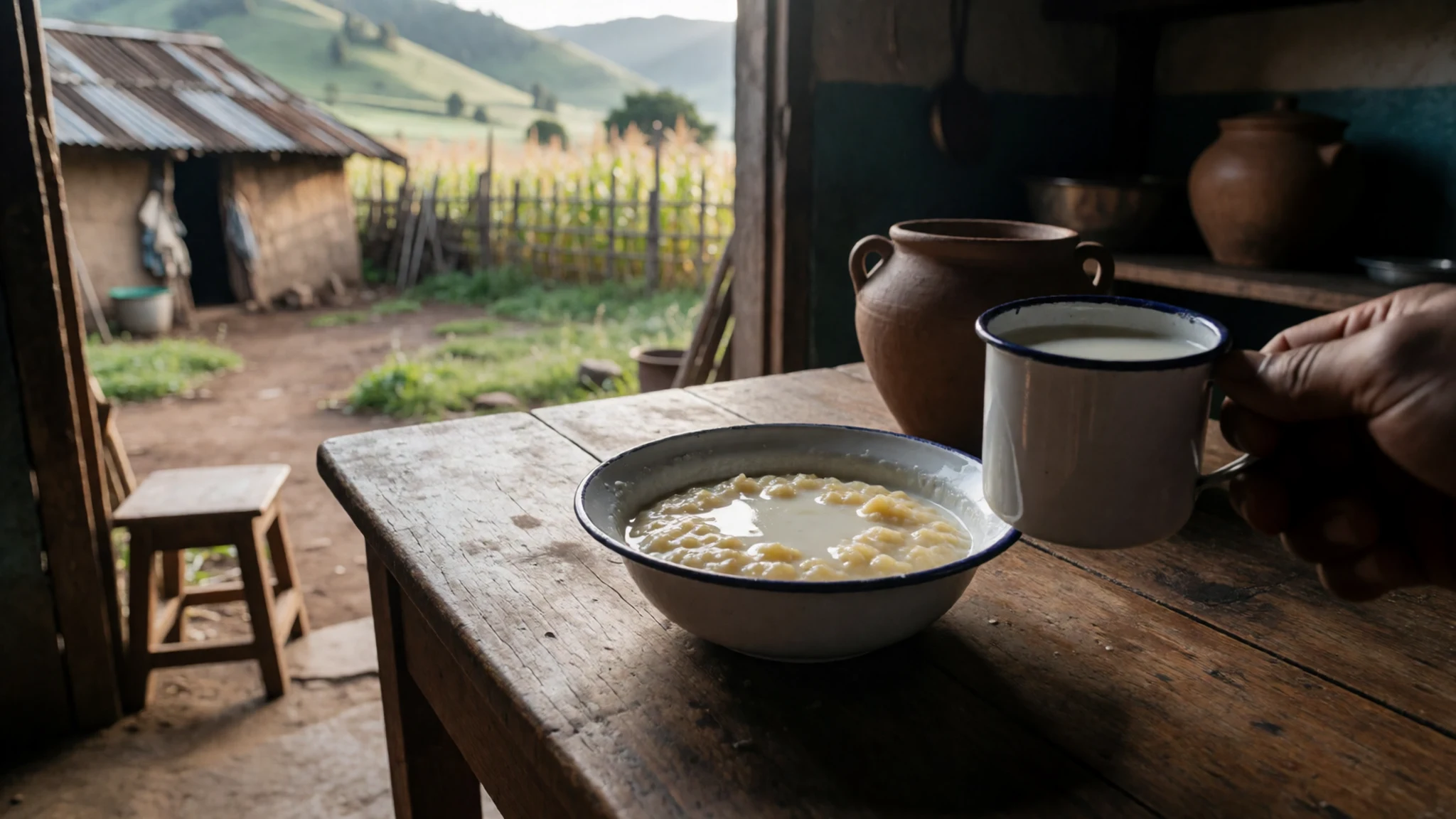
- Sidvudvu — homestead kitchens and simple eateries in the Hhohho highlands
Sidvudvu mixes pumpkin with maize meal into a soft, orange porridge, lightly salted and sometimes finished with a little sugar. Around Phophonyane Falls it appears at homestead kitchens and simple eateries on the road through the Hhohho highlands, especially when pumpkins are in from the fields. - Braai — lodge fires and roadside spots around Piggs Peak
A braai — meat grilled over wood or coals — is a southern African meal that often marks an evening near Phophonyane Falls. Chicken, beef or boerewors turns up at lodge fires and at roadside spots around Piggs Peak, eaten with porridge or bread and a sharp relish. - Buganu — homesteads and local gatherings in season
Buganu is marula beer, fermented from the fruit and drunk in season from a shared calabash or jug. Around Phophonyane Falls it appears at homesteads and local gatherings, in the highlands and on the road towards the lowveld, rather than as a standard lodge pour.
Plan it
Best time. Summer rains, roughly October to March, send a full flow over Phophonyane Falls and turn the paths slick and green. April and May still have flow, with cooler air and fewer storms. June to August is dry and fresh in the highlands, and the falls thin to a clear ribbon that is better for walking than for spectacle.
How long. 2–3
Getting there. Phophonyane Falls is reached by road through the Hhohho highlands. Many travellers fly into Johannesburg and drive via the Ngwenya border and Mbabane, then north towards Piggs Peak. The country's international airport lies in the east, and the route still runs through Mbabane before the climb north. The last stretch is a turn off the Piggs Peak road into the nature reserve. Confirm current access before the journey.
Budget. mid
Tips
- Start the gorge walk early, before day visitors fill the narrower viewpoints.
- Wear shoes with grip; the rock stays wet even when the path looks dry.
- Carry drinking water. Shops are in Piggs Peak, not at the cascades.
- Keep some cash for small shops and homestead stalls; cards are not reliable everywhere on the highland roads.
- If storms are building, leave the gorge. The paths become slick and the river rises quickly.
Etiquette
- Greet people at the gate and on the path before you take a photograph.
- Do not use soap in the pools or leave food in the gorge.
- Keep voices down so birds stay in the canopy.
Nearby
Sources
- Wikidata (CC0)
- Wikipedia (CC BY-SA 4.0)
- Wikivoyage (CC BY-SA 4.0)
Wildlife
- Purple-crested turaco (animal)
Picture a bird wearing a crest and hiding red in its wings: that is the purple-crested turaco, whose crimson flight feathers are treasured in Swazi royal ceremonial dress. At Phophonyane Falls it is found up in the canopy, where its call often gives it away before a flash of red does. Be patient. Watch from a respectful distance, stay quiet, ask a guide to help, and never offer food. - Purple-crested turaco (bird)
Picture a bird wearing a crest and hiding red in its wings: that is the purple-crested turaco, whose crimson flight feathers are treasured in Swazi royal ceremonial dress. At Phophonyane Falls it is found up in the canopy, where its call often gives it away before a flash of red does. Be patient. Watch from a respectful distance, stay quiet, ask a guide to help, and never offer food.