Shodoshima
Shodoshima, Japan
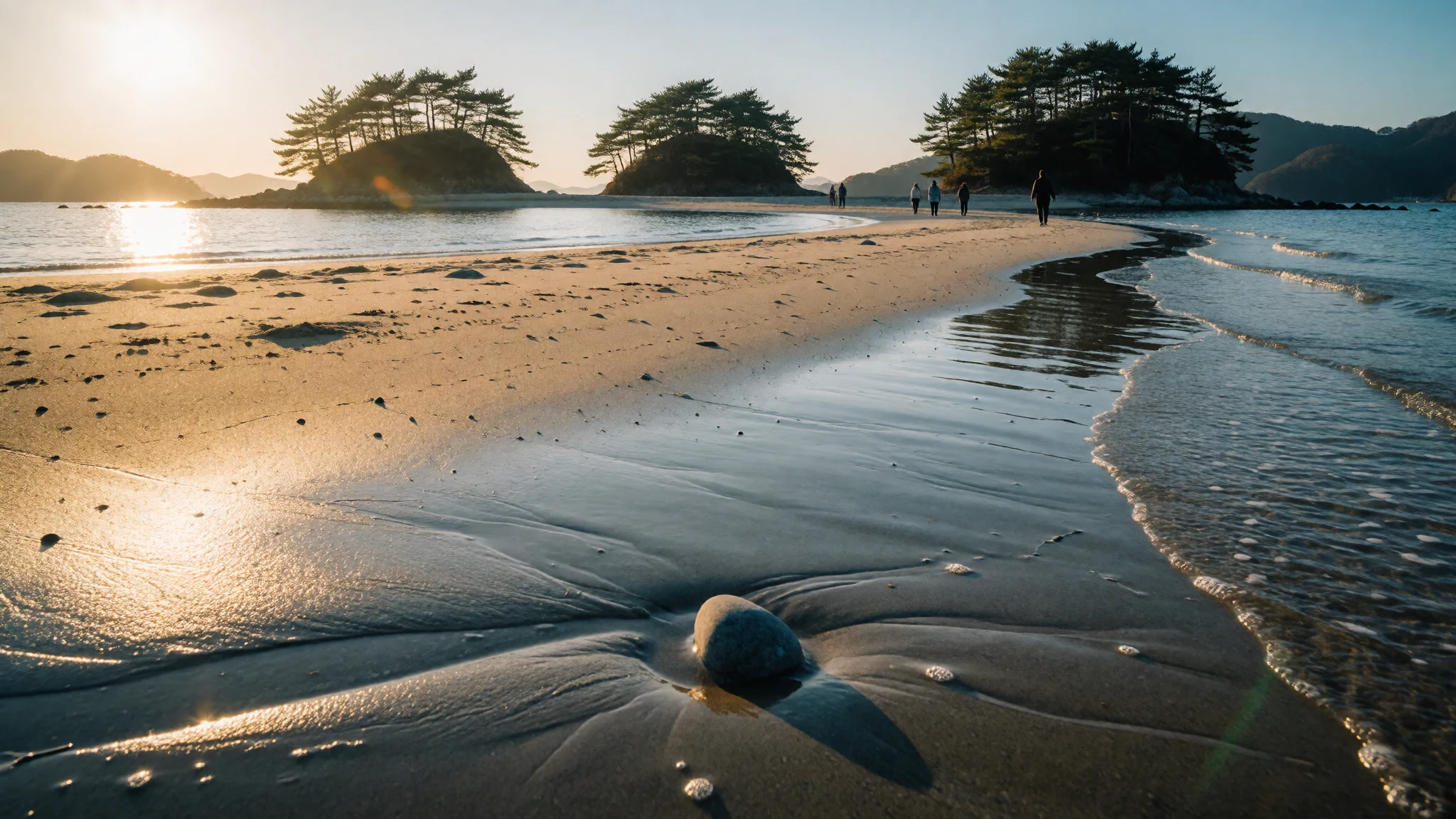
Shodoshima pairs olive groves, soy-sauce lanes and a sandbar that appears at low tide, all a short ferry from Honshu or Shikoku.
The place
Shodoshima (Shōdo Island, 小豆島) sits in the Seto Inland Sea, in Kagawa Prefecture, north of the prefectural capital Takamatsu. The name means island of small beans. It is the second largest island in the Inland Sea, with an indented coastline, a hilly interior and a mix of fishing harbours, terraced farmland and quiet beaches. Two towns share the island, Tonosho and Shodoshima Town, and together with neighbouring Teshima they form Shozu District. The mood is gentle and slightly sleepy rather than dramatic. Roads loop around the coast past olive groves, soy-sauce houses and small shrines, and steeper lanes climb into forested hills where wild macaques live. Much of the island's identity rests on two things: olives, which Shodoshima was the first place in Japan to grow successfully, earning it the nickname Olive Island, and a story, the novel Twenty-Four Eyes, which has drawn generations of Japanese readers and film-goers. Shodoshima is mostly a domestic holiday spot, so foreign visitors are a minority and English signs can be patchy outside the main sights. Weekends and school holidays bring crowds to the ferry ports and the best-known viewpoints, while weekdays outside holiday periods are far calmer. A car, a hired bicycle or the island buses all work, but distances are bigger than they look on the map and buses are not frequent. The island rewards slow days rather than a checklist.
Its story
Shodoshima's recorded past begins under an older name, Azuki-shima, when it belonged to Kibi, later Bizen Province, before being passed to Sanuki Province and eventually folded into modern Kagawa Prefecture. Its stone gives it a second thread. After Osaka Castle was destroyed in 1615, masons cut blocks on the island's coast for the rebuilding, and quarry sites with abandoned stones can still be visited. Soy-sauce making also took root here over the centuries, and the brewing lanes still smell of it. The twentieth century added olives and literature. In 1908 the island became the first place in Japan to grow olives successfully, an experiment that turned into a local trademark. Sakae Tsuboi, born on Shodoshima, published Twenty-Four Eyes in 1952, the story of a young schoolteacher and her pupils on a small island in the years before the Second World War. The 1954 film made it a classic of Japanese antiwar cinema, and a colour remake followed in 1987. Tsuboi, her husband the poet Shigeji Tsuboi and the novelist Denji Kuroshima all took part in the proletarian literary movement, a politically radical current in modern Japanese writing. Alongside this sits an older devotion: a miniature pilgrimage of 88 temples, modelled on the one on Shikoku, circles the island.
What to see
- Kankakei Gorge — Central Shodoshima
Kankakei is a steep, forested gorge in the middle of the island, known for its maple colour in autumn. A cable car crosses it, giving wide views of rock walls and the Inland Sea beyond, and a steep trail climbs for those who prefer to walk. Autumn weekends are busy, so go early. Check the official site for operating details.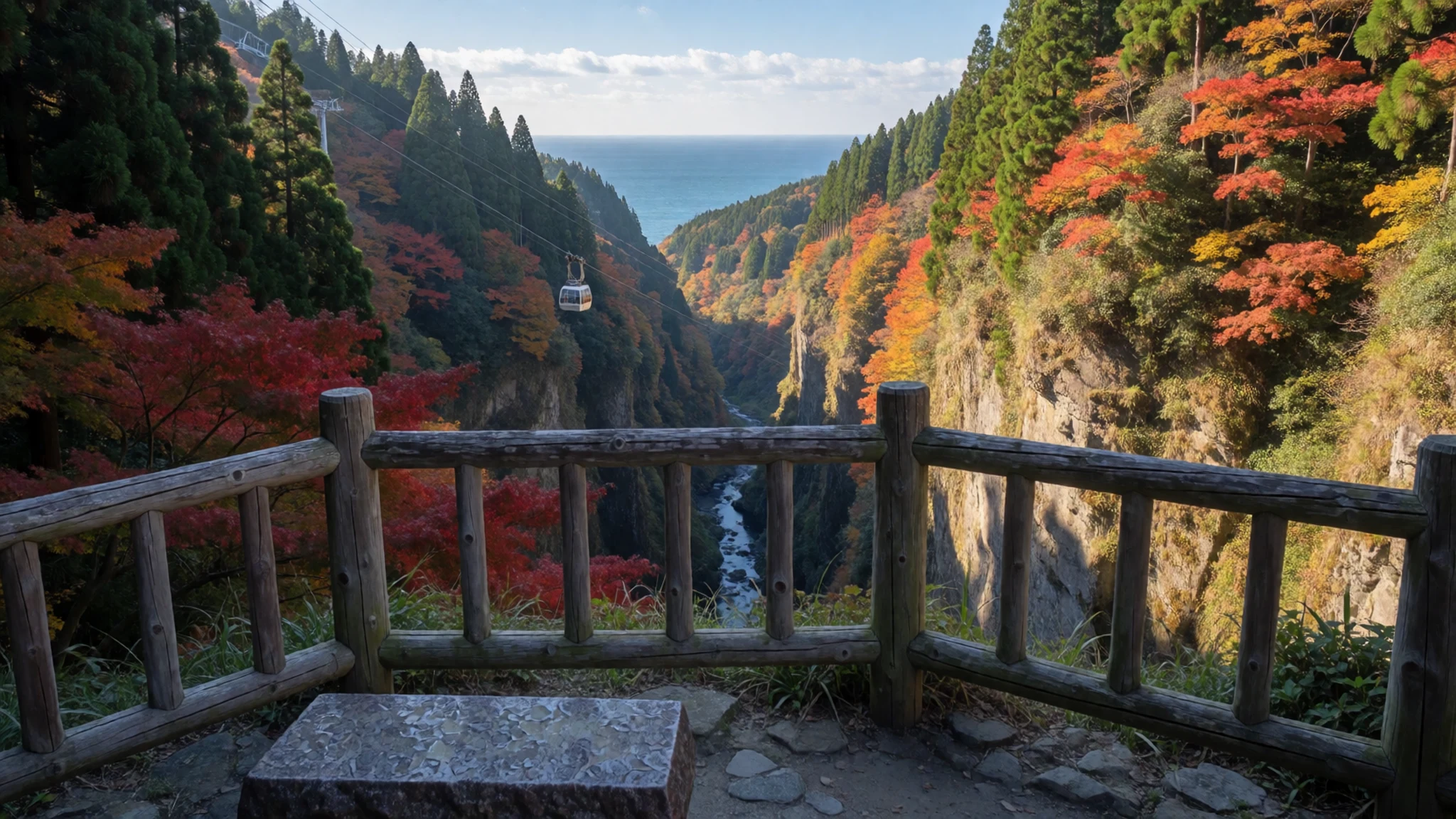
- Angel Road — Southwest coast, near Tonosho
Angel Road is a sandbar linking Shodoshima to three small islets. It emerges as the tide falls and vanishes again as it rises, so it can only be walked around low tide. Check tide times locally before setting out and leave a generous margin to get back. The shallows around it are good for slow wandering.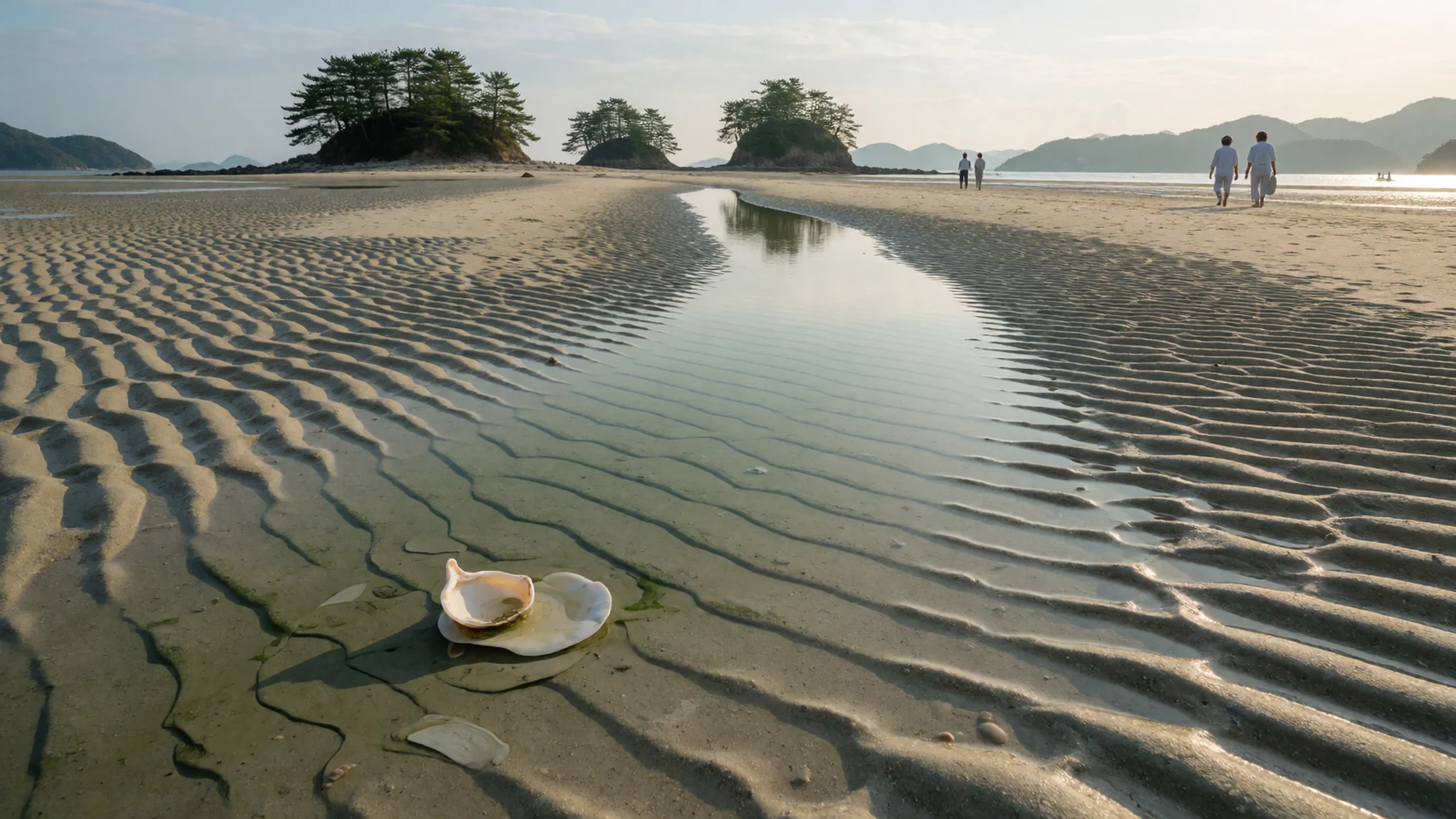
- Nakayama Senmaida Rice Terraces — Western hills
Nakayama Senmaida is a slope of hundreds of rice terraces carved into the hills in the western half of the island. A stage here has hosted outdoor kabuki since the Edo period. Performances are occasional, so check the island's tourism site for dates. The terraces look freshest in early summer and golden in early autumn.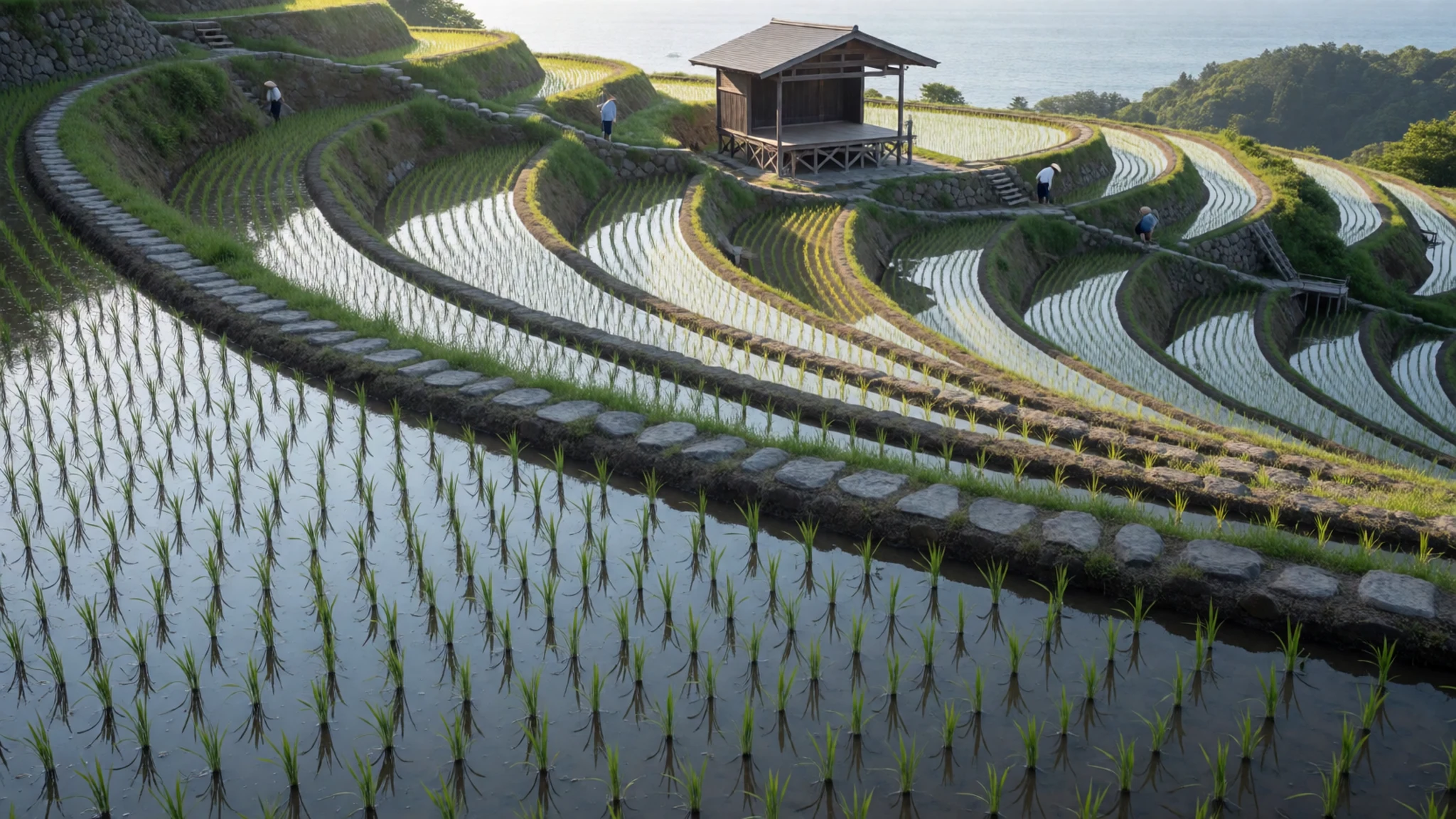
- Shodoshima Olive Park — South coast
Shodoshima Olive Park marks the area where olive growing in Japan began in 1908. Groves slope towards the sea, a windmill stands among them, and a small museum explains the crop. There is also a bathhouse with separate pools for men and women. It is touristy but pleasant, and a fair introduction to the island's olive story.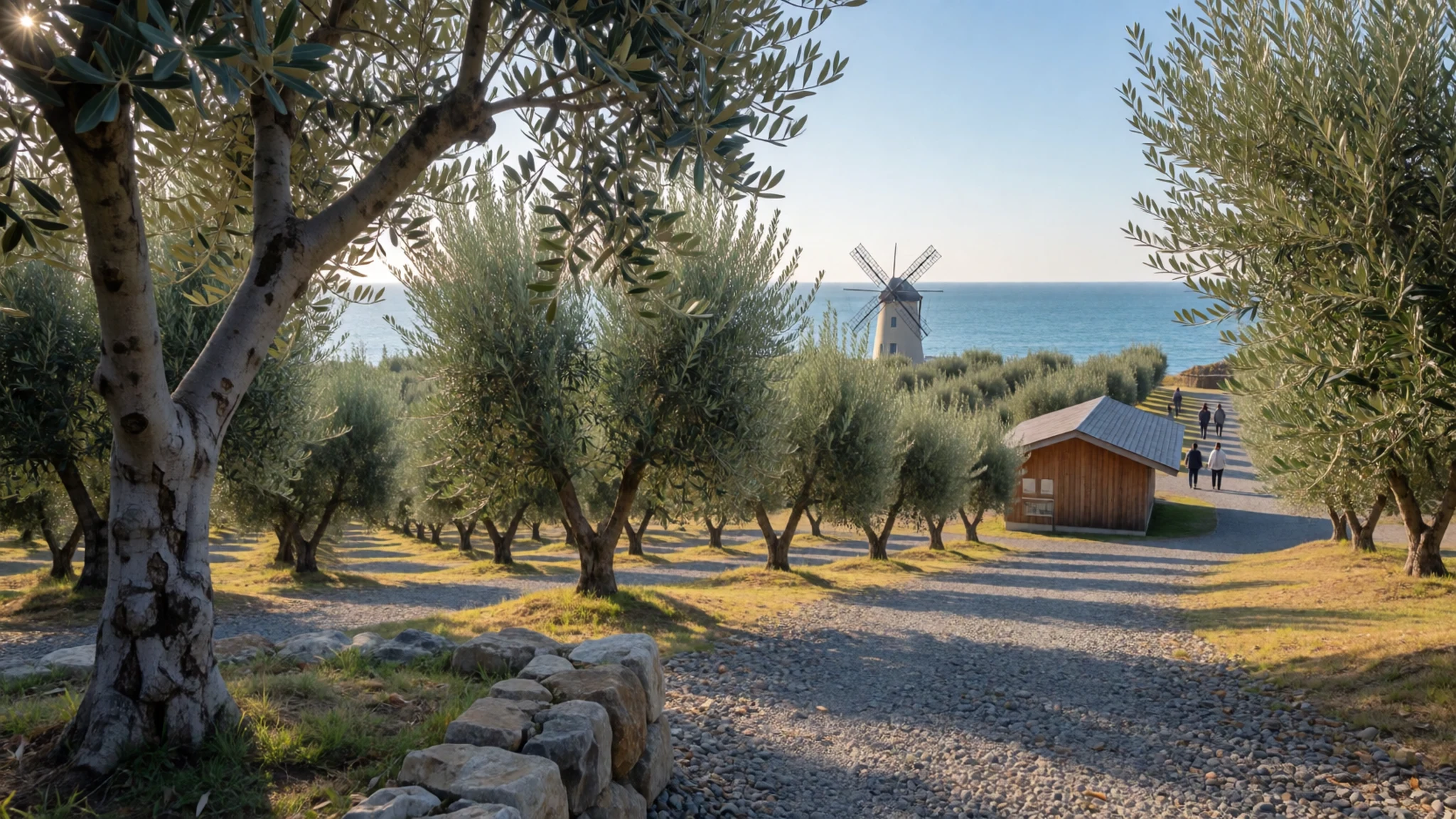
- Marukin Soy Sauce Factory and Museum — East of the island's centre
The Marukin soy-sauce factory and museum shows how island brewers have made soy sauce for centuries. Tours run through the working premises, and the displays carry English. The air inside is salty, sweet and deeply savoury, and the shop sells bottles that travel well in luggage. Check the official site before visiting.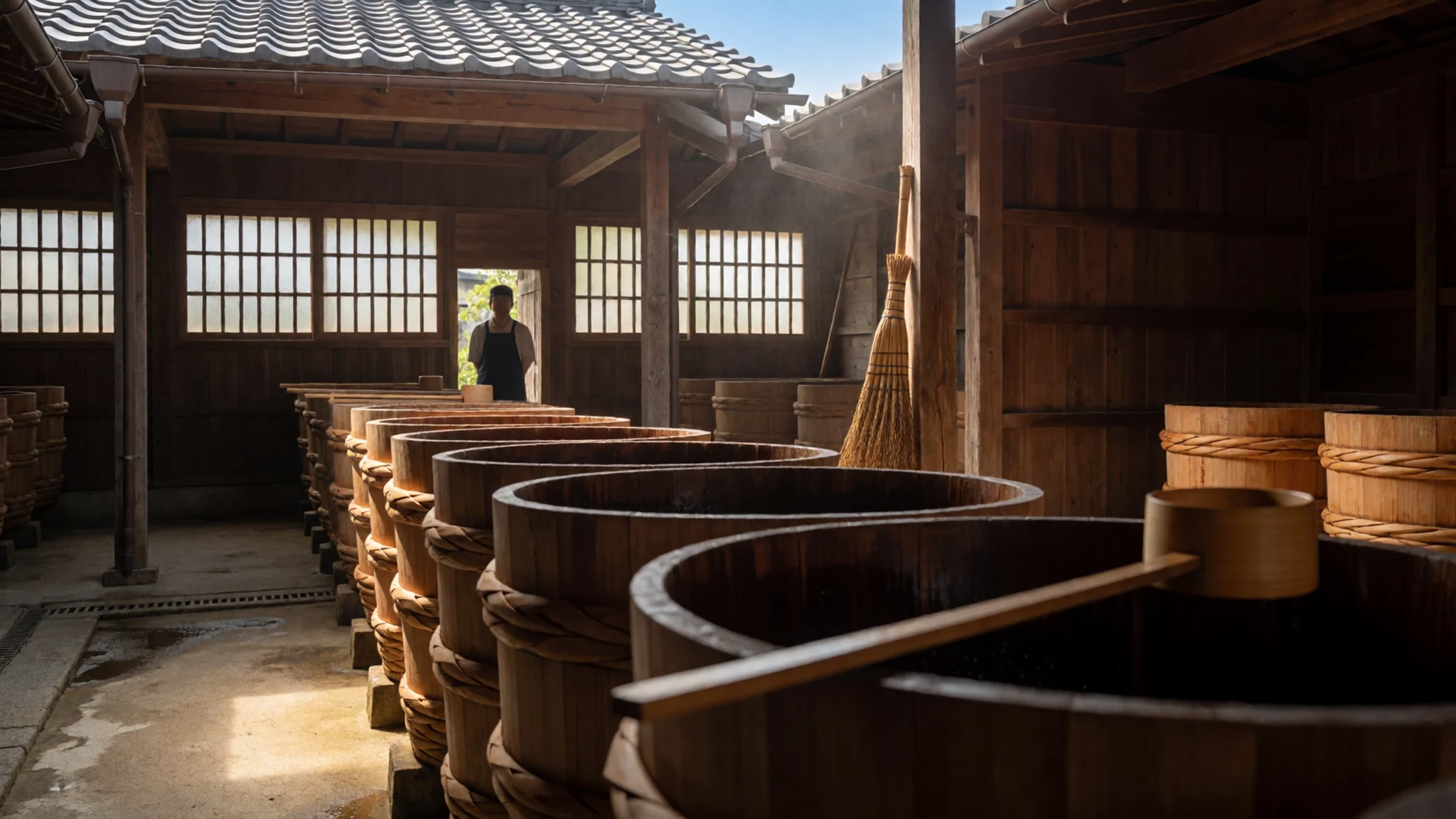
- Shodoshima Great Kannon — North coast
The Great Kannon is a tall statue of the Buddhist goddess of mercy with a temple built inside it. Visitors can climb stairs or ride a lift towards the top, where a Buddha relic is displayed. It dates from 1993, so the setting is modern, but the view over hills and water is the reason to stop.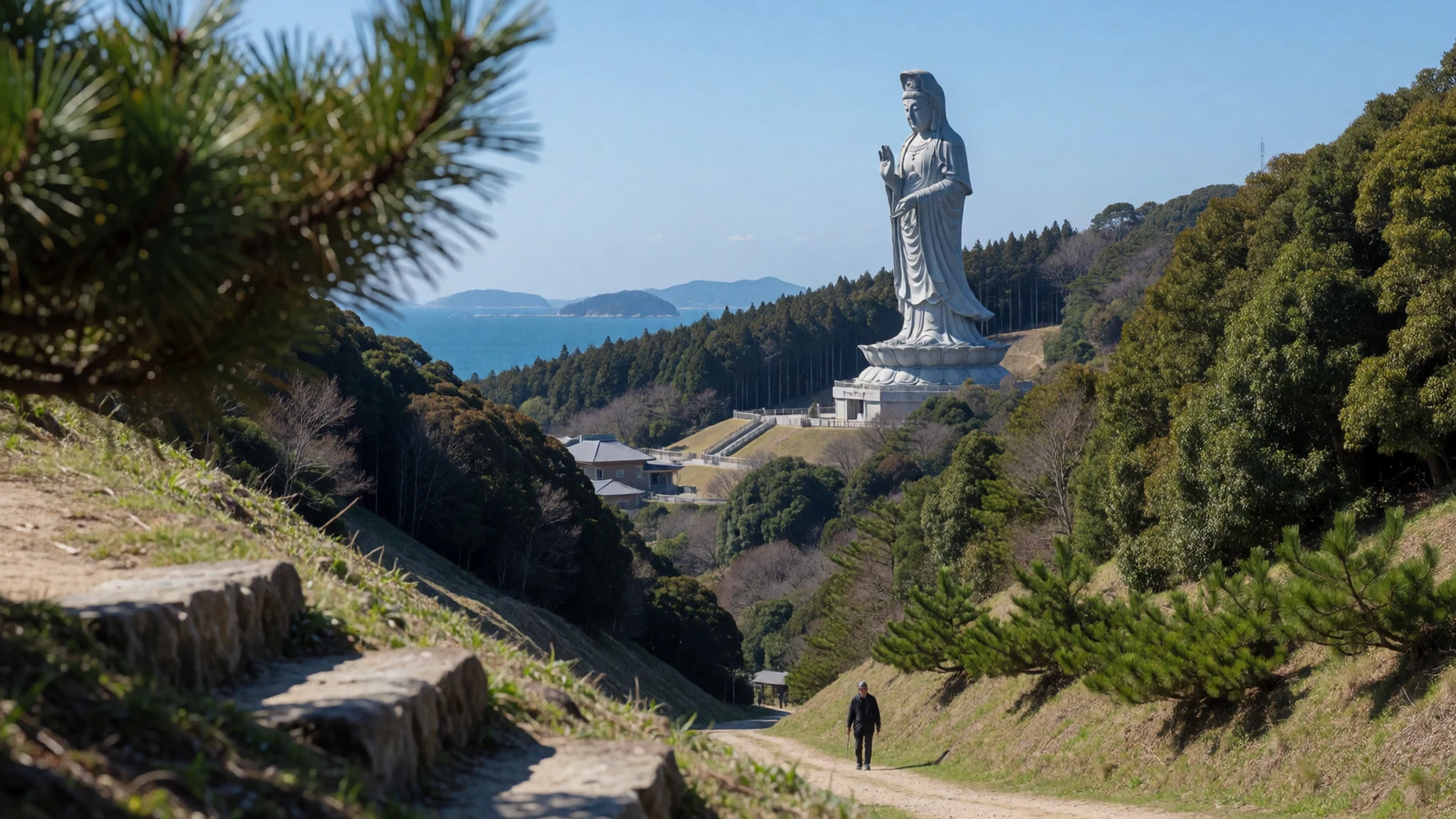
Culture
Shodoshima's culture rests on three strands: pilgrimage, craft and storytelling. The island carries a miniature version of the Shikoku pilgrimage, 88 temples laid out clockwise from near Sakate Port, and some visitors still walk or drive parts of it. Local identity is also tied to food crafts, soy sauce, noodles and olives, which families and small companies have carried on across generations, and to the memory of Twenty-Four Eyes, which most Japanese visitors know from school or screen. Expect pilgrims, school groups and film fans to share the same lanes. Kabuki has a rural form here too, performed on an open-air stage among the rice terraces, a reminder that island villages once made their own entertainment. Life moves at ferry pace: shops tend to close early, people greet strangers on quiet lanes, and rubbish is carried back to the right bin rather than left at viewpoints. Seasonal festivals take place at village shrines and are worth stumbling on if the dates fit, though most are small and local rather than staged for tourists. At temples and shrines, bow slightly at the gate, keep your voice low, and do not photograph worshippers or pilgrims without asking first.
What to wear
Shodoshima has no single regional costume, so traditional dress here means the wider Japanese wardrobe as it appears at island festivals and temples. Kimono in silk or cotton are for weddings and formal occasions, the lighter cotton yukata appears at summer festivals, and drummers and bearers wear short happi coats. Pilgrims on the island's 88-temple route wear a white jacket, carry a staff and often a sedge hat, a plain, practical outfit borrowed from the Shikoku tradition. Day to day, islanders dress simply for farming, fishing and ferries: work trousers, sun hats, windcheaters and sturdy sandals, with smarter clothes kept for the mainland. Visitors can dress the same way. In summer wear light cotton, a hat and sun cream, because the shore and the gorge viewpoints offer little shade, and carry a thin waterproof for sudden showers. In spring and autumn add a fleece for the ferry deck. Comfortable walking shoes matter on the terraces, the gorge trail and the sandbar, and slip-on pairs are easier at temples where shoes come off. Shoulders and knees need not be covered everywhere, but tidy, modest clothing suits shrines and temple halls. Swimwear belongs on the beach only, and bathhouses have their own rules about tattoos, so check at the door.
What to eat
- Somen noodles — Noodle factories and village eateries
Shodoshima is known for thin wheat noodles, served cold in summer with a dipping sauce or in a warm broth. Some makers open their workshops to visitors, and noodle shops dot the villages. Try them at a noodle factory eatery or a small village restaurant.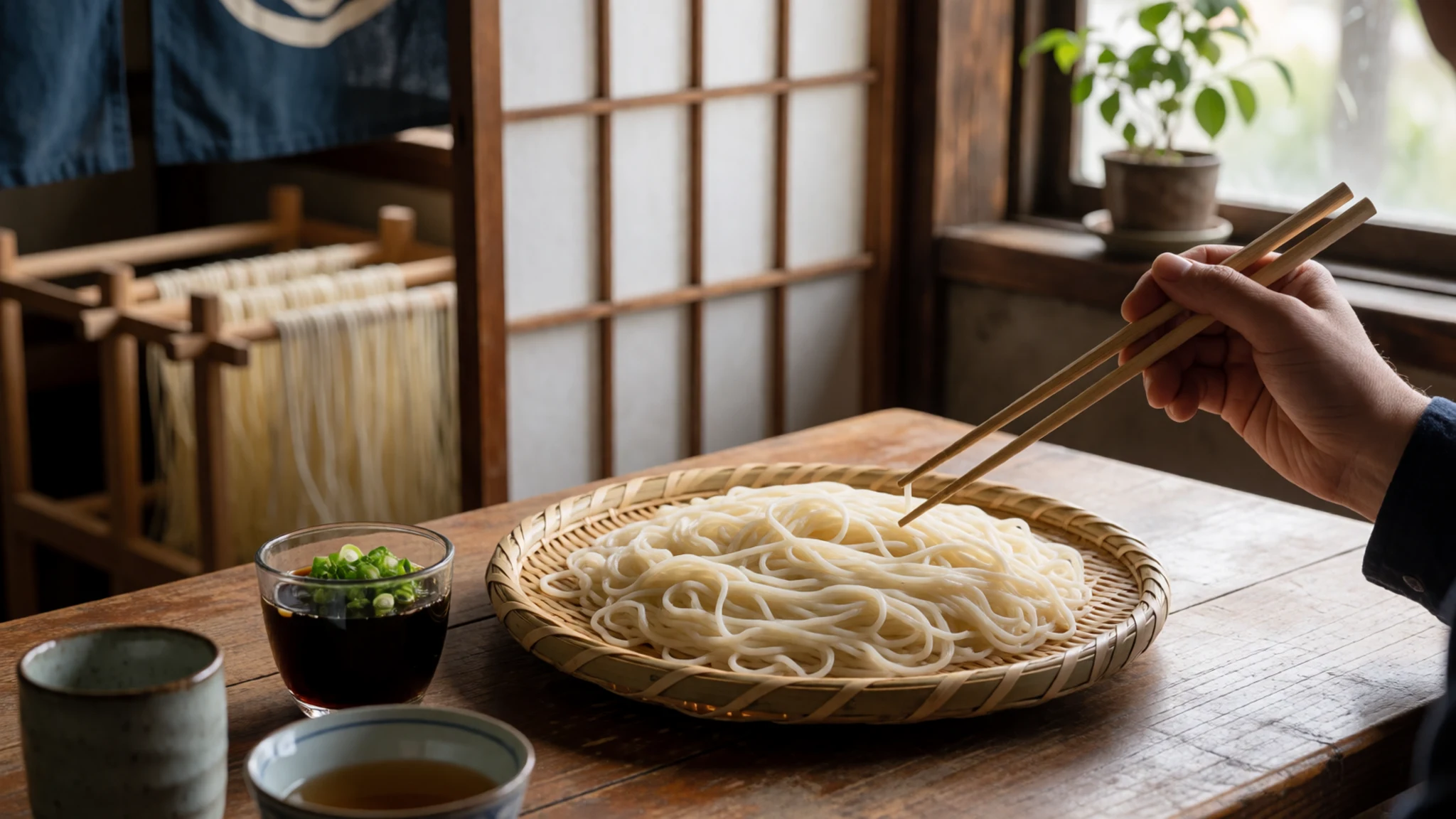
- Soy sauce and soy-flavoured dishes — Brewery shops and the soy-sauce lanes
Soy sauce has long been brewed on the island, and it flavours everything from grilled fish to ice cream. Look for dark, rich bottles in brewery shops and for soy-based seasoning in home-style set meals at small restaurants near the brewing lanes.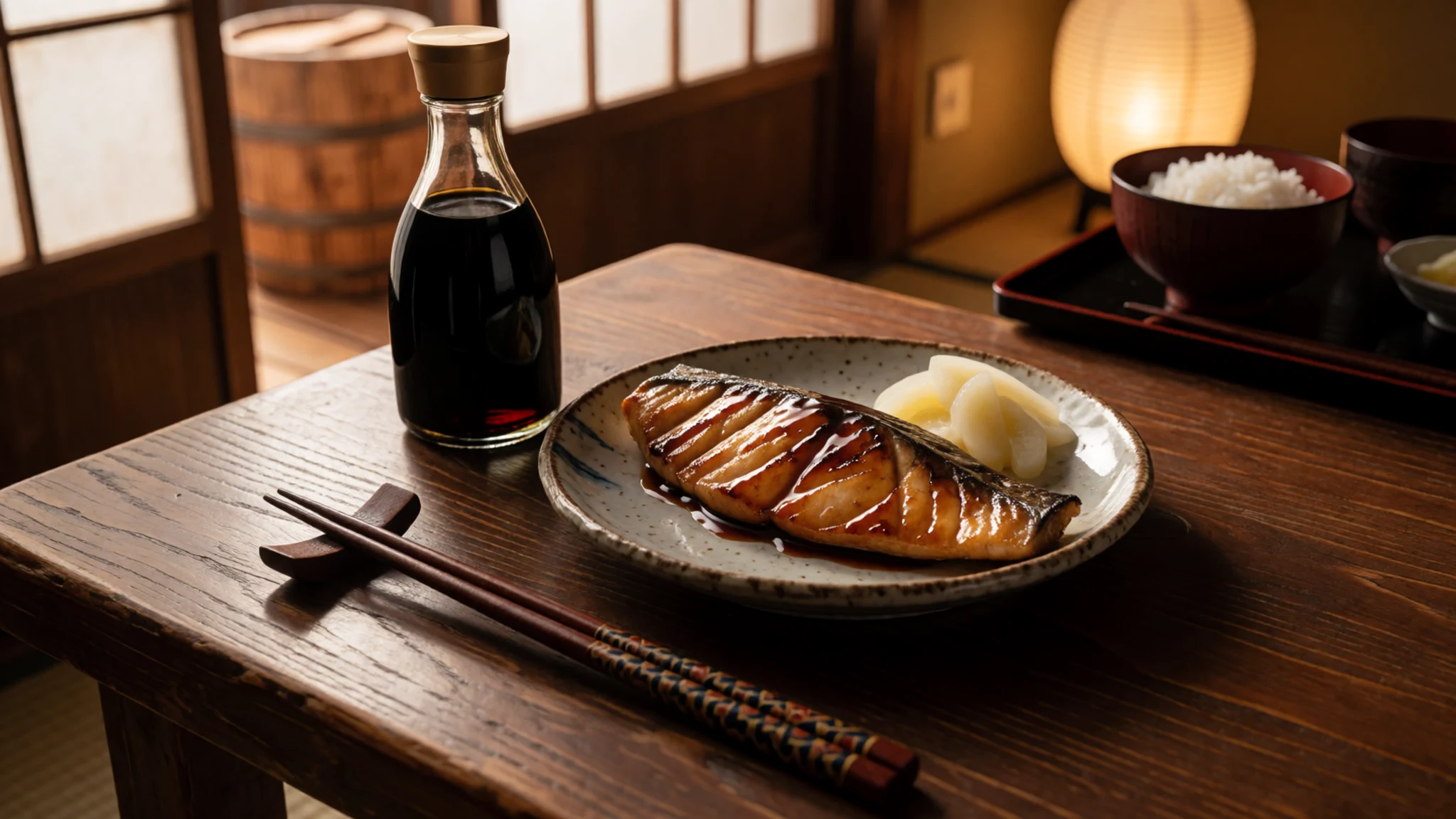
- Olive oil and olive sweets — Olive Park shops and island cafes
Olives are the island's signature crop, pressed into oil and turned into pickles, sweets and even soft-serve ice cream. A tasting of fresh oil with bread is a simple pleasure. Shops and cafes around the olive groves stock the widest choice. - Fresh Inland Sea fish — Harbour-side eateries in Tonosho and fishing villages
Boats land a daily mix of fish and shellfish in the island's harbours, served as sashimi, grilled or in sets. Menus change with the catch, so ask what came in that day. Harbour-side eateries are the most reliable place to find it. - Local sake — Cafe-bars near the brewery
A sake brewery on the island pairs well with a quiet evening after the ferries stop. Cafes and bars near the brewery pour local bottles alongside small plates. Ask staff to suggest a dry or a softer style to match the meal.
Plan it
Best time. April–May and October–November, when the weather is mild for walking and the maples at Kankakei colour in autumn. Summer is hot and humid and the busiest season for beaches and ferries; the June rains can disrupt outdoor plans.
How long. 2–3
Getting there. Fly to Takamatsu or Okayama, or reach Okayama by Shinkansen, then take a ferry to Shodoshima; ferries also run from Himeji, Uno (Tamano) and Takamatsu, and less often from Kobe and Osaka. Check the island's official site at https://shodoshima.or.jp/ for current routes and timetables.
Budget. mid
Tips
- Check tide times before walking Angel Road and leave plenty of time to return
- Book ahead if bringing a car on the ferry, especially on weekends and holidays
- Carry some cash, as small shops, cafes and village eateries may not take cards
- Visit viewpoints like Kankakei early in the morning, particularly in the autumn colour season
- Island buses are infrequent, so plan your route or hire a car or bicycle
Etiquette
- Take off your shoes where there is a raised floor or slippers are set out
- Do not photograph pilgrims or worshippers without asking
- Take rubbish with you or use the bins provided
Nearby
Sources
- Wikidata Q2166413 (CC0)
- Wikipedia: Shōdoshima (rev 1386099460) (CC BY-SA 4.0)
- Wikivoyage: Shodoshima (rev 4970844) (CC BY-SA 4.0)
- Photo: Syodoshima landsat (Tdk) (CC BY 3.0)
- Photo: Kankakei in Shodoshima (663highland) (CC BY 3.0)
- Photo: The Angel Road of Shōdo Island (663highland) (CC BY 3.0)
- Photo: Shodoshima Olive Park (663highland) (CC BY 3.0)
- Photo: Barnacles (Maarten Heerlien) (CC BY 2.5)
- Photo: Ferry to Shodo-shima (Maarten Heerlien) (CC BY 2.5)
- Photo: From Ropeway at Shodoshima (Hora Okuni) (CC BY 3.0)
- Photo: Harima Nada (Pinqui) (Public domain)


Wildlife
- Japanese macaque (animal)
The Japanese macaque is the famous snow monkey, a brown-grey monkey with a pink-red face and a short tail, and no other monkey lives so far north or in such cold. On Shodoshima, wild macaques roam the wooded hills, up the steeper lanes that leave the coastal road. Watch them from a respectful distance, keep your voice low, move slowly, and never offer food, so they stay wild and at ease.