Sais
Sais, Egypt
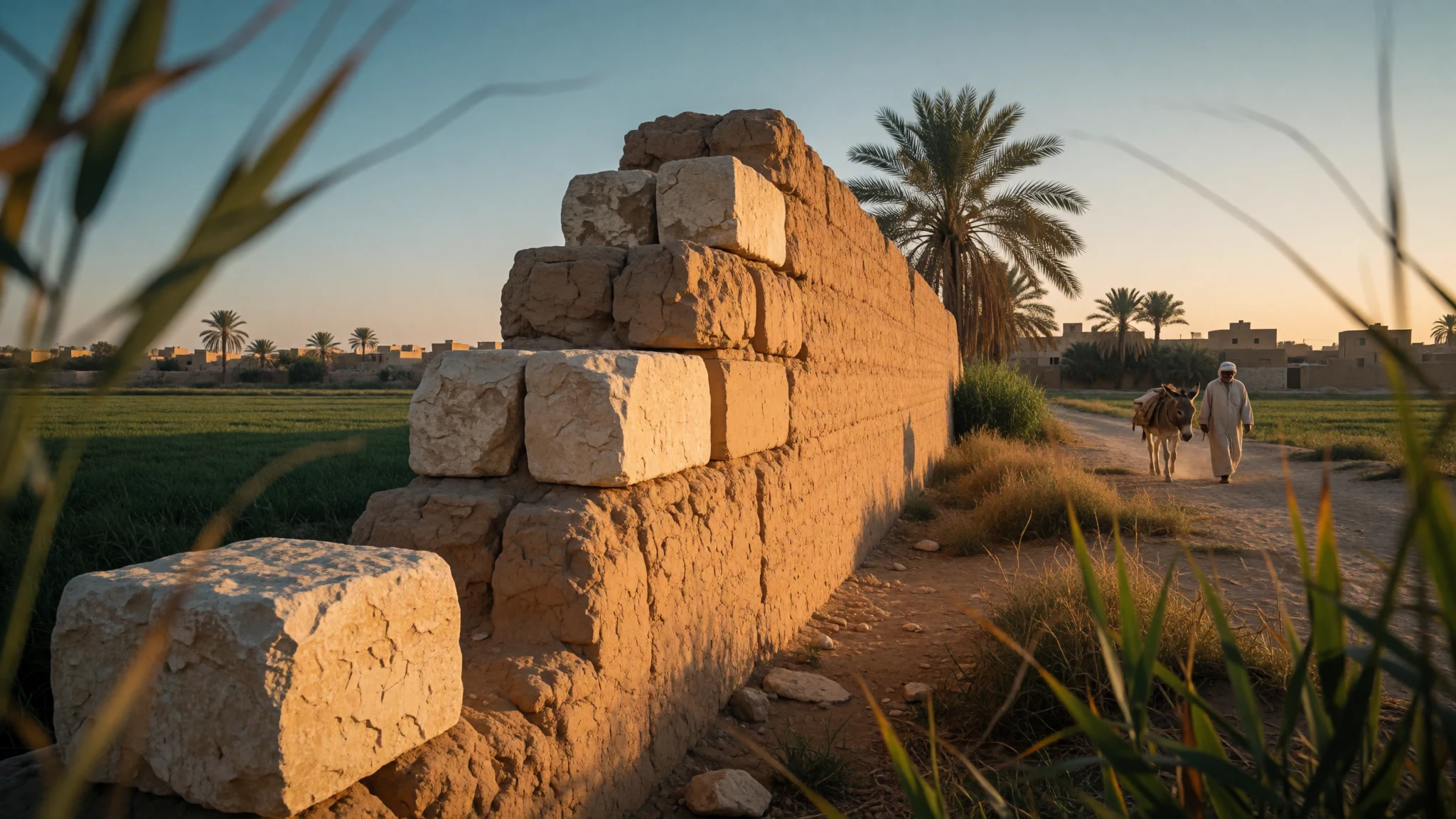
Sais was a royal capital of the Nile Delta, and its quiet mounds, farmland and museum-held treasures suit travellers who like imagining more than seeing.
The place
Sais lies in the western Nile Delta, in Gharbia Governorate, on what was once the Canopic branch of the river. Today the site sits beside the village of Sa el-Hagar, home to about 20,568 people, at an elevation of 10 metres. Wikidata classes it as an archaeological site, an emporium and a village, which describes it fairly: this is a working farming community built over an ancient city.
The ground is flat, green and criss-crossed with irrigation channels. Nothing here resembles the sandstone drama of Luxor or the Giza plateau. Visitors find low mounds, scattered blocks of worn stone and fields, and they need a little imagination and ideally a guide who knows the local layout.
In ancient times Sais was the capital of the fifth nome, or province, of Lower Egypt, known as Sap-Meh. Its name appears in hieroglyphs, in Greek as Sáïs and in Coptic as Sai. The modern Arabic name, Sa el-Hagar, is the one to use with drivers and locals.
The Delta is Egypt's farmland heartland, and that shapes a visit. Roads are busy with tractors, donkey carts and minibuses, villages run into one another, and tourist facilities are minimal. Come for the history and the setting, bring water and snacks, and treat Sais as a half-day detour from a base elsewhere rather than a destination with its own infrastructure.
Its story
Sais rose to national importance in the Late Period. It was the seat of power during the Twenty-fourth Dynasty, in the eighth century BC, and then the capital of the Saite Twenty-sixth Dynasty, which ruled from 664 to 525 BC. The Saite kings reunited Egypt after a long period of fragmentation, and their rule is remembered as a time when old traditions were deliberately revived.
That revival shows in the art. Saite sculptors looked back to the styles of the pyramid age and produced finely cut portraits in hard stones such as greywacke. A sarcophagus lid of the vizier Gemenefherbak, now in the Museo Egizio in Turin, is the kind of object associated with this tradition. Sais also attracted Greek traders and visitors, which is part of why it is described as an emporium, a trading place, and why Greek writers knew it by name.
The dynasty ended in 525 BC, and the city declined over the following centuries. Its temples were quarried for stone, which is largely why so little stands today and why the town of Sa el-Hagar carries a name that, in Arabic, refers to stone.
In 1828 Jean-François Champollion, the scholar who deciphered hieroglyphs, visited and drew a plan of the ruins, and later a restoration based on the account of Herodotus. Those drawings, along with later nineteenth-century engravings, preserve how much more was visible then than now.
What to see
- The ruins and mounds of Sa el-Hagar — Sa el-Hagar, Gharbia
The old city survives as low mounds, fragments of masonry and open ground among the fields and houses of Sa el-Hagar. Expect to walk slowly and read the landscape rather than tick off monuments. A local guide or the antiquities authority can explain what lies where.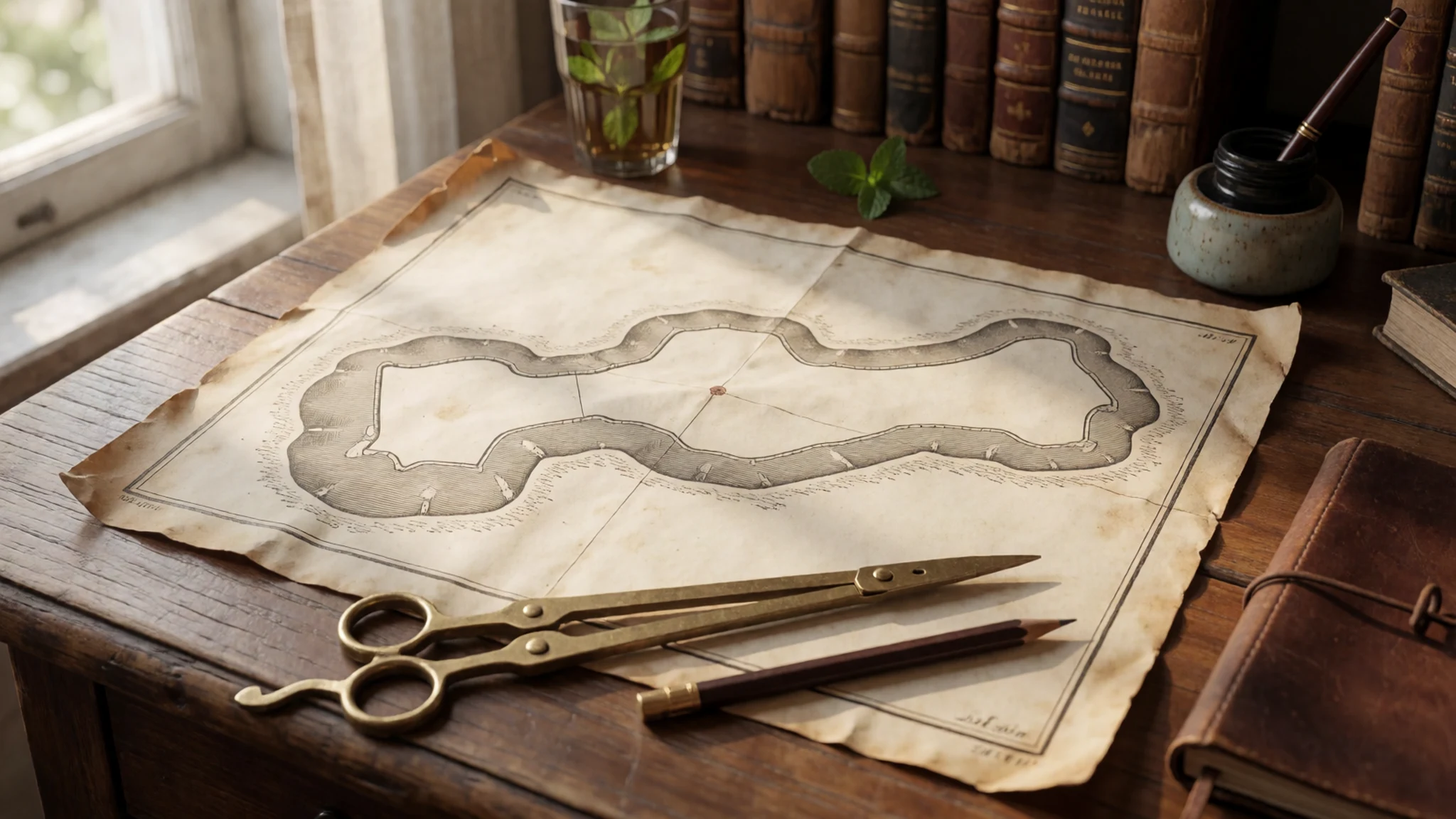
- Champollion's plan of Sais — Reference drawing, before your visit
Champollion drew a plan of the ruins during his 1828 expedition, showing enclosures and structures that have since been lost. It is best seen online or in books before you go, then compared with what remains on the ground. It makes the empty fields feel populated.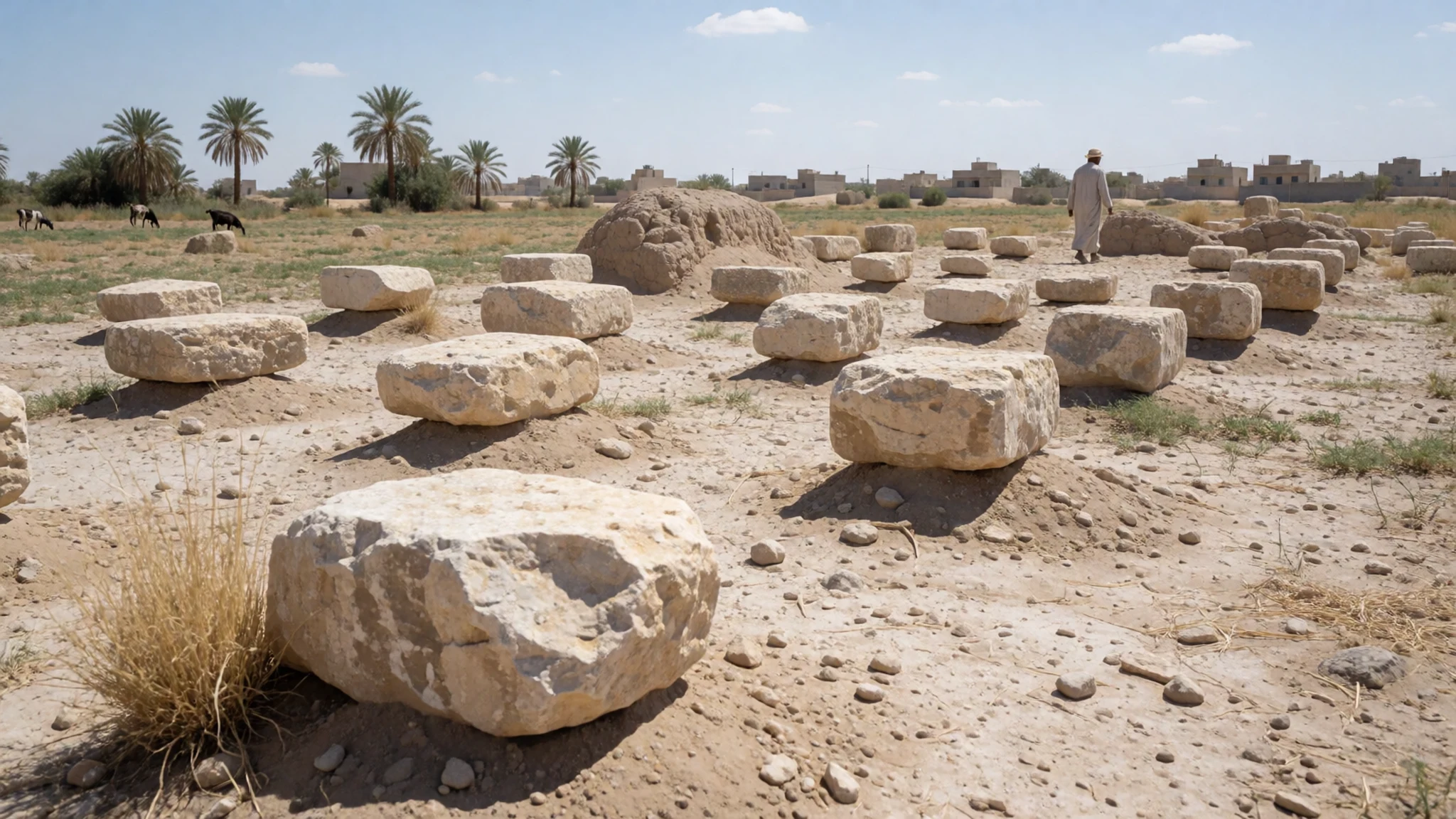
- Champollion's restoration drawing — Reference drawing, before your visit
His second drawing imagines the temple city as Herodotus described it. It is a reconstruction, not a record, but it gives a sense of scale and intention. Looking at it on a phone while standing in the fields is oddly effective.
- Nineteenth-century views of the ruins — Engravings, available online
Engravings by Lowth, Müller and Ebers show the site as European travellers found it: heavily worn mounds in open country. They are useful for comparison, because the shapes of the land are still recognisable even where the stonework has gone. Worth browsing before arriving.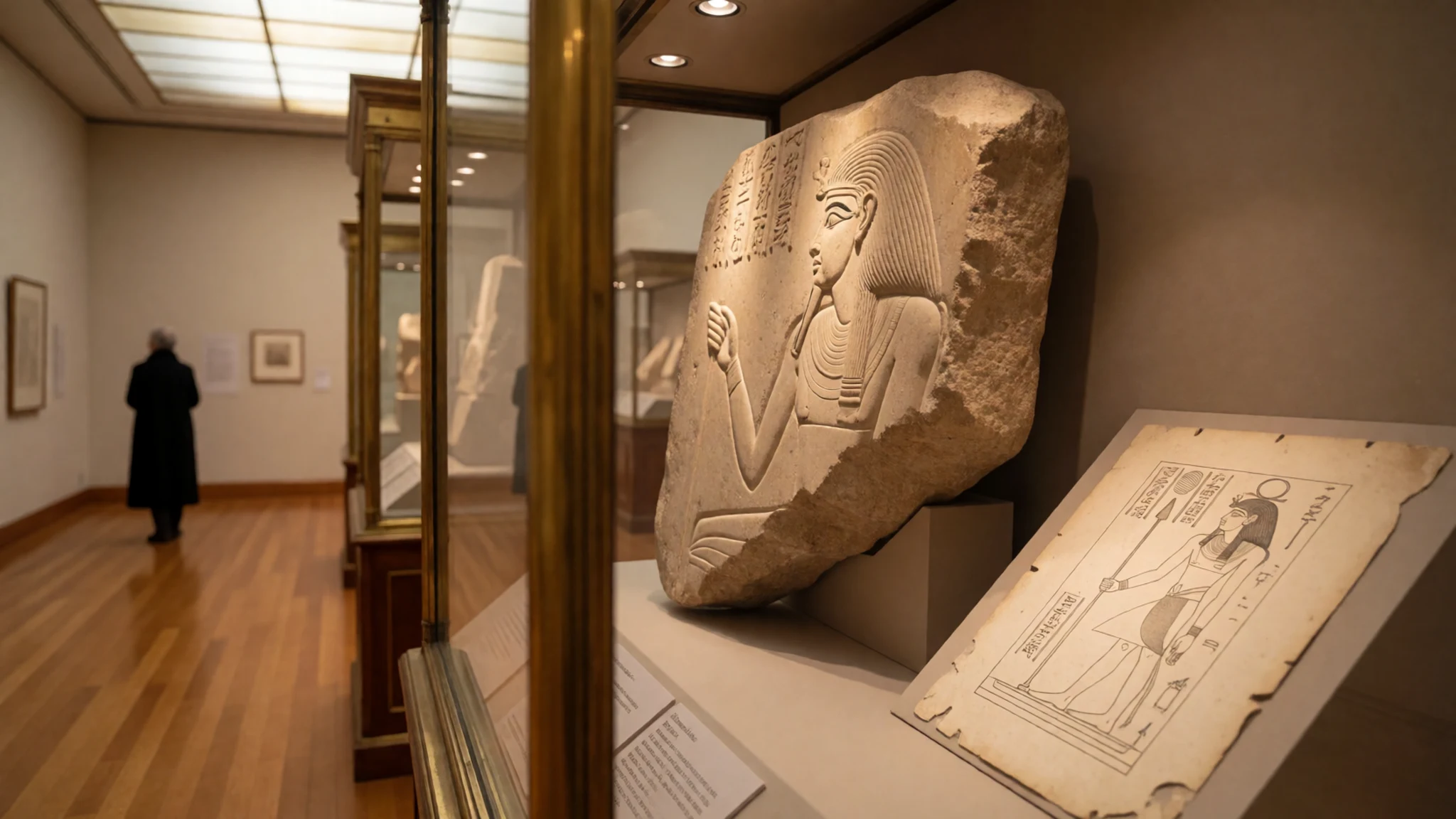
- Saite objects in museums — Museo Egizio, Turin; Cairo
The best Saite sculpture is in museums, not at the site. The greywacke sarcophagus lid of the vizier Gemenefherbak is in Turin. In Egypt, the Egyptian Museum in Cairo is the place to see Late Period pieces. Check collection pages before planning around any one object.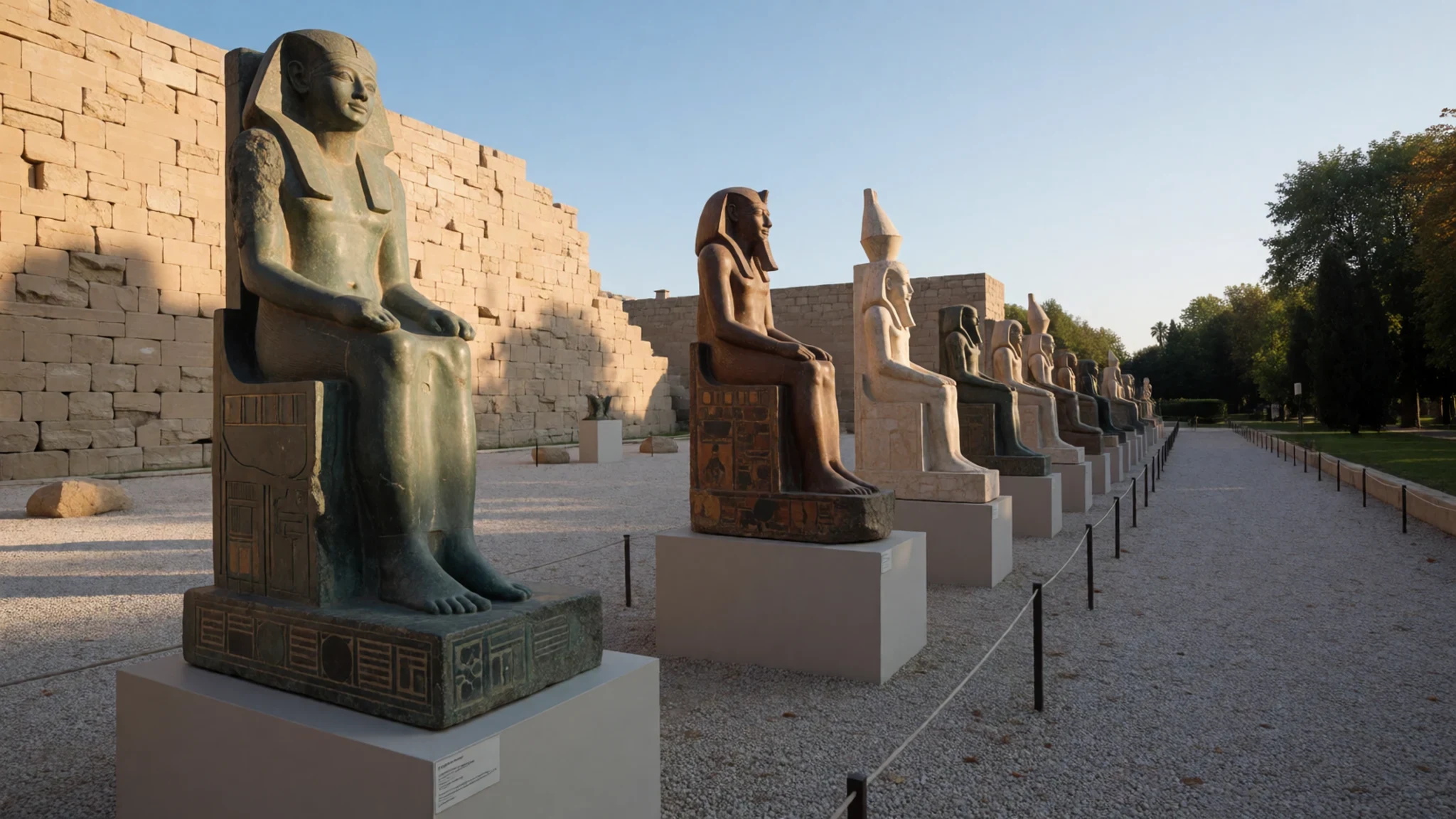
Culture
Sais today is an ordinary Delta village, so the culture a visitor meets is that of rural Egypt. Hospitality matters a great deal. Egyptians generally consider it shameful not to welcome a guest warmly, and a stranger turning up at an archaeological mound may well be offered tea, questions about home and a lot of friendly curiosity.
Good manners here follow wider Arab-world habits. Keep your tone gentle, and avoid correcting or openly criticising anyone, since causing someone to lose face is taken badly. If you must raise a problem, soften it with something positive. Religion is a sensitive subject; ask questions with respect and avoid presenting a secular or sceptical view as a debate.
The Delta is also a place of daily agricultural rhythm. Mornings begin early, the afternoon heat slows things, and evenings bring people onto the streets. Family and neighbourhood ties are strong, and visitors are noticed, which is mostly a source of warmth rather than intrusion.
The ancient culture of Sais, with its revival of older art and its Greek contacts, is something you meet in books and museums rather than in the village itself. Bringing that background with you makes conversations with local guides richer, since many take real pride in the site's history.
Always ask permission before photographing people, especially women and children, and accept a polite refusal without argument.
What to wear
Traditional dress in the Egyptian countryside is the galabeya, a loose ankle-length robe, usually cotton, worn by men in plain colours and stripes and by women in printed or embroidered versions. Women commonly add a headscarf, and older men may wear a skullcap or a turban cloth. Cotton has long been central to Egyptian textiles, and the Delta is farming country where light, washable cloth makes practical sense.
In ancient times, Saite-era Egyptians wore linen, the fabric of the period, in pleated and wrapped garments. You will see that style in museum statues and sarcophagus art rather than on the street.
What people wear now in Sa el-Hagar is a mix: galabeyas for farm work and at home, trousers and shirts for men going to town, and long skirts or dresses with headscarves for many women. Younger people often wear modern clothing with modest cuts. Dress is conservative compared with big cities and resorts.
Visitors should dress with that in mind. Choose lightweight, loose clothing in cotton or linen that covers shoulders and knees; women may be more comfortable with sleeves to the elbow and trousers or a long skirt. A hat, sunglasses and sunscreen matter on the open ruins. Wear closed, sturdy shoes or trainers, because the ground is uneven, dusty and sometimes muddy after irrigation. A light scarf is useful for sun, dust and visiting a mosque.
What to eat
- Ful medames — Breakfast carts and small eateries in Delta towns
Slow-cooked fava beans mashed with oil, lemon and cumin, eaten for breakfast with bread. It is Egypt's everyday staple and cheap. Look for small ful carts and eateries open early in the morning in any Delta town.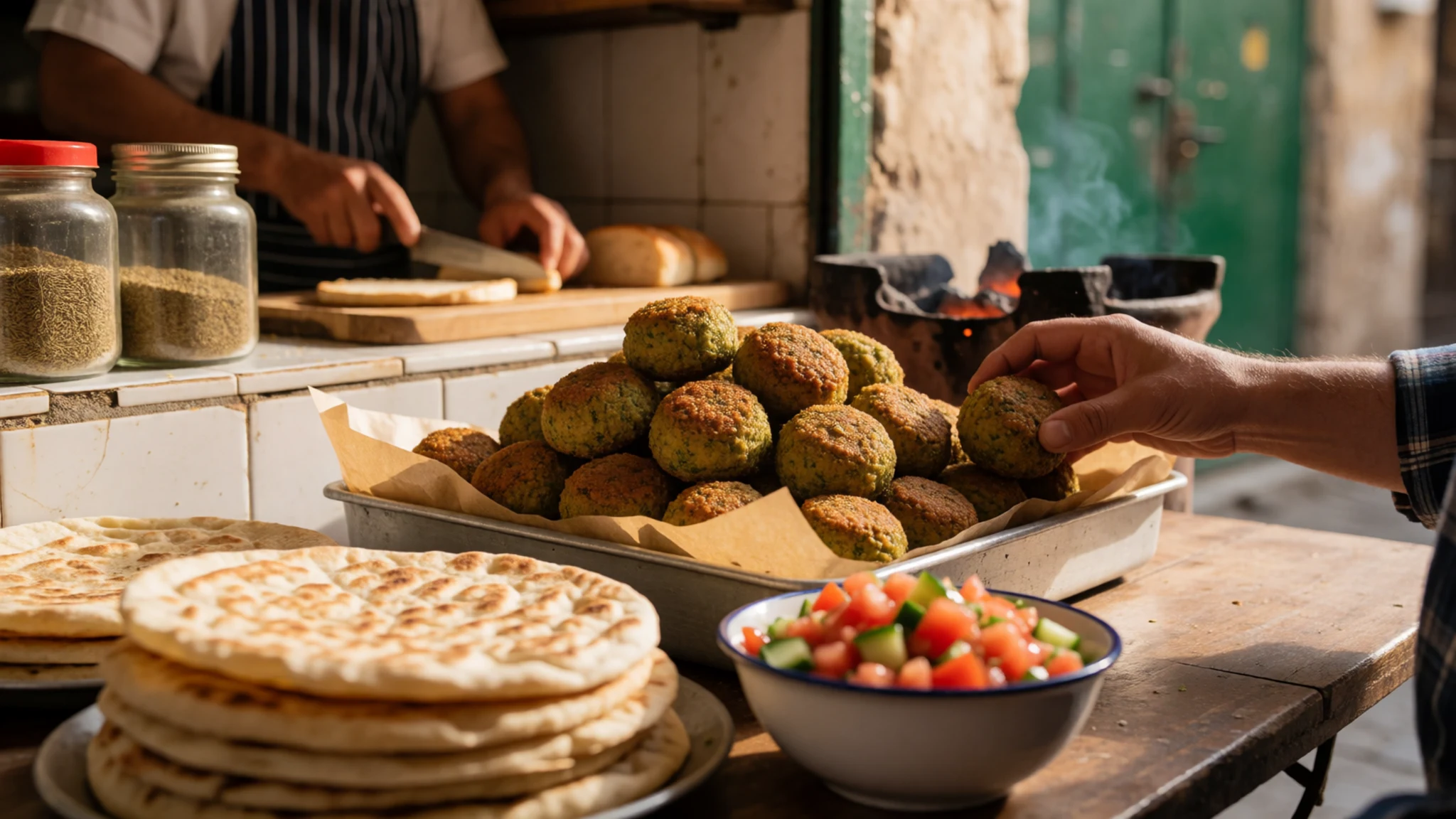
- Ta'amiya — Street stalls and sandwich counters
Egyptian falafel, made from fava beans rather than chickpeas, which gives a green, herby interior. Fried fresh and served in bread with salad and tahini. Eat it from a street counter where you can see the batch being fried.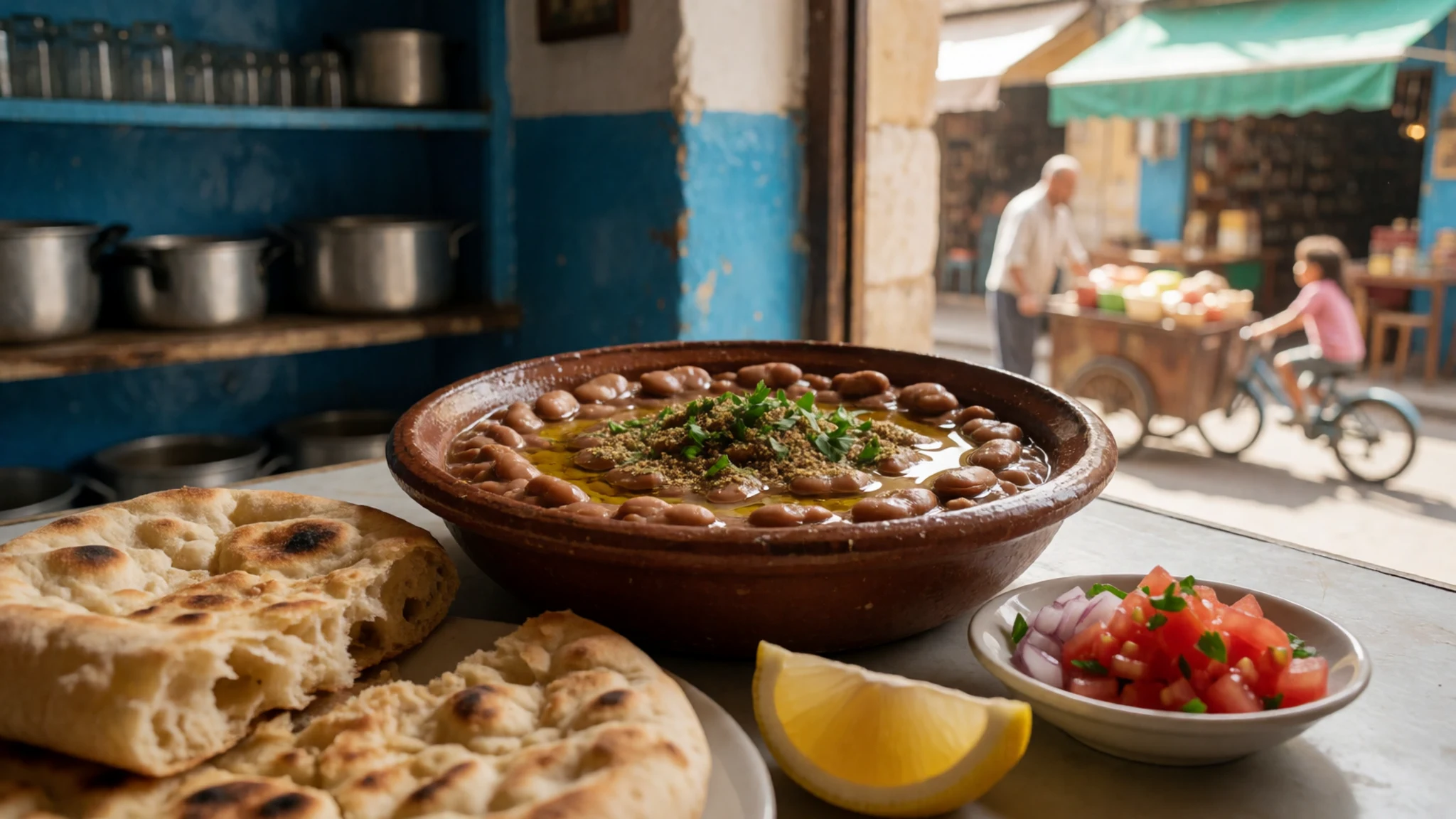
- Fish from the Delta waterways — Riverside and market-town eateries
The Delta's canals and nearby coast supply fresh fish, often grilled or fried and served with rice, salad and bread. Fish is a regional strength. Choose places where the fish is displayed whole and look for busy tables.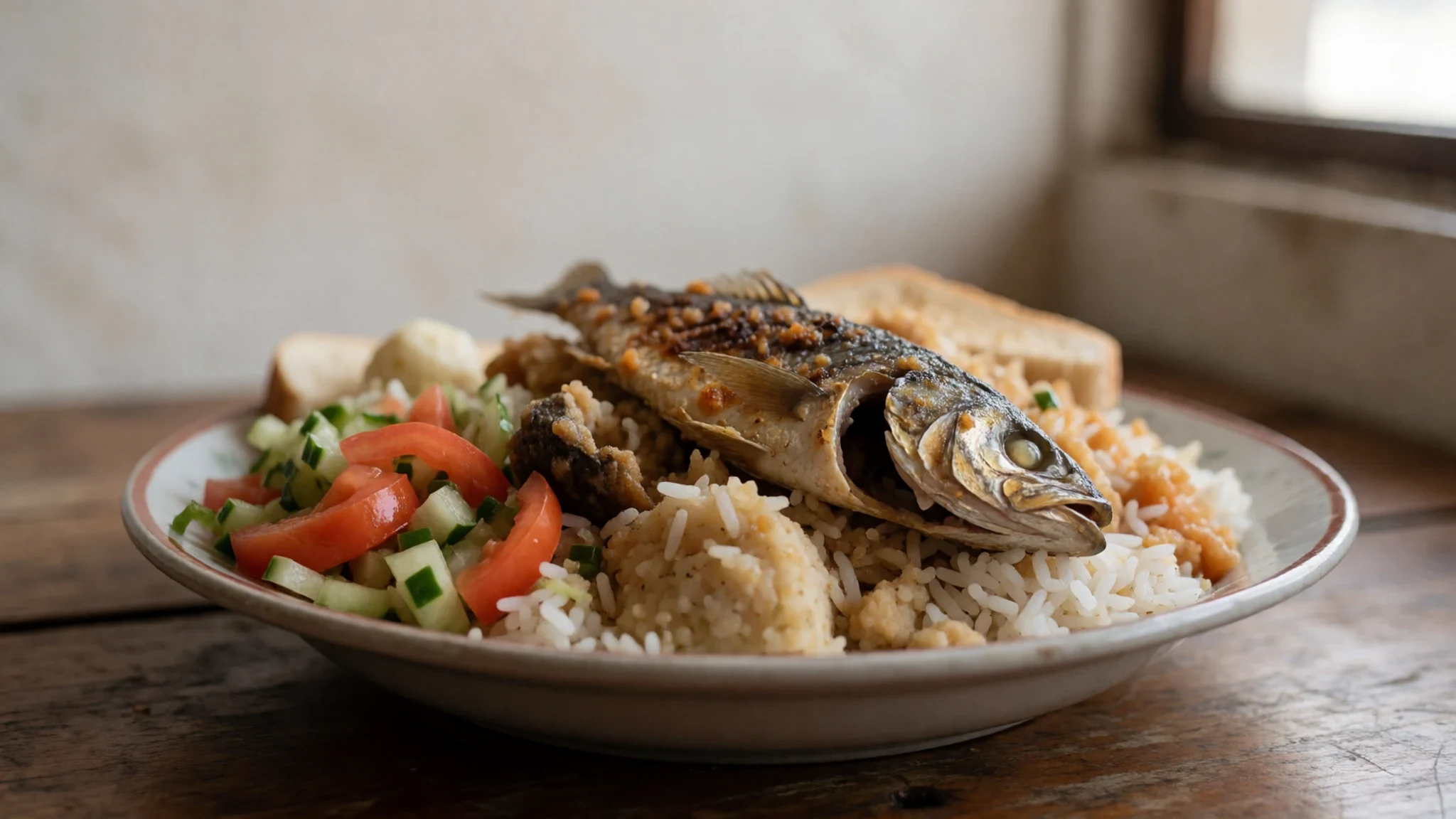
- Aish baladi — Neighbourhood bakeries
Round, wholemeal flat bread baked fresh in village bakeries, puffed and slightly chewy. It is the base of almost every meal, used as scoop and wrapper. Buy it warm from a neighbourhood bakery in the early morning.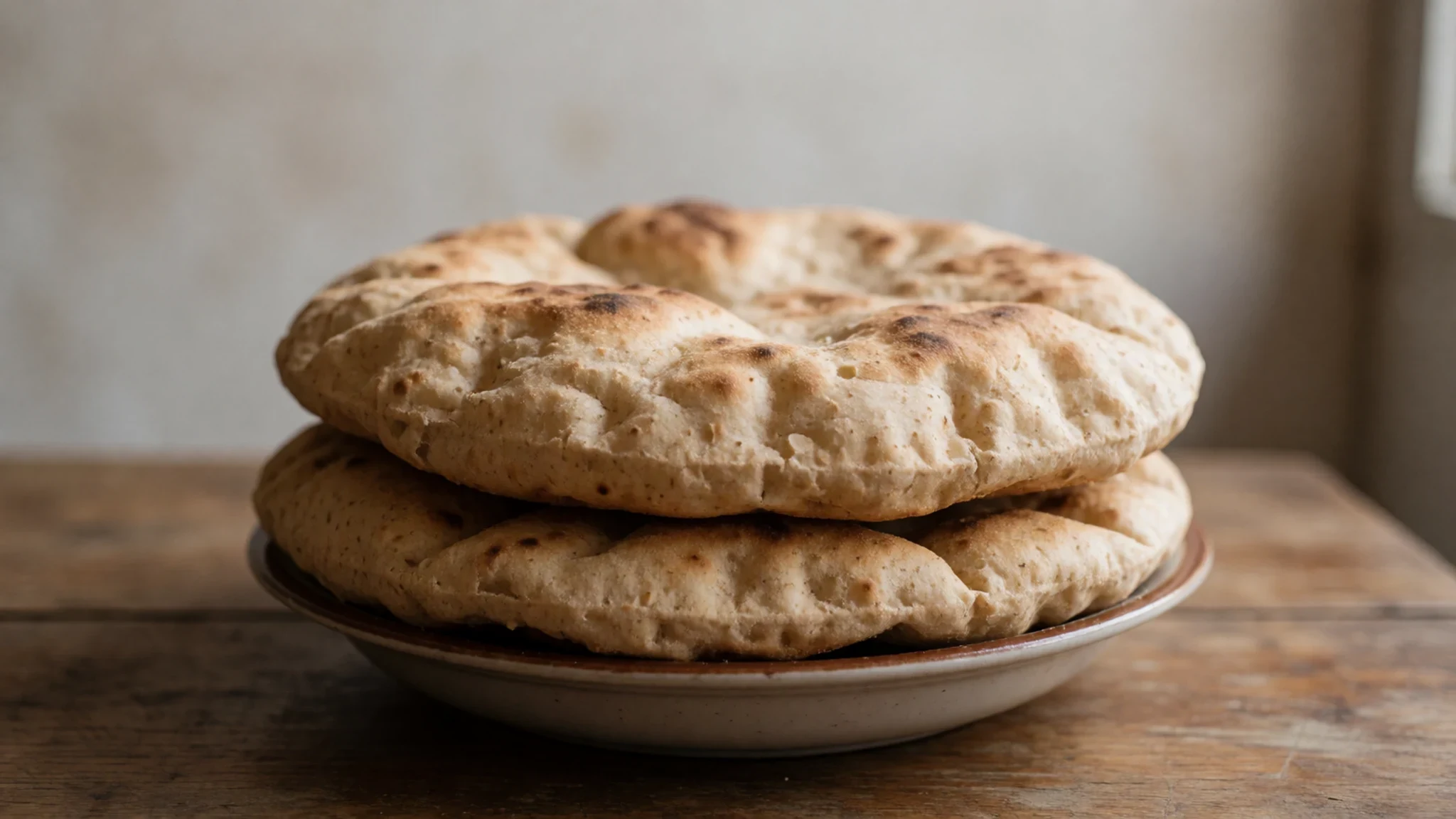
- Koshari — Dedicated koshari eateries in nearby towns
A hearty mix of rice, lentils, macaroni and chickpeas topped with spiced tomato sauce, vinegar and crisp fried onions. It is filling, vegetarian and inexpensive. Look for dedicated koshari eateries in larger towns nearby, such as Tanta.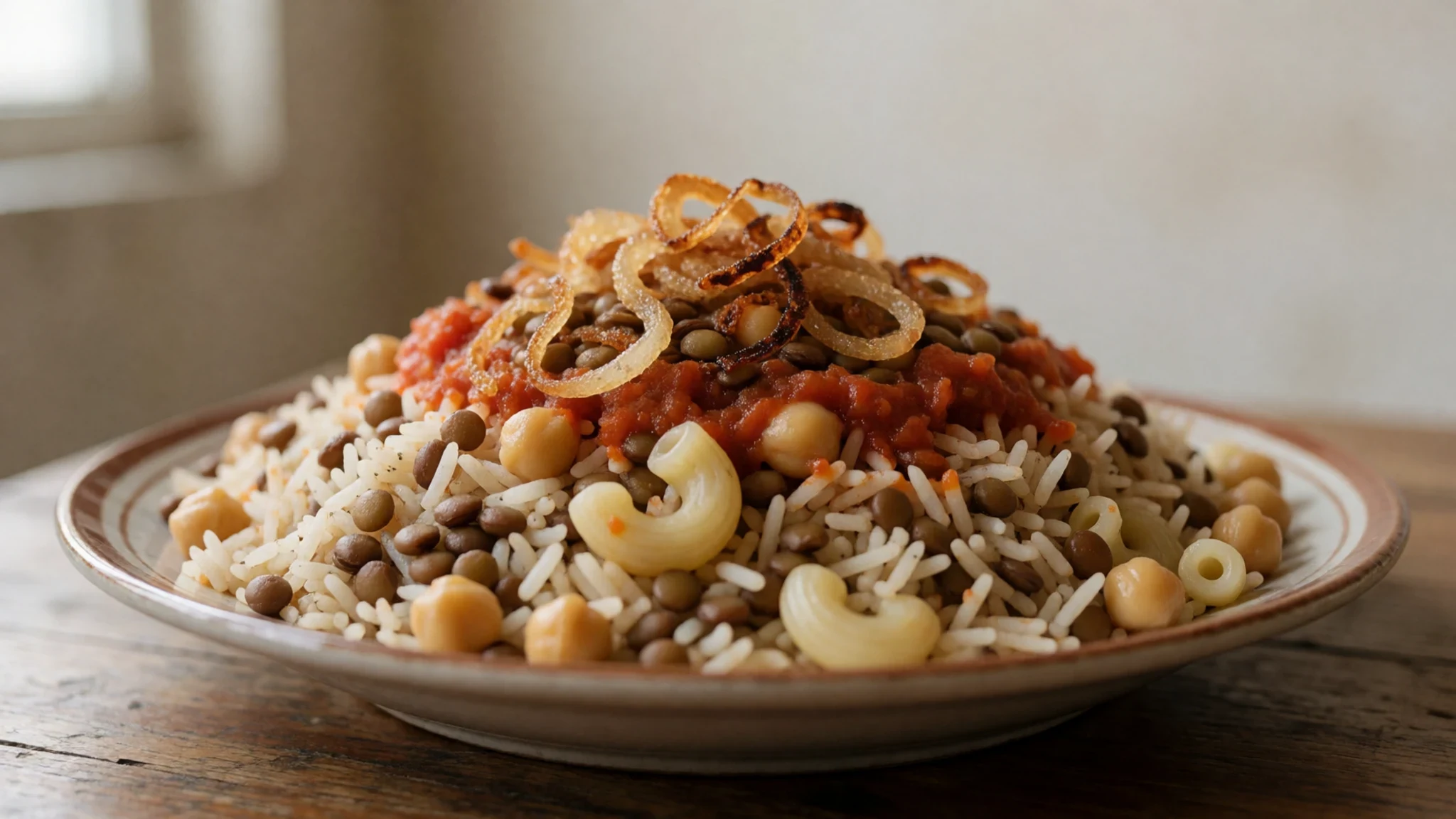
Plan it
Best time. November to March, when days are mild and fieldwork is comfortable. Summers in the Delta are hot and humid, and walking open ruins at midday is hard work.
How long. 1 (a half-day detour)
Getting there. Fly into Cairo International Airport or Alexandria, then travel by road or train to Tanta or Kafr el-Zayyat, and take a taxi or minibus to Sa el-Hagar. Ask your hotel or a local guide to arrange a driver, as public transport to the site is limited.
Budget. low
Tips
- Hire a driver or local guide for the day, since signs and facilities are scarce
- Bring water, sun protection and snacks, as there are few places to buy them near the ruins
- Carry small cash, because cards are rarely accepted in villages
- Check current travel advice and any site access rules with the antiquities authority before going
- Read about the site first, since the ruins are modest and context makes the visit
Etiquette
- Dress modestly in loose, covering clothes
- Ask before photographing people
- Accept offered tea politely, and decline gently if you must
Nearby
Sources
- Wikidata Q381038 (CC0)
- Wikipedia: Sais, Egypt (rev 1384204031) (CC BY-SA 4.0)
- Wikivoyage: Egypt (rev 5410102) (CC BY-SA 4.0)
- Champollion, Plan des ruines de Sais (cropped) (Public domain)
- Lepsius, Denkmaeler aus Aegypten und Aethiopien (Public domain)
- Lid of the sarcophagus of the Vizier Gemenefherbak (CC0 1.0)
- Lowth 1855, Ruins of Sais in the Delta (Public domain)
- Ruins of Sais (1878), TIMEA (CC BY-SA 2.5)
- Ebers, Egipto 1882, Ruinas de Sais (CC BY 2.5)
- Champollion, Plan des ruines de Sais (Public domain)
- Champollion, Restauration des ruines de Sais (Public domain)


