Sai Kung
Sai Kung, People's Republic of China
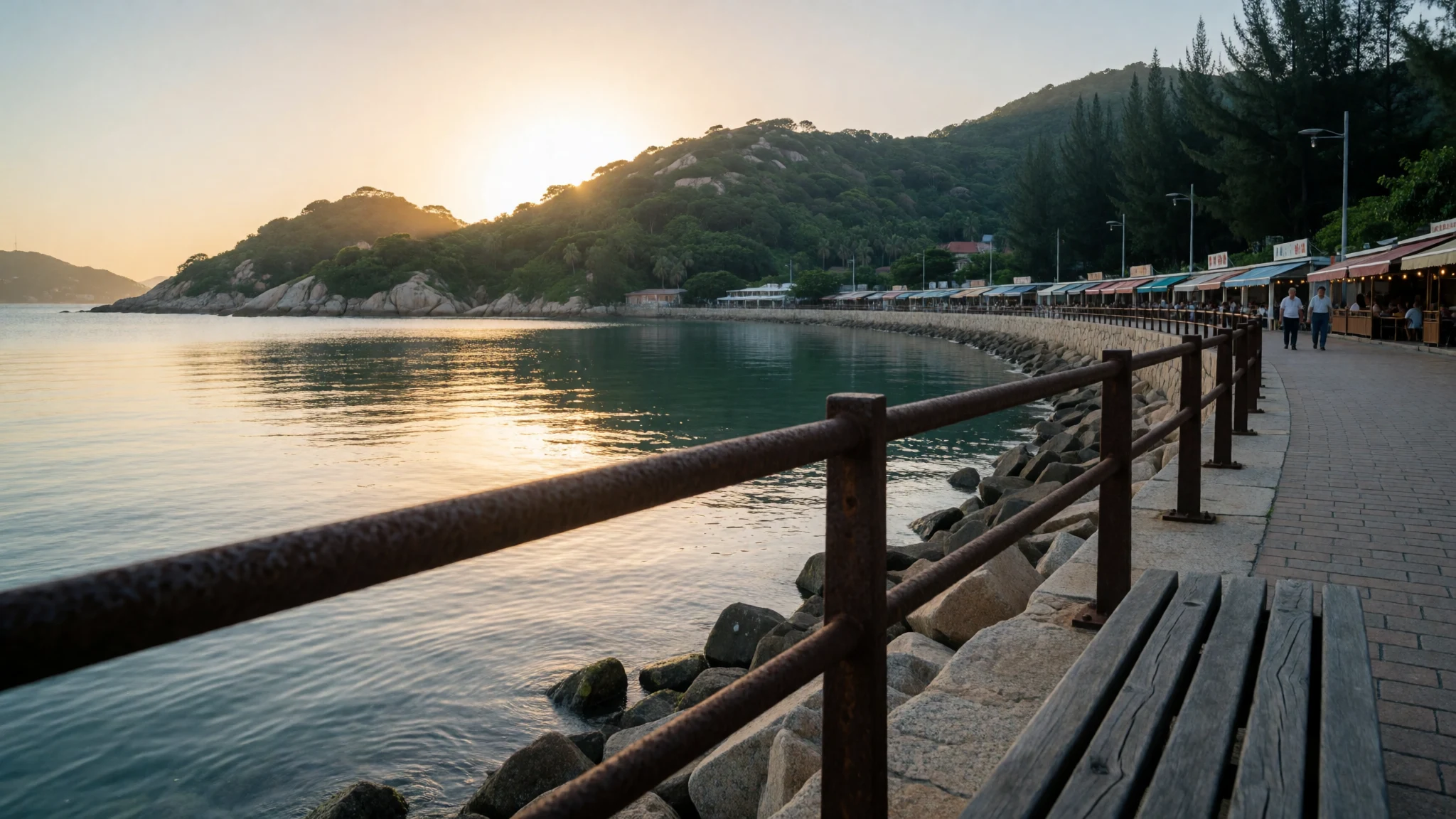
Sai Kung pairs a relaxed harbour town and seafood waterfront with country-park trails, remote beaches and boat rides, all within reach of Hong Kong's centre.
The place
Sai Kung is a small waterfront town on the eastern edge of Hong Kong's New Territories, and it serves as the gateway to a peninsula of country parks, bays and islands that feels far from the city's towers. The town itself is low-rise and easy to walk: a promenade, a pier busy with small boats, narrow lanes of shops, and a cluster of seafood restaurants with tanks out front. Beyond it the roads thin out into villages, reservoirs and trails that lead to beaches where a day can pass with hardly a building in sight. Weekends are the awkward part. Hikers, families, cyclists and day-trippers arrive in numbers, buses fill, and the waterfront restaurants are packed by lunchtime. Weekdays are calmer, and early mornings are quiet almost everywhere. Heat matters too. Summer is hot, humid and prone to sudden storms and typhoon warnings, which can suspend boats, while the cooler dry months from autumn into early winter suit walking best. Many of the finest beaches have no road at all, so reaching them means a hike or a hired boat, and shops are scarce once the trail starts. Sai Kung also has a settled local and expatriate community, which shows in its cafés, bakeries and dog-walkers along the front. It rewards a slow day: a walk, a swim, a boat ride and a long seafood meal, rather than a checklist.
Its story
Sai Kung was a fishing and farming district long before it became a weekend escape. Its sheltered bay made a natural harbour, and the surrounding coast was home to boat communities who lived and worked on the water, alongside Hakka and other villagers who farmed small plots and cut fuel in the hills. An old map of Xin'an County, the administrative area that covered the region in imperial times, marks the bay and the neighbouring Port Shelter, a reminder that sailors knew these waters well before roads reached them. Through the colonial period the peninsula stayed rural and hard to reach, which is a large part of why so much of it remained undeveloped. Roads, reservoirs and nearby new towns changed that gradually. Protection of the hills and coast as country parks kept the wild edges, while the town grew into a place where Hong Kong residents came for seafood and boat trips. Fishing has declined, and many villages emptied as people moved to the city or abroad, leaving ruined houses and overgrown terraces beside the trails. Some villages have since been revived by returning families or weekend residents. The result is layered: working boats and pleasure junks share the harbour, village shrines stand near cafés, and the older story of the coast is still visible to anyone who looks for it.
What to see
- Sai Kung waterfront and pier — Sai Kung Town
Sai Kung's waterfront is the natural starting point: a promenade facing the bay, a pier where small boats wait for passengers, and rows of seafood restaurants behind. It is pleasant for an unhurried walk and a look at the moored boats, best on a weekday morning before the crowds and the heat build.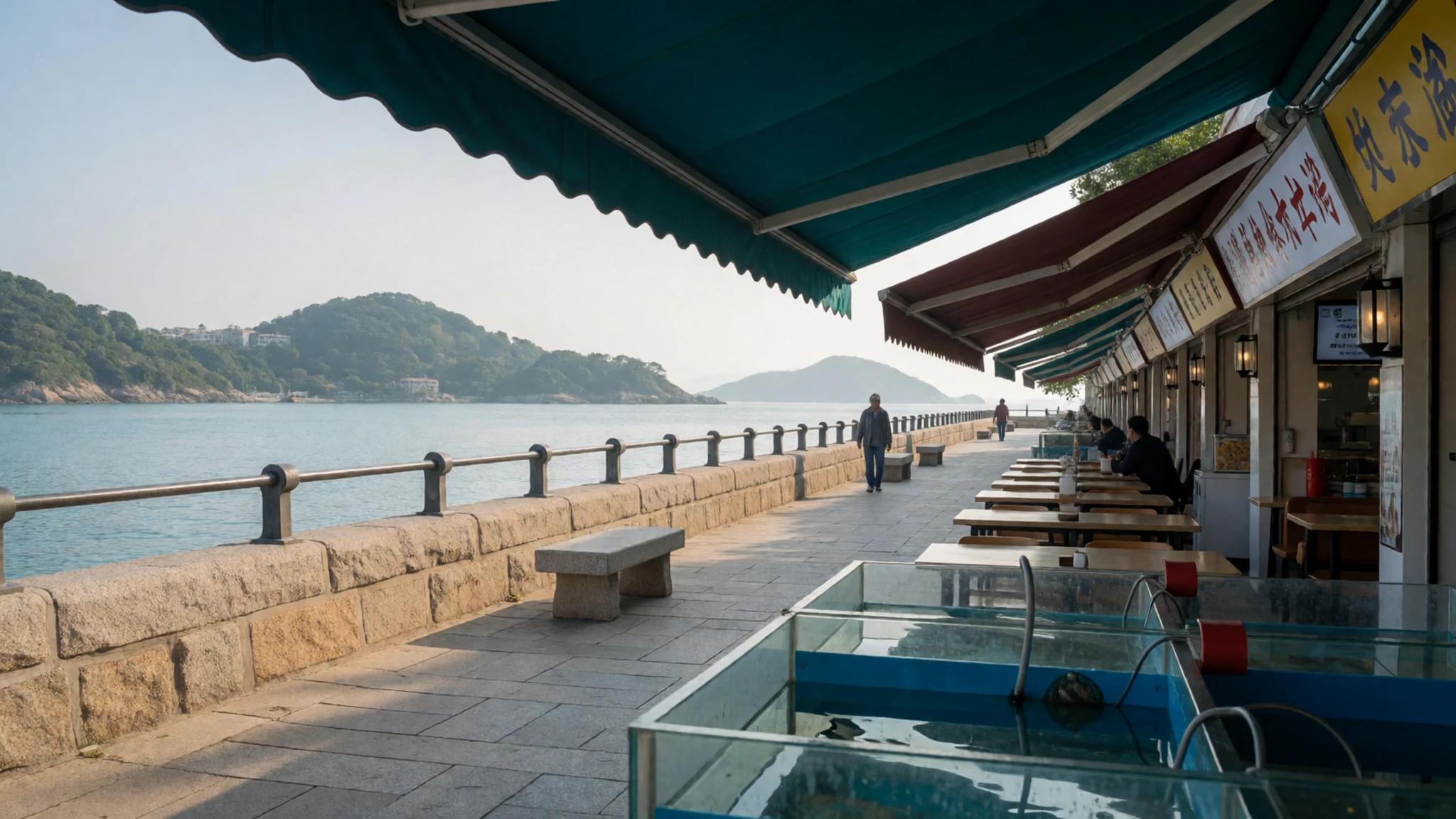
- Old town lanes and market streets — Sai Kung Town
Behind the waterfront, Sai Kung's lanes hold fresh-produce stalls, dried-seafood shops, small bakeries and cafés, with cats dozing on awnings and rooftops. It is a good place to see everyday local life rather than a set piece, and to pick up snacks before heading to the boats or trails.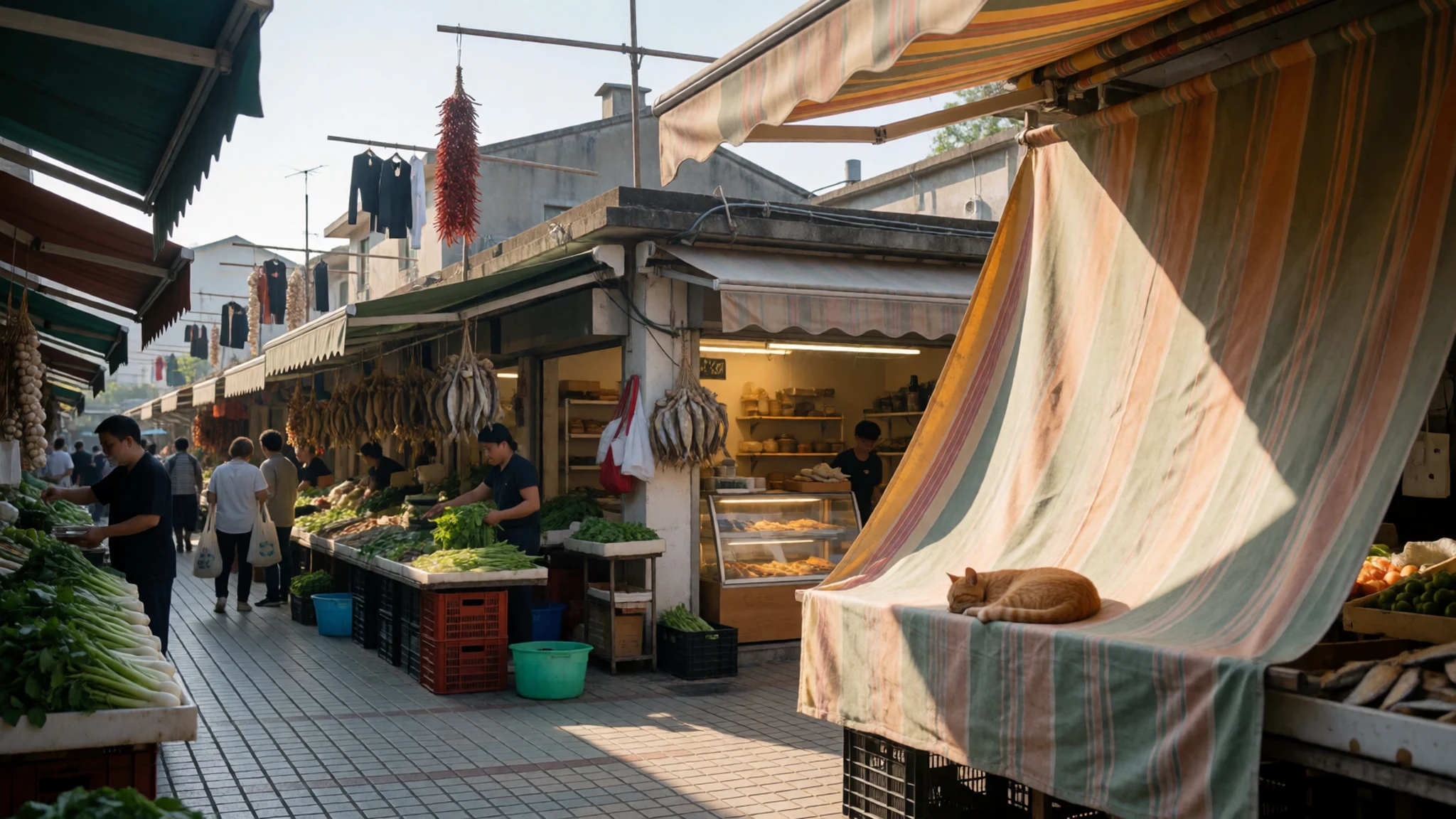
- Boat trip to the islands — Sai Kung pier and harbour
Small licensed boats and the kaido ferries run from the pier to islands and sheltered bays in the harbour, with sandy beaches, rock pools and simple village eateries on some. Confirm where the last boat back leaves before you land, and treat typhoon signals as a reason to stay ashore.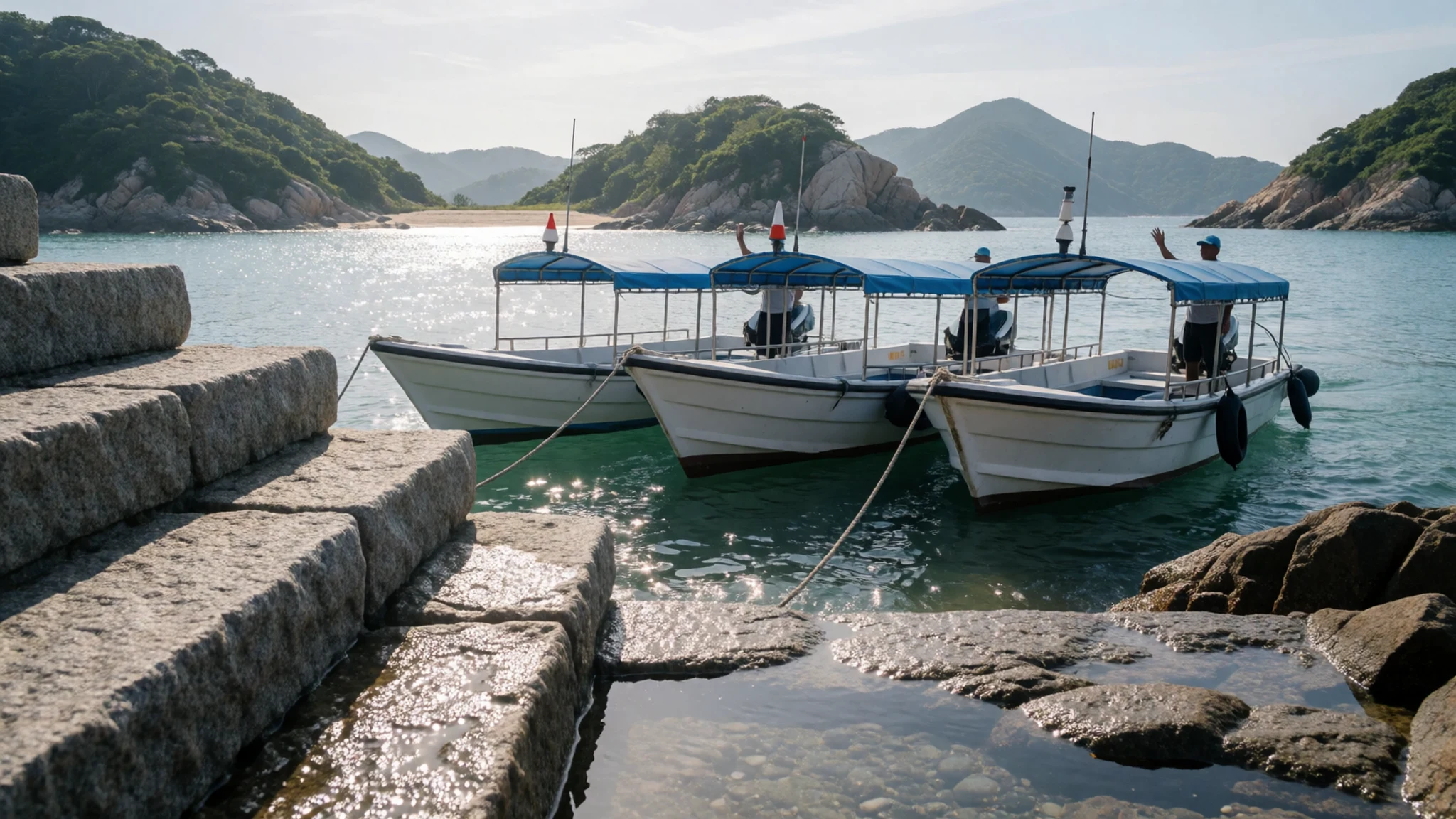
- Tai Long Wan beaches — Sai Kung East Country Park
Tai Long Wan is a run of sandy bays on the peninsula's exposed eastern coast, reached on foot or by a longer boat ride. Swimming is good in calm weather, but surf and rip currents are real, lifeguard cover is patchy, and the walk back needs water, sun protection and daylight to spare.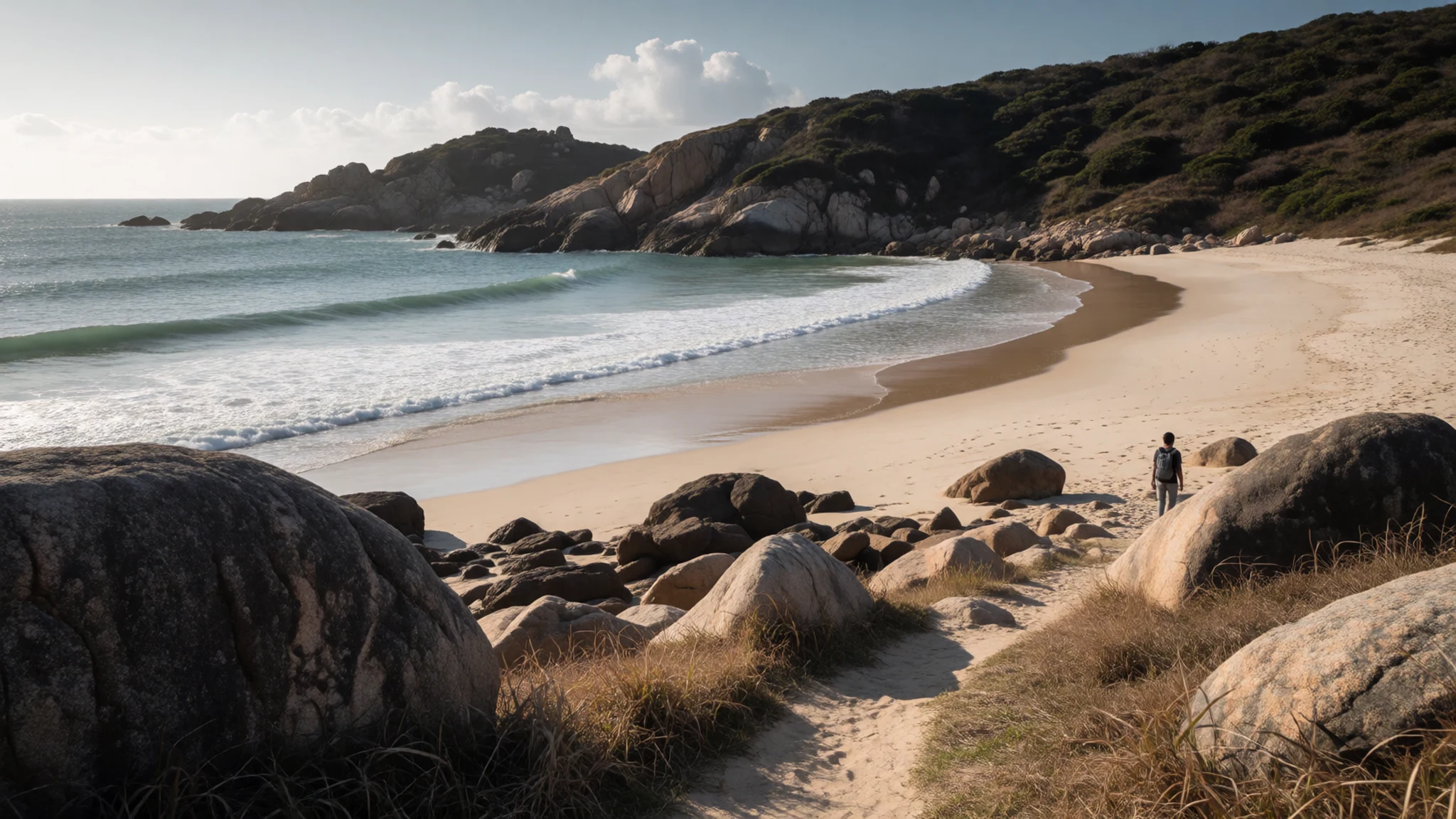
- High Island Reservoir East Dam — Sai Kung Country Park, east
The East Dam sits at the edge of a sea inlet that was closed off to form a reservoir, and its shoreline is lined with large hexagonal volcanic rock columns. Visitors walk along the breakwater among the stone formations. Access depends on transport and weather, so check conditions and arrangements before setting out.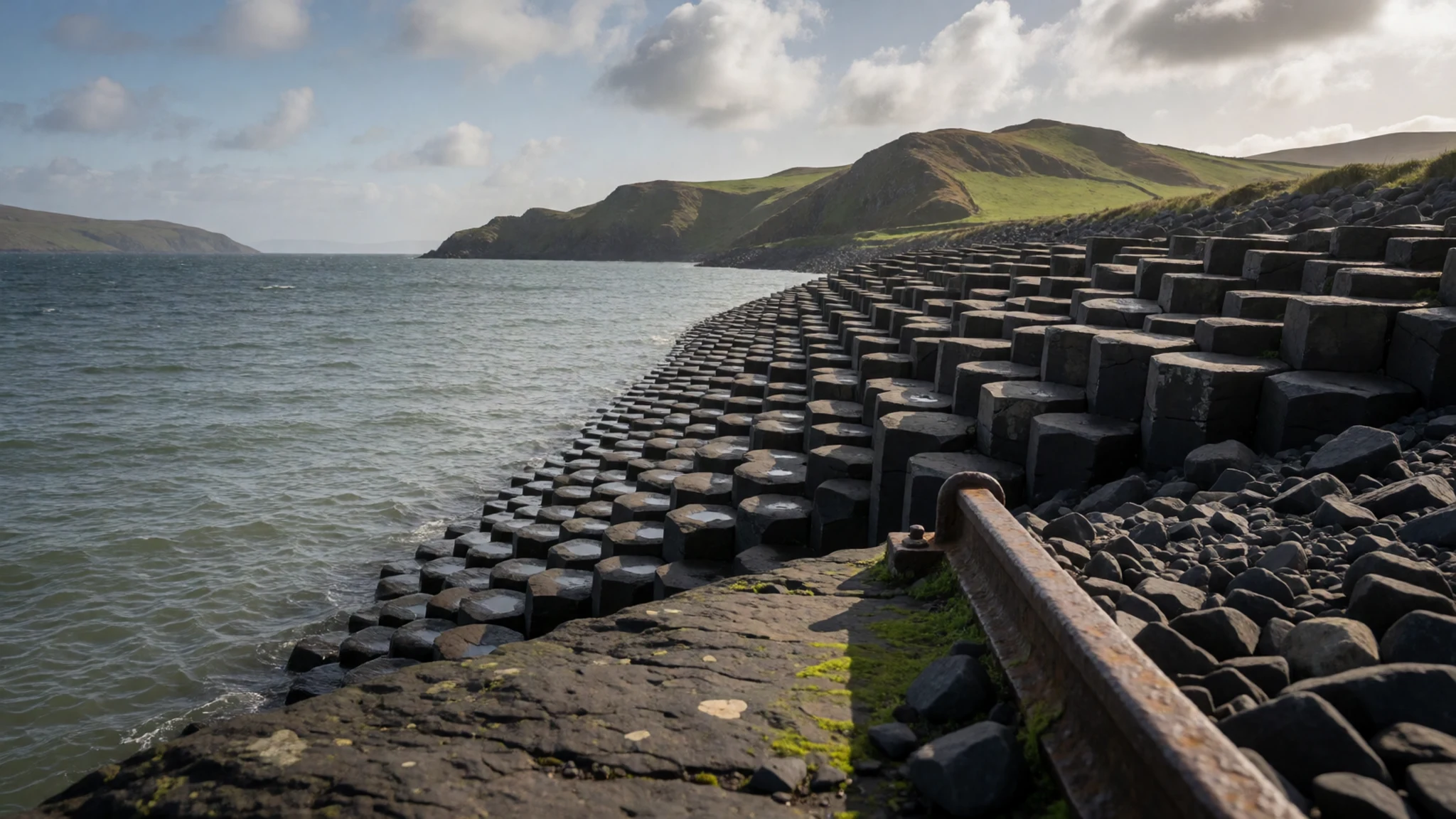
Culture
Sai Kung's culture is a mix of Cantonese, Hakka and boat-community traditions, with a modern layer of weekend outdoor life on top. Religion here is practical and close to the sea. Tin Hau, protector of seafarers, has a temple near the waterfront, where incense coils hang from the roof and local people stop in on their way to work or the market. Around the peninsula, small village shrines to the earth god stand at path edges and under old trees, and wooded groves behind some villages are kept for feng shui reasons rather than for scenery. Festival days bring lion dances and decorated boats, though dates shift with the lunar calendar, so ask locally or check listings rather than relying on memory. Eating is the social centre of the town: families and friends share dishes at a round table, pour tea for others before themselves, and often order seafood by choosing live fish and shellfish from the tanks. Many visitors come for hiking and swimming, so boots, dry bags and picnics are as common a sight as chopsticks. Residents tend to be relaxed and helpful with directions, and a few words of Cantonese are always welcome. At the Tin Hau temple, keep your voice low, do not photograph worshippers at close range, and leave the incense and offerings alone unless you are taking part.
What to wear
Sai Kung's traditional dress comes from the Hakka and boat communities of the New Territories. Hakka women historically wore a wide-brimmed straw or bamboo hat with a black cloth fringe around the edge, loose dark cotton tunics and trousers, and simple cloth shoes for field work. The samfu, a plain jacket and trousers in cotton or silk, was everyday wear for both sexes, and the cheongsam (qipao) was formal dress in the city. These now appear mostly at festivals, in museums and in heritage displays rather than on the street. What people wear today is practical and casual: shorts and light shirts, trail shoes or sandals, caps, rash vests and swimwear, often carried in a backpack. Hong Kong's weather is the real dress code. Summer is hot, humid and wet, so quick-drying fabrics beat cotton. Visitors should wear sun protection, a hat, and shoes with real grip, as coastal paths can be rocky or slippery. Carry a light waterproof for sudden showers and a spare shirt for the boat back. For the Tin Hau temple or village shrines, covered shoulders and knees are a courteous choice, though nobody will fuss about hiking clothes. Beachwear is for the sand only, so pack something to throw on before walking into the town's restaurants.
What to eat
- Steamed fish, picked live — Waterfront seafood restaurants in Sai Kung Town
Sai Kung's signature meal is seafood chosen from tanks, then steamed whole with ginger and spring onion. Ask staff how the fish is priced before ordering, as it is usually sold by weight, and share dishes among a group to sample more.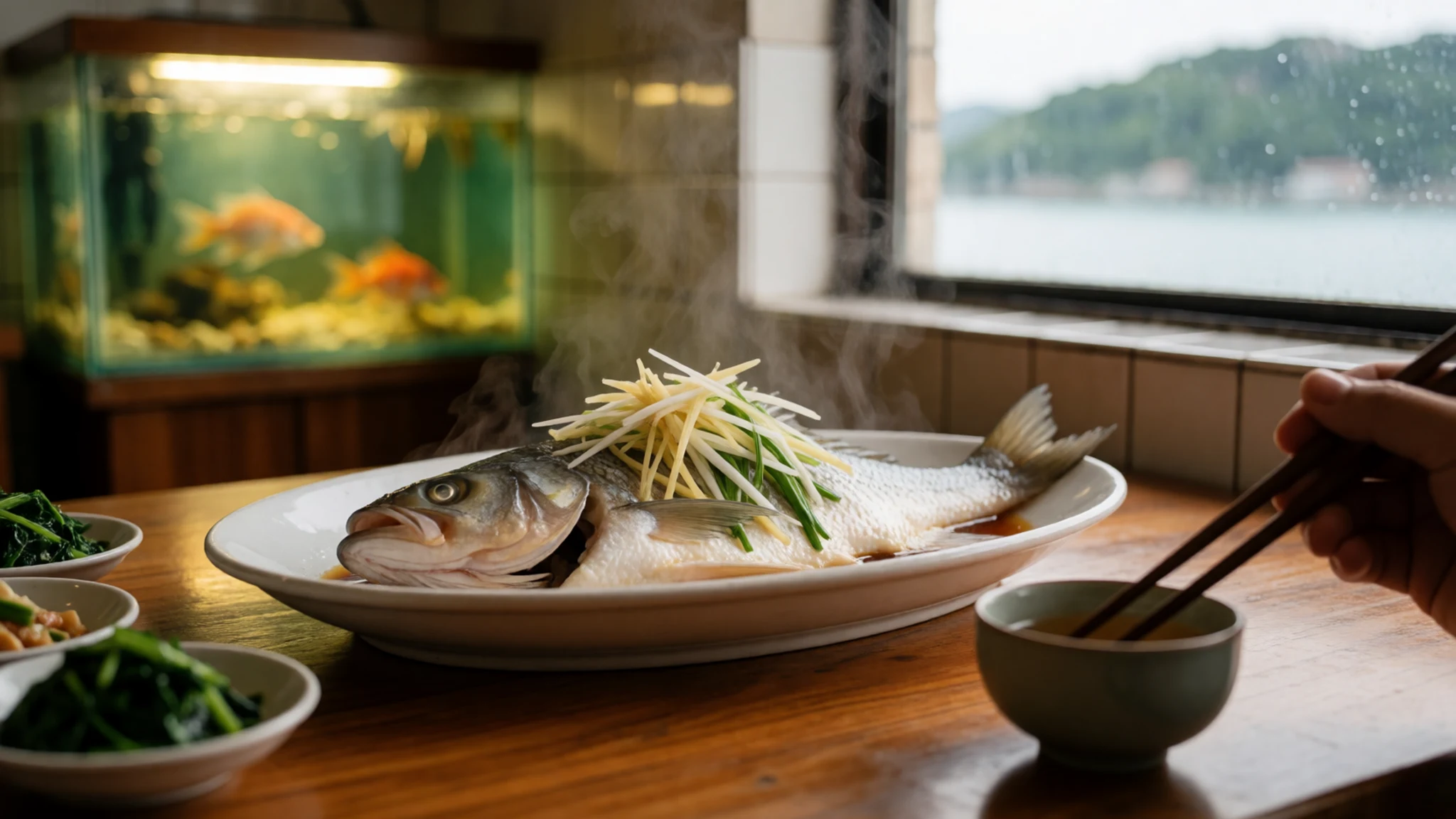
- Salt-and-pepper squid — Seafood restaurants and casual eateries near the pier
Squid cut and fried in a light crisp coating, tossed with salt, white pepper, garlic and chilli. It is a standard order beside steamed fish, and works well with cold tea or beer. Portions can be generous, so start with one.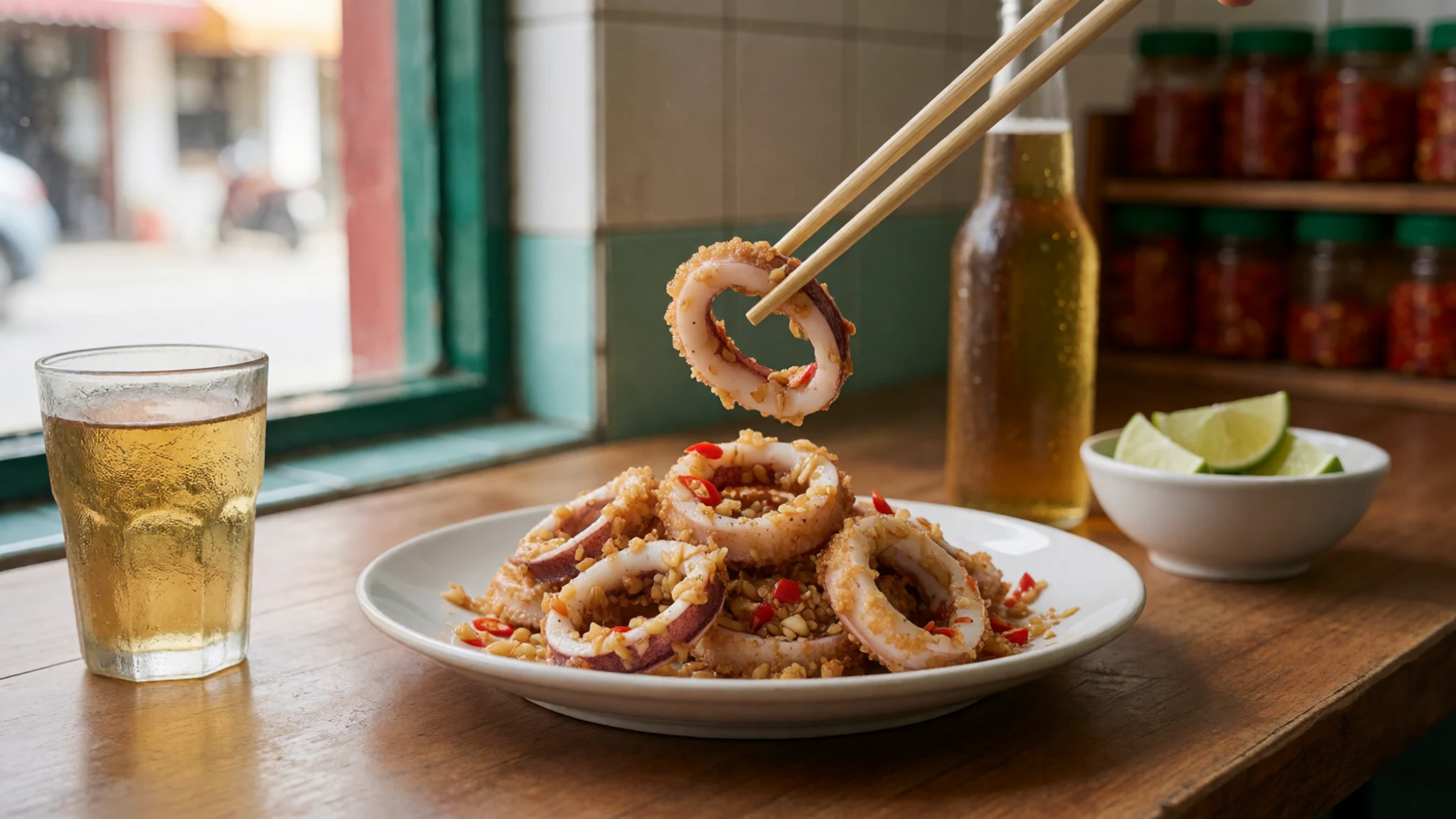
- Hakka stuffed tofu — Hakka-style restaurants in and around the town
Tofu pieces filled with minced fish or pork and pan-fried or braised, a staple of Hakka home cooking. The dish reflects the district's village past. Ask for it at places that mention Hakka dishes, since not every restaurant serves it. - Egg waffles — Street stalls in the old lanes and by the waterfront
Hong Kong's bubble-shaped egg waffles are crisp outside and soft within, sold hot in paper cones. They are a good snack for the walk along the promenade, and some stalls add flavours such as chocolate or matcha. - Milk tea and pineapple bun — Cha chaan teng (local tea cafés) around the town
A strong, sweet milk tea with a pineapple bun, a sweet bun with a crumbly topping, usually served with a slab of butter. It is a fast, cheap breakfast that sets a hiker up for the morning.
Plan it
Best time. October to December for cooler, drier weather and clear walking days, with March as a good second choice before the heat and humidity build. Summer is hot and humid with storms and typhoon risk, so boats and beach trips are less reliable then.
How long. 2–3
Getting there. Fly to Hong Kong International Airport, take the airport rail or a bus into the city, then use the MTR to Hang Hau or Diamond Hill and change to a bus or minibus for the final stretch into Sai Kung Town. Taxis also run from the MTR stations.
Budget. mid
Tips
- Go on a weekday if possible, since weekend buses, piers and restaurants are crowded
- Start hikes early, carry plenty of water and sun protection, and plan to be off the trail before dark
- Carry some cash for small boats, village stalls and minor eateries, though most town restaurants accept cards
- Check weather and typhoon warnings before any boat trip, and confirm the last return boat
- Settle seafood prices before ordering, since fish is sold by weight
Etiquette
- Keep voices low and photography discreet at the Tin Hau temple and village shrines
- Take all litter off beaches and trails, and respect swimming warnings and lifeguard flags
- Greet staff politely and share dishes at the table in the local way
Nearby
Sources
- Wikidata (Sai Kung) (CC0)
- Wikipedia: Sai Kung (CC BY-SA 4.0)
- Wikivoyage: Sai Kung (CC BY-SA 4.0)
- Wikimedia Commons staged photos for Sai Kung (CC BY-SA 4.0 and CC BY 3.0 (per file))