Rongbuk Monastery
Rongbuk Monastery, People's Republic of China
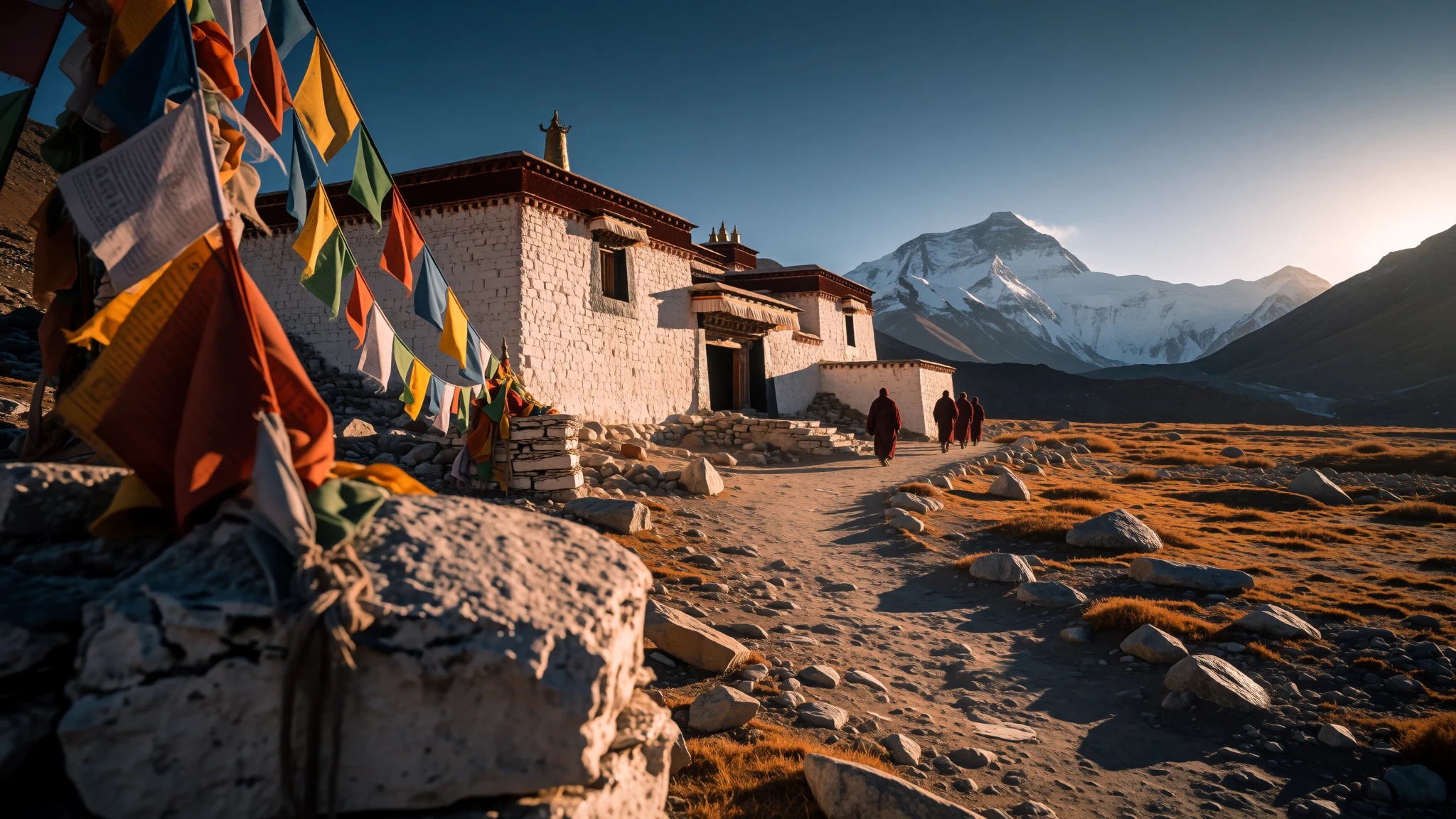
Rongbuk Monastery is a working Buddhist monastery sitting right below the north face of Everest, with prayer flags in the foreground.
The place
Rongbuk Monastery belongs to the Nyingma school of Tibetan Buddhism and stands in Dingri County, part of Shigatse Prefecture in Tibet. It sits at the head of the Dzakar Chu valley, on the northern side of Mount Everest, at an elevation of roughly 4,980 metres. That is high enough that a short walk can leave a newcomer breathless and a headache is common on arrival.
The setting is stark: a broad, dry, stony valley with almost no trees, wind that never quite stops, and a wall of rock and ice closing the view to the south. Whitewashed walls and prayer flags are the only colour apart from the sky. On clear mornings the summit stands out sharply; in cloud, the mountain vanishes and the monastery feels like the last building in the world.
The base camp used for northern-side climbing expeditions lies a few kilometres further up the valley, near the tongue of the Rongbuk Glacier. Visitors usually come by road after a drive of several hours from the Friendship Highway, starting from either Shelkar (New Tingri) or Old Tingri. The monastery is small and quiet, a place of worship that happens to have the most famous backdrop in the Himalaya. Most people stay a few hours, or overnight in simple lodging nearby, and the real draw is the light on the mountain at dawn and dusk. Permits and rules for entering this part of Tibet change, so check current requirements well before booking.
Its story
Rongbuk Monastery was founded around 1800, according to Wikidata, so it is young by Tibetan standards. Its significance grew from its position. For Sherpas living on the Nepalese side of Everest, in the Khumbu region, it was an important pilgrimage destination, reached over several days of travel across the Himalaya through the Nangpa La pass.
The monastery also became a waypoint for early mountaineers. In the 1920s and 1930s the British expeditions to Everest approached from the north, after a long journey from Darjeeling that took about five weeks. They stopped at Rongbuk, met the head lama, and set off up the valley to the glacier. A silent film made on the 1922 expedition records the lama, the buildings and masked ritual dance, which gives a rare glimpse of monastic life of that time.
John Noel, one of the first British explorers to see the north face, wrote of a colossal architect who built with peaks and valleys and made a hall of grandeur leading to the mountain. The line captures why the place is remembered: a religious community that treated the mountain as sacred ground long before it became a climbing objective.
Today the monastery's story sits between two worlds. Pilgrims and monks keep the daily rituals going, while trekkers and expedition teams pass through on their way to base camp. Many of the older buildings in Tibet were damaged in the twentieth century and have since been rebuilt, so what stands now is mostly a restored community rather than an untouched ancient site.
What to see
- Rongbuk Monastery assembly hall — Rongbuk, Dingri County
The main prayer hall is the heart of the complex, with butter lamps, painted pillars and images of Padmasambhava, the teacher honoured by the Nyingma school. Monks chant here at set times. Step in quietly, let your eyes adjust to the dark, and leave a respectful distance from anyone praying.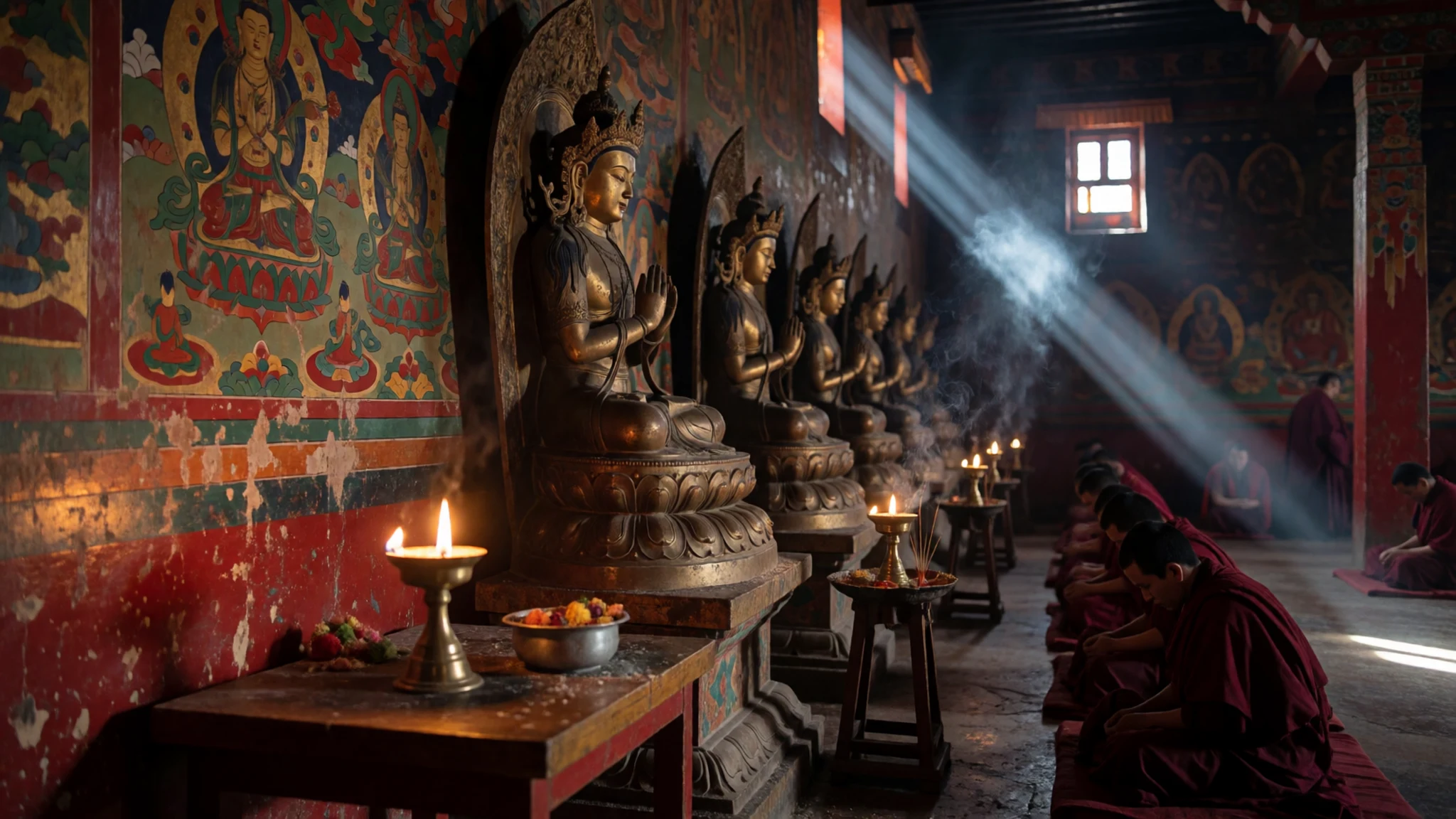
- The chorten and prayer flags — In front of the monastery
A white chorten stands in front of the monastery, strung with prayer flags that crack in the wind. This is the classic spot for the north face photograph, with the mountain framed above the stupa. Walk around it clockwise, as local people do, and keep to the path.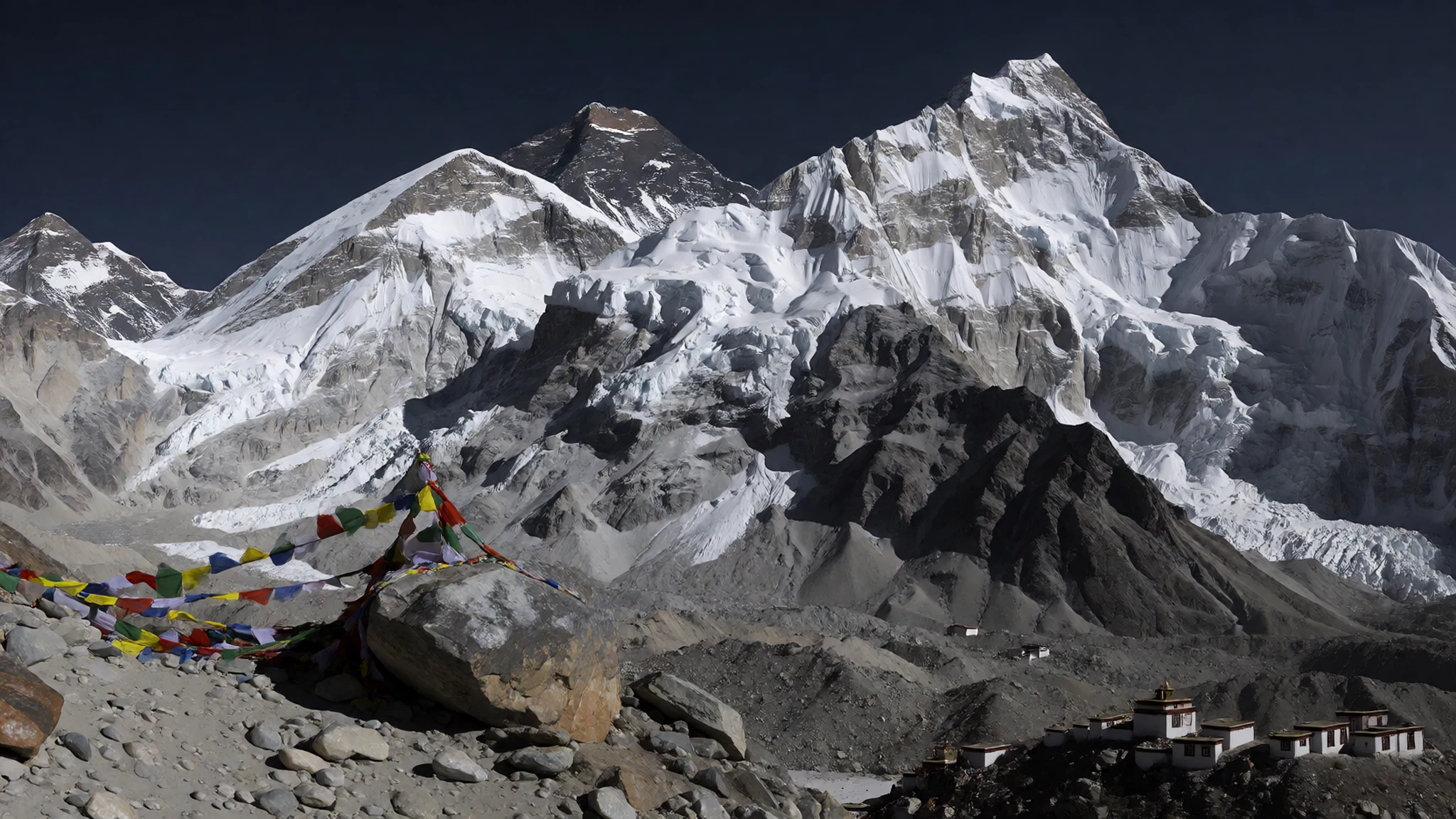
- North face viewpoint — Dzakar Chu valley
From the open ground near the monastery, Everest's north face fills the horizon at the end of the valley. Early morning usually gives the clearest sky; afternoon cloud often builds. Bring a warm layer even in summer, because standing still in the wind chills quickly at this altitude.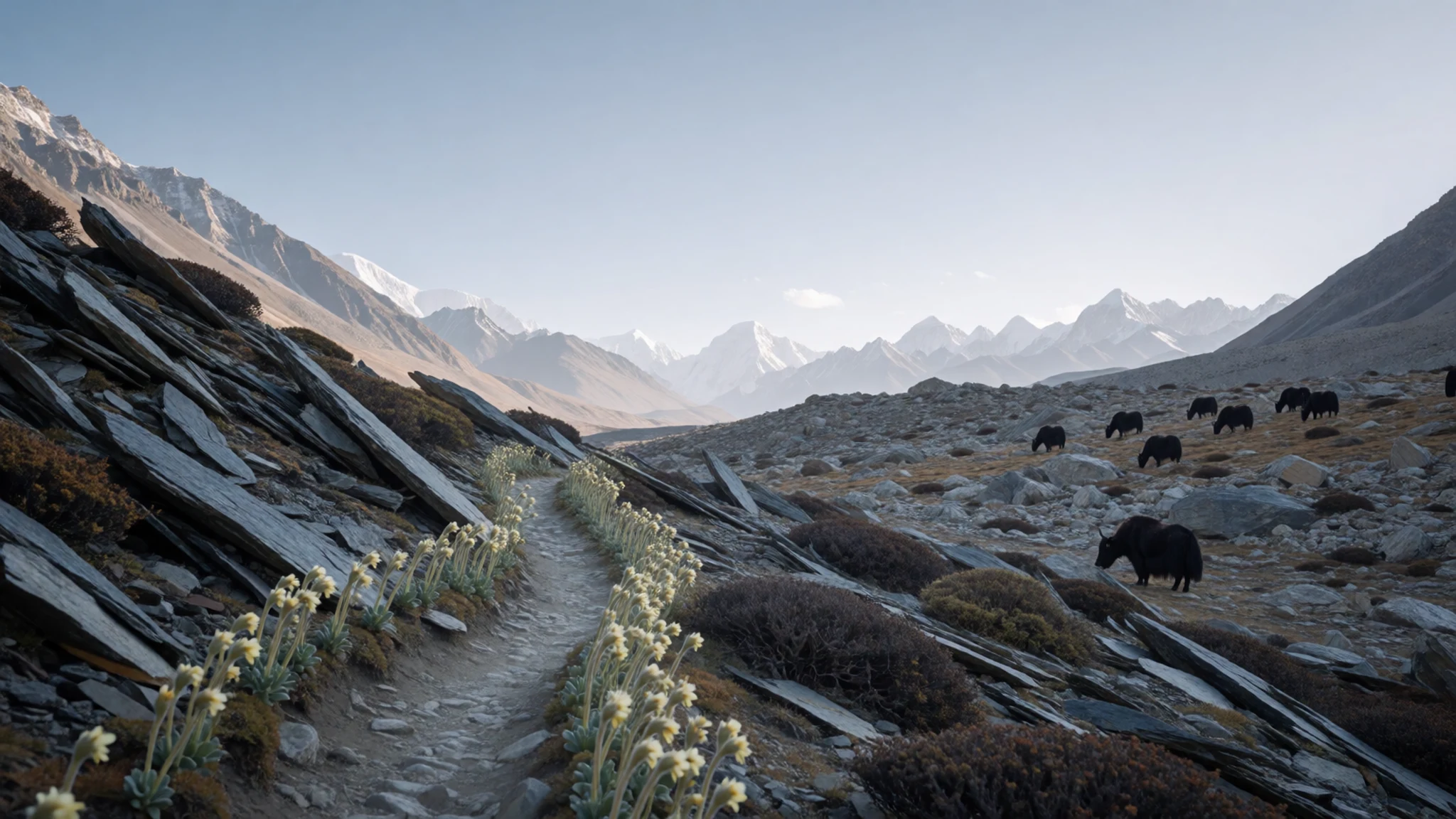
- Rongbuk Glacier and Base Camp road — South of the monastery
A road and walking track lead up the valley towards the glacier, where northern-route expeditions pitch their camps, a few kilometres beyond the monastery. Access for visitors is regulated and can change, so ask locally. Even a short stroll towards it shows the moraine and ice that feed the valley.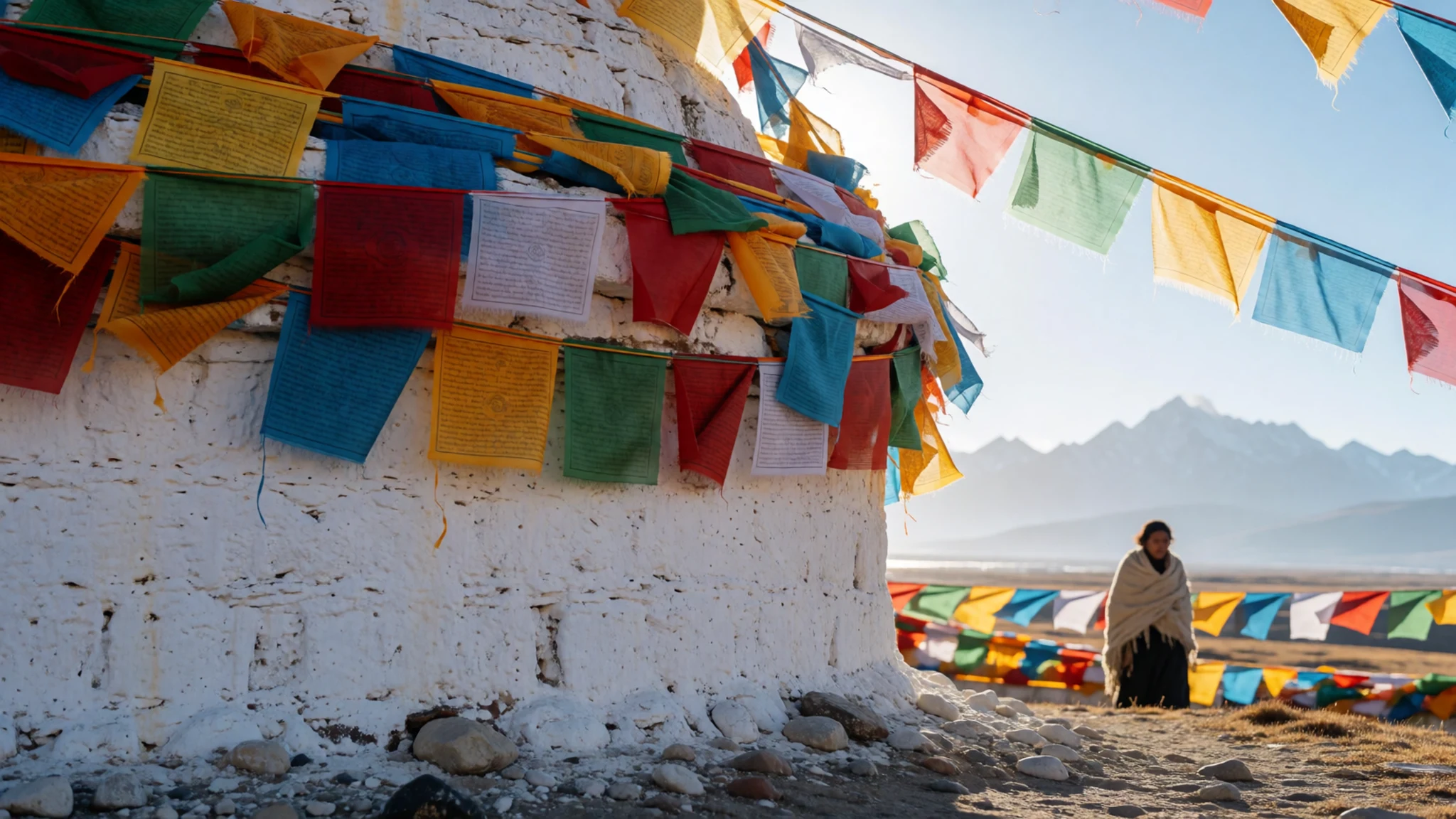
- Qomolangma National Nature Reserve — Northern Everest foothills
The monastery lies within this reserve, which covers the foothills on the northern side of Everest. The landscape is high desert and rock rather than forest. Visitors pass through checkpoints on the road in, and the entry rules and fees for the reserve are set officially, so check before you travel.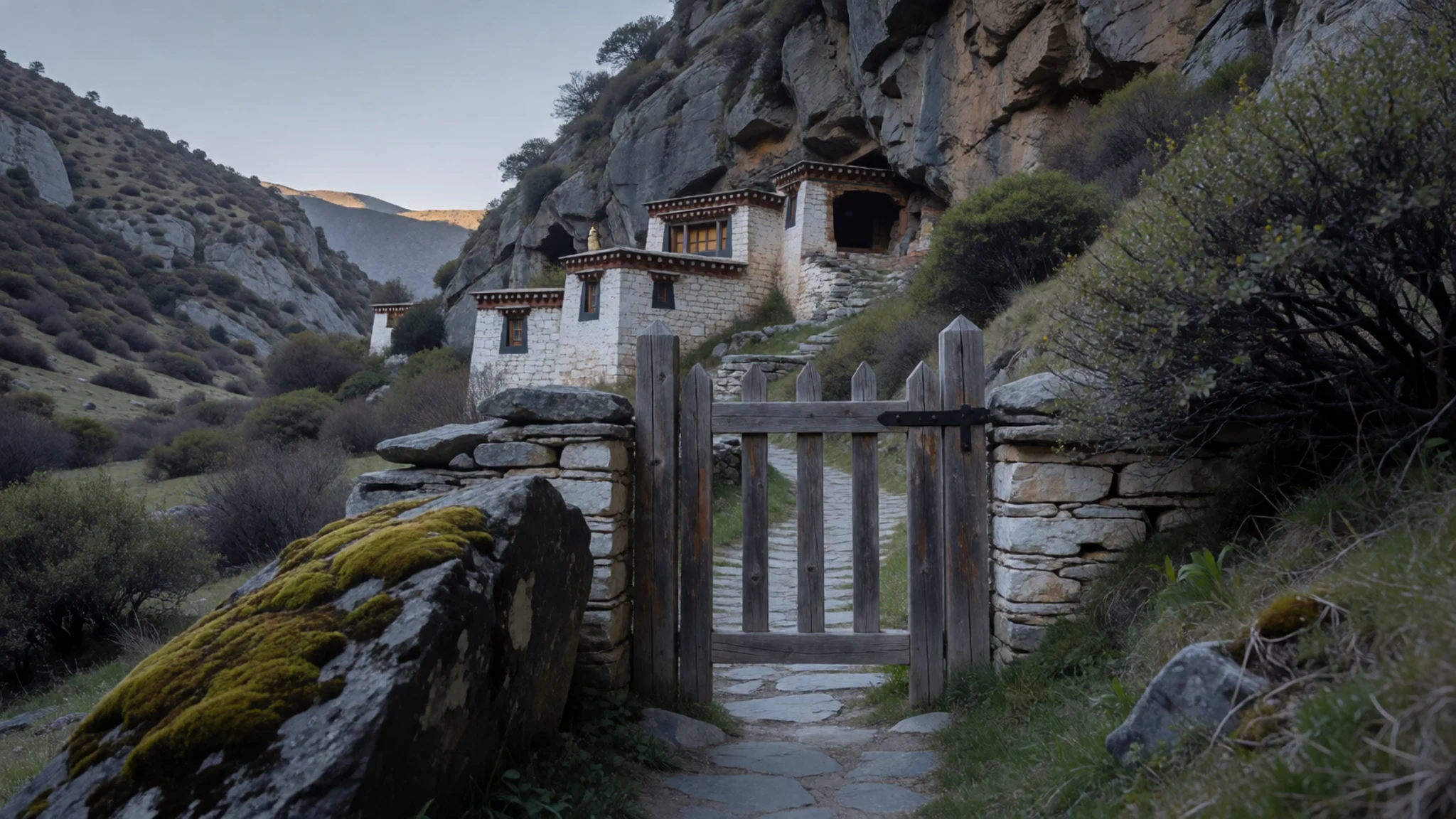
Culture
Rongbuk Monastery is a living place of Nyingma Buddhist practice, and the rhythm of its day is set by prayer, not by visitors. Monks and pilgrims turn prayer wheels, light butter lamps and circle the chorten clockwise, always keeping the sacred object on their right. Visitors who copy this quietly are welcomed far more warmly than those who treat the site as a viewpoint only.
For many Tibetans and for Sherpa pilgrims from Nepal, the valley is sacred ground, and the mountain above is understood as the home of a goddess rather than a trophy. Prayer flags carry printed mantras and are meant to spread blessings with the wind; they are not decoration and should never be taken, moved or stepped on. Offerings of small donations are common in the hall, and the monks' own garments and statues are treated with great care.
Photography rules vary from hall to hall. Outside, the scenery is open to the camera, but inside the shrine rooms there may be signs or a monk who asks you to stop. People praying are not subjects for close-up pictures unless they clearly agree. Keep voices low, switch off phones, and avoid pointing your feet at images or sitting with your back to an altar.
As a courtesy, ask before photographing any monk or pilgrim, and always walk clockwise around the chorten and inside the prayer hall.
What to wear
Rongbuk Monastery sits in a part of Tibet where traditional dress is still common, especially among older people and on festival days. The chuba is a long wrap-around robe, traditionally made of wool or sheepskin and tied at the waist with a sash. Married women wear the colourful striped apron called pangden, woven in bands of bright wool, and monks wear maroon and saffron robes of heavy cloth with a shawl over one shoulder.
Day to day, most local people mix tradition with practicality: padded jackets, fleece, trousers, wool hats and sturdy boots, with the chuba kept for ceremonies or colder days. Younger people dress much as young people do across China, in jeans, trainers and puffer coats, and many drivers and guides wear mountaineering jackets.
Visitors should dress for cold, wind and strong sunshine at altitude. Layers work best: a thermal base, a fleece, and a windproof, insulated outer jacket, plus gloves, a warm hat, sunglasses and sun cream, since the thin air makes the sun fierce even when it is freezing. Footwear should be sturdy and broken in, with good grip for gravel and icy patches. For the monastery itself, cover your shoulders and knees, avoid hats and sunglasses indoors, and wear shoes that are easy to slip off if asked.
What to eat
- Butter tea (po cha) — Tea tents and guesthouses near the monastery
Tea churned with yak butter and salt, served hot in small bowls and refilled again and again. It is salty rather than sweet and takes getting used to, but it warms and hydrates at altitude. Locals offer it as a gesture of welcome.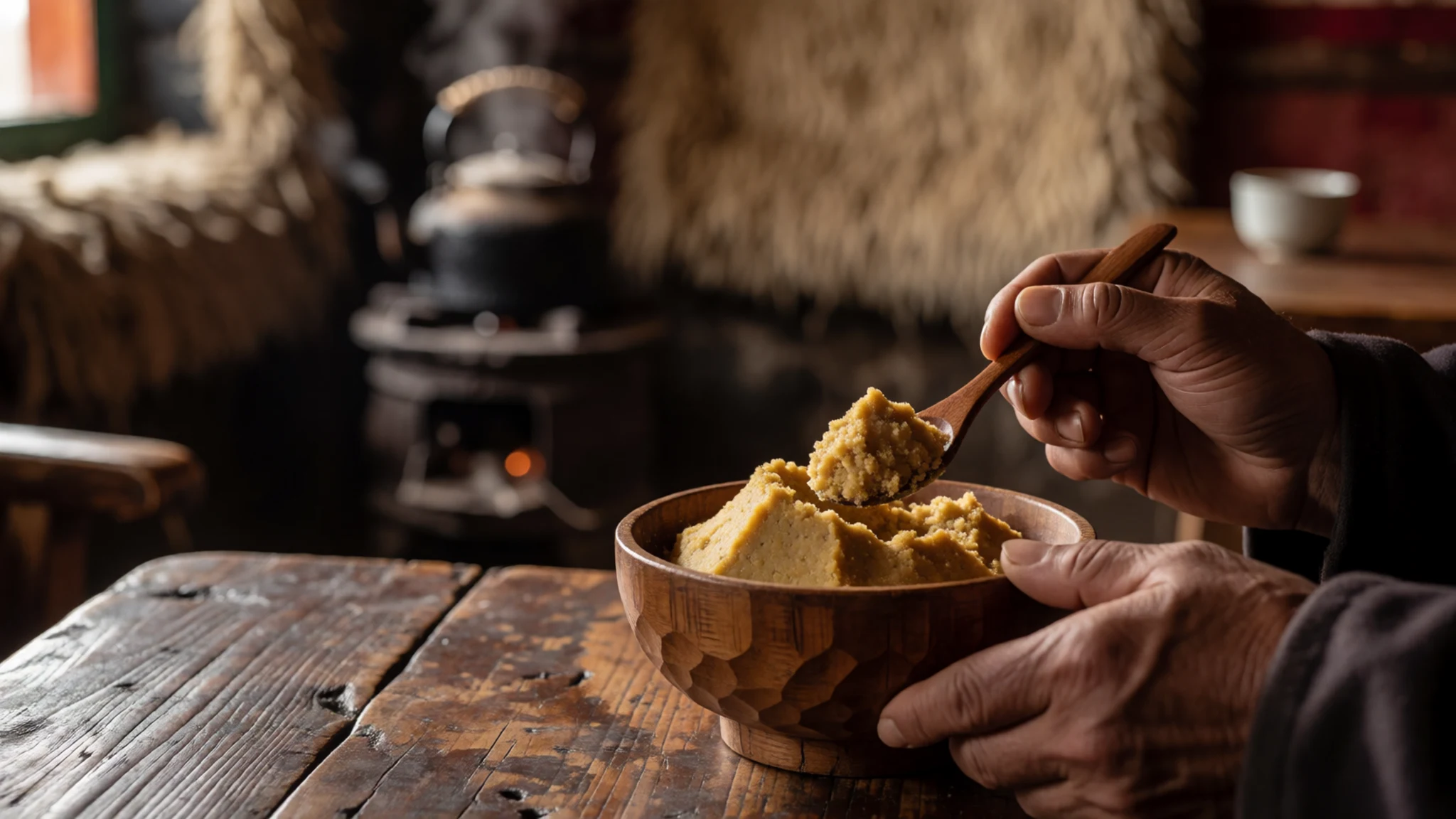
- Tsampa — Family-run guesthouses along the valley
Roasted barley flour, mixed by hand with butter tea into a dough, is the staple of the Tibetan plateau. It is filling, simple and eaten for breakfast or on the move. Ask your host to show you how to knead it.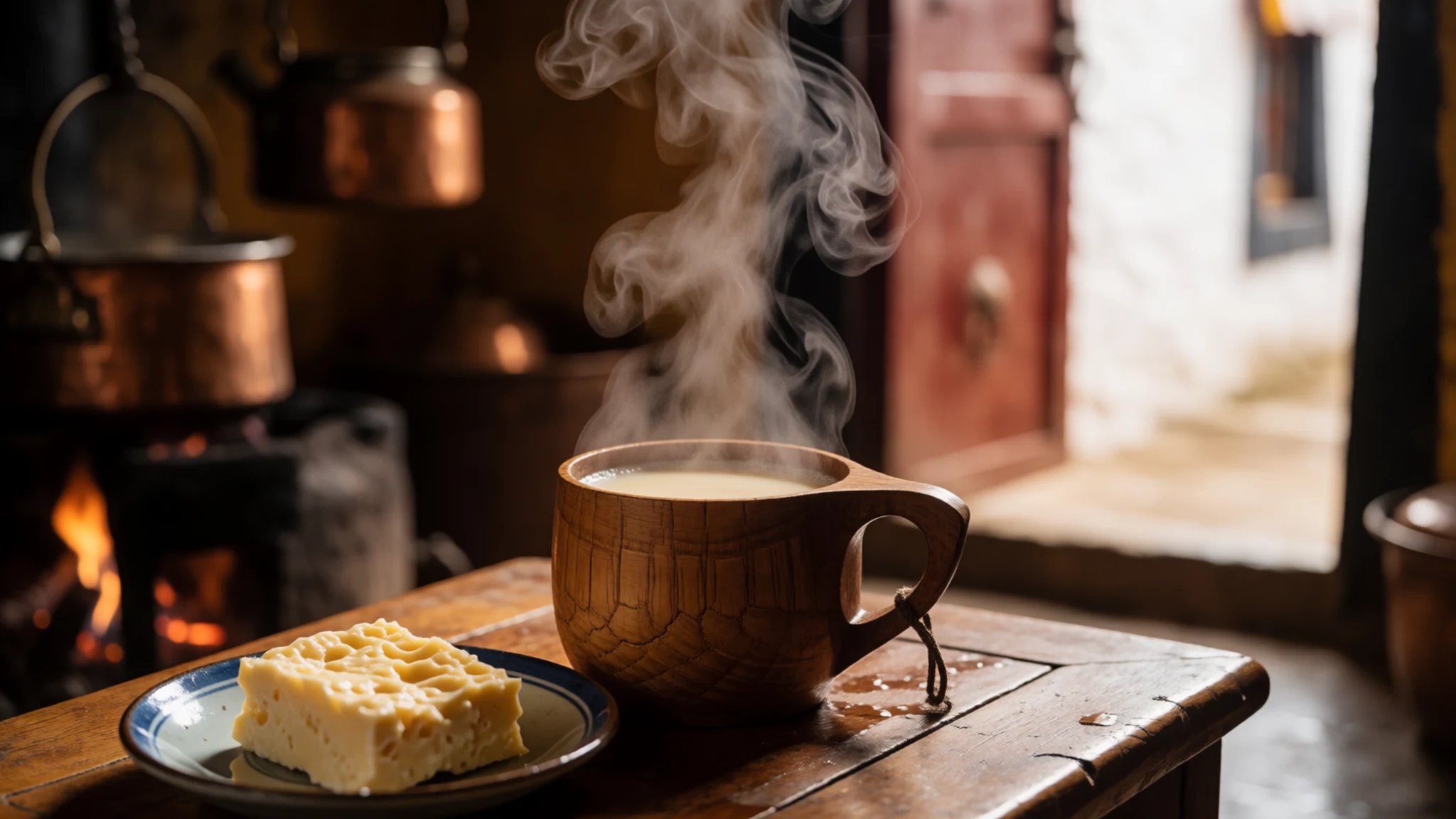
- Thukpa — Simple eateries in Tingri and Shelkar
A hot noodle soup with meat or vegetables, often spiced lightly and thick with broth. After a cold day outdoors, it is the dish most travellers go back for. Vegetarian versions are usually possible if you ask in advance. - Momos — Small restaurants in Tingri and on the Friendship Highway
Steamed dumplings filled with yak meat, mutton or vegetables, served with a chilli dip. They are found across Tibetan towns and are easy to share. Order a plate to start, and expect them to arrive piping hot. - Yak yoghurt — Markets and roadside stalls in Tingri
Thick, tangy yoghurt made from yak milk, often eaten with a spoon of sugar. It is a pleasant, light change from heavier meals and is sold in the towns on the way. Choose sealed or freshly served portions.
Plan it
Best time. May and September–October are the usual windows, when roads are open and views are often clearer. Winter is extremely cold and windy, and summer monsoon cloud can hide the mountain, though the road stays passable.
How long. 2–3
Getting there. Fly to Xigatse Peace Airport (flights from Chengdu, Shanghai and Xi'an), or travel to Shigatse by road, then follow the Friendship Highway to Shelkar (New Tingri) or Old Tingri. From there, the last leg is a drive of two to three hours to the monastery. Entry to this part of Tibet needs permits, so arrange them through a licensed operator well ahead.
Budget. mid
Tips
- Spend a night or two at lower altitude first to acclimatise before going above 4,900 metres
- Start early for clear views; clouds often gather by afternoon
- Carry cash and bring water, snacks and warm layers, as services are basic
- Check the current permit and travel rules with an operator before booking
Etiquette
- Walk clockwise around the chorten and prayer hall
- Ask before photographing monks or pilgrims
- Do not touch or remove prayer flags
Nearby
Sources
- Wikidata Q785488 (CC0)
- Wikipedia: Rongbuk Monastery (CC BY-SA 4.0)
- Wikivoyage: Xigaze (prefecture) (CC BY-SA 4.0)
- Photo: Rongbuk Monastery, near Everest Base Camp (Vinko Rajic) (CC BY 3.0)
- Photo: Rongbuk Monastery with Everest (Oldmanisold) (CC BY-SA 4.0)
- Photo: Rombuk monastery, 2005 (Matti&Keti; Lorenz King) (CC BY-SA 4.0)
- Photo: Chorten with prayer flags (Laura) (CC BY-SA 2.0)
- Photo: Rombuk monastery 02.08.2005 (Matti&Keti; Lorenz King) (CC BY-SA 4.0)
- Photo: Rongbuk Monastery 4 (Antoine Taveneaux) (CC BY-SA 1.0)
- Photo: Rongbuk Monastery 3 (Antoine Taveneaux) (CC BY-SA 2.5)
- Photo: Rongbuk Monastery (Vinko Rajic) (CC BY 3.0)


