Roça Sundy
Roça Sundy, São Tomé and Príncipe
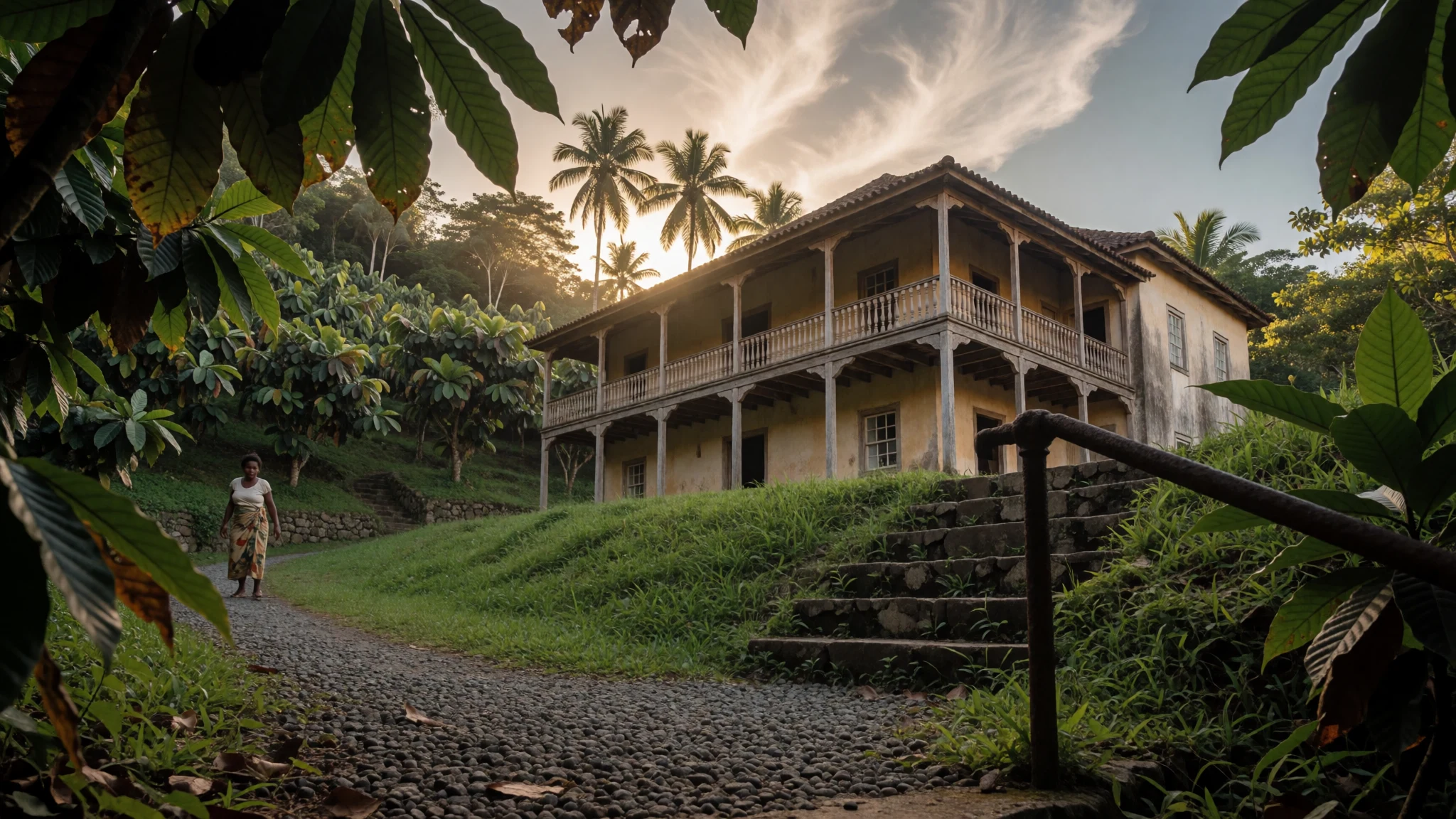
Roça Sundy is an overgrown cocoa estate on Príncipe where Eddington photographed the 1919 eclipse, set among forest, rusting machinery and few visitors.
The place
Roça Sundy sits in the north-west of Príncipe, the smaller of the two main islands of São Tomé and Príncipe, about 5 km north-west of the island capital, Santo António. A roça is a Portuguese-era plantation estate, and Sundy is where cocoa growing in the archipelago began, with an estate set up here in 1822. Several of the old buildings survive: a main house with verandas, a hall of machinery, the traces of a small railway, all being slowly wrapped by vegetation. The settlement itself is tiny, with 416 residents at the 2012 census, so a visit feels like walking through a village that happens to contain a former industrial estate. The wider country straddles the Equator in the Gulf of Guinea, west of Gabon. Outsiders often shorten its name to São Tomé, but that is only one of its two main islands. Forest covers most of both, and on Príncipe that is easy to believe, because greenery presses against every clearing. Cocoa is still the main crop on São Tomé island, while fishing and small-scale food processing fill much of the rest of the economy. Tourism is young and its infrastructure basic, which means few other visitors, little signage and a need to arrange guides, lifts and meals in advance. The pace is slow, the air is humid, and the interest lies in layers: plantation, science, forest and village life.
Its story
Roça Sundy owes its existence to a Portuguese colonial project. The islands of São Tomé and Príncipe had no people before the Portuguese arrived in the 1490s, and the settlers gradually turned them into plantation country. In 1822 an estate at Sundy began growing cocoa, the first of its kind in the archipelago, and the crop went on to shape the islands' economy. Like other roças, Sundy ran on a large workforce, much of it brought from elsewhere in the Portuguese empire and often with little choice in the matter. The machine hall, the railway remains and the big house are what is left of that system. In 1919 the estate acquired a second identity. Arthur Eddington and his team travelled to Príncipe to test Einstein's theory of relativity. During the solar eclipse of 29 May, he photographed stars whose light passed close to the sun, to see whether the sun's gravity bent it. A plaque and a memorial at Sundy now record that work, and an information panel explains it. Since the plantation era ended, forest has reclaimed much of the landscape in the archipelago, and Sundy's buildings are weathered, creeper-draped and quiet, with a few residents living among them. The result is a place where two very different stories, one of cocoa and labour and one of astronomy, share the same patch of ground.
What to see
- The 1919 eclipse memorial and panel — Roça Sundy
A memorial at Sundy marks the observations made during the total solar eclipse of 1919, and an interpretive panel nearby explains the experiment in plain terms. It is a small, quiet stop rather than a museum, but standing where a test of relativity was staged gives the visit its point.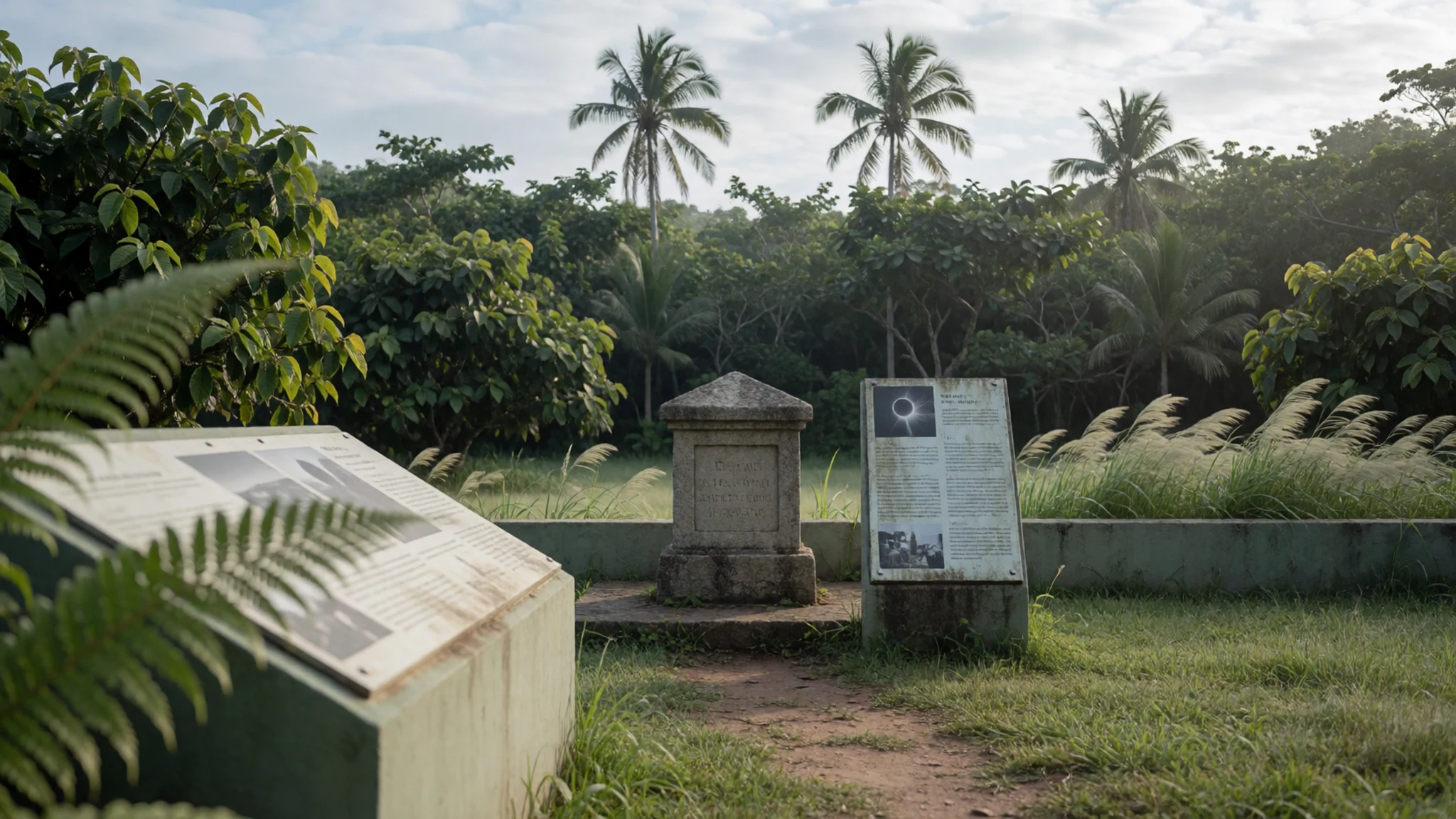
- The old machinery — Roça Sundy
The cocoa estate's old engines and processing machinery still sit in their sheds, rusted and half hidden by foliage. They show how much industrial effort lay behind each batch of cocoa. Ask a local guide to explain what each machine did, and watch your footing on uneven floors.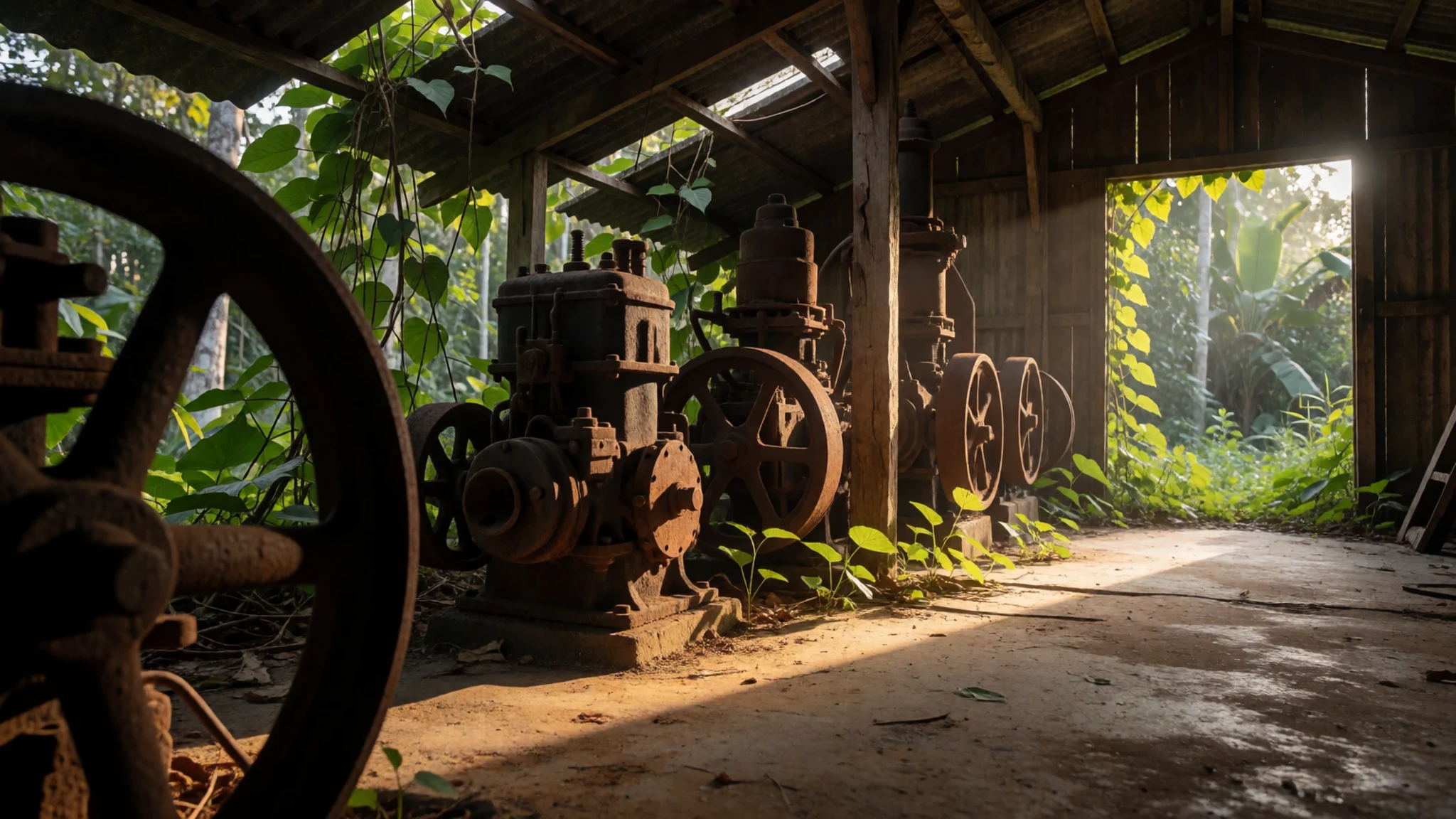
- The main house — Roça Sundy
The main building of the roça is a large, plantation-style house set among tropical trees. Its scale hints at the hierarchy of the estate, with the owners and managers living above a workforce housed elsewhere. It is best photographed in early light, before the forest humidity builds and the heat climbs.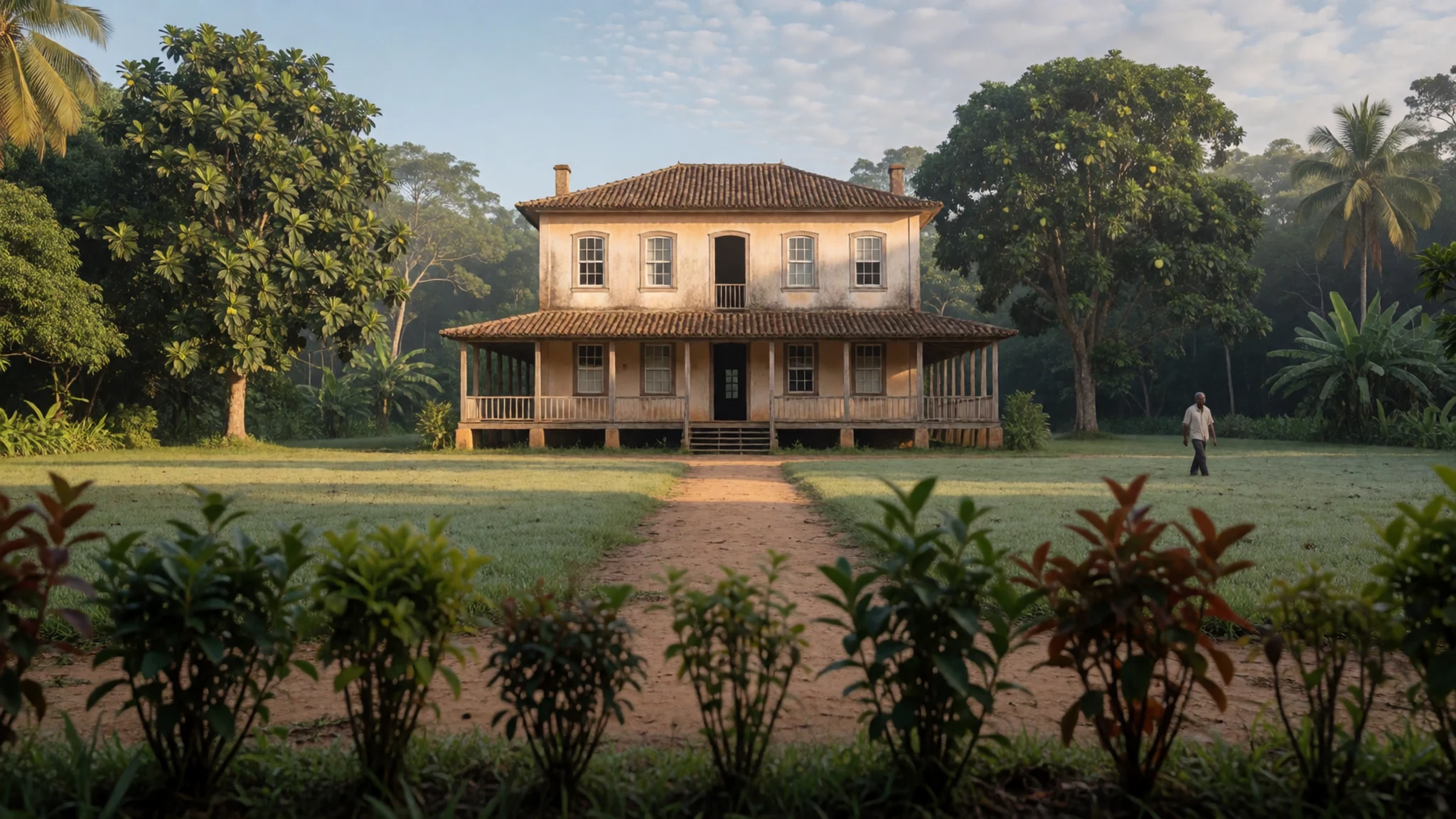
- Verandas and outbuildings — Roça Sundy
Around the main house are other historic buildings with deep verandas and wide steps, designed for shade and rain. Some are lived in or used, so treat the complex as a working village. Walk slowly, look at the ironwork and timber, and ask before stepping inside any doorway.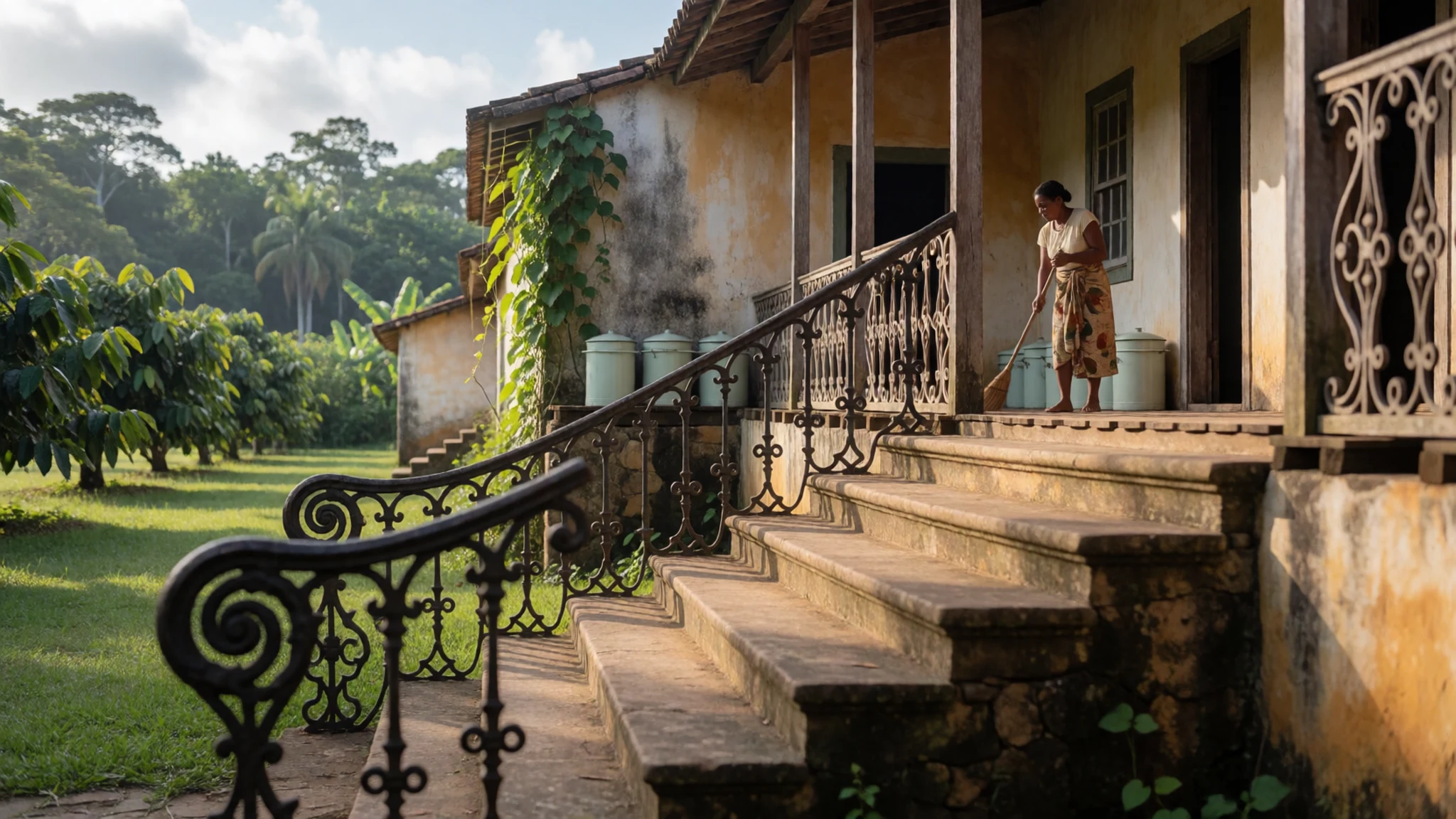
- The railway hangar — Roça Sundy
Sundy once had its own railway, used to move crops and goods around the estate. A historic family photograph shows the hangar when the line was active. Comparing that picture with the overgrown site today is a vivid way to see how quickly the forest has taken ground back.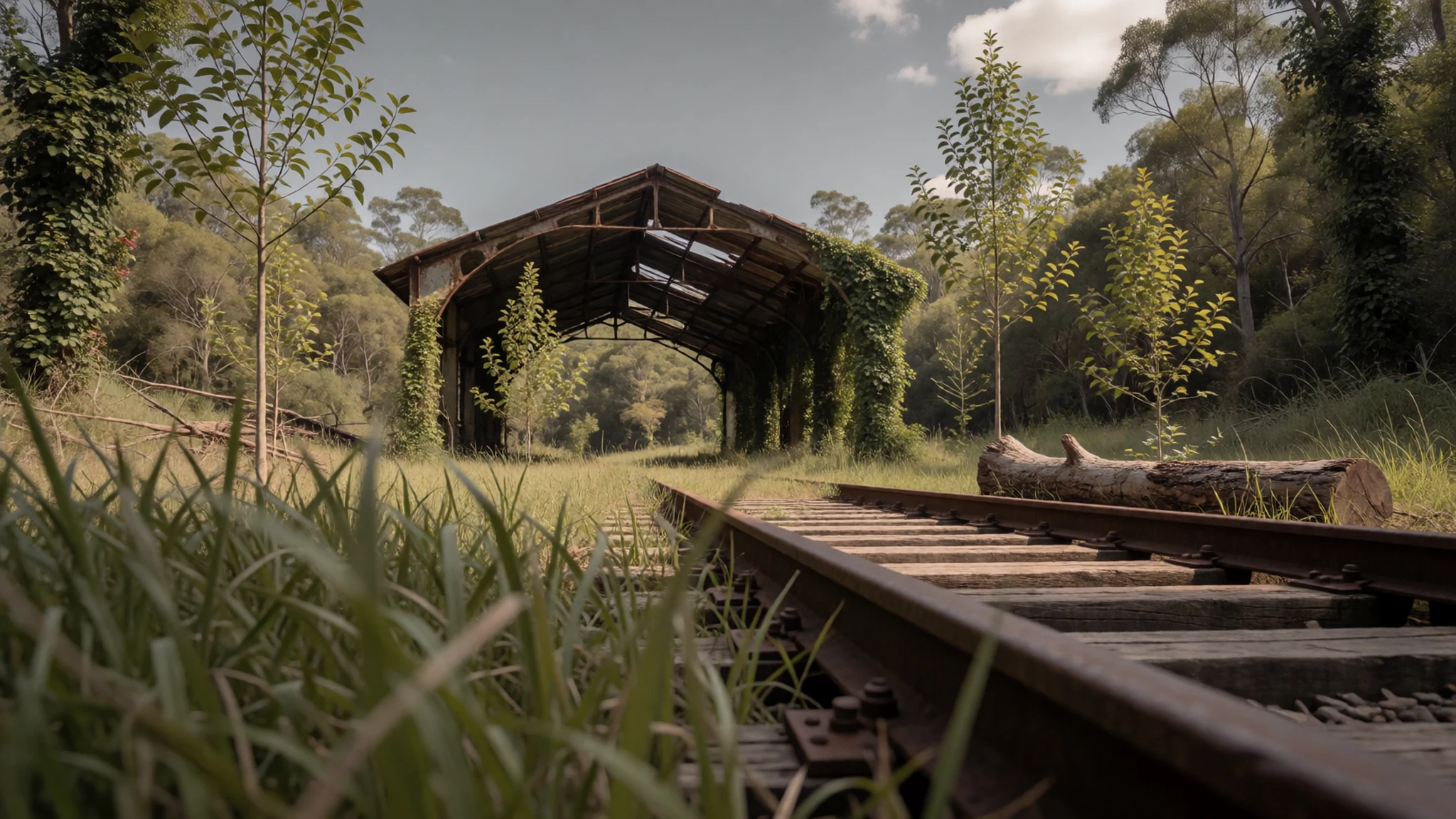
- Santo António — Island capital, about 5 km south-east
Príncipe's small capital is the practical base for reaching Sundy. It has the airport links, a few places to eat and the island's shops. Use it for arranging a guide, changing plans around the weather and getting a sense of everyday island life before heading out to the roça.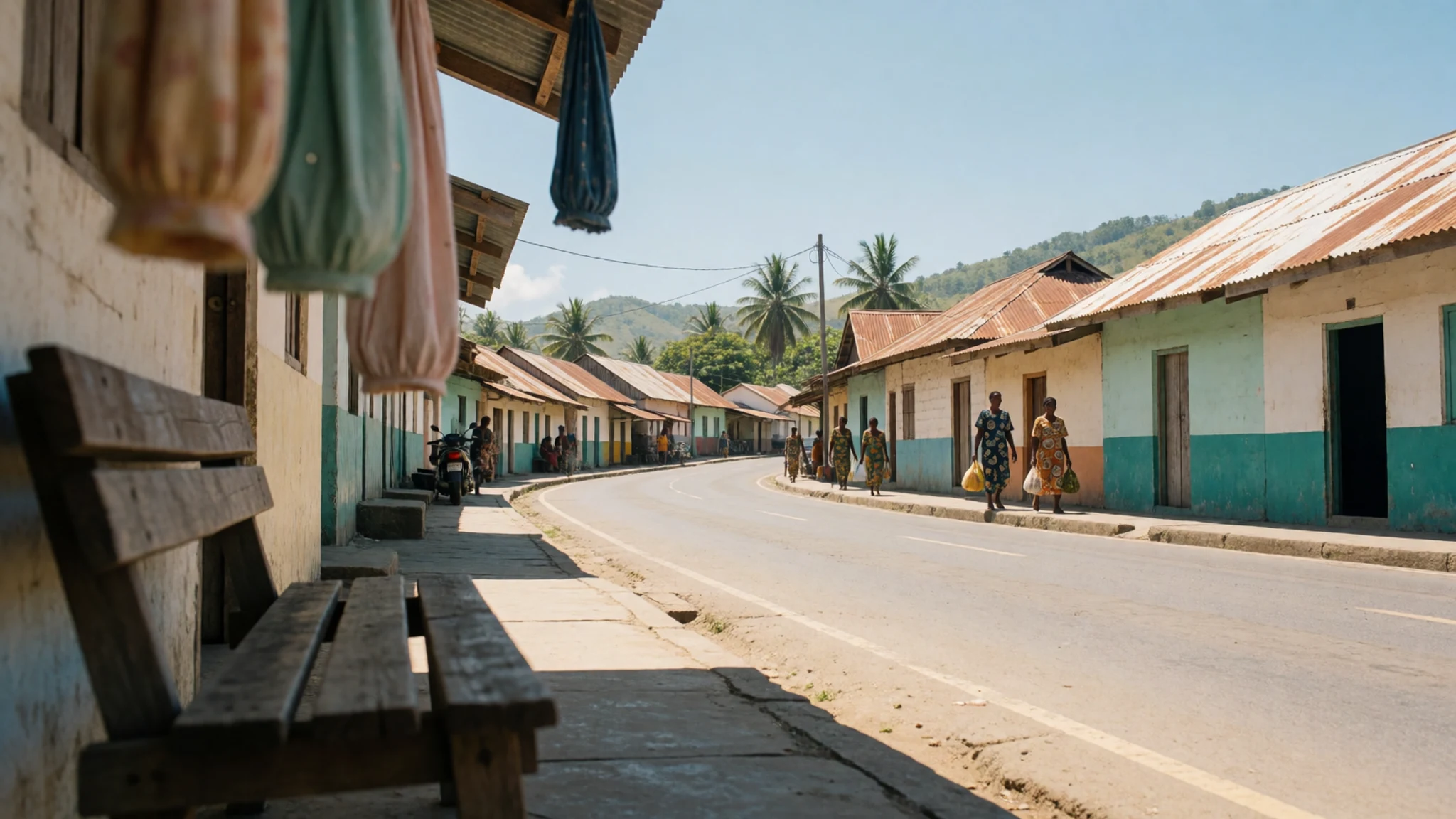
Culture
Roça Sundy belongs to a culture that blends African and Portuguese influences, and that mixture shows most clearly in music and performance. On São Tomé island the ússua and socopé rhythms are well known, while Príncipe has its own dêxa beat. Portuguese ballroom dancing may have helped shape these styles, which is why the steps can look oddly familiar to European eyes. Tchiloli is a dance-theatre performance that tells a dramatic story, and the danço-Congo similarly combines music, dance and drama. Festivals are the best time to see these forms, though dates change and are best checked locally. Football is the most popular sport, so a kick-about or a match on the radio is a quick way into conversation. Portuguese is the language of everyday dealings, and a few words of greeting go a long way in a community as small as Sundy's. Life here also carries the memory of the plantation system, which means the old buildings are not only picturesque ruins but part of local family histories. Residents are used to few visitors, so interest is usually met with curiosity and patience rather than commercial pressure. Ask before photographing residents or going inside any building in the Sundy complex, because some are still homes and workplaces.
What to wear
Roça Sundy has no single formal costume that visitors are likely to meet, and the brief for this reading says little about dress, so this is a general picture. Traditional clothing across the Portuguese-speaking islands and coast of West and Central Africa often uses printed cotton cloth, wrapped as skirts or headscarves, and worn most visibly at festivals, church services and performances such as tchiloli. Day to day in Príncipe, people wear light, practical clothes suited to heat and humidity: T-shirts, shorts, dresses, flip-flops, and a good many football shirts. Working clothes on farms and in forest are older and sturdier. Visitors should dress for a hot, wet, equatorial climate. Choose loose, quick-drying cotton or linen, long sleeves and trousers for the evening and for forest paths, to cover skin from sun and insects. A wide hat, sunglasses and a light rain jacket are useful in any month. Closed shoes with grip suit the muddy tracks and uneven floors of the old buildings, with sandals kept for the beach and the guesthouse. Swimwear belongs on the sand and boat; in villages and around the estate, cover shoulders and knees as a courtesy. There is no dress code at Sundy, but modest, neat clothing is noticed and appreciated.
What to eat
- Grilled fish with breadfruit — Small eateries in Santo António and fishing villages along the coast
Fish is the staple of the islands, commonly served with breadfruit and mashed, cooked banana. Expect it grilled or stewed with hot spices and a simple side. It is filling, fresh and unfussy, and the standard order at a local eatery.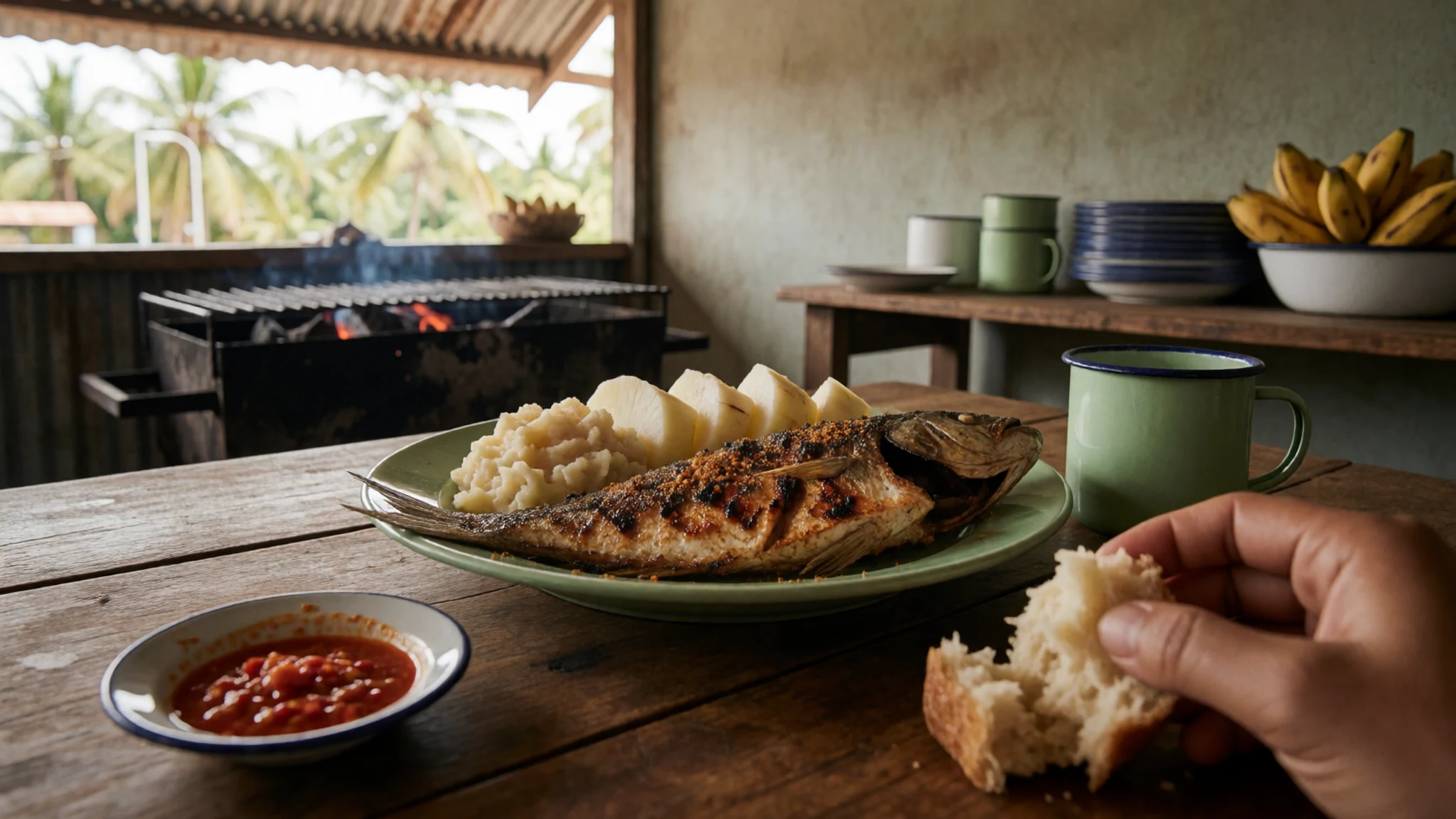
- Flying fish — Seaside eateries and the harbour area in Santo António
Flying fish appear on menus at certain times of year, when the catch allows. It is often fried or grilled and eaten with the same starchy sides as other fish. Ask what has come in that day rather than expecting a fixed menu.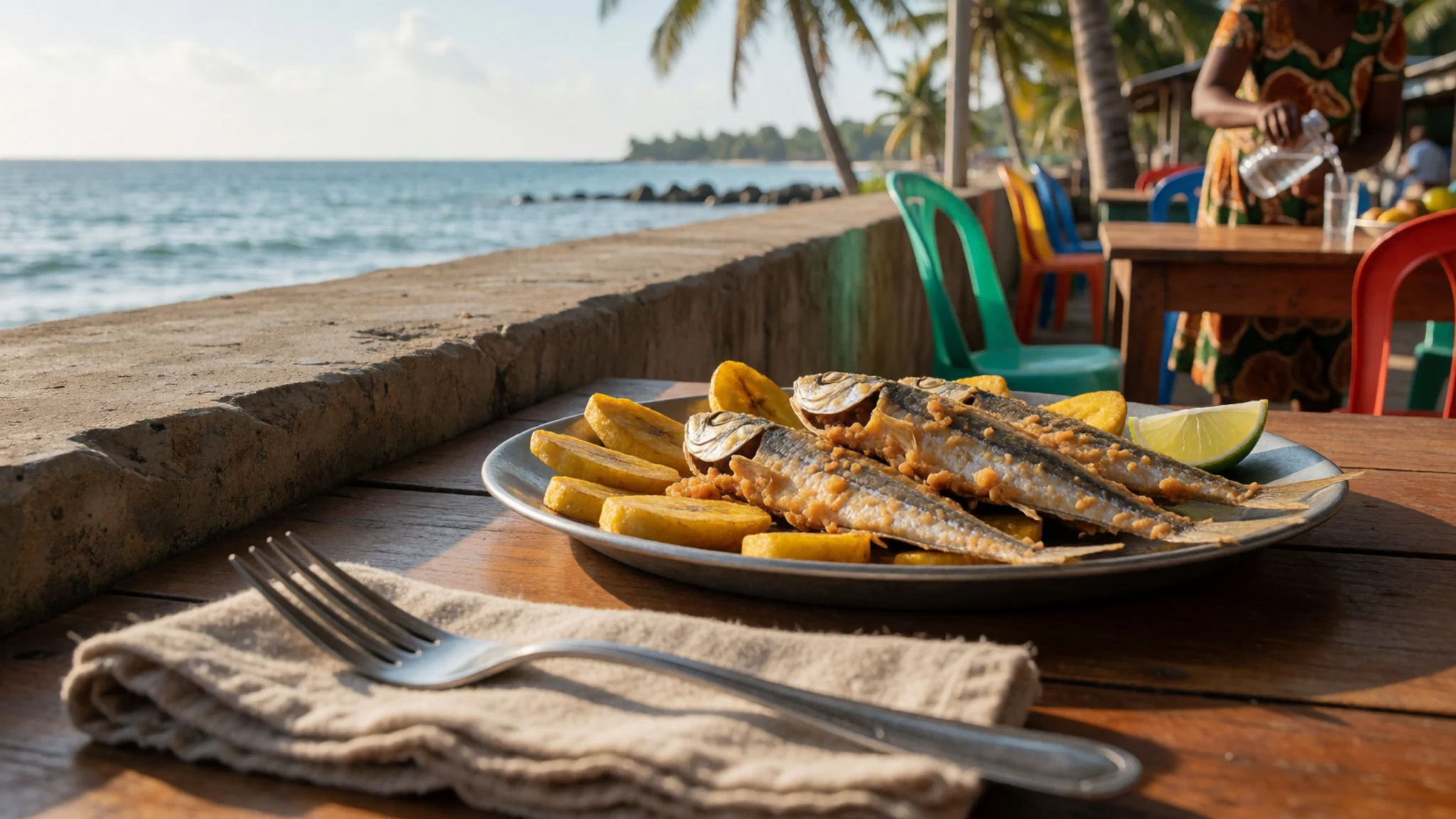
- Búzios (land snails) — Home-style eateries in inland villages; ask around Sundy
Búzios are large land snails, a traditional source of protein for people living inland who cannot always afford fish or meat. They are usually cooked in a spicy sauce. Try them as a local speciality, with some curiosity and a strong appetite. - Sea snails — Coastal villages and informal stalls near the shore
Sea snails are common along the coast and turn up in simple local cooking. They are small, salty and usually eaten as a snack or starter, with a pin or toothpick to pull the meat out of the shell. - Fresh tropical fruit — The market in Santo António and roadside stalls around the island
Papaya, mango, pineapple, avocado and bananas all grow readily here and are a major part of the cuisine. Eat what is in season, whether sliced at breakfast, sold in a roadside heap or pressed into juice, and wash or peel anything you pick up yourself.
Plan it
Best time. June to September is generally the drier stretch and is a sensible choice for walking forest paths and getting boats to run. The rest of the year is wetter and more humid, and the islands sit on the Equator, so it is warm in every month. Check current conditions before booking.
How long. 2–3
Getting there. The only way into São Tomé and Príncipe is by air. Fly into São Tomé island, then take a connecting flight or boat to Príncipe and head to Santo António. Sundy is about 5 km north-west of the town, reached by road with a local driver or guide. Confirm visa rules for your passport before booking.
Budget. mid
Tips
- Arrange transport, a guide and meals in advance, as tourism infrastructure is basic
- Carry cash, because cards may not be accepted outside the main town
- Use insect repellent, sun protection and a rain jacket in any month
- Take care on the roads, which can be hazardous, and keep an eye on valuables in busy places
Etiquette
- Ask before photographing residents or entering any building
- Treat the old estate as a living village, not an empty ruin
- Greet people politely in Portuguese before asking for help
Nearby
Sources
- Wikidata Q30624084 (CC0)
- Wikipedia: Sundy, São Tomé and Príncipe (rev 1376933402) (CC BY-SA 4.0)
- Wikivoyage: São Tomé and Príncipe (rev 5324699) (CC BY-SA 4.0)
- Photo: Roça Sundy (César J. Pollo) (CC BY-SA 4.0)
- Photo: Antigua maquina de la Roça Sundy (César J. Pollo) (CC BY-SA 4.0)
- Photo: Antiguas maquinas de la Roça Sundy (César J. Pollo) (CC BY-SA 4.0)
- Photo: Railway hangar in Sundy (Jerónimo Carneiro Family) (Public domain)
- Photo: 1919 solar eclipse memorial at Roça Sundy (Josep M. Gracia) (CC BY-SA 4.0)
- Photo: Historic building at Roça Sundy (Josep M. Gracia) (CC BY-SA 4.0)
- Photo: Information panel about the 1919 eclipse at Roça Sundy (Josep M. Gracia) (CC BY-SA 4.0)
- Photo: Main house of Roça Sundy (Josep M. Gracia) (CC BY-SA 4.0)


