Ilhéu das Rolas (Rolas Islet)
Ilhéu das Rolas (Rolas Islet), São Tomé and Príncipe
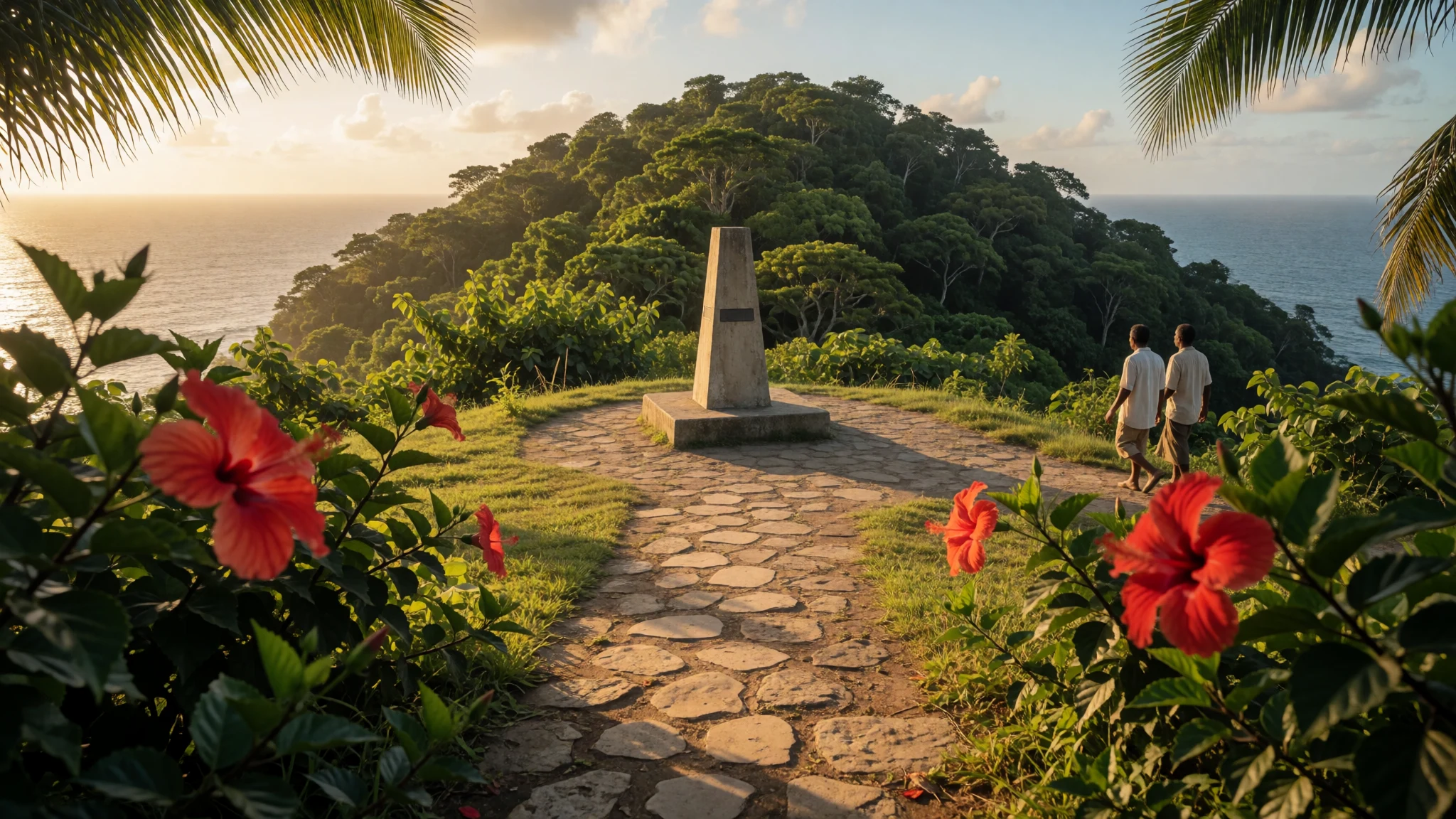
Ilhéu das Rolas is a small, green equatorial islet where beaches, a lighthouse and easy snorkelling energy all feel quietly remote.
The place
Ilhéu das Rolas (also called Ilheu Gago Coutinho) is an islet off the southern end of São Tomé Island in São Tomé and Príncipe, separated from São Tomé by the Canal das Rolas. The island sits right around the equator, and it’s intentionally understated: an interior wrapped in trees, a couple of shoreline moods, and a lighthouse that anchors the coastline in daytime haze.
Visually, it’s all about contrast. The jungle cover is dense, and the beaches show up like clearings—soft sand, scattered coastal growth, and sea colour that swings between green and deep blue depending on wind. With only a small resident population, the pace stays slow, even in the busier seasons.
Access is the key practical point: reaching Ilhéu das Rolas involves a ferry from Ponta Baleia on São Tomé. Once there, the island atmosphere is shaped by a small resort, Pestana Equador, which makes visits possible without turning it into a day-trip party.
Expect warm equatorial weather with sudden showers, and plan around wetter spells during the rainier months. The upside is that the island feels alive in the rain, too: coastlines after a storm look different, and the jungle turns brighter as clouds pass.
For most visitors, the appeal is simple: the island gives a “deserted island” feel without needing complex logistics, and it rewards being outdoors for a full day with water, shade, and quiet roads-of-sand.
Its story
Ilhéu das Rolas has the kind of history that sounds like geography lessons—then turns into a map you can almost feel. Long before modern travel made the archipelago easy to reach, the islet appeared on older charts under names such as “Illie de Rolle” and later “I. de Rolle”, reflecting how European navigators tried to render these islands accurately.
The most tangible chapter for the islet is tied to the Portuguese Navy navigator and historian Gago Coutinho. Between the early part of the 20th century, his geodesic mission worked through observations and base measurements across the São Tomé area, leaving practical marks that supported a wider geodetic network.
In that process, the mission established a result that makes Ilhéu das Rolas stand out in scientific storytelling: the equatorial line crosses the islet. The work was published shortly after the field observations, turning local landmarks into part of a bigger, official record.
Even if none of this is what brings visitors to lie on the sand, it colours the place. Standing on the island with the trees rising behind the beach and the lighthouse marking the coast, it’s hard not to think about why someone cared enough to measure carefully—because small dots of land like this one mattered to how the world got mapped.
What to see
- Praia de Santo António (beach time) — coastline / beach area
Ilhéu das Rolas’ shoreline is where the day settles. Praia de Santo António is the kind of spot where you can alternate between swimming and shade, then walk a little along the waterline to see how the sand and coastal vegetation change with the tide and wind.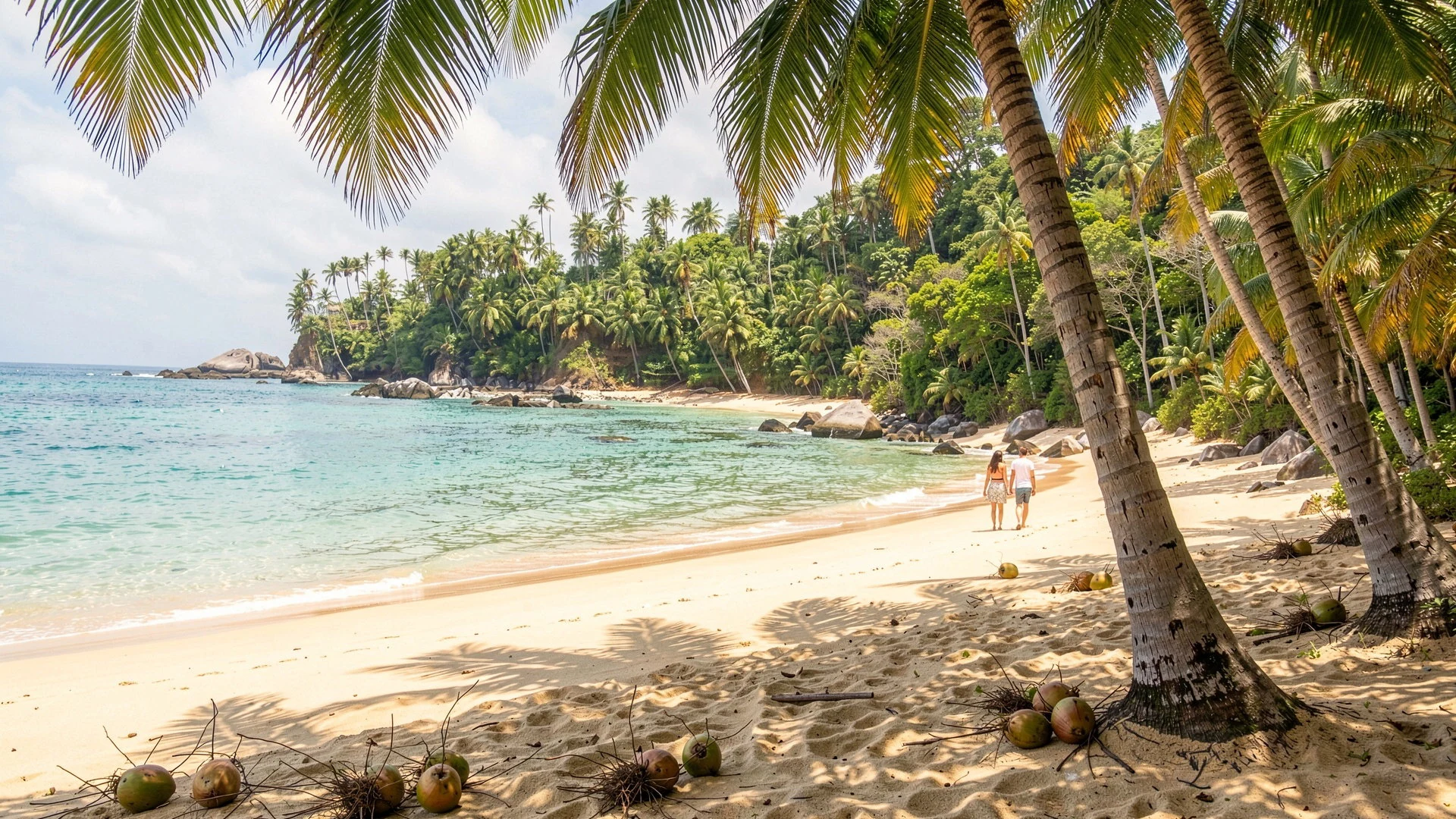
- Pestana Equador resort area — resort area
The small resort base helps turn Ilhéu das Rolas from a name on a map into a real, lived-in place. It’s a useful anchor for orientation—meeting point energy, pathways that lead back to the beaches, and practical logistics without stripping away the island feel.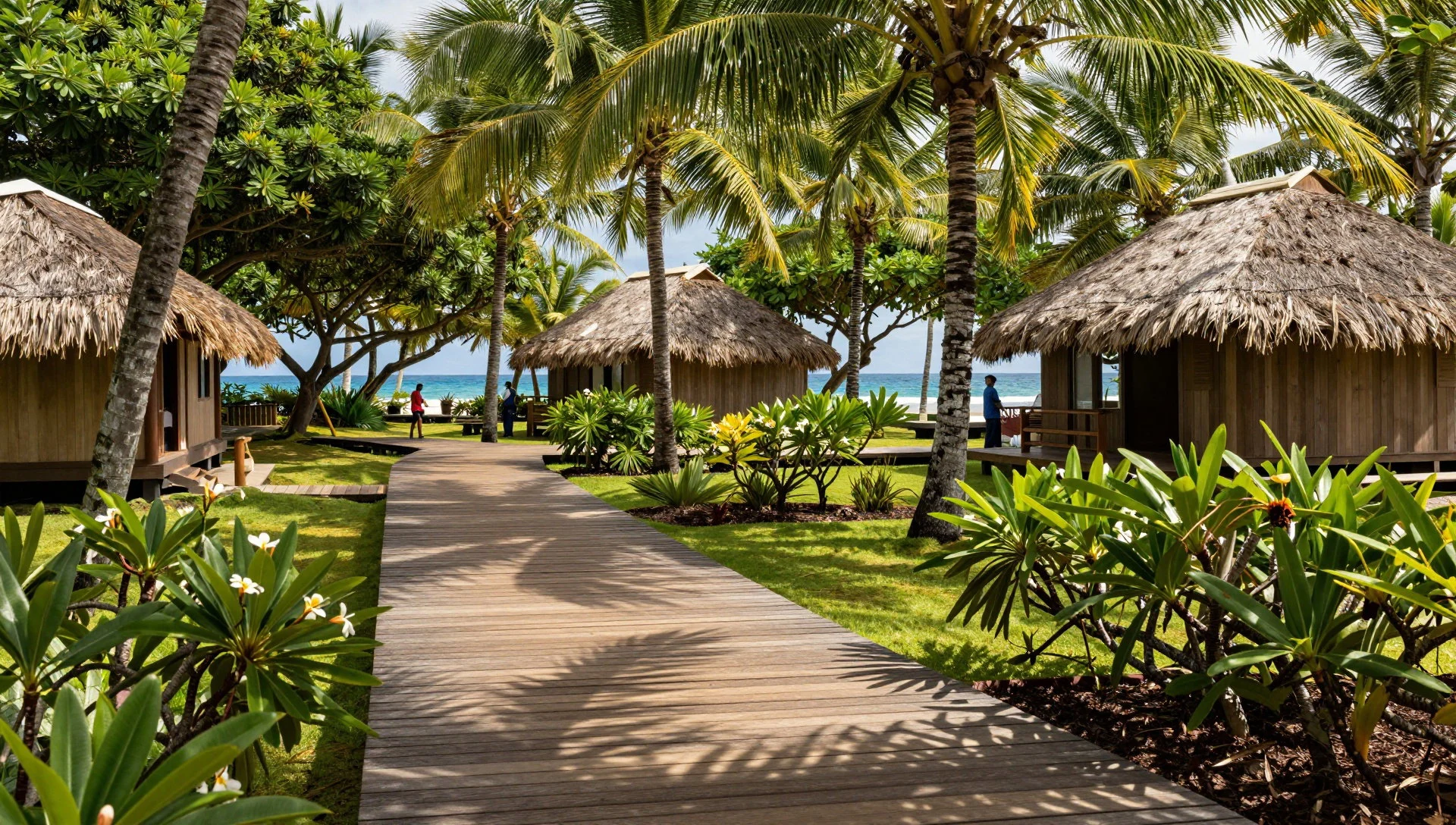
- Post-storm coastline textures — southern coastline
Ilhéu das Rolas changes after rough weather. After a storm, the beach edge can look freshly carved, with darker wet sand and new lines of debris at the boundary between jungle runoff and sea spray—great for slow walks and atmosphere.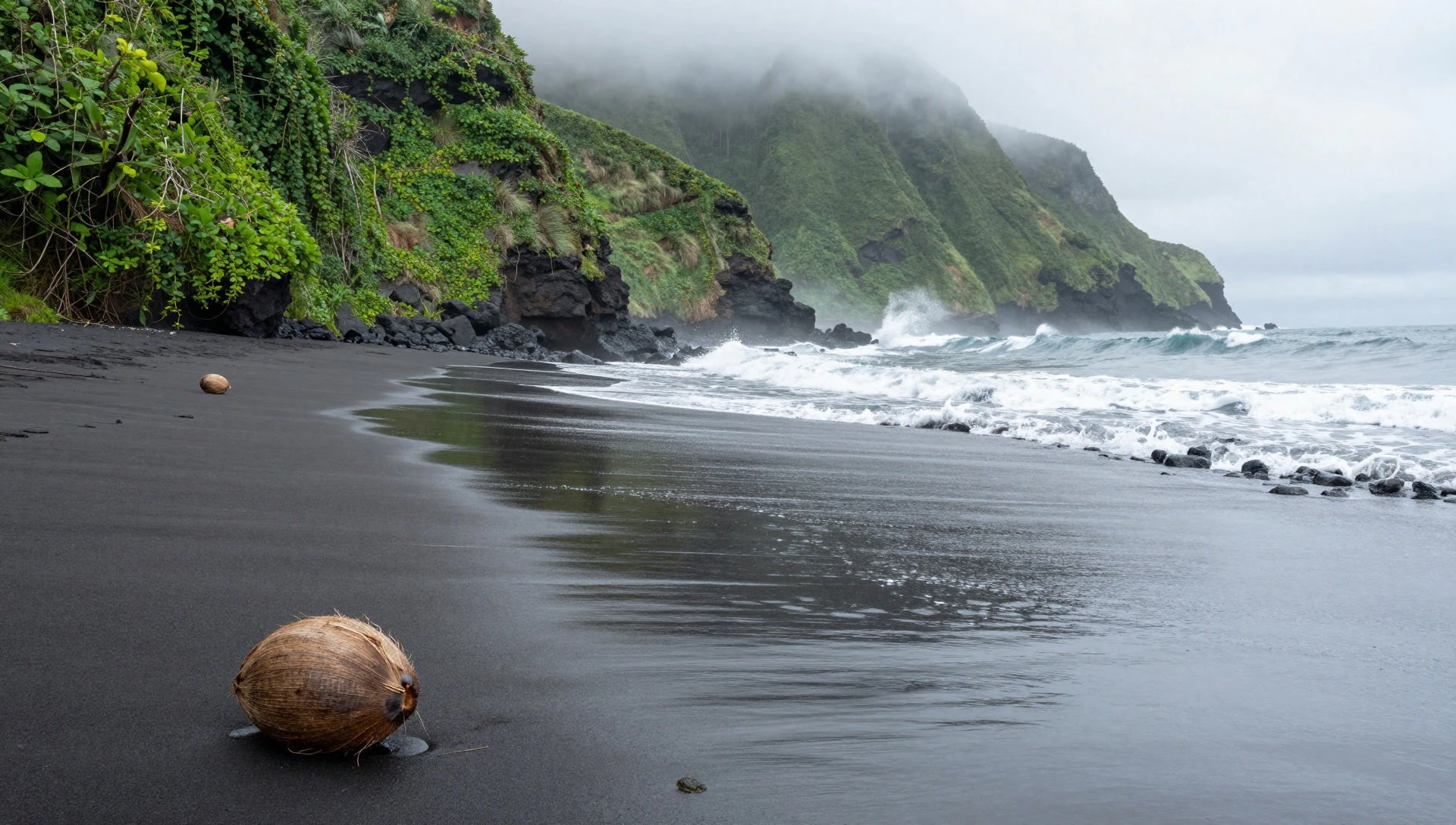
- Lighthouse on the islet — islet interior edge / coastal landmark
The lighthouse gives the island a practical spine. It stands as a landmark you can orient around from the coast, and it also adds that “island end-of-the-world” feeling—especially when the light is strong and the jungle edge frames the view.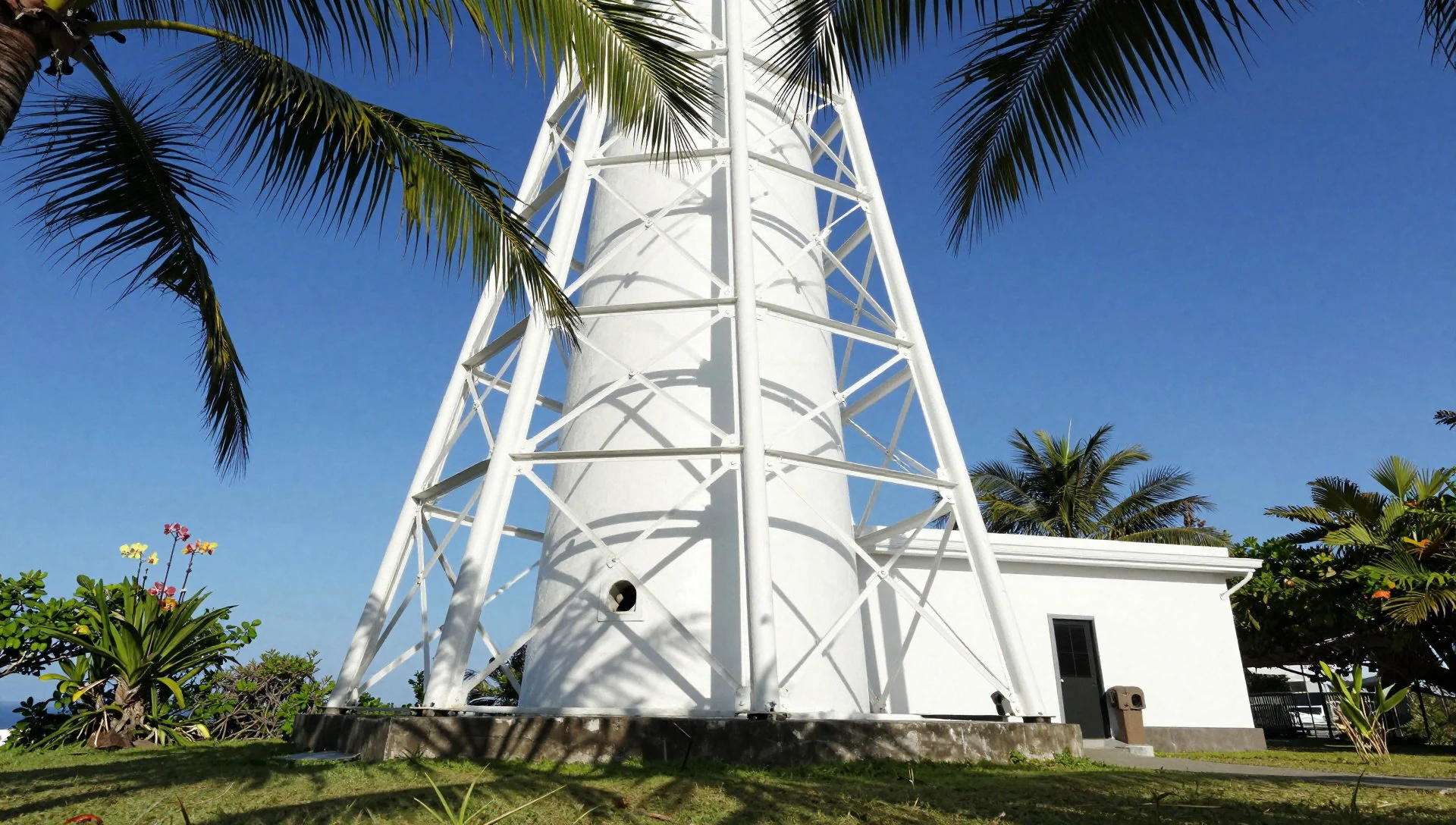
- Praia Café (another beach angle) — beach area
Praia Café is a named viewpoint into island life: a relaxed beach setting where the sea is close enough to structure the whole day. If the wind shifts, the water texture and colour can change quickly, so it’s worth returning later for a different mood.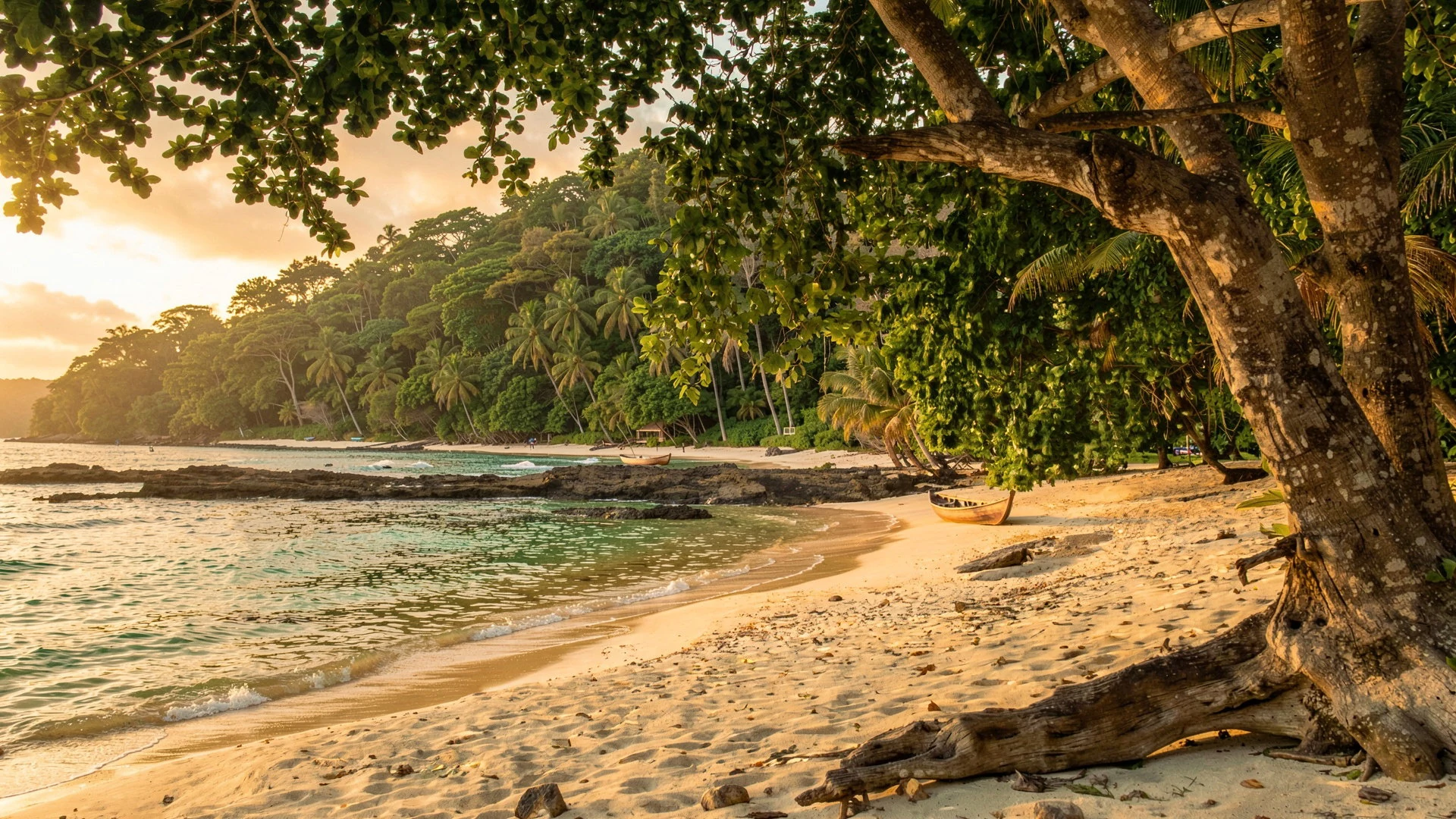
Culture
Ilhéu das Rolas sits within São Tomé and Príncipe, a country shaped by African and Portuguese influences, and that blend shows up more in rhythm and daily life than in monuments on the islet itself. On the main islands, ússua and socopé are associated with São Tomé, while Príncipe is known for the dêxa beat; they’re part of a broader culture of music and storytelling. There’s also Tchiloli, a dramatic musical dance performance that carries narrative traditions through performance.
On an islet like Ilhéu das Rolas, culture feels quieter, but it still matters: it’s in how visitors and residents share space, in how boats and ferries bring people together, and in the way a small resort community shapes what feels welcoming. Because the island is small and tree-covered, the best cultural experience is often informal—listening when conversations drift between Portuguese-flavoured phrases and local rhythms, then stepping back to the coast for that equatorial calm.
Visitor etiquette: keep voices low around resort areas, avoid littering on the sand or in the jungle edges, and ask permission before photographing any people you meet.
What to wear
On Ilhéu das Rolas the weather does most of the styling for everyone: warm, humid conditions and the likelihood of showers make breathable fabrics the smart choice. There isn’t a single “island uniform”, but what works day to day is light clothing that dries fast.
Traditional style in São Tomé and Príncipe often draws from Portuguese and African influences; when you see traditional dress, it’s commonly made with colourful textiles and worn for cultural events rather than as everyday beachwear. For visitors, those outfits are best approached as inspiration rather than something to force into the heat.
What people actually wear now on the islet looks practical: swimwear or quick-dry beach clothes, a light cover-up for moving between shade and shoreline, and something you can throw on if rain arrives. Footwear matters because you’re stepping around sandy ground and sometimes uneven coastal paths—closed sandals or sturdy flip-flops help when conditions change.
What to pack: a hat, sunscreen, a lightweight rain layer, and one modest outfit for any village or cultural moment on São Tomé before/after the ferry. Stick to breathable materials, and bring a dry bag so your last clean T-shirt isn’t soaked at the next shower.
What to eat
- Grilled fish with starchy sides — local eateries on São Tomé (pre/post-ferry)
Fish is a staple in São Toméan cooking, often served with filling carbohydrate sides such as breadfruit and mashed bananas. To find it, look for simple grilled offerings at local eateries on São Tomé before or after the islet ferry day.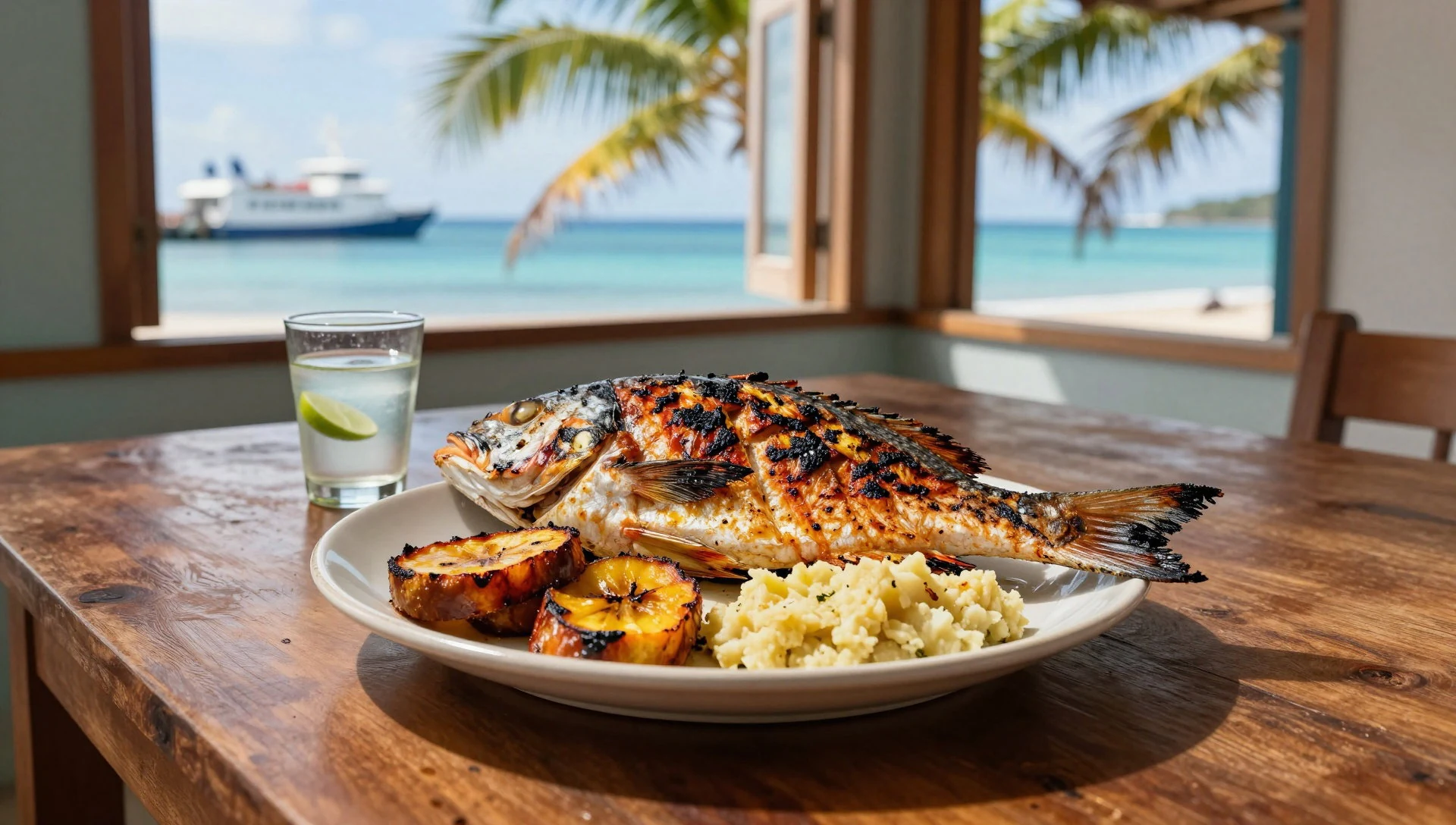
- Tropical fruit plate — markets and casual stalls on São Tomé
Tropical fruit shows up often—papaya, mango, pineapple, avocado, and bananas—usually as fresh portions rather than complicated preparations. It’s an easy, refreshing lunch option when you’re keeping things light in the heat.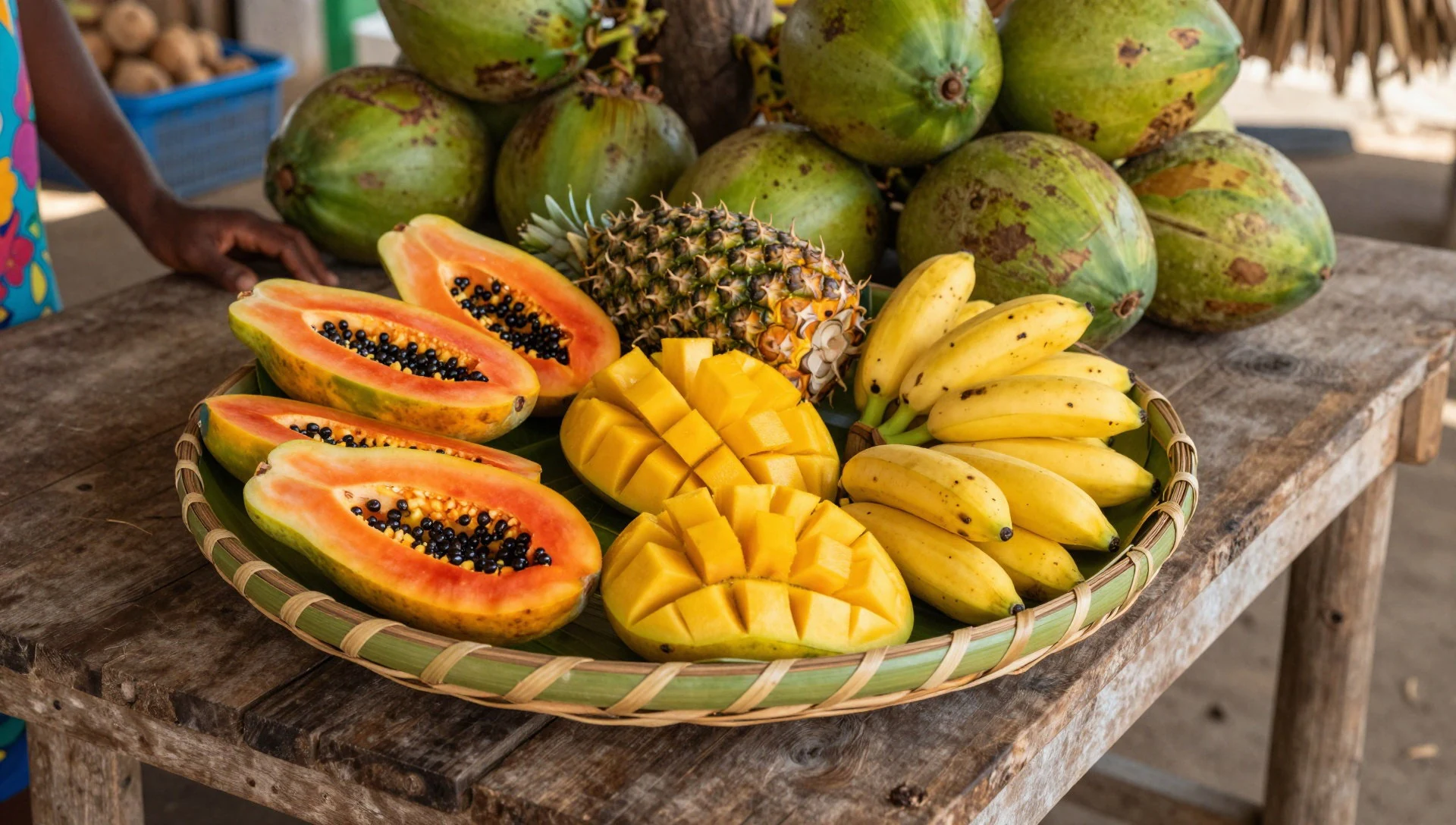
- Spiced São Toméan fish preparations — small restaurants and grill spots on São Tomé
Hot spice flavour is common in São Tomé dishes, especially around fish. Even when meals are simple, the seasoning can be lively, so it’s worth trying one mild and one spicier dish if the menu offers options. - Breadfruit sides and mashed banana — eating spots that serve local staples on São Tomé
Breadfruit and mashed bananas are frequently paired with fish and other seafood-style plates. These sides are a good way to slow down the day and keep energy steady between beach time, shade, and ferry schedules.
Plan it
Best time. July–September tend to be the driest and most comfortable for island time, while March–April and November–December are the wettest; with the equator, it’s warm year-round. June is in the drier stretch between the wetter months and can still bring short showers, but trails are typically less wet than in the rainier periods.
How long. 2–3
Getting there. Fly into São Tomé and Príncipe (arrivals are to São Tomé), then continue by local transport to Ponta Baleia for the ferry over to Ilhéu das Rolas; the last leg is the boat crossing from São Tomé.
Budget. mid
Tips
- Build your day around the ferry timing so you’re not rushing on the island—equatorial weather changes quickly.
- Bring reef-safe style snorkelling basics if you plan to explore the water (and check what the resort provides).
- Pack a small dry bag for phone, cash and a spare top; island showers can be sudden.
- Plan one calm morning for beach time and one flexible afternoon for weather shifts and short walks.
Etiquette
- Be respectful around the small resort area—keep noise down and follow posted guidance.
- Avoid photographing people at close range without permission.
- Keep the beach and jungle edges clean; don’t leave anything behind in the sand.
Nearby
Sources
- Wikidata Q1535148 (CC0)
- Wikipedia (rev 1364036173) — Ilhéu das Rolas (CC BY-SA 4.0)
- Wikivoyage (rev 5324699) — São Tomé and Príncipe (CC BY-SA 4.0)
- Photo photos/01-s-o-tom-ilh-u-das-rolas-hdr.jpg (CC BY 2.5)
- Photo photos/02-s-o-tom-ilh-u-das-rolas-praia-de-santo-ant-nio-3.jpg (CC BY 2.5)
- Photo photos/03-s-o-tom-praia-caf.jpg (CC BY 2.5)
- Photo photos/06-s-o-tom-ilh-u-das-rolas-depois-da-tempestade.jpg (CC BY 2.5)


