Tinhosa Grande
Tinhosa Grande, São Tomé and Príncipe
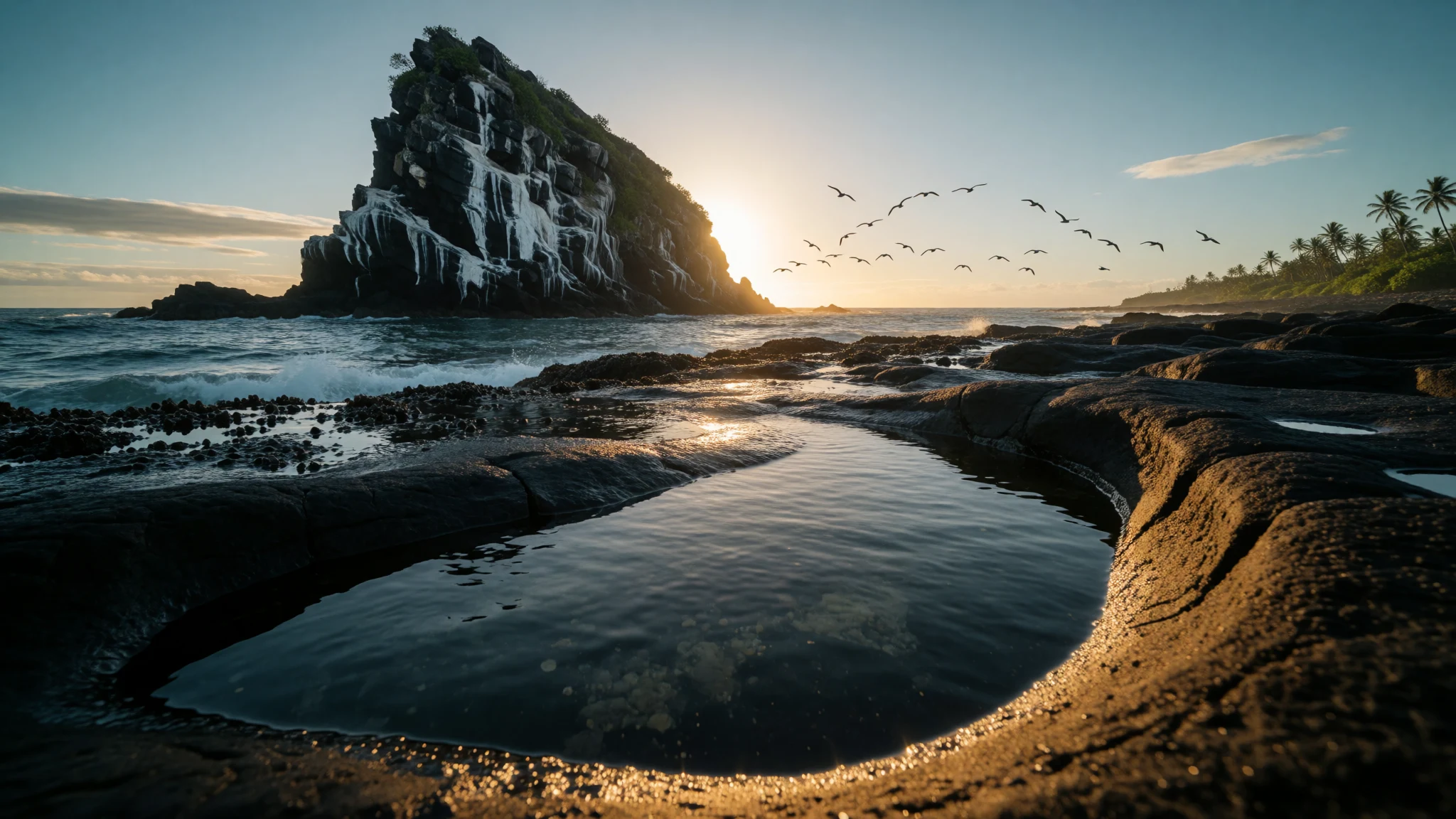
Tinhosa Grande is a bare seabird rock in the Atlantic off Príncipe, seen from a boat, far from any crowd.
The place
Tinhosa Grande is an uninhabited islet in the Gulf of Guinea, belonging to São Tomé and Príncipe, and it is a rock rather than a resort. It lies about 23 km south-west of Príncipe and roughly 124 km north-east of São Tomé, with open Atlantic on every side. Its smaller twin, Tinhosa Pequena, sits 4 km to the north, and together they are known as the Pedras Tinhosas. The main islet covers about 20 hectares, and the facts record a high point of 75 m, so it reads as a steep, bare hump rising straight from the sea. There is no village, no jetty and no beach to lie on. What it offers is wildlife, chiefly seabirds, which is why the group is a Ramsar-listed site and part of the Island of Príncipe Biosphere Reserve. A skink living on the islet, Trachylepis adamastor, was only described to science in 2015. Getting near it means reaching Príncipe first, since the country can only be entered by air, and then arranging a boat. Numbers stay small: the country saw an estimated 13,000 visitors in 2016, and very few of them head out here. Landing may be restricted, so a boat trip to look from the water is the realistic aim. Local operators on Príncipe can say what is allowed, and sea conditions decide whether a trip runs at all.
Its story
Tinhosa Grande has almost no human history of its own, which sets it apart from the islands around it. Príncipe and São Tomé were empty when Portugal claimed them in the late 15th century, and settlement began in the 1490s. Sugar came first, then coffee and cocoa in the 19th century, all worked by enslaved labour, with a form of forced labour lingering into the 20th. After gaining independence in 1975, democratic reforms took root late in the wake of that decade, culminating in the nation's inaugural open ballot in 1991. Since then the economy has leaned heavily on cocoa, and falling output has left the country short of money and reliant on aid. The old plantation estates, the roças, now stand in very different states, some restored and some slowly swallowed by forest. The Tinhosas never took part in that economy. Being a bare islet far offshore, they were left to the birds, and that neglect is what conservation now builds on: Ramsar recognition first, then, in 2012, a place inside the Príncipe biosphere reserve. Príncipe carries one more chapter of world history. On 29 May 1919 the astronomer Arthur Eddington and his team photographed stars near the sun during a solar eclipse there, as a test of Einstein's theory of relativity. A plaque marks the occasion.
What to see
- Tinhosa Grande from the water — Open sea south-west of Príncipe
The islet itself is the sight: a steep rock with seabirds wheeling around it and open sea beyond. Boat trips from Príncipe run on the ocean's terms, so flexibility matters. Binoculars and a long lens help far more than a landing would, and the skipper decides how close is sensible.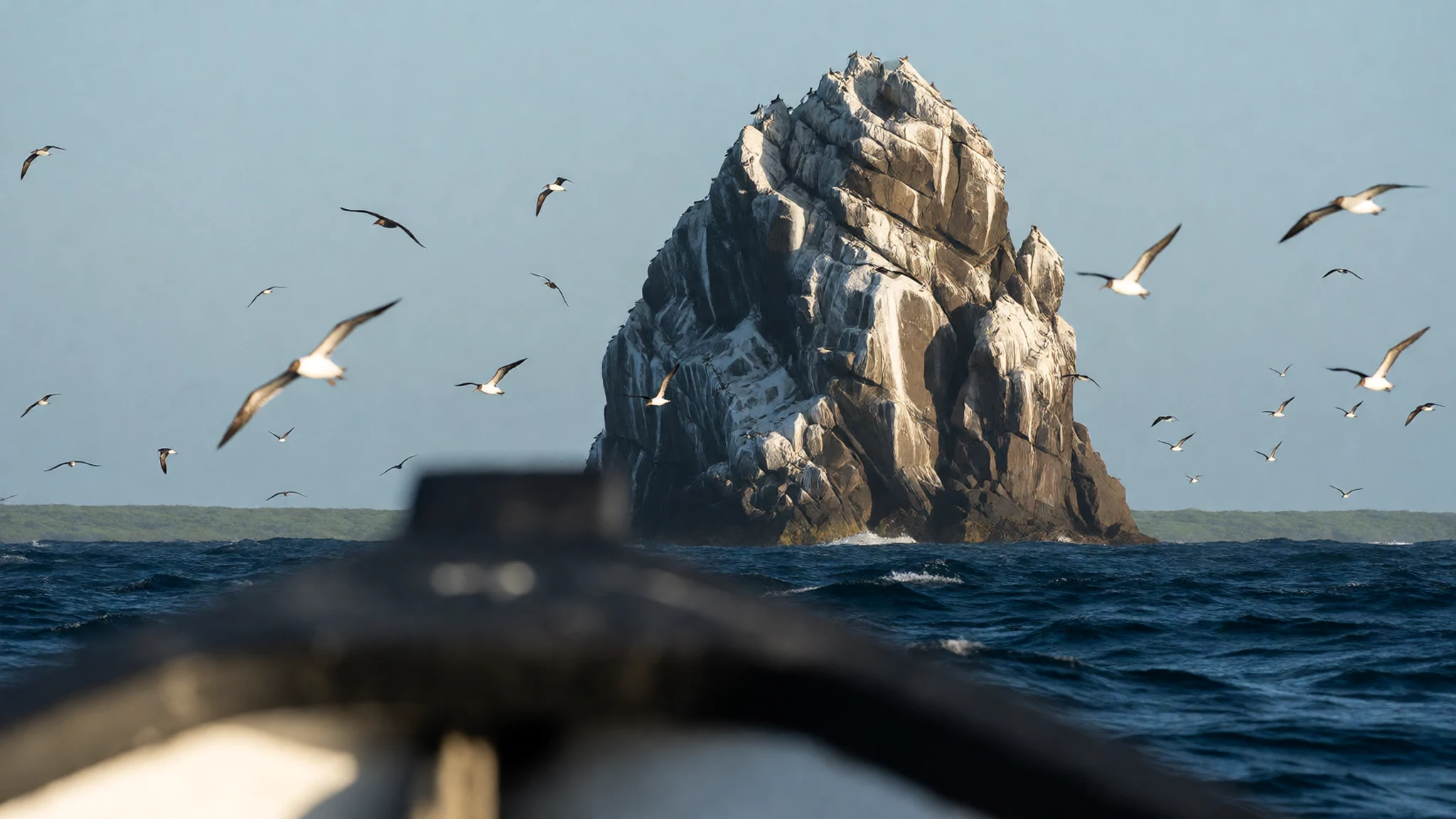
- Tinhosa Pequena — Pedras Tinhosas, north of Tinhosa Grande
The smaller twin lies 4 km north of Tinhosa Grande and is usually taken in on the same outing. Together the two make up the Pedras Tinhosas. Comparing them from the boat shows how little ground either has, and why seabirds rather than people have the run of the place.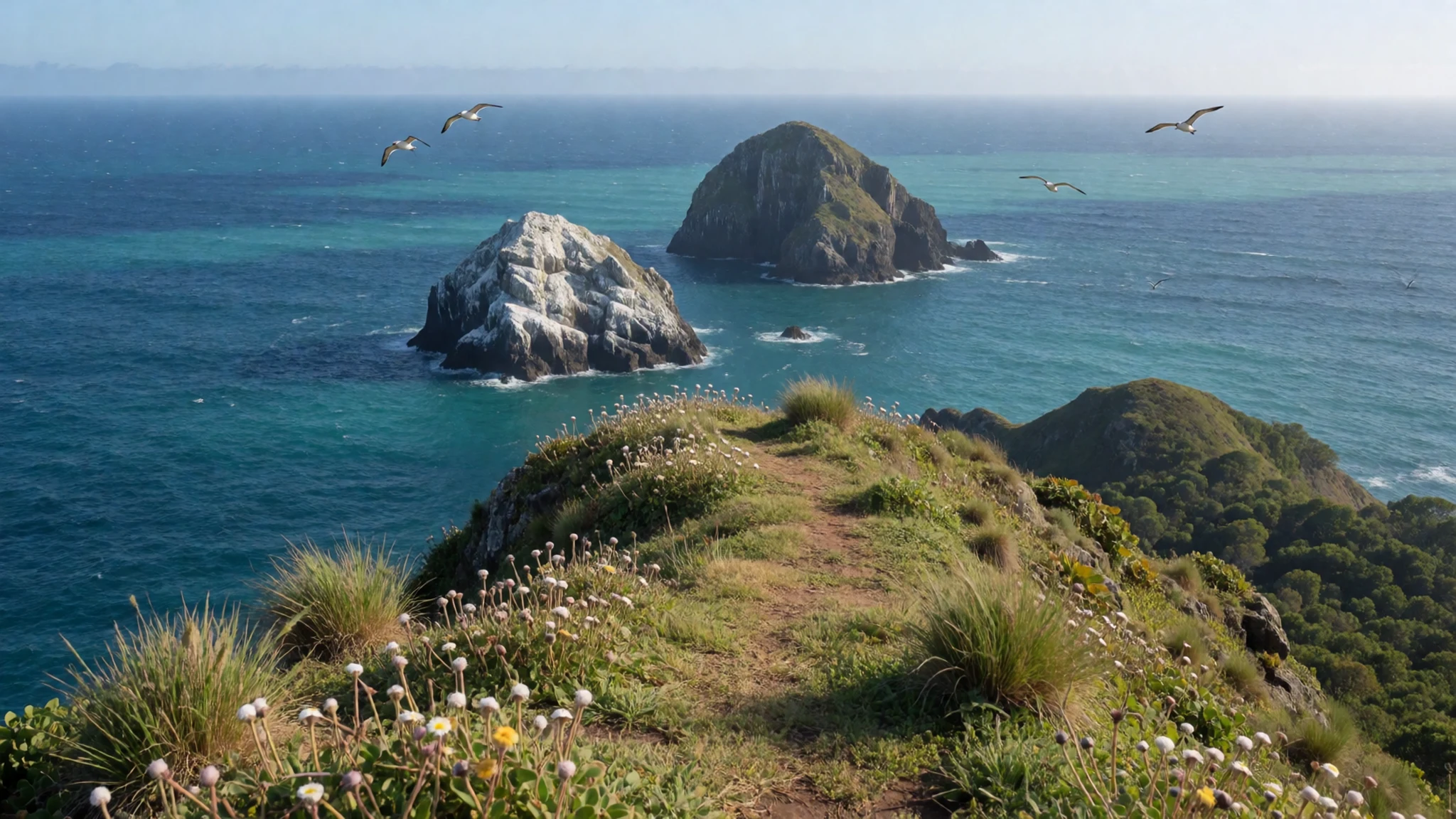
- Eddington's plaque, Príncipe — Príncipe island
A plaque on Príncipe records Arthur Eddington's expedition of 1919, when photographs of stars taken during the 29 May eclipse were used to test Einstein's theory of relativity. It is a short stop rather than a full day out, and combines easily with a visit to a nearby plantation estate.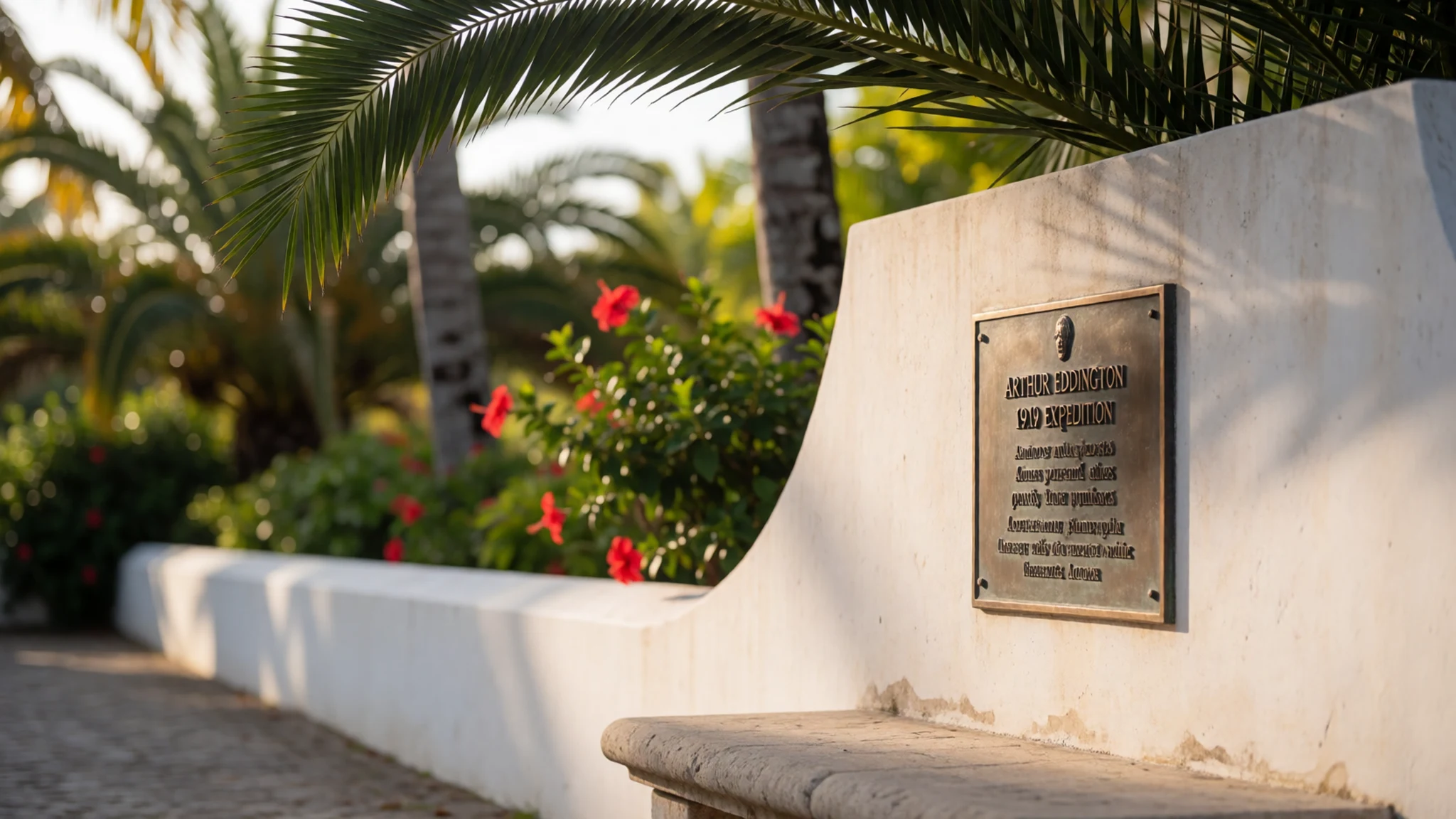
- The roças of the two main islands — Monte Café, São Tomé island
Plantation estates called roças are scattered across both islands. Some are old and half-reclaimed by forest, others restored as guesthouses. A guided tour explains the cocoa and coffee economy and its forced-labour past. On São Tomé, Monte Café, in the cooler hills, has a coffee museum worth the climb.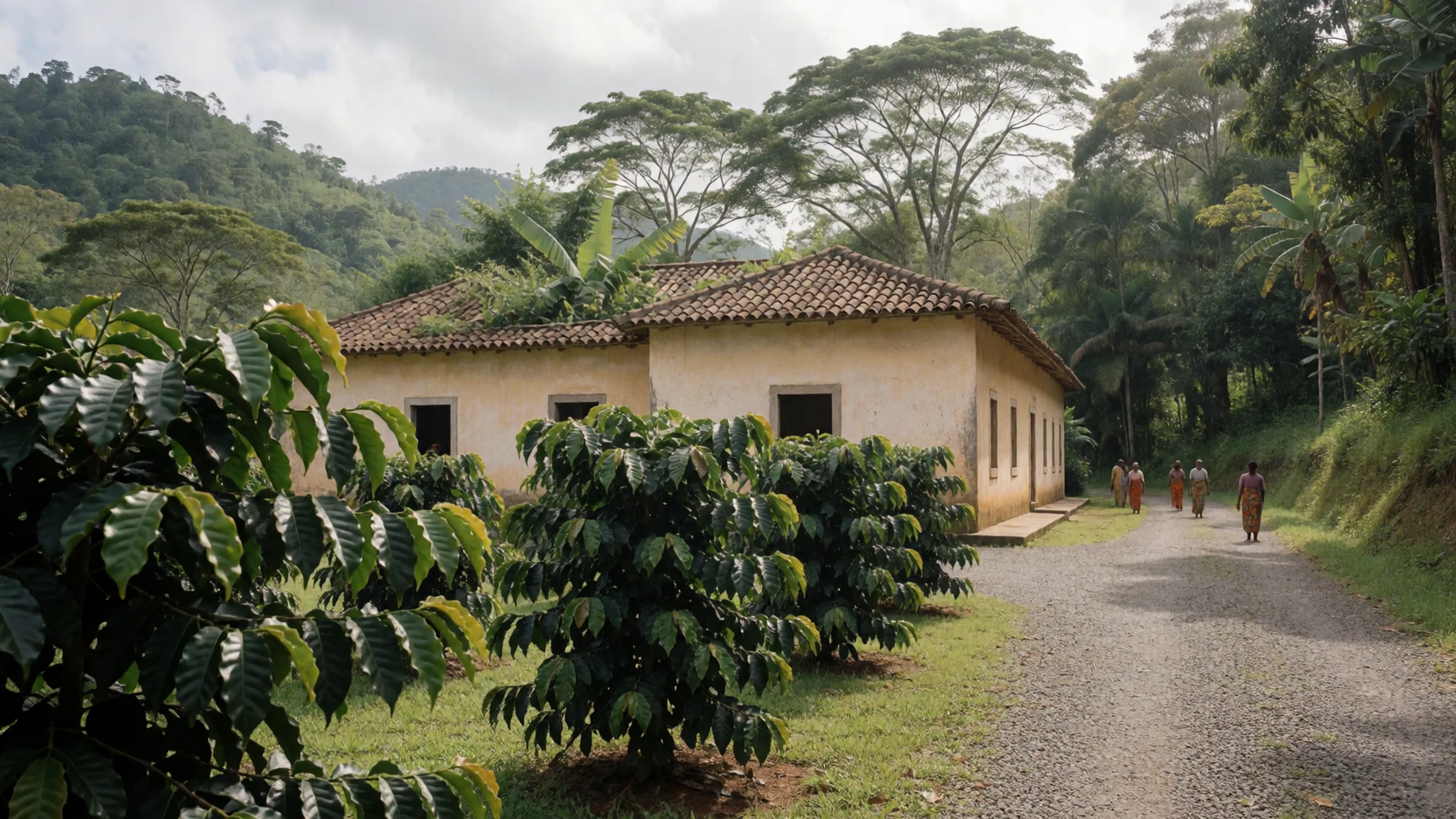
- Reefs and snorkelling off Príncipe — Coast near Santo António, Príncipe
Coral reefs lie just offshore, and snorkelling or diving is the way to see them, with dolphins, green turtles and many reef fish reported. Underwater caves exist, but only for experienced divers. Book through a local operator and ask about sea conditions on the day before paying.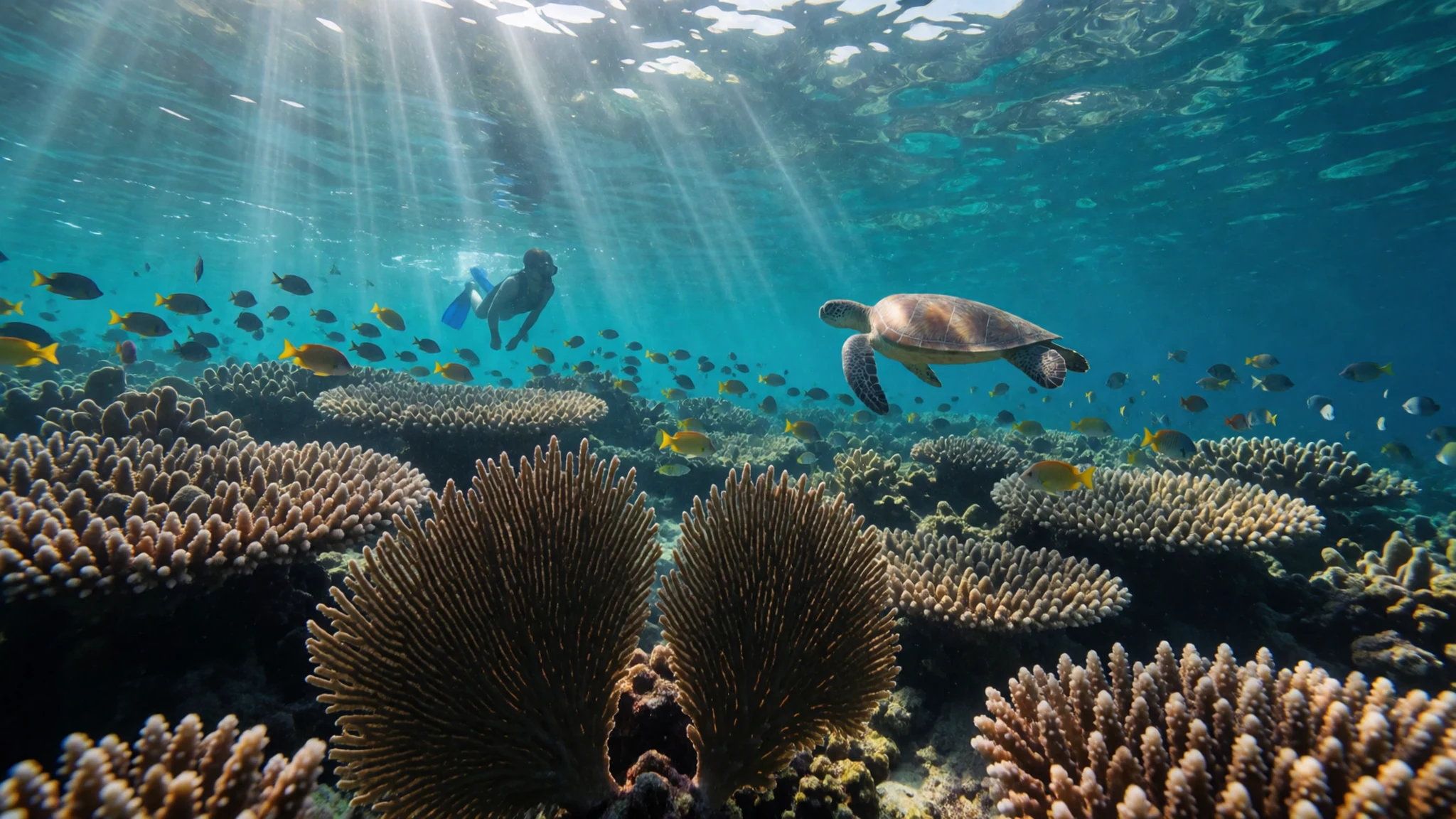
Culture
Tinhosa Grande has no residents, so the culture a visitor meets belongs to the islands around it. São Toméan life blends African and Portuguese influences, and music shows it most clearly. Ússua and socopé are the rhythms of São Tomé, while the dêxa beat belongs to Príncipe, and Portuguese ballroom dancing may have helped shape them. Tchiloli is a dramatic musical dance performance that tells a story, and the danço-Congo similarly joins music, dance and theatre. Festivals are the best chance to see them, though dates shift, so ask locally. Football is the most popular sport, and a pickup game on a village pitch is rarely far away. The islands were empty before Portuguese settlement in the 1490s, and plantation labour shaped the population that followed, so history is not an abstract subject here. Cocoa and coffee are still grown, and roça tours can be moving as well as scenic. Life is unhurried, the country sees few tourists, and conversation tends to be easier in Portuguese than in English, so a few words of Portuguese go a long way. When photographing people at a festival or in a village, ask first, and on a boat trip to the Tinhosas follow the skipper's instructions and keep well back from nesting birds.
What to wear
Tinhosa Grande has no inhabitants, so its fashion is really that of São Tomé and Príncipe. Traditional dress centres on bright printed cotton wraps, worn by women as skirts, shawls and head cloths, usually for church, festivals and family occasions. Tchiloli performers wear costume inspired by a European royal court, with elaborate cloth and ornament, and it appears only at performances. Day to day, people wear what suits a hot, humid equatorial climate: T-shirts, shorts, light dresses, flip-flops and football shirts. Town clothing is casual but tidy, and swimwear stays on the beach. A visitor heading out to the Tinhosas should dress for sun and spray: a long-sleeved quick-dry shirt, a wide-brimmed hat that ties under the chin, and sunscreen kept off the boat's deck. Wear shoes with a grip for wet boat steps, and carry sandals or water shoes for reefs and rocky shores. A light waterproof jacket helps on rainy days, and a dry bag protects cameras and phones. In towns, villages and churches, cover shoulders and knees. Hiking on the main islands calls for closed shoes and long trousers, partly because of the black cobra reported in the south and east of São Tomé.
What to eat
- Grilled fish with breadfruit — Small eateries in fishing villages and by the harbour on both islands
Fish is the staple of the São Toméan table, usually grilled or stewed and served with breadfruit and mashed cooked banana. Spices can be hot, so ask for the pepper on the side. It is the simplest way to eat what the surrounding sea provides.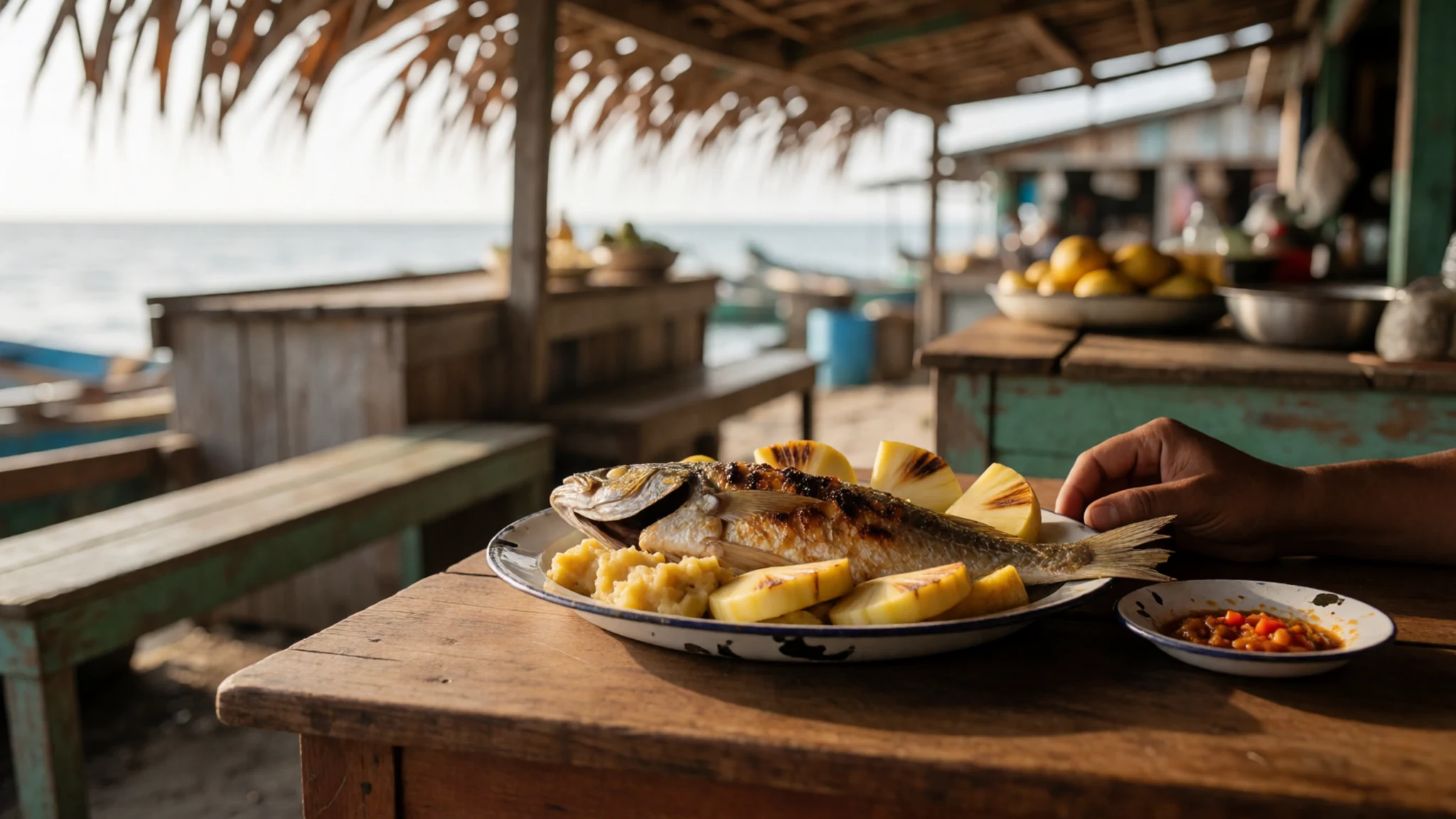
- Flying fish — Coastal eateries and fish stalls, in season
Flying fish turn up on menus at certain times of year, and cooks treat them as a seasonal catch. Ask what has come in that day rather than expecting it on every menu, and expect it grilled or fried alongside the usual starch.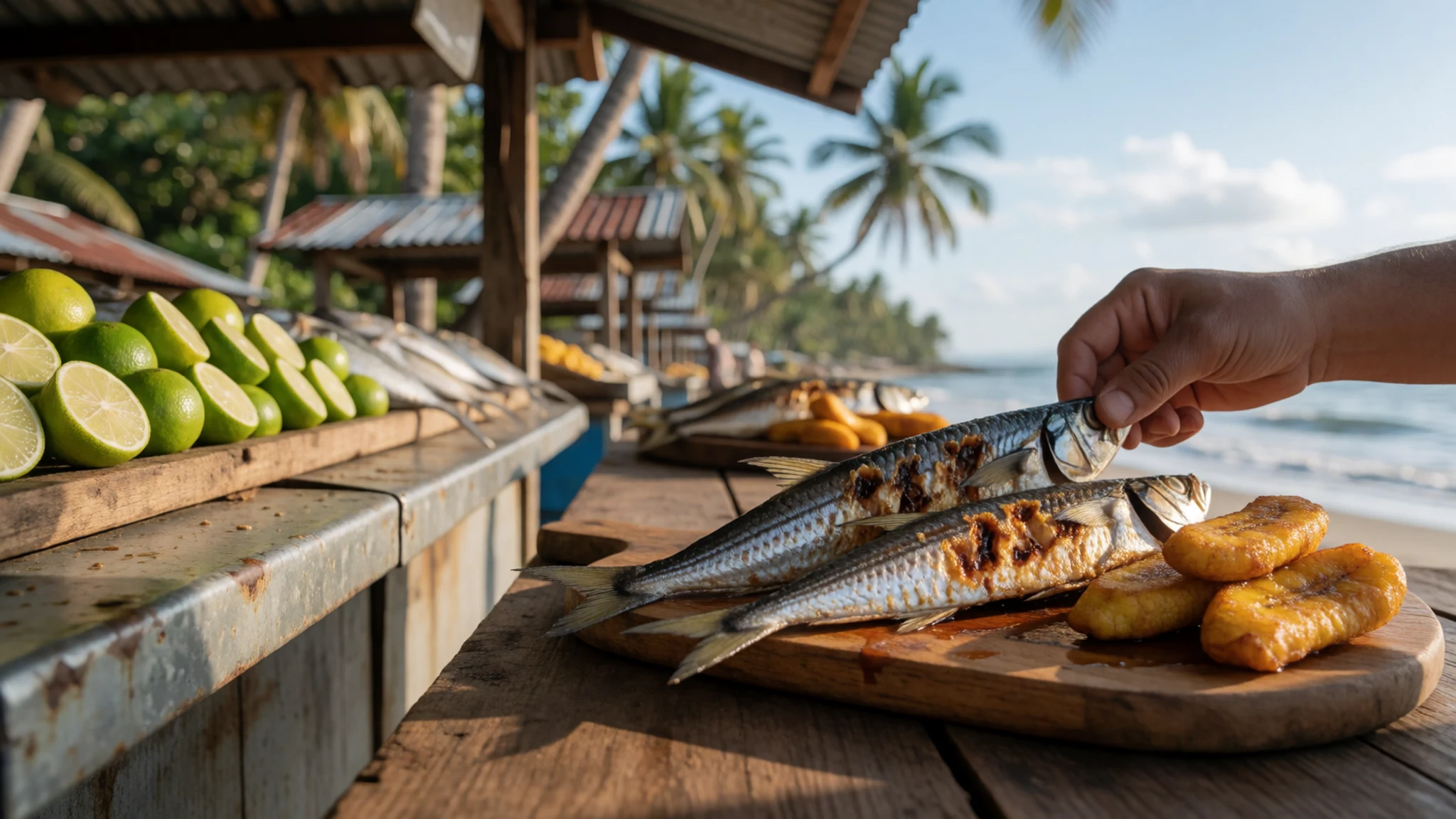
- Búzios (land snails) — Home-style eateries and markets inland on São Tomé
Búzios are large land snails, an everyday protein for people living inland who cannot always afford fish or meat. They are cooked in a spiced sauce. Sea snails are also common along the coast. A matter of taste and texture, but a real local dish. - Tropical fruit — Town markets and roadside stalls
Papaya, mango, pineapple, avocado and bananas grow plentifully on the islands and sit at the centre of local cooking. Eaten ripe at breakfast or from a roadside stall, they are the easiest and cheapest thing to try, and often the best. - Palm wine — Roadside vendors inland; beer at most bars and eateries
Palm wine is sold cheaply by vendors along inland roads, drawn fresh and drunk young. It is mild but it ferments fast, and the flavour changes through the day. Local beers such as Creolla and Rosema are easy to find elsewhere.
Plan it
Best time. June to September is generally the drier season on both islands and the better bet for calmer boat trips, while the rest of the year brings heavy rain and rougher seas. The brief carries no climate figures, so confirm sea conditions with a Príncipe operator before planning around a single day.
How long. 3–4
Getting there. The country can only be entered by air: fly to São Tomé, then take a domestic flight to Príncipe (check current schedules with the airlines). From Santo António, the main town on Príncipe, a local operator arranges the boat out to the Tinhosas.
Budget. high
Tips
- Check visa rules early: Indian and UK passports are not on the visa-free list in the brief, so confirm the current requirement before booking flights.
- Book the boat trip through a local operator in advance, and keep a spare day in case rough seas cancel it.
- Bring binoculars, sun protection, water and a dry bag, because there is no shade or shelter out at sea.
- Carry cash for small purchases and tours, as card use is limited outside the main towns.
- Take care on roads, where traffic is hazardous, and watch for scams aimed at tourists in the main city.
Etiquette
- Follow the skipper's instructions, keep a distance from nesting birds and never land unless a licensed operator confirms it is permitted.
- Ask before photographing people, especially at festivals and in villages.
- Take all rubbish back to shore, as no bins exist at sea.
Nearby
Sources
- Wikidata Q1754179 (CC0)
- Wikipedia: Tinhosa Grande (rev 1366402077) (CC BY-SA 4.0)
- Wikivoyage: São Tomé and Príncipe (rev 5324699) (CC BY-SA 4.0)
Wildlife
- Adamastor's skink (animal)
Adamastor's skink is a small lizard from the skink family, and it lives nowhere else in the world except one tiny rock. That rock is Tinhosa Grande, an islet of about twenty hectares southwest of Príncipe. Scientists only gave it a name in 2015, so it is a very recent discovery. Go with a guide, keep a respectful distance, stay quiet and still so it carries on undisturbed, and never offer it food.