Praia Banana
Praia Banana, São Tomé and Príncipe
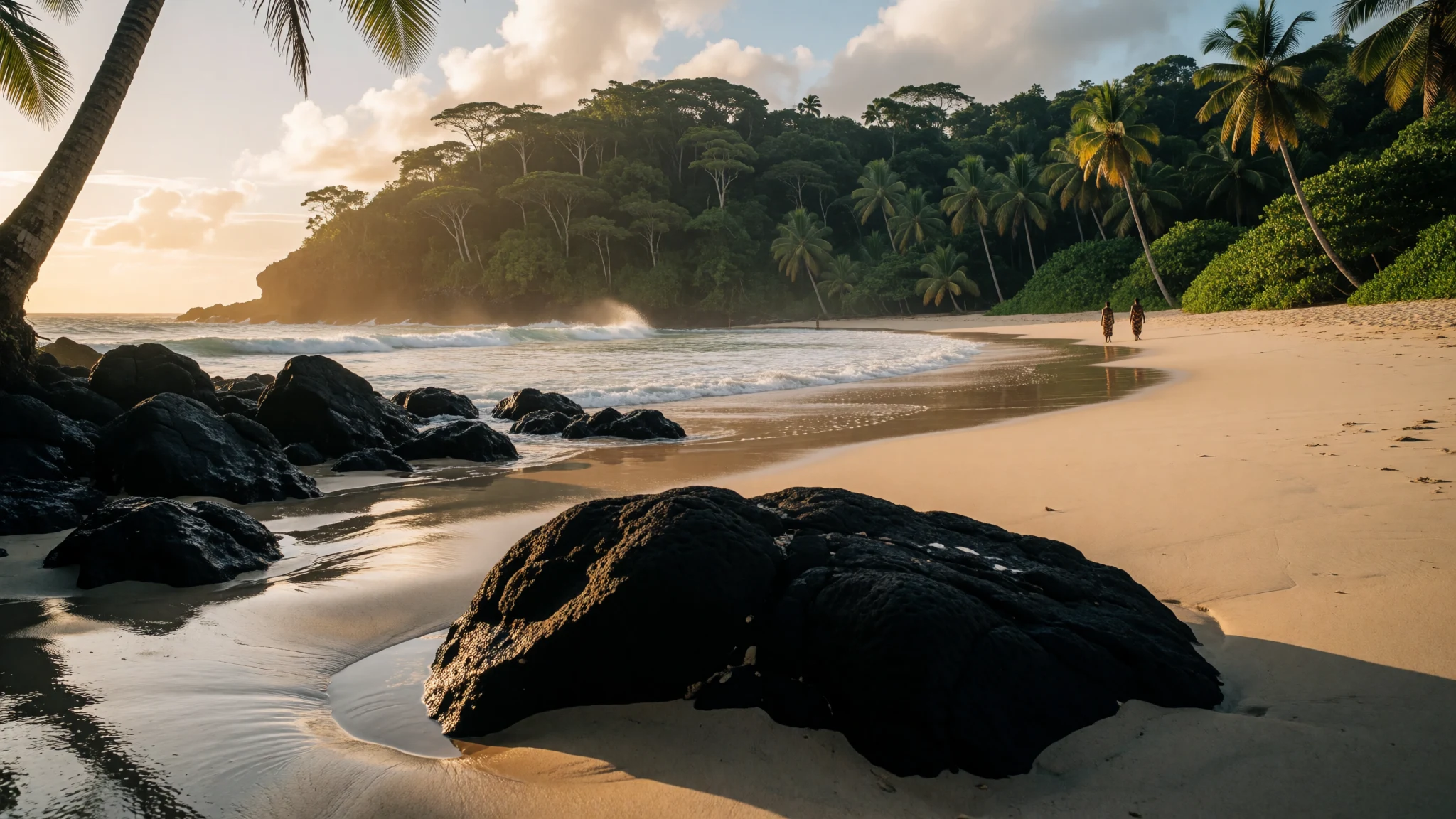
Praia Banana is a quiet curve of sand on Príncipe, framed by dark volcanic rock, palms and rainforest, with almost no one else around.
The place
Praia Banana is a beach on Príncipe, the smaller of the two main islands of São Tomé and Príncipe, a country in the Gulf of Guinea that straddles the Equator west of Gabon. The beach sits in a small bay where pale sand meets black volcanic rock and the forest comes right down to the shoreline. Photographs show a gentle sandy curve, a rocky cove at one end, and palms with a simple wooden shelter behind the beach. Nothing about it feels developed. The country is often called simply "São Tomé", but that is the name of the bigger island; Príncipe is a separate place with its own pace, quieter and greener. Tourism is still small across the islands, and the government has been working on basic infrastructure, so expect rough roads, few facilities and little beyond the beach itself. Trees cover most of both islands, and where old plantations once stood the rainforest has largely taken the land back. That gives Praia Banana its character: a bay where forest, rock and sea overlap, rather than a manicured resort strip. It suits swimming when conditions allow, walking the tideline, photographing the rocks and doing very little. Cafés, shops and crowds are not part of the picture. Getting here takes planning, since the only way into the country is by air, and the last stretch to the beach is best arranged locally. It rewards patience more than a tight schedule.
Its story
The story of Praia Banana is the story of Príncipe. The island had no settled population before Portuguese ships arrived and claimed it in the late fifteenth century. Planters built a first economy on sugar, then moved to coffee and cocoa in the nineteenth century, and all of it rested on enslaved labour, with forced work in other forms lingering into the twentieth century. The large estates shaped the islands' roads, villages and population, and many are now overgrown or partly ruined, with forest closing back over them. Independence from Portugal came in 1975. Democratic reform was slow to follow, and the first free elections came later still. Cocoa has stayed central to the economy, though output has fallen because of drought and poor management, leaving the country short of export earnings. Príncipe also holds an unexpected place in science. On 29 May 1919 the astronomer Arthur Eddington and his team observed a solar eclipse from the island. Their photographs of stars near the edge of the sun were used to test Einstein's theory of relativity, and a plaque on the island marks the visit. A quiet beach on such an island sits on layers of history: a plantation past, a young independent state, and a small place that once helped change physics.
What to see
- The main sweep of sand — Praia Banana, Príncipe
The main stretch of sand at Praia Banana is the reason to come: a gentle curve with tropical forest standing directly behind it. Photographs show an open shoreline with room to walk from end to end. Go early or late for softer light and cooler air, and carry water and something for shade.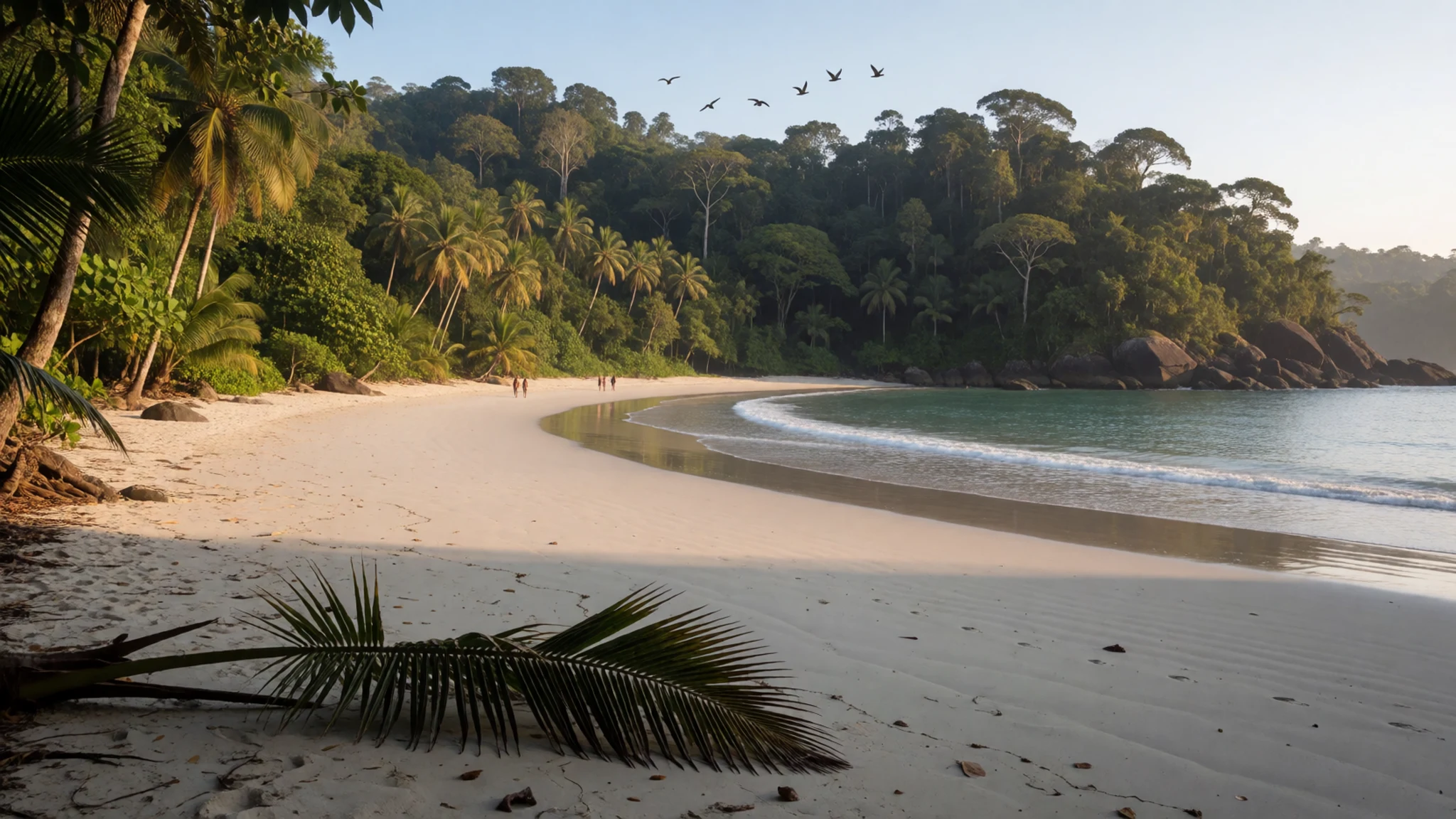
- Black volcanic rocks — Praia Banana, Príncipe
Dark volcanic rock lies scattered across the sand and tumbles into the shallows. Against pale sand and green forest it makes a striking contrast, and it is a favourite subject for photographers. Wet rock is slippery and sharp-edged, so wear sandals with grip, step slowly and take care near the waterline.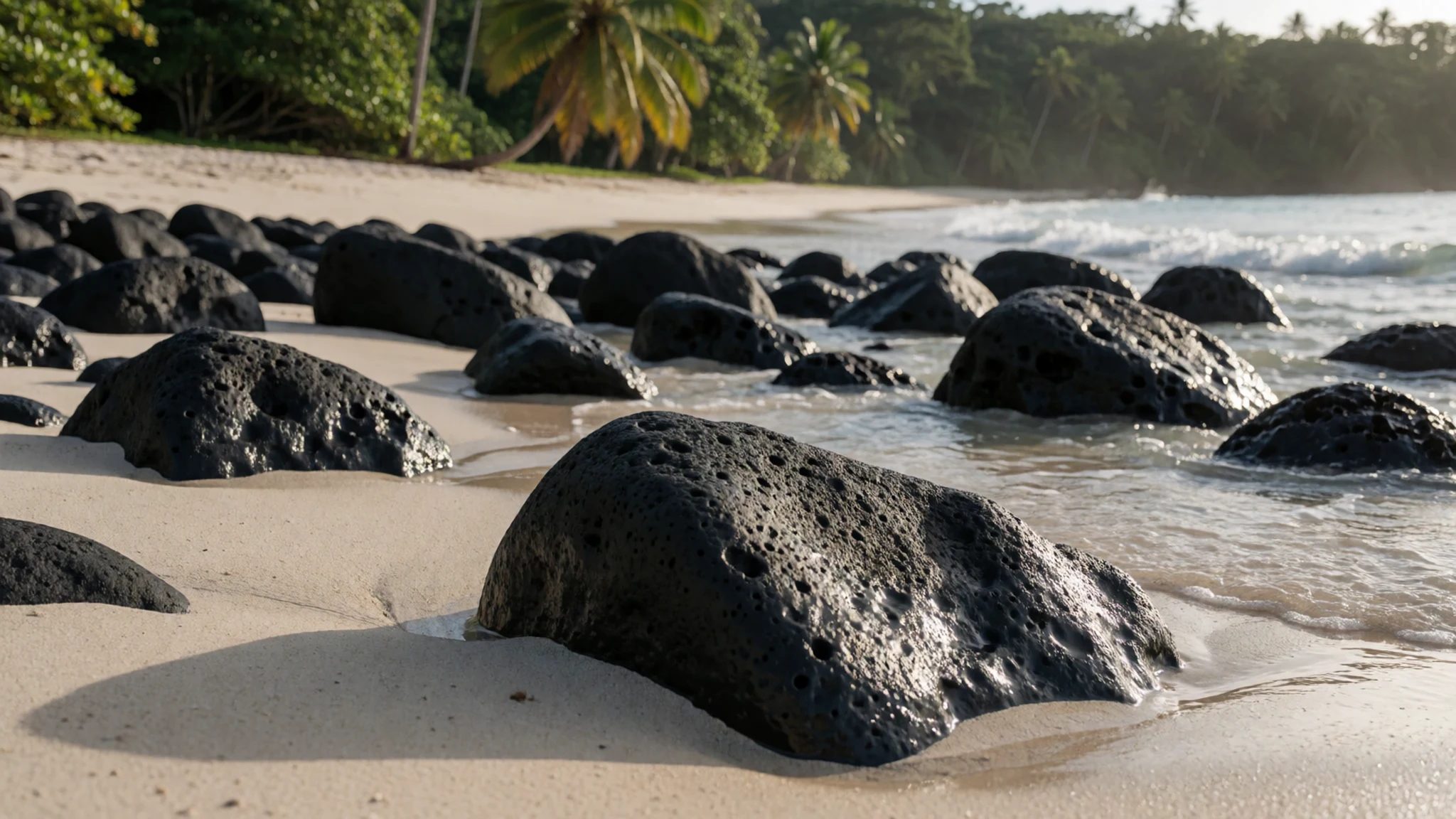
- The rocky cove — Praia Banana, Príncipe
A small rocky cove sits at the edge of the beach, where vegetation reaches almost to the water. It is a good place to stand quietly and watch the tide work among the stones. Swimming near rocks depends on the swell, so ask local people about conditions first and avoid going in alone.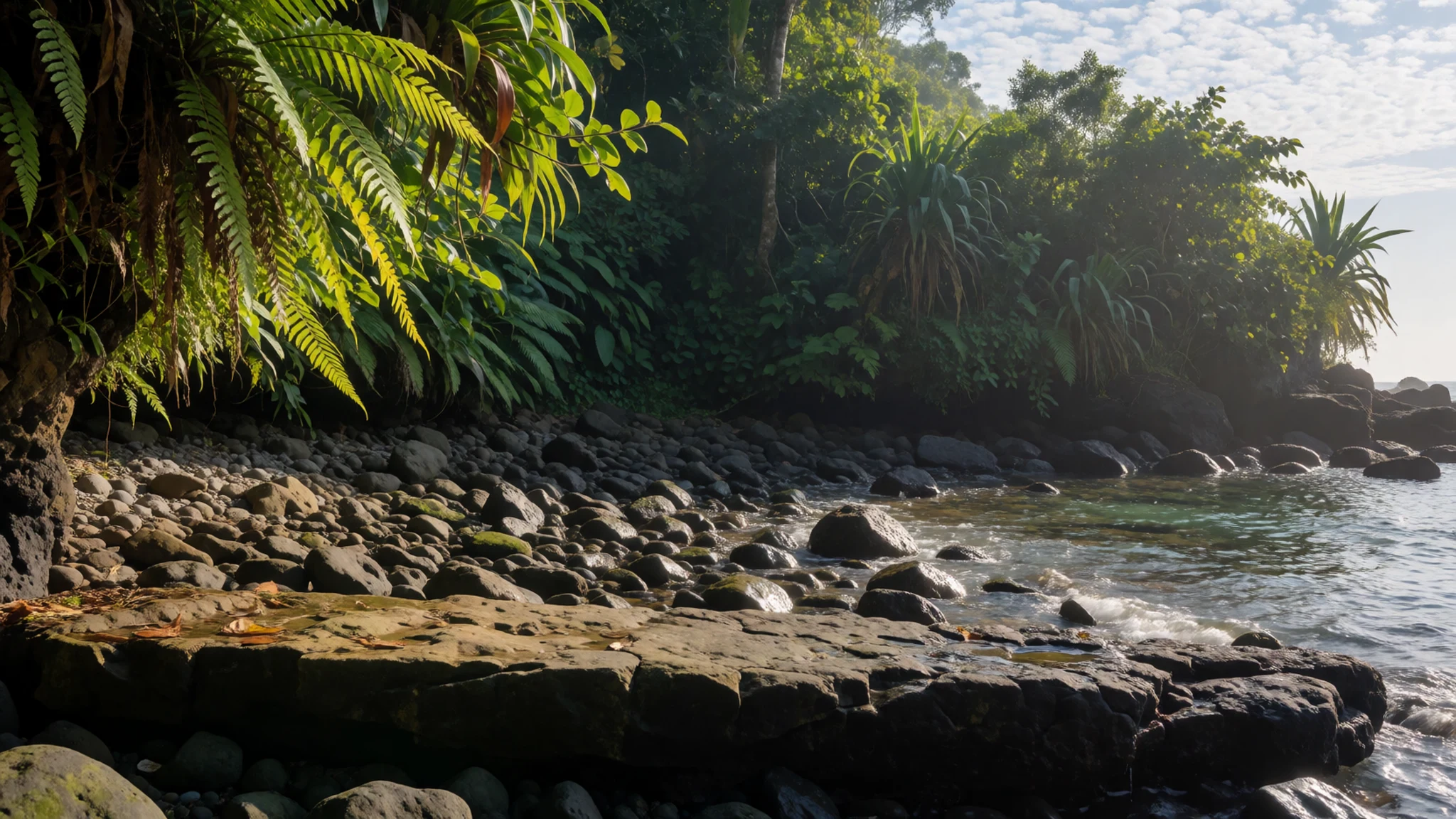
- Palms and the wooden shelter — Praia Banana, Príncipe
Palm trees line the back of the beach, with a modest wooden shelter offering shade. It is the spot for a picnic, a rest from the midday heat or waiting out a passing shower. There is no sign of resort infrastructure, so bring food, water and a bag to carry your rubbish out.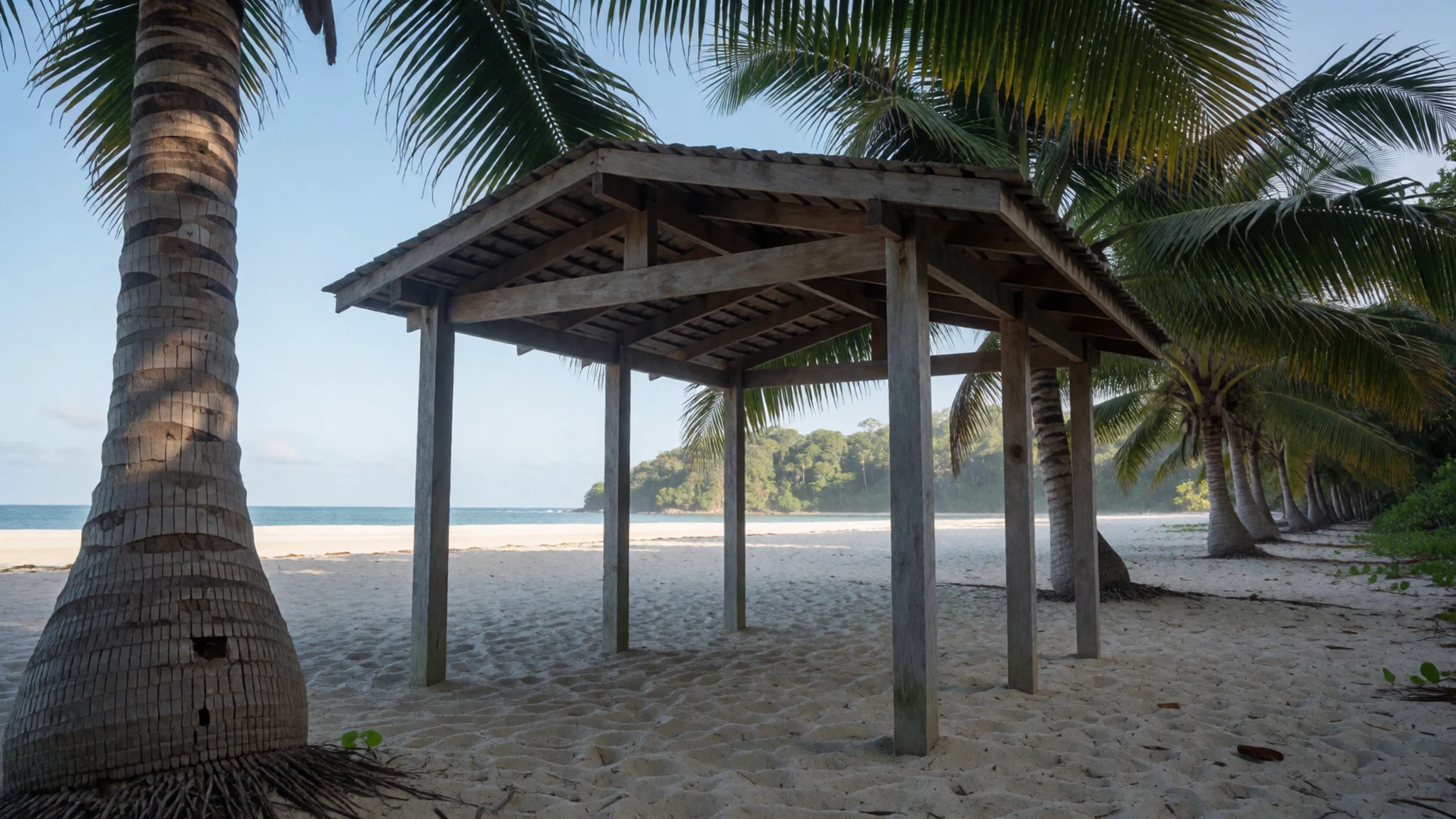
- Eddington's plaque — Príncipe island
In 1919 the astronomer Arthur Eddington and his team came to Príncipe to observe the solar eclipse of 29 May. Their photographs of stars near the sun were used to test Einstein's theory of relativity. A plaque on the island marks the visit. Ask locally for its exact position before setting out.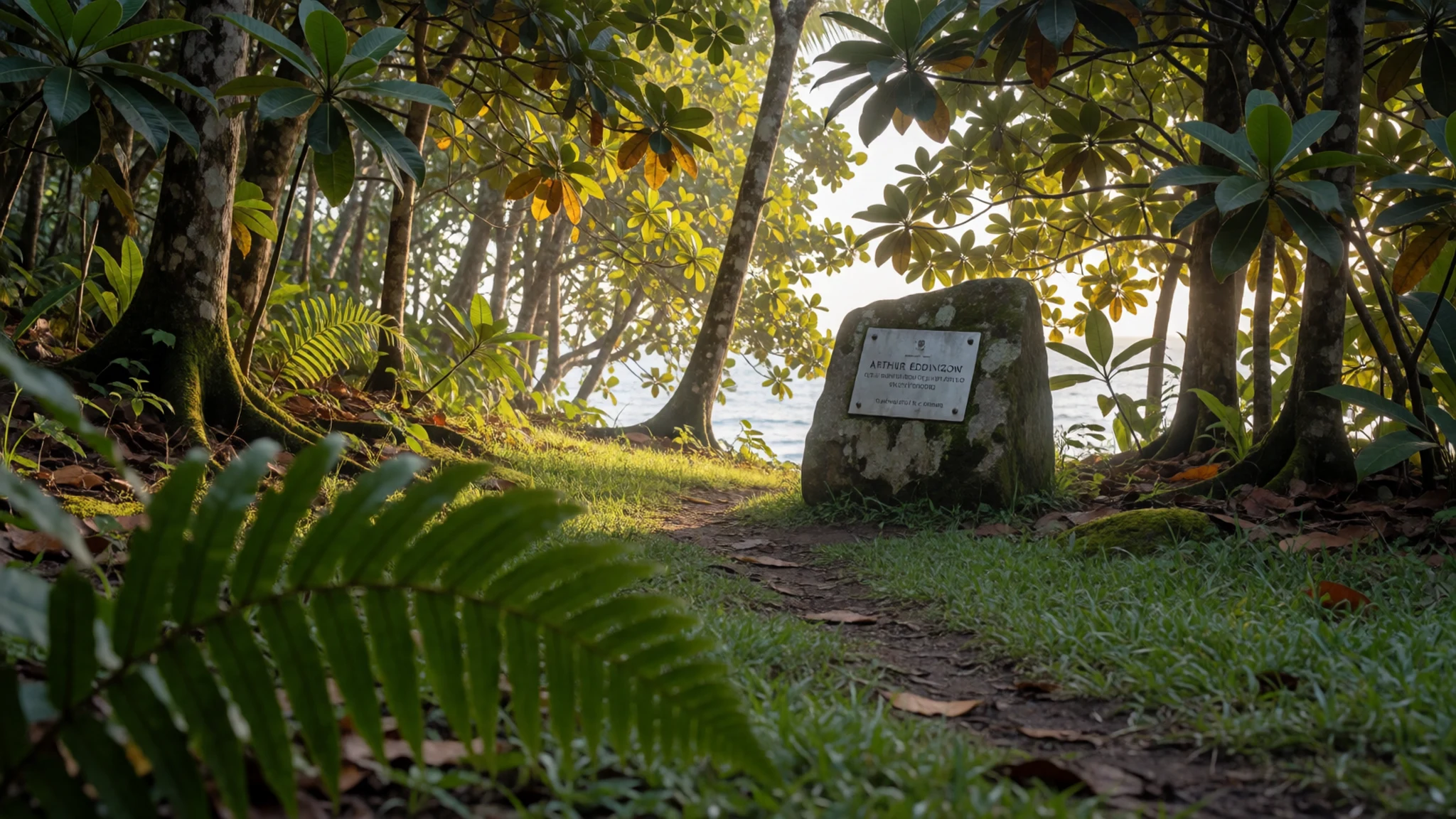
Culture
Praia Banana lies within a culture shaped by African and Portuguese influences, and Príncipe has its own musical identity. The dêxa beat belongs to Príncipe, while the ússua and socopé rhythms are associated with the larger island of São Tomé. Portuguese ballroom dancing probably left its mark on these styles, which is one reason the music and steps feel like a blend rather than a copy of either source. Theatre is part of the tradition too. Tchiloli stages a dramatic tale through costume, speech, music and movement, and the danço-Congo similarly mixes dance, song and acting. These are community events, usually tied to festivals and saints' days, so dates vary and are best learned from people on the island. Everyday life is slow and village-centred. Fishing and farming still matter, the islands see few visitors, and a greeting goes a long way. Football is the sport people talk about most, and a match on a dusty pitch is often the easiest way into a conversation. Much of the landscape is former plantation land, and the history of enslaved labour is not far from daily memory, so curiosity is welcome but flippancy is not. When photographing villagers, fishers or children on or near the beach, ask first and respect a refusal without argument.
What to wear
Praia Banana is on Príncipe, where traditional dress shows up mainly as cloth rather than a single costume. Women across the islands have long worn wrapped printed cotton, often called panos, as skirts, shawls and head wraps, and bright patterned fabric appears at church, celebrations and festivals. Details vary by village and occasion. The costumes of tchiloli theatre draw on European court dress and are worn for performances, not daily life. Day to day, people wear what suits the heat and humidity: T-shirts, shorts, light dresses, football shirts and flip-flops, with smarter, cleaner clothes for church and public events. Visitors should pack light, quick-drying cotton or linen, a hat, sunglasses and a thin waterproof for sudden showers. Swimwear is fine on the beach itself, but cover shoulders and thighs with a shirt or wrap when walking through villages or entering a church. Sandals with a good grip suit wet volcanic rock, while closed shoes with a firm sole are better for forest paths and muddy tracks. Long sleeves and trousers in the evening help against insects, and a dry bag protects phones and cameras from rain and spray.
What to eat
- Grilled fish with breadfruit — Small seaside eateries and village kitchens on Príncipe
Fish is the staple of the islands, and a simple grilled catch served with breadfruit is the dish to look for. Seasoning can be fiery, so ask about spice. Expect it to be fresh and plain rather than elaborate, and eat it with a cold drink.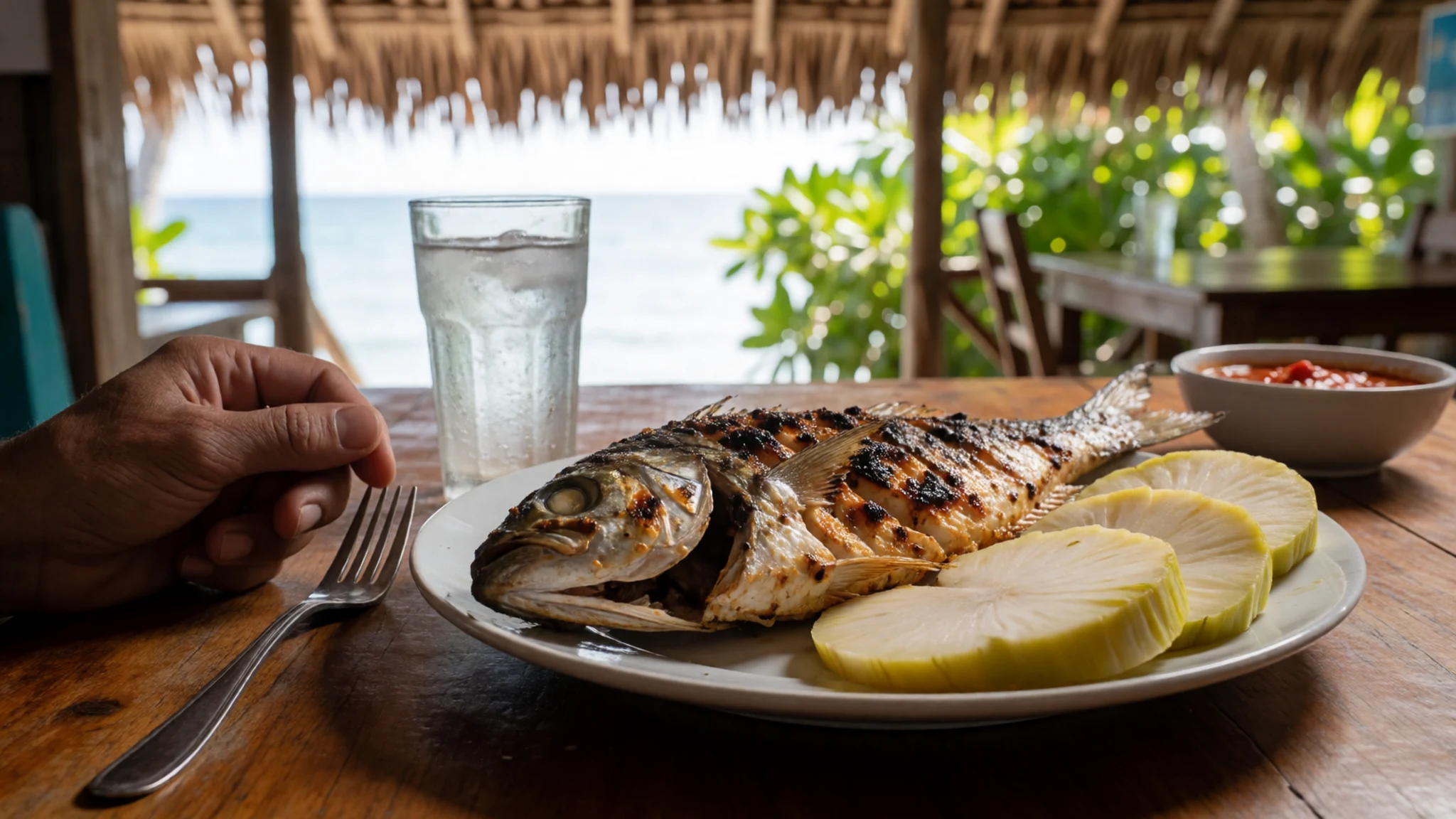
- Mashed cooked banana — Village eateries and family-run lunch places
Cooked and mashed banana is a common side, filling and mild, and it suits the fish and spice that sit beside it. It also fits the beach's name. Bananas grow plentifully here, so they appear in many forms through the day.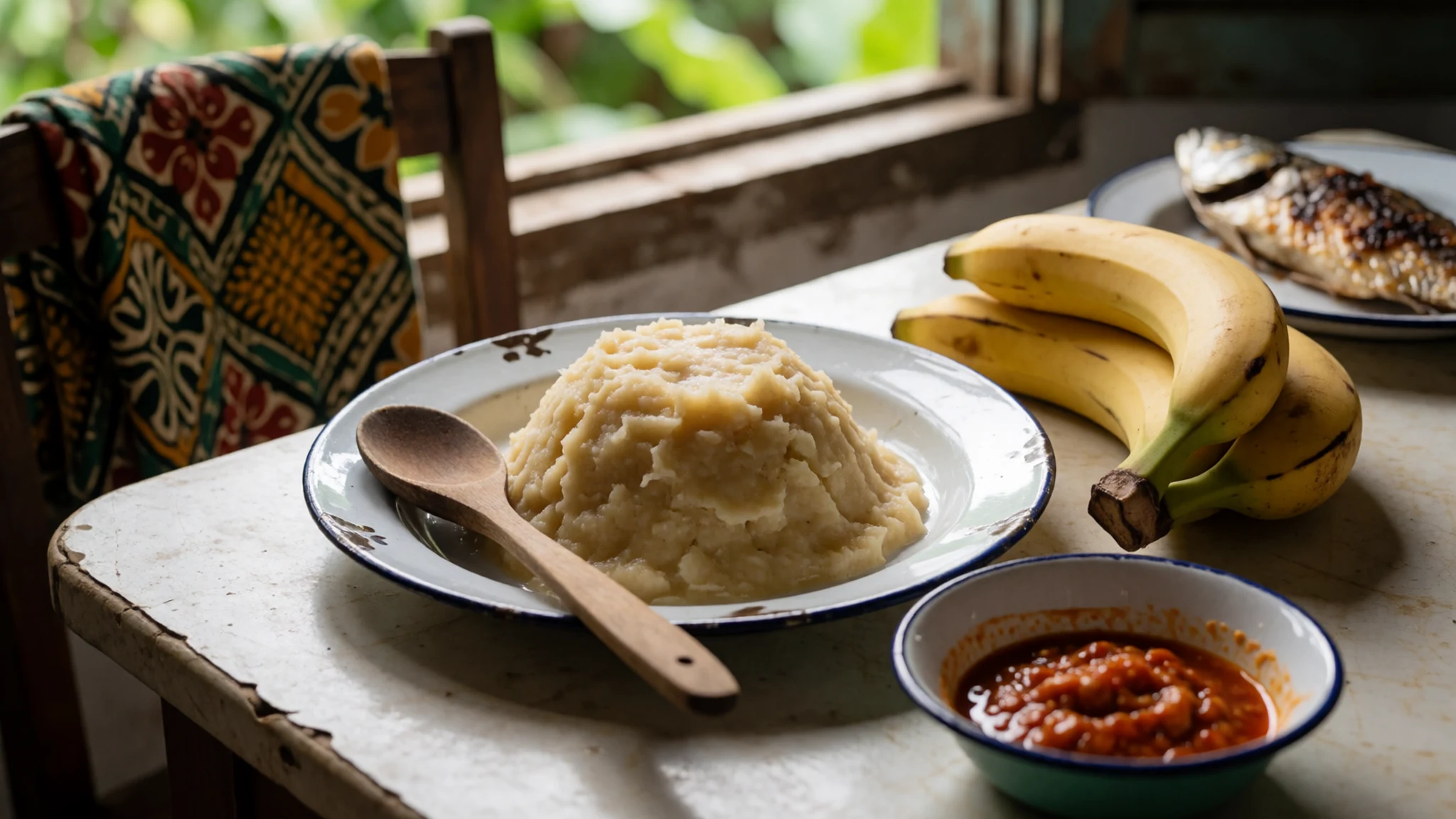
- Flying fish — Fishing villages and harbour-side eateries
Flying fish turn up at certain times of year and are a local speciality when in season. Ask what has been landed that morning rather than expecting a fixed menu. It is usually grilled or cooked in a spiced sauce with local sides. - Tropical fruit — Village markets and roadside stalls
Papaya, mango, pineapple, avocado and bananas grow abundantly on the islands, and eating them fresh is the easiest way to taste the place. Buy fruit from sellers rather than packaged snacks, and carry it to the beach for a shaded break. - Buzios, land snails — Local home-style eateries away from the coast
Buzios are large land snails, a protein source especially for people living inland who cannot always afford fish or meat. They are an acquired taste with a chewy texture. Try them where locals eat them, and ask how they are cooked. - Creolla and Rosema beer — Almost any bar, shop or eatery
Beer is easy to find, and Creolla and Rosema are two local brands. São Toméans are not heavy drinkers, so the mood is relaxed. A cold bottle after a swim is a simple pleasure, but drink water too, as the heat is steady.
Plan it
Best time. June to September is the usual drier stretch and the easiest for beach days; the rest of the year is wetter, with sudden heavy showers, though the forest looks its greenest. The island is on the Equator, so it is warm and humid year-round. Check the forecast before travelling.
How long. 2–3
Getting there. The only way into São Tomé and Príncipe is by air. Fly into the country, then continue to Príncipe by the onward route that suits you, checking current schedules. The last leg to Praia Banana is by local road, best arranged with a driver or guide through your accommodation.
Budget. mid
Tips
- Check visa and entry rules for your passport well before booking, as they differ by nationality
- Book accommodation and onward travel to Príncipe early, because choices are limited and tourism is small
- Carry cash and a card, since payment options can be patchy away from the main town
- Bring water, sun protection, insect repellent and a rain layer, as there are few shops near the beach
- Go early or late in the day for cooler air and softer light, and keep an eye on road traffic, which can be hazardous
Etiquette
- Ask before photographing people, especially fishers and children
- Take all rubbish away with you, as the beach has no collection service
- Dress modestly when leaving the beach for villages or churches
Nearby
Sources
- Wikidata Q49323575 (CC0)
- Wikipedia, São Tomé and Príncipe (CC BY-SA 4.0)
- Wikivoyage, São Tomé and Príncipe (rev 5324699) (CC BY-SA 4.0)
- Photo: Panoramic view of Praia Banana, Josep M. Gracia (CC BY-SA 4.0)
- Photo: Black volcanic rocks at Praia Banana, Josep M. Gracia (CC BY-SA 4.0)
- Photo: Palm trees and shelter at Praia Banana, Josep M. Gracia (CC BY-SA 4.0)
- Photo: Rocky cove at Praia Banana, Josep M. Gracia (CC BY-SA 4.0)
- Photo: Sandy shoreline of Praia Banana, Josep M. Gracia (CC BY-SA 4.0)
- Photo: Tropical beach landscape at Praia Banana, Josep M. Gracia (CC BY-SA 4.0)


