Pico Cão Grande
Pico Cão Grande, São Tomé and Príncipe
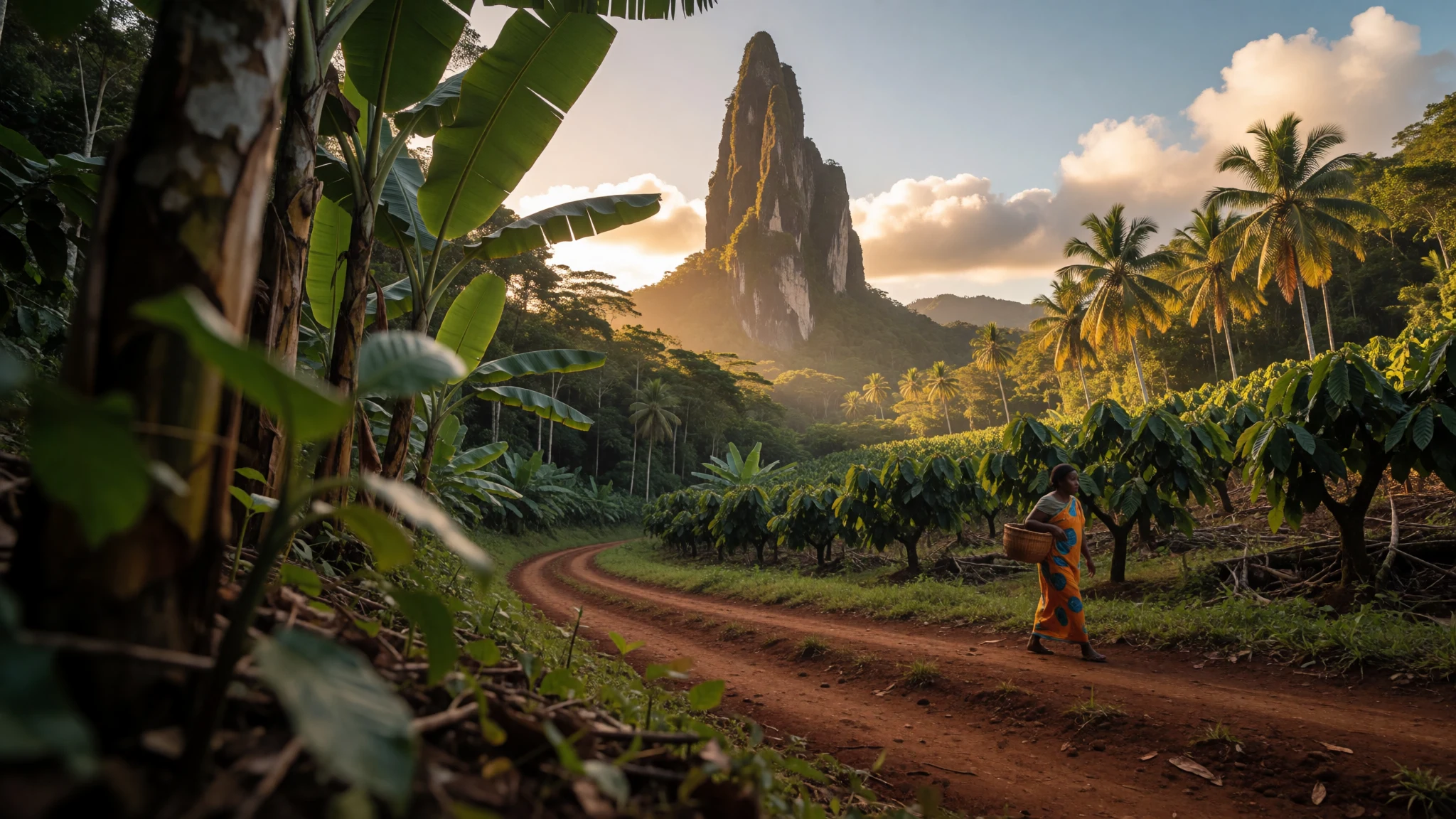
Pico Cão Grande is a sheer black spire of volcanic rock rising out of São Tomé's rainforest, in a country few travellers reach.
The place
Pico Cão Grande stands in the south of São Tomé island, in the Caué District, inside the Obô de São Tomé natural park. It is a volcanic plug: molten rock set solid in the pipe of an old volcano, and the softer cone around it wore away over time, leaving the hard core standing alone. The facts give its height as 668 m above sea level, but the effect comes from the way it springs straight out of low forest, so it looks far taller than the figure suggests. The rock is mainly phonolite, and its flanks are streaked dark by rain, moss and shadow. The nearest village is Vila Clotilde to the east, and the district seat, São João dos Angolares, lies further along the same road. Around the spire the landscape is a patchwork of forest, cocoa groves and old plantation buildings, and trees cover most of the island. São Tomé sits almost on the Equator in the Gulf of Guinea, so the air is warm, damp and changeable. Cloud often wraps the top until late morning, and the clearest views tend to come early in the day or just after rain. The country has a little over 230,000 people and a young, modest tourist industry, so the roadside viewpoints are usually quiet. One naming point helps: São Tomé is the island, while São Tomé and Príncipe is the whole country, and it is a two-island nation.
Its story
Pico Cão Grande, whose Portuguese name means Great Dog Peak, belongs to the Cameroon line, a chain of volcanoes running from the Gulf of Guinea into the African mainland. The spire formed a few million years ago, in the Pliocene, which is recent in geological terms. It is the hardened throat of a volcano that has since eroded away. People came late to this part of the world. São Tomé was uninhabited until the Portuguese arrived in the 1490s, and the island then became a plantation economy, first sugar and later cocoa and coffee. Cocoa still dominates the island's farm exports. Many estates, called roças, have since been abandoned or are half-reclaimed by forest, and the peak looks down on that mixture of ruins, villages and green. Climbers have long eyed the rock. A Japanese team made its way towards the summit in 1991, and later parties from Spain and elsewhere have worked on routes up the vertical walls, often with local guides and porters. The island's favourite phrase, leve leve, meaning slowly, slowly, suits the approach: the wet heat, the mud on forest tracks and the sudden showers all slow things down. Today the peak is mostly a landmark for walkers and photographers, a point of reference as much as a destination, and it sits at the heart of a protected park rather than at the end of a tourist trail.
What to see
- The roadside view of the spire — South São Tomé, near Vila Clotilde
The most direct way to meet Pico Cão Grande is from the road in the south of São Tomé island, where the spire appears above the treeline between bends. Stop early, before cloud gathers around the top, and watch the light change on the dark rock. Telephoto lenses help, but the shape is striking even from a phone.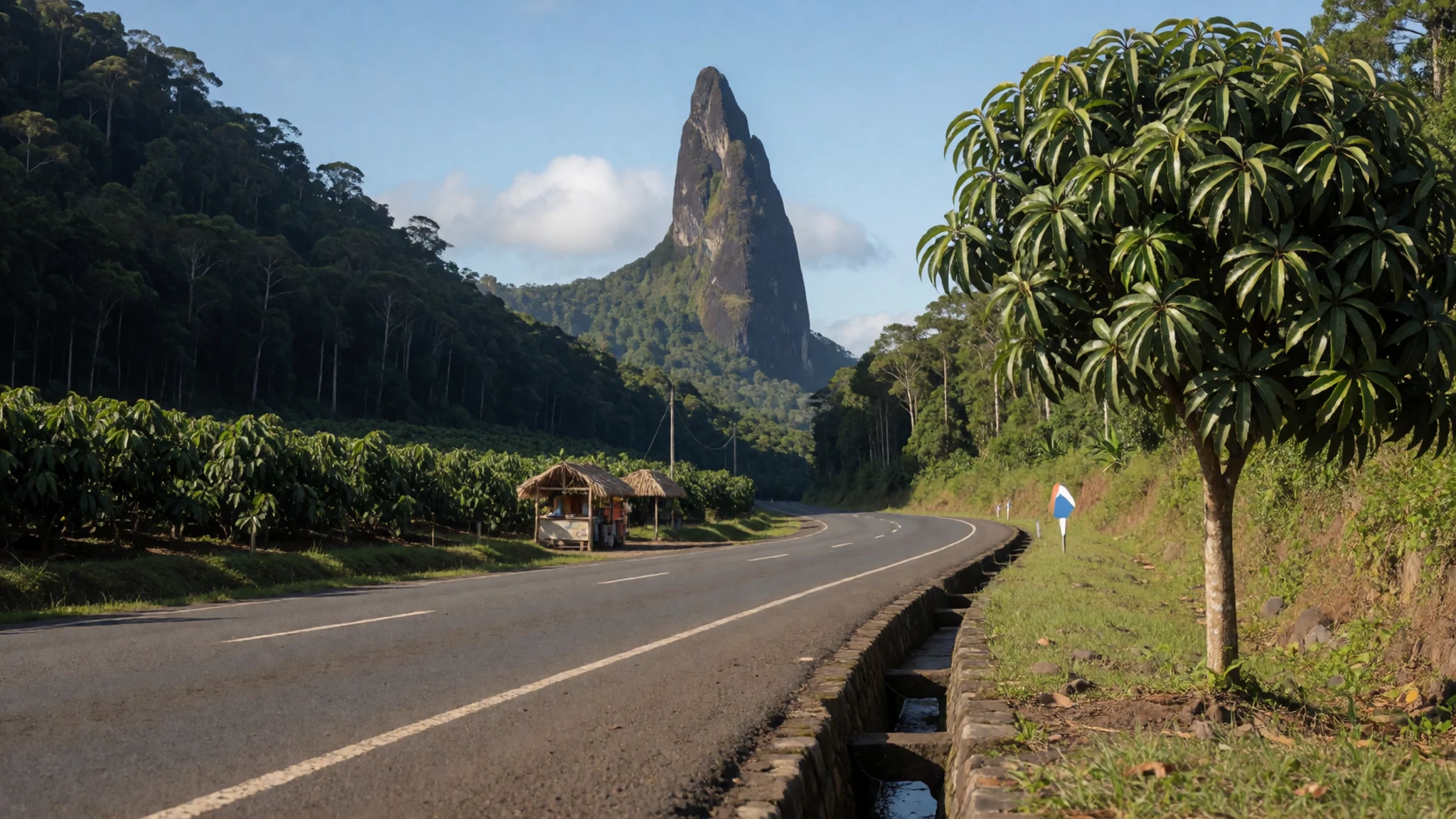
- Vila Clotilde and São João dos Angolares — Caué District, east of the peak
The villages east of the peak show everyday life along the southern road: fishing boats, drying cocoa beans, children walking home from school and old plantation houses. São João dos Angolares is the district seat, a practical place to eat, stop for water and find a local guide before heading into the forest.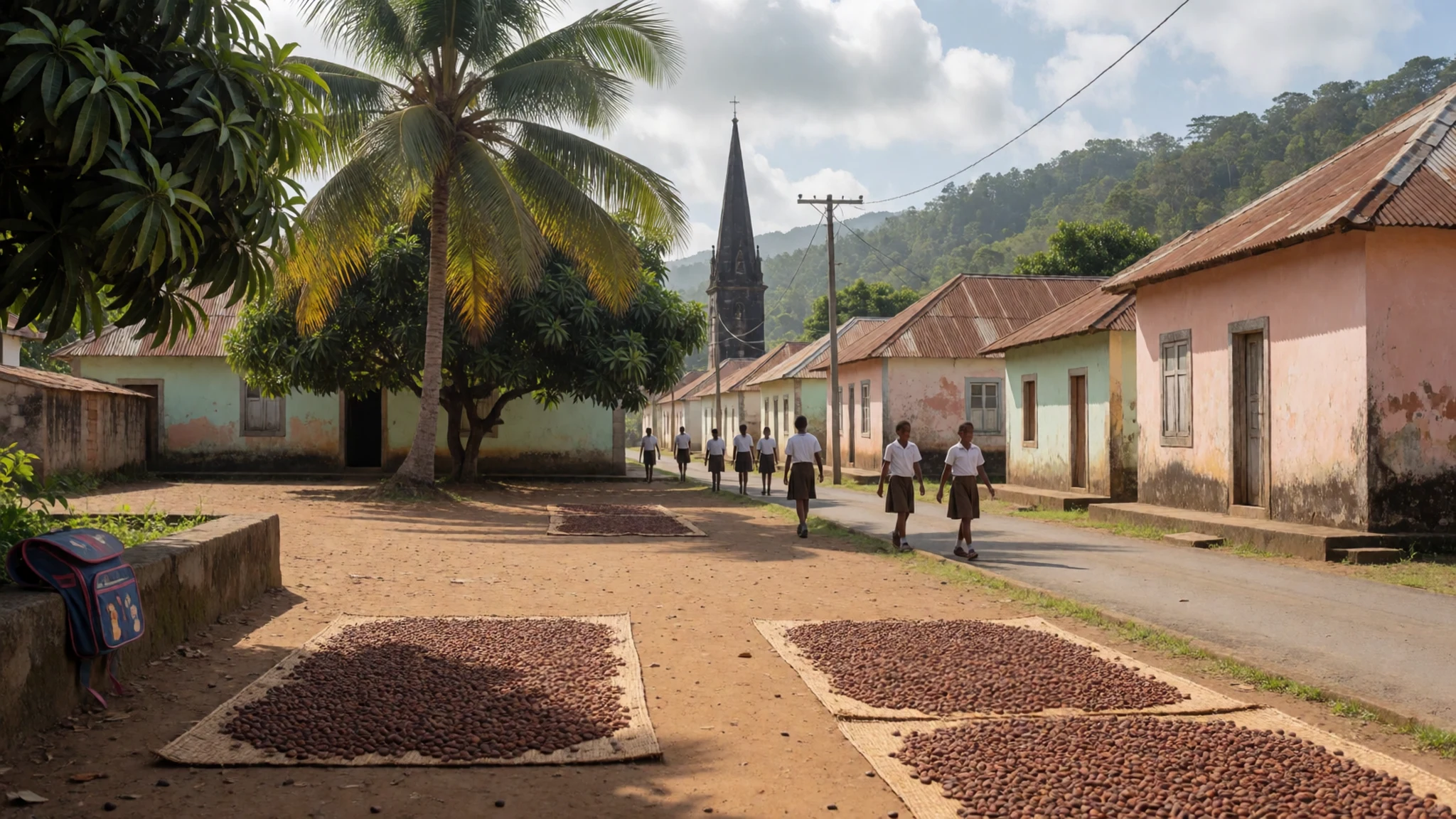
- Obô de São Tomé natural park — Interior of São Tomé island
The park covers much of the island's interior and protects dense rainforest, with birds, orchids and waterfalls. Walking here is best with a guide, who knows the paths, the weather and the wildlife. The climb to Pico de São Tomé, the island's highest summit, starts from this forested interior and needs an early start.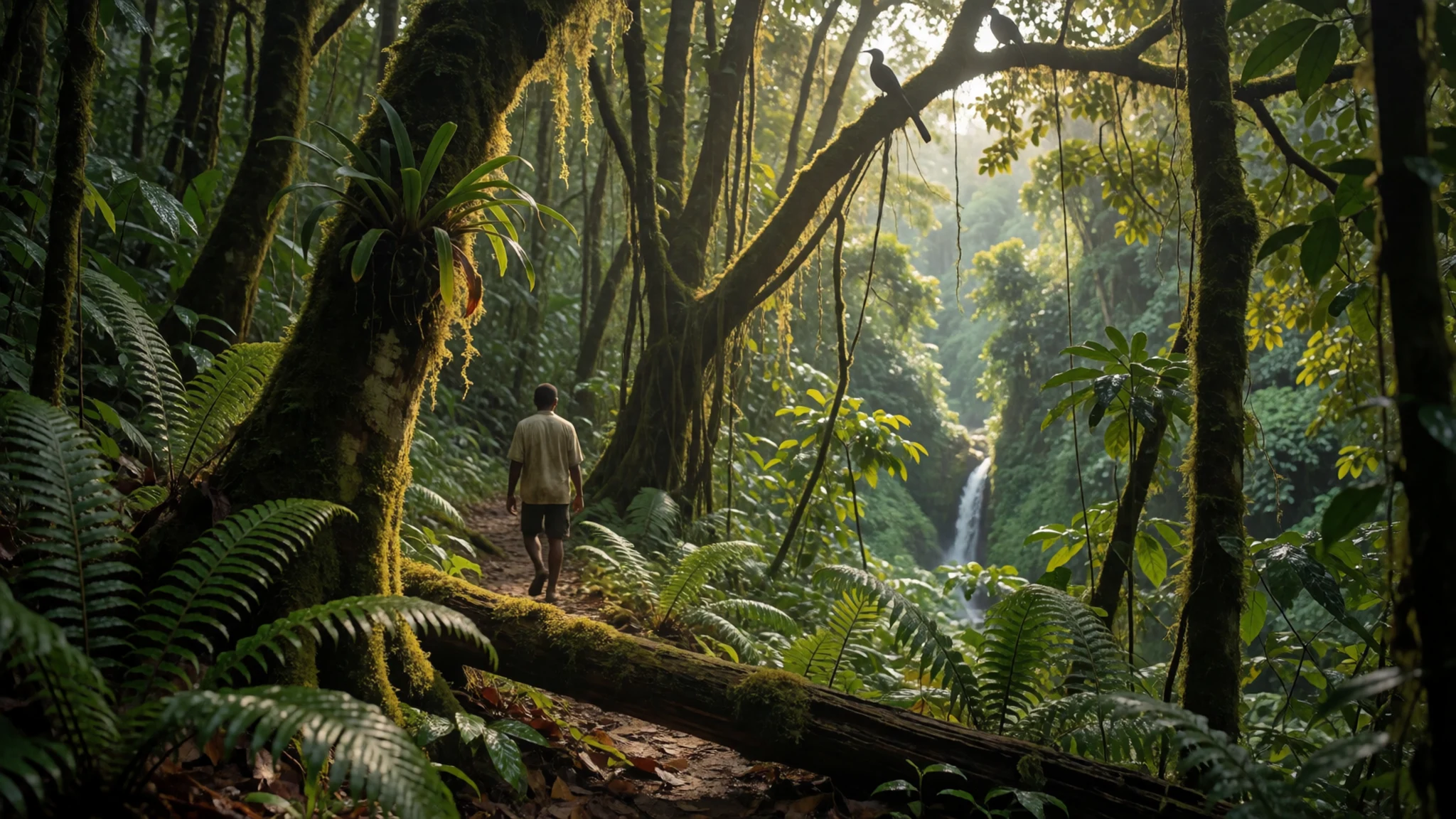
- Boca do Inferno — South coast of São Tomé island
On the south coast, waves rush into an underwater cave and burst upwards through a blowhole called Boca do Inferno, the Mouth of Hell. It works best when the sea is lively, and the spray can be dramatic. Keep a safe distance from the rim, as wet rock near the opening is slippery.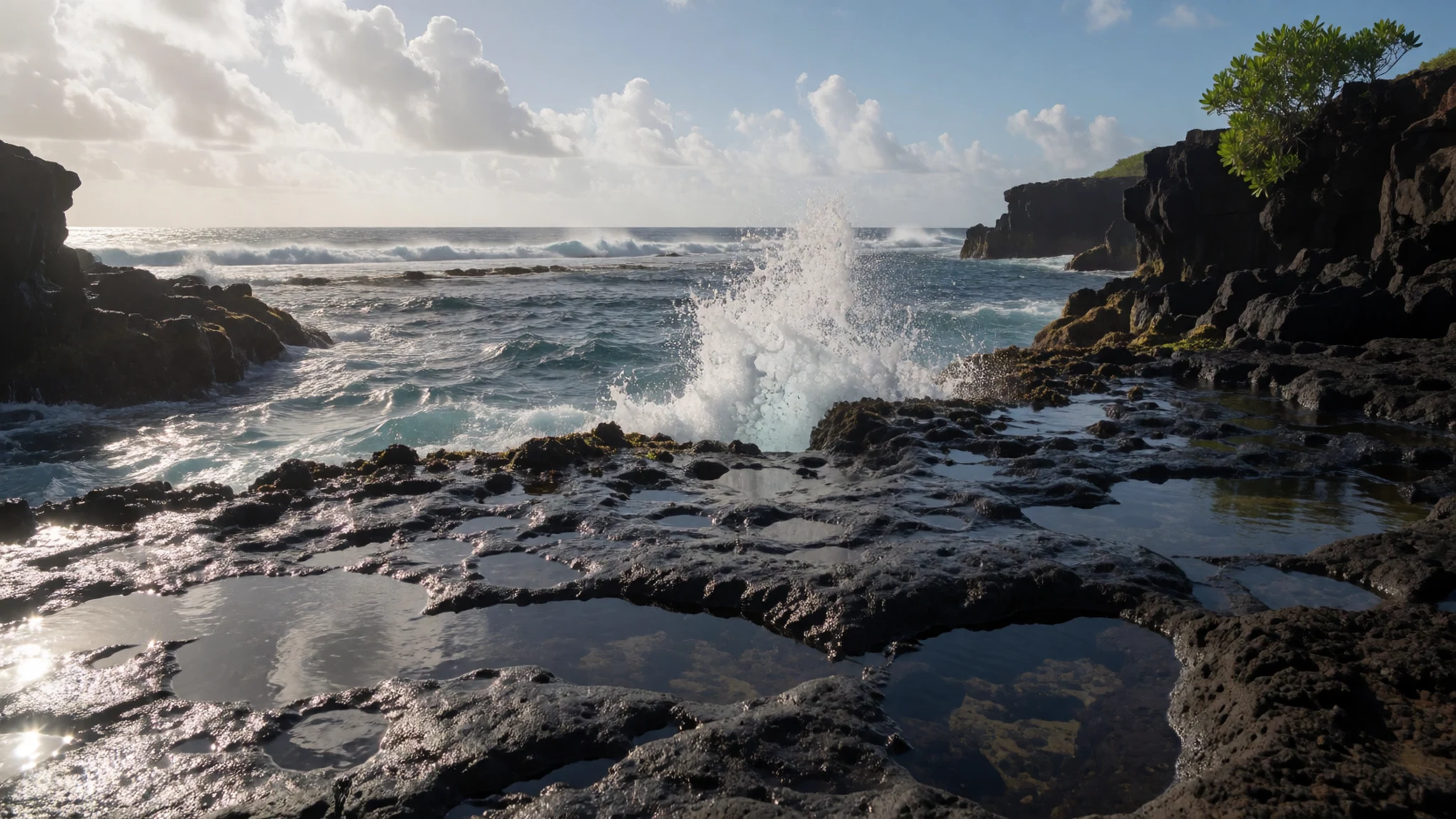
- Fort São Sebastião — São Tomé city
The old Portuguese fort in the capital was refurbished in 2006 and now houses the national museum. It gives context to the island's colonial past, its plantations and its mix of African and Portuguese culture. It makes a sensible first or last stop in the city, before or after the trip south.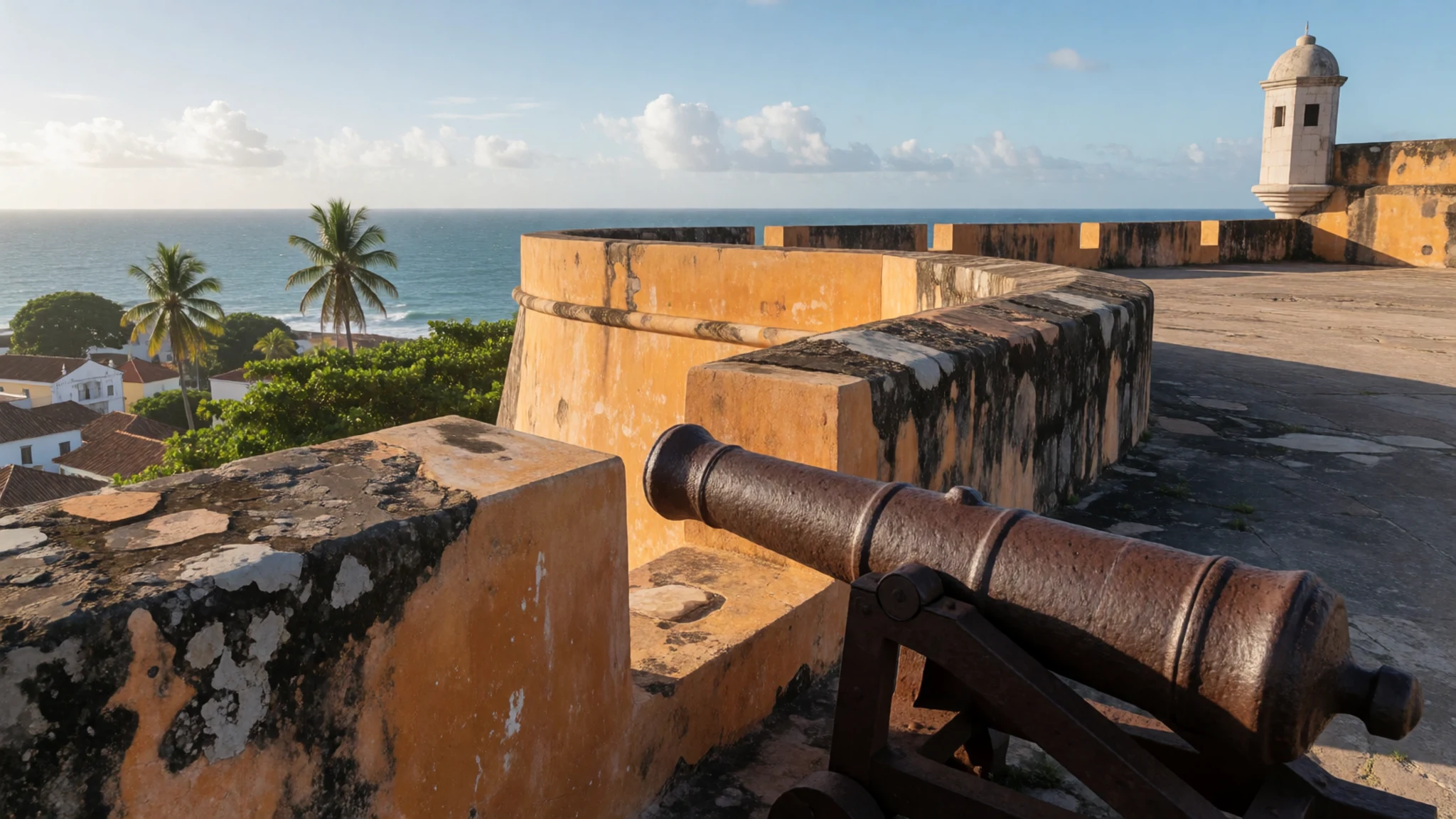
Culture
Pico Cão Grande sits in a country whose culture blends African and Portuguese influences, and the mix shows in language, music and daily habits. Portuguese is the common language, and it is spoken alongside local creoles. São Tomé is known for ússua and socopé rhythms, while Príncipe has the dêxa beat. Portuguese ballroom dancing probably helped shape these sounds and the steps that go with them. Tchiloli is a musical dance-drama that tells a dramatic story, and danço-Congo similarly combines music, dance and theatre; both are performed at festivals and community occasions rather than on a fixed tourist schedule. Football is the most popular sport, and evening matches on village pitches draw crowds. Life around the peak is rural: cocoa farming, fishing, small shops and family plots. The pace is unhurried, and greetings matter. A friendly good morning or good afternoon in Portuguese is expected before asking for anything, and conversation tends to start slowly. Tourism is small, so visitors are noticed, and local guides depend on goodwill and word of mouth. Many families still live in or near former plantation estates, which carry a complicated history of colonial labour, so it is better to listen than to judge. Ask permission before photographing people, their homes or their drying cocoa, and accept a refusal with a smile.
What to wear
Around Pico Cão Grande, traditional dress is tied to festivals and performance more than to everyday wear. Women have long worn wrapped printed cotton cloth, called pano, often in bright patterns, and it is still common at celebrations and in church. The costumes in tchiloli drama draw on European court dress, which reflects the island's Portuguese past. What people actually wear now is plain and practical: T-shirts, shorts, cotton dresses, football shirts and rubber boots or flip-flops for muddy ground. Farmers and plantation workers dress for sun, rain and heavy work, and on Sundays many people put on their smartest clothes for church. Nobody expects visitors to dress formally, but modest clothing is appreciated in villages and churches, so shoulders and knees are best covered away from the beach. For the peak itself, the climate decides. The air is hot, humid and often wet, so light, quick-drying layers work better than cotton jeans. Carry a rain jacket, wear a hat and use sunscreen. Closed shoes with good grip suit forest tracks, and long trousers add protection from scratches, insects and snakes in undergrowth. Rubber-soled sandals suit the coast. Pack a spare dry shirt in a plastic bag for the journey back.
What to eat
- Grilled or stewed fish with breadfruit — Fishing villages and roadside eateries on the south coast
Fish is the staple of the São Toméan table, often served with breadfruit. Flying fish appear at certain times of year, and hot spices are common. Look for it in small seaside eateries along the southern coast, where the catch comes in the same morning.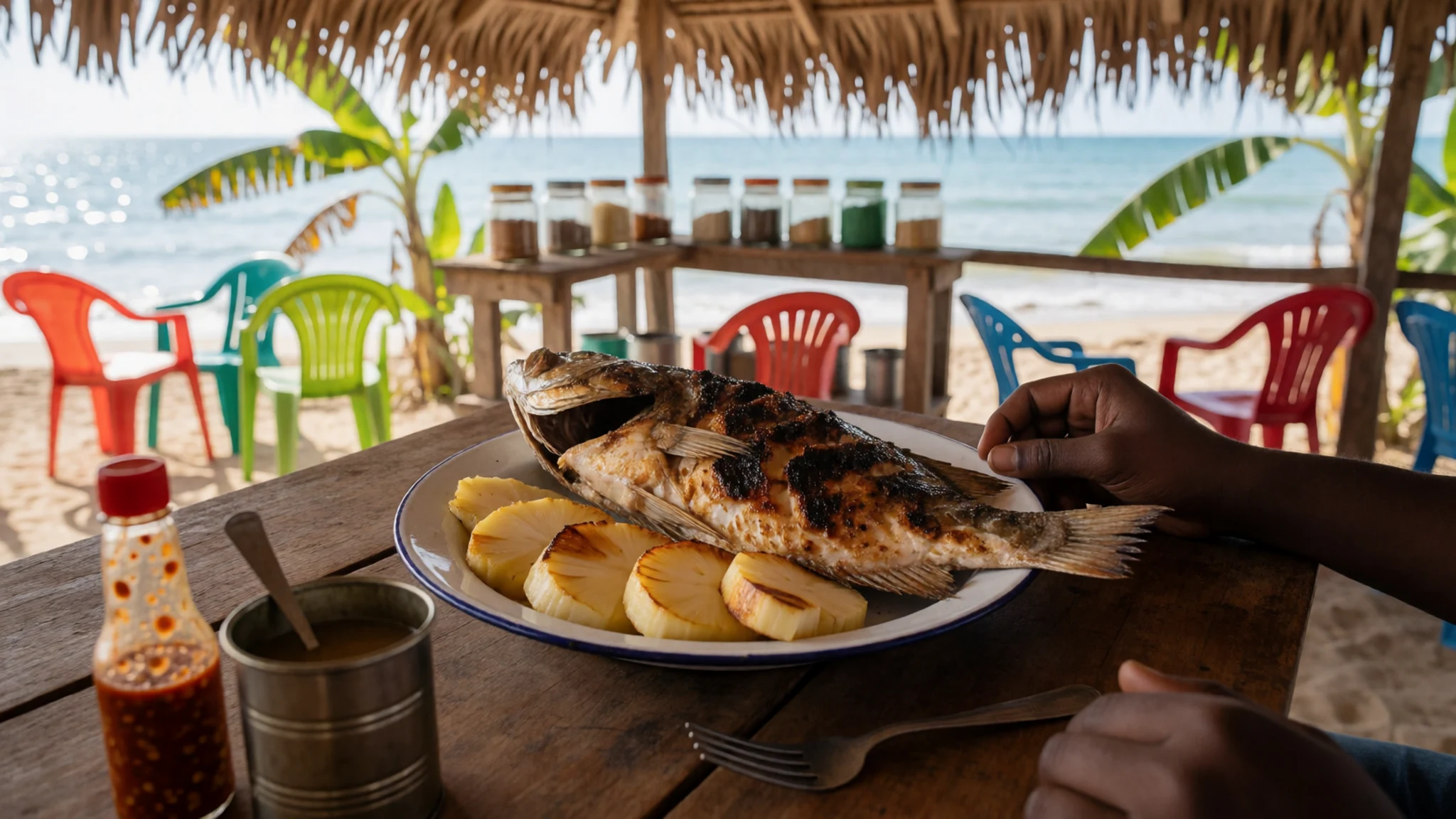
- Mashed cooked banana — Family-run eateries in São João dos Angolares and nearby villages
Cooked and mashed bananas often sit beside fish as a filling, mild side that soaks up sauce. The texture is closer to a soft mash than a sweet fruit. It is a common home-style dish and appears on the plate at most local lunches.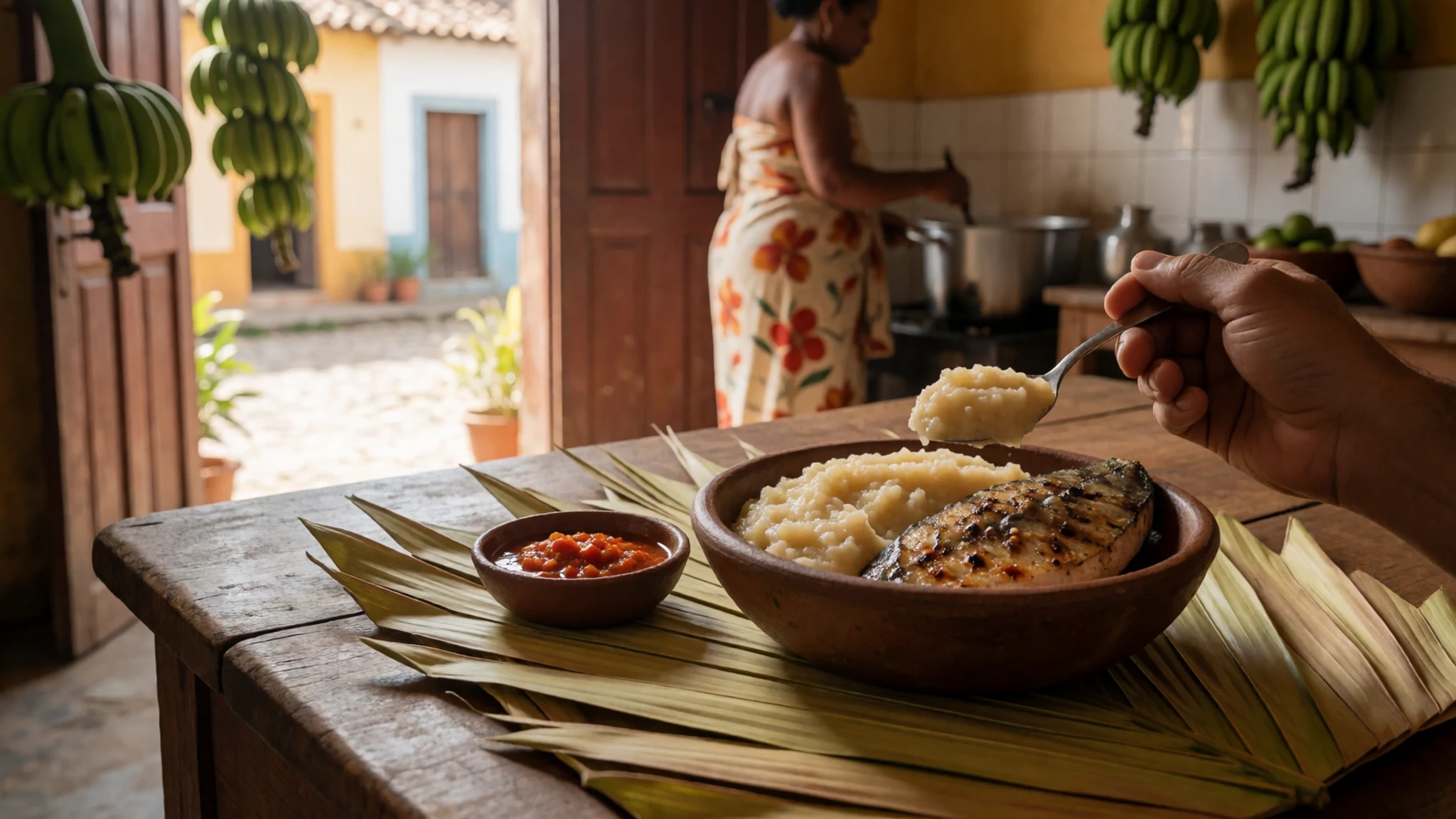
- Búzios (land snails) — Inland villages and local homes
Large land snails, known as búzios, are an important source of protein for people living inland who cannot always afford fish or meat. They are cooked in sauce and eaten with a pick or fork. Adventurous eaters may find them at village tables rather than formal restaurants. - Tropical fruit — Roadside stalls and the capital's markets
Papaya, mango, pineapple, avocado and bananas all grow plentifully on the islands. Buy them ripe from roadside sellers, wash or peel them, and eat them fresh as a snack on the road to the peak. Quality is excellent when the fruit is in season. - Cocoa and chocolate — Former plantation estates and shops in São Tomé city
Cocoa is the island's main crop, and chocolate made from local beans is a natural thing to try or bring home. Some old plantation estates sell or show beans and bars. Ask producers about their process, since small batches vary in flavour and sweetness.
Plan it
Best time. June to September, the drier and cooler part of the year, when forest tracks are less muddy and views of the peak are clearer. Outside these months expect heavy, frequent rain, high humidity and cloud on the summit.
How long. 2–3
Getting there. The only way into the country is by plane, landing at the airport at São Tomé city. From the capital, take the main road south, which passes Angolares and Vila Clotilde on the way to the peak. A hired car with a driver is the easiest way to cover the last leg.
Budget. mid
Tips
- Hire a local guide for forest walks and climbing, and book through your accommodation a few days ahead
- Start early, as cloud often covers the top of the spire by late morning
- Carry cash, because cards are not widely accepted outside the capital
- Take drinking water and insect repellent, and wear closed shoes in forest
- Watch where you put your hands and feet on trails, since the black cobra lives in southern and eastern areas of the island, and drive carefully, as road traffic is a real hazard
- Check visa rules for your nationality before you book, because requirements differ
Etiquette
- Greet people before asking for directions or help
- Ask before photographing people or their homes
- Keep to marked paths in the park and leave no rubbish
Nearby
Sources
- Wikidata Q2082148 (CC0)
- Wikipedia: Pico Cão Grande (CC BY-SA 4.0)
- Wikivoyage: São Tomé and Príncipe (CC BY-SA 4.0)
- 2012SaoTome-470, Helena Van Eykeren (CC BY 2.5)
- Pico Cão Grande, Philippe Bourachot (CC BY 3.0)
- Sao Tome map, Dr. Blofeld (CC BY-SA 2.0)
- Japanese team on the way to Pico Cão Grande, Moriyama Kenichi (CC BY-SA 4.0)
- Cao Grande, Jordicanyi (Filmut.com) (CC BY-SA 4.0)
- 2012SaoTome-302, Helena Van Eykeren (CC BY 2.5)
- 2012SaoTome-308, Helena Van Eykeren (CC BY 2.5)
- 2012SaoTome-345, Helena Van Eykeren (CC BY 2.5)


