São Tomé
São Tomé, São Tomé and Príncipe
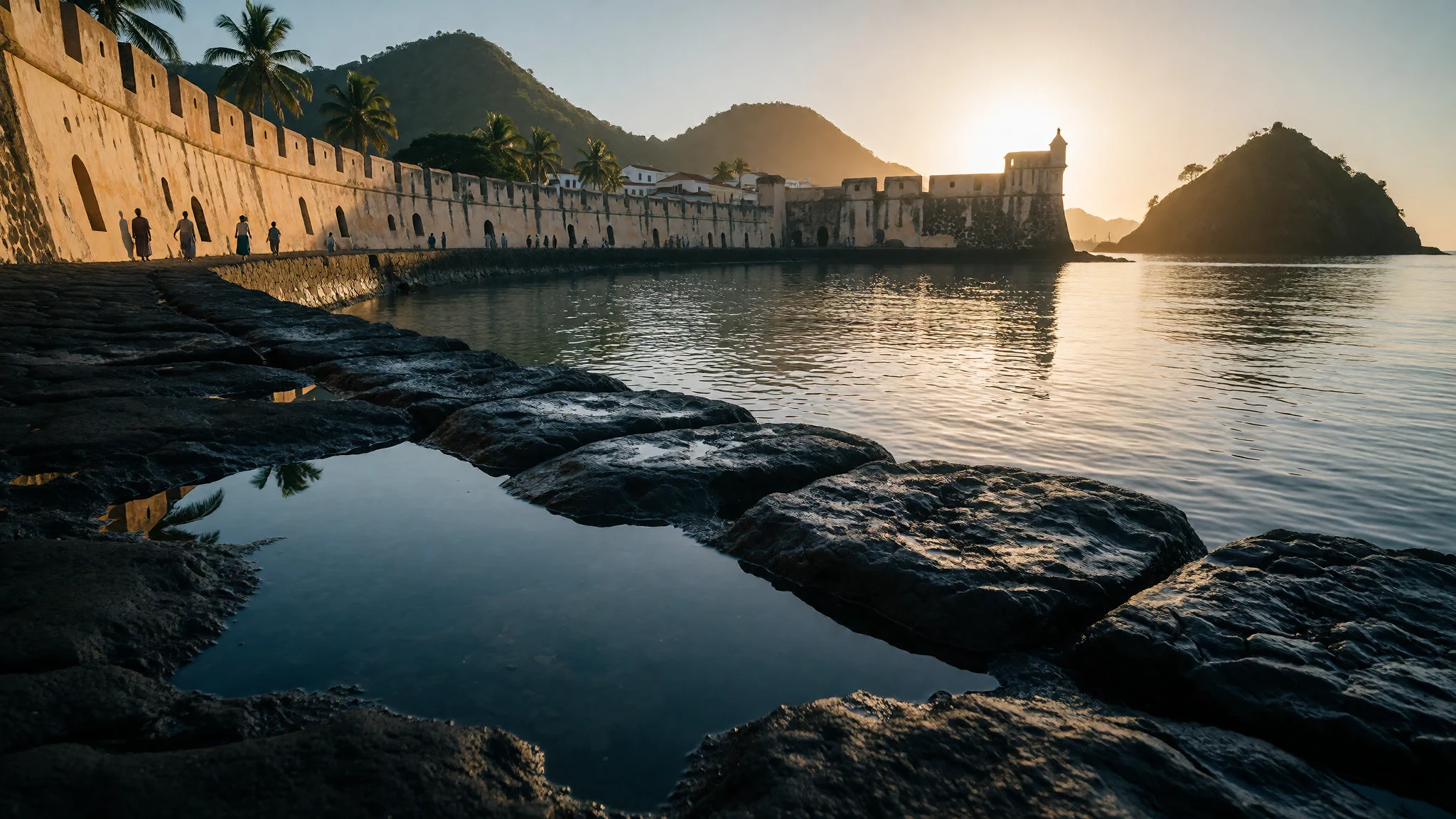
São Tomé is a small equatorial capital of faded Portuguese façades, a fort museum and sea fog, with rainforest and waterfalls within reach.
The place
São Tomé is the capital of São Tomé and Príncipe, an island country just north of the equator in the Gulf of Guinea. The city, home to about 72,000 people, curves around Ana Chaves Bay on the north-east coast of São Tomé Island, with the small rock of Ilhéu das Cabras offshore. Behind it the land climbs quickly into green hills, and the centre is listed at 137 m above sea level.
The core is compact and easy to cover on foot: a cathedral, a presidential palace, a cinema, several squares called praças, two markets and a fort at the water's edge. Colonial buildings in weathered stone and faded paint stand beside newer concrete, and the pace stays slow even on weekdays. A highway runs round almost the whole island, linking the city with Trindade, Guadalupe and Santana, and the island's buses start from here.
The international airport sits on the edge of town, with scheduled flights to Angola, Gabon, Ghana and Portugal and occasional hops to Príncipe. The weather shapes everything. Cloud and sea fog hang over the city even in the drier months, temperatures barely shift through the year, and the long wet season runs from October to May.
Anyone expecting a resort will find something quieter: a working capital with schools, clinics, radio stations and a public television channel, where the main pleasure is watching island life go by. The town is also known for tchiloli, a theatrical tradition. Birdwatchers come in December and January, when the birds are in their brightest breeding plumage, and the best beaches and rainforest lie outside the city, reached by taxi or hired car.
Its story
São Tomé's story begins with sugar. Portuguese colonists settled an uninhabited island in the later fifteenth century and, in 1485, founded the town that is now the capital. Equatorial heat and steady rain suited the cane, and the colony became a leading sugar producer through the sixteenth century, until Brazilian plantations took over the trade.
The wealth rested on forced labour. Enslaved people were brought from the African mainland, including from the Kingdom of Kongo, and Jewish children taken from Iberian families were also shipped to the island and baptised by force.
The system did not go unchallenged. Towards the end of the sixteenth century, an uprising spearheaded by Rei Amador seized the capital, though it was quelled the next year. The Dutch also came: they held the city for only two days at the end of that century and returned decades later for about a year.
Two buildings carry the period. The cathedral has sixteenth-century origins but was largely rebuilt in the nineteenth century, and Fort São Sebastião, built in the same era, is now the National Museum. For centuries the town served as capital of the Portuguese colony of São Tomé and Príncipe, and since independence in 1975 it has been the capital of a sovereign nation. Sugar eventually gave way to other plantation crops, and the old estate complexes, called roças, still dot the countryside beyond the city, some now offering simple lodging.
What to see
- Cathedral of Our Lady of Grace — Old town centre
The cathedral stands in the heart of the old town. Its origins reach back to the sixteenth century, but repeated rebuilding, including a remodelling in an eclectic revival style, means the present look is mostly later. It is a good first stop for getting bearings, and services bring local life to the square outside.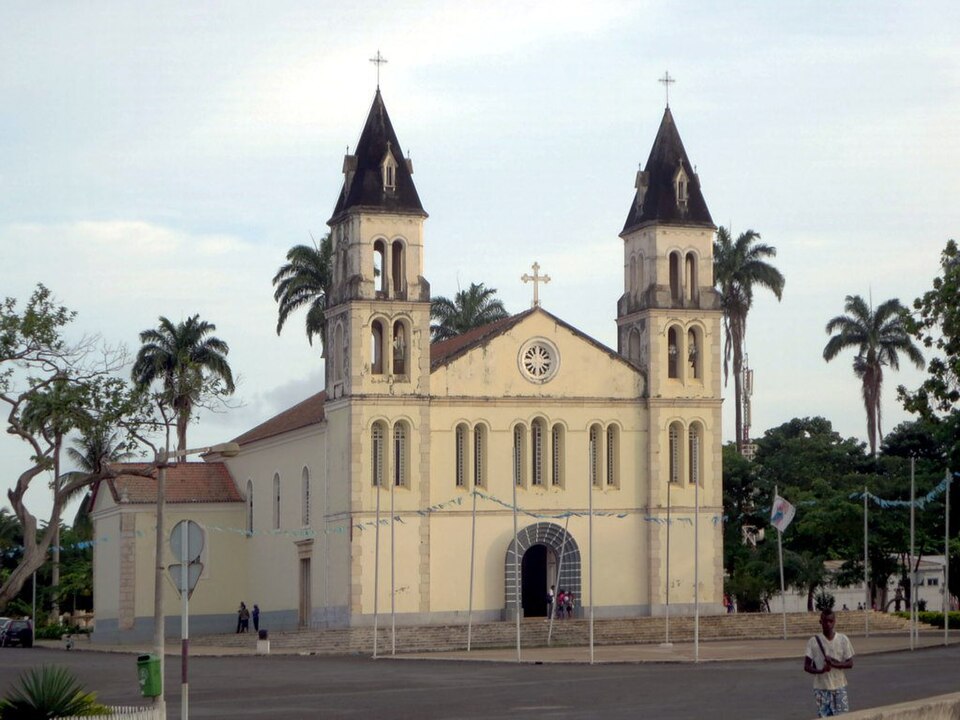
- Presidential Palace — Old town centre
The palace began as a governor's administrative building in the nineteenth century and has housed the head of state since independence. It is best admired from outside, across a tidy square. Guards may object to cameras, so ask first. Nearby streets hold other colonial-era façades that reward a slow walk.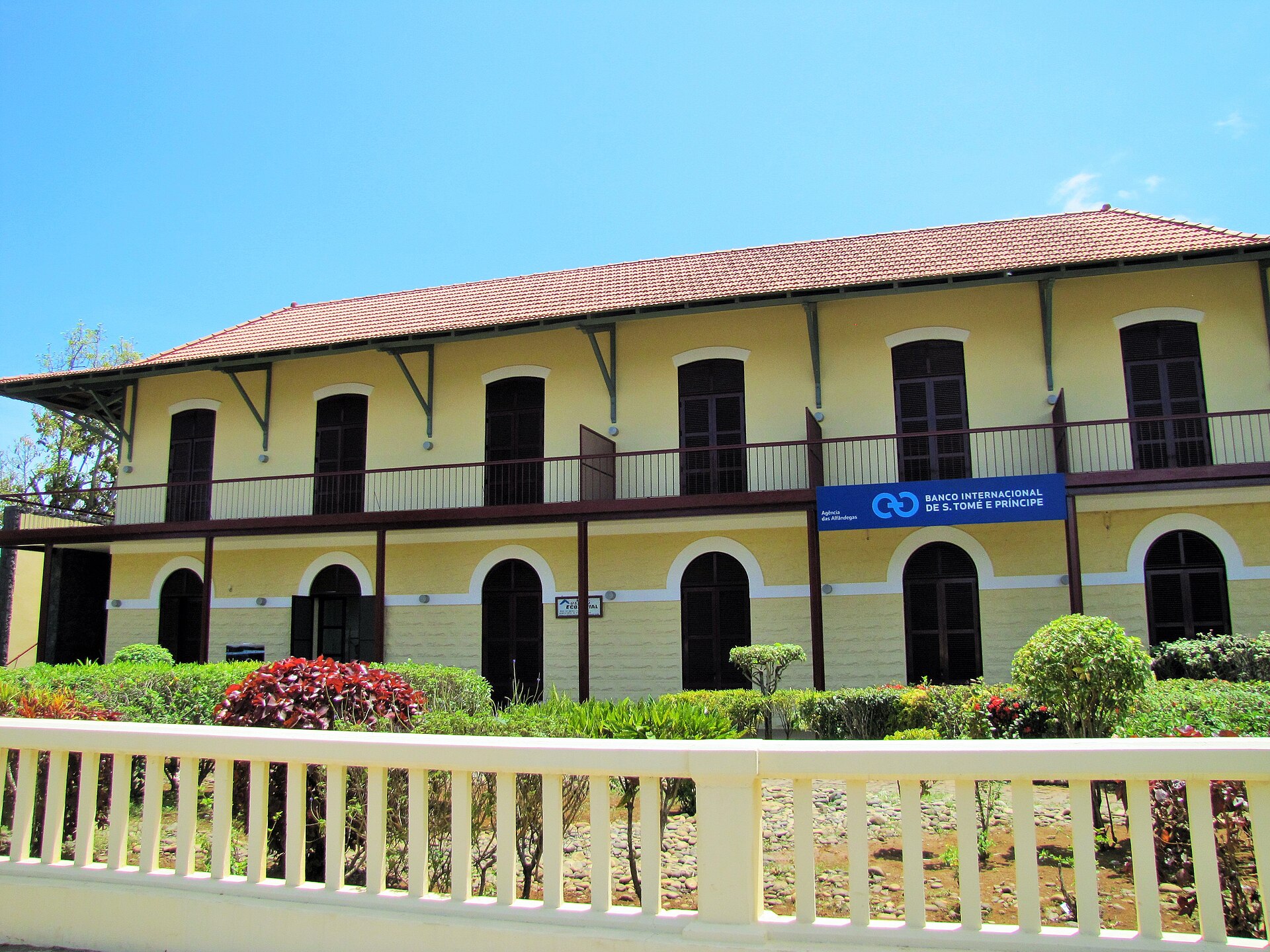
- Fort São Sebastião and the National Museum — Eastern waterfront
The fort guards the eastern end of the waterfront and now houses the National Museum. Displays cover colonial-era life, alongside a collection of local religious art, all within thick stone walls. The ramparts give a view over the bay, with forested hills behind the town. Opening times change, so check locally before going.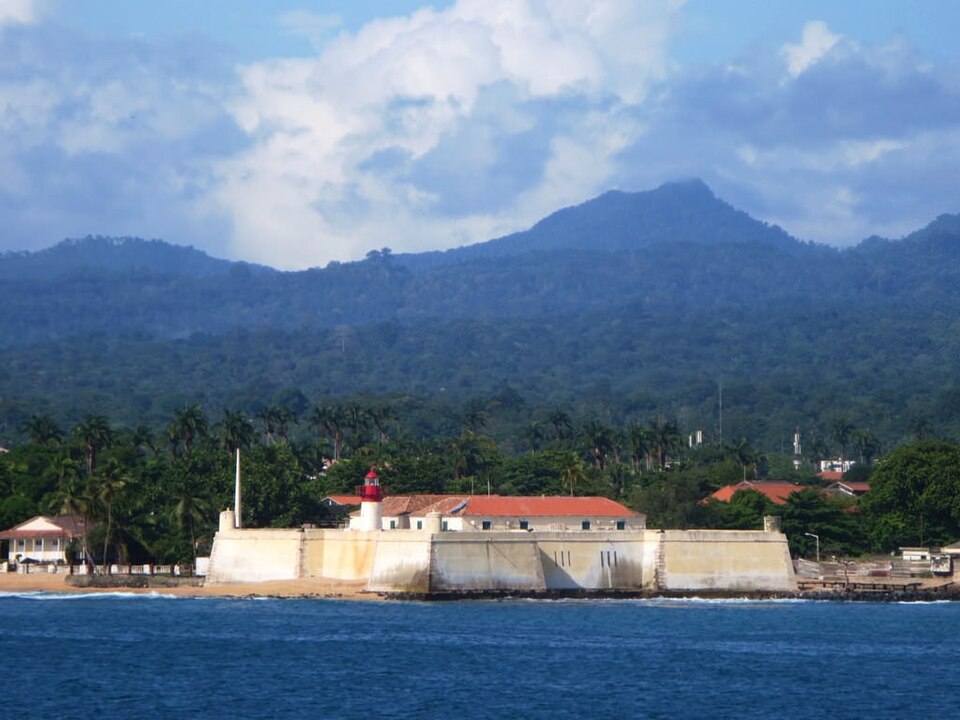
- Ana Chaves Bay — Seafront
The bay is the city's front garden, a curve of water with the rocky islet of Ilhéu das Cabras offshore. Fishing boats work here, young people jump from the pier, and the seafront fills in the cooler evening hours. Swells can be strong, so ask locally before swimming.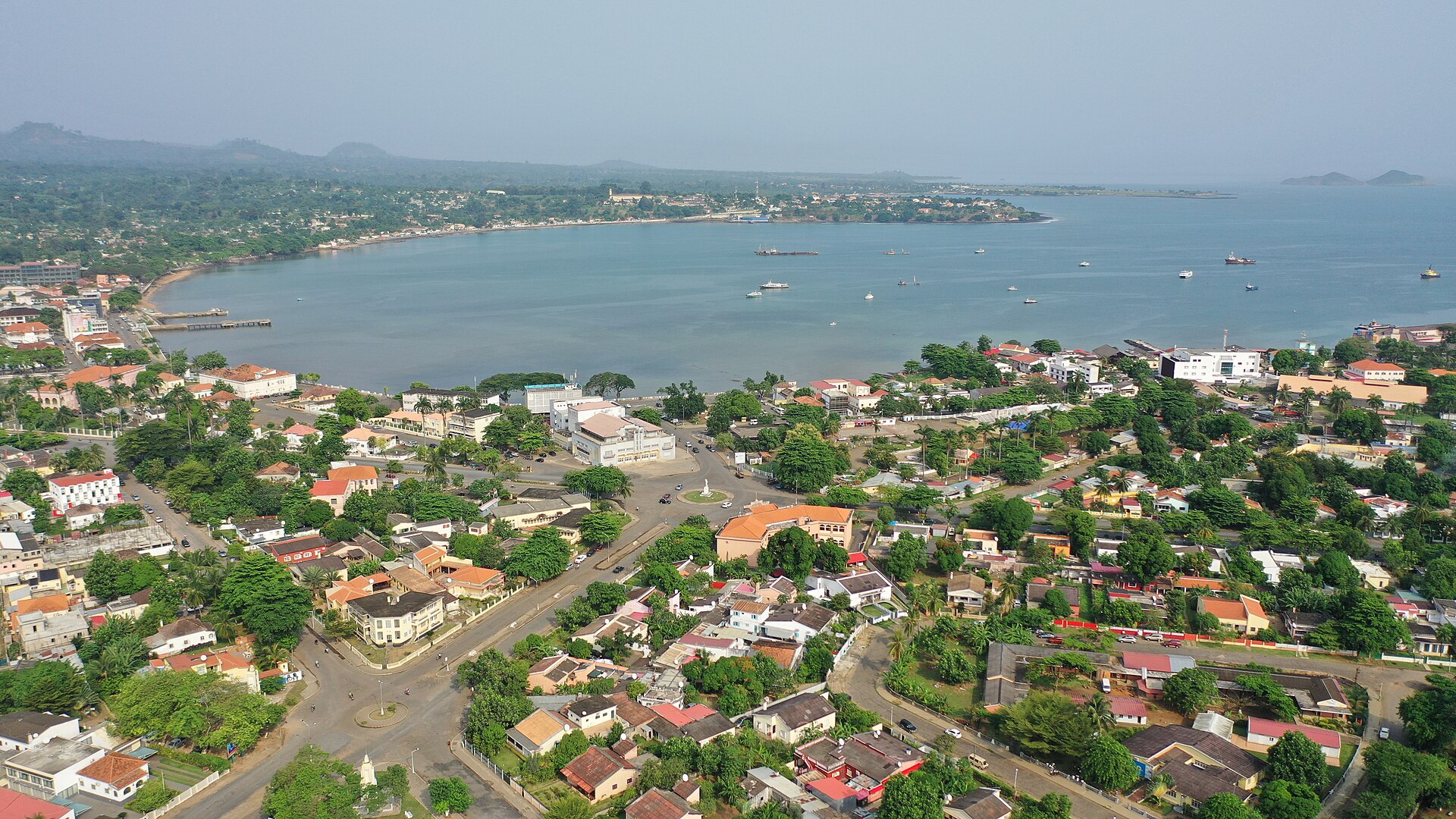
- Obo Natural Park — Island interior, outside the city
Obo Natural Park protects rainforest in the island's interior and has several hiking trails. The gentlest walk leads to Lagoa Amelia and makes a half-day round trip. Overnight stays are possible in old plantation buildings called roças. Rain is likely in any month, so carry a waterproof and wear sturdy shoes.
Culture
São Tomé is a place where Portuguese and African influences have mixed for centuries, and it shows in language, religion and music. Portuguese is the working language of the capital, and the Catholic Church shapes the calendar, with the cathedral busy on Sundays and feast days.
Public life happens outdoors: in the praças, along the bay and in the two markets, where bargaining is gentle and conversations run long. The city is known for tchiloli, a staged drama performed by costumed players, and it is worth asking locally whether a performance is being held during a visit. Music turns up everywhere, from market radios to seafront bars, some of which host live sets on Saturdays.
The colonial past is never far away. The fort museum and the plantation estates in the hills are reminders that the island's early wealth was built on forced labour, and the subject deserves a serious tone rather than a casual one.
Time moves slowly here. Meals, buses and appointments run on island time, and patience is rewarded far more than hurry. Cloud and drizzle are part of daily life, and people simply carry on, so the best approach is to do the same: pick one or two things a day and leave room for conversation.
Greet people with a "bom dia" or "boa tarde" before asking for anything, and ask permission before photographing individuals, especially at the market.
What to wear
Dress in São Tomé reflects the island's Portuguese and African mix, and details vary by family and occasion. Women have traditionally worn printed cotton cloths, often called panos, wrapped as skirts or draped over the shoulders and tied at the head, with the boldest patterns kept for church, festivals and family celebrations. Tchiloli performers wear theatrical period costume, with capes, hats and bright colours, which gives a glimpse of the older European influence.
Day to day, the city dresses simply and for the heat. Cotton shirts, shorts, football shirts, jeans for evenings and neat school uniforms are all common. On Sundays, people dress up for church, with pressed shirts, dresses and polished shoes. Beachwear stays at the beach.
Visitors should pack for a warm, humid and often cloudy climate, where daytime highs hover around 30 °C and the nights stay mild. Light, quick-drying cotton or linen works better than heavy fabric. Bring a lightweight waterproof, since rain is possible in any month and the wet season is long. Shoulders and knees should be covered inside the cathedral and when visiting local homes or villages. For the rainforest and waterfalls, wear shoes with a firm grip, because trails and rocks stay slippery. A sun hat and reef-safe sunscreen are useful on the bay and the island's beaches.
What to eat
- Grilled fish — Seafront eateries along Ana Chaves Bay
Fresh fish cooked over a flame is the simplest and most reliable meal in the capital. It usually arrives with rice, vegetables or fried starch on the side. Order it at a seafront eatery in the evening, when the day's catch has come in. - Petiscos — Cafés and bars facing the sea
Petiscos are small shared plates, much like tapas, served with a cold drink. Expect fried fish, cured meats or other snacks, and use them as a relaxed way to try several flavours without committing to a full meal. - Fish soup — Town-centre cafés and small local restaurants
Soups appear on many café menus and make a warming option on a grey, damp day. The base is usually fish or seafood, seasoned with local herbs and spice, and it is best eaten with bread at lunchtime. - Seafood plate — Cafés near the bay and restaurants with terraces
Local seafood is served in several styles, from simple grills to stews. Choose whatever the kitchen recommends that day, and ask about the portion size, since plates can be large and easy to share between two. - Island coffee — Cafés in the town centre
A small, strong coffee is a good mid-morning stop, and several cafés in the centre are comfortable places to sit, charge a phone and watch the street. Pair it with a roll or a slice of cake if the counter has one.
Plan it
Best time. June to September is the short dry season, with the least rain, though cloud and sea fog still linger over the city. December and January suit birdwatchers, when birds show bright breeding plumage. The wet season runs from October to May, making forest trails and waterfalls muddy and slippery. Daytime highs run from about 27 °C in July and August to nearly 30 °C in March.
How long. 3–4
Getting there. Fly into São Tomé International Airport, which has scheduled flights from Angola, Gabon, Ghana and Portugal; the city is a short taxi ride away. Check which airline actually operates your flight, as some carriers are banned from the EU and flights are run by partner airlines. Príncipe is a short flight onward.
Budget. mid
Tips
- Carry cash for markets, taxis and small cafés, as card acceptance is patchy
- Roads are hazardous, so avoid night driving and agree taxi fares before setting off
- Hire a 4x4 and guide for Cascata Angolares, and take a raincoat and grippy shoes
- Tourist-targeted theft has risen, so keep valuables out of sight, especially on the seafront
- Ask a doctor about vaccinations: typhoid is not required but is advisable
Etiquette
- Say good morning or good afternoon before asking questions or making a purchase
- Ask before photographing people, official buildings or soldiers
- Cover shoulders and knees when entering the cathedral or visiting villages
Nearby
Sources
- Wikidata Q3932 (CC0)
- Wikipedia: São Tomé (CC BY-SA 4.0)
- Wikivoyage: São Tomé (CC BY-SA 4.0)
- Baía de Ana Chaves — wsrolim (CC BY-SA 4.0)
- 2012SaoTome-8 — Helena Van Eykeren (CC BY 2.5)
- Sao Tome Pier Jumping 2 — Chuck Moravec (CC BY 2.5)
- Forte de Sao Sebastiao — David Stanley (CC BY 2.5)
- Banco Internacional de São Tomé e Príncipe — Chuck Moravec (CC BY 2.5)
- Catedral de Nossa Senhora da Graça — David Stanley (CC BY 2.5)
- Sao Tome 10 — Chuck Moravec (CC BY 2.5)
- Sao Tome 6 — Chuck Moravec (CC BY 2.5)


