São Tomé Island
São Tomé Island, São Tomé and Príncipe
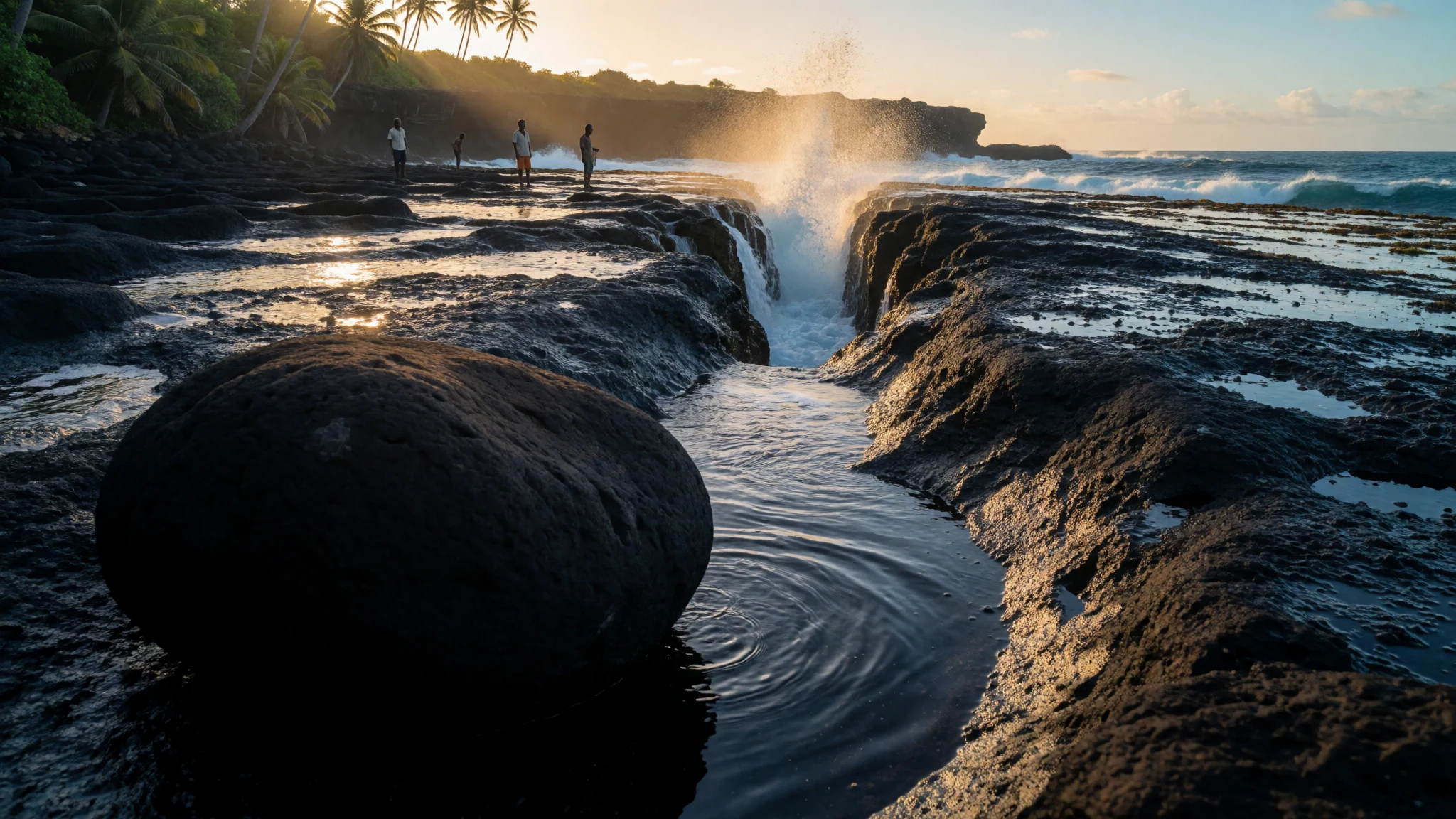
São Tomé Island offers empty equatorial beaches, forest trails to a 2,024 m peak, old cocoa estates and very few other visitors.
The place
São Tomé Island lies in the Gulf of Guinea, just north of the Equator and about 240 km west of Gabon, whose port of Port Gentil is the nearest mainland city. It is the larger of the two main islands of São Tomé and Príncipe and home to about 185,000 people, the clear majority of the country. The name causes confusion: the nation is often shortened to São Tomé, though that name properly belongs only to this island. The capital, also called São Tomé, sits on the northeast coast, and the island is divided into six districts. Inland, the ground climbs steeply to Pico de São Tomé at 2,024 m, and forest covers most of the interior, which is protected as Obo National Park. Cocoa dominates farm exports, with coffee, copra and palm kernels behind it, while fishing supplies much of what people eat. Small islets lie offshore, among them Ilhéu das Rolas, Ilhéu das Cabras and Ilhéu Gabado. Honest expectations help here. Tourism is still thinly developed: there are few hotels outside the capital, a handful of resorts sit at the far ends of the island, roads are rough and shared with pedestrians and motorbikes, and the equatorial climate means warmth and humidity all year, with heavy rain in the wetter months. The reward is space. Beaches are often empty, forest trails see few other walkers, and the pace of life in the capital is unhurried.
Its story
São Tomé Island had no settled population until the Portuguese arrived in the 1490s, so its human history begins with colonisation rather than before it. The settlers found a forested volcanic island with fertile soil and set about farming it. Over the following centuries the landscape was reorganised around large estates called roças, which grew export crops and eventually cocoa, and which depended heavily on enslaved and later contract labour. Many roça buildings still stand: manager's houses, drying yards, hospitals and rows of workers' homes. Some now serve as guesthouses and restaurants, while others are slowly being swallowed by vegetation. Where estates were abandoned, forest has reclaimed the ground, which is why so much of the island looks untouched today. The coastal defences tell a related story. Fort São Sebastião was built in 1575 to guard the harbour and was refurbished to become the National Museum. A different footnote belongs to the neighbouring island of Príncipe. In 1919 Arthur Eddington took a team there to photograph stars during a solar eclipse, as a test of whether gravity bends light in the way Einstein's theory predicted, and a plaque marks the spot. The country later became independent from Portugal. The Portuguese language, the cocoa economy and the mix of European and African traditions in music and festivals are all legacies of that long colonial chapter.
What to see
- Obo National Park and Pico de São Tomé — Interior highlands
Obo National Park covers much of the forested interior of São Tomé Island and is the way into the highlands. Local guides lead bird-watching walks, treks to quiet waterfalls and the climb to Pico de São Tomé, 2,024 m. Orchids are a draw, with 109 species recorded. Paths are muddy, so start early and expect rain.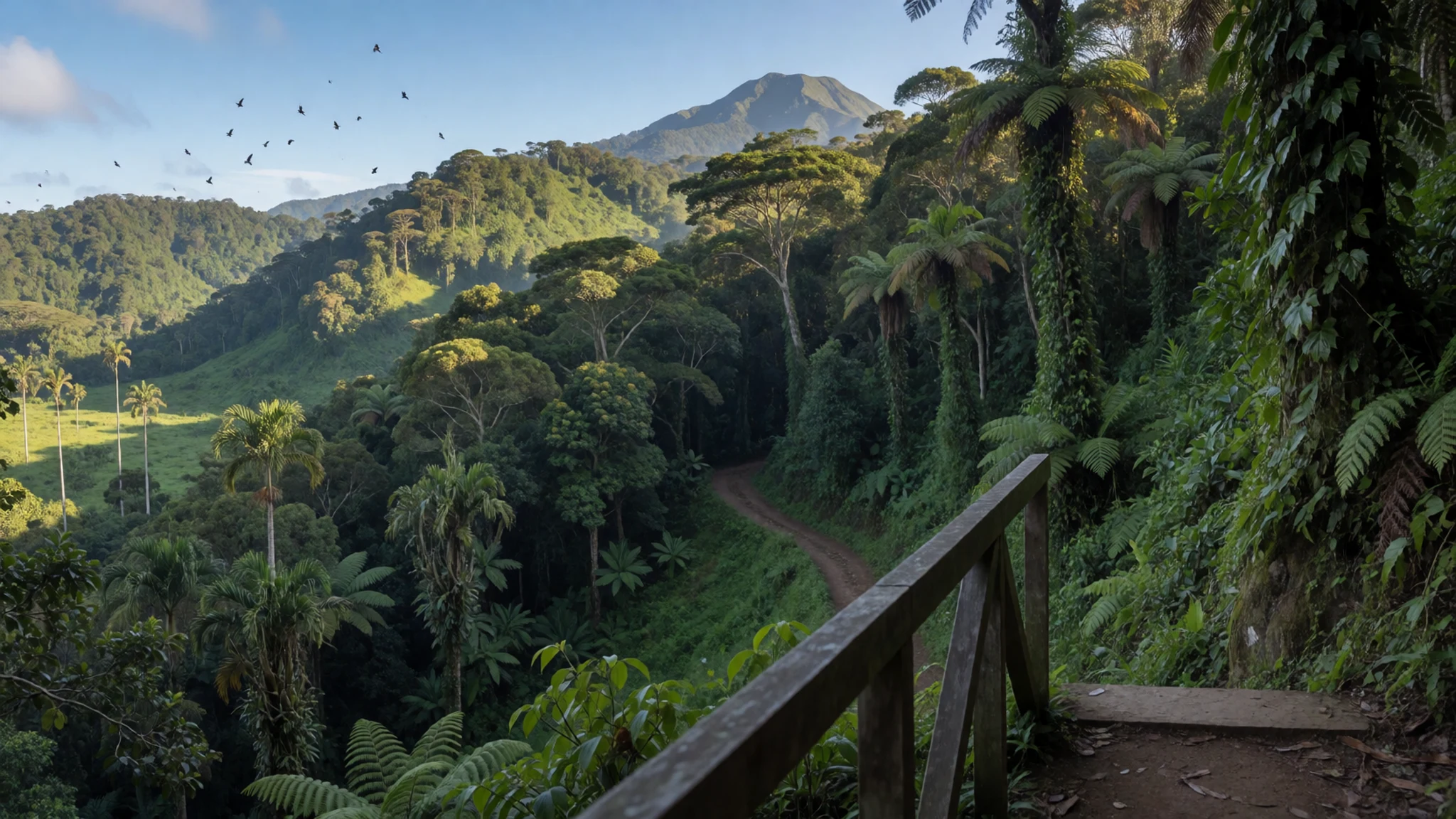
- Boca do Inferno — East coast
Boca do Inferno, the Mouth of Hell, is a blowhole on the island's coast where swells force their way into a sea cave and burst upward through a gap in the rock. It is at its best when the sea is running; on calm days it is little more than a hiss. Keep well back from the wet edge.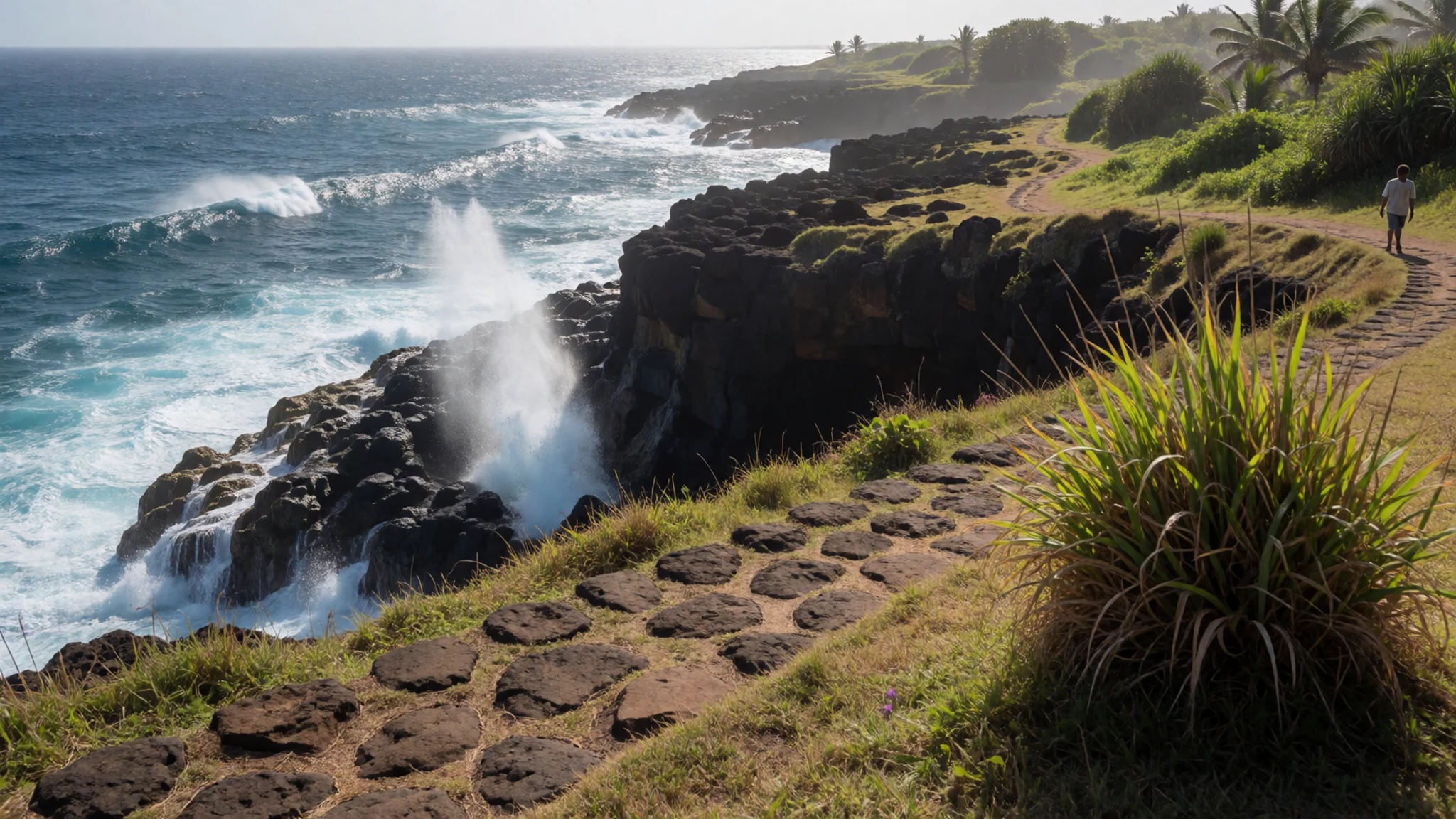
- Fort São Sebastião and the National Museum — São Tomé city, northeast coast
Fort São Sebastião, dating from 1575, stands by the harbour in the capital and now houses the National Museum. It is among the few built sights on the island that is not a plantation relic, and it combines easily with a stroll through the capital's older streets. Check opening times locally before going.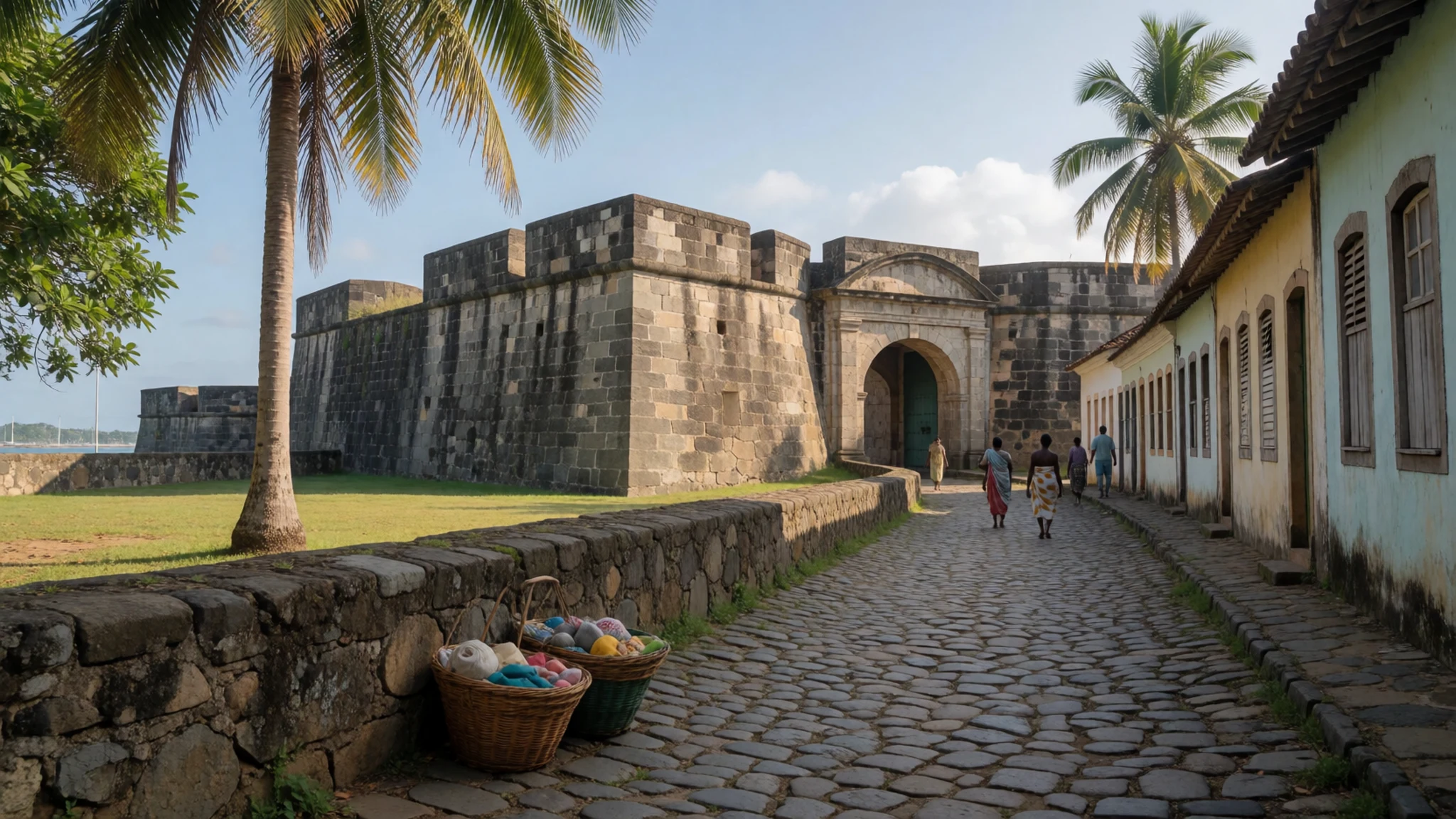
- Ilhéu das Rolas — Southern tip, offshore
Ilhéu das Rolas is a small islet off the southern tip of São Tomé Island, reached by boat, with sandy shores and a resort. It suits a day of swimming and snorkelling or a slow overnight stay. Crossings depend on the sea, so confirm the arrangements with your accommodation beforehand.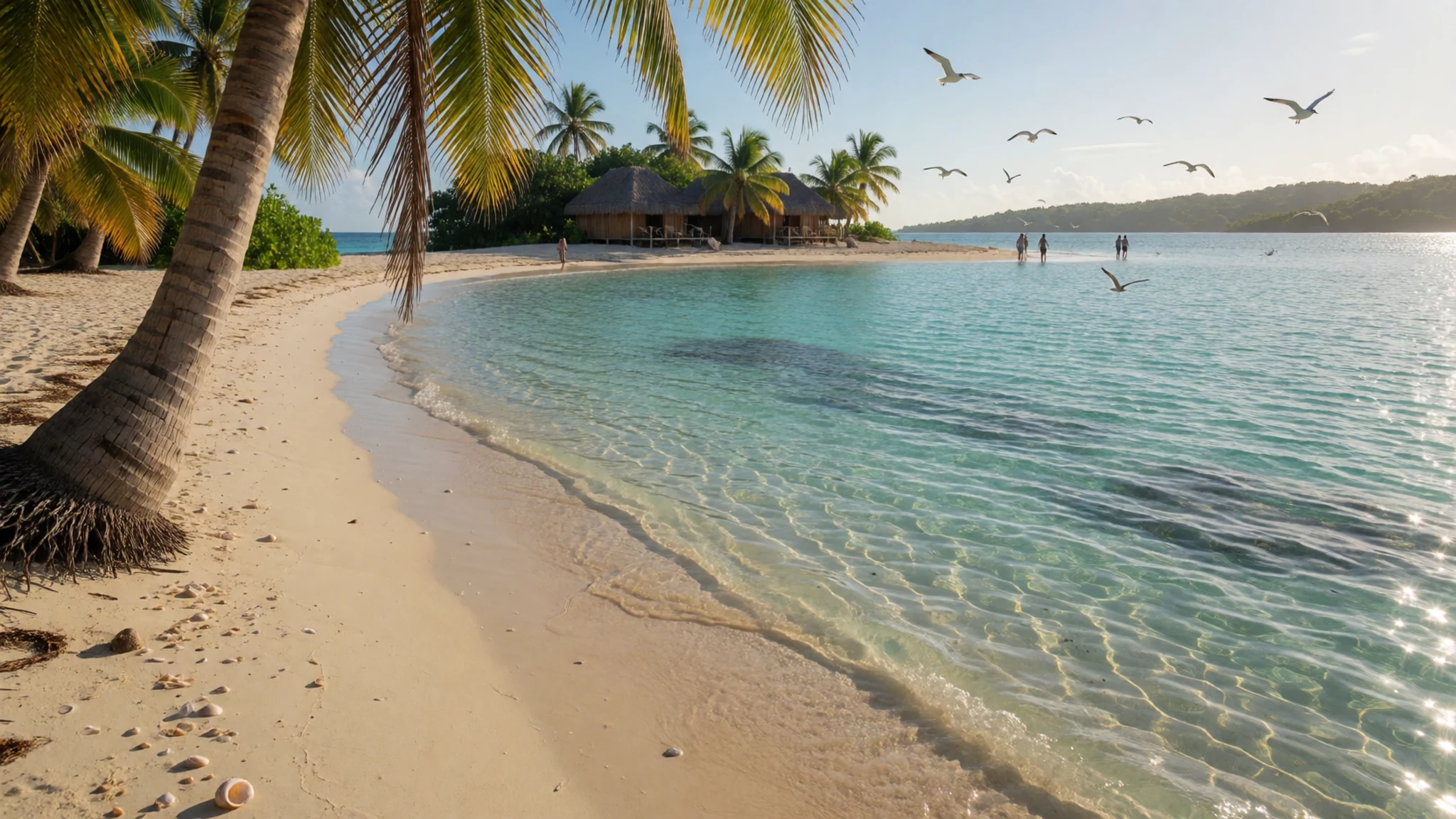
- Reefs and dive sites — Coastal waters, all around the island
The reefs around São Tomé Island hold turtles, dolphins and many reef fish, plus a few species found nowhere else. Snorkelling is easy from sheltered beaches, while experienced divers can visit underwater caves with an operator. Ask locally about conditions, since swell and visibility change through the year.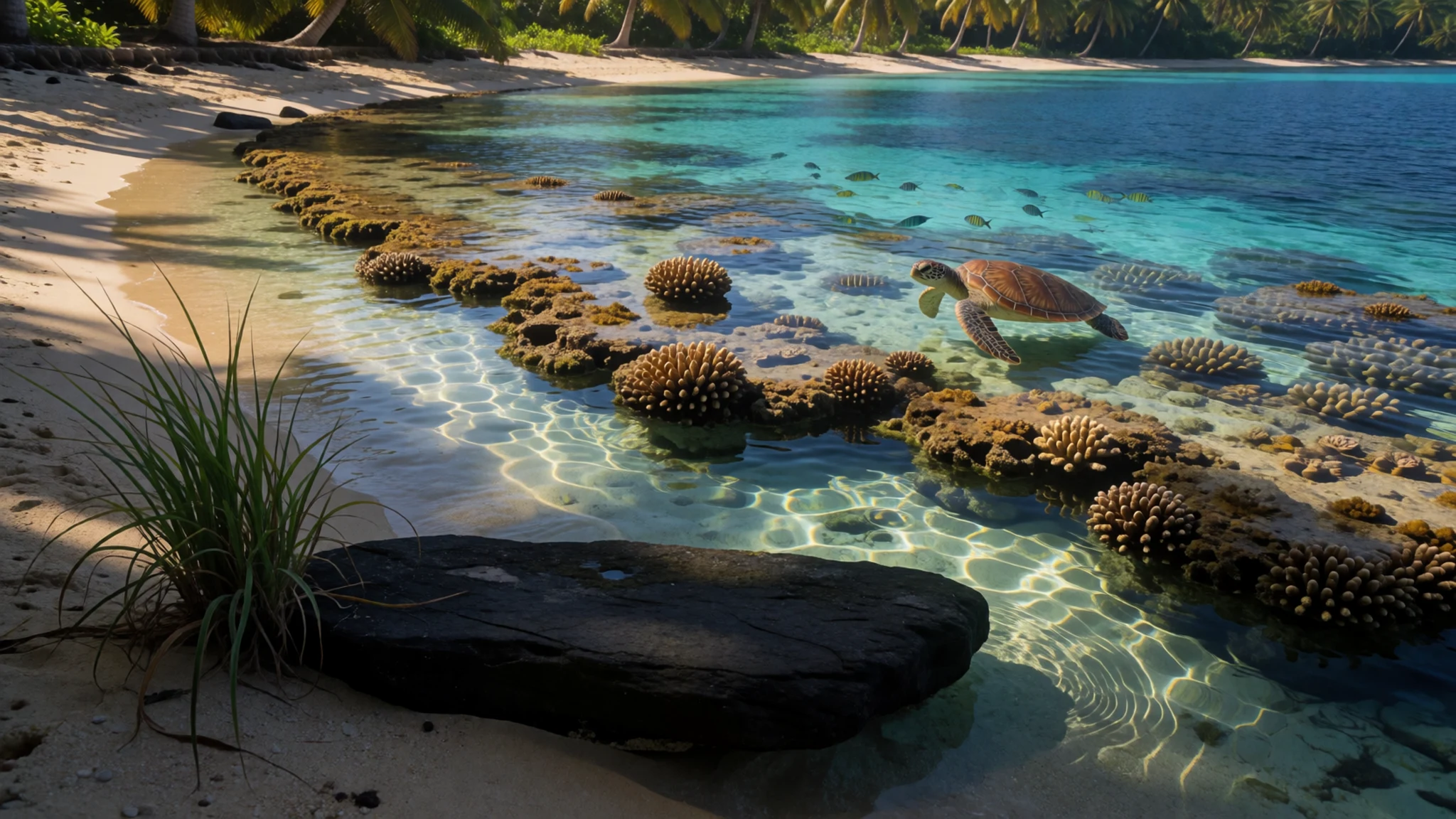
Culture
São Tomé Island has a culture woven from African and Portuguese threads, and music is where it shows most. Portuguese is the official language and is heard alongside local creole speech. Island rhythms such as ússua and socopé are danced at gatherings, and their couple steps may owe something to Portuguese ballroom. Tchiloli is the best-known stage tradition: villagers act out a tragic court drama in elaborate costume, with long speeches and slow processions, and a performance can last for hours. The danço-Congo blends song, dance and theatre in a livelier register. Football is followed passionately, and a match on a dusty pitch is an easy way to meet people. Life outside the capital still follows the farm and the sea: cocoa harvests, fishing boats landing at dawn, markets where fruit and fish change hands before the heat builds. The pace is relaxed, greetings matter, and a few words of Portuguese go a long way. Former roça communities carry the memory of plantation life, and some families still live in old estate housing. Visitors who treat the island as a living place rather than a backdrop get the most from it. When photographing people at work in markets, on boats or in plantations, ask first and accept a refusal with a smile.
What to wear
Traditional dress on São Tomé Island is less a single costume than a set of everyday and festival habits. Women have long worn wrapped cloths and head-ties in brightly printed cotton of the kind common across West and Central Africa, and printed fabric is still used for skirts, dresses and baby slings. Tchiloli performers wear costume modelled on a European royal court, with robes, crowns and masks, and these are kept for the performance itself. Day to day, most people wear what is practical in the heat: T-shirts, shorts, cotton dresses, football shirts, flip-flops or sandals, with smarter clothes for church on Sundays. Farmers and fishermen favour old, hard-wearing clothes. Visitors should pack light, quick-drying cotton or linen, a rain jacket, a sun hat and swimwear, plus a cover-up for town, since walking through the capital in beachwear looks out of place. Churches call for covered shoulders and knees. For forest trails and plantation paths, wear closed shoes with good grip and long trousers against scratches and insects, and keep sandals for the beach.
What to eat
- Grilled or stewed fish with breadfruit — Fishing villages and small eateries along the coast road
Fish is the staple of São Toméan meals, usually served with breadfruit and mashed or boiled cooked bananas. Hot spices are used with a free hand, so ask for the sauce on the side if you are cautious.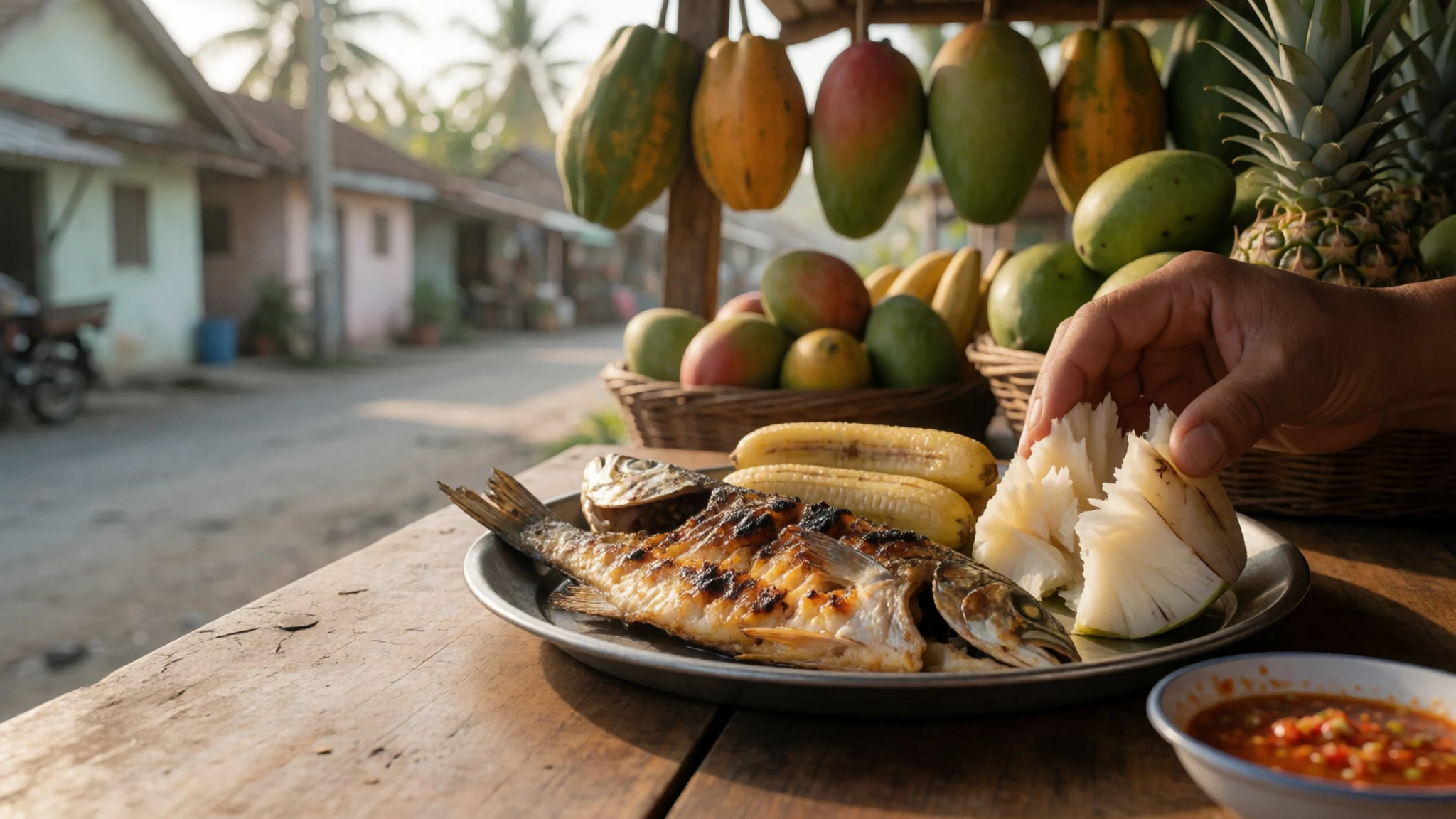
- Flying fish — Beachside eateries and the fish landing at dawn
Flying fish appear on menus at certain times of year and are cooked simply, grilled or fried, with local starches. If you see them offered, they are worth ordering because the season is short.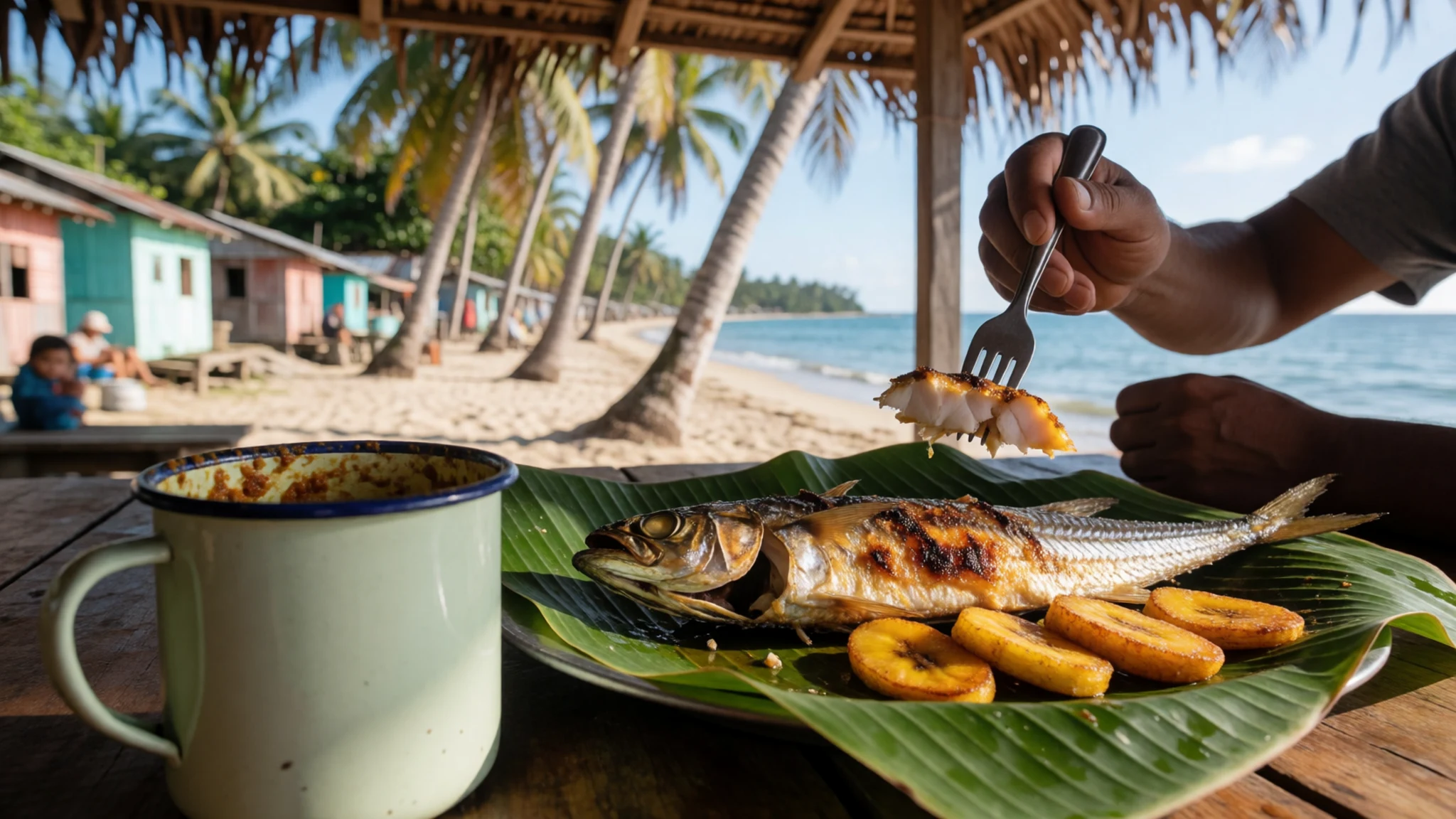
- Búzios (land snails) — Inland villages and local market eateries
Búzios are large land snails, a source of protein for people living inland who cannot always afford fish or meat. They are cooked in a spiced stew and eaten with a starch; adventurous eaters should try them once. - Tropical fruit — The central market in the capital and roadside stalls
Papaya, mango, pineapple, avocado and bananas grow abundantly and form a large part of the diet. Eaten fresh in the morning, they make the best breakfast on the island, and the stalls are cheap. - Palm wine — Roadside sellers in the inland districts
Inland, vendors along the road sell palm wine, a lightly fermented sap that tastes sweet and sour by turns. It is very inexpensive and best taken in small amounts. Local beers such as Creolla and Rosema are easier to find.
Plan it
Best time. June to September is the drier stretch and the easiest for hiking and the roads; the wetter months bring heavy rain, muddy forest trails and rougher seas. The island is equatorial, so expect warmth and humidity whatever the month.
How long. 4–6
Getting there. Everyone arrives by air at São Tomé International Airport, a short drive from the capital; check current routes with airlines, as connections are limited. From there, taxis, hired cars with drivers and minibuses cover the roads, including the coast road south towards Angolares.
Budget. mid
Tips
- Check visa rules well before booking, as the visa-free list is limited and can change
- Hire a local guide for Obo National Park, the peak and the waterfalls
- Book roça lunches and stays ahead, and do not rely on cards outside the capital
- Take care on the roads and watch for tourist scams in the main city
- Watch where you put your hands on forest trails, as black cobras live in parts of the south and east
Etiquette
- Greet people before asking for anything
- Ask before photographing people at work
- Dress modestly when entering churches or walking through town
Nearby
Sources
- Wikidata Q233124 (CC0)
- Wikipedia: São Tomé (island) (CC BY-SA 4.0)
- Wikivoyage: São Tomé Island (CC BY-SA 4.0)
- Gulf of Guinea (English).jpg, Unknown author (CC BY 3.0)
- Praia Café, no ilhéu das Rolas, Joao Maximo (CC BY 2.5)
- Sao Tome National Museum with Lighthouse, Chuck Moravec (CC BY 2.5)
- Boca do Inferno, David Stanley (CC BY 2.5)
- 2012SaoTome-308, Helena Van Eykeren (CC BY 2.5)
- Coffee Grower, Zoika Naskova (CC BY-SA 4.0)
- DSC_8257, Ben Sutherland (CC BY 2.5)
- Sao Tome 20, Chuck Moravec (CC BY 2.5)


