River Gambia National Park
River Gambia National Park, The Gambia
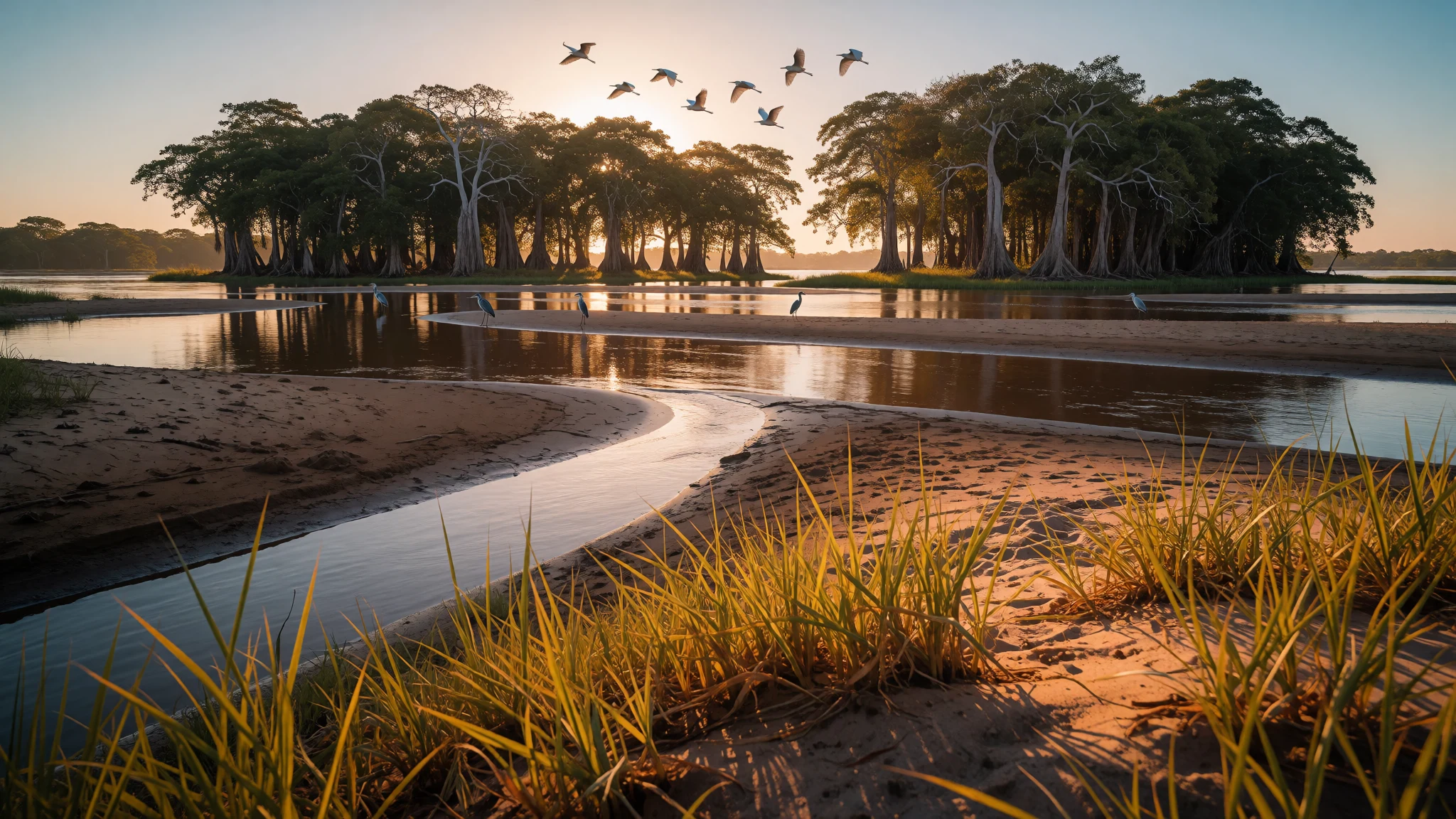
River Gambia National Park is a closed sanctuary of wooded islands where chimpanzees, crocodiles and hippos share a quiet reach of the river.
The place
River Gambia National Park lies on the left bank of the Gambia River in Niamina East, Central River Division, and includes the Baboon Islands. The river is the spine of the country, broad and slow, and at this reach it braids around sand, creeks and trees. From a boat the islands read as a low wall of forest. Roots and shrubs meet the water, and behind them the canopy is thick enough that the ground stays in shade for much of the day. This is not a park of roads and viewpoints. The land is the sanctuary, and the visit happens on the water that wraps it. The reason for the islands is the chimpanzees. A rehabilitation project placed animals here that could not live safely among people, and the troops have remained, feeding, breeding and holding their stretches of forest. They behave as wild animals even though their history runs through human care. On a quiet morning some may come to the bank to drink or feed, which is when a boat, held off the shore, can watch. Just as often the forest offers a call, a shake of leaves, or nothing. That uncertainty belongs to the place. The same water holds other large animals. Crocodiles rest on mud and low limbs. Hippos use the side channels and can surface close to a hull with little warning. Birds work the forest edge: herons in the shallows, kingfishers on the slack water, bee-eaters and raptors above the bank. Villages and fields lie back from this protected reach, so the noise of the river towns drops away once the engine is cut. Heat, glare and insects are constant. In the dry months the light is hard and the outer bush looks dusty; in the rains the green deepens and the river runs higher.
Its story
The story of River Gambia National Park is the story of chimpanzees that needed open water between them and everyone else. Over the years when young apes were still taken as pets and trade animals, some were confiscated or handed to people willing to try to give them a life outside a cage. Stella Brewer, and later Janis Carter with the Chimpanzee Rehabilitation Project, did that work on and around these islands. The river was the fence. Chimpanzees rarely take to the water, so an island with forest and fruit, and with no village on it, could hold a troop that would not have stayed on the mainland. The work was slow and personal. Animals that had lived in yards had to learn foraging, nest-building and the company of their own kind again. Keepers who knew them stayed close early on, then drew back as groups formed and claimed ground. Over time the islands stopped being holding places and became territories, with births, rank and the ordinary arguments of a chimpanzee community. The Gambian state set the islands aside as a park, so the project had a legal boundary as well as a watery one. Care and study continued, while boat travel around the islands was cut back in 1998. That history still decides what a visit can be. The animals are not display stock, and the islands are not a landing stage. Crews who know the river treat distance as the method: watch, listen, and leave. River Gambia National Park holds both ideas together: it exists because of human harm and human repair, and it only works if people remain on the outside of it.
What to see
- Baboon Islands — Mid-river islands
River Gambia National Park lies on the left bank in Niamina East, Central River Division, and includes the Baboon Islands, wooded ground in the river with no public trails and no casual landing. From the boat the bank reads as a green wall: river trees, tangled undergrowth and narrow creeks between the islands. This is the chimpanzees' ground. Crews hold the channel so the forest can be seen without pushing under the branches where animals rest.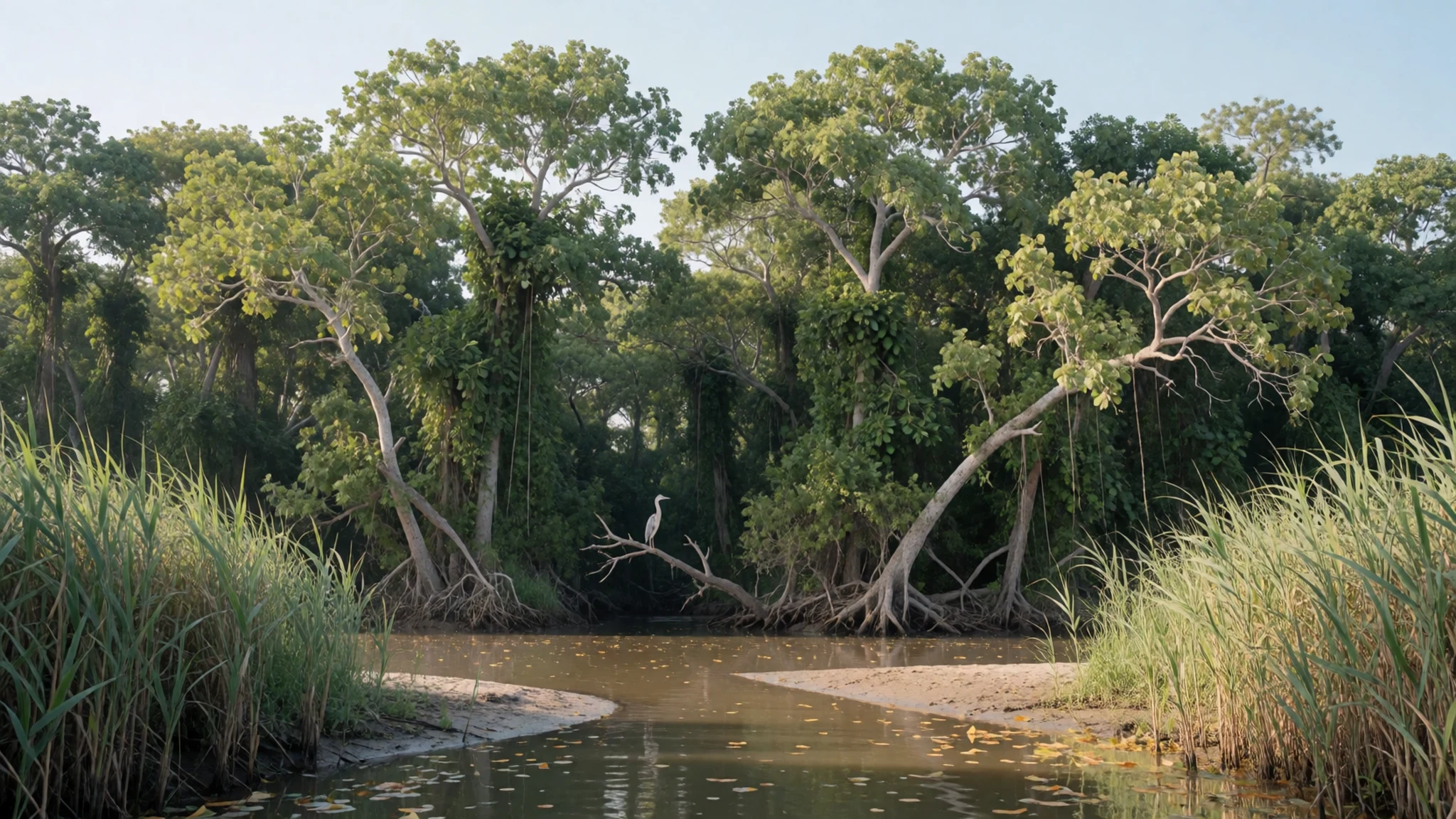
- Chimpanzees — Island banks
The chimpanzees of River Gambia National Park live as island troops, animals from a rehabilitation project and young born in the forest since. They feed and nest out of sight for much of the day. A sighting is usually at the bank: a face in the leaves, a group drinking, or a short display before they turn inland. The wait and the calls are part of the visit.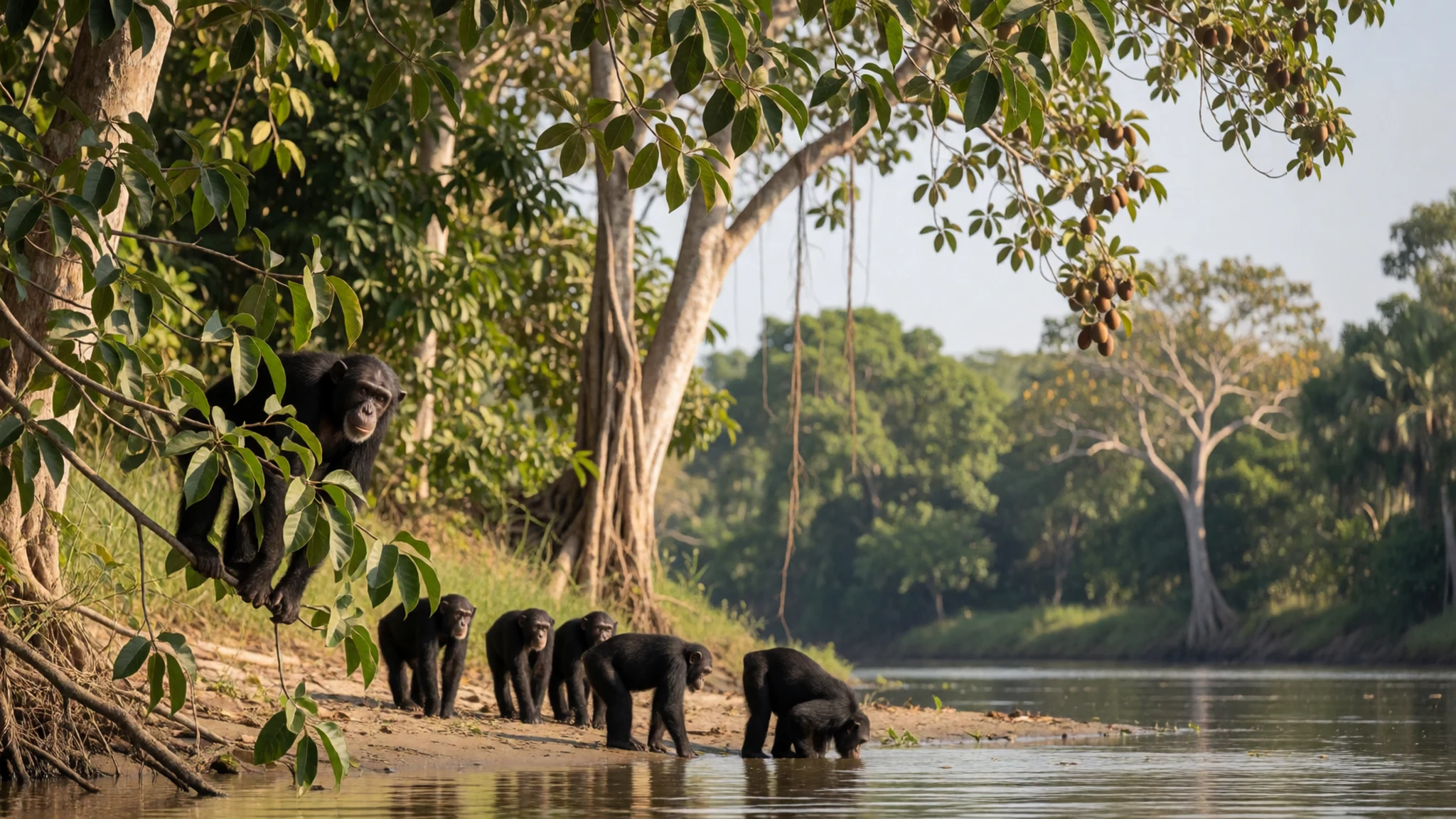
- Crocodiles — Mud banks and creeks
Crocodiles are a regular part of River Gambia National Park, hauled out on mud, low limbs and the edges of creeks. They can look like logs until the jaw or the eye gives them away. A quiet drift shows more than a chase. A startled animal slides off in a rush, so crews stay in open water rather than edging in for a photograph.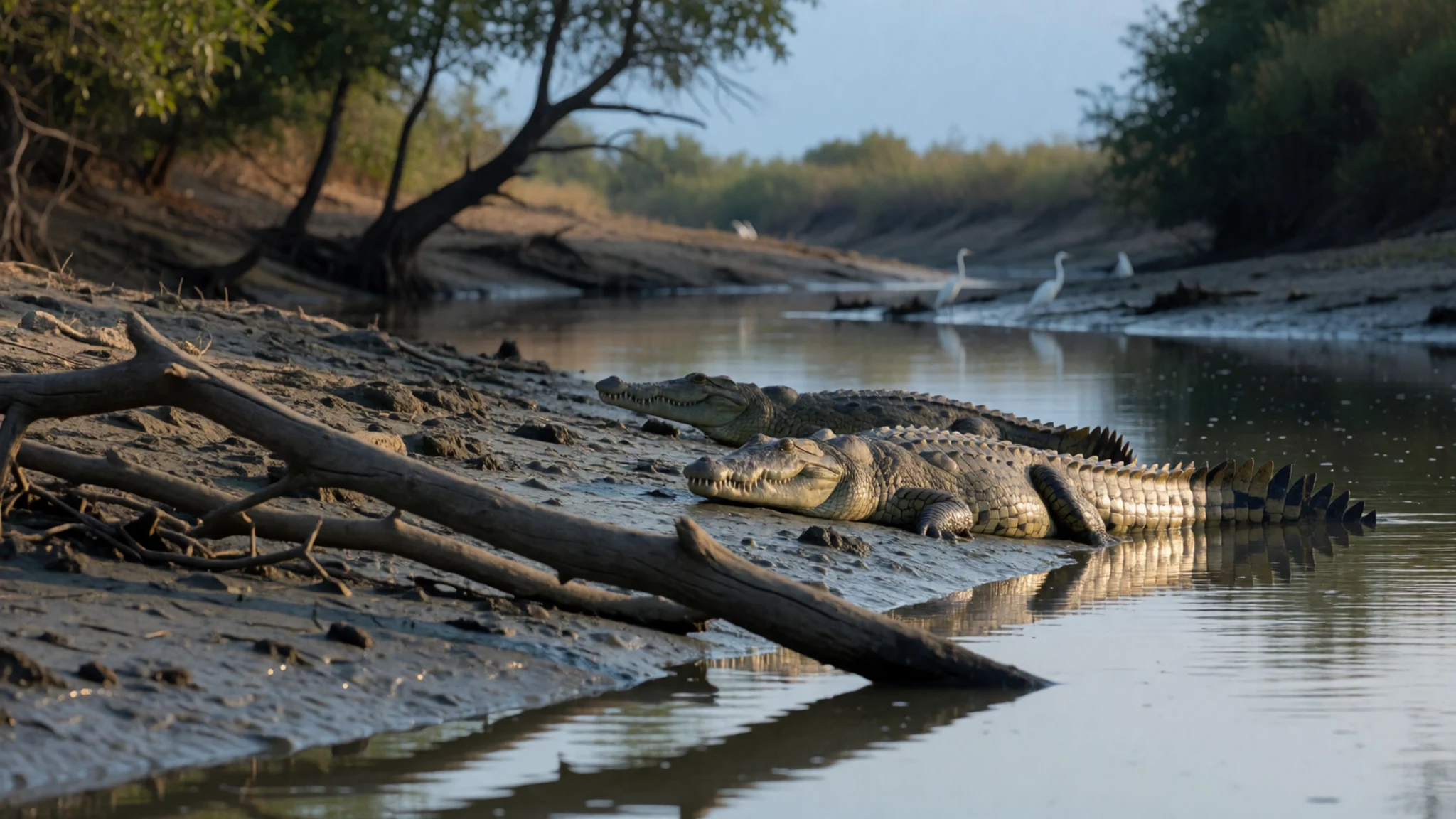
- Hippos — Side channels
Hippos use the side channels of River Gambia National Park and deserve more caution than the scenery suggests. A pair of ears and a back in the current is the usual view; the bulk stays under. They move quickly over a short distance and will warn a boat off, especially where a group has calves. Guides give them a wide line and do not idle in a claimed channel.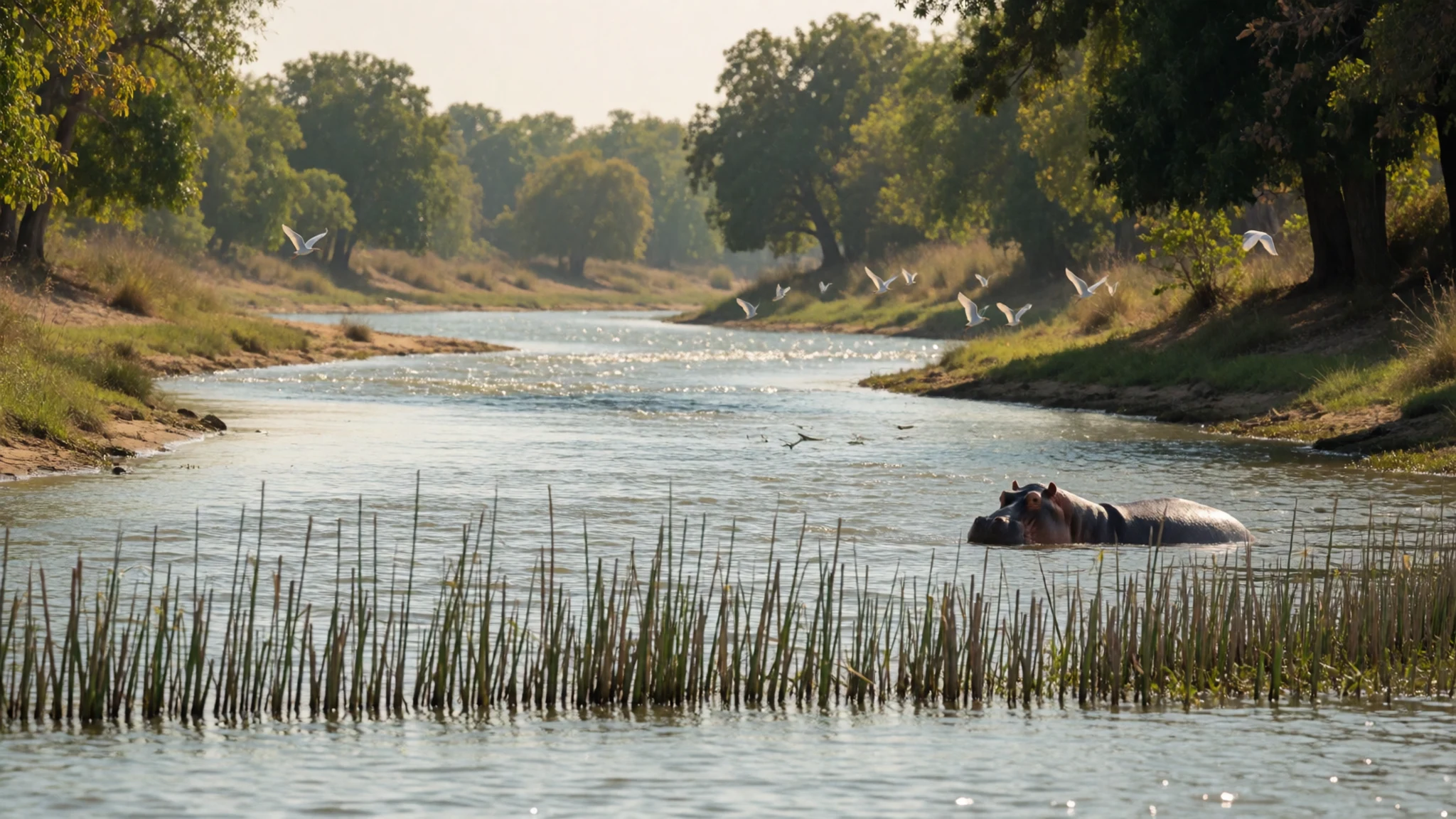
- Gallery forest — Island margins
The gallery forest of River Gambia National Park is a ribbon of trees that drinks from the river and thins where drier woodland begins. From the boat it is a layered wall of pale trunks, hanging vines and a canopy that throws deep shade just inland. Fruiting trees feed the chimpanzees and pull them toward or away from the bank. No one walks it on a normal visit.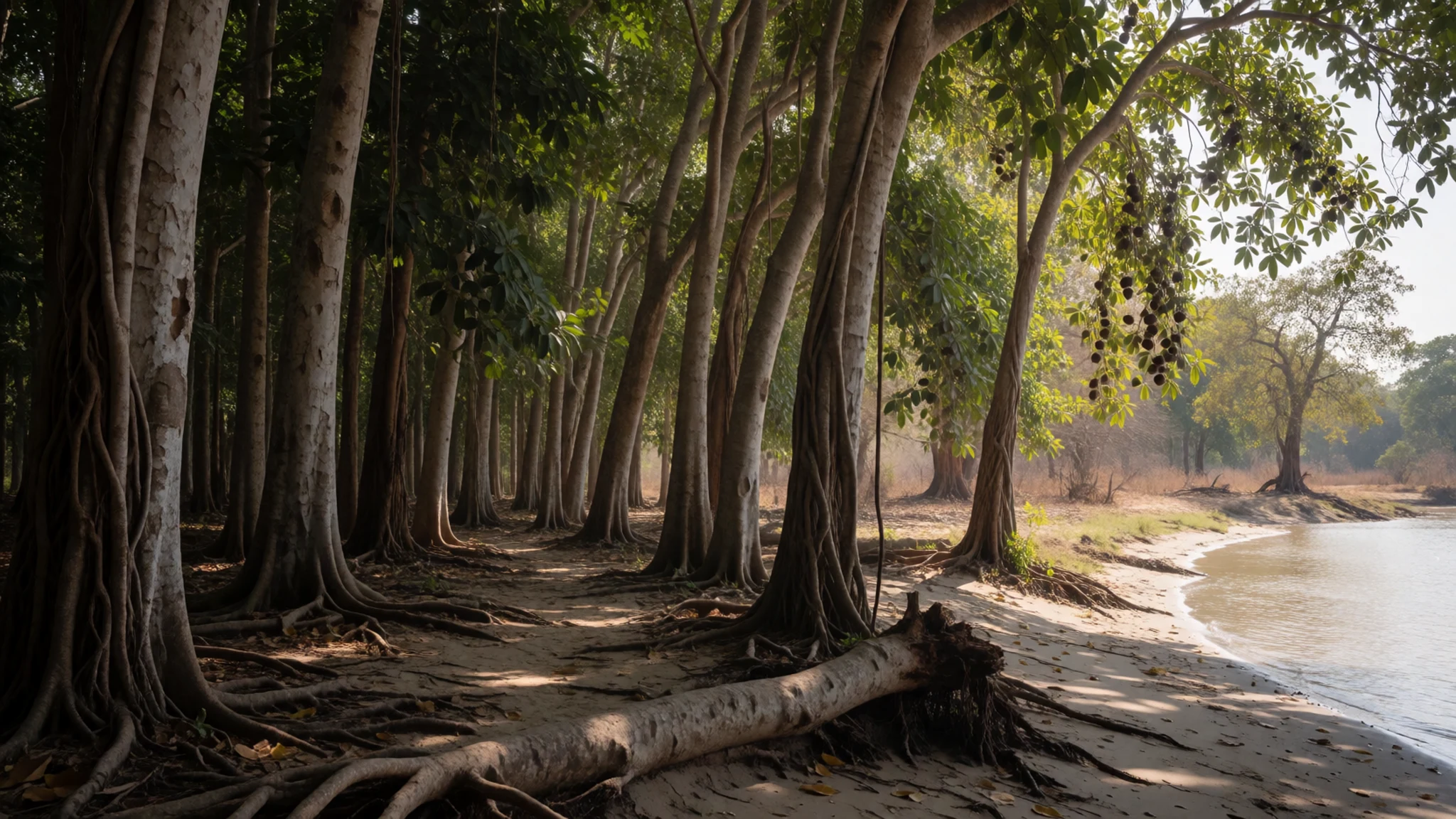
- River birds — River banks
Birds line the banks of River Gambia National Park in a way that fills the gaps when mammals stay hidden. Kingfishers work the slack water, herons and egrets stand in the shallows, bee-eaters hawk from bare twigs, and raptors circle above the canopy. The early boat is the better one, while the air is still and the mud is busy.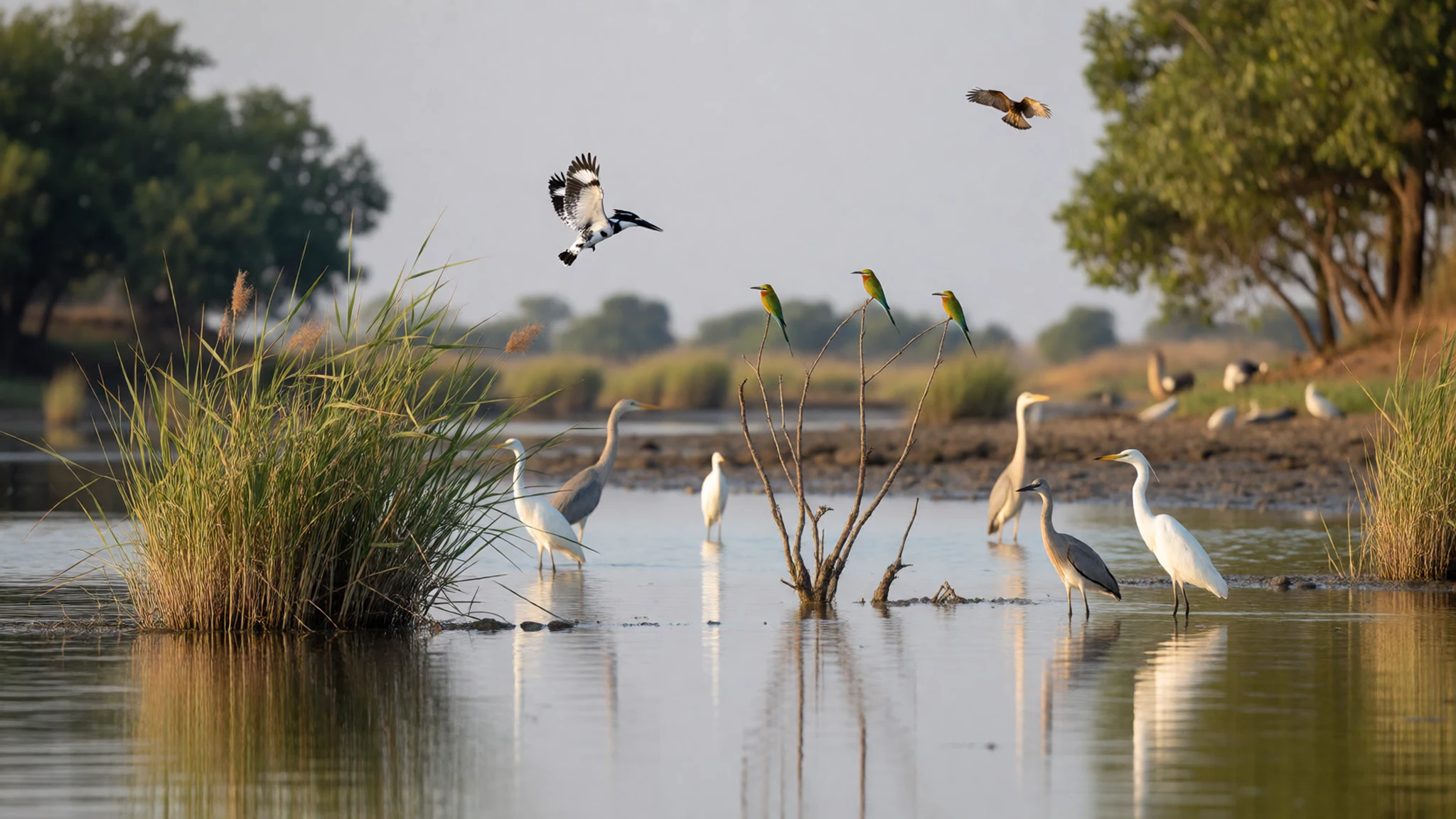
Culture
River Gambia National Park lies in a country shaped by the Mandinka, Wolof and Fula peoples, and by a long Muslim majority along the river. Daily life in the river towns, Janjanbureh and Kuntaur among them, follows the prayer day, the market day and the farming calendar. Griots still carry family histories, and the kora, a harp-lute, belongs to celebrations as well as to quiet compounds. Naming ceremonies, Friday mosque and Ramadan change the rhythm of the river towns more than any park programme does. Hospitality is real and so is reserve: a compound is a home, not a viewpoint. The chimpanzee project has its own culture of care and distance, separate from village custom but living beside it. Staff and boat crews speak of the animals as a responsibility, not as a show, and they expect guests to take the same line. On the water and in the villages, ask before you photograph people, stay in the boat at the islands, and do not feed or call the chimpanzees.
What to wear
Along the river that holds River Gambia National Park, formal dress is still the West African robe. Men wear a flowing boubou, often in cotton or a stiff embroidered cloth, for Friday prayers, naming ceremonies and official visits. Women wear a matching gown, wrapper and headwrap, with wax-print cotton for everyday occasions and a richer damask or bazin when the event is large. The cloth is the point: bold printed cotton for the market, heavier embroidered cloth for the mosque and the feast. Young people wear T-shirts, football shirts, jeans and plastic sandals, while traders and farmers keep to loose cotton that can be washed and worn hard. A day on the park itself calls for sun sense, a boat deck and modest company rather than costume. Light cotton shirts and trousers are kinder than shorts once the glare comes off the water, and long sleeves help with insects at dawn. A hat, sunglasses and a scarf that can be soaked matter more than a second outfit. Footwear should be a sandal or shoe that can take mud and a wet deck. Shoulders and knees covered sit more easily in Janjanbureh or Kuntaur if the day starts or ends near a mosque.
What to eat
- Domoda — Market cookshops in Janjanbureh and Kuntaur
Domoda, the groundnut stew, is the midday meal to know near River Gambia National Park: a peanut sauce with meat or vegetables over rice. Market cookshops in Janjanbureh and Kuntaur ladle it over rice. Chilli heat varies from cook to cook.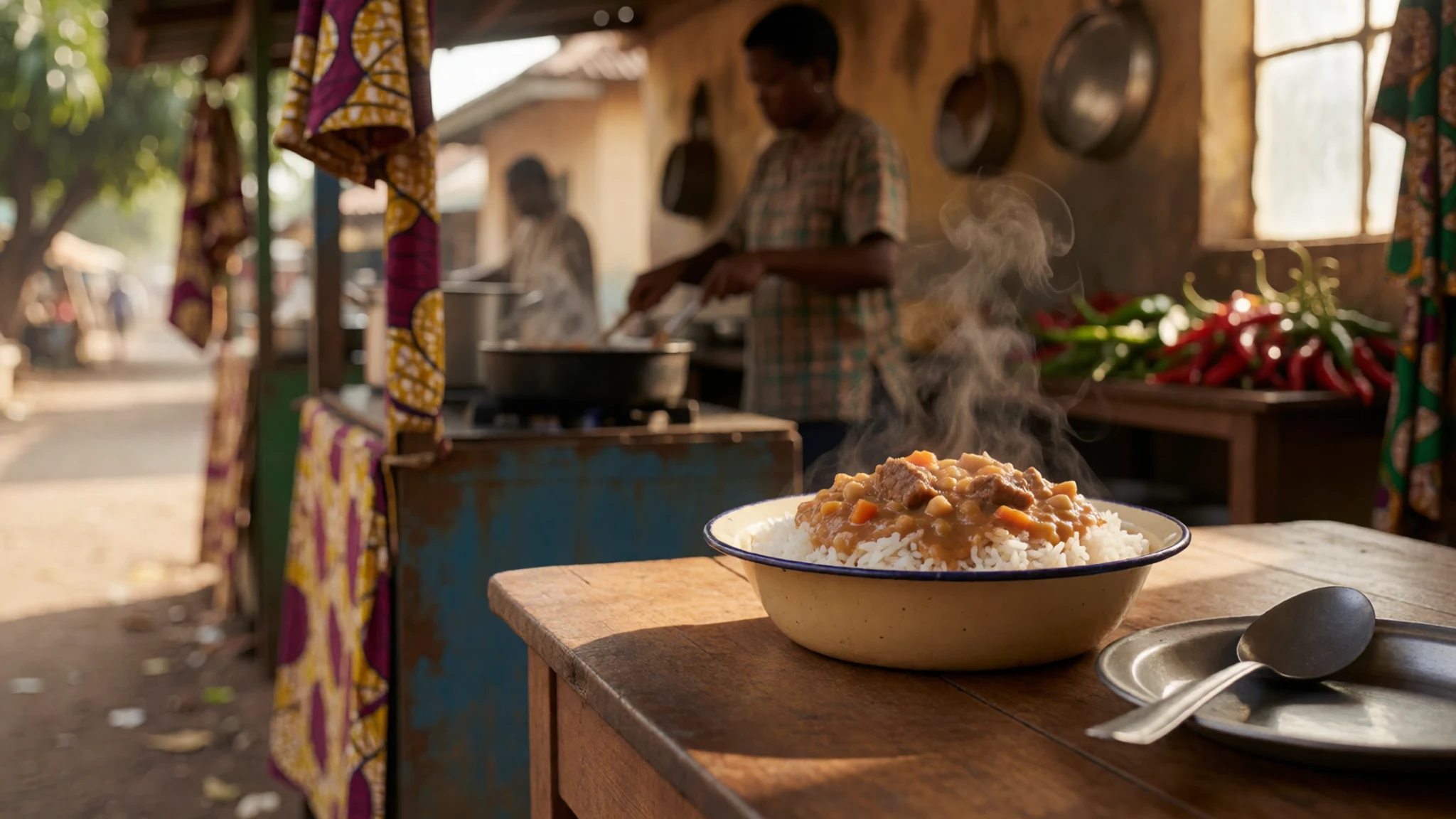
- Benachin — Cookshops around Kuntaur market and the Janjanbureh waterfront
Benachin is the one-pot rice of the towns that supply River Gambia National Park, cooked with tomato, vegetables and fish or meat. It is the same dish as jollof rice, and the river version uses fish when the catch is in.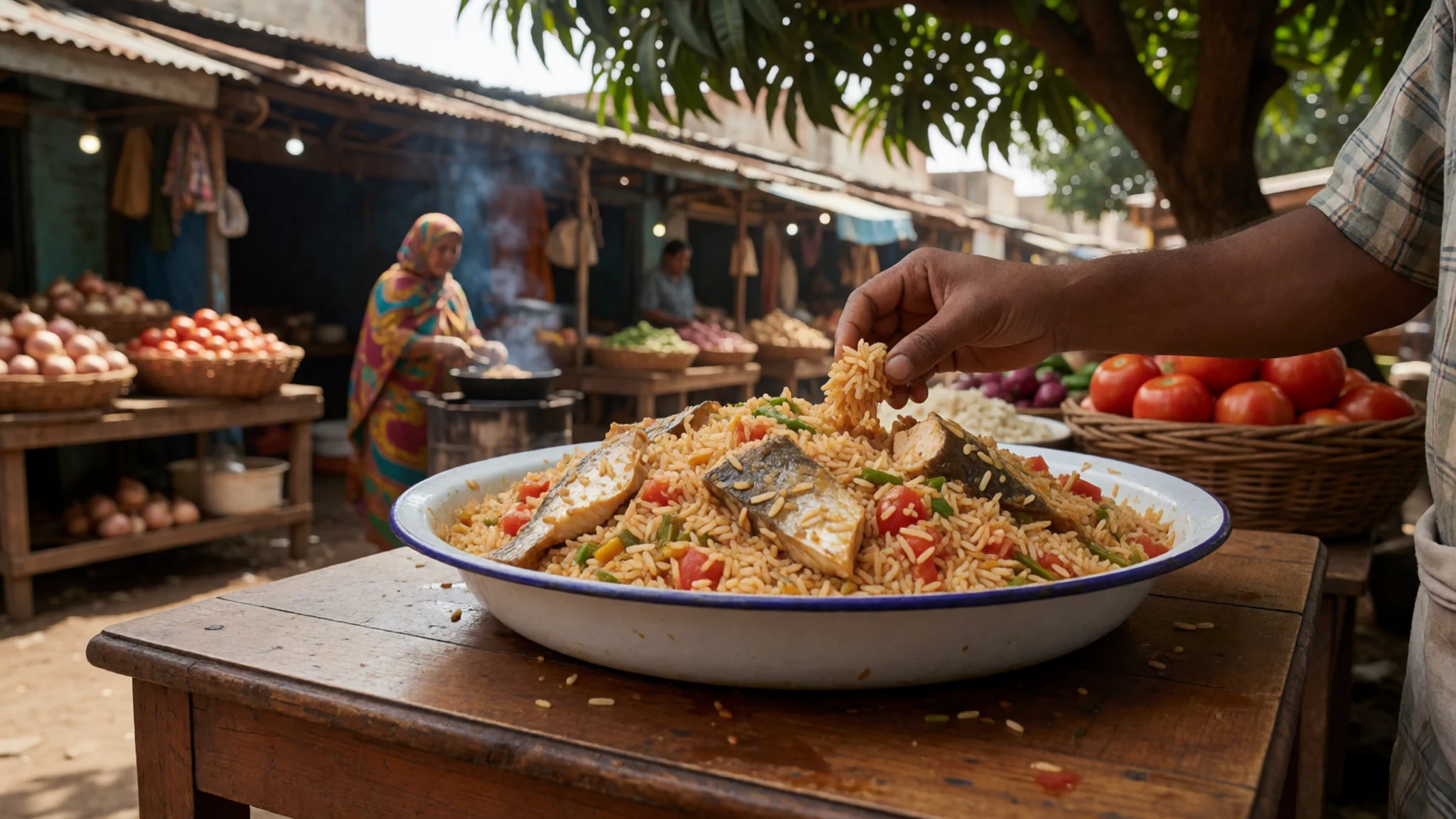
- Supakanja — Home-style cookshops in Janjanbureh
Supakanja is the okra stew eaten with rice around River Gambia National Park, slick with palm oil and usually built on fish. The okra gives the sauce a draw, so it eats differently from the peanut stews. Plainer cookshops in Janjanbureh sell it as an ordinary lunch. - Grilled fish — Charcoal stalls in Kuntaur and Janjanbureh
Grilled fish is the evening meal on the river below River Gambia National Park, whatever the boats have landed, rubbed with spice and cooked over charcoal. It comes with bread or rice and a sharp onion sauce. Stalls in Kuntaur set up as the heat drops. - Tapalapa — Bakeries and market stalls in Janjanbureh and Kuntaur
Tapalapa is the dense local loaf sold in the towns used to reach River Gambia National Park. It carries sauces and grilled fish, and it keeps on a boat if bought early. Bakeries in Janjanbureh and Kuntaur sell it by the loaf while it is still warm.
Plan it
Best time. November to February, the cooler dry season, when the roads east stay passable and mornings on the river are easier to bear. March to May is still dry but hotter. June to October brings rains, a higher river and slower rural tracks.
How long. 2-3
Getting there. Fly to Banjul International Airport, then travel by road east to Janjanbureh or Kuntaur. There is no public boat for the last leg; the park is closed and has no visitor road or public landing.
Budget. mid
Tips
- No licensed visitor boat is there to book; boat travel was cut back in 1998, and landing needs government approval.
- Start at first light, before the heat and the glare build.
- Carry drinking water and a hat; the river has no services.
- Take cash for the river towns; cards rarely help.
- Ask locally before travelling in the rains; tracks change.
Etiquette
- Stay in the boat and do not step onto the islands.
- Do not feed, call or imitate the chimpanzees.
- Give hippos and crocodiles space and do not block a channel they are using.
- Ask before photographing people, and cover shoulders and knees in town.
Nearby
Sources
- Wikidata (CC0)
- Wikipedia (CC BY-SA 4.0)
- Wikivoyage (CC BY-SA 4.0)
Wildlife
- Chimpanzee (animal)
A chimpanzee is a big, dark-haired ape with a bare face and bare hands, and it is among our nearest cousins in the animal world. In River Gambia National Park, chimpanzees live in troops on islands. Some are animals from a rehabilitation project, and others are young born in the forest since. The notes give no season or time of day, so ask your guide. Watch from a respectful distance, keep your voice low, go with a guide, and never offer food.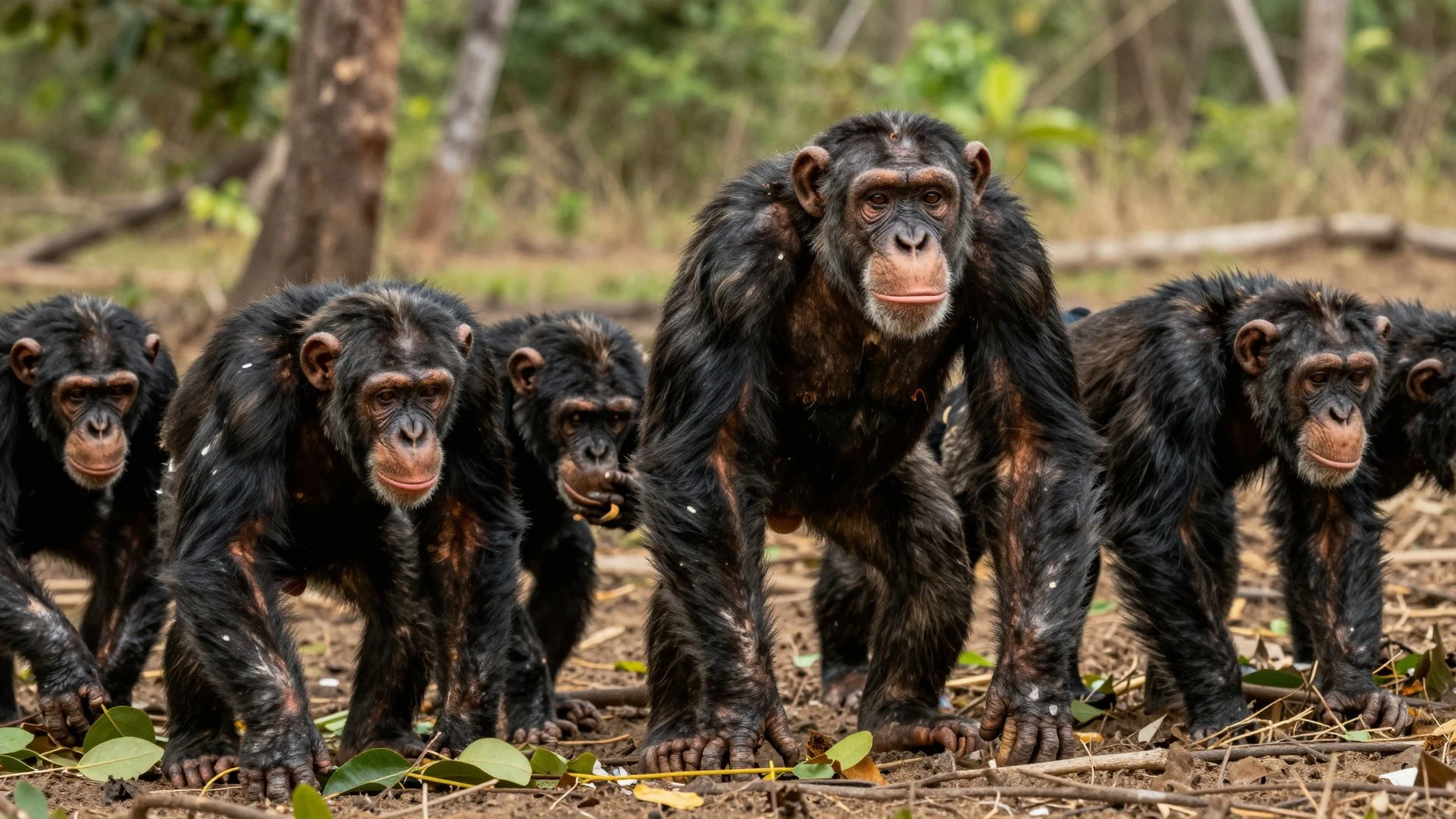
- Hippo (animal)
A hippo is a huge river horse, which is exactly what its old Greek name means, and it spends much of its life in the water. In River Gambia National Park, hippos use the side channels, where the lovely scenery can make you forget how much care they deserve. The notes do not say when to see them, so ask your guide. Keep well back, stay quiet, watch only with a guide, and never feed them.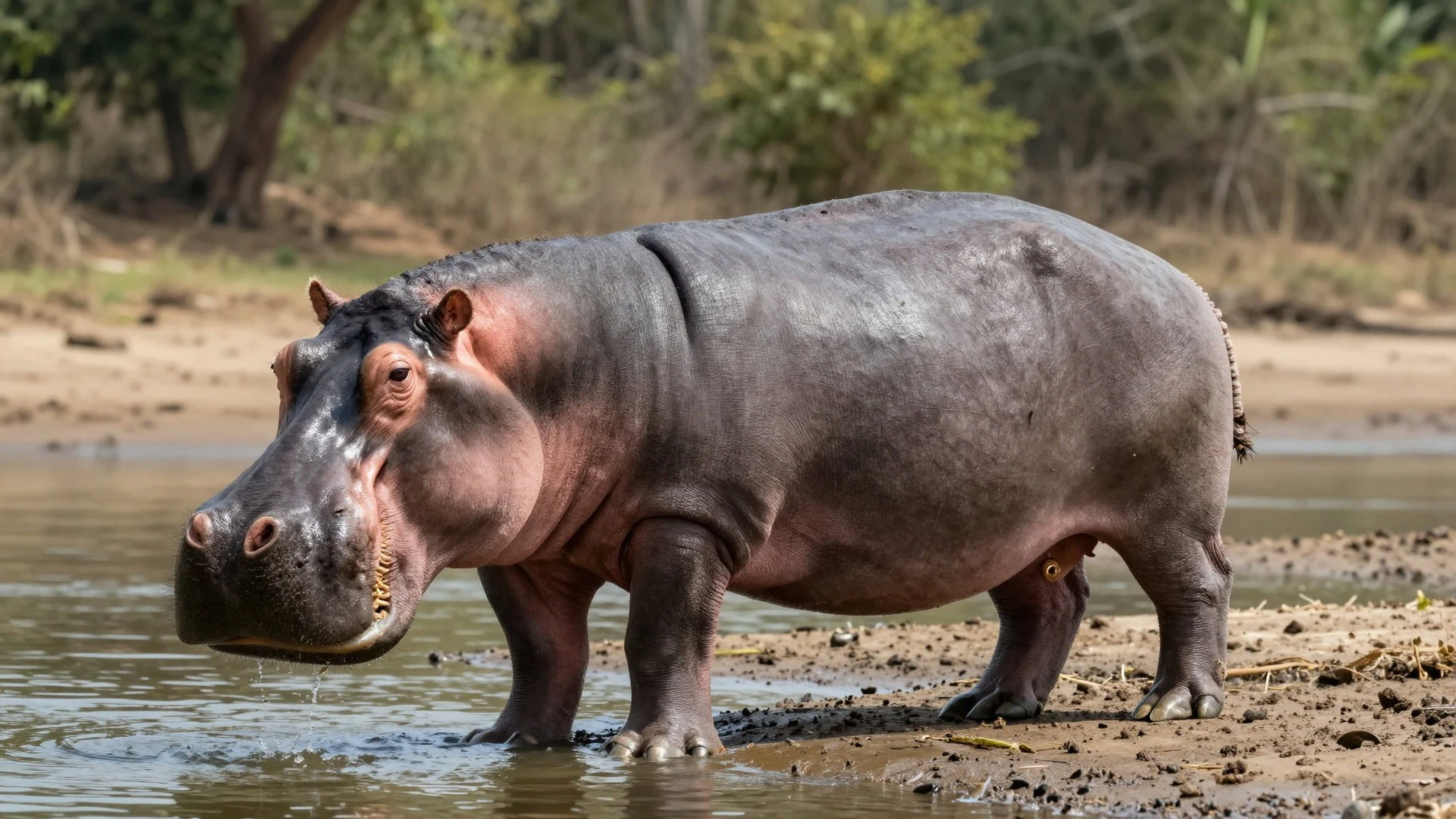
- Pied kingfisher (bird)
The pied kingfisher is a black-and-white fish-catcher with a little crest that hovers over clear water, then dives. In River Gambia National Park, kingfishers work the slack water. When one perches, watch for its bobbing head and flicking tail. Males wear a double band across the chest, while females have a single broken one. The notes give no season or hour. Stay quiet, keep your distance, let a guide help you find them, and never feed them.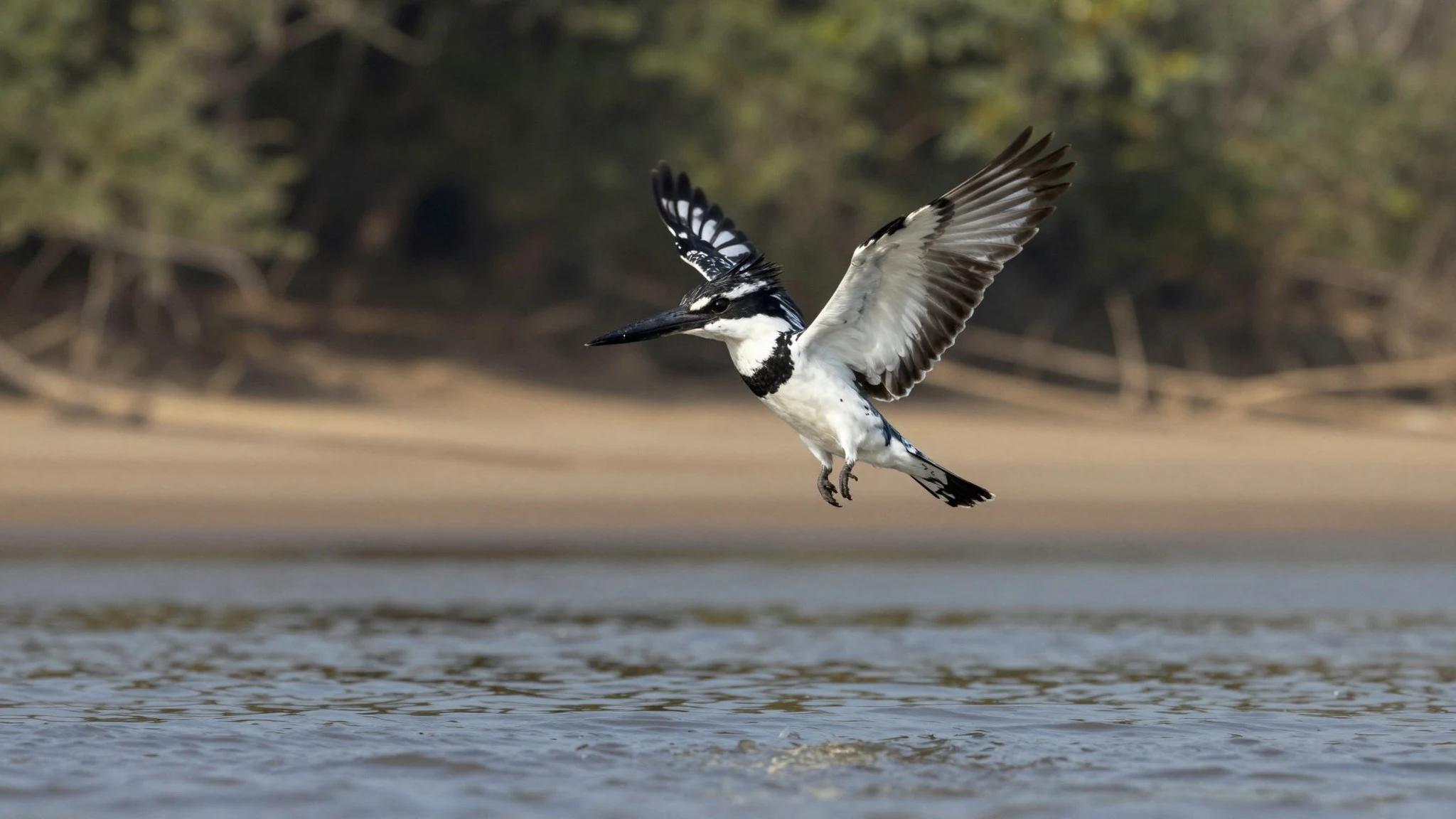
- Red-throated bee-eater (bird)
The red-throated bee-eater is a bird with a red throat, as its name promises, and it launches from bare twigs to hunt in the air. In River Gambia National Park, scan bare twigs where bee-eaters perch before darting out. It is widespread and not at risk, so seeing one is a treat rather than a rarity. The notes give no season or hour, so ask your guide. Keep your distance, stay quiet, go with a guide, and never feed wild birds.