Banjul
Banjul, The Gambia
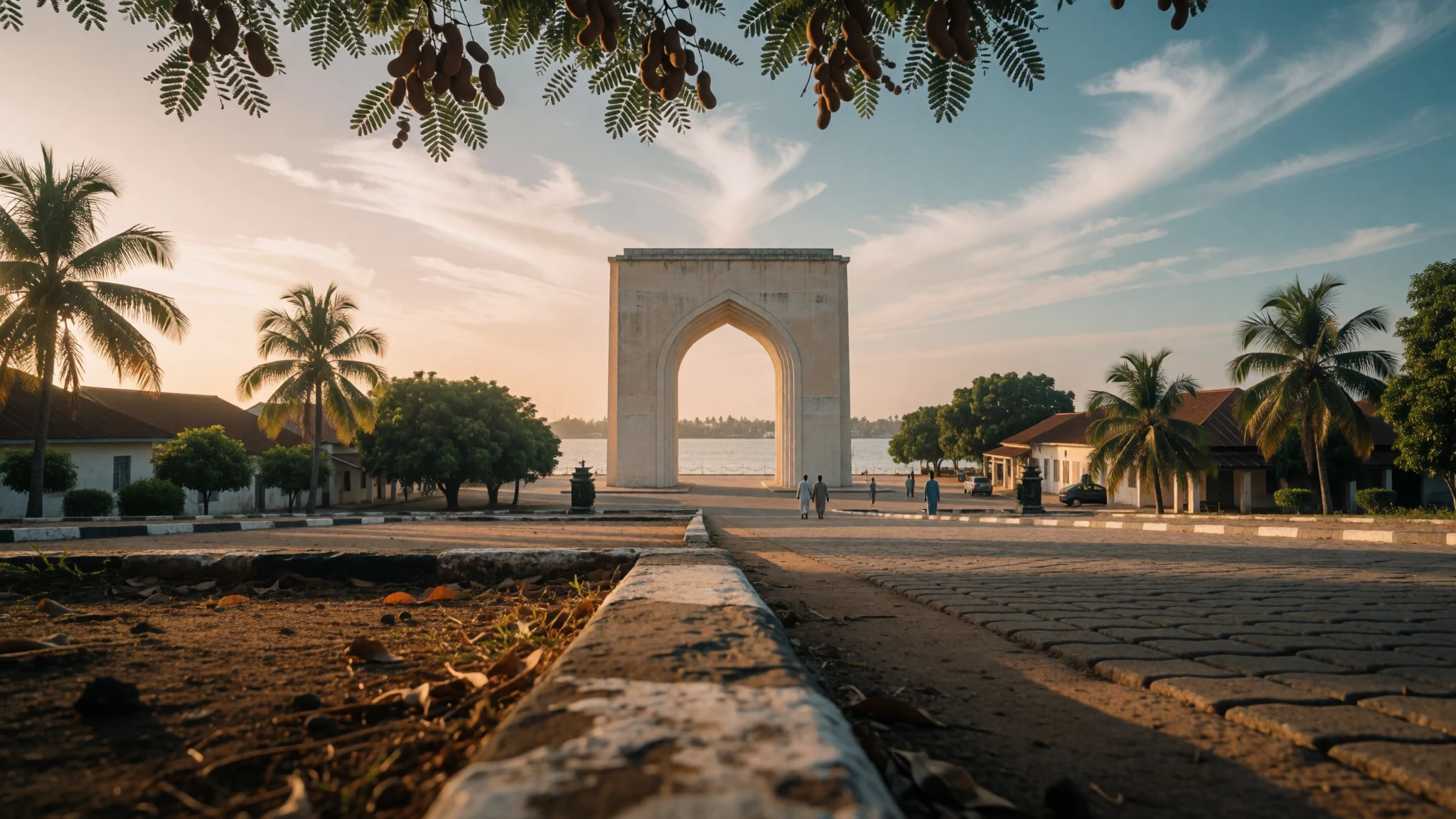
Banjul is a small, low-rise river-mouth capital with colonial streets, a lively market and a calm that Gambia's busy coast lacks.
The place
Banjul is the capital of The Gambia, and it sits on a small island where the Gambia River runs out into the Atlantic. Mangrove swamps and open sea hem the island in, which explains why the city never sprawled. The city proper has a population of 31,356, while the crowded, fast-growing suburbs and resort towns are on the mainland, across the bridge. Ferries also cross the river to the far bank, and the ferry terminals are among the busiest corners of town.
The feel is of a quiet administrative centre rather than a tourist district. Buildings are mostly low, many dating from the colonial era, and some old trading compounds still stand between newer shopfronts. Government offices, courts, two cathedrals and several mosques share the grid of streets, and the market is where the day's noise gathers. After dark the city is subdued, and most nightlife and dining for visitors is along the coast on the mainland side.
Banjul is hot all year, and the sun is strong even when the air is humid and cloudy. Walking the whole centre is possible in a morning, but the heat makes slow, shaded stops sensible. The land is very flat and sits barely above the water, and a Gambian government minister has warned that a rise in sea level of about a metre would put the city under water. Many visitors treat Banjul as a day trip from the coast, which suits its scale, though an early start and a local guide or driver make the day easier.
Its story
Banjul began as a trade and naval outpost, but the island had an earlier history. It belonged to the Kingdom of Kombo, and at one stage it was leased to the Baltic Duchy of Courland, which tried to build a colonial foothold on the river. That venture faded, and the island stayed in local hands until the British came.
In 1816 the King of Kombo, Tumani Bojang, handed the island to Alexander Grant, a British commandant, in return for an annual payment in iron bars. Grant arrived with a small military party and built houses and barracks. The aim was twofold: to command the entrance to the river estuary and to help enforce the ban on the slave trade. The British called the island St Mary's, and the new town Bathurst, after the minister in London responsible for war and the colonies. Streets were set out in a modified grid and named after generals who fought at Waterloo.
Bathurst soon drew settlers. Africans from many communities moved in, along with Syrian and Lebanese traders and Europeans from England, France and Portugal. Most residents were Muslim, with a sizeable Christian minority that included the Aku, descendants of people freed from slave ships. The town became the administrative centre of the Gambia Colony and Protectorate.
The name Bathurst lasted until a few years after independence, when the capital took the name Banjul. The grid of streets, the old government buildings and the mix of faiths and origins all trace back to that nineteenth-century outpost.
What to see
- Arch 22 — Entrance to the city, northern edge
Arch 22 is a commemorative arch on the road into Banjul, standing in the middle of an open square. Visitors can go up for a view across the rooftops and the river mouth, and a textile museum is housed inside. Check the city's official site for access before going.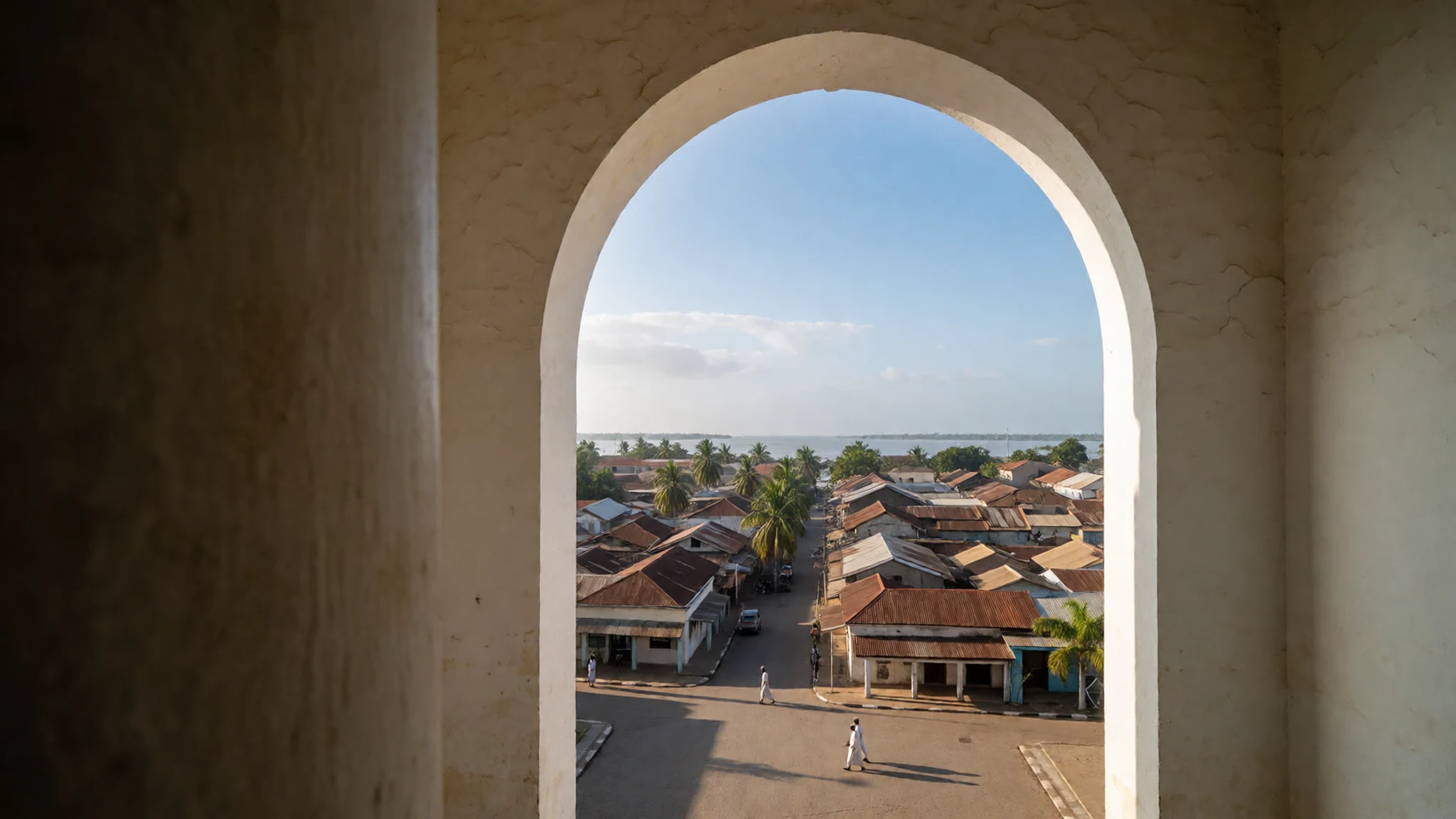
- The Gambia National Museum — Central Banjul
The Gambia National Museum is a small museum of cultural and historical objects, and a sensible first stop for understanding the country before walking the streets. It is quick to see, so it pairs well with a wander through nearby colonial-era buildings. Opening times change, so check ahead.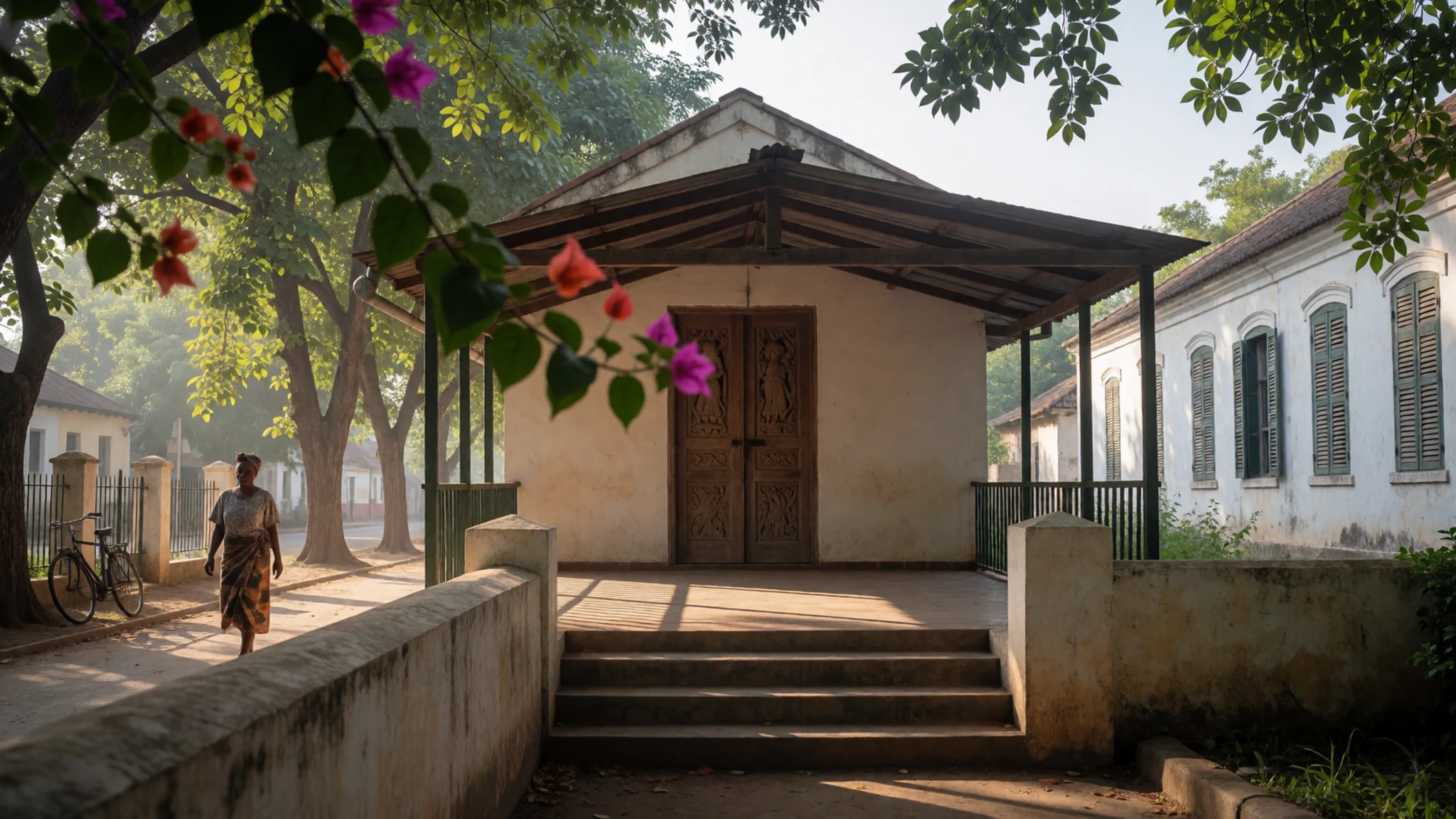
- Albert Market — Near the ferry terminal, central Banjul
Albert Market is the city's main trading area, a crowded maze of stalls selling fabric, spices, vegetables, fish, household goods and crafts. It is the best place to see everyday Banjul at work. Keep bags zipped and close, since pickpocketing is reported in the thickest crowds.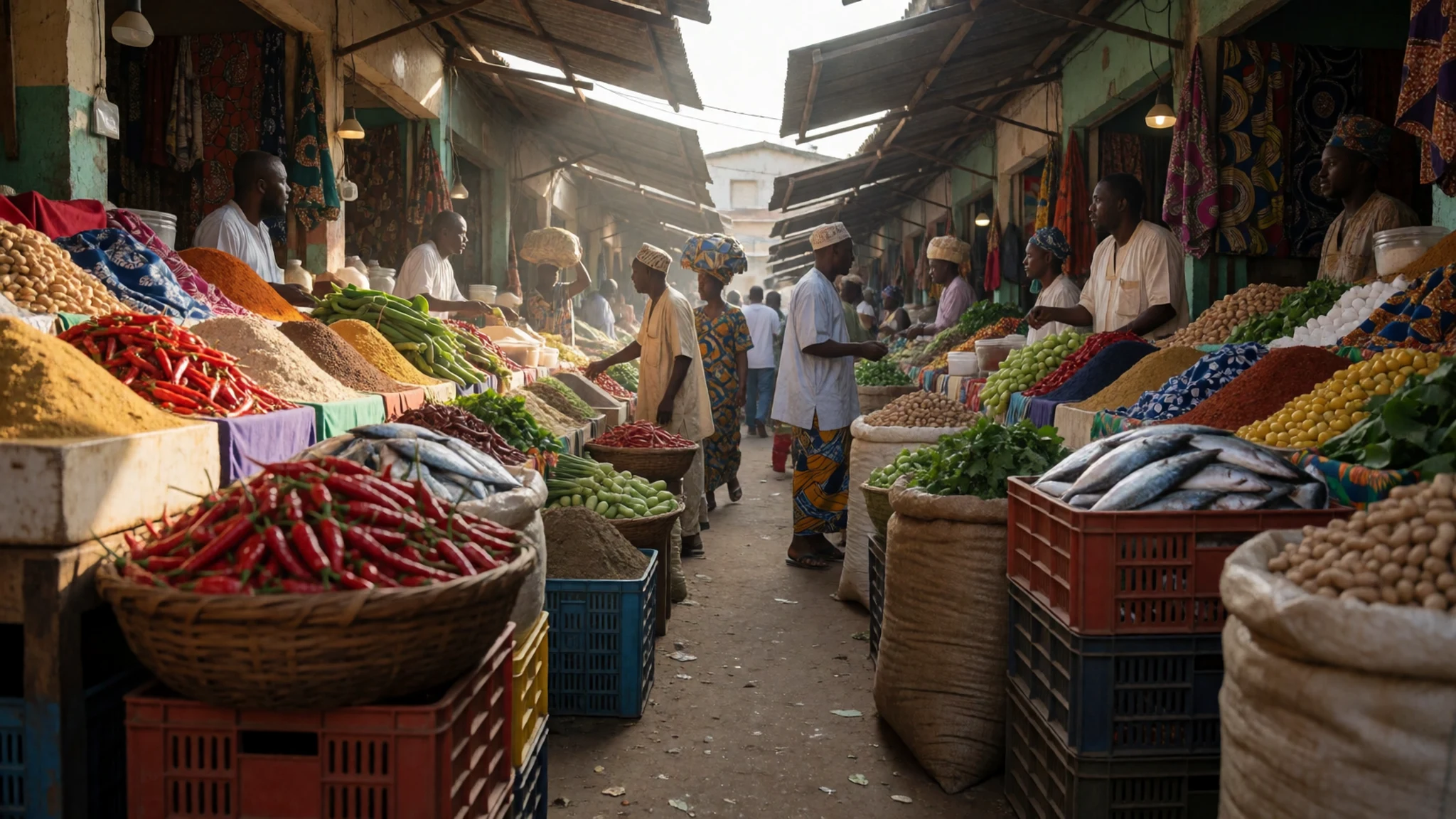
- State House and Court House — Central Banjul
Banjul State House and the Court House are among the colonial-era government buildings that give the centre its character. Both are best appreciated from the street, as part of a slow walk along the old grid. Ask locally before photographing official buildings, as rules can be strict.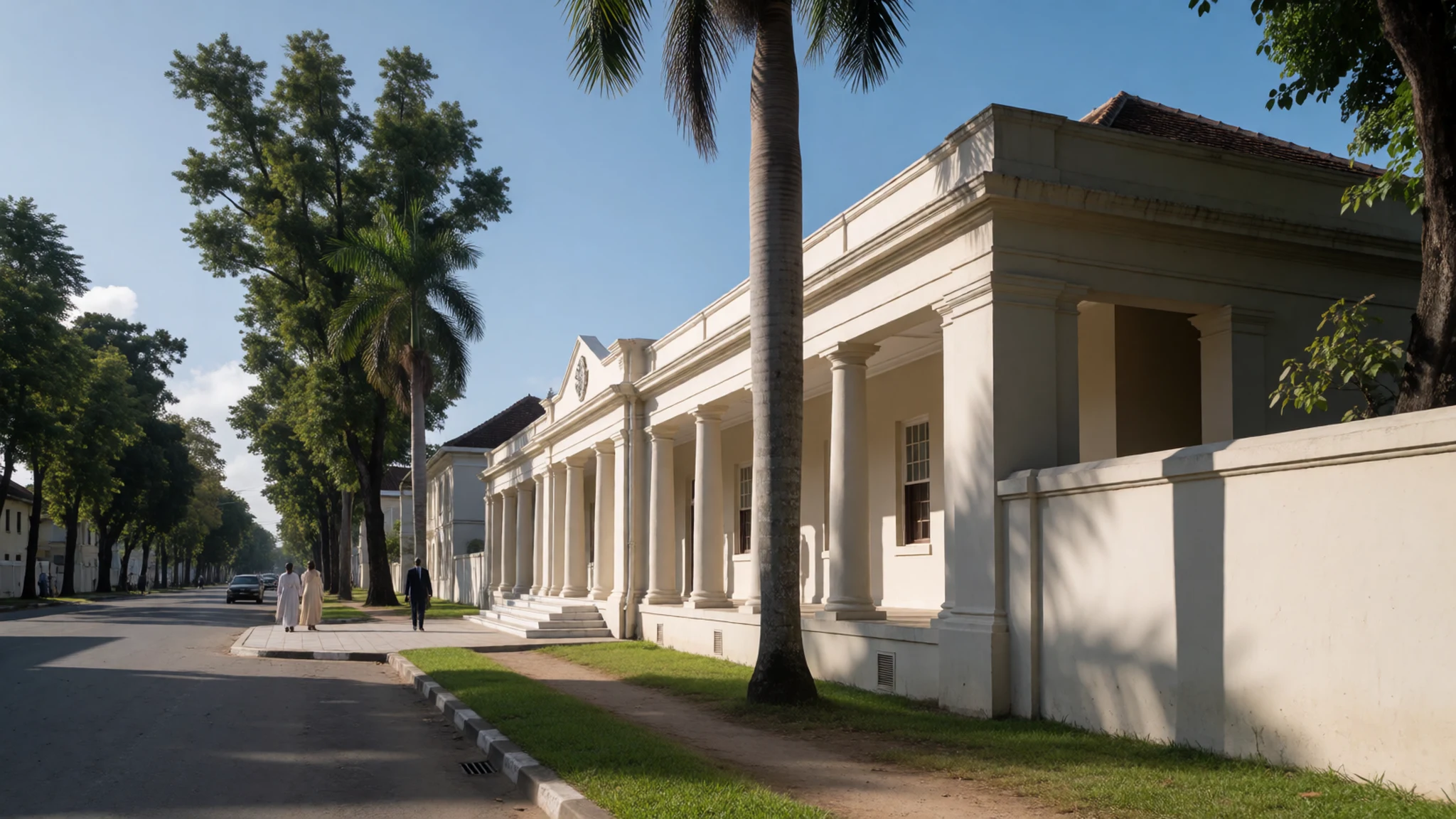
- African Heritage Museum — Central Banjul
The African Heritage Museum is a museum and gallery holding a large collection of African art and statues. It makes a calm indoor stop in the midday heat. Banjul also has two cathedrals and several major mosques, which are worth admiring from outside at a respectful distance.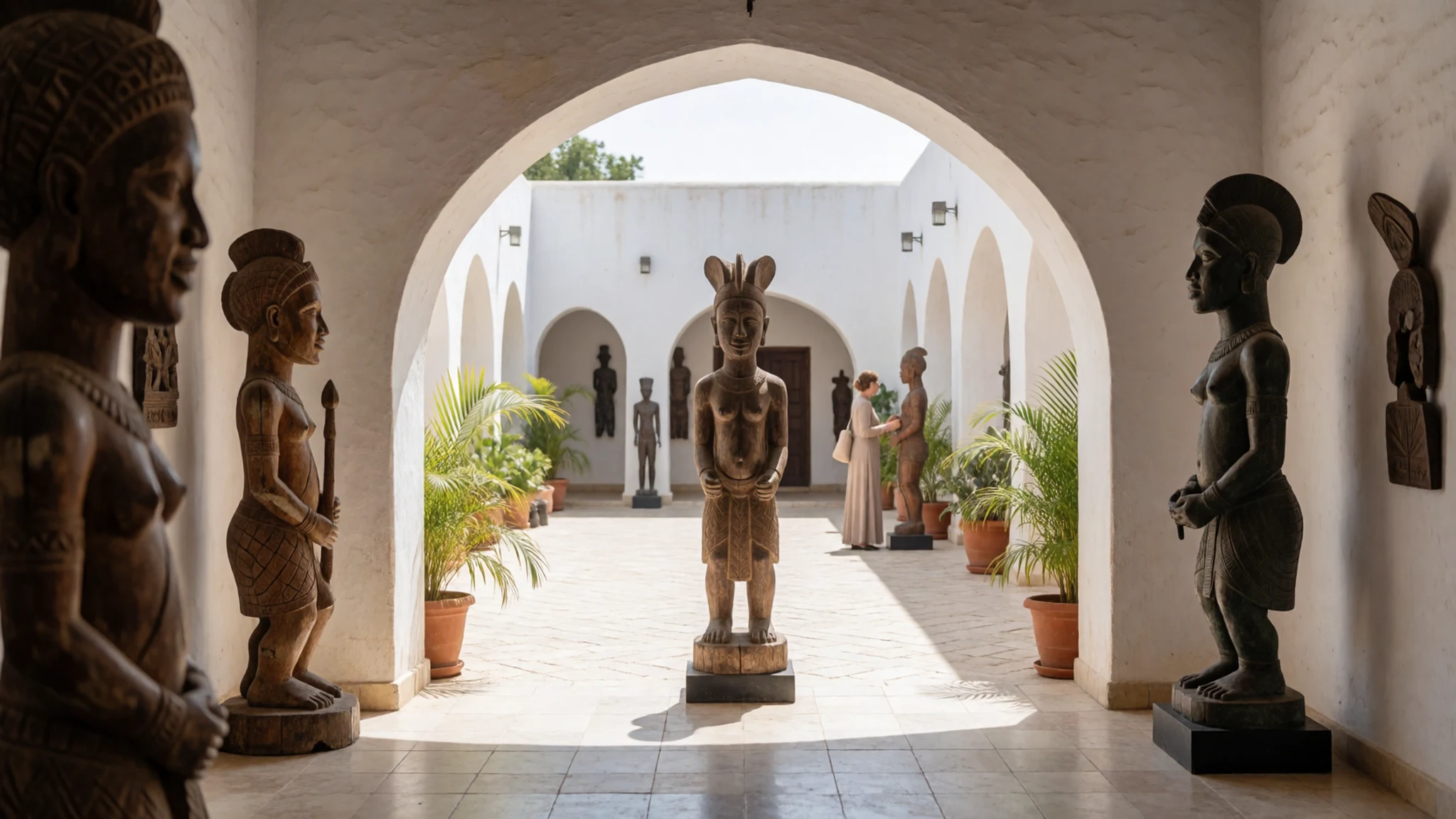
Culture
Banjul is a Muslim-majority city with a visible Christian community, and daily life follows both calendars. Mosques outnumber churches, and the call to prayer shapes the day, with Friday midday especially busy. Roman Catholic, Anglican and Pentecostal congregations also meet in the capital, a legacy of the mixed population that settled here after the British founded the town.
Social life is warm and unhurried. Greetings matter, and an exchange of how are you, and how is the family, comes before any business, whether at a market stall or a government counter. Afternoons often belong to attaya, the small glasses of strong sweet tea shared in rounds on a street corner or compound doorstep. Being invited to sit and drink is a friendly gesture, and accepting at least one round is polite.
The city is also home to the University of The Gambia and several schools, including international ones on the mainland side, so students and civil servants form much of the daytime crowd. Every year the Plymouth-Banjul Challenge, a charity road rally, finishes here, bringing a burst of overland travellers and a lively welcome.
Public life is conservative but relaxed with visitors who show good manners. Slow down, greet people first, and expect conversations to take time. Ask permission before photographing people, especially market traders and anyone at prayer, and cover your shoulders and knees when you go near a mosque.
What to wear
Banjul's traditional dress draws on wider West African styles. Women wear the long, wide-sleeved boubou or a wrapper skirt called a lappa, often topped with a matching head tie. Men wear a loose gown over trousers, in the same family of garments. Fabrics include wax-print cotton, dyed damask known as bazin, and tie-dyed and indigo cloth. Special occasions, weddings, Friday prayers and religious festivals call for the finest and most colourful outfits, and tailors in the market can make an outfit to measure within days.
Everyday dress is a mix. Office workers and civil servants wear shirts, trousers and smart dresses, and younger people favour jeans, trainers and football shirts. Many women still wear boubous and head ties for ordinary days, and in the heat a long loose garment is as practical as it is elegant.
Visitors should dress for strong heat and a conservative city. Light cotton or linen, loose trousers or long skirts, and shirts that cover the shoulders suit both the climate and local norms, and they make mosque visits easier. A hat, sunglasses and sunscreen are useful, and so are sandals that are easy to remove, though closed shoes are better for the market, where the ground can be wet and uneven. In the rainy months bring a light waterproof, since downpours can be heavy and sudden. Swimwear belongs on the beach rather than in the city streets.
What to eat
- Domoda — Lunchtime eateries around the market
Domoda is a rich stew of groundnut paste, meat or fish, and vegetables, served over rice. It is filling and gently spiced, and it uses the local peanuts the country is known for. Look for it at everyday eateries serving lunch around the market.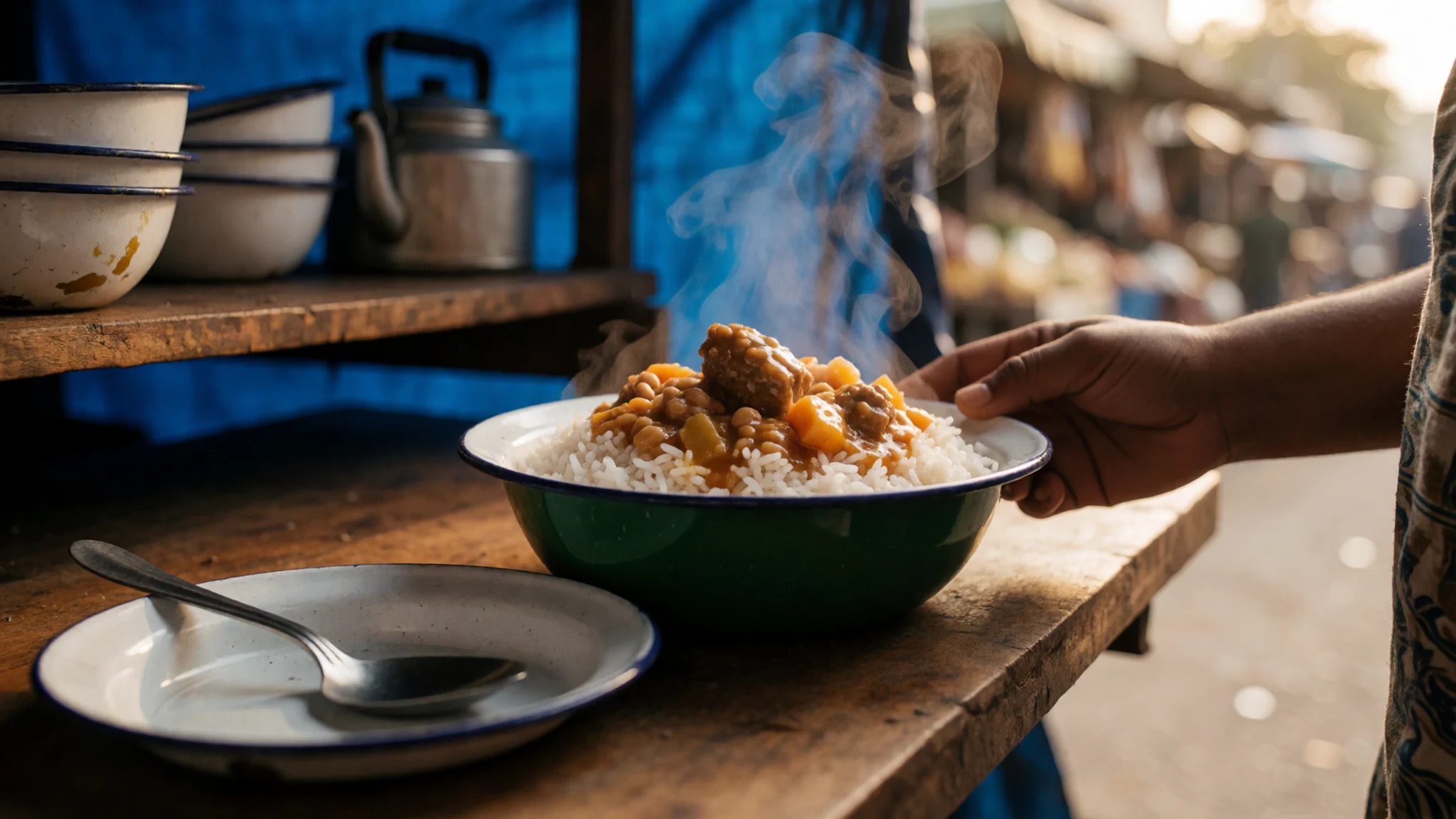
- Benachin — Local canteens and family-run eateries
Benachin means one pot, and the dish is rice cooked with fish or meat, tomato and vegetables in a single large pot. It is a family and celebration staple, and often comes shared from one big dish. Local canteens serve it daily, usually at midday.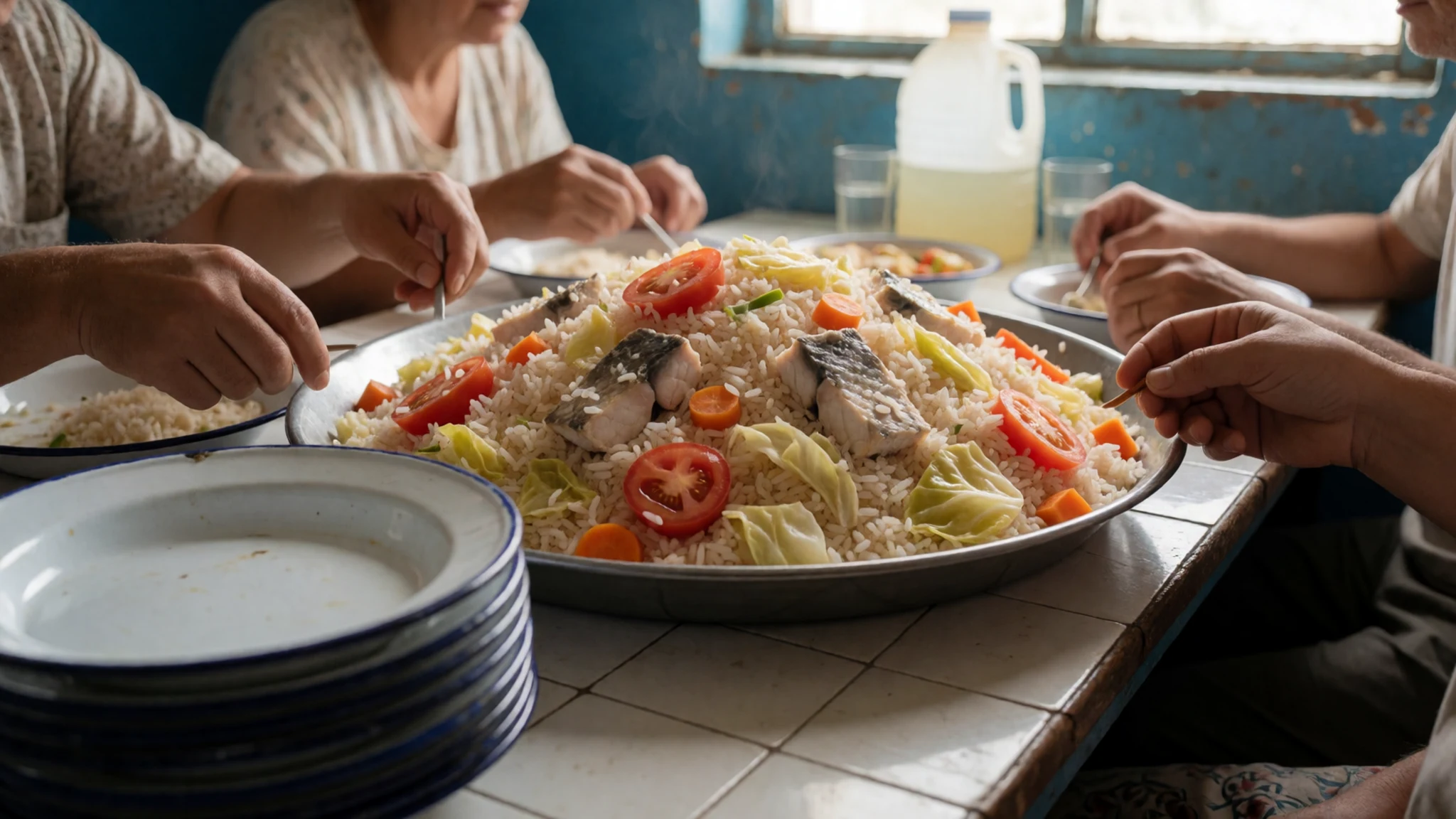
- Grilled fish and rice — Beachfront restaurants on the nearby coast
With the Atlantic on the doorstep, fresh seafood is the obvious choice. Fish is grilled or fried and served with rice, salad and spicy sauce. Seaside restaurants on the coast near the city are the easiest place to find it, often at a good price. - Attaya — Street corners and shaded compound doorways
Attaya is green tea prepared in three rounds over charcoal, each round sweeter and milder than the last, and poured into tiny glasses. It is more a social ritual than a drink, and sharing a few glasses with locals is a pleasant way to spend an afternoon. - Roasted peanuts and Julbrew — Market stalls, bars and beachside restaurants
Roasted local peanuts are sold in paper twists from stalls and pair well with Julbrew, the light lager brewed in The Gambia. Beer is found in most bars and corner shops, though less so in strictly observant neighbourhoods. Many drinkers prefer to enjoy it at a bar or restaurant. - Fresh juices — Street stalls and everyday eateries
Chilled fruit juices are sold across the city, a welcome relief in the heat. Ask for what is in season, and choose stalls that look busy, with fresh fruit pressed or blended in front of you. Many eateries also serve them with a meal.
Plan it
Best time. November to February is the most comfortable stretch: the long dry season runs from November to May, with sunshine and little rain. The wet season brings heavy downpours, and August is usually the wettest month. It is hot all year round, so plan outdoor walks for early morning.
How long. 1–2
Getting there. Fly into Banjul International Airport on the mainland. Green taxis wait outside, and a posted table lists fares to common destinations, so check it before you set off. The last leg is by road across the bridge to the island, or by ferry from the far bank of the river.
Budget. mid
Tips
- Start early, before the heat builds, and finish outdoor sights by late morning
- Carry small notes in cash, as markets and small eateries rarely take cards
- Keep bags zipped and close in Albert Market and around ferry terminals, where pickpocketing is reported
- Drink plenty of water and carry sun protection, even on cloudy days
- Plan evenings on the mainland coast, since central Banjul is quiet after dark
Etiquette
- Greet people before asking questions or bargaining
- Ask permission before photographing individuals, especially traders and people at prayer
- Dress modestly in the city and near mosques, with shoulders and knees covered
Nearby
Sources
- Wikidata Q3726 (CC0)
- Wikipedia: Banjul (rev 1385512992) (CC BY-SA 4.0)
- Wikivoyage: Banjul (rev 5423237) (CC BY-SA 4.0)
- Photo: Banjul Gambia skyline, IsaacTuray (CC0 1.0)
- Photo: Arch 22 in Banjul, Hannu Sääskilahti (CC BY-SA 4.0)
- Photo: Gambia03Banjul013, tjabeljan (CC BY 2.5)
- Photo: Gambia03Banjul012, tjabeljan (CC BY 2.5)
- Photo: Banjul museum, Niels Elgaard Larsen (CC BY 3.0)
- Photo: Gambia03Banjul008, tjabeljan (CC BY 2.5)
- Photo: Straße in Banjul, Atamari (CC BY 3.0)
- Photo: Africa relief location map, Eric Gaba (CC BY 3.0)


