Niumi National Park
Niumi National Park, The Gambia
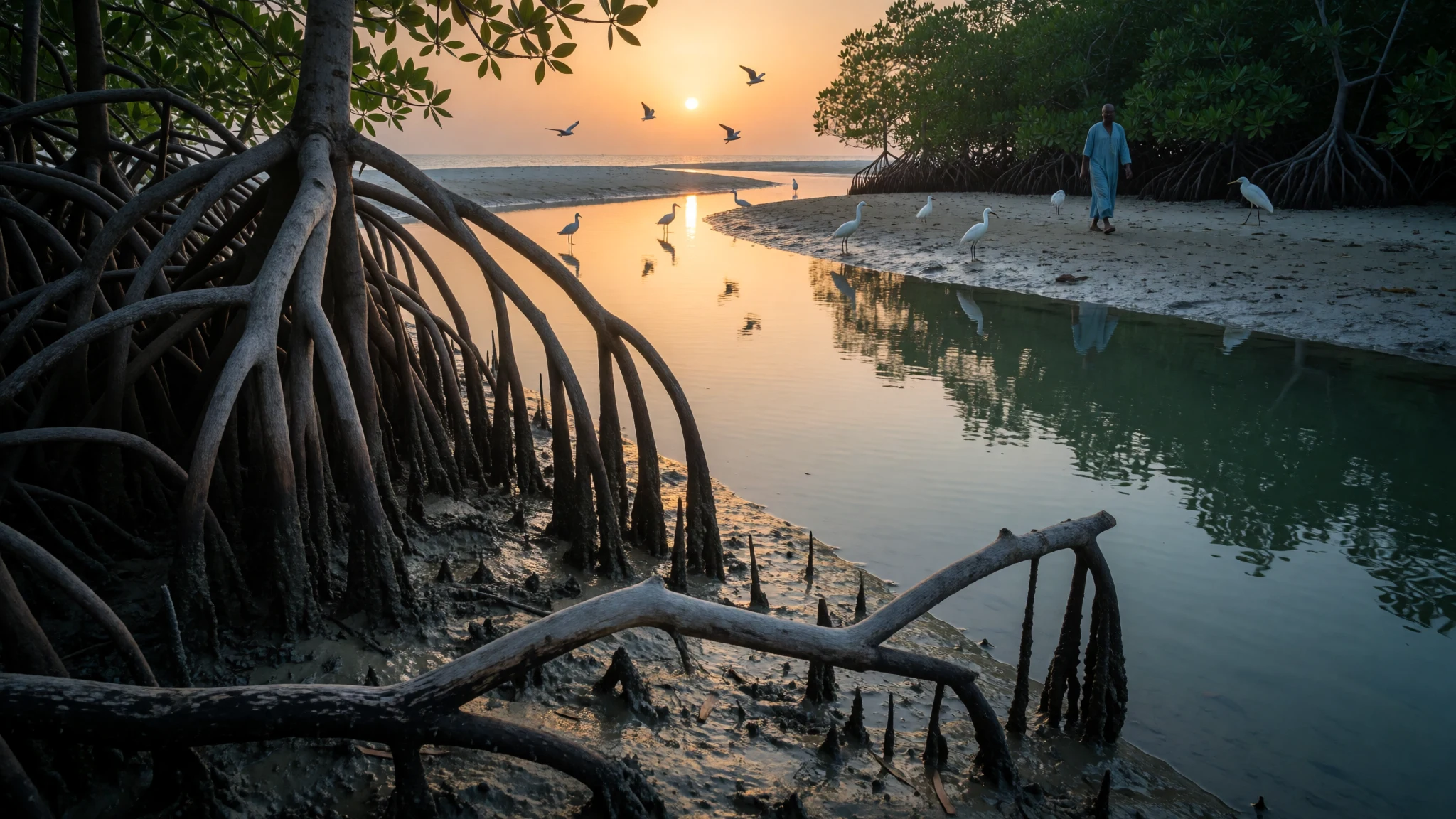
Niumi National Park packs mangrove creeks, wintering birds and quiet Atlantic sand into The Gambia's northern coast, far from the resort strip.
The place
Niumi National Park lies on the coastal strip of the North Bank Region in The Gambia, at the southern tip of the Sine-Saloum Delta, a maze of water that carries on into Senegal. It is a place of edges. The Atlantic breaks on one side, brackish lagoons and tidal creeks sit behind, and between them run sand spits, scrub and a great deal of mangrove. The dominant tree is Rhizophora, the stilt-rooted mangrove whose tangled roots hold the mud together and shelter young fish and crabs. Freshwater marsh and drier scrub forest add variety, with scrub found on Jinack Island and Mbankam spit. Jinack, in the north of the park, is the main landmark, surrounded by smaller islands.
Wildlife is the reason to come, and birds lead the list. The mudflats and swamp attract large flocks, and the park is a recognised Important Bird Area because of the gulls and terns that spend the northern winter here. On land there are patas and vervet monkeys, warthogs and spotted hyenas. In the water and along the shore live green turtles, humpback dolphins and West African manatees, all of them vulnerable or endangered and seldom seen.
The feel is far from the resort strip further south, even where the distance is modest. Tracks are sandy, facilities are basic and tides shape the day. The climate is tropical, with a hot rainy season from June to November and a cooler dry season from November to May. Visits here reward slow travel: a boat, a pair of binoculars and a local guide count for more than any itinerary.
Its story
Niumi National Park protects a corner of the Gambian coast that people have used for far longer than it has had a boundary. Before Europeans arrived, The Gambia's history was carried in oral tradition rather than written records, and the creeks, islands and fishing grounds of the delta were part of that living memory. The park shares its name with Niumi, the historic state on the northern bank of the river mouth, and the villages around it have long lived from fishing, farming, shellfish and the mangroves themselves, which provide timber and shelter young fish.
Formal protection arrived in the late 1980s; the facts record 1987 as the founding date. The idea was to keep wetland, forest and beach together as one working landscape rather than let it be split up piece by piece. BirdLife International later recognised the area as an Important Bird Area, which put the winter gulls and terns on the conservation map.
The pressures are real. The country has suffered drought, with rainfall falling markedly over recent decades, and that changes how fresh water and salt water mix across the delta. Mangroves and the fish that breed among their roots depend on that balance. The park's neighbours on the river's north bank add a heavier layer of history: Juffureh, Albreda and Kunta Kinteh Island are tied to the Atlantic slave trade, and many visitors combine them with a day in the park. Together they show a coast that is both a nursery for wildlife and a place where the past is still close.
What to see
- Mangrove creeks of the delta — North Bank Region
The mangrove creeks of Niumi National Park form the southern end of the Sine-Saloum Delta. Local boatmen take visitors through narrow channels lined with Rhizophora roots, where crabs work the mud and kingfishers and egrets watch from the branches. High tide gives the deepest water, and a guide who cuts the engine makes the quiet part of the trip.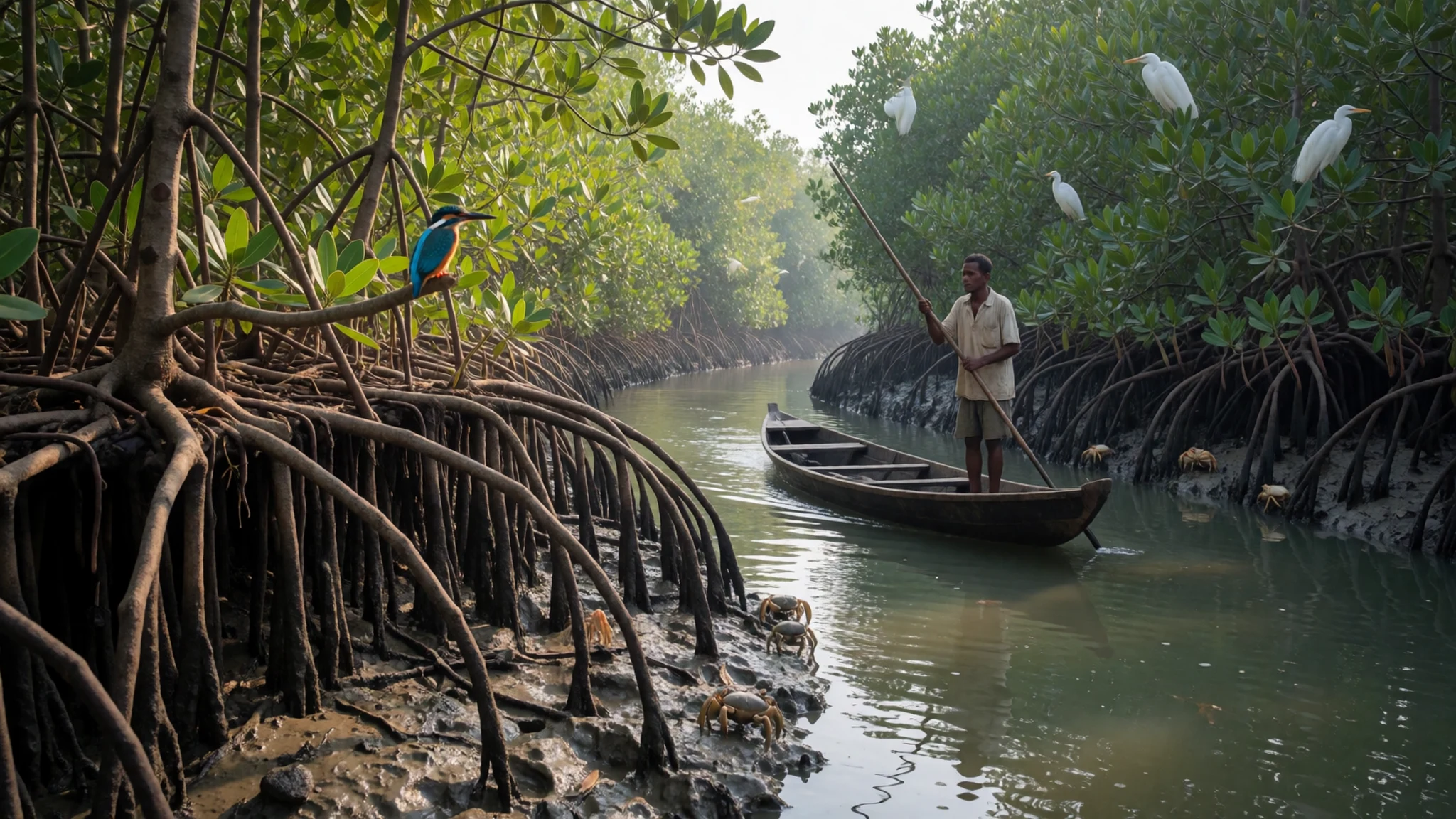
- Jinack Island — Northern Niumi
Jinack Island, in the north of the park, is a long stretch of Atlantic beach backed by scrub forest and calm tidal water. It suits walking, swimming where conditions allow, and birdwatching. Accommodation is simple, so expect sand tracks, limited power and a slow pace. Arrange transport and a guide in advance.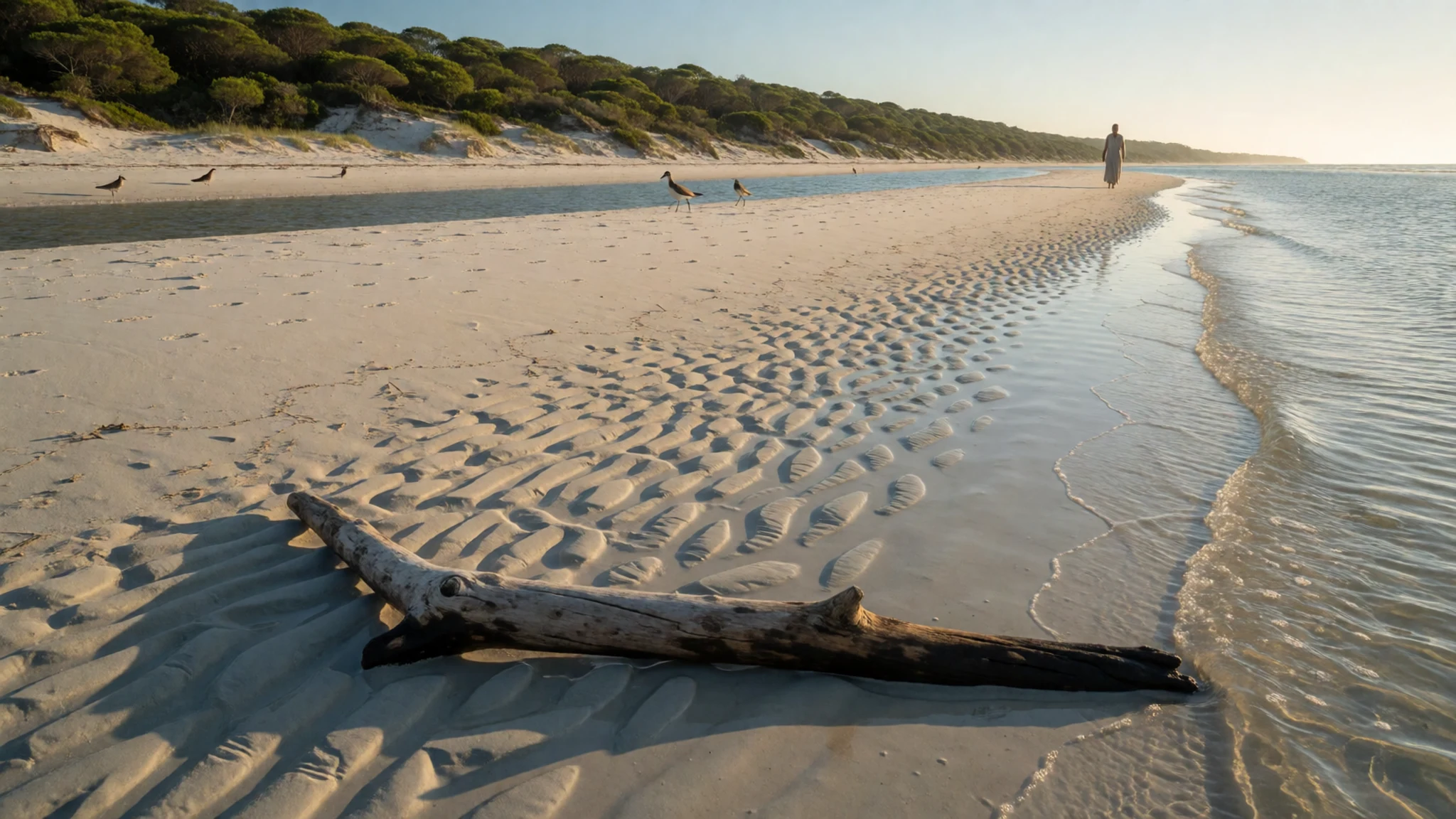
- Mbankam spit and the lagoons — Atlantic coast of the park
Mbankam spit is a narrow bar of sand and scrub where the lagoon meets the open sea. It is good ground for waders, gulls and terns, including the slender-billed gulls and royal terns that winter in the park. Bring binoculars and a hat; early light is kinder than midday, when the heat flattens the shore.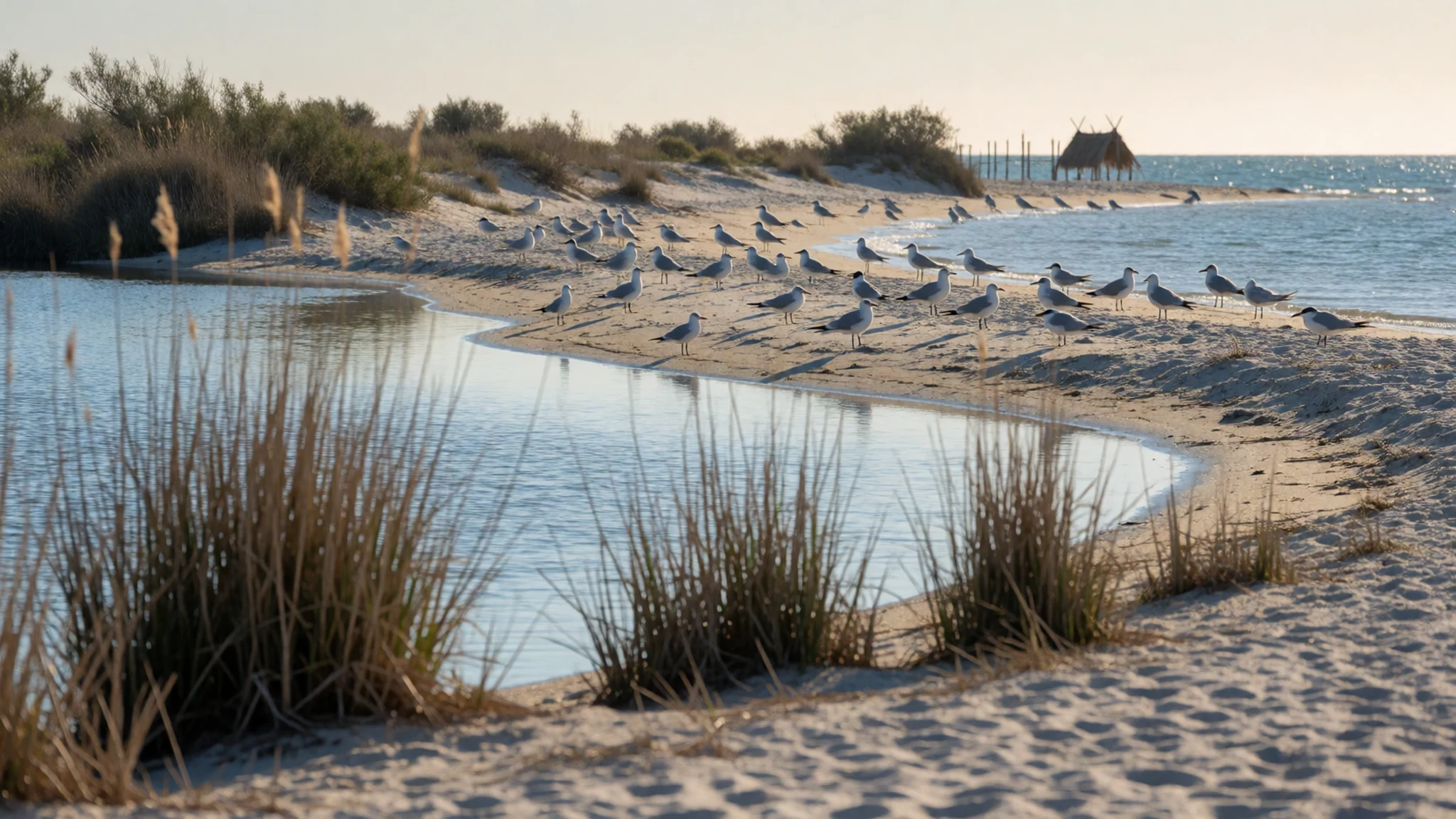
- Scrub forest walks — Inland park, Jinack side
The forested parts of Niumi National Park hold patas monkeys, vervet monkeys and warthogs, and spotted hyenas live here too, though they keep out of sight. A walk with a local guide improves the odds of a sighting and keeps visitors on safe paths. Early morning and late afternoon are the most active hours.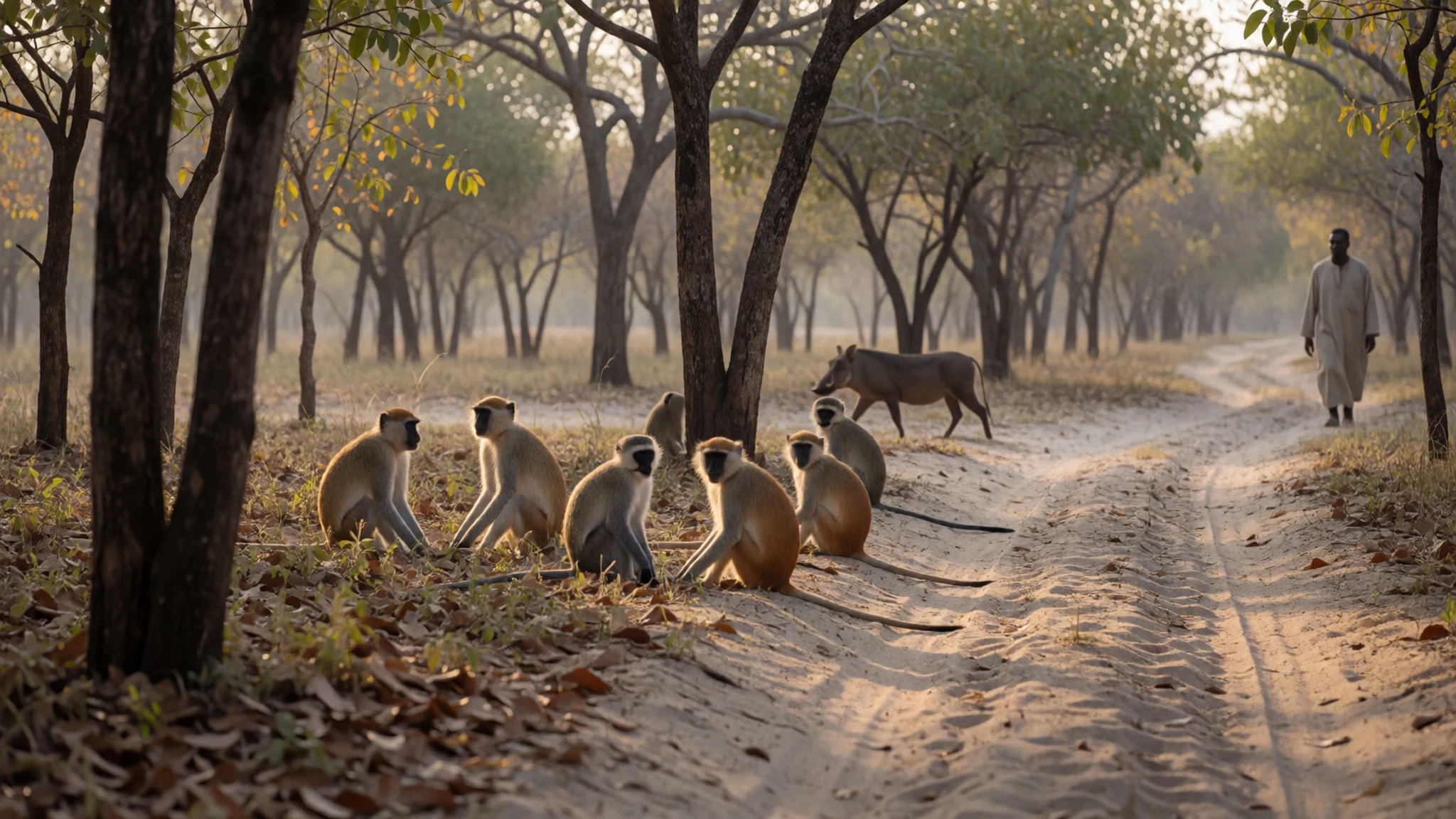
- Juffureh, Albreda and Kunta Kinteh Island — River's north bank
Juffureh and Albreda lie on the river's north bank, a short journey from the park, with boat trips to Kunta Kinteh Island, a former slave-trade station linked to the book Roots. Expect persistent sellers and requests for payment for photographs. An official guide keeps the visit respectful and well organised.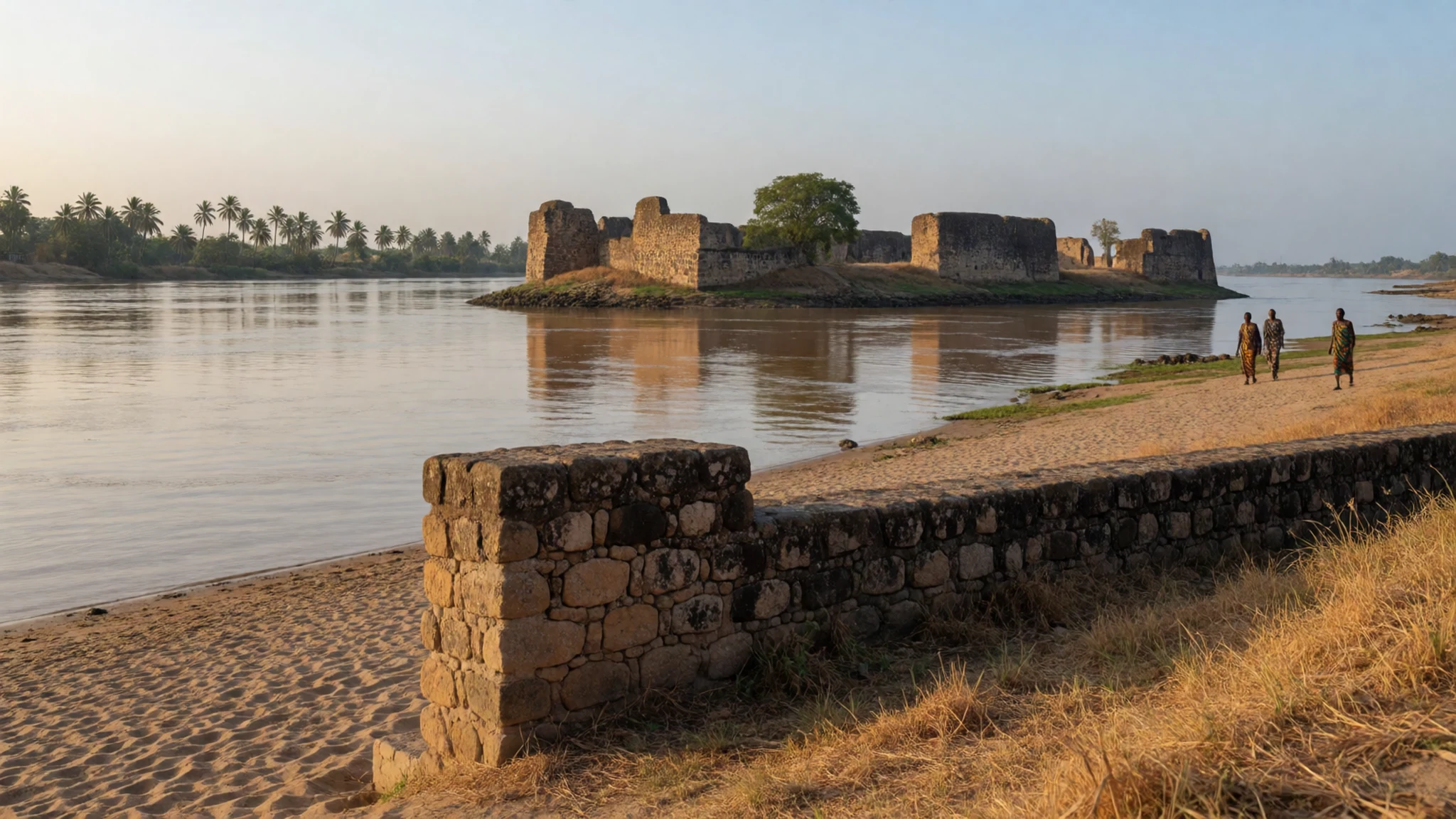
Culture
Niumi National Park sits in a part of The Gambia where daily life still follows the tides, the rains and the fishing seasons. Villages around the park are home to Mandinka, Wolof, Serer and Fula families, among others, and most people are Muslim, so the week and the year are marked by Friday prayers, Ramadan and Eid. Greetings matter. A proper exchange of hellos, with questions about family and health, comes before any business, and rushing it reads as rude. Hospitality is generous even where money is short, and a shared bowl of rice and fish is a common welcome.
History is carried mostly by spoken tradition, through elders and griots, the hereditary storytellers and musicians of West Africa. Drumming, song and masquerades appear at weddings, festivals and holidays, and Christmas in the coastal resorts includes a parade of colourful masquerades. Guides in the park often come from the nearby villages, and hiring them puts money straight into the community that lives beside the wildlife.
Begging and persistent selling are common near the better-known tourist sites, especially around the river's slave-trade heritage sites. A friendly, firm no is usually accepted. Many people also expect payment to appear in a photograph, so agree things first rather than argue afterwards.
Always ask before photographing anyone, since some Gambians hold beliefs about having their picture taken, and accept a refusal with a smile.
What to wear
Niumi National Park draws its dress traditions from across the Gambia, where the classic garment for men is the boubou, a wide, flowing robe, often worn over matching trousers. Women wear a wrapped skirt called a lappa with a fitted top and a head tie, or a long gown cut from the same cloth. Fabrics include cotton, damask-style dyed cloth, batik and tie-dye, and wax-print cottons from West African mills. The finest outfits come out for Eid, weddings, naming ceremonies and Friday prayers, in bold colour and fresh pressing.
Day to day, people on the coast wear what suits heat and work: lightweight shirts, trousers, long skirts and dresses, football shirts and flip-flops. Fishers and farmers favour practical, faded clothes, often with a cloth wrapped against the sun. Young people in the towns mix jeans and trainers with tailored local fabrics.
For a visit, loose long-sleeved cotton or linen shirts and lightweight trousers protect against sun and mosquitoes better than shorts and vests. A wide-brimmed hat, sunglasses and high-factor sunscreen are sensible. Shoes should cope with sand, mud and boat landings, so sturdy sandals or light walking shoes beat smart footwear. In villages and near mosques, cover shoulders and knees, and keep swimwear for the beach and the boat. Carry a light rain jacket if travelling in the wetter months.
What to eat
- Benachin (jollof rice) — Village eateries and market-town canteens
Benachin is the Gambian take on jollof, rice cooked in one pot with onions, spices and tomato, with fish, meat or vegetables folded through. It is a family staple and a celebration dish alike, found at village eateries and roadside canteens in almost any market town.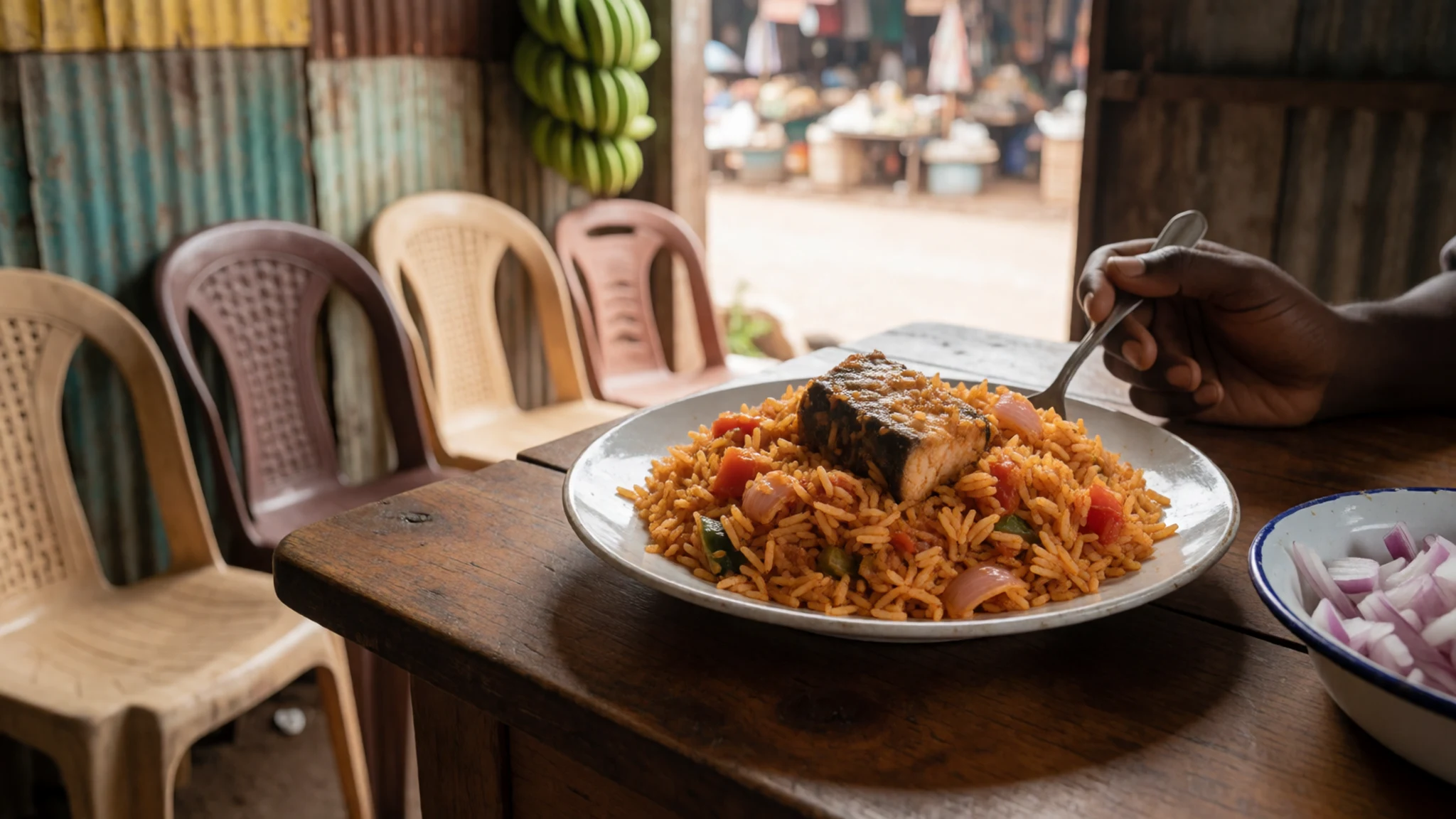
- Chicken yassa — Roadside eateries and towns on the North Bank
Chicken yassa is chicken cooked slowly with plenty of onion, black pepper and lime or lemon until the sauce turns sharp and soft at once. It is eaten over rice and is widely available in simple eateries along the coast and in the towns.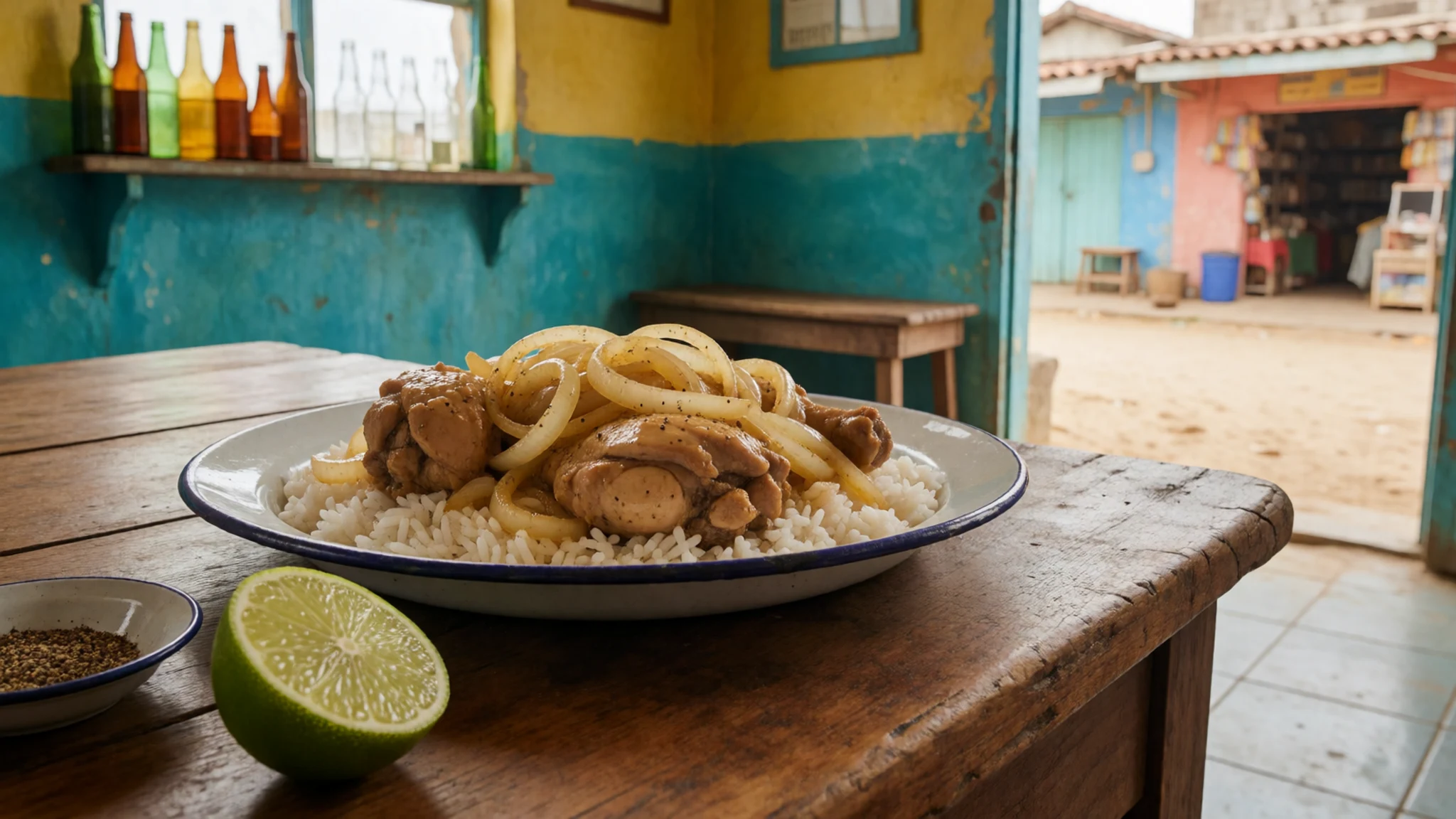
- Domoda — Family kitchens and local restaurants in villages
Domoda is a rich stew of meat in a peanut-butter sauce, served over rice. Peanuts are the country's main crop, so the dish feels local in the truest sense. It is hearty, mildly spiced and a good lunch after a morning on the water. - Grilled fresh fish — Fish landing beaches and seaside eating spots
The Atlantic and the delta supply fish that are grilled over charcoal, often with onion, chilli and lemon. Buying near the landing beaches shows how closely the park's waters and the local diet are tied, and the catch changes with the tide and season. - Baobab juice — Markets and roadside drink stalls
Baobab juice is made from the tangy white pulp of the baobab fruit, mixed with water and sugar and chilled. It tastes somewhere between citrus and yoghurt and is a cooling drink on a hot day. Look for it at roadside stalls and in markets.
Plan it
Best time. November to March, in the cooler dry season, when roads and tracks are passable and winter birds are present. The rainy season runs from June to November and brings heat, humidity and flooded tracks.
How long. 2–3
Getting there. Fly into Banjul (BJL), the only international airport in The Gambia. From there, travel by road and the river ferry to the North Bank, then continue on sandy tracks or by boat to Jinack with a local guide. Check ferry and road conditions locally before setting out.
Budget. mid
Tips
- Book a local guide and boat in advance, as tides decide when you can move around
- Carry cash in small notes, since cards and cash machines are scarce outside the main towns
- Bring binoculars, insect repellent, sun protection and plenty of drinking water
- Start walks and boat trips early, before the heat and glare build
- Check entry rules and any visa requirements for your passport before you travel, and look at the official Gambian immigration and tourism sites
Etiquette
- Ask before photographing people, and agree any payment first
- Greet people properly before asking for help or directions
- Dress modestly in villages and keep swimwear for the beach
Nearby
Sources
- Wikidata Q922736 (CC0)
- Wikipedia: Niumi National Park (rev 1362882080) (CC BY-SA 4.0)
- Wikivoyage: Gambia (rev 5425327) (CC BY-SA 4.0)
- View of The Gambia taken during ISS Expedition 23, Earth Science and Remote Sensing Unit, Lyndon B. Johnson Space Center (Public domain)

Wildlife
- Patas monkey (animal)
The patas monkey, also called the hussar monkey, is the one that prefers walking on the ground to living up in the branches. In Niumi National Park you may find it in the forested parts, though no particular season or hour is known here, so ask your guide when it is easiest to find. Keep a good distance, move quietly and let the monkeys carry on undisturbed. Never offer food, however curious they seem.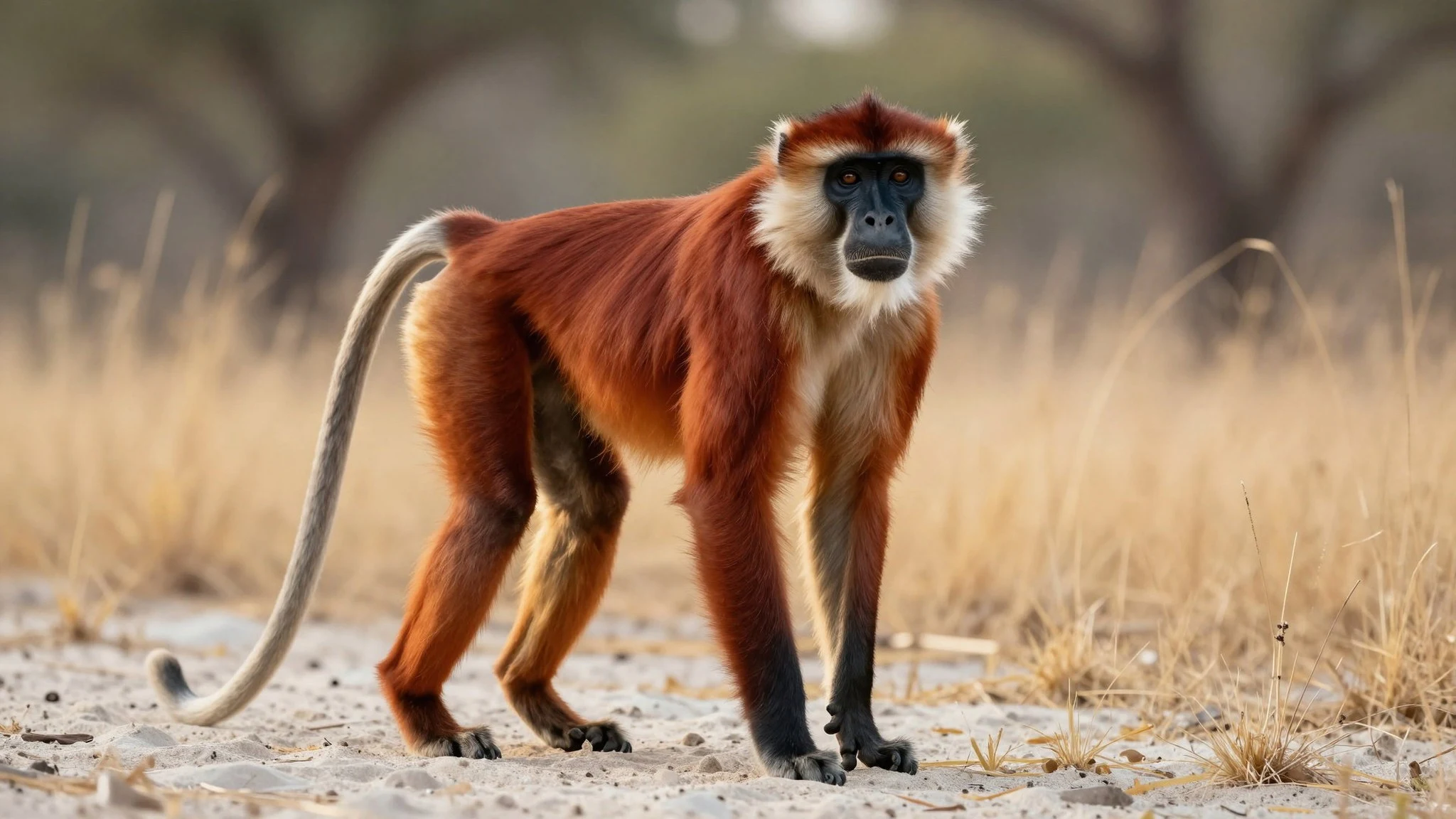
- Spotted hyena (animal)
The spotted hyena, sometimes called the laughing hyena, is a big, bear-shaped animal with rounded ears and a spotted coat. Hyenas live in the forested parts of Niumi National Park, but they keep out of sight, so count yourself lucky if you glimpse one. Your guide will know how to look sensibly. Stay at a respectful distance, speak softly, and never feed a hyena; wild animals should find their own meals.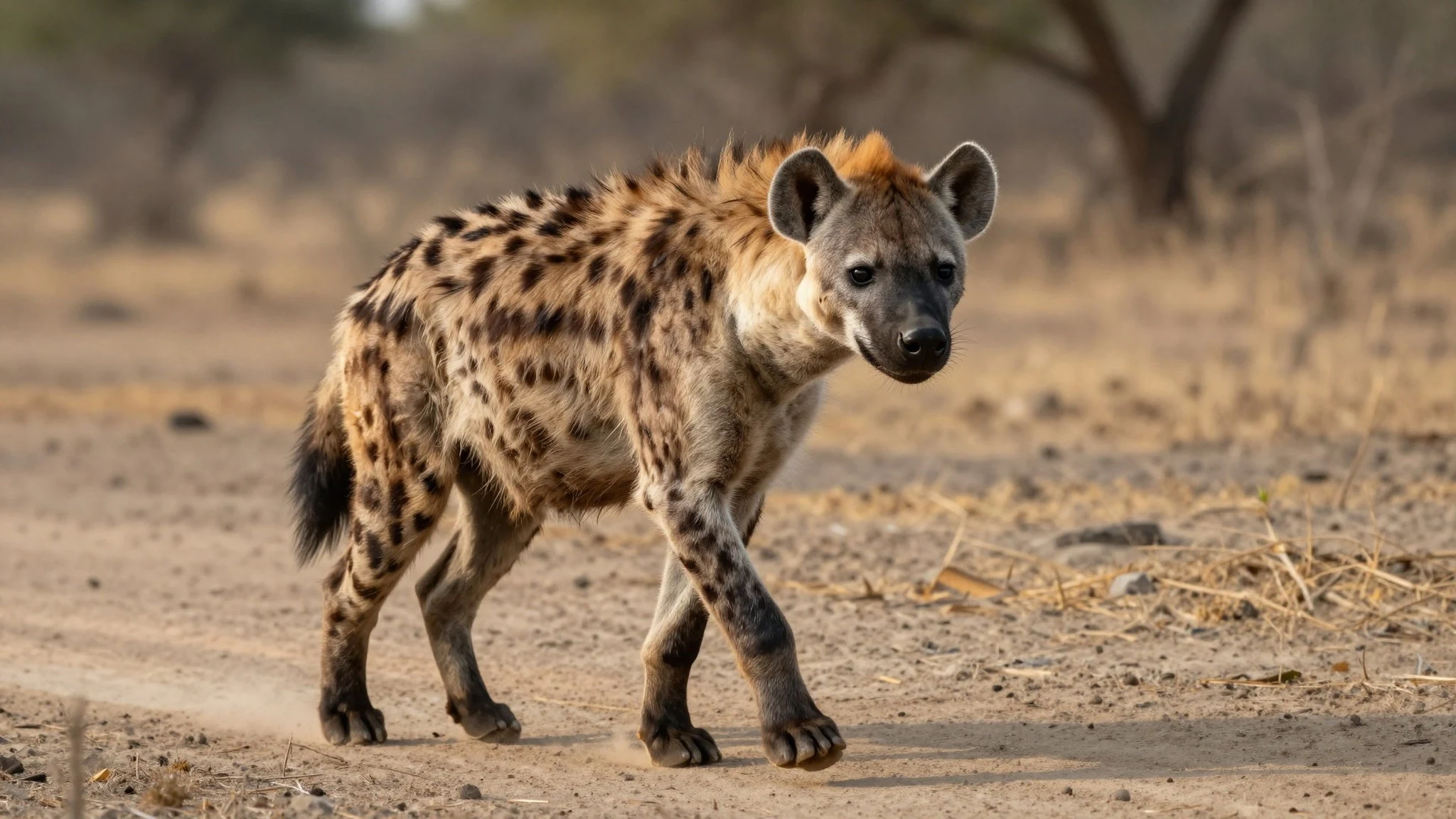
- Slender-billed gull (bird)
The slender-billed gull is a middle-sized gull that breeds far away, around the Mediterranean, then travels south when the cold comes. In Niumi National Park it is a winter visitor, found in the good ground where waders, gulls and terns gather. Ask your guide about the best time of day. Watch from a comfortable distance, stay quiet so the flocks do not take off, and never throw food to the birds.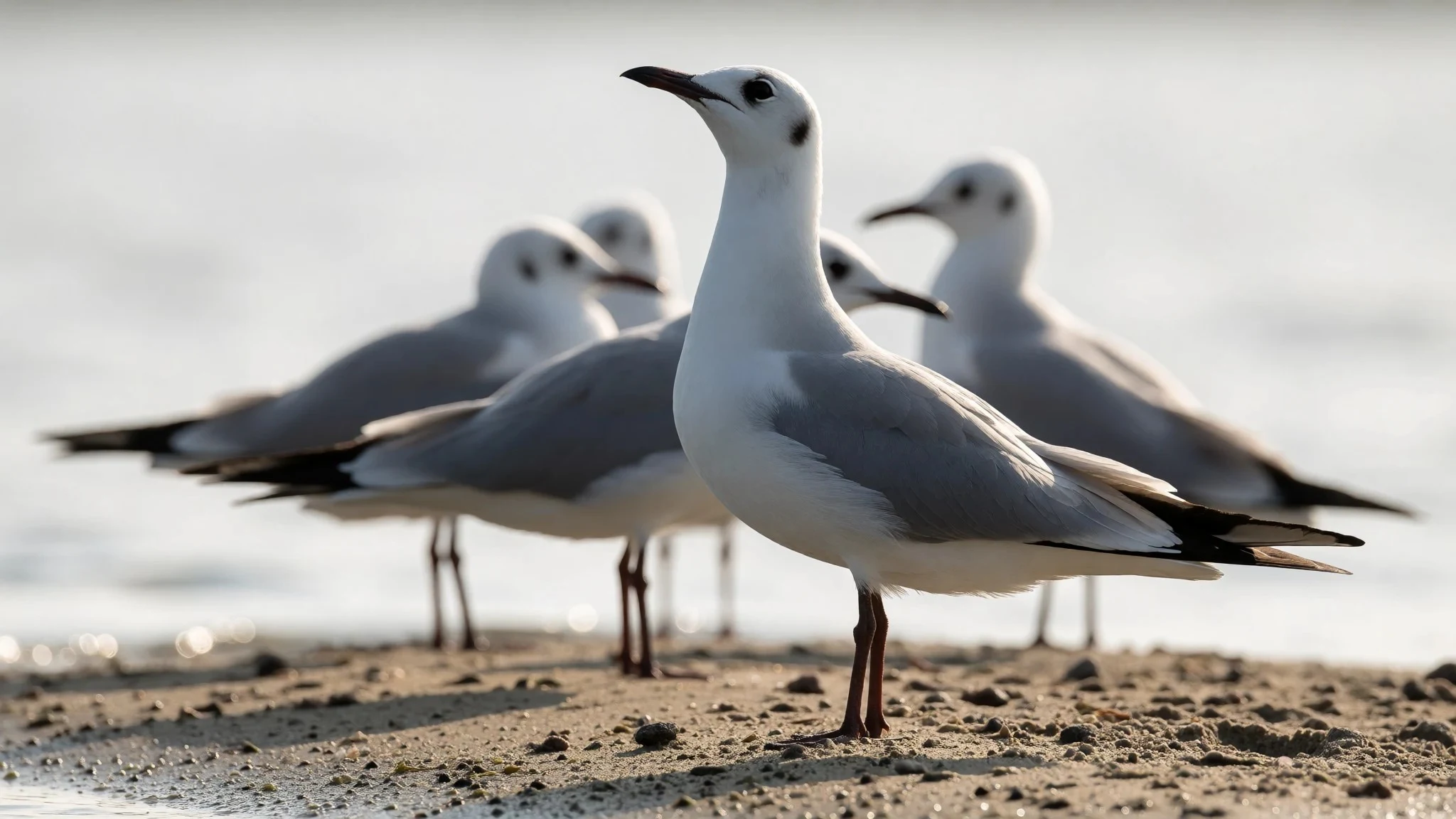
- Royal tern (bird)
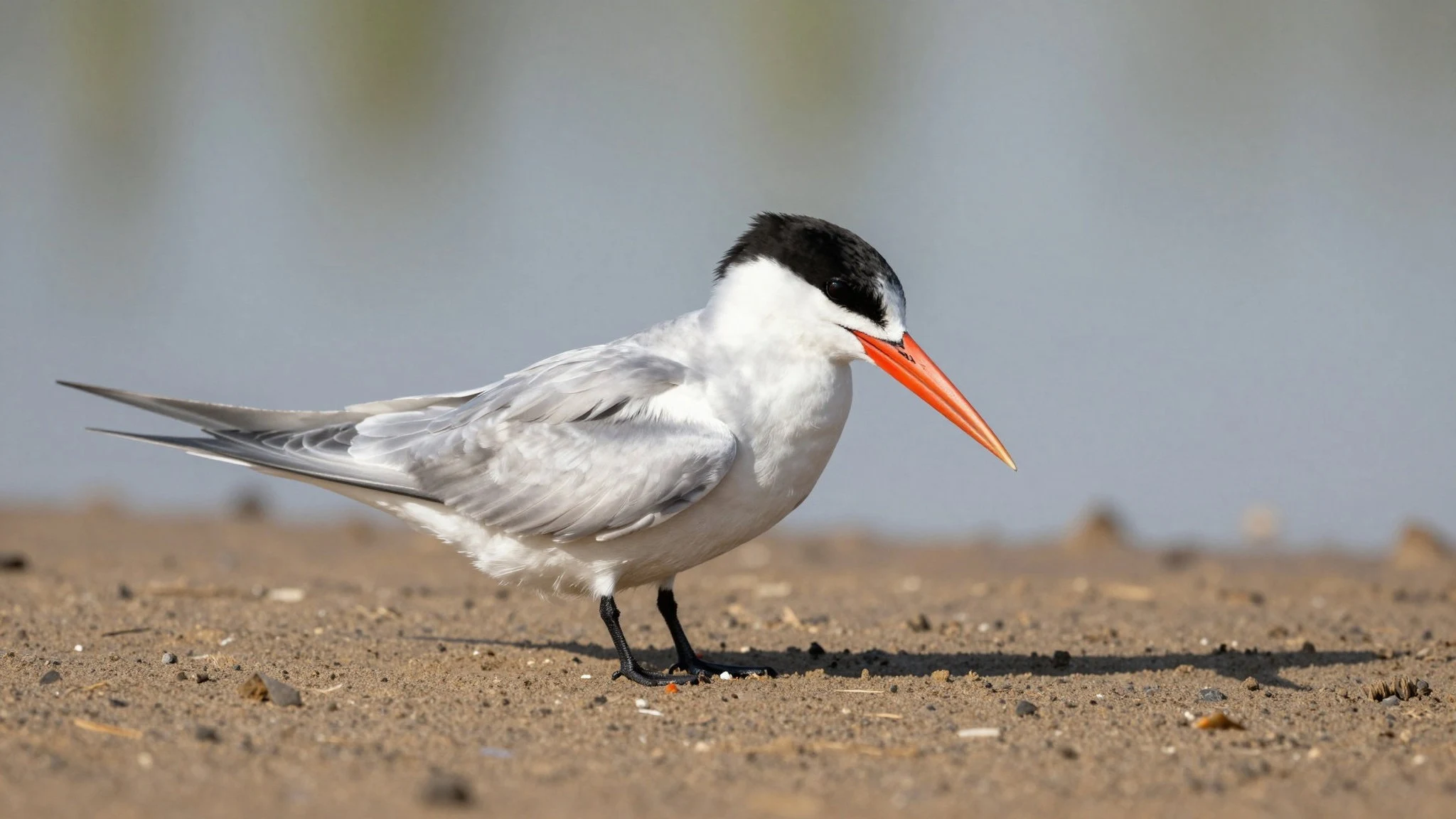
The royal tern is a tern, a neat seabird and a relation of the gulls, often sharing their shores. It winters in Niumi National Park, so winter is the time to look, in the same good country for waders, gulls and terns. Go with a guide, keep your distance, and stay quiet and still so that resting birds are not disturbed. Never feed them, however close they come.