Kunta Kinteh Island
Kunta Kinteh Island, The Gambia
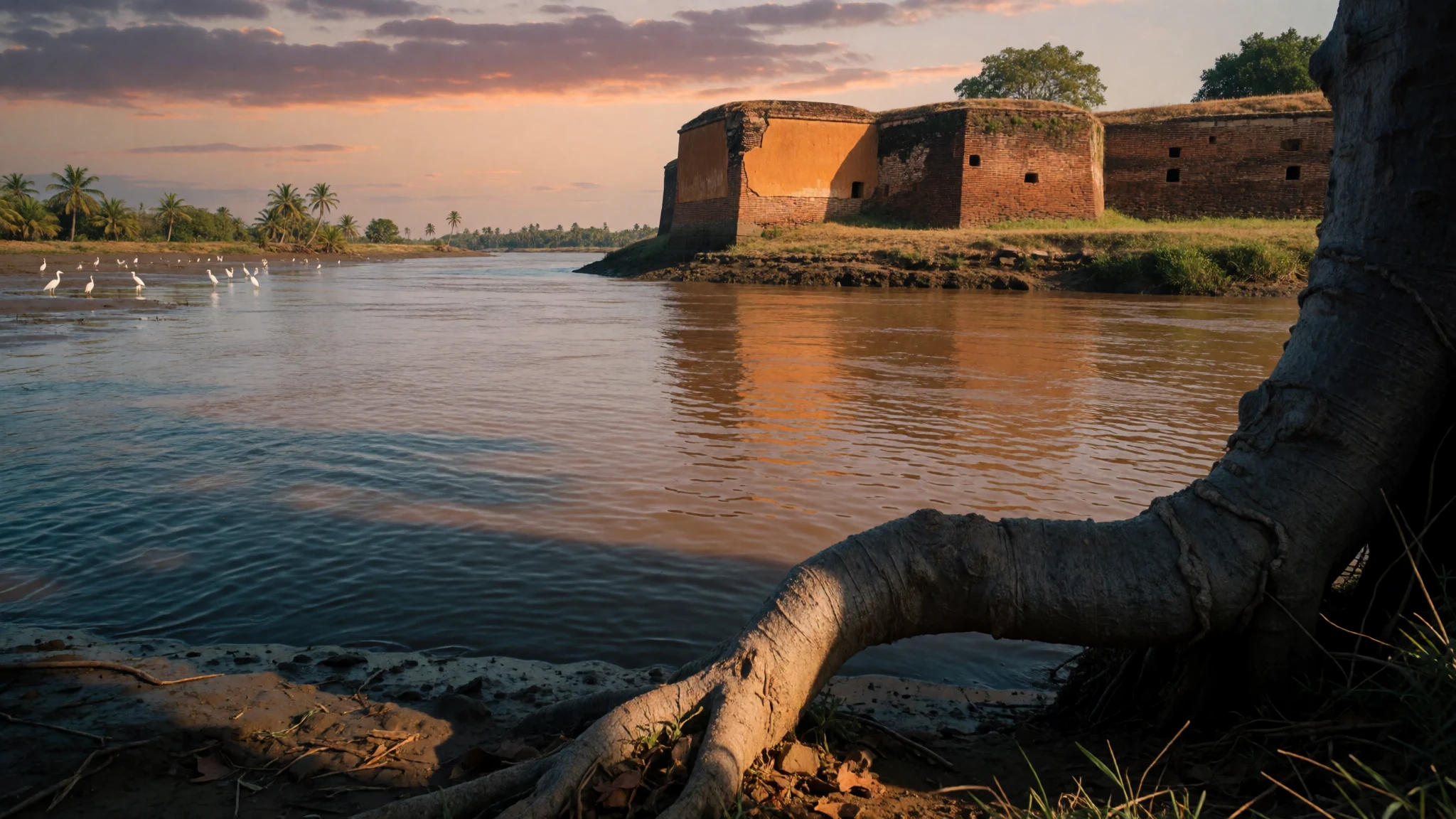
Kunta Kinteh Island is a small river fort whose ruins hold the memory of the Atlantic slave trade and the village stories around it.
The place
Kunta Kinteh Island sits in the Gambia River, a low scrap of land near the north-bank villages of Juffureh and Albreda, about 30 km from the river mouth. The water is wide and brown, the banks are low, and the island itself is little more than masonry, a few baobabs and a landing where pirogues meet the mud. Maps once called it James Island. The present name honours Kunta Kinte, the Mandinka man whose story Alex Haley followed to this stretch of river.
There is no town here. The fort walls are broken, and cannon and brick lie where the current has undercut them. High water has taken ground over the years, so the ruin feels close to the river on every side. Visitors step ashore, walk the circuit of the walls, look across to the villages and leave by boat. For generations this island was a European trading post on a river that carried gold, ivory, beeswax and, above all, enslaved people toward the Atlantic.
Around it lies the lower Gambia: mangrove creek, rice field and mud-brick compound, with the north-bank road ending at the stalls where the boats leave. Dry months bring hard light and dust; rains swell the river and slow the crossing. Kunta Kinteh Island asks for a short, serious visit. People stand on the fort, look at the water, and reckon with how a small West African island was tied into a trade that reached the Americas.
Its story
Kunta Kinteh Island takes its name from Kunta Kinte, remembered in Mandinka oral history and made widely known by Alex Haley's book Roots as a young man taken from the Juffureh area and shipped across the Atlantic. Haley travelled to this river in search of that family line. Afterwards the island and the village drew readers who wanted one life to stand for a vast crime. Historians still argue over the genealogy. The island's record does not depend on one family's papers: it was a fort in the middle of a trading river.
European companies, Baltic and then English, with the French and others on the facing bank, contested this channel because it led inland and because ships could wait here while captives were gathered. Fort James, as the island stronghold was long called, worked as warehouse, barracks and lock-up. The north bank held further posts, among them the French station at Albreda, so this short stretch of water carried rival flags and the same human cargo.
The cannon are silent now, the cisterns are dry, and baobabs grow in the compound. The Gambia River keeps moving, and the island is smaller than the fort's builders laid out. On the mainland, Juffureh still tells the story, sometimes through family claims and sometimes through guides who lead groups from the displays at Albreda down to the boat. The renaming of Kunta Kinteh Island puts an African man at the centre of a fort that once answered to a foreign name.
What to see
- Fort James — Kunta Kinteh Island
Fort James is the ruined stronghold in the middle of Kunta Kinteh Island, a low brick shell with open yards and gun positions facing the Gambia River. The broken walls enclose empty rooms that once held soldiers, stores and captives. The river shows through every gap. At midday the masonry throws little shade, and a guide supplies most of the explanation, because signs on the island are few.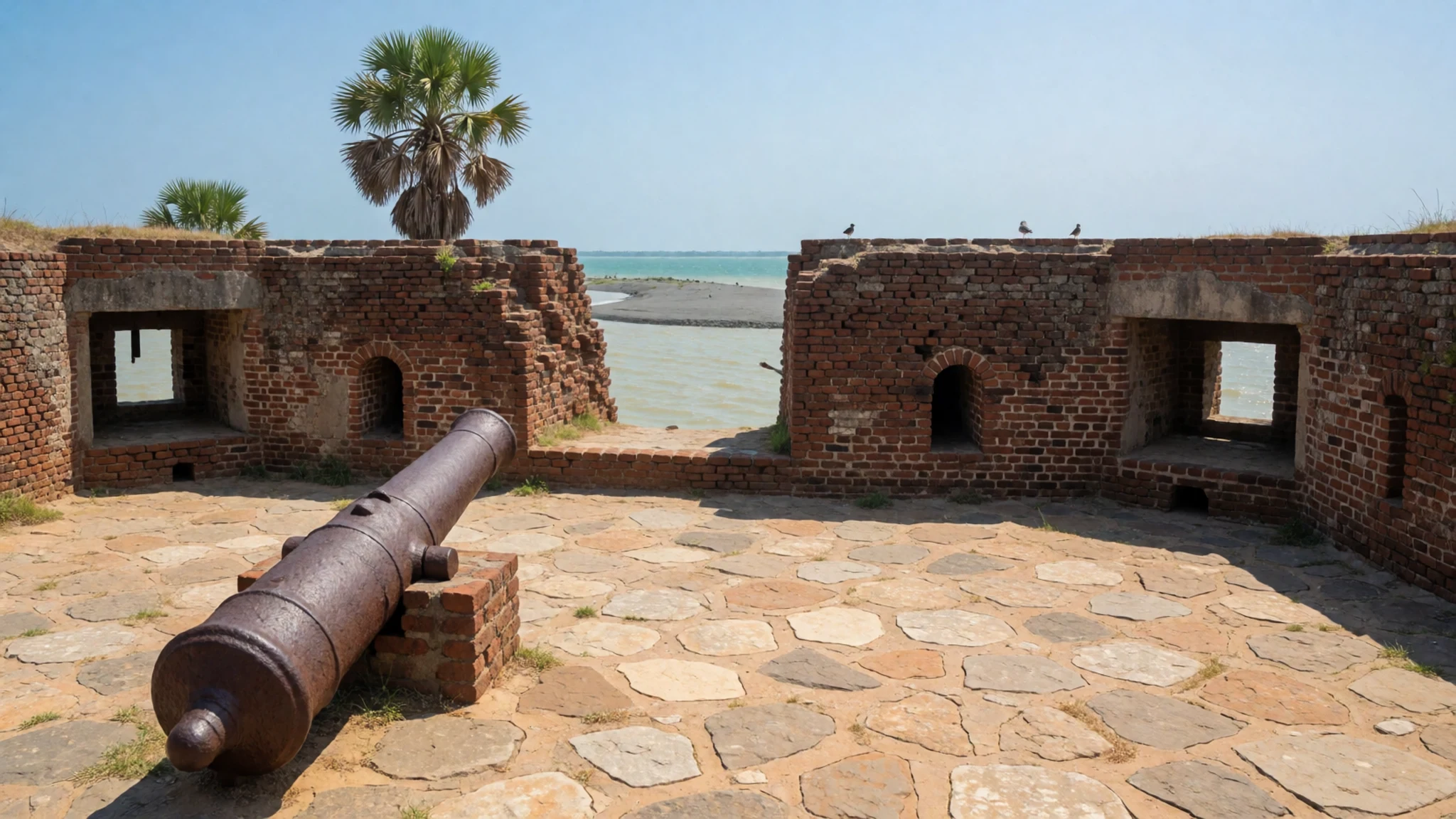
- The baobabs — Kunta Kinteh Island
The baobabs of Kunta Kinteh Island grow inside and beside the fort, thick grey trunks that give the main shade on the site. They mark the short walk from the landing to the walls. In the dry months the crowns are thin; after rain they fill with leaf. Visitors stop under them to drink and to look back at the Gambia River out of the glare.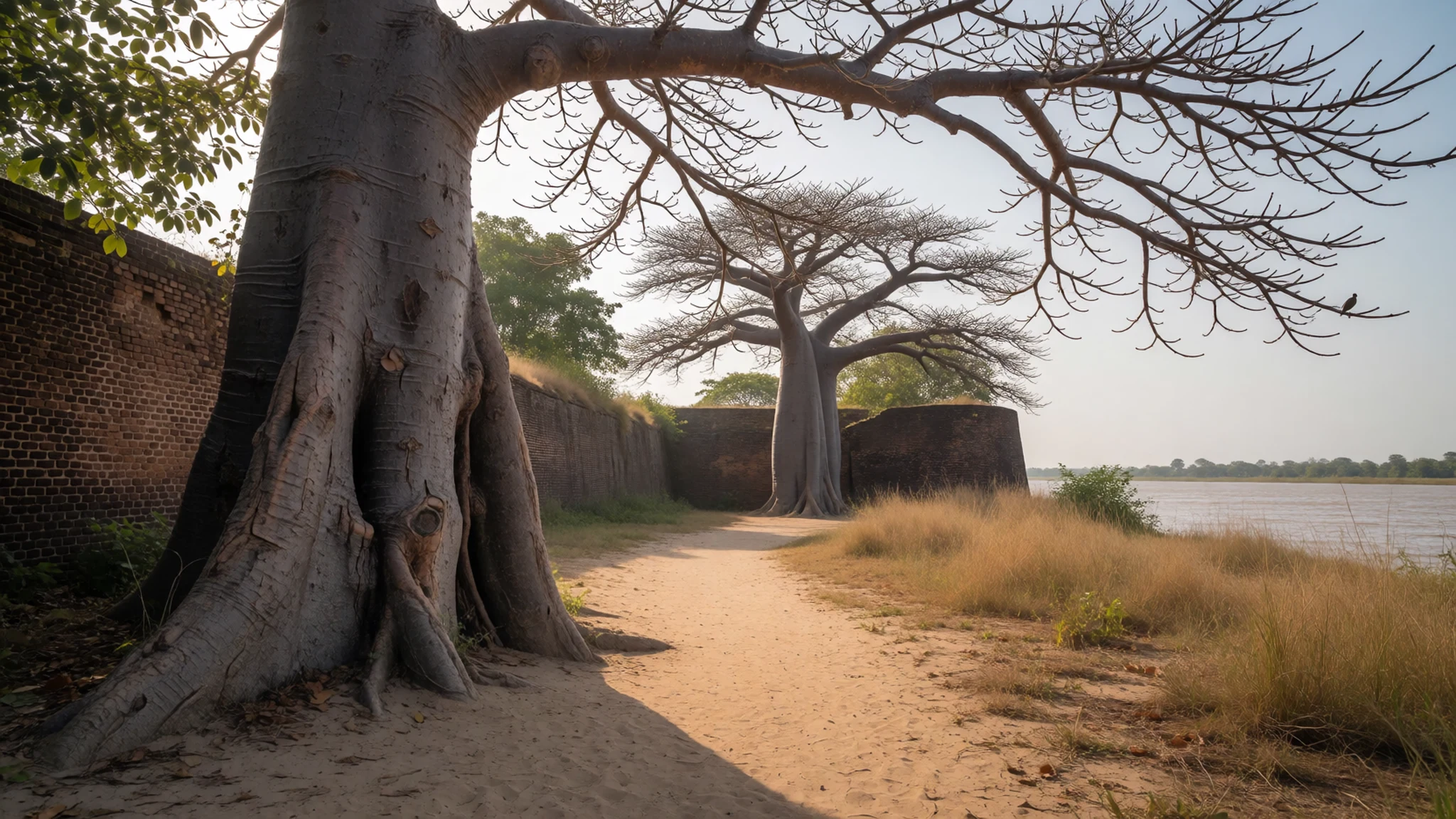
- The landing — Kunta Kinteh Island
The landing on Kunta Kinteh Island is a rough beach of mud and sand where pirogues from Albreda and Juffureh put visitors ashore. There is no real pier: people step into the shallows or onto a plank, then climb a short bank toward the fort. Both banks of the Gambia River are in view. The boat does not linger, and the island has no café, tap or shop.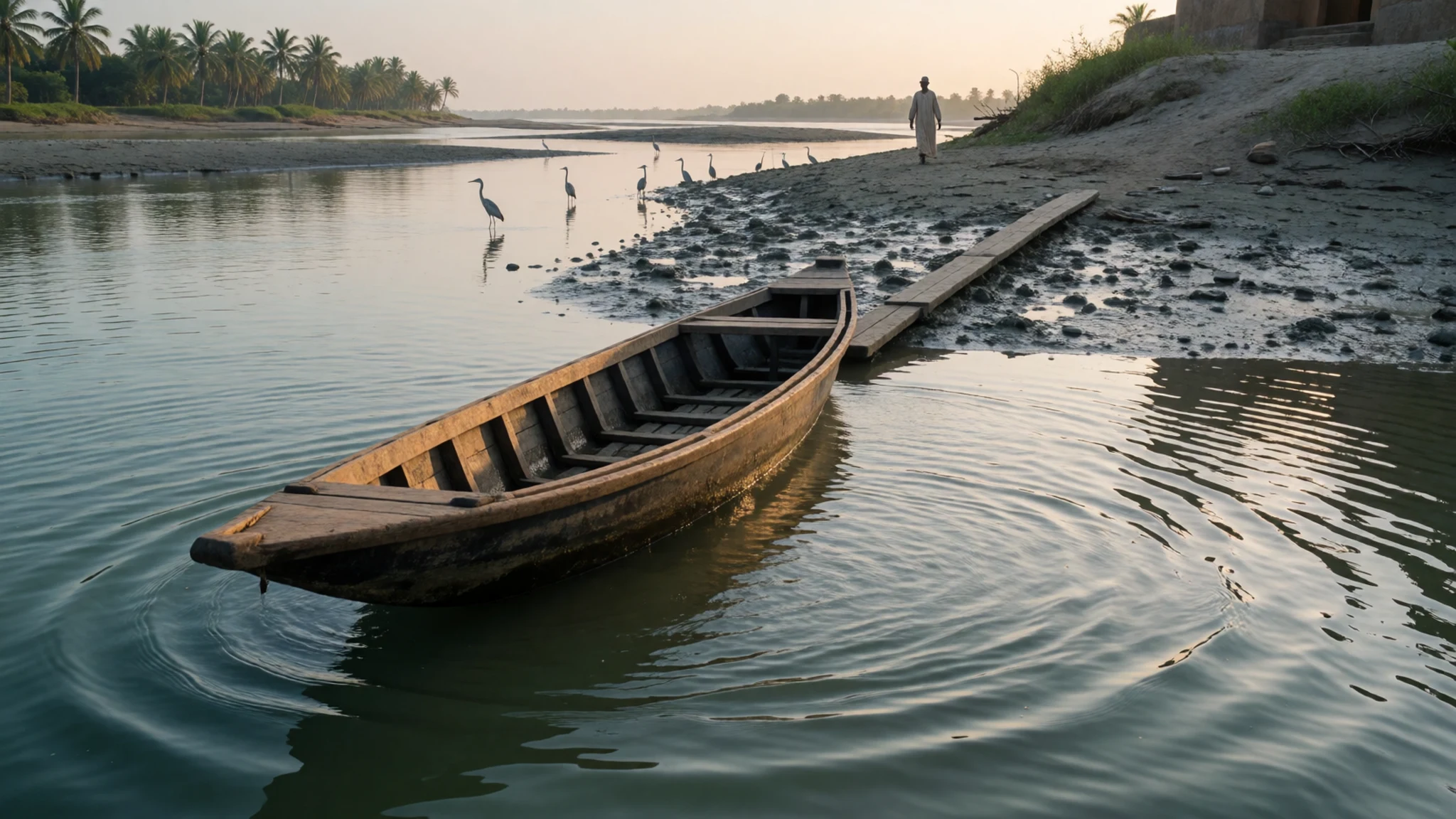
- Juffureh — North bank, The Gambia
Juffureh is the north-bank village linked with Kunta Kinteh Island in the story of Kunta Kinte. Family compounds and a short market strip sit near the boats that cross to the fort. Guides speak about Mandinka lineage, the river trade and Haley's journey. Daily life continues around the visits: cooking, children, and small shops. A camera pointed at a person or a doorway needs permission first.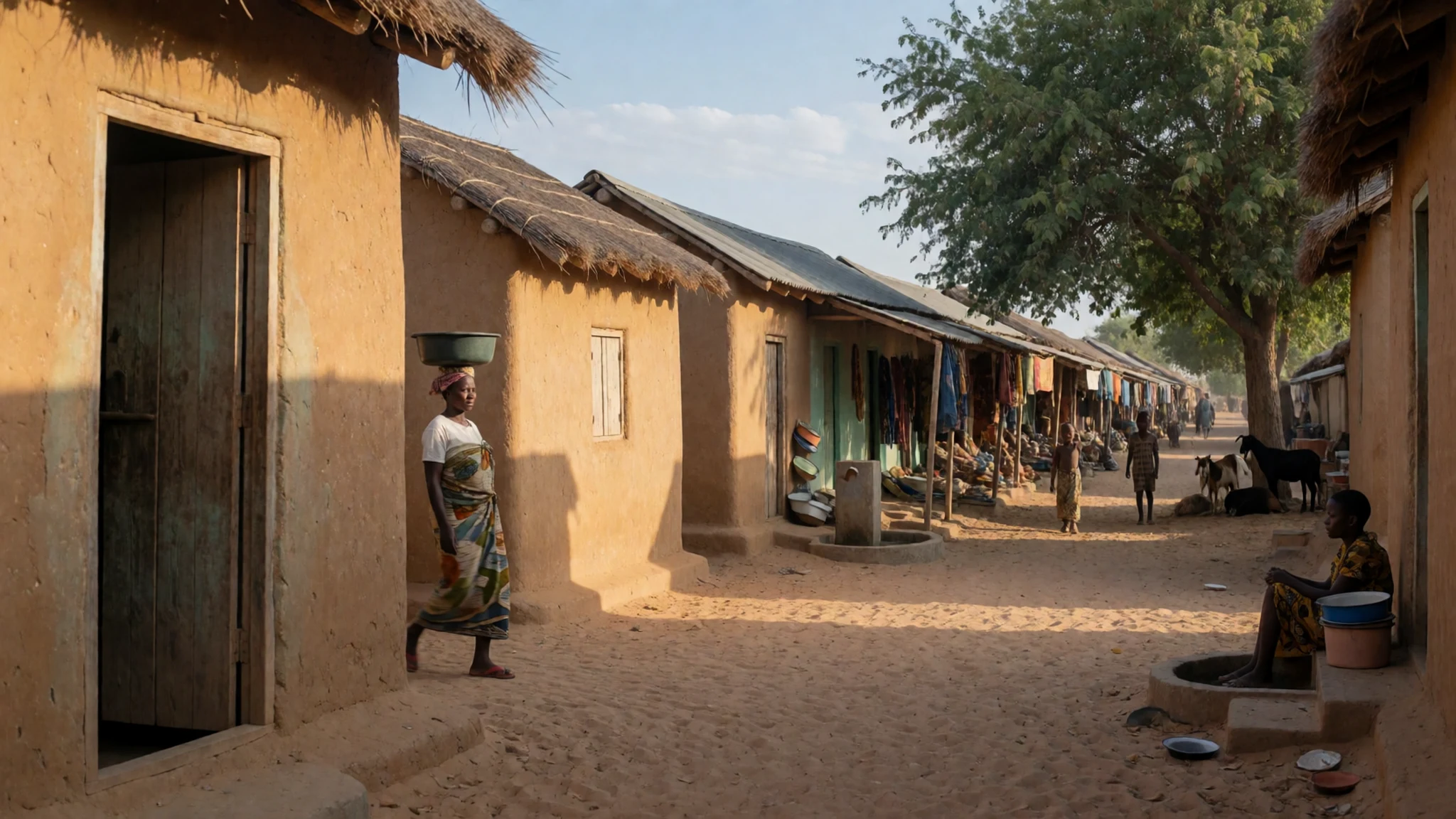
- Albreda — North bank, The Gambia
Albreda is the north-bank settlement that once held a French trading post facing the English fort on Kunta Kinteh Island. Most boat trips start here, after a display on the slave trade and a lane of older buildings. The riverfront is practical: life jackets, pirogues and a wait in the sun. From the shore the island fort is close enough to show how near the rival posts stood.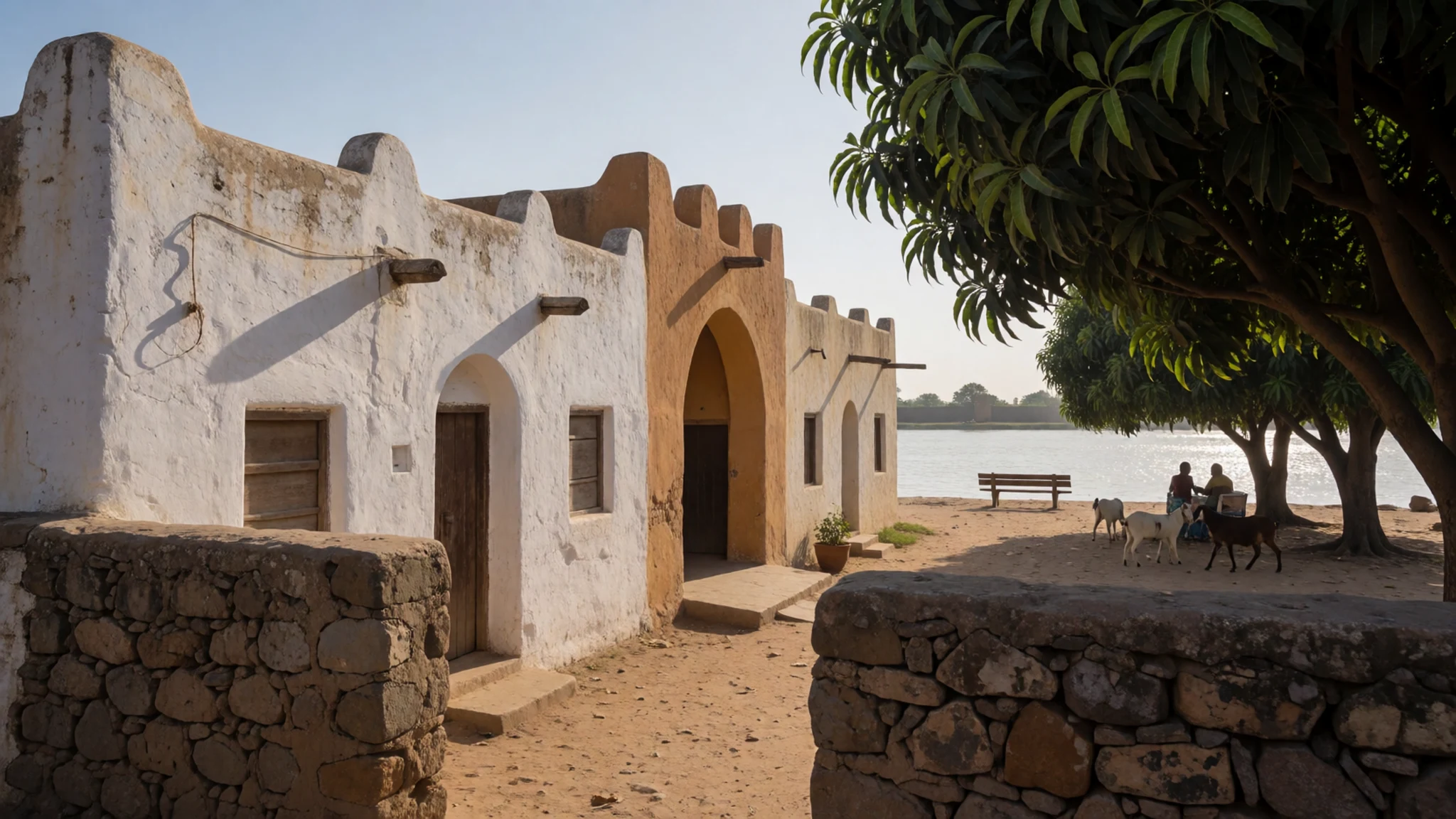
Culture
Culture on Kunta Kinteh Island and the facing bank is Mandinka at its root, set inside a Gambian mix of Mandinka, Wolof, Fula and other peoples, with Islam shaping the week. Greetings are not optional small talk. A visitor who walks into a compound at Juffureh is expected to offer a hello, ask after the family, and wait before raising the subject of the slave trade or of Roots. Elders and griots — jali, the hereditary praise-singers and historians — carry accounts that do not live in the fort walls. Friday prayers and Ramadan hours shape the day on the bank.
The visit itself is a kind of remembrance. Guides speak of capture, of holding pens, of ships, and of families who claim a link to Kunta Kinte. Some of that speech is inherited; some of it has grown with the book and with tourism. Both can be true at once, and a guest does better to listen than to cross-examine a host in public. Craft stalls at Albreda sell cloth and carvings; buying is a transaction, and bargaining stays good-humoured.
Music may appear as a drum or a kora if a group has arranged it, but the ordinary soundtrack is an outboard motor, birds, and people talking on the bank. Kunta Kinteh Island is a grave kind of place. Ask permission before photographing people in Juffureh or Albreda, greet before you enter a compound, and keep your voice low on the island itself.
What to wear
Dress around Kunta Kinteh Island follows the north-bank pattern of The Gambia. For prayers, weddings and naming ceremonies, men wear a long embroidered robe — a kaftan or grand boubou, locally a mbubb — often cut from cotton damask or stiff bazin that holds a shine. Women wear a matching set: a long wrapper or gown, a blouse, and a headtie, often called a musoor, in wax-print cotton or a richer brocade. These clothes are for occasions and for Friday, not for hauling a boat.
On an ordinary weekday in Juffureh and Albreda, people mix those cloths with practical town dress. Men wear trousers and short-sleeve shirts, sometimes a football jersey; women wear a tailored wax-print dress, a wrapper over a T-shirt, or jeans with a covered shoulder. School uniforms and second-hand European clothes are as visible as formal robes. Tailors in the larger towns still run up a complet — a matching outfit — when someone is travelling home for a ceremony.
A visitor to Kunta Kinteh Island should dress for sun, mud and a modest village. Light cotton, a hat, and shoes that can survive wet sand are more useful than anything smart. Shoulders and knees covered read as respect in the compounds and near a mosque; beachwear belongs on the coast, not in the boat to the fort. A scarf is enough for a woman who may step into a prayer space. The landing is mud, and the fort path is dust and broken brick.
What to eat
- Domoda — Cookshops in Albreda and Juffureh, and eateries in Banjul
Gambian domoda is a groundnut stew: peanuts worked into a sauce with tomato, onion and meat or fish, served with rice. It is everyday home food on the north bank. Cookshops in Albreda and Juffureh serve it, and so do eateries in Banjul before the trip to Kunta Kinteh Island.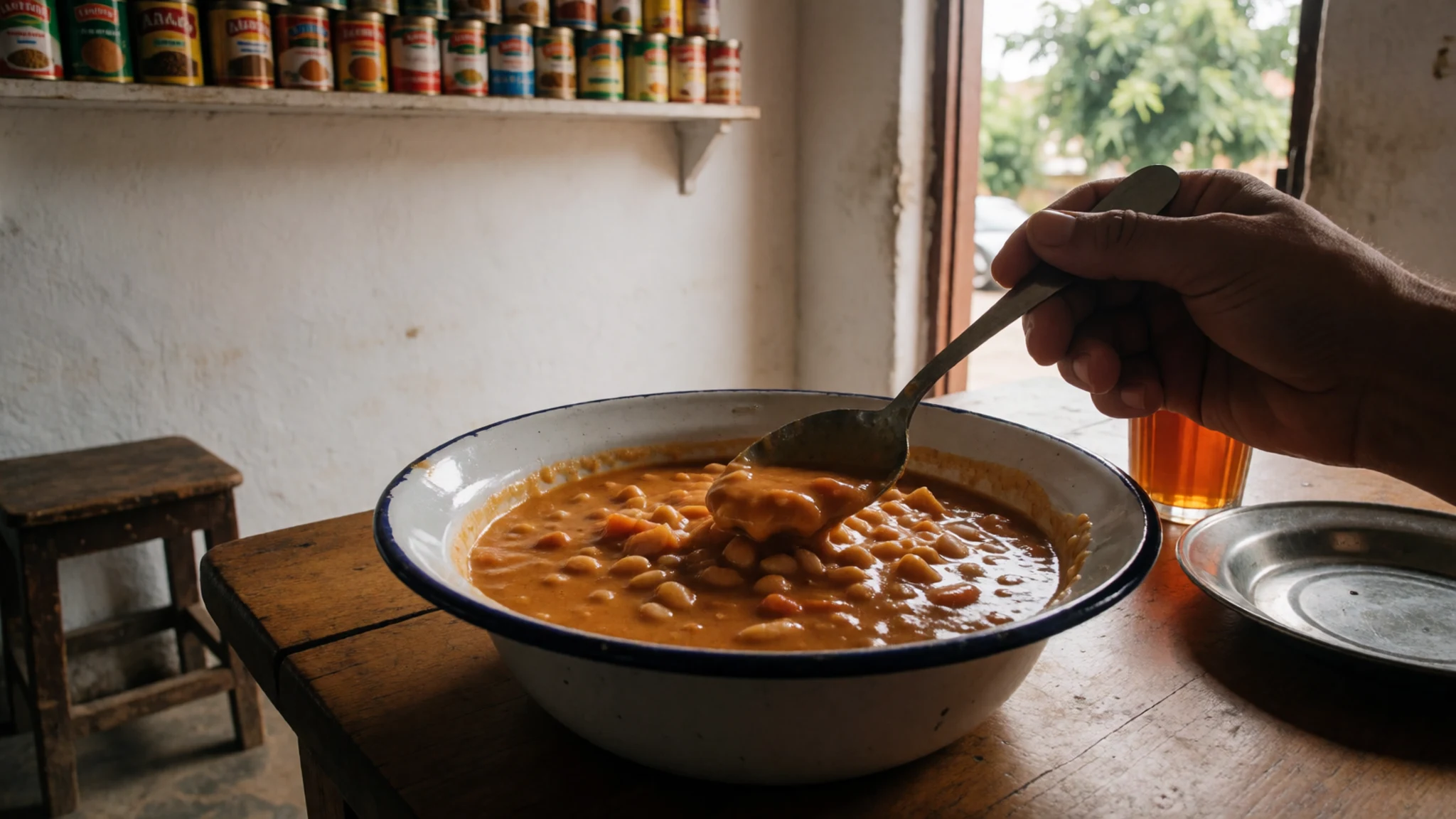
- Benachin — Cookshops in Albreda and market stalls in Serrekunda
Benachin, a one-pot rice, is cooked in a single pan with vegetables, tomato and fish or meat, softer and wetter than many jollof relatives. Near Kunta Kinteh Island it often uses fish landed that morning. Cookshops in Albreda and market stalls in Serrekunda serve it.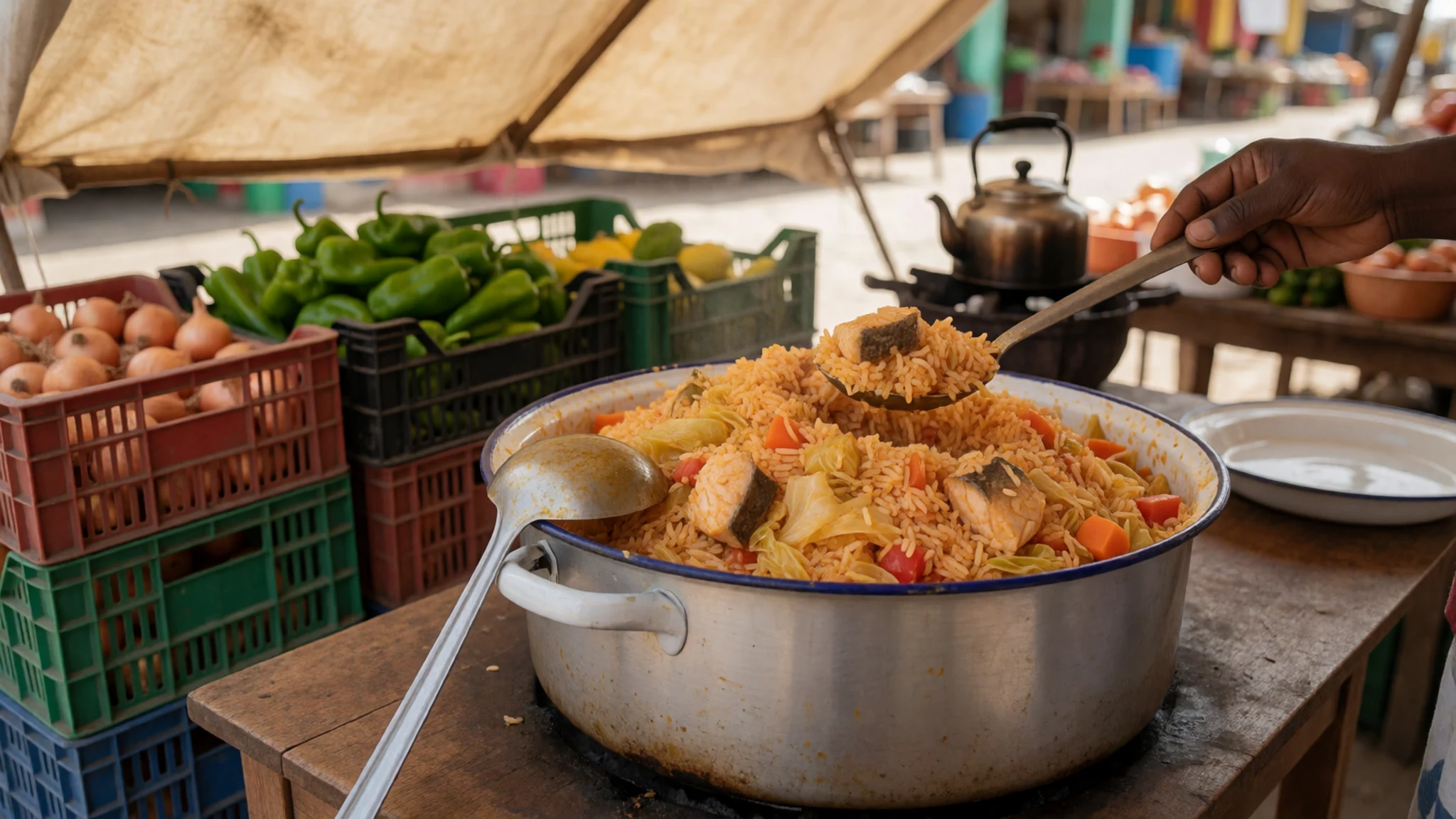
- Superkanja — Cookshops around Albreda and market stalls in Banjul
Superkanja, also called plasas, is a green sauce of okra and leafy vegetables, often with palm oil and fish, spooned over rice. The texture is slippery, which is the point. Cookshops around Albreda and market stalls in Banjul sell it on the way to Kunta Kinteh Island. - Afra — Roadside stalls in Serrekunda and Banjul
Afra is meat grilled at a roadside fire, seasoned hard and eaten with bread. It belongs to the towns rather than to Kunta Kinteh Island itself. Stalls in Serrekunda and Banjul set up after dark, a common stop once the river boat is back. - Tapalapa — Village shops in Juffureh and Albreda, and bakeries on the ferry road
Tapalapa is a dense, slightly sour loaf, used to scoop sauce or wrap grilled meat. Village shops in Juffureh and Albreda sell it, as do bakeries on the road from the ferry. With tea it is the simplest meal before a morning boat to Kunta Kinteh Island.
Plan it
Best time. November to April is the easier window for Kunta Kinteh Island: north-bank tracks are firmer and the boat is less often rained out. December to February is the mildest part of that stretch. From May the heat builds, and the June to October rains can slow the road to Albreda and leave the landing slick.
How long. 1–2
Getting there. Fly into Banjul International Airport at Yundum, then take the road to Banjul. The usual last leg is the ferry across to Barra, a north-bank drive to Albreda or Juffureh, and a pirogue to Kunta Kinteh Island. Some boats leave from the Banjul side and skip the ferry. The island itself is reached only by boat.
Budget. mid
Tips
- Book the pirogue through a licensed guide rather than a random offer on the bank
- Go early, because the island has little shade by midday
- Carry water and sun protection; nothing is sold on the island
- Take cash for the boat, guides and stalls; cards are no use here
- Keep to the paths and treat the fort as a place of mourning
Etiquette
- Greet people in Juffureh and Albreda before questions or before stepping into a compound
- Ask before photographing faces, doorways or anyone at prayer
- Cover shoulders and knees, and remove shoes when a host or a mosque asks
Nearby
Sources
- Wikidata (CC0)
- Wikipedia (CC BY-SA 4.0)
- Wikivoyage (CC BY-SA 4.0)