Bijilo Forest Park
Bijilo Forest Park, The Gambia
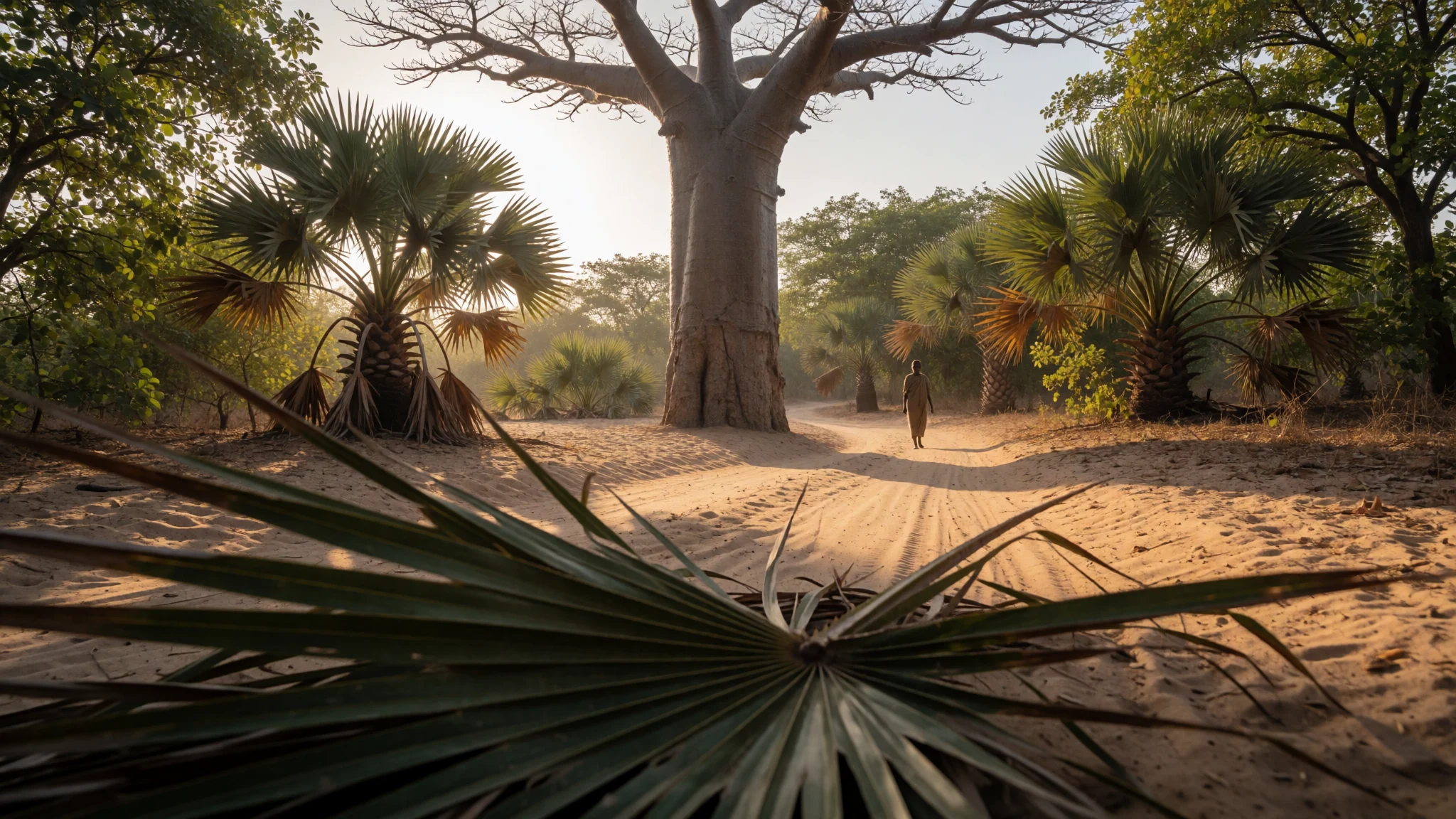
Bijilo Forest Park keeps a strip of Atlantic woodland where green monkeys and baobabs sit beside the Gambian coast.
The place
Bijilo Forest Park is a pocket of coastal woodland on the Atlantic shore of The Gambia, set in the Kololi belt where beach hotels thin out and the trees take over. Pale sand underfoot, a low canopy overhead, and a lattice of footpaths make the whole reserve a walk rather than a drive. African palmyra palms stand in clumps, baobabs rise as thick grey trunks with spare crowns, and ordinary broadleaf trees fill the gaps so that, a short way past the gate, the coast road fades.
Green monkeys are the company most walkers meet. They travel in troops through the branches and drop to the path edge, unfazed by people and sharply interested in anything that might be food. Red colobus keep to the canopy and are easy to overlook if attention stays at eye level; Campbell's mona monkey, patas and the nocturnal Senegal bushbaby live in this woodland too. Birds move above both. What remains here is a fragment of the coastal forest that once stretched further along this shore, held as a walking reserve while the Senegambia strip built up around it.
The point of Bijilo Forest Park is the loop itself: shade, animal life at close range, and the odd pairing of a living woodland with a holiday beach. By late morning the heat sits in the shade as well as the sun. In the wet months the sand paths soften. Outside again, the same coast is taxis, eateries and the sea. The monkeys, not a timetable, decide how close the walk feels.
Its story
Bijilo Forest Park sits on a coast where woodland, fishing villages and a later holiday strip share the same sand. Around Bijilo and Kololi, people have long taken a living from the sea and from trees like these: the African palmyra, locally valued for timber, thatch, fruit and a tapped sap, and the baobab, whose leaves, fruit and seeds still go into Gambian cooking and home remedies.
Tourism rearranged that landscape. Hotels and beach clubs gathered along the Senegambia road, and the surviving block of trees became a place visitors could enter on foot. The English name that stuck was the monkey park, because green monkeys, already at home in the canopy, learned the new traffic of walkers and began to treat the paths as part of their range. Red colobus remained the shyer presence overhead, a sign of older forest rather than a performer at the gate. Feeding tightened the habit. Snacks from hands made the bolder animals expect food, which is why the walk today comes with a warning as much as a welcome.
Bijilo Forest Park's story is that bargain, still unfinished. The woodland stayed standing beside a busy beach strip, close enough for a morning visit and intact enough for monkeys, palms and a hot coast. The villages did not vanish when the hotels arrived; they share the same roads, selling produce, cloth and meals. Visitors who treat the trees as a mere photograph miss the plainer fact that this was a working shore, and the reserve is the part of it still standing inside the tourist belt.
What to see
- Green monkeys — Paths inside the park, Kololi coast
Green monkeys are the animals a walker is most likely to meet in Bijilo Forest Park. Troops move through the mid-canopy and come down to the path, especially where people pause. They are used to being watched and will investigate bags. The sensible approach is to stand still, keep food out of sight, and let them pass. Early morning is when they are active and the paths are quieter.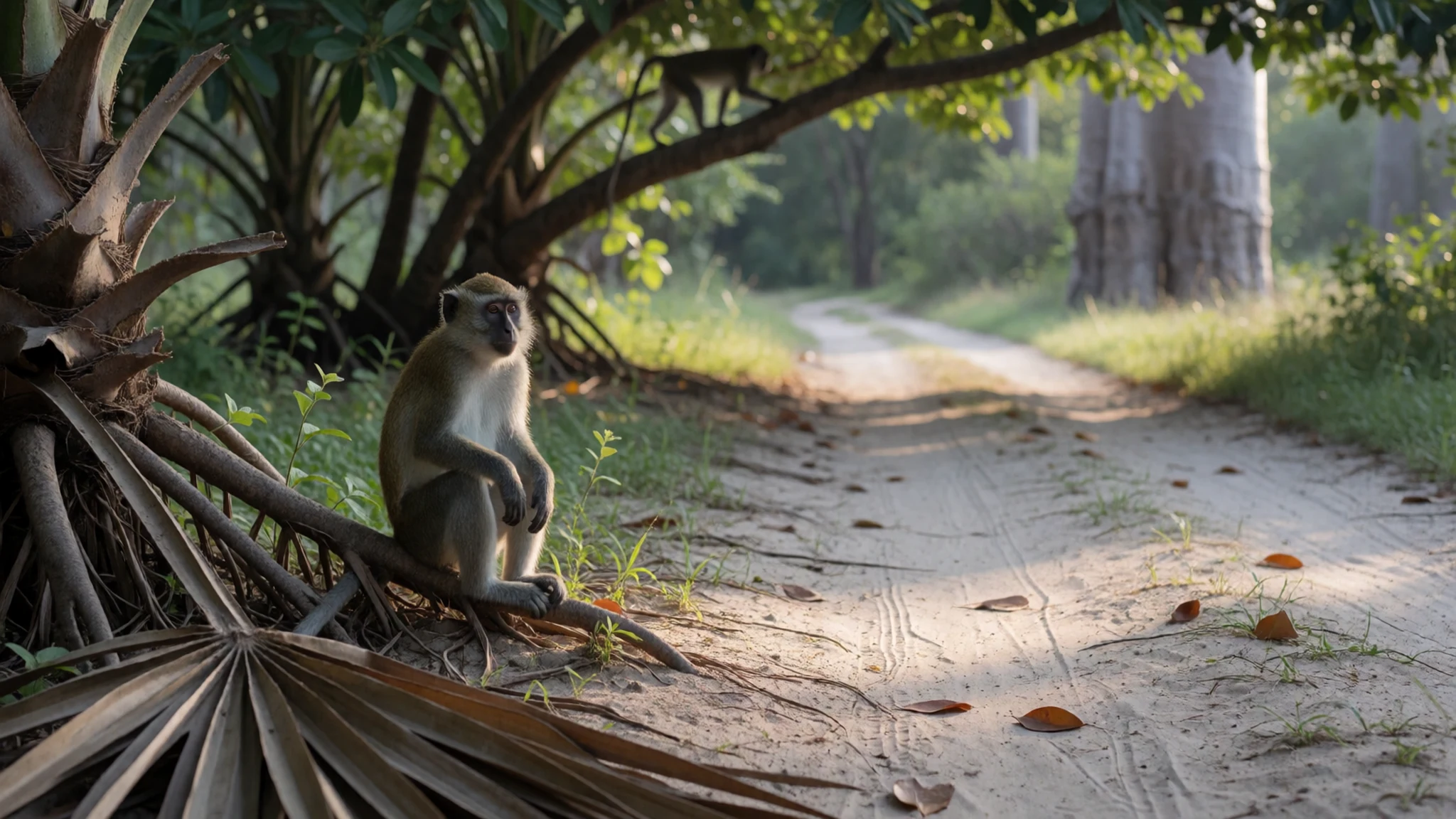
- Baobabs — Woodland interior, Bijilo
Baobabs punctuate the woodland of Bijilo Forest Park, their grey trunks far wider than the surrounding trees and their crowns sparse against the sky. In Gambian life the tree is food and pharmacy as well as shade: fruit and leaves are eaten, and the bark has household uses. The forks hold birds and monkeys, and the hollow bases are best left alone rather than climbed.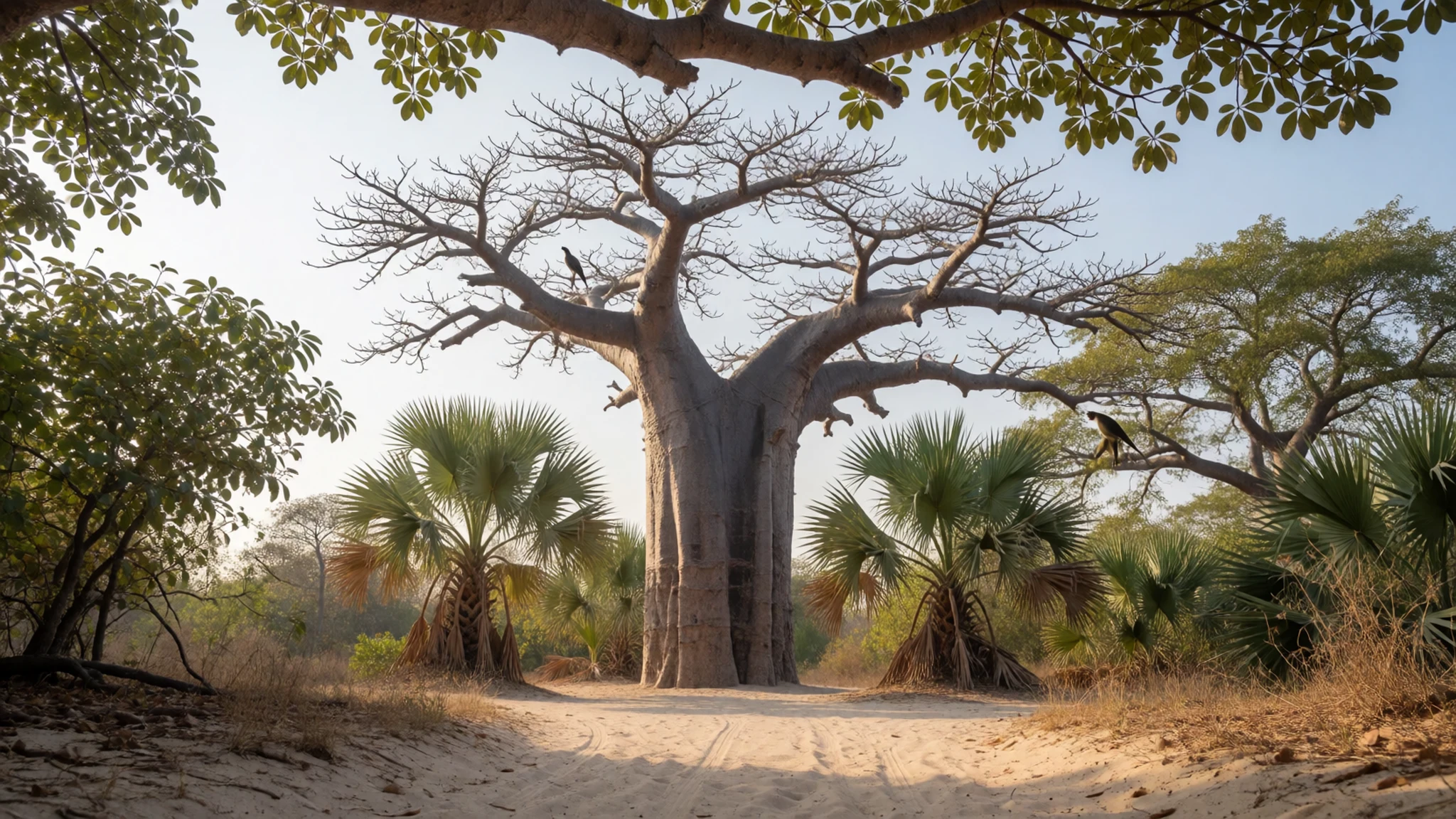
- African palmyra palms — Throughout the park
African palmyra palms, the tall fan palms of this coast, grow through Bijilo Forest Park in loose groups. The trunk is marked with the bases of old fronds, and the crown throws a hard shade on the sand. Locally the palm has long supplied timber, thatch, fruit and a sap that can be tapped. In the park they are left standing as habitat. They read clearly above the lower canopy.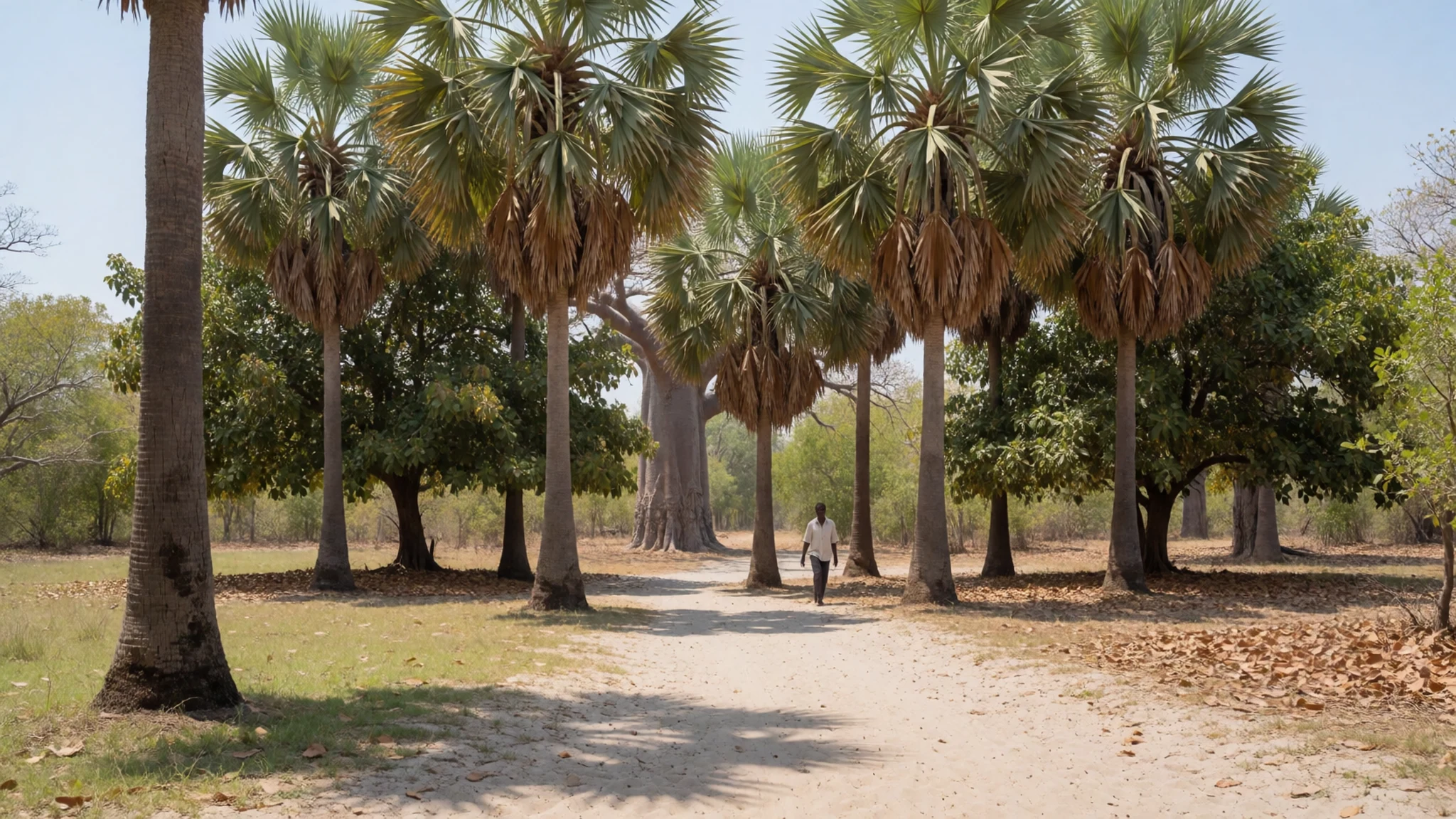
- Red colobus — Canopy above the paths
Red colobus are the quieter monkeys of Bijilo Forest Park, russet in the coat and seldom as bold as the green monkeys at path level. They feed and travel in the canopy, so a sighting is a movement and a call rather than an animal at arm's length. They are the primate that marks this kind of coastal woodland. Patience and an upward glance do more than a fast loop.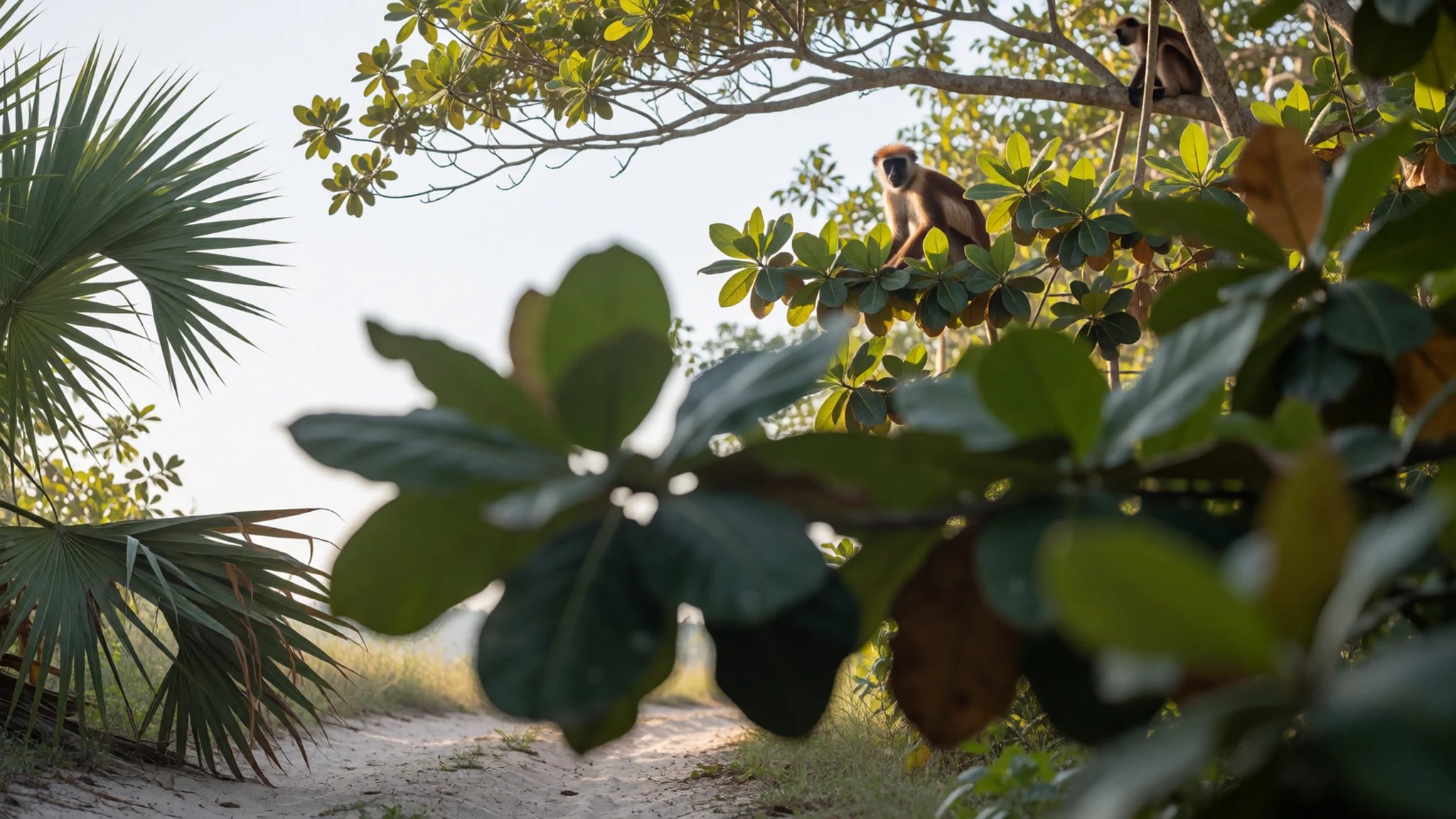
- Sandy forest paths — Loop trails inside the park
The paths in Bijilo Forest Park are sandy tracks under the trees, uneven where roots cross and soft after rain. Walking is gentle and mostly shaded. Interest stays at the edges: palm groups, baobab trunks, and monkeys crossing overhead. Morning is the comfortable hour. By midday the air is heavy, and in the wet season the tracks ask for shoes that can take mud.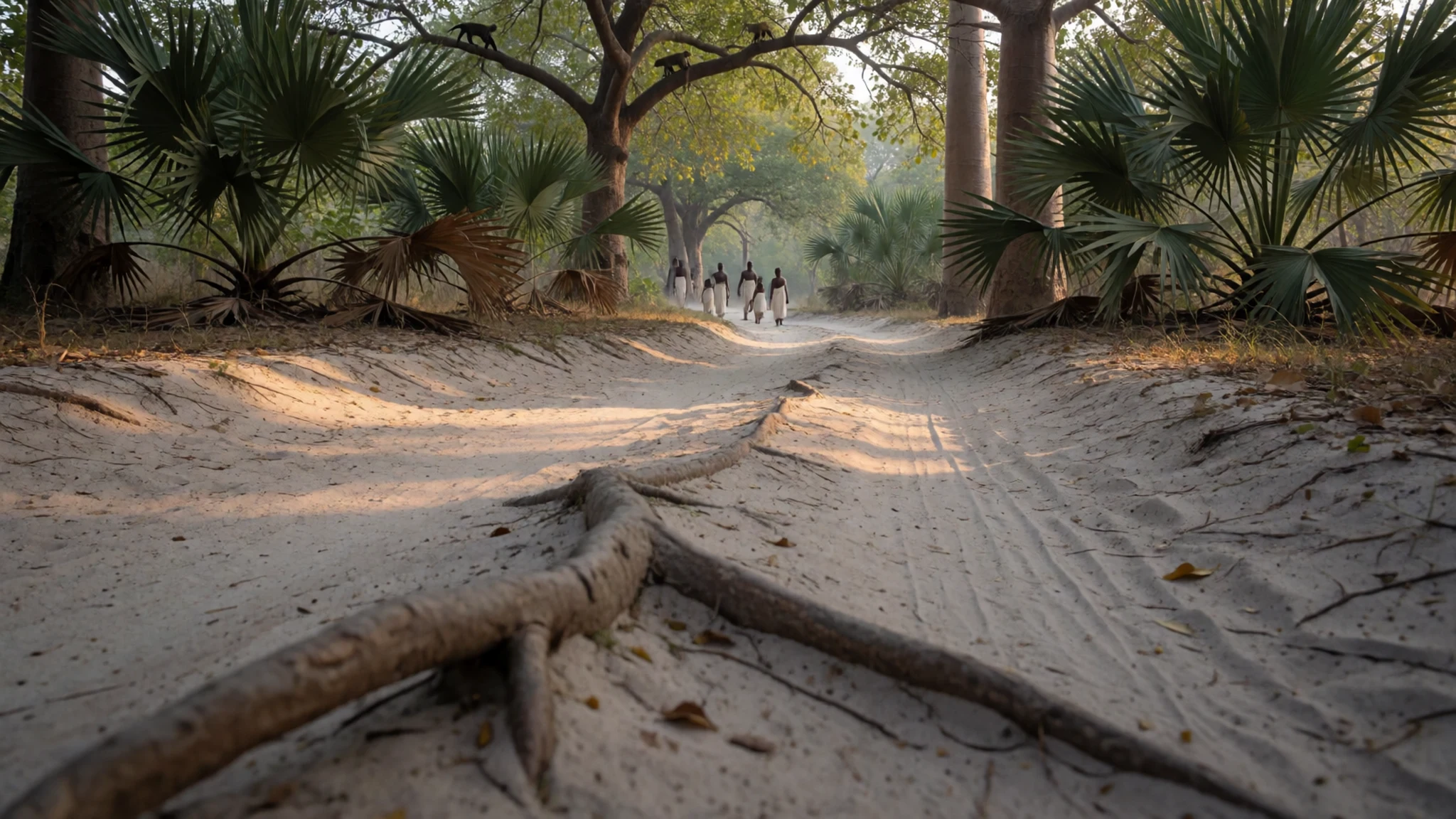
Culture
Bijilo Forest Park lies on a coast shared by Mandinka, Wolof, Fula, Jola and other Gambian peoples, and a single conversation in Kololi may move between languages. A greeting is the real start of any exchange: people ask after peace and family before they talk business. Most Gambians are Muslim, so Friday draws many men to the mosque in their best cloth, while Christian communities and older customs remain part of the same towns. Griots and the kora still mark namings and weddings in the towns around the park.
The reserve is a daytime walk, used by visitors in beach clothes and by people who simply live on this road. Courtesy here matches the rest of the coast. People offer and receive things with the right hand, shoes come off when a host or a prayer room expects it, and a greeting finishes before any request. Visitors should ask before photographing anyone, including children at the gate or in Bijilo village. In Bijilo Forest Park, do not feed or touch the monkeys, keep food sealed out of sight, and give troops room to pass along the path.
What to wear
Bijilo Forest Park is not a place of formal dress, but the coast around it shows Gambian cloth clearly. The grand boubou, a wide robe of cotton or a stiffer damask, often embroidered at the chest, is what men wear for Friday prayer, weddings and festivals. Women wear a matching wrapper, blouse and headtie, cut from wax-print cotton or from gara, the tie-dye cloth that Gambian dyers still produce in deep indigo and other colours. These are not costumes for the forest path; they appear at the mosque, at ceremonies, and on the road when the occasion asks.
Day to day, the Senegambia strip dresses for heat and for work. Hotel staff, drivers and stallholders wear shirts, polo tops and trousers or long skirts; younger people add jeans, trainers and football shirts. Beachwear belongs on the sand in front of the hotels, not in the village lanes behind them. Inside Bijilo Forest Park a visitor needs less fashion than sense: light, breathable cotton, a sun hat for the gate and the road, and closed shoes or sturdy sandals that can cope with roots, loose sand and, in the rains, mud. Shoulders and knees can stay covered if the walk continues to a mosque or a family compound. Swimwear is for the beach.
What to eat
- Domoda — Cookshops on the Senegambia road and Serrekunda market
Around Bijilo Forest Park, domoda is the groundnut stew many Gambians treat as a staple plate: peanut sauce with meat or vegetables, ladled over rice. The sauce is thick and slightly sweet from the nuts, and cookshops along the Senegambia road and Serrekunda market serve it.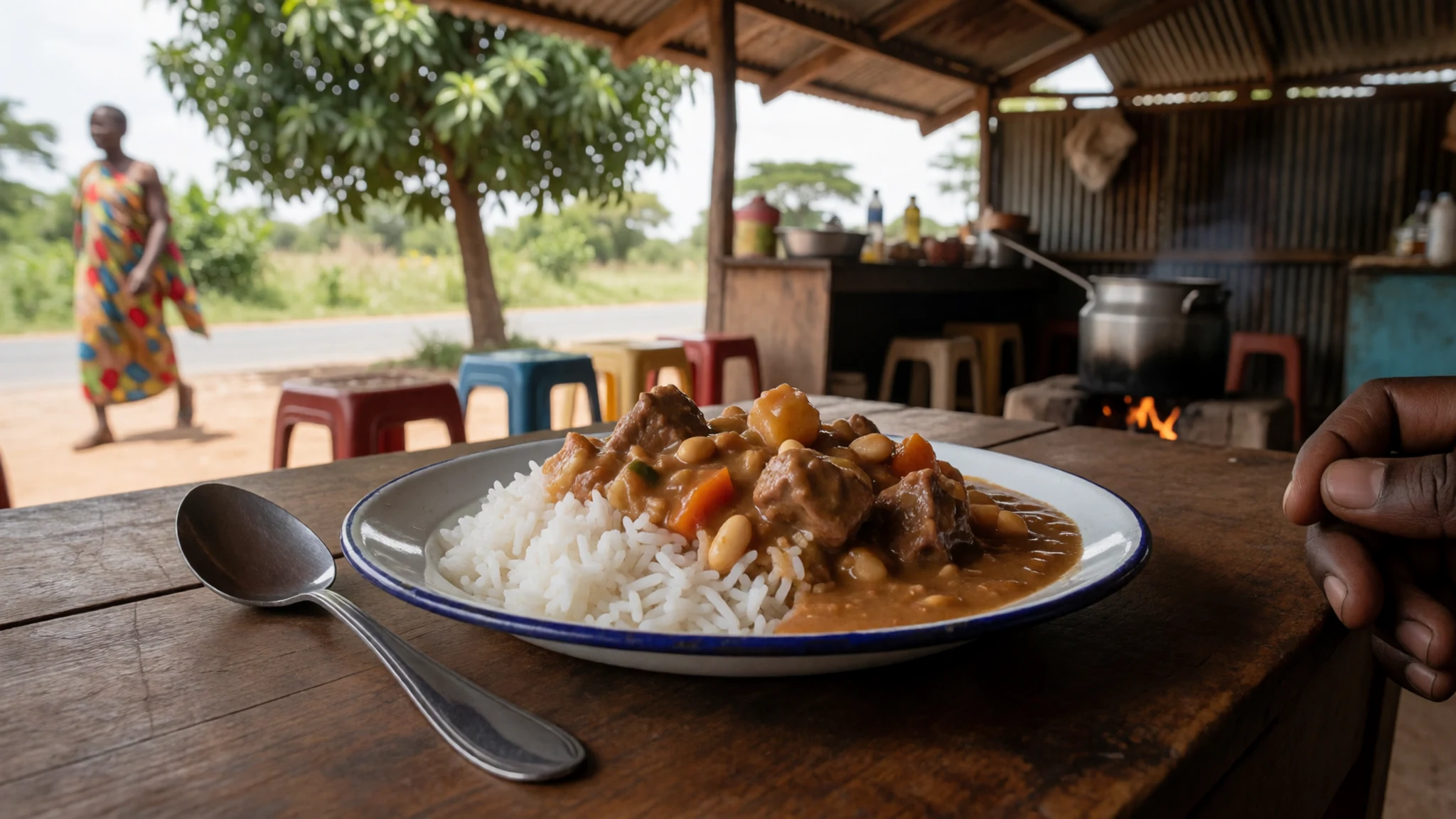
- Benachin — Beach grills and Kololi eateries
Near Bijilo Forest Park, benachin — often called jollof on this coast — is rice cooked in a single pot with tomato, vegetables and fish or meat so the grain takes the sauce. Beach grills and local eateries in Kololi serve it at lunch and in the evening.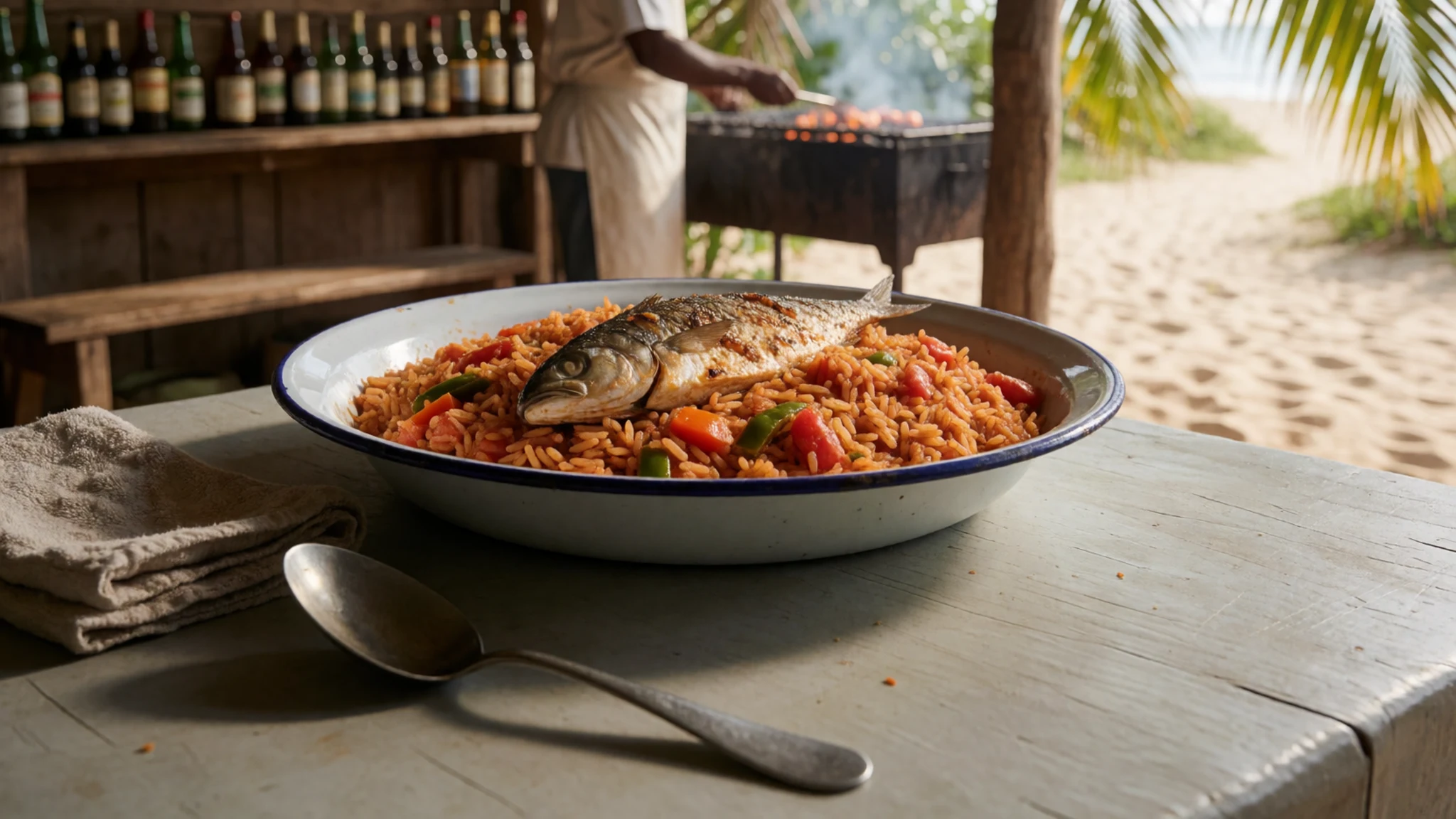
- Supa kanja — Kololi eateries and Serrekunda market cookshops
Supa kanja is an okra soup eaten near Bijilo Forest Park with rice or a stiff porridge, the pods cooked down until they draw the sauce together. Palm oil, fish and chilli are typical in the pot. Eateries in Kololi and market cookshops in Serrekunda serve it. - Afra — Evening stalls on the Kololi and Serrekunda roads
After a walk in Bijilo Forest Park, afra is the grilled meat to seek: beef or mutton cut small, cooked over charcoal and eaten with bread and a hot sauce. Evening stalls on the Kololi and Serrekunda roads start the smoke as the day cools. - Grilled fish — Kololi beach and the Senegambia strip
Grilled fish is the obvious coastal plate beside Bijilo Forest Park: whole fish from the Atlantic, scored and cooked on a beach grill, served with rice, lime and chilli. Kololi beach and the Senegambia strip are where the charcoal fires sit within walking distance of the trees.
Plan it
Best time. November to May is the dry season, the easier window for Bijilo Forest Park: firm sandy paths, less mud and fewer mosquitoes, May still very dry, December to February the most comfortable and April the hottest. June to November is the rainy season, when the tracks soften and the air is heavy, August the wettest month. December to February is the main holiday stretch; March, April and November are quieter while the woodland is still dry.
How long. 1
Getting there. Banjul International Airport at Yundum, then a taxi or hotel transfer to the Kololi and Senegambia coast. Bijilo Forest Park is a short taxi ride or walk from those beach hotels; the last leg is by road, and there is no railway.
Budget. low
Tips
- Start early, before the heat builds and tour groups fill the paths.
- Carry drinking water; shade does not cancel the heat.
- Keep snacks sealed and out of sight so the monkeys do not grab them.
- Wear shoes that can take roots, loose sand and wet-season mud.
- Carry cash for the gate and nearby stalls, and confirm any entry charge on the day.
Etiquette
- Do not feed, touch or tease the monkeys.
- Stay on the paths and let a troop cross instead of pushing through it.
- Ask before photographing people, and cover shoulders and knees if the day continues to a mosque or a home.
Nearby
Sources
- Wikidata (CC0)
- Wikipedia (CC BY-SA 4.0)
- Wikivoyage (CC BY-SA 4.0)
Wildlife
- Green monkey (animal)
The green monkey is a golden-green monkey with pale hands and feet and a bright yellow tip to its tail, as if it had dipped it in custard. In Bijilo Forest Park it is the animal a walker is most likely to meet along the paths. Watch it from a respectful distance, keep your voice low and your movements slow, and walk with a guide who knows the forest. Never feed it, however friendly it seems.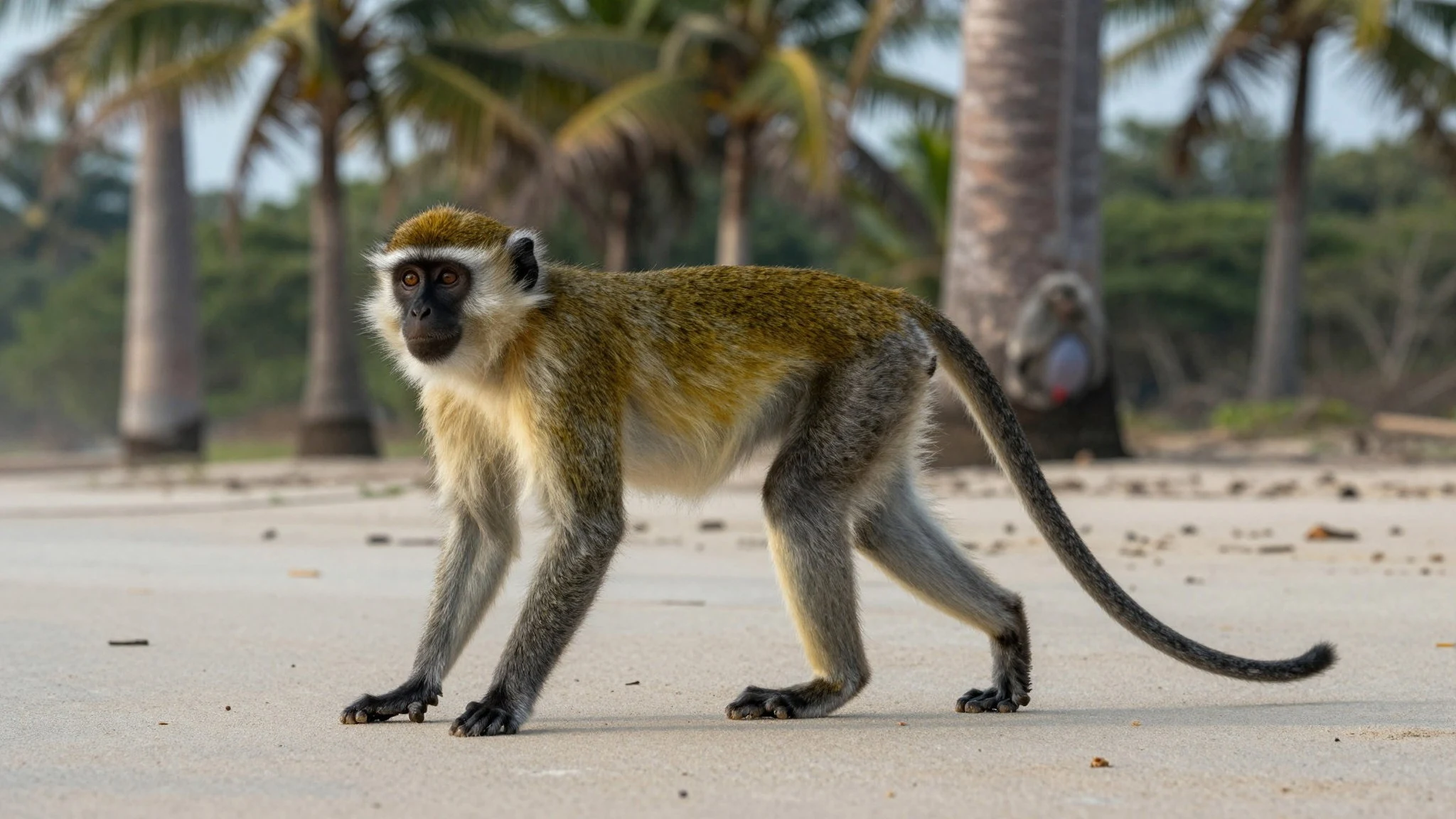
- Red colobus (animal)
Temminck's red colobus is a russet-coated monkey, the quiet cousin of the green monkey. In Bijilo Forest Park it is the shyer of the two, less bold about coming down to the paths than its green neighbours, so spotting it takes patience. Keep a good distance, speak softly, and let a guide help you look. Never feed it; simply enjoy watching it live its wild life.