Rhumsiki
Rhumsiki, Cameroon
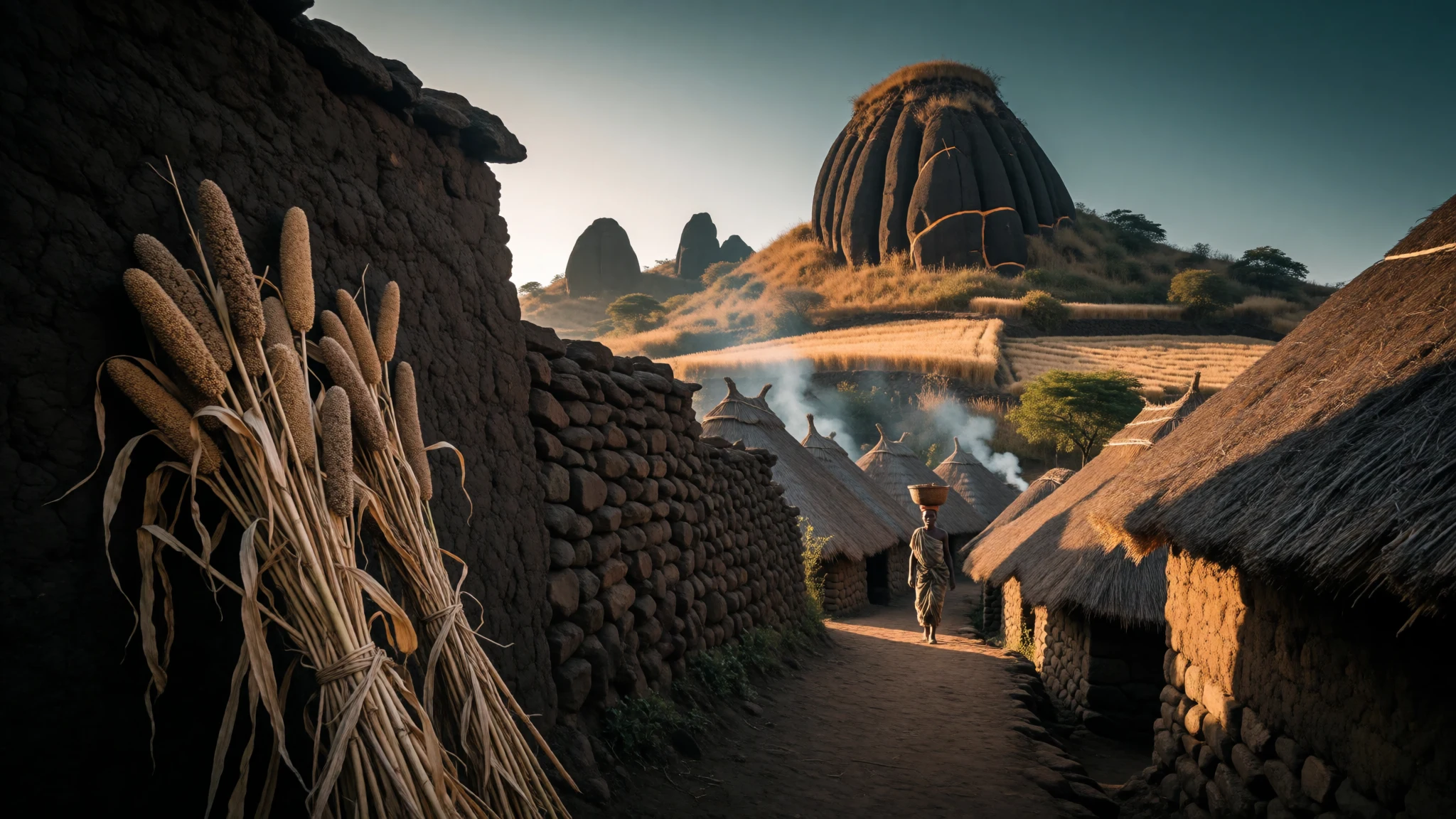
Rhumsiki is a Kapsiki village in Cameroon’s Mandara Mountains, gathered under a volcanic plug and still shaped by millet, weaving and compound life.
The place
Rhumsiki sits in the Far North of Cameroon, in the Mandara Mountains, where Kapsiki compounds look up at a steep volcanic plug. The village is small and agricultural, quiet in the middle of the day, when heat lies on the stone and the paths empty. Morning and late afternoon are when it shows itself: cooking smoke, millet set out to dry, people moving between the fields, and the peak’s shadow crossing the roofs.
Around Rhumsiki the range breaks into isolated plugs and rocky hills rather than a single long crest. The nearest plug rises straight behind the houses, bare rock above thorn and grass. From the slopes the view opens onto further plugs, cultivated pockets and the border hills towards Nigeria. Wind, insects and field work fill the day; there is little mechanical noise.
Daily life turns on millet and sorghum, on compounds roofed in thatch or metal, and on the short walk between home, field and the track that brings outsiders in. Weaving is a stop child guides walk for arrivals, and that circuit now bends the working day. Visitors have been lodged here for a long time, so the village knows how to host, yet the offer stays simple: a guide, a meal, a bed, and water that needs the same care as anywhere this far from a large town.
Rhumsiki is a lived-in village on dramatic rock. The walk up, and the walk back into evening light when cooking fires start, is the heart of a stay. Heat and dust mark the dry months; after the rains begin the hills turn green and the tracks grow heavy.
Its story
Rhumsiki’s story belongs to the Kapsiki, the people of these Mandara hills. They have farmed and built compounds on this Cameroonian side of the range for generations; across the border in Nigeria the same community is called Higi. Families, markets and custom have long faced both ways across the hills.
The plugs are the hard cores of old volcanoes, left standing when softer rock around them wore down. People settled where slopes would hold millet and sorghum, where stone and thatch could make a compound, and where smiths, weavers and farmers could keep the order Kapsiki society still recognises. Blacksmith lineages hold a distinct place, tied to iron, tools and ritual knowledge. Weavers work in the open.
Outsiders began to come because the peak photographs so cleanly: a stone tower, a village at its foot, hills rolling towards the border. A visitor camp was already part of Rhumsiki in 1973, and the village later entered guidebooks as a walkable face of the Mandara Mountains. That attention changed the path up the plug and the way some households meet strangers, but it did not replace the farming calendar. Rhumsiki still eats what the hills grow, still marks the year by rains and harvest, and still explains itself through Kapsiki custom.
Rhumsiki is both a working village and a much-photographed outline. Travellers arrive for the rock, and residents decide how close a stranger gets.
What to see
- Rhumsiki Peak — above the village
Rhumsiki Peak is the volcanic plug that stands over the compounds, bare rock with a skirt of thorn and grass. The usual visit is a walk up with a village guide, starting early before the heat builds. The path is rough and exposed. From the upper slopes the other plugs, the fields and the hills towards Nigeria spread out below.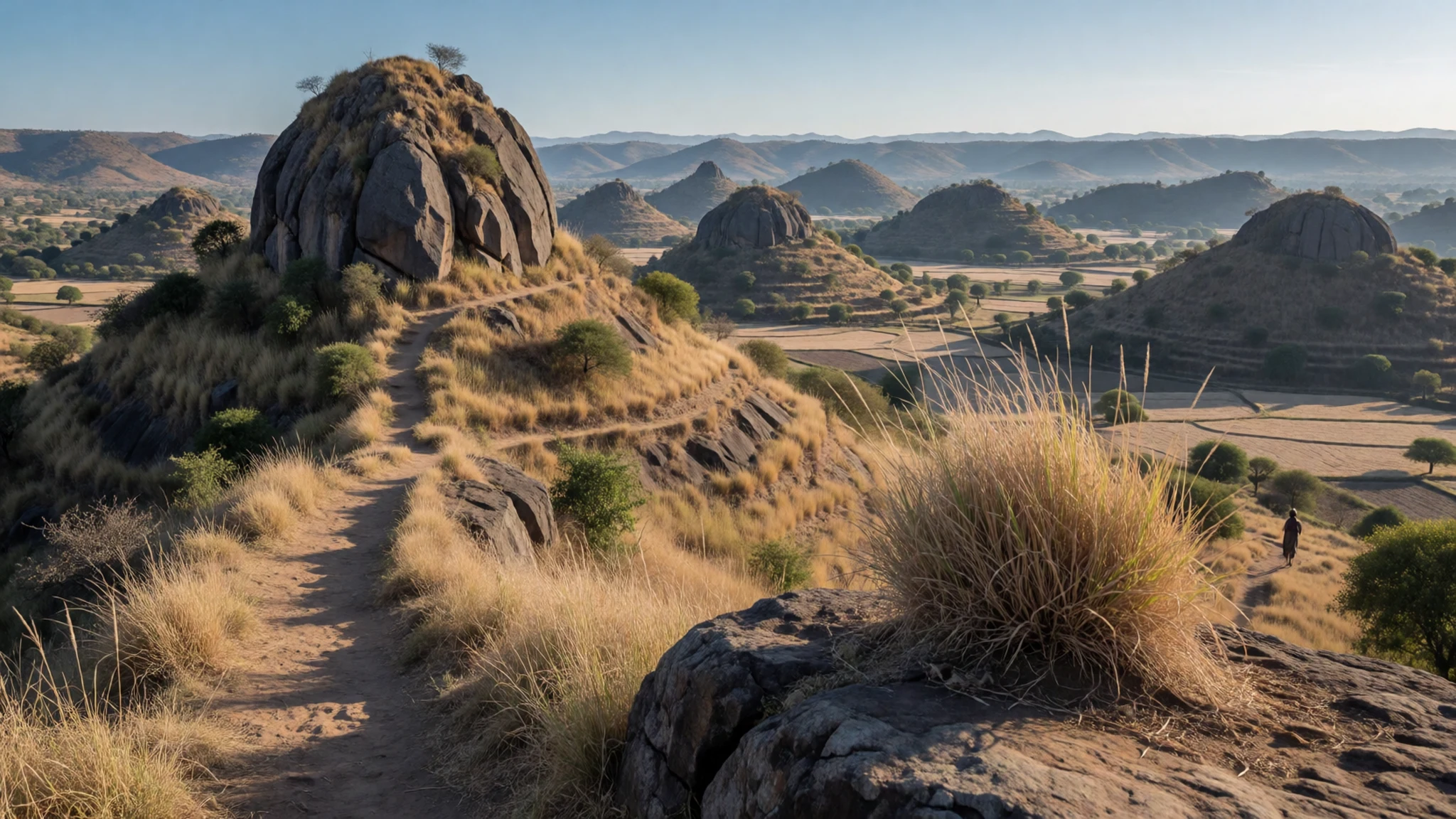
- Kapsiki compounds — the village compounds
Rhumsiki’s compounds are family enclosures of stone, mud and thatch or metal roofing, set close under the peak. This is where millet is stored, meals are cooked and guests are received, not a museum row. A visit is a guided round of smiths, potters, spinners, weavers, dancers and the féticheur. Building methods and courtyard layout repay a slow look, while ritual objects and private rooms stay private.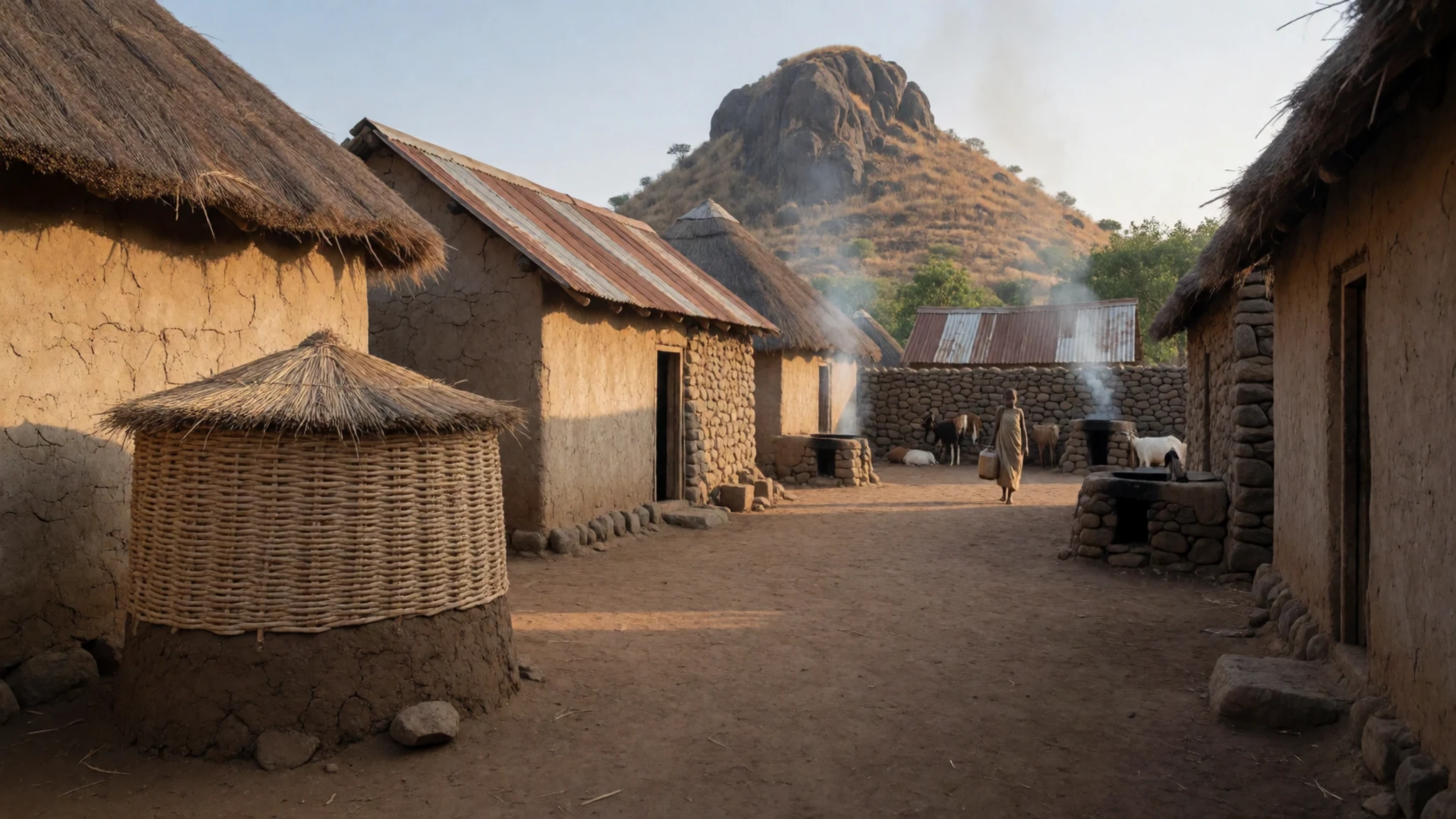
- Weavers’ yards — open yards near the compounds
In Rhumsiki, Kapsiki men weave in the open, on simple looms set up near the compounds. The work is cotton cloth, met as one of the set stops those child guides already walk. Visitors can watch from a respectful distance and buy a piece if it is offered. Asking before a close photograph is part of the exchange.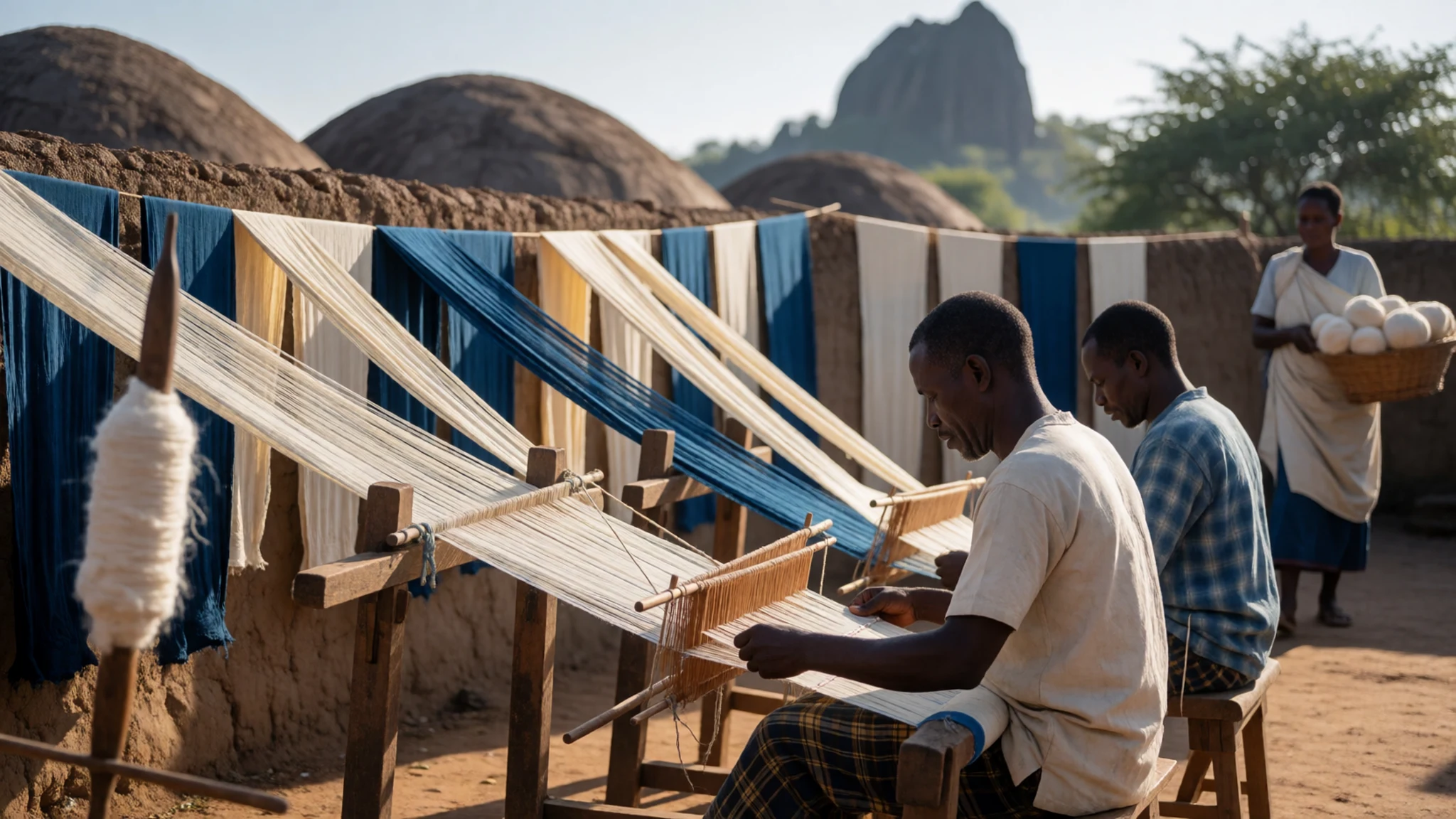
- Footpaths and fields — hills and fields around the village
Footpaths around Rhumsiki climb between compounds, millet fields and rocky shoulders. People use them to reach farms and neighbouring hamlets, so a walk with a guide is also a look at how tightly cultivation sits on thin soil and stone. Each rise gives a different view back to the plug. These are working paths, shared with the village.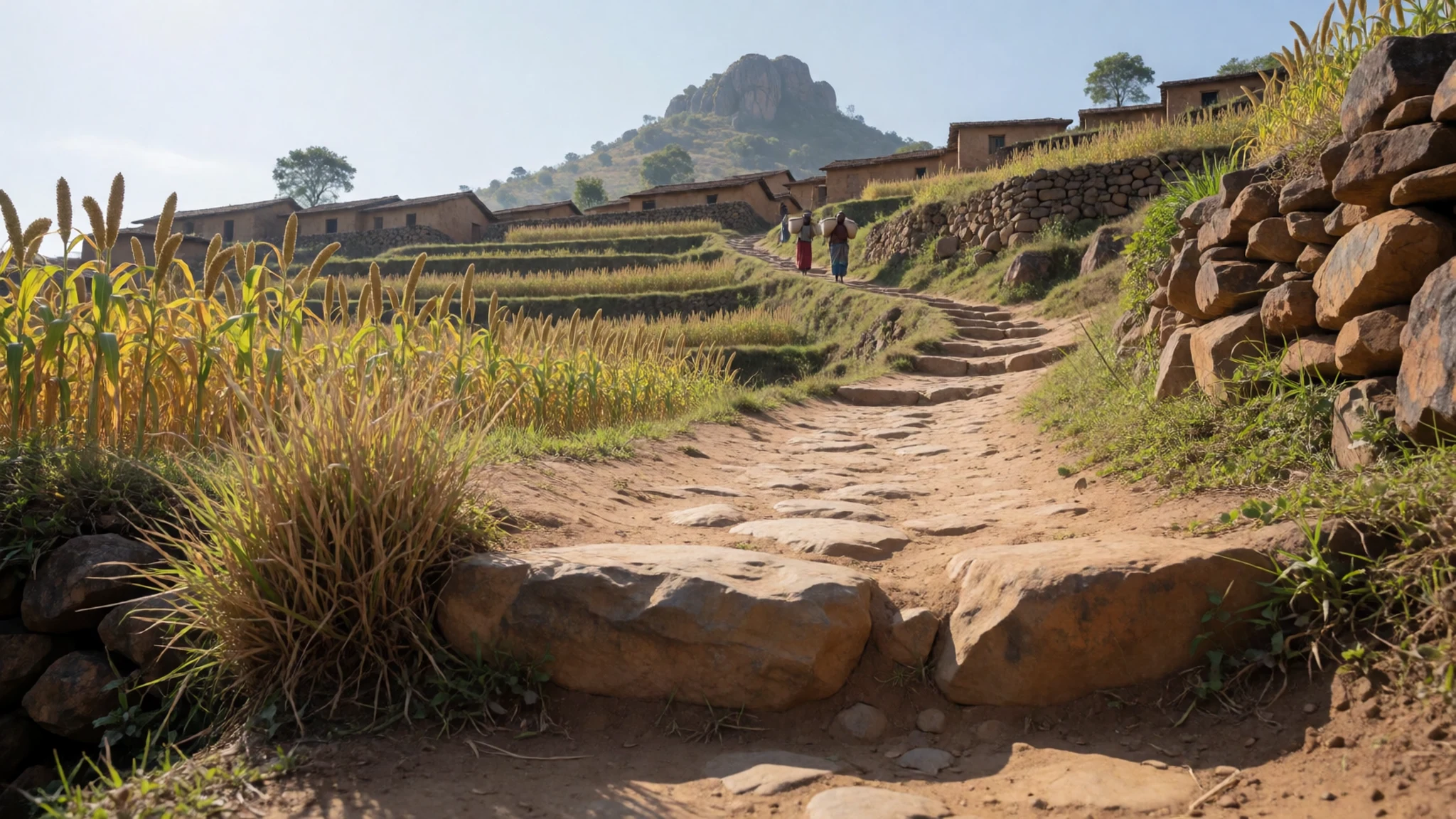
- Dawn on the plugs — the slopes around the village
Dawn at Rhumsiki is when the plugs come clear of the dark and cooking fires start in the village. In the dry months the light can be sharp; in the harmattan it turns milky and the peak appears late. A guided walk at first light is kinder than one at noon, when the rock throws heat. Late afternoon is softer and quieter.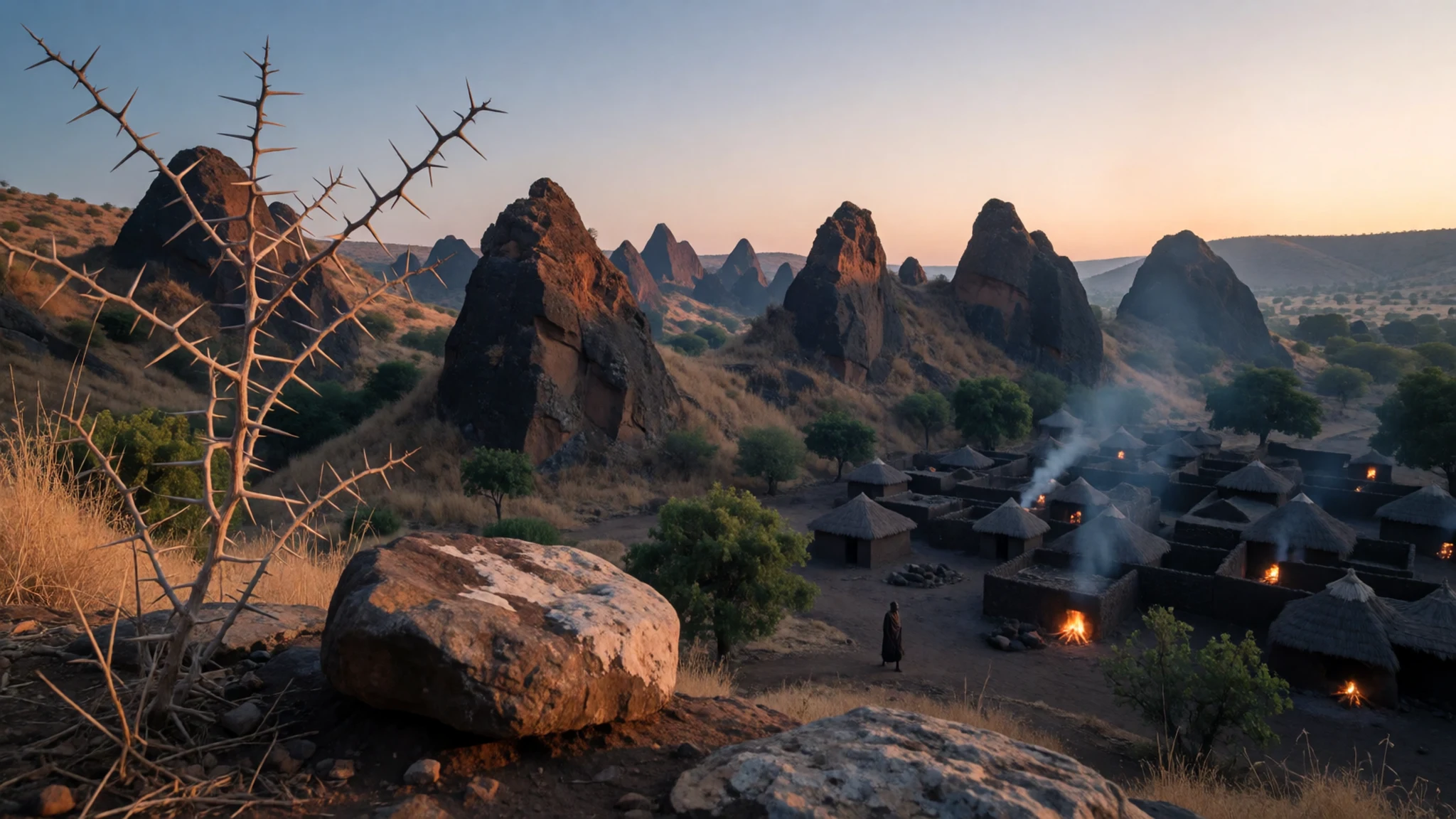
Culture
Rhumsiki’s culture is Kapsiki culture: a farming people of the Mandara Mountains whose cousins across the Nigerian border are known as Higi. The year follows millet and sorghum, from planting to harvest, and the compound is the real centre of life: cooking, storage, children, elders and the reception of guests. Smiths form a recognised lineage, linked to iron and to ritual work, and weavers produce cotton cloth in plain view. Millet beer, brewed locally and drunk from calabashes, marks gatherings and ordinary hospitality; refusing it can be done gently, accepting it means sitting and taking time.
Belief here is not a separate building on a square. Shrines, objects and ceremonies belong to households and to the hills, and they are not laid out for spectators. Outsiders who treat a compound as a free-entry exhibit miss the point and cause offence.
French is the language of administration and of many conversations with visitors; Kapsiki is the language of home. A guide is not a luxury. The guide is how a stranger is introduced, how a path is chosen, and how a household agrees to open its courtyard. Ask before you photograph people or step into a compound, and walk with a local guide once you leave the village paths.
What to wear
Rhumsiki’s traditional dress is cotton cloth woven and worn in the Kapsiki way: wrappers, tailored garments and head coverings whose patterns and colours mark taste, age and occasion more than a uniform. Indigo and other locally meaningful dyes have a long place in Mandara textiles, and a piece bought from a weaver in the village is cloth with a household behind it, not a costume. For ceremonies and market days people still bring out better wrappers and embroidered or tailored clothes; working days in the fields are simpler.
What people wear now mixes that cloth with everyday West African dress: printed cotton, trousers, shirts, football tops, sandals and headscarves, with a wrapper still common for women and for men at home or at a gathering. Market days towards Mokolo show the blend most clearly.
A visitor should do the same. Light, loose cotton that covers shoulders and knees is right for compounds and for any moment that might include a shrine or a greeting. The hills are thorny and the rock is loose, so closed shoes with a grip beat open sandals on the path up. A hat, sun cream and a layer for a windy dawn matter more than a formal outfit. Bright tourist prints are unnecessary; modest, dusty-coloured clothes that can be washed in a basin suit Rhumsiki better.
What to eat
- Boule de mil — Kapsiki compounds and the visitor camp
Boule de mil is the millet staple of Rhumsiki, a firm ball served with a sauce and eaten with the right hand. It is the ordinary meal in compounds and at the visitor camp, not a special-occasion dish. Sorghum sometimes stands in for millet.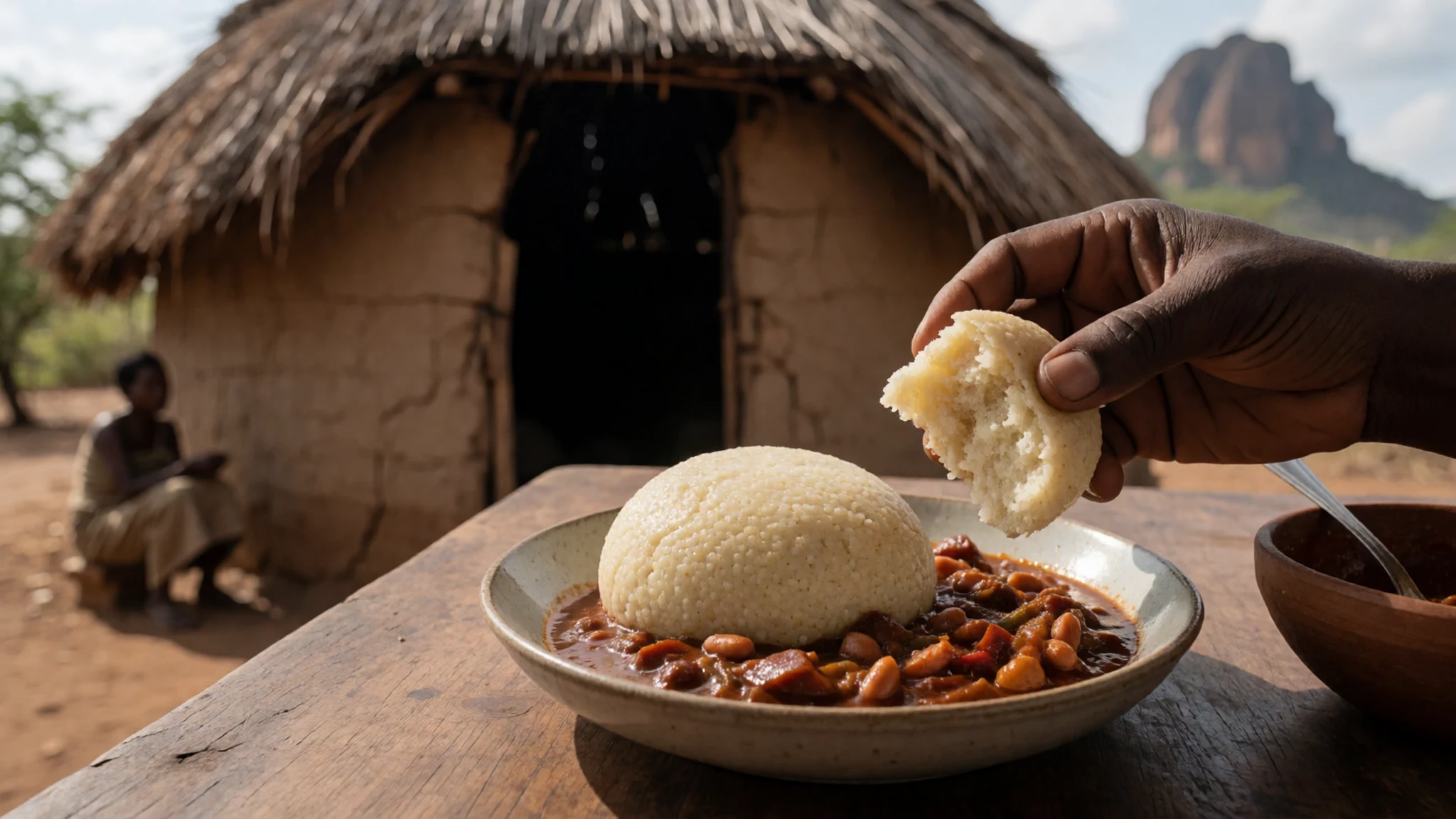
- Bili-bili — gatherings and compounds in the village
Millet beer in Rhumsiki, often called bili-bili, is a cloudy, slightly sour brew drunk from calabashes at gatherings and in some compounds. It is hospitality as much as a drink. The place to meet it is a local gathering or a calabash offered by a host.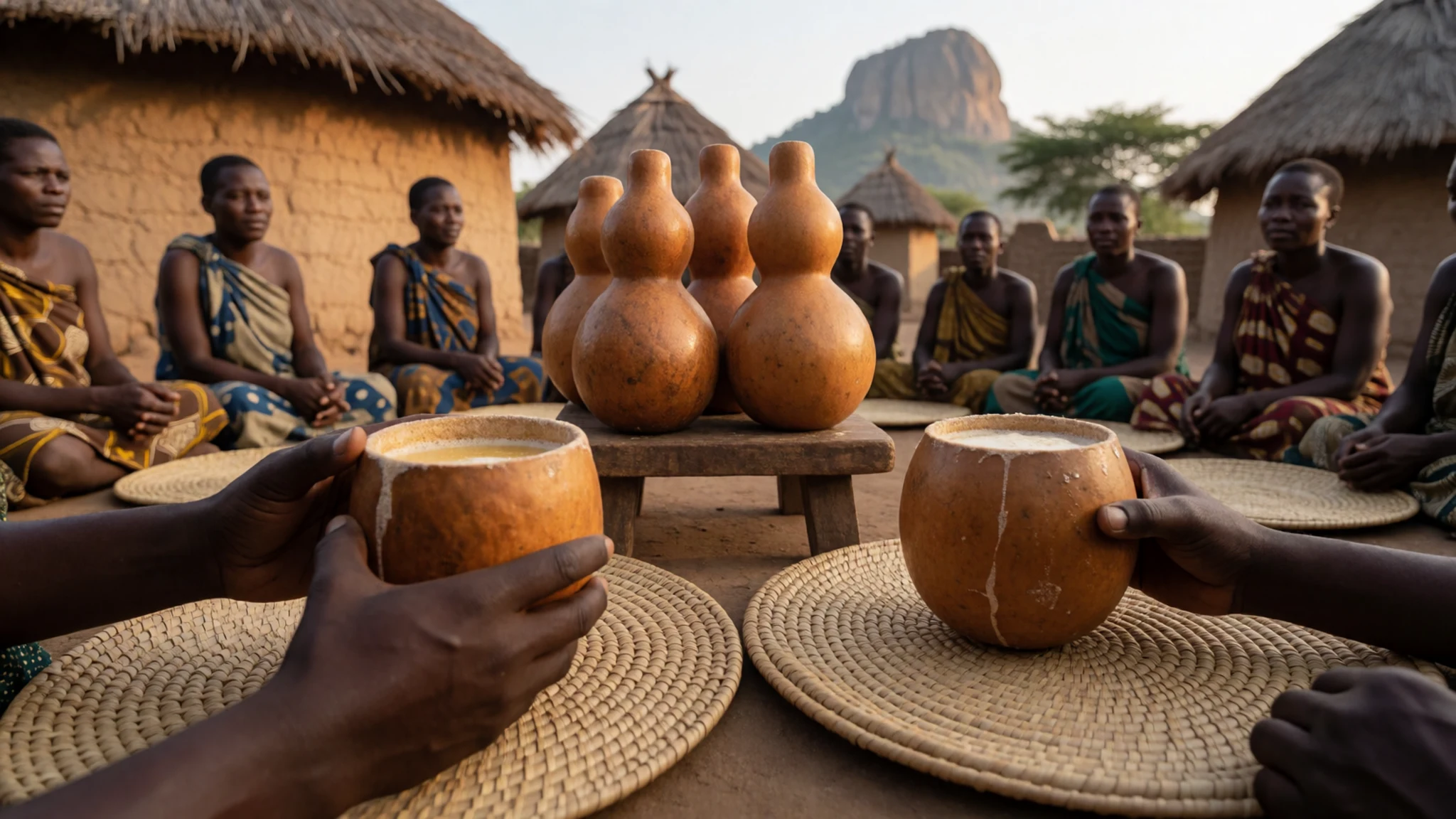
- Groundnut sauce — compound meals and the visitor camp
Groundnut sauce is the peanut stew that often accompanies the millet ball in Rhumsiki, rich and thick, sometimes with greens or a little meat when the household has it. It appears at the visitor camp and in compound meals more reliably than any grilled special. - Foléré — roadside coolers and the village
Foléré is the cold, tart hibiscus drink of Cameroon’s north, sold in sachets and from coolers on the road into Rhumsiki and at the village itself. It is the practical refreshment in the hot months. It is safer when the water used to make it was treated. - Brochettes — charcoal grills on the Mokolo road
Brochettes are small skewers of grilled meat, usually beef or goat, cooked over charcoal where Rhumsiki and the Mokolo road have a grill going. They are the meal for a market afternoon or a late return from the hill, eaten with bread or beside a millet ball.
Plan it
Best time. In Rhumsiki, November to February is the kinder window: dry, with cooler mornings and clear views of the plugs, though harmattan haze can dull the distance. March to May is hotter and still mostly dry. From about June to September the rains turn the hills green and make the tracks heavier.
How long. 2–3
Getting there. Maroua Salak is the practical airport. From Maroua the road runs through Mokolo to Rhumsiki, a rural last leg best arranged locally. Travellers from Yaoundé or Douala connect to Maroua by air or by long-distance road.
Budget. low
Tips
- Start the peak walk at first light.
- Hire a village guide for the hill and for any compound visit.
- Carry cash; card payment is not something to rely on here.
- Bring more drinking water than a short walk seems to need.
- Confirm a room or a camping pitch before travelling; the offer is simple and it changes.
Etiquette
- Ask before photographing people, looms or the inside of a compound.
- Do not enter a courtyard or approach a shrine without an introduction.
- Keep shoulders and knees covered when visiting households.
Nearby
Sources
- Wikidata (CC0)
- Wikipedia: Rhumsiki (CC BY-SA 4.0)
- Wikivoyage: Rhumsiki (CC BY-SA 4.0)