Korup
Korup, Cameroon
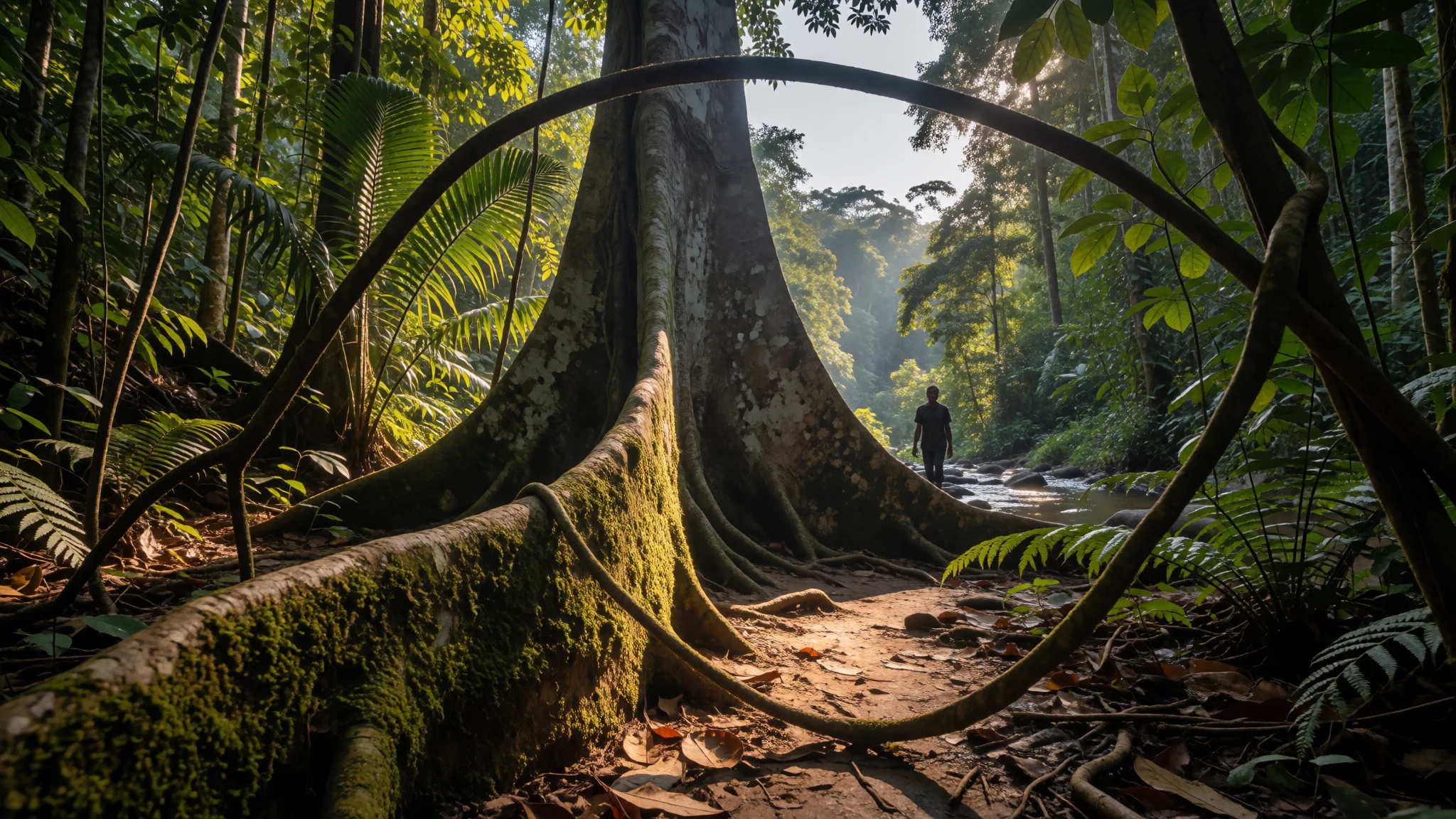
Korup National Park is dense, little-disturbed rainforest in south-west Cameroon, walked on foot with a local guide, for birds, primates and a quiet, wet, green silence.
The place
Korup National Park sits in Cameroon's Southwest Province, close to the Nigerian border, and protects a large block of primary rainforest that has been left largely undisturbed. Much of the reason is the ground itself. The soils are sandy and poor in nutrients, which makes farming a bad bet, so the forest was never cleared the way richer land nearby was. The terrain is low in the south and climbs steadily northward into rougher, more rugged country, easing into gentle rolling hills in the far north. Mount Yuhan is the high point. Rain shapes everything here. Korup has two seasons rather than four: a dry spell from December to February and a long, intense wet season from about May to October, with temperatures that barely shift through the year. The southern side of the park is far wetter than the north. Of the rainforest parks in Cameroon, Korup is the most accessible, though that is a relative term. Lodging is basic, the trail network is large, and getting in means arranging a local guide through the town of Mundemba. Birdwatchers come for the forest species, and primate enthusiasts for monkeys and apes that are hard to find elsewhere. Researchers have worked here for decades, so Korup is unusually well documented for a place this remote. Expect heat, mud, insects and a great deal of green.
Its story
Korup National Park began as a colonial-era forest reserve, set aside under local administration long before anyone thought of it as a wildlife destination. It became a national park in 1986, and at that point its boundaries were pushed eastward to take in several villages and reach the size it has today. The push for protection came from two primate researchers, Steve Gartlan and Thomas Struhsaker, who were working in south-west Cameroon and put a park proposal to the government. The immediate response was silence. Gartlan then met the film-maker Phil Agland, who spent years in the forest making Korup: An African Rainforest. When British television broadcast it, the film carried Korup's ecology to audiences around the world and helped drive a campaign that produced the first British government money for rainforest conservation. An internationally funded conservation and development project then backed the new park and the forest reserves around it. When that project ended, park management was left with almost no money or vehicles, and illegal hunting became much harder to police. Later, a cooperation programme between the Cameroonian and German governments made Korup one of its focus areas, and anti-poaching patrols became regular again. The story is a reminder that a forest this intact is not simply left alone. It is held in place by researchers, donors, rangers and the villages around it, and by funding that can dry up.
What to see
- Mundemba and the guide office — Mundemba, Southwest Province
Mundemba is the small town where Korup visits begin. The tourist information office in the centre is where day hikes and longer trips are organised, and entry to the forest is only allowed with a local guide. Spending an evening here to sort out guides, food and timing saves a lot of confusion once the trail starts.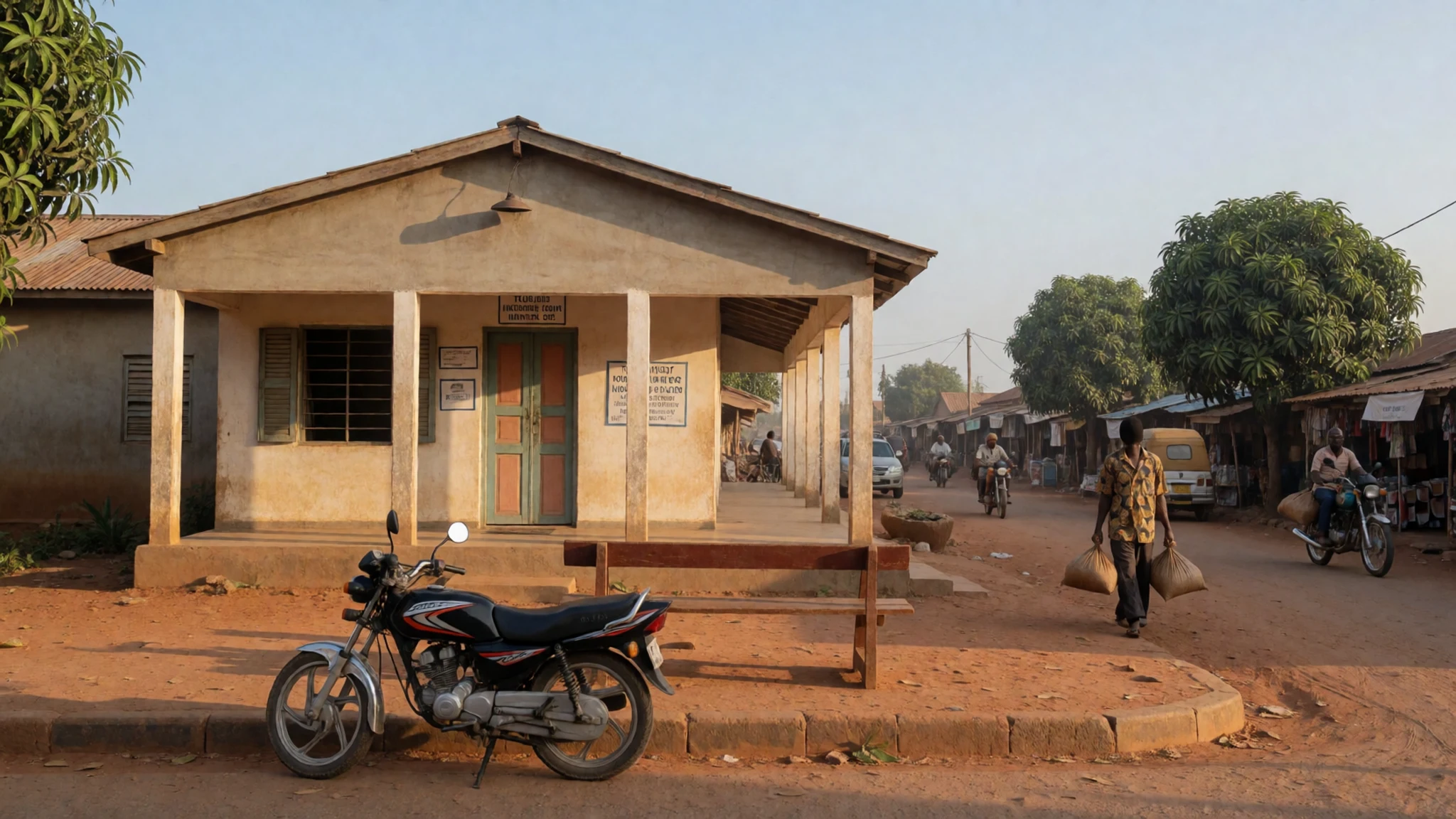
- Forest trails — Throughout the park
The park has a large network of trails, and walking them is the whole point. Paths run through primary forest, across streams and up gentle slopes, with the ground rising and growing rougher toward the north. Progress is slow, roots are slippery and the sound overhead never stops. A guide reads the forest far better than any visitor can.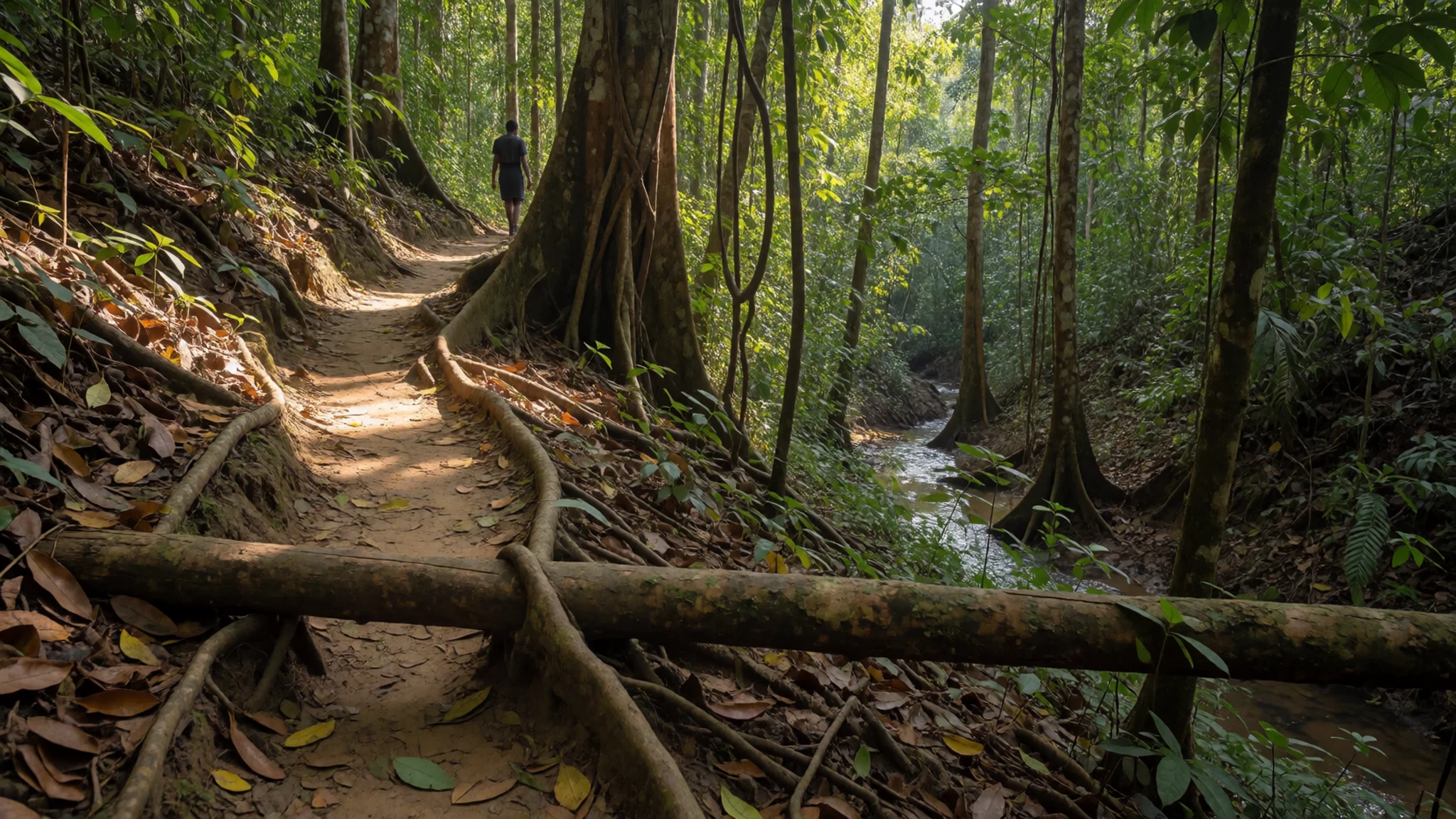
- Primates — Forest interior, with a guide
Korup has a reputation for primates, among them the drill, a ground-living monkey, and the Nigeria chimpanzee. Sightings are never promised in dense forest. Patience, early starts and a guide who knows recent movements make the difference. Hearing calls is far likelier than a clear view, so go with realistic hopes.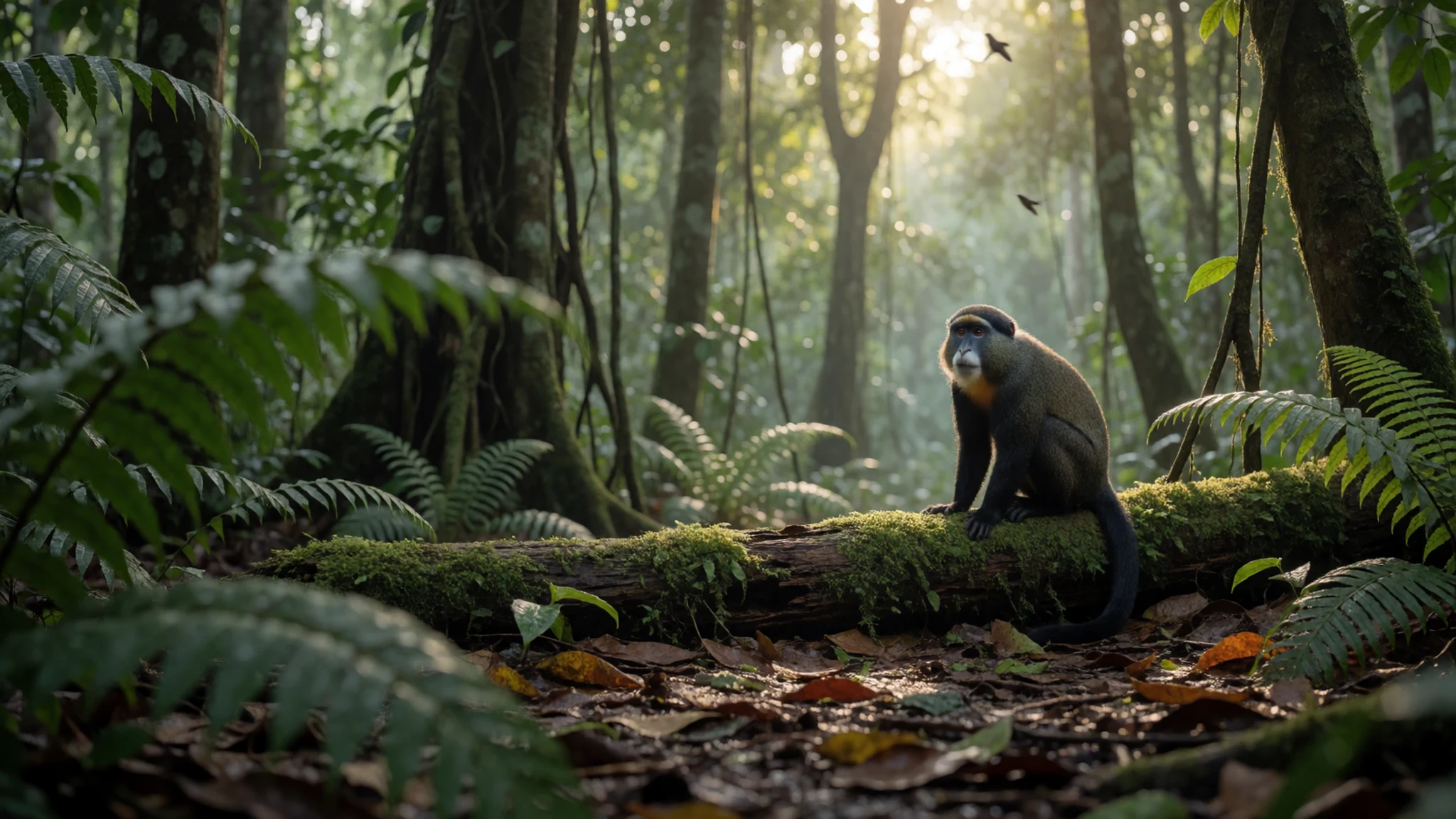
- Birdwatching — Trails near the camp sites
Birdwatchers treat Korup as a destination in its own right. The forest holds species tied to intact lowland rainforest, and mornings are best, when song is at its peak and the heat has not yet built. Bring binoculars, a notebook and some tolerance for craning at a canopy that rarely opens.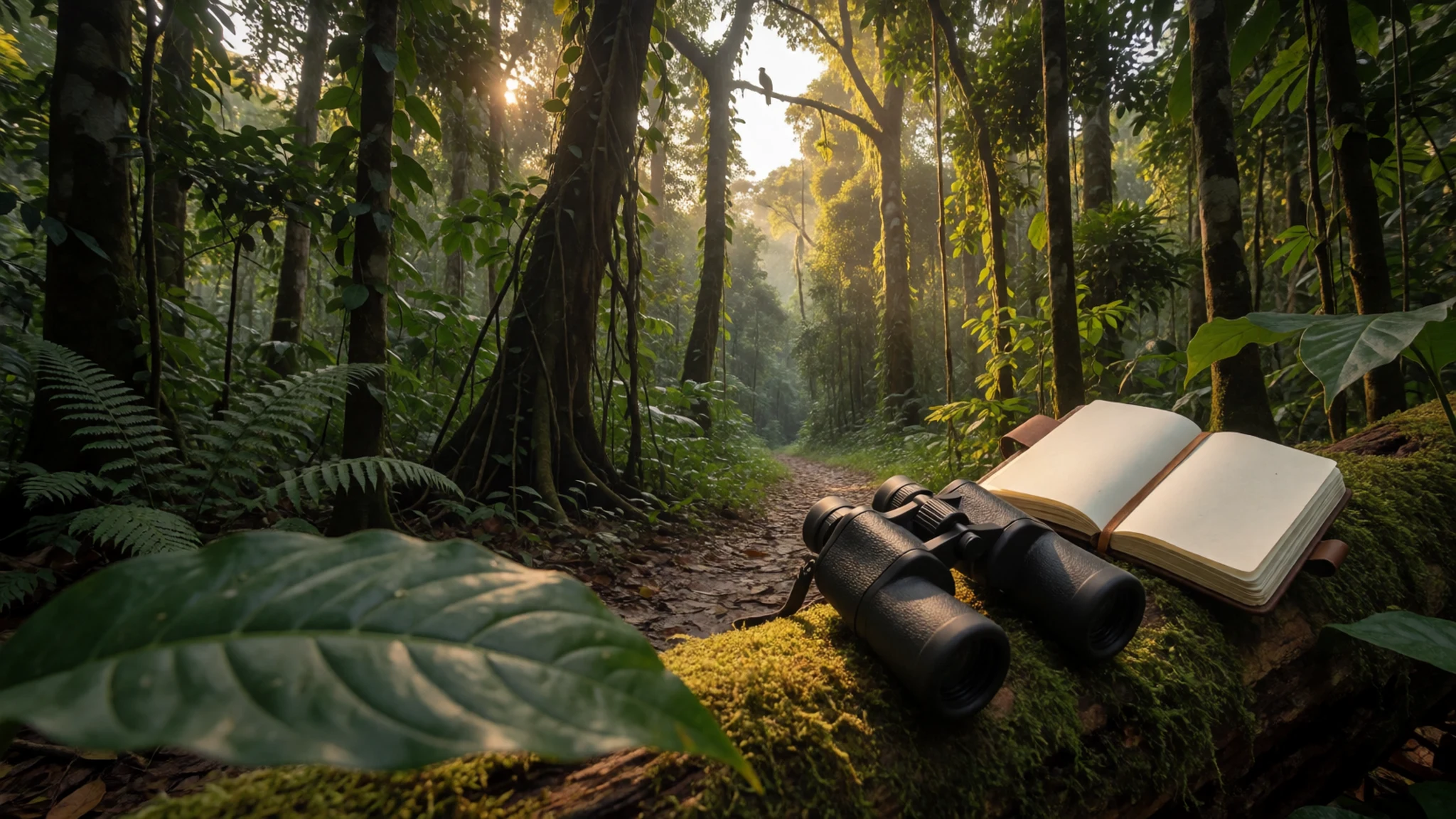
- Camp sites beside streams — Inside the park
Three camp sites take visitors, each beside a stream used for cooking water and cool washes. Lodges have simple wooden beds and screened windows, and tents are possible if brought along. Toilets are basic pits. Stream water needs boiling or filtering before drinking. Comfort is limited, and that is part of the appeal.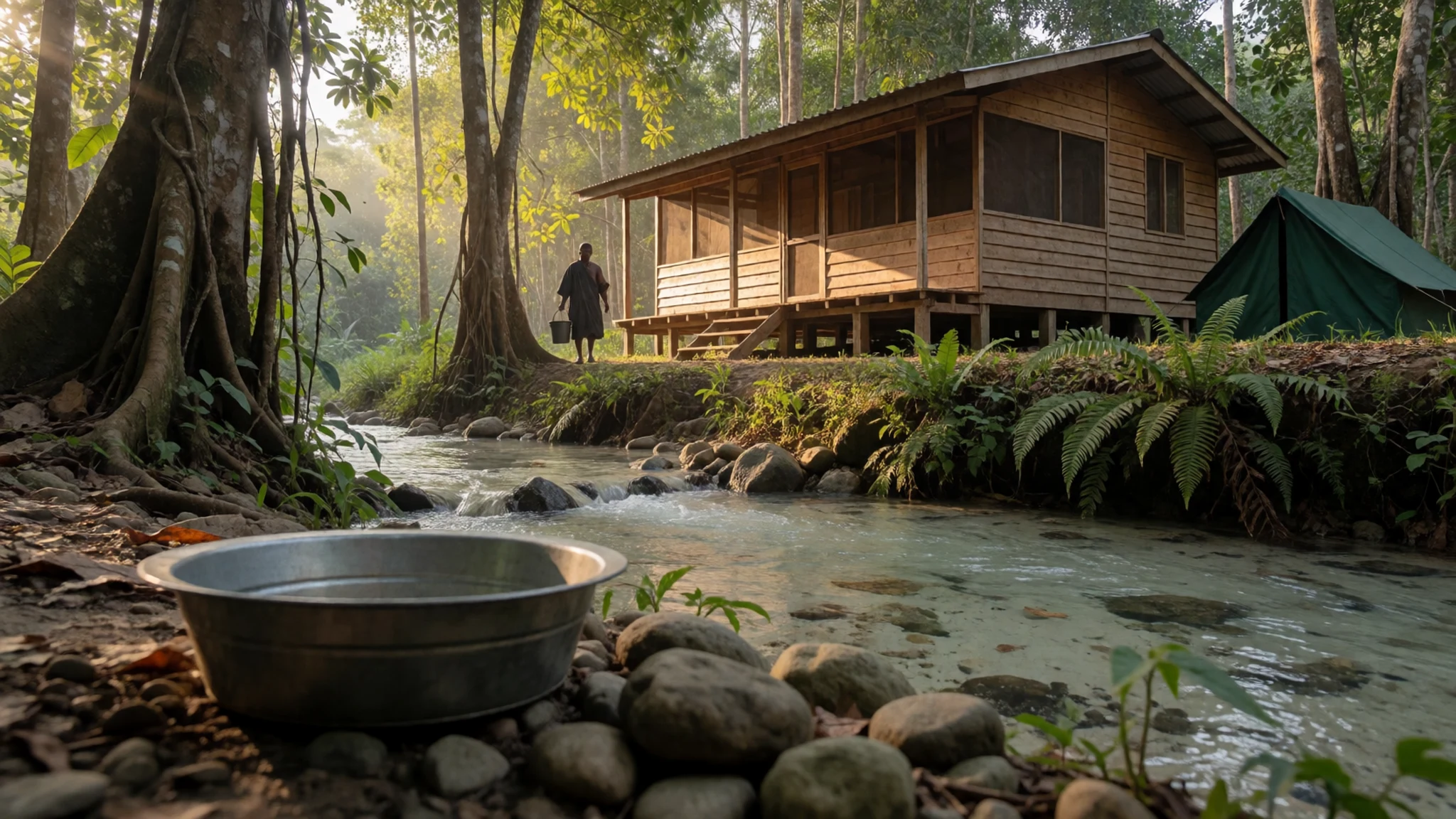
- Falling water and the forest floor — Streams and wet ground in the park
Streams and falls give the forest its sound, and one cascade is photographed in the park as Falling Waters. On the ground, small details reward slow walking: the plant Gymnosiphon bekensis and forest treefrogs have both been photographed in Korup. Look down as often as up, and let the guide stop where something moves.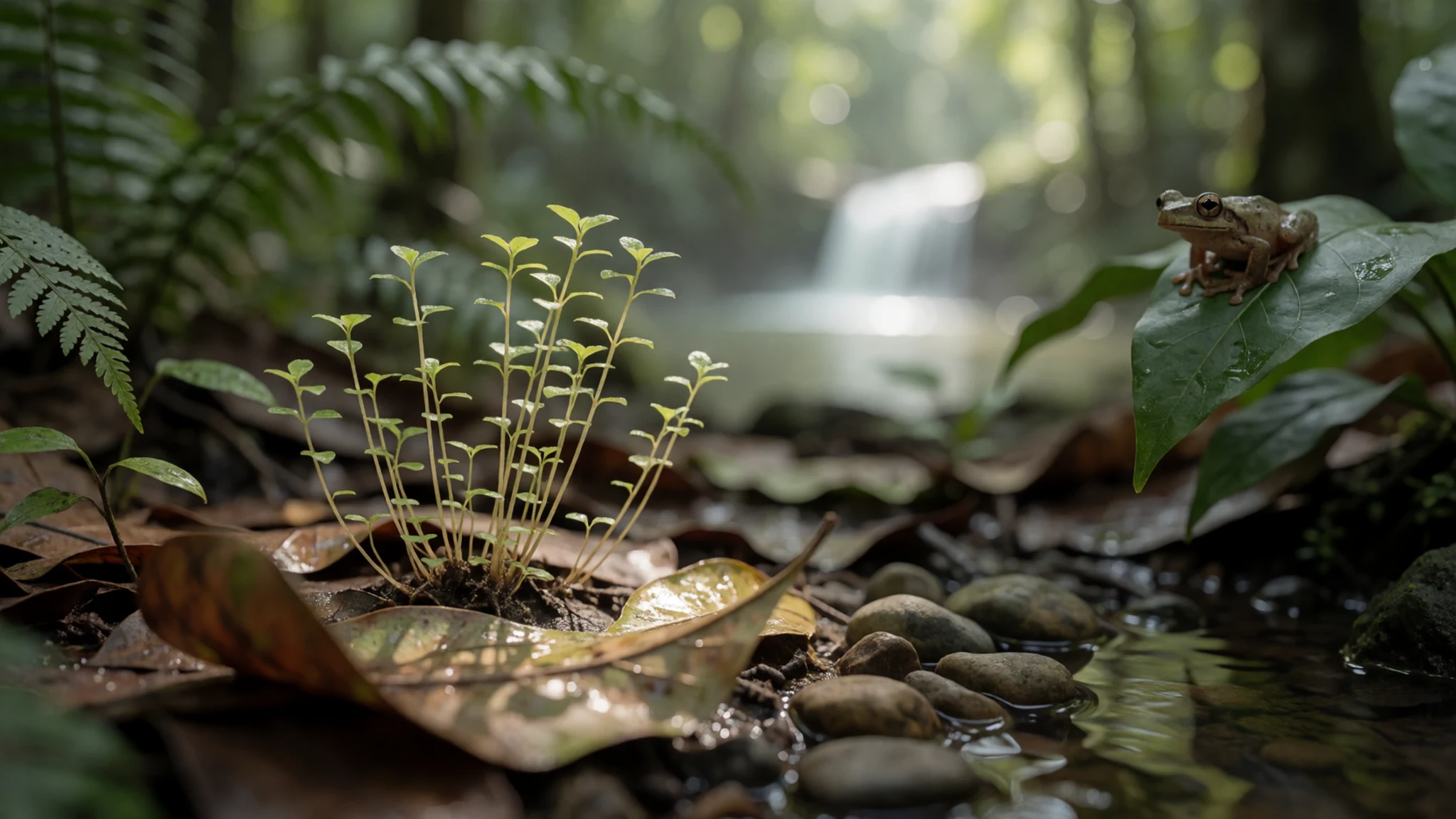
Culture
Korup National Park lies in a part of Cameroon where English and French, Pidgin and many local languages overlap, and Pidgin English is widely spoken in the Southwest. Villages such as Ekundu Kundu, Ikenge and Bareka Batanga were brought inside the park's expanded boundaries in 1986, and how people and protected forest share the same ground remains a live question. Relations with rangers, guides and neighbouring communities matter to how the park works. Many guides come from nearby settlements and know the forest closely, and visitors who treat them as expert partners rather than hired porters tend to get better walks. Hospitality is warm, but formality counts: greetings come first, before any question or request, and a little patience over arrangements is expected. Money spent on guides, food and lodging in Mundemba and nearby villages is the most direct way tourism helps local people. Researchers, conservation workers and villagers have all shaped Korup, and the park is as much a workplace as a wilderness. Plans can change with rain, river levels and road conditions, and a relaxed attitude to delays is part of travelling here. Ask your guide before photographing any person, and ask before photographing homes or ceremonies in a village.
What to wear
Korup National Park is in a region where traditional dress varies from community to community, so no single costume stands for it. Across Anglophone Cameroon, everyday and ceremonial clothing often uses wax-print cotton, worn as wrappers and loose gowns, and chiefs and elders may add beadwork, caps and carved staffs for formal occasions. Check locally before assuming what a given outfit means. Day to day, people in Mundemba and the surrounding villages wear practical modern clothes: shirts, trousers, dresses and skirts, with rubber boots or sandals for mud and rain. Guides and rangers usually dress for the forest in long trousers and sturdy footwear. For a visitor, the climate decides most things. It is warm and humid all year, and rain is frequent, so light, quick-drying long sleeves and long trousers protect against insects, thorns and wet leaves better than shorts do. Bring a waterproof jacket, a hat, spare socks, and boots with a firm grip that you do not mind getting muddy. Cotton jeans stay wet for hours. In villages and towns, covered shoulders and knees are the courteous choice, and swimwear is best kept for streams well away from anyone's washing place.
What to eat
- Eru with water fufu — Local eateries in Kumba and Mundemba, or family kitchens; ask the guide
A rich stew of finely shredded eru leaves cooked with waterleaf, often with smoked fish or meat, eaten with water fufu, a soft cassava dough. It is a common dish in Cameroon's English-speaking regions and filling after a long walk.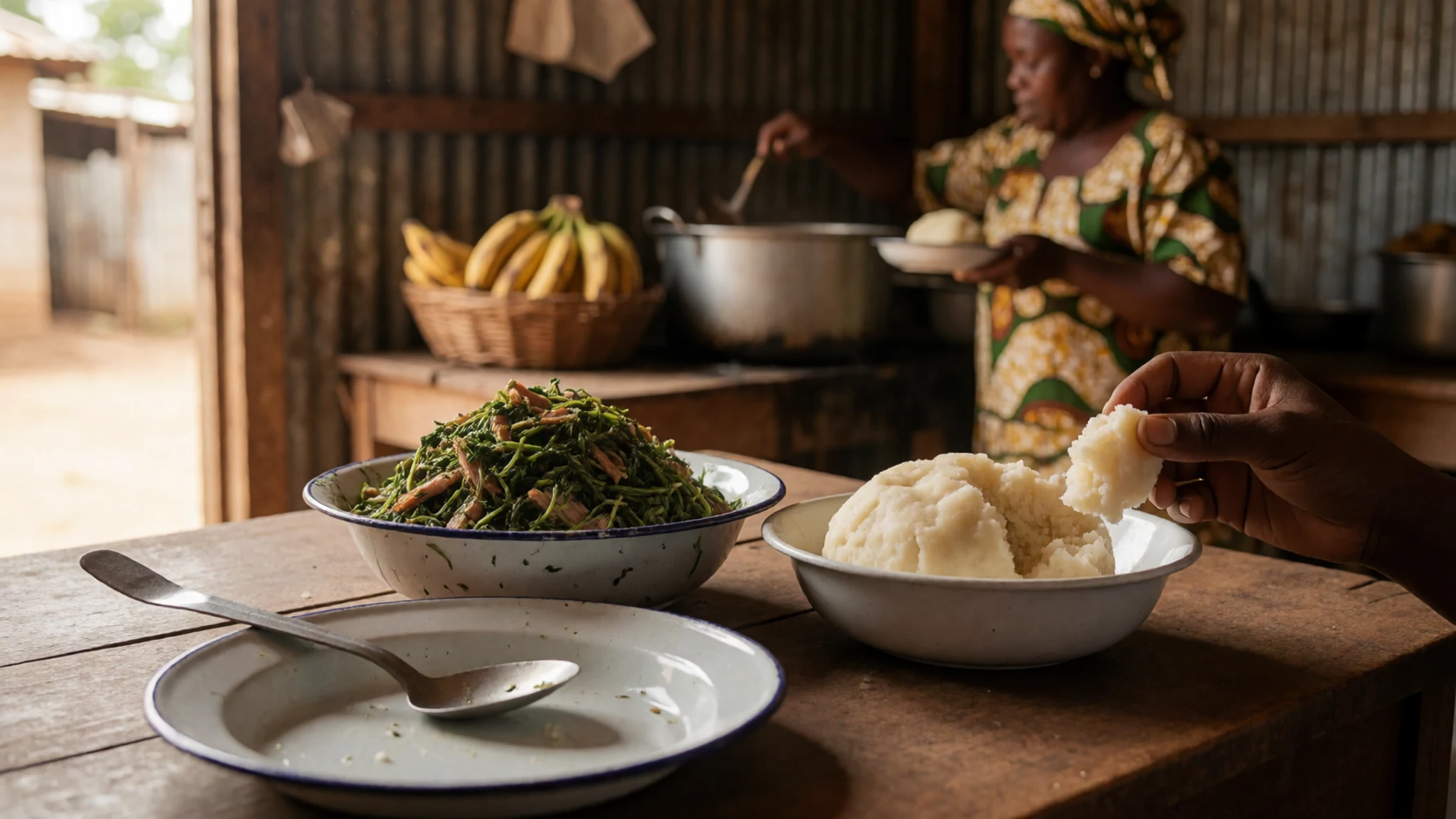
- Pepper soup — Roadside eateries and evening stalls in towns on the route
A thin, peppery broth with fish or goat, spiced with local seeds and herbs. It is eaten hot even in humid weather. Spice levels vary a lot, so ask how strong it is before the first spoonful.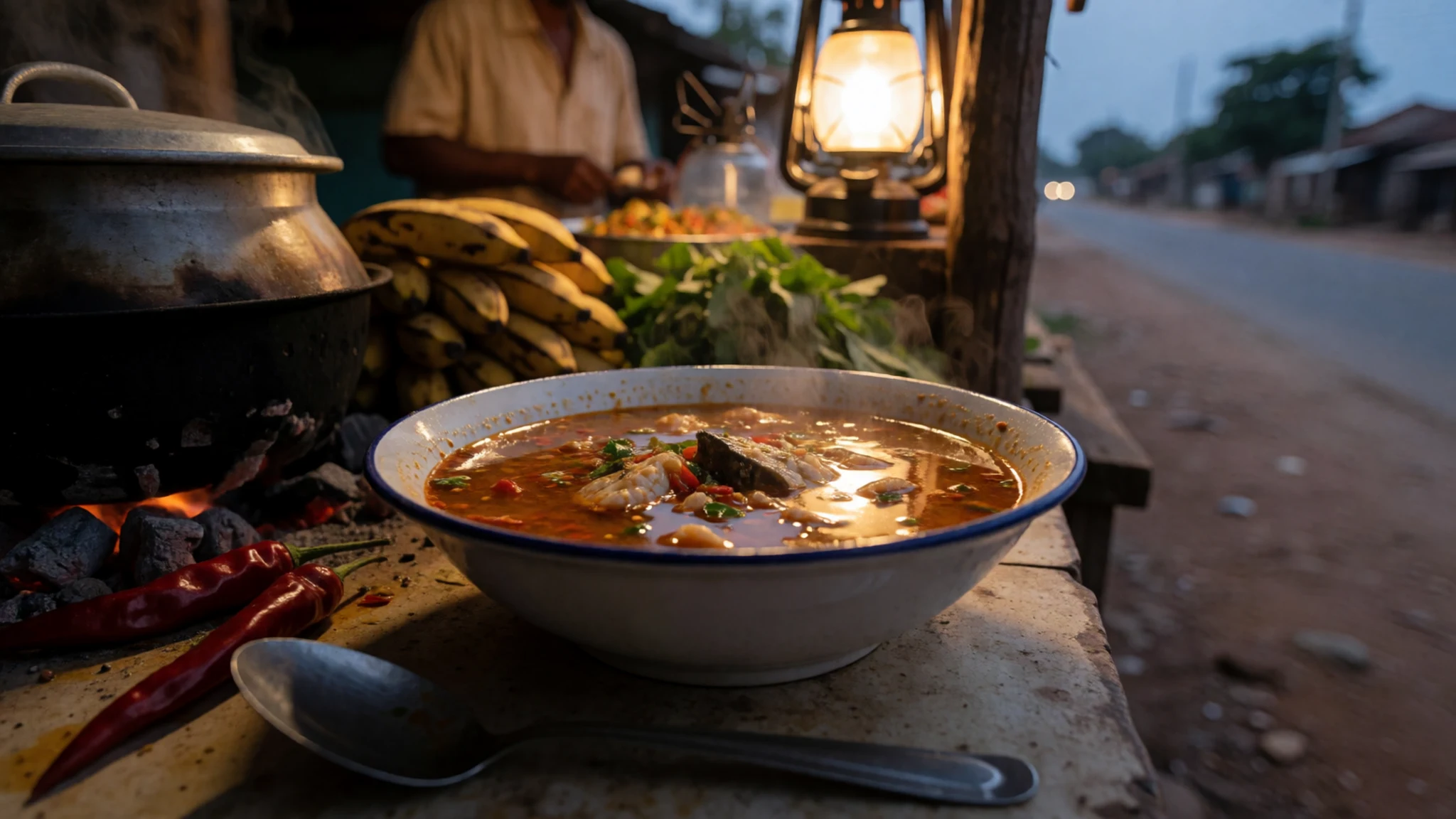
- Grilled fish with plantain — Riverside and roadside grills, and markets nearer the coast
Fish grilled over charcoal, usually served with fried or roasted plantain and a pepper sauce. Near the coast and rivers the catch is the draw, and the smoky char suits a plain accompaniment. - Ndolé — Restaurants and eateries in Douala
A stew of bitter leaves blended with groundnuts, cooked with meat or prawns and often served with plantain or bobolo, a cassava stick. It is cooked widely across Cameroon, and worth trying before the journey inland. - Roasted plantain and groundnuts — Roadside stalls and town markets along the route
Plantain roasted over coals and eaten with groundnuts is the simplest snack on the road to the forest. It is cheap, filling and easy to carry on a trail, though it is best eaten fresh from the fire.
Plan it
Best time. December to February, the dry season, is the most comfortable window and trails are less slippery. May to October is the long, intense wet season, with the heaviest rain in August. Temperatures stay warm all year.
How long. 3–4
Getting there. Fly to Douala, the nearest major airport, then travel by road via Kumba to Mundemba, the base town for the park. Road conditions can change with the rains, so ask locally before setting out. Check official travel advice for the Southwest Region, as security conditions there can shift.
Budget. mid
Tips
- Arrange a guide through the tourist office in Mundemba; entry to the park is only allowed with one
- Check current government travel advice for the Southwest Region before booking anything
- Bring a tent if you prefer one, plus food, insect protection and a way to purify water; lodges are basic
- Boil or filter all stream water before drinking
- Carry cash, as card payment is unlikely to work in Mundemba or at the camp sites
Etiquette
- Greet people before asking questions or making requests
- Follow your guide's instructions on the trail and keep noise low near wildlife
- Ask before photographing people, homes or ceremonies
Nearby
Sources
- Wikidata Q1784847 (CC0)
- Wikipedia: Korup National Park (rev 1383120370) (CC BY-SA 4.0)
- Wikivoyage: Korup National Park (rev 4769949) (CC BY-SA 4.0)
- Photo: Korup National park, Ndijose (CC BY-SA 4.0)
- Photo: Gymnosiphon bekensis, Vincent Merckx (CC BY 3.0)
- Photo: Falling Waters in Korup National park, Ndijose (CC BY-SA 4.0)
- Photo: Korup National Park, Cameroon 05, Adesolive (CC0 1.0)
- Photo: Ngomo Ferdinand Namata, Africanstoiccm (CC BY-SA 4.0)
- Photo: Ngomo Ferdinand Namata 7, Africanstoiccm (CC BY-SA 4.0)
- Map: OSM Korup, Contributors to OpenStreetMap (CC BY-SA 2.0)
- Photo: Cameroon Forest Treefrog, Bernard Dupont (CC BY-SA 2.0)


Wildlife
- Drill (animal)
The drill is a monkey that spends its life walking on the forest floor rather than high in the treetops, so remember it as the monkey with its feet on the ground. Korup is well known for its primates, and the drill is one you may hope to meet there. I have no word on the season or hour when it is best seen, so ask your guide about recent sightings. Keep well back, stay quiet, follow your guide's lead, and never offer it food. - Nigeria chimpanzee (animal)
The Nigeria-Cameroon chimpanzee is a rainforest ape, a close cousin of the chimpanzees you may already know, living in the forests along the border of Nigeria and Cameroon. Korup is famed for its primates, and this is one of them. These apes are at high risk of disappearing, so they deserve special care. I have no word on the season or time of day, so ask your guide. Keep a respectful distance, speak softly, follow your guide, and never feed them.