Lake Oku
Lake Oku, Cameroon
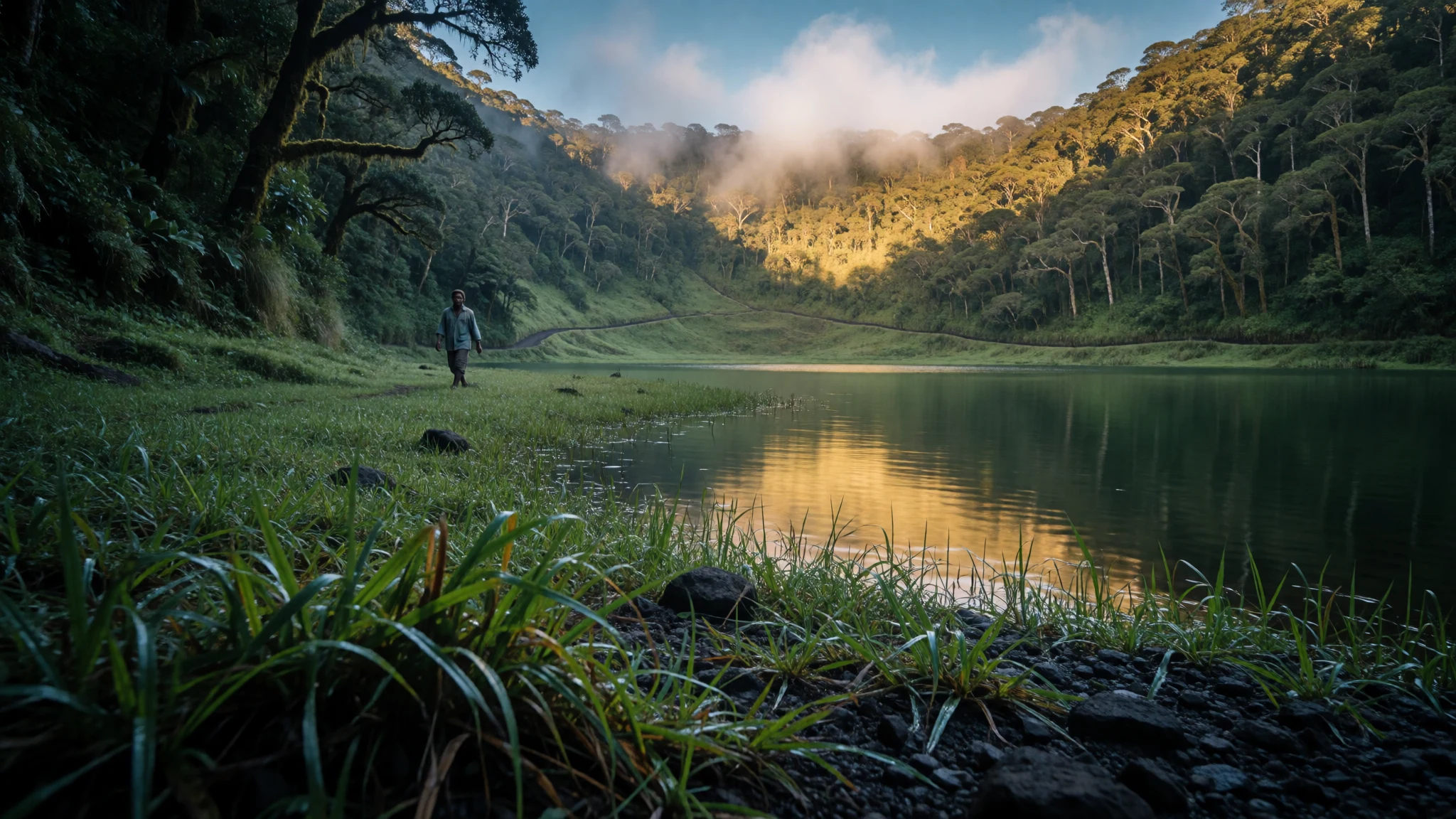
Lake Oku is a cool, quiet crater lake high on Mount Oku, ringed by cloud forest and reached on foot through villages.
The place
Lake Oku sits at about 2,200 metres on Mount Oku, on the Bamenda Plateau in Cameroon's Northwest Region, with cloud forest closing in on every side. The basin is a maar: a crater blasted open when groundwater met rising magma, rather than a cone that later filled with rain. It belongs to the Oku Massif, a wide volcanic field with Mount Oku as its main peak. Mist is the lake's usual companion. Mornings often start clear and cool, then cloud climbs the slopes, the water turns pewter grey and the forest edge dissolves into it. The shore is quiet, with no jetties and no refreshment stalls, only birdsong and wind in the canopy. The forest around the lake is part of Kilum-Ijim, a reserve established with BirdLife International that shelters several rare species. The lake itself is the only known home of the Lake Oku clawed frog, a small aquatic animal found nowhere else. Local people have long told stories about the water, and those stories shape how the place is treated, as something to respect rather than simply look at. Most visitors set out from Bamenda, the regional centre, and the final stretch is usually on foot, which keeps numbers low and the pace slow. Farmland climbs the hillsides below the forest, so the route passes fields, compounds and steep paths before the trees begin. The air is cooler than on the lowland roads, and rain can arrive at any hour. Visitors should expect mud, a long day on foot and a view that depends entirely on the weather.
Its story
Lake Oku has a short geological story and a longer human one. The basin formed in the last phase of the Oku Massif's growth, when an explosion tore a crater into the mountain and water gathered in the hollow. No one remembers it, but the myths that local people tell about the lake keep the event alive in another form, and the water is treated with a respect that visitors are expected to share. The wider region's modern history runs along colonial lines. Germany claimed the territory as Kamerun in 1884. After the First World War it was split in 1919 into French Cameroun and British Cameroons, and the British half was governed from neighbouring Nigeria, which left it low on London's list of priorities in the eyes of many residents. That division still colours the Northwest Region's English-speaking identity and its politics today. Conservation is the newer chapter. Farmland has long pressed against the forest on Mount Oku, and the Kilum-Ijim reserve grew from work involving BirdLife International and the Oku communities themselves, who protect the trees while still farming the land beside them. The reserve matters well beyond the view: it shelters rare birds and plants, and the clawed frog of the lake depends on the crater water staying clean. Guides drawn from the surrounding villages tend to be the best storytellers about both the forest and the lake, and hiring one keeps some of the benefit of a visit in the community.
What to see
- The crater shore — Mount Oku, Bamenda Plateau
The crater shore is the main event: a still, dark lake held in a bowl of forest, with mist drifting across the surface for much of the day. There is little built here, so the experience is simply sitting, listening and watching the weather change. Take time, because clear spells can be brief.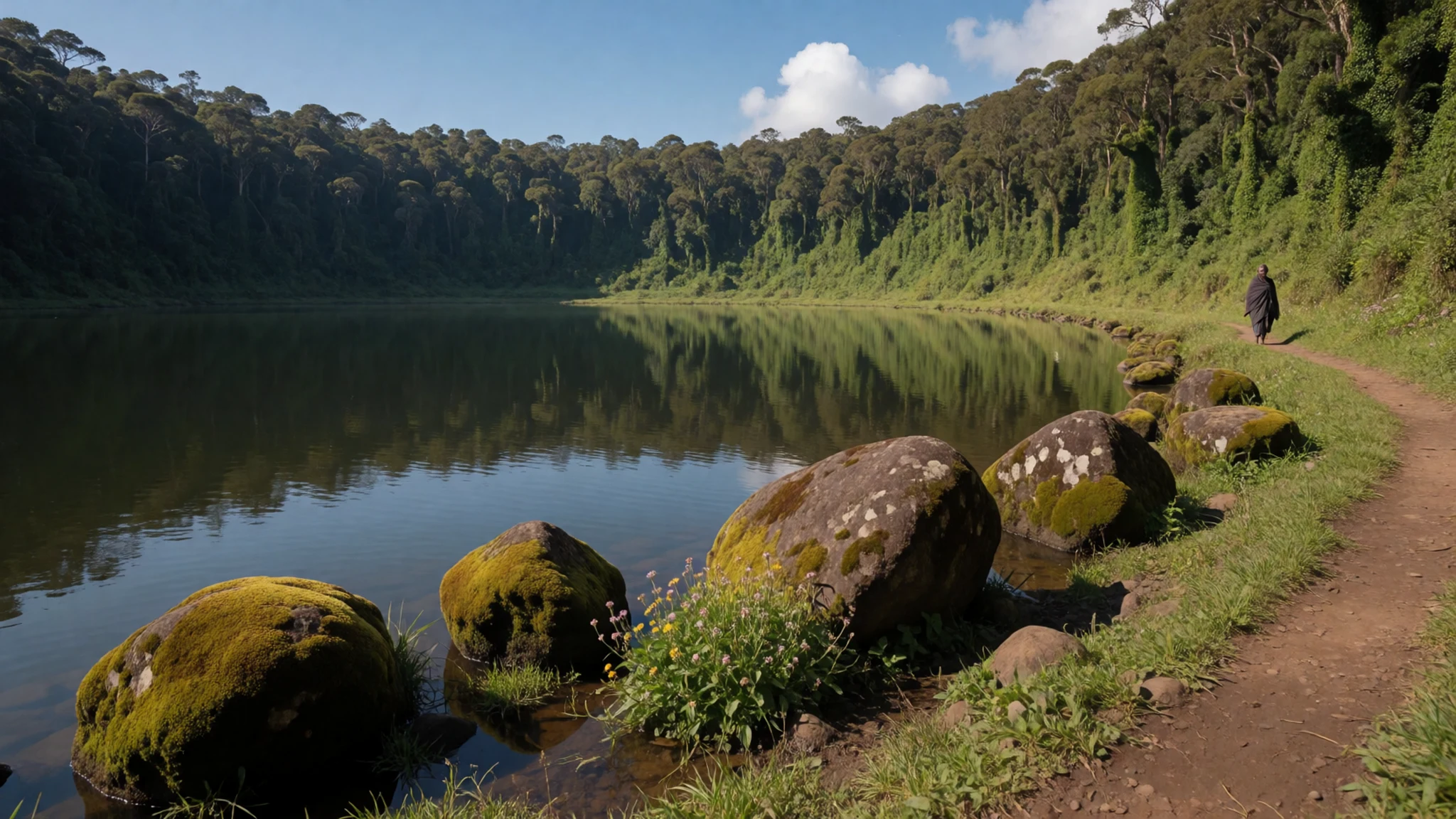
- Kilum-Ijim forest — Slopes of Mount Oku
Kilum-Ijim forest is cloud forest kept standing by the Oku communities beside their own farmland. Walking its edge with a local guide shows how the trees give way to fields in a few steps. Birdwatchers come for the rare species sheltering here, though dense mist and steep, muddy paths make sightings a matter of patience.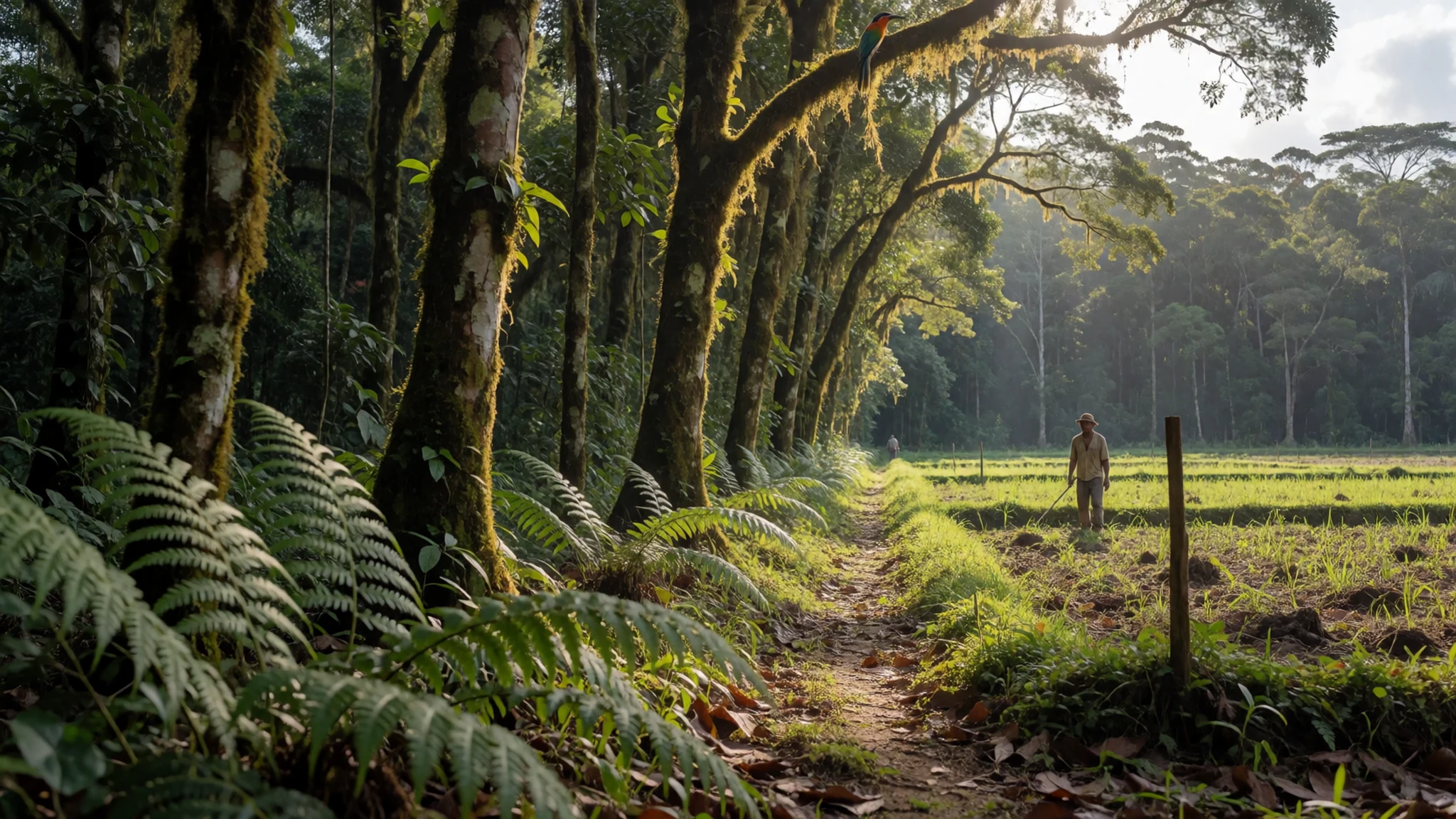
- Upper slopes of Mount Oku — Mount Oku
Mount Oku is the stratovolcano above the lake, and its upper slopes are cooler and more exposed than the lakeshore. Hikes here are long and the weather often closes in, so a guide, an early start and a flexible attitude to the summit all help.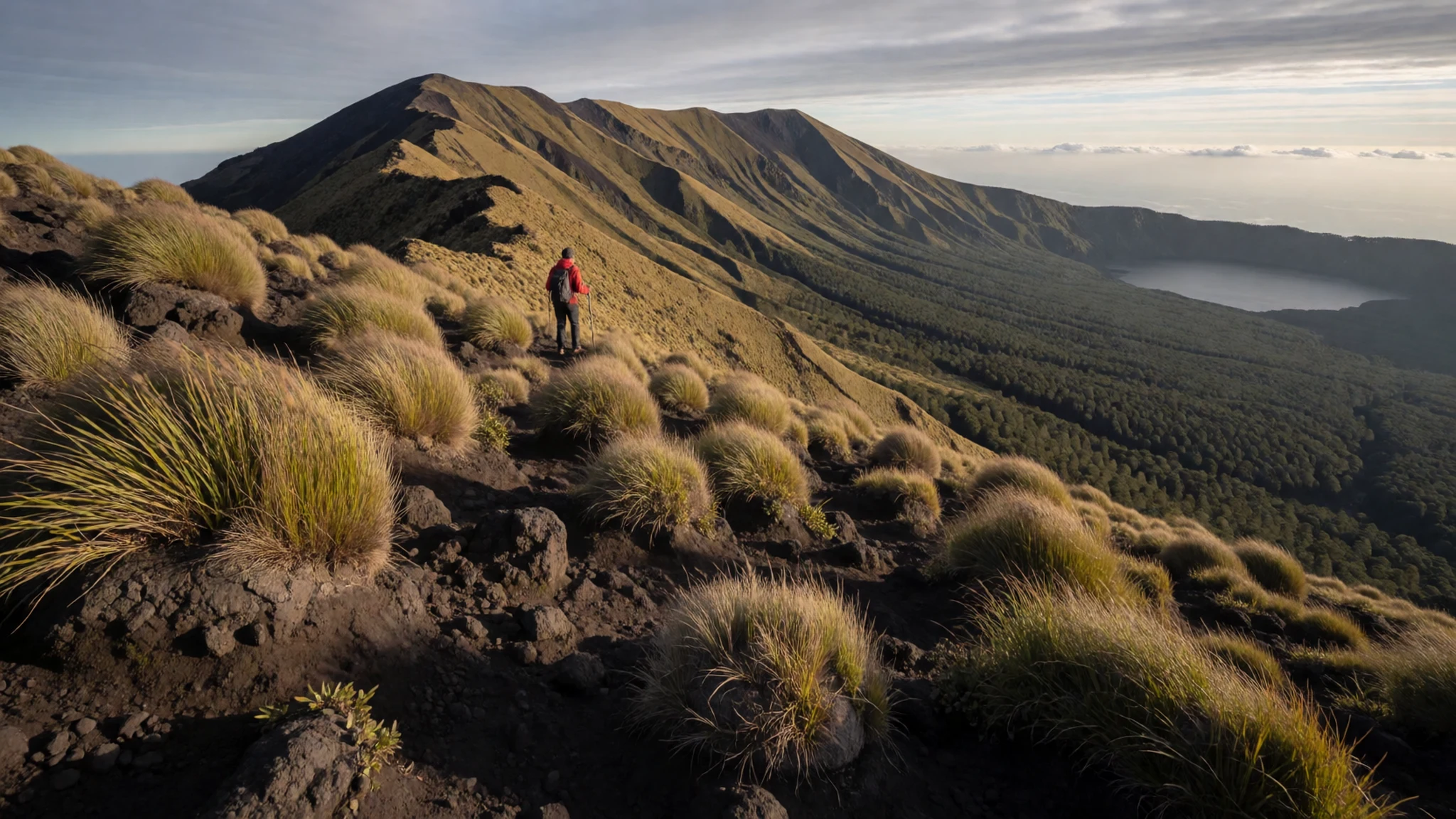
- Highland farms and villages — Oku area, Northwest Region
The slopes below the forest are a patchwork of fields and family compounds, and the walk through them is half the visit. People on the path expect a greeting, and a few words in return often lead to directions, stories or an offer of a guide. Farm produce and the area's honey turn up at village markets.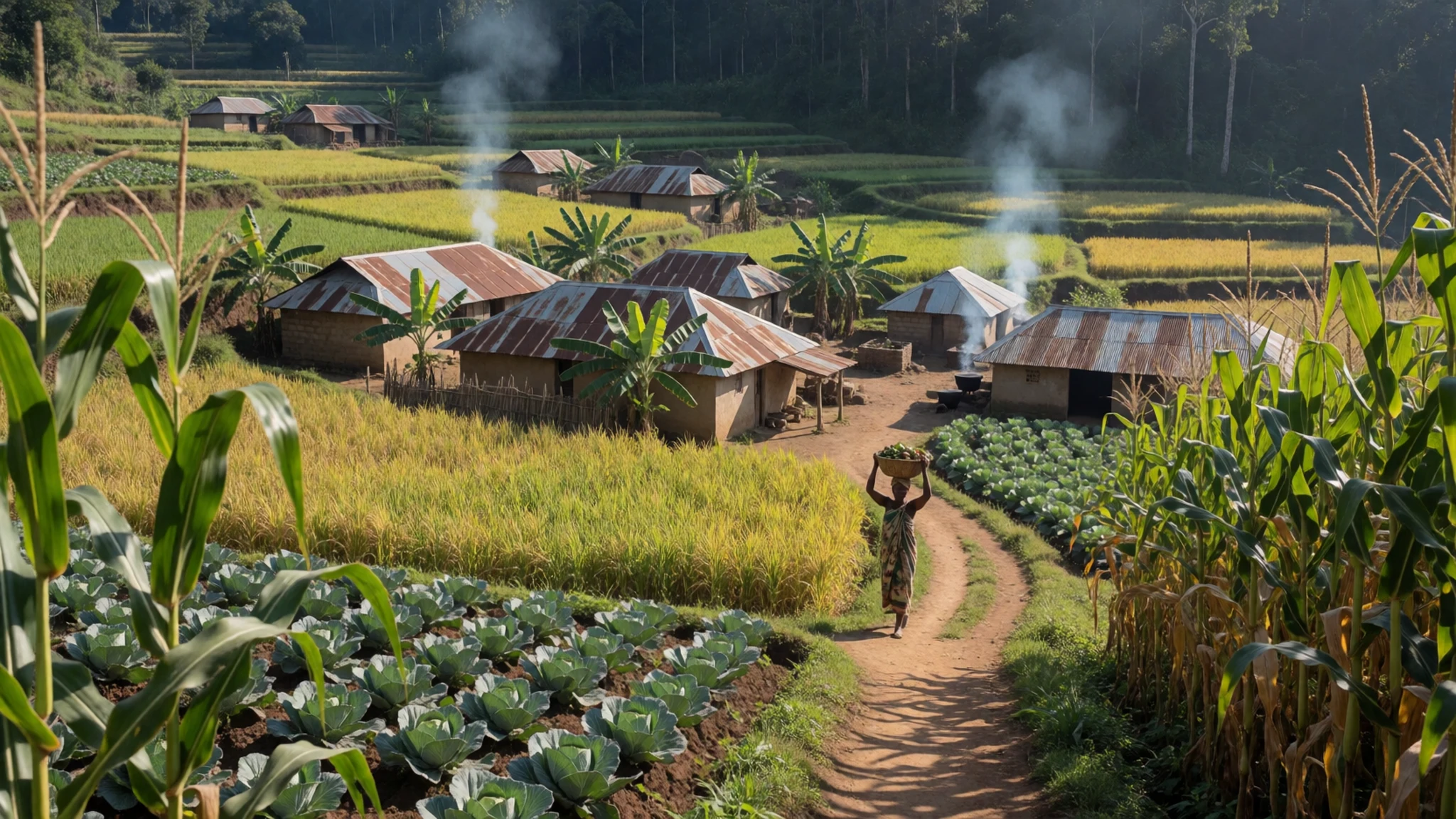
- Bamenda as a base — Bamenda, Northwest Region
Bamenda is the regional city from which most trips begin, a busy hillside town where visitors sort out guides, supplies and onward transport. It is a base rather than a sight in itself. Check current government travel advice for the Northwest Region before planning, as security conditions have changed in recent years.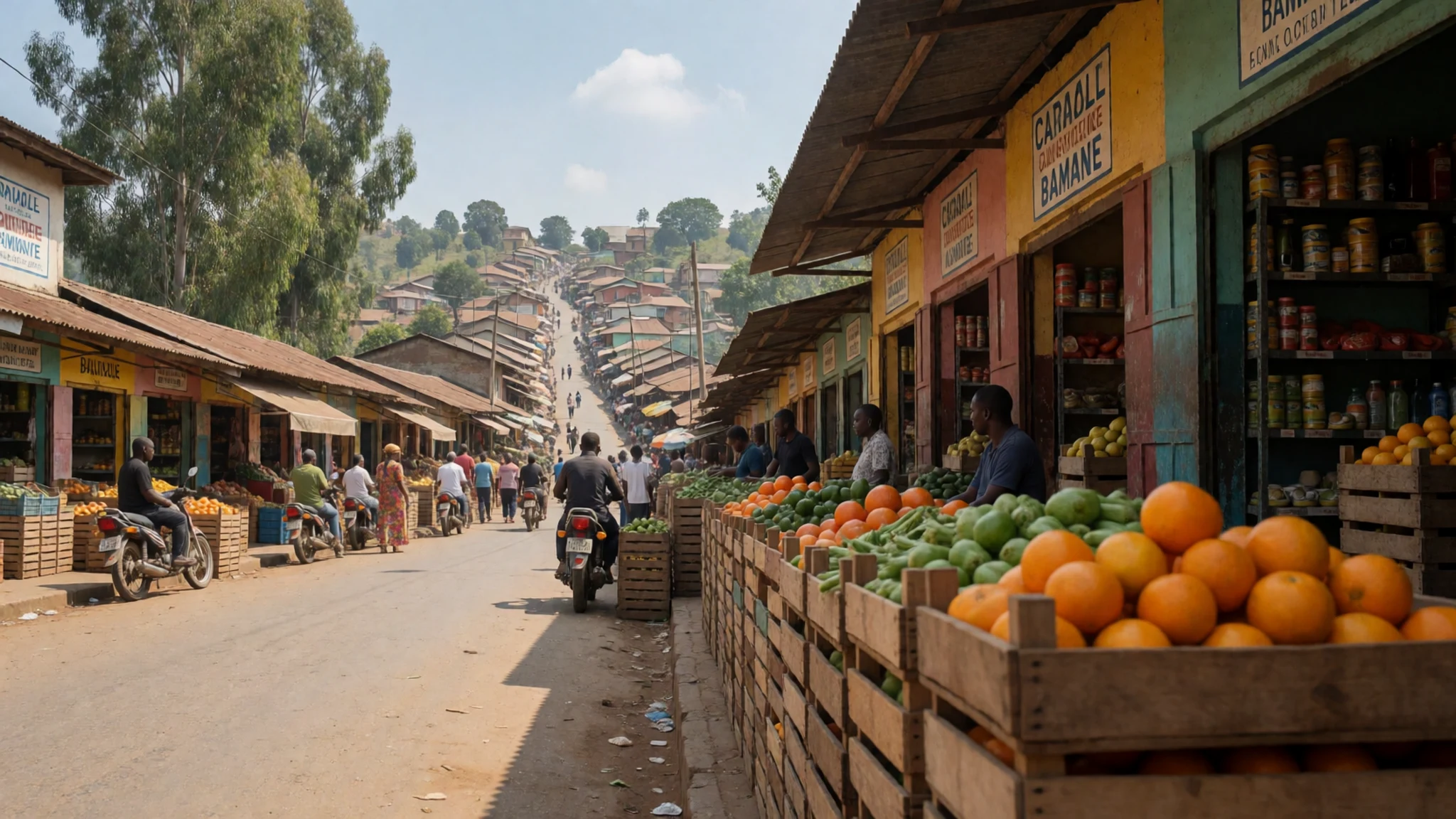
Culture
Culture around Lake Oku comes from the highland communities of Cameroon's Northwest Region, where farming, family and the authority of traditional rulers and elders structure daily life. The region is mainly English-speaking, and Pidgin is widely used between strangers. Greeting is the first rule of the road. Across Cameroon, people greet those around them, strangers included, and often ask after health and family; walking past without a word is considered rude. A foreigner may be forgiven, but making the effort earns warmth fast. Age commands deference. Elders are greeted first in a home, let through doors ahead of younger people and offered seats on shared transport. The right hand is used for handshakes and for passing or receiving anything, as the left is regarded as unclean. The lake carries many local myths, and they belong to the community rather than to visitors; guides decide what is worth telling, and listening works better than pressing for more. The Kilum-Ijim forest is also a communal effort, with villagers keeping trees standing beside their fields, so rules about where to walk and what to take are meant to be followed. When visiting, greet everyone you pass on the path, use your right hand for handshakes and for handing over anything, and ask your guide before photographing people or any spot the community treats as special.
What to wear
Fashion around Lake Oku blends Grassfields heritage with the practical clothing that cool, wet mountain life demands. The best-known traditional garment of the Northwest Region is the toghu, a dark tunic or gown, commonly in black cloth, covered in bright embroidered motifs and worn for weddings, ceremonies and festivals. Ndop, a hand-dyed indigo cloth with pale patterns, is another regional textile, associated with ceremony and status, and is often draped or sewn into formal wear. Everyday dress is far plainer. Farmers wear work trousers, old jumpers and rubber boots, while in towns like Bamenda people favour jeans, shirts and tailor-made outfits in printed wax cotton, with smarter clothes saved for church and market days. Woollen hats and layers are common on chilly mornings. Visitors should dress for the weather and for modest local norms. Pack a fleece or warm layer, a proper waterproof jacket and boots with a deep grip, since paths turn to slick mud after rain. Long trousers protect against scratchy undergrowth, and in villages covered shoulders and knees are the safer choice for both men and women. A hat and sun protection still matter, because the sun at altitude can be strong in clear spells. Quick-drying fabrics beat cotton, which stays damp for days in the cloud.
What to eat
- Ndole — Local eateries in Bamenda and other towns
Ndole is a stew of slightly bitter leaves simmered with ground peanuts and fish, prawns or beef, often called Cameroon's national dish. It is hearty, rich and best eaten with plantain or bobolo.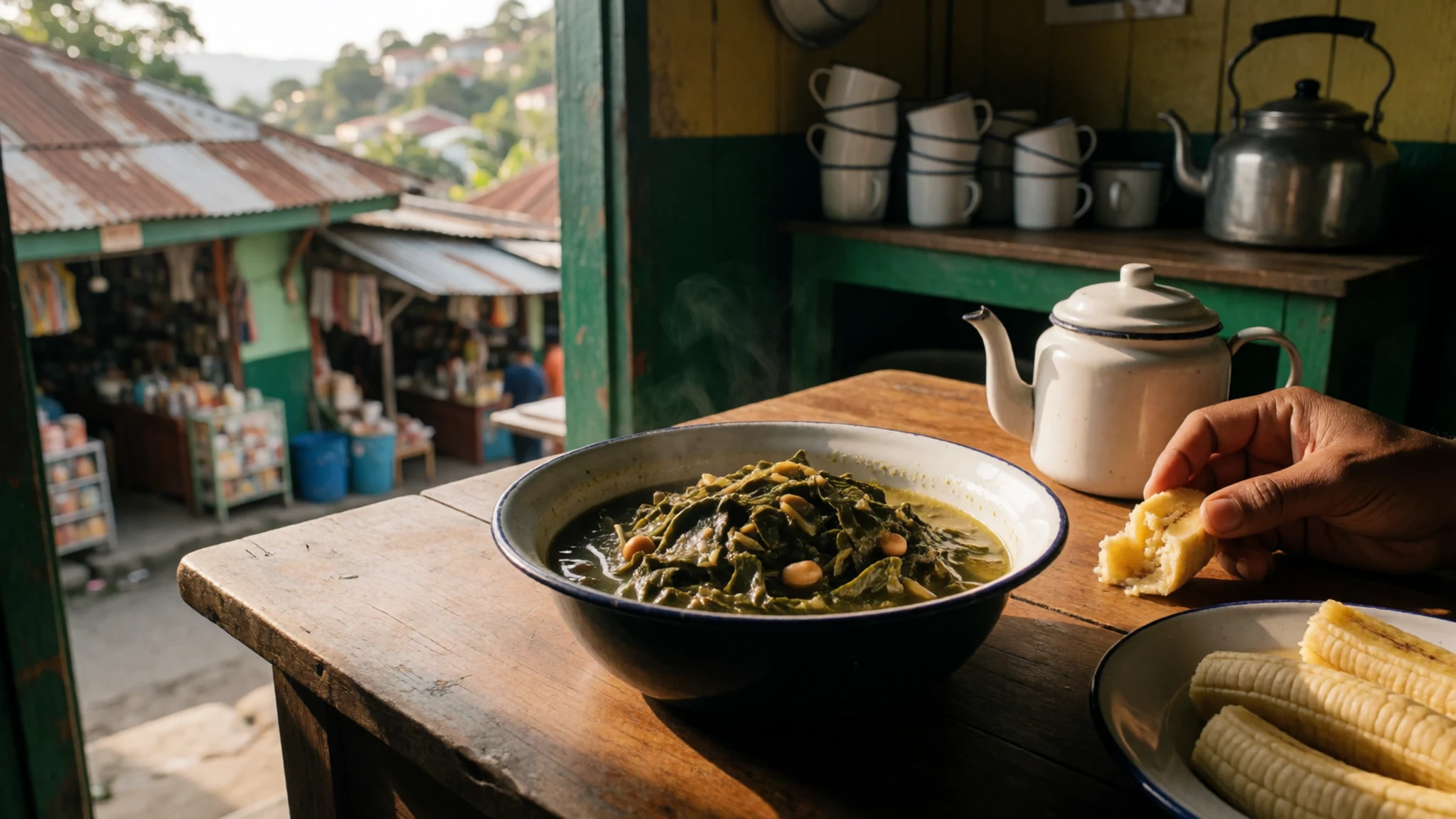
- Koki — Roadside stalls and family eateries
Koki is a steamed dumpling of ground white beans, soft and savoury, often served as a side with plantain. It turns up at roadside stalls and family eateries, and makes a filling breakfast or lunch in the highlands.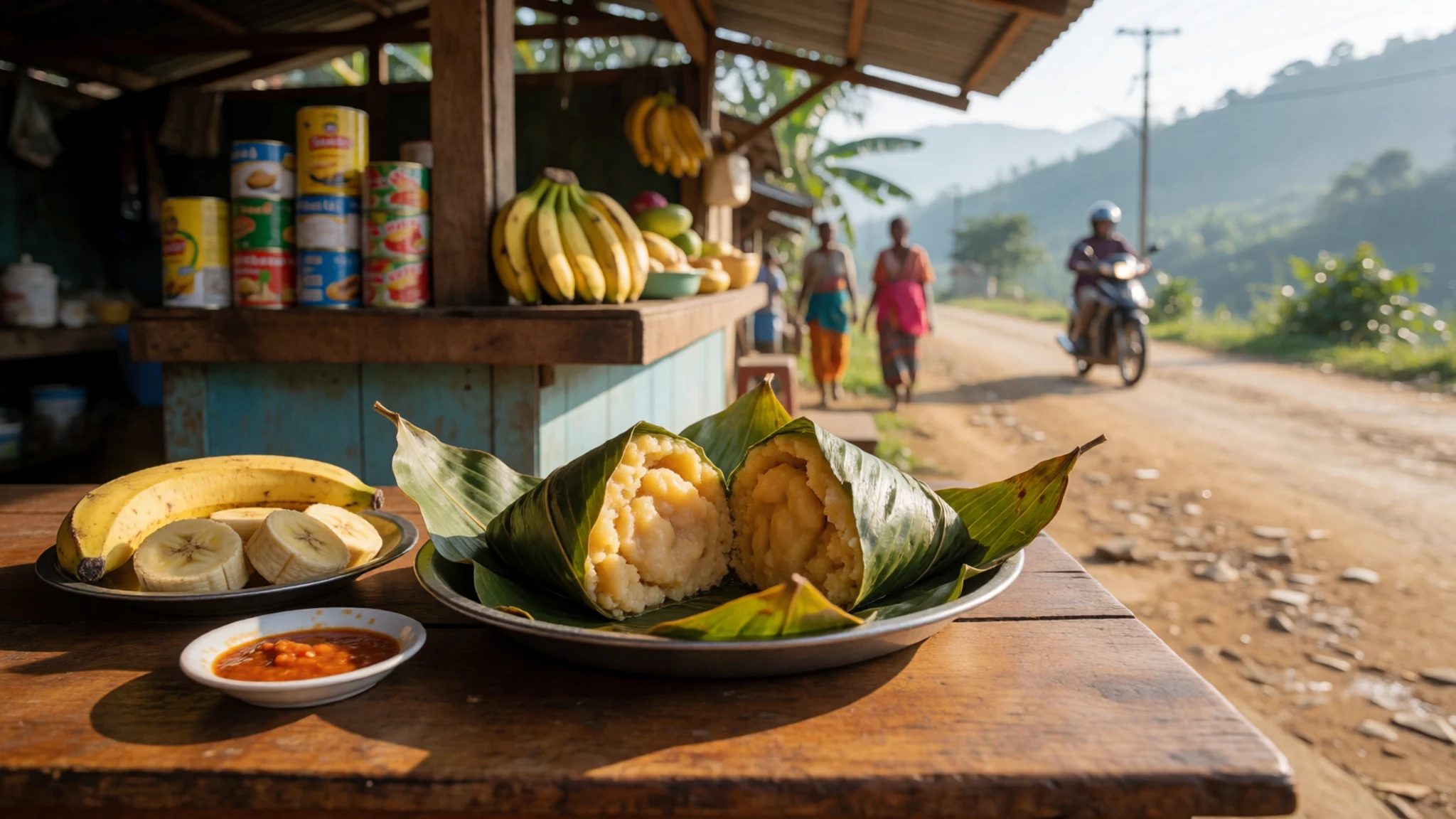
- Bobolo — Roadside stalls and small eateries
Bobolo are steamed cassava bars, wrapped in leaves and sliced, with a dense, slightly sour chew. They are the usual partner for grilled fish or a rich sauce, and are sold at roadside stalls and in small eateries across Cameroon's towns. - Nkui with corn couscous — Local eateries and family homes
Nkui is a thick brown vegetable sauce eaten with corn couscous, a firm maize staple. It is a home-cooked favourite in the western highlands, and worth asking for at local eateries or when invited into a family home. - Brochettes — Evening roadside grills in towns
Brochettes are barbecued meat skewers cooked over charcoal and sold in the evening along town roadsides and at bars. They are a quick, smoky snack, usually eaten with a pinch of hot pepper and a cold drink.
Plan it
Best time. November to March is typically the drier season in the Cameroon highlands, so paths are less slick and clear views are more likely, though dry-season haze can soften distant views. The rains, roughly April to October, bring thick cloud and deep mud. At this altitude mornings and nights stay cool all year.
How long. 2–3
Getting there. Fly into Douala or Yaoundé, then continue to Bamenda by road, or by a domestic flight if one is operating (check current schedules). The last leg is by shared taxi or hired vehicle towards Oku, then on foot with a local guide.
Budget. low
Tips
- Check your government's travel advice for the Northwest Region before booking, and again just before leaving
- Most nationalities need a visa; apply online well ahead and carry your yellow fever vaccination certificate
- Hire a local guide for the forest and lake, and start early, before cloud and rain build
- Carry cash in small notes, as cards are rarely accepted outside big towns
- Pack layers, a waterproof jacket and boots with grip, and bring water or a way to purify it; at about 2,200 metres, even easy climbs can feel tiring
Etiquette
- Greet everyone you meet and use your right hand for handshakes and handing things over
- Ask before photographing people, and listen to your guide about the lake's stories
- Follow the community's rules on where to walk and what to take from the forest
Nearby
Sources
- Wikidata Q1115550 (CC0)
- Wikipedia: Lake Oku (rev 1366264612) (CC BY-SA 4.0)
- Wikivoyage: Cameroon (rev 5425376) (CC BY-SA 4.0)
- Photo: Lake Oku, Cameroon (Nickaj assumed) (Public domain)
- Photo: Africa relief location map (Eric Gaba) (CC BY 3.0)
- Photo: Kilum Ijim forest in the Northwest of Cameroon (Ericjoelmanej) (CC BY-SA 4.0)
- Photo: Lac Oku, Kilum Ijim Forrest (Eric Joel MAMA NKE) (CC BY-SA 4.0)
- Photo: Lake Oku aerial view of Northern part (Ericjoelmanej) (CC BY-SA 4.0)
- Photo: Lake Oku entire aerial view (Ericjoelmanej) (CC BY-SA 4.0)
- Photo: Lake Oku (OpenStreetMap) (CC BY-SA 2.0)


Wildlife
- Lake oku clawed frog (animal)
Picture a tiny, dark frog that spends its whole life in the water: that is the Lake Oku clawed frog. It lives in Lake Oku, a modest crater lake in Cameroon's north-west, and nowhere else on Earth, so seeing one is a rare privilege. It is critically endangered, and outside fish placed in the lake could threaten it. Watch from the shore with a local guide, keep your voice low, stay well back, never touch or feed it, and never put anything into the water.