Bénoué National Park
Bénoué National Park, Cameroon
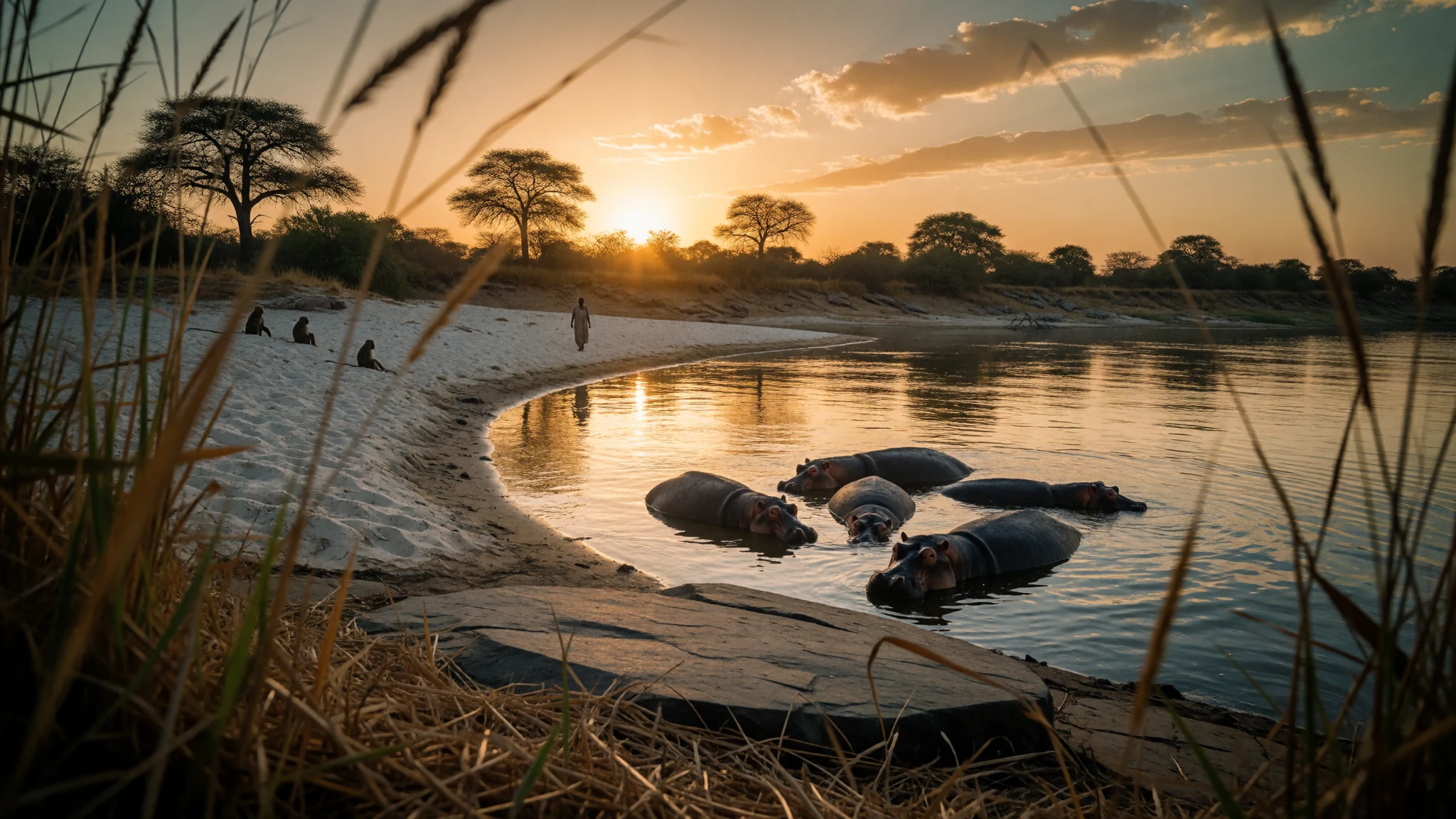
Bénoué National Park is northern Cameroon's savannah reserve, where hippos, baboons and the occasional elephant gather around dry-season waterholes beside a long river.
The place
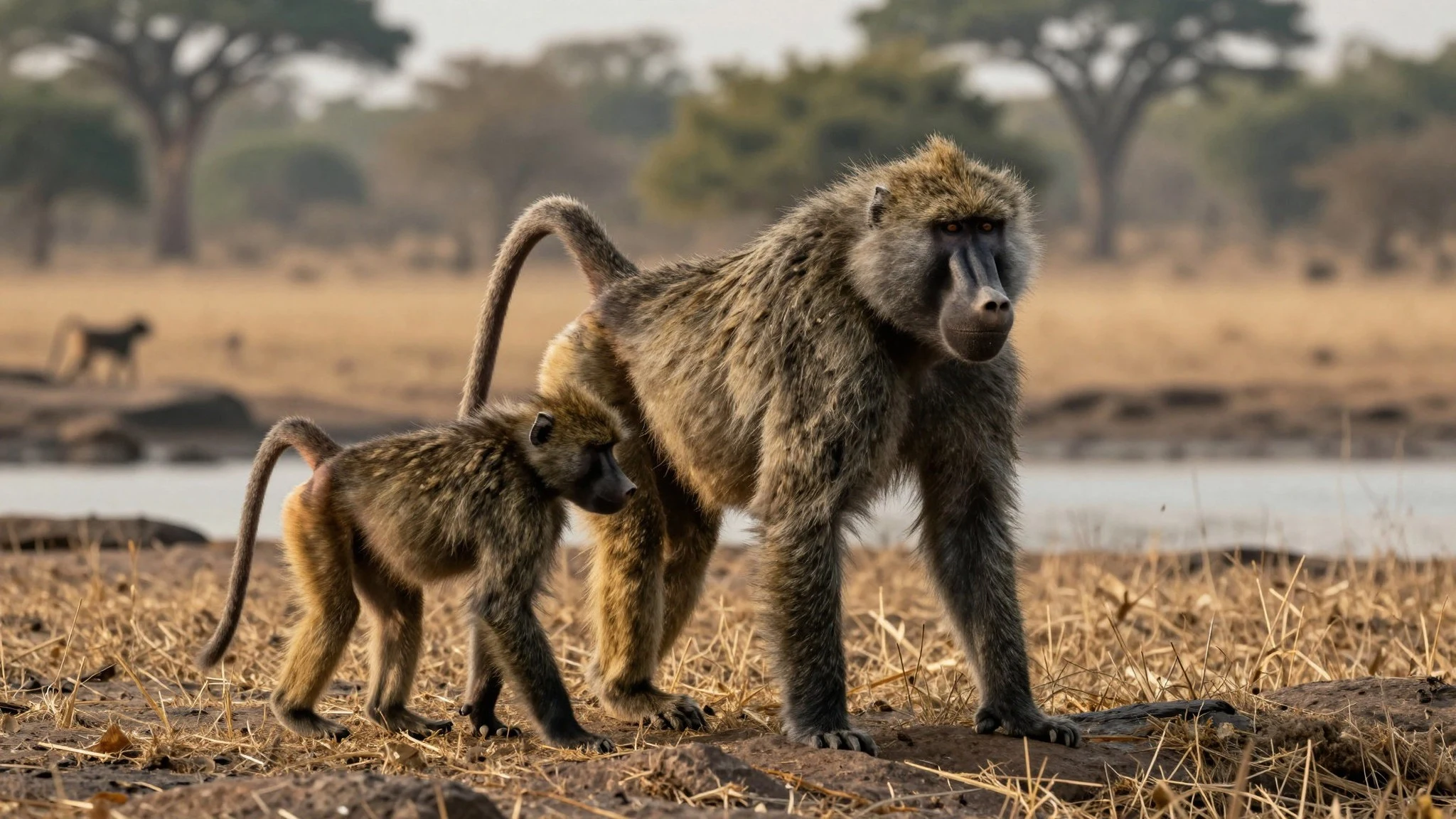
Bénoué National Park lies in the Bénoué Department of northern Cameroon, on a belt of humid savannah woodland between the city of Garoua in the north and Ngaoundéré in the south. It covers about 1,800 square kilometres, and the Bénoué River forms its eastern edge along a frontage of more than 100 kilometres. The main road linking the two cities marks the western boundary, which is how most visitors arrive, and a lesser road towards Tcholliré slices through the north. The ground varies more than the word savannah suggests. Altitude runs from 250 to 760 metres; the higher parts are large rocky massifs, while the lower sections are undulating plain and woodland. Eight hunting reserves lie around the park, leaving the roadside as its only open edge. Dry forest of Anogeissus leiocarpa is widespread, mixed with outcrops and a few bodies of water. The year splits into a dry season from November to May, when animals concentrate at the waterholes and are easier to find, and a wet season when the vegetation thickens. Hippos in herds, baboons, scattered elephants and bushbuck are the usual residents. African wild dog, manatee and giant eland are on the park's list too, but they are not sightings to count on. Facilities are limited, so this is a place for travellers happy with space and patience rather than polish.
Its story
Bénoué National Park has a protected history that runs back to 1932, when the area was first set aside as a wildlife reserve. In 1968 its status was raised to national park, and in 1981 it was recognised as a biosphere reserve, a designation that pairs a protected core with sustainable use of the land around it. Those three dates are the firm part of the record. The park's earlier past is thinner, and it has no famous founding legend. Cameroon as a whole was first settled in the Neolithic period, and Portuguese sailors reached its coast in 1472, but the river country of the north entered the written record of outsiders later and more slowly. What the landscape does show is a layered approach to land. A core park sits inside a ring of eight hunting reserves, so the same savannah is managed in different ways, from strict protection to licensed hunting. That arrangement explains why the park feels like part of a much larger stretch of woodland rather than an island. The Bénoué River, the park's eastern limit, is the other constant. It supplies water through the long dry season, which is why wildlife concentrates along it and around the pools that remain. Anyone reading the park's story is really reading a few dates and a pattern of boundaries, set over a landscape that changes with the rains.
What to see
- The Bénoué River frontage — Eastern boundary of the park
Bénoué National Park meets its namesake river along the eastern side, a frontage of more than 100 kilometres. Hippos in herds are the draw, and the manatee is listed among the park's rarer residents, though a sighting is luck, not a promise. Ask rangers which banks are safe to approach and which are not.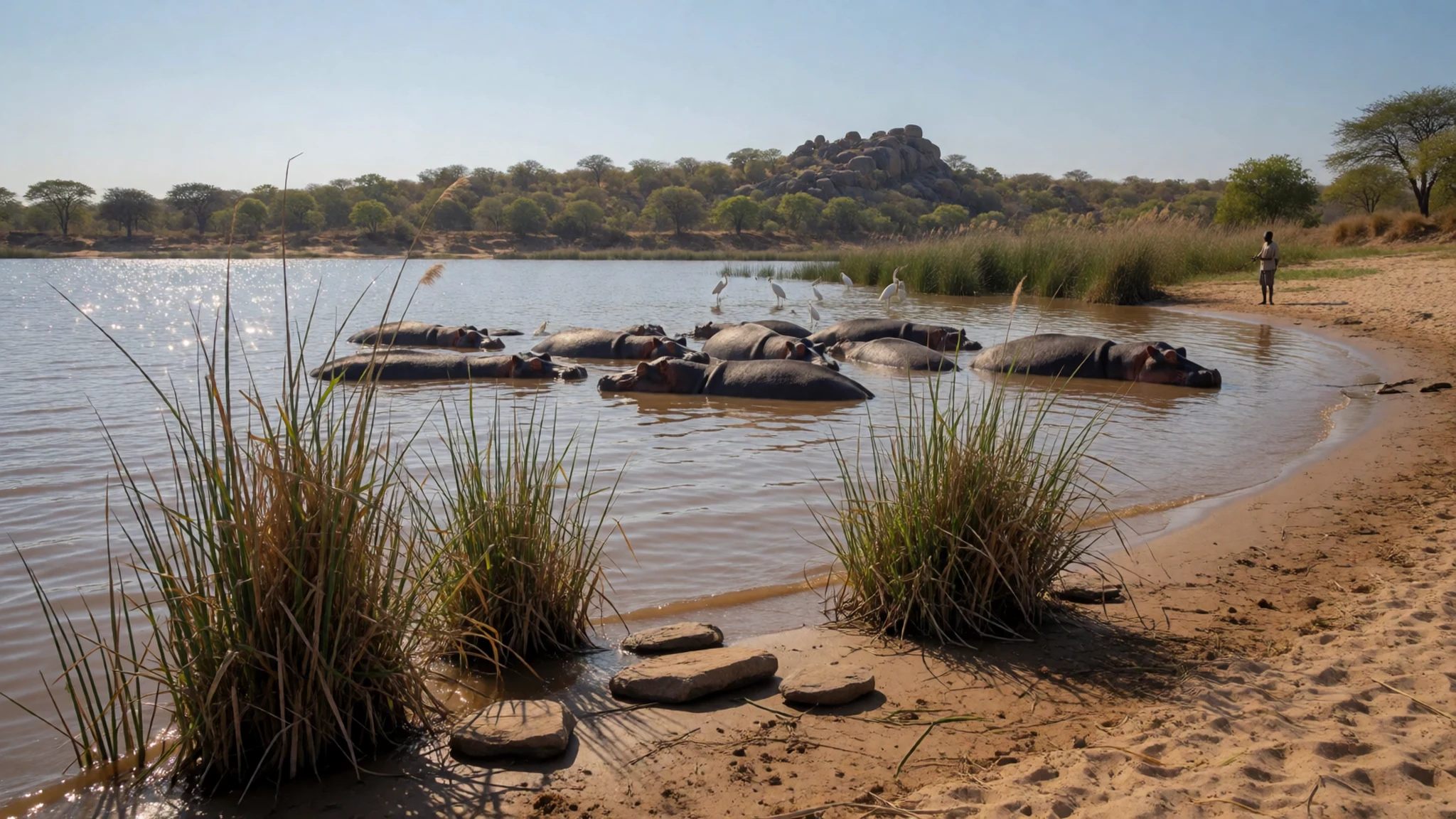
- Dry-season waterholes — Interior of the park
From November to May, the park's remaining pools and waterholes become the places where wildlife gathers, so a patient morning beside one can show baboons, bushbuck and the occasional elephant. Routes and access change, so confirm with the park office or a licensed guide before setting out.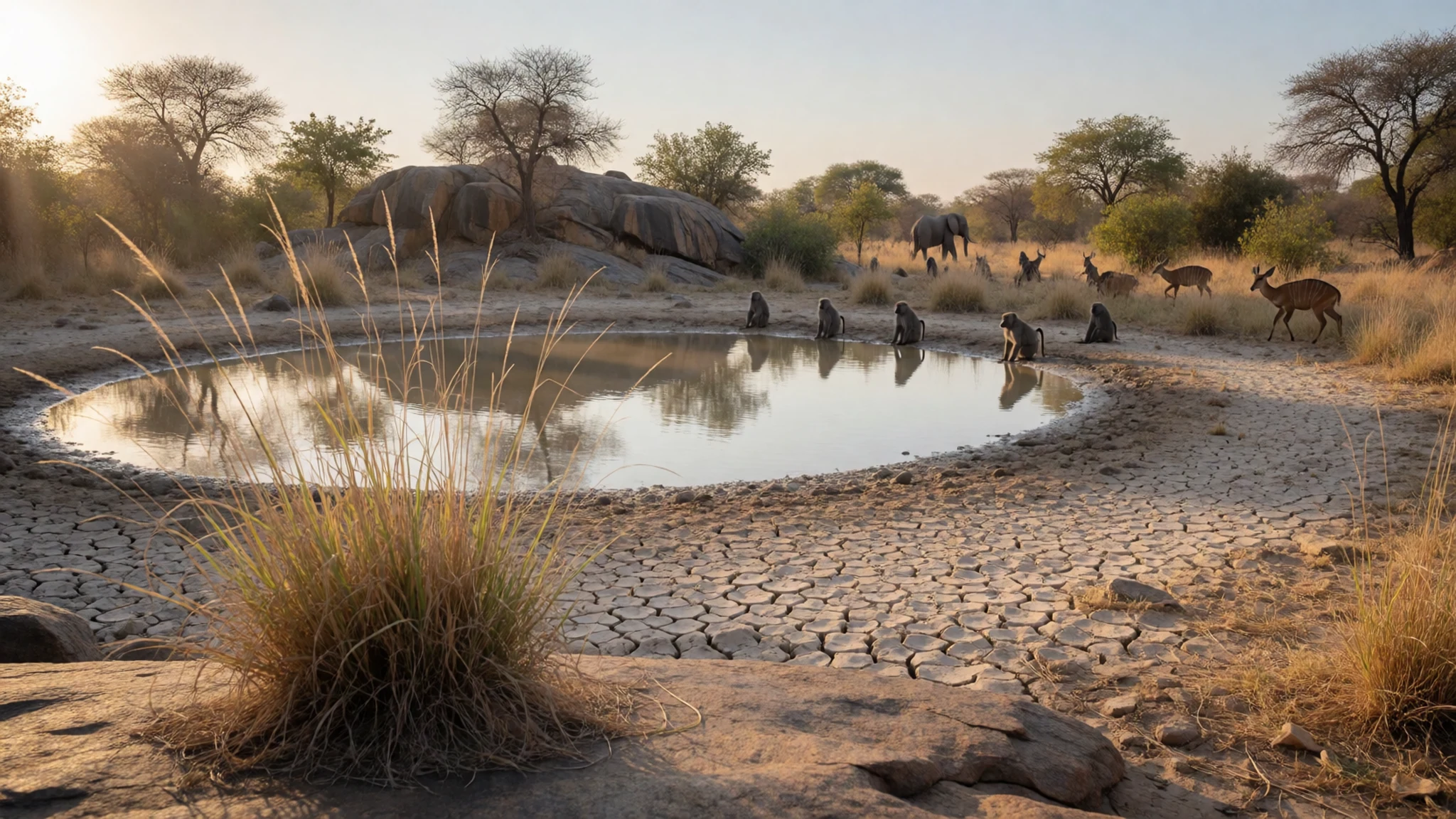
- The rocky massifs — Higher ground within the park
The higher parts of Bénoué National Park rise into large rocky massifs, a contrast with the rolling plain and woodland below. Altitude spans 250 to 760 metres, so the differences in height are moderate, but the outcrops give views over the treetops and a break from the woodland floor.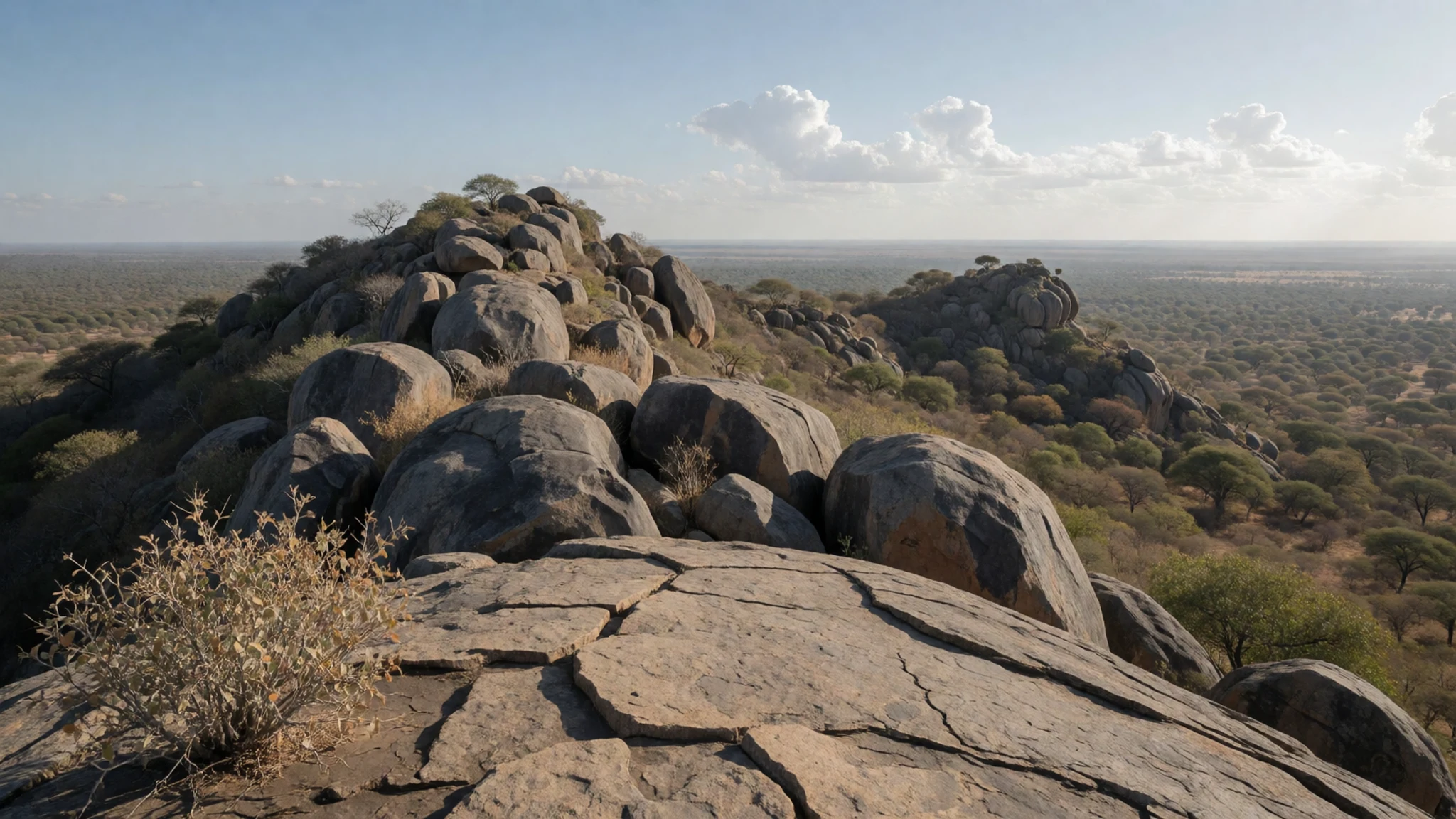
- Anogeissus dry forest — Woodland belt of the park
Stands of Anogeissus leiocarpa, a tree of dry African woodland, are widespread through the park, mixing with rocky outcrops and patches of open water. Going slowly with a guide, listening for baboons and watching for tracks, tells a visitor more than covering distance does.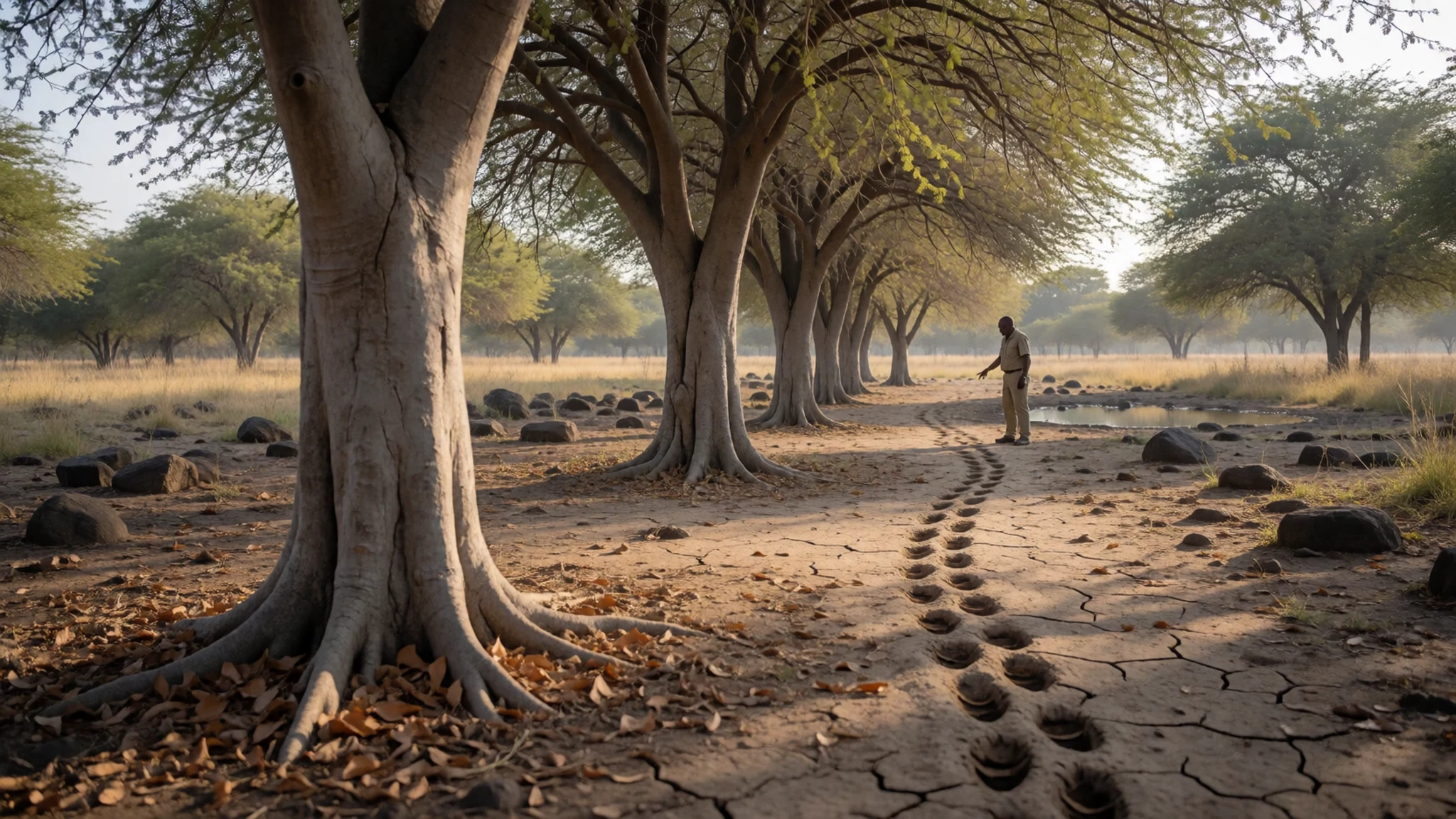
- The road edge and hunting reserves — Western boundary and surrounding reserves
Eight hunting reserves surround the park except along the main road from Garoua to Ngaoundéré. That road, the western boundary, is how most people arrive. The neighbouring reserves are managed differently, so ask what is open to visitors and what is kept for licensed hunting.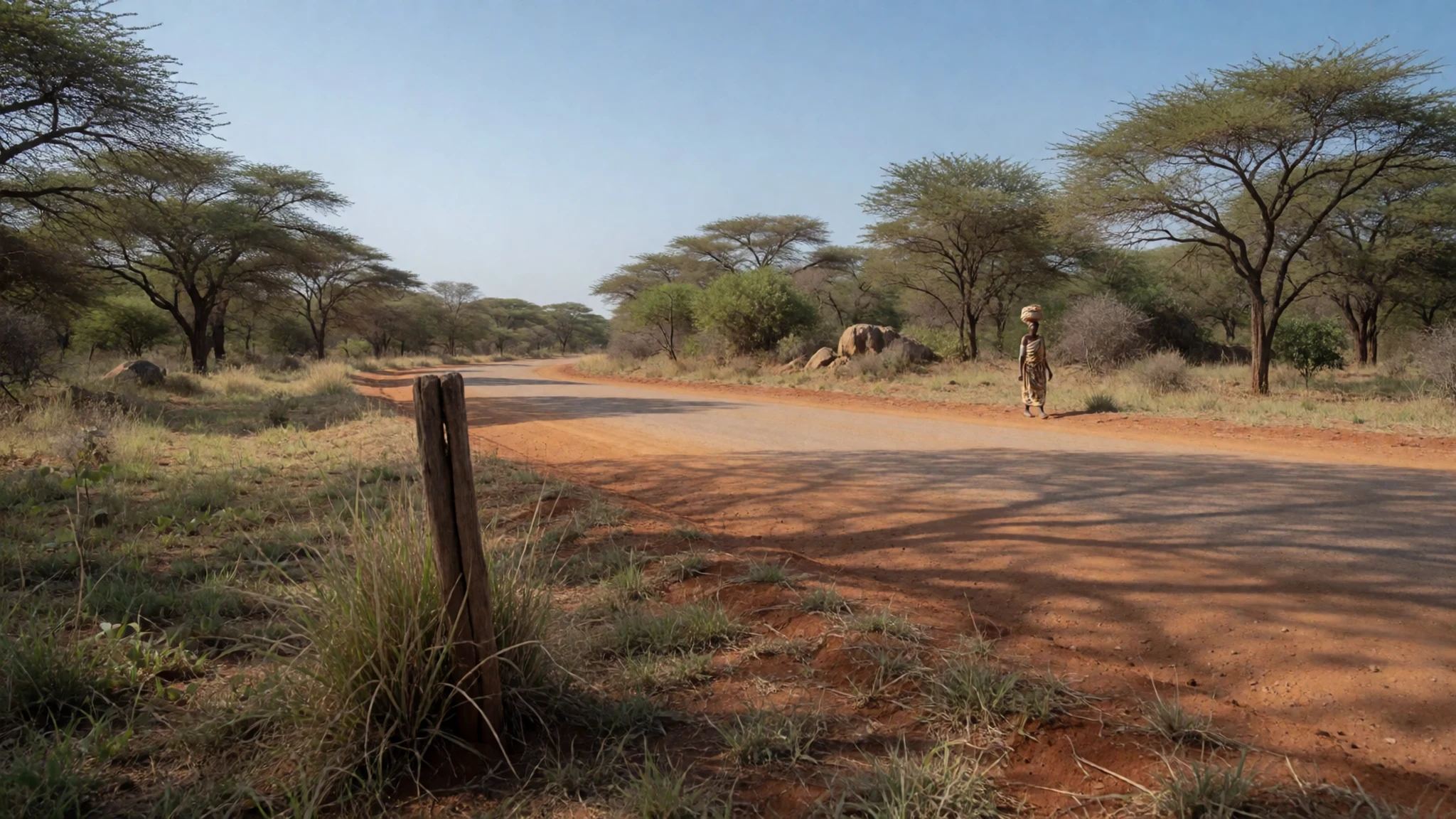
Culture
Bénoué National Park sits in a part of Cameroon where greeting is not a formality. People who have never met exchange good mornings and ask after health and family, and skipping the exchange is read as rude rather than efficient. Foreign visitors get some leeway, but a few words of greeting, in French or a local language, open doors with rangers, drivers and villagers alike. Respect for elders runs through daily life. In a home, the oldest person is greeted first; at a doorway, an older person goes in ahead; on public transport, a younger passenger gives up a seat. Nothing should be said or done that makes an older person feel challenged. The right hand is the one for shaking hands and passing things, because the left is considered unclean. People live and work close to the park boundary, so the edges of the park are somebody's neighbourhood as well as a wildlife area. Following a local guide's lead on where to walk, whom to greet and when to stay quiet is wise, and it tends to turn a transaction into a conversation. Greet everyone you meet, including rangers and drivers, before asking for anything, and always hand over money, food or papers with your right hand.
What to wear
Bénoué National Park is in the north of Cameroon, where everyday dress often follows Sahelian and Muslim traditions. Men commonly wear the boubou, a long, loose cotton robe, sometimes with a cap or turban for prayers and formal occasions. Women wrap printed cotton cloth, known as pagne, around the waist and pair it with a fitted top and a head scarf. Cotton dominates, with printed wax fabrics widespread across the country and dyed or embroidered robes kept for weddings and festivals. Day to day, in Garoua and Ngaoundéré, people wear shirts, trousers, jeans, football shirts and trainers alongside the robes, and the choice shifts between work, market and mosque. For a visitor, climate and terrain decide. Lightweight long-sleeved shirts and long trousers in neutral greens, tans or greys protect against sun, thorns and insects, and they are less conspicuous to animals. Add a wide-brimmed hat, sunglasses and sturdy closed shoes or light boots for rocky ground. In towns and villages, cover shoulders and knees; women may like a light scarf for mosques and for the sun. Pack a thin waterproof for the wet season, and leave bright whites and loud patterns at home, since dust finds everything.
What to eat
- Poisson brézè — Roadside grills and open-air eateries in Garoua and Ngaoundéré
Barbecued fish, grilled over charcoal and eaten with plantain or bobolo. Look for it at roadside grills and open-air eateries in Garoua and Ngaoundéré, usually in the evening, when the smoke drifts along the street.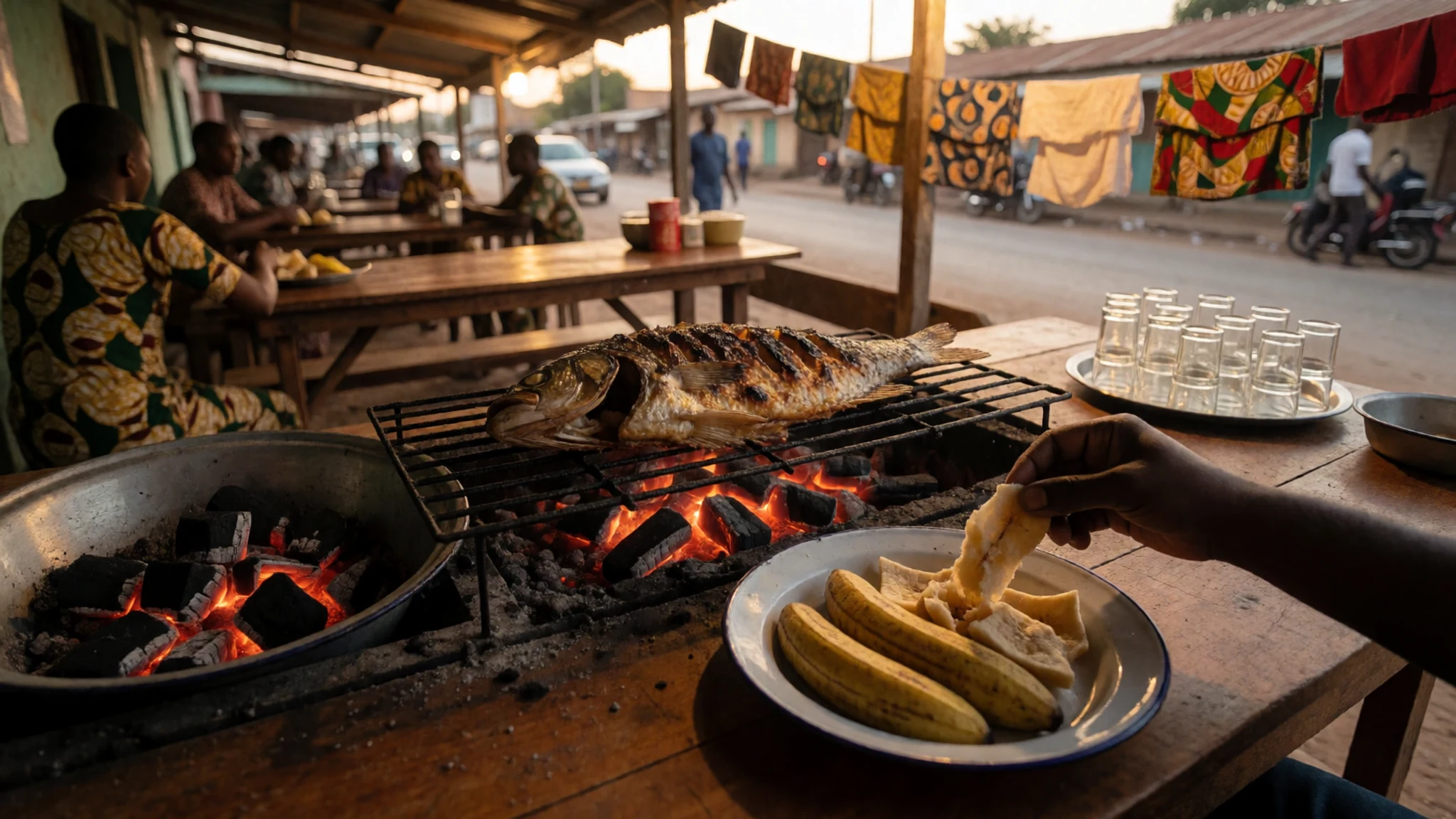
- Ndole — Restaurants in larger northern towns
Often called the national dish, ndole is a stew of slightly bitter leaves cooked with groundnuts and then fish, prawns or beef. It is more a southern and coastal dish, but restaurants in larger northern towns serve it, usually with plantain or bobolo.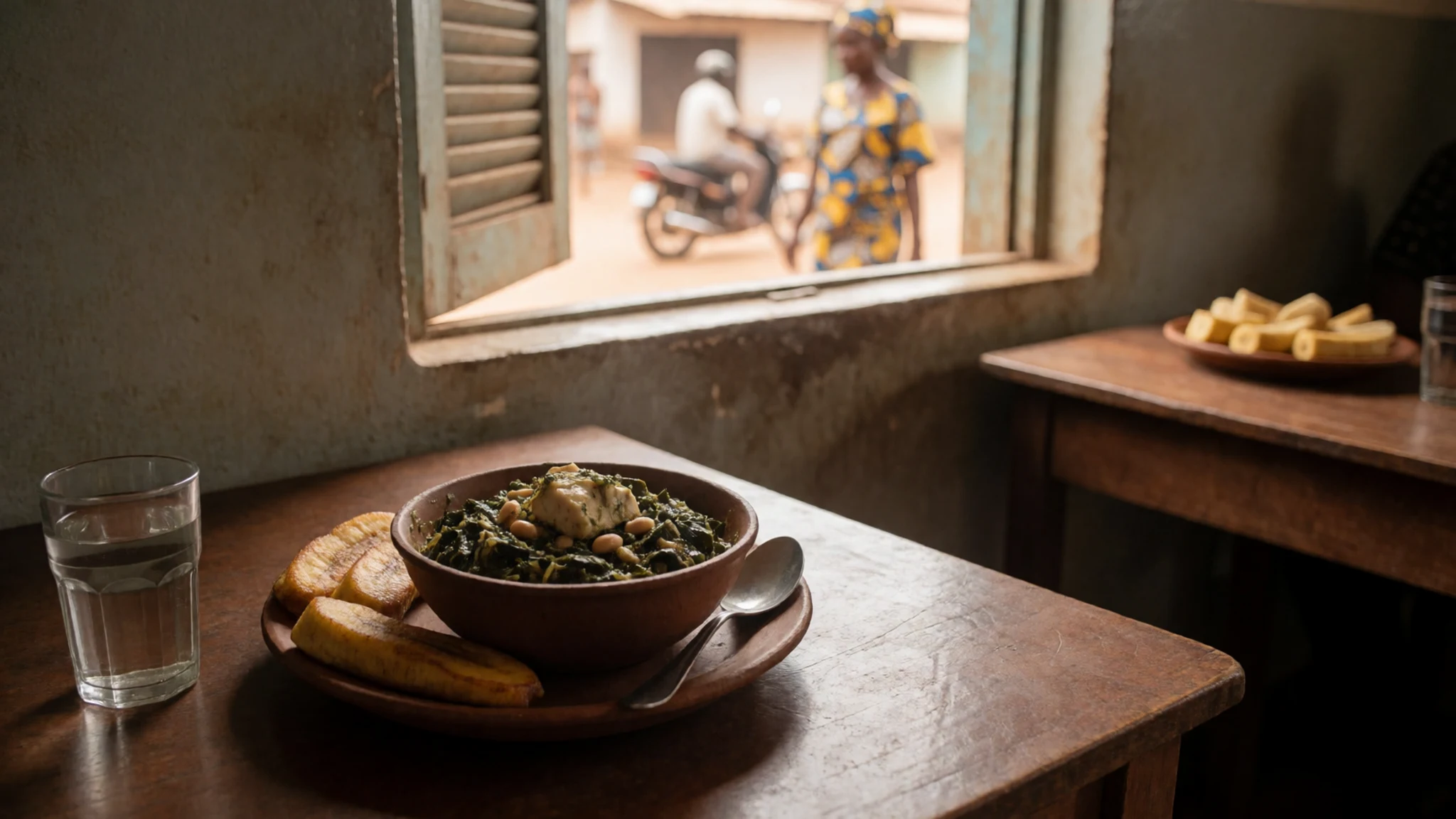
- Kilichi — Market stalls and bus-stop vendors in Garoua
Thin strips of dried, spiced beef, chewy and peppery, sold by weight as a snack and also served with mbol sauce. Look for it at market stalls and bus-stop vendors in Garoua, where it travels well for a long road trip. - Sauce arachide — Lunchtime eateries and canteens near markets and bus stations
Peanut sauce ladled over rice and served with chicken, beef or fish. Rich, thick and mildly sweet, it is everyday home cooking, found at simple lunchtime eateries and canteens near markets and bus stations in most towns. - Couscous de maïs — Midday eateries and market canteens across the north
Corn couscous, a firm, polenta-like mound of maize meal, is eaten by hand with sauces such as nkui or groundnut stew. Expect it at midday eateries and market canteens across the north, often alongside grilled meat.
Plan it
Best time. November to May is the dry season, when animals gather at the waterholes and are easiest to find; December to March is a sensible window, since later months are likely to be hotter. The wet season thickens the vegetation and makes wildlife harder to spot.
How long. 2–3
Getting there. Fly to Garoua or Ngaoundéré, or reach Ngaoundéré by train from Yaoundé; check current schedules. From either city the main road runs along the park's western boundary, so a hired vehicle with a driver covers the last leg. Most visitors need a visa in advance: apply online, submit documents early, and allow about a week for processing.
Budget. mid
Tips
- Visit in the dry season, November to May, when animals gather at the waterholes.
- Arrange a guide and confirm access with the park authorities before you arrive, as facilities are limited.
- Carry cash in CFA francs, since cards are unreliable away from larger towns.
- Bring plenty of water, sun protection and insect repellent.
- Prepare your visa paperwork early: a passport copy, two passport-sized photographs and a copy of your itinerary.
Etiquette
- Greet people before you ask for anything, and use your right hand to shake hands or hand things over.
- Give way to older people at doorways and on transport.
- Ask before photographing people, and follow your guide's instructions near wildlife.
Nearby
Sources
- Wikidata Q1019469 (CC0)
- Wikipedia: Bénoué National Park (rev 1362705968) (CC BY-SA 4.0)
- Wikivoyage: Cameroon (rev 5425376) (CC BY-SA 4.0)
- Photo 01-b-nou-np4.jpg, Ongola boy (CC BY 2.5)
- Photo 02-b-nou-np3.jpg, Ongola boy (CC BY 2.5)
- Photo 03-b-nou-np2.jpg, Ongola boy (CC BY 2.5)
- Photo 04-drone-view-at-benoue.jpg, Ndijose (CC BY-SA 4.0)
- Photo 05-drone-view-benoue.jpg, Ndijose (CC BY-SA 4.0)
- Photo 06-parc-national-benoue.jpg, Ndijose (CC BY-SA 4.0)
- Photo 07-20160720-osm-b-nou.png, Contributors to OpenStreetMap (CC BY-SA 2.0)
- Photo 08-au-parc-national-de-la-b-nou-au-cameroun-11.jpg, OUMAROU OB (CC0 1.0)


Wildlife
- Hippo (animal)
The hippo is a huge, thick-skinned river horse, as its old Greek name says, and it spends much of its life in water. In Bénoué National Park, herds of hippos are among the usual residents, and they gather around the waterholes and along the long river, especially in the dry season. The notes do not give a time of day. Watch from a respectful distance with a guide, keep quiet and never feed them.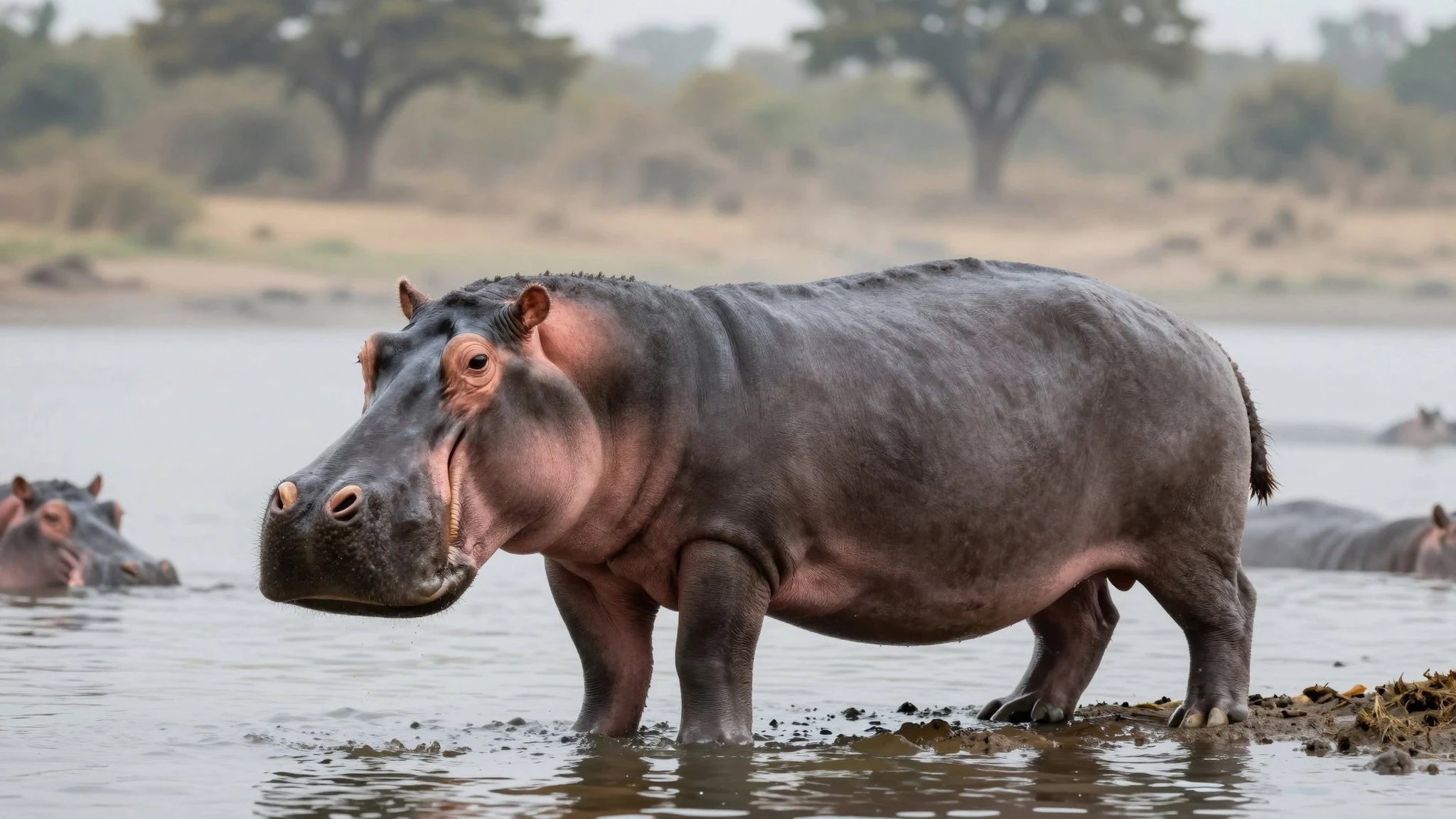
- Baboon (animal)
The olive baboon is a clever monkey whose coat looks green-grey from far away, and it lives in busy, chattering family groups. In Bénoué National Park, baboons are usual residents and gather at the waterholes beside the long river in the dry season. The notes give no time of day. Watch them quietly from a good distance, ideally with a guide, and never feed them, however bold they seem.