Rammang-Rammang
Rammang-Rammang, Indonesia
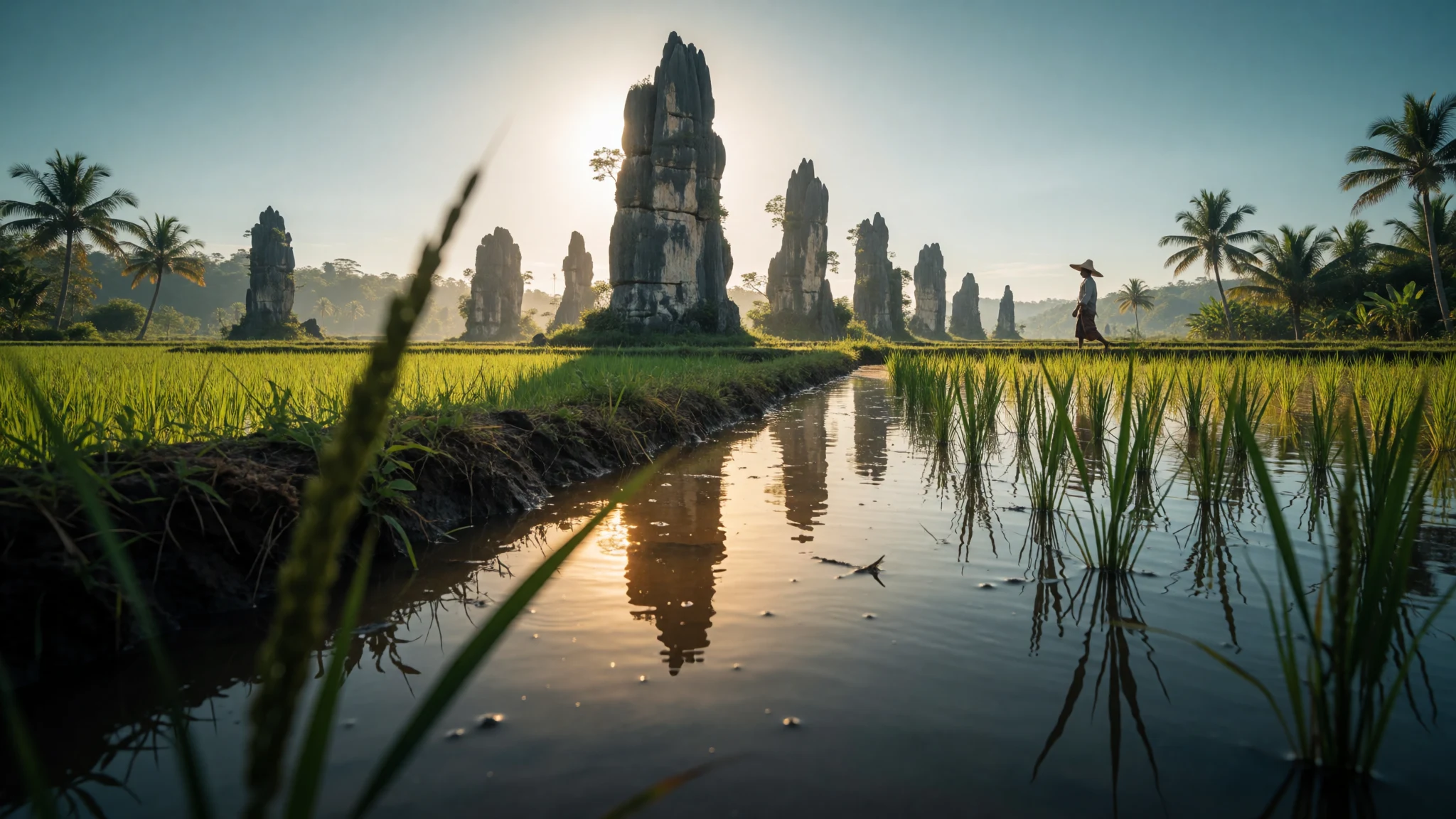
Rammang-Rammang is a river valley of sheer limestone towers and rice paddies, easy to reach from Makassar and best seen from a slow wooden boat.
The place
Rammang-Rammang is a valley of limestone towers and flooded rice land in Maros Regency, South Sulawesi, Indonesia, inside the wider Bantimurung-Bulusaraung National Park. The towers rise almost sheer, some straight out of paddy fields and fish ponds, and the usual way in is a small wooden boat moving up a slow river that winds between them. Makassar is about 50 kilometres to the south, roughly an hour by road, and Sultan Hasanuddin International Airport is about 20 kilometres away, around half an hour's drive. That makes the valley a short outing from the city, or a first stop after landing. The same karst belt runs along the road from Maros town towards Bantimurung and on into Pangkajene and Islands Regency, known as Pangkep, so the cliffs are visible from the tarmac long before the river is reached. The karst area holds 286 caves, a number of them prehistoric. What sets the place apart from a standard nature stop is that people live and work in it: villagers grow rice, tend ponds and run the boats. Mornings are the calmest and coolest, with mist low over the paddies and fewer visitors. By midday the heat is heavy and shade is scarce, and weekends bring families from Makassar, so a weekday is quieter. Costs are modest, though boat and guide arrangements are best confirmed locally rather than assumed.
Its story
Rammang-Rammang sits in a limestone landscape shaped over a very long time, as rain and river water ate into the rock and left steep-sided towers standing above flat plains. Outside attention came early through Alfred Wallace, the naturalist, who spent part of 1857 working around Bantimurung and wrote about it in The Malay Archipelago. The book drew other researchers to Maros, mostly for its insects and caves, and the area's scientific reputation grew from there. Protection came in pieces. Over the later twentieth century, separate nature parks and wildlife reserves were marked out around Bantimurung, Pattunuang, Karaenta and Bulusaraung, while cavers and a university group argued that the whole karst deserved wider cover. A regional forum on karst ecosystems, held in Sarawak, helped persuade the Indonesian government to act. The outcome, in 2004, was a forestry ministry decision to fold land of several designations, including wildlife reserve, nature park, conservation forest and production forest, into one national park of 43,750 hectares. For a visitor, that history explains the patchwork on the ground: managed attractions such as the Bantimurung waterfall, working farmland at Rammang-Rammang, and forest and cave areas with their own rules. It also means the valley's future depends on local management and visitor behaviour as much as on a line on a map.
What to see
- The river boat trip — Rammang-Rammang, Maros
The core of any visit is a slow wooden boat up the river, with limestone walls close on both sides and paddies opening out beyond. Boats are small and unshaded, so a hat and water help. Going early gives cooler air and softer light on the cliffs, and calmer water for photographs.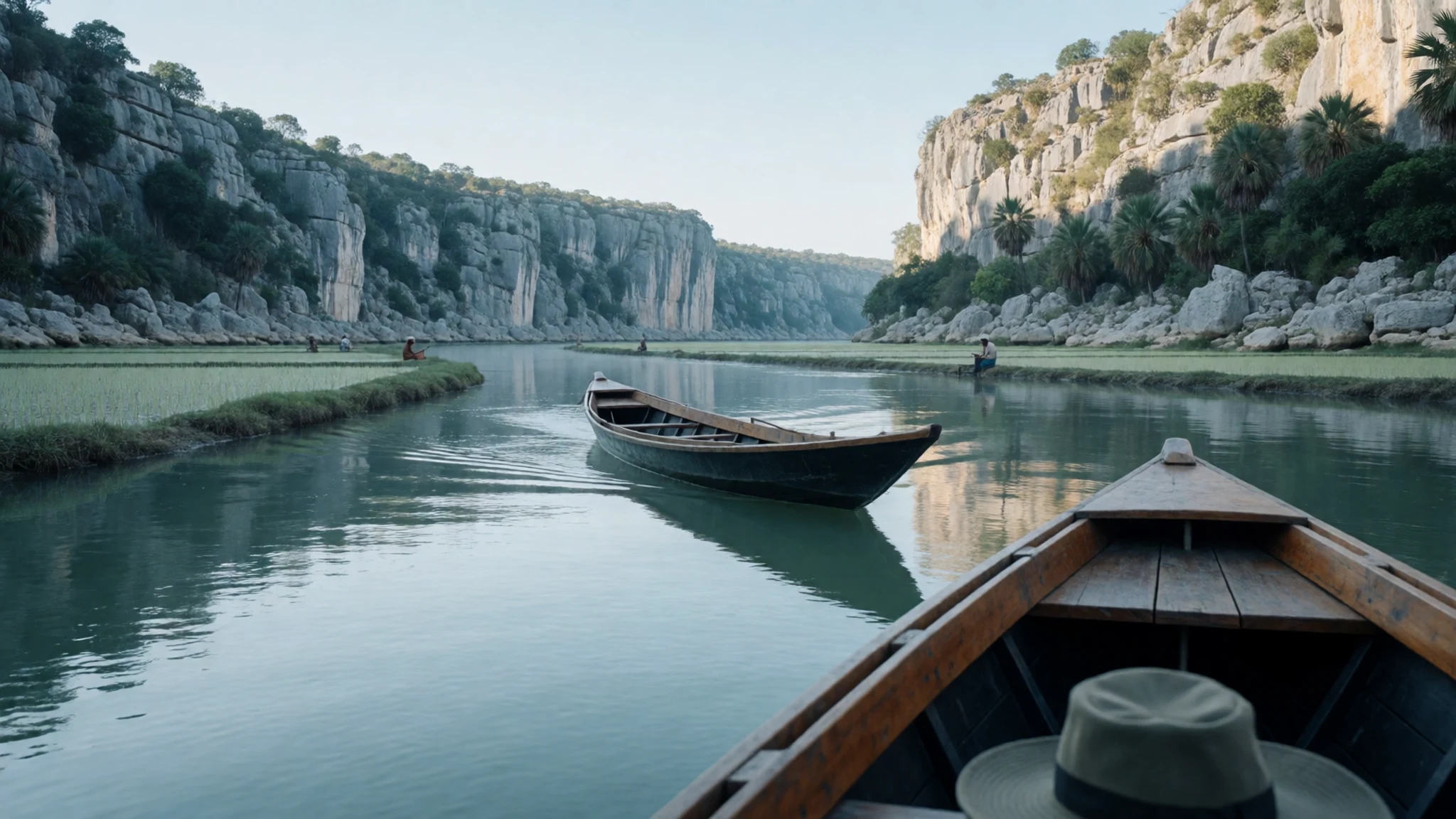
- Berua village — Berua, Rammang-Rammang
The boat journey ends at a small farming settlement among the towers, where houses stand beside fish ponds and rice fields. Walking here shows how the valley actually works: people live, fish and farm in it. Some households sell drinks and snacks, which is a simple way to spend money locally.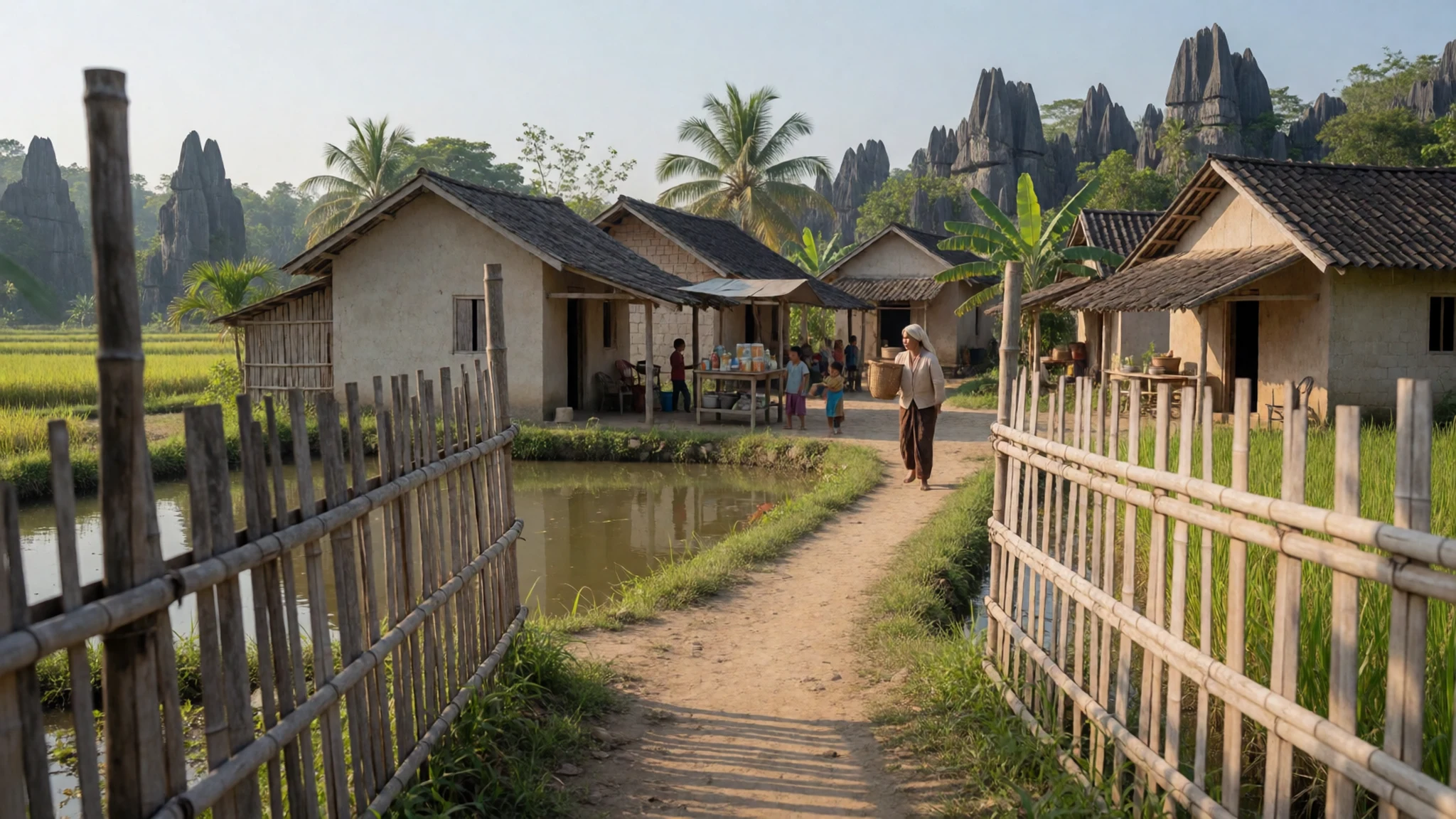
- Karst walking trails — Around Berua, Maros
Short footpaths from the village lead through paddies and between the towers, with viewpoints over the pinnacles. Paths can be slippery after rain and exposed in the afternoon sun, so sturdy sandals or trainers are sensible. Ask locally before climbing, since some rock faces and caves are not safe or open to visitors.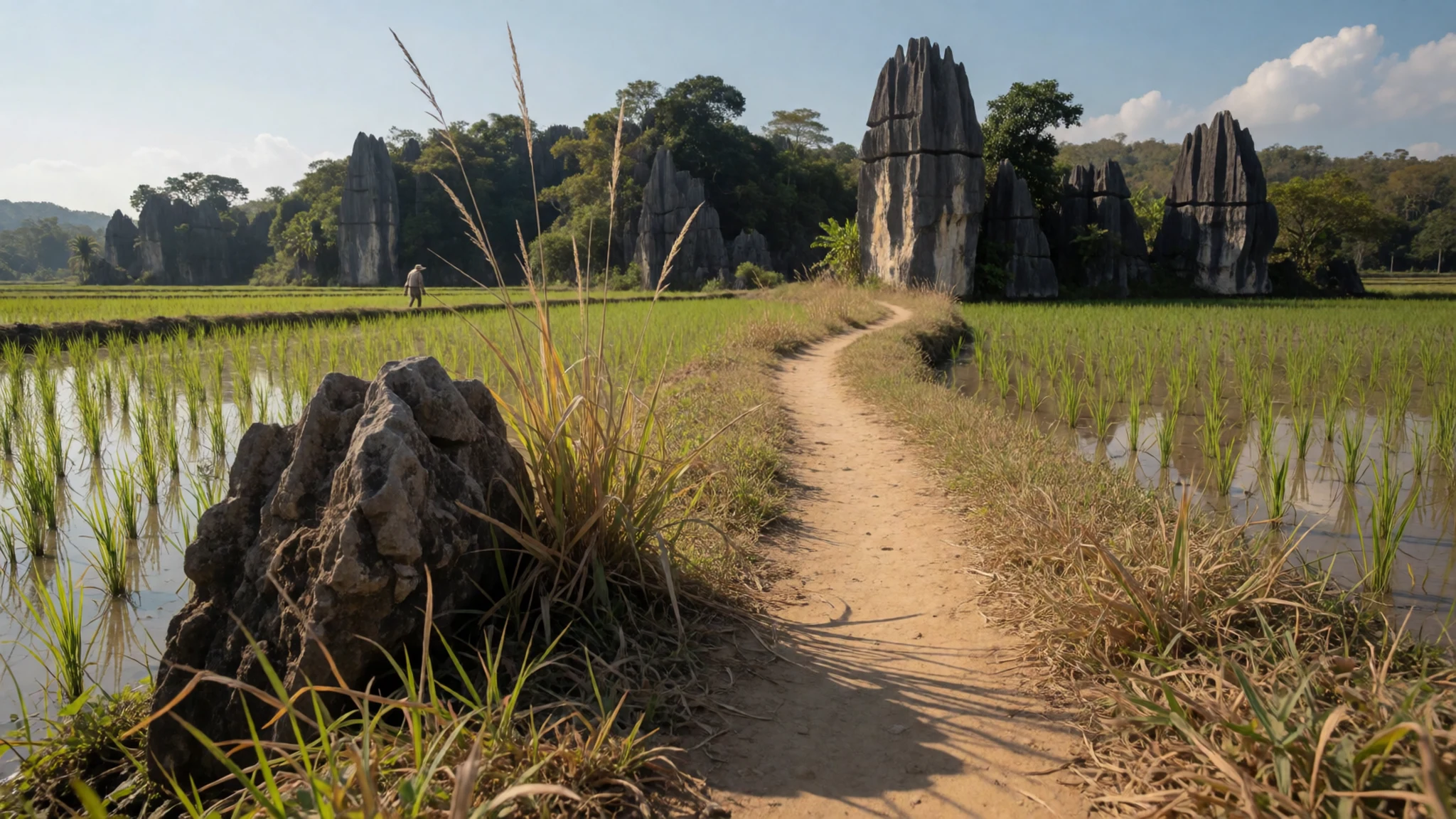
- Bantimurung waterfall and caves — Bantimurung, Maros
Inside the national park, a waterfall pours beside two caves: a long passage on the left called the dream cave and the stone cave on the right. Local children float on inflated inner tubes in the water. It gets crowded on weekends and holidays, so a weekday visit is calmer.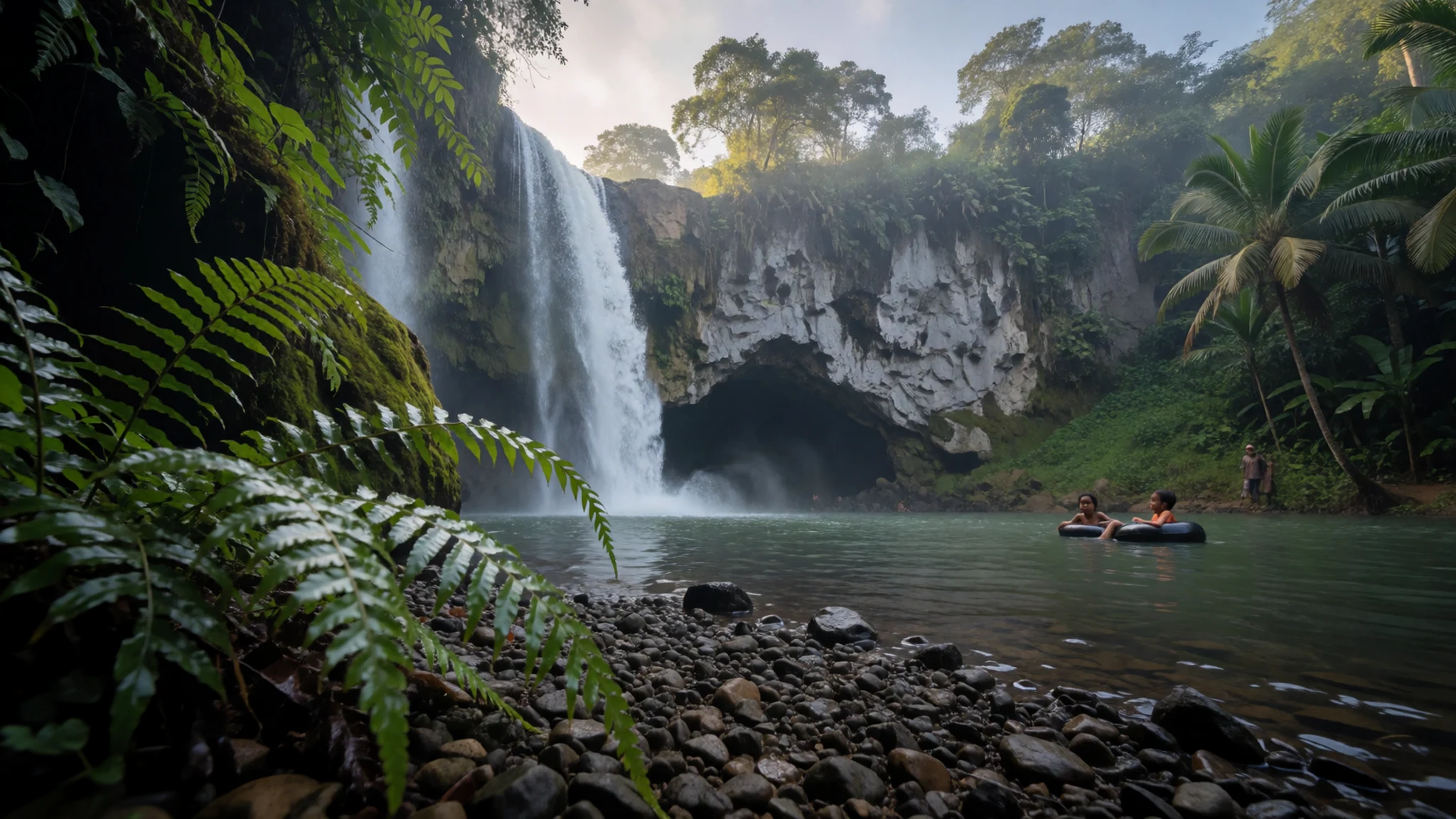
- Prehistoric caves of Maros and Pangkep — Maros and Pangkep regencies
The karst around Maros and Pangkep holds several prehistoric caves, a reminder that people used these hills long before the paddies. Access and any entry arrangements vary by cave, so ask at the park office or with a local guide before heading out, and do not touch painted or marked surfaces.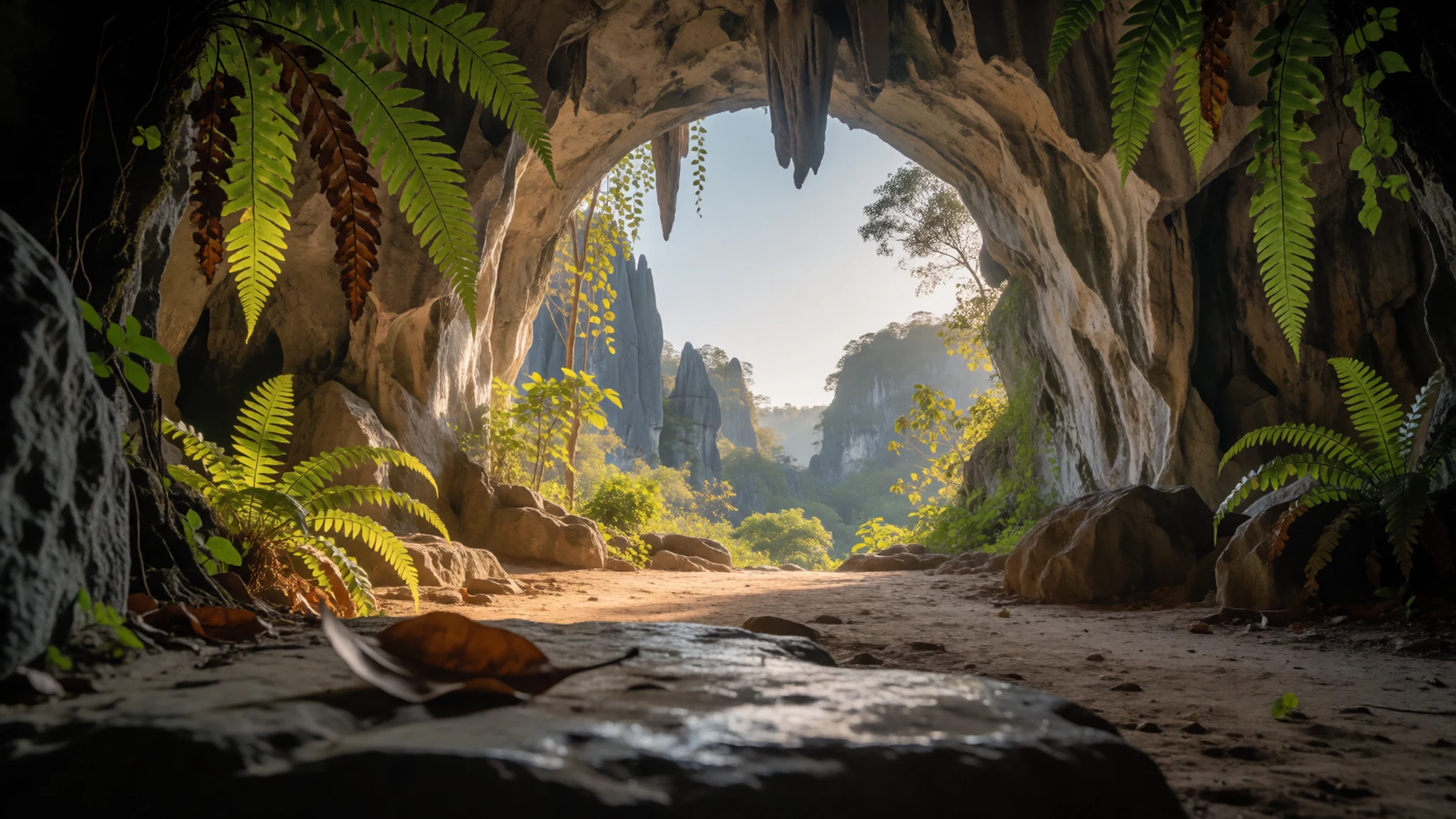
Culture
Rammang-Rammang lies in the Bugis and Makassarese heartland of South Sulawesi, and the valley's daily life follows the rhythm of rice and water. Families plant and harvest paddy, keep fish ponds and, increasingly, run the boats and small food stalls that serve visitors, so tourism here is a village income rather than an outside business. Most people are Muslim, and the day is marked by the call to prayer; Friday midday is the main weekly prayer, and activity slows around it. Hospitality is a point of pride, and a greeting, a smile and a few words of Indonesian go a long way. The wider karst has a much older human story: prehistoric caves in Maros and Pangkep show that people have sheltered and worked in these hills for a very long time, and local communities treat some caves and rock faces with care. Visitors will notice that plans are often loose and conversations unhurried. A guide or boatman is usually happy to explain how the paddies are worked, what grows in the ponds and which paths are sensible after rain. Spending a little in the village on drinks, snacks or a meal is welcome. Ask before photographing people, especially women and children, and keep to marked paths so that crops and ponds are not trampled.
What to wear
Around Rammang-Rammang, traditional dress belongs to the Bugis and Makassarese cultures of South Sulawesi. Women wear the baju bodo, a loose, short-sleeved, lightly woven blouse, with a silk or cotton sarong woven on a loom in checks or stripes. Men wear a sarong with a fitted jacket and a stiff cap called a songkok. These outfits are mostly kept for weddings, festivals and formal ceremonies, and the cloth is handed down within families. On an ordinary day in the valley, people dress for farm and boat work: T-shirts, long trousers or sarongs, rubber sandals, wide-brimmed hats against the sun, and a headscarf for many women. Visitors should dress for heat, sun and water, while staying modest in a Muslim farming area. Light, loose, quick-drying clothes that cover shoulders and knees suit the boat and the village. Bring a hat, sunscreen and sunglasses, because there is little shade on the river. Footwear matters more than fashion: sandals with a good grip for boarding boats and muddy paths, and closed shoes with a firm sole if cave visits or rocky trails are planned. A light rain layer is useful in the wetter months, and a spare dry top is welcome after a splash from the boat.
What to eat
- Coto Makassar — Casual eateries in Makassar and Maros town
A rich beef soup, thickened with ground peanuts and spiced, traditionally made with offal as well as meat. It is often eaten with rice cakes or burasa. Look for it at simple eateries in Makassar and Maros, usually served in the morning or at lunchtime.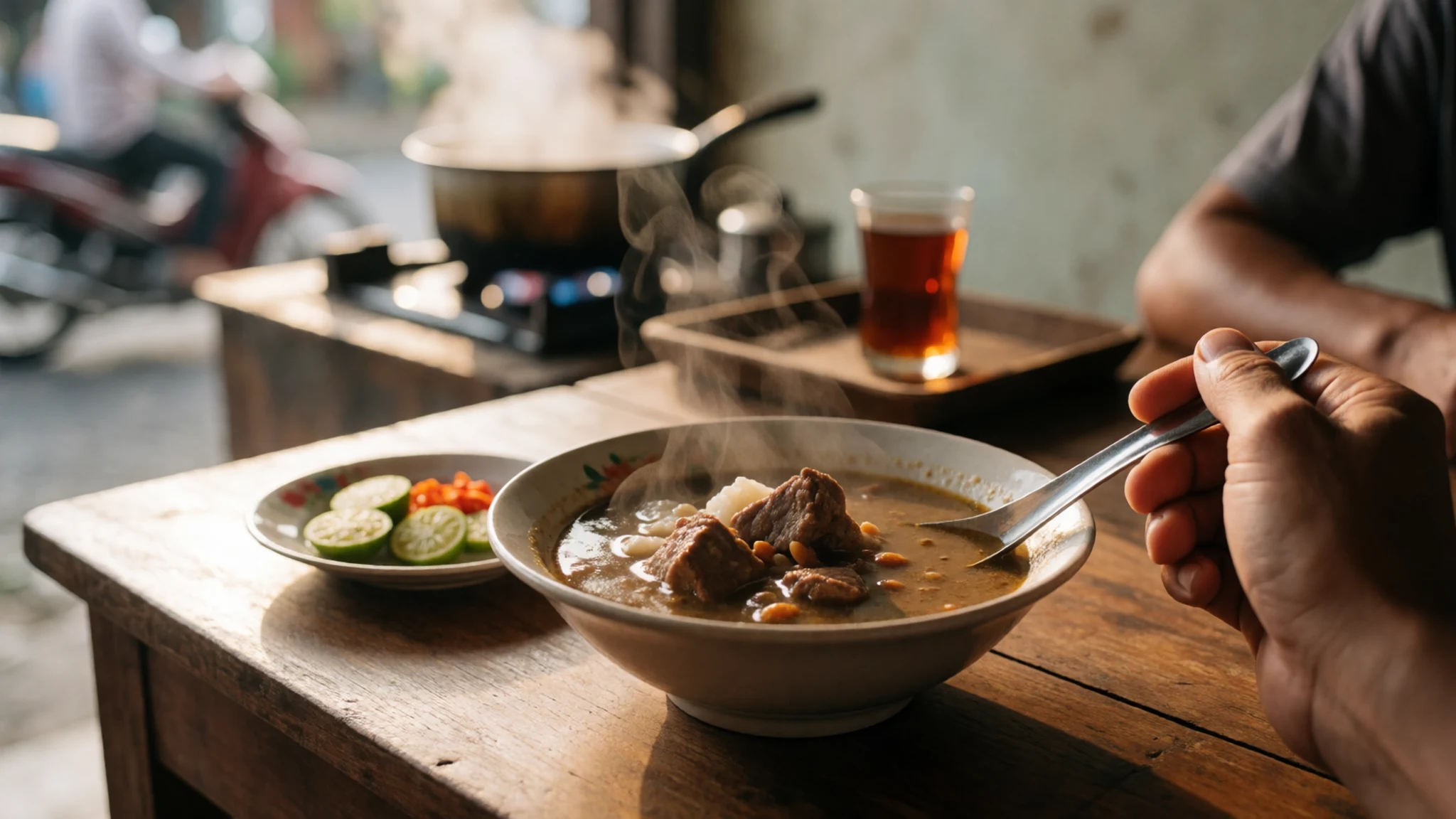
- Konro — Grill and soup restaurants in Makassar
Beef ribs simmered in a dark, aromatic broth, or grilled and served with a spicy sauce. It is a typical meal for sharing. Makassar's grill-and-soup restaurants are the usual place to try it, and many serve it with plain rice.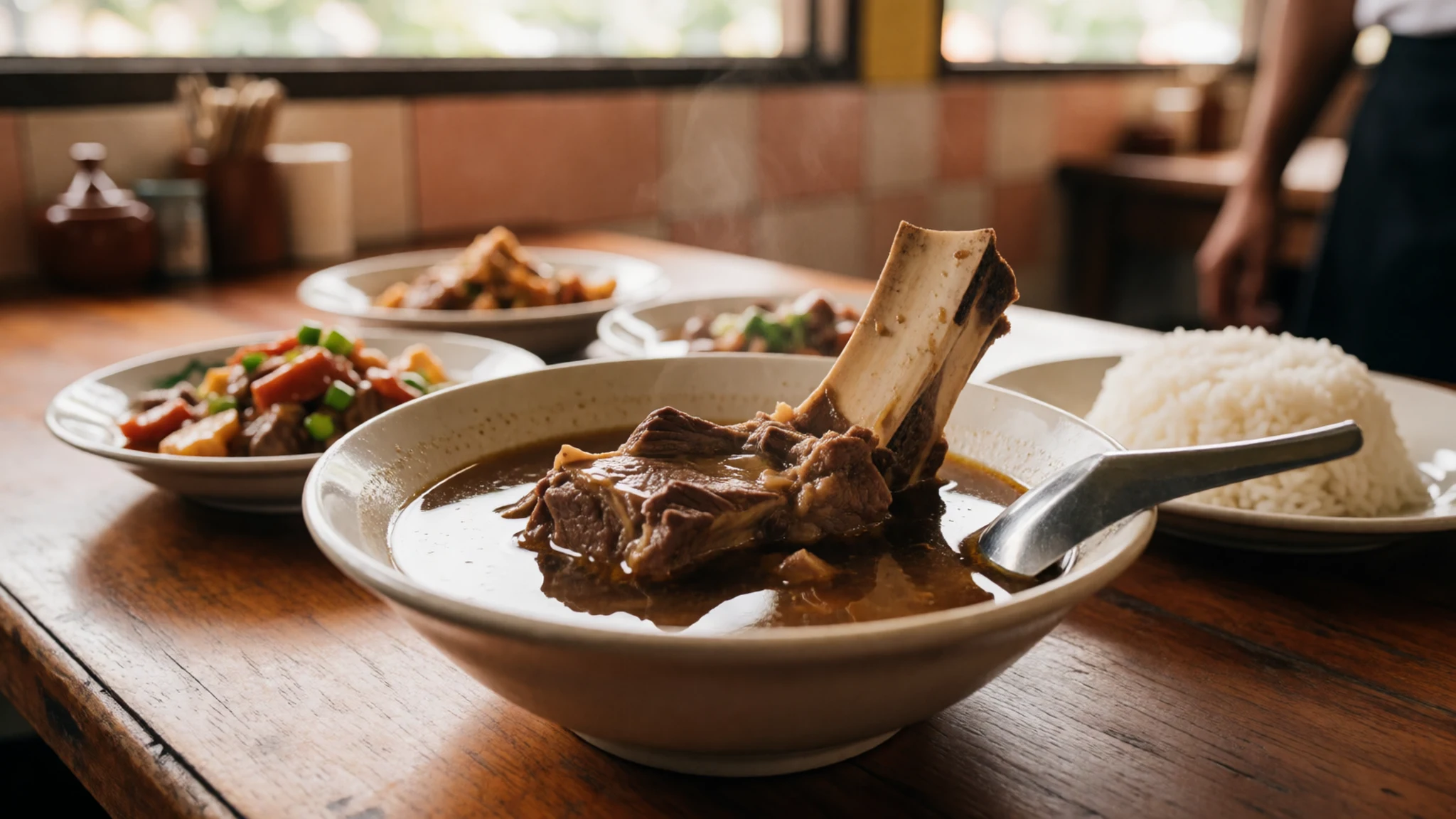
- Sop saudara — Roadside eateries in Pangkep and Maros
A clear, spiced soup of beef or buffalo with rice vermicelli, often topped with fried shallots and eaten with rice. The dish is closely linked to Pangkep, so it is easy to find at roadside eateries on the way between Maros and Pangkep. - Pisang epe — Evening stalls along the Makassar seafront
Ripe banana pressed flat, grilled over charcoal and served with palm sugar sauce, sometimes with durian or cheese added. It is a snack more than a meal, and well suited to the evening. Stalls line the seafront promenade in Makassar. - Grilled fish with sambal — Village eateries near Rammang-Rammang and fish stalls in Makassar
Fresh fish from the coast or local ponds, grilled over coals and served with a sharp chilli and lime sambal, rice and raw vegetables. In and around the valley, small village eateries are the simplest place for it, while Makassar's fish stalls offer more choice.
Plan it
Best time. June to September is the drier part of the year in South Sulawesi, with easier boat trips, firmer paths and clearer views of the towers. The wetter months, roughly November to March, bring heavy showers and muddy trails, though the paddies are at their greenest. Mornings are cooler in every season.
How long. 1–2
Getting there. Fly to Sultan Hasanuddin International Airport, about 20 kilometres away. Makassar is about an hour by road to the south, and Maros town is a short drive from the valley. The last leg is by road to the river landing, then by small boat; ask your driver or guesthouse to confirm the route.
Budget. low
Tips
- Go early in the morning for cooler air, softer light and fewer people
- Carry cash in small notes, since village stalls and boatmen rarely take cards
- Bring water, a hat and sunscreen, as there is little shade on the river
- Confirm boat and guide arrangements locally, and check the official park information for entry details before visiting caves or the waterfall
- Allow extra time in the wet season, when paths are slippery and roads can be slow
Etiquette
- Ask before photographing villagers, especially women and children
- Dress modestly in the village, covering shoulders and knees
- Take rubbish with you and keep to marked paths around paddies and ponds
Nearby
Sources
- Wikidata Q19746777 (CC0)
- Wikipedia: Rammang-Rammang (rev 1379263721) (CC BY-SA 4.0)
- Wikivoyage: Rammang-Rammang (CC BY-SA 4.0)