San José
San José, Costa Rica
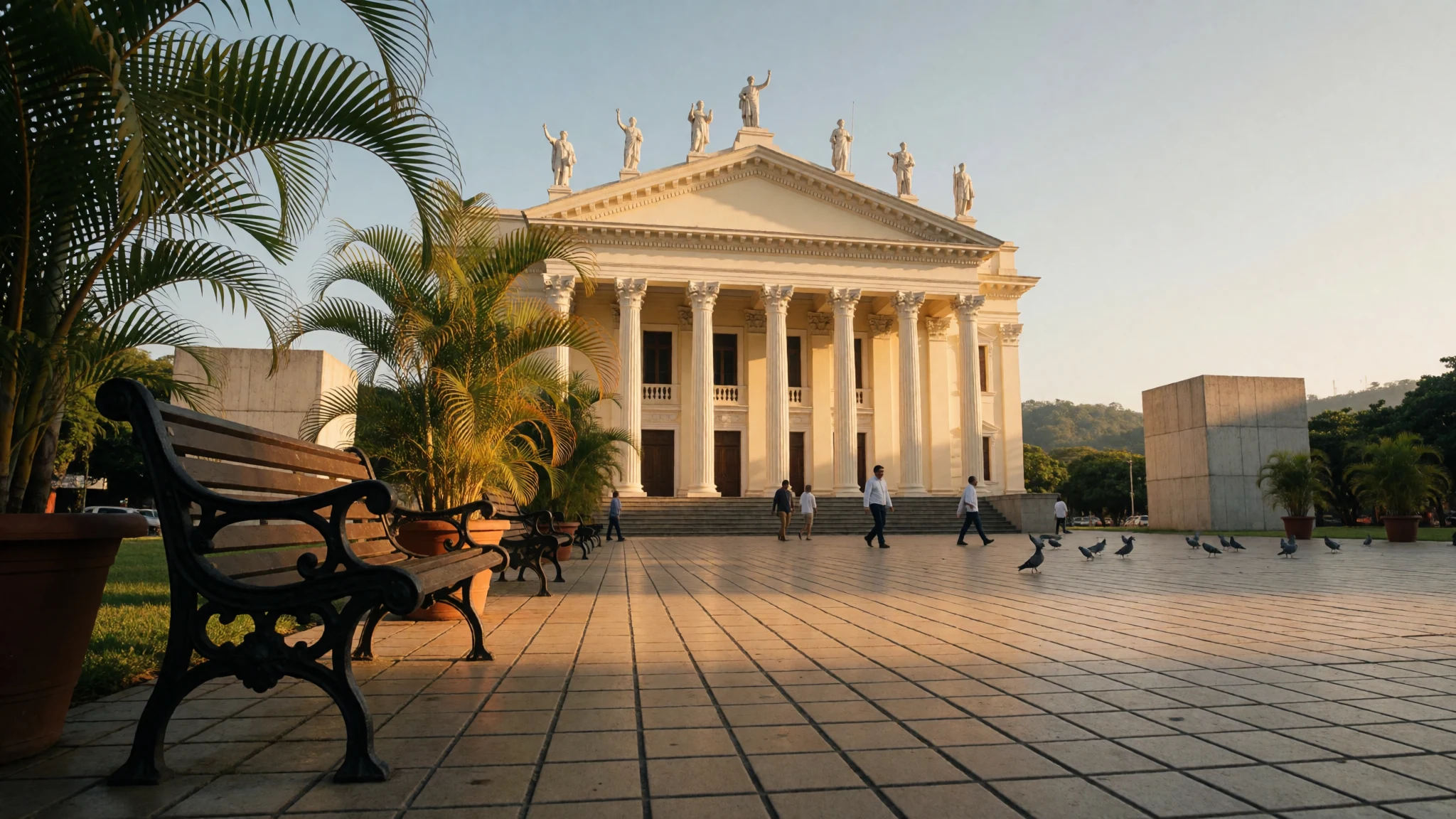
San José is Costa Rica's working capital, a high-valley city of museums, markets and sodas that rewards a day or two before the coast.
The place
San José is the capital of Costa Rica and the seat of its national government, sitting in the Central Valley at an elevation of 1161 m. The city itself has a population of about 335,000, though that figure understates its weight: together with Alajuela, Heredia and Cartago it forms a greater metropolitan area of more than 2 million people, and the centre fills with commuters every working day. Most visitors land here and leave quickly for beaches, volcanoes and cloud forest, which is a shame, because the capital repays a day or two. The altitude keeps the air mild and the evenings cool, and green mountains frame the valley on clear mornings. The centre is a grid of numbered avenues and streets, busy, noisy and a little worn, with museums, a historic theatre, a bustling central market and plazas that fill at lunchtime. Traffic is heavy, pavements can be uneven, and the wet season brings reliable afternoon downpours, so mornings are the best hours for walking. La Sabana Metropolitan Park, on the western side, is the city's big green space, laid out where the airport once stood; locals jog, play football and picnic there at weekends. Neighbourhoods such as Barrio Amón, where older houses have become cafés and guesthouses, give a gentler sense of the city than the main avenues do. It is a place to enjoy at ordinary speed, without a checklist.
Its story
San José began in the eighteenth century as a practical fix rather than a grand colonial plan. Wikidata gives 1737 as the founding date. The colonial authorities wanted to gather settlers who were scattered across the Aserrí Valley, so they ordered a chapel near a spot called La Boca del Monte. It was a very modest building, put up with help from the church in Cartago, the older colonial centre nearby. Saint Joseph was chosen as the parish patron, and the settlement took his name. Its layout also departed from the usual formula for Spanish towns in Central America. Unlike Cartago, San José was never founded by formal decree, which meant it had no town government of its own for a long time. That changed only when the Spanish constitution drawn up at Cádiz reached the colonies and allowed it to form a council. A priest acting for the Spanish crown then declared it a city, but the king, Ferdinand VII, annulled those proceedings, and the title vanished until the municipal government was restored a few years later. In 1823 San José became the capital of Costa Rica, and it has held that role three times. The slow, improvised start explains a lot about the place today: it grew as a commercial and civic town rather than a showpiece, which is why its best sights are museums, markets and everyday streets.
What to see
- Museo Nacional — East of the centre
The Museo Nacional occupies a former barracks east of the centre, and the building is part of the story. Inside are a permanent pre-Columbian exhibition, a butterfly garden with blue morphos, and the large carved stone spheres from the Diquis Valley on the Pacific side, which are best seen up close.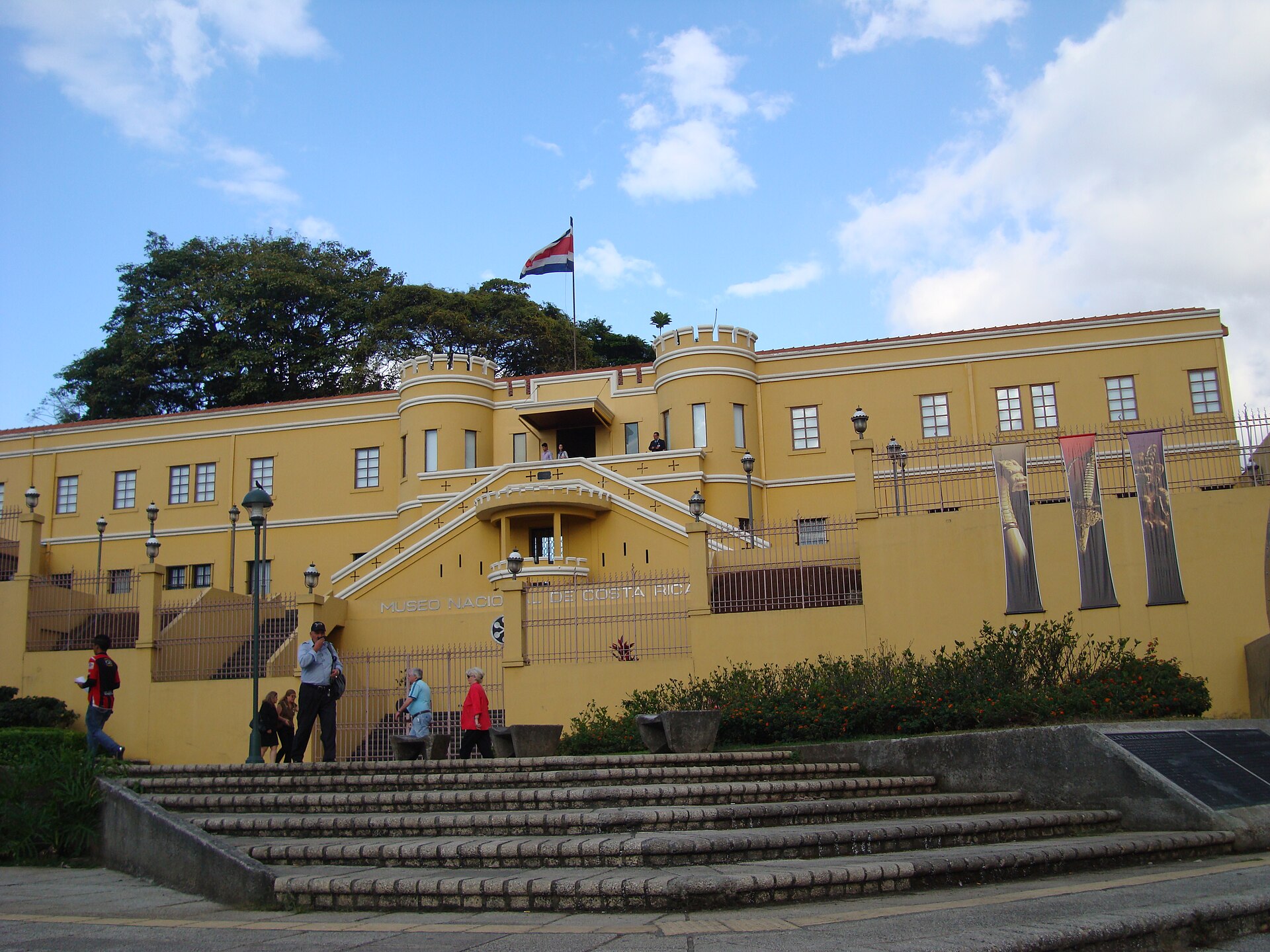
- Museo de Oro Precolombino — Plaza de la Cultura
The Museo de Oro Precolombino sits underground beneath the Plaza de la Cultura, a quiet refuge from the traffic above. Its cases hold pre-Columbian gold work, and the fine detail on each piece shows how much skill went into it. Check the official site for current opening arrangements before planning around it. - Museo del Jade — Beside the Artesanal Market
The Museo del Jade now occupies a large modern building beside the Artesanal Market, a short walk from the Plaza. Older tourist maps still point to its former site, so confirm the location before setting off. It pairs well with a browse through the craft stalls next door. - Museo de Arte y Diseño Contemporáneo (MADC) — Eastern centre
The Museo de Arte y Diseño Contemporáneo, known as MADC, is the main institution in Costa Rica devoted to contemporary art. It lies on the eastern side of the centre, so it combines easily with a visit to the Museo Nacional. Shows change, so check what is on before going. - Costa Rican Museum of Art — La Sabana
The Costa Rican Museum of Art stands beside La Sabana park in what used to be the city's main airport terminal, and the building's past is half the fun. Inside are Costa Rican paintings and sculpture. A stroll through the park afterwards is an easy way to see how locals spend a weekend. - National Theatre of Costa Rica — Near the Plaza de la Cultura
The National Theatre of Costa Rica is the city's grand performing venue, and its interior is as much an attraction as any performance. When no show is on, visitors can often look round or sit with a coffee nearby. Check the official site for current visiting arrangements.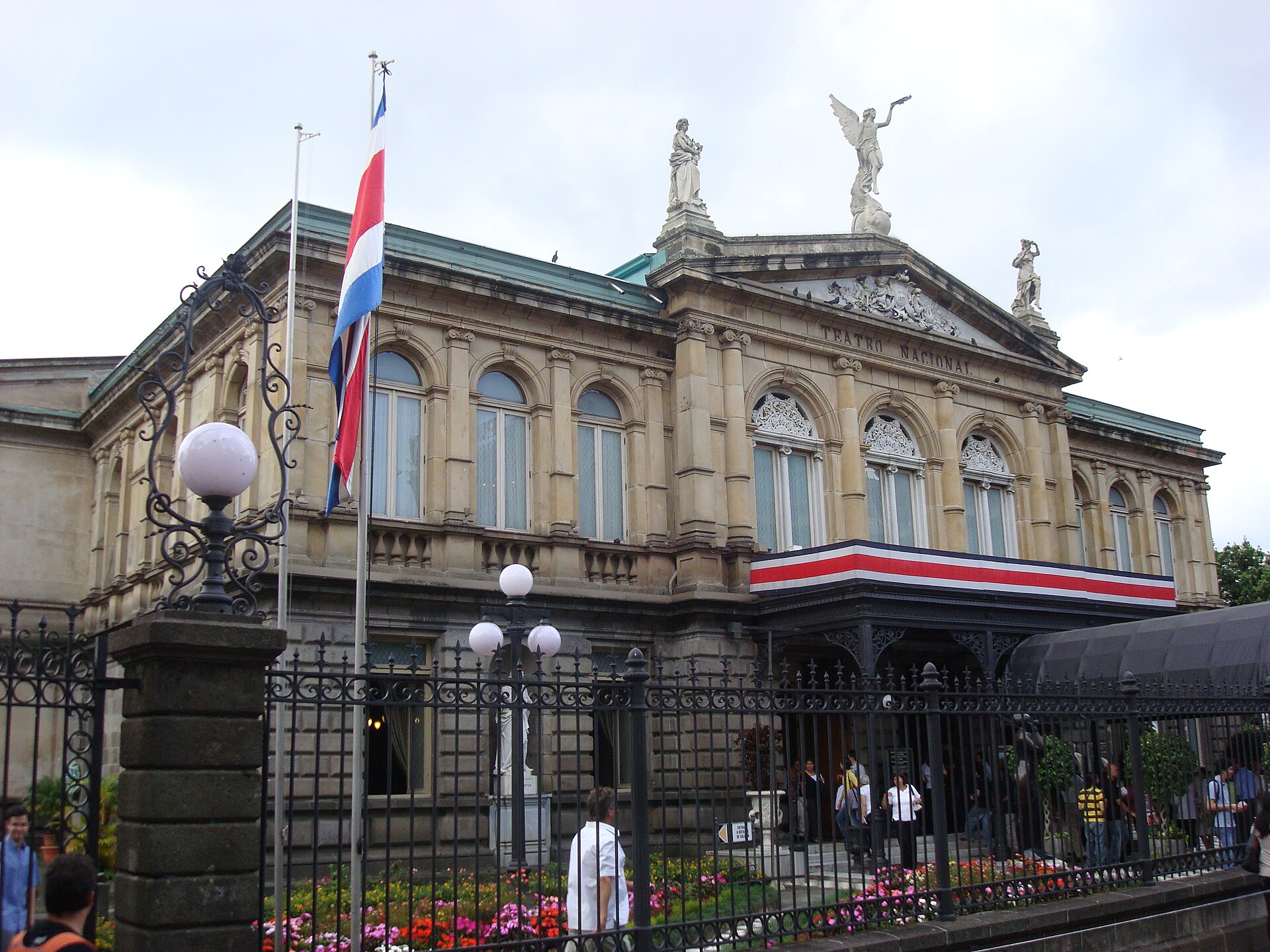
Culture
San José carries its Catholic heritage in its name, a tribute to Saint Joseph, and in the churches that anchor many neighbourhoods, but daily life is relaxed, informal and polite. Greetings matter: a handshake, or a light kiss on the cheek among friends, and a friendly 'buenos días' to shopkeepers and neighbours. The phrase 'pura vida' works as hello, goodbye and 'all is well', and visitors who try it usually get a smile. Food shapes the rhythm of the day. Comida típica, the traditional home-style cooking, is generally not spicy, and the soda, a small and affordable restaurant, is where office workers, students and families eat. Coffee is a point of national pride, and a mid-morning cup is a ritual in many workplaces. Football is a shared language, and match days at the national stadium in La Sabana change the mood of whole neighbourhoods. Museums, a national theatre and a steady calendar of concerts and gallery openings give the city a cultural life far larger than its size suggests. People queue patiently at buses and counters, and a calm, courteous manner goes down better than haste. When entering a church such as the cathedral, take off your hat, keep your voice low and ask before photographing worshippers.
What to wear
San José's traditional dress, the traje típico, belongs mostly to festivals, folk-dance performances and school celebrations rather than the street. For women it is a full, ruffled skirt in bright colours worn with a white blouse with a wide neckline, usually in cotton; men wear a white shirt, dark trousers, a straw hat and a red neckerchief, echoing the look of rural farm workers and oxcart drivers. These costumes appear around national holidays and in cultural centres. Day to day, people in the capital dress neatly but casually: jeans, shirts, light dresses and trainers, with smarter office wear downtown on weekdays and a jacket for the cool evenings. Dress is more conservative than in the beach towns, and swimwear stays on the coast. Visitors should plan for mild highland weather rather than tropical heat: light layers, a thin sweater for evenings, and a compact rain jacket or umbrella, which is essential in the wet season. Comfortable closed shoes with good grip suit uneven pavements and wet streets. For churches, cover the shoulders and avoid very short shorts. The sun is strong at altitude, so a hat and sunscreen are worth packing even on cloudy mornings.
What to eat
- Gallo pinto — Any soda; Mercado Central food counters
Rice and black beans fried together, the national breakfast, usually served with tortillas and natilla, a thin sour cream. Eggs often join the plate. Look for it at any soda or the food counters of Mercado Central in the morning. - Casado — Any soda, especially around the central market
A set plate of rice, beans and a choice of meat, with cabbage-and-tomato salad, fried plantain and tortillas. The name means 'married'. Sodas serve it at lunch and dinner at affordable prices, and it is the easiest way to eat like a local. - Ceviche with huancaína — Peruvian restaurants in the downtown streets
Raw white fish cured in lime juice with onion, a Peruvian classic that Peruvian restaurants in the centre serve with huancaína, a creamy, mildly spicy cheese sauce. Lunch is the usual time for it, with a cold drink alongside. - Chicharrones — Casual eateries near Mercado Central
Fried pork pieces, crisp outside and rich within, eaten as a snack with a cold beer or alongside a casado. Casual local eateries and counters around the central market sell them, often in generous portions meant for sharing. - Pupusas — Small Salvadoran eateries, busiest in the morning
Thick griddled corn cakes stuffed with cheese, beans or pork, brought to the city by Salvadoran cooks. Small Salvadoran eateries sell them, and many workers pick up breakfast to take away on the way to the office.
Plan it
Best time. December to April is the drier stretch and the easiest for walking; the wet season brings heavy afternoon showers, so go early and carry a jacket. Temperatures barely change through the year, from an average of 21.8 °C in October to 23.7 °C in April.
How long. 1–2
Getting there. Juan Santamaría International Airport, near Alajuela, is the main gateway. A public bus runs from the main road outside the terminal to downtown, taking under half an hour in good conditions; taxis are also available.
Budget. mid
Tips
- Carry small change for buses and market stalls
- Plan museums and walking for the morning, before afternoon rain
- Keep phones and bags out of sight on crowded streets and buses
- Check museum and theatre opening times on their official sites, and the city's site at https://www.msj.go.cr/
- Bring a light rain jacket in any month
Etiquette
- Greet shopkeepers and staff with a friendly 'buenos días' before asking for anything
- Keep your voice low in churches and ask before photographing worshippers
- Queue patiently at bus stops and counters
Nearby
Sources
- Wikidata Q3070 (CC0)
- Wikipedia: San José, Costa Rica (rev 1383449109) (CC BY-SA 4.0)
- Wikivoyage: San José (Costa Rica) (rev 5417120) (CC BY-SA 4.0)
- Cityscape of San José, Costa Rica — Xlionheartx (CC BY 3.0)
- Stone sphere — WAvegetarian (CC BY 3.0)
- San José, Costa Rica Astronaut Image — NASA Astronauts (Public domain)
- Downtown San José City (Costa Rica) (CC0 1.0)
- San José 2020 by @caya here — Jpczcaya (CC BY-SA 4.0)
- National Theater of Costa Rica — Tillor87 (CC BY 3.0)
- Plaza de la Central Costa Rica — Eric T Gunther (CC BY 3.0)
- National Museum of Costa Rica — Eric T Gunther (CC BY 3.0)


