Pico Island
Pico Island, Portugal
Pico Island is a black-soiled volcanic island in the Azores, where you can climb Portugal's highest mountain and swim off lava rock.
The place
Pico Island sits in the Central Group of the Azores, about 7 km east of Faial and 17.5 km south of São Jorge. The three islands are often called the Triangle, and the daily ferry across the channel to Faial is the island's main link with its neighbour. Pico is about 46.3 km long and roughly 16 km across at its widest, which makes it the second largest island in the archipelago. Its coastline of about 151.8 km is dotted with small inlets and coves, though in places the cliffs are unstable and prone to landslides. Those same cliffs give nesting ground to terns and shearwaters. The landscape is dominated by the volcano that shares the island's name. Its summit reaches 2,351 m, the highest point in Portugal, and on clear days it hangs over every village. Because the soil is dark volcanic rock, the island is nicknamed the Black Island, and the black lava walls around the vineyards suit the name. About 13,834 people live here, mostly in small towns strung along the coast. The economy rests on fishing, dairy farming and cheese, wine, and services. Tuna is landed for canneries, and the cheese is soft and artisanal. Life is quiet and rural. Expect cows, stone walls, hydrangea hedges and weather that changes by the hour, with the summit often wrapped in cloud.
Its story
Nobody knows exactly when Pico was first found. Medieval maps of the Azores, including a Catalan atlas from the fourteenth century, already show an island that seems to be this one, and a Venetian-era map later gave it saintly and even Columbus-linked names. Yet settlement came late. People had lived elsewhere in the archipelago for decades before anyone seriously tried to farm Pico, and it is thought to have been the last of the Central Group to be occupied. In 1481 the island was granted to a nobleman from Madeira, Álvaro d'Ornelas, on condition that he bring settlers. He failed. In December 1482 the grant passed to Jós d'Hutra, a Flemish captain who already governed Faial across the water. That is why Pico long depended on Faial for its trade, politics and social life, a link still visible in the ferries that cross the channel every day. Geologically the island is young. It is about 300,000 years old, the most recently formed of the Azores, which explains the raw black lava and the fresh shape of the cone. The settlers turned that hard ground into vineyards, building small walled plots to shelter vines from wind and salt. Wine shaped the economy for generations, and the vineyard landscape on the west coast is now UNESCO-listed, with its designation dating from 2004.
What to see
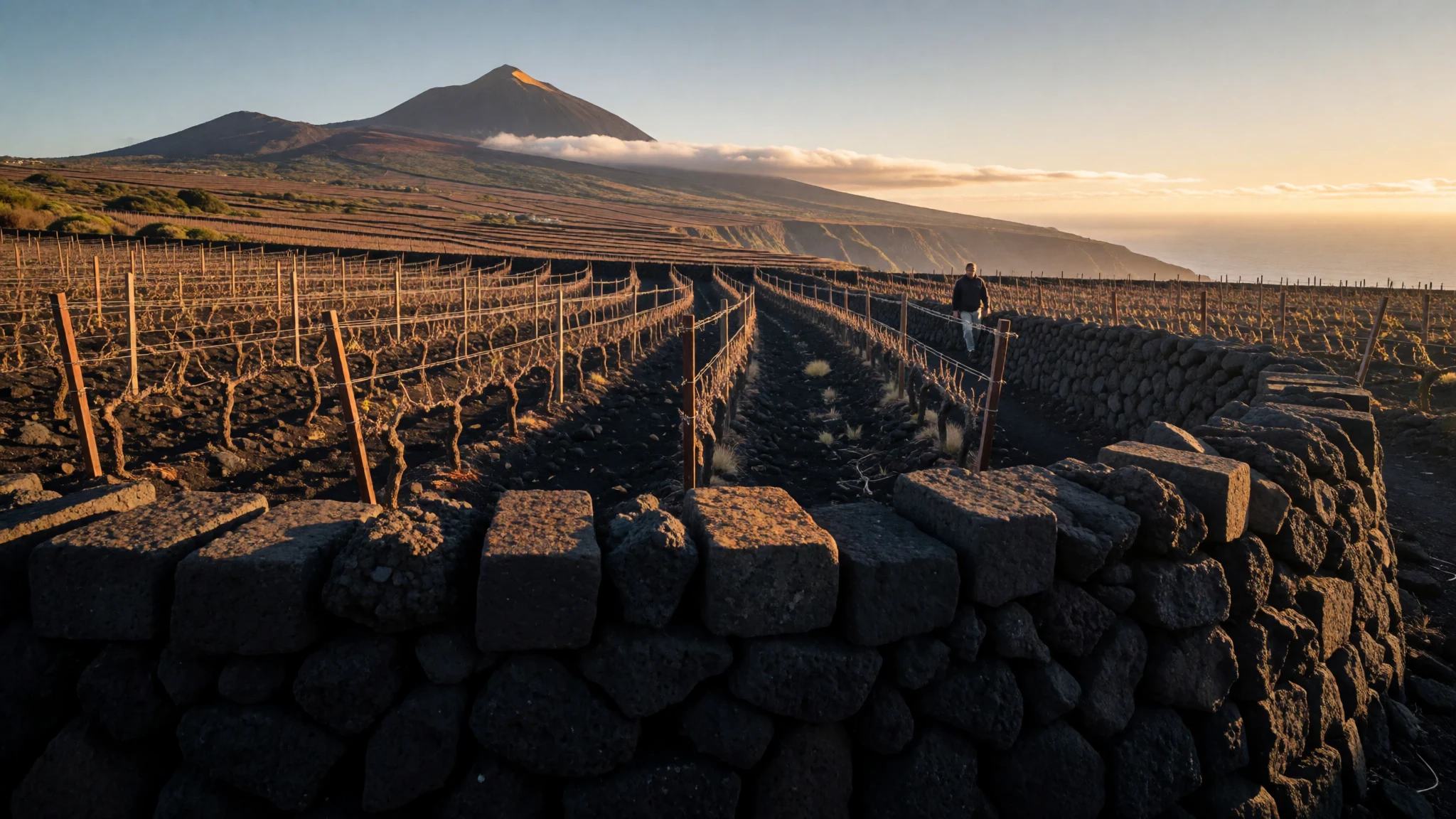
- Mount Pico — Centre-south of the island
The stratovolcano is the island's focus and the tallest mountain in Portugal. Climbing is a long, steep day over rough lava, and weather decides everything. Many walkers go in the afternoon to reach the summit for sunset. Check conditions and any registration rules locally before setting off.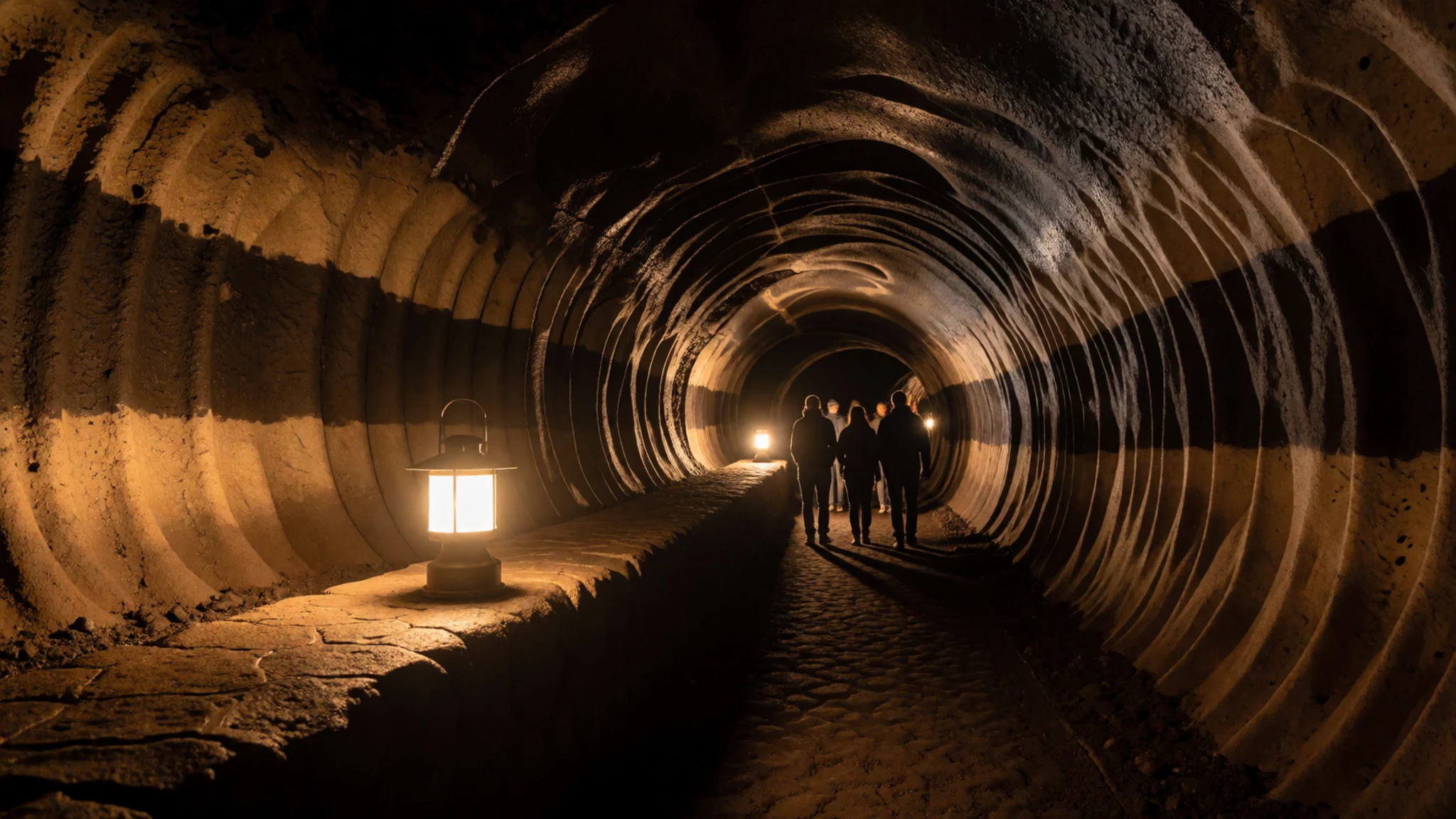
- Gruta das Torres — Criação Velha, west
A lava tube on the west side, entered on guided tours that run about 90 minutes and go roughly 450 m inside. Reservations are required. The ground is uneven, so it is not suitable for anyone with mobility difficulties. Bring a warm layer, because it is cool underground.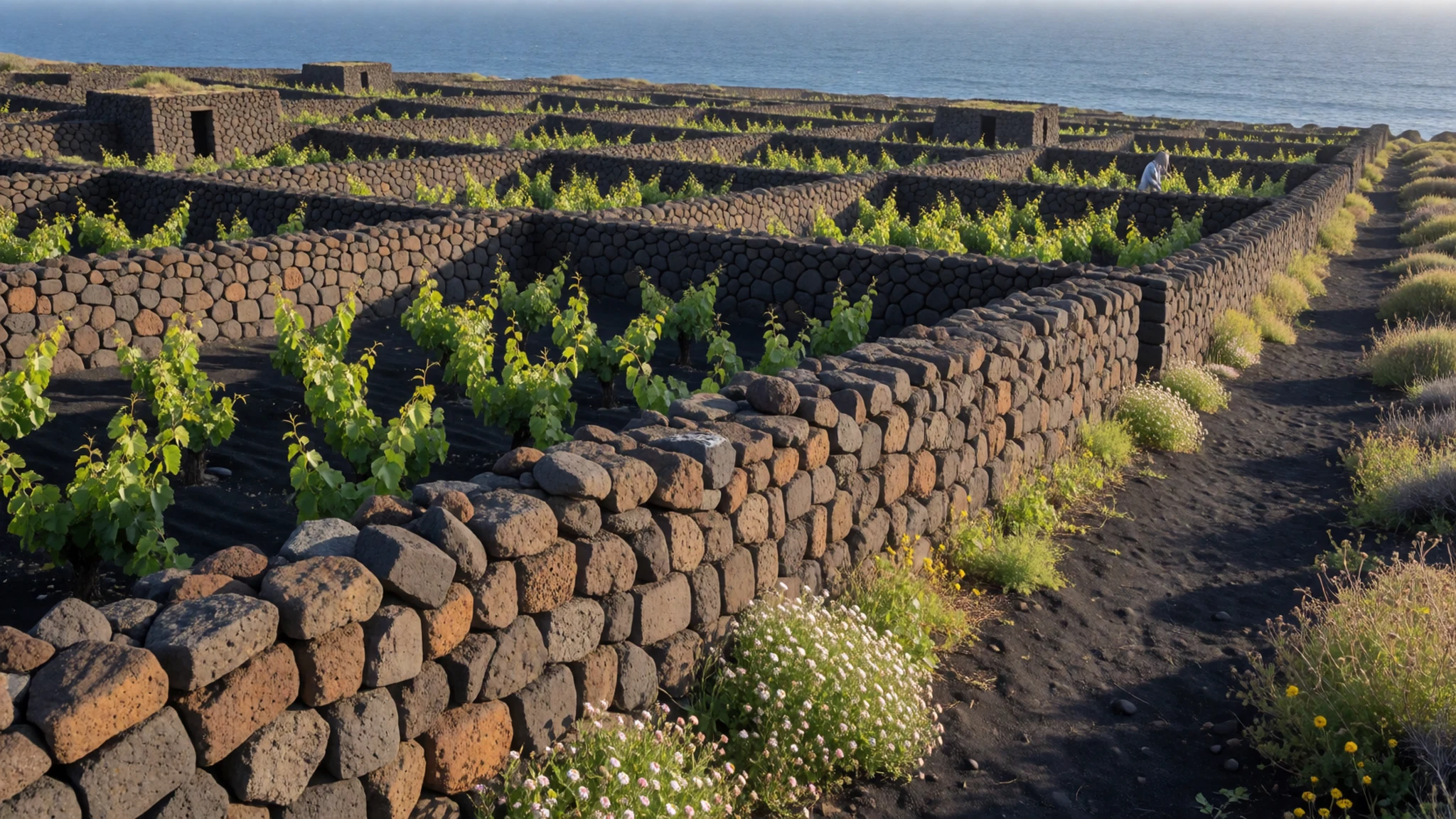
- Vineyard landscape — West coast
The wine-growing strip on the west coast, listed by UNESCO in 2004, is a maze of small rectangular plots enclosed by black basalt walls. Walking the lanes between them is the best way to understand how settlers farmed hard volcanic ground beside the sea.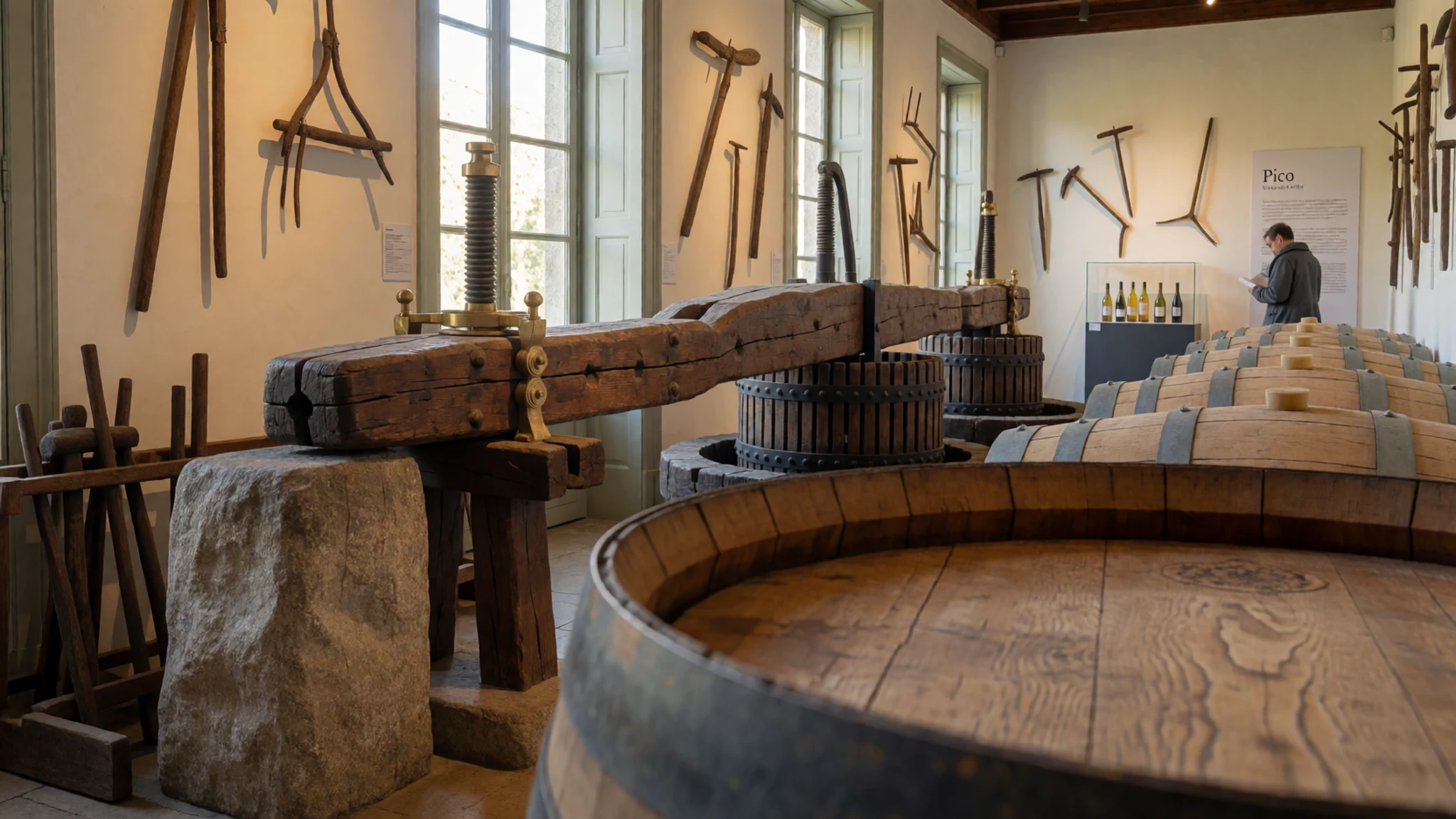
- Museu do Vinho — Madalena
A museum on the history of winemaking on Pico, with explanations in English. It is a good first stop before walking the vineyards, because it explains the walls, the grapes and the work behind them. Check the official site for opening times before you go.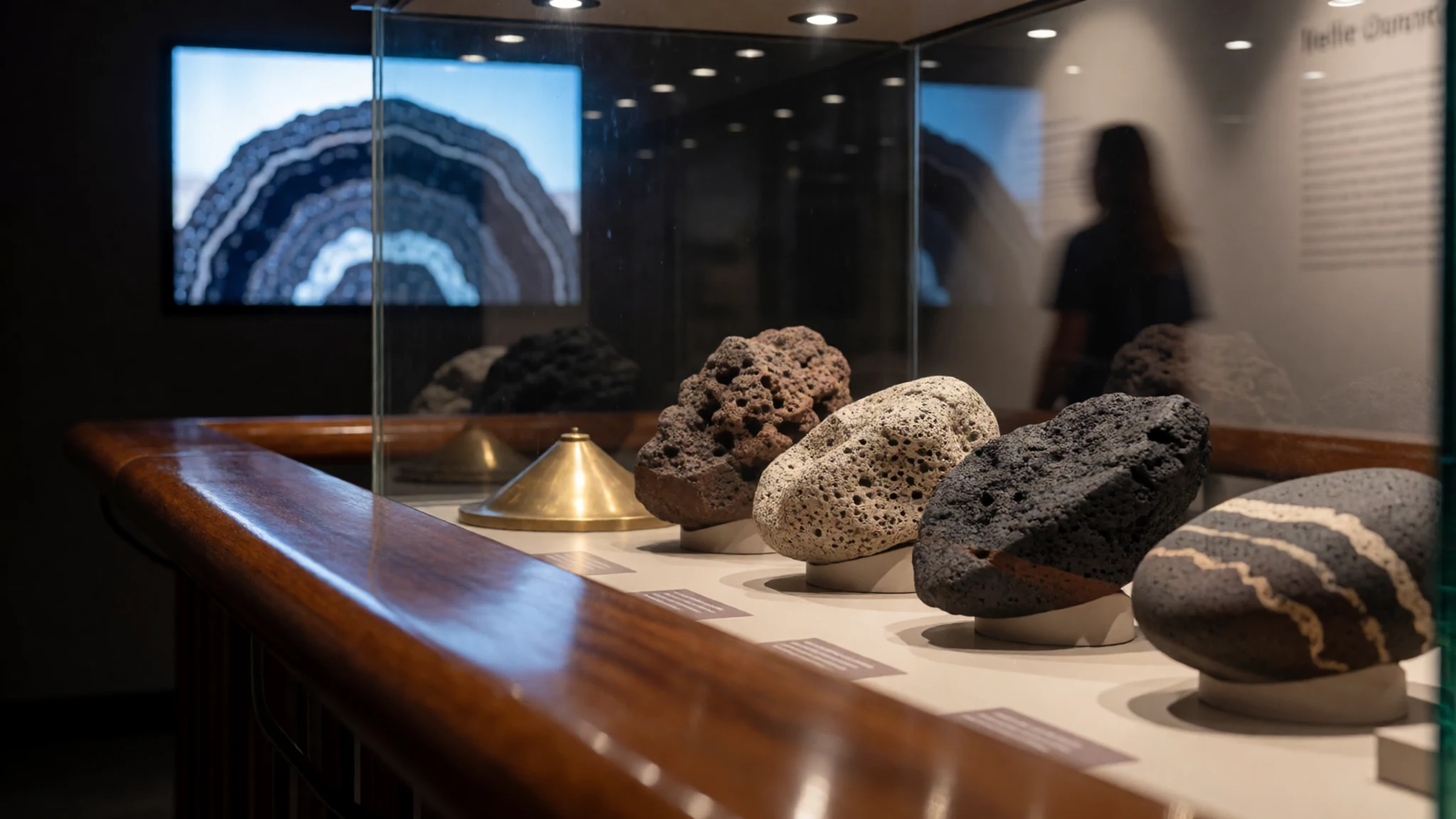
- House of Volcanoes — North coast, near Calheta de Nesquim
A small museum that explains how the island formed. It includes a video journey to the centre of the earth and a virtual reality earthquake simulation. It suits a wet or cloudy day, and is useful before or after a climb, to make sense of the landscape.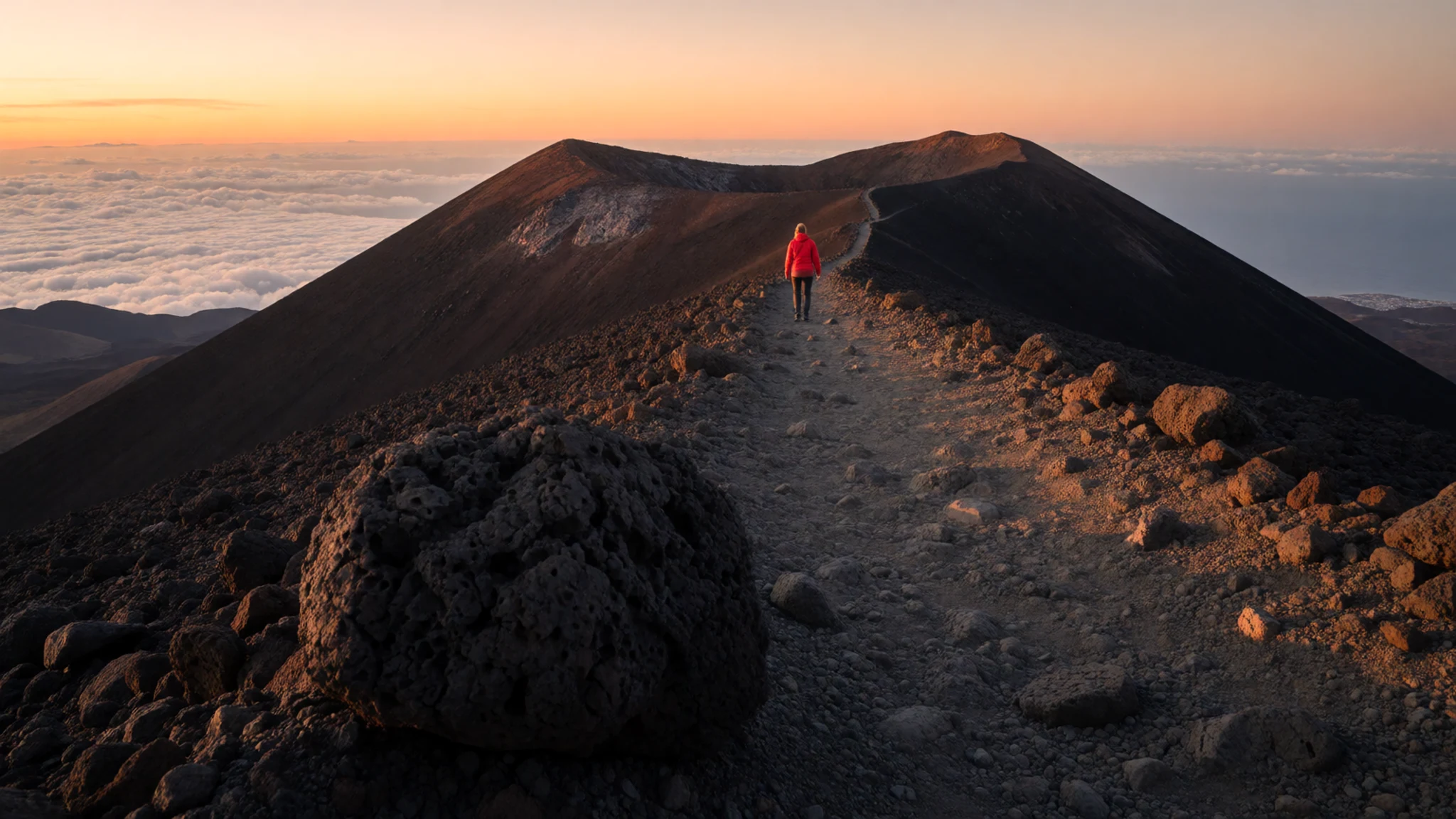
- Whaling museums — São João and São Roque
Pico was a whaling island, and two museums tell the story, one in São João and one in São Roque. The São João museum is run by a former biology professor and covers sperm whales and the octopus they feed on, with a chance to smell ambergris.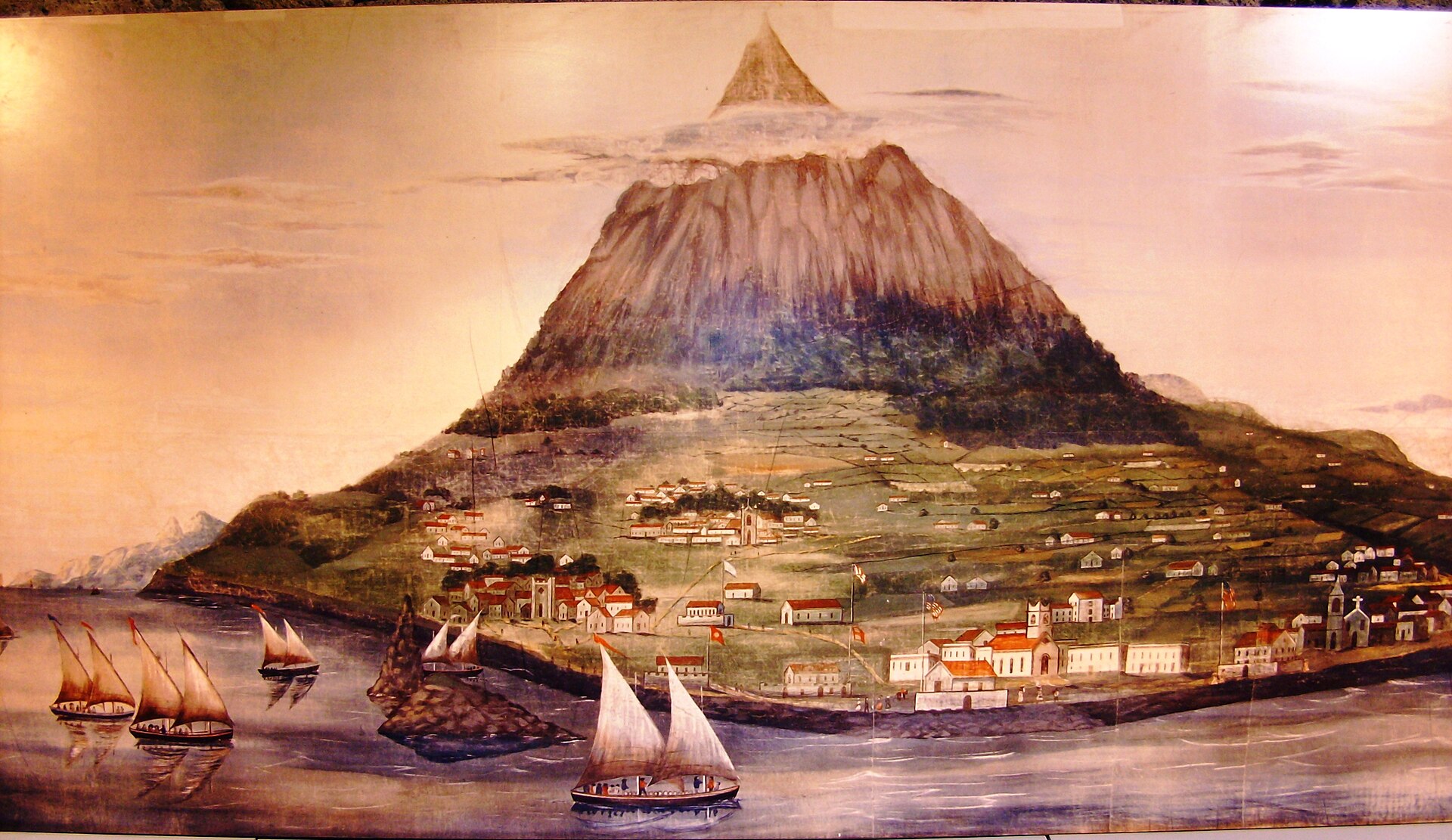
Culture
Pico Island's culture was shaped by farming, wine and whaling, and by isolation. For centuries families worked small plots, kept cattle and went to sea, and that practical, self-reliant character survives. Whaling was once a major trade here, carried out from open boats, and the island's museums keep that memory alive, though the hunt itself has ended and today the sea draws visitors who come to watch whales rather than hunt them. Catholic tradition runs deep. Churches stand in every village, many with white-plastered walls trimmed in dark volcanic stone, and village festivals mark the saints' days through the summer with processions, music and shared meals. Portuguese is the language of daily life, and a few words of greeting go a long way, especially outside the main towns where English is less common. Wine remains a point of pride, and the vineyards are treated as a working inheritance, not scenery. The pace is slow, cafés double as bars and meeting places, and neighbours know one another. Driving is relaxed to the point of chaos, with cars stopping in the middle of narrow roads to talk. Please walk the vineyards on marked paths only, and never step over or lean on the dry-stone walls, which are the heritage that visitors have come to see.
What to wear
Pico Island has no single grand costume, but the traditional dress of the Azores was practical rural clothing: wool and linen, heavy shawls and capes for women, and caps and dark jackets for men. Wool was spun and knitted at home, and Azorean needlework, including embroidery and lace on linen, is still made by hand and sold in local craft shops. Such dress now appears mainly at festivals and folk performances, when dancers wear embroidered waistcoats, full skirts and bright headscarves. In daily life people dress simply and for the weather. Expect jeans, fleeces, waterproof jackets and sturdy shoes, with farm boots in the countryside. In summer, shorts and light shirts are normal, and swimwear stays by the pool or sea. Visitors should plan for four seasons in a day. Bring a light waterproof, a warm layer even in summer, and a hat for sun. Footwear matters most: the lava is sharp and uneven, so walkers need ankle-supporting boots with good grip, and sea swimmers will want water shoes for rocky entries. Churches have no strict dress code for visitors, but covered shoulders and knees are polite, especially during services. For the mountain climb, wear layers and carry gloves, since the summit is far colder than the coast.
What to eat
- Local cheese — Village cafés and local shops
Pico's dairy farms supply cheese factories, and the soft-paste cheese is valued for its artisanal character. Ask for it at village cafés, or look in local shops and small markets. It is often served with bread as a simple snack or starter.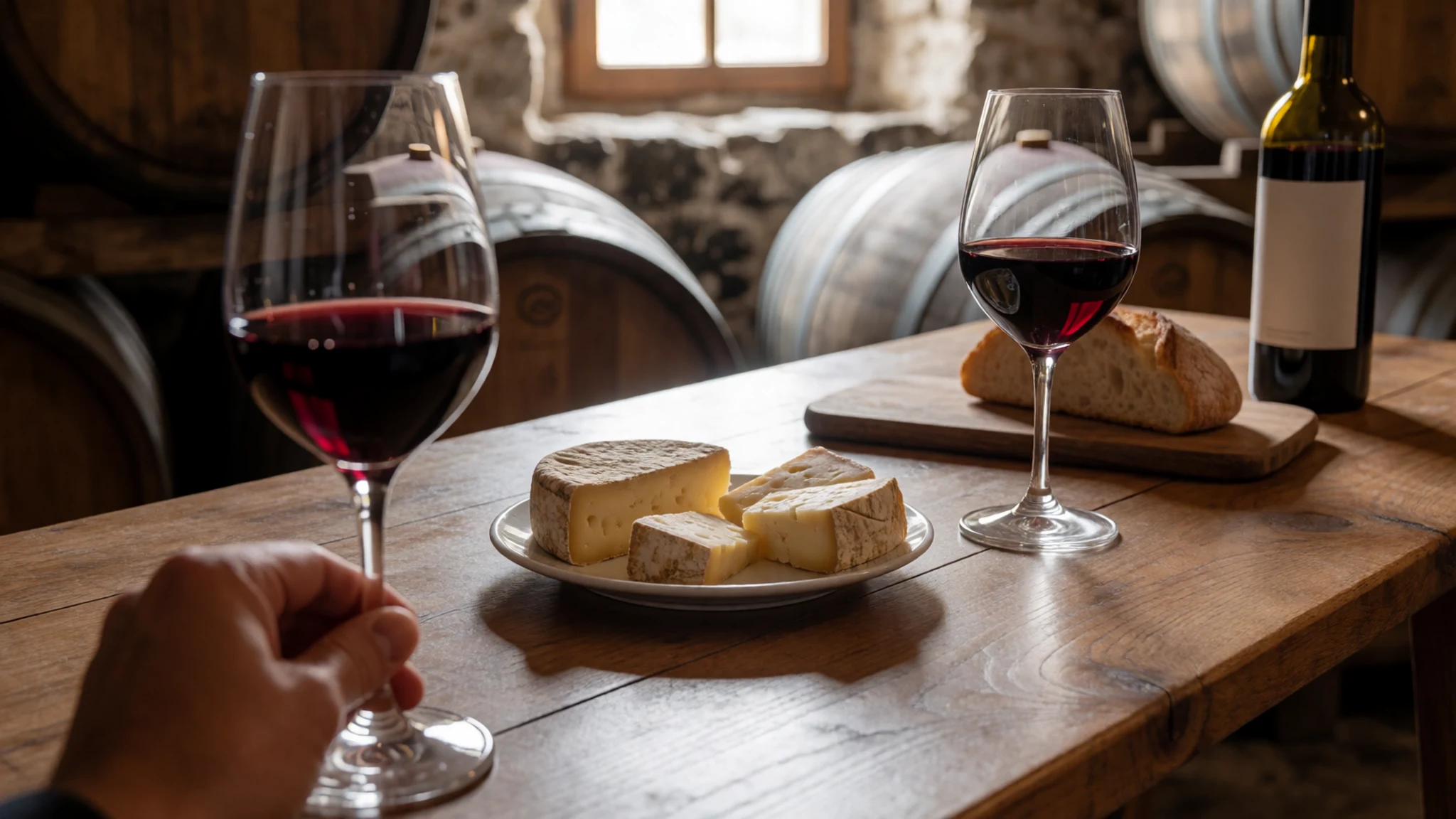
- Tuna — Harbour-side eateries in towns such as Madalena and São Roque
Tuna is one of the island's main catches and feeds the canning industry. Fresh fish appears on café and eatery menus near the harbours, usually grilled or cooked simply. Ask what came in that day, as the choice changes with the boats.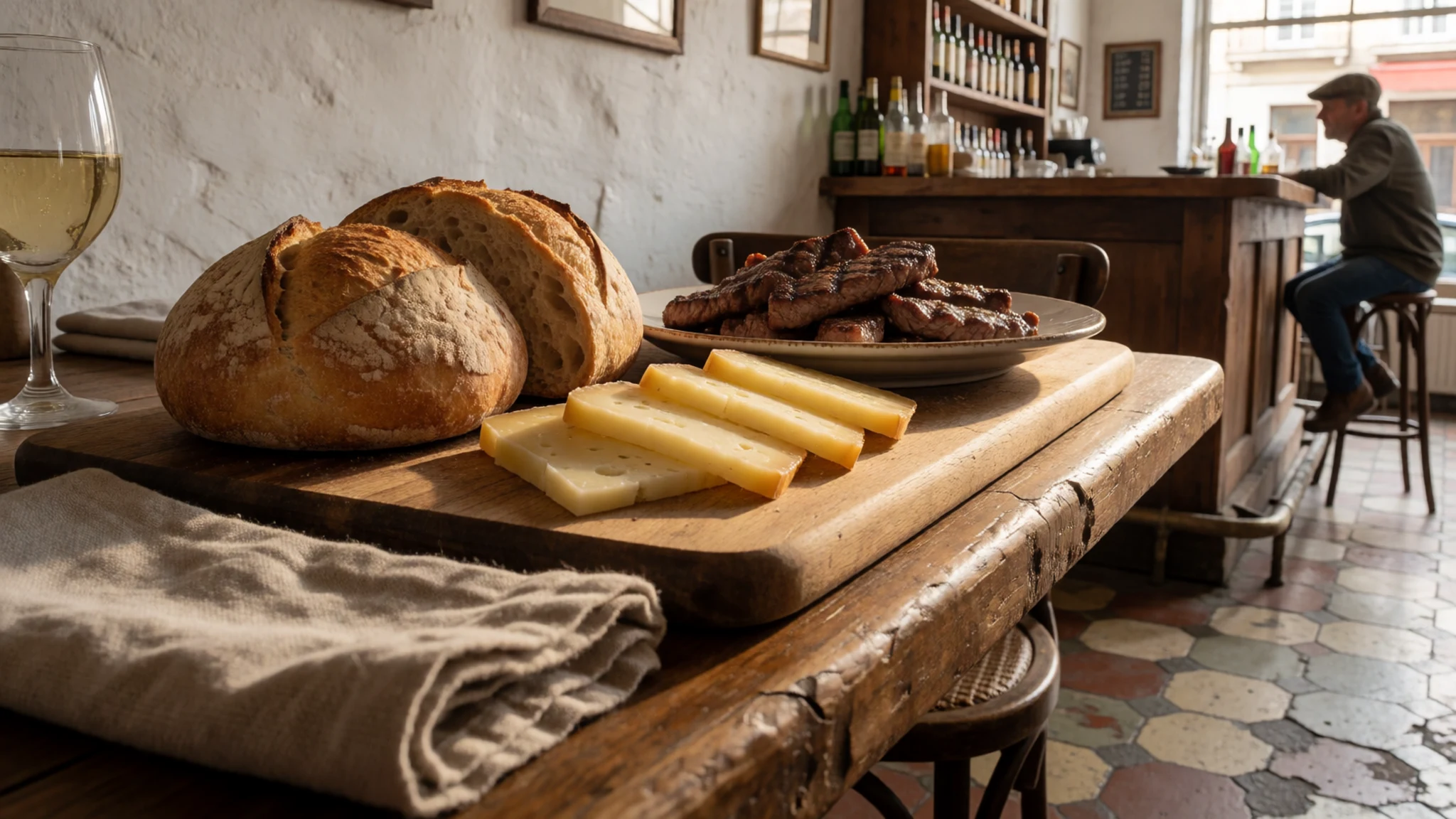
- Pico wine — West coast vineyards and wine cellars near Madalena
Wine grown in the black volcanic soil is the island's signature drink. Tastings and bottles are available around the west coast vineyards and at the wine museum area. Try a glass with cheese, and ask producers how the walled plots shape the grapes. - Beef and bread — Local cafés that double as bars
Cafés here lean on a short menu built around beef, cheese and fresh bread. Beef comes from local cattle, often as a grilled steak or in a simple sandwich. It is hearty, filling food, usually good value and served without fuss. - Local soups — Village cafés and family-run eateries
Soups are a staple of small cafés, but vegetarians should take care, because most are made with meat or a meat broth. Ask before ordering. They are warming after a cool, wet day on the mountain, and generally cheap and generous.
Plan it
Best time. May to September for the most settled weather, when the mountain is likeliest to be clear. Winters are wetter and windier, and cloud can cover the summit at any time of year, so stay flexible.
How long. 3–4
Getting there. Fly to Pico's airport from other Azorean islands, or take the ferry from Horta on Faial, which crosses the 7 km channel and arrives at Madalena. Check the airline and ferry operators for current schedules, as sea and weather can affect crossings.
Budget. mid
Tips
- Book the Gruta das Torres tour ahead, as reservations are required
- Hire a car, since public transport is limited, and drive slowly on cobbled roads
- Start the mountain climb with a clear forecast and plenty of water
- Carry some cash for small cafés and village shops
- Pack layers, because the weather changes quickly
Etiquette
- Stay on marked paths in the vineyards and do not climb the stone walls
- Greet people in shops and cafés before asking for anything
- Take all rubbish off the mountain and out of the lava tube
Nearby
Sources
- Wikidata Q210811 (CC0)
- Wikipedia: Pico Island (rev 1381035475) (CC BY-SA 4.0)
- Wikivoyage: Pico (rev 5414394) (CC BY-SA 4.0)
- Photo: Montanha do Pico, Ilha do Pico (José Dias) (CC BY 3.0)
- Photo: Madalena do Pico (JCNazza) (CC BY 3.0)
- Photo: Position of Pico Island, Azores (Public domain)
- Photo: Church of São Pedro de Alcântara, São Roque (Public domain)
- Photo: Azores islands radar image (ESA) (CC BY-SA 3.0 igo)
- Photo: Pico Island, Russell & Purrington whaling map (Public domain)
- Photo: Pico Panorama (Henning Supertramp) (CC BY 2.5)
- Photo: A Mounatin rises (Henning Supertramp) (CC BY 2.5)


Wildlife
- Cory's shearwater (animal)
Cory's shearwater is a large seabird that gathers in colonies in the Azores to nest, then spreads out over the Atlantic for the rest of the year. On Pico, the rocky coast is where nesting seabirds like this one make their homes. Give the birds plenty of space, speak softly, join a knowledgeable local guide if you can, and never feed them, since wild food is best for wild chicks.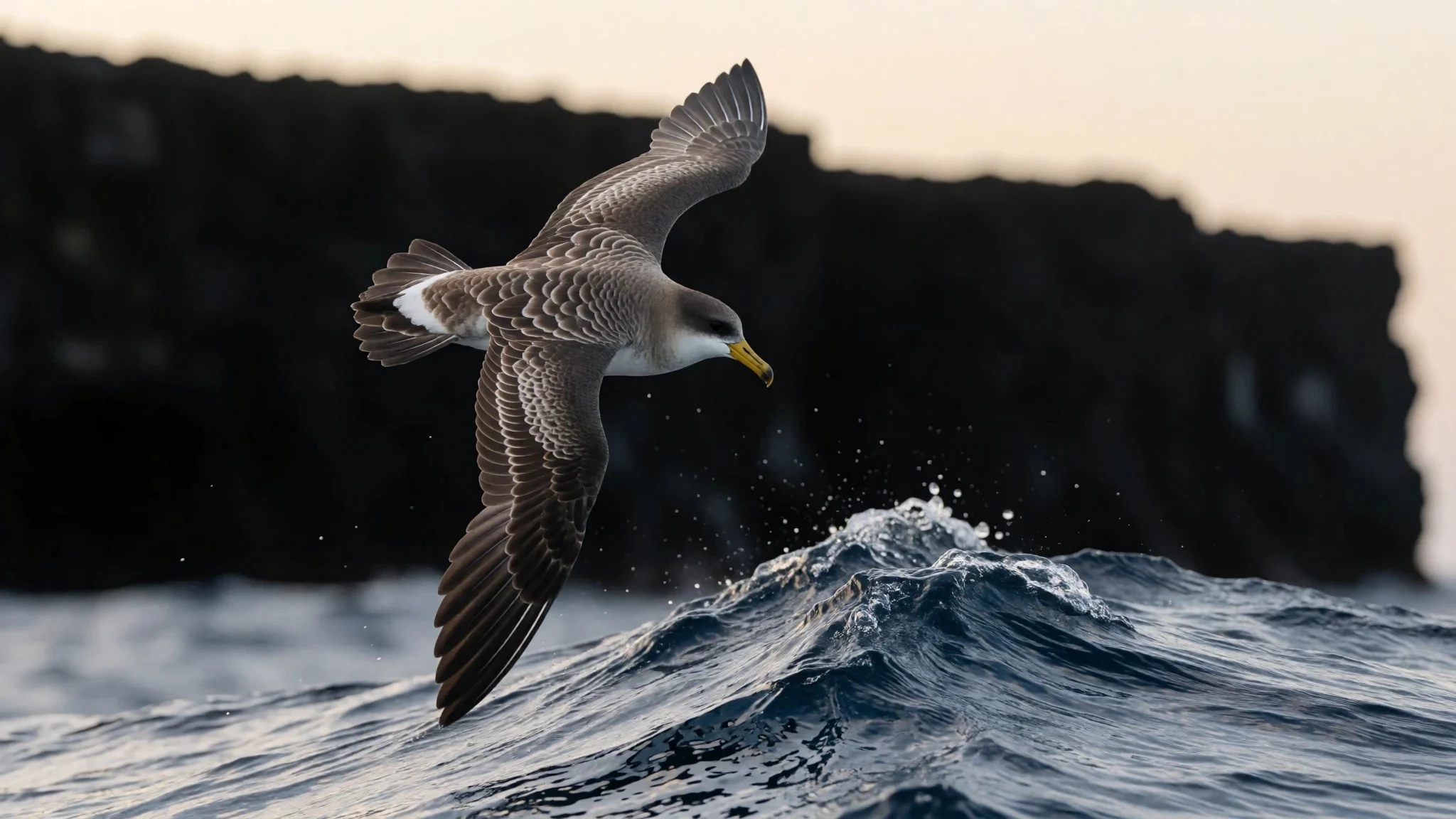
- Common tern (animal)
Picture a common tern as a pale, elegant seabird in a black cap, with a pointed bill that is red with a dark tip on some birds and all black on others. On Pico it nests along the coastal habitats. Many of its kind migrate to warm coasts for winter. Watch quietly from afar, never approach nests, take a guide who knows similar-looking terns, and never feed the birds.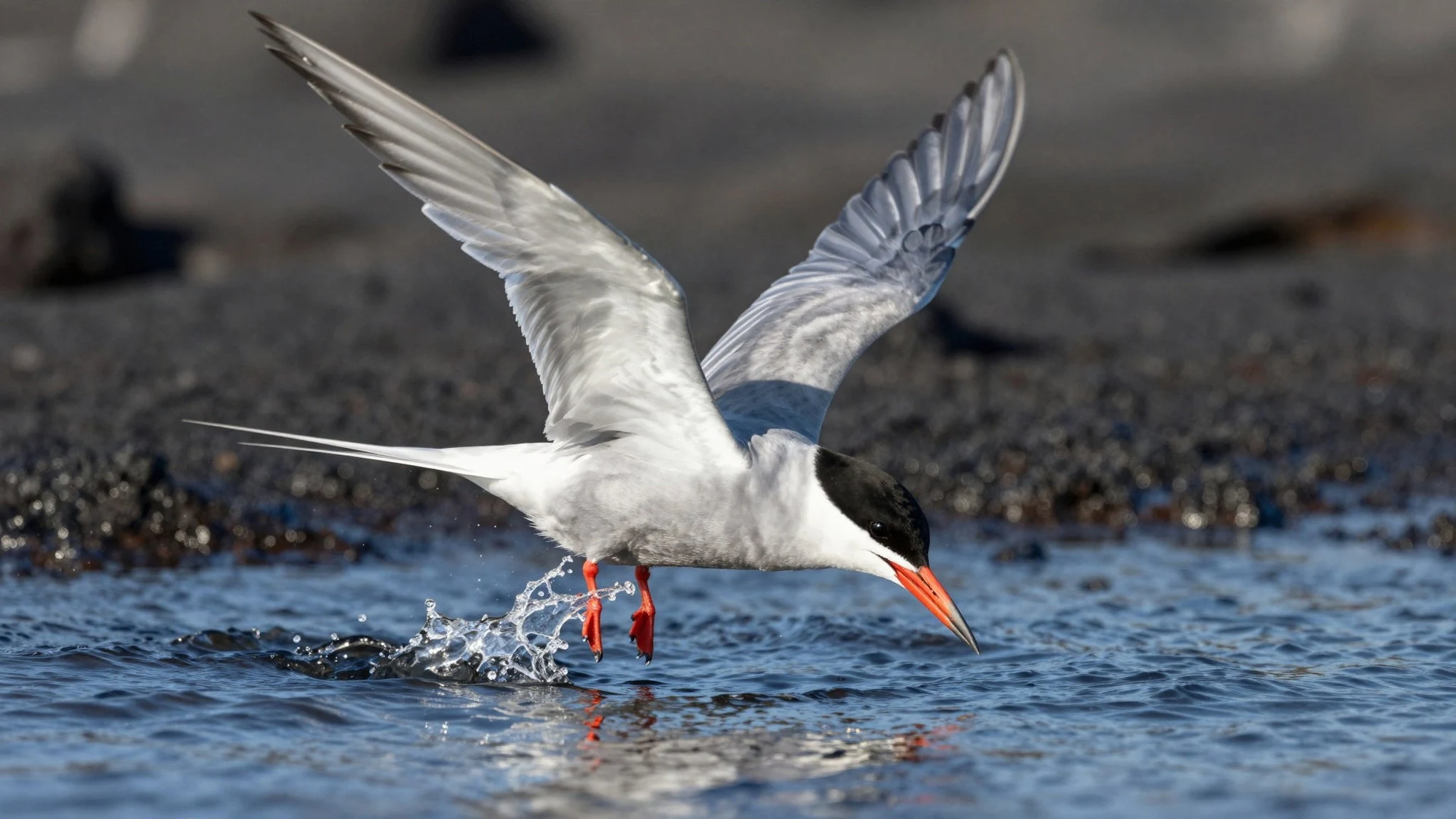
- Cory's shearwater (bird)
Cory's shearwater is a large seabird that gathers in colonies in the Azores to nest, then spreads out over the Atlantic for the rest of the year. On Pico, the rocky coast is where nesting seabirds like this one make their homes. Give the birds plenty of space, speak softly, join a knowledgeable local guide if you can, and never feed them, since wild food is best for wild chicks. - Common tern (bird)
Picture a common tern as a pale, elegant seabird in a black cap, with a pointed bill that is red with a dark tip on some birds and all black on others. On Pico it nests along the coastal habitats. Many of its kind migrate to warm coasts for winter. Watch quietly from afar, never approach nests, take a guide who knows similar-looking terns, and never feed the birds.