Guimarães Castle
Guimarães Castle, Portugal
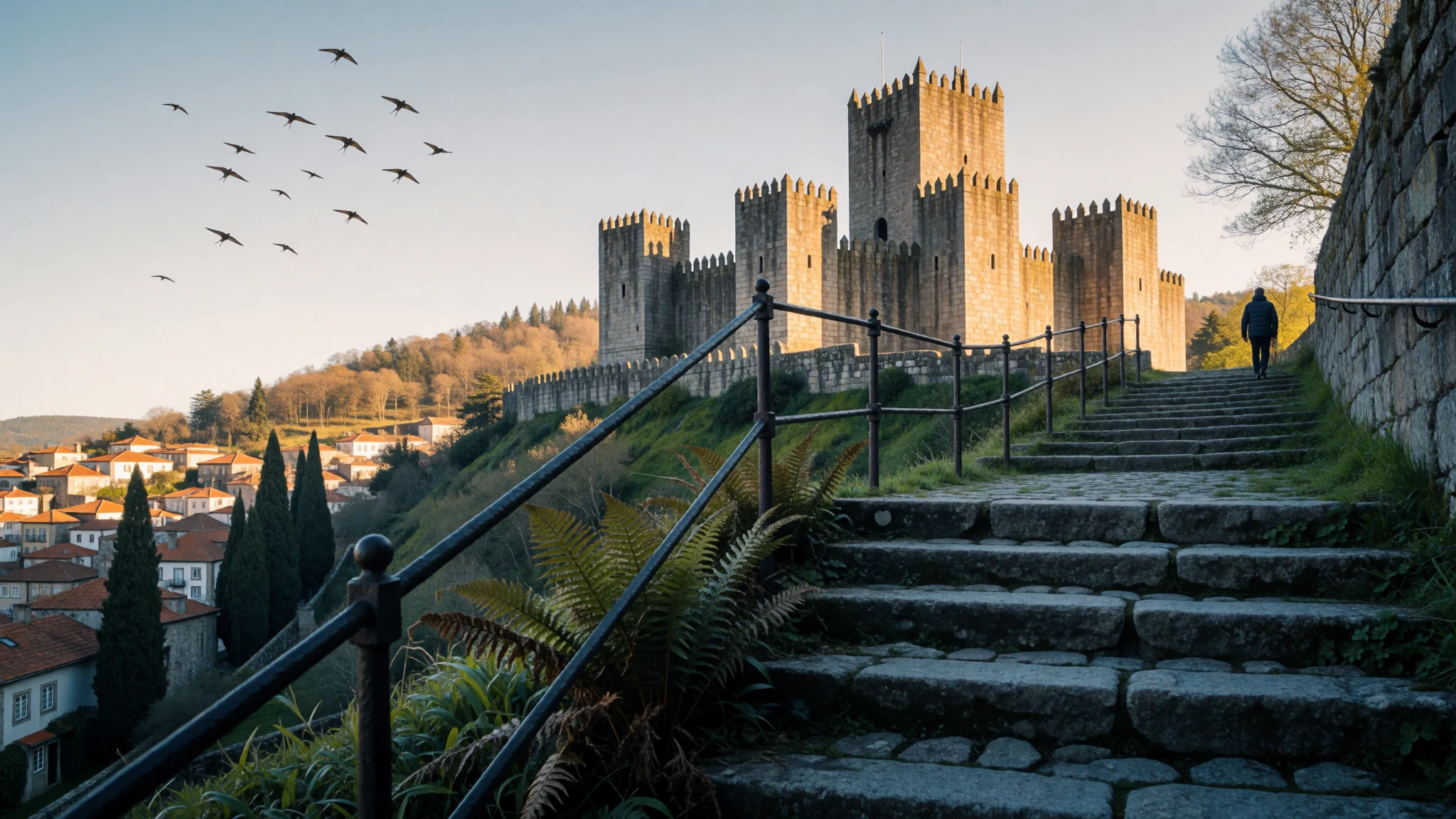
Guimarães Castle is a compact granite fortress above a Minho town, tied to the story of how Portugal began.
The place
Guimarães Castle sits on a low hill at the edge of the old centre of Guimarães, a town in northern Portugal roughly an hour from Porto. It is small as castles go, and that is part of its charm. The walls form a rough five-sided shield, with eight rectangular towers and a tall central keep around a modest courtyard. Approaches were made deliberately awkward, and visitors still climb steps and ramps to reach the gate. The stone is grey granite, weathered and lichen-flecked, silver in rain and warm gold at the end of a clear afternoon.
The building mixes two periods. Its bones are late Romanesque: plain, heavy, with thick masonry and small openings. A remodelling in the thirteenth century brought Gothic touches and the keep and living quarters, parts of which survive. What stands today is a working fortress of the Middle Ages rather than a palace, and the interior is bare. The interest lies in the wall-walks, the towers and the views over rooftops and green hills.
The setting is gentler than the fortress suggests. Close by stands the Dukes of Braganza Palace, and from there a short walk leads into lanes and squares of old stone houses. Guimarães was European Capital of Culture in 2012 and has kept an easygoing, lived-in feel, with café tables spilling across its squares. The castle is also counted among the New Portuguese Seven Wonders, which explains why it is busiest around midday. Early mornings and late afternoons are quieter, and the site is compact enough to see properly in an hour or so, leaving time for the palace and the old streets beside it.
Its story
Guimarães Castle begins with a widowed countess. Mumadona Dias held the lands of Vimaranes, now Guimarães, in the tenth century. She founded a monastery there and then ordered a fortress built close by, to protect the monks and nuns from raiders, among them Moors and Norsemen. A document from the late 960s already speaks of the castle as freshly completed, under the name Castle of São Mamede.
Family quarrels followed. After the countess died, her eldest son, Gonçalo Mendes, took over the estate and kept up her support for the monastery. A younger relative who tried to seize the town and castle was stopped by this uncle. Little else is firmly recorded about those early centuries, and historians admit that the building phases are poorly documented.
Most of what is visible is later work. The main reconstruction came in the second half of the thirteenth century, when the keep and residences went up, possibly over older structures, and the walls took their shield shape. Some writers see Roman foundations beneath it all, though the evidence is thin.
The castle's fame rests on a larger tale. Guimarães is linked with the origins of the Portuguese nation, and local tradition honours Afonso Henriques, the first king, as a son of the town. The words 'Aqui nasceu Portugal', meaning 'here Portugal was born', are inscribed on a wall beside the castle hill. The claim is a matter of local pride more than settled fact, but centuries of national memory have gathered around these walls. A nineteenth-century engraving in the Archivo Pittoresco shows the castle as a romantic old pile, and later restoration returned it to something close to its medieval outline.
What to see
- Guimarães Castle — Old centre, Guimarães
The keep and curtain walls are the reason for the trip. Climb to the wall-walk for views over tiled roofs and green hills, and notice how the towers project from the shield-shaped circuit. The interior is austere, so an hour is enough. Check the official site for opening arrangements.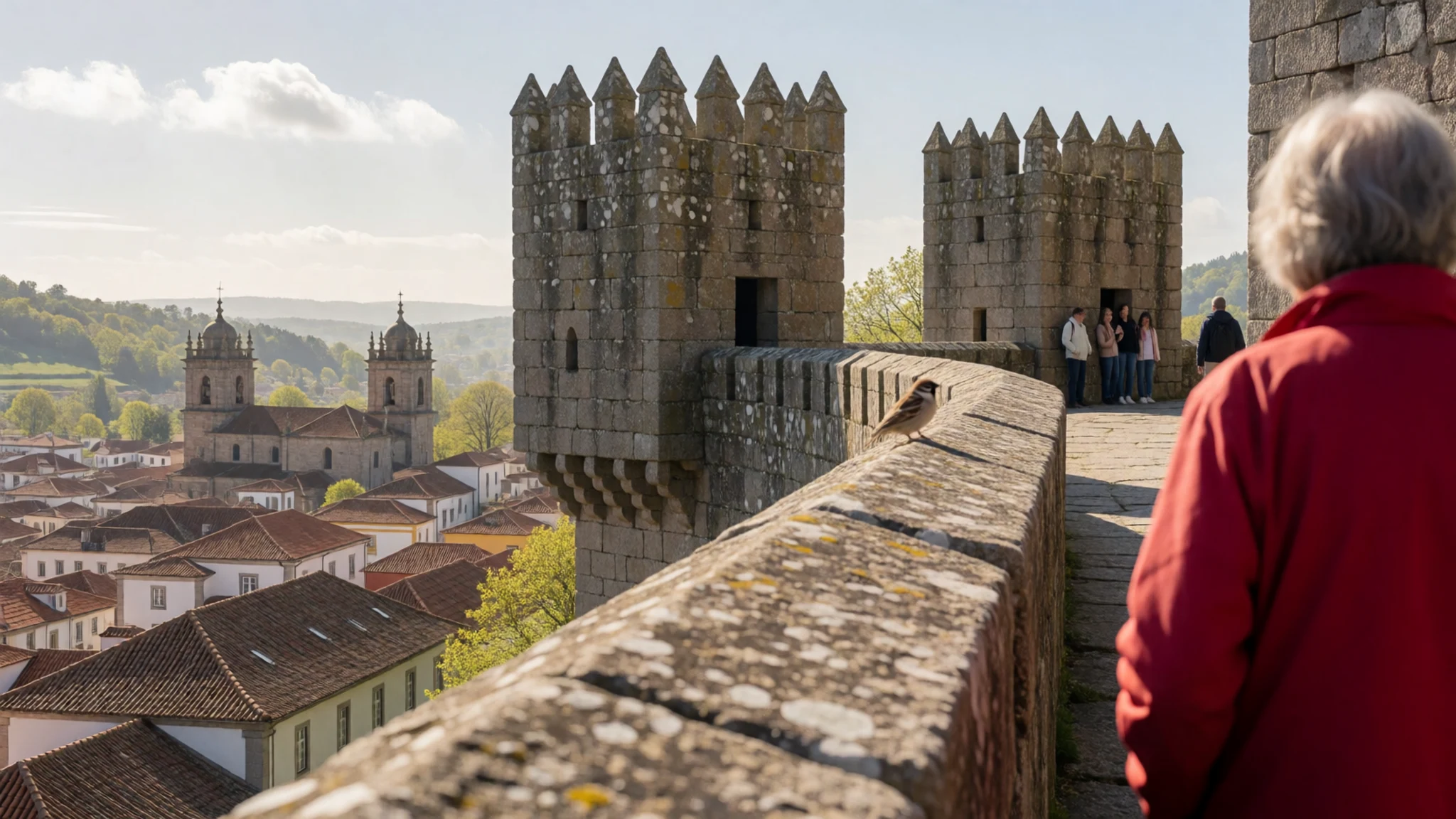
- Dukes of Braganza Palace — Beside the castle hill
A short walk from the castle, this large manor was built for a son of a Portuguese king who later became Duke of Braganza. It is a classified National Monument, and its tall chimneys make an unusual skyline. Check the official site for visiting details before setting out.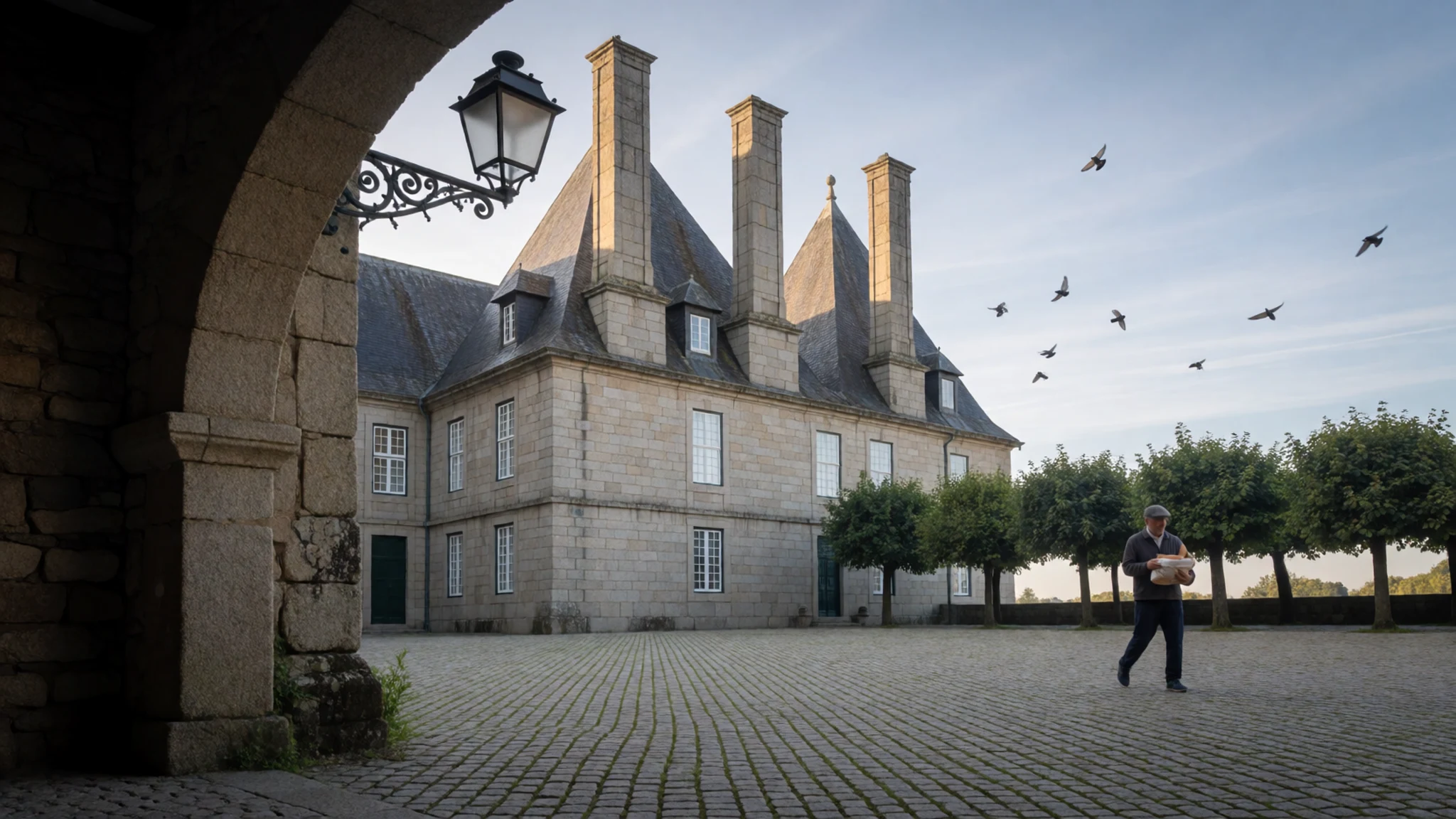
- Largo da Oliveira — Old town centre
This square in the old centre is the easiest place to feel the medieval town. Old granite buildings frame café terraces, and it suits a slow coffee or a drink after the castle. The collegiate church of Nossa Senhora da Oliveira stands on the site of the countess's first monastery.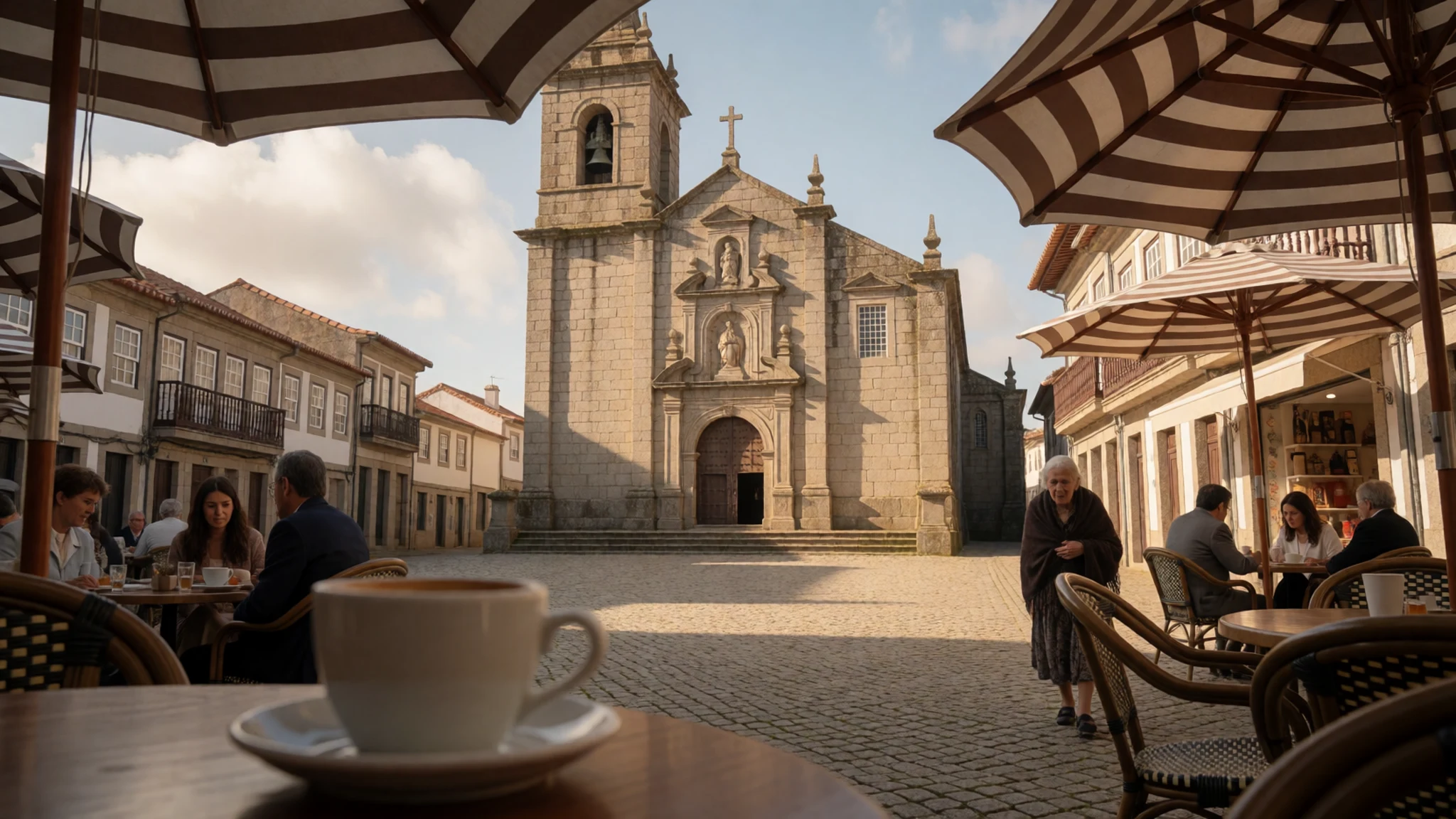
- Penha Mountain — Just outside Guimarães
Penha is the wooded hill above Guimarães, reached by cable car, with wide views back over the town and countryside. Paths and large boulders make a cooler, greener break from the stone streets. Mist can hide the view, so a clear day is worth waiting for.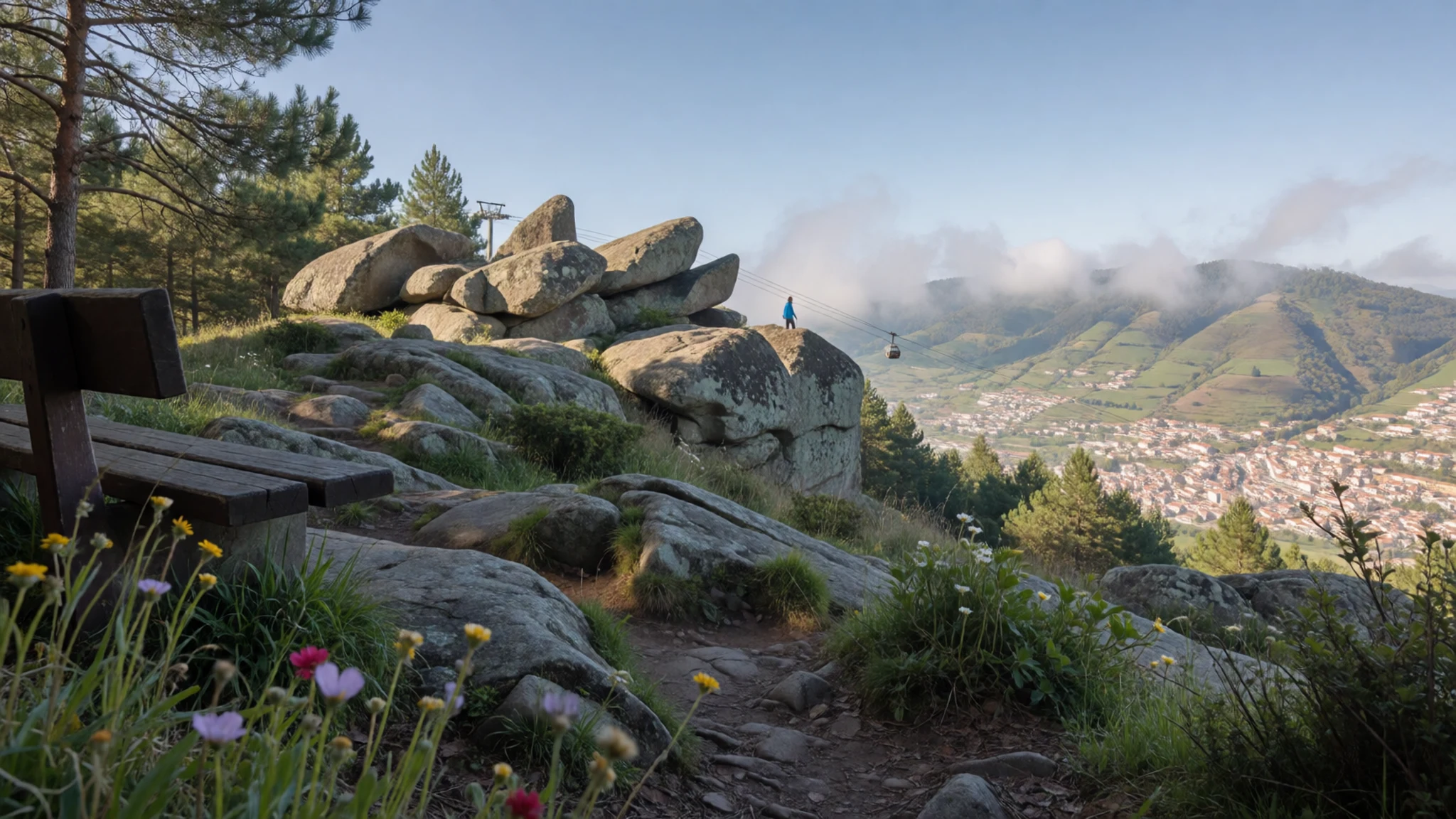
- Citânia de Briteiros — North of Guimarães
North of the town, this hilltop settlement from the Celtic-Iberian period has Iron Age roots. Stone foundations of round houses and lanes spread across a wooded slope. It makes a half-day trip, easiest by car or taxi, and shoes with grip help because the stones are uneven and slick after rain.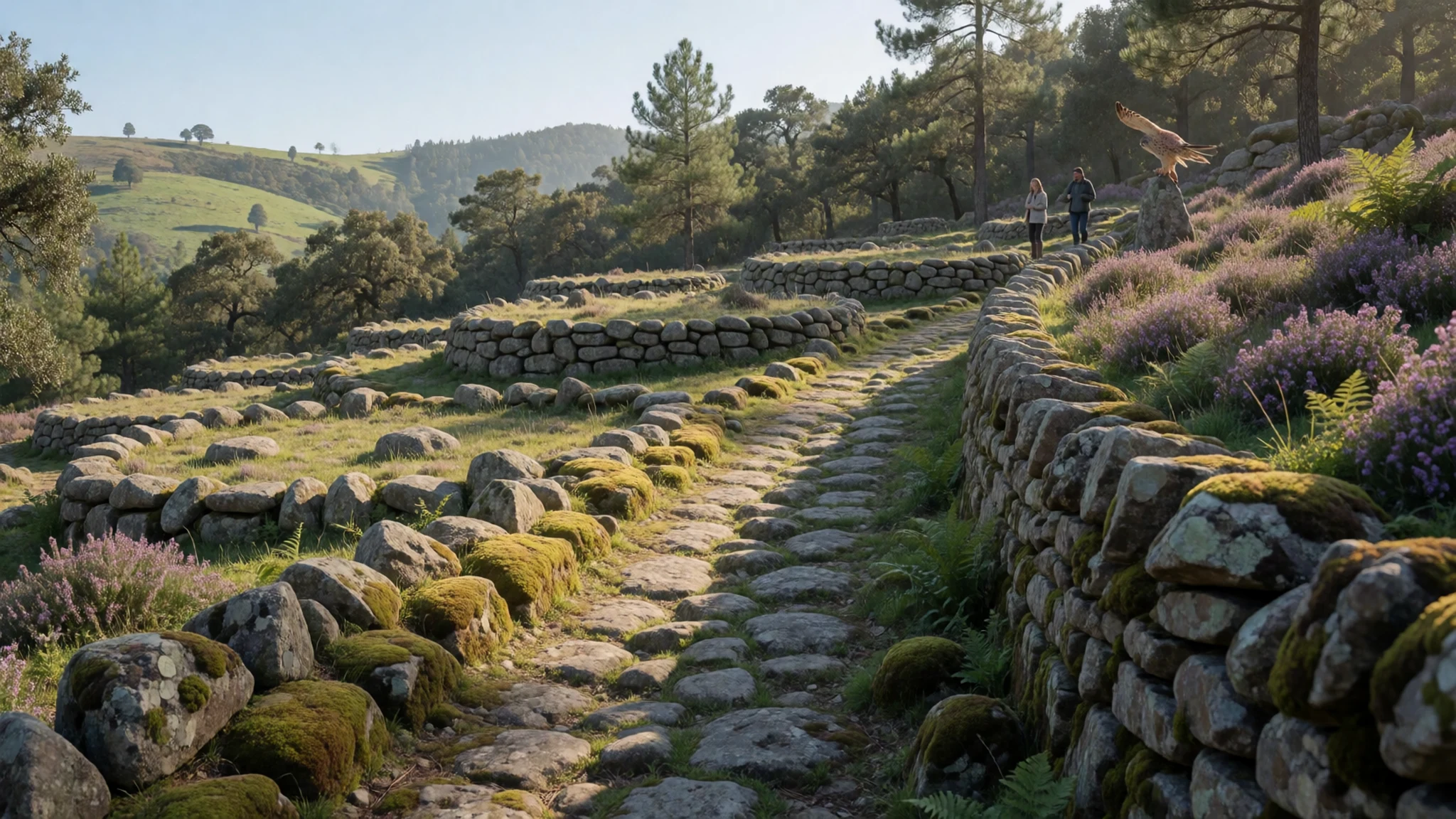
Culture
Guimarães Castle stands at the centre of a local identity built on being the town where Portugal began. Residents speak of the place with a possessive pride, and the first king, Afonso Henriques, is honoured in statues and slogans around the old centre. Visitors from other parts of Portugal often come as much for this symbolism as for the architecture, so the castle feels closer to a national shrine than an ordinary monument.
The calendar reinforces the feeling. The Festas Gualterianas in summer bring processions, music and street decoration to the old quarter, and the student Nicolinas celebrations in winter are a boisterous local tradition. Between festivals, daily life revolves around café terraces and long lunches. The Minho region has a long record as a textile and craft area, and linen, cutlery and pottery are typical things to find in the town's shops.
Portuguese hospitality here is polite rather than effusive. A 'bom dia' on entering a shop is expected, and a few words of Portuguese are appreciated, although staff in the centre usually manage English. Lunch is unhurried, dinner starts later than in Britain, and some small shops close for part of the afternoon.
At the castle, stay on the marked paths and away from unguarded wall edges, and keep your voice low if you step into the Oliveira church, where services still take place.
What to wear
Guimarães Castle belongs to the Minho, a region with a strong tradition of folk dress. Women's costume is built from layered wool or linen skirts, a contrasting apron, embroidered blouses, shawls and headscarves, finished with heavy gold filigree jewellery. The best-known versions come from nearby Viana do Castelo. Men wear dark trousers, white linen shirts, waistcoats and a cap or hat. These outfits appear at festivals, processions and performances by folk groups, and rarely in daily life.
On an ordinary day, people in Guimarães dress much as in other European towns: jeans, jackets, trainers, and smarter clothes for dinner and church. Students in the town add a youthful, casual note, and in winter dark coats and scarves dominate.
Visitors need practical clothes first. The castle and old streets are paved with granite, which turns slippery in rain, so wear closed shoes with a good grip rather than smooth soles or sandals. Bring layers and a light waterproof, since the north of Portugal is wetter than the south, and a hat and sunscreen for summer afternoons on exposed walls. Churches are not strict, but covered shoulders and knees are respectful if you plan to step inside. Comfortable walking clothes are enough for the castle itself.
What to eat
- Caldo verde — Tascas and family-run eateries in the old town
A smooth potato soup with shredded kale and a slice of smoked sausage, served hot with bread. It is a staple of northern Portugal and a good starter on a cool day. Order it at a traditional tasca or café at lunchtime.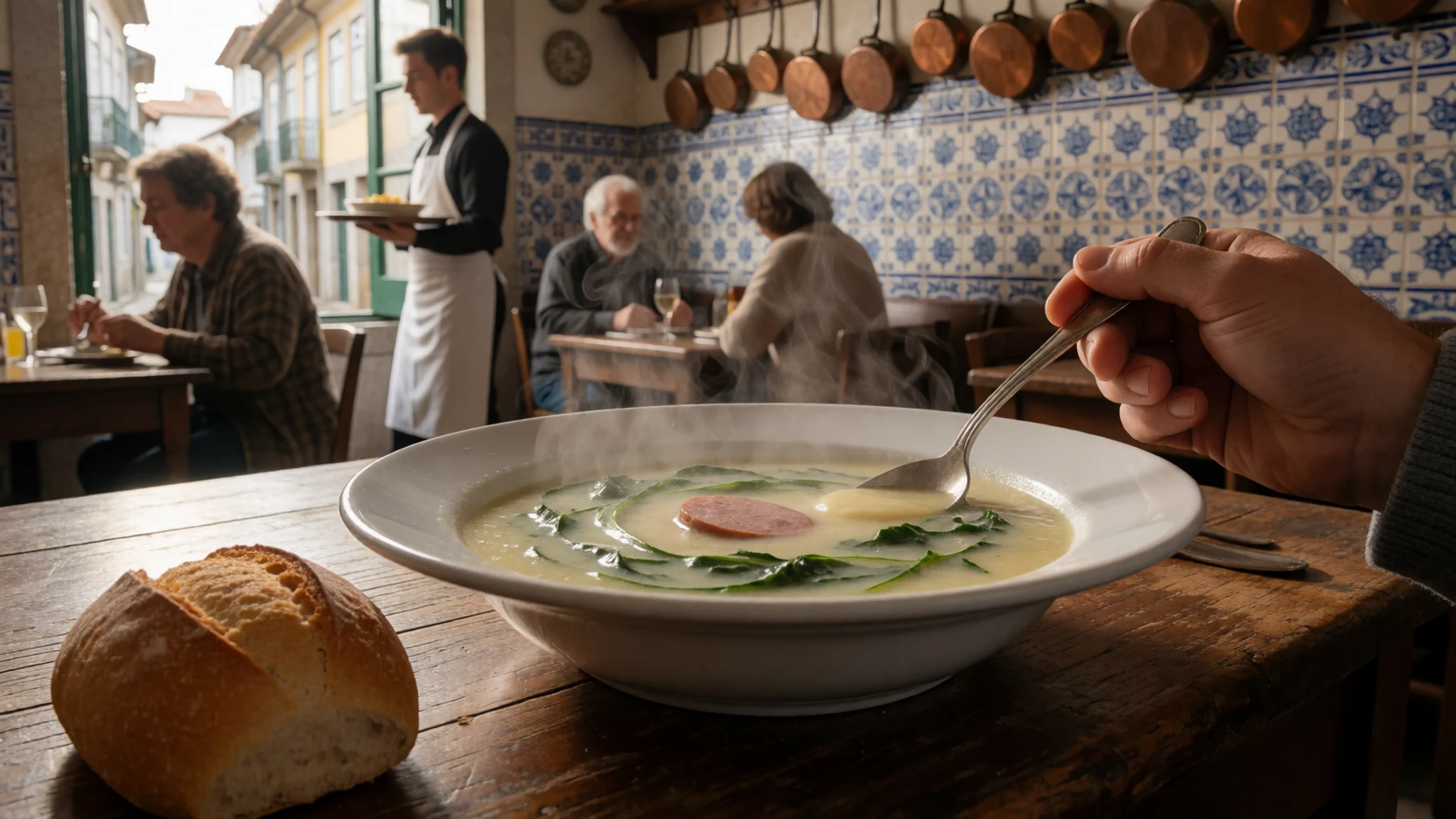
- Bacalhau — Traditional restaurants around the old centre
Salt cod is eaten all over Portugal, and the north has many ways of cooking it, often baked with potatoes, onions and olive oil. Portions are generous, and a dish is often enough for two. Look for it on the daily menu of a family-run restaurant.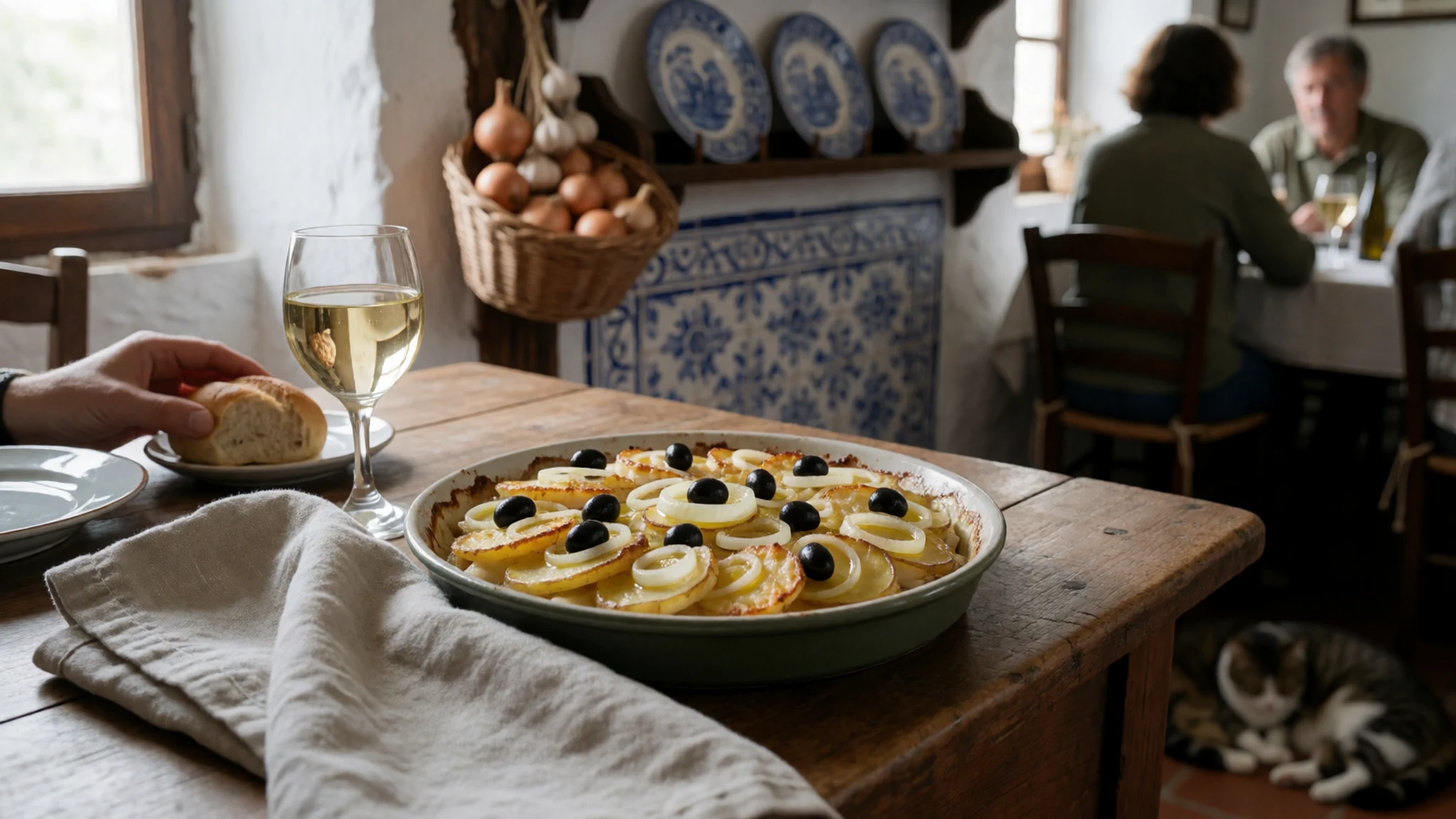
- Rojões — Country-style restaurants and taverns around the town
Chunks of pork marinated in wine and garlic, then fried until crisp outside and soft within. They come with roast potatoes or other regional sides. It is a hearty Minho dish, better ordered at lunch than late in the evening. - Toucinho do céu — Pastelarias (pastry shops) near Largo da Oliveira
A dense, golden sweet of egg yolk and almond, whose name means 'bacon from heaven' although it holds no bacon. It is closely tied to convent baking in this part of Portugal. Try a slice with coffee. - Vinho verde — Wine bars and almost any restaurant in the region
A young, fresh wine from the Minho, often lightly sparkling and low in strength, made for drinking with seafood and fried dishes. Despite the name it can be white, rosé or red. Ask for a local producer by the glass.
Plan it
Best time. May–June and September–October, when days are mild and walking the castle walls is comfortable. Summer afternoons can be hot, and the north of Portugal is wetter and cooler from late autumn to spring.
How long. 1–2
Getting there. Fly to Francisco Sá Carneiro airport in Porto, take the metro to Campanhã or São Bento station, then a train to Guimarães (about an hour and a quarter). Direct buses from the airport take about 50 minutes, and a taxi about 40. From Lisbon, trains take four hours or longer. The castle is a walk from the old centre.
Budget. low
Tips
- Check the official site (https://pacodosduques.gov.pt/) for opening hours and ticket arrangements before you go
- Arrive early or in the late afternoon to avoid the midday crowds
- Wear shoes with grip, as the granite is slippery when wet
- Combine the castle with the Dukes of Braganza Palace and Largo da Oliveira in one walk
- Carry a little cash for small cafés and bring water in summer
Etiquette
- Stay on marked paths and away from unguarded wall edges
- Greet shop and café staff with 'bom dia' or 'boa tarde'
- Keep voices low inside churches
Nearby
Sources
- Wikidata Q2658498 (CC0)
- Wikipedia: Castle of Guimarães (rev 1375996071) (CC BY-SA 4.0)
- Wikivoyage: Guimarães (rev 5403370) (CC BY-SA 4.0)
- Photo: Castelo de Guimarães (9), Krzysztof Golik (CC BY-SA 4.0)
- Photo: Castelo de Guimarães, Hugo Ferreira (CC BY-SA 4.0)
- Photo: DJI 0149 Castelo Guimarães, Luis Miguel Jorge Duarte (CC BY-SA 4.0)
- Photo: Castelo de Guimarães (15), Hugo Ferreira (CC BY-SA 4.0)
- Photo: Castelo de Guimarães no Archivo Pittoresco (Public domain)
- Photo: Castillo de Guimarães (Portugal, 25-9-2014), Juanje Orío (CC BY-SA 4.0)
- Photo: 20200201 Guimarães Castle 5827, Ray Swi-hymn (CC BY-SA 2.0)
- Photo: Guimarães castle inner blueprint 2, Luiz António de Souza Vianna (Public domain)


