Flores
Flores, Portugal
Flores is a green, flower-covered island in the Azores, with crater lakes, waterfalls and sea cliffs, and a quiet pace that suits walkers.
The place
Flores is the Azorean island that earned its name from flowers. It belongs to the Western Group of the archipelago, alongside tiny Corvo, and about 3,400 people live here, mostly in small villages near the coast. Hydrangeas line the lanes in summer, which is why the writer Raul Brandão's nickname, the pink island, still sticks. Flores and Corvo sit on the North American plate, with the Mid-Atlantic Ridge running close by. The island is built in two parts. A central massif of old volcanic cones holds crater lakes in its hollows, while a coastal fringe of cliffs, raised shingle terraces and ledges drops to the Atlantic, with streams tumbling over the edge as waterfalls. The highest ground rises to 914 metres. Farming still sets the rhythm, with taro, grain and dairy cattle, and the houses and streets resemble those of northern Portugal, where many early settlers came from. Santa Cruz das Flores has the only airport, the ferry to Corvo and a small fishing port, while Lajes das Flores handles most commercial shipping. The weather is the honest catch. Cloud, rain and wind can close in within minutes, hide the views and disrupt flights and boats. In return the island is green, quiet and made for walking. Those after nightlife, long sandy beaches or big resorts will be disappointed; those who like waterfalls, crater lakes and empty trails will not.
Its story
Flores entered the European record in the mid-fifteenth century, when the navigator Diogo de Teive and his son João found it in late summer. Older accounts hint at earlier knowledge of two western islands, but no official discovery is credited before this. The pilot Pêro Velasco is said to have passed word of the island to Christopher Columbus. Diogo's reward was a sugar monopoly on Madeira, a reminder that islands were then valued as commercial assets. The island carried other names first: São Tomás, after Thomas Becket of Canterbury, and Santa Iria. Settlement was slow. The charter passed to Fernão Teles de Meneses, who achieved little beyond landing some sheep. After his death his widow, Dona Maria de Vilhena, managed the island on behalf of their young son Rui. She turned to Willem van der Haegen, a Flemish incomer who had reached the Azores earlier and spent time on Faial as a guest of its first captain, Josse van Huerter. He agreed terms with her and settled on Flores in the closing decades of the fifteenth century, which is why a Flemish thread runs through the early history of the Azores. Geology tells a much longer story. The island began as a submarine volcano, fell quiet for a very long stretch, then produced fresh craters and lava flows in the last few thousand years. The old whaling factory at Boqueirão, now a ruin near Santa Cruz das Flores, is a later chapter in the island's relationship with the sea.
What to see
- Rocha dos Bordões — South-west Flores
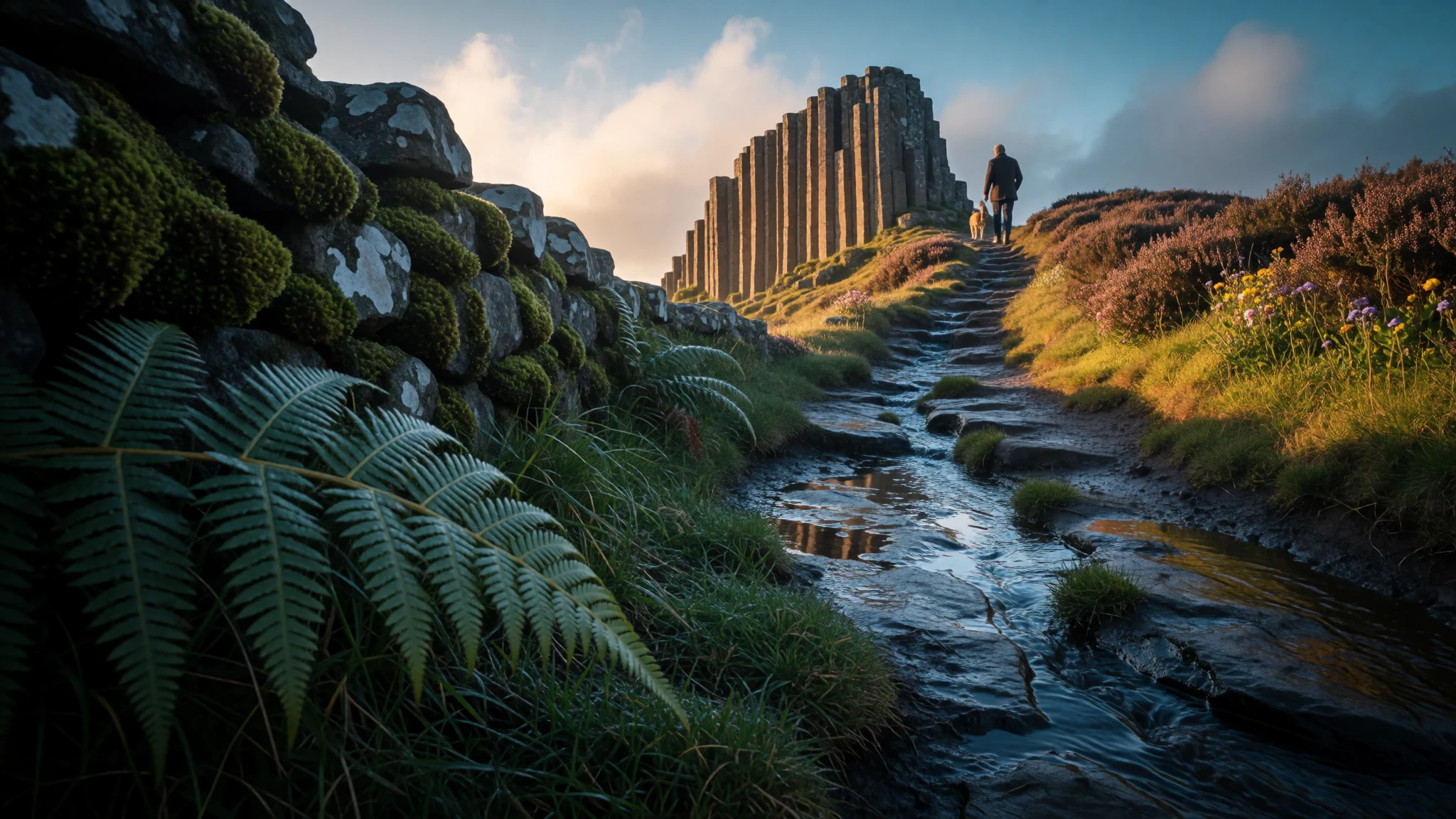
Rocha dos Bordões is a cliff of basalt columns that look like the pipes of a church organ, formed as lava cooled and cracked into tall prisms. Ferns and moss cling to the rock and thin streams trickle down it. It is a short stop rather than a day out, best in clear light before cloud settles. - Lagoa Funda and Lagoa Comprida — Central highlands
Lagoa Funda and Lagoa Comprida are crater lakes in the central highlands, filling hollows left by old volcanic vents. Hydrangeas edge the banks, and the water shifts from steel grey to deep blue as cloud moves. Roads and paths nearby are easy, but mist can drop quickly, so carry a waterproof layer. - Poço da Ribeira do Ferreiro — Between Fajã Grande and Fajazinha
Poço da Ribeira do Ferreiro is a pool fed by a curtain of small waterfalls, tucked on the trail between Fajã Grande and Fajazinha on the west coast. Walkers reach it on foot, or a bus driver can drop passengers nearby. Expect mossy rock and slippery paths, and a good picnic spot in dry weather. - Gruta dos Enxaréus — Coast south of Santa Cruz das Flores
Gruta dos Enxaréus is a volcanic sea cave that can only be seen from the water, so it belongs on a boat trip along the coast south of Santa Cruz das Flores. It is one of many caves opening at the foot of a headland called La Caveira. Sea conditions decide whether trips run. - Fajã Grande to Ponta Delgada mule track — North-west coast
The old mule track from Fajã Grande to Ponta Delgada follows the north-west coast. It opens with a steep, tiring climb, then eases into a high path above the sea with views of cliffs and waterfalls. Allow most of a day and carry food and water. A boat excursion shows the same coast with less effort. - Águas Quentes — South-west Flores
Águas Quentes are small hot springs with a sulphur smell, bubbling up near the south-west coast. They are modest, more a curiosity than a spa, and the walk to reach them is part of the interest. Go with low expectations of facilities, and leave the place as clean as you found it.
Culture
Flores has a rural Azorean way of life shaped by farming, fishing and distance from the mainland. Early settlers came largely from northern Portugal, and the villages show it in their stone houses, narrow streets and small churches. Portuguese is the everyday language, and people tend to know their neighbours well. The sea is part of the culture too. Fishing still supplies the kitchens, and the ruined whaling factory at Boqueirão is a reminder of an older working relationship with the Atlantic. Hydrangea hedges mark field boundaries, and the flowers are tied up with local identity, to the point that the island is nicknamed after them. Food follows the same practical logic: pork, yams, greens, local cheese and creamy butter alongside fresh fish and shellfish. Life moves slowly, shops and cafés keep their own hours, and weather changes plans without anyone fussing. Visitors who accept that tend to be welcomed warmly. Some of the most memorable moments are small ones, such as a chat in a village café or a lift offered on a wet road. Because the island is so small, news travels fast and good manners count. Greet people with a friendly bom dia on village lanes, ask before photographing anyone or stepping into farmland, and close any field gate you open.
What to wear
Flores has no single island costume that the sources describe, so it is safest to say that traditional rural dress in the Azores was practical, made from wool and linen, with shawls, caps and sturdy shoes for farm and sea work. Today such clothes mostly appear when local folk groups perform at festivals. Everyday dress on the island now is simple and weatherproof: jeans, fleeces, waterproof jackets and wellington boots or trainers, with something smarter for church on Sundays and feast days. Farmers and fishermen wear work clothes as in rural Portugal generally. Visitors should dress for changeable Atlantic weather. Pack thin layers, a proper waterproof jacket and a warm top even in summer, because wind and cloud can make the coast feel cool. Footwear matters most. Walking boots or shoes with a good grip suit wet grass, muddy trails and slippery rock near waterfalls, and the cliff paths are steep. Bring swimwear for the springs and the summer bathing spots, and a hat and sunscreen for clear days. Nothing special is expected in villages, but shoulders and knees should be covered when stepping into a church, and beachwear is best kept for the shore.
What to eat
- Caldeirada de Congro — Seafood restaurants in Santa Cruz das Flores and Lajes das Flores
Caldeirada de Congro is a fisherman's stew of conger eel, simmered with vegetables in a rich broth. It is the sort of dish the island's fishing tradition produces, hearty and plain, and is best eaten at an unfussy local restaurant when the catch has been good. - Bonito Assado no Forno — Harbour-side eateries in Santa Cruz das Flores
Bonito Assado no Forno is oven-roasted bonito, a firm-fleshed Atlantic fish, usually served simply with potatoes. The flavour comes from fresh fish and little else, so it is worth asking what was landed that day at a harbourside eatery. - Cozido de Porco — Village restaurants and family-run eateries
Cozido de Porco is a pork stew in the farmhouse style, slow-cooked and filling, a good choice after a long walk on a wet day. Portions tend to be generous, and it suits sharing among a group of hungry walkers. - Inhames com Linguiça — Village cafés and traditional restaurants
Inhames com Linguiça pairs boiled yams with smoky sausage, a combination that reflects the island's farming and pork traditions. Yams are common in Azorean kitchens, and this is an easy, comforting dish for a first taste of local cooking. - Sopa de Agrião — Traditional restaurants, especially in the villages
Sopa de Agrião is watercress soup, green, peppery and warming, often the first course at a local meal. Watercress grows well in the island's damp climate, so the soup is as much about the weather as the recipe. - Local cheese and butter — Village shops and cafés
Flores is known for its cheese and creamy butter, both products of the dairy cattle grazing the green pastures. Try them with fresh bread for a simple lunch, or look for them at small shops and on café tables.
Plan it
Best time. June–September for the most settled weather, longer days and open camping spots. Rain can fall in any season, and the Cascata do Poço do Bacalhau waterfall is strongest in the wetter months, so the trade-off is clear skies against fuller falls.
How long. 3–4
Getting there. Fly to Santa Cruz das Flores, the island's only airport, usually via Faial with SATA Air Azores; check the airline's official site for schedules. Ferry and small-boat links serve Corvo. On the island, rent a car or arrange a local transfer, as public transport is limited.
Budget. mid
Tips
- Check flight and ferry status the day before, as Atlantic weather often changes plans
- Carry a waterproof jacket and layers, even in summer
- Take cash and food to remote villages, as shops and cafés are few
- Start longer walks early, and tell your host which trail you are taking
- Public camping spots are available in summer; check the weather before pitching a tent
Etiquette
- Greet people in villages, and ask before photographing locals
- Close field gates behind you and stay on paths across farmland
- Take rubbish away with you, especially from camping spots and trails
Nearby
Sources
- Wikidata Q216752 (CC0)
- Wikipedia: Flores Island (Azores), rev 1382837049 (CC BY-SA 4.0)
- Wikivoyage: Flores (Azores), rev 5402089 (CC BY-SA 4.0)
- Photo: The lighthouse of Ponta do Albernaz, Flores, Azores (Angrense) (Public domain)
- Photo: The Flores island collection XX (Pedro) (CC BY 2.5)
- Photo: Position of Flores Island, Azores (Varp) (Public domain)
- Photo: Azores, Flores, Lajes das Flores, Harbour (Dreizung) (Public domain)
- Photo: The old whaling factory of Boqueirão (Angrense) (Public domain)
- Photo: Area map of the island of Flores, Azores (Ruben JC Furtado) (CC BY-SA 4.0)
- Photo: OLYMPUS DIGITAL CAMERA (btvarusko) (CC BY 2.5)
- Photo: The village of Ponta Delgada, Flores, Azores (Angrense) (Public domain)


