Madeira
Madeira, Portugal
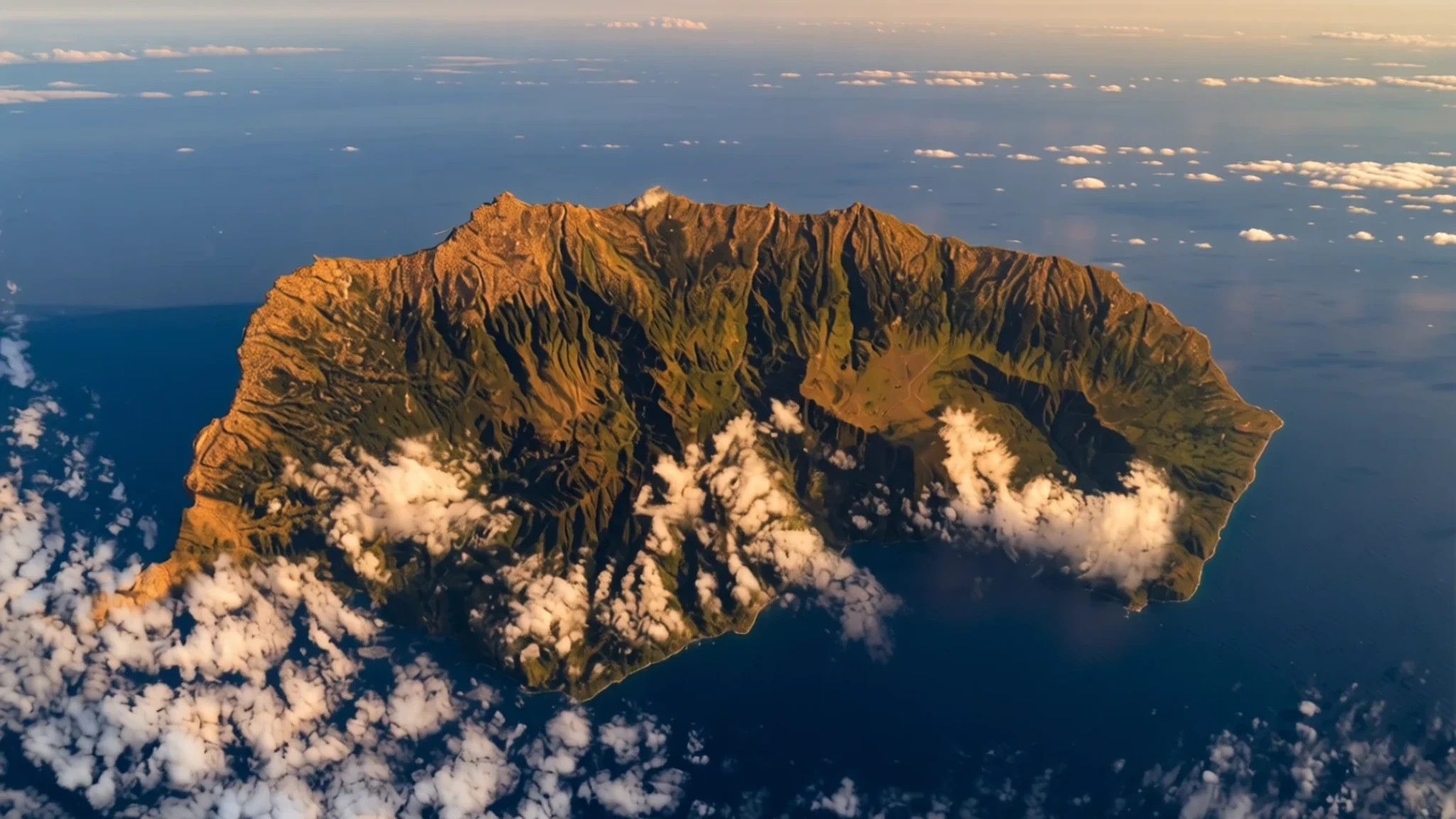
Madeira combines mild subtropical weather, sea cliffs, laurel forest and walking along old irrigation channels, all within reach of the capital, Funchal.
The place
Madeira is an archipelago in the North Atlantic, lying south-west of mainland Portugal and closer to the coast of Africa than to Lisbon. The main island gives the group its name. The chain also includes Porto Santo, the Desertas and, administered alongside them, the Savage Islands. Geologically the islands sit on the African tectonic plate, yet their people, language and institutions look to Europe, since most families descend from Portuguese settlers. Politically Madeira is an autonomous region of Portugal with its own government, a status dating from 1976, and as an outermost region it is part of the European Union.
Funchal, the capital, lies on the south coast of the main island and holds roughly half of the population, which totals about a quarter of a million people. Beyond the city the land rises steeply into mountain ridges and deep valleys, so many villages cling to slopes or sit in ravines. The climate is mild and subtropical, with dry summers in the Mediterranean pattern and wetter winters. That gentleness has long supported terraced farms and gardens of flowers and fruit, and the island's fortified wine takes its name from the place.
The pace of the island is set by its terrain. Roads are steep and winding, and the weather can change quickly between the coast and the high ground. Most visitors do better when they choose one area for each day, rather than trying to cross the island in a single outing.
Its story
Madeira's written history begins in the classical world. The Roman-era writer Plutarch, in his Parallel Lives, describes how the commander Sertorius met sailors at Cádiz who spoke of happy islands in the Atlantic, which the sailors called the Isles of the Blessed. Whether these were Madeira is uncertain, but the idea of a paradise far to the west stayed in European imagination for a long time. Archaeologists have also found signs that Norse seafarers may have reached the islands in the early medieval centuries, though nothing conclusive has settled the question.
A later story is more romantic. During the reign of King Edward III of England, the lovers Robert Machim and Anna d'Arfet were reportedly trying to escape to France when a storm drove their ship off course and wrecked them on an island that may have been Madeira. The tale is probably legend, yet it survives in the name of Machico, a town on the main island that commemorates the couple.
Medieval mapmakers drew the islands with several names. Atlases of the period describe an isle of wood, using words such as Lolegname and Legnami, and they show Porto Santo and the Desertas as separate landmarks. Settlers from Portugal later made the islands their home, and the forests that gave the early name were gradually cleared for farmland and timber. Madeira, the name now used, is the Portuguese word for wood. Today the island's story runs from settlement and farming through emigration to tourism.
What to see
- Cabo Girão — Câmara de Lobos, on the south coast west of Funchal
Cabo Girão is among the loftiest ocean cliffs anywhere, rising above the Atlantic near the fishing village of Câmara de Lobos. A glass-floored skywalk juts out from the edge, and many visitors find it dizzying. Go on a clear morning, when the sea is easier to see, and allow time for the views back along the coast.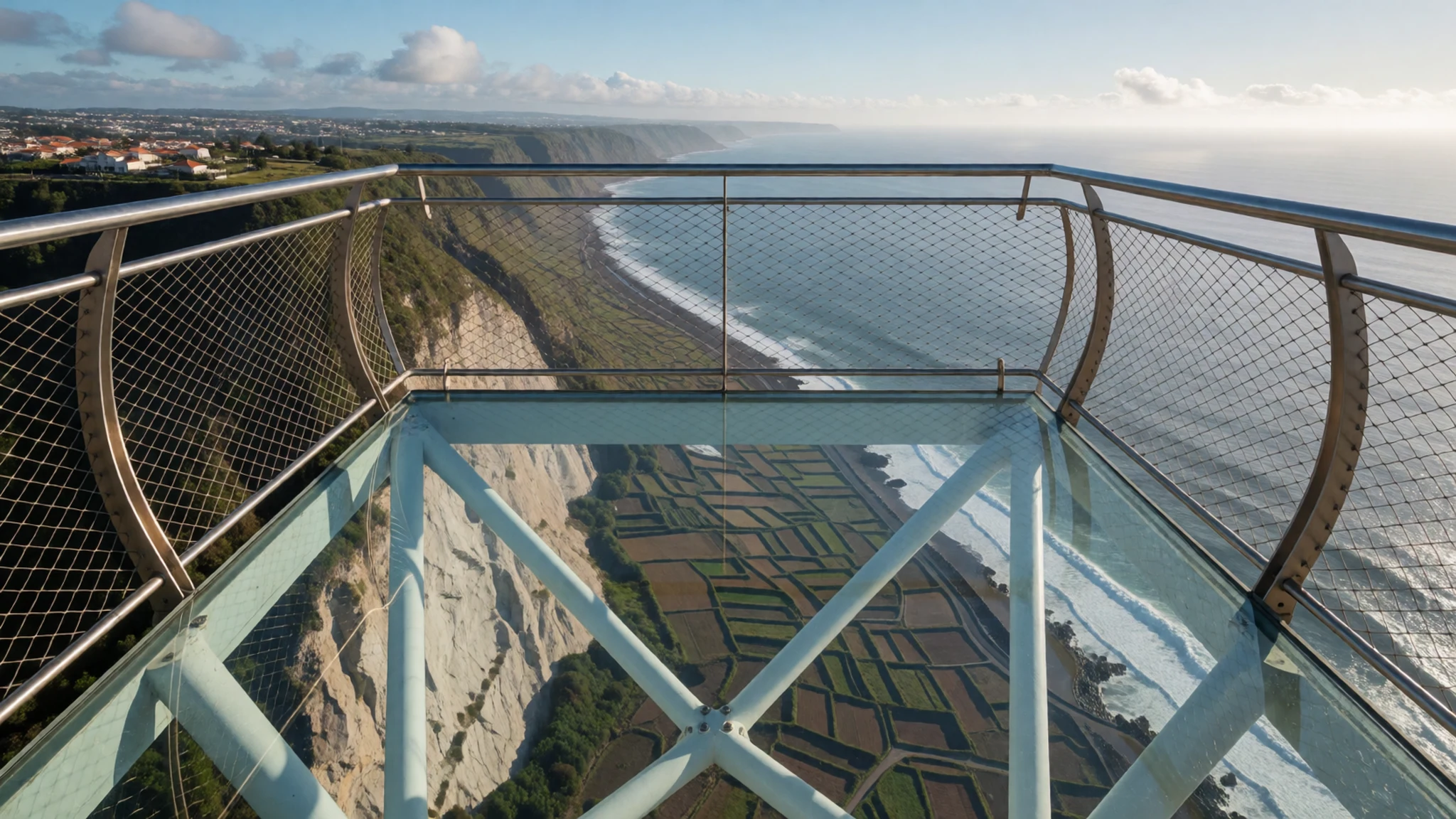
- São Vicente Caves — north coast, near the village of São Vicente
The caves were formed by lava that flowed beneath a cooled surface and drained away, leaving hollow tunnels. Visitors walk through lit sections where the rock walls show layers of volcanic material. The passages can be damp and cool, so bring a light layer. Check the official site for current opening arrangements before setting out.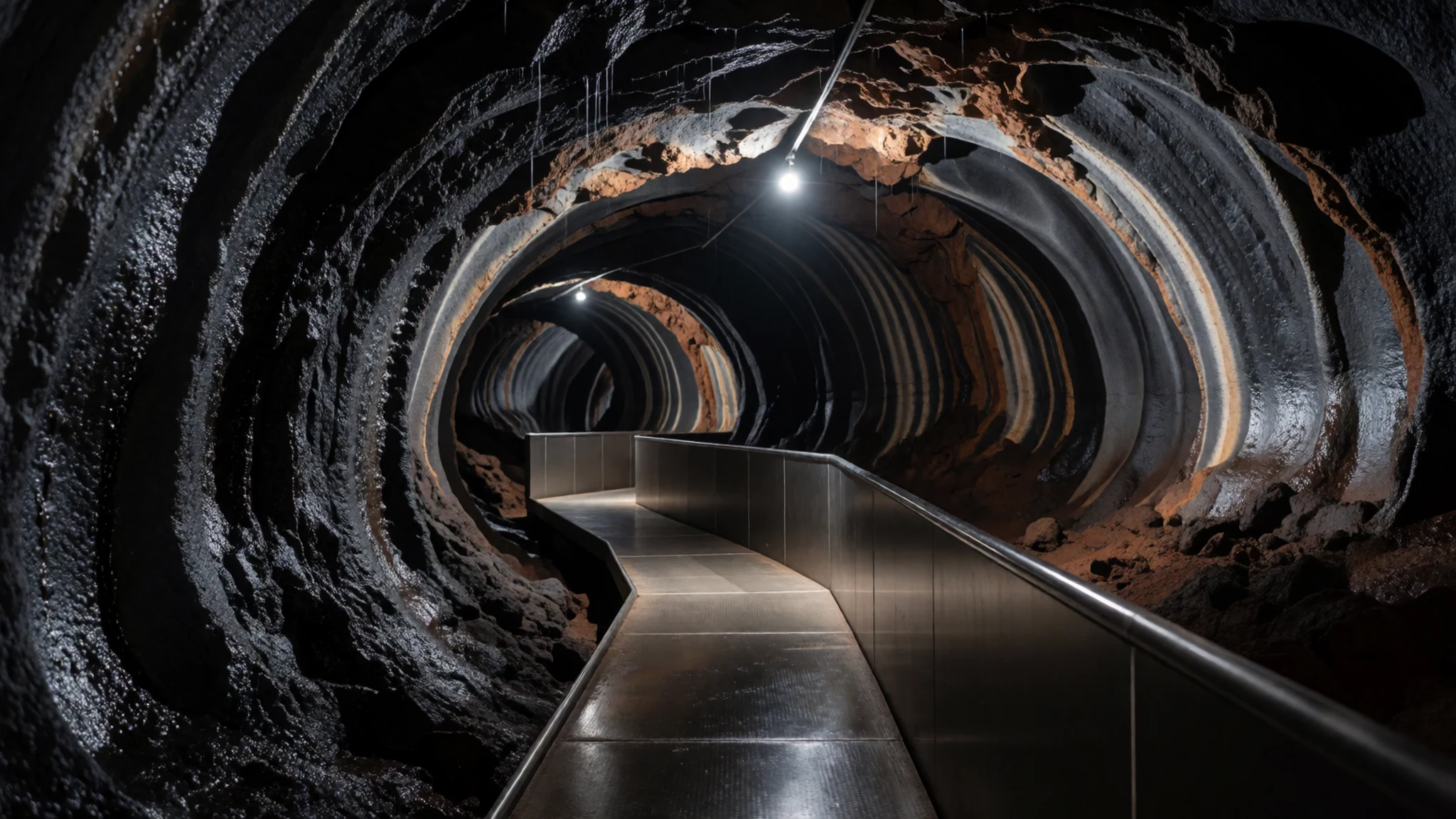
- Laurisilva forest — central highlands and northern slopes
The laurel forest is a subtropical woodland of evergreen trees, mosses and ferns, a type of forest found only on Madeira. Mist often drifts through it, and the air feels cool and damp even on warm days. Paths can be slippery after rain, so sturdy footwear matters more than a camera bag.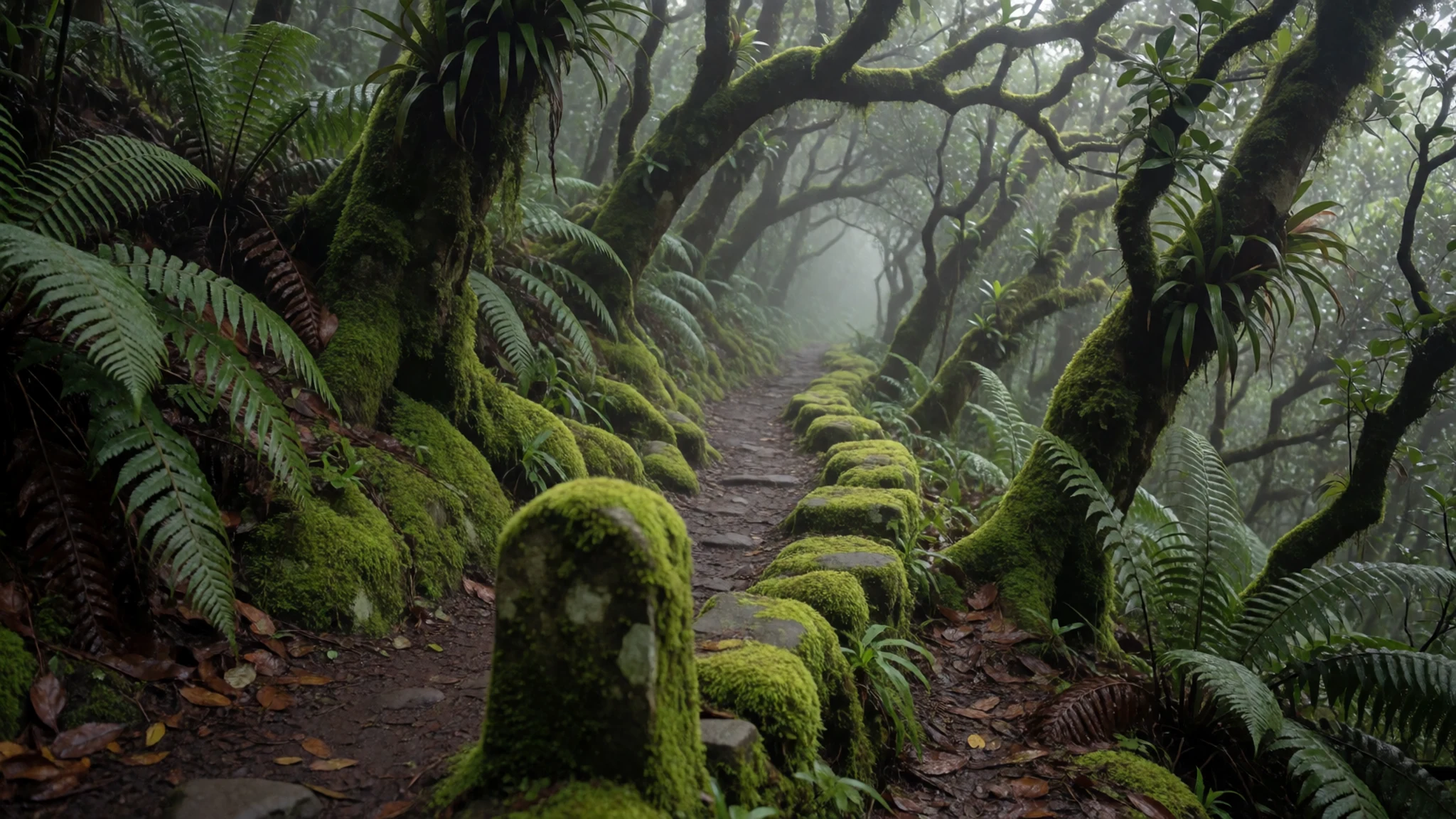
- Levadas — valleys across the island
Levadas are narrow channels that carry water from the wetter mountains down to terraced farms. They were built over several centuries and are still cared for by hand. Many run beside footpaths, which makes them popular for walking. Keep to marked trails, as drops beside the channel can be steep, and check the forecast, since mist can close in quickly.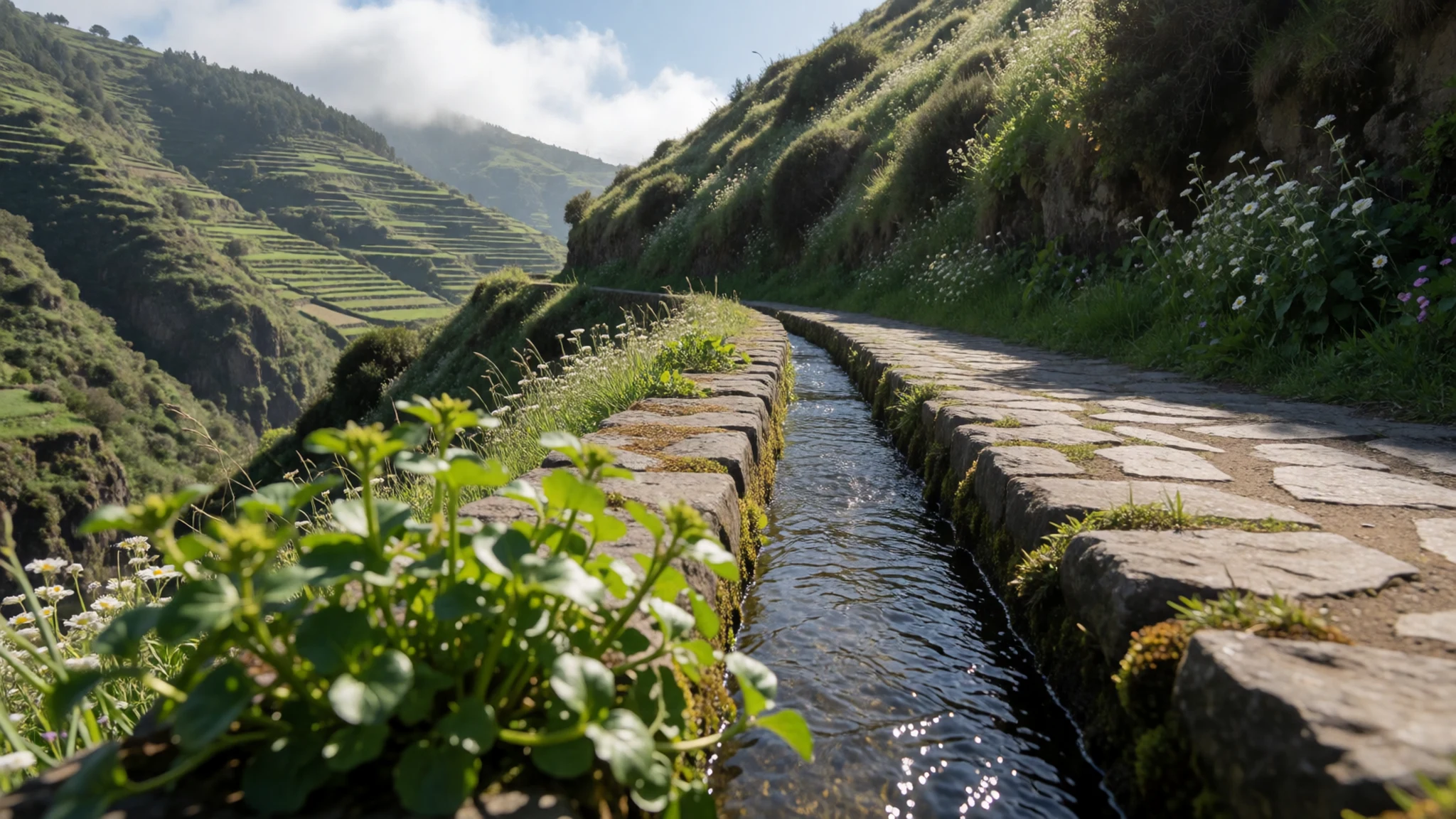
- Pico Ruivo — central mountains, reached from the plateau at Achada do Teixeira
Pico Ruivo is one of Portugal's highest peaks, and the usual route begins at Achada do Teixeira, a high plateau reached by road. The climb is steep in places, and the summit can be cloudy when the coast is sunny, so start early. Bring water, warm layers and waterproofs, and treat it as a serious hike rather than a stroll.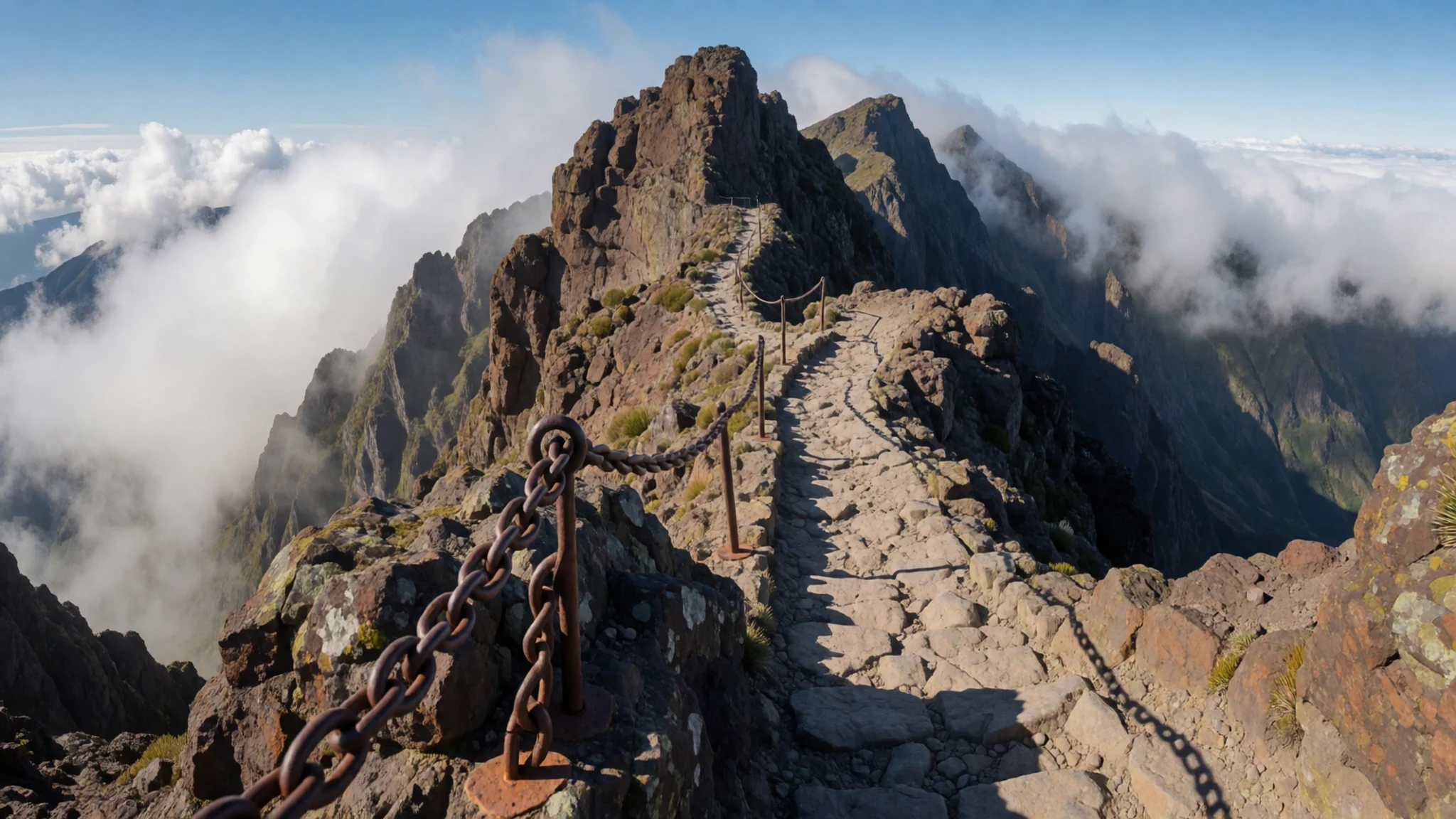
Culture
Everyday life in Madeira is Portuguese at its core, with strong ties to family and village life beyond the tourist centre of Funchal. Portuguese is the main language, and many people in hotels, restaurants and shops also speak English and German. Some police in Funchal wear red armbands to show that they can help in those languages.
Music is central to local identity. Folk music uses small instruments such as the machete, the rajão, the brinquinho and the cavaquinho, and it accompanies dances like the bailinho da Madeira. Emigrants from the island also helped shape the ukulele, which grew from two small guitar-like instruments of Madeiran origin and reached Hawaii through Portuguese immigrants.
Religious life shows in churches and chapels in villages as well as in Funchal's cathedral, the Sé. Festivals and processions bring crowds into the streets, while the mountain villages keep a quieter pace. Cover your shoulders and knees when entering the Sé and village churches, and ask before photographing people at a festival or in their home village.
What to wear
Madeira has no single costume that visitors see every day. Its folk dress survives mainly at festivals and in dance groups, where performers wear rural styles linked to the island's traditional dances. The island's embroidery and wickerwork are better known than any everyday dress, and they are made today both for visitors and for local use.
What people wear now is largely what you would see in any Portuguese town: jeans, shirts and light jackets in Funchal, with smarter clothes for church and family occasions. In the hills, older people often choose practical clothes suited to steep ground and changeable weather.
For a visit, the coast is mild, but the hills are cooler and wetter, so pack layers and a waterproof jacket. Choose footwear with grip for levada paths and wet stone steps. Cover shoulders and knees at churches, and keep swimwear for beaches and pools rather than the streets of Funchal.
What to eat
- Espetada — grill houses in Funchal and the countryside, especially places with open charcoal fires
Espetada is beef cubes threaded on a laurel skewer and grilled over charcoal, the classic Madeiran barbecue. Grill houses serve it with bread and garlic butter. Eat it in a casual grill house where the skewers are brought to the table.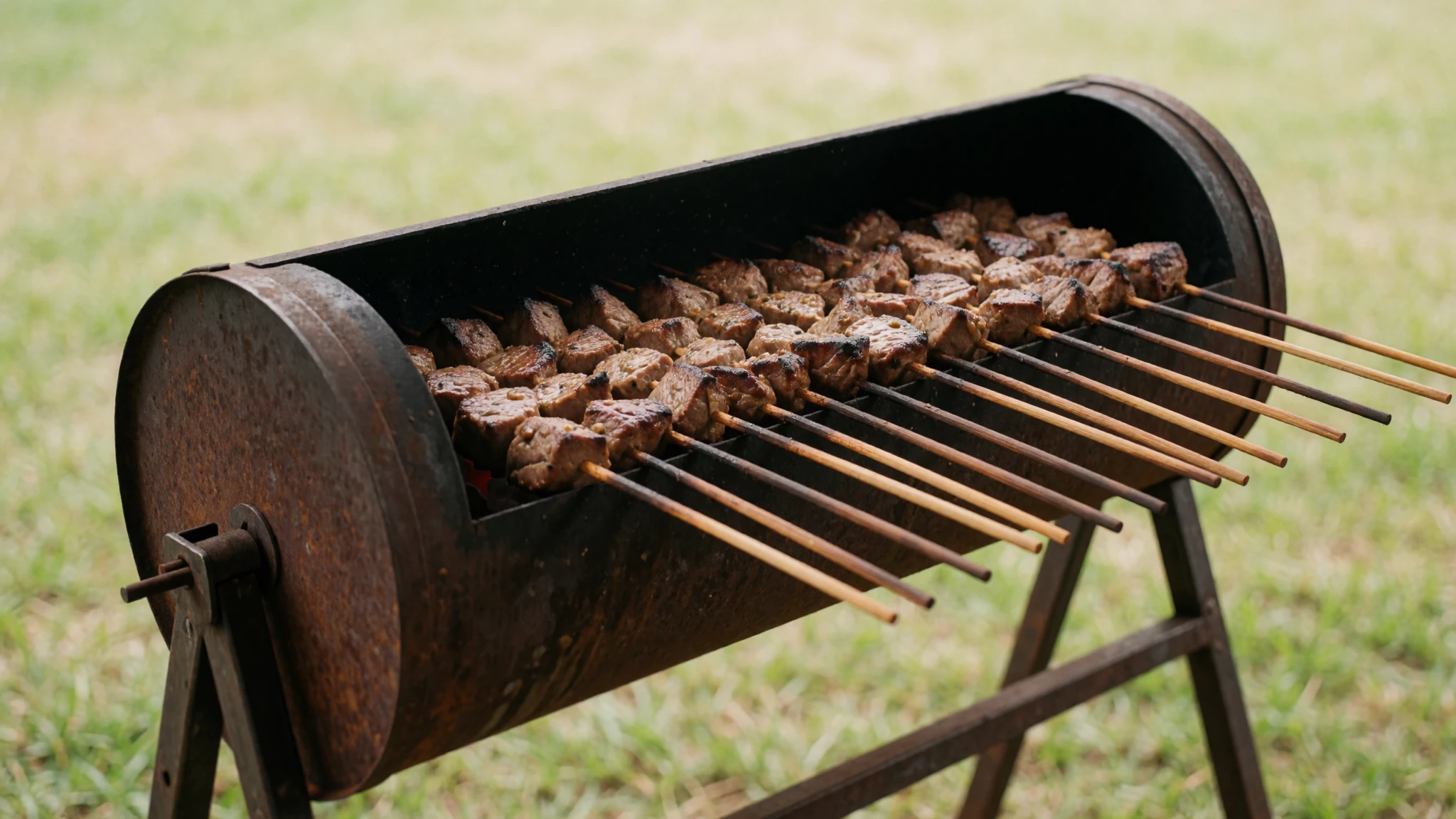
- Bolo de mel — bakeries and patisseries in Funchal in the weeks before Christmas
Bolo de mel is a dense, dark honey cake made for Christmas, rich and gently spiced. It is usually sold in bakeries and pastry shops in the weeks before the festival. Buy a slice from a small neighbourhood pastry shop rather than a tourist counter.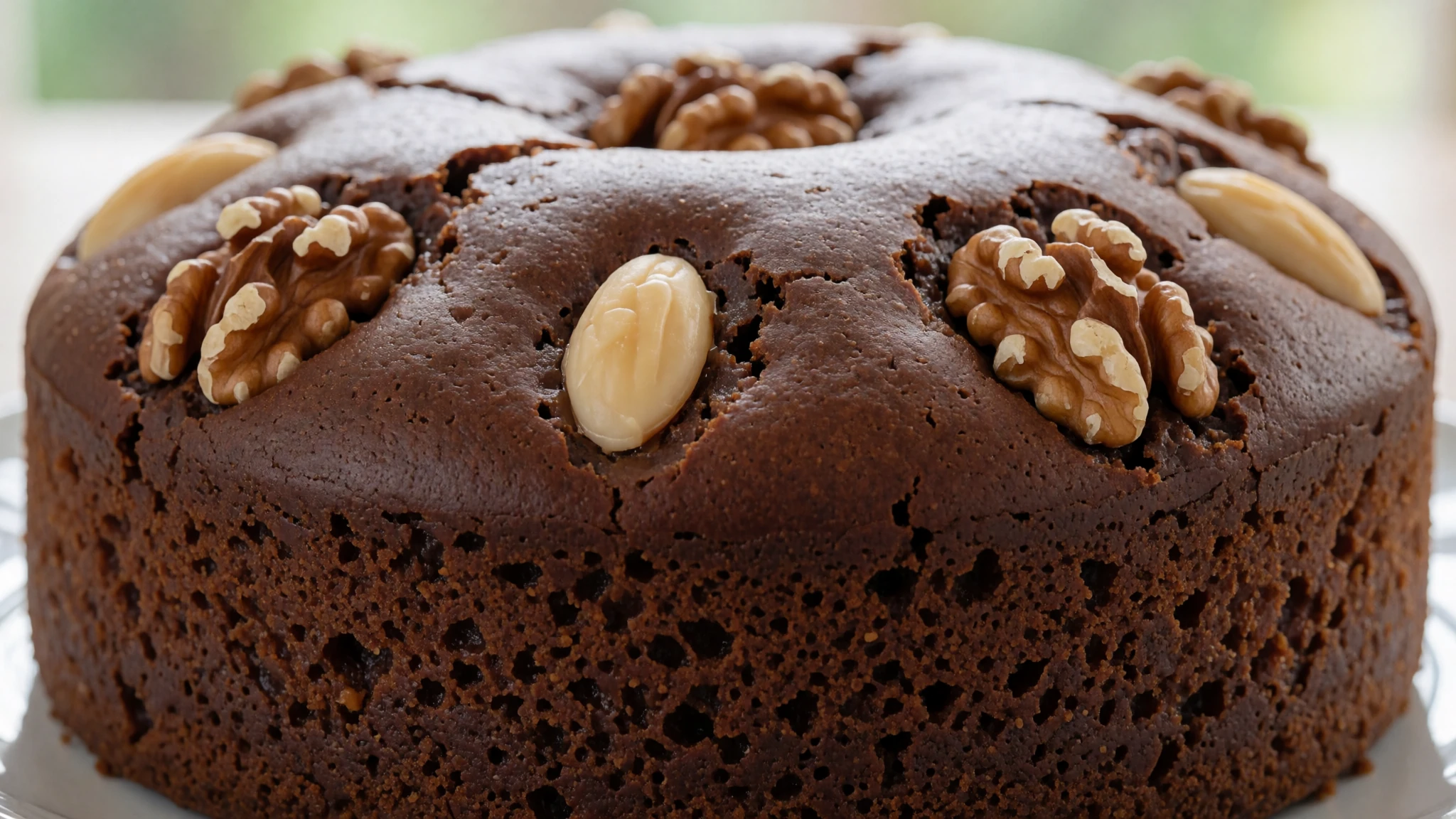
- Madeira wine — wine lodges in Funchal's old quarter and any wine bar on the waterfront
Madeira is a fortified wine made in several styles, from sweet Malvasia to dry Sercial, and it is used in cooking as well as for drinking. Lodges offer tastings in small pours. Drier styles suit an aperitif, while sweeter ones pair well with dessert. - Poncha — bars and kiosks in Funchal and local bars in the villages
Poncha is the island's most traditional drink, a strong mix of sugar cane spirit, honey or sugar and citrus. Local bars make it fresh, sometimes with passion fruit. Sip it slowly, as it is stronger than it tastes. - Peixe-espada com banana — seafront fish restaurants in Funchal
Black scabbardfish, a deep-sea fish, is usually fried or grilled and served with slices of fried banana. The combination is typical of the island. Ask for it in a fish restaurant on the Funchal seafront, where the catch is usually fresh.
Plan it
Best time. April to June for green hillsides and wildflowers, and September to October for warm sea and quieter trails. Winter brings rain to the hills, and summer stays dry and warm on the coast.
How long. 3–4
Getting there. Fly to the island's airport near Funchal, then take a taxi or rental car into town. No ferries serve the island from mainland Portugal, so sea arrivals are by cruise ship. Check the official site at madeira.gov.pt for current routes and transfers.
Budget. mid
Tips
- Start popular levada walks and the Pico Ruivo route early, when mist is thinner
- Rent a car for the north and east, since buses reach the valleys slowly
- Carry cash for small cafés and market stalls, and use cards in larger places
- Pack warm layers even in summer, because the high ground is much cooler than the coast
- Book accommodation early for New Year, when the fireworks draw large crowds
Etiquette
- Keep to marked paths and leave farm gates as you find them
- Ask before photographing people at festivals or in their homes
- Greet shopkeepers before asking for help or directions
Nearby
Sources
- Wikidata Q26253 (CC0)
- Wikipedia, Madeira (rev 1382796949) (CC BY-SA 4.0)
- Wikivoyage, Madeira (rev 5384944) (CC BY-SA 4.0)
- Madeira (Portugal) map sheet, photos/01-madeira-71.jpg (Public domain)
- Corbitis Atlas (p.4), photos/02-corbitis-atlas-p-4.jpg (Public domain)
- Funchal, photos/03-funchal-portugal-13.jpg (CC BY 2.5)
- Levada at Machico, photos/04-levada-at-machico.jpg (CC BY-SA 4.0)
- Sé do Funchal, photos/05-s-do-funchal.jpg (CC BY-SA 4.0)
- Madeira main island map, photos/06-madeira2024osm.png (CC BY-SA 4.0)
- Porto Santo map, photos/07-portosanto2024osm.png (CC BY-SA 4.0)
- Ilhas Desertas map, photos/08-ilhasdesertas2024osm.png (CC BY-SA 4.0)


